Monthly Archives: June 2026

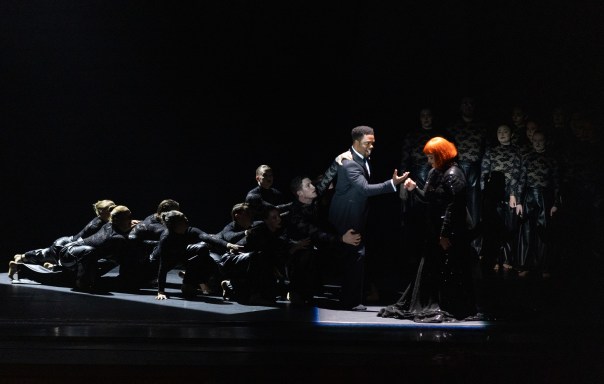
Your Cellphone Must Wear Blinders to Three Bones’ Oedipus el Rey

Review: Oedipus el Rey at The Arts Factory

By Perry Tannenbaum

Everybody has a story, but the cruel truth is that an overwhelming majority of them, whether factual or fictional, will be forgotten. So the story of Oedipus, immortalized by the Greek dramatist Sophocles in his Theban Trilogy – and perhaps the cruelest of all stories – is an awesome exception. Not only has this story survived for more than 2450 years, but it has also stood as the Aristotelian model for storytelling.

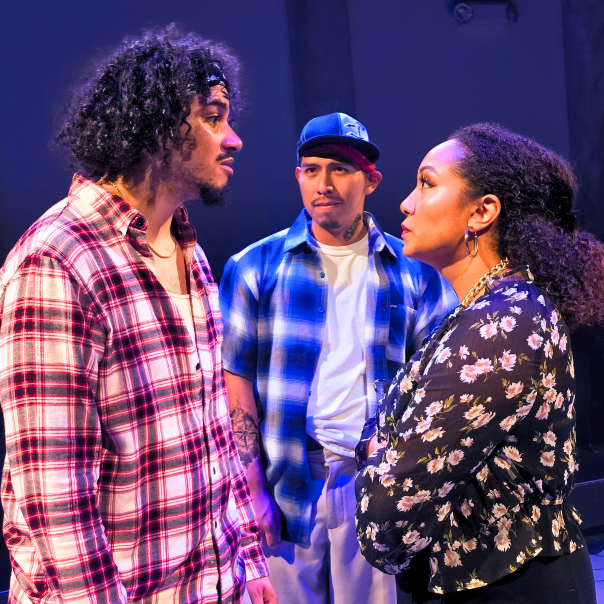
So part of the wonder of Luis Alfaro’s Oedipus el Rey, now playing at the Arts Factory in a graphic and gripping production from Three Bone Theatre, is how this contemporary Chicano playwright retells the age-old tragedy. The better you know the original Oedipus Rex, the more audaciously you’ll see Alfaro flouting Sophocles’ storyline and Aristotle’s principles of storytelling.

The basic Freudian elements are intact, and Alfaro delightfully retains a Greco-style chorus – but a more shapeshifting group. Even Oedipus is part of the chorus in the prologue, wearing the same orange prison outfit as the other men in our prologue. But the other five guys shuttle in and out of their prison garb, three of them moonlighting in the roles of the prime figures of the Greek myth.

As Alfaro’s tale takes us from prison to LA, from prison across the desert to Vegas and back again to LA, we’ll meet up with King Laius, Oedipus’s dad, and Creon, the king’s brother-in-law. The blind seer, Tiresias, we see from almost the very beginning, elegantly compresses all three of the men to whom Oedipus has been handed off shortly after his birth.

He is a mentor to Oedipus – his father, for all he knows. Hanging out in the prison library, Tiresias is a seer in more ways than one. And if you know how Oedipus winds up, you know that his proving to be King Oedipus’s role model is a fiendish joke.

Now if you know your Poetics, you’ve already deduced that Alfaro has blown Aristotle’s precious unities of time and place to smithereens. This Oedipus doesn’t simply offer us a devastating replay of those final moments when he unravels his own mystery and history, realizing that he has already fulfilled the fate that the oracle has predicted.

In a minor miracle of conciseness that only takes about 90 minutes of stage time – with dollops of Greek chorus, Parliament-of-Owls phantasmagoria, and Chicano voodoo thrown in – Alfaro cleverly dramatizes all the key plot points rather than simply narrating them. The horrible catastrophe of Oedipus fulfilling the fate he has so diligently avoided is once again our crowning moment, but only after we’ve been along for every key step in his story.

The nativity, the abduction, the patricide, the Sphinx riddle, the incest, and the bloody denouement are all part of the action, no less thrilling or shocking than Sophocles of old. Because there is so much more action, so swiftly.

And yet Alfaro compresses some of the tale. The intimate bond between Oedipus and his queenly mother Jocasta happens at the speed of sight, and the new king’s downfall rushes upon him shortly after their wedding. In the Sophocles storyline, there’s a plague afflicting Thebes. He and his queen have two daughters. When the Roman playwright Seneca took up the tale, his timeline was even slacker: the Theban royals had sons and daughters by the time he sent Creon off to consult the oracles.

Vis-à-vis Sophocles, the gains outnumber the losses as Alfaro takes these daring tacks, even if they don’t outweigh them. You get to empathize a little with the monstrous ganglord Laius as the fatal prophecy is delivered to him with the birth of his son. More than two millennia after the Theban royal reigned, there is enough earthiness and superstition to this career bully, crook, and barrio king for him to give credence to the wild prophecy.

And Tiresius, now blindly caught in the merciless net of fate, is doing his best to alter Oedipus’s destiny! Meanwhile, we get to see an earlier phase of Creon, when resentment and jealousy bedevil him as Oedipus makes inroads on his sister and his turf. He doesn’t go forth trying to get info that will help dispel any plague. He’s out there digging for dirt on Oedipus.

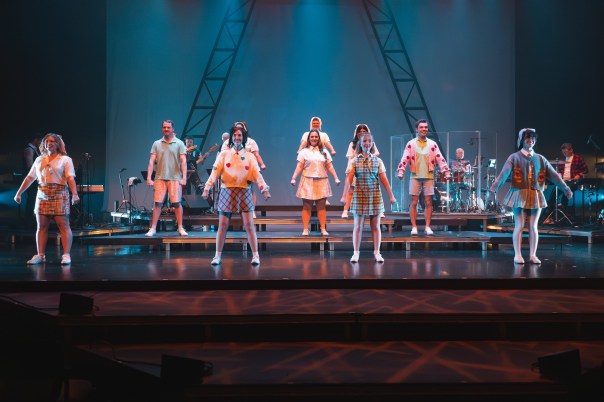
Three Bone’s earlier plunges into Alfaro’s Greek Trilogy, Mojada and Electricidad, resolutely distanced themselves from their Ionic roots, embracing the mystic squalor of the modern-day barrio. But here, the playwright sets us down at Kern County’s California State Prison, and the full Coro sextet enters and forms a square-shaped lineup, where Alfaro calls for “An empty stage stripped of decoration – hollow and hallowed – its emptiness feels religious.”

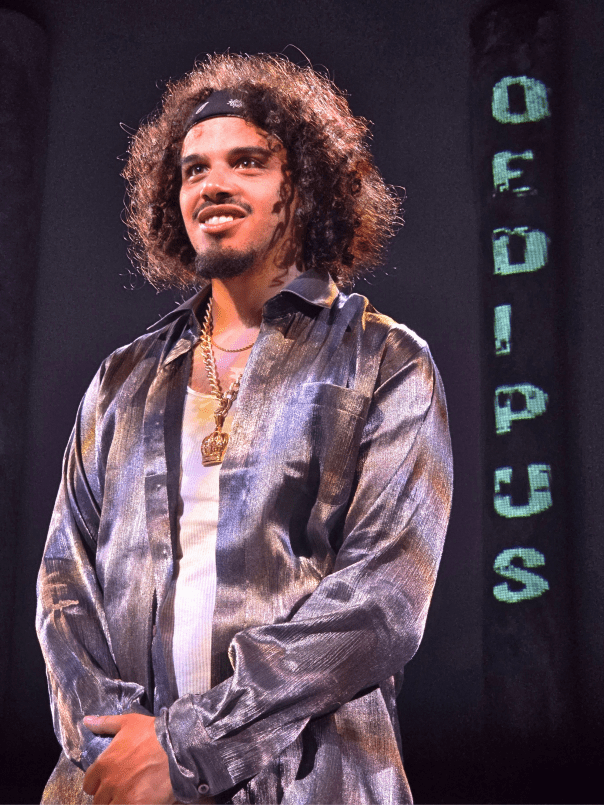
What director Rod Oden and set designer Jennifer O’Kelly do to capture this ambiance is to stand Ionic pillars along all four walls of the Arts Factory and stage their Oedipus in the round. These are enhanced by projections that O’Kelly deploys to fill the spaces between the ancient columns, beginning with the names of our key players projected vertically on the pillars during the opening Prologue.

Not to complain, but I wish Oden and O’Kelly had also projected Alfaro’s scene titles. Some are spicy and humorous, offering further links to the ancient tragedy.

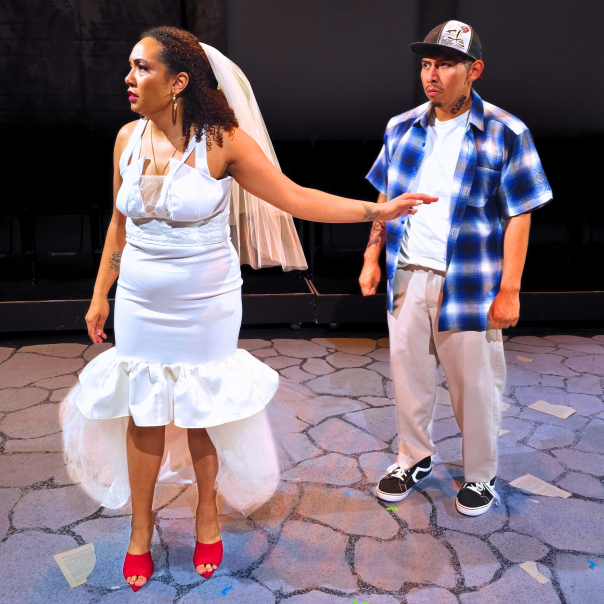
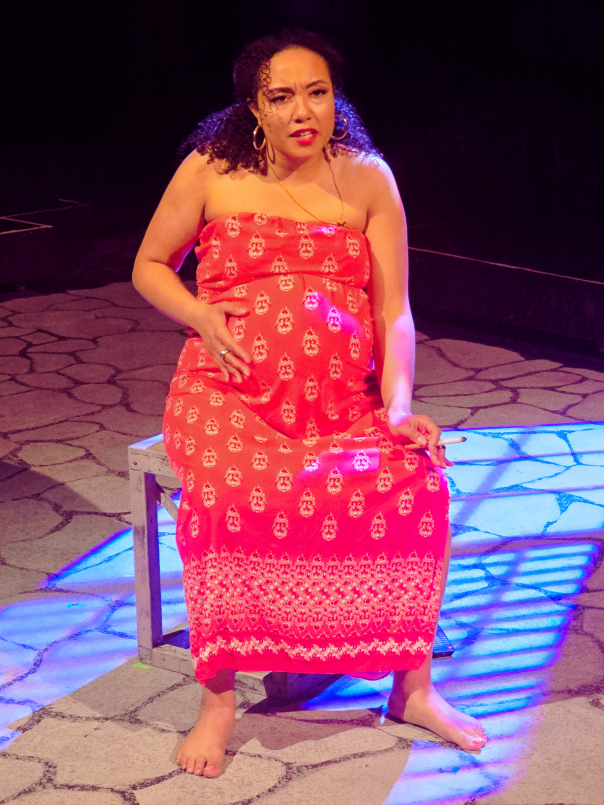
The performances are as classy as the scenery, but without classical pretensions. Never a part of the ritualized action, except when she dons her wedding dress, Stacy Fernandez charms us as Jocasta from the moment we first see her chiding her unborn son, who is kicking her inside the womb. What Alfaro titled “Soliloquy” comes off like a world-weary wisecrack. No less engaging, Fernandez gets to fill us in on Jocasta’s backstory, something Sophocles and Seneca never bothered with.

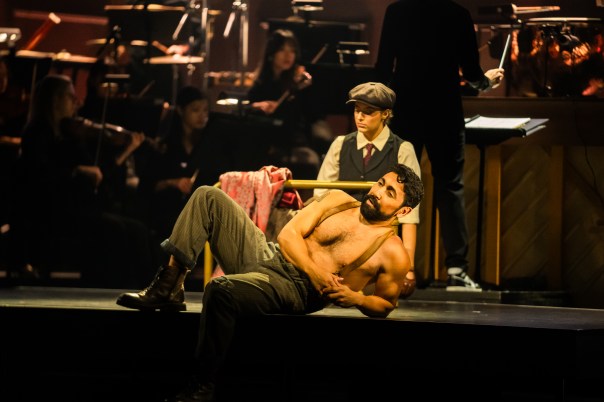
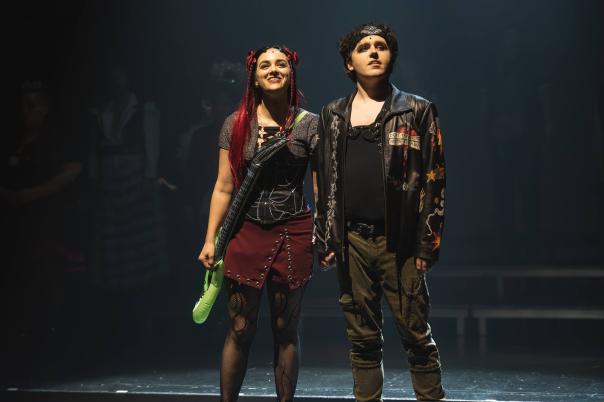
In another auspicious Three Bone debut, Kelvin Jones-Fernandez as Oedipus contrasts nicely with Fernandez’s street-wise worldliness. With a studly innocence and a winsome, toothy smile, Jones-Fernandez had me thinking LaMelo Ball all evening. Less than half as much ink on him as the Hornets star, but enough tats for Laius to instantly recognize him as an ex-con at their fateful nocturnal meeting on a one-lane highway.

Jones-Fernandez brings a big personality to his monologue when Oedipus subsequently tours his dad’s royal territory, reasserting sovereignty and letting former debtors know they’re still on his account book and announcing that the “free trade” days are over when they could do business outside his turf. Yet he’s genuinely wowed by Jocasta, green enough to convincingly ignite their copulation scene by crying out, “Teach me!”

You’re more than warned that this scene is coming when you first enter the space. Ushers will apply stickers to all your cellphone camera lenses to protect the actors.

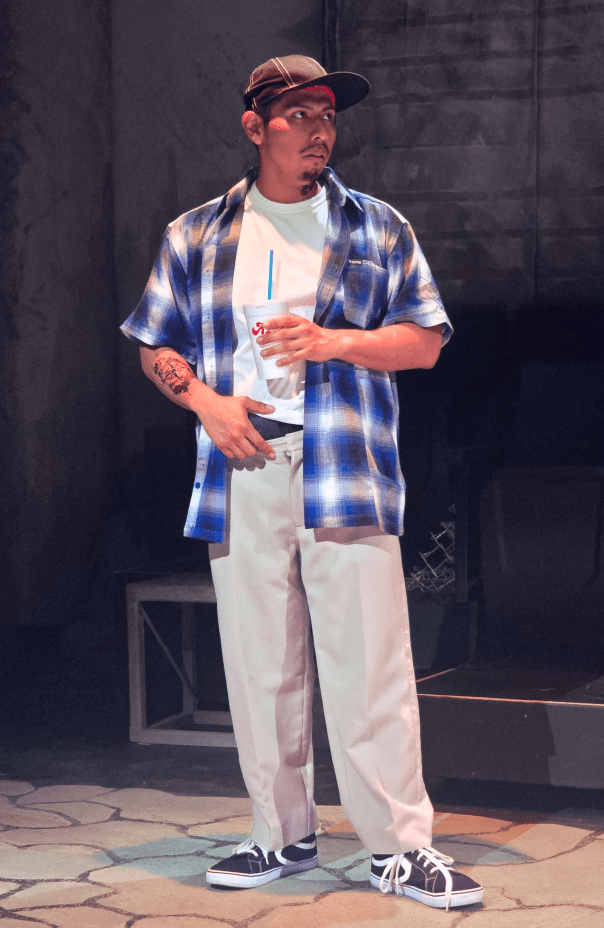
Sipping on a horchata the livelong day, Eduardo Sanchez stylishly delivers Alfaro’s weaselly makeover of Creon, whom Lauis regards as a pretend prince. He’s intimidating as well as sleazy toward Oedipus when he arrives in town, won over easily enough, but obviously a sneaky, underhanded threat. That Oedipus resists his initial overtures to go crooked says something for his character: he’ll succumb because society is rigged against Chicanos and ex-cons.
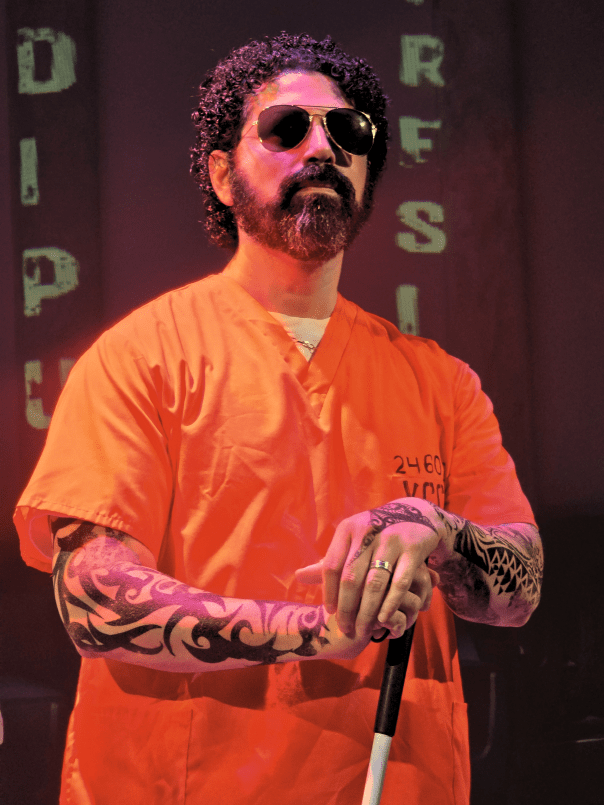
You may remember that Sanchez was also a bit of a softie – and a bit comical – as Orestes in Three Bone’s flaming Electricidad.Two other standouts from previous 3B installments of the trilogy show their mettle again. Luis Medina, who was Orestes’ mentor and tattoo artist last August, plays a bigger, yet similar role as Tiresias. Laius’s former right-hand man turned prison sage, now masquerading as Oedipus’s dad. Accessorized with dark glasses and a slick fold-up navigation cane.

Although we haven’t seen him since his starring role as Jason in Mojada (based on Euripides’ Medea), Christian Serna brings some of that same swagger to King Laius. After all, Jason was also a bit of a cad, going for the gold, just not as malign as this mobster. It’s fun to get a more intimate look at this character who is usually offed before the action begins.

And it’s newly satisfying to watch his predicted fate come full circle and overtake him. The only big mistake Oden made in directing came at the moment when Laius recognizes who his killer is, how the gods and fate have triumphed. It needs to be bigger, far more emphatic.

Yes, Alfaro’s Oedipus and Laius don’t rise to the royal grandeur of their Theban namesakes, so their falls are not as precipitous. That’s probably why Alfaro leans so hard into amplifying his hero’s hubris. This one doesn’t believe in any God, tears a Bible into shreds, and deifies himself.

It’s excessive rage and arrogance for an ex-con, but not if you accept Oedipus’s underlying anguish as the voice of his people. Three Bone Theatre is the first company anywhere to present all of Alfaro’s Greek Trilogy and give vent to his full anger. Groundbreaking may be an understatement in the presence of such power.

Keston Conquers Again in The Color Purple

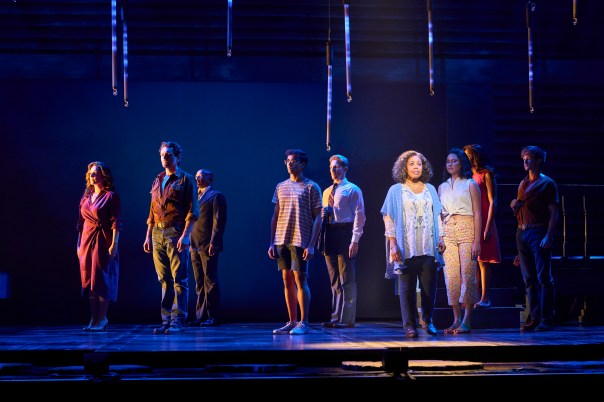
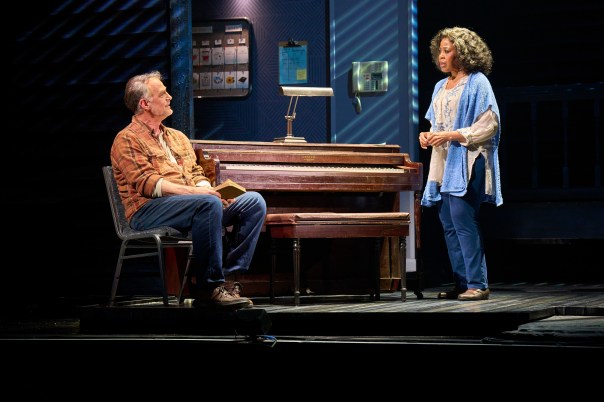
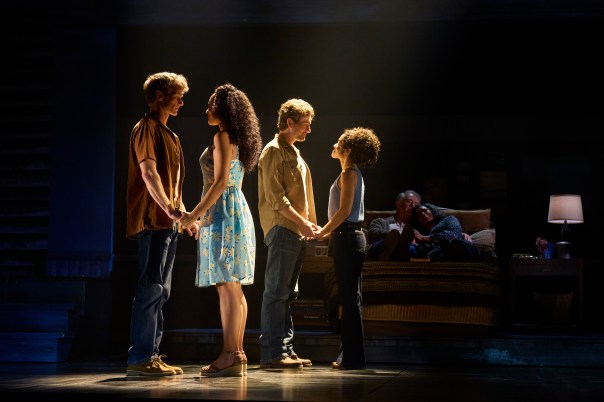
Review: The Color Purple at Theatre Charlotte

By Perry Tannenbaum

Across the span of nearly 40 years of reviewing, reporting, and pontificating on the performing arts, quite a few events and performances have etched themselves into my mind. On rarer instances, an audience response will be equally unforgettable, such as press night on April 10, 2008, at Ovens Auditorium, the first time Wicked came to town, greeted by a series of deafening ovations that have never been matched.

Every time my Apple Watch notifies me that an audience topped the 100dB mark the previous evening, I wish I’d had one at Ovens that night to know what the highwater mark is.

Even more unique was the night of September 15, 2012, at Dale F. Halton Theater. There, the student actors and musicians of Northwest School of the Arts performed The Color Purple. My wife Sue and I went with a bit of trepidation.

We had already seen this musical on Broadway and in its touring reincarnation at Belk Theater. More to the point, we knew the pitfalls of an all-youth cast colliding with roles that demanded fully mature players. At the Halton, we were already reminded of how wrong that could go when the recent college grads who recruited for CPCC Summer Theatre clashed with the likes of Fiddler or Spamalot.

Of course, we had already built up considerable trust in Corey Mitchell as a stage director nearly three years before he snagged the first Tony Award given to a theatre educator. But there are tough hombres in Alice Walker’s Purple, including poor Celie’s abusive father and husband, Pa and Mister.

And if you remember either the film or the Oprah-produced musical, there are two certifiable divas besides Celie, our tormented protagonist: the hard-headed Sofia and the glamorous Shug Avery. Could Mitchell find all the outsized talents he needed enrolled at Northwest to fill all these roles?

Sure did. And he had more: scenery on loan from the original Broadway production.

But the audience! When Northwest junior Keston Steele, starring as Celie, had finished singing her “What About Love?” solo, Sue turned to me and asked, “Have you ever seen anything like this?”

For the entire audience, it seemed, had sprung to its feet – a standing ovation in the middle of a show! And the answer to Sue’s question is still no.

So you can imagine that when we walked into the old Queens Road Barn on opening night of the current Purple and received my playbill, I was pre-sold. Our Tony Award winner was back directing Theatre Charlotte’s new version, and the name of Keston Gary topped his cast list as Celie.

Had to be the same Keston, right? That’s honestly the only name I had remembered.

While I wasn’t the only person in the Queens Road Barn who remembered Gary’s pre-marital, pre-motherhood exploits at CP, it’s unlikely that anyone else in the crowd was in the same suspense: would history repeat itself?

So there was that unique suspense for me, especially when Gary belted out “What About Love?” as zestfully as Steele. Would the audience rise? Would the Barn’s roof blow off? That same silly suspense struck me once again when Gary followed up with the musical’s supreme affirmation, “I’m Here.”

While Gary’s singing merely equaled Steele’s, her acting – seasoned by marriage and multiple motherhoods – markedly surpasses it. At their depths, Gary’s servility and submissiveness as Celie are borderline cringeworthy. Maybe a few notches beyond what a white director would dare.

It’s a grim reminder, to be sure, that feminism was a more central concern for Walker here than racism, which only affects Sofia’s story. As a result, we can revel more in the light and inspiration that Shug and Sofia bring to Celie with their special brands of savvy and sass. This Celie needed to travel a longer road, in my eyes, to straighten up her hunched shoulders and stand up for herself.

Twenty years after I saw The Color Purple on Broadway, it’s nice to see Mitchell leaning harder into the story’s demeaning subjugation. But it’s harder for me to be sure whether Mitchell is seeing Celie’s sexual awakening as more overtly lesbian than ever before, or if I am.

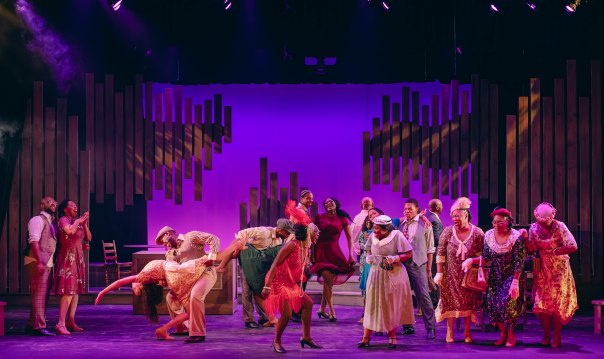
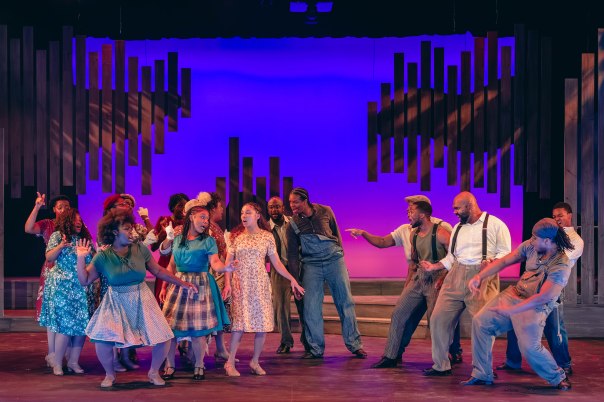
The rousing “Miss Celie’s Pants” certainly hadn’t landed on me in nearly the same way as it did on Queens Road. Sung by Gary with her mentor Shug, Sofia, and a bevy of other women, you can take this eye-popping number partly as a gay pride celebration or as a proto-Hillary rally.

K. Alana Jones as Shug sports a free-thinking saloon singer’s confidence, seemingly at home with anybody’s body of her choosing. In that respect, Shug’s bisexuality aligned more closely with Walker’s. Shug always got the kind of delayed runway entrance traditionally reserved for Broadway legends, so costume designer Justin Hall, with assistant Beth Killion, needed to be sure that Shug’s rigs radiated class.

With all the fine tunes crafted by Brenda Russell, Allee Willis, and Stephen Bray, the book by Marsha Norman doesn’t get enough space to make the connection between Shug’s fashion sense and Celie’s eventual emergence as a dressmaker. At Theatre Charlotte, we can infer that Shug is Celie’s dressmaking muse.

Once Jones does enter as the blues singer, she scores well in the uplifting “Too Beautiful for Words” and the raunchy “Push Da Button.” One can only smile at the thought of high schoolers rehearsing that latter gem.

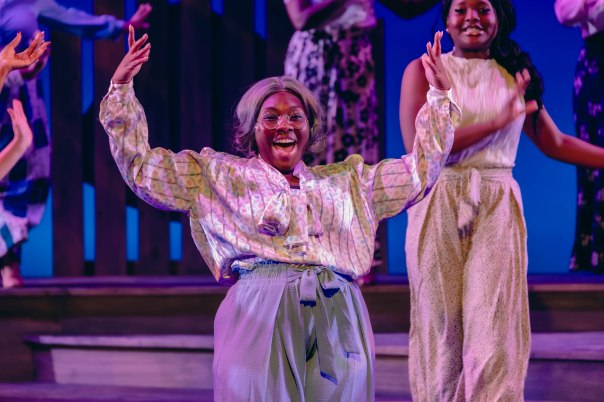
As Sofia, Germôna Sharp gives Celie – and any other wallflower in town – a more militant brand of inspiration with her “Hell No!” [my italics]. Fortunately, I had somehow forgotten the battered Sofia’s marvelous dinner-table reawakening, so I could take fresh delight in Sharp’s hallelujah suddenness. Not long afterwards, Sharp gets to team up with Nehemiah Lawson as Harpo, her genially clueless husband, in their raunchy “Any Little Thing” reconciliation.

After his bravura psycho dentist in Little Shop of Horrors, it was nice to see Lawson less crazy and cocksure. Harps is more befuddled and human, actually evolving with the times. Watching this character arc, from “Brown Betty” to “Any Little Thing,” amid more toxic excesses of testosterone was a nice reassurance that not all men are monsters. Or at least, beyond redemption.

You could say Harpo’s leavening presence gives Arnold Grevious as Pa and

as Mister more license to be as monstrous as possible. Yes, there are moments at the beginning of Purple when Walker seems to be taunting us: “You think white patriarchy and misogyny are bad? Come over to my place!”

Neither Grevious nor Williams gives any hint of mellowing toward Celie for a long time. Meanwhile, Mister needs to be appealing to Shug in some way that might surface in his bossy “Big Dog” showcase with his field hands. More to the point, he ought to appreciate Shug’s strength as well as her beauty and talent, so Williams can give promise of evolving as he lays out Walker’s red carpet for her diva in “Shug Avery Comin’ to Town.”

Williams also gets the luxury of penitence, beginning with “Celie’s Curse.” No such epiphanies happen for Pa: we just watch Grevious becoming older and feebler. So don’t give that old rattlesnake a single vocal and see if I care!

No, Tim Parati’s scenic design for Purple, the first we’ve had in Charlotte that was totally missing its Broadway lineage, won’t floor anyone, though J.P. Woodey’s lighting helps us not to mind. But Keston Gary is far from the only onstage luminary capable of knocking you onto your butt.

Apart from Chicago and New York, I’ve been maintaining for years that Charlotte has the vastest store of Black theatre talent around. Purple at the Barn proves me right once again. Call yourself fortunate if there are still seats available.

Keggers Answer to Title IX Consequences in “Actually”

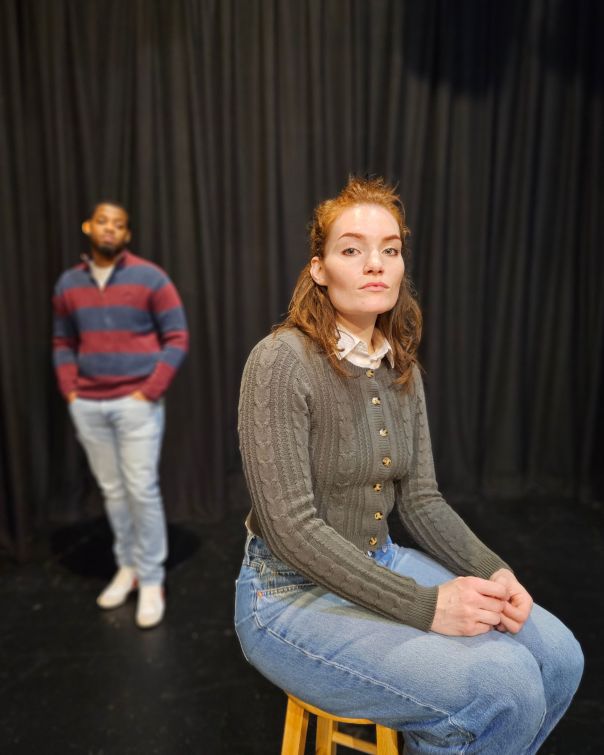
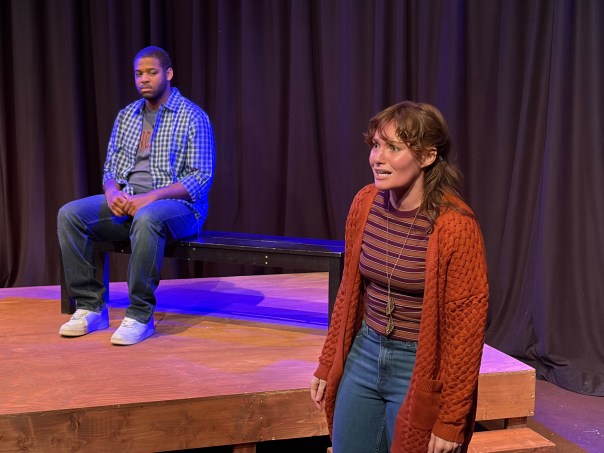
Review: Actually at Davidson Community Players

By Perry Tannenbaum

Midway into its sixth decade, Title IX seems to be limping a little, not as top-of-mind as it once was. Among the half million emails still undeleted from my various accounts over the past decade, including those religiously saved from more than a dozen news sources, 145 mentioned the landmark legislation, and just six so far this year.

So when Anna Ziegler’s Actually was first staged in 2017, looking back on a sexual harassment complaint lodged by one Princeton freshman against another in 2015 or 2016, neither of her protagonists, Amber Cohen or Thomas Anthony, could have known much about Title IX that would apply to them. Nor would they have been schooled on implicit consent or what a preponderance of evidence might mean.

Both were born after the legislation went into effect in 1972, outlawing sexual discrimination at federally funded academic institutions, and even after playwright David Mamet probed the consequences and shortcomings of Title IX in his Oleanna twenty years later. That was a combustible two-hander pitting a male professor against his female student. Here, both students are niche admissions at the Ivy League school. We have a young Jewish woman, sufficiently adept at squash to make the University team, filing an action against a Black student who aced his SAT’s and shows considerable prowess at the piano.

This Metrolina premiere, directed by Amy Wada, opened at Armour Street Theatre this past Sunday evening – rather unusual scheduling – just a few hours after The Lifespan of a Fact, Davidson Community Players’ previous production, completed its run. So there was already a rule-breaking ambiance hovering onstage as the lights went up on the two drunken frosh.

Both are blending into Princeton life via alcohol. Pre-date, we later hear, Tom had already knocked down five drinks. By the time we hear this, we’ve learned that reveling at keggers with free beer has been a nightly ritual for Amber, who is also toting a flask of tequila on that fateful first date, both gifted to her by her glamorous mentor, Heather.

Since this is another two-hander, you can rightly presume that Ziegler doesn’t mess with the formality and architecture of Tom’s hearing, adjudicated by three faculty deciding in whose favor the preponderance of evidence – “50% plus a feather” – weighs. Nor do we meet Heather, the rich kid who, in Amber’s telling, comes off like a reprise of the toxic queens of Mean Girls. Or, obviously, Heathers.

Ziegler begins – and ends – with the key moment when Amber may or may not be issuing her implied consent. But she not only dissects the drunken date from first kiss to the condom hitting the floor in Tom’s dorm room (with his roommate in the upper bunk!), she also carefully traces, in confidential monologues, the sexual histories of both players in this disputed escapade.

On Amber’s side (Wada keeps her leads on opposite sides of the stage for most of the action), we learn of a sexual encounter, similarly fueled by drink, after a second Passover seder earlier in the year. We also hear about her insecurities about her body and her tendency to yield to others when she is ambivalent or seeking approval – most crucially when she adopts Heather’s view on whether she was raped.

We get to understand that the attentions of an already notorious campus playboy are more of what Amber truly needs while she’s still unsure, within a more sober self that’s AWOL on a beer-tequila binge, about what she truly wants. At the same time, even more endearing to us, Amber is instinctively aware that something is troubling Tom and wishes to cheer him up.

Tom has been in therapy during his high school days as a result of responding, naturally enough, to the come-ons of his piano teacher sitting beside him on the music room piano bench. Sounds a little trivial compared with Amber’s impulsiveness and insecurity, on view all evening. The guy reveres Mozart and Bartok, for heaven’s sake!

But then Ziegler abruptly swings the scales toward equilibrium. We learn what was troubling Tom before meeting Amber on their date – and his capacities for rage and violence.
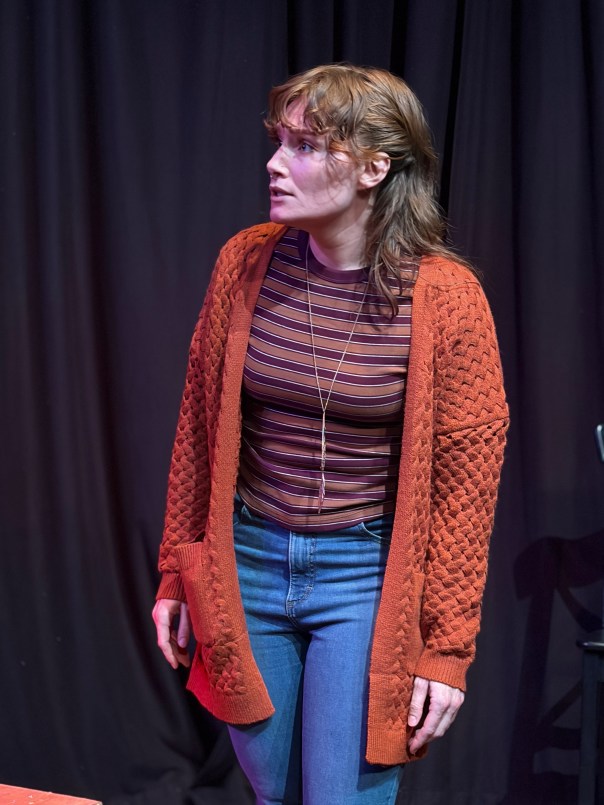
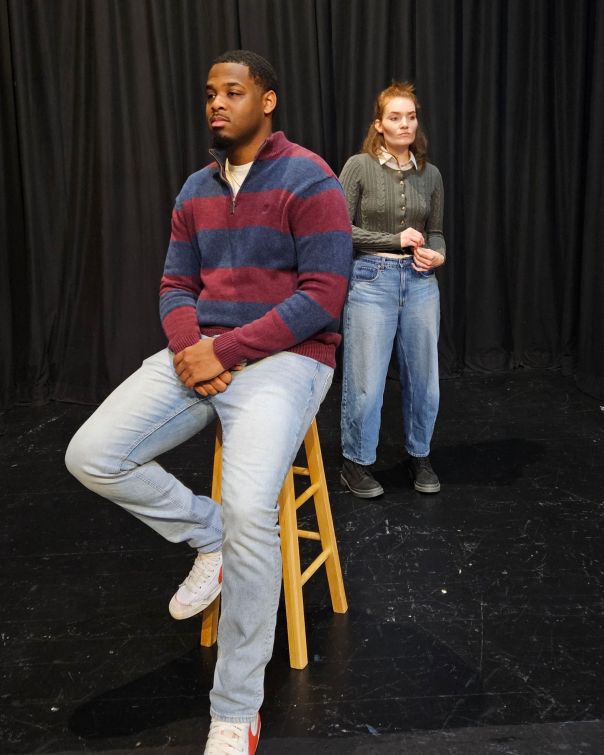
Quite worthy of being labelled “foxy,” Luna Mackie isn’t exactly what Ziegler envisioned as Amber, whose self-image as “pretty enough” seems to have stuck since the moment her mom said it. Mackie compensates with her posturing, mostly slouched forward wallflower-style, but occasionally, she goes with oddly arching backwards, as if she’s forgotten to exhale after taking a deep breath.

With admirable ease, Mackie delivers blushing smile after blushing smile, often scrunching her shoulders. It’s only when she straightens up past vertical that we might see those shoulders as belonging to an athlete, one who wields a squash racquet – or if you saw her in She Kills Monsters, a sword. More challenging, Mackie conquers Amber’s neurotic motormouth trait.

But perhaps too decisively. Many are the times when, for me, intelligibility was sacrificed on the altar of speed. Yet living up to Ziegler’s capsule description of her as “charmingly neurotic” is never a prob.

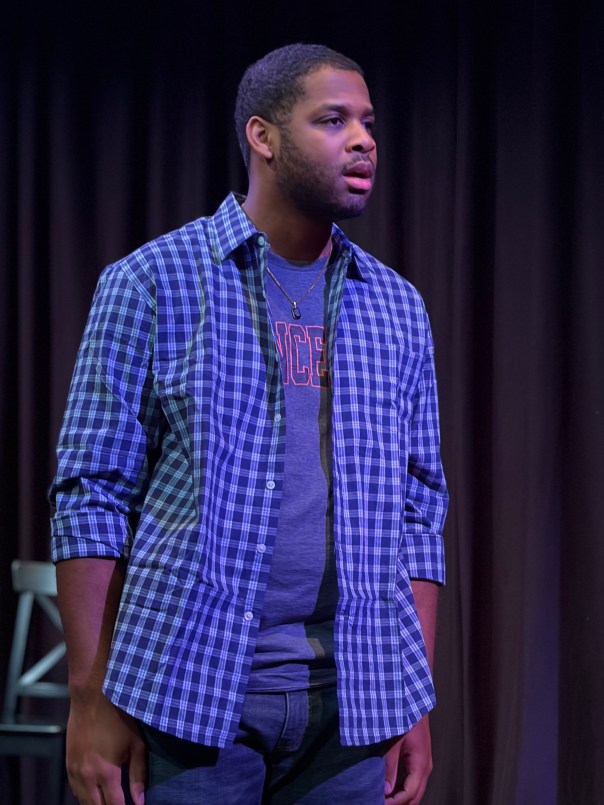
Dionte Darko, on the other hand, tips the unbalanced gulf between Amber’s attractiveness and Tom’s toward equity. He’s also not the quintessence of slickness or arrogance in his demeanor. When he tells us how dearly he loves his mom or how he broke down and cried in the dean’s office, it’s easy to believe every word.

That subtle nonchalance seems to be Wada’s style. For the contrasts in her characters’ looks have been as smoothed out as the differences in their behavior when drunkenly dating or soberly addressing us, or the invisible faculty judging their actions and possible punishment.

Ultimately, this did not seem like laxity on Wada’s part or her actors’. We needed to exercise our imaginations a bit to see this young Don Juan and this charming weirdo in their drunken states as much as we strained to see any big difference in how attractive they were. Once we get past the misalignments of what we see and what we hear, we find ourselves listening more objectively to Tom and Amber’s confessional monologues as testimonies: as evidence we’re weighing and judging.

Yes, saying “actually…” is not the same as saying no. Nor is tacit consent given at 8 pm at a kegger party a contract that is still binding in real life in a dorm bedroom at midnight after a couple has made out all over the Princeton campus.

The more Ziegler piles on complexities, the more we realize that the 37 words that birthed Title IX are ill-equipped to deal with them. That appears more important to the playwright than officially arriving at a verdict up in a New Jersey faculty lounge or library.

Title IX is mostly famed for leveling the playing field in women’s collegiate sports with existing men’s programs, increasing women’s participation tenfold during its first 40 years. At the same time, it stratified procedures for dealing with nuanced interactions between faculty and students, and between male and female students, erecting quasi-judicial architectures and machinery from coast-to-coast, usually manned by people without a jot of legal training.

Guilt could be determined by a feather! As Ziegler points out, the “preponderance of evidence” standard held firm during the time period she addresses – and afterwards until the end of the Obama Administration. It was only in 2017 that the next administration allowed schools to alter their standards to align more closely with civil and criminal courts.

Permission to change, however, wasn’t a mandate.