Review: Martha Graham Dance Company and Scottish Ballet at Spoleto Festival USA
By Perry Tannenbaum
Opera at Spoleto Festival USA is not especially grand this year, with just two one-acts on the 2026 roster, but there are celebrations galore: nods to the nation’s semi-quincentennial, Miles Davis’s and John Coltrane’s 100th birthdays, and the Martha Graham Dance Company’s centennial. And with the return of Spoleto founder Gian Carlo Menotti to the opera lineup – as a librettist and composer – after a hiatus of 15 years, the opera lineup made up in charm and inventiveness for what was lacking in length.
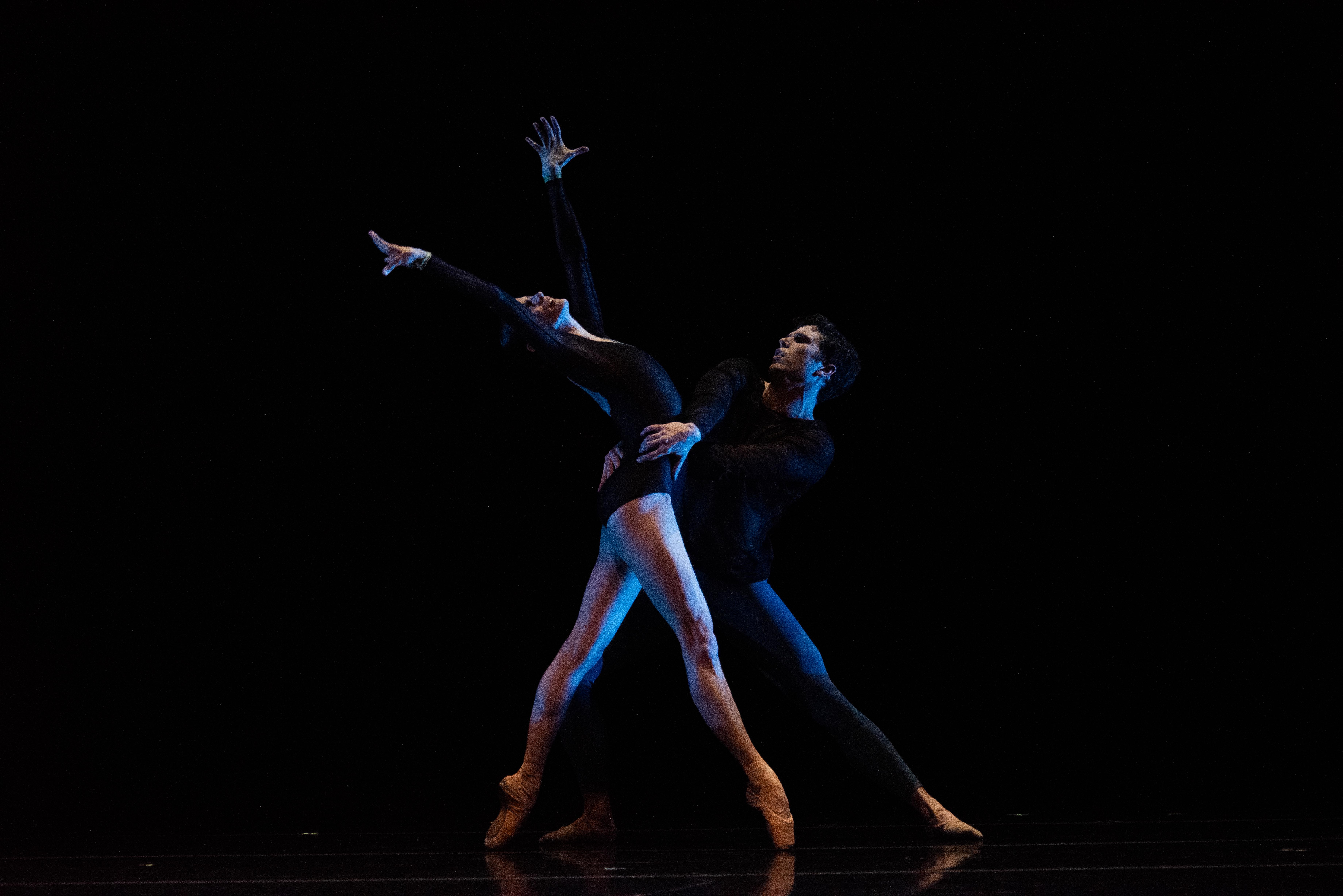
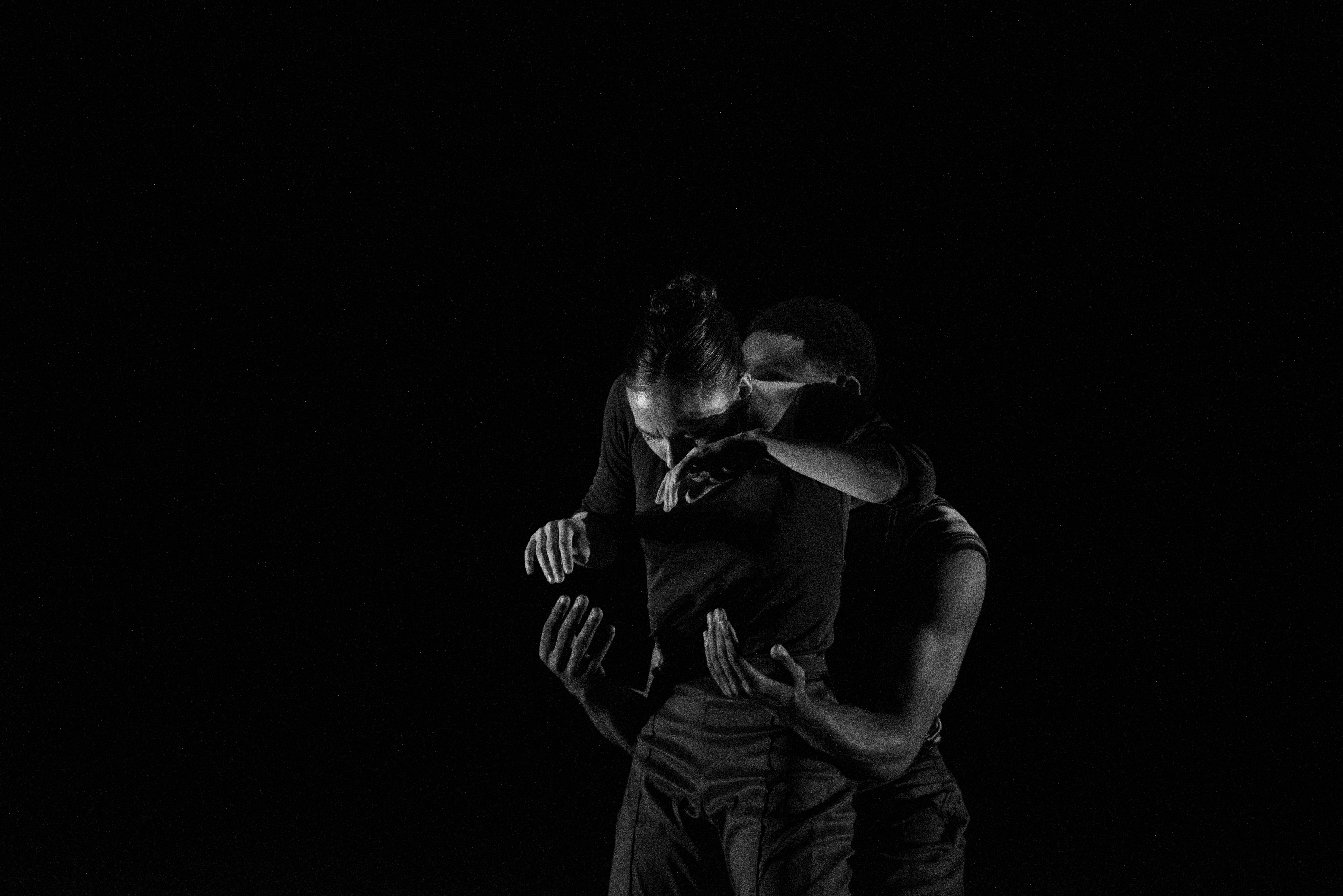
From the standpoints of technical excellence, choreographic creativity, and musical inspiration – including another serving of Menotti, his rarely performed Errand Into the Maze – the Martha Graham celebration was a triple treat. If anything, the other two works on the program, Graham’s Chronicle and Jamar Roberts’ We the People, had even broader historical significance than the Menotti score.
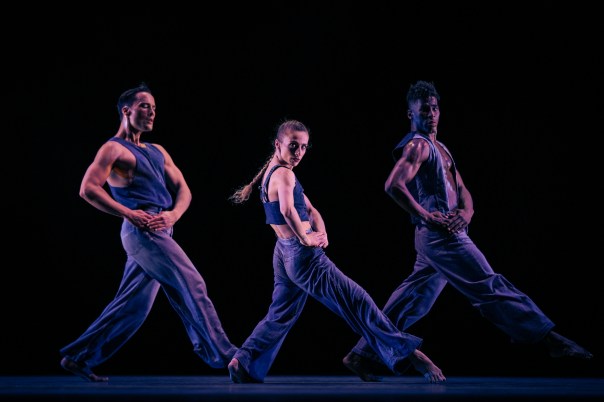
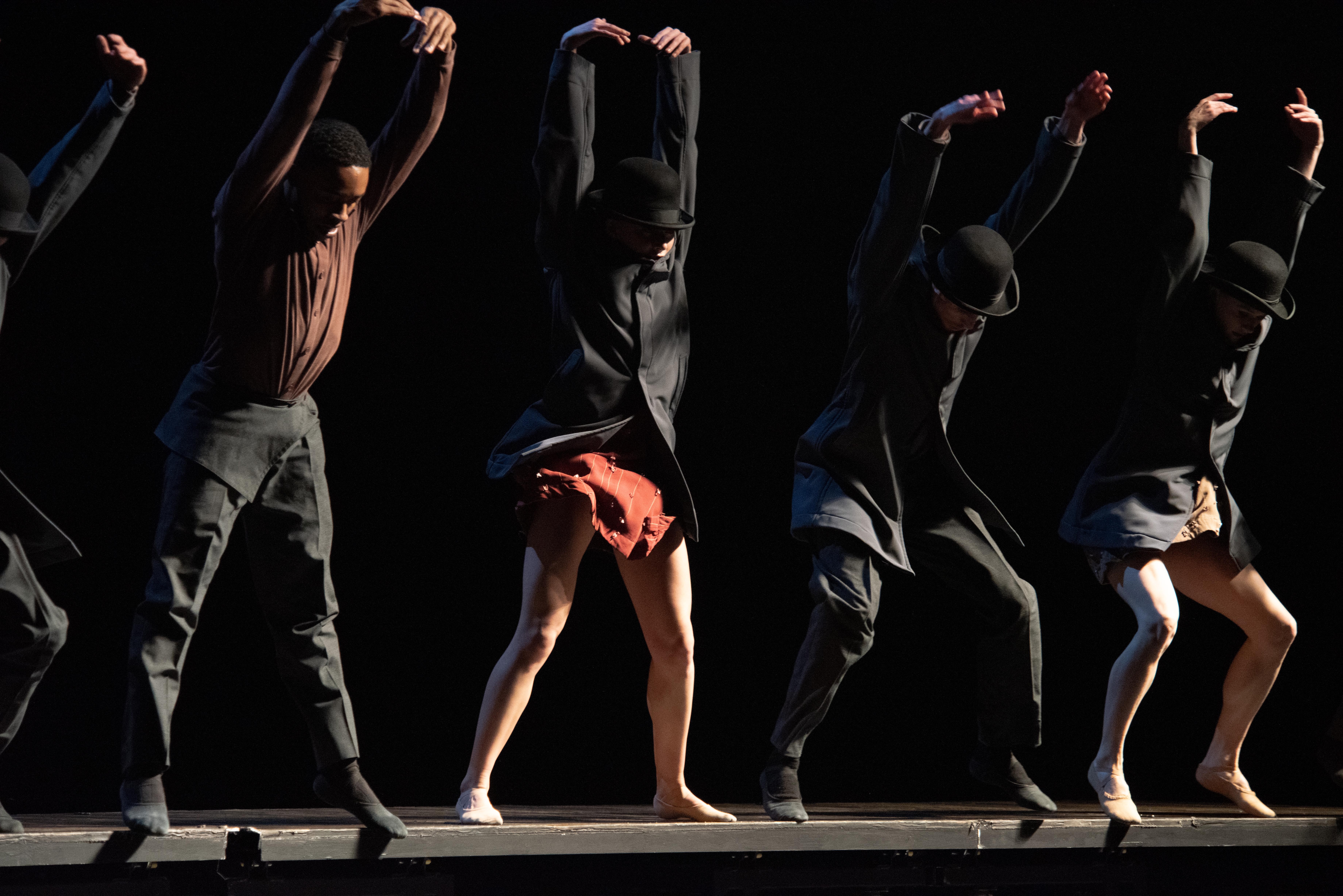
All of the music, not only Menotti’s, was stellar, helping the company to meet the moment. After Graham Dance rejected Adolf Hitler’s invitation to perform at the 1936 Olympics in Berlin, the all-female Chronicle spewed forth as a more extended and pointed response. Leslie Andrea Williams, with the assistance of three other women attending her outsized black dress, carefully sat herself down centerstage.
Patience sitting at her monument, but not exactly smiling. Technical difficulties obliged officials to announce a delay, and Williams, assisted by her entourage, to abandon her vigil and return. When the piece finally began with its first segment, “Spectre – 1914,” we could discover the reason for Williams’ careful, stealthy entrance. The underside of her outsized black dress was a fiery red, destined to be fanned into flames by Williams’ movements, taking flight via her arms.
After the three parts of Williams’ solo, “Drums-Red Shroud-Lament,” Graham’s costume designs became more conventional, though barely less outré. Laurel Dalley Smith soloed in the middle segment, “Steps in the Street,” which depicted “Devastation-Homelessness-Exile,” with an ensemble of nine other women. And Williams, in a more liberating costume, returned with Smith to front the two parts of the “Prelude to Action” finale, “Unity-Pledge to the Future.”
Compared to Menotti’s fantasia, Wallingford Riegger’s score for Chronicle was more formal and ornate – appropriately stately and declamatory. But it would be hard for me to dispute that the Errand piece, loosely retelling the myth of Theseus in the labyrinth confronting the Minotaur, wasn’t the most fascinating dance of the evening, with Xin Ying dancing the remade female protagonist and Ethan Palma portraying the beast of fear.
Scenery by Isamu Noguchi was stark and memorable: a long rope winding its way lazily and maze-ily forward from an upstage V-shaped wooden sculpture, representing either “the crotch of a tree or the pelvic bones of a woman,” according to the Graham Dance Company website. So the absorbing journey was either a heroic adventure or a dark inward probe.
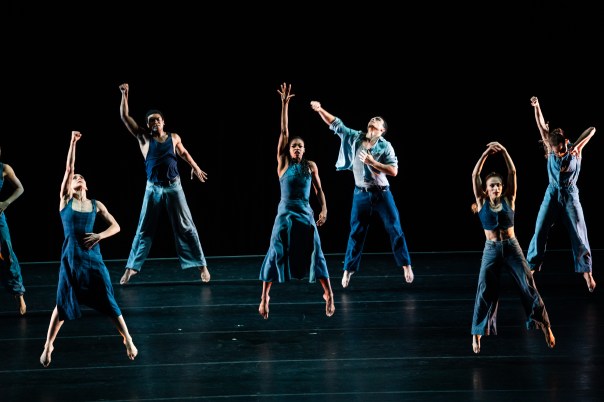
The Graham site traces We the People back to Agnes de Mille, though the new score by Rhiannon Giddens, denim-colored costumes by Karen Young, and the martial-artsy touches in Roberts’ choreography signal a comprehensive makeover. With the delayed start of Chronicle and an overlong intermission, Giddens threatened to compete with Giddens, as Michael Abels’ Rhapsody on “Omar” (the Pulitzer Prize-winning opera he wrote with Giddens) was about to receive its world premiere on the other side of town.
So my response to We the People, remade to reflect American life in 2024, was not as stress-free as I would have liked. Yet even if viewing conditions had been ideal, the Graham program would not have rivaled the US premiere of Scottish Ballet’s Mary, Queen of Scots as the most spectacular event at Spoleto so far, likely to remain its artistic pinnacle.
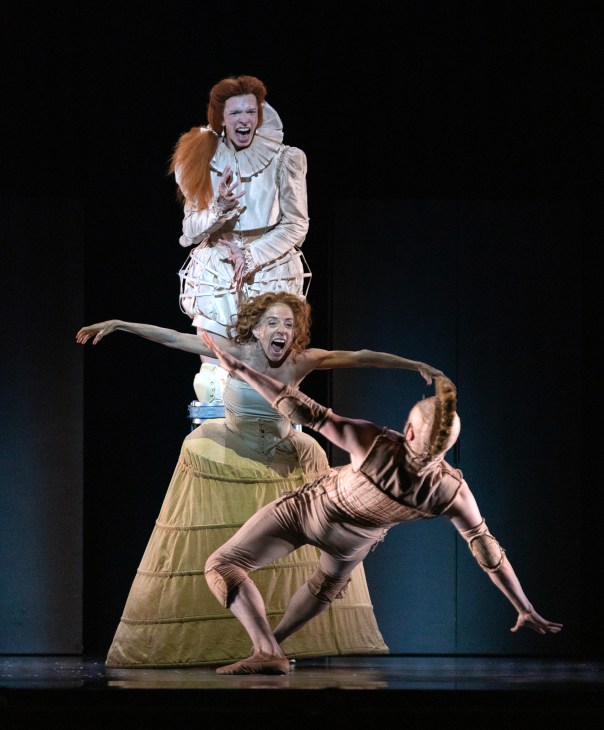
CHARLESTON, SC – MAY 28, 2026 – Spoleto Festival USA 2026 Scottish Ballet
The original score by Mikael Karlsson and Michael P Atkinson is nearly as breathtaking as the costumes and scenery by Soutra Gilmour. But the co-creation by choreographer Sophie Laplane and director James Bonas lifts Queen of Scots to its heights, in a staging that hoisted the three walls of the set to the rafters at Gaillard Center. With the inrush of dancers below – royals, courtiers, spies, and guardsmen – it appeared that an epic Rembrandt painting was materializing before our eyes.
Queen Elizabeth is intertwined with Mary throughout the Laplane/Bonas scenario, as the soon-to-die Virgin Queen recollects their lifelong rivalry. This aging and decrepit Elizabeth is danced by Charlotta Öfverholm, who often lurks unseen as Mary’s story unfolds, like a Gothic horror Tinkerbell. We see Roseanna Leney as the future Queen Mary emerge from the loins of Catherine de’ Medici, a metallic dress worn by Madeline Squire that could become a cage.
Dressed in a chic black dress, Leney contrasted dramatically with towering redhead Harvey Littlefield as Younger Elizabeth, dressed in gleaming white, striding as majestically as a heron. Littlefield’s deliberate gait made for an untouchable Liz, while the lithe Leney cycled through at least three men as the flapper-like Mary, accompanied by four other Marys when obliged to flee France.
Arguably, the essence of the Laplane/Bonas concept was Kayla-Maree Tarantolo as the Jester, who moonlighted as Death. The staging weaved between humor or beauty and brutality as the Jester, only lacking a wand to be a second Tinkerbell, brought on one death after another.
Three moments were most indelible. Mary “transforms,” according to the printed scenario, when the last of her lovers, Nicol Edmonds as Darnley, “is consumed.” Leney was joined by a group of other dancers – maybe the other Marys? – who lined up in front of her and, facing the upstage scrim, became a monstrous shadow insect who devoured Darnley.
Shortly afterwards, the pregnant Mary gave birth, a rather hilarious process. When she was showing, a large white ovoid covered her abdomen, which morphed into a large egg or a delicate white balloon, depending on the fate of the fetus. The sturdier egg could be labelled “James” prior to birth. The lad moved horizontally across the stage, obscured momentarily like luggage being scanned at an airport, and emerging as Squire in an all-white costume, still labelled James.
The most stunning effect was saved for the last blackout. With Laplane/Bonas’s narrative framework, elder Elizabeth could die at the same moment that her recollections of Queen Mary ended – with the sound of three vicious chops of an axe resounding through the hall as the queens perished. Our last glimpse of Leney could stay with you for a lifetime.
Although family-friendly Alvin Sputnik: Deep Sea Explorer ran over the Memorial Day weekend at Spoleto, serious non-puppet, non-animation theatre is backloaded into the schedule. George + George ran as a work-in-progress during the middle week, and Patrick Page’s All the Devils Are Here, originally slated for the 2025 fest, runs during the final weekend.
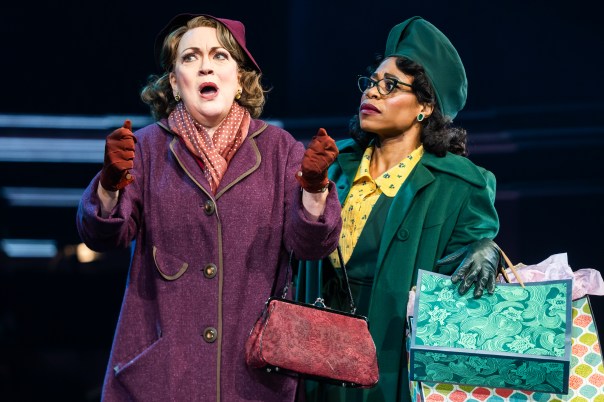
So the best theatre at Spoleto this year will likely remain director Daisy Evans’ remarkable reclamation of festival founder Gian Carlo Menotti’s 1939 radio opera, The Old Maid and the Thief, for the Dock Street Theatre stage. The old-timey Dock seemed like the perfect place for this retro comedy, not so much adapted for the stage as quaintly preserved there.
Walt Spangler’s set design is a hybrid radio studio and rudimentary theatre space, with Timothy Myers and his Spoleto Festival USA Orchestra upstage from the diminutive cast of four singers. Flanking our players, who are never saddled by microphones, are spaces for Foley operator, Amelia Hawke, and for our emcee, Patti O’Furniture.
Any excuse for including Charleston’s own extraordinary female impersonator, O’Furniture, in a show is good enough for me. His talents are multifold: aside from announcing and helping with scene shifts, aiding the two ninja supernumeraries, he can be the scenery, most memorably when, assisted by the end of a brass bed, he holds up two flashlights and becomes the grille of a luxury car.
Other players strive to snatch the spotlight from O’Furniture, often succeeding. We initially empathize with mezzo soprano Katharine Goeldner as the old maid, Miss Todd, playing her as decidedly more maidenly than elderly. When Efraín Solís, as Bob, a drifter, comes knocking at Miss Todd’s invisible front door asking for a handout, Goeldner is immediately smitten, willing to open up in more ways than one.
Helped by her maid, Laetitia, Miss Todd entices Bob to linger awhile, with free room and board.
Is soprano Rachel Blaustein as Miss Todd’s maid also smitten before Bob takes off his shirt? Can’t remember. At any rate, it’s unseemly for Miss Todd to be asking a vagabond to be her guest, so Laetitia is quickly involved. Secretly competing.
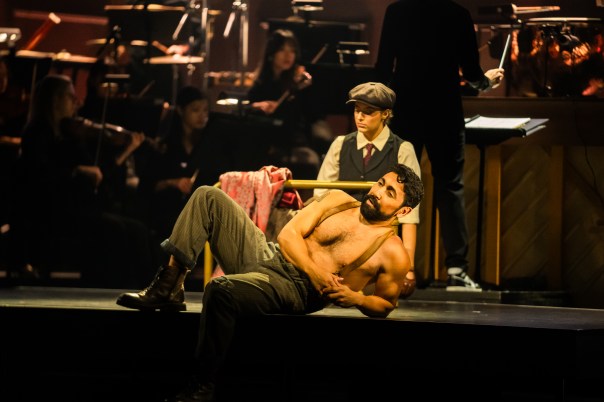
Bob’s sexual leanings may run parallel to his creator’s, but Menotti’s libretto only offers a faint hint. The drifter’s failure to show his appreciation of his benefactress by making a move on her gradually wakes up Miss Todd’s sleeping passions to the point of desperation. She becomes the thief in Menotti’s title, eventually knocking off a liquor store in the middle of the night.
All this while, there are newspaper and radio reports that a notorious escaped criminal is on the loose and on a thieving rampage. This romanticizes Bob to his hostess, further inflaming her and Laetitia. But augmenting these media bulletins is mezzo soprano Chrystal E. Williams as the neighborhood snoop and gossip, Miss Pinkerton, whose visits at Miss Todd’s become progressively less welcome as the ballyhooed criminal rampage rages on. The strait-laced chatterer becomes a nemesis.
Of course, Bob is perfectly innocent. It becomes progressively more unlikely that the drifter would trouble himself to leave Miss Todd’s for a criminal caper when he’s living in the lap of luxury! That need was clearly Miss Todd’s.
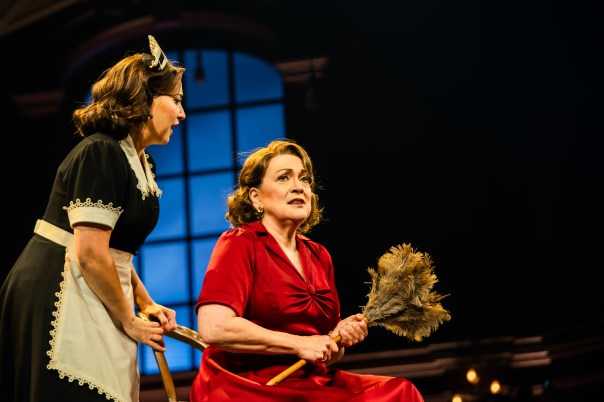
Throwing a veil over Menotti’s denouement, I’ll leave it to opera companies and producers to seek out The Old Maid and the Thief, so they can deliver the goods to audiences that have missed out for nearly 90 years. Evans’ way of doing it could conceivably be improved upon, but it should remain the model.