Flynn Brings Warmth and Humor to the Haunting Confessions of “Blessed Assurance”

hqdefault

By Perry Tannenbaum

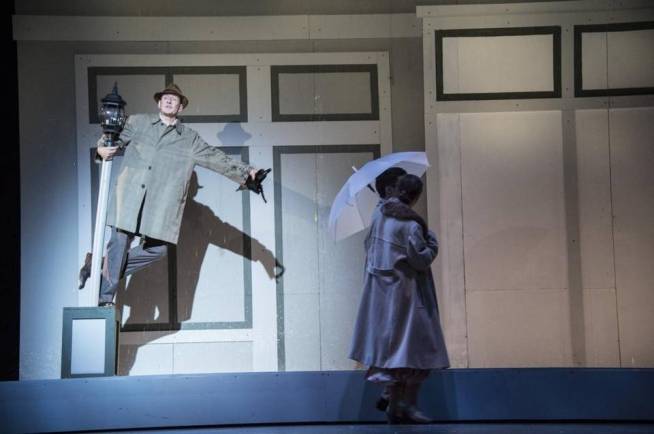
Forty years after getting free of a dirty business, Jerry still feels irrevocably soiled by the experience. Allan Gurganus’ 1991 Blessed Assurance, a novella adapted for the stage by Steve Willis, is a study of regret – and the lessons and wisdom that are its residue. Settling into an easy chair with a cup of tea at his beach house near the Outer Banks, Jerry tells us right from the start what is eating at him, robbing him of sleep as he nears 60 years of age: “I sold funeral insurance to North Carolina black people.” Jerry explains the huge cultural importance that African Americans attach to their funerals. The reasons he gives for taking the job explain why he empathizes with the people he is victimizing. He was raised in poverty in Falls, North Carolina, under the white fluffy clouds emitted by the nearby cotton mill, and his job as an insurance salesman was his ticket to a better life, helping to support his family – Dad is already afflicted with brown lung from constantly inhaling the fibers – and paying for his education. Delivered as a one-man show by actor James K. Flynn under the direction of Starving Artist Productions‘ founder Nathan Rouse, the stage version of Blessed Assurance became very much a narrative as Jerry’s confession proceeded, with some subtle literary qualities tying it together.

Pre-eminent among these is the title, familiar enough as a hymn at Gastonia’s First United Methodist Church Theatre, where this touring production is now being staged. Gurganus doesn’t drop the hymn into Jerry’s narrative until he reaches the denouement. Then it’s a bombshell, sparking Jerry to an irrational fever of self-loathing and penitence. Before then, “assurance” is the fractured way that Jerry’s black clients in Baby Africa pronounce insurance. My years as a social worker in African American homes down in Columbia, South Carolina, 30 years after the 1947-48 events that Jerry recalls, confirm not only the continued importance of funeral insurance in the community but also the pronunciation, though I recall “insurance” – the first syllable restored with a vengeance – as equally popular.

But to Vesta Lotte Battle, the most memorable of Jerry’s clientele, what he sold was “assurance.” There was nothing fraudulent about the Windlass Insurance policies, but the terms were grim for an impoverished community: miss two consecutive Saturday payments and you not only forfeit the benefits of this policy, you also forfeit all previous policies that you may have paid off in full. Selling this kind of product is not a suitable job for a man saddled with a conscience, and Jerry’s boss at Windlass tells him as much when he hires him. Switching to his boss Sam’s voice, Jerry recites the insidious words he must live by, “The minute they smell heart on you, Jer, you’re down the toilet.”

It’s a gradual, entertaining, and ultimately harrowing flush as Jerry continues to make his Saturday rounds. A freed slave from the Civil War pushing 90, Vesta has sunk enough money, quarter by quarter, to hire the Duke Ellington Band, the Goodyear blimp, and maybe Eleanor Roosevelt to brighten up her funeral. Jerry sees that and tells her so, but when Vesta can’t keep up with her payments, he starts covering for her delinquencies. It’s not only that he feels sorry for Vesta; he comes to cherish her company. We eventually may realize, with more subtlety, that it’s entirely possible that Jerry’s enjoyment of tea originated in Vesta’s humble home. Showing his heart puts Jerry in an excruciating moral dilemma. The money he’s advancing to Vesta – and numerous other impoverished residents of Baby Africa – is coming at the expense of his wheezing parents and his own educational advancement. Sam, not at all a heartless monster, notices how preternaturally careworn his star 19-year-old salesman has grown.

Flynn turned in a performance that was, by turns, warm, gripping, and funny. Willis’ script is nicely balanced for a one-man show, its two most memorable episodes enabling Flynn to establish contrasting moods. First comes the comedy, when Jerry’s ramshackle Nash breaks down during a heavy downpour. The whole destitute community seems to enjoy his misadventures as he tries fruitlessly to change his flat tire in the mud while fending off hordes of vicious stray dogs. Even more spellbinding is the scene in church, where Jerry, finally witnessing a black funeral, has his epiphany. Either one of these monologues raises Blessed Assurance above the ordinary one-man theatrical, but afterwards, there’s still a kicker held in reserve that may leave you gasping.

Andrew Lloyd in Oz? Impossorus!

Theater review: The Wizard of Oz

By Perry Tannenbaum

So the tandem of Tim Rice and Andrew Lloyd Webber is on the prowl again. Back in 2011, they decided that the classic 1939 screen musical, The Wizard of Oz, could be freshened up, expanded, and made suitable for the London stage. Or by the looks of Robert Jones’s scenic and costume designs, maybe they thought they could repackage the old L. Frank Baum gem and transform it into a Wicked sequel. The show played the Palladium for just over a year-and-a-half, opened and closed with an all-Canadian cast in Toronto in 2013, and began a nine-month North American tour shortly afterwards.

woz_2213_resize.jpg

Now it’s nearing the end of another tour that began in Cleveland back in December. While the production and the whole idea of Webber and Rice mingling with Harold Arlen and Yip Harburg struck me as wild and daring, it’s obvious second thoughts about omissions from the original screenplay and score – not to mention the new songs – have long ago been struck from Lord Webber’s to-do list. And indeed, the current edition at Belk Theater this week is as polished as an emerald.

Yet the Arlen-Harburg “If I Were King of the Forest” is still missing. So it’s pure stubbornness or boneheadedness that accounts for the new creative team clinging – for five years! – to the notion that this wonderfully comical counterbalance to the wishful “Over the Rainbow” isn’t exponentially better than any of the songs they’ve replaced it with. Dear Andrew, if no one else has told you so, let me be the first.

The best of the new songs, “Bring Me the Broomstick,” gives Act 1 a thunderous ending. And the title character should get a song, don’t you think? Trouble is, the Wizard’s directive, sending Dorothy and friends off on their second quest after reaching Emerald City, occurs comparatively late in the movie, after all of its songs have been sung. There’s no remaining original material for Webber and Rice to use in weaving Act 2.

Of course, they write new songs, one of them for the Wicked Witch. The Green One’s “Red Shoes Blues” arguably contains Rice’s wittiest new lyrics, cementing my notion that we’relooking at the Witch through post-Wicked glasses. Similarly, a strain of bimbo conceit will be noticed in Glinda, the Good Witch of the North, replacing the saccharine fairy godmother hatched by MGM.
index

The new stage script by Webber and Jeremy Sams contrives reprises of “Over the Rainbow” and “If I Only Had a Brain,” with Rice repurposing the latter as “If We Only Had a Plan” when Lion, Tin Man, and Scarecrow must fend for themselves. Once the Wicked Witch [spoiler alert] is melted, Webber resurrects a song that had been on the cutting room floor for over 70 years as the Witch’s liberated Winkies sing “Hail-Hail! The Witch Is Dead” – a bizarre but delightful production number with nightsticks – reusing the melody from the joyous “Ding-Dong! The Witch Is Dead.”

A subtler leaning toward Wicked may be discerned in Sarah Lasko’s portrayal of Dorothy Gale, more of an adolescent malcontent and less of a pre-pubescent castaway. There’s more wanderlust mixed into the yearning of “Over the Rainbow,” more defiance and less pouting in her confrontations with Lion, Wizard, and the Wicked Witch. The hambone element is dialed down a notch or two in Mark A. Harmon’s portraits of Professor Marvel and The Wizard, both of whom get new songs, yet he’s vivid enough for us to instantly realize that he’s also the officious Gatekeeper when we first arrive in Oz.

I liked Webber’s impulses in gently enhancing the comedy from Scarecrow and Tin Man. Not only are crows unafraid of Adam Vanek as the Man of Straw, they form a puppet trio singing backup in his “If I Only Had a Brain.” Always the most pallid of Dorothy’s friends in the movie, Jay McGill gets to spout flame from Tin Man’s funnel hat and make a variety of rusty and tinny sounds as he moves.
Robbed of his signature song, Aaron Fried must content himself to be the least important musically of Dorothy’s friends as the Cowardly Lion, but he emerges nevertheless as the most potent comedy force. With less innocence and naïveté in the New Millennium Dorothy to hate, Shani Hadjian can’t be nearly as wicked as the Wicked Witch was in the film, but she sells her song, and she’s pretty damn nasty as the implacable Miss Gulch. It’s harder for Rachel Womble to layer on comical notes as Glinda, particularly since designer Jones dresses the Good Witch in glittery midnight blue. You’re asking for trouble when you tamper with Tinkerbell or the Good Witch.

Technically, this Wizard is as advanced as any touring shows we’ve seen. Wonders of the scenery include scrim-filling projections taking us inside the Kansas tornado, a plastic Munchkinland with more color than a bag of Skittles, a swiveling Yellow Brick Road, and an illuminated clock outside the Witch’s Castle that suddenly conveys the pleadings of Uncle Henry and Auntie Em – in quaint black and white – dissolving into the Witch’s diabolical mockery.

Maybe just a notch below what you might expect on Broadway. The stage extravaganza adds about 16 minutes of running time to the movie version, and despite some extra shenanigans from the Lion, I found myself surprisingly moved when Dorothy had to say goodbye to her pals. Webber makes it clearer, when Dorothy wakes up in Kansas, that she really didn’t say goodbye to those cherished friends – a consolation for 2016 audiences that wasn’t necessary in 1939. That’s a shame.

CP Summer’s “Sleuth” Plays Its Mind Games With Exceptional Polish

Theater Review: Sleuth

By Perry Tannenbaum

Between the time that Edward Albee was the playwright of the moment on Broadway with Who’s Afraid of Virginia Woolf? in 1962 and the torch was passed along to Peter Shaffer when Broadway unveiled his two sensations, Equus in 1973 and Amadeus in 1979, Peter’s twin brother, Anthony, probably came the closest to equaling their éclat with Sleuth in 1970. Central Piedmont Community College produced Amadeus at Pease Auditorium in 2006, so they can no longer be accused of favoritism between the twins now that they’re bringing Sleuth to the same venue. Sleuth is tricksy, twisty, and suspenseful, a battle of wits between a successful mystery writer and a younger travel agent who plans to wed the writer’s wife once the estranged couple is legally divorced. Above all, Sleuth is brainy, witty entertainment with undeniable appeal.

Andrew Wyke, the celebrated detective novelist, while cultivating lavish and eccentric tastes, has a keen sporting zest for game playing – and takes vicious delight in besting an opponent. But Wyke underestimates Milo Tindle, a scrappy fellow of humbler origins who turns out to be far more resilient and resourceful than we might have thought.

When Anthony’s Sleuth burst on Broadway, it logged more performances in its initial run than either of Peter’s hits in their original runs – more performances, in fact, than Virginia Woolf has logged to date in all four of its Broadway engagements combined. Sleuth still has not achieved the prestige – or sparked the Broadway revivals – of the others. It’s noticeably lighter; the whole game playing motif seems borrowed from Virginia Woolf, particularly when Sleuth becomes a best-two-out-of-three affair – and the movie version starring Michael Caine and Laurence Olivier seems so definitive. It may have been more than 40 years since I last saw this film, but as the action unfolded at Pease, I remembered Olivier’s distinctive way of reading “Punchinello” a minute before the moment arrived, and Wyke’s wounded, “You mocked Meridew!” evoked a similar echo.

At Halton Theater, where CPCC Summer Theatre launched their 2016 season with Annie and Chicago, production polish – including the Halton’s historically wayward sound system – has risen to unprecedented heights. With James Burns’ scenic design and Don Ketchum’s technical direction, that trend continues at panoramic Pease, where the width of the stage may be four times its height. Under these constraints, Burns delivers the most luxurious set ever seen at Pease for Wyke’s country home, lavishly outfitted with more props, furnishings, and glazed windows than the script requires. The big maritime dummy that must laugh at Wyke’s wit, the crockery that must shatter under gunfire, and the concealed wall safe that must explode all responded reliably on cue, though a little more volume and smoke from the dynamite would not be amiss. Really, it’s a kind of synergy: Burns’ set establishes confidence in the solidity of the production and Ketchum’s tech makes good on it.

Gerry Colbert was masterful in bringing out the charming and the vile aspects of Wyke’s fine breeding, a wily spider meticulously weaving a fatal web to ensnare his younger, less urbane guest. Christian Casper wasn’t the most docile patsy as Milo, all the better as Wkye gradually, skillfully exposes and preys upon his weaknesses and insecurities. It was delightful to see Milo’s comeback in Game Two after intermission, though I needed to depend on overheard audience reaction after the show to confirm that the disguise devised for Casper by costume designer Rachel Engstrom really worked. Watching Wyke crumble under Inspector Doppler’s examination was perhaps the most satisfying part of Colbert’s whole performance, a retribution the patrician brute richly deserved.

Only Game Three of the drama failed to meet my highest expectations. Directing the show, Carey Kugler uses the full width of the Pease stage as skillfully as you’ll ever see, but in opting for clarity at the end instead of heightened tension and urgency, the thrill of this thriller is diluted. The ten minutes that Wyke has to solve Milo’s three riddles before the cops arrive felt like 20. Getting Milo’s clues clearly and following Wyke’s ratiocination isn’t as important as conveying his terror. In the aftermath, I was quite satisfied with how Colbert and Casper ended their joust, but Kugler and lighting designer Sarah Ackerman need to find a way to frame it more dramatically.

If you haven’t seen Sleuth before, there are some twists and deceptions from Shaffer that I must not betray. Watching these unravel for the first time in live performance is a special pleasure, but those coming back to Sleuth will find a unique joy in listening to the whoops of surprise during and after the show. For that reason, I can’t comment in any detail on the work of newcomers Stanley Rushton as Inspector Doppler, Robin Mayfield as Detective Tarrant, and Liam McNulty as Constable Higgs. I can only give you my word that they were every bit as effective as Phillip Farrar, Harold K. Newman, and Roger Purnell were in the original Broadway production.

As Shakespeare Once Said: “Wanna Make Something of It?”

Theater review: [They Fight]

Posted By  

Scrappy company that they are, Shakespeare Carolina didn’t simply throw in the towel when rights to stage Albert Camus’s Caligula were yanked away. No, as you can see at Duke Energy Theater, they decided to put up a fight – actually, eight of them from a cross-section of the Shakespeare’s work, plays that we’ve seen often in Charlotte as well as a couple we haven’t. [They Fight] is thus a pupu power platter of fight scenes from Hamlet, King Lear, As You Like It, Macbeth, Coriolanus, Cymbeline, plus a double serving of Romeo and Juliet.

varwwwclientsclient1web2tmpphpgecu0e.jpg


Conceiving, adapting, and fight choreographing the show, Charles Holmes has a good grasp of the guilty pleasure aspect of what ShakesCar is presenting. We get very little in Holmes’s set-up about what made Coriolanus ripe for his tragic fall and even less about his toxic mom, Volumnia. Nah, we’re going to “skip all that and go to the last three pages.” So Coriolanus fights Aufidius – not exactly as it happens in the text – but we’re spared the details of why they’re fighting. We do get the idea that Aufidius regards our hero as a traitor, and the outcome of his hubris is the same.

Other irreverent quips are sprinkled among the concise introductions. Once the characters strut onto the stage, Holmes’ alterations of the script only became annoying in a more familiar scene, where Edmund’s belated penitence in Lear after he is mortally wounded no longer occurs. Amid the hurly-burly of that brotherly brawl between Edmund and Edgar, which of the women is Goneril and which is Regan only gets clarified when one poisons the other – if you’re already familiar with the script.

But with less than two weeks to hone this fight anthology into performance trim, the cast does well, auguring well for ShakesCar’s upcoming productions of The Taming of the Shrew and August Strindberg’s Miss Julie later this summer. From a fighting standpoint, another fight choreographer or two would help to prevent us from thinking we’re seeing the same thrusts, slashes, and parries over and over. But Holmes and stage director Chris O‘Neill are cagey enough to insert fights, one in each half of the show, that leap outside the swashbuckling envelope.

The first of these is the bout between Orlando and Charles the Wrestler from the opening act of As You Like It, with the imposing David Hayes portraying Charles with full WWWF-style villainy, strutting invincibly and baiting the crowd as he seemingly destroys the hapless Zade Patterson as our hero – to the horror of Amy Hilliard as Rosalind and Mandy Kendall as Celia. Patterson returned in a far more comical turn after intermission as Cloten, the spoiled son of the evil conniving queen in Cymbeline – with as much aptitude for mortal combat as Tim Conway.

David Hensley as Guiderius butchers this arrogant pipsqueak, with Kevin Sario as Guiderius’ brother and Manu Barbe as their “father”/kidnapper looking on. Before tasting Guiderius’ sword, Cloten is also on the receiving end of some badinage about his clothing, so Kendall, doubling as costumer, rightfully drapes Hensley in a dopey, gleaming outfit that underscores Cloten’s foppery. Looks good on Hensley, though, after he emerges victorious.

Sad to say, Kendall and O’Neill had just been asleep at the wheel in the Lear showdown, where that bastard Edmund is not supposed to recognize his legitimate brother Edgar until after he is defeated. Yeah, that Lear scene could stand some rethinking.
IMG_0445
With the second half of [They Fight] rounded out by the classic fencing bout from Hamlet and the famed “Lay on, Macduff!” clash from Macbeth, the show attains heights that the early action can’t match. Pitted against Hamlet as Laertes, Ted Patterson does get his chance to make his confession on the brink of death, while Kevin Aoussou adds the most satisfying portion to the carnage as the justly traduced King Claudius. Holmes makes his most impressive combat appearance as the deluded Macbeth, while the strapping Hayes is more of a Galahad than an underdog as the implacable Macduff.Now the fights from Romeo and Juliet, both presented before intermission, are lively enough – and the second one, Tybalt versus Mercutio, is certainly climactic. But Romeo certainly earns Mercutio’s “both your houses” imprecation with his unfortunate intervention, not a flattering farewell to this great Shakespearean hero. So Holmes and O’Neill have judged rightly in placing these populous scuffles before the break, with Katie Bearden as Tybalt, Robert Brafford as Mercutio, and Andrew White as the peace-loving Romeo.

But why have an intermission at all when your running time totals less than 70 minutes? Three more fights, one less intermission, and two more weeks of rehearsal to sharpen the tech and the combat would make [They Fight] very worthy of a second round. It would be fun – more fun – to see what this show would look like if it were brought back in less haste. While Holmes’ choreography ably simulates the fight scenes of Hollywood action flicks, it would add a little if Holmes and his combatants owned up to the fakery and absurdity of it all. Just once in a while.

Oh yeah, and it would also be nice to see Caligula at the Duke someday. That is, if the sonuvabitch holding onto the rights so tightly would let the show go on.

Jazz Greats Brave Steamy and Stormy Weather at Spoleto

© WILLIAM STRUHS 2015

Jazz Roundup: Spoleto Festival USA

By Perry Tannenbaum

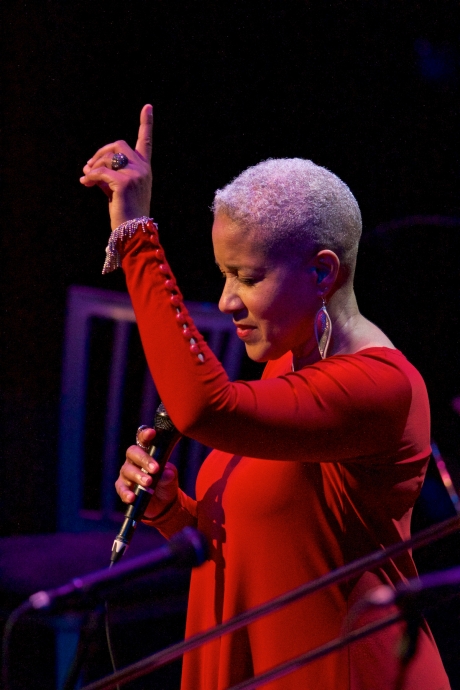
Weather veered to extremes during the first week of Spoleto Festival USA this year. Thunderstorms forced Arturo O’Farrill and the Afro Latin Jazz Orchestra to abandon the great outdoor Cistern Yard concert venue on Saturday night for another College of Charleston facility, the TD Arena. But René Marie, with a sextet that boasted Wycliffe Gordon and Etienne Charles, was untroubled by the elements the following evening as she became the first jazz headliner to perform at the totally rebuilt Gaillard Center.

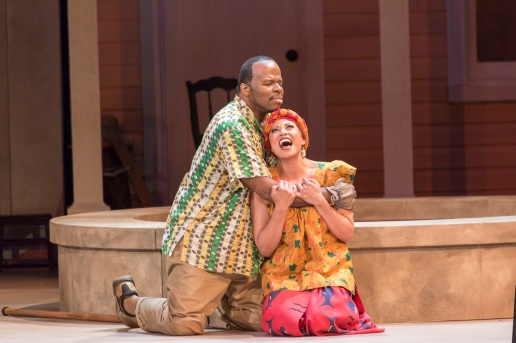
By the time Randy Weston brought his African Rhythms Sextet to the Gaillard on the following Thursday, heat and humidity had risen to summertime levels, firing a shot of Africa right back at the musicians. Opening night of the 40th annual festival set the tone, as Spoleto celebrated the new Gaillard with a dazzling new production of Porgy and Bess, the Gershwin Brothers’ folk opera that has been a wellspring of inspiration for American jazz.
Spoleto~Porgy and Bess

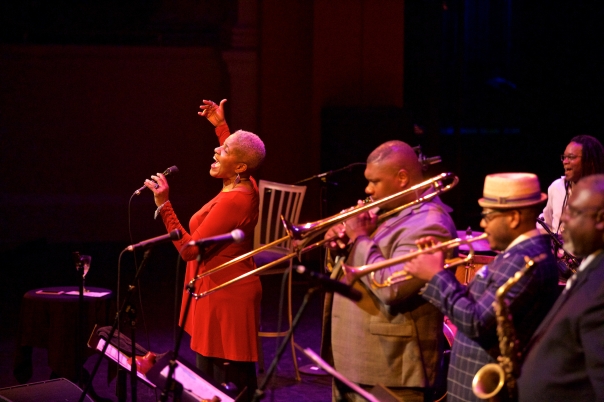
To tell the truth, the grand new hall proved to be better suited to amplified jazz than to grand opera. Alyson Cambridge, as Bess, was often unintelligible to those sitting deep in the house, and at the last two Spoleto performances of the festival, supertitles were added to combat the problem. Loudspeakers didn’t make their way into Gaillard until the second night of the festival at the 40th-Season Celebration Concert. Marie appeared briefly, singing two arias from Heiner Goebbels’ Surrogate Cities (originally presented at the 1999 festival), and it was obvious that the amplified acoustics would be marvelous the following evening.

From the outset, so was Marie, beginning with “Be the Change,” a powerful song that she wrote as a tribute to the victims of last year’s shootings at the Emanuel A.M.E. Church – across the street from the Gaillard. Inspired by her father, Lester, “The South Is Mine” was nearly as apropos for the occasion. While all the songs that followed were from her new The Sound of Red album, when she arrived at “Blessings,” Marie turned her original song into another opportunity to offer her love to Charleston.
© WILLIAM STRUHS 2015

All the songs on the program were, in fact, Marie originals, but the headliner gave her distinguished sidemen and her working trio ample space to shine. Though unacknowledged in the Festival’s prepublicity – or its lavish program book – altoist Sherman Irby was certainly a force to be reckoned with among the soloists, taking two spots in the arresting opener. Focus shifted to Charles and Gordon in “The South,” the trumpeter muted before the trombonist worked his customary magic with his plunger.

“Lost,” a musical portrait of Marie’s sister, and “If You Were Mine” narrowed the focus to Marie and her working trio, particularly pianist John Chin and bassist Elias Bailey, who both soloed admirably. Somewhat abbreviated compared with the album versions, both of Marie’s vocal performances were epic – delivering all of the scat and “Battle Hymn of the Republic” pyrotechnics from “Lost” (minus the drums) and more edge on the conversational parts of “Mine.”

Time borrowed from these arrangements was added onto a far more lavish version of “Colorado River Song” as the concert slipped into a more relaxed groove. Everybody chipped in solo spots, including drummer Quentin Baxter, who traded 4’s with all the horns after their solos. Marie herself replaced the recorded whistling chorus with a healthy helping of scat before the blowing began. “Blessings” sounds like a pop anthem on the new CD and retained its kinship with Dylan’s “Forever Young” in live performance but with a more fervid sanctified flavor as the horns joined in.

Chin, Gordon, Irby, and Charles all took tasty solos in the concluding “Joy of Jazz,” adding new fire to the piece and transforming the celebratory dance of the studio version into an exuberantly dancing celebration. People who are listening to The Sound of Red as it gets increasing airplay are getting the flavor of Marie’s new compositions, but at the Spoleto concert, we heard their power.

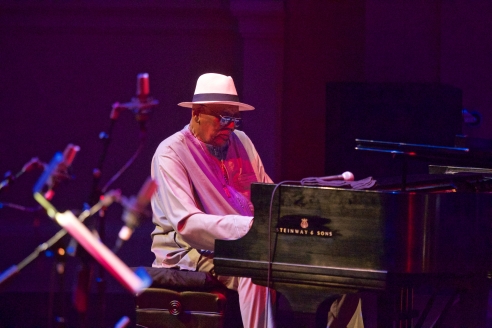
Marie was performing for the fourth time at Spoleto in the past 10 seasons, having already achieved Gaillard prestige at the old Auditorium back in 2009, but Weston appeared at the Gaillard for the first time this season, returning to the festival 35 years after his 1981 debut at Cistern Yard, where he and his sextet shared the bill with Taj Mahal. Weston’s return was a doubly auspicious occasion, since no purely instrumental jazz combo had headlined at the Gaillard since 1996-98, when Sonny Rollins, Ahmad Jamal, and George Shearing performed in successive years.
© WILLIAM STRUHS 2015

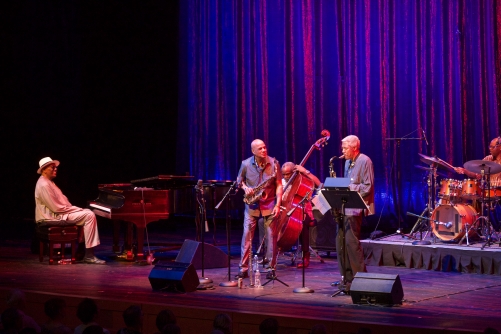
While the name was slightly different from the Randy Weston & African Rhythms with Billy Harper group that I saw at Dizzy’s Club Coca-Cola in 2011, the personnel were nearly the same, omitting only trombonist Robert Trowers. The one common thread running through the two sets was Weston’s “Blue Moses,” aptly referencing the 1972 album with that title, a more exotic release than other CTI recordings of that era. With Neil Clarke on African percussion, Lewis Nash on drums, and T.K. Blue occasionally on flute, the soundscape vividly echoes what Airto, Weston’s son Azzedin, and Hubert Laws etched so memorably into vinyl.

The ensemble seemed grander, more seasoned, and more African at the Gaillard than they had at Columbus Circle. On “Moses,” where Blue had soloed on soprano sax in New York, he now played flute over Harper’s tenor before breaking into his solo, heavily flavored with “Wade in the Water.” After Harper wailed, Clarke went to work slapping his African drums with answering claps from the audience cued by bassist Alex Blake. Then Blake, as he is so prone to do, upstaged everyone with his rich soloing, zestfully plucking and slapping and pouring out vocalese as he had done on two previous tunes. But the delight of it hadn’t worn thin.

As for Weston, he contented himself with long ruminative intro to “Moses” that nearly had me in tears before we finally arrived at the melody. The man has just passed 90, and he still plays marvelously well. He drew a direct connection between his African music and the sounds of nature, so in that respect the opening piece, “The Healer,” was the most successful of the night, culminating in group improv that conjured up a rainforest with Blue’s flute providing a glint of sunlight and birdsong. Weston led it off with a moody intro followed by Blake and his percussive work on bass. Flute and tenor layered on before Harper established his sax as king of this jungle.
© WILLIAM STRUHS 2015

“African Sunrise,” one several African Weston titles that is now 60 years old, still sounds pristine, though Blue’s alto solo hasn’t stopped quoting “Manteca” and other Gillespiana heard on Weston’s live 2010 Storyteller album. Weston’s outro, over Blake’s scatting bass, was a fresh wrinkle. “Little Niles” sounded surprisingly raw, Harper’s tenor and Blue’s alto screaming back and forth at each other, more agonized than waltzing – perhaps because, as Weston mentioned in his preface, he had outlived the son it was written for. The closer, “Niger Mambo,” brought more focus to Weston’s muscular playing but really served as a belated showcase for Nash, equally impressive with sticks and brushes.

While the Gaillard reconstruction was going on through the past three festivals, Marie, Béla Fleck, and Angelique Kidjo were among the performers who proved that TD Arena was a serviceable music venue. But longtime festivalgoers had to wonder whether we would return to the thrilling days of yesteryear when the old Gaillard served as the backup for outdoor concerts at the Cistern when they were forced to seek shelter from springtime storms. Ticketholders for O’Farrill’s concert were informed by email more than eight hours in advance that the concert had been moved to TD. With just one other Spoleto event scheduled at the basketball arena during the entire festival, the concert would not have to be delayed as usually happened at the Gaillard.

Leading from a keyboard or from behind a centerstage mic where he also introduced tunes, O’Farrill brought a brassy 17-piece band with him, including four trombones, four trumpets, and five saxes. Brash music that moved restlessly through Latin and South America, the first two-thirds of the set list came from the three Afro Latin Jazz Orchestra albums released over the past five years, beginning with “Rumba Urbana” from the 40 Acres and a Burro compilation of 2011 and zigzagging afterwards between that album, The Offense of the Drum (2014) and Cuba: The Conversation Continues (2015).

“On the Corner of Malecón and Bourbon” was the most exciting and majestic of the arrangements, shuttling from ragtime to Latin to “St. James Infirmary” on an epic path blazed by multiple piano and baritone sax spots, blaring brass ensembles, a four-trumpet free-for-all, and a bowed bass solo. “Guajira Simple” offered a greater variety of moods as O’Farrill played a dreamy intro as the stage lights were dimmed, with trombone, soprano sax and trumpet layering on as the bandleader quickened the tempo. Then came a quiet interlude as Ivan Renta soloed soulfully on tenor, followed by Bobby Porcelli on flute before O’Farrill triggered a huge orchestral build from the keyboard.

Like Marie and Weston, O’Farrill had a message for Charleston, only it wasn’t consolation for murdered churchgoers or a benison of nature and healing. After he and his band rocked the house with Emilio Solla’s “Llegará, Llegará, Llegará,” O’Farrill strode up to the microphone and declared that he was a proud Mexican American – and not a rapist, a murderer, or a drug dealer. To make sure that the target of his remarks was not misunderstood, O’Farrill apologized in advance for his language in advance and announced that the title of the next piece would be “Trump, Fuck Trump.”

Not surprisingly in South Carolina, one of the states that The Donald won during the Republican primaries, more than a couple of people responded by walking out amid the general approval for what O’Farrill was saying. There were some purposeful anti-musical moments in the composition, to be sure – and a brief, pitch-perfect Trump impersonation by trumpeter Seneca Black, judiciously (and cryptically) limited to a single word: “China!” After this memorable episode, the concert ended with “Obsesion,” with Rafi Malkiel offering the last of his fine trombone solos and tenor saxophonist Chad Lefkowitz-Brown, heretofore anonymous, getting a chance to shine.
Spoleto~Cécile McLorin Salvant_Julia Lynn Photography

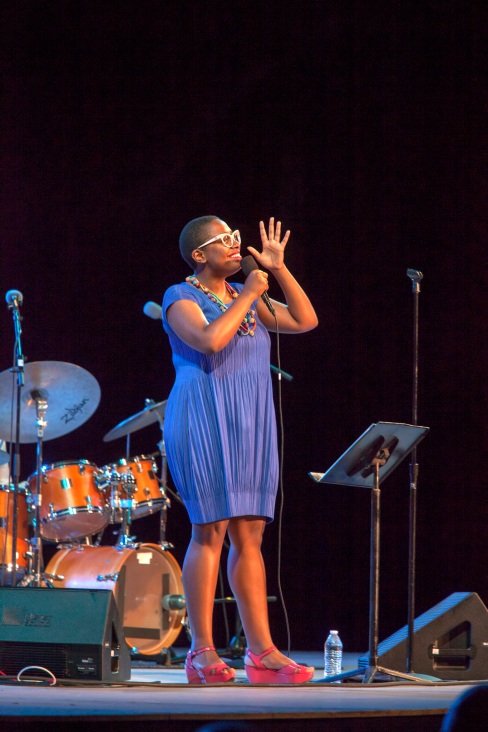
Time seems to stand still when Cécile McLorin Salvant comes to sing with her tight trio. You can listen to Salvant’s lightly dramatized versions of “The Trolley Song” or “Wives and Lovers” and imagine that she is subverting their archaic attitudes with a subtle feminist archness. Or you could just as easily conclude that she’s wholeheartedly immersing herself in Judy Garland’s pop Cinderella or Burt Bacharach’s domesticated Barbi.

Fortunately, there always seems to be a modicum of restlessness in the way Salvant selects her material. While I’ve heard her treatments of Bob Dorough’s “Nothing Like You,” Leonard Bernstein’s “Something’s Coming,” and her own original “Fog” before, it was interesting to see that Salvant’s new excavations include “Somehow I Never Could Believe.” Introduced as an aria from Kurt Weill’s 1947 Street Scene, Salvant transformed the Langston Hughes lyric into an urban odyssey.

“What’s the Matter Now?” swiped from the Bessie Smith songbook had some of the friskiness Salvant fans crave, with a tasty solo from bassist Paul Sikivie that far outshone his work on “So in Love” and a splashy solo from pianist Aaron Diehl that nicely set up Salvant’s honky-tonk reprise and his own outro. “Wild Women Don’t Have the Blues” offered much of the same earlier in the set, but there was never a fully seismic Salvant eruption of “Growlin’ Dan” or “You Bring Out the Savage in Me” proportions, if that was among your expectations.

No, Salvant’s lava flow was relatively under control this time with titles like “I Get a Kick Out of You” and “Wild Is Love” on the set list. Lawrence Leathers never really had the opportunity to stand out on his own on drums, but he mixed it up tellingly on “I Get a Kick” and “Something’s Coming.” What Diehl and Leathers did on “The Trolley Song” was more of a marvel than a mere accompaniment, for their intro and their interjections became part of the storytelling ride.

You probably heard about Jason Moran’s All Rise tribute to Fats Waller a couple of years back, but that CD was actually the studio version of a live event that Moran had conceived for the Harlem Stage Gatehouse in 2011. The event, a Fats Waller Dance Party, features Moran at both acoustic and Fender Rhodes pianos, often wearing a huge papier-mâché mask created by Didier Civil as he plays. Moran has taken the event all over the country, and the amount of dancing and partying that he, his combo, his dancers, and his vocalists have been able to spark has varied from city to city.

High humidity persisted at Spoleto into its second weekend, and the temperature still hovered above 80°F for Moran’s Cistern Yard concert. So I was not at all eager to rise from my seat and dance, no matter how heartily vocalist Lisa E. Harris or trumpeter Donvonte McCoy urged us on. Most of the audience shared my disinclination, Moran himself frequently couldn’t take the heat under his mask, and even the ebullient Harris removed her chapeau for a spell of relief.
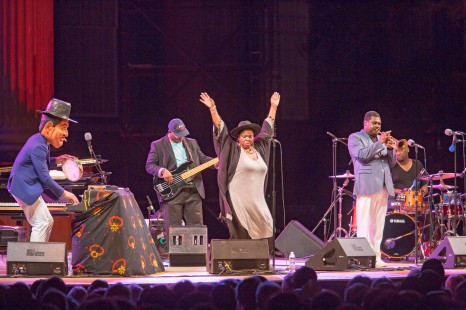
Spoleto~Jason Moran_Julia Lynn Photography

How much you might have liked this Waller Party – and how much I tended to dislike it – can be sampled by streaming the “Honeysuckle Rose” and “Ain’t Misbehavin’” tracks from All Rise. I’m not on board with thinking these are inspired re-imaginings of Waller’s music befitting a MacArthur genius. They strike me as listless, simplified, bridge-averse descents into stultifying Motown doo-wop. Above this norm, “Yacht Club Swing” and “I Found a New Baby” had genuine spark; and Moran’s newer additions, his original “Fat Lick” and a Wallerized version of Ornette Coleman’s “Lonely Woman,” won me over.

But while “Honeysuckle” and “Misbehavin’” may indeed fulfill Moran’s “joyful elegy” concept for some, I couldn’t find a flicker of mirth in the lugubrious dirge that Harris made out of “Ain’t Nobody’s Business.” Compounding my frustrations with Harris, trumpeter McCoy not only looked a lot like Waller, he sounded like him as well in his only vocal on “Two Sleepy People.” More McCoy would have meant more Waller at the party.

The pluses didn’t end there for those of us susceptible to the precocity of 12-year-olds. Right before “Yacht Club Swing,” Moran introduced his twin sons, Malcolm and Jonas, saying he had only recently witnessed the results of their tutelage at the Alvin Ailey School. Whether or not the lithe moves they proceeded to cut were part of the Ailey curriculum, they certainly added youthful energy to Moran’s fitfully eventful vamp. But party lift-off didn’t occur until the unexpected invasion of cast members from Grace Notes, a curious blend of music, poetry, and dance that had premiered earlier in the evening a block away.

Dancers from that production streamed onto the stage during “The Joint Is Jumpin’,” not only dancing with Harris and the Moran twins but also forming a whirling dance circle around the musicians. Topping off the invasion, trombonist Craig Harris, part of the Grace Notes jazz band, came up onstage and soloed with righteous conviction. While this explosion didn’t turn the tide out in the audience, a substantial number of people migrated off to the side of the stage and turned it into a dance floor – once the funereal “Ain’t Nobody’s Business” was done – proof that Moran’s brand of Waller was connecting with younger listeners.
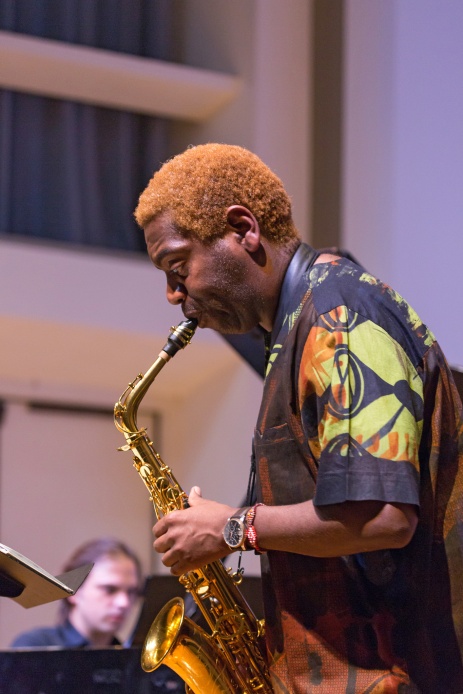
Spoleto~Bohemian Trio2_Julia Lynn Photography

While shuttling back and forth between Africa and Latin America for his wondrous Grammy-nominated New Throned King music, saxophonist-composer Yosvany Terry was also on an alternate path. His Bohemian Trio was formed at about the same time that the Afro-Latin album was in production, with Cuban-born pianist Orlando Alonso and Franco-American cellist Yves Dharamraj. The music they play isn’t as exuberant or raucous as the tracks on New Throned King, calmer for its classical and European elements, so the intimate Simons Center Recital Hall was a more fitting place for them to perform than the Cistern or the Gaillard.

The eclecticism of the trio’s approach was evident from the outset as Terry on alto sax, Dharamraj, and Alonso brought out the classical flavor in the fugue-like opening of Pedro Giraudo’s “Push Gift.” Past the midpoint of this arrangement, Terry broke through its formality with an extended solo. Giraudo was a composer who might naturally be expected to be represented in a Terry concert, but the next two offerings took us to works by André Previn and Sonia Jacobsen.

The Trio’s performance of “White Raven” from Jacobsen’s Fables Macabres was a radical transformation, turning an orchestral piece with strings into chamber music, with Terry once again taking charge in the middle. Playing the fifth prelude from Previn’s “The Invisible Drummer,” Alonso may not have played on the piece but he surely played with it, making the “invisible” drumming quite audible with his insistent pounding. That repurposed prelude became an introduction for Terry’s original, “Punto Cubano de Domingo,” where cello and soprano sax launched the piece in canonical fashion and both Terry and Dharamraj took solos.

Compositions in the latter part of the program didn’t drift away from the Western Hemisphere, with second helpings of works by Terry and Argentinian bandleader Giraudo, plus an additional dose of Argentina from Emilio Solla. The Bohemian version of Solla’s “Llegará, Llegará, Llegará” didn’t have the epic build of the composer’s recent Second Half album (or the firepower of O’Farrill’s cover at the Cistern), but it was a fine showcase for Alonso, whose piano solo revealed definite Chick Corea inclinations with Terry backing up on chékere.

Terry’s sound is most distinctive on soprano, and “Tarde en La Lisa” was the best example of the exuberance and plenitude of his ideas. Alonso’s backing had steely force as the composer played the line, a perfect launch pad for the soprano rant that followed. Then the piano was an island of calm, setting us up for a full round of vigorous Bohemian solos before Terry circled back to the melody. “Hiroshima,” the placid finale on the Giraudo Jazz Orchestra’s 2009 El Viaje release, was not radically altered at all as the Bohemians’ valedictory. Dharamraj eloquently played the line before Alonso and Terry, still on soprano, paid their soulful, subdued respects.
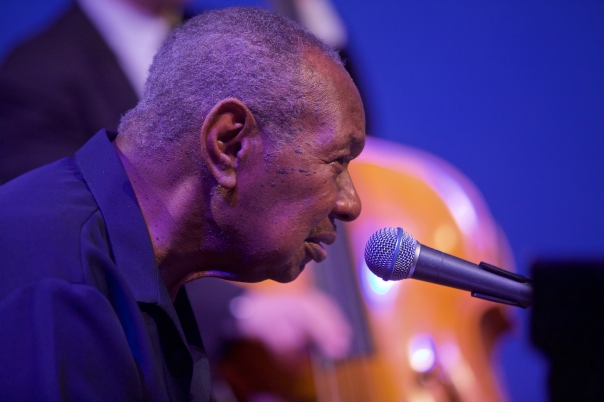
© WILLIAM STRUHS 2015

Yielding in seniority at this Spoleto only to Weston, Freddy Cole and his quartet still sounded fresh although the leader is nearing 85. Cole’s voice isn’t as rich and rounded as it was when he cut his first album in 1964, but there are still moments when he sounds like his elder brother Nat in his prime. Thanks to the exploits of guitarist Randy Napoleon, there are also moments when the new quartet sounds instrumentally like the vintage King Cole Trio of the 1940’s, for little brother can still solo deliciously at the keyboard.

Although Cole’s set list included a healthy number of familiar titles, they weren’t necessarily those you’d expect: “Cottage for Sale,” “Love Walked In,” and “Easy to Remember” slipped in with the more predictable “Pretend,” “Route 66,” and “L-O-V-E.” Before we reconnected with these songs, Cole walked us down less-trodden paths, beginning with “Wonder Why” and continuing with “Where Can I Go Without You?” “A Lovely Way to Spend an Evening,” and “How Little We Know.”

Even when Cole began stirring up old memories, there were rarer gems mixed in, “I Just Found Out About Love” after “Pretend,” then “Maybe It’s Because” and “To the Ends of the Earth” after “Route 66.” Cole sings with such simplicity and assurance that the rather bland Simons space was transformed into a moody nightclub as he performed. With solos by Napoleon on 11 of the 13 tunes – and occasionally two on a single arrangement – to go along with six piano solos from the leader, it seemed like there was all the time in the world for each song, old or new, to etch its way into memory.

There seemed to be no end to the number of familiar and unfamiliar songs Cole knew and could effortlessly sing – with a familiarity that reached their depths, along with a hip swing that must be a family heirloom. Under Cole’s spell, the old songs seemed as new as the ones I’d never heard. Getting acquainted with the Jimmy Van Heusen lyrics for “How Little We Know,” where “two tingles intermingle” and we find “how ignorant bliss is,” was like a first visit to a garden of delight.

Roxie gets the Pippin treatment

CENTRAL_THEA_Chicago_02[11]

Theater reviews: Chicago and Manifest Pussy

By Perry Tannenbaum

When I saw Annie at Halton Theater earlier this month, I had a theory about why the first show in CPCC Summer’s 43rd season boasted such opulent production values. Surely they had chosen to follow up with Kander and Ebb’s Chicago because this decadent vaudeville could be produced so cheaply, freeing funds for the other musicals on CP’s summer slate.

Thanks to the set and costume designs by Robert Croghan, I could discard that theory almost as soon as I settled into my seat. The onstage band, led by musical director Drina Keen, is mostly concealed by an art deco façade with wooden frames and chrome bars. An overarching bridge that crests in the middle covers the band, with a backlit outline of Chicago’s skyline stretching up into the fly loft.

When Roxie Hart dreams of the vaudeville stardom that will come with her killer celebrity, a huge luridly lit marquee drops down from the fly loft, and when Roxie and fellow murderess Velma Kelly achieve that dream together, another fresh marquee drops down. The entire proscenium has been redone to chime in with the art deco style. Its stripes don’t seem to be electrified, but at the denouement, reflections from a row of red footlights set them aglow. The lurid footlights are the cherry on the bottom of Gary Sivak’s outstanding lighting design.

Croghan’s costumes are even bolder. Prison bars descend from the flies when we arrive at the Chicago jail, and Croghan doesn’t let us forget that the women inmates are celebs. The black stripes on their prison uniforms are far wider than normal, twinkling with glitter. I can’t remember any version of “Cell Block Tango,” either locally produced or in a national tour, that oozed so much sinful glamor.

The wildest wrinkle comes later when we reach Billy Flynn’s incomparably corrupt pretrial “Razzle Dazzle” peptalk. Very much like the recent Broadway revival of Pippin, the stage is transformed into a circus with colorful costumes, a flashier onset of glitter and an outbreak of acrobatics. Much of this Pippin-effect lingers through Roxie’s travesty of a trial.

Of course, choreographer Tod Kubo and stage director Ron Chisholm are involved in this circus conspiracy, for every woman in the cellblock seems able to do a split. Both Roxie and Velma can also turn cartwheels. Chisholm is also a splendid choreographer, so casting demands must have been precise and rigorous with Kubo’s work very much on his mind.

Aside from the inevitable orphans, the excellence of Annie under Tom Hollis’s direction mostly emanated from seasoned performers, Beau Stroupe as Daddy Warbucks, Susan Gundersheim as Grace Farrell, and Allison Rhinehart as Miss Hannigan. Even where Chisholm might have looked for more fully aged talents; in less athletic roles such as Amos Hart, lawyer Flynn, and corrupt prison matron Mama Morton; he opts for youth.

For the most part, we can overlook the profusion of college students and recent grads onstage at the Halton, but overall, Chicago needs a bit more swagger and arrogance than I was seeing, and the superabundance of youth is to blame. Justin Miller doesn’t always seem to grasp the full magnitude of Flynn’s slickness and hypocrisy, and as Velma, Caroline Chisholm occasionally loses the edge of the baddest broad in the cellblock and starts worrying whether she’s executing her dance routines correctly.

Both Miller and Chisholm often bring fresh juice to Billy and Velma, but it’s Meredith Zahn as Roxie who demonstrates what happens when you add swagger and arrogance to the package — or you simply inhabit Roxie’s clever wickedness every moment. Zahn isn’t the best singer or dancer on the stage, but her “Funny Honey” solo elevates the show before “Cell Block Tango” sustains that plateau. Most importantly, in the climactic courtroom scene, when Flynn becomes the ventriloquist behind Roxie’s every word on the witness stand, Zahn’s floppy antics as the lip-syncing ragdoll sitting on Billy’s lap are by far the best I’ve seen.

Stephen Stamps isn’t quite as innocuous as a true “Mister Cellophane” should be, but that number remained a uniquely quiet showstopper — and the scenes with Roxie had the right combination of intensity and cluelessness as Amos processed the fact that his wife had been screwing around with the furniture guy and expected him to take the blame for killing him. Alex Aguilar doesn’t quite have the high notes for Mary Sunshine’s bleeding heart vocal, but her unmasking is a hoot.

A little bit more nastiness and downright vulgarity wouldn’t have hurt Jessica Rebecca as Mama Morton, but she’s a very formidable stage presence. What was so jaw-droppingly good about the “Class” duet with Chisholm wasn’t how crass it was on the eighth time I’d seen it but how beautifully harmonized it is when the two sing together.

So I’ve revised my theory. The significant anniversary that has happened on Elizabeth Avenue isn’t CPCC Summer’s 43rd. No, it’s the Halton’s tenth anniversary that has sparked the continuing turnaround, which began with the landmark production of The Phantom of the Opera last fall. Now if I had presented that show, I might have resolved, “Enough of these ‘Nice try, kid’ productions!” and maybe that’s how Hollis, CPCC’s Theatre Department chair, looked at it.

Or maybe Hollis and CPCC’s administration got on board with the idea that theatre at the Halton should always strive for the same level of excellence. Whatever is going on behind the scenes, the CPCC Summer product is more polished at the Halton than ever before, not only because the sound system problems have been exorcised but because they’re beginning to utilize the full capabilities of the stage.

If that’s the new reality, the Halton may now be the best place in Charlotte to see a live musical. Maybe CPCC will need to start selling their balcony seats again once the word gets around.

As I climbed the stairs to UpStage last Wednesday to see the Charlotte stop on Shakina Nayfack’s Manifest Pussy tour, three worries concerned me: that it would be too preachy, too raunchy and too loud. Nayfack was bringing her one-woman show to North Carolina in response to HB2, and she’d been photographed with panties down, sitting on a urinal (see cover of our June 9 issue).

The bandstand set-up for four pieces, including a guitar, a keyboard, a drum set and an electric bass, seemed to confirm my fear that I’d be rocked to uncomfortable decibel levels.

What I witnessed turned out to be two autobiographical rock musicals artfully woven together to form a narrative that reminded me a lot of Hedwig and the Angry Inch and a little of The Vagina Monologues. Instead of cooing over and affirming the glory of having a vagina as Monologues does, Pussy dwelt on worries, misgivings and anxieties Nayfack went through in getting her vagina via a complex surgery in Thailand. And unlike Hedwig, which tells about the heartaches experienced by a rock singer after a botched sex-change operation, Pussy stays focused on what it feels like to go through the procedure — also partially botched — and waking up to find a railroad of 640 stitches framing a fragile canal where your penis once was.

Bottomline, I liked Pussy better than either Vagina or Hedwig. Nayfack isn’t as cute or coy as the Vagina monologists nor as offputting as Hedwig. Some of Nayfack’s songs are jangly and metallic, but others are quite beautiful. Above all, I learned more about the inner trials that transgender people go through — physically and mentally — than I ever thought I could know.


Technical Difficulties Nearly Capsize “Singin’ in the Rain”

singin

By Perry Tannenbaum

Few musicals are more spectacular on stage than Singin’ in the Rain, adapted by Betty Comden and Adolph Green from their celebrated screenplay. People remember the title tune and Gene Kelly’s carefree rain-drenched spin around a lamppost, but there are other notable songs in the score by Nacio Herb Brown and Arthur Freed, including “You Stepped Out of a Dream,” “All I Do Is Dream of You,” “Make’Em Laugh,” and “Good Mornin’.” While there’s little that’s unpredictable in the storyline, Comden and Green add plenty of comedy to the abundant tapping and hoofing.

Central Piedmont Community College Summer Theatre had a marvelous hit with the show in 2001, but there are understandable reasons why it hasn’t been reprised in the Metrolina area for the past 15 years. To make a splash with Singin’ in the Rain, a company needs to find three triple threats to play the three leads and an accomplished comedienne to play squeaky-voiced villainess Lina Lamont. Above all, you have to make it rain at the end of Act I and restart with a dry stage after intermission, Herculean plumbing and drainage challenges. You have to applaud Davidson Community Players for tackling these difficulties at Duke Family Performance Hall, but in the proud history of this company, Singin’ in the Rain is destined to become legendary for its technical shortcomings.

Lina is the beauteous co-star of the dashing Don Lockwood in numerous silent screen romances, not at all shy about feeding the Hollywood gossip mill with rumors that she and Don are soon to be wed, reigning happily afterwards as king and queen of Tinseltown. Just two things wrong with Lina’s reveries: Don despises Lina and Warner Brothers is about to release The Jazz Singer. While “The Royal Rascal” is a box office hit for Lockwood and Lamont, movie producer R.F. Simpson realizes that footage already shot for “The Dueling Cavalier” is likely to be stillborn because talkies have triumphed so suddenly and decisively. Lina’s voice is so unromantic that Simpson already contrives to make sure she does not speak in public at Hollywood openings.

Don and his old vaudeville sidekick Cosmo Brown cook up a technical stratagem. They will overdub Lina’s toxic voice with a pleasant one. What’s more, Cosmo, a skilled composer, will help turn the whole shebang into a musical, “The Dancing Cavalier.” After the “Royal Rascal” premiere, Don has met and fallen madly in love with aspiring actress Kathy Selden, a triple threat who can supply all the dubbing and body doubling the studio needs. All they have to do is keep the wildly jealous Lina from finding out before the movie is released.

singin laugh

Though they aren’t exactly youngsters, Dan Brunson and Matt Merrell make an admirable vaudeville team as Don and Cosmo. Brunson’s fortes are singing and acting, so Don’s songs and his romancing and his comedy all come off well, but he’s only passable as a dancer. It’s almost fortunate that so much went awry on opening night to draw my attention away from Brunson’s mediocre dancing. While Brunson was unquestionably wet by the end of his grand “Singin’ in the Rain” solo, there had been no detectable waterworks or rain. The iconic lamppost was so unstable that I was actually relieved that he didn’t attempt to take a spin on it. Brunson actually took a spill during his epic solo – or did he? He was so professional covering up, executing a couple of comical swimming strokes while he was splayed out on the floor.

Disaster seemed even more imminent in the preceding “Good Mornin'” trio with Cosmo and Kathy. Choreographer Kathy Mullis has them doing a complex routine with a pair of adjoining stairs in the background and a sofa, which the trio is supposed to flop over and/or topple at the end. None of these pieces of furniture was securely braked after they had been rolled onstage. It was something of a victory when Brunson, Merrell, and Emily Klingman, playing Kathy, didn’t break a limb during this hazardous scene. The comedy of technical errors actually beset Brunson earlier, when the tear in Lockwood’s tear-away tux sleeve became prematurely visible during “You Stepped out of a Dream.”

Merrell has performed almost exclusively in DCP comedies over the years, so it was surprising to find how adept – and athletic – he is as a dancer. His slapstick athleticism on his solo showcase, “Make ‘Em Laugh,” drew roars from the audience, and his tap duo with Brunson on the “Moses Supposes” novelty was also a sensation, though both men appeared winded (and out of sync) as their routine was ending. As the comical sidekick, Merrell could afford to show this weariness without really breaking character. Less experienced than the leading men, Della Knowles as Lina could have used more feedback from director Sylvia Schnople while Emily Klingman as Kathy could have benefited from more encouragement. Knowles altered her voice so radically as Lina that she was mostly unintelligible until deep into Act II, but Klingman’s low-energy performance was perhaps more puzzling. She never seemed to grasp the elemental idea that Kathy was worthier of stardom than Lina.

Technical difficulties that plagued the opening performance certainly disfigured some of the choreography that Mullis brought to this production, but the merits of her work are inescapable, especially in the big ensembles – which have become a tapping DCP trademark. Costumes by John David Brown III, Andy Lominac, and David Townsend surround Brunson and Merrell with a rainbow of color in their final “Broadway Melody” duet, and with Anne Lambert as gossip empress Dora Bailey and Jim Esposito as studio chieftain Simpson, non-singing support is unexpectedly strong.

Ultimately, the sloppiness of this opening night effort nearly sank it. Most of that sloppiness is fixable if tech director Tim Beany, stage manager Lydia Taylor, and the stage crew will start sweating the small details – and Schnople demands more excellence. Knowles struggled to put on her peignoir because it wasn’t laid out properly on her divan, drawing unintended hoots from the audience that could have been prevented. Clips of silent films projected over the stage were clearly videos converted into black and white. Software exists that will distress and vignette video to look like film, but even that wouldn’t help the moribund silent film acting. It must be grand opera, not bland soap opera!

Making and Faking Love

Theater reviews: Stage Kiss and Charlotte Squawks: 12 Angry Hens

Returning from intermission at the Actor’s Theatre of Charlotte’s production of Stage Kiss, I was strangely disoriented when I saw the set for Act 2 of Sarah Ruhl’s comedy. For most of Act 1, our protagonists were the leading players in a revival of a sentimental drama, The Last Kiss. “She” had been Ada Wilcox, a happily married woman given one month to live, and “He” was Johnny Lowell, the love of her life, reunited with his long-lost love through the generosity of Ada’s husband.

Robert Lee Simmons as “He” and Lisa Hugo as “She” in Stage Kiss. (Photo by George Hendricks Photography)

  • Robert Lee Simmons as “He” and Lisa Hugo as “She” in Stage Kiss. (Photo by George Hendricks Photography)

He and She had also had a youthful romance earlier in their acting careers, before director Adrian Schwalbach had unwittingly united them by casting them as the leads in this sudsy revival. By the end of the play’s brief run, He and She have fallen back in love for real, despite the fact that She now has a for-real husband and teenage daughter. So they skip the closing night cast party, the better to consummate their rekindled romance.

Somehow when I saw the rundown Greenwich Village apartment where the lovers adjourned, I momentarily forgot that He was not Johnny Lowell, the celebrated sculptor who flew in from Sweden to be at Ada’s bedside. No, He’s merely one of the legions of fine actors strewn around Manhattan who have sacrificed the niceties of middle class comfort to pursue their art.

Of course, what Ruhl very much wishes to demonstrate is that, while kissing nine times at each performance eight times a week for four weeks – after additional weeks of rehearsal — She and He have also let themselves forget that they are not Ada and Johnny. Or at least they have allowed themselves to become confused about it.

If you’ve ever immersed yourself in a major stage role for a couple of months, you already know how easy it is to slip away from the role you’re playing in life to the one you play onstage. Shuttling back and forth is an occupational hazard for actors — or a welcome escape.

Watching the rehearsals for The Last Kiss, plus a Schwalbach opus that occupies us in Act 2, we discover additional layers that Ruhl has woven into her comedy. For one, He has richly earned the squalor he lives in, for He is a wretched actor in both of these wretched plays-within-the-play. In The Last Kiss, He is understudied by Kevin, a gay actor who is even more wretched, noticeably uncomfortable with all that hetero kissing.

We can also see that She is not being ensnared by a web of glamor as she endures Kevin’s awkwardness, an injury to her co-star, and eventually an injury of her own. In the final Actor’s Theatre production at their Stonewall Street location, we see the artifice that goes into theatre on a stage that is almost stripped bare of scenery.

But there must be artistry if we’re to believe we’re really watching an incompetent director directing wretched actors in wretched plays and that an able actress, after a long hiatus, can return to the stage and be so seduced by the experience. Our director, Ann Marie Costa, helps us to navigate, deftly calibrating the inadequacy we see from Robert Lee Simmons as He/Johnny and the wild incompetence we see from Chip Decker as Kevin.

Decker gives us more excess than Simmons, who gives plenty, so it’s quite clear that Costa has them both shunning restraint. When it comes to Schwalbach, a director who devoutly avoids prescribing how his actors should act, Costa no doubt found that Ruhl was taunting her into decisiveness. What we get from Dennis Delamar, then, is just a slight winking acknowledgement that directors’ sanctimonious abdication of their directing responsibilities is absolutely absurd, particularly when a script is bad — or you’re also the playwright.

When we first see her, She doesn’t give the best audition for Ada. In fact, She arrives so late that auditions are actually over. From the outset, Schwalbach’s laxity is working in her favor, so Lisa Hugo must constantly be deciding how much or how little of She’s fallibility should be added to all the shoddiness and incompetence surrounding her. I can almost hear Costa telling Hugo, “go with your instincts,” echoing Schwalbach. Otherwise, how would Hugo’s performance come off so naturally without ever seeming to be calculated?

It’s easy enough to track Mark Sutch in this cast, playing both Ada’s and She’s husband, but Emily Ramirez and Katy Shepherd conspire on a flipflop. Ramirez plays Ada’s daughter before returning as He’s bong-puffing girlfriend after the break, while Shepherd goes from Ada’s maid to She’s daughter. Sutch gets to be the first grownup in the room, catching up with the wayward actress, a welcome infusion of sanity. Yet even more welcome, in an undeniably cerebral comedy, is the real emotion that Shepherd brings us as the abandoned child.

Ultimately, those family moments aren’t intended to stick with us. That’s why Ada and Johnny have names but the actors who play them have none at all. What Ruhl has written, masquerading as a comedy, is a meditation on the nature of theatre and playacting.

The anger of Charlotte Squawks: 12 Angry Hens can be difficult to perceive at times. Surveying the foibles of our city, state and nation since last year’s 11th Glower, producer Mike Collins and writer Brian Kahn came up with craft beer, airline bonus miles, Rocket Mortgages, Johnny Manziel and food chains as fresh new objects of satire. Win or lose, the Panthers and the Hornets always get a song parody apiece at Booth Playhouse, so that segment was a black hole in this year’s satirical cavalcade. In the ongoing lampooning of Morris Jenkins and Bobby, their latenight vigils have now blossomed into bromance.

Charlotte Squawks: 12 Angry Hens runs through June 26 at Booth Playhouse. (Photo by LunahZon Photography)

  • Charlotte Squawks: 12 Angry Hens runs through June 26 at Booth Playhouse. (Photo by LunahZon Photography)

So a backhanded thanks must go to the angry hens in Raleigh who hurriedly passed HB2 and to our lame-brained governor who hurriedly signed it. The bathroom hysteria and the nationwide backlash were the sparks that Kahn sorely needed to make Squawks squawk. Patrick Ratchford, who responds to Mr. Jenkins’ overtures so repellently as Bobby, reprises his Governor McCrory impersonation in “This Is So Unfair, Man.” This parody of Johnny Cash’s “I’ve Been Everywhere,” the second of the night, allows McCrory to catalogue the businesses that have voiced disapproval of HB2 and scrapped plans to move here. And “Let ‘Em Pee,” parodying the Beatles’ “Let It Be,” underscores the stupidity of it all.

If anyone stole the show from Ratchford, it was Robbie Jaeger, who took flight as Mr. Jenkins in a weird Dirty Dancing mashup. Weirder yet was his stint as a crazed Charlotte trolley car driver in “Helter Streetcar,” a parody of the Beatles’ “Helter Skelter.”

It’s a political year, but I can’t say that the pokes at survivors Bernie Sanders, Hilary Clinton and Donald Trump are as pointed as those aimed at the dearly departed Ted Cruz. I had to wonder whether the annual filmed appearances by Pat McCrory could possibly continue.

The answer came early as McCrory began his customary video on the five screens spread around the Booth – and was emphatically stopped almost as soon as he started, with a classy simulation of Gov Pat being flushed down a toilet. One of the best moments ever for Squawks.

Classics Collide at Spoleto

Reviews: Porgy and Bess and The Importance of Being Earnest

Spoleto~Porgy and Bess2

By Perry Tannenbaum

They’re not just reviving Porgy and Bess at Spoleto Festival USA. They’ve designated “Porgy Houses” in Historic Charleston, set up Porgy tours to better acquaint you with the opera’s characters and Charleston landmarks – as well as the story’s author, Charlestonian DuBose Heyward – and there are Porgy exhibits at the libraries, museums, and galleries around town.

And they’re not merely celebrating Charleston and its indigenous black and Gullah cultures in this Porgy and Bess revival – with vibrant stage scenery and costumes by Charleston visual artist Jonathan Green. They’re celebrating the rebirth of Gaillard Center, the preeminent performance site at Spoleto, and they’re celebrating the festival’s 40th anniversary.

If the combination of Spoleto Festival artistry, authentic Charleston flavor, and an impressive new performing arts palace sounds like the perfect recipe for an incomparable Porgy and Bess, it almost is. The big letdown on opening night probably resulted from director David Herskovits, conductor Stefan Asbury, and the principal players not spending sufficient rehearsal time in the new hall – or with the Gaillard’s sound crew and engineer.

My first full week listening to Spoleto performances at the Gaillard convinced me that the hall’s acoustics aren’t weak. With new speaker towers flanking the stage, performances by jazz diva René Marie on the first Sunday of Spoleto and by the Randy Weston African Rhythms Sextet on the following Thursday were as sonically rich as they were artistically satisfying. But the size of the hall took its toll on the unamplified voices of the solo vocalists on opera night.

Spoleto~Porgy and Bess

This was the most beautifully sung Porgy that I’ve heard in live performance – but the least intelligible. You get all the great music from Lester Lynch as Porgy, Alyson Cambridge as Bess, Courtney Johnson as Clara, Sidney Outlaw as Jake, Victor Ryan Robertson as Sportin’ Life, Indra Thomas as Serena, and Eric Greene as Crown. Ah, but when we cross over to the lyrics and dialogue, we might call this production Porgy and Crown, for Lynch and Greene bring the most fully arresting portrayals onstage.

Lynch as Porgy is the best I’ve heard live or on recordings, overturning the notion that the hero of this drama is a weak pathetic cripple. Here Porgy returns from his police examination on the humble sledge we often associate with him, but in this production, we have long since become accustomed to seeing him with a cane or in a quite respectable wheelchair. A couple of those wheelchairs, including the one that’s outfitted for his trip to New York at the triumphant conclusion, are fit for a tribal king.

Green’s scenic and costume designs similarly overturn the perception that the people of Catfish Row are poor, oppressed, ignorant, and uncultured. Green and Herskovits have both asserted that African-American culture is the soul of Charleston – and that it has been for nearly 400 years. Part of Porgy’s strength and confidence becomes manifest, Herskovits has noted, when he allows Bess to join the townspeople at the fateful excursion to Kittiwah Island.

The other parts are evident in Lynch’s voice. Not a word is changed here, but we gradually realize that the pity we have felt for Porgy in the past has been fashioned by actors who have portrayed him, by their pitying co-stars and directors, and by our conditioned responses. A descendant of one of the signers of the Declaration of Independence, Heyward discreetly hid a withered arm throughout his life, so his sympathies – as well as the original title of his novel – are definitely with Porgy.

Torn between three men, Bess’s apparent strength gradually vanishes in a haze of submissiveness, fatalism, and happy dust. While Cambridge fully captures Bess’s inner turmoil and anguish in her voice, her vowels migrate into Sopranoland, where the love of her life is transformed into “Pogah” and she neither talks the talk nor walks the walk. I’m really not sure Cambridge had a clue what was going on when she tossed Crown her “look at what arms you got” line. But when she pleads with Porgy that “it’s gonna feel like dyin’” if Crown takes her away, the urgency is primal.

Spoleto~Porgy and Bess3

What still comes through in the end, vividly and freshly, is that Bess needs Porgy at least as much as he needs her. This impression is actually enhanced by the colorful portraits that we see of Crown and Sportin’ Life. Bringing chaos and bloodshed to a dice game or singing “A Red Headed Woman,” Greene is far more dangerous as Crown than ribald or desirable. Bess’s other stalker doesn’t amount to much, either. Tempting Bess with his happy dust, Robertson is the sly city slickster version of Sportin’ Life, cracking wise rather than satirically in his signature “It Ain’t Necessarily So,” where I grieved for the missing Methuselah stanza.

Designing costumes for Serena and Jake, Green brings out their special characteristics, Serena’s upright dignity and Jake’s wholesome determination. Thomas pours out Serena’s grief in “My Man’s Gone Now,” and Outlaw struts Jake’s infectious energy in “It Takes a Long Pull.” The Johnson C. Smith University Choir, decked out in a wonderful array of colors and styles, makes a bustling community out of Catfish Row and reminds us of the beauties that Gershwin packed into the ensembles.

The cherry on top of it all is the luxuriant presentation of the street vendors’ cries: Shanta L. Johnson as the Strawberry Woman, Tamar Green as the Crabman, and Walter J. Jackson as Peter the Honeyman. All in all, squalor is nearly banished from this reimagined Catfish Row. What remains is truly honey in the comb.

If you’re going to serve up something as popular and inviting as Porgy and Bess as the centerpiece of your festival, it makes sense to keep people around town with a companion theatre piece that is equally welcoming. So they’ve not only brought in their most frequent theatrical visitors, Gate Theatre from Dublin, they have them presenting the most popular and familiar comedy they’ve ever exported to Charleston in all of their 11 appearances, Oscar Wilde’s The Importance of Being Earnest.

Now I admit that this struck me as pandering to the masses until intermission, when my wife Sue and I listened to the couple behind us desperately wrestling with the complications of Wilde’s plot as if they were rocket science. My guess is that the fog lifted after intermission, when the action moved from Algernon Moncrief’s London apartment to Jack Worthing’s country manor.

Surprise follows surprise, unexpected intrusion follows unexpected intrusion as the men’s fiancées, daffy Gwendolen Fairfax from the city and peculiarly naïve Cecily Cardew on the manor, unravel both their beaus’ double lives – with nifty misunderstandings and reversals along the way. It’s an elegantly crafted comedy machine with a steady stream of wickedly witty dialogue along the way.

My only worry, after recent Gate efforts at the Dock Street Theatre, was whether the Dubliners would bring enough energy – and decibels – to their task to bring out Wilde’s brilliance. Underpowered Alex Felton as Algy and Aoibhin Garrihy as Gwen in Act 1 didn’t exactly soothe my fears. But when Michael Ford-Fitzgerald as Ernest/Jack came wooing Gwen, there was comfort, and when Deidre Donnelly sailed in as Lady Bracknell to forbid the union, there was hilarity.

As it turns out after intermission, in Acts 2 and 3, it’s Wilde’s energy that kindles the Dubliners’ energies as all four lovebirds are increasingly surprised and distressed. Thwarted in the city, Ford-FitzGerald becomes more animated, physical, and funny as Uncle Jack when Algy suddenly appears, pretending to be Jack’s fictional brother Ernest – whom Jack fictionally killed off just moments earlier. Algy has been drawn into the country by the prospect of meeting Jack’s ward, Cecily Cardew, and falls for her at first sight.

Spoleto~Importance of Being Earnest

Not to be outdone, Cecily has already fallen in love with her fictional uncle Ernest, with fanciful diary entries and love notes from the rascal vouching for their burning romance. Making all of this up out of whole cloth doesn’t faze Cecily at all, and Lorna Quinn blesses her with the most insouciant caprice. Most of all, she’s enchanted by Ernest’s name. If you didn’t know, there’s a lot of that going around.

All of this nonsensical fantasy, compounded by Jack’s opposition and Algy’s raging hormones, help to boost Felton’s energies to the point where we can hear him. Similarly, when Gwen discovers – or misunderstands – that both she and Cecily are engaged to Ernest, there’s enough spontaneous indignation for Garrihy to parlay into audibility. When Lady Bracknell suddenly appears, implacably pursuing her disobedient ward, we get a seemingly insoluble stalemate of guardians’ matrimonial prohibitions.

This is where director Patrick Mason’s concept shines brightest, for he and Ford-FitzGerald whip Jack up to a frenzy of desperation that I’d never suspected lurked in this script – while Donnelly as Lady Bracknell retains her signature sangfroid. They all somehow become one big magically dysfunctional family at the end, and we couldn’t be happier for them. Even if you’ve seen this classic over and over, this Earnest is worth seeing again.

Celebrating 40 Years With 150+ Performances

Preview: Spoleto Festival USA

23503295963_dee86453ee_o

By Perry Tannenbaum

There’s plenty to celebrate this year at Spoleto Festival USA. The annual Charleston event, a busy and eclectic mix of the performing arts, marks its 40th season this year – along with the reopening of its grandest venue, the Gaillard Center, a sleeping giant since renovations began in 2012. It would be hard to imagine a more fitting way to celebrate the longevity of Spoleto, the city of Charleston, and the rebirth of the Gaillard than this year’s signature event.

Featuring the visual designs of Charleston-based artist Jonathan Green – and the voices of our Johnson C. Smith University Choir – the all-new production of the Gershwin Brothers’ Porgy and Bess will anchor the 17-day festival as no event before. Starring baritone Lester Lynch as Porgy and soprano Alyson Cambridge as Bess, the opera, clocking in at three hours and 15 minutes, will inaugurate the new Gaillard on opening night of Spoleto 2016 on May 27, and it will be among the final events on June 12.

23501830284_a14ed4cd0b_kThe second performance of Porgy on May 30 will nearly upstage the first, for it will be simulcast on a jumbotron screen at Marion Square in the heart of town – and rebroadcast the following evening at the West Ashley High School practice field. Both events will be free to the public.

Porgy and Bess not only unfolds in Charleston, it is adapted from a novel, Porgy, by Charlestonian DuBose Heyward, who was inspired by people he knew and heard about. George Gershwin came down to Charleston to get a feel for the place, and the songs he wrote with his brother Ira and Heyward have lived on in many classic recordings. In jazz alone, you’ll find treasured versions of “Summertime” and other of the opera’s folksy arias by Billie Holiday, Sidney Bechet, John Coltrane, Oscar Peterson, and Joe Henderson. Standing tallest among the P&B tributes are the album-length Miles Davis set, with orchestrations by Gil Evans, and the famed Louis Armstrong-Ella Fitzgerald traversal of the score.

Maybe that’s the reason this year’s jazz roster is so mainstream and American this season compared with the international lineups of recent years. Of course, when we talk about Porgy and jazz, we’re not talking whitebread American. There will be ethnicity galore, with a couple of the chief headliners getting to break in the Gaillard Center as a jazz venue. The first jazz artist at the Gaillard will be René Marie (May 29), making her fourth appearance at Spoleto, this time backed by trumpeter Etienne Charles and trombonist Wycliffe Gordon, heavyweights in their own right. Later next week, a jazz legend marks the 25th anniversary of his Spoleto debut as the Randy Weston African Rhythms Sextet (June 2) takes over the big stage.

24048250041_96cb2b6ad8_k

There’s nothing shabby at all about the Cistern Yard venue on the College of Charleston campus. Still, you might catch a slight aroma of decadence as the moonlight filters through the live oaks and Spanish moss, while an ancient stone-faced clock, eerily spotlit, presides over the outdoor evening concerts. Multi-Grammy Award winning pianist Arturo O’Farrell and the Afro Latin Jazz Orchestra (May 28-29) is the first big jazz name to lead a moonlight revel. Two jazz nobles split the next weekend at Cistern Yard. Cécile McLorin Salvant (June 3), winner of many recent critics’ accolades and polls, makes her second Spoleto appearance, and – in outré disguise – MacArthur Genius Fellowship winner Jason Moran (June 4) makes his Spoleto debut.

Moran will lead a Fats Waller Dance Party wearing a papier-mâché mask of Waller’s head – and hat. It will be fascinating to find out what that’s about.

24021977232_65ef0178db_o

The smallest jazz venue, College of Charleston’s Simons Center, isn’t as clubby as the Woolfe Street Playhouse recently adopted for the contemporary Music in Time (June 1-2) series when it veers toward latenight. But it’s a sonic gem – with general seating. So you’ll want to be the early bird, especially when The Freddy Cole Quartet (June 8-11) comes calling for eight performances. Word has long since gotten out that his singing sound is very much like his elder brother’s, Nat King Cole, and with Randy Napoleon backing him on guitar, there’s a kinship in his combo’s sound as well.

Fewer people know about the Bohemian Trio (May 28, 30-31), who make their six-performance stand at Simons a week earlier. Having rated saxophonist Yosvany Terry’s most recent New Throned King album among the top 40 for 2014, I’ll vouch for him. With a piano and a cello rounding out the trio, don’t be surprised to hear some classical sounds mixing into the Afro-Cuban flavors.

24047471841_79d0056b81_o

On the Theatre front, Dublin’s Gate Theatre will be making their 11th appearance at the festival with Oscar Wilde’s The Importance of Being Earnest (May 27-June 12). So what could possibly go wrong at the beautifully renovated Dock Street Theatre? Nothing at all IF THEY SPEAK LOUDLY ENOUGH!! I’ll be heading back to Charlotte too soon to see Every Brilliant Thing (June 8-11), but having caught Jonny Donohoe’s one-man show off-Broadway early last year, I can recommend it – and the Woolfe is a perfect place to stage it.

I’ll be opting for another theatre solo during Spoleto’s final week with Gary McNair’s A Gambler’s Guide to Dying (June 7-11) at College of Charleston’s Robinson Hall. After winning a fortune on a 1966 World Cup bet, the Scotsman’s grandpa bets it all on living to the year 2000 – with a diagnosis of cancer hanging over his head. Please don’t tell me how this turns out! My own bet for a surefire hit comes from Suzanne Andrade’s 1927 company, making their third appearance at Spoleto. Mixing film, animation, Claymation, and mind-blowing set and costume design with live performance, Golem (June 8-12) promises to transform eerie Jewish folklore into a contemporary technological dystopia. Hopefully, Andrade & Co. can conquer the off-putting vibe of Sottile Theatre.

24130895645_7b0e6fee80_k

Dance is the most consistently fabulous element at Spoleto, so you also want to earmark anything you can wangle a ticket to in the same can’t-miss category as Golem. Appearing at the Gaillard during the last two weekends of the festival, L.A. Dance Project (June 4-5) and Havana Rakatan (June 9-11) are both self-recommending – especially if you realize that Havana Rakatan is shepherded to Charleston by Sadler’s Wells, the same London powerhouse that brought the fiercely exciting Breakin’ Convention to Charlotte last year.

Break dancing does get its moment at Spoleto when choreographer Amy O’Neal brings five world-class B-Boys to Charleston’s most versatile midsized space, Memminger Auditorium, for Opposing Forces (June 8-12) – with an original score by WD4D. Aakash Odedra Company (June 1-5) brings the acclaimed soloist to Robinson Hall, but that’s only after the Bill T. Jones/Arnie Zane Dance Company (May 27-29) brings their some choice cuts from acclaimed repertoire to the Sottile, plus live musicians to help bridge the moat between the stage and the audience. They’re also bringing a setting to my favorite piece of chamber music, Mendelssohn’s mighty Octet for Strings, an exciting prospect.

Of course, there are also two operas, 11 lunchtime chamber music programs, two choral explosions, a recently exhumed cabaret revue that relates to Porgy, three orchestral concerts – including a 40th Anniversary Celebration Concert (May 28) – and the category-defying Manual Cinema (May 27-30) that I haven’t described. Head to the helpful Spoleto website for the complete festival schedule of all 150+ performances and info about all 45 of the shows.

Those of you who might be dragged away from Charlotte’s NASCAR bacchanalia might be consoled by the two bluegrass performances by Old Crow Medicine Show (May 26-27) at Gaillard Center, and if you’re gnashing your teeth over missing Brandi Carlile (May 30) here in Charlotte, she and her Americana pops up at Cistern Yard on Memorial Day. Lovers of Sam Cooke and Otis Redding soulfulness will be tempted by the Festival Finale (June 12) at the lovely Middleton Place plantation. Nathaniel Rateliff & the Night Sweats headline the musicmaking that begins in the afternoon, continues into the evening, and climaxes with a post-concert fireworks display.