Review: Spoleto Festival USA – 2017
By Perry Tannenbaum
For the past two years at Spoleto Festival USA, opera has been the bellwether of how this massive festiv
al of the performing arts – including theatre, jazz, dance, symphonic and chamber music – has been changing and evolving. In 2015, opera programming untethered itself from its customary balance of new works with outré offerings from recognized masters. The tandem of Paradise Interrupted in its world premiere and Veremonda in its American debut underscored the transformation of Spoleto into the world’s leading showcase for new and/or different classical music.
Last year, what seemed like a move toward more populist programming, with Porgy and Bess as the marquee opera and an increased presence of American jazz artists, did not affect a continuing drift toward more modernist music. What the Porgy and Bess celebration of the festival’s 40th season really signaled was that, with the radical facelift to the reopened Gaillard Center, truly grand productions of grand operas were now possible in Charleston, SC.
Even before the Gaillard closed down for its makeover after the 2012 season, it was clear that, from a technical standpoint, only lackluster stagings could be expected there. Gustave Charpentier’s Louise had been the last operatic attempt in 2009. During the renovations, you could be charmed by Spoleto’s productions of Kát’a Kabanová and Le Villi at Sottile Theatre, but you could hardly pretend they were on a grand scale.
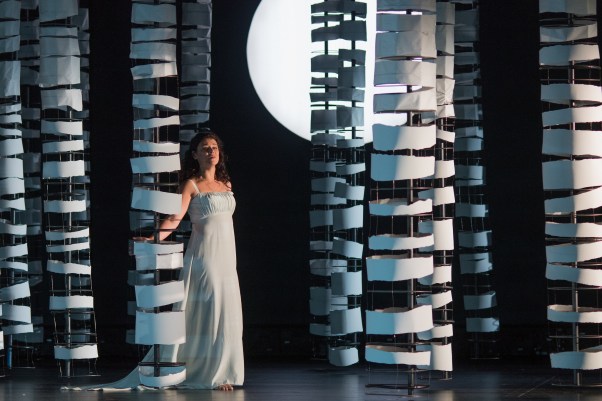
With this year’s presentation of Tchaikovsky’s Eugene Onegin, grand lyric opera was emphatically enthroned at the festival, although I suspect there were budgetary constraints in the wake of last year’s anniversary extravagances. Now that might not explain why there was no bed, no window, and no writing desk – all mentioned in the libretto – for Tatyana’s famed letter scene. Why would stage director Chen Shi-Zheng’s austerity extend to depriving the poor woman of pen and paper until after she has finished writing?

Suspicions came unbidden when, after a snowbound video of a Russian forest ran over the overture, spindly trunks of wintry trees descended from the fly lofts and haunted nearly the entire production. The concept didn’t jibe with arrival of the family estate’s peasants heralding their completion of the harvest. More puzzling, the lovely trees were whisked to the wings prior to the scene where they might make the most sense, the duel between Onegin and the hotheaded poet Lensky.
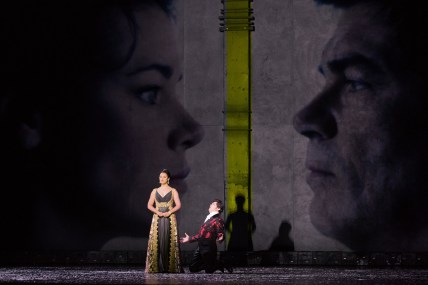
Projections that replaced the trees for the duel and for the ultimate denouement, where he receives his richly deserved rejection from Tatyana, were actually darkly effective. But the best use of set designer Christopher Barreca’s trees came when, half-lifted into the flies and colorfully illuminated, they simulated chandeliers at the regal ball in Prince Gremin’s palace, where Onegin is thunderstruck by the transformation of Tatyana into a poised and polished aristocrat.
Whatever toll austerity might have taken on the scenery, it was not a factor in the singing. Taxed with delivering the letter scene with no props except a chair (those lingering tree trunks did fill up momentarily with projections of Tatyana’s handwriting), soprano Natalia Pavolova glowed with youthful longing in her American debut. She was hardly less impressive as a mature princess, bearing herself imperially in the ballroom, and her creamy voice thickened pleasingly with emotion in the final tête-à-tête with Onegin. Lacking the hauteur I saw from Dmitri Hvorostovsky when I saw him in the role opposite Renee Fleming, baritone Franco Pomponi was less of a cold-hearted jerk when Onegin rejected Tatyana and killed Lensky – and more pitiable when he comprehended his mistakes.
Solid as he was vocally, Pomponi was thoroughly upstaged by tenor Jamez McCorkle as Lensky. The pride and pathos that McCorkle brought to Lensky’s final pre-duel meditations were shattering. Nearly as touching – and as vocally powerful – baritone Peter Volpe’s weighty, twilit confessions to Onegin as Prince Gremin were the perfect prelude to the cad’s comeuppance.
Acoustics at the new 1,800-seat facility helped to keep the front-liners relaxed, unless they had the misfortune of singing from the rear half of the stage, which introduced a noticeable echo effect. Clarity and presence improve markedly for the Spoleto Festival USA Orchestra when it ascends from the pit to the stage, where it is wrapped in a tall, wood-grained shell and covered by a sloped and sculpted acoustic ceiling.
With the addition of the Westminster Choir conducted by Joe Miller, the worthy heir to Joseph Flummerfelt, orchestral concerts have also grown grander in recent years. Ramping up to the return of the Gaillard, Miller and the Westminsters presented the St. Matthew Passion at the Sottile in 2015 before helping to break in the new hall last year with Beethoven’s Mass in C and his Choral Fantasy. Once again mixing the sacred with the secular at the Gaillard, Miller programmed Mozart’s unfinished “Great” Mass in C Minor, preceded by two Ralph Vaughan Williams settings, one for Psalm 90 (“Lord, Thou Hast Been Our Refuge” and the other from the moonlit Act 5 love scene that punctuates the hurly-burly of Shakespeare’s Merchant of Venice (“Serenade to Music”).

Augmented by the Charleston Symphony Orchestra, the Westminster Choir sounded massive and sure, and the Festival Orchestra, culled from advanced conservatory students and young professionals through nationwide auditions, still strikes me as the best American orchestra of its kind. The bigger sound of the choir made the “Lord, Thou Hast Been Our Refuge” more soothing and cosmic, building to a majestic finish. An exquisite dialogue between orchestra and vocalists followed in the Shakespeare setting, as six of the Westminster choristers then came downstage and formed a mini-choir, joining the four guest artists who would sing in the Mozart.

It was gratifying to see McCorkle again after his fine Lensky, but once again, he didn’t draw a leading role in the Mass after shining briefly in the “Serenade.” Mozart began this liturgical piece as a showcase for his wife, Constanza, and soprano Sherezade Panthaki shone in much of the coloratura spotlight that he managed to finish, especially when powering the climax of the Credo. Soprano Clara Rottsolk ably complemented Panthaki in the Gloria, and bass André Courville rounded out the quartet of soloists in the concluding Benedictus.
Of course, there was nothing miniscule about the other orchestral concert, beginning with Anna Thorvaldsdottir’s icily atmospheric Dreaming and climaxing with Mahler’s Symphony No. 4. Following up brilliantly on her lustrous 2013 debut in the title role of Matsukaze, soprano Pureum Jo filled the folksy jollity of the Sehr behaglich (“Very comfortable”) finale with a heavenly purity.

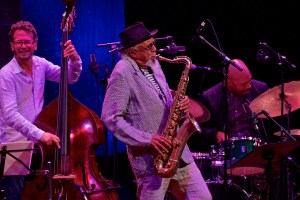
Yet I found myself even more encouraged and excited by what’s happening in the chamber music sector of the festival. For the first time since taking over the reins of the daily chamber music series in 2010, violinist Geoff Nuttall had to acknowledge the absence of his mentor and predecessor, Charles Wadsworth, on the mend up in New York. As host and programmer of the lunchtime Dock Street Theatre concerts, Nuttall has come into his own, greatly increasing the amount of modern and contemporary music that is played while chipping away at the barrier that previously distinguished the genial, comical, and witty introductions to the music from the formality of the performances that followed.
There’s likely a connection between the two developments. When a percussionist provides the entire audience with pairs of rocks to bang together during a performance of new music, or a composer triggers video and sound cues with an iPhone, formality begins to break down. The effect spread to more antique music when countertenor Anthony Roth Costanzo called attention to the kinship between a Vivaldi aria and Elvis Presley’s “Don’t Be Cruel.”
Performances have sprouted a jocular dimension here and there, thanks to the deployment of clarinetist Todd Palmer as comedian-in-chief. After Nuttall spoke vividly of Giovanni Bottesini’s virtuosic displays on double bass during operas that he conducted in the mid-1800’s, appearing mid-performance to dazzle with improvised fantasias on tunes from that evening’s opera, Palmer joined double bassist Anthony Manzo and pianist Gilles Vonsattel in Bottesini’s Duetto for Clarinet and Double Bass with Piano. Between two of the fantasias, Palmer did a riff of his own on the diva aspects of the spoken intro, flashing some leg and modeling a sock that was more flamboyant than any I’ve seen on even Nuttall’s feet.
There was more later as Nuttall and his St. Lawrence String Quartet joined Manzo, flutist Tara Helen O’Connor, and pianist Pedja Muzijevic in a cunning reduction of Symphony No. 100 by Haydn, our host’s favorite composer. As Nuttall explained how this “Military” Symphony came by its nickname, you had to wonder where the hellish percussive roar would come from when the second movement started. The answer came during the interval between the opening Adagio-Allegro and the signature Allegretto: emerging from the wings, Palmer marched onstage – literally marched, mind you – harnessed into a big bass marching drum and brandishing two mallets.
It was actually a military parade, since cellist Joshua Roman with a pair of cymbals and violinist Benjamin Bellman with a wee triangle marched in right behind Palmer. Earlier in the concert, right after the Bottesini, these two accomplices had given an absolutely delicious account of Ravel’s Sonata for Violin and Cello. If anything, the exit after Haydn’s second movement, led again by Palmer, was even more ceremonial. Yet there were more surprises to come. Violinist Daniel Phillips (flutist O’Connor’s husband) heralded the opening passages of the Presto finale from the balcony, and Palmer’s percussion trio resurfaced at the rear of the hall to pound, clang, and clink the final measures.
Musically, Palmer’s shining moments came three programs earlier when he played the Beethoven Clarinet Trio with Muzijevic and Roman, while the best of Nuttall came when he led an inspired performance of the Mendelssohn Octet. Some of the inspiration no doubt came from the meet-up between Nuttall’s St. Lawrence Quartet and his newest Spoleto recruits, the Rolston String Quartet. They won the Banff International String Quartet Competition 24 years after the elder Canadian quartet won the same prize in 1992. There were moments when Rolston cellist Jonathan Lo and violist Hezekiah Leung gazed upon Nuttall’s rapt antics – his back-and-forth swaying on the first chair and his spasmodic knee-lifts – with undisguised, wide-eyed wonder, apparently unaware that he played with the same abandon, eccentricity, and charisma when he first came to Spoleto in 1995. Except that his hair was longer then.

Effects of Nuttall’s stewardship now extend beyond the Dock Street Theatre. Two of the chamber music pianists had concerts booked at other venues. Muzijevic, who also traveled to Hamburg to select the new Steinway for the Dock Street series, fashioned a set of “Haydn Dialogues” at the Simons Center Recital Hall – four Papa pieces interspersed with works by Jonathan Berger, Morton Feldman, and (with an alternate prepared piano) John Cage. Stephen Prutsman put on his composing hat at Woolfe Street Playhouse, plucking a string quartet from the Festival Orchestra to score three silent films, “Suspense,” “The Cameraman’s Revenge,” and “Mighty Like a Moose.”

For the past two years, Nuttall has performed at Gaillard Center in chamber music segments of Spoleto Celebration Concerts, further extending his presence. He and his spouse, violinist spouse Livia Sohn formed half of a quartet, including Muzijevic and St. Lawrence cellist Christopher Costanza, in a reduced adaptation from Vivaldi’s L’estro armonico concertos. Until 2013, when oboist James Austin Smith joined his chamber music stable, Nuttall was no more likely to program Vivaldi’s music than Wadsworth was, let alone play it.
What really brought Vivaldi to centerstage at Spoleto was the sensation that countertenor Anthony Roth Costanzo created last season in his first three programs at Dock Street. Costanzo didn’t sing Vivaldi then, ranging instead from Handel to Gershwin to Osvaldo Golijov, but it was obvious to he could sing the Red Priest’s rep with a vengeance. Having Costanzo on board to play the title role made it easy to green-light the American premiere of Vivaldi’s Farnace, the most popular of the composer’s operas during his lifetime.
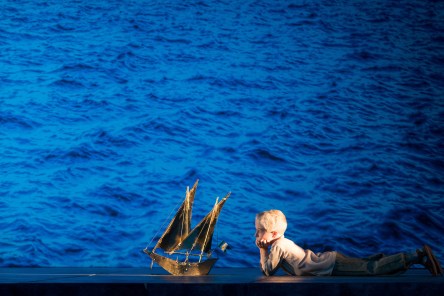
You had to be able to accept the old-timey ethos of death before dishonor to the point of absurdity if you were to reach the end of Antonio Lucchini’s 1727 libretto without guffaws or derisive laughter. Dethroned from the kingdom of Pontus by invaders from Rome, Farnace orders his queen Tamiri to kill their son and herself to avoid the disgrace of captivity. Meanwhile Farnace and his captive sister Selinda separately plot to bring down their conquerors, Roman general Pompeo and his merciless ally, Queen Berenice of Cappadocia, a gargoyle who turns out to be Tamiri’s mom.

Somehow everything sorted out happily. More amazingly, Costanzo managed to bring down the house just before intermission – bemoaning the death of the angelic little son whom he himself condemned to death!
With Costanzo singing two additional Vivaldi arias at the lunchtime concerts and Smith fronting an oboe concerto, the Red Priest explosion was major theme in Spoleto’s 2017 classical music lineup. But the countertenor continued to show his wide range. What I most regretted about skipping the final weekend in Charleston was seeing Costanzo introduce and deliver Roy Orbison’s deathless “Crying!” An 11-piece ensemble, including Palmer and Nuttall, was weeping behind him. Or maybe not.


![PsychoBeachParty5[5]](https://artonmysleeve.net/wp-content/uploads/2017/07/psychobeachparty55.jpg?w=604)
![PsychoBeachParty2[13]](https://artonmysleeve.net/wp-content/uploads/2017/07/psychobeachparty213.jpg?w=393&h=472)
![PsychoBeachParty3[14]](https://artonmysleeve.net/wp-content/uploads/2017/07/psychobeachparty314.jpg?w=445&h=692)


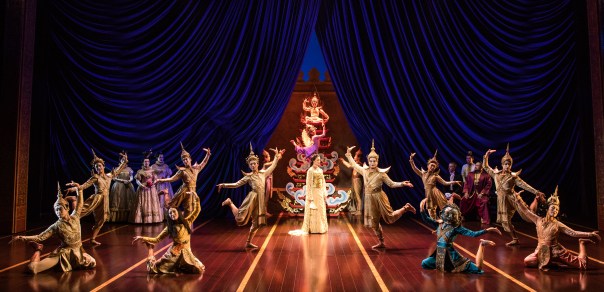 That opens a path for Manna Nichols to sing her solos and duets as Tuptim with liberated strength, expanding upon the intelligence that was always hers when she presided over the “Uncle Thomas” ballet. Kavin Panmeechao adjusts beautifully as Lun Tha in the duets, not quite as regal as his lover but admirable in his steadfastness.


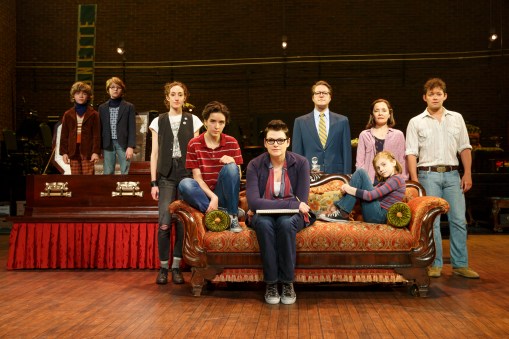
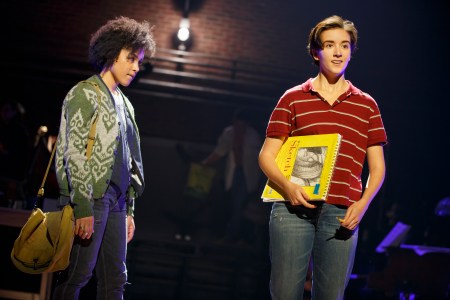


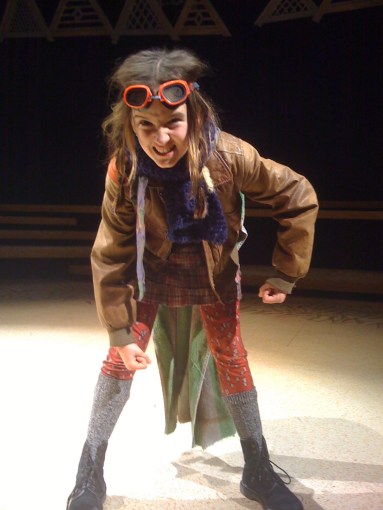

 Abby wasn’t totally exiled from New York because of her misfortune and subsequent defeat. For a couple of summers, she participated in a Destination Broadway theatre camp where the musical director was conductor Michael Rafter. So happens that Rafter is the ex-husband of Jeanine Tesori, who wrote music for the “Changing My Major” song – and the entire Fun Home score. When Mitzi invited Rafter to be the keynote speaker at a NW School of the Arts fundraiser, he informed her about Fun Home auditions.

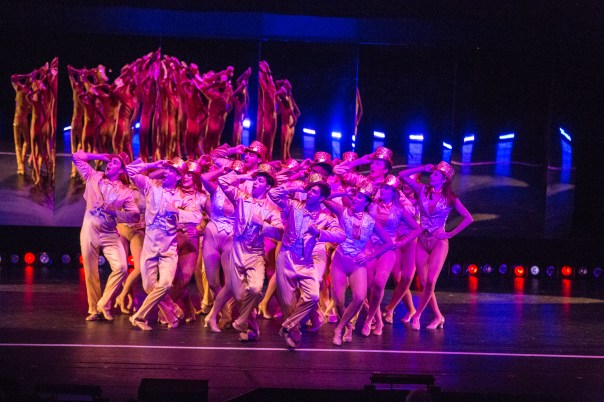

 Paul, another role that doesn’t draw a solo vocal, is the other finalist who brings the action forcefully into the present – thanks to Tyler Dema’s affecting vulnerability as he uncovers the reasons why Paul finds it impossible to open up in front of his fellow dancers. Zach’s private huddle with Paul is another highlight in Wright’s performance as well. Eleni Demos, new this season to CP, deserves a shout-out as Diana. Answering Zach’s most disturbing question, she ably leads “What I Did for Love” – the enduring anthem of A Chorus Line.