All posts by perryt77

Off-Course “Noises Off !” Eventually Malfunctions Like Clockwork

Review: Noises Off! by Davidson Community Players

 By Perry Tannenbaum

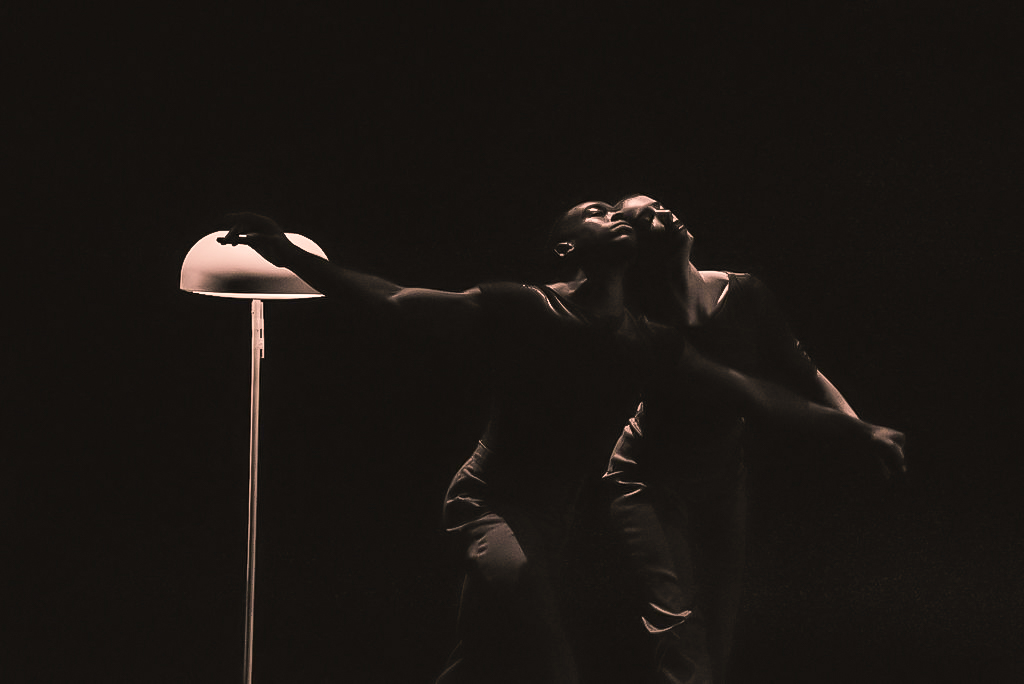
Noises-116[4]_edited-1

July 21, 2022, Davidson, NC – I’m not sure that a single American comedy has been produced as often in the Metrolina area in recent years as Noises Off, the wild door-slamming farce by Britisher Michael Frayn. What makes this particularly astounding is the monumental effort needed to mount this insanely high-energy, fast-paced work – and the time and effort it requires from audiences, stretching out to over two hours in length with two intermissions. There are folks in my family circle who groan at the prospect of one intermission. The sheer height, size, sturdiness, and swivel-ability of the scenic design – none of which can be compromised – make the comedy virtually impossible to stage at some venues.

Yet the adamantine laws of physics have not deterred some of our local companies from giving Noises Off a go. The production at Central Piedmont’s Halton Theater in 2012, for example, was penance for an ill-advised effort at panoramic Pease Auditorium in 1994. Likewise, it would have been foolhardy for Davidson Community Players to even attempt this two-story Everest of a comedy back in 2010 – or now in their encore – if they had been confined to their customary HQ at Armour Street Theatre. Fortunately, DCP had the good sense on both occasions to indulge their ambitions in the summertime, when Duke Family Performance Hall is available to them on the Davidson College campus. A ramp takes you up to the balcony level of the Duke if you arrive at the front entrance of the five-floor Knobloch Campus Center, which also houses the Alvarez Student Center. The fly loft of the theater extends to the full height of the building, so director Matt Webster can decree that the stage curtain be lowered halfway for a spectacular culminating technical gaffe.

Of course, theatre gaffes are the coin of the realm as this comedy-within-a-comedy unfolds so delightfully badly, starting with a calamitous dress rehearsal of “Nothing On” that extends past midnight into the morning of the day when it’s scheduled to open. Gleeful Instagrams and Facebook posts were broadcast to the wide world web by elated audience members at the Duke who were able to take cellphone pix of real printed programs after a hiatus of more than two years. It might be deflating, then, to recall that in the old days, we received additional fake programs from “Nothing On” with side-splitting fake bios of Lloyd Dallas, Dotty Otley, and the gang. With a charming ad for sardines, the most important of props. That’s part of a dizzying confusion we experience as we simultaneously track what’s happening in the badly-performed “Nothing On” – in a calamitous rehearsal and two calamitous performances – and the whirl of intrigue and contretemps between these endearing incompetents and their despairing director.

How do we see the personal trials, attachments, and antagonisms of these actors while they rehearse and perform a play? This is the riddle that Frayn solves so brilliantly. Because dress rehearsal is so epically bad, there are numerous pauses when the actors, stagehands, and director can interact or gossip. Then after the first intermission, Frayn obliges everyone who stages Noises Off to revolve their mammoth two-story sets a full 180 degrees so we can witness the last moments of the run-up to a second performance of “Nothing On” two months later and the performance itself – from backstage, where our actors interact as “themselves.”

Noises-274

From the opening words of Act 1, when we could barely hear the venerable Jill Bloede as Dotty, it was obvious that opening night could turn into a harrowing misfire. Brandon Samples as Lloyd was usually far more audible to us, but that may have been because, in directing this dress rehearsal of “Nothing On,” Lloyd was sitting amongst us in the audience, mostly on our side of the hall. When Andrew Pippin entered from upstage as real estate agent Roger Tramplemain, and Tate Clemons followed as Vicki, the incredibly seducible girl he’s trying to seduce, my worst fears threatened to come true. Clemons was usually more audible than Pippin, but her Vicki was totally unintelligible as well. It would be hard to overstate how thankful I was, as five more performers made their fitfully audible appearances, that I had seen Noises Off at least six times before.

For newbies, welcome relief came during intermission, when I spotted empty seats and ruthlessly moved to the front row. What else happened during the break to salvage the evening cannot be reported conclusively. Surely, with a judicious visit backstage, stage director Webster would be a prime suspect in perpetrating the onset of fresh energy throughout Acts 2 and 3. Or maybe Samples, after playing Lloyd throughout Act 1, sounded the alarm backstage when he couldn’t hear his castmates during the poor director’s rambles around the hall. My wife Sue, loyal to her ticket stub and Row F, confirmed that audibility improved markedly back there for the rest of the evening.

Of course, the full benefits of increased volume don’t occur in Noises Off until Act 3. With so much of the wondrous Act 2 happening backstage, behind a monumentally delayed live performance on “Nothing On” that proceeds on the other side of the set, the principals we see are religiously hushed, adhering to actors’ etiquette. So most of the communication in Act 2 – whether amorous, angry, stealthy, jealous, urgent, frustrated, or diabolically mischievous – is delivered in earnest, energetic pantomime. You not only marvel at the synchronization between the torrid action backstage and the unseen staging of “Nothing On” which we can still hear droning and faintly exclaiming in the background, but in the precision of the hubbub in front of us as flowers, a whiskey bottle, a menacing fire axe and more keep moving in blurry rapidity across the stage, in and out of sight. Webster has all this mayhem malfunctioning like clockwork.

Most of what was missing in Act 1 arrived most emphatically in the final act, where we watch a performance of “Nothing On” some 10 weeks into its travels – discipline gone, tempers worn to a frazzle, animosities fully ripened, and the set itself needing repairs. Bloede was back on top of her game as the disillusioned and despairing Dotty, who can let all her grudges and inebriation run roughshod over her performance as Cockney housemaid Mrs. Clackett, since she is the producer bankrolling this stinkbomb.

Pippin and Clemons also showed marked improvement. All we needed from Pippin, it turns out, was a little more energy and clarity to sharpen the self-important dopiness of his Garry Lajeune and the starchy amorality of his Roger, now frazzled by too many jealousies to keep track of. Clemons is only marginally more intelligible than before as she continues her adventures with the slutty squeakiness of Vicki while attempting – probably attempting – a British accent. But we don’t need to really know what Vicki is saying anymore to appreciate the comedy of Brooke’s maddening insouciance, never varying from Vicki’s scripted lines and never thinking to improvise no matter how things have changed and disintegrated all around her.

Justin Thomas is absolutely disarming as the frail and squeamish Frederick Fellowes, the actor who portrays tax dodger Philip Brent, owner of the property that realtor Roger is seeking to rent. If there was ever even an attempt by Thomas of an English accent, I’ll confess that I missed it, and his dual role in “Nothing On” as the sheikh seeking to rent Brent’s hideaway was too brief for me to say how he handled it. We could be thankful that neither of his shticks, nosebleeds and dimwittedness, demanded an accent. Amanda Pippin doesn’t get a proportional share of the comedy as the cast gossip, Belinda Blair, the least frazzled and dysfunctional member of the troupe and their show. As Philip’s wife Flavia, Pippin does reliably abscond with various props and wardrobe, most notably Vicki’s dress.

Noises-15

This allows Vicki to bustle around the two-story set and its eight doors in her underwear through most of the staged action we see. This wantonness gave us the notion that Vicki would ultimately become the title character of the “Nothing On” we never see, while justifying the aging Lloyd Dallas’s enduring backstage lust and devotion toward Brooke Ashton. He’s supposed to be away somewhere in Act 2 rehearsing Richard II, but he returns to see his dear nymphet. Emerging from hiding, Lloyd is outraged and distracted by all the chaos of the production. Then he becomes the excruciating victim in one of the most comical climaxes we’ll ever see. Much of Samples’ pantomimed sufferings are caused by Lloyd’s traveling stage crew, Jack Bruce as the inept and overworked handyman, Tim Allgood, and Jenna Tyrell as Poppy, the competent and frowzily attractive stage manager who doesn’t realize she’s been dumped by Dallas.

This oddball trio of Allgood, Poppy, and Dallas unite surprisingly in the comedy climax of Act 3 when Fellowes performs his crowning feat of dimwittedness. Suffice it to say that Jonathan Ray as the aging alcoholic actor, Selsdon Mowbray, is supposed to make a surprise appearance in “Nothing On” as a septuagenarian burglar. But he’s too deaf to reliably catch his cue line – and too frequently soused to reliably be there, ready to break in. The hilarious catastrophe far exceeds even a doomsayer’s expectations. You might be surprised to learn that I auditioned for Selsdon way back in 1992, when Theatre Charlotte brought Noises Off to town. That’s too long ago for me to remember how I intended to play Selsdon, but I suspect that my performance would have more soused, more crotchety, and more devious than what you will behold at Duke Family Performance Hall. Maybe that’s why I found myself cherishing Ray’s mellower, more natural portrayal.

Thomas Goes Off, Atticus Told Off in Sorkin’s Bold New Mockingbird

Review: To Kill a Mockingbird at Blumenthal PAC

By Perry Tannenbaum

a Porch Scene A

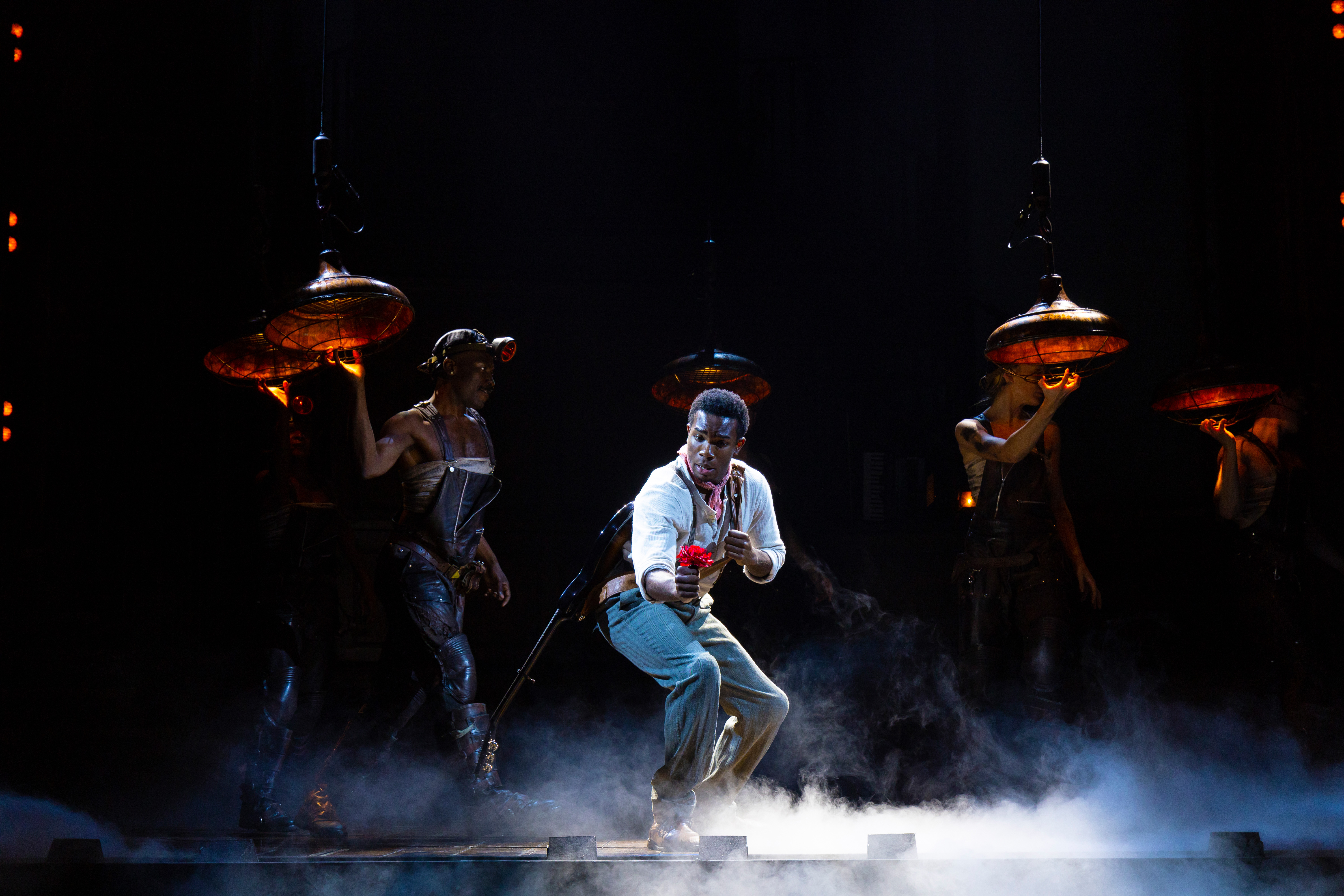
In light of what I truly experienced at Belk Theater on opening night of Aaron Sorkin’s To Kill a Mockingbird, watching Atticus Finch valiantly defend Tom Robinson for at least the eighth time onstage, it’s simply inadequate for me to say that Richard Thomas was stunning as the iconic Alabama defense attorney. Staggering is more like it, easily the most powerful work I’ve seen from Thomas in my 59+ years of watching his most memorable performances live on Broadway, in Charlotte, and on TV.

Much of the credit should go to director Bartlett Sher and his design team for prodding Thomas toward reimagining Atticus so radically. The unexpectedly drab and humble scenery by Miriam Buether is particularly effective, draining nearly all of the Southern charm and elegance from Harper Lee’s Maycomb County – and doing it on a spectacularly large scale.

d Porch Scene Atticus and Scout

Yet it’s Sorkin who really lights the fires, scandalizing the stodgy protectors of Lee’s legacy with the first Mockingbird adaptation to reach Broadway. Now he’s doubling and tripling down with subsequent revisions that enable his West Wing political points to hit home more and more sharply. The Broadway script took on Bob Ewell, the low-life Klansman who beat and raped his daughter Mayella before accusing Robinson of the crimes, and added to his foulness by layering on a couples of doses of antisemitism as he berates Atticus. Mayella spews far more venom than we remember after Atticus gives her a harder time, and prosecutor Horace Gilmer goes after Robinson with a new viciousness, all the more shocking in the finely tailored suit that costumer Ann Roth dresses him in.

j Calpurnia at homeLike me, audiences are so used to seeing this story of grim understanding and growth through the eyes of a little girl, Finch’s tomboy daughter Scout. They will likely be shocked to discover that Sorkin is far more interested in the lessons Atticus learns – and the lessons we still haven’t learned as a society. In the wake of 2020 and the bitter fruit of #BlackLivesMatter, Sorkin’s Mockingbird 2.0 offered some fortified pushback from the Finches’ housemaid Calpurnia, scolding Atticus for his oft-expressed bromides that we should respect everyone since everyone has some good inside of them.

So the post-pandemic script returned to Broadway with some new wallop, but I won’t divulge how the formidable Jacqueline Williams as Calpurnia silences Atticus with a single sentence. Not yet. Both Sher and Thomas do know how to wield a silence, that’s for sure. We’ve waited our entire lives to see the Atticuses of our Dear Old Southland told off like this.

Maybe Sorkin should have left well alone after delivering this fresh blow. But he started delivering haymakers on Broadway in 1989 with A Few Good Men, a good ten years before establishing his more colossal bully pulpit with The West Wing. So restraint and soft-spokenness are way back in his rearview mirror.

Very likely, Sorkin and Sher have continued to tune up their production, maybe even after it started touring in March. For Mockingbird 2.1 or 3.0, whatever you choose to call it, now has a political dimension that savvy Broadway reviewers could never have overlooked.

b Courtroom Scene A

Most probably as a nod to Rep. Liz Cheney – if not to Republican Trump flouters who preceded her – Sorkin now lets it drop in his narrative (split up here between Scout, older brother Jem, and their chum Dill) that Atticus holds an elective office at the state level, so popular and entrenched that he usually runs unopposed for re-election. Ah, so in addition to getting told off, we will also learn that Atticus suffers political consequences for all his integrity, linking him to Cheney’s apparent martyrdom-in-progress.

Receding into the background, as Mockingbird becomes Atticus’s story more than Scout’s, is all the midnight cooing over the mystery of Boo Radley that cluttered the beginning of our narrative. Now Scout and Jem and Dill all obsess over how Bob Ewell could have possibly fallen on his knife, flipping the narrative almost entirely upside-down, since even Tom’s rape trial is a series of flashbacks.

All of this will be easy enough for first-timers to follow, with far more dramatic intensity for those of us used to the clunky old Christopher Sergel adaptation. On the other hand, Sorkin has jettisoned a few key moments that both the Oscar-winning 1962 movie, starring Gregory Peck, and the theatrical version – staged every May at the courthouse of Monroeville, Lee’s hometown – have effectively memorialized and graven in our minds.

h Calpurnia and Atticus A

Sheriff Tate won’t be scampering onto the Finches’ front porch begging Atticus to put down a rabid dog that is terrorizing the town, a calm display of marksmanship that will amaze Scout and Jem, both of whom view their dad as effete and ineffectual. Sorkin also dispenses with the dignified episode where Atticus slowly, with exquisite self-control, extracts a handkerchief from his pocket and mops his face after Ewell has rudely spit in it. Instead, Atticus demonstrates his manhood by executing a neat jujitsu move on Ewell when the abusive boor confronts him after being publicly humiliated at the trial.

Nor will Atticus get the customary reverential treatment from the black folk when he makes his final exit from the courtroom, a further diminution of the icon – and perhaps the oddest of Sorkin’s juxtapositions of how we see Atticus today and how he would have been seen in 1934 Alabama. Goodbye, Rev. Sykes, your services aren’t needed in this version. Equally strange, yet far more delightful, Tom Robinson’s defense witness and former employer, Link Deas, is now played by deaf Canadian actor Anthony Natale, infusing the character with a totally fresh back story. Link now speaks ASL when he takes the witness stand, mostly translated for us by the children. It’s not the last of the personal secrets he will share with them exclusively.

The universally acknowledged town drunk injects some welcome comedy into this Deep South segregation tragedy, giving it more contour. Yet we find it hard to forget the phenomenon of Atticus Finch going off on Mayella Ewell, the overworked big sister that even Tom Robinson has the audacity to feel sorry for. The kid gloves are also tossed aside – along with his prepared written remarks – when Atticus rises to give his closing remarks.

e Courtroom Atticus and Tom

You could see how inspired Thomas was by the words Sorkin gave him, first berating himself for not schooling Robinson effectively enough to prevent his voicing pity for a white person, then heaping scorn on the city, the society, the nation and himself for insisting on such toxic racist niceties. But Thomas looked out on us more often on opening night than on the jury box as he mixed self-flagellation with earnest pleas and white-hot anger in his volcanic eruption, making it possible that he was also drawing inspiration from a Belk Theater crowd that filled the highest row in the highest balcony, hanging on every word, a rarity for a non-musical production.

The usual rituals and ceremonies relied upon in presenting Mockingbird had been shunted aside for new ones. With thundering success.

Thanks to the Blumenthal Performing Arts sound crew, all that thunder sounded quite natural and human. While Thomas can’t be accused of holding back when called upon to lose control, he is poise and grace as Atticus aside from his three notable eruptions. His antagonists, Joey Collins and Arianna Gayle Stuky as the Ewells and Luke Smith as prosecutor Gilmer, are no less fired up. It’s as if Sher told them that Mockingbird had been accused of being a children’s book – and to take that as a personal insult.

Here on the road and back on Broadway, Sher has consistently opted to use adult actors to portray the kids in this story. After about five seconds of uneasiness as Melanie Moore seemed to struggle with Scout’s Southern drawl, my discomfort disappeared. Kids would have worked as well or better than Justin Mark as Jem, Steven Lee Johnson as Dill, and Moore tagging along as Scout if their main charge was to sneak out at night and snoop on Boo or playact the painting scene from Tom Sawyer. But Sorkin mainly has them haunting the trial as our narrators, where less gee-whiz wonder and more spontaneous energy is better.

If Williams enjoys the enviable luxury of acting like she’s been imported intact to this story from a fully woke 2022, Yaegel T. Welch must finely calibrate his Jim Crow subjugation as Tom Robinson. Despite all the attitudes and traits Welch may have told Sher he would not do – or all the stereotypes Sher may have tried to avoid – this Robinson seems to have just the right amounts of fear, courage, and resoluteness that fit how his fate plays out. The new ingredients that Sorkin and Sher give him, from the moment Atticus first visits him in jail, is a healthy realistic cynicism.

Can a court-appointed attorney really help him? Can there be any other verdict than guilty for a black man in Alabama accused of raping a white woman? Both Welch and Williams in their roles seem to know the world better than Thomas does in his. These are two persistent tugs against Atticus’s education and elitism, insidiously allied with Tom Ewell. Neither of them acts as if this were a tender bedtime story. Whether you’re Tom standing trial or Calpurnia, making sure the children see it, this is all dead serious.

With the shifting emphases of Sorkin’s adaptation, Travis Johns gets to be as effective as Mr. Cunningham, the impoverished KKK father of one Scout’s classmates, as he is later in the more crucial role of Boo Radley. While Sorkin lets us know that each member of the Maycomb jury has blood on his hands, he allows Richard Poe as Judge Taylor and David Christopher Wells as Sheriff Tate to escape the kind of scrutiny he aims at Atticus. They are the most solid links between this Mockingbird and those that have come before, though I’d say both men are warmer and more prominent as the town’s good citizens.

After all, with all the other hooded white folk and the dozen unseen jurors filling out Maycomb’s voting rolls, who’s left in Maycomb to say something good about? Just Tom, Calpurnia, Atticus, the kids, and the upright black folk who attend the trial and bear witness.

f Mrs Henry Dubose B

No, Sorkin does not forget about the Finches’ haughty neighbor, Mrs. Henry Lafayette Dubose, and her precious camellia bushes. The racist’s belligerence is elevated to Broadway dimensions, justifying Jem’s attack on her garden more than ever. Played on tour by Mary Badham, a new link is forged with the 1962 film, for the Birmingham native made her auspicious screen debut as Scout. When she was nominated for Best Supporting Actress, she became the youngest nominee who had ever received such Oscar recognition.

Nor is Dubose a token throwaway role. Badham plays her with iron rectitude and fiery malice, clearly as bad an influence on the kids she berates as Atticus is good – and she berates Atticus with gusto as well, which proves fatal to those precious camellias. This altercation, not devoid of comedy, tumbles around enough to become a fairly central teaching moment. Sorkin flips it beautifully, for now when Atticus makes Jem make restitution for his misdeed – and apologize – he not only gets pushback from his son.

Later on, Calpurnia forgets her place a little and goes off on him. By bending over backwards that far to show Mrs. Dubose respect, Calpurnia says flatly, Atticus is disrespecting her – and all other people that nasty racist is hurling hatred at.

Thomas sits there downstage, doesn’t answer, gets the point. We all do.

Common Thread Presents an Uncommonly Well-Constructed Racial Comedy

Review: Barbecue at Davidson College

 By Perry Tannenbaum

Common Thread Theatre Collective - Barbecue

July 15, 2022, Davidson, NC – There are plenty of questions to ask in Robert O’Hara’s Barbecue as two O’Mallery families – one white and one black – gather at the same park, both of them staging fake outdoor parties for the same kindly but devious purpose. These questions explode upon us as soon as the white O’Mallerys are replaced by the black O’Mallerys after the first blackout, wearing the same exact outfits we have just seen moments earlier, drinking the same beverages, and popping the same pills. Even their names are the same. Both Lillie Anns are prodding their reluctant kinfolk – husband James T. and sisters Adlean and Marie – to drape the same pavilion at the park in party decorations, to feign a joyous family celebration, and to confront family renegade Barbara and get her into a therapy program that Lillie Ann has specially chosen for her in faraway Alaska.

Mercifully, we gather that both of O’Hara’s O’Mallery families are on the same track because their scenes deftly overlap rather than tediously repeating. The checkerboard structure of the playwright’s comedy was a perfect vehicle for the new hybrid company that was presenting it at Barber Theatre on the Davidson College campus. Common Thread Theatre Collective is a joint venture between North Carolina A&T State University theatre faculty members and Davidson’s Department of Theatre. Established 131 years ago in Greensboro, A&T is the nation’s largest historically black university, with a student body that is currently less than 80% African American. Domestic students of color, according to Davidson’s website, are currently at 28% of the matriculated population – and an influx of 8% international students enhances the College’s diversity.Common Thread Theatre Collective - Barbecue

Predictably enough, the two O’Mallery families appear to be blissfully unaware of one another – until intermission. Directing the show, Donna Baldwin encourages skin color to make a difference in how James T’s Pabst-Blue-Ribbon trashiness, Adlean’s chain-smoking vulgarity, and Marie’s besotted Jack Daniel’s elegance play out onstage. Maybe I’m biased, but the trashiness, vulgarity, and besottedness of the white folk seemed more outsized to me than their counterparts’, which chimed well with O’Hara’s overall design. The two Lillie Anns were woefully lacking in vices as they masterminded their schemes and manipulated their interventions, but both were more controlling than they strictly needed to be, relishing their dominion. Here again, Joanna Gerdy gets to be just a little bit bossier, trashier, and more crotchety than Willa Bost, her black clone, even though she was basing her master scheme on some cliched TV series.

We began to understand what was going on with the abrupt break in the action that brought us to intermission. If that sudden jolt hadn’t made it all obvious, O’Hara double underlined his answer in a manner almost as surprising as his intermission reveal. For the first time, a black person and a white person spoke to one another – and it was the two Barbaras, Ava McAllister Smith and Jade Parker, who clarified the mysteries we had seen, two characters who had hardly spoken 10 words between them until now. Suddenly, what seemed to be a satirical dive into the crassness of American life, with subtle distinctions between the races, acquired new meta textures as the two Barbaras met at the park and negotiated. How this story should be told, who should tell it, and how much it should cost were all up for grabs as the Barbaras jousted over making a deal and setting a price.Common Thread Theatre Collective - Barbecue

Taking it all in, from the unseen moment when Lillie Ann was inspired by primetime TV to hatch her scheme, moving along to how one Barbara reshaped her rehab memoir before her counterpart Movie Star Barbara bought the rights, I came away with the following message from O’Hara: fueled by drugs, alcohol, and toxic righteousness, truth is what gets most thoroughly slaughtered and barbecued in American life. On the way home, another pleasant thought hit me. Thanks to an artful gap between scenes in Act 2, rehab Barbara may have actually lowballed the amount of money she was promised earlier from Movie Barbara when she confronted the other O’ Mallerys with Hollywood’s offer.

The presence of two Actors Equity performers, more than we see in most touring shows nowadays, testified to the professional-grade theatre that Common Thread has delivered, for neither of them stuck out uncomfortably among their local and intern castmates. Parker and Smith were nicely matched in the comedy’s one interracial faceoff, taking turns in holding the upper hand and smoldering nicely when they didn’t. As the only men we see before intermission, Shawn Halliday and Tyler Madden get to pop and stomp plenty of beer cans as the JT’s, taking heavy fire from the Lillie Anns all the while, but Halliday is the seedier of the two while Madden has the edge in timidity. La’Tonya R. Wiley was a formidable presence as Adlean no matter how many cigs she fired up or how many pills she gulped down, while Lane Morris made her Adlean more strung-out than anybody.

Gregory J. Horton has designed a set of costumes that likely inspired Baldwin-Bradby and her cast nearly as much as O’Hara’s canny script. At the opposite end of the spectrum from JT’s splashy mashup of baseball, soccer, and tennis outfits is the eye-popping elegance of the lemon dresses worn by our Maries. These citrus dresses are accessorized with high heels that are just as inappropriate for an outdoor barbecue, along with jugs of Jack Daniel’s large enough to sport handles for easy chugging and pouring. Of the two Maries, it was hard to say whether I most enjoyed the arc of Shawna Pledger taking Marie from swilling to passing out, or whether Xulee-Vanecia J subsequently surpassed her in Marie’s decorous revival.

Questions about Barbecue continued to assail me on the drive home. Foremost among these was how anyone could imagine a homespun, humdrum story like this winning an award. Sure enough, O’Hara had embedded an answer. You can bet it had nothing to do with honesty and everything to do with America.

Downsizing “Sister Act” Pays Big Dividends at Matthews Playhouse

Review: Sister Act at Matthews Playhouse

By Perry Tannenbaum

2022~Sister Act-11

A full flowering of onstage success has somehow scurried away from Iris DeWitt in recent years. Just last April, pandemic restrictions and a wretched recording rig trapped her inside a masked, malodorous production of Sense and Sensibility at Central Piedmont Community College. Patchy intelligibility also wrecked DeWitt’s previous outing in the badly-miked production of Chess in 2020. Until 2022 rolled in, you’d have to go back to 2019 if you wanted to claim to have seen DeWitt anywhere near her imposing potential, when she played prominent roles in Beehive and Little Shop of Horrors.

Neither of those CPCC Summer Theatre productions obliged DeWitt to show us much of her acting or dancing skills. Beehive was totally bereft of plot, and while Iris’s undeniable vocal power was manifest in Little Shop, no full flowering was evident there, either. We had to settle for the most memorable who-did-she-play performance in recent Charlotte history, for DeWitt was a flower in that musical, hidden in the cavernous depths of Audrey 2 in Little Shop.

This year, the script is flipping and momentum building as DeWitt has figured prominently in Ghosts of Bogota, when Actor’s Theatre returned to Queens University, and Love, Loss and What I Wore in the recent Theatre Charlotte production at Camp North End. Paula Baldwin, who directed that sloppily streamed S&S adaptation of Jane Austen last year, clearly retained enough confidence in DeWitt to see her as Deloris Van Cartier, the lead role in Sister Act. Ron Chisholm, choreographer for this Matthews Playhouse extravaganza at The Fullwood Theatre, probably also saw some potential waiting to blossom in DeWitt’s previously untested dancing feet.2022~Sister Act-10

We’re not so sure when we first see Deloris and her backup singers onstage. The vocals are sufficiently electric but not full voltage, while the doo-wop moves are nowhere near Supreme. I’m guessing that Baldwin and Chisholm have asked DeWitt to cool her jets on “Take Me to Heaven” because Deloris is nervous about auditioning for her paramour, Curtis, an intimidating mobster, at his club. But why on earth should Curtis, a man of highly questionable character, be even a little justified in thinking that Deloris and her crew aren’t ready for a recording contract and the bright lights?

Apparently, writers Cheri and Bill Steinkellner thought that their protagonist needed a crisis of confidence in the early stages of her spiritual journey, one that Paul Rudnick found unnecessary in his original screenplay for the 1982 movie starring Whoopi Goldberg. There, Deloris and crew had all the polish of the Supremes from the start, singing a doo-wop medley in the bowels of a Las Vegas casino owned by her mobster boyfriend, drawing two claps and a stare from a late-night audience of gamblers.

Now they’re in some undisclosed Philadelphia dive, where the only audience is Curtis, his three henchmen, and us. Curiously enough, the transfer from the glitz of Vegas to the dumps of Philly makes Sister Act more at home in a community theatre setting than on the big stages of London’s West End, Broadway, or at Ovens Auditorium – not to forget Halton Theater, where it was staged in yet another CP production back in January 2013.

As soon as Deloris and her crew began to regroup in “Fabulous, Baby!” we had our first glimpses of all that DeWitt can be onstage. My own realizations, beyond her trusty vocal powers, were split between her ability to dance – gliding disco or righteous gospel – around the stage she commanded and the thoroughly professional depth of her acting. Watch DeWitt’s reactions for a while and you eventually find it difficult to take your eyes off her until she makes an exit.

And don’t fret about any missed opportunity with “Take Me to Heaven”: DeWitt and most of the ensemble get a grand do-over at the end of Act 1.

After the additional indignity of being gifted with a garish hand-me-down fur coat previously owned by Curtis’s wife, Deloris has the misfortune of witnessing the club owner brutally gunning down a snitching henchman in cold blood. On the run from her ex, Deloris leaves Curtis in the lurch for the better part of the night as the saloon singer is placed in a witness protection program and sequestered in a midtown convent. That calls for a new counterweight for Deloris to provide the plot with some fresh friction, a call sternly answered by the convent’s Mother Superior, the role played by Maggie Smith opposite Goldberg in the film.2022~Sister Act-04

Oh, and by the way, Baldwin herself played that Maggie Smith role at CP in 2013, so she’s directing a show that she knows intimately from the inside. Maybe she already envisioned what I had yet to perceive in a smaller venue, that what the Steinkellners sought most earnestly in their adaptation of the movie was to make the story more character-driven and less of an action comedy. Building upon Mother Superior’s most familiar film epigram, “God sent you here for a reason – take the hint,” the Steinkellners, along with songwriter Alan Menken and lyricist Glenn Slater, team up to give greater voice to her spiritual crisis.

Both of Menken’s ballads for Mother Superior, “Here Within These Walls” and “I Haven’t Got a Prayer,” sit nicely in Carol Weiner’s vocal range and sternness is Weiner’s prime onstage métier, so she eclipses anything we’ve seen from her before, including her starchy turns in Big River, Bonnie and Clyde, and Oliver! There’s more than a hint of Menken’s “Beauty and the Beast” lurking inside of “Within These Walls,” and Weiner allows its warmth to radiate through Mother Superior’s gradual softening toward Deloris.2022~Sister Act-09

More personal crises are layered over the thinner movie scenario. Young apprentice nun Sister Marie Robert, beguiled in the film by the bar where Deloris finds refuge from the convent’s cheerless monotony, now questions whether she should be leaving the real world for a convent – netting Melissa Lozada two cracks at the novice’s power ballad, “The Life I Never Led.” The dreamboat cop who whisked Deloris out of town in the movie, not even letting his colleagues know where she was, is now the hesitant, self-doubting Sweaty Eddie, relegated to a desk job when he wouldn’t fire his gun out on the beat.Photo1 @ Tom Henderson Photography

Saddled with a lingering crush on Deloris that goes back to high school, Eddie draws “I Could Be That Guy” to cry out his anguish, slightly more comical than Lozada’s plaints but hardly less of a showstopper for Griffin Digsby, who swoops down into Barry White territory in voicing his romantic aspirations. Also going there, surprisingly enough, is Mike Carroll as Monsignor O’Hara, who presides over Sunday services and surprisingly turns out to be a Deloris groupie when she revamps the convent’s choir.

Baldwin and Chisholm not only draw strong players down in Matthews, but they also get strong design and technical backup. Debbie Scheu’s designs for the nuns’ habits grow more spangled and outré as the convent choir grows in prestige and popularity. The glossy, reflective dress Deloris wears in her Van Cartier persona complements the stained-glass backdrop that scenic designer Marty Wolff has provided for the church. Four sets of translucent arches that inch closer together as we move upstage change colors during the glitzier scenes climaxing the action, as Jeffrey Childs’ lighting design adds excitement to Chisholm’s choreography.

Amazingly, the only scene where downsizing doesn’t work at Fullwood Theatre is the squalid bar scene. The room is simply too small for Curtis’s henchmen not to notice three nuns when they enter – or for Deloris to overlook these motley thugs for more than five seconds. Then again, Menken had worked at least three Disney musicals before attempting SISTER ACT in 2011, so he hadn’t yet mastered the Harvey Keitel gravitas we might expect from real dons and heavies (A Bronx Tale would come more than five years later).Photo2 @ Tom Henderson Photography

Jamaas Britton, Ra’Saun Elliott, and Neifert Enrique play these street urchins with all the menace of the Lion King hyenas. They get a spotlight – or a lava lamp – shortly after intermission, when they spar over the best way to romance a Sister in “Lady With the Long Black Dress,” Elliott explicitly espousing the Barry White approach. Edgier than his goons, Kristopher Loretz as Curtis gets to riff sardonically, in “When I Find My Baby,” on the penitent reconciliation serenades that scamps have been wooing women with for ages, replacing the customary promises of hugs and kisses with vows of knives and guns.

All of these bottom feeders are portrayed with the same assurance as the principals, to the delight of the Sunday matinee audience, who loudly gave them all a standing O. It was likely exciting for the energized crowd to be back at Matthews Playhouse watching a musical – and maybe amazing for them to see production values as high, or perhaps higher, than ever.

Spoleto Roars Back, Honoring Africa, Arabic, and Alice (Coltrane)

Review: Jazz @ Spoleto Festival USA

 By Perry Tannenbaum

2022~Spoleto-132

It’s difficult to imagine what the stage and the audience would have looked like at Gaillard Center if Rhiannon Giddens’ new opera, Omar, had premiered as scheduled at Spoleto Festival USA in May 2020. #BlackLivesMatter and the COVID-19 pandemic have affected the trajectory of our lives since then, also deflecting the course of the Festival. Leadership of the Festival has changed, with Mena Mark Hanna replacing retired general director Nigel Redden, while Giddens added a half hour to her new work and ditched her stage director over artistic differences.

So when we saw more masks and dashikis in the audience than we had ever seen at Gaillard before – and more Arabic script on the scenery and costumes of Omar than I could remember in all my previous 29 years at Spoleto – it really felt like the Festival had taken a hairpin turn under Hanna’s leadership. But if you look at the past three Festivals dispassionately, including the canceled 2020 edition, you must also realize that the past two years have also been, to a large extent, a timed-release rollout of the Festival that didn’t happen two years ago.2022~Spoleto-202

At the abbreviated Festival last year, held mostly outdoors, the Preservation Hall Jazz Band, The Cookers, and the Two Wings retrospective on The Music of Black America in Migration produced by Jason and Alicia Moran were all rainchecks from the previous year. Similarly, this year’s concerts by Linda May Han Oh and Fabian Almazan, Giddens and Francesco Turrisi, and The War and Treaty were all holdovers from 2020, as were the appearance of Machine de Cirque and the staging of Dael Orlandersmith’s Until the Flood.

If the back-to-back appearances Youssou N’Dour and Nduduzo Makhathini during the Memorial Day weekend at The Cistern seemed like a spirited invocation of Mother Africa in response to #BlackLivesMatter, it should be remembered that Abdullah Ibrahim and Eyaka were also signed up for Spoleto 2020 months ahead of their scheduled June 2 concert, which would have happened a mere eight days after George Floyd’s murder.

Since Redden had cited #BlackLivesMatter as a key reason why he had decided to resign after Spoleto 2021, it really did feel like opening weekend in 2022 – with the opening of Omar followed by back-to-back-to-back concerts by Giddens, N’Dour, and Makhathini – was both an endorsement of that movement and a delayed, but still powerful, denunciation of the 2017 Muslim Ban. Giddens’ Omar dramatized The Autobiography of Omar ibn Said, the only known account by an African slave written in Arabic, placing special emphasis on Omar’s Islamic faith, his spirituality, and the Christian proselytizing he was subjected to by even his most benign master.

Another layer of Black spirituality graced the Festival during its second weekend when Ravi Coltrane paid tribute to his mother, Alice Coltrane, and her pathfinding Universal Consciousness album of 1971. That universality embraced India, Egypt, continental Africa, and the Holy Land according to the original Turina Aparna (Alice Coltrane) liner notes, and the all-star quintet assembled by the son included harp sensation Brandee Younger and keyboardist David Virelles as the chief conjurers of the mother.2022~Spoleto-139

What a wondrous concert that was at Cistern Yard, concentrating on the seminal works the elder Coltrane composed and released in the 1970s, including the title pieces from Universal Consciousness and Journey in Satchidanada (1971) served up with prime cuts from Ptah, The El Daoud (1970) and Eternity (1976). Perhaps the summit of that experience was when Ravi extended his mom Alice’s ethereal “Journey in Satchidanada” with a reverent excursion into John Coltrane’s “Alabama” from 1963, saluting his dad.

Younger was a constant delight, especially sublime when she was spotlighted in Alice’s “Turia & Ramakrishna,” while Virelles at the piano reminded us that the Coltrane matriarch’s sound at the acoustic keyboard was not that distant from McCoy Tyner’s, the pianist in her husband’s famed quartet. While there was no organ onstage to fully replicate the range of instruments that Alice played on Universal Consciousness, Virelles did double with an electric piano, occasionally playing both keyboards simultaneously.

2022~Spoleto-143

Raindrops kept falling intermittently during the concert, becoming an issue near the end, when Ravi allowed the audience to coax him into playing an encore, “Los Caballos.” Stagehands did not appear panicked about the sound system, but it looked like Virelles turned off his electric to be extra careful. Meanwhile, Coltrane switched from tenor to soprano sax for the closer and gave the other members of his rhythm section, bassist Rashaan Carter and the ebullient Jeff “Tain” Watts on drums, extra space for some fine soloing. Carter cooled us off after Ravi and Virelles brought their fire, and then Watts turned back the heat.

It was Younger, of course, who made the concert experience so unique, the sprinkling of her runs and glisses more refreshing than the raindrops.

There was no downpour the following night when we showed up early at Cistern Yard, but this time Spoleto officials decided to be more cautious with percussionist/composer Tyshawn Sorey, the second big star at the Festival – and, following Giddens, the second MacArthur Genius. Two days after his jazz gig, Sorey was slated to conduct a symphony orchestra at Sottile Theater in a program completely devoted to his classical compositions, so the abundance of caution was warranted, and the backup site, TD Arena, proved to be perfectly calibrated sound-wise.Screenshot 2022-06-27 at 19-27-22 The Spoleto Festival USA Roars Back

Sorey’s jazz trio, featuring bassist Matt Brewer and the estimable Aaron Diehl on piano, linked the pieces on their program together more frequently than Coltrane had done the night before. For those of us who didn’t pick up Sorey’s new Mesmerism release after the concert, already sold-out in its first limited vinyl edition, we can only guess whether the performance differed significantly from the recording in its length and nearly seamless format. Diehl marked the borderline between Horace Silver’s “Enchantment” and Bill Evans’ “Detour Ahead” clearly enough, but the hand-offs between Diehl and Brewer, who took an epic-length solo, piled detour upon detour, so it was difficult to determine when – or if – we had crossed over to “Autumn Leaves.”

2022~Spoleto-2102022~Spoleto-207

Diehl barely grazed the familiar Joseph Kosma melody, so it was helpful that, after Sorey paused – “Are you still with us?” – he let us know where we were amid the titles he had announced at the start. The boundary between Paul Motian’s “From Time to Time” and Muhal Richard Abrams’ “Two Over One” was far more easily discerned, yet the onset of Duke Ellington’s “REM Blues” was like coming out of an impressionistic tunnel into sunshine, Diehl reveling in his mastery of a totally different idiom and Sorey at last unleashing his full artillery.

Linda May Han Oh had actually recorded with Sorey on a Vijay Iyer session for ECM just before Spoleto’s 2020 slate was announced, so the separate appearances of bassist and the percussionist over the same weekend could be seen as serendipitous. Or merely premature, for they will be touring with Iyer in Europe – and playing Newport – during July. It sounded like parenthood happened for Oh and her pianist husband Fabian Almazan sometime between the date their debut was supposed to take place and when it actually did. Oh described herself and Almazan as new parents – just not brand new.

While their household might have been changing, the venue where they would perform – six sets over five days – definitely changed, moving them from the Simons Center, on the College of Charleston campus, to Festival Hall. A welcome shift for most festivalgoers, since the setup now included cocktail tables, changing the vibe from clinical to cabaret.

Bracing myself for the “postmodern sonic disruption” touted in Spoleto’s 2020 season brochure, in its pull quote from The Boston Globe, I happily found – attending two of the six sets – that NPR’s description in the 2022 preview, citing Oh’s “gift of liquid dynamism” was far more apt. Though Almazan had installed some electronics on Spoleto’s house piano that could alter the sound, it would be a gross exaggeration to declare that they were employed more than 5% of the time – or that the disruptions he created were more virulent than the sounds of a growling ogre the first time we heard him playing on “Una Foto.”

2022~Spoleto-191

Almazan proved to be rather charming and self-deprecating as he introduced another of his originals, “Pet Steps Sitters Theme Song,” freely admitting that it was rejected within his own family for advertising purposes, “and for good reason.” That good reason turned out to be the ample chops he lavished upon his melody in embroidering it, not as dark or thundering as McCoy Tyner but definitely devoid of saccharine.

Playing electric bass as well upright, Oh would have surprised those on hand who were only familiar with her through tracks that are readily searchable on Spotify. YouTube followers are more likely to have experienced Oh’s liquid on her Fender Jazz Bass and her original songs. Oh’s notably vibrato-less vocals certainly covered a broad topical spectrum, ranging from anchovy innards in “Ikan Billis” to “Jus ad Bellum,” dedicated to people who find themselves caught up in the Ukraine conflict.

Almazan’s compositions were mostly instrumental, which Oh usually played on acoustic bass, “Sol Del Mar” and “The Vicarious Life” impressing me as much as the composer’s abortive foray into advertising. He also challenged Oh with an original song of his own, “Everglades,” which resulted in a pleasing overall balance of Oh vocals and instrumentals.

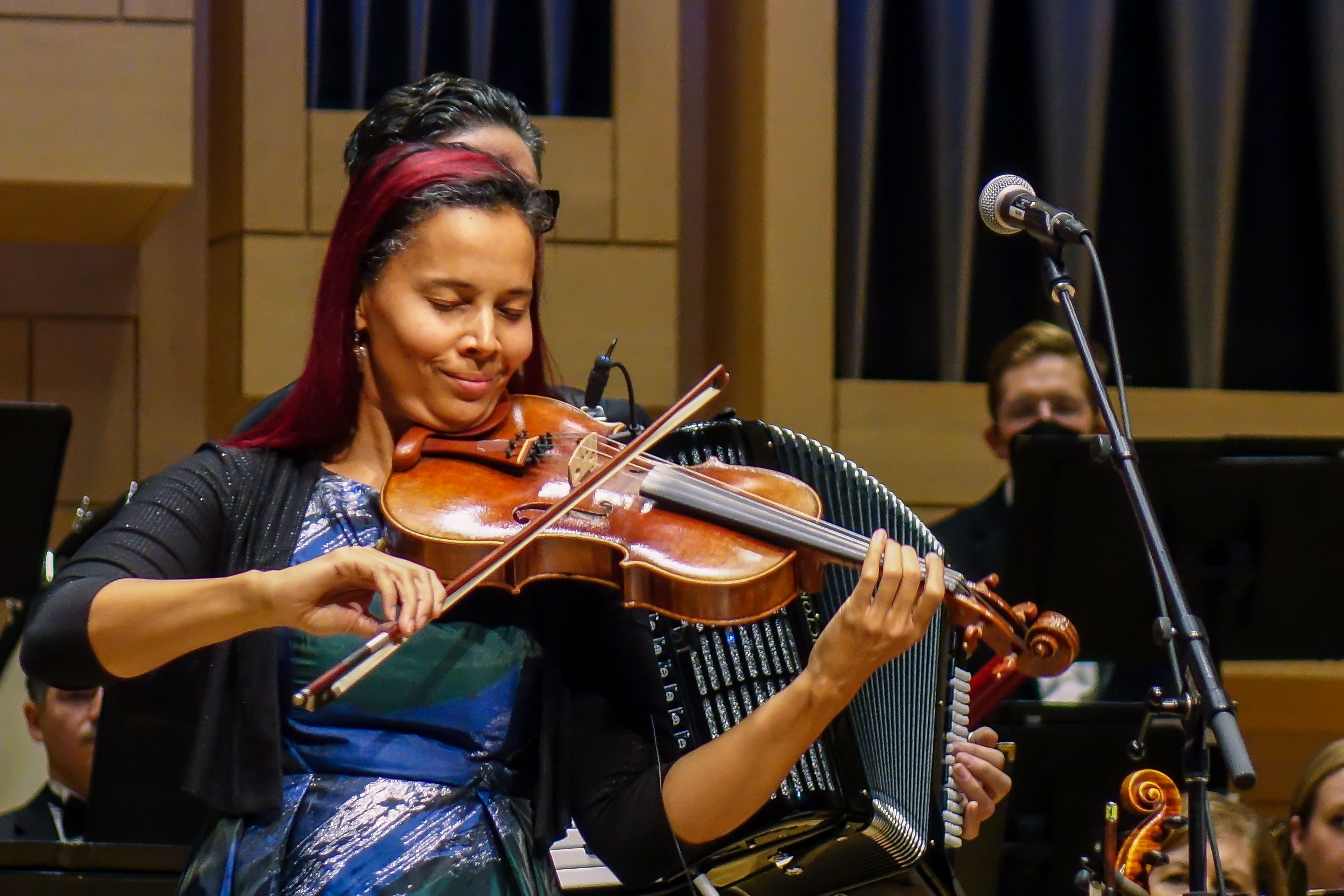
Programmed midway during the Memorial Day weekend celebration of Africa and Islam, Youssou N’Dour was closer in spirit to the true jazz of pianist-composer Nduduzo Makhathini, who followed him the next night, than he was to Rhiannon Giddens singing and playing banjo, with the spare accompaniment of Jason Sypher on bass and her husband Francesco Turrisi on accordion and piano. Nearly 40 years into his career, N’Dour’s voice is still sensational and strikingly expressive. The interplay between his incantatory chants and the mbalax rhythms of his percussion-heavy 12-man band often paralleled the sound of Latin jazz vocalists volleying back and forth with their orchestras – minus the brass.

Dive In by Leigh Webber leighwebber.com

With Lonnie Plaxico filling in as his bassist on short notice, Makhathini and his quartet seemed buoyed and refreshed rather than tentative or nervous, bringing noticeably more energy to their performances at Cistern Yard than you’ll hear on his recent studio recording, In the Spirit of Ntu, which isn’t exactly tame. The percolating Bitches Brew aspects of that new release, along with the coolness of Robin Fassie-Kock’s flugelhorn and trumpet, were dispelled by this more compact combo, with alto saxophonist Jaleel Shaw vying for dominance with the leader’s powerful keyboard style, a meshing of Ibrahim and Tyner.

No less than three tunes came from Spirit of Ntu, including “Emlilweni,” “Amathongo,” and “Unonkanyamba.” Going back a couple of years, Makhathini unearthed “Umyalez’oPhuthumayo,” a jagged gem from Modes of Communication: Letters from the Underworld, and gave it a fresh polishing so that it no longer sounded influenced by Ornette Coleman, though Francisco Mela’s pounding and thrashing on drums retained plenty of bite.

2022~Spoleto-070

Tenderest of the selections was “For You,” reaching back to Makhathini’s 2015 album, Listening to the Ground, and offering Plaxico his best opportunity to shine. Among the three vocals in the set, “Amathongo” was probably the leader’s most impressive, his quicksilver soloing on piano as delightful as his incantatory singing while Shaw switched briefly to soprano sax. As for the most prodigious face-off between Shaw on alto and Makhathini, that was “Ithemba” from the 2017 Ikhambi album, a groovy powerhouse noticeably influenced by the John Coltrane Quartet.

In. the wake of last year’s abbreviated jazz lineup, headlined by Preservation Hall and The Cookers, this year’s not only felt vaster but also younger, more audacious. Spoleto was resoundingly back in 2022, appealing to a newly energized audience, with Sorey, Ravi, and Makhathini especially demonstrating they have more to give us in years to come.

Photos by Perry Tannenbaum and Leigh Webber

Charlotte Bach Festival Ends in Splendor, With Roaring Trumpets and a Double Dose of Oratorios

Review: Bach’s Easter and Ascension Oratorios

By Perry Tannenbaum

2022~Charlotte Bach Fest-135

June 18, 2022, Charlotte, NC – Founded in 2017 with the North Carolina Baroque Festival, Bach Akademie Charlotte presented a precocious and ambitious first edition of the Charlotte Bach Festival in June 2018. Unmistakably modeled after the renowned Oregon Bach Festival, where Akademie artistic director Scott Allen Jarrett has frequently performed, Charlotte Bach figured to flourish in a soil that is rich in churches and choirs. The second Festival in 2019, bookended by Orchestral Suite No. 2 and the St. Matthew Passion, was even more bodacious than the first, which had opened with the Orchestral Suite No. 1 and closed with the Mass in B Minor. These two acts would be tough to follow at a third Festival, but until COVID struck in 2020, nobody knew how tough. Barely three weeks after I had seen the Festival schedule for June 2020, the pandemic cancellations began, eventually including Charlotte Bach III. By the time Charlotte Bach 2022 opened at Myers Park Presbyterian Church on June 11, the Festival had been in hibernation longer than it had been live, soldiering on online with abbreviated lineups in a virtual format.

During the hiatus, there was some notable reorganizing and rebranding within Charlotte Bach, but instead of suffering any attrition, the overall lineup for 2022 was actually more robust than the one announced for 2020 – with numerous additions, one very logical substitution, and no sacrifices. Instead of the Brandenburg Concerto No. 3 on opening night, Aisslinn Nosky played Bach Violin Concerto No. 1 in A minor, BWV 1041 – the same piece she had played and conducted in her Charlotte Symphony debut in January 2018.

The performance highlighted Nosky’s installation as the concertmaster of Bach Akademie Charlotte Orchestra. After announcing Nosky’s new role at the Festival (she had been a guest artist at the 2019 fest), Jarrett announced that Guy Fishman (a guest artist at the inaugural 2018 Festival) had signed on as principal cellist with the BA|Charlotte Orchestra. Not to be overshadowed, Fishman reappeared in a midweek “Bach in a New Light” concert, playing a Domenico Gabrielli morsel and Bach’s first two Cello Suites, accompanied by laser light projections from Salty Robot Productions.

Duplicating its opening and closing concerts, respectively, in Asheville and Winston-Salem, Charlotte Bach also widened its reach within the Queen City, proving that the McColl Center could be an edgy and funky enough site for the Fishman light show and that the spectacularly renovated Sandra Levine Theater, on the Queens University campus, was acoustically attuned to the splendors of Bach’s Easter and Ascension Oratorios. Maybe there was some doubt whether the Easter and Ascension pairing at the Levine sufficiently upstaged the Violin Concerto and Dixit Dominus combo at Myers Park Presbyterian to definitively rise to the loftiness of the Festival’s finale placement and Masterwork billing. Whatever the reason, Handel’s Zadok the Priest was added to the already ample triple-trumpet heft of the Bach oratorios. Thank you!

2022~Charlotte Bach Fest-141

Even before the BA|Charlotte Festival Choir stood for the first time, the trumpet triumvirate – Steven Marquardt, Perry Sutton, and Josh Cohen – held forth brilliantly in the Easter Oratorio Sinfonia, gracefully counterbalanced by oboists Geoffrey Burgess and Margaret Owens. Tension and anticipation before the choral outbreak of resurrection jubilation were further sustained as Burgess lingered as the sole solo voice, playing a lovely intervening Adagio. Joined by timpanist Jonathan Hess, the trumpet trio then returned at full throttle, heralding the Chorus and its hearty “Kommt, ellet und laufet” (Come, hasten and run) invitation. Tenor Steven Soph and bass Jason Steigerwalt, so imposing as the Evangelist and Jesus (Steigerwalt singing the baritone role) in the Festival’s three midweek lecture-concerts devoted to Bach’s St. John Passion, then sang a duet, clarifying that it is the resurrection that has gladdened their hearts.

2022~Charlotte Bach Fest-110

Appropriately enough, newly rising talent took over most of the arias and recitative that followed, demonstrating the prestige of gaining a spot with the Festival Choir as Vocal Fellows. Bass Chris Talbot as John, in the first Recitative section that followed the huge chorale, and soprano Addy Sterrett as Mary Jacobi, subsequently drew their own solos. But tenor David Morales also reappeared as Peter in the Recitative following Sterrett’s lovely “Selle deine Spezereien” (O Soul, your spices) Aria, by far the longest Aria of the night, and alto Eliana Mei-Xing Barwinski also returned as Mary Magdalene.

Yet it was charming to see Festival Choir regulars also in the spotlight, Soph backed by Owens and Burgess (both switching to recorders) and alto Sylvia Leith accompanied by Owens on oboe d’amore. Marquardt, Sutton, and Cohen returned to the stage with their elongated plunger-less trumpets to join the Festival Choir once again, which had found something fresh to celebrate in their finale after much grieving, yearning, and sighing from the vocal and instrumental soloists during their absence: Jesus had conquered Hell and the Devil, and Heaven’s gates were opening for the Lion of Judah.

Alternately known as Coronation Anthem No. 1, Zadok the Priest also creates tension and anticipation with a churning crescendo of strings that could remind you of Philip Glass minimalism if you didn’t see the thunder and lightning of chorus and brass standing onstage, readying for action. In an instant, understatement flipped to overstatement when the storm broke loose at the Levine, for neither Zadok nor the prophet Nathan is exactly an Old Testament headliner of the magnitude of Solomon, held at bay until the end of the opening line.

2022~Charlotte Bach Fest-132Handel certainly packs plenty of into the brassy choral payload, less than five minutes long, that pounces upon us after the relatively quiet preamble that gurgles along for more than 25% of the composition. Bach might have dispatched a solo vocalist to narrate the prose of Zadok and Nathan anointing Solomon as King of Israel, saving the exclamations – “God save the King!” “Amen!” “Alleluia!” and “May the King live for ever!” – for the Choir. No such middle ground applied to this Handel masterwork, and Jarrett, the brass, and the Festival Choir all reveled in firing away at us in unrelenting fortissimo. Collectively, they were thrilling.

Shorter than the Easter Oratorio, Bach’s Ascension Oratorio was sensibly paired with Zadok after intermission, showcasing the Festival Choir more intensively. The more compacted – and more symmetrical – scheme has its choral segments evenly spaced at the beginning, middle, and end of the oratorio, rather than merely as two massive bookends, while discarding the two instrumental preambles that ushered in the Easter story. Instead of the same vocalists we had seen before, four more permanent members of the Festival Choir handled the two Arias and six Recitatives evenly distributed around the midpoint chorale. More satisfying than this architectural symmetry, of course, was the sustained excellence of the singing, underscoring the awesome depth and quality of the ensemble.

2022~Charlotte Bach Fest-115Three of the four featured Ascension vocalists have been with Bach Akademie since the beginning, except for tenor Gene Stenger, the Evangelist, who signed up in 2019. The Evangelist role gave Stenger the lion’s share of the scriptural verses in this Oratorio’s libretto, stitched together from Luke, Mark, and Acts, with bass Edmund Milly, no less dignified, standing in for the Two Men in White Apparel who promise the Apostles that Jesus will return from Heaven “in like manner” as they have just seen him go. Besides that key passage, Milly drew a more poignant Recitative earlier in the narrative, “Ach, Jesu, ist dein Abschied schon so nah?” (Ah, Jesus, is Thy parting now so near?)

Bach’s plum Arias here both went to women, alto Kim Leeds poignantly following Milly’s recit with “Ach, bleibe doch, mein liebstes Leben” (Ah stay, my dearest life) and following him again in Part 2, after the angelic promise, with another lovely plaint, the “Ach ja! So komme bald zurück” (Ah yes! So come back soon again) recitative. Stegner’s final recitative, concluding the narrative with a brief mashup of Acts 1:12 and Luke 24:52, sufficed to flip the mood from gloom to joy, giving soprano Margaret Carpenter Haigh the opportunity to rejoice greatly in the final Aria of the evening, vying with Sterrett and Soph and Leeds for the mightiest vocal conquest of the night, surpassing them only in charisma.

Enhancing the dramatic contrast between sorrow and celebration, Haigh could draw upon the ample instrumental support of three wind players playing contrapuntally behind her – oboist Burgess, and two flutists, Colin St-Martin and Rodrigo Tarrazza – the first musicians to rise up during the entire Ascension. Switching places with co-principal Marquardt, Cohen played lead trumpet in the latter oratorio. All three brass players returned from the wings for the final Chorus, an earthshaking fantasia set to a stanza from a Gottfried Wilhelm Sacer hymn, summoning the Christian savior to reappear.

He may not have quite reigned for ever and ever yet, but Johann Sebastian Bach (1685-1750) seemed to have retained much of his power 272 years after his death, thanks in part to better playing and singing at the Charlotte Bach Festival than any performance this imperishable genius may have actually heard in his lifetime. Georg Frideric Handel (1685-1759) has also had a pretty fine run, as the two baroque greats, born less than a month apart, close in on their 340th birthdays. It was good to have the elder Handel take his place in the Charlotte Bach programming for 2022, helping the to enhance our delight this year and to sharpen our eagerness for Festivals to come.

Originally published on 6/21 at CVNC.org

Black Lives Really Do Matter in Spoleto’s Stirring Counter-Crusade

Review: Opera, Chamber, and Orchestral Music @ Spoleto Festival USA

By Perry Tannenbaum

Dive In by Leigh Webber leighwebber.com

Recognition of the #BlackLivesMatter Movement and the We See You White American Theatre manifesto (issued by a coalition of BIPOC artists in 2020) were certainly on Nigel Redden’s mind when he decided that the 2021 Spoleto Festival USA would be his last as general director. White and long-tenured at the Charleston arts fest, Redden saw himself personifying what needed to be changed, not merely in American theatre but across the nation’s arts.

Yet that wasn’t to say that Spoleto was backward in infusing diversity into its programming or in embracing contemporary, cutting-edge work in its presentations of music, theatre, and dance – which made Redden’s swan song, at a Festival that constricted and hamstrung by Covid-19, all the more poignant. But all Redden’s work was not truly done, even after he officially stepped down last October, for there was one grand project of his that had yet to be completed. Spoleto’s commission of Omar, the much-anticipated new opera by Rhiannon Giddens and Michael Abels would at last be unveiled after being shelved for two years.Dive In by Leigh Webber leighwebber.com

Based on the slim autobiography of Omar Ibn Said, the only known narrative by an American slave written in Arabic, Giddens’ new work was appropriately co-commissioned by the University of North Carolina, for Omar’s servitude began in Charleston before he escaped to a more benign slaveholder up in Fayetteville, NC. Rather than letting this world premiere stand as an isolated testament to Redden’s legacy – or a belated rebuke targeting the infamous Muslim ban of 2017 – incoming general director Mena Mark Hanna has emphatically made Omar the tone-setting centerpiece of his first Spoleto.

Predictably enough, Giddens and Abels sat for a public interview with Martha Teichner on the afternoon following the premiere, just a few hours before she and her husband, Francesco Turrissi, appeared in an outdoor concert at Cistern Yard. Five days after the world premiere at Sottile Theatre, the principal singers from Omar and the choir resurfaced at Charleston Gaillard Center for a “Lift Every Voice” concert, further affirming Black Lives. But that theme, as well as Ibn Said’s African origins and Islamic faith, suffused the Festival’s programming more deeply than that.2022~Spoleto-142

In the jazz sector, for example, two African artists were featured with their ensembles at the Cistern on successive night after Giddens’ concert, Senegalese singer Youssou N’Dour and his orchestra followed by South African pianist Nduduzo Makhatini and his quartet. More importantly, saxophonist Ravi Coltrane, three years after participating in a Geri Allen tribute, paid homage to his distinguished mom, harpist/organist/composer Alice Coltrane and her 1971 Universal Consciousness album, a spiritual landmark that defined Indocentric jazz, laced with flavorings of Africa, India, Egypt, and the Holy Land.Dive In by Leigh Webber leighwebber.com

Unholy Wars was another Spoleto commission, with tenor Karim Sulayman as its lead creator, furthering the pro-Muslim thrust of the Festival’s opera lineup. Taking up Claudio Monteverdi’s Il combattimento di Tancredi e Clorinda, the 1624 opera that extracted its tragic love story from Torquato Tasso’s epic Jerusalem Delivered, Sulayman boldly flipped the First Crusade narrative. Sulayman, a first-generation American born in Chicago to Lebanese immigrants, conceived a counter-Crusade, attempting to render vocal compositions by Monteverdi, Handel, and others through the perspective of those defamed and marginalized by the prevailing white Western narrative.Dive In by Leigh Webber leighwebber.com

Portraying the narrator, Sulayman chiefly championed the warrior woman Clorinda – who needed to be white-skinned and convert to Christianity for 17th century Europe to see her as worthy of Tancredi, the valiant Christian knight who mistakenly slayed his beloved in combat. Soprano Raha Mirzadegan as Clorinda outshone bass baritone John Taylor Ward’s portrayal of Tancredi, while dancer Coral Dolphin, devising her moves with choreographer Ebony Williams, upstaged them both. We could conclude, in stage director Kevin Newberry’s scheme of things, that Dolphin’s dancing silently represented the Black beauty that Clorinda was never allowed to be.

Known for directing such cutting-edge operas as Doubt, Fellow Travelers, and The (R)evolution of Steve Jobs, Newberry had no qualms about creating huge disconnects between his actors’ actions and the Italian they sang. Costume designer David C. Woolard was similarly liberated in attiring them, evoking Lawrence of Arabia more readily than Richard the Lion-Hearted. Water, sand, heavy rope, and four simple chairs supplanted onstage scenery at Dock Stage Theater, but Michael Commendatore’s steady stream of animated projection designs, coupled with the production’s supertitles, more than compensated for the sparseness onstage, keeping us awash in sensory overload. If you tried to keep pace with the supertitles on high, sometimes barely legible, you could easily be distracted from the action below.

Consulting your program booklet to determine what was being sung by which composer would only have compounded your confusion. Best to listen, look, and enjoy. For if this sensory-rich spectacle – laden with mysterious sand and water ceremony – strayed far from fulfilling Sulayman’s intentions, the music, the voices, and the dance yielded constant pleasure, wonder, and delight.Dive In by Leigh Webber leighwebber.com

More touted and deliciously marketable, Giddens’ Omar proved to be more treasurable and on-task, providing tenor Jamez McCorkle with a career-making opportunity in the title role. Directing this stunning world premiere, director Kaneza Schall is laser-focused on the most pivotal event in Said’s life in America when, imprisoned in Fayetteville, he is released from jail and purchased by a benign master because of he has – miraculously, in the eyes of local yokels – written in Arabic script on the walls of his cell.

Written and printed language, from the floor upwards to the Sottile’s fly loft, is everywhere in Schall’s concept: dominant in Amy Rubin’s set, Joshua Higgason’s video, even permeating the costumes by April Hickman and Micheline Russell-Brown. If you ever believed the libelous presumption that Africans were all brought to America bereft of any literacy, maintained in their pristine backwardness by their benevolent masters, Schall’s vision of Omar was here to brashly disabuse you.Dive In by Leigh Webber leighwebber.com

And if you were under the impression that Africans came ashore in Charleston without any coherent Abrahamic religion, their poor souls yearning to be redeemed by the beneficence of Christianity, Giddens labored lovingly to enlighten you, the beauty and spirituality of her score enhanced by Abels’ deft orchestrations. As a librettist, Giddens could have benefited from some discreet assistance – and the challenge of scoring somebody else’s text. Melodious and religious as it is, Omar could stand to be a more dramatic opera, and as a librettist, Giddens could have usefully been more detailed.

Stressing Said’s spirituality, Giddens neglects his intellect, never referencing the range of his studies or the full spectrum of his manuscripts. Nor is there a full fleshing-out of why Said was imprisoned in Fayetteville or how it could be that Major General James Owen could take him home without returning the fugitive slave to his previous master, described in The Autobiography as “a small, weak, and wicked man, called Johnson, a complete infidel, who had no fear of God at all.”Screenshot 2022-06-27 at 16-55-14 Spoleto Opera Honors An Extraordinary Slave Whose Life Mattered Classical Voice North America

The embellishments that Giddens gives us are all gorgeous. Owen’s daughter, Eliza, has a beautiful aria sung by Rebecca Jo Loeb, entreating her dignified dad to see the providence in Omar’s coming to their city. Further mentoring our hero, soprano Laquita Mitchell was Julie, a fellow slave in Fayetteville who will vividly remember her previous meeting with Omar at a Charleston slave auction. More majestically, mezzo-soprano Cheryse McLeod Lewis is a recurring presence as Omar’s mother, Fatima. Long after she is slain by the marauders who enslave Omar, she comes back to her son in a dream, warning him that Johnson is fast approaching to murder him. Mitchell and Lewis subsequently team up to urge Omar to write his story, a summit meeting with McCorkle that is the clear musical – and emotional – high point of the evening.

Plum roles also go to baritone Malcolm MacKenzie, who gets to sing both of Omar’s masters, the cruel and godless Johnson before intermission and the benign, bible-toting Owen afterwards. The question of whether Said sincerely converts from Islam to Christianity is pointedly left open. Notwithstanding his utter triumph, we probably have not seen the full magnificence that McCorkle can bring to Omar, for he was hobbled in the opening performances, wearing a therapeutic boot over his left ankle that I, for one, didn’t notice until he resurfaced as the highlight of the “Lift Every Voice” concert, bringing down the house with a powerful “His Eye is on the Sparrow.”Dive In by Leigh Webber leighwebber.com

Scanning the remainder of Spoleto’s classical offerings, I’m tempted to linger in the operatic realm, for Yuval Sharon’s upside-down reimagining of La bohème at Gaillard Center, despite its time-saving cuts to Act 2, completely overcame my misgivings about seeing Puccini’s four acts staged in reverse order. Yet there were more flooring innovations, debuts, and premieres elsewhere.52126095047_f231ab5e32_o

Program III of the chamber music series epitomized how the lunchtime concerts have evolved at Dock Street Theater under violinist and host Geoff Nuttall’s stewardship. Baritone saxophonist Steven Banks brought a composition of his, “As I Am,” for his debut, a winsome duet with pianist Pedja Muzijevic. Renowned composer Osvaldo Golijov, a longtime collaborator with Nuttall’s St. Lawrence Quartet, was on hand to introduce his Ever Yours octet, which neatly followed a performance of the work that inspired him, Franz Joseph Haydn’s String Quartet, op. 76 no. 2.

2022~Spoleto-238.jpg

Upstaging all of these guys was the smashing debut of recorder virtuoso Tabea Debus, playing three different instruments – often two simultaneously – on German composer Moritz Eggert’s Auer Atem for three recorders and one player. Equally outré and modernistic, More or Less for pre-recorded and live violin was a new composition by Mark Applebaum, customized for Livia Sohn (Nuttall’s spouse) while she was recuperating from a hand injury that only allowed her to play with two fingers on her left hand. If it weren’t bizarre enough to see Sohn on the Dock Street stage facing a mounted bookshelf speaker, the prankish Applebaum was on hand to drape the speaker in a loud yellow wig after the performance was done.

On the orchestral front, two works at different concerts wowed me. Capping a program at Gaillard which had featured works by György Ligeti and Edmund Thornton Jenkins, John Kennedy conducted Aiōn, an extraordinary three-movement work by Icelandic composer Anna Thorvaldsdottir. Hatching a soundworld that could be massively placid, deafeningly chaotic, weirdly unearthly, or awesome with oceanic majesty, Aiōn decisively quashed my urge to slip away to The Cistern for Coltrane and his luminous harpist, Brandee Younger. We were forced to arrive a full 30 minutes after that religious rite began.2022~Spoleto-260

My final event before saying goodbye to Spoleto 2022 treated me to sights I’d never seen before. On an all-Tyshawn Sorey program, Sorey ascended to the podium at Sottile Theatre and took us all to a pioneering borderland between composition and improvisation that he titled Autoschiadisms. Instead of a baton, Sorey brandished a sharpie beating time, sheets of typing paper with written prompts, or simply his bare hands making signals. Sometimes Sorey simply allowed the Spoleto Festival USA Orchestra (splendid as usual) to run on autopilot while he huddled over his score, writing new prompts with his sharpie on blank pages before holding them high.2022~Spoleto-273

And the music was as wonderful as it was exciting, clearly an advance upon the other compositions on the bill, For Roscoe Mitchell and For Marcos Balter, conducted respectively by Kennedy and Kellen Gray. In the surreal aftermath of his triumphant premiere, Sorey had reason to linger onstage during a good chunk of the intermission. Musicians from the Orchestra swarmed him, waiting patiently for Sorey to autograph the sheets of paper that the composer had just used to lead them. The ink was barely dry where the MacArthur Genius of 2017 was obliged to write some more.

Music and Museum Delivers a “Kaleidoscope” in Four Quartets

Review: “A Kaleidoscope Concert” @ Bechtler Museum of Modern Art

By Perry Tannenbaum

2022~Kaleidoscope-22

May 22, 2022, Charlotte, NC – For more than 12 years, the Bechtler Museum of Modern Art has done a wondrous job of making modern painting, sculpture, and architecture enjoyable for the Charlotte community – while infusing fresh pride and enthusiasm in the community for the modern art and artists in their midst. At the same time, the Bechtler has also diligently championed photography and cinema at special events while providing a steady stream of modern music through series like Jazz at the Bechtler and Music and Museum.

Like the Children’s Theatre of Charlotte at ImaginOn, the year-round breadth and excellence of the Bechtler Museum’s programming and exhibitions can easily be taken for granted. But a revisit to the latest Music and Museum concert, a string quartet potpourri performed by members of The Bechtler Ensemble, reminded me how seriously the Museum takes their mission and how tirelessly they retune their presentations.

2022~Kaleidoscope-21

Moving downstairs to the lobby from an exhibition hall above, Music and Museum feels more relaxed, casual, and clubbier than when the series began. The sonics of the lobby hadn’t sounded much different to me when The Bechtler Ensemble played a program of Beatles compositions back in November, all newly arranged for string quartet by Mark Adam Watkins, with guitarist Bob Teixeira added to the Bechtler’s Fab Four on a couple of tunes. But seated up front for the Bechtlers’ latest “Kaleidoscope Concert,” I was astonished by the improvement as soon as Vasily Gorkovoy played the main theme of Bedřich Smetana’s Allegro vivo appassionato, the opening movement of his “From My Life” String Quartet No. 1, and first violinist Lenora Leggatt lifted it higher in the treble.

Looking back at my photos from the Beatles concert, I could see a more probable cause for the acoustic improvement than our seat location: the curtains behind the players were gone, opening our eyes to the Museum’s rear entrance, which connects it to the adjoining Knight Theater with a wall of glass – and a somewhat breathtaking view, since the strip of lighting along the rim of the Knight’s outer balcony kept changing colors, traversing all the rainbow hues of the spectrum. Bouncing off glass instead of drapery, the sounds of the string quartet were no less enhanced than the view behind them.

2022~Kaleidoscope-16The Bechtler’s new executive director, Todd DeShields Smith, shared the emceeing with the Ensemble’s founder and director, cellist Tanja Bechtler. With Bechtler introducing the kaleidoscope of composers and music she had programmed after Smith had spoken to us about thematically connected artworks and sculpture, this format hearkened back to the original upstairs setup when the series started over a decade ago. Yet there was improvement here as well. Instead of projections while Smith spoke, three of the four artworks he discussed were in the room, flanking the musicians, including an interesting painting by Alexander Calder, which was stood up on its frame in a corner.

While the whimsical work by a Prague artist, simple drawings on canvas surrounding a cut-out of a manila envelope (so that “Express” depicted a dog walking on four human feet), belonged more solidly in the modern era, the whimsy of it all permitted the transgression of reaching back into the 19th century for the excerpts from Smetena’s 1876 quartet. Taking charge more fully on the musical intros, as she had done with the Beatles, Bechtler told us how the two movements chosen from the quartet came from Smetena’s life, the first hearkening back to his youthful beginnings as an artist and the third movement, a tender Largo, commemorating the death of his first wife.

2022~Kaleidoscope-18The pairing of these two movements was doubly atypical. We concluding with a slow tempo Largo sostenuto instead of a customary speed-up, and the Largo opened with Bechtler’s cello as the lead voice, once again usurping the first violin’s customary position. Legatt eventually came to the fore with a lovely cadenza after harmonizing deliciously with second violinist Tatiana Karpova. Bechtler was far from done, excelling in a cadenza of her own before taking the lead for a second time.

Smith proceeded to discuss the only projection on display, Nicolas de Staël’s Landscape, painted in 1951. Bechtler recalled so charmingly her memories of this 32×51 piece, shown in a photo hanging over the family’s mantlepiece, that I completely forgot what connection she or Smith drew between de Staël’s painting and the snip from Sergei Prokofiev’s String Quartet No. 1 that was coupled with it. Chalk that down to letting my mind drift from considering how the painting resembled a German flag and how the figures de Staël superimposed on those dominant colors made the composition look more to me like a moonscape.

2022~Kaleidoscope-05Bechtler’s intro did register with me when she spoke about how Prokofiev struggled with the commission to write his first string quartet. The outcome to me was a delightful hybrid, Legatt sounding jubilantly in the main theme like she was on a lark with Prokofiev’s Peter and the Wolf, while the accompaniment sounded very traditional, not adventurous at all. Harmonies between the two violinists were refreshingly audacious, however, and Karpova finally had a chance to show off her prowess when she took over the lead.

Philip Glass detractors could have taken special delight in Bechtler’s recollection of a strictly geometrical, monochromatic, and humdrum artwork that Smith had lavished his erudition on, somehow linking it with the composer. Bechtler admitted that she had never realized the piece was an artwork when she routinely walked by it in her childhood home, thinking it was merely something “you put stuff in.” Thankfully, the quartet, adapted from Glass’s film score for Mishima, was far more colorful and exciting. Legatt ostensibly had the lead as the “1957: Award Montage” movement busily unfolded like an industrious beehive, but Bechtler’s legato accompaniment often merited more attention as the repetitions continued, and the cellist briefly took over the lead. The swirl and solemnity of the closing were particularly affecting.

The last installment in this “Kaleidoscope” was the most explicitly colorful, a homespun Calder painting of a row of flowers and Patrick Williams’ “The Bay Is Deep Blue.” Stems of Calder’s flowers seemed to drip down the paper they were painted on, and Bechtler admitted it was a favorite of hers when she was growing up – inspired, she had heard, by the artist’s urge to imitate and/or replace some wallpaper. Williams’ quartet was no less agreeable, written in a jazzy idiom detonated by speedy bass-like pizzicatos from Bechtler’s cello, leading to some playful, rhythmically insistent chuffing sounds vocalized by the entire Ensemble. The piece was divided into three sections, differentiated more emphatically at the Music and Museum concert than in the recording by Quartet San Francisco.

In the middle section, perhaps the most satisfying of them all, we slowed down to a Western swing groove with Legatt seizing the lead and showcasing some nifty double-bowing. Here the “Blue” could have categorized as bluegrass as well as jazz. The final section started off even slower, with Legatt playing a cadenza over some weepy cello and viola tremolos. Then we abruptly made a U-turn back to the beginning and its unmistakable chuffing sounds and infectious speed. Very much in a jazz idiom, all four of the players drew solo spots, merrily handing off to one another at a frantic pace as their “Kaleidoscope Concert” took its last spin.

Bechtler was no less diligent in researching Williams than his predecessors. Apparently, Williams (1939-2018) scored more than 200 films and composed music for such diverse TV gems as Monk, Columbo, The Slap Maxwell Story, and The Mary Tyler Moore Show. Maybe it’s time for excavation and re-evaluation.

Originally published on 6/20 at CVNC.org

Warren-Green Bids Farewell With a Rousing Beethoven “Ode to Joy”

Review: Charlotte Symphony Plays Beethoven’s Ninth

 By Perry Tannenbaum

IMG_6604_dcoston

May 20, 2022, Charlotte, NC – Even back in the early ‘90s, when Charlotte Symphony struggled to sustain respectable mediocrity, the valedictory concert led by Leo Driehuys in 1993 proved that the orchestra could always rise to the occasion when called upon to perform Beethoven’s thrilling Ninth Symphony. Having heard the same ensemble bludgeon Beethoven’s “Eroica” to blandness just months earlier, it was hard for me to believe that the inspiration came solely from the composer. I struggled with the answer to this anomaly until I interviewed Driehuys’s successor, Peter McCoppin, shortly before his final season at the end of the millennium.

Not referencing Beethoven at all, but explaining why he enjoyed his years in Charlotte so thoroughly, McCoppin observed that the Queen City is incredibly fertile ground for choristers and choruses. You just had to count the churches around town to see his point. Not only had the Oratorio Singers of Charlotte brought extra spark to Beethoven’s “Choral Symphony,” they had also arguably sparked the Charlotte Symphony musicians they were partnering with.

The Oratorios have undergone numerous metamorphoses during the past three decades, at discreet intervals absorbed into Symphony, renamed the Charlotte Symphony Chorus, and eventually set free to seek their own gigs, rebranded once again as the Charlotte Master Chorale. Yet each time it was necessary to muster the instrumental and vocal artillery needed for Beethoven’s masterwork – indeed, classical music’s masterwork – the Chorale has admirably answered the call.

In a recent interview prefacing his valedictory concert as Symphony’s music director after 12 fruitful seasons, Christopher Warren-Green revealed that the chorus had been “one of the big incentives for me to come to Charlotte because of the great repertoire that was written for orchestra and chorus.” Little wonder, then, that Maestro Warren-Green has chosen to conclude his tenure by including the Master Chorale in his final “Ode to Joy” concert – or that he has already announced that, when he returns this coming December as Symphony’s music adviser and conductor laureate, the choir will be in the mix once more as he conducts Handel’s Messiah at Knight Theater.

There always seem to be extra layers of drama and excitement when the “Choral Symphony” returns to Belk Theater, never more than when Christof Perick made his 2001 debut as music director just 10 days after 9/11. Fast forward to the fourth Ninth that Symphony has programmed since then, and there was still a palpable sense of a special occasion in the hall. Symphony president and CEO David Fisk saluted Warren-Green before he made his grand entrance, greeted with a lusty standing ovation. Maestro then pooh-poohed all of Fisk’s accolades, paid tribute to four newly retired Symphony musicians, and – prior to a nifty and brief exit – exhorted the audience to keep supporting the CSO “or I’ll never forgive you.”

That was the last laugh of the evening as Warren-Green returned to the podium, signaled the Chorale to be seated, and presided over the Symphony as Beethoven brought them to a boil, quicker than a microwave oven, in his opening Allegro ma non troppo. Warren-Green’s Ninth would by a turbulent one, far more timely than timeless, discarding many chances for liquid lyricism in favor of alert and spirited rigor – almost militant but never quite lapsing into rigidity with the onset of its rousing quicker tempos. The incisiveness of Jacob Lipham’s timpani came upon us quickly, never allowing us to rest for long, while the affecting woodwinds and the lively strings offered eloquent counterweights.

When we reached the Molto vivace second movement, with its industrious bustle and perpetual overlapping, Warren-Green enabled us to hear early foreshadowings of the teeming humanity we’ll find in the epic fourth movement, struggling toward togetherness and brotherhood. Excitement in the overlaps between various sections of the orchestra was increased dramatically by spasmodic boosts in dynamics and the sharp whacks of the timpani. Also pushing against the flow of the violins and the warmth of the cellos were the percolating winds and the moaning French horns.

IMG_6891_dcoston

Between the second and third movements, the last true pause in this symphony, the guest soloists entered and took their seats at center stage: bass baritone Jordan Bisch, tenor Sean Panikkar, soprano Alicia Russell Tagert, and (substituting for Briana Hunter) mezzo-soprano Sarah Larson. The two little girls seated in front of my mom and me perked up expectantly at this point, only to be let down by the relatively tranquil Adagio molto e cantabile. The little girls weren’t as restless or fidgety during this lovely movement as you might expect little boys to be, but their attentiveness waned noticeably – despite the sweetness of the first violins, the affecting violas and second violins, and the mellifluous woodwinds and horns. Their adorable decorum was threatened most by the beautiful confluence between clarinet, horn, and flute as the penultimate movement faded into the concluding Presto.

IMG_6511_dcoston

Having this glorious score in front of you, with its magnificent build-up to the signature fireworks waiting to explode, must be so gratifying and fulfilling as a musical conductor stands on the podium, heading into the homestretch of his 12-year tenure. Surely, the musicians and choristers sensed the excitement and shared an eagerness to deliver. The first violins were certainly ardent and rich over the churning violas and second violins as the build-up began, yet as the gradual gravitation toward the brotherhood theme was beginning, I noticed that Warren-Green was doing something different and new. Instead of seating his cellos and double basses to our right, they were now spread in a long row, starting in front of the podium and reaching to the left edge of the stage in nearly a straight line.

So there was a little more than the usual edge as the journey to the brotherhood theme launched, continuing with dogged inevitability after the woodwinds mischievously flashed back to the agitations of the second movement. Violas layered onto the cellos and basses, adding to the smoldering sensation, and the violins accelerated the familiar strains until the brass made them soar. The little girls in front of us were completely re-engaged ahead of the next magnificent build. Bisch sounded stronger and more robust in his opening declaration, “O Freunde, nicht diese Töne! (Oh friends, not these sounds!),” culminating in the announcement of his Joy agenda (“Freude!”), than he did reprising the brotherhood refrain as he plunged into Friedrich Schiller’s “An die Freude (Ode to Joy).” More than a couple of bass baritones who have recorded these passages have fared the same. Perhaps that was Beethoven’s design, for ample reinforcements will emphatically arrive on the scene, first the soloists and then the phalanxes of choristers who were elevated over everyone upstage, ably representing Schiller’s millions.

At least a couple of regatherings follow, as all of us who love the Ninth well know. There’s a grand, brassy military march while the vocalists inhale for awhile and hold their fire, and then there are those sublime audible inhalations as Schiller’s lyrics, helpfully translated in supertitles above the Belk stage, took us “above the canopy of stars” in an ethereally protracted chord. When the Master Chorale reached peak tempo in the concluding Allegro assai vivace, like a herd of horses urged by Warren-Green to full gallop, one of the little girls turned to the other with an OMG expression on her face that her mom would have treasured until her dying day if she had seen it. At this moment, the greatest pleasure in watching kids experience this magnificent storm of sound for the first time is being able to say to yourself. “You ain’t heard nuthin’ yet!”

Originally published on 5/22 at CVNC.org

O’Rowe’s “The Approach” Isn’t Quite Reaching Us

Review: The Approach at Spoleto Festival USA

By Perry Tannenbaum

51896456148_7a4362edbf_o

It’s tempting to declare Mark O’Rowe’s new play, THE APPROACH, a retro or even misogynistic drama. Now in its US premiere at Spoleto Festival USA through June 12, from the Dublin-based Landmark Productions, O’Rowe’s elegantly circular piece – which he himself directs – does little to push against the stereotyped notion that women chatter endlessly about their men, their family, old times, how wonderful they still look, and how happy or unhappy they are.

Except for the endless part: we peep in on a revolve of five or six dialogues between Anna, Cora, and Denise within the compact space of about 65 minutes. With the exception of a reconciliation scene between Denise and Anna, who turn out to be long-estranged sisters, all the meetings seem to have begun with two of the women bumping into one another by accident. All the scenes, except the last, end with effusions on how wonderful it was to get back together and earnest promises to be back in touch soon – always preceded by abrupt sorry-gotta-goes and never followed with any follow-up.

Not that the caring for their men goes any deeper. In three of the dialogues, the women are asked to cite examples of their special man’s special thoughtfulness. Anna tells Cora about the time Oliver surprised her by creating a crossword puzzle with clues that unlocked intimacies that only the two of them could know. We laugh when Cora passes this story along to Denise as exemplifying her special man’s specialness. And when this running joke completes its cycle after a number of years, when Denise gets back together we’re a little surprised that Anna has little reaction – and no recognition – when her sister tells the crossword tale.51897018530_a375cd359b_o

The joke is on us at that point, for the adorable crossword anecdote didn’t begin with Anna, either. Anna is the touchstone in the other repeated motif as O’Rowe completes the circle of his story. The final scene between Cora and Anna, like the opening scene between the same women, begins with Cora admiring Anna’s bracelet and Anna taking it off to give Cora a closer look. O’Rowe subtly emphasizes that this is the same bracelet as before, for not only is the store where Anna says she bought it the same, but so is the other place where she saw it. Neither of the women realizes that she is repeating herself.

Yet it is exactly here that the playwright has exposed himself, for it’s obvious that he is more interested in neatly tying up his design than in delving into the truth of his characters. At 65 minutes, his “approach” to his characters is even more superficial than how he shows theirs to be to one another. As a failure of the imagination, The Approach seemingly exposes a failure of a male playwright to visualize women discussing their careers and our world, a failure that might be said to typify all men – as easily as the shallowness and deceit he depicts in Anna, Cora, and Denise can be said to typify all women.

At a murky and rundown coffee shop, around a drab table where two pairs of colorless cups and saucers are never touched, designed and dimly lit by Sinéad McKenna, the nebulous unreality of the women is accented by their surroundings. The width of the table is enough to establish an unbridged distance between the women as they converse. Although the action spans years, I can’t be sure that O’Rowe required designer Ciara Fleming to provide the cast with any changes in attire – or hairstyle – as the actors sojourned backstage and fictional time was elapsing. These are staple embellishments in American comedies that follow similar cyclical formats.51896708539_0dac4e5b31_o

With a steady undercurrent of dolor that O’Rowe constantly spreads so close to its surface, The Approach never threatens to become a laugh-fest. Nor does the distance between the women at this café prompt O’Rowe to demand that his players speak loudly enough to counteract the inevitable din of a public place. So like previous Irish imports staged at Dock Street Theatre, we struggle to hear and understand these women.

As Denise, Derbhle Crotty emerges as the most consistently audible and scrutable of the cast, which makes sense since this sib professes to be the blithe spirit in this bunch. She liked Oliver before he ditched Anna, but the estrangement persisted past his funeral when his ex pointedly refused to attend. Now that she’s blissfully remarried – to that thoughtful soul who customized a crossword puzzle to their relationship – and carrying this paragon’s second child, she doubts that she ever truly loved the man she stole away from her sister. Naturally, that makes the rift between the two exes more painful and gives Crotty a wider spectrum of feelings to explore.

Adding irony to the rift, along with some scathing satire, Aisling O’Sullivan as Anna has already revealed that she has similar doubts about her love for Oliver. So O’Sullivan’s portraiture is the darkest and most resentful by far, dimly lit up by her superficial friendliness towards Cora and her belated willingness to reconcile with Denise and assuage her sister’s pain and guilt. It’s a pianissimo portrait that also enables us to imagine why Oliver drifted away from this darkness to Denise’s comparative sunniness. He could be unloved by the cheerier sister.

Sketched as the most superficial of the three women, Catherine Walker as Cora could easily have chosen to be the most boisterous. Instead, Walker recedes into the nebulosity of her surroundings at least as completely as the siblings do. Cora has never really sustained a relationship with a man, it would seem; nor is there any enduring closeness with either of the sisters, for all their shared memories. With the blandly wholesome path Walker has chosen, we can assume that the reason Cora’s relationships fail to cement isn’t that she’s clinging or annoying. No, it’s because Cora is so indistinct, so uncaring, and so forgettable that her relations are so tenuous.

She could have been a liaison between the sisters instead of merely another acquaintance they had in common, and she could have become instrumental in their reconciliation. As their sounding board, Cora is our gateway into the hearts of Anna and Denise – our connection with the sisters – meeting infrequently enough with them to keep us informed as they catch up. No other need for her can be discerned.

A couple of days after I witnessed THE APPROACH at Dock Street Theatre, I overheard a couple of women at another Spoleto event describing the struggles they had experienced in hearing and understanding the play. “But at least you put it all together eventually,” their sympathetic listener consoled. If O’Rowe in directing, and his cast in acting, had served O’Rowe the playwright more diligently and energetically, most of those struggles would have been avoided. And the experience would be far more pleasurable – and what the script deserves.