All posts by perryt77

“Until the Flood” Overflows With Inner City Insights

Review: Until the Flood at Spoleto Festival USA

By Perry Tannenbaum

2022~Spoleto-159

Conceived and acted by Dael Orlandersmith, UNTIL THE FLOOD is an amazing, transformative theatre experience, briefly at Spoleto Festival USA through June 6. You quickly got the feeling that it was even more transformative for the playwright while she was interviewing the people she portrays – and likely transformative for the actress inhabiting those people before you. Commissioned by The Repertory Theatre of St. Louis in 2016, Orlandersmith was tasked with crafting a response to the shooting of Michael Brown by policeman Darren Wilson in nearby Ferguson, Missouri, on the night of August 9, 2014.

In carrying out her mission, Orlandersmith’s inquiry was an examination and a diagnosis of the effects of Brown’s shooting – not an investigation of the fatal event seeking to determine culpability. Her fundamental, open-ended question to many Ferguson and St. Louis residents, Orlandersmith told us in a public conversation at Spoleto during her run, was How did this event affect you?2022~Spoleto-161

Out of the answers she received – some of them stunning, no doubt – Orlandersmith forged eight composites, each of whom delivers a monologue until we circle back to retired English teacher Louisa Hemphill in completing our 75-minute visit to Ferguson. Set designer Takeshi Kata is sharply focused on making us feel like we are truly in Ferguson, with nearly antique objects such as a lamppost, an easy chair, a floor lamp, a coat stand, and a barber’s chair strategically strewn across the Festival Hall stage. This simple layout was surrounded by the sort of grassroots memorial that always seems to sprout up at the site of heart-rending American murders, a profusion of flowers, candles, cuddly stuffed animals, scribbled cards and messages, framed photos, and liquor bottles.2022~Spoleto-176

Kaye Voyce’s costume designs, all that Orlandersmith really needed to quickly change character, echoed the inner-city decrepitude. A couple of shawls and a few jackets – including a camo hoodie and a St. Louis Cardinals warmup – partially signaled the changes, while Nicholas Hussong’s video designs darkly completed the settings for the monologues. Helpfully, they were impressionistic depictions of building exteriors rather than realistic indoor depictions, so we knew we were at a steak house for retired policemen Rusty Harden, a wine bar for high school teacher Connie, and Reuben Little’s barbershop. The scene only brightened a little when minister Edna Lewis draped herself in a clerical shawl and we saw a rather photographic representation of her church.

So all of these Orlandersmith composites are rather specific and sharply drawn, usually memorable for at least one vivid anecdote in each monologue. We get to know the backgrounds of Hassan, the fluid rapper, racist electrician Dougray Smith, and aspiring high school student Paul, for in delving into how these people became who they are, the playwright was exploring how we became who we are.2022~Spoleto-171

Orlandersmith sought to be objective in order to be revelatory. She is keenly selective in what she relays to us and artful in how she orders her materials and lifts her respondents’ words imaginatively into the hallowed realm of theatre. Resisting the urge to layer on subsequent racial and political episodes as she continues traveling with her show, she has let UNTIL THE FLOOD accrue an aura of authoritative prophecy with the passage of time. The flood has only deepened since 2016.

2022~Spoleto-166

Even though Orlandersmith steps out of character to offer a brief coda at the end, she never tips off her point of view. But we can detect patterns. The three women are cordial and rational while, with the exception of the soft-spoken Paul, toxic masculinity runs riot among the five men. Reuben and Rusty are the most workaday specimens while Hassan and Dougray are the most dangerous and explosive. Mary Louise Geiger’s lighting is darkest and bleakest when these menacing men are before us.

About the only time I found Orlandersmith gently manipulating her monologues, so that we saw what she saw in Ferguson, was in the sequence of confessionals from the retired cop and the rapper who followed immediately afterwards. Rusty, the retired white cop, still remembers the wild look of in the eyes of Black youths, approaching him or at close quarters, seeming to be daring him to fire his gun – sometimes wanting him to. Working himself into a fury, the cool fluid rapper Hassan loudly proclaims that he had such feelings. Yes, that exact death wish that had just astonished me when the cop spoke of it.2022~Spoleto-163

Could there really be such desperation rampaging through our cities and ghettos? Orlandersmith confirmed her viewpoint the following afternoon in her conversation Martha Teichner, casually turning to the audience during the Q&A and asking us, “Have you ever heard of suicide by cop?”

I had not – which capsulizes why it was so vital for me to hear and heed UNTIL THE FLOOD.

Choreographic Lab Distills Inventiveness and Energy

Review: Charlotte Ballet’s Choreographic Lab

By Perry Tannenbaum
web_1525-8639

May 13, 2022, Charlotte, NC – We’ve been seeing plenty from Charlotte Ballet in the past month. Ending April and plunging into May, the company unveiled the world premiere of Sleeping Beauty: A Fairy Tailored Classic, with choreography by Matthew Hart – a ballet about a sleeping princess that had slumbered for two years prior to its pandemic-postponed awakening. That new piece ran for 11 performances over two weeks at Knight Theater to a trimmed Tchaikovsky score, with no fewer than four Charlotte Ballet dancers playing each of the lead roles, Princess Aurora, Prince Florimund, and the Lilac Fairy. Five days after that run – with plenty of rehearsal during the run, we can presume – another swarm of Charlotte Ballet and Charlotte Ballet II dancers darted to and fro across the studio at the Patricia McBride/Jean-Pierre Bonnefoux Center for Dance for the third edition of Choreographic Lab, also postponed for two years.

Naturally, all seven dances on this fresh program were created and developed in-house, with members of the two Charlotte Ballet troupes trying their hands at choreography, all working with their colleagues at the McBride/Bonnefoux “lab” to bring the new dances to fruition. In more than a couple of instances, new music was created especially for the new works. Giving extra polish to the production, each new dance was preceded by a video in which the choreographer discussed his or her aims and process. Somehow, the idea that Charlotte Ballet was alive and kicking became even more intense than with even the long-dormant Tchaikovsky ballet, for now the sounds and the styles were more contemporary.

The trio of new pieces before intermission was especially impressive, two of them featuring new music, one performed live by the composer. “Movement in 3” was accurately described by choreographer Maurice Mouzon Jr. as a “neoclassical work with a groove,” for the eight dancers, evenly divided by gender, all wore ballet shoes and costumes, with the women particularly prevailed upon to work en pointe in the opening section to music by Jonny Greenwood that sounded like a Bach partita. After insinuating themselves among the women, the men came to the fore in “Yumeji’s Theme,” music by Shigeru Umebayashi that had an unmistakable waltz-tempo lilt. Most of us were likely wondering where the groove was until we heard Olle Nyman singing “Heart & Soul” as all eight dancers joined in. Then it was unmistakable – and irresistible.

“Mile Marker 123” by Colby Foss would remain my favorite new piece of the evening, largely because it was so completely produced, with lighting, staging, music, and dance unifying so effectively. During most of the dance, Foss had his partner, composer and cellist Ian Cooke, seated center stage, playing and singing his original song, “Sterling.” Surrounding him were nine dancers in symmetrical formations, variously evoking a royal court, a worshipful adoration, or a campfire.

Two couples were deployed on each side of Cooke, and the ninth dancer, a female, stood vigilantly behind him, there to take hold of his cello when the singer stood up and was incorporated into the dance. At this point Cooke himself didn’t dance. The other dancers lifted him up, turned him upside-down, revolved him like the hand on a clock, and then carried him solemnly like a corpse at a funeral before restoring him upstage center to his throne. Very evocative in moody, amber light. The epigraph embedded by Foss in the playbill enjoins us to pay heed to Mother Nature: “Her power brings life and beauty but can just as easily wield chaos and death.”web_1525-9401

Sarah Ingel, who choreographed “Nebulous Reverence,” actually works behind the scenes at Charlotte Ballet as a production assistant – and with femme and queer performance makers across the Southeast. “I practice myth making from a queer and feminist perspective,” she says at her website, but there was no reason to feel threatened by her new work, which has comical and satirical overtones despite the black unisex costuming and Ingel’s explicit intent to project chaos. The three dancers deployed to intensely watch the other three, in the most memorable episode, share a bowl of popcorn as they behold the chaos, before spilling the remainder of the popcorn in their excitement. While you or I wouldn’t describe such reverence as nebulous, it was hard to argue with Ingel’s idea.web_1525-9754

Among the four pieces after intermission, the first and third, Josh Hall’s “Remnants” and Nadine Barton’s “Woebegone,” left the deepest impression. Could be that I’m a sucker for spotlit circles gleaming on a dance floor, for that’s what these works had in common. In Hall’s piece, contiguous circles lit up in a sequence corresponding to the shifts in music, two spare piano recordings by Luke Howard surrounding M Haase’s “Plaything.” Amelia Sturt-Dilley and Meredith Hwang were the first to dance Hall’s intimate choreography, joined by Anna Mains, who shed a frumpy pullover blouse to chime with the summery pink outfits worn by the others. Mains didn’t stop there, shedding her pink skirt with the arrival of Humberto Ramazzina for the final segment. Interaction between the sexes was relatively chaste and innocent, though Ramazzina’s tenderness was unmistakable. His windup probably confounded most expectations as he handed back the clothes that Mains had shed, and she put them back on.

“Woebegone” had a solo dancer, Ben Ingel as Scooter, navigating the spotlit circles, choreographed by Barton to “How Can I Find True Love,” the B-side of the Del-Vikings “Come Go With Me” in 1956. Overdramatizing his woes, decked out in a clown suit, Scooter’s misery was substantially less than Pagliacci’s, particularly when Ingel broke the fourth wall and milked the audience for applause. Barton dressed purposefully for the occasion, coming onstage after the premiere to take her bow in a dominantly black polka dot outfit that echoed Ingel’s clown suit, topped by a vaudevillian black bowler hat and accented by flaming red gloves. Such preening was actually encouraged, it would seem, for Foss took his bow earlier contrasting radically with his partner, sporting a silver dinner jacket as he stood beside Cooke, who remained in his ramblin’ man casuals.

The other two pieces were certainly modern and energetic, reflecting the violence and pandemonium of our times. “Fulfilled Conviction” by James Kopecky fulfilled the choreographer’s desire to stage a jailbreak, featuring a scintillating and charismatic performance from Sarah Lapointe as the fevered action swirled around her – and in pursuit. “Listen to Me (Us)” by Eric Stith III of Charlotte Ballet II, had a surprisingly militant core: “We all want to be heard and seen. Sometimes you have to do that with violence.” Music by Les Tombours du Bronx, “Pneumothorax,” gave the violence a machine-gun battlefield atmosphere rather than the hues of terrorism or protest, and the bright red costumes worn by the dancers were closer to pajamas than blood.

Originally published on 5/15 at CVNC.org

Domingo’s Dot Makes Its Point

Review: Three Bone Theatre Presents Dot

 By Perry Tannenbaum

Dotty2

The question that he frames in all but words

Is what to make of a diminished thing.

–Robert Frost, “The Oven Bird”

Since their return to live performance last October, Three Bone Theatre has been contracting and then expanding as they adapt to The Arts Factory, their new base of operations on W. Trade Street. They were breathing in at first, perhaps, with a compact one-woman show, and now they’re breathing out. Open was smaller in every way than either of the two productions Three Bone had streamcast during the QC’s lockdowns, Prisoner 34042 and their New Black Playwrights Fest. Smaller cast, shorter running time, and probably smaller audience.

From what I’ve been able to discern, each of Three Bone’s 2022 shows has been bigger, longer, and better attended than the one before. With Lucy Kirkwood’s The Children back in March, we saw a larger cast, a longer show, and actual scenery. Meanwhile, armed with masks and vaccination cards, more theatergoers seemed ready to venture out into the night to see a relevant post-apocalyptic drama.

Colman Domingo’s Dot detains us longer and offers us more characters to consider, though it’s clear that Philadelphia matriarch Dottie Shealy is far and away the one that we – and her three children – should be most concerned about. It’s the Christmas holiday season in Philly, a time when the children converge around a tall spruce tree with enough lead time to collaborate on the decorations. Shelly, the eldest and a lawyer, is holding down the fort while her sibs, Donnie and Averie, have the freedom to flounder in their careers.

Shelly

Shelly rightfully feels that she must watch her mom like a hawk. Ever since Dotty was hauled into a local police station after speeding at 95mph, unthinkable anywhere near Philly, Shelly has been unsure what bizarre lapse Mom might have next. With the onset of dementia and a diagnosis of progressing Alzheimer’s, Dotty shuttles between the self her children have always known and somebody prone to forgetting names and events, losing track of where she is and what time it is, or coming back from her kitchen with a bag of Oreos instead of the salt she went in for.

Unable to keep tabs on Dotty around-the-clock, Shelly has hired a gentle young Indian man, Fidel, to help her out. But Shelly is out of patience and out of her depth, so she has become a bit bossy and toxic. Not only has she hidden Mom’s car keys, she uses her disorientation to trick her into signing legal papers she doesn’t understand and going to bed in the middle of the day. Calling for a family conference with Donnie and Averie deep in Act 2, she locks Dotty in her bedroom, astonishing her sibs. Convinced that Mom is planning to kill herself – driving around at 95mph is a serious symptom – Shelly has also developed a paranoid attitude toward Fidel, suspecting him of helping Dotty to hatch her plan.

Woven into all this dramatic intrigue – and all of Shelly’s questionable choices – you’ll find that Domingo has provided plenty of opportunities for comedy. Shelly’s deceitful and aggressive coping mechanisms compromise her character for us long before her sibs arrive on the scene. So we can see why Donnie and Averie would both impugn her credibility and resent her bossiness, no matter how stressed she may be. Aside from that pushback, Dotty can be quite formidable herself when she’s lucid, with quite the sharp tongue on her.

Dotty1

Perceptive, too. She could always see that Donnie was “gay as giftwrap,” even before her daughters knew. Nor is Dotty totally blind to her own decline, despite all the resistance she puts up against Shelly. It’s hard to believe that Dotty would off herself on Christmas as a reaction to her own deterioration, when all the family is gathered ‘round, but there is definitely something secretive about her interactions with Fidel.

Navigating Dotty’s mood swings, mental lapses, and surreptitious plotting takes a performer over some tricky terrain, requiring sudden hairpin turns; but if you saw Lillie Ann Oden as the wary, savvy, and pragmatic wife in The Children, you’ll likely have little doubt that she can tackle this black Philly matriarch. With Corey Mitchell back as director, after an all-too-common two-year hiatus from the local scene, you might find that Oden still exceeds your high expectations with her saltiness, her increasing confusion, and her sheer naturalness.

While Dotty and her struggles are comparatively fresh onstage, experienced actors and theatergoers will likely recognize the regathering sibs as somewhat formulaic. It won’t be the first time we’ve seen one of a set of sibs turn out to be disagreeably disapproving and controlling, nor will it be a shock to see a sister or brother who is insouciantly adrift, unsettled, charismatic, and irresponsible. Kookiness is often in the mix. Domingo takes pains to give Valerie Thames as Shelly, Marvin King as Donnie, and Nasha Shandri as Averie distinctive personalities and detailed backstories for them to inhabit.

You’re still forgiven if you occasionally find yourself feeling that these capable actors are filling in time-tested sitcom slots or a template lifted from Crimes of the Heart and skillfully refurbished. Thames gets to switch during intermission from a pineapple hair color to a bright raspberry, signaling that she may be the responsible sister but has no intention of remaining anonymous – at the same time showing us that Shelly can be vulnerable, sensitive to Mom’s criticisms.

Long before Shandri has made her first entrance, we’re aware that Averie is the most outré and unbridled of the Shealys. Yet we’re very quickly aware that there’s a loving, conciliatory core to Averie. Over and over, we see that the estrangement between the two sisters is strictly one-sided. It’s Averie who counsels Shelly, with full persuasiveness of a sister, that changing hair colors isn’t quite the right path. She must ditch Andre instead, her hairdresser. Off-handedly and gradually, Shandri and King reveal to us that Shelly undervalues both her sibs.

Jackie and Dotty

Likely an autobiographical creation from Domingo, Donnie is the sibling who most breaks the sitcom mold. King is a moderately daring casting choice from Mitchell, not reminding me of giftwrap at all, but he’s immensely likable without hardly trying. Although he never earmarks him as his parents’ favorite, Domingo clearly designates Donnie as the most beloved of the Shealys. Two additional characters are devoted to double-underlining this point, Tommy Prudenti as Donnie’s husband and Amy Dunn as his high school sweetheart.

Jackie, still carrying a torch for her old flame (among other things), is a useful character from the very beginning, long before she tries to come between Donnie and Adam. Frank conversations between Dotty and her children seem to have ceased years before her current aging crisis, and as the houselights go down, Shelly and her mom have no plausible reason to exchange information about each other that we need to know as quickly as possible. Jackie’s coming back home and catching up with her old flame’s mom, after years away in New York, opens up windows for us into what’s happening with both Dotty and Shelly.

Donnie and Adam

Dunn’s slant on Jackie takes into account that she is not at all opposed to homewrecking, so she can be a bit brash and irritating, though she usefully questions the crueler aspects of Shelly’s caretaking. She brings out a lot from Dottie and Shelly in the beginning, but it’s Prudenti as Adam who really brings out the best in his mother-in-law, unexpectedly reminding her of her dead husband. Due to his marital issues with Donnie, we get to feel that we know Donnie nearly as well as Dottie and Shelly, though Domingo overestimates our interest in seeing them sort out their love lives.

Both Jackie and Adam, interestingly enough, are white, so there’s a refreshing lack of racial tension in Dot, though the meanness of Philly’s inner city lurks plainly enough in the background. In fact, Jackie is Jewish, further broadening the palette. In these matters, Domingo is most subtle, for there is a shared prejudice against Fidel among the younger Shealys, leading them to underestimate the foreigner, either through unwarranted suspicion or dismissiveness. Our dear Dottie is the first to properly gauge his intelligence and worth.

In his theatrical debut, computer science grad student Satheesh Kandula gives us a marvelously mild account of Fidel, diffident and polite but not at all servile. Kandula is hardly a credible target for xenophobia, but we’re not terribly surprised to see it happening – and it might give us pause if we consider the possibility that Fidel may understand Dottie better than anyone else onstage. What he and his co-conspirator wind up concocting for Christmas turns out to be the best lesson of the night.

Only Jackie calls Dottie “Mrs. Shealy,” and absolutely nobody presumes to call her Dot. So why is that Domingo’s title? I’ve yet to read a review that mulls that question over, though I consider the answers – pragmatic or literary – worth pondering. “Dottie” might hint too broadly that Domingo’s protagonist has gone crazy, a matter that the playwright would surely prefer to remain ambiguous.

The other reason for the title is about what Domingo does wish to say. He’s using the diminutive of Dorothy and Dottie to emphasize that Dottie, in her drift toward dementia and Alzheimer’s, is becoming different, “a diminished thing” as Robert Frost would say. At the same time, she remains the same. That’s the main point of Dot.

Heretical Fairy-Tailored Format Is a Winner at the Knight

Review: Charlotte Ballet Premieres Sleeping Beauty: A Fairy Tailored Classic

By Perry Tannenbaum
Final Dance by Jeff Cravotta

Whether paired with Vampire Lesbians of Sodom onstage, orchestrated by Tchaikovsky for ballet, or adapted by talents as diverse as Walt Disney and Matthew Bourne, Sleeping Beauty isn’t a title that sleeps for long. Between here and Greensboro, the title appeared more than a dozen times on our cultural calendars between 2005 and 2020. So it’s a bit of a shock to find that the Charlotte Ballet’s world premiere of Sleeping Beauty: A Fairy Tailored Classic, one of the first cultural events in Charlotte to be cancelled with the onset of COVID in March 2020, has slumbered more than two years before finally coming to life.

Actually, it had been more than three years since Charlotte Symphony last played the Tchaikovsky score live at Knight Theater. But not the whole score. Mikhail Pletnev’s benchmark recording with the Russian National Orchestra clocks in at two hours and 45 minutes, about 75 minutes longer than the typical Nutcracker performance. So if by “tailored” you were hoping that Charlotte Ballet and choreographer Matthew Hart mean trimmed – substantially trimmed – then you can breathe a sigh of relief.

More exciting, the fairy-tailored concept embraces a format that some balletomanes might find heretical, integrating a spoken narrative with the dance. Obviously, spoken narration invites a more intimate interaction between the performers and the audience, especially the anklebiters that adults may have dragged into Knight Theater with them. But really, what might seem outré to ballet fans is perfectly de rigueur for parents and kiddies attending Symphony’s Saturday morning concerts, drawn to Belk Theater by the lure of Francis Poulenc’s Babar, Serge Prokofiev’s Peter and the Wolf, or similar fare.Nurse Fairies by Jeff Cravotta

Traci Gilchrest-Kubie, portraying little Princess Aurora’s doting Nurse, is our graceful trailblazing narrator. Once upon a time, you may recall, Gilchrest-Kubie was a perennial lead dancer when the company was known as NC Dance Theatre, but she has transitioned within the organization over the past 10 years and now serves as Repetiteur – rehearsal director, if you don’t speak ballet – for both CharBallet and CharBallet II. She has also worked behind the scenes, staging several company productions, as she also does here alongside Charlotte Ballet II director Christopher Stuart.

While the playbill didn’t specify who was responsible for the narrative script, it was worthy of credit, pleasingly spare like Prokofiev’s beloved Peter. Turns out that the nifty narration was co-written by Hart and acting coach Jane Wymark. Ostensibly modeled after Marius Petipa’s original 1890 choreography, Hart allows himself and his dancers some strikingly whimsical moments. Perhaps the most pointed of these came when Rees Launer as Puss in Boots and Meredith Hwang as the White Cat danced their featured pas de deux at Princess Aurora and Prince Florimund’s gala wedding celebration.Aurora Group by Jeff Cravotta

If the tentative meowing music, abruptly segueing into hissing and clawing, sounds oddly familiar, it’s because Disney sacrilegiously applied it to the climactic moment when Sleeping Beauty finds a spindle high up in an abandoned turret of her castle and pricks her finger on it, fulfilling the Evil Fairy Maleficent’s curse. Not to be outdone by Disney’s irreverence, Hart had Puss twerking to that same macabre music.

The magical role of Princess Aurora will be timeshared by no fewer than four dancers between now and the closing May 8 matinee, but that hardly implies that the ballerinas’ burdens have been lightened. Sarah Hayes Harkins, who played Aurora on opening night, was fated to play the title role twice more, but she was also slated to take on Gilchrest-Kubie’s narrative role at three other performances, so she had lines and steps to rehearse. Meanwhile, Harkins’ opening night partner, James Kopecky as Prince Florimund, had two more turns scheduled as Aurora’s destined beau, five as her father the King, and three more as Prince West, one of the marriage prospects presented at the princess’s inauspicious 16th birthday ball.

One of the most rewarding qualities of CharBallet’s extravaganzas, for audiences and dancers alike, continues to be the freedom that the company allows to their principal dancers – encouraging them to bring their own style and personality to each role they play, rather than enforcing a bland and boring sameness. So you’ll find a gratifying individuality to Harkins’ Aurora as she pours regal elegance into her, along with touches of youthful delight, mischief, and a wisp of loneliness. Other Auroras sharing the role (Emerson Dayton, Amelia Sturt-Dilley, and Isabella Franco) might strike you as more nubile, childish, coquettish, or amorous.

As Florimund, Kopecky is almost pathologically sensitive and sincere, an absolute dreamboat for the naïve young fry in the audience, but I expect that Josh Hall, consigned to the role of King on opening night, will stir older libidos when he takes over as the destined Prince, paired with Dayton in her maiden season with CharBallet. Kopecky’s sublimity, on the other hand, chimed well with Harkins’ ethereality – and contrasted deliciously with Colby Foss’s flamboyant rendering of Carabosse, Tchaikovsky’s Evil Fairy.Carabosse 2 by Jeff Cravotta

Of course, the Sleeping Beauty that former CharBallet artistic director Jean-Pierre Bonnefoux premiered here in 2012 is still deeply embedded in the company’s DNA, so a crossdressing Carabosse won’t be a total shock to loyal subscribers. But Disney’s Maleficent can also be cited as part of the evolution of Hart’s Carabosse. When Tchaikovsky stretched the rather thin storyline to epic length, he largely relied upon celebrations, a Sweet 16 and a wedding piled upon the original christening.

Disney wanted drama, so he didn’t discard Carabosse after the opening scene, or even after the birthday party, where Tchaikovsky began the tradition of having her disguised and smuggling a contraband spindle into the kingdom. No, she is still around a century later, in Disney’s scenario and in Hart’s, barring Prince Florimund from waking his ladylove and providing some sorely needed pushback against the predestined outcome.

Foss’s bravura requires a counterweight that’s stronger than the magically-challenged Florimund, so the Lilac Fairy, “wisest of the Fairies” according to the Nurse, is elevated as much as Carabosse in Hart’s scenario. In fact, with Sarah Lapointe’s sparkle, power, and serenity, you can make the case that Carabosse and the Lilac Fairy are the plum roles in this Fairy Tailored Classic rather than Aurora and Florimund, though Harkins and Kopecky do conquer the most challenging choreography.Court by Jeff Cravotta

Sharing the Lilac gig with three other dancers, Lapointe will actually spend most of this CharBallet run as Aurora’s mom, the Queen. When Foss isn’t making a meal of Carabosse’s malignity, he will trade places with Andrés Trezevant, looking very cavalier on opening night as Catalabutte, the officious and slightly pompous page who presides over every ceremony. While the costumes designed for him by Peter Docherty aren’t nearly as wicked, gnarly and spectacular as Carabosse’s outfits, Trezevant was accorded a wardrobe change after the 100-year intermission, wielding his scepter in a purple-and-blue livery for Aurora’s birthdays before rocking a copper-and-blue ensemble for the wedding.

While Docherty’s scenery is not quite as eye-popping as his costumes, Jennifer Propst’s lighting design dramatically contrasts the daylight of the public celebrations with the moody gloom of the sleeping kingdom and castle. Aside from the dimly lit apparition of the Sleeping Beauty behind a misty scrim, Docherty and Propst combine on a nice effect as the Lilac Fairy’s spell first takes hold. Vines descend dramatically from the fly loft, covering most of the courtyard as we move toward the intermission blackout.

Thanks to the Nurse’s ongoing narrative, there is extra charm to the intermission. Before nodding off in front of the proscenium and slipping away to the wings, Gilchrest-Kubie announced the 20-minute interval and drew our attention to the slowly moving clock projected high over centerstage. Just a single minute hand sweeps clockwise around the clock after the lights come up. Only the clockface has been reconfigured so we’re gradually counting up to 100 like a speedometer, instead of the usual 12 or 60, as Sleeping Beauty’s sleep flies by.

Compared to Aurora’s century-long coma, the two years we’ve had to wait for this Fairy Tailored Classic are nothing to complain about. On the contrary, we have a ballet wakening of our own to celebrate.

US Premiere Keynotes Symphony Concert, with Multiple Thrills and Triumphs to Follow

Review: Charlotte Symphony Plays Sibelius Symphony No. 2

 By Perry Tannenbaum

2022~Sibelius 2-21

April 22, 2022, Charlotte, NC – There had been no foretelling that five weeks ago, the Belk Theater stage would be splashed with the colors of Ukraine’s flag for a Charlotte Symphony concert. Nor could guest conductor Karen Kamensek, making her Charlotte debut, have predicted that the music she was bringing to Knight Theater would be so pertinent to this moment: a symphony by a Finnish composer written in response to Russian oppression in 1902, and two pieces written by Russian-born composers, one of them publicly condemned by the Stalinist regime in 1948. Sadly, these works by Jean Sibelius, Victoria Borisova-Ollas, and Dmitri Shostakovich have new life and fresh significance today as the world trembles, anticipating the full consequences of the horrific Russian aggression unleashed by its unhinged leader.2022~Sibelius 2-06

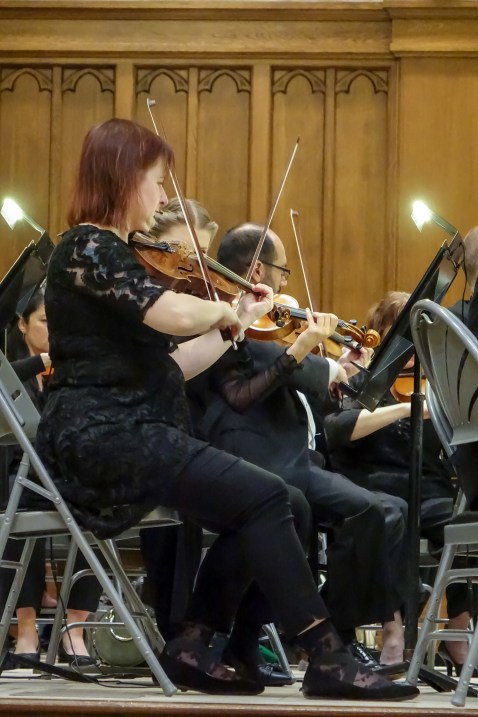
Written by Vladivostok native Borisova-Ollis, a longtime Swedish citizen, in 2008 for the 850th anniversary of Munich, Germany, Angelus had its long-overdue United States premiere. Nor was the Chicago-born Kamensek unworthy of the honor, having conducted the 2022 Grammy-Award winning recording of Philip Glass’s Akhnaten with the Metropolitan Opera. Although the upstage at Knight Theater wasn’t lit up with Ukraine’s colors, there certainly was an auspicious tableau – and a sense of occasion – as a phalanx of percussionists were spread across the rear of the orchestra, bells and drums and cymbals further brightened by the sounds of piano, celesta, and a pair of harps. The composer’s account of how she fulfilled the Munich Philharmonic Orchestra’s commission, reprinted in the digital program, lays heavy stress on the stroll she took through the city and the recordings she made of its church bells, so that aspect of the piece, underscored by Kamensek’s spoken intro was eagerly anticipated – a pacific, spiritual answer to Putin’s insane “de-Nazification” rallying cries.2022~Sibelius 2-25

What was surprising for me, especially in light of Borisova-Ollis’s description of the opening of her Angelus as “a hint of a Celtic chant,” was hearing principal violist Benjamin Geller playing a melody, over soft tremolos from the string section, that unmistakably resembled a traditional Passover song, one that I had heard in synagogue as recently as that morning. The predicted bells would eventually arrive in three or four waves, but not before we heard from the trumpet, the horns, the timpani, and the clarinet. Extending beyond 20 minutes, not at all a bonbon typically programmed at the beginning of concerts, the piece was studded with unusual instrumental effects – like a brief organ-tuba duet – and swirling, cresting climaxes. Even as she built to the first tolling of the tubular bells, Kamensek’s interpretation was more bustling and boisterous than Skari Oramo’s relatively quiescent recording for BIS with the Royal Stockholm Philharmonic. Since Kamensek lists one Borisova-Ollis’s operas, Dracula, among her credits, expect to hear more from this composer-conductor pairing in the future.

Shostakovich completed his first Violin Concerto just one month after his denunciation, but he and violinist David Oistrakh, for whom the work was dedicated, had to wait over two years after Stalin’s death – more than seven years in all – to respectively hear and perform the premiere. Although I own two of the Oistrakh recordings you can access on Spotify, I can only trace two prior occasions when I heard this epic piece performed live, once by the Charlotte Symphony in 2001, when young Caitlin Tully was hampered by the acoustics of the First United Methodist Church, and once at the Verbier Festival in 2006, when violinist Vadim Rapin conductor Yuri Temirkanov fired off all its burners with a student orchestra that was on a par with the Spoleto Festival’s.2022~Sibelius 2-11

Charlotte Symphony subscribers greeted concertmaster Calin Ovidiu Lupanu with an ovation that probably would have startled Repin himself, and the violinist seemed buoyed by the occasion. While Lupanu didn’t quite replicate the sublimity of the opening Nocturne in the 1956 recording by the Leningrad Philharmonic with Oistrakh and maestro Yevgeny Mravinsky, he came breathtakingly close, enough to earn another ovation between movements, and the slashing energy and brightness he brought to the ensuing Scherzo – coupled with the brio Kamensek drew from Symphony in this catchiest movement – earned an even more-deserved ovation afterwards.

Kamensek and the CSO met the grand challenge of the Passacaglia, infusing it with martial gravity, and Lupanu played with more eloquence and fire than I’ve ever heard from him, carrying forward a thrilling momentum into the Andante – Cadenza portion of that movement and, without an interval for the audience to express its enthusiasm, into the final Burlesque, the shortest section of the work. Cheated of the chance to explode after the Cadenza by the onset of timpani for the Burlesque, the audience redoubled its fervor at the rousing conclusion. Fortunately, Lupanu had an encore at-the-ready, a lovely Sarabande from Bach’s Partita No. 2, the first encore performed at a CSO concert since before the pandemic.

Of course, if you were among the legions who can’t get enough Sibelius, the Symphony No. 2 after intermission, while significantly statelier and more reposeful than the concerto, was anything but an anticlimax. However neatly the oppressed narrative might fit current anti-Russian sentiments, Kamensek seemed to take the quieter episodes of the opening Allegro as subdued rather than oppressed, with an incipient optimism ready to burst forth with ebullience or blossom into grandeur. The opening of the ensuing Andante, ma rubato can sound morose and grim on recordings, but at the Knight, where the pizzicatos of the basses and cellos could sound lighter and livelier, buoyancy lurked within the quietude, so transitions to anger and reflection sounded more natural. Once again, the two final movements were linked without an interval, punctuated by another brief timpani tattoo, but this time followed with trumpet heraldry and a grand orchestral flowering. Repeated lulls and swellings reaffirmed the triumph, beautifully calibrated and fervently delivered.

Originally published on 4/24 at CVNC.org

Biff! POW!! Welcome to Geek Theatre

Review: She Kills Monsters at The Arts Factory

By Perry Tannenbaum

7

The curtain is finally going up in Charlotte on the works of playwright Qui Nyugen, the American son of Vietnamese parents who founded the Vampire Cowboys Theatre Company back in 2000. Soon afterwards, Nyugen’s brainchild transplanted from Ohio to Off-Broadway – where it became the first theatre company sponsored by NY Comic Con and the wellspring of “Geek Theatre.” Emphasizing sci-fi, stage combat, and gaming – with a biff! POW! comic book edge – Nyugen’s 2011 comedy-drama She Kills Monsters is typical of the breed.

Of course, the monsters are no more real onstage at The Arts Factory than they are in Dungeons & Dragons tabletop role playing. Try outlandish costumes, fantasy projections, and puppets.

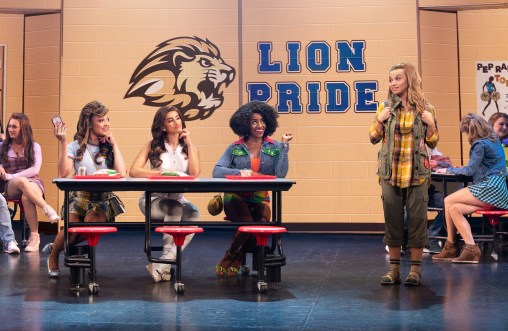
So this co-production from Charlotte’s Off-Broadway and Women-In-Plays, directed by Sheri Marvin, is plenty of fun, much louder than it is fearsome. Yet there is a serious side to Agnes Evans’ quest for the Lost Soul of Athens in the fantasy realm of New Landia. Wresting the stolen Lost Soul from the fearsome five-headed Tiamat isn’t truly the crux of Agnes’s quest. Nor was it stolen, precisely, for we’re back in 1995, when demon overlord Orcus actually traded the soul for a neat TV/VCR combo.1

Agnes, a humdrum high-school English teacher, is on a quest to connect after losing her parents and her younger sister, Tillie, in a car accident. While preparing to liquidate her childhood home and move in with longtime boyfriend Miles, Agnes stumbles upon an unfinished Dungeons & Dragons module that Tillie has left behind – a first baby step toward realizing just how little she knew about her little sister while she was alive. Taking the module to Chuck, the notorious Dragon Master of Athens (Ohio), big sister learns that Tillie remains a D&D legend, revered as Tillius the Paladin in the gaming world.

More humbling secrets lie ahead as Agnes enters the fantasy world of her sister’s legacy: Tillie was gay, and she was bullied at school – the school where Agnes teaches. Of course, live theatre heightens the impact of these revelations, thanks to some subtle nudging from Nyugen and a logical plot twist. Tillie is in the game as one of the companions who helps Agnes on her quest, and she’s a central character in the storyline. Nyugen enables Agnes to effortlessly converse with Tillius, who comes back to life during their adventures, giving the action hero a chance to vent the resentments she still feels toward her neglectful sister.6

Friends of Tillie’s are in the storyline as well, along with Miles, who is cast as one the obstacles who must be slain if Agnes and her companions are to have their rendezvous with the five-headed Tiamat. So are the bullies, succubi named Evil Gabbi and Evil Tina, aliases that are not at all obscure. Of course, as Agnes shuttles between the role-playing D&D world and real life, she encounters all of Tillie’s companions – and enemies – at school.

And since the same actors portray the characters Tillie invented and the people they are modeled after, the difference between the fantasy world and the real world is largely erased, far more for us than Agnes, who is presumably encountering the tabletop D&D dramatis personae as plastic action figures.

If you can manage to take so much silliness seriously, you might descry a distinct vein of feminism in Marvin’s directing, for the men, when not merely annoying, consistently deliver their villainous vaunts at high volume. Kudos, then, to Nyugen as well for upending this traditionally masculine world of geekery. Needless to say, the real heavy lifting is done by our mostly female clan of heroic gladiators under the guidance of fight choreographer Katie Bearden and fight captain Nathan Morris, who moonlights as Dragon Master Chuck.5

Lighting by Sean Kimbro decisively marks the borders between Agnes’ worlds. But the costumes by Ramsey Lyric enhance the fun and immerse us in Nyugen’s quirky fantasy. The tight leather action suit sported by Charlie Grass as Tillius, along with her dungeon war paint, instantly grabs our attention, the Viking war gear of her party dimly gleams its savagery, and the monkish cowl enveloping Morris as Chuck marks him as a mystic master of the dark D&D arts. Juxtaposed with these costumes, with Lyric’s fabrications representing New Landia outlandish ogres, and with his climactic Tiamat, Luna Mackie as Agnes looks rather humdrum in her functional everyday attire.

While Mackie is toughening as Agnes, Grass is softening as the resentful warrior sister, a gradual and graceful rapprochement overall with numerous bumps along the way, as Tillie drops one revelation after another. Mackie doesn’t immediately strike us as having much adventure queen potential, but her speedy transformation is nicely gauged – if you consider the difference between the learning curve of a board game and an apprenticeship for a black belt.

Rushed or not, Mackie’s metamorphosis is stunning: she absolutely rocks the role of Agnes the Asshatted. Yet there might be some in the audience who see Grass as playing the title role. They are that good, for we can see the softness and vulnerability behind the black leather and the black war paint as soon as they stride onto the scene. Their ferocity is a volatile mix of bellicose energy and pent-up resentment. There’s enough sincere force coming from Grass for Mackie to be genuinely shaken, so Agnes’s perseverance became authentic and ultimately admirable on opening night. For just a moment, the rapprochement of the sisters was rather moving for me.

Now we can get somber and sententious about the bullying and gender crises we witness here, but it’s back in 2011 when Nyugen writes his Vampire Cowboy romp and 1995 when he sets the action. So for Marvin and her cast, this is signal enough for outsized posturing from heroes and villains alike, epic declamations of WrestleMania proportions, mixed with the stereotypes and pettiness of a high school sitcom.9

While Mackie and Grass are admirably divided within, Caleb Hinkley as Miles gets to play two separate versions of the same person, big sister’s boyfriend that Tillie despises and the D&D distortion of him that Tillius can destroy. Kaeleigh Miller as Kelly and Kaliope, Joe Watson as Ronnie and Orcus, and Charlie Napier as Steve are also recognizably twin versions, real and imaginary, of the same people. For the evil succubi, Nevaeh Woolens as Tina and Michelle Strom as Gabbi, the gulf between reality and fantasy pointedly diminishes, for both are cheerleaders in Athens and New Landia – with bloodier tops and mouths as succubi.

10

Amari Rice may have the most lighthearted pair of roles as Vera, an incompetent guidance counselor in real life, and The Beholder, an appropriately short-lived enemy in New Landia. Easily the most poignant and affecting dual roles belong to Elizabeth Marvin. When we first meet her in New Landia, Marvin as Lilith is a horned demon queen who is Tillius’s closest companion, wielding a wicked battle axe, but in real life she is Lily, no boldness to her whatsoever, shyly denying any past relationship with Tillie, and likely in the closet.

Mostly bellowing, officiating, and narrating under his mystical hood as our Dungeon Master, Morris as Chuck subtly changes in the real high school world as he introduces Agnes to her late sister’s friends and tormentors. But learning the true-life identity of Tillius the Paladin, Chuck clearly sparks Agnes’s curiosity – and her epic D&D adventure – with his open, larger-than-life admiration. Under the radar, he is also learning about Tillie and Agnes as he presides over the elder sister’s D&D initiation.

In that respect, Chuck’s journey is the most like our own. Forget about Greek tragedy, and enjoy Geek theatre.

Donald Harrison Launches a New Jazz Room Season, Heralding a New Big-Name Era

Review: JazzArts Charlotte Presents Big Chief Donald Harrison

By Perry Tannenbaum

2022~Donald Harrison-25

April 8, 2022, Charlotte, NC – With teeming pedestrians, barhoppers, diners, and operagoers overflowing Uptown sidewalks, Charlotte’s nightlife was livelier and more exuberant than I’d ever seen it on a Thursday night when we went to see the opening performance of Opera Carolina’s Aïda. Excitement among jazz fans, meanwhile, was ramping up to unprecedented levels as Middle C Jazz Club continued its surge, after seeing its initial momentum blunted by the pandemic within months of its launch in late 2019, and JazzArts Charlotte began its 16th Jazz Room season, clearly its most high-profile lineup to date. NEA Jazz Master – and second-generation Big Chief of New Orleans’ Congo Square – Donald Harrison headlined the opening of Jazz Room’s new season on Friday with a two-night stand at the Stage Door Theater, setting up a rather awesome jazz evening around Charlotte as Kat Edmonson makes her Charlotte debut on Saturday with a couple of seatings at Middle C.

Never have two jazz stars of such magnitude performed at the same time in the Queen City on multiple stages, nor have we ever seen such big names simultaneously in two small venues. That’s not all. Jazz at the Bechtler, piloted by saxophonist Ziad Rabie, has regained its stride, recently featuring Grammy-nominated vocalist Nnenna Freelon; and pianist Lenore Raphael, North Carolina’s bebop bubby, will be playing at the Coffey Thompson Art Gallery on the same night that Harrison and Edmonson hold forth. Nor have the big venues been vacated, with Chris Botti performing at Knight Theater last month and Diana Krall slated for April 19 at Belk Theater.2022~Donald Harrison-29

Blowing his alto sax, Harrison proved to be as prodigious as any of these other headliners – and with some vocalese, hip-hop, and dance moves tossed into his gumbo, maybe the most eclectic and unpredictable. After his opening “Free to Be,” a herky-jerky, stop-and-go performance ranging from Duke Ellington to James Brown, Harrison rambled into ragtime, bebop, smooth jazz, Latin, and New Orleans funk. Having mentored such diverse artists as Esperanza Spaulding, Jon Batiste, Trombone Shorty, and The Notorious BIG, Harrison splashed rather than tiptoed into all of these waters.

He spoke with ease about Sidney Bechet (1897-1959), the great New Orleans soprano saxophonist and clarinetist whose arrangement of “Maple Leaf Rag” hipped him to the intricacies and difficulties of Scott Joplin’s music. Harrison played with nearly unrelenting fire all evening long, so the fine solos by pianist Dan Kaufman and guitarist Detroit Brooks were, relatively speaking, islands of calm and order between the sax’s stormy tirades. New to the group, drummer Brian Richburg quickly proved he was capable of returning fire, his solo on “Free to Be” evoking memories of Max Roach (1924-2007).

2022~Donald Harrison-08Everybody in the group, including bassist Noriatsu Naroaka, had a chance to trade four-bar salvos with Richburg at the end of Harrison’s impressive tribute to bebop, “One for Bird.” Perhaps because has staring straight at a famous photo of Charlie Parker hanging at the rear of the house, Harrison sounded more like the immortal Yardbird than he did on his 2004 studio recording of the tune, spraying numerous quotes from Parker’s compositions into his driving solo before yielding the stage to Kaufman, Brooks, and Naroaka, gearing up for the climactic free-for-all with Richburg.

More often tinged with the sound and style of John Coltrane, Harrison’s customary timbre returned as his quintet dug into “Take the Coltrane,” the original that Ellington brought with him to the revered Duke Ellington & John Coltrane recording session in 1962 (for the same Impulse label that Harrison would later sign with). After a long interlude introducing his bandmates, starting with some shtick and proceeding with digression after digression, Harrison still had enough left for an epic, breathtaking rant, another tribute to a towering sax giant. This would have been the apex of a normal set as Kaufman and Brooks were able to follow their leader with some of their best work.2022~Donald Harrison-27

Yet despite a seeming lull as Harrison shuffled into “Mr. Cool Breeze,” a smooth jazz confection that the NEA Master had written in response to a sobriquet bestowed upon him by Lena Horne, Big Chief had plenty more. The sound was akin to all those Grover Washington hits, effortlessly spun over a steady backbeat, very much like the instrumental Harrison had recorded for the first time in 1998, maybe even nodding to Washington’s famous “Mister Magic” as guitarist Brooks got to share some of the spotlight – but the version at Stage Door suddenly spouted a stream of vocalese from Harrison, climaxing in a proclamation that was nearly a lyric.

Before coming home to New Orleans with a performance of “Hey Pocky Way” that looked like a funky sax shout wedded to a street dance, Harrison went on a spicy excursion to Puerto Rico with a tune by pianist Eddie Palmieri (1936- ), a Latin icon with whom Big Chief has recorded at least five times since the mid-90s. I didn’t catch the titles of the closer, best rest assured that it was laced with more Harrison vocals and virtuosity. Even before his encore, Harrison’s triumph was assured, and after, we all rose to our feet without the slightest urging.

Originally published on 4/10 at CVNC.org

Kat Edmonson Brings Latenight Chic to Middle C

Review: Kat Edmonson at Middle C Jazz Club – Charlotte, NC

By Perry Tannenbaum
2022~Kat Edmonson-2

Kat Edmonson tended to look on the bright side of things when I interviewed her a few weeks ago. Confined to her home for long stretches when the pandemic hit, halfway through a 40-city tour promoting her 2019 Dreamers Do album, she eventually cranked out 66 podcasts, learning how to improvise to canned soundtracks while singing to a cellphone camera. She’s learned as an artist “to love my limitations” and perform at her best in spite of them.

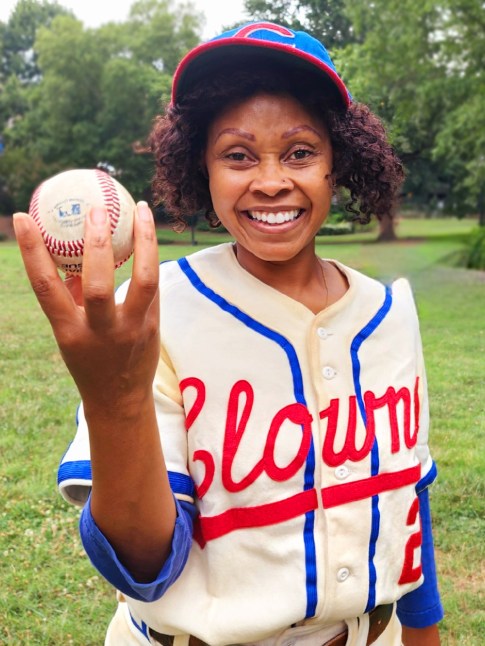
No, her last two albums have been the Dreamers Do concept album, largely of Disney songs, and Holiday Swingin’, subtitled “A Kat Edmonson Christmas, Vol. 1.” So you wouldn’t expect Edmonson’s patter, when she appeared here in Charlotte at the Middle C Jazz Club, to address any of the wars troubling our world – cultural, political, or military. But I didn’t expect her to begin her latenight set with a song as woeful as “Spring Can Really Hang You Up the Most,” either, the song that concluded her debut album of 2009, Take to the Sky, in a cappella style.Kat Live Show

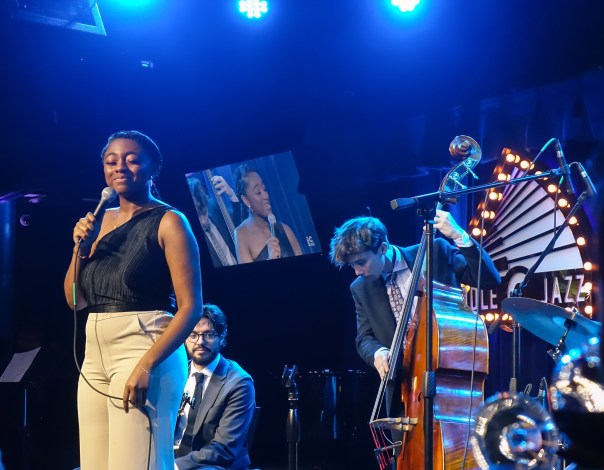
She did, accompanied only by her pianist Roy Dunlap on this gig, and it seemed subtly appropriate for this troubled spring. While COVID is temporarily kicked to the curb, there are more than a couple of reasons not to feel cheery and upbeat as the seasons flip. And for a late show, sparse accompaniment and a reflective, rueful mood seemed perfect for the occasion. A surprisingly large percentage of the hundreds of “Spring Can Really Hang You Up” recordings have been made with sparse backing, including my favorite by Carmen McRae, criminally out-of-print for well over 35 years.

I became familiar with the song on Carmen’s 1964 Bittersweet recording, never suspecting that part of its immediate allure could be traced to its inspiration, the opening line of T.S. Eliot’s The Waste Land – “April is the cruellest month” – so revered in my high school and college days. Kat gets points for singing the verse, like Carmen and Ella, and for managing a fresh and pertinent variation on Tommy Wolf’s melody each time the title repeats.

Live at Middle C, Edmonson stretched her recorded arrangement by giving Dunlap a half-chorus interlude midway, but like most interpreters, she didn’t sing the complete song, leaving out three or four of Frances Landesman’s quatrains and discreetly transposing one or two lines. Less of a deep dive into bitterness that way, with Edmonson adding And the Eliot tie-in with her anecdotal epilogue.

Abbreviating the bitterness also made it easier to transition – and flip back a season – to Jule Styne and Sammy Cahn’s “Let It Snow!” from her recent Holiday album. Kat lightened the mood here with a conventional, upbeat arrangement, Dunlap providing the intro and another intermediate half chorus, and the vocalist was obviously in no rush to resume promoting Dreamers Do after more than two years away from touring.

Instead, we seemed to be getting an impromptu concept concert. Once again, Edmonson went way, way back in her discography for “Summertime,” the opening track on her 2008 debut album, Take It to the Sky – yet another seasonal choice. The slimmed-down arrangement began with pretty much the same brooding piano vamp we hear on the studio recording, with Kat sounding markedly less like Billie Holiday in her live version. Freed from merely lurking in the background, Dunlap was able to bring more gravitas to his solo interlude, ably filling in where trombonist Ron Westray played trombone on the CD. Yet after taking her second vocal from the bridge, Edmonson veered into vocalese as she did in the studio, and the duo’s ending was noticeably less funereal.Kat-Edmonson-02192020-7601

Dropping the season concept, Kat still kept her distance from Dreamers Do, but leaping past the two albums that followed her debut, edged us much closer to starlit Disney. “How’s About It Baby” was a surprisingly lighthearted choice from the Old Fashioned Gal release of 2018, retaining much of its tropical island flavor in the singer’s lyric, but Dunlap on piano went fairly wild in near-stride style, replacing the charming swaying-palm charm of the recording’s ukulele with the honkytonk sound of the jazz age.

If this led Kat fanatics to conclude that selections from Dreamers Do were now inevitable, our star made a U-turn, dipping into Take It to the Sky one last time for “Just Like Heaven.” Edmonson’s opening was as discursive as a verse, the bridge seemed to drop us dreamily off-road, and Dunlap’s solo willfully kept us in Dreamland.

Yes, now came the magical moment for Disney. A couple of songs from Dreamers Do – “A Dream Is a Wish Your Heart Makes” and “The Second Star to the Right” – made for a worthwhile stay but not a protracted sojourn. Delightfully enough, Edmonson took the tempo up a bit in “A Dream,” giving it a swinging jazzy edge – and giving Dunlap the opportunity to playfully solo in an Errol Garner vein. Even without a rhythm section behind him, Dunlap managed to sound even more rhapsodic here on “Second Star” than he did in the studio on his solo, cresting grandly just as Kat reprised the melody.

Doubling back to Old Fashioned Gal, Edmonson sang two more of her originals, “If” and “Canoe,” in the same order that they appear on that album. Most transformed in her live performance was “If,” a tune inspired by the sound of the Ink Spots, now stripped of the backup vocals on the album – and the old-fashioned flavor of a crooning vocalist breaking through a harmonic haze. Surprisingly enough, the serene reverie of “Canoe” was mischievously disrupted by Dunlap’s stride piano solo, which nearly caught fire before Kat reclaimed control. A little more rowdy and we may have imagined something passionate happening on that little boat!

Maybe half of the remaining songs seemed to be planned as Edmonson opened the show to requests. Folks in the audience weren’t necessarily Kat aficionados or, as devotees of her podcasts dubbed themselves, Dreamers. So, unexpectedly, we heard her sing “My Funny Valentine” and, since she felt insecure with the lyrics of Hoagy Carmichael’s “Skylark,” aimed to please with “Stardust,” including the verse. Lerner & Loewe’s “On the Street Where You Live” was a sunny excavation from the ‘50s that Kat has never recorded, but Dunlap absolutely reveled in it with a raggy solo that reminded me of Dave Hanna.

Three of Edmonson’s most delicious originals still remained, all from her Way Down Low album of 2012 – and all included in the live set I heard Kat sing at the Savannah Music Festival in 2019. Lowest of these by far was “Nobody Knows That,” with beautifully impressionistic work from Dunlap, which drew a laugh from the audience when the singer disclosed that she wrote the song after a breakup. Maybe I wasn’t the only audience member who found that to be an epic understatement in view of the song’s sweetly forlorn sadness. “Champagne,” looking back on the end of a far briefer and more casual relationship, was that much lighter and more sparkly.Kat Edmonson

A couple of the requests we could hear called at our table, “What a Wonderful World” and “Lucky,” were coyly deferred as Kat shuttled between honoring requests and singing the songs she had planned on for the latter half of her set. Maybe the hesitation on “What a Wonderful World” stemmed from how differently it would emerge live without the celesta and strings that surrounded her in the studio, where it served as the morning awakening at the end of her Dreamers Do scenario.

But the deaf ear she seemed to turn to “Lucky” can likely be attributed to the fact that this audience favorite had been preordained as the closing song before Kat Edmonson first strode onto the Middle C bandstand nearly 90 minutes earlier. Edmonson has repeatedly said that songs come to her wrapped up in other singers’ voices, like The Ink Spots, Nancy Wilson, or Sinatra. For me, “Lucky” is in that special category of really special songs – along with “Rainy Day Woman,” “You Said Enough,” and “What Else Can I Do?” – that are hard to imagine being sung by anyone else but Edmonson.

Scaling Back on Brassy Pomp, OpCarolina Brings Us a More Classic and Elegant Aïda

Review: Opera Carolina Presents Aïda

By Perry Tannenbaum

2022~Aïda-35

April 7, 2022, Charlotte, NC – Premiered in Egypt in late 1871 and brought home to Milan less than two months later, Giuseppe Verdi’s Aïda has become synonymous with all that’s grandiose and spectacular in grand opera. Opera Carolina has now produced this signature work nine times since its founding in 1948, only once allowing more than a decade to go by between productions. An eight-year interval is about the average in Charlotte, which we would have had if the current production has arrived, as originally scheduled, at the end of the 2020-21 season. The postponement seemed to benefit the design team responsible for the visuals; set designer Roberto Oswald, costumer Annibal Lapiz, and lighting designer Michael Baumgarten; all of whom collaborated on the 2013 production here at Belk Theater. A year further in the distance, deferred by the pandemic, this Aïda was perhaps fresher and certainly more welcome.2022~Aïda-14

With the exception of the Opera Carolina Chorus and baritone Mark Rucker reprising his Amonasro, the Ethiopian king, all of the faces onstage were new, especially tenor Arnold Rawls, substituting for the indisposed Gianluca Sciarpeletti as Radames on short notice. Infusing more freshness, almost upstaging the principals in the big scenes, were the elegant touches and classic symmetries of stage director Linda Brovsky and choreographer Gabriella Sevillano with dancers from Corta Jaca. Once again, Ancient Egypt was a no-twerking zone, graced with processions and tableaus that jibed with the times. Conducting his Verdi with customary panache, artistic director James Meena discreetly scaled back on the brassiness of the triumphal scene, recognizing that a parade of subdued Ethiopian prisoners, fettered in chains, isn’t the most glorious spectacle in 2022, when images of wartime destruction clutter our news media.2022~Aïda-07

Intertwined with the spectacle indoors and outdoors, in the blaze of day and the hush of night, was a poignant love triangle, heightened by the scintillating debut of mezzo-soprano Catherine Martin as Amneris, the cunning, jealous, amorous, and conflicted princess of Egypt. The smoothness of her arias, particularly the “Vieni amor mio” anticipating Radames’s arrival in Act 2, nicely chimed with her cool and confident manner, for once making the prospect of someday reigning with her over Egypt worth considering for the undeniably ambitious Radames. Conquering this princess’s heart was on a par with conquering Ethiopia. Also tilting the triangle, presumably because of a lack of rehearsal, was the slow-to-ignite chemistry between Rawls as Radames and Karen Slack, making her Charlotte debut as Aïda.

Launching his debut, Rawls didn’t show us all he can do vocally in his “Celeste Aïda,” and Slack similarly fell short on the self-reproachful “Ritorna vincitor!” – too nervous and melodramatic in realizing that a victory for her beloved Radames meant defeat for her native Ethiopia, and possibly death for her father, the king. More vulnerability and youthful confusion were needed here, and we never had a vivid impression that Aïda was observing even demure caution, let alone simulating deference, in keeping her royal identity from her mistress, Amneris.

2022~Aïda-21After intermission, both Slack and Rawls ascended to loftier levels, achieving parity with Martin. I was frankly surprised – and delighted – by how beautifully Slack sang the iconic “O patria mia” aria in the pivotal nocturnal scene in front of the Temple of Isis. The missing chemistry between Slack and Rawls then arrived with such a rush that it seemed like Aïda might forget to coax Radames into divulging his key military secret to the eavesdropping Amonasro. Martin and Rucker helped this denouement to crackle with tension, though Rucker wasn’t quite as imperious and intimidating as he was in 2013.2022~Aïda-23So the unique two-tiered finale played really well, with all three principals in top form. Rawls and Slack, buried alive as the lovers, consoled each other sweetly in their love duet as Aïda managed to sneak into the tomb and share Radames’s punishment for betraying his country. Meanwhile, Martin completed Amneris’s graceful arc above them, remorseful for triggering the downfalls of her beloved and her rival, wishing both of them peace.

Credit Brovsky and Sevillano for the stateliness and elegance of the public scenes, the one at the Temple of Vulcan, where the beneficence of Ptah is invoked, and the triumphal scene where Pharoah and Amneris preside. Song Zaikuan was a resplendent Pharoah, Jordan Bisch declaimed with stony certitude as Ramfis, the high priest, and Katherine Kuckelman was a sublime High Priestess – all in costumes to die for.

With both a matinee and an evening performance scheduled for Saturday, this review serves as a reliable guide to the upcoming evening encore. Only Bisch and Zaikuan will be on hand for the Saturday matinee – along with Meena’s sure hand with the score.

Originally published on 4/9 at CVNC.org

Charlotte’s Jazz Scene Takes a Big-Name Leap

Review: Bigger Names Are Invading Our Smaller, Club-Sized Venues, Bringing an Overdue World-Class Vibe

By Perry Tannenbaum
Kat-Edmonson

Singer-songwriter Kat Edmonson has performed on Austin City Limits, A Prairie Home Companion, and Letterman. She has sung at Carnegie Hall, the Montreux Jazz Festival, and Blue Note in Japan. Her 2020 concept album, Dreamers Do, topped Billboard’s traditional jazz chart, and she is not a stranger to the Southeast. Edmonson was a featured performer at Spoleto Festival USA in 2014, and I caught her gig at Savannah Music Festival in the spring of 2019.

Amazingly enough, Edmonson has been to the QC on numerous occasions – but not with her band.

“My greatest link to Charlotte,” she tells me in an exclusive interview, “is that my childhood friend – best friend – lives there, and I’ve often been to Charlotte to visit her. But not for any other reason, and I haven’t been to any jazz clubs in town.”

That is changing in a big way. Offering two sets on April 9, Edmonson is near the front of a grand parade of big-name jazz artists who will be marching in and out of the Middle C Jazz Club, playing to newly unmasked, capacity-sized audiences, newly liberated from the pandemic.Delfeayo-Marsalis

We’ve seen some of these players, like Kirk Whalum and Delfeayo Marsalis, before – at special events dating back to JazzCharlotte in the late ‘80s and, more recently, at Charlotte Jazz Festivals presented by Blumenthal Performing Arts. Jazz fans had to satisfy themselves with hoping that these special events, held indoors and outdoors at large venues, would return to us annually with such groovy cargo as Diane Schuur, Dave Brubeck, the Harper Brothers, Maria Muldaur, Renée Marie, and the Jazz @ Lincoln Center Orchestra.Kirk Whalum

Now the big names are playing our smaller venues, creating a more intimate jazz club vibe. Headliners following in Edmonson’s wake at Middle C include Nicole Henry (April 15-16), Joey DeFrancesco (May 20), Jonathan Butler (June 3-4), Delfeayo Marsalis & The Uptown Jazz Orchestra (June 10), Kirk Whalum (July 15-16), Jeff Kashiwa (July 22), Jeff Lorber (September 9-10), and Euge Groove (November 11-12).

“We just had Gerald Albright, and then we just had Norman Brown, and they sold out,” says Middle C club owner Larry Farber. “We’ve got Brubeck Brothers (April 7) coming in, I mean it’s been really, really good. February and March have been our two biggest months since we opened in November 2019. Knock on wood, we’re on an upward trajectory.”

And in case you hadn’t noticed, the Jazz Room just announced their Season 16 – and boy, have they ever upped their game, bringing in such luminaries as Donald Harrison (April 8-9), Emmet Cohen (May 20-21), Jeff Tain Watts (July 8-9), and Pedrito Martinez (September 2-3) to their monthly series at the Blumenthal’s Stage Door Theater.Joey-DeFrancesco

A couple of these headliners, Henry and Martinez, can claim recordings that have now lingered for at least two months on Jazz Week’s chart of most-played albums on jazz radio, both peaking in the top 5; and a couple more, DeFrancesco and Cohen, are in the cumulative top 50 for the past year, with Joey D at the top of the heap.

Who could have imagined such a bounty of talent heading our way, such an upward trajectory, and such jazz jubilation just a year ago? We were smack in the middle of our COVID tribulations, more spikes in illnesses and deaths still on the horizon, with so many businesses around the country gasping for air.

“We were off and flying before the pandemic,” Farber recalls. “I think the pandemic became a catalyst. Because people then had to wait months and years to get back out, so I think now all this pent-up demand, in addition to what we already knew was going to be a demand in the market, gave us a double boost, and it’s really propelled us in a big way.”

Everywhere, artists and presenters were in survival mode after the abrupt shutdowns of March 2020. Farber and his business partners, including sons Reid and Adam, were forced to shut down completely for two months. When Middle C reopened in May, it was because they were the only jazz venue in town that could be classified as a restaurant.

Even so, state guidelines only allowed the Farbers to seat 60-70 patrons, a far cry from the inventory of 170-180 tickets they’re pre-selling now for their highest-profile attractions. To keep their doors open, they would have to delay booking big-name talent – and defer their dream of giving Charlotte the world-class jazz club they felt we deserved.

Edmonson, meanwhile, had been in the middle of a 40-city tour promoting Dreamers Do when everything shut down. Her hibernation was even more stifling professionally, but eventually, she was able to open an amazing window to bridge the gulf between the petite singer and her devoted fans. It was a weekly podcast, The Kat Edmonson Show, and it ultimately logged 66 episodes through last December, when her valedictory Christmas show, tethered to her latest Christmas album, drew an arena-sized crowd of 12,000 viewers.

With a barebones production originating in her living room in front of a cellphone camera, Edmonson found that her show not only sustained her connection with her fans, it actually strengthened it. The new medium offered unexpected advantages.

“I was able to reach them more readily and more regularly than I did even when I toured!” Edmonson exults. “On a tour, I go to one place and maybe I’ll come back two years later. In this case, I was able to reach my people once a week for an hour and a half.”

If you watch any of the archived episodes on YouTube, you can see Kat’s secret sauce working in real-frozen-replayable time. Many, many of the people tuning in to her show leave their marks in a column of chats, varying in length, that frequently scroll down the right side of the screen while Edmonson sings – and Kat interacts with these texts, acknowledging her followers by name and city, responding randomly, between songs and in the middle of them, to people who are new to the show and to those she recognizes from previous powwows.

“We all got to know one another in a really wonderful way, and eventually we were all remarking about how much it was like going to camp or something – like a campfire!” Edmonson recalls. “We would look forward to the Sunday meeting where we could all reconvene and talk about our week, on what’s ahead, and what was going on in our lives. The group that would tune in ultimately voted to name themselves because they felt like we were all part of a club. They suggested different names, and they voted for ‘The Dreamers.’ So when I go out now to play shows, people come up and say, ‘I’m a Dreamer!’ That’s really fun.”

Since Dreamers is largely a collection of Disney songs from the past century, obviously dating back all the way to Snow White (1937), maybe the Edmonson Show groupies should have named themselves the Kat-keteers, like Mickey Mouse Club members of yesteryear. Edmonson certainly hasn’t forgotten her fans’ loyalty, for in her mind, she is picking up the Dreamers Do tour that was abruptly halted two years ago. Dreamers who show up at 300 S. Brevard Street for one of Edmonson’s Middle C sets will hear plenty from that beloved album that has bonded them.

And they’ll be in two clubs at the same time. Watching multiple dreams come true.

Singing in a karaoke-like format to pre-recorded tracks set down by her long-time pianist Roy Dunlap, schmoozing between songs about her upcoming plans, dressed down and sporting a headset, Edmonson would often look away from viewers of The Kat Edmonson Show to catch up with her chat feed, taking requests as well as names, changing her prepared songlist on-the-fly. Definitely a funky, low-budget look and feel.Jeff_Lorber

Farber didn’t have the luxury of taking a low-budget road during Middle C’s semi-hibernation. A Charlotte native, his jazz memories go all the way back to Jonathan’s Jazz Cellar, which pre-dated the brief flowering of JazzCharlotte. After witnessing the recent success of the QC’s monthly jazz series, the Jazz Room series piloted by Lonnie Davis and the Jazz at the Bechtler Museum series led by saxophonist Ziad Rabie, Farber felt that Charlotte, a world-class city, deserved a full-time, for-profit, seven-shows-a-week jazz venue.

That was his bucket-list dream. Even before the pandemic, Farber sensed sufficient interest around town to make it all come true.

“We invested over $1 million to bring the best venue, the best sound system, and to make this all about music,” he says. “I’m lucky to have an investor group that’s not interested in seeking an 18 to 20% return as much as building for the future. And we’re doing that by reinvesting our profits in the talent.”

The model that the Farbers are activating is a schedule that will bring us 60-70% regional talent and 30-40% big names. So we’re probably talking 2-3 shows with big names in the weekly lineup of seven ticketed events. Like Edmonson, Middle C found that livestreaming was a useful tool in coping with COVID restrictions, opening a window that could potentially yield new recruits to their music.

“Best free marketing tool ever!” he quips.

As a revenue stream, streaming is only a trickle according to Farber, but it will provide fans of the big names a fresh avenue of access when tables and booths sell out. Middle C has been more preoccupied with enhancing the experience on site at the tables and making it appealing to a wider audience. Farber boasts a great bar menu and estimates 20 small plates and desserts to choose from on his menu – about triple what was being served before the 2020 shutdown.

That’s targeting a vibe like such Manhattan hotspots as Dizzy’s, the Blue Note, and Smoke – and not like the legendary Village Vanguard, the quintessential jazz cellar. Audacious and enterprising.

“What we’ve brought to Charlotte is unique,” Farber says, “and I think we’ve now become one of the biggest jazz names on the East Coast.”

2019~Savannah-17 copy

Edmonson has also gone beyond podcasting in widening her horizons over the past two years. Most of the songs she sang on her podcasts were originals she hasn’t recorded yet. There are drawers full of notebooks yet to be mined, and the songwriter claims to have written her first song at the age of nine, giving her about 28 years to pad her inventory. Some of those song will be in the mix at Middle C, along with others from Dreamers Do and recordings she made before 2020.

Kat dramatically broke out of her pop princess, Disney jazzer, and podcasting queen cocoons by appearing recently off-off-Broadway in The Hang, an edgy Taylor Mac musical, drawing reviews that parallel her past recording and concert triumphs. Aside from a year of study under the live oaks at the College of Charleston, Edmonson also graduated after two years at The William Esper Studio in New York City, where she studied the Meisner acting method.

So yes, Edmonson is eyeing possible opportunities in TV, film, and even straight plays. But no, when her style is described as absorbing the recordings of Blossom Dearie, Billie Holiday, or even country crooners like Patsy Cline, expect Edmonson to repudiate any such artifice – and to push back a little if you try to pigeonhole her as a jazz singer.

“It’s just me,” she says when accused of a persona. “I know that I’m forthcoming. I can be disarming. I know that about me. I come in this very petite package. I would seem demure, but I am actually very straightforward and opinionated, and I think I affect people in that way. Meanwhile, quite friendly. And I don’t mince words! I say what I mean, and I sing what I mean. Nothing ambiguous. You know, when I meet someone, I like to look them in the eye, and I think I perform that way.”

Yet after watching a full Kat podcast and speaking with her for over 40 minutes, I was able to find a label that Edmonson allowed to stick.

“Do you want to be Peter Pan someday on stage?”

“Oh, I’d love it!” she instantly exclaimed. “Yes, there is no mistaking – and incidentally, I’ll be performing a song from Peter Pan in my set! You know, in the play I was recently in, I was cast as a fairy, and I sort of have that persona. Yes, I do.”