Review: Charlotte Symphony Plays Barber’s Violin Concerto
By Perry Tannenbaum

March 25, 2022, Charlotte, NC – While Christopher Warren-Green’s tenure as music director at Charlotte Symphony winds down, as he transitions to the roles of conductor laureate and artistic adviser in seasons to come, the appearances of guest conductors at Belk Theater and Knight Theater are gaining an extra aura, an extra sparkle of excitement. For this stately parade of baton-wielders can now be construed as a prolonged set of auditions as audiences, Symphony execs, and orchestra musicians make up their minds on who should follow in maestro Warren-Green’s footsteps. Suddenly, everything going on behind the scenes at Symphony is freshly cloaked in intrigue.
Was the absence of Kwamé Ryan, listed on our own calendar as guest conductor, a last-minute indication that he is fielding offers elsewhere and withdrawing from candidacy? Was his replacement, Joshua Gersen from the New York Phil and the New World Symphony, a hot new prospect for our upcoming vacancy, or was Symphony’s substitution based on Gerson’s availability and preparedness for the planned program? With Jinjoo Cho slated to play Samuel Barber’s Violin Concerto as the headline piece, Gerson’s readiness needed to be on par with the musicians’ for that work, since they had presumably mastered their parts sufficiently to greet Cho and Gerson at rehearsals when they arrived.
No notice of the substitution came our way via email, but changes weren’t so last-minute that Symphony’s program booklet couldn’t be changed in time for Cho’s Charlotte debut with Gerson. Digital brochures, thankfully, can be altered more nimbly than printed editions, the pre-pandemic norm. Impressively enough, Gerson was able to conduct the preamble to Cho’s appearance, Errollyn Wallen’s Mighty River, a 2007 British piece that certainly isn’t standard rep. César Franck’s Symphony in D minor, however, had to be jettisoned, replaced after intermission by Robert Schumann’s “Rhenish” Symphony No. 3. Some of the answers about what was going on behind the scenes were answered – you have to pay attention, folks! – by the announcement of Symphony’s 2022-23 season earlier in the week. Ryan resurfaces as one of the 10 guest conductors who will continue the pageant of candidates, and Franck’s Symphony also resurfaces as part of next season’s classics playlist, but they are no longer linked on the same program.
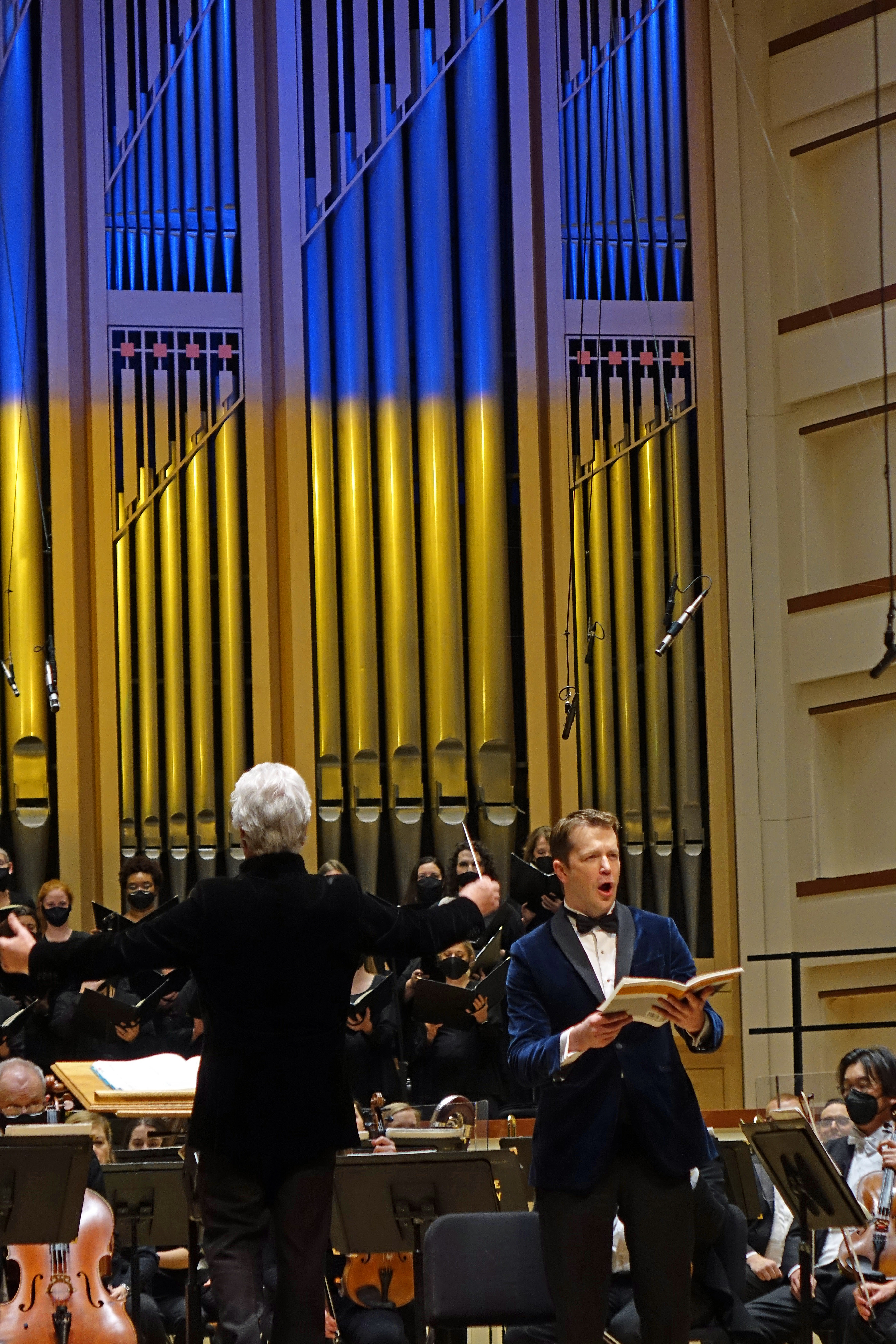
Subscribers who were not attuned to these program and performer shuffles probably didn’t notice any significant glitches. I’d have to say that Symphony’s musicians not only rose to the occasion but were energized by its challenges. If that didn’t happen before they assembled on the Knight Theater stage, then Gerson’s extended and enthusiastic introduction to the music could have provided the spark. As relaxed and genial as he was speaking to the audience, Gerson was as instantly intense when he faced away from us to his musicians.
Born in Belize in 1958, Wallen was commissioned to write a piece celebrating the bicentennial of the repeal of the Slave Trade Act. Since the British Parliament passed that landmark legislation on March 25, 1807, Charlotte Symphony’s first performance of the piece was a celebration in itself, staged exactly 215 years later. Principal French hornist Byron Johns, played no small part in assuring that the debut was a success, playing the affecting “Amazing Grace” melody that frames Wallen’s composition and often infuses it throughout. The title was Wallen’s affirmation of the flow of history toward freedom, driven by the yearning and pursuit of all who respond to their human instincts and nature’s law. Horns and strings wasted no time in percolating their evocations of that flow. Principal timpanist Jacob Lipham furnished the most distinctive landmarks along the way, with principal harpist Andrea Mumm Trammell adding vivid detail, supplemented by Erinn Frechette tweedling her piccolo. Wallen handed off solo honors to the oboe, flute, and other winds before handing it back to Johns, with principals Hollis Ulaky on the oboe and flutist Victor Wang making their colors count the most.
We’ve seen both Joshua Bell and Elmar Oliveira playing the Barber concerto here in Charlotte over the past 25 years, so to say that Cho’s performance with Gerson eclipsed them both is no small claim. Head-to-head, Cho generated more electricity than Oliveira, and behind the glamorous violinist, Gerson and the Charlotte Symphony got out of her way more deftly than the Houston Symphony and Christoph Eschenbach were able to manage in 1998. Cho was sublime in the opening Allegro and seemed to summon a special ardor from Gerson and the orchestra in their response – I don’t think we ever did get enough of the catchy main theme.
In the hushed Andante that followed, Cho may have been even more magical, more transported by the score. The concluding Presto in moto perpetuo, rewritten according to Gerson to provide a greater challenge to the soloist, seemed to become a new and spontaneous challenge that Cho and the orchestra hurled back at each other. There actually was a pause for the native Korean to gather herself as the ensemble rushed on. After a visible deep breath, Cho’s fresh onslaught was even more fiery and swift.
The power of the Barber drove a fellow critic and his spouse to the back of the hall after intermission, but the Schumann proved worthy of staying for, not at all an anticlimax. The zest and drive of the opening Lebhaft of the “Rhenish” were unlike anything I’d heard in live performances before – certainly better than anything on the complete set of Schumann symphonies by Roy Goodman and the Hanover Band, ballyhooed as the first complete recording on period instruments (and a complete RCA dud). No, you have to listen to the John Eliot Gardiner set on DGG, also on period instruments, to find an equal to the glories unfolded at Knight Theater by our Symphony.
Gerson didn’t quite achieve the lightning bolts you’ll hear from Gardiner in the opening movement, though he sustained a wondrous sense of expectancy in the relatively quieter section between the great pinnacles. The middle movements, culminating in the rich heraldry and solemnity of the penultimate Feirlich fourth movement, achieved parity with Gardiner’s benchmark recording for me. But it was the grand military Lebhaft finale where Gerson and Symphony surpassed what was previously on record, establishing a new highwater mark for the “Rhenish.”
Originally published on 3/27 at CVNC.org

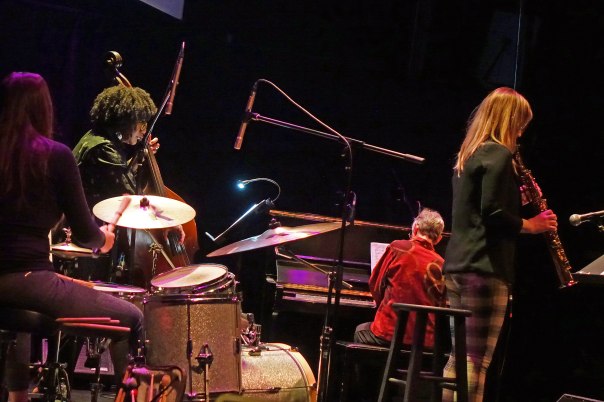
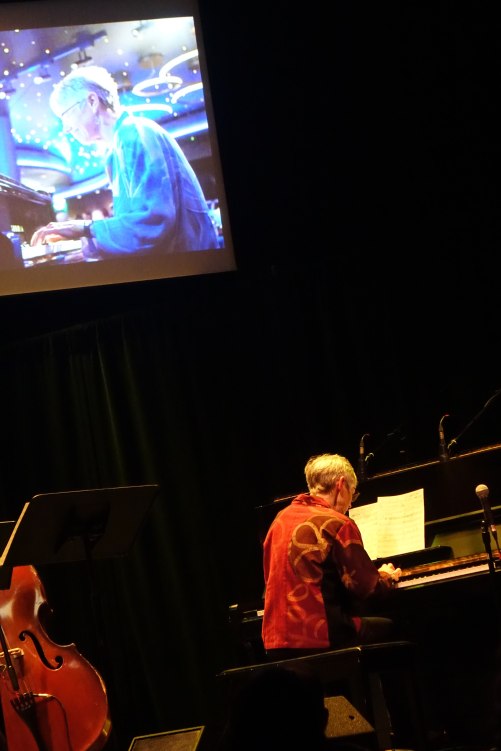
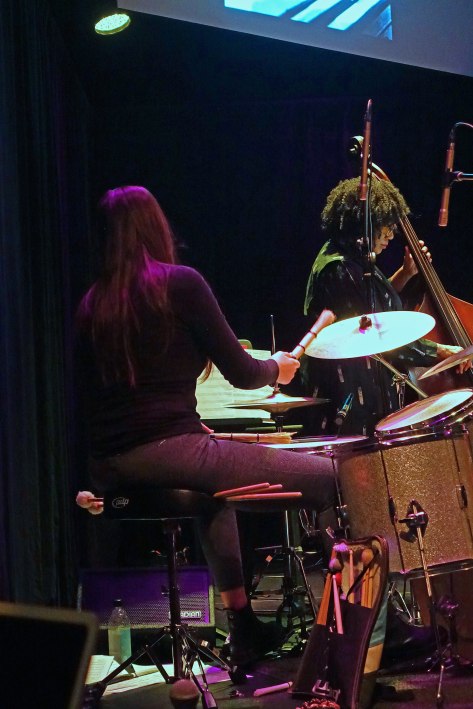






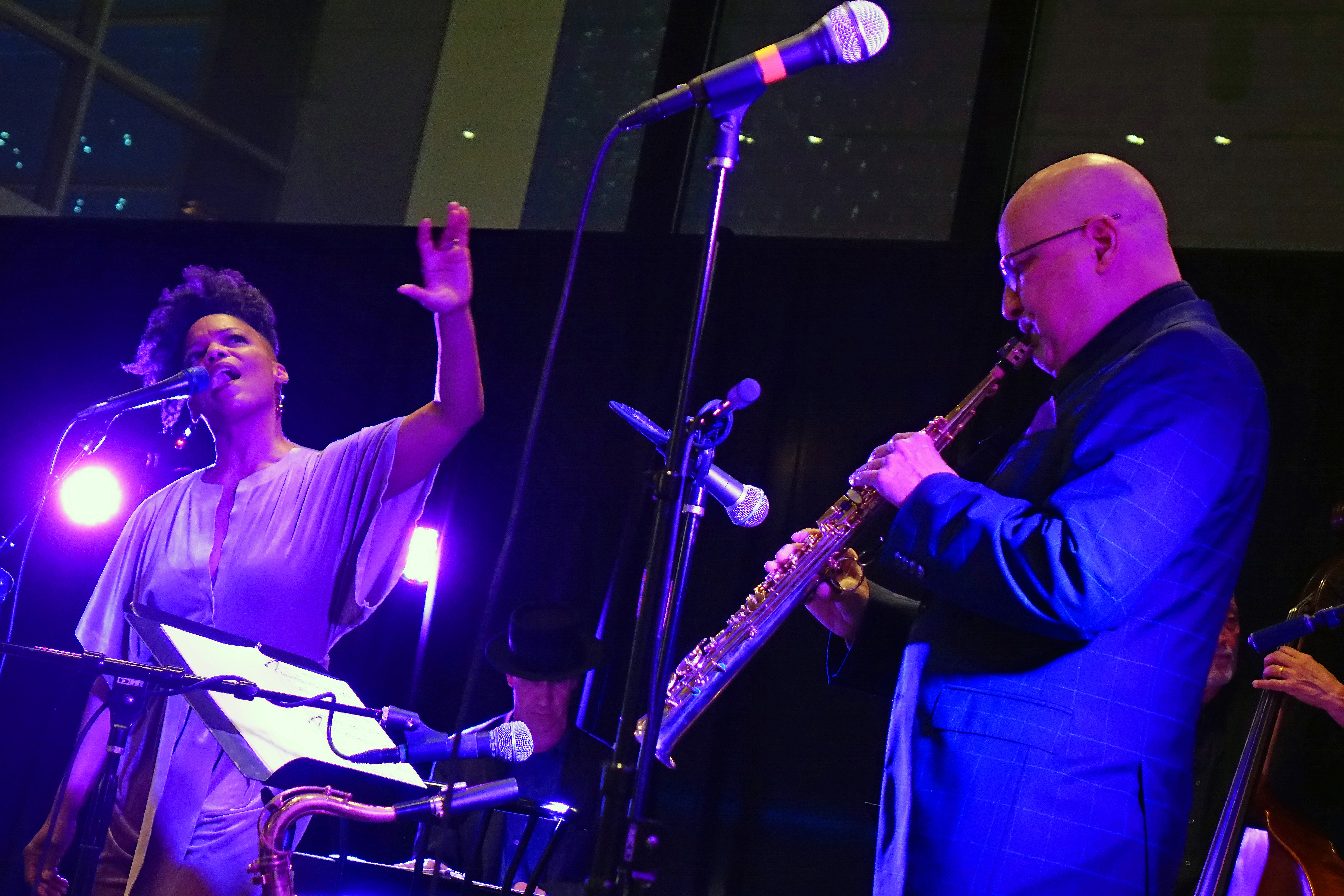
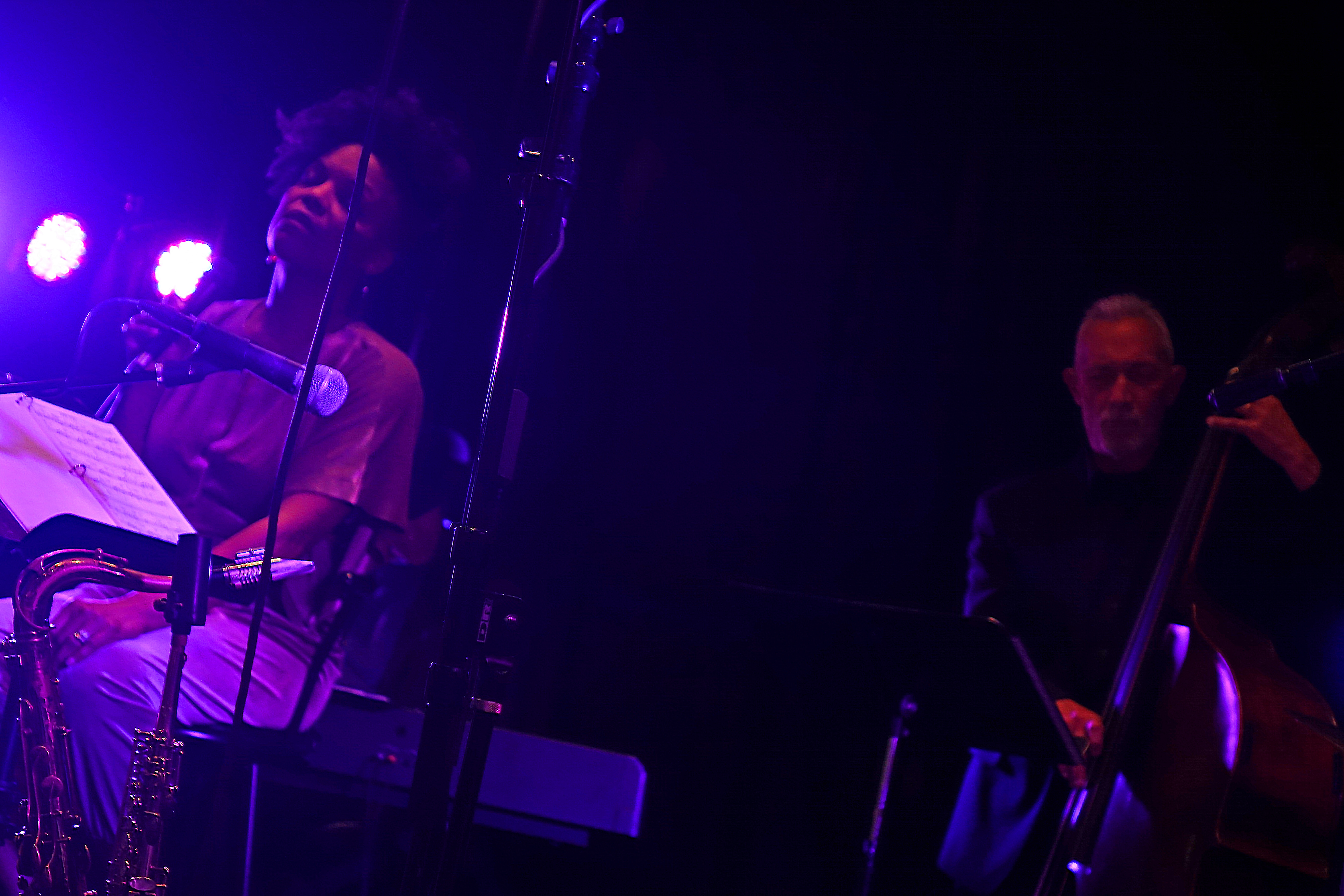 Did the audience give Freelon and bassist Ron Brendle a standing ovation for their deep, mesmerizing duet on Hoagy Carmichael’s “Skylark” because they recalled it fondly from 2017 – or because it was so achingly lovely and poignant now? Also back from 2017 was Charlie Chaplin’s “Smile,” with drummer Al Sergel navigating the transitions back and forth from Freelon’s waltzy 3/4 time to Rabie’s break-loose solo on tenor sax in a fleet 4/4 tempo. These non-lunar reprises were all from Freelon’s Homefree album of 2010, and so was her slowed-down and bluesy “I Feel Pretty,” complete with her 2017 exhortation to the men in the audience to sing out the title line, because we needed to answer for nearly all the ugliness in our world. Notwithstanding #MeToo, probably truer in 2022 than before.

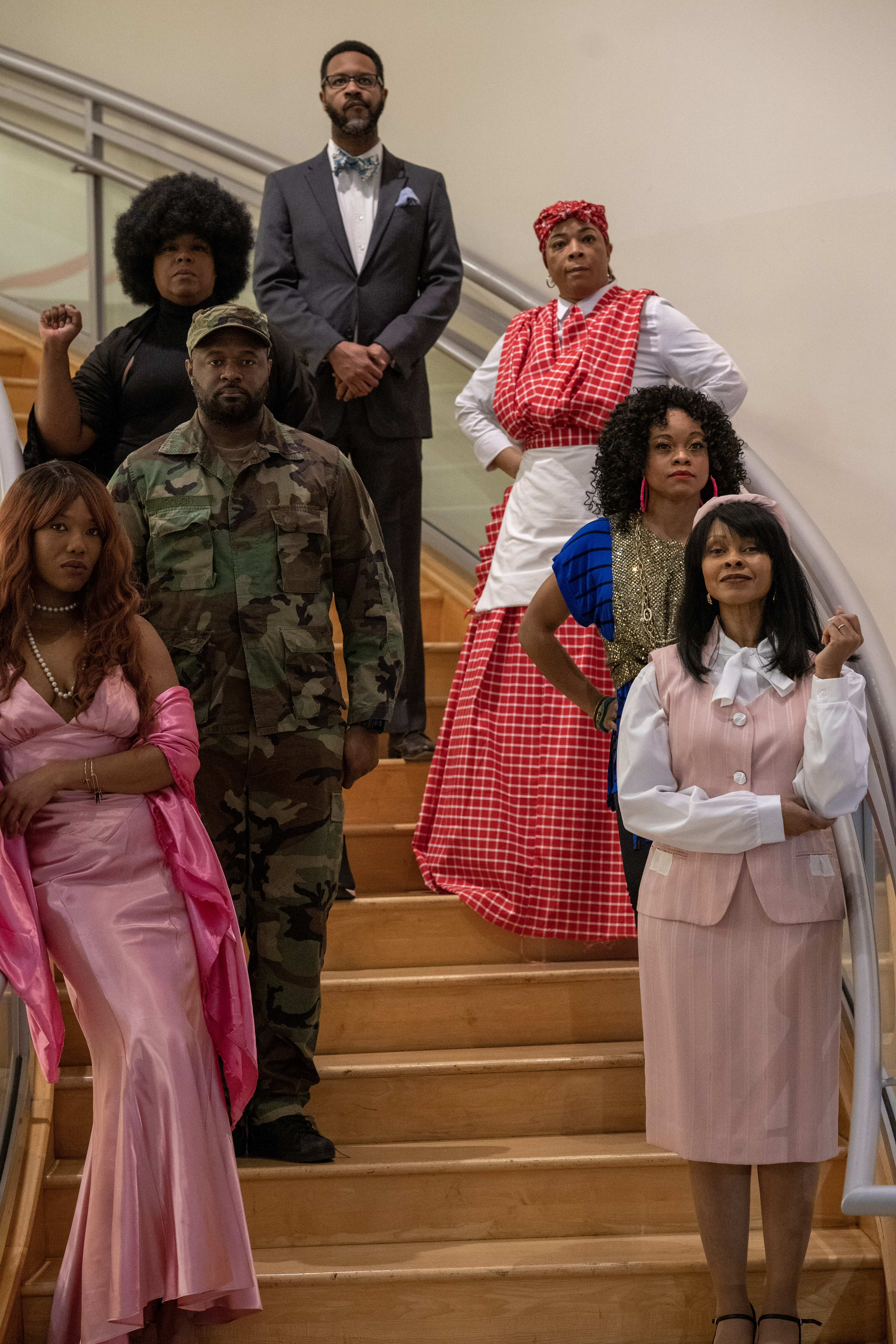


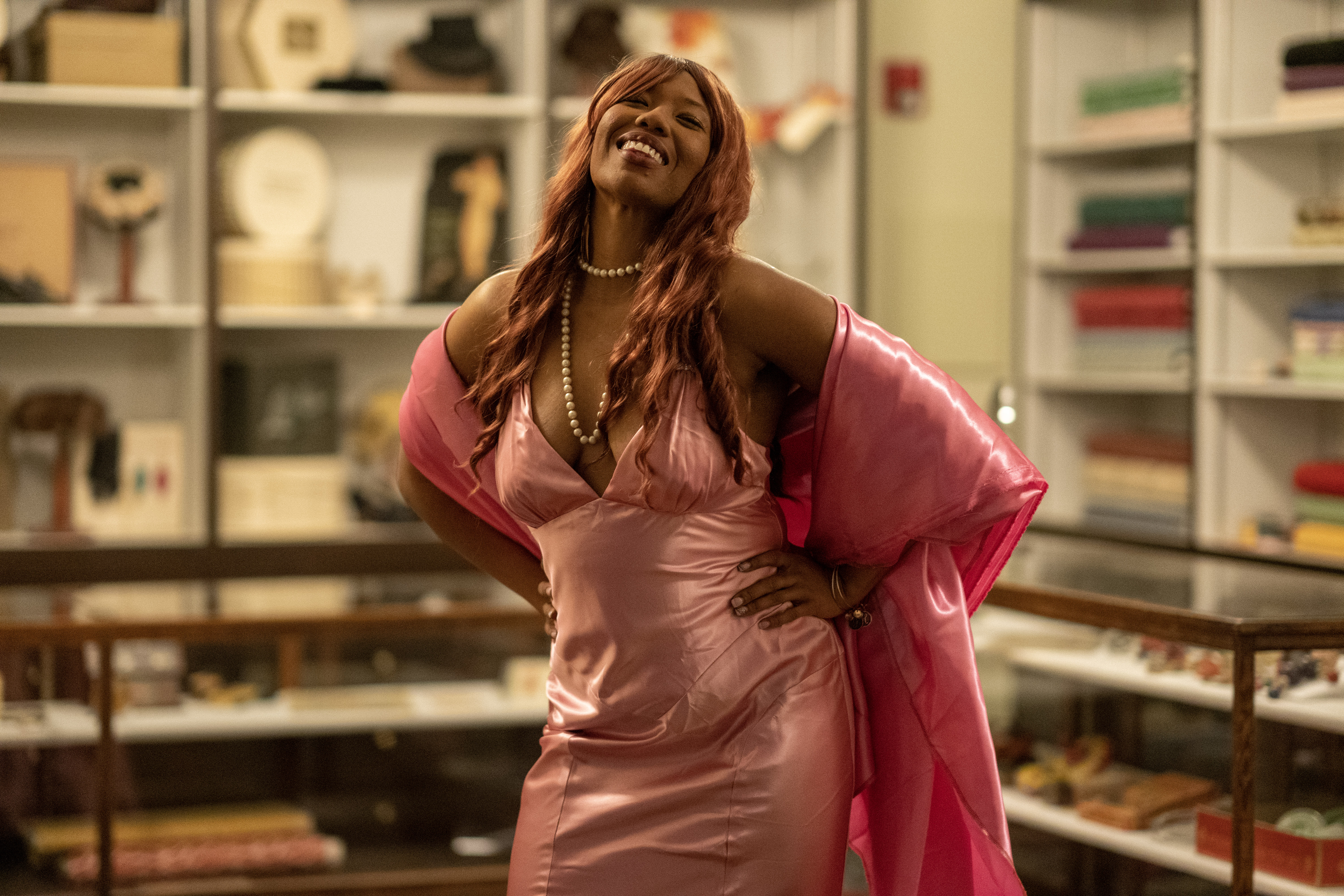


 February 25, 2022, Charlotte, NC – Theatre and music critics can be lulled into complacency – mixed with boredom – when called upon to review Shakespeare’s As You Like It or Tchaikovsky’s Nutcracker beyond the seventh time. So it’s gladdening and stimulating to see how recent social, political, and public upheavals have affected local programming in the Queen City. Though it constantly calculates years ahead, Charlotte Symphony has not been the slowest to react and evolve. Not at all: in the past four weeks, I’ve been compelled to remember the names of new guest soloists and conductors – and to read up on composers whose works I was hearing at Knight Theater and Belk Theater for the first time. When American composer John Corigliano is the best-known composer at a Symphony program in the Belk, you know we’ve wandered off the beaten path.
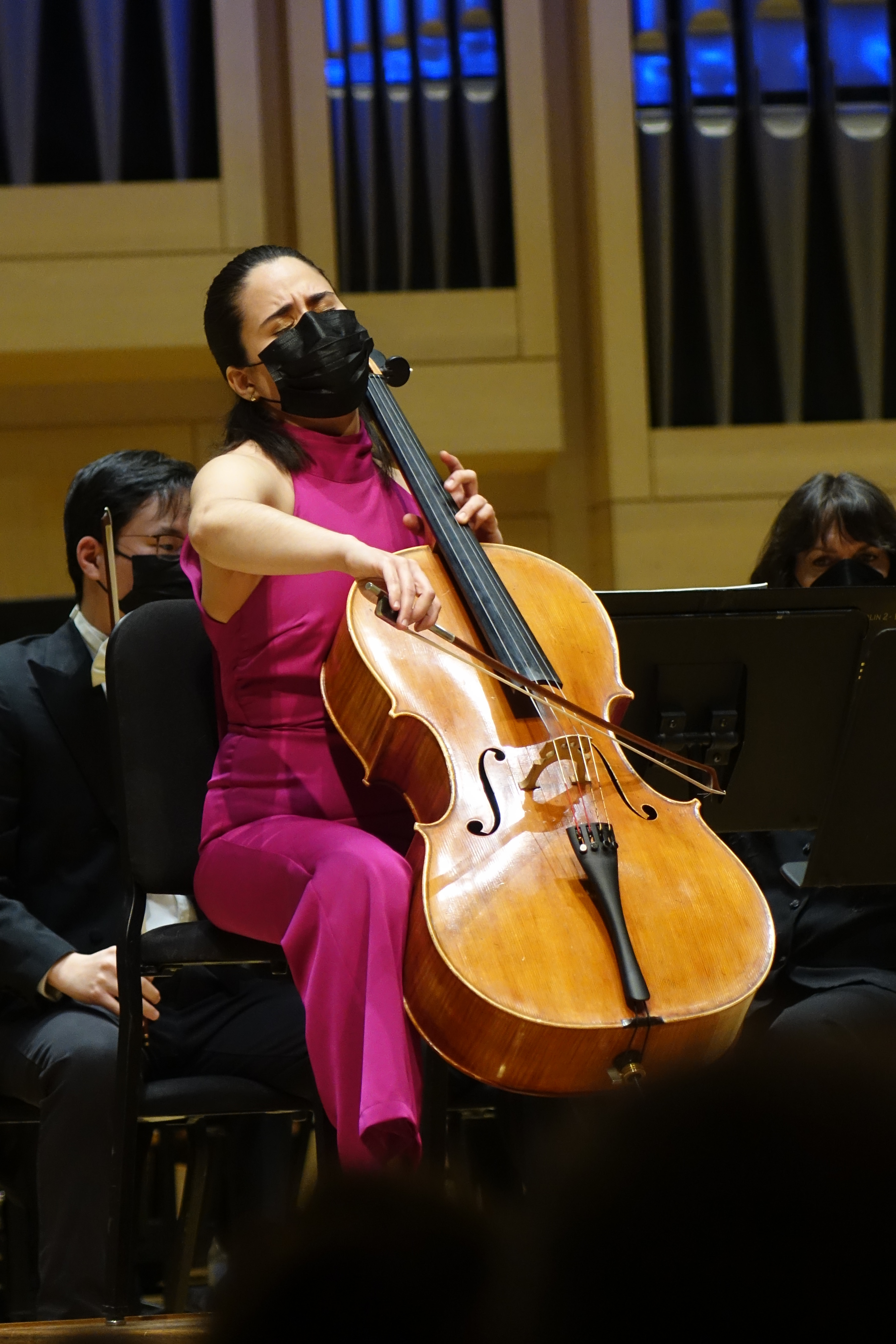
 We weren’t exactly danced around the hall in the ensuing Tarentella, for as Bortolameolli pointed out, the root word of this Italian dance is actually tarantula, and the dance was believed to cure victims of that spider’s bite from a rare form of dementia. So the composer had a schizophrenic and hallucinatory soundscape in mind, relentlessly accelerating into insanity. Most consoling and welcome, then, was the penultimate Chaconne movement, “Giulio’s Song,” written in memory of a friend who was an amateur cellist and inspired by tape recordings of improvisations Giulio and the composer played together. Principal cellist Alan Black was unforgettably showcased here, playing five lovely notes before a pause, then seven notes before another, before finally released into the song. Enhancing the loveliness, cellist Jeremy Lamb eventually joined in a soulful duet. Corigliano’s concluding Epilogue was a capsulized recap of the previous movements of his Symphony, hearkening back to its opening and shining a spotlight once again on Black, who played the last sustained note, tapering off into silence.


