Tag Archives: Sarah Woldum

Best of Charlotte, 2017

Best of Charlotte, 2017

By Perry Tannenbaum

                                           Best ActorJeremy DeCarlos


Among local performers, there are strong candidacies from Brian Logsdon (Pride and Prejudice and Ragtime), Jonavan Adams (Ma Rainey’s Black Bottom and The Christians), Scott A. Miller (Stupid F@#%ing Bird and The Submission), Jermaine Gamble (A Raisin in the Sun and Jitney) and Tyler Smith (Ragtime and Memphis). All of them sparkled on multiple occasions. But the runaway victory goes to Jeremy DeCarlos, who laps the field – in range and productivity – with four scintillating outings. Draped in a braided Hussar jacket, DeCarlos just finished channeling his inner Jimi Hendrix as the devilish St. Jimmy in American Idiot. That was the last of his Actor’s Theatre gems over the past year, including some cross-dressing preaching in Bootycandy, his insouciant devotion in Stupid F@#%ing Bird, and his amazing transformation – from Jerry Lewis nerd to Incredible Hulk-ish monster – in The Toxic Avenger.

Best Actress – Shar Marlin

The field of contenders is larger among the ladies, but the roles were more thinly distributed, eliminating productivity as a decisive criterion. But which other benchmark should override all others? If it’s flesh-crawling menace, Sarah Woldum gets the edge, bringing Sheridan LeFanu’s Carmilla to life in She Who Watches. Leslie Giles was the funniest as the blind librarian in The Toxic Avenger, Lucia Stetson the most revelatory as Mother in Ragtime, and Allison Snow Rhinehart was better than her Broadway counterpart as Mama in Memphis. And how can I forget the sizzling dominatrix arrogance of Nonye Obichere as Whatsername in American Idiot? I’m turning instead to Shar Marlin for her sheer power and imperial dominance in Ma Rainey’s Black Bottom, a dramatic stunner that also showed Shar’s blues singing chops. Dignity in the face of exploitation and discrimination. Diva!

Best Comedy – Women Playing Hamlet
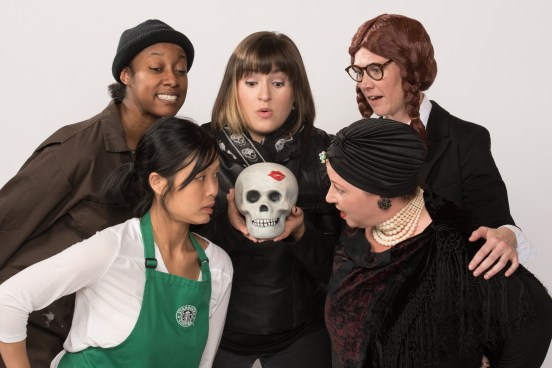
 

Theatre Charlotte’s You Can’t Take It With You and the Citizens of the Universe farewell, The Hitchhiker’s Guide to the Galaxy, were arguably the zaniest productions of the 2016-17, while the Chekhov knockoff from Actor’s Theatre, Stupid F@#%ing Bird, was surely the most poignant. And what about OnQ Productions’ A Brown Tale from James T. Alfred, maybe the funniest one-man show I’ve ever seen? All were worthy candidates, but I’m going to let Chickspeare split this prize with Donna Scott Productions for their joint production of Women Playing Hamlet. Glynnis O’Donoghue starred as the soap queen saddled with the lead role in the Mona Lisa of tragedies, and the galaxy of comediennes – all in multiple roles – offering her questionable advice included Tania Kelly, Andrea King, Vivian T Howell, and Sheila Snow Proctor.

Best Musical – Ragtime

Ragtime Promo Photos

Folks who confine their diet of musicals in Charlotte to touring productions at the PAC are missing out bigtime on the locally-produced blockbusters playing out at smaller venues around town. Actor’s Theatre scrambled to produce a marvelous Toxic Avenger at a storefront church because this city doesn’t have the vision to see the arts flourish on Freedom Drive without a needless morass of red tape. Still in exile, they just brought the noise of American Idiot to Queens University for a face-melting month. After reminding us how finely they can produce A Year With Frog and Toad, Children’s Theatre astonished with the world premiere of The Best Christmas Pageant Ever: The Musical. With more than one Broadway-level performance, Theatre showed us their mettle with Memphis, and CPCC re-emphasized that their musical excellence isn’t confined to summer anymore. Maybe it was sheer luck, but CP’s wintertime production of Ragtime was the most timely of the year, underscoring the sad fact that institutional racism, police brutality, and prejudice against immigrants aren’t quaint relics of the Jazz Age. As the martyred Coalhouse Walker, Tyler Smith’s impassioned “We are all Coalhouse!” reverberated through a city in turmoil.

Best Drama – Jitney

Early last season, PaperHouse Theatre proved that The Frock Shop on Central Avenue was the perfect site for a creepshow with a dazzling She Who Watches, and early this season, a legend made a comeback when Steve Umberger and his Playworks Group brought a sterling production of The Christians to Booth Playhouse. In between, as Charlotte was fully wakening to how badly we have neglected and mistreated our underclass, theatergoers may have finally been zonked by the realization that our city is exceptionally rife with African American acting and directing talent. Kim Parati made an auspicious directorial debut at Theatre Charlotte with a freshened-up Raisin in the Sun, but this was a vintage year for August Wilson – in two dramas directed by Corlis Hayes, Ma Rainey’s Black Bottom at CPCC and Brand New Sheriff’s Jitney at Spirit Square. Hayes brought out the best in John W. Price and Jermaine Gamble as the father-son antagonists in Jitney, with Gerard Hazelton adding a mix of comedy and poignancy as the gypsy cab company’s resident lush. Move over OnQ Productions, there really is a brand new black company in town – our second! – producing professional-grade work.

Best Night @ Symphony – Mahler’s “Resurrection”
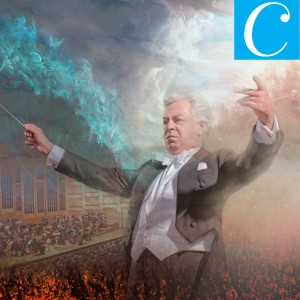
While a well-played Beethoven symphony, a Rossini overture, a Strauss tone poem, or a Mozart concerto might be the secret sauce to get newcomers to become Charlotte Symphony subscribers, longtime concertgoers like me wish to dismount the warhorses and hear something off the beaten trail. There’s plenty out there that will please both camps: big, unfamiliar orchestral works that will instantly grab you by the lapels even if Symphony hasn’t reprised them within the last decade. Armed with an audacious orchestra and choir, plus two soloists who have sung with Opera Carolina, Davidson College showed the way with a rousing performance of Ralph Vaughan Williams’ A Sea Symphony, set to poetry by Walt Whitman. That’s the sort of daring we hope for from Charlotte Symphony’s British maestro, Christopher Warren-Green. We did get a British Isles-themed evening when pieces by Edward Elgar and Peter Maxwell Davies, spiced up with a bagpiper, were served with Mendelssohn’s “Scottish.” Utilizing the Symphony Chorus and distinguished guest vocalists, Warren-Green turned up the power with a pair of Bruckner chorales last November and Mendelssohn’s Elijah last March. If you wanted to sample the full capabilities of Symphony, their chorus, and the guest vocalists Warren-Green can summon to Belk Theater, you had to hear them introducing the wonders of Mahler’s “Resurrection” Symphony No. 2 to an astounded audience.

Best Night @ the Opera – The Girl of the West
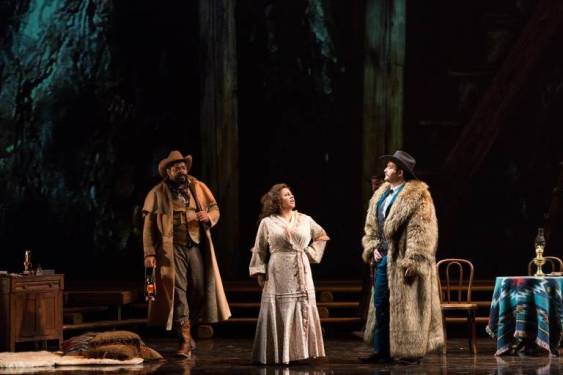
Under maestro James Meena, Opera Carolina does the oldies better than ever, as their uproarious Barber of Seville and their vivacious, ultimately anguished La Traviata amply proved. There was even some audacity in the 2016-17 programming as OpCar partnered with Warehouse Performing Arts Center and the D9 Brewing Company to produce an evening of three short operas – including the world premiere of Scott Joiner’s “Connection Lost (The Tinder Opera)” – at the brewery in Cornelius. Yes, a world premiere on Treynorth Drive! But most exciting was the Charlotte premiere of Puccini’s The Girl of the West, as Meena collaborated with six other international companies, including New York City Opera and Teatro del Giglio in Lucca, Puccini’s hometown. Singing was exemplary, persuading me that this second-tier Puccini opera was actually a first-rate work, and staging was anything but stodgy or conservative: much of the scenery was animated and bold, with authentic relics evoking the Wild West supplied by our own dearly beloved Wells Fargo. An appreciable, if infinitesimal, atonement for all the bank’s Wild West chicanery.


Gunderson’s “Revolutionists” Reminds Us That 1793 Wasn’t a Very Good Year

Review : The Revolutionists

By Perry Tannenbaum

It’s easier to enjoy Lauren Gunderson’s The Revolutionists, a finely polished comedy gem from PaperHouse Theatre, than it is to find it. My GPS app resisted the 1776 Statesville Avenue address that was on my smartphone calendar, forcing me to choose between a Camp North End and a Goodyear Arts destination nearly 100 address numbers apart. Choosing the 1824 Statesville address got me to the Camp North End gate well enough after dark, and there was a PaperHouse emissary at the gate to tell us how to proceed. But as we navigated through a desolate concrete-and-asphalt landscape of vast warehouses, it was definitely an uh-oh episode for Milady GPS, who spun around from “Recalculating” to “Turn Right” in her instructions like a dog chasing its tail.

Following traffic wasn’t a reliable remedy, and I apologize to anyone who followed our lead on opening night and wound up parking a wilderness away from the PaperHouse performing space. Within sight of what looked like the building entrance – and another PaperHouse emissary – I still probably walked nearly a quarter of a mile after thinking I had sufficiently improved my parking spot. You walk through that building to another one.

Fortunately, PaperHouse is much better at producing plays than at getting you to them. (They will deploy more guides for future performances, I was assured.) Once you do arrive a the site of the action, with scenery by Jordan Ellis that strikes us as much with its simulated blood-spattered walls upstage as it does with the ascending scaffold in front of them, you can start to believe you’ve really reached the French Revolution during the Reign of Terror. You’re a bit of a pioneering revolutionary yourself if you’ve persevered and reached this secluded spot.

In the meta-world of her own – and history’s – making, The Revolutionists is Gunderson’s play, and it isn’t. We seem to be watching French feminist playwright Olympe de Gouges battling an onset of writer’s block as she ponders her next response to the rampaging Reign of Terror in the seclusion of her study. She is much in demand, for while Olympe is thrashing around, trying to settle on her message and her medium – shall it be another play? or perhaps a pamphlet? or a manifesto? – in walks Charlotte Corday, pressing the writer to compose a memorable line she can declaim when she assassinates the rabid revolutionary Jean-Paul Marat in his bathtub.

Olympe isn’t in advertising, so one-liners and slogans aren’t her forte. She hopes to come up with the right zinger during the course of composing a longer work, a plan that doesn’t jibe well with Charlotte’s mad impatience. Just when you think that the comedy will crest with the standoff between Charlotte’s insane homicidal urgency and Olympe’s many artistic hesitancies, in walks Marie Antoinette, dressed to the 17’s by costume designer Barbi Van Schaick. Her Highness wants a rewrite, a play by Olympe that will rebrand her tarnished reputation.

Everything seems to become absurd and almost surreal at this point – and likely stays that way with Marie’s queenly vanities and Olympe’s nervous vacillations. But if you go home and Google, you find that Olympe de Gouges really did embark on writing a play to rehab Marie Antoinette’s reputation, and that the playwright really did put herself in that work as an enlightened agent who reconciles the queen with the revolutionaries. If that weren’t enough, it’s also true that de Gouges wrote the courageously feminist Declaration of the Rights of Woman and the Female Citizen, thereby punching her ticket to the guillotine.

In the play, Olympe writes her manifesto in response to some principled prodding from Marianne Angelle, a Haitian revolutionary seeking independence from France, the one fictitious character in Gunderson’s script. In the real world, de Gouges seems to have had no problem standing up for herself – and against the Revolution’s bloodthirsty zealots.

So you might take the layered-on comedy a couple of ways. Gunderson may be telling us that she prefers her feminist heroes to be more fallible and true-to-life rather than impossibly glorified. Or she might be substituting herself for Olympe and showing us how far short of the French revolutionary’s greatness she falls.

Gunderson nudges us to that second, self-effacing hypothesis with little anachronisms that she occasionally drops into the dialogue, like Marie’s rebranding and rewrite ideas. PaperHouse artistic director Nicia Carla takes the anachronisms beyond what Gunderson specifies in her stage directions, and she doesn’t waste any time about it. Lydia Williamson makes her first entrance as Marianne carrying a garish, polka-dotted plastic suitcase, and when Shawna Pledger as Olympe begins writing at her escritoire, she quickly switches from a quill to a BIC ballpoint.

So Pledger is only superficially presiding over a play that Olympe has written for her queen with a plum role for herself. She is actually channeling Gunderson writing a dark comedy about herself, and if you saw Pledger last season as the fretful Sister Shelley who runs the soup kitchen in Grand Concourse, you already know that she excels at stressed-out indecisive women who are so eager to please. Surrounded by this madhouse, Williamson as Marianne doesn’t get as many comedy opportunities as the true historical figures, but she does loosen up from time to time, on temporary leave from her hectoring. Cumulatively, she leaves us with the impression that the French, whatever their politics, have no special call for commanding an empire.

Au contraire.

Sarah Woldum has now haunted PaperHouse productions for two consecutive Octobers, last year as Sheridan LeFanu’s vampire Carmilla and this year as the notorious Corday. This time, she can milk a laugh or two from the assassin’s irrational zeal and her PR impulses, but she’s unmistakably insane. I’m not sure she ever blinked.

As for Caroline Bower, she does enter as an overdressed Barbi doll with some truly vain, insensitive, and bubbleheaded lines to delight us with. But Marie Antoinette’s grand gown, the ribbons she loves so frivolously, and the ridiculous piled-high wig and feathers all do come off as the Reign of Terror sweeps its scythe through our women, and its Bower’s humbling – still cohering with the incredibly spoiled brat we first saw – that brings home how monstrous the French Revolution turned out to be.

In the end, we might realize that our man’s world of today is hardly less bloody than it was in the fatal year of 1793 – and that Gunderson isn’t entirely playful or self-critical when hinting that she trembles in the face of such brutality.


Not Your Same Old Vampire

Reviews: She Who Watches and Charlotte Symphony

By Perry Tannenbaum

Performances of She Who Watches run through Oct. 30 at Frock Shop.


When J. Sheridan Le Fanu serialized Carmilla in 1871-72, Count Dracula wasn’t even a gleam in Bram Stoker’s eye. Yet a quarter of a century later, when Dracula became the paradigm for modern vampire literature, Stoker himself acknowledged that Le Fanu’s most famous novella was a part of that gleam. So after a steady sprinkling of October visitations from the undead lord of Transylvania — no less than seven Metrolina Dracula productions since 2002 — it’s nice to see a change of pace in the form of a new PaperHouse Theatre adaptation of Le Fanu’s spellbinding horror classic.

Eerie echoes are a key motif in the storytelling, which co-directors Nicia Carla and Chester Shepherd have retitled She Who Watches in their adaptation. The narrator of the story, Laura, is haunted by a nightmarish experience from her childhood, when she awoke to find a teen-aged girl in her bedroom. That girl seemed to fall into a slumber on Laura’s chest, but when she awoke the second time, what the girl was doing made her shriek in terror. And then, before her governess could come to the rescue, the girl vanished into thin air!

It would be cruel to divulge much of what happens 12 years after this creepy prologue, but you’re correct in assuming that the beautiful face indelibly etched in Laura’s memory is Carmilla. How Carmilla returns to Laura’s home — and ultimately, her bed — took just under 69 minutes to deliciously unfold on opening night, with neat surprises and more eerie echoes along the way. That’s about the same amount of time you might spend in your family car getting from the I-277 overpass to the dubious thrills of Scarowinds.

It’s a shorter, more enjoyable evening at PaperHouse’s customary haunt, The Frock Shop. Le Fanu’s story placed the action at a lonely Austrian castle in a place called Styria, but the parlor of the Frock Shop cottage on Central Avenue seems to suit Carla and Shepherd quite dandily. The antique atmosphere is built in, augmented by a gallery of starchy, frilly, diaphanous, and full-length costumes designed by Magda Guichard.

Lighting designer Chaz Pofahl, strategically potting the illumination levels, is certainly a part of the spooky conspiracy, but our stage directors also utilize the windows lining two of the parlor’s walls to pique the suspense and ambiance. Perhaps emboldened by the numerous film, stage and TV adaptations of Carmilla that have come before, Carla and Sheperd have done some character shuffling as well. Instead of a kindly father, Laura’s lone parent is a coolish mom, and instead of a distressed friend of her father, General Spielsdorf, we get a more down-to-earth and frazzled Aunt Jean.

The core protagonists remain the same, and we’re very fortunate there. After two strong outings in Theatre Charlotte’s Miracle Worker and PaperHouse’s Much Ado About Nothing, Sarah Woldum is probably the busiest actress in town this year, taking on the role of Carmilla. She seems to revel in the menace of this role, seething with a mysterious intensity when she isn’t softening her prey with endearments. The whole chemistry of her is different from Dracula’s, seemingly resistant to daylight, but you wonder whether her episodes of weakness are symptoms of a gnawing blood hunger or simply playacting to draw sympathy. When Woldum becomes the predator, Carmilla’s rapacity is as much sexual as it is animal.

Racquel Nadhiri spoke too softly at the outset, compounding my difficulties with her Jamaican accent, so I won’t give her top marks as our Narrator. But Nadhiri beautifully captures the mixture of attraction and repulsion that is the essence of Laura’s reaction to Carmilla. Our empathy for Laura’s victimhood is that much stronger because it stems from her sunny heroism.

The ending that Carla and Shepherd have devised for her — distinctly different from Le Fanu’s — fits Nadhiri like a glove, and you might say that the word “bloodcurdling” was specially cooked up to describe her screams.

Two interludes punctuate the action, so you can get refills on the beverages that were served on the front lawn as you first entered, or you might nosh on cream puffs and sausage balls. When we reached the denouement, the audience was split in two, half of us ascending the staircase to witness the climactic encounter between Laura and Carmilla in the bedroom, half of us remaining downstairs to hear the disclosures that Laura’s mom receives from Aunt Jean.

You’ll have a better appreciation of the synchronicity of the two scenes from the downstairs vantage point, but everyone gets the chance to see both scenes — because, we realize, they actually occur simultaneously.

As I’ve already hinted, the cold and clueless Mother isn’t the plum role here, so you won’t be seeing Andrea King at her best, though she’s very good, of course. Most of the scene stealing comes from Rebecca Costas, busily changing costumes and characters throughout the show. Maybe her most comical turn is as the Doctor who says she’ll return so nervously that you can be absolutely sure she won’t, but she’s also pretty funny as Hunch-Hag, dispensing some fairly toxic marital insight to audience members.

Costas also gets a couple of serious cameos, first as the mysterious and malevolent Countess, Carmilla’s aunt. More urgent — and earnest — is Aunt Jean as the action comes to a boil.

Since her stint as she-devil Abigail Williams in CPCC Theatre’s 2001 production of The Crucible, Costas has only emerged briefly and intermittently on the local scene. It’s a kick to see her shining 15 years later in such a versatile performance, her devilish fire not only intact but several degrees hotter.

Charlotte Symphony’s 85th season is off to an exciting start, and Mary A. Deissler, the new president and CEO, is already making her impact. She has things to say, both onstage at Belk Theater when the orchestra plays and in the CSO program booklet, which isn’t as staid and stagnant as it used to be. Sitting down to last week’s Beethoven Symphony No. 2 concert, I found new artwork, festooned with pumpkins, on the cover.

Image result for picture of benedetto lupo playing piano

The two artworks I’ve seen on the booklet covers, through two 2016-17 Classics concerts, already doubles the number I’ve seen in previous seasons. More importantly, Deissler has kept an inside page, opposite the page where you find tonight’s composers and compositions listed, reserved for herself. So instead of some generic remarks designed to linger more or more inanely as the season wore on, Deissler did a reset on page 17A.

The Welcome Page addressed the divisiveness that has fractured our community in recent weeks, the unifying power of music, and Deissler’s gratitude that we were back at a time when healing is needed. Rang true.

Switching from music director Christopher Warren-Green to guest conductor Michael Christie, the Beethoven offerings were more varied and adventurous than the All-Tchaikovsky season opener, veering off into Franz Liszt’s Piano Concerto No. 1 and his Totentanz before we jackknifed into György Ligeti’s folksier and funkier Concert Românesc.

Guest soloist Benedetto Lupo and the CSO brass were a bit overeager and brutish in the opening section of the concerto, but after the pianist navigated through his first softer, lyrical passages, everyone seemed to settle into a more relaxed groove. A fresh production wrinkle further enlivened the concert: a projection screen descended over the Belk stage so an overhead camera could transmit a bird’s eye view of the hurtin’ that Lupo was delivering to a defenseless Steinway Model D.

Van Cliburn himself might have winced.