Category Archives: Theatre

BNS Productions’ “Two Trains Running” Runs at Full Steam With a Deep Cast

Review: Two Trains Running

By Perry Tannenbaum

DSC05592

Like all of the other plays I’ve seen in August Wilson’s epic Pittsburgh Cycle ­ and I’ve now seen nine of the 10 – Two Trains Running is about community struggle and personal redemption. Each of the dramas digs into one of decades of the 20th century, and after Brand New Sheriff began its Wilson explorations with Jitney and the 1950s, their sophomore effort at Spirit Square takes us into the turbulent 1960s.

With so much memorable social and civil rights upheaval in that decade, not to mention the horrifying Birmingham church bombing and the assassinations of Medgar Evers and MLK, it’s no surprise that community struggles are more at the forefront of this Wilson work than the others. As it was in the ‘50s, when we looked on the city through Jitney, Pittsburgh is continuing its predatory campaign to demolish the predominantly black Hill District in the name of urban renewal. After Becker’s gypsy cab depot in Jitney, the city is moving in on Memphis Lee’s Restaurant.

DSC05659

Another young man is returning from incarceration and trying start a new life – but not quietly this time. Sterling is handing out leaflets for an upcoming Black Power rally and befriending Hambone, a mentally handicapped person who was cheated years ago by the white grocer across the street. At the same time, Sterling is seeking out a job or at least a lead from everyone else he speaks to at the restaurant. Standing up for other black people cheated by a white system – and for himself – Sterling is clearly a powder keg that will soon go off.

Memphis estimates that he’ll be back in prison in three weeks. As the days pass and he sees more of Sterling, who grabs whatever he can, Memphis will revise that estimate downwards.

DSC05797

Sterling teaches Hambone a Black Power slogan, but Memphis isn’t so easily swayed. It’s the central issue for black people of that time, especially here in 1969 after the MLK murder. Do they wait patiently and peacefully for what is rightfully theirs, marching and petitioning to make their wishes known – or do they resort to the same kind of violence that kept their people down? Memphis insists on doing things the right way, holding out for a fair price from the city for his property, firing the craven lawyer who advises him to cave.

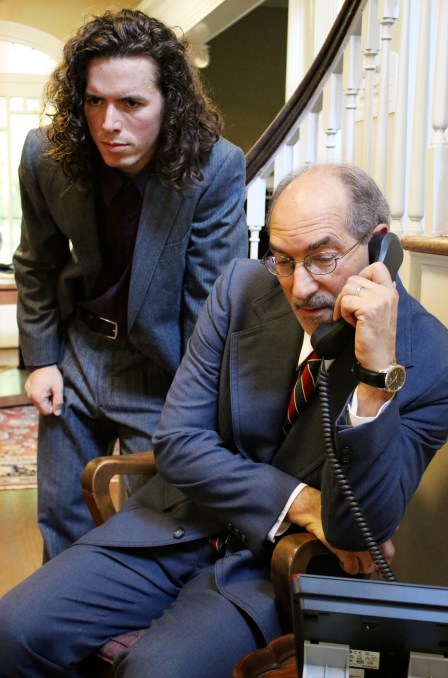
Looking at Memphis’s regular customers, you’ll find additional evidence that MLK’s ideas didn’t die with him. Nobody intends to join the rally. A more popular road to self-fulfillment is winning the daily numbers game at odds of 600-1, and it’s Wolf who haunts the place, taking all bets, often through unauthorized use of the restaurant’s phone. The sagely and cynical Holloway will play a number as readily as Memphis or Sterling, but to change your life, Holloway recommends a visit to Aunt Ester, the 322-year-old soothsayer who lurks behind a faithfully guarded red door in an alley down the block.

Risa, the troubled waitress who has scarred herself, disparages the men who throw their money away on the numbers. To her mind, they’d get a better return from their quarters if they just dropped them in the jukebox. Until recently, she’s been a follower of the Prophet Samuel, but currently her rock and redeemer is lying in state across the street at West’s Funeral Home. She has no desire to see the man in a casket, but Sterling goes through the long lines waiting to see the Prophet and snatches flowers from the site and presents them to Risa, whose head he’s trying to turn.

DSC05549

It’s another illustrative instance of Sterling flouting decorum and convention. Why should her qualms get in the way of enjoying a few beautiful flowers that would die and be trashed in the next couple of days if she weren’t caring for them? West certainly doesn’t notice or mind, Sterling maintains. It’s true. When West comes by every day, he’s looking for Risa to serve him another cup of coffee and Memphis to accept his latest lowball offer for the restaurant.

The parallel rituals are significant, two of the sparkplugs that keep Wilson’s drama humming. The grocer fends off Hambone’s daily demand for the ham that was promised to him, and Memphis refuses to allow West to steal his property away for a bargain price.

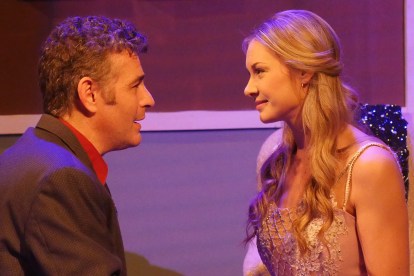
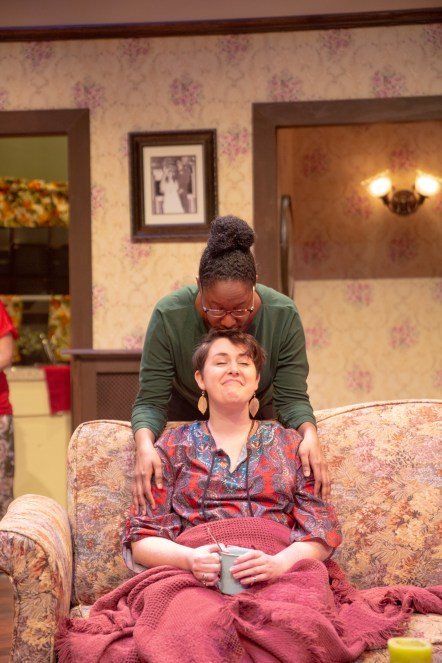
BNS and director Corlis Hayes, in their second Wilson outing at Duke Energy Theater, are getting really good at this. Although smaller than the design the playwright describes, James Duke’s set captures the spirit of the time beautifully, perfectly calibrating the restaurant’s waning appeal so that we see it as a warm, welcoming place. Or at least we can imagine it that way, for Tim Bradley as Memphis is not at all the deferential restauranteur, arguing with customers, barking at Wolf for running numbers on his phone, bragging about duping West, bossing Risa unnecessarily, and expressing general disdain for his lazy people.

That’s all very much on the page, so Bradley finds ways to keep us empathizing with Memphis. Hayes and LeShea Stukes have far more latitude with Risa as we watch the waitress going about her job and reacting to various advances. Stukes plays her as sullen and cynical, allowing Risa’s resentment of her boss’s scolding tone to occasionally surface. Seeing her smile late in Act 2 is like seeing the sun come out after fives days of stormy weather. By the time that happens, we may suspect that the jukebox being out of order is troubling Risa as much as Prophet Samuel’s death and her boss’s bossiness.

DSC05563

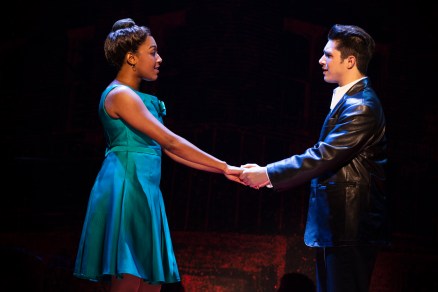
Devin Clark struts around as Wolf like an arrogant sleazeball, but there are more depths, contours, and vulnerabilities to him than the iconic Sportin’ Life as he talks about himself and strikes out with Risa. Ramsey Lyric’s costume designs certainly help Clark strut his stuff, but they also help us to chart Jonavan Adams’s progress in his portrayal of Sterling, fresh out of prison. Hayes and Adams have worked together before on Wilson’s plays, so they both know the strength, the brashness, and the seething frustrations of these strapping young men. Trust me, Adams’ work as Sterling is even more powerful and nuanced than his 2017 outing as Levee in Ma Rainey’s Black Bottom.

BNS continues to have admirable depth in their Wilson lineups. You can understand why Jermaine A. Gamble would gravitate to a role as salty as Holloway, whose sharp observations are mixed with a strong belief in the supernatural, expressed in an unwavering advocacy of Aunt Ester’s powers. Gamble makes Holloway a reasonable man, good reason for having this kind of restaurant around. He’s the neighborhood. But the disruptive Hambone, restricted to little more than one repeated line, wouldn’t jump out at you as a plum role to audition for. Dominic Weaver makes it one in a performance of astonishing intensity and authenticity.

It was probably a group effort to make Weaver look so frightfully grubby as Hambone, but Lyric and Hayes draw my kudos for the sensation West makes each time he enters. Wilson prescribes that the undertaker is always dressed in an all-black outfit, including black gloves that he wears indoors, but designers only add a black hat in about half the productions I’ve tracked on YouTube – and none of them are as imposing as the formal chapeau Lyric chooses for Sultan Omar El-Amin. Hayes layers onto this formality, decreeing that El-Amin must meticulously spread a napkin across his lap at each sitting.

With such outré ammo, El-Amin steals each of his scenes without raising his voice to a level that might lead you to seriously suspect that he doubts his own power. By the manner he holds his cup and saucer, you’d think he was at high tea! From a man who has specialized in portrayals of angry, resentful, and mixed-up young men, El-Amin’s confidently restrained performance as an established 60-year-old widower is a stunner.

Two Trains Running at Spirit Square is a good place to climb aboard the complete Pittsburgh Cycle that BNS is planning to present in coming seasons. You won’t miss a thing because BNS is planning to reprise its previous production of Jitney in May. Then they plan to present Radio Golf, the final drama in the Cycle – and Wilson’s last completed play – next season. Two Trains is not the last stop, but you’ll need to catch it this week before it closes.


New Sheriff Greenlights a Complete Cycle

Preview: Two Trains Running

By Perry Tannenbaum

DSC05583

Rory Sheriff, the founder and producer at Brand New Sheriff Productions – and the author of two works staged at Spirit Square, Be a Lion and Boys to Baghdad – has a special affinity with the work of August Wilson. After presenting Wilson’s Jitney at Duke Energy Theater in 2017, BNS is back this Thursday with Two Trains Running, another drama from Wilson’s acclaimed 10-play Pittsburgh Cycle.

The special appeal of America’s pre-eminent black playwright for Sheriff is twofold – as a writer and as a Pennsylvanian.

“As a playwright myself,” Sheriff explains, “I am fascinated with August Wilson’s style of writing, more so the characters he writes about. Growing up in Reading PA, I can relate to every last character, situation and location he speaks about in Two Trains Running. The beautiful thing is I can now see and understand these people from an adult point of view. They are my dad, his friends, my uncles, my neighbors. I guess what I’m trying to say is I’m reliving my childhood through the works of Mr. Wilson.”

Each of the plays in Wilson’s Cycle is set in a different decade of the 20th century, and all of them are set Pittsburgh’s Hill District, except for one Chicago excursion representing the 1920s, Ma Rainey’s Black Bottom. The only play that predates Ma Rainey was the one Sheriff first plunged into, Jitney, which premiered in 1982 and represents the 1940s. By the time Two Trains, representing the 1960s, premiered in 1990, Wilson had already finished six of the plays in his Cycle.

So Sheriff has honed in on decades that his dad and uncles would recognize, but as he takes us back to the days of Malcolm X and the rise of the Black Panthers, Sheriff is promising that Two Trains won’t be his last stop.

“Yes,” he proclaims, “BNS Productions is committed to producing all ten of Mr. Wilson’s works. We will produce at least one of his works every season. Here’s an exclusive: We will be ending this season with Jitney, and next season we will be doing Radio Golf.”

This extraordinary announcement comes during an extraordinary launch of Black History Month, with three theatrical productions featuring black performers opening in the same week – making some unprecedented Charlotte history. While Theatre Charlotte is waiting until the first of the month on Friday to open Ain’t Misbehavin’, Actor’s Theatre is jumping the gun, officially opening Nina Simone: Four Women on Wednesday.

None of these productions is miniscule, testifying to the depth of black acting and musical talent across the Queen City. So the time is ripe for Brand New Sheriff to be making bolder, more confident and ambitious plans.

Sheriff is definitely packing some high-powered ammunition onstage for Two Trains.

DSC05863

“All of the actors in Two Trains Running have been in at least one Wilson play,” says Corlis Hayes, who will direct. Hayes is no slouch herself. Combined with the four she has directed at CPCC, where she teaches in the drama program, Hayes has now directed six of the 10 Pittsburgh plays, including the two Pulitzer Prize winners, Fences and The Piano Lesson.

Like Jitney, the action in Two Trains Running takes place in a building slated for acquisition and demolition by City of Pittsburgh. The wrongheaded concept of urban renewal evidently had a cancerous grip on black community life for a long time. Here it’s a restaurant rather than a gypsy cab company facing its doom, and the restaurant owner, Memphis, is our protagonist. He’s holding out for a fair price on his property – against the lowball bids of both the city and the ghoulish, rapacious West, who owns West’s Funeral Parlor across the street.

DSC05592

Memphis also has some unfinished business back in his hometown of Jackson, Mississippi, where he was driven off his land many years earlier and not paid a dime. He’s typical of the black men in Wilson’s plays, struggling against a system that white society has rigged against them. Echoing that reality – or responding to it – men in both Jitney and Two Trains Running play the numbers, hoping that luck will supply the boost that honest work doesn’t.

Recently discharged from prison, another recurring Wilson motif, Sterling is trying to interest Memphis and his male customers in attending an upcoming Black Power rally. Jonovan Adams, who has performed in all the Wilson plays that Hayes staged at CP, will portray the restless, volatile Sterling. Activism isn’t his only pursuit: he asks everybody he speaks with for a job or at least a lead, and he’s persistently trying to make headway with Risa, Memphis’s troubled waitress.

DSC05659

Estranged from his wife, Memphis seems to have a blind spot when it comes to women. Debating with Holloway, one of his older customers, about why Risa has mutilated herself, Memphis labels her dangerous while Holloway sees her as searching for someone who will love her true inner self.

“I feel both of these men hit on some truths about Risa,” says actress LeShea Nicole, whose previous venture into Wilson’s world was as Vera in the On Q Performing Arts production of Seven Guitars in 2015.

“Dangerous is definitely not a word I would use to describe Risa, because she never resorts to violence or threats, but I believe she feels ruined from some form or forms of abuse that she encountered in her past that has caused her to shut down socially/emotionally and even distort her appearance. Risa may feel ruined, but not beyond repair. She seeks guidance and solace from Prophet Samuel, which, in my eyes, equals hope.”

Working on her second Wilson drama, Nicole is switching companies and directors. The legendary Lou Bellamy, founder of Penumbra Theatre Company in St. Paul, Minnesota, worked directly with Wilson on multiple occasions. Bellamy not only directed Nicole for On Q, he also directed her as an understudy for the Blumenthal Performing Arts production of The Mountaintop that played at Booth Playhouse in 2014.

In their first-ever collaboration, Nicole says that Hayes measures up.

DSC05797


“I am extremely pleased and energized with her process of directing,” Nicole says. “She’s well versed and makes it her mission to stay true to Wilson’s vision. Dr. Hayes allows actors to explore, find depth in our characters and tap into our creative freedom without jeopardizing the integrity of the production. It is a tricky balancing act that she masters effortlessly. Hayes’ extensive acting career truly makes her an ‘actor’s director’ which is wonderful.”

Whether it’s Prophet Samuel, who lies in state at West’s funeral parlor, or it’s hitting the numbers; whether it’s promoting a Black Power rally or gleaning wisdom from the mysterious Aunt Ester, a 322-year-old soothsayer; the people of Two Trains Running are seekers. The emphasis on ritual especially sets this play apart from other plays in the Pittsburgh Cycle, according to Hayes, but there’s still a common thread.

“Always with Wilson,” Hayes observes, “reunion and reconciliation with the past heals the wounds of the present, bridges gaps between loved ones, and clears the path for a promising future.”

Greek Gods Rock a Comeback

Review: The Lightning Thief: The Percy Jackson Musical

By Perry Tannenbaum


Photo: Jeremy Daniel

Take it from a very hairy satyr – or a prancing centaur: “The gods are real!” That’s the emphatic message Rick Riordan delivered to Percy Jackson, the hero of his young adult novel, The Lightning Thief, in 2005. Five years later, the best-selling saga became a blockbuster movie, and now – after a modest off-Broadway run in 2017 – Riordan’s demigod is on tour in The Lightning Thief: The Percy Jackson Musical, and Knight Theater is one of his first stops.

Joe Tracz’ adaptation of Riordan’s story leans more towards the book than the movie, and Rob Rokicki’s songs add a rocking dimension to Lightning, pushing Percy’s youthful voltage decisively into defiant adolescence – and away from the 12-year-olds who were the original protagonists. But that boost doesn’t compare with the jumpstart this new musical delivers for the Greek gods.

Photo: Jeremy Daniel

You need to remember that these mighty Olympians were already fairly passé in the days of the Roman Empire when Zeus’s name was changed to Jove and Odysseus became Ulysses. Revivals of the Greek gods by 20th century novelists and poets were about the potency of myth rather than the truth of religion – and Homer’s heroes were more likely to be the focus than the immortals on Olympus.

We hear some definite rumblings from Olympus before the action begins at Knight Theater. Before we learn that Zeus’s lightning has been stolen and that Percy is a prime suspect, the lad’s field trip to the Metropolitan Museum – yes, in New York – is punctuated by attacks from a harpy and a minotaur.

Yeah, a very mighty somebody is angry with Percy, and the kid really has a lot to learn. After he gets expelled from school, the long-overdue lessons begin. Mom breaks the news that Dad, if not a great parent, was and is unquestionably great. But before Sally can specify Percy’s divine lineage, his implacable pursuers strike again. Now in hindsight, I could second-guess Zeus and politely assert that it would have been more sensible for him to send a more articulate messenger than a minotaur to ask Percy where he’d hidden the damn lightning.

Photo: Jeremy Daniel

So be advised, action comic book logic often prevails here – which is not very much out of step with the illogic of Greek mythology. When Percy awakens from a coma three days later, he finds himself motherless and enrolled at Camp Half-Blood up in Long Island, together with other kids whose divine parents are equally neglectful. Needless to say, the animus bred among these teenage demigods by their absentee parents chimes well with the Rokicki rock score.

Percy is doubly different from the rest. Until deep into Act 1, he doesn’t know whose son he is. On a dark night, the revelation from Dad will be truly spectacular as Percy and his fellow campers look up in the sky and – amid the obligatory earthshaking tremors – see the god’s signature trident blazoned among the stars. Heavenly signs are the stuff you hear heroes speak about in plays by Aeschylus, Sophocles, and Euripides, a dramatic effect that Shakespeare shrewdly revived.

Photo: Jeremy Daniel

The other distinction that separates Percy is his getting selected to go on the quest to somehow retrieve the stolen lightning and prevent all-out warfare from breaking out among the gods. It’s here that Riordan takes us all the way back to the heroes of Homer’s epics. Just as there was tension and moodiness on the fields of Troy where Achilles, Ajax, Agamemnon, Hector, and Paris trod, there are rivalries and animosities among the half-blood campers. Annabeth, neglected by Mama Athena, wants to join Percy and prove herself. Others channel their jealousy, resentment, and antagonism into undermining him.

Up above, the unseen gods are supporting their neglected children, using them as instruments against one another, very much like Homer described them behind the scenes of the Trojan War. Mars and Mercury, the gods with Roman names, are sponsoring kids at camp who are going to make it tough on the offspring of Zeus and Poseidon. Singing rock songs with amped-up intensity and sincerity amid flashing lights and minimal scenery, these relentlessly energetic teens do occasionally seem like avatars in a video game.

I guess that’s because so much of the energy is channeled into the music.

Kristen Stokes as Annabeth sported the best vocal chops among our protagonists, but the role of Athena’s daughter isn’t nearly as meaty as the lead. Chris McCarrell is your fairly generic rock ‘n’ roll lead, not quite as iconoclastic as the Footloose outsider at his core, but he’s marvelously awed and illuminated by his magic sword and his mission. Somehow his determined edge never grows stale.

Photo: Jeremy Daniel


But as often happens with pure heroes and superheroes, Percy and Annabeth are often upstaged by the more outré characters they pal around with or confront. Three of the five supporting players have multiple roles to feast on, and I still find myself torn about which scene stealer I liked most. Perhaps because he rocked the most costumes, I’m giving the nod to Ryan Knowles as Chiron, Hades, and Poseidon. Knowles starts out as Percy’s teacher and principal before he reveals himself as a centaur – not an unreasonable stretch, since the original Chiron tutored such adventurers as Achilles and Jason.

Likewise, Percy’s classmate Grover reveals himself as a satyr when our hero comes out of his coma, the pagan equivalent of a guardian angel. Yet somehow, he moonlights as Mr. D, the godly camp director who presides over admissions in a manner that suggests a Hawaiian bartender. Jalynn Steele spends the largest chunk of her stage time as Percy’s mom, warmly nurturing and humdrum, but she gets the most startling cameo as Mrs. Dodd, the substitute teacher who turns into a very shrill harpy. Given a couple of chances to sing, Steele proves to have ample reserves of voltage and sizzle.

Okay, so maybe the gods aren’t real. At Knight Theater, in The Lightning Thief, they’re still a lot of fun.

Enormously Powerful “Mother Jones in Heaven” Could Use More Breathing Space

Review: Mother Jones in Heaven

By Perry Tannenbaum

mother jones photo credit brian kasher

Anybody who has walked by a well-stocked newsstand in the past 40 years has heard of Mother Jones, but fewer people can tell you anything about the real-life woman who inspired the magazine. You can now be handsomely schooled at the Warehouse Performing Arts Center by Vivian Nesbitt, who portrays the rabble-rousing labor activist in a fast-moving production of Si Kahn’s musical narrative, Mother Jones in Heaven. A treasured Charlotte resident until he grows restless and sets out for the West Coast, Kahn himself has been a community and labor organizer for over a half century while composing an imposing catalog of songs in a traditional folk style. He is supremely qualified to empathize with the tribulations of Mary Harris “Mother” Jones’s life and to give her pugnacious personality musical expression. In Nesbitt, he has found an actress who is ideally suited to bring us a Mother Jones who is beautifully devoid of acting or singing self-regard.

Unfortunately, the natural instincts of these artists were subjected to the whims of director Alice Jankell, who presented the show, winner of a San Francisco Bay Area Theatre Critics Circle award in 2014, as if it were a work-in-progress sorely in need of workshopping. At the post-performance talkback on opening night, Jankell asked the audience the right questions, namely what worked well and what left us confused – the polite way of asking what didn’t work. But the feedback process was doubly perverted. We were answering these questions about a script that had been severely edited. A production in Canada reportedly ran 90 minutes as recently as a couple of months ago, but the Warehouse version clocked in at under 70. Jankell confided that it had been necessary to abridge Kahn’s script to 60 minutes in order to bring this version to a fringe festival in Asheville, but she was dismissive toward those portions that hadn’t been restored, labelling them as research findings that would be interesting to the playwright and not to us. Further compromising the process, the person who most needed to judge what was working and what was not, Kahn himself, was not in the audience.

It’s hard to say what the missing 20 minutes of playing time would have fleshed out. Perhaps we would have learned the names of all four of Mother’s biological children who died from yellow fever during an epidemic in Memphis. Or we may have sampled some of the rhetoric in Mother’s speeches that inspired her figurative children, most notably the oppressed coalminers of West Virginia. Or maybe, Mother Jones in heaven was emboldened to tell some of the self-mythologizing lies she told on earth in her autobiography, only to come clean in the presence of the angels who make up her audience. Maybe all the factoids we missed might have bored us, just as Jankell feared. Maybe not.

vivian_nesbitt_mother_jones

Aside from the additional texturing that the full script would have provided, it would also have supplied much-needed breathing space between songs. The effect of a couple of them – there are at least 10 songs – was stifled by how soon they followed on the heels of their predecessors, with little substance to feed upon. And more of Nesbitt as Mother Jones would axiomatically be a plus. Confounding the radical working-class preconceptions we might have had about “the most dangerous woman in America,” Jones arrives in heaven rather primly dressed. Yet as much as she is gratified to see us, her fellow angels in heaven, what makes her feel most at home is the old Irish pub that is set up for her, where she picks out a favorite bottle and pours out the libations that will lubricate her tongue. It reminds her of the place where she was fired from one of her prestigious union positions.

The formative events in Mother Jones’s life, the yellow fever epidemic of 1867 and the Great Chicago Fire of 1871, happened earlier than I would have thought, but the celebrated – and somewhat catastrophic – Children’s March on the residence of President Theodore Roosevelt in 1903 took us into the 20th century where I had always placed her. There are subsequent references to Warren G. Harding and the likely apocryphal telegram he sent to her in 1921, so the old firebrand was very much in the thick of the labor movement well into her final decade. Her ascent to the storefront Warehouse stage presumably occurs upon her death in 1930 at the age of 93.

Joining Nesbitt onstage is her husband, John Dillon, on guitar, providing a quiet relaxedpresence. The songs he played; including “Mother Jones’ Farewell to Ireland,” “Silk and Satin,” “The Whiskey Ring and the Railroad Trust,” and the anthemic valedictory, “I Was There”; date back to at least 2004 on CD. Another title, “Tarpaper Shacks,” has been out since at least 2007, so the legacy of Mother Jones and her crusading themes have been aging and maturing in Kahn’s mind for a long time. In the choicest passages of Kahn’s dialogue, Nesbitt gets to describe the injustices, the horrors, and the deformities that enflame Mother Jones’s righteous rage. Even in this capsulized form, Nesbitt’s performance is quite a sight to behold, enormously powerful when she reaches full throttle.


Turning “Nutcracker” on Its Head

Review: The Hip Hop Nutcracker

By Perry Tannenbaum

Hip Hop Nutcracker - Dolby Theatre - November 17, 2017

When Mike Fitelson’s holiday riff on ballet and Tchaikovsky, The Hip Hop Nutcracker, first invaded Charlotte three years ago, it wasn’t quite where it needed to be artistically. The brash pre-show at Booth Playhouse presented by DJ Boo somewhat upstaged the pallid pre-recorded Peter Ilyich score that backed Fitelson’s updated scenario and Jennifer Weber’s choreography. Nocturnal settings by video designer Moe Shahrooz recalled the Washington Heights portrayed in Lin-Manuel Miranda’s In the Heights – moody and occasionally surreal but drained of the Miranda musical’s inner-city vitality and color.

The Fitelson scenario definitely perks up the traditionally moribund Act 2. Instead of sitting his Clara and her Nutcracker down for the better part of an hour to watch a series of decorative dances, Fitelson sends his Maria-Clara voyaging back 30 years where, in Back to the Future style, she encounters her perennially bickering parents back on the night when they first met at the Land of Sweets nightclub – getting to see them freshly at the moment romantic love first sparked between them.

Very promising, but the show needed some extra spark itself.

Produced by the New Jersey Performing Arts Center, the show has returned to the Queen City every year since its forgettable 2015 debut. Yeah, when I booked this year’s reprise at Knight Theater, I’d actually forgotten that we had seen it before. Thankfully, I review stuff. And thankfully, the Knight is exactly where this Nut needs to be.

Memories did not come rushing back when the show began. Kurtis Blow, a founding father of hip hop, hadn’t been part of the Booth Playhouse production, but at the Knight, he rules the pre-show for just over 18 minutes. He’s not the first performer I’ve ever seen who has asked an audience to get up on their feet or to raise their arms and sway back and forth nonsensically, but I’m sure he’s the first who has ever asked me and the rest of the crowd to SCREAM. Over and over.

So audience participation at the Knight has increased exponentially over what I experienced at the Booth. The Knight also has more than twice the Booth’s seating capacity. And since word-of-mouth and repetition have solidified Hip Hop Nutcracker as a holiday tradition, the Knight was sold-out on opening night and enthusiasm stretched to the back row of the balcony.

There is even a subtle tie-in between Blow’s aggressive patter and the dance that follows. Signed in 1979 as the first rapper to land a major-label recording contract, Blow presents his music as unabashedly “old school” and invites his audience to immerse itself in his original vibe, prefiguring the time traveling that Maria-Clara will do before she mends her parents’ dysfunctional relationship.

Things started looking familiar when violinist Jarvis L. Benson took his spot under the neighborhood lamppost and began playing Tchaikovsky’s antique melody line over Boo’s contemporary backbeat and platter scratching. You might say that, as the melody wafts upwards, it infuses the pair of red sneakers slung over the lamppost with magical powers. Our hero, The Nutcracker, sells his namesake merchandise from a ramshackle cart. He’s obviously attracted to Maria-Clara but painfully shy, and when he gallantly steps forward to save her from the unwanted attentions of a local gang, Nutcracker gets his ass kicked.

hiphopnutcracker20171117tn-0988

Big difference when those sneakers improbably fall to the ground and Nutcracker puts them on. What vanquishes the gang is even more improbable: Josue “Beastmode” Figueroa as Nutcracker executes a bodacious spin on his head that lasts longer than you might think humanly possible. Literally turning The Nutcracker on its head during its climactic Act 1 battle.

While there are some dolorous and becalmed moments elsewhere in Act 1 in the ensemble choreography, the Knight Theater sound system is noticeably superior, punchier. So as the Nutcracker soundtrack plays, we never get the sense that the Jerseyites are dancing to elevator music. Although Ann-Sylvia Clark is a holdover from the 2015 edition as Maria-Clara, everyone else besides Boo was new to me and eager to strut their stuff. Weber’s choreography leaves plenty of room for exuberant freestyling.

Beastmode, with his appealing rough edges, was the most impressive newcomer for me, but I also like the pixie exuberance and stealth of Lisa “LBoogie” Bauford as Drosselmeyer. Forget the “Herr.” The Hip Hop Drosselmeyer has been a woman each time I’ve seen Fitelson’s version, symptomatic of the diversity in Weber’s casting. Yes, she choreographs and directs.

Sad to say, Nubian Nene is less seductive and more proper as Mom, draining all the comedy from her strife with Dad, though Micah “Just Jamz” Abbrey is every bit as crotchety as his predecessor. New charm and whimsy are injected into the evening by Dustin Payne, whose solo as Flute deservedly received the most audience approval among the Act 2 set pieces on opening night.

Shahrooz’s animations become livelier after intermission, responding to Drosselmeyer’s conjurations and transporting us back to 1988. The backwards time traveling is done like a subway ride, the years spelt out in the tiling on walls surrounding the track – with an increased amount of graffiti as we reach our destination. Perhaps a nod to Mayor Rudy Giuliani and his unparalleled success in “cleaning up” New York? The trip back to the present day takes us skyward as an elevated train reels in the years across the nighttime cityscape.

Wondering whether Kurtis returns? You can bet on it. Loquaciousness undimmed, he presides over the most elaborate curtain calls you will ever behold at a ballet. Many people left before it became apparent that we would have a full-fledged post-show over eight minutes long. Many more stayed – and obliged the special guest MC by screaming on cue. Not quite 60 years old, Blow even busted some moves.

A Catchphrase Becomes a Mantra in “A Christmas Story”

Review: A Christmas Story, The Musical

By Perry Tannenbaum


Photo 3 - Colton_Maurer_as_Ralphie_and_the_Company_of_A_CHRISTMAS_STORY

Long before it became New York’s AM haven for Rush Limbaugh and Sean Hannity, WOR was the late night hangout of Jean Shepherd, the place where he became something of a cult hero – or maybe a folk hero if you take his roguish, Bohemian homespun manner into account. His holiday idyll, A Christmas Story, recalling his boyhood in an obscure Indiana town, is the chief reason why we remember Shepherd. It’s likely also the reason why 1938 Red Ryder Carbine Action BB Guns are still available at Walmart, Bass Pro Shops, and Dick’s Sporting Goods more than 50 years after the last Red Ryder comic strip appeared in print.

Aside from the fabled Red Ryder air rifle – and the extra trimmings our hero Ralphie never fails to mention – there’s another familiar earmark in A Christmas Story. Whether he expresses his yearning obliquely through a magazine ad strategically placed in his living room, excitedly in front of a store display, panegyrically in a school essay, or confidentially in Santa’s lap, the barrier to Ralphie’s Holy Grail is always the same: “You’ll shoot your eye out!”

As your might fear, for the phrase is already sufficiently repeated, A Christmas Story, The Musical turns the catchphrase into a pervasive mantra – a phantasmagorical one partway into Act 2 after Miss Shields, Ralphie’s teacher, reacts to his essay. Transported to a fantasy speakeasy, even Ralphie’s classmates pronounce the fatal slogan in mocking singsong, fiendishly relishing our hero’s failure to get what he so dearly cherishes.

We’d be fine if this expansion were the worst of Joseph Robinette’s mistakes in adapting the 1983 Turner Entertainment film for the stage. Years after Oliver and Annie had proven a pre-teen’s ability to carry his or her weight in a Broadway musical – and less than two years before Matilda would prove it again – Robinette looks to narrator Jean, Ralphie’s parents, and Miss Shields for avenues to expand his book or let composers Benj Pasek and Justin Paul plump up the songlist.

You might retch at all the geniality that Chris Carsten lavishes on Jean, but it’s an enthusiastic heartland geniality, and he isn’t singing much. We can also allow that the epic stress that Lauren Kent as Miss Shields puts on the “You’ll Shoot Your Eye Out” prohibition siphons away some the ogre aspect that might taint Ralphie’s mom. But that strands Briana Gantsweg as Mother in the deadly realm of being almost entirely understanding and nurturing, toward her husband and her sons – in two of Pasek & Paul’s most sweetly innocuous songs. They stop the show in ways that aren’t helpful.

Most of the true joy that beams out at us at Ovens Auditorium in this show comes from Ian Shaw as the ever-embattled, ever-tenacious Ralphie (alternating with Michael Norman) and Paul Nobrega as The Old Man, a similarly-assailed eccentric who barely takes notice of his pint size buckaroo’s numerous tribulations. Largely ignoring Ralphie, The Old Man’s Herculean challenges include taming the furnace, eluding the next-neighborhoods dogs, and winning recognition in a very silly crossword puzzle contest.

With Pasek & Paul rising to the occasion, perhaps the best musical moments in the show are songs inspired by The Old Man, “The Genius on Cleveland Street” and “A Major Award.” Nobrega’s struggles with the crossword puzzle also give Gantswag her best moments, striving to feed the answers to her intensely dimwitted husband without defiling his self-esteem.

Starting out with Shepherd taking us to his WOR studio A Christmas Story, The Musical takes its time before reaching cruising gear. But times were slower in 1940, when Robinette sets the story, and set designer Walt Spangler and costume designer Elizabeth Hope Clancy create a folksy, slightly cartoonist charm that chimes well with this familiar yarn, which will warm your holiday a little if you’re patient. Playing time, 1:54, is 21 minutes more than the movie, so nobody’s in a rush.


Actor’s Gym Unearths a Gem in “Fallen Angels”

Review: Fallen Angels

By Perry Tannenbaum

When a playwright puts the finishing touches on his or her latest comedy, it’s without any knowledge about how prevailing attitudes and expectations might change out in the audience over the next 93 years. No playwright has ever had the chance to look back that far, and that includes Noël Coward, whose Fallen Angels is playing at Duke Energy Theater in an Actor’s Gym production directed by Tony Wright.

Knowing Noël, I’d say he’d either gasp or laugh out loud. Opportunity knocks for Coward’s protagonists, Julia Sterroll and Jane Banbury, when their husbands head off on a golfing weekend just when an old flame of both ladies, Maurice Duclos, sends them billet-doux saying that he’ll be arriving back in London after an absence of many years –so many years that the husbands, Fred and Willy, have no idea of who Maurice is nor any knowledge of his torrid affairs with their wives.

After Fred’s departure, Julia is momentarily left alone with her new smarty-pants maid, Saunders. That’s when Jane arrives at the Sterrolls’, all aflutter with the news. Julia, who was just a few minutes earlier discussing with Fred exactly how much fire was left in their mellowing marriage, hadn’t yet read her note from Maurice. It quickly becomes evident, as the women discuss Maurice, that those flames still burn brightly, perhaps more brightly than ever. They’re a little scared.What will they do when he arrives?

Their first impulse is exactly what an audience would expect – in 1925: to flee as quickly as they can to protect their honor, which presumably cannot withstand Maurice’s irresistible charms. A mere 35 years after Oscar Wilde had declared, “The only way to get rid of temptation is to yield to it,” such an outlook was still wicked, irresponsible, and risqué.

Nowadays, coaxed by Madison Avenue, amoral leaders, social media, and longstanding American traditions of fierce individuality, we find ourselves – regardless of gender – inwardly urging Julia and Jane, Go for it! Whereas we’re taken aback in 2018 by the ladies’ knee-jerk-prissiness, their eventual decision to stay and face Maurice was immoral enough to give London’s censors pause before allowing Fallen Angels to be performed.

Once Julia and Jane have opted for what we perceive as the road-more-taken, you might expect that attitude adjustment becomes far less necessary. Yet in more subtle ways, the presumption of wickedness works its way deeply to the bones of Coward’s comedy. Instead of building his comedy upon Julia and Jane’s rekindled romances – and their wacky or delicious maneuverings to keep their husbands in the dark – we find an unexpected amount of time devoted to maintaining their wicked resolve. Here our complications arise from the women’s resorting to martinis and champagne to sustain their courage during their excited vigil.

So it’s helpful that Tony Wright and his design team keep reminding us that the people onstage are living indifferent times. While Tim Baxter-Ferguson’s set design isn’t the ultimate in elegance, the requirements of a British drawing room are met, including a baby grand where Saunders will upstage Julia. Davita Galloway’s costumes, particularly the flapper-flavored outfits for the partying ladies as they sip their martinis, stamp the era most decisively.

The women must dominate this comedy,and Wright has found a marvelously varied trio. Originally played by Tallulah Bankhead, Julia is the formidable serenity that is serially agitated by Saunders, Jane, and Maurice to comical effect. Jennifer Barnette takes that serenity to a loftier, more angelic plane, slightly muting her discomfiture and giving more space for the eccentricities of Saunders and Jane to shine. Karina Caporino pounces on her opportunity as Jane with frenetic energy, more brittle and midlife than we’ve ever seen her, which easily makes Jane the most screwball of her trademark neurotics.

Erin Darcy as Saunders is possibly the most vivid period trimming in this whole confection, a servant who is more knowledgeable, widely traveled, and skilled than the mistress she serves, aware of her superiority and maybe a little bit haughty about it. Saunders’ sophistication lays bare the delusion that the Sterrolls or the Banburys are living lives of consequence. Perhaps it’s Darcy’s aplomb at the piano that gives Barnette her best episode of humiliation.

In this context, Emmanuel Barbe is a perfect choice as Maurice. He is suave and self-assured, with a savoir-fair that is unmistakably French, yet he doesn’t quite have the polish and youth that would make knees buckle in high society. Barbe’s down-market elegance is still more than enough to make David Hensley as Fred and Michael Anderson as Willy seem gullible, dimwitted, and humdrum. Hensley as Fred seems to be the sort who feels like he’s fulfilling his destiny by opening a newspaper at the breakfast table, while Anderson, once he reconciles with Fred and Jane, gives Willy exactly the smiling insouciance that Wright wants for his ending.

I have to go back to 2005 and The Tempest to find the last Actor’s Gym production I reviewed. It’s great to have Wright and his Gym back on the scene, especially when the Gym unearths a gem like this.


“Daffodil Girls” Vie Viciously for Survival – and a Pony

Review: The Daffodil Girls

By Perry Tannenbaum


Down in Dallas, Fun House Theatre producer Bren Rapp and her co-founder, artistic director Jeff Swearingen, don’t do children’s theatre the usual way. The children at Fun House are the actors onstage and not necessarily the target audience. So when Rapp looked for an inspiration to challenge her students, David Mamet’s Glengarry Glen Ross wasn’t too far of a stretch. To translate the Darwinian struggles of real estate salesmen embroiled in a monthly sales contest into terms her actors could identify with – an annual Girl Scout Cookie drive – Rapp leaned upon Swearingen’s play writing skills.

The result in 2013 was a Dallas-Fort Worth theatre legend: The Daffodil Girls. In a further mutation five years later, Three Bone Theatre is currently premiering the first all-adult production of Swearingen’s script at Spirit Square.

Make no mistake, this is thoroughly Swearingen’s play, not just a servile rechanneling of Mamet’s testosterone-driven, potty-mouthed arguments through the lips of innocent preteens. Plot and dialogue only faintly echo Glengarry most of the time, language is relatively cleansed, and beware: complete sentences lie ahead. Another way to view the difference is to note that Swearingen lets plenty of air into the relatively claustrophobic world of Glengarry. Mamet only gave us three two-handed scenes before intermission. Swearingen admits more characters – and more of the world outside of the Daffodils’ treehouse.

According to Willa, who parallels Mamet’s Williamson, the entire Daffodil chapter has been endangered by their slumping cookie sales, not just the low person on the totem pole. Even before Shelly’s quest for hotter leads, in a humiliating confrontation with the officious Willa, we find Swearingen modernizing the story and infusing fresh air into the competition. Shelly is outdoors as the lights go up, on her cellphone first with her mom and then her dad, pleading with them to help boost her numbers.

Opening up his story, Swearingen doesn’t ease up on the stress that Mamet plunged us into, but he does manage to instantly wrap that stress into a more juvenile mindset. Parents at the Duke Energy Theater can only sigh. The Daffodils’ cookie quotas merely weaponize our children’s pre-existing propensity toward clinging, dependent querulousness, and cellphones help it go nuclear.

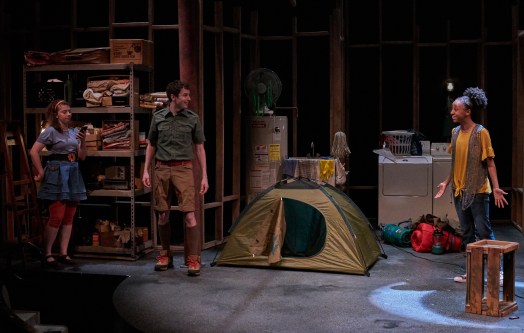
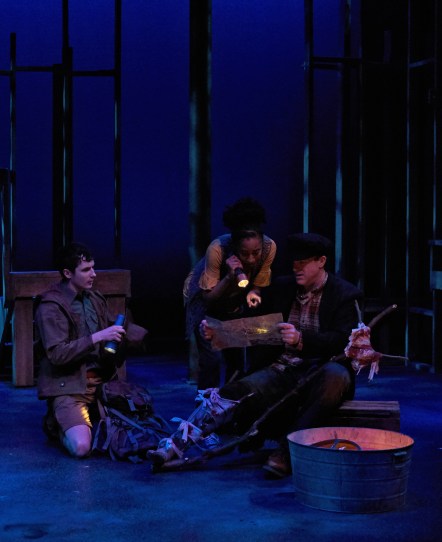
When she isn’t consulting her rules and charts – or obsequiously receiving Blayne, the regional Daffodil emissary with the motivational charms of a drill sergeant – Willa seems to live next door to the troop’s treehouse. All we see at stage right is Willa’s housefront, enough for her to peep out of and defer to parents lurking within. Flanking the treehouse interior in Ryan Maloney’s set design, a Peanuts-gone-to-seed affair, is that pillar of preteen commerce, a lemonade stand (with a crayon rental side hustle). There we will find Raimi, the top-selling Daffodil, closing in on a high-gross sale to hapless, sickly Jenny Link, who may be allergic to every ingredient in those cookies.

Raimi is modeled on Mamet’s sales ace, Roma, who circles his prey, Lingk, ever so circumspectly in the last Chinese restaurant scene of Glengarry prior to intermission. The real bridge to Act 2 in both dramas is the discussion about ransacking the sales office, ostensibly for cash and receipts, but really so the desperate accomplices can get their hands on those hot sales leads that are guarded so closely. In Glengarry, the conspirators were Dave Moss and George Aaronow, with Moss as the intimidator. Here the crooked bullying malcontent is Dana, bullying a kindergarten neophyte, Georgina.

Casting the women who will regress into girlhood in daffodil-colored uniforms, Three Bone director Amanda Liles leans on size in her casting when we need to differentiate between their purported ages. Layla Sutton as Dana towers over Kitty Janvrin as Georgina, conjuring up a Trunchbull-Matilda contrast more readily than any relationship Mamet set down. You’ll notice a similar disparity between the imposing Iris DeWitt as Blayne, the regional enforcer, and the comparatively petite Iesha Nyree as the deferential Willa.

Rather than playing down these contrasts, Liles encourages her actresses to play them up. Among them, Nyree gets the best opportunity to surprise, for Willa may be a worm and a suck-up, but she’s a cunning one, and her moment will come. In proving that crime doesn’t pay, Nyree gets to unleash a volcano of pent-up emotion that is quite consonant with Willa’s customary sliminess, but she only briefly wrests our primary attention away from the girls at the opposite ends of sales totem pole.

Kerstin VanHuss as the pathetic Shelly and LeShea Nicole as the regal Raimi give the performances you’ll remember longest. If Shelly would sweeten up, stop acting so spoiled, and show a little more initiative, she might shape up as the sort of underdog you could root for, like the chubby Tracy Turnblad in Hairspray. Yet in her pluckier moments, Van Huss succeeds in making this mopey, self-pitying Shelly more appealing than any of Mamet’s predators, so I did find myself rooting for her late in the action despite my better judgment.

Raimi oozes all the self-confidence, superiority, and staunch entitlement that Shelly lacks, and Nicole makes her so very slick, patient, and condescending as she sets about fleecing poor Jenny for over 20+ boxes of toxic cookies. The fruits of Raimi’s finesse make her a victorious queen when she finally deigns to return to the ransacked treehouse. Nobody is taking away her damn pony party, the prize that goes to the troop’s top seller, and you can hear Nicole playing the race card as she proclaims this – slapping that card down on the table with gusto, absolutely shameless. As in previous Nicole stage exploits, she’s intensely eccentric and laugh-out-loud funny, sometimes without even saying a word.

Of course, Nicole’s imperious cruelty is greatly augmented by the immense frailty of Valerie Thames as Jenny – though it must be said those breathing tubes sprouting from her nostrils give her a head start. To a lesser extent than Nyree as Willa, Thames will acquire the beginnings of a backbone in the Act 2 denouement when Jenny finally gets a word in edgewise.

Similarly, it isn’t just Willa who nudges us toward empathizing with Shelly. After her cameo as Blayne, DeWitt returns to belittle Shelly, her cookies and her Daffodils uniform as Lisa, a preppy girl who acts like giving Shelly the time of day is more than sufficient charity. Rounding out the cast is Tiffany Bryant Jackson as Cora. Mostly quiet as she runs the lemonade stand before intermission, Cora turns out to have quite a bossy streak in the heat of the great burglary investigation.

Maybe the biggest surprise in Swearingen’s fun-filled riff on Mamet’s Glengarry Glen Ross was how much plot and action the Dallas playwright squeezed into a script whose running time didn’t quite reach 80 minutes. Amazing what you can do with short speeches and complete sentences.

“Summer Night, With Unicorn” Plants the Seed for Professional Jewish Theatre at Shalom Park

Review:  Summer Night, With Unicorn

By Perry Tannenbaum

In a cycle that begins in November, The Levine Jewish Community Center jumped aboard the Jewish Plays Project two years ago as Charlotte became one of 12 cities adjudicating JPP’s annual Jewish Playwriting Contest. Charlotte has already assembled 21 readers for the judging process, tied with Chicago for the most among participating cities, in deciding the three scripts that are publicly presented in the spring at Gorelick Hall. That’s where the Shalom Park audience takes over, choosing the winner and also-rans for our region. From those results, a consensus national winner is chosen – not only for presentation at an annual Jewish play festival up in New York but also for full professional productions in all the cities where the Project has taken root. Last year’s contest was different from those that preceded, pitting all winners from previous contests against each other, so that an all-time winner from 2012 to 2017 would emerge. Decided by an objective points system, the 2018 contest actually produced two winners, Estelle Singerman by David Rush, winner of the 2013 prize, and Belfast Kind by Margot Connolly, the 2015 winner.

Among the co-winners, Charlotte chose Rush’s bittersweet comedy-fantasy. We had been told at the readers’ committee meeting back in January that Rush’s title was in flux. By the time it was presented at The Festival of Jewish Theater in June, Estelle had been renamed Summer Night, With Unicorn. That’s the title that JStage brought to Gorelick, sporting poster and playbill artwork with a Marc Chagall flavor that marvelously reflected the spirit and the magical realism of Rush’s play. The main figures in Kayla Piscatelli’s artwork are a crescent moon over the head and neck of a unicorn. Within that white unicorn, there is a silhouetted cityscape of skyscrapers with space enough above them for the Hebrew letters of the first four words of the traditional mourner’s kaddish. Estelle is a gregarious elderly Jew, not devoutly religious, since we meet her a little after 10pm at a lonely McDonald’s in Chicago. There’s nobody else to pester but Warren Spencer, an obvious Cubs fan busily clogging his arteries with a burger and a large order of fries.

Estelle would like this sullen, downcast, and brooding widower to believe she’s doing him a favor by sharing his fries and perhaps hoping to cheer him up as she invites him on a late-night odyssey. She will take him to a park, the Lake Michigan shore, a Christian Science reading room, a synagogue, and – inevitably – a zoo. Where else would Estelle and Warren converse with Seymour, a reincarnated giraffe? Rush proves to be very ecumenical in his ramblings around Chicago. The depressed and anorexic Hannah Kipper reads tarot cards on her lakeside blanket, the reading room is managed by a kindly Sister Rose, and the dark synagogue is haunted by a rabbi who’s unsure whether he’s alive or dead, a thickly bearded gent with Wandering Jew earmarks who has his visitors wondering who’s dreaming whom. Nor are the characteristics that Hannah and Rush assign to the Unicorn gleaned from the Encyclopedia Judaica, where there is no entry for the mythological beast.

Long before intermission arrives, we realize that Warren is a stubbornly lapsed Jew who is stewing in bitterness over the circumstances surrounding his wife Doris’s death. Estelle is a widow herself, habitually wandering the city at night because she’s afraid to go to sleep, promising Warren the glory of a sunrise over the lake at the end of their journey. We join Warren in wondering what Estelle’s ulterior motive is, getting hints that he isn’t the first to join her on her midnight rambles. As the lights go down for intermission, it becomes suddenly clear that Estelle is looking somebody to say kaddish over her. What we didn’t know was whether Estelle was alive, with a wisp of matrimonial motives triggering her quest, or dead, needing Warren’s prayers to bring an end to her ghostly wanderings. The other big question was whether Warren would ever say kaddish over his own beloved Doris, let alone this strange and mystifying Estelle.

My estimate is that I haven’t reviewed a theatre performance at Gorelick in almost 16 years, during which time the J has sprouted multiple new wings, one of them two stories high, along with a new entrance and dazzling new facilities – all of which make the Gorelick, now shunted from the front to the back of the complex, look old and drab by comparison. The stage and the dusty chairs we sat in could sorely use a refresh, for starters. JStage producer Susan Cherin Gundersheim, the cultural arts director at the Levine JCC (and a theatre professional in her own right), is clearly facing an uphill climb in convincing people to make a serious investment in the J’s theatre program. Gundersheim has managed to bring professional-grade theatre to the site regardless.

To check off all the design and directorial boxes, Gundersheim has brought in Piscatelli and Mark Sutton to don multiple hats, which they do admirably on their shoestring budget. Sutton’s set design, little more than three wooden frames after we exited McD’s, meshed well with his directorial concept, calling upon his audience to mostly imagine the scenes for themselves. Piscatelli’s costumes and lighting were no less complimentary, the raggedy cerements for the ghostly Doris and the gleaming silk cape for the Unicorn contrasting effectively with the garish attire of our earthbound protagonists.

There are plenty of Hebrew and Yiddish expressions studding this script like landmines. Fortunately, Sheila Snow Proctor navigated the treacherous terrain almost perfectly as Estelle, certainly better than Sutton, who allows Devin Clark to mangle his Yiddish mercilessly as the ageless Rabbi. Portraying a lapsed Jew, David Catenazzo probably earned a pass as Warren on his trespasses with the Hebrew blessing for putting on a tallit – I’ve heard worse during torah readings at my Conservative synagogue. Proctor not only clops around like a pensioner, slightly stooped, slightly squinting, she gets the essence of Jewish soul and humor, the impulse of kvetching leavened with a pinch of self-mockery. She even carries her late husband’s tallit bag and tefillin with a touch of reverence. Perhaps Proctor would have had an easier time of it if Catenazzo had similarly leavened his anger and impatience with hints of the Jewish soul that had loved and indulgently persevered with Doris when she wasn’t angelic. To some extent, Warren needed to be charmed by Estelle. Judging this role is a little like living the journey of Ebenezer Scrooge.

With two major cameos, the Rabbi and the giraffe, Clark had the most opportunities to shine among the supporting players. He was especially entertaining as Seymour sparring with Warren, who probed into the question of why he had been demoted to giraffe in his present incarnation. Yet Clark was curiously endearing as the bewildered Rabbi, notwithstanding the butchered vay iz meers. Liora Tal likely sparked some objections for how she delivered Hannah Kipper, a little underpowered and maybe a little too serene for a young fortune teller looking forward to death – but Estelle persisted in feeding her, and I didn’t think we were supposed to believe her, either. I’m afraid that Mariana Bracciale didn’t get much of a chance to shine as Sister Rose, but at least she got to glow in the denouement as the Unicorn, making her entrance and exit from the margins of the audience.

No cameo better encapsulated what Summer Night, With Unicorn was all about than Stephanie DiPaolo’s visit from the beyond as the ghost of Doris. Even more befuddled and uncomprehending than the Rabbi, DiPaolo only flickeringly registered what Warren was asking of her, but although she haltingly spoke, she never responded. That was very much the dynamic in Rush’s magical journey. Multiple possibilities presented themselves to Estelle when she posed the question we all have about what lies ahead, but through the night, there was no clearer answer than that death will surely come. With richer lighting, sound design, and a sprinkle of special effects, DiPaolo’s clarifying moment of confusion might have reached a finer pinnacle. Hopefully, when more people at the Levine JCC appreciate the gems these professionals are creating, they will also realize that the artists and their audience deserve a finer setting.


“The Philadelphia Story” Bides Its Time Before Detonating

Review:  The Philadelphia Story

By Perry Tannenbaum

One of the wonderful things about Philip Barry’s The Philadelphia Story is that, yes, it really is about class distinctions and peculiarities, but the playwright remains ambivalent and tolerant of them all. Beneath their upper or lower crust exteriors, all of these Philadelphians – young and old – are recognizably human. You rarely see so many fully-fleshed characters onstage in the course of a single evening. I wouldn’t be terribly surprised to see a premier professional company repeatedly reviving this witty, effervescent comedy, but it’s absolutely astounding that Theatre Charlotte, our community theatre, has revived Philadelphia Story twice in the new millennium, now and back in 2000.

Both productions showed the pitfalls. The cast needs to be nine deep, alert to the amount of polish and roughness Barry expects of them, and aware of the energies and pacing required at each point of Barry’s intricate plot. The story revolves around “virgin goddess” socialite Tracy Lord – as you might expect, since Katharine Hepburn, the original Tra on Broadway and on celluloid, matched the 25% investment that the playwright plowed into the original production. Tracy is sensibly engaged to the cold and ambitious George Kittredge, impetuously divorced from the dapper C.K. Dexter Haven, and estranged from her father, whose indiscretions have brought the Lords unwanted publicity.

While Tracy is resolving these relationships, her brother is focused on suppressing a magazine exposé that will be published about their wayward father, dangling the prospect of exclusive access to the wedding as an enticing alternative for the publisher. The reporter and the photographer assigned to the Kittredge-Lord nuptials, Mike Conner and Liz Imbrie, bring another level of complications to the scene. She’s been secretly carrying a torch for him for years, but when spirits rise and champagne flows on the night before the wedding, Mike finds that he has fallen – hard – for Tracy, a prelude to their both enjoying an illicit, drunken midnight dip together in the Lords’ swimming pool.

While Barry is at work on how the wedding, the magazine story, and multiple alienated affections – past and present – will ultimately resolve, director Tonya Bludsworth and her cast must deal with all of the reactions and repercussions along the way. Making all of this bubbly complexity even harder for Bludsworth and Theatre Charlotte to achieve is the relative lack of enthusiasm for the project. Turnout for auditions was likely as tepid as audience turnout. Compared with opening night for Peter and the Starcatcher in September, there were conspicuously more empty seats at the back of the house – and a bit less confidence onstage.

Ten of the 14 cast members are new to Theatre Charlotte, including most of the key characters. We started off strong back in 2000 with a Tracy who had the look, the patrician manner, and sometimes even the sound of Hepburn, but that newcomer’s imperial highness never became sufficiently ruffled when the plot thickened. In Bella Belitto, we have another newcomer as Tracy, and on opening night, her serene highness was conspicuously lacking in the early going and – like others onstage – she was often underpowered and inaudible.

Without that serene aura and grace, the splintering of Tracy’s goddess élan isn’t as poignant as it should be in Belitto’s account of her re-education. Yet when she’s assailed by complications, catastrophes, and intensifying adoration, she faces it all very convincingly, her spirits and energies rising. Waking up on the climactic morning after, her decibel level also crescendos spontaneously. We feel that she is learning her lesson and actually benefiting from the indiscretions that brought on her fall – and that the lesson runs deep to her core. Her epiphany detonated effectively for me.

A lot of that depends on Nick de la Canal radiating a rakish upper-crust urbanity as Dexter with enough of that crust trimmed away to make room for tolerance and forgiveness – the two key qualities Tracy needs to acquire. De la Canal’s insouciance also contrasts nicely with the stuffiness that Will Millwood brings to George Kittredge. Barry doesn’t completely hide his disdain for George’s commercial outsider status, so Millwood makes a prudent choice in stressing his judgmental bent.

Dexter also comes off finer than Mike Conner, but by a significantly smaller margin. Here the nuanced class distinctions are no less telling. Christopher Long reminds us that Mike starts out fairly judgmental himself before Tracy bewitches him, but we indulge his pre-judgments more readily in the same spirit that we’re inclined to forgive his boyish, impulsive trespasses. Our best verdict on him vis-à-vis George is much like Barry’s: he’s more deserving, in spite of his depressed finances, of being called a gentleman.

What gives The Philadelphia Story its screwball slant is that everybody up onstage and down in the audience seems to know who the best fit for Tracy is – except for the goddess herself. This includes her mischievous younger sister, Dinah, who attempts some telephone matchmaking. Helena Dryer makes little sis pesky and likable in the right proportions. She’ll be an utter triumph once she makes herself consistently intelligible.

Tracy’s mom isn’t the most pivotal role here, though Margaret does point the way for her daughter in forgiving her husband’s infidelity. What makes Heather Place’s debut so auspicious as Margaret Lord is her clear bubbly delivery and her effortless projection of warmth and class, richly portending her reconciliation with the dashing, slightly over-the-hill Seth Lord. Victor Sayegh is mildly and earnestly supplicating toward Margaret and his disapproving daughter, as befits a Philadelphia patriarch, another cue for Tracy to accept people’s imperfections, including her own.

Sayegh and Place draw two of Chelsea Retalic’s most stylish costume designs in evoking high society elegance, but it’s an uphill battle to project prosperity amid Josh Webb’s drab and dour set design. Two Ionian columns fail to provide uplift, and there’s no longer a visible hint of the swimming pool in the wings. Portraying the eccentric Uncle Willie in a delightful debut, Dan Kirsch gets my nod as the plutocrat most at home in this down-market mansion, lovable for all his pomposity.

Fresh from his crossdressing exploits in Starcatcher, Johnny Hohenstein is mostly responsible, as Tracy’s scheming brother Sandy, for the PR intrigue that lurks beneath the romantic comedy. Good luck following – or caring about – all the Act 2 twists in that sector of the plot. For that reason, Anna Royal as Liz turns out to be more important for me. Ultimately, she’s modeling the patience, forbearance, and forgiveness toward Mike that Tra should have toward Dex. Royal gives Liz just enough edge to update her and elevate above the cliché she must have been in 1939 when THE PHILADELPHIA STORY first hit Broadway.

Here she isn’t just a working-class woman who knows her place, meekly deserving Tracy’s discards. Wielding her Contax camera, she’s Mike’s professional partner, biding her time for a natural upgrade.