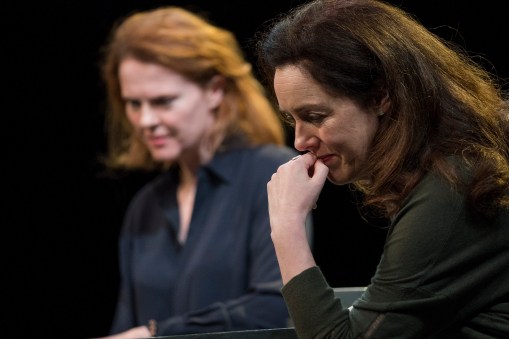
Review: Noises Off! by Davidson Community Players
By Perry Tannenbaum
![Noises-116[4]_edited-1](https://artonmysleeve.net/wp-content/uploads/2022/08/noises-1164_edited-1.jpg?w=604)
July 21, 2022, Davidson, NC – I’m not sure that a single American comedy has been produced as often in the Metrolina area in recent years as Noises Off, the wild door-slamming farce by Britisher Michael Frayn. What makes this particularly astounding is the monumental effort needed to mount this insanely high-energy, fast-paced work – and the time and effort it requires from audiences, stretching out to over two hours in length with two intermissions. There are folks in my family circle who groan at the prospect of one intermission. The sheer height, size, sturdiness, and swivel-ability of the scenic design – none of which can be compromised – make the comedy virtually impossible to stage at some venues.
Yet the adamantine laws of physics have not deterred some of our local companies from giving Noises Off a go. The production at Central Piedmont’s Halton Theater in 2012, for example, was penance for an ill-advised effort at panoramic Pease Auditorium in 1994. Likewise, it would have been foolhardy for Davidson Community Players to even attempt this two-story Everest of a comedy back in 2010 – or now in their encore – if they had been confined to their customary HQ at Armour Street Theatre. Fortunately, DCP had the good sense on both occasions to indulge their ambitions in the summertime, when Duke Family Performance Hall is available to them on the Davidson College campus. A ramp takes you up to the balcony level of the Duke if you arrive at the front entrance of the five-floor Knobloch Campus Center, which also houses the Alvarez Student Center. The fly loft of the theater extends to the full height of the building, so director Matt Webster can decree that the stage curtain be lowered halfway for a spectacular culminating technical gaffe.
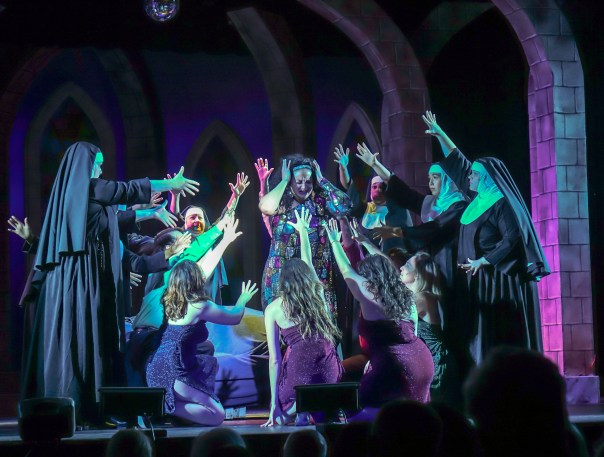
Of course, theatre gaffes are the coin of the realm as this comedy-within-a-comedy unfolds so delightfully badly, starting with a calamitous dress rehearsal of “Nothing On” that extends past midnight into the morning of the day when it’s scheduled to open. Gleeful Instagrams and Facebook posts were broadcast to the wide world web by elated audience members at the Duke who were able to take cellphone pix of real printed programs after a hiatus of more than two years. It might be deflating, then, to recall that in the old days, we received additional fake programs from “Nothing On” with side-splitting fake bios of Lloyd Dallas, Dotty Otley, and the gang. With a charming ad for sardines, the most important of props. That’s part of a dizzying confusion we experience as we simultaneously track what’s happening in the badly-performed “Nothing On” – in a calamitous rehearsal and two calamitous performances – and the whirl of intrigue and contretemps between these endearing incompetents and their despairing director.
How do we see the personal trials, attachments, and antagonisms of these actors while they rehearse and perform a play? This is the riddle that Frayn solves so brilliantly. Because dress rehearsal is so epically bad, there are numerous pauses when the actors, stagehands, and director can interact or gossip. Then after the first intermission, Frayn obliges everyone who stages Noises Off to revolve their mammoth two-story sets a full 180 degrees so we can witness the last moments of the run-up to a second performance of “Nothing On” two months later and the performance itself – from backstage, where our actors interact as “themselves.”

From the opening words of Act 1, when we could barely hear the venerable Jill Bloede as Dotty, it was obvious that opening night could turn into a harrowing misfire. Brandon Samples as Lloyd was usually far more audible to us, but that may have been because, in directing this dress rehearsal of “Nothing On,” Lloyd was sitting amongst us in the audience, mostly on our side of the hall. When Andrew Pippin entered from upstage as real estate agent Roger Tramplemain, and Tate Clemons followed as Vicki, the incredibly seducible girl he’s trying to seduce, my worst fears threatened to come true. Clemons was usually more audible than Pippin, but her Vicki was totally unintelligible as well. It would be hard to overstate how thankful I was, as five more performers made their fitfully audible appearances, that I had seen Noises Off at least six times before.
For newbies, welcome relief came during intermission, when I spotted empty seats and ruthlessly moved to the front row. What else happened during the break to salvage the evening cannot be reported conclusively. Surely, with a judicious visit backstage, stage director Webster would be a prime suspect in perpetrating the onset of fresh energy throughout Acts 2 and 3. Or maybe Samples, after playing Lloyd throughout Act 1, sounded the alarm backstage when he couldn’t hear his castmates during the poor director’s rambles around the hall. My wife Sue, loyal to her ticket stub and Row F, confirmed that audibility improved markedly back there for the rest of the evening.
Of course, the full benefits of increased volume don’t occur in Noises Off until Act 3. With so much of the wondrous Act 2 happening backstage, behind a monumentally delayed live performance on “Nothing On” that proceeds on the other side of the set, the principals we see are religiously hushed, adhering to actors’ etiquette. So most of the communication in Act 2 – whether amorous, angry, stealthy, jealous, urgent, frustrated, or diabolically mischievous – is delivered in earnest, energetic pantomime. You not only marvel at the synchronization between the torrid action backstage and the unseen staging of “Nothing On” which we can still hear droning and faintly exclaiming in the background, but in the precision of the hubbub in front of us as flowers, a whiskey bottle, a menacing fire axe and more keep moving in blurry rapidity across the stage, in and out of sight. Webster has all this mayhem malfunctioning like clockwork.
Most of what was missing in Act 1 arrived most emphatically in the final act, where we watch a performance of “Nothing On” some 10 weeks into its travels – discipline gone, tempers worn to a frazzle, animosities fully ripened, and the set itself needing repairs. Bloede was back on top of her game as the disillusioned and despairing Dotty, who can let all her grudges and inebriation run roughshod over her performance as Cockney housemaid Mrs. Clackett, since she is the producer bankrolling this stinkbomb.
Pippin and Clemons also showed marked improvement. All we needed from Pippin, it turns out, was a little more energy and clarity to sharpen the self-important dopiness of his Garry Lajeune and the starchy amorality of his Roger, now frazzled by too many jealousies to keep track of. Clemons is only marginally more intelligible than before as she continues her adventures with the slutty squeakiness of Vicki while attempting – probably attempting – a British accent. But we don’t need to really know what Vicki is saying anymore to appreciate the comedy of Brooke’s maddening insouciance, never varying from Vicki’s scripted lines and never thinking to improvise no matter how things have changed and disintegrated all around her.
Justin Thomas is absolutely disarming as the frail and squeamish Frederick Fellowes, the actor who portrays tax dodger Philip Brent, owner of the property that realtor Roger is seeking to rent. If there was ever even an attempt by Thomas of an English accent, I’ll confess that I missed it, and his dual role in “Nothing On” as the sheikh seeking to rent Brent’s hideaway was too brief for me to say how he handled it. We could be thankful that neither of his shticks, nosebleeds and dimwittedness, demanded an accent. Amanda Pippin doesn’t get a proportional share of the comedy as the cast gossip, Belinda Blair, the least frazzled and dysfunctional member of the troupe and their show. As Philip’s wife Flavia, Pippin does reliably abscond with various props and wardrobe, most notably Vicki’s dress.

This allows Vicki to bustle around the two-story set and its eight doors in her underwear through most of the staged action we see. This wantonness gave us the notion that Vicki would ultimately become the title character of the “Nothing On” we never see, while justifying the aging Lloyd Dallas’s enduring backstage lust and devotion toward Brooke Ashton. He’s supposed to be away somewhere in Act 2 rehearsing Richard II, but he returns to see his dear nymphet. Emerging from hiding, Lloyd is outraged and distracted by all the chaos of the production. Then he becomes the excruciating victim in one of the most comical climaxes we’ll ever see. Much of Samples’ pantomimed sufferings are caused by Lloyd’s traveling stage crew, Jack Bruce as the inept and overworked handyman, Tim Allgood, and Jenna Tyrell as Poppy, the competent and frowzily attractive stage manager who doesn’t realize she’s been dumped by Dallas.
This oddball trio of Allgood, Poppy, and Dallas unite surprisingly in the comedy climax of Act 3 when Fellowes performs his crowning feat of dimwittedness. Suffice it to say that Jonathan Ray as the aging alcoholic actor, Selsdon Mowbray, is supposed to make a surprise appearance in “Nothing On” as a septuagenarian burglar. But he’s too deaf to reliably catch his cue line – and too frequently soused to reliably be there, ready to break in. The hilarious catastrophe far exceeds even a doomsayer’s expectations. You might be surprised to learn that I auditioned for Selsdon way back in 1992, when Theatre Charlotte brought Noises Off to town. That’s too long ago for me to remember how I intended to play Selsdon, but I suspect that my performance would have more soused, more crotchety, and more devious than what you will behold at Duke Family Performance Hall. Maybe that’s why I found myself cherishing Ray’s mellower, more natural portrayal.


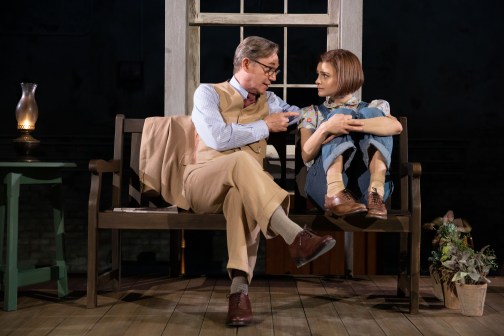
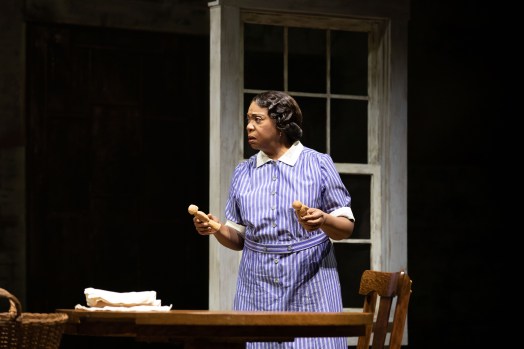 Like me, audiences are so used to seeing this story of grim understanding and growth through the eyes of a little girl, Finch’s tomboy daughter Scout. They will likely be shocked to discover that Sorkin is far more interested in the lessons Atticus learns – and the lessons we still haven’t learned as a society. In the wake of 2020 and the bitter fruit of #BlackLivesMatter, Sorkin’s Mockingbird 2.0 offered some fortified pushback from the Finches’ housemaid Calpurnia, scolding Atticus for his oft-expressed bromides that we should respect everyone since everyone has some good inside of them.









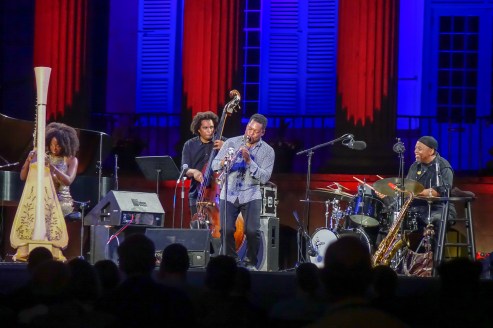
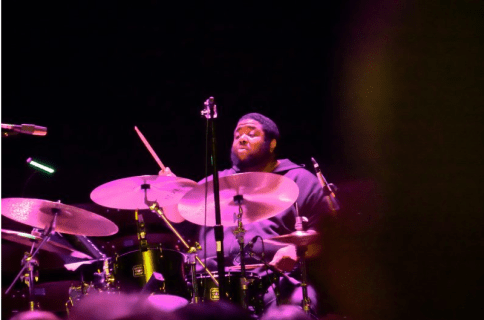


 Handel certainly packs plenty of into the brassy choral payload, less than five minutes long, that pounces upon us after the relatively quiet preamble that gurgles along for more than 25% of the composition. Bach might have dispatched a solo vocalist to narrate the prose of Zadok and Nathan anointing Solomon as King of Israel, saving the exclamations – “God save the King!” “Amen!” “Alleluia!” and “May the King live for ever!” – for the Choir. No such middle ground applied to this Handel masterwork, and Jarrett, the brass, and the Festival Choir all reveled in firing away at us in unrelenting fortissimo. Collectively, they were thrilling.
 Three of the four featured Ascension vocalists have been with Bach Akademie since the beginning, except for tenor Gene Stenger, the Evangelist, who signed up in 2019. The Evangelist role gave Stenger the lion’s share of the scriptural verses in this Oratorio’s libretto, stitched together from Luke, Mark, and Acts, with bass Edmund Milly, no less dignified, standing in for the Two Men in White Apparel who promise the Apostles that Jesus will return from Heaven “in like manner” as they have just seen him go. Besides that key passage, Milly drew a more poignant Recitative earlier in the narrative, “Ach, Jesu, ist dein Abschied schon so nah?” (Ah, Jesus, is Thy parting now so near?)

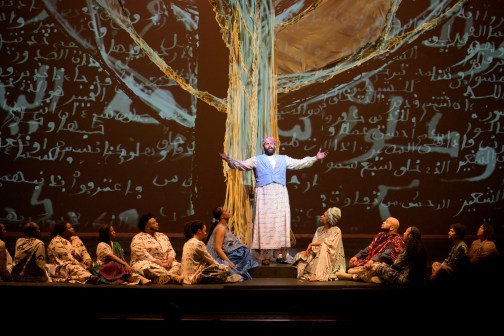
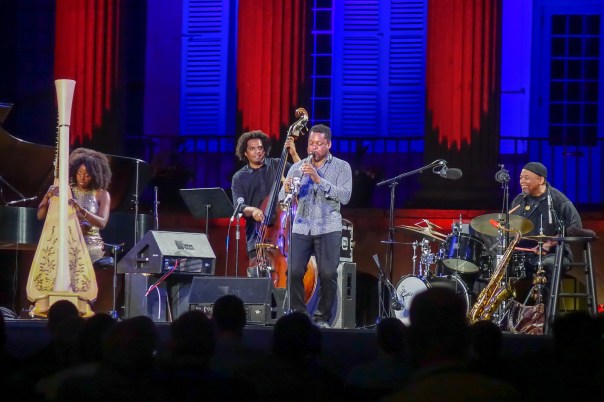




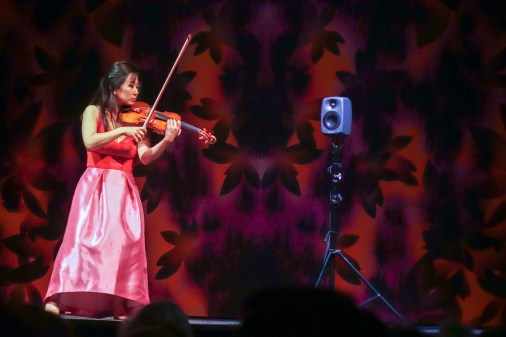


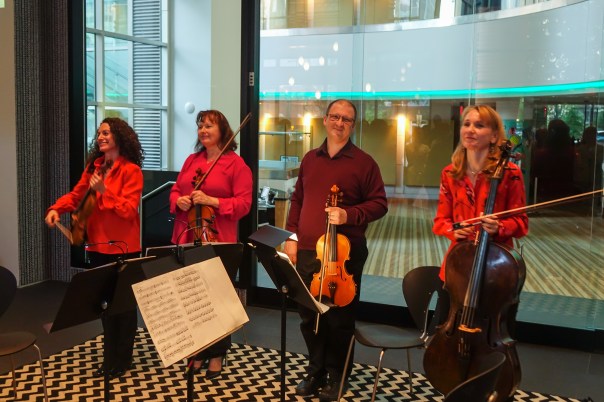

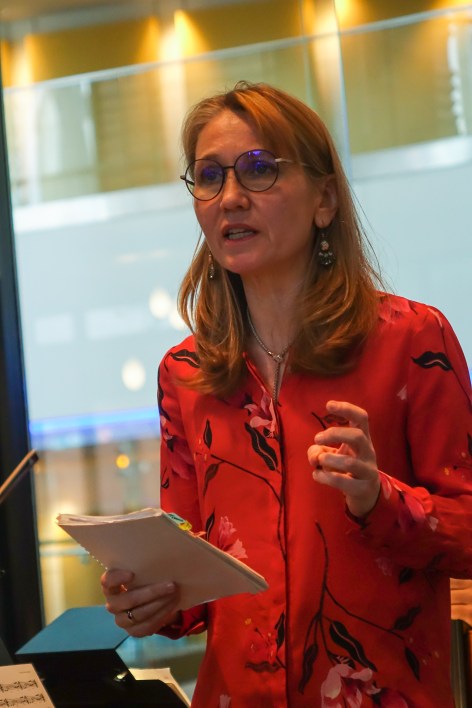 The Bechtler’s new executive director, Todd DeShields Smith, shared the emceeing with the Ensemble’s founder and director, cellist Tanja Bechtler. With Bechtler introducing the kaleidoscope of composers and music she had programmed after Smith had spoken to us about thematically connected artworks and sculpture, this format hearkened back to the original upstairs setup when the series started over a decade ago. Yet there was improvement here as well. Instead of projections while Smith spoke, three of the four artworks he discussed were in the room, flanking the musicians, including an interesting painting by Alexander Calder, which was stood up on its frame in a corner.
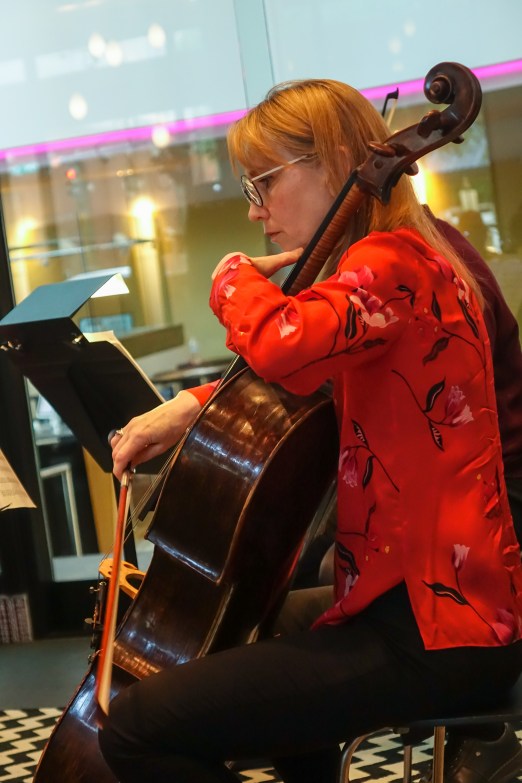 The pairing of these two movements was doubly atypical. We concluding with a slow tempo Largo sostenuto instead of a customary speed-up, and the Largo opened with Bechtler’s cello as the lead voice, once again usurping the first violin’s customary position. Legatt eventually came to the fore with a lovely cadenza after harmonizing deliciously with second violinist Tatiana Karpova. Bechtler was far from done, excelling in a cadenza of her own before taking the lead for a second time.
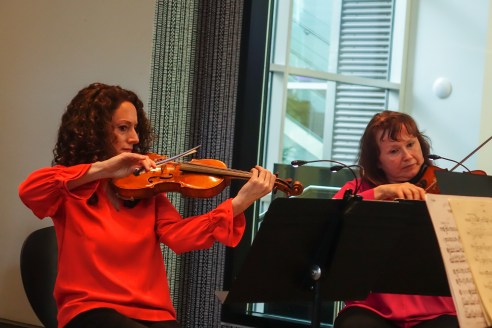 Bechtler’s intro did register with me when she spoke about how Prokofiev struggled with the commission to write his first string quartet. The outcome to me was a delightful hybrid, Legatt sounding jubilantly in the main theme like she was on a lark with Prokofiev’s Peter and the Wolf, while the accompaniment sounded very traditional, not adventurous at all. Harmonies between the two violinists were refreshingly audacious, however, and Karpova finally had a chance to show off her prowess when she took over the lead.