Tag Archives: Theatre Charlotte

“The Philadelphia Story” Bides Its Time Before Detonating

Review:  The Philadelphia Story

By Perry Tannenbaum

One of the wonderful things about Philip Barry’s The Philadelphia Story is that, yes, it really is about class distinctions and peculiarities, but the playwright remains ambivalent and tolerant of them all. Beneath their upper or lower crust exteriors, all of these Philadelphians – young and old – are recognizably human. You rarely see so many fully-fleshed characters onstage in the course of a single evening. I wouldn’t be terribly surprised to see a premier professional company repeatedly reviving this witty, effervescent comedy, but it’s absolutely astounding that Theatre Charlotte, our community theatre, has revived Philadelphia Story twice in the new millennium, now and back in 2000.

Both productions showed the pitfalls. The cast needs to be nine deep, alert to the amount of polish and roughness Barry expects of them, and aware of the energies and pacing required at each point of Barry’s intricate plot. The story revolves around “virgin goddess” socialite Tracy Lord – as you might expect, since Katharine Hepburn, the original Tra on Broadway and on celluloid, matched the 25% investment that the playwright plowed into the original production. Tracy is sensibly engaged to the cold and ambitious George Kittredge, impetuously divorced from the dapper C.K. Dexter Haven, and estranged from her father, whose indiscretions have brought the Lords unwanted publicity.

While Tracy is resolving these relationships, her brother is focused on suppressing a magazine exposé that will be published about their wayward father, dangling the prospect of exclusive access to the wedding as an enticing alternative for the publisher. The reporter and the photographer assigned to the Kittredge-Lord nuptials, Mike Conner and Liz Imbrie, bring another level of complications to the scene. She’s been secretly carrying a torch for him for years, but when spirits rise and champagne flows on the night before the wedding, Mike finds that he has fallen – hard – for Tracy, a prelude to their both enjoying an illicit, drunken midnight dip together in the Lords’ swimming pool.

While Barry is at work on how the wedding, the magazine story, and multiple alienated affections – past and present – will ultimately resolve, director Tonya Bludsworth and her cast must deal with all of the reactions and repercussions along the way. Making all of this bubbly complexity even harder for Bludsworth and Theatre Charlotte to achieve is the relative lack of enthusiasm for the project. Turnout for auditions was likely as tepid as audience turnout. Compared with opening night for Peter and the Starcatcher in September, there were conspicuously more empty seats at the back of the house – and a bit less confidence onstage.

Ten of the 14 cast members are new to Theatre Charlotte, including most of the key characters. We started off strong back in 2000 with a Tracy who had the look, the patrician manner, and sometimes even the sound of Hepburn, but that newcomer’s imperial highness never became sufficiently ruffled when the plot thickened. In Bella Belitto, we have another newcomer as Tracy, and on opening night, her serene highness was conspicuously lacking in the early going and – like others onstage – she was often underpowered and inaudible.

Without that serene aura and grace, the splintering of Tracy’s goddess élan isn’t as poignant as it should be in Belitto’s account of her re-education. Yet when she’s assailed by complications, catastrophes, and intensifying adoration, she faces it all very convincingly, her spirits and energies rising. Waking up on the climactic morning after, her decibel level also crescendos spontaneously. We feel that she is learning her lesson and actually benefiting from the indiscretions that brought on her fall – and that the lesson runs deep to her core. Her epiphany detonated effectively for me.

A lot of that depends on Nick de la Canal radiating a rakish upper-crust urbanity as Dexter with enough of that crust trimmed away to make room for tolerance and forgiveness – the two key qualities Tracy needs to acquire. De la Canal’s insouciance also contrasts nicely with the stuffiness that Will Millwood brings to George Kittredge. Barry doesn’t completely hide his disdain for George’s commercial outsider status, so Millwood makes a prudent choice in stressing his judgmental bent.

Dexter also comes off finer than Mike Conner, but by a significantly smaller margin. Here the nuanced class distinctions are no less telling. Christopher Long reminds us that Mike starts out fairly judgmental himself before Tracy bewitches him, but we indulge his pre-judgments more readily in the same spirit that we’re inclined to forgive his boyish, impulsive trespasses. Our best verdict on him vis-à-vis George is much like Barry’s: he’s more deserving, in spite of his depressed finances, of being called a gentleman.

What gives The Philadelphia Story its screwball slant is that everybody up onstage and down in the audience seems to know who the best fit for Tracy is – except for the goddess herself. This includes her mischievous younger sister, Dinah, who attempts some telephone matchmaking. Helena Dryer makes little sis pesky and likable in the right proportions. She’ll be an utter triumph once she makes herself consistently intelligible.

Tracy’s mom isn’t the most pivotal role here, though Margaret does point the way for her daughter in forgiving her husband’s infidelity. What makes Heather Place’s debut so auspicious as Margaret Lord is her clear bubbly delivery and her effortless projection of warmth and class, richly portending her reconciliation with the dashing, slightly over-the-hill Seth Lord. Victor Sayegh is mildly and earnestly supplicating toward Margaret and his disapproving daughter, as befits a Philadelphia patriarch, another cue for Tracy to accept people’s imperfections, including her own.

Sayegh and Place draw two of Chelsea Retalic’s most stylish costume designs in evoking high society elegance, but it’s an uphill battle to project prosperity amid Josh Webb’s drab and dour set design. Two Ionian columns fail to provide uplift, and there’s no longer a visible hint of the swimming pool in the wings. Portraying the eccentric Uncle Willie in a delightful debut, Dan Kirsch gets my nod as the plutocrat most at home in this down-market mansion, lovable for all his pomposity.

Fresh from his crossdressing exploits in Starcatcher, Johnny Hohenstein is mostly responsible, as Tracy’s scheming brother Sandy, for the PR intrigue that lurks beneath the romantic comedy. Good luck following – or caring about – all the Act 2 twists in that sector of the plot. For that reason, Anna Royal as Liz turns out to be more important for me. Ultimately, she’s modeling the patience, forbearance, and forgiveness toward Mike that Tra should have toward Dex. Royal gives Liz just enough edge to update her and elevate above the cliché she must have been in 1939 when THE PHILADELPHIA STORY first hit Broadway.

Here she isn’t just a working-class woman who knows her place, meekly deserving Tracy’s discards. Wielding her Contax camera, she’s Mike’s professional partner, biding her time for a natural upgrade.

Soot of Sodom Chases the Joads in “The Grapes of Wrath”

Review: The Grapes of Wrath @ Theatre Charlotte

By Perry Tannenbaum

If you’ve ever read John Steinbeck’s sprawling masterwork, The Grapes of Wrath, you know that it’s framed with a seething anger as a picture of America’s unfulfilled promises, the cruel exploitation of the poor, and the undiminished aspirations of the Joad family. These dispossessed and determined Oklahoma sharecroppers believe in the dream.

But the Okies are tested before they reach the Promised Land of California and once they’ve arrived. Like the Israelites in the Old Testament, they must cross burning desert. Clutching onto the printed handbills promising work and honest wages, they must resist the report of a broken, disillusioned man who found California to be nothing like the handbills’ hype. They must endure attacks from anti-labor thugs who fear the latent strength of worker groups.

Perhaps most difficult of all, they must strive to hold together despite forces of attrition from within – disagreements, defections, and death. Manna doesn’t shower down upon them from heaven to ease the journey.

We easily presume, with their consuming hope of a Promised Land, that the Joads’ journey is an exodus, a liberation from the landowners who have burdened them with sufferings. Another biblical parallel suggests itself on Queens Road, where Frank Galati’s stage adaptation of Steinbeck’s novel is making its local debut at Theatre Charlotte – a mere 37 years in the wilderness after winning the 1980 Tony Award for Best Play.

Since vile bankers and beancounters cannot loom as large on the stage as they do on the vast canvas of Steinbeck’s pages, another biblical parallel emerges clearly. Under Ron Law’s direction, with severely weathered scenery by Chris Timmons, and stark, pitiful costume designs by Chelsea Retalic – Okie clothing and faces equally sooty – I couldn’t help sensing echoes of the destruction of Sodom and Gomorrah in this depiction of Dust Bowl devastation.

One faint echo is the drugging of Grampa Joad when he resists leaving, a parallel to how Lot’s daughters bamboozled their dad. The loudest echo came from Ma Joad, proving that she’s the antithesis of Lot’s Wife. You’ll recall that when Lot’s family was commanded not to look back while God was raining fire and brimstone on the sinful cities, Lot’s wife disobeyed and paid a famous price.

As the Joads embark, one of Ma’s kinfolk asks if she is going to take one last look back. Her no in response, with the aid of modest embroidery, is so emphatic that we take it as a philosophy. Ma Joad looks forward and moves forward. She lives by doing what needs to be done.

It’s an outlook that she successfully hands down to her daughter, Rose of Sharon, in the poignantly perverse pieta that ends the epic story.

With a performance like Paula Baldwin’s as Ma, we readily grasp that Steinbeck wished us to see her as the steadying bedrock of the family. The jut of Baldwin’s jaw and the tightened sinews of her neck were unlike anything I’d seen from her in her numerous leading roles. She’s unrelentingly purposeful, sternly nurturing, with all the patience and endurance of the ground she stands on.

Standing firm isn’t all that simple on the raked stage that Timmons has built. His pared-down design must accommodate campfires, a riverbank, and a ramshackle jalopy able to accommodate the whole clan. The skin-and-bones truck is altogether worthy of the ridicule it draws. Inspiration taken from the Little Engine That Could? You decide.

Vying with Ma for the right to be called the backbone of the family is the second-eldest son, Tom Joad, a volatile straight-shooter who is coming home from prison after serving his time for murder. It is so telling – about Tom and his fellow Okies – that everyone seems disappointed that Tom didn’t break out of jail. Easy to rile when he or his family is threatened, Tom is a seeker of truth, curious to learn how the system works.

Max Greger subordinates Tom’s volatility to his heartland wholesomeness in a promising Charlotte debut, holding his own when he shares the spotlight with Baldwin or the wild-eyed Andrew Tarek, who shambles brilliantly about as Jim Casy, a former preacher who feels like he has lost the calling. Yet in the same way that Tom is branded as an outlaw after killing in self-defense, Casy is branded as a holy man despite his renunciation – with Steinbeck’s approval, we presume, since four gospels were written about a man with the same initials.

Amid a dust cloud of bleakness and hopelessness, these running gags slightly lift the gloom.

And though there are strong unionist sympathies in the framework of Steinbeck’s yarn, you will also find an all-American emphasis on teamwork, which Law’s cast underplays enough to keep us from smelling Hollywood. Chris Melton has an adolescent randiness as Al Joad that augurs trouble and a shotgun marriage, but he also has a way with cars, performing the marvel of getting the Joads’ jalopy going. Between bouts of guilt, discouragement, and drinking sprees, Victor Sayegh as Uncle John often struck me as the most fatherly in the clan with a generous spirit.

With a cast of 23 trafficking back and forth on the sloped stage, Law needed to shape a deep ensemble that bonded together while divvying up two hours and 15 minutes of running time. Nor could he rely on the top tier of players to deliver all the little crevasses of comedy and poignancy that lurk in the wide tapestry.

Annette Gill and Rick Taylor are largely responsible for getting us off to a rousing start as the ever-bickering oldsters, Granma and Grampa Joad, portraying them as loud and slightly doddering. We get an interesting take on Pa Joad from Ryan Dunn, who doesn’t seem broken by his family’s rude displacement but rather gladly retired from the responsibility of it all, a bit dazed by the turn of events.

Zach Radhuber goes light on the simplemindedness of Noah Joad, yielding a touching moment when he sets off on his own, and Cole Pedigo gives a nerdy edge to the befuddlement of Connie Rivers, Rose of Sharon’s husband. In some ways, Ailey Finn represents the best of the new generation as “Rosasharn,” but it’s suffering that strengthens and ennobles her, and the mysterious smile that ends the novel can’t be incorporated into a stage adaptation.

Law keeps the concept of incidental music from the Broadway version but discards the content, switching from a Tin Pin Alley songlist to a folksy Woody Guthrie flavor. “California, Here I Come” steps aside for “This Land Is Your Land.” Strumming an appropriate guitar, Tom Schrachta attacks the material a bit harshly with his robust voice, but I grew fond of that discord. Schrachta also drew the acting chore of donning a rumpled trench coat (a hint of the spy parallel in the biblical exodus story) and delivering the bad news about California to the Joads.

That same harshness remained in Schrachta’s voice. Yet now it was mixing grief, discouragement, futility, and rage – very much what Steinbeck felt about the ruinous actions of America’s bankers when he wrote The Grapes of Wrath.

Classics Collide!!

Preview:  The Grapes of Wrath and The Crucible

By Perry Tannenbaum

We can’t explain this curious phenomenon, but the Queen City’s performing arts companies seem to have outgrown their customary October fixations with vampires and spooks. Instead, this coming Halloween weekend, if not entirely witch-free, will be more haunted by a swarm of classics.

After gorging on the full score of Harry Potter and the Sorcerer’s Stone last weekend, Charlotte Symphony returns to Belk Theater on a strict diet of Mozart & Beethoven. As a spectacular Mary Poppins finishes its run on the east side of ImaginOn, Children’s Theatre of Charlotte slips Ezra Jack Keats’s The Snowy Day and Other Stories into the west.

Saturnalia Central will be located at Central Piedmont Community College, where CPCC Theatre presents The Crucible, Arthur Miller’s weaponizing of the Salem Witch Trials to take aim at the infamous anti-Communist witch-hunts led by Senator Joseph McCarthy in the 1950s. Counting the Robert Ward adaptation produced by Opera Carolina, we’ve had at least five opportunities to view this classic in the Metrolina area since 1998.

Another Tony Award winner has had to wait longer than that for its first run here. Frank Galati adapted and directed John Steinbeck’s epic Depression Era novel, The Grapes of Wrath, winning the 1990 Tony less than three months after its Broadway opening. To all those theatre lovers wondering over the past 27+ years when this classic would finally reach us, Theatre Charlotte is answering: now’s the time.

Steinbeck’s biblical exodus begins in the Dust Bowl during the Depression Era, focusing on one family of dispossessed Oklahoma farmers, the Joads, as they journey to California in search of jobs – and their lost dignity. What the Okies find at the end of their journey isn’t a Promised Land at all. Joining a severely overpopulated workforce, they’re plunged into a sun-kissed cesspool of migrant worker exploitation.

The sheer size of the story, in geography and humanity, is a prime reason why it took so long before the 1939 Pulitzer Prize winner was adapted for the stage – and for the additional delay before a local theatre company brought it here. Galati’s Broadway edition had a cast of 31 playing 45 roles, and that’s not counting the seven musicians on hand to play Mike Smith’s original incidental music.

Theatre Charlotte executive director Ron Law, taking over the creative reins for this production, is taking a simplifying approach, reducing his cast to a mere 23. Running the first local company to pick up the gauntlet on producing this behemoth, he can empathize with those that haven’t.

“The cast is large, which means a bigger costume budget,” Law points out. “If you are paying actors, that makes for a big salary line. There are also some very violent scenes in the play that really require a certified fight choreographer. The play calls for a river, campfires, a grave and a truck. Our space is very limited – virtually no wing space, no traps, no fly system. I truly favor minimalism in theatre, focusing on narrative and characters. But sometimes minimalism is not really all that simple.”

With so many roles, Charlotte’s community also had to worry about who would sign up. Decreasing the cast creates more multiple roles to keep the volunteers busy, and Law was pleased to be able to fill nearly half of his cast list with local theatre vets, including Vic Sayegh, Annette Gill and Paula Baldwin.

Gill and Baldwin have similar pedigrees at the Queens Road barn, playing Linda Loman in the two most recent revivals of Death of a Salesman in 1998 and 2009. Baldwin, the more recent Linda, has also aced auditions at a variety of local companies for prominent – and powerful – roles in Three Tall Women, August: Osage County, The Actress, and Who’s Afraid of Virginia Woolf?

Baldwin chafes against the notion that Ma Joad, her role in The Grapes, is a softie by comparison.

“She fulfills her role as the Mother who nurtures, cooks and cleans,” she admits, “but Pa comes to her for her opinion and follows it even when he, at first, doesn’t agree with her. She is truly the backbone of the family. When the men start to falter and give up, she continues to be positive and strong. Ma has several wonderful monologues, and one of my favorites is when Pa has all but given up and she tells him that life for a woman is ‘all one flow, like a stream, little eddies, little waterfalls, but the river, it goes right on.’”

Vilified by bankers and landowners for his workingman sympathies, scorned by literary critics who preferred the apolitical beauties of Hemingway, Faulkner, and Fitzgerald, the sun began to set on Steinbeck’s reputation and continued to decline after he won the Nobel Prize in 1962. The socialist label, not a problem in Europe, hampered him here.

So let’s look around and see the political reasons why the time may be ripe for The Grapes. An avowed socialist nearly captured the presidential nomination of one of our major parties, and the shadows of fascism and demagoguery hang over our land as heavily as they did when Steinbeck published his masterwork.

Baldwin and Law both cite the sowing of divisions and the widening chasm between the haves and have-nots as reasons why the Joads’ odyssey still resonates today.

“The question then seems to be the same as today,” says Baldwin. “What price are we willing to pay to affect change? Is America truly a land of opportunity for all?”

In the 2007 production of The Crucible at Theatre Charlotte, director Matt Cosper dipped into the screenplay that Miller had written for the 1996 film, freshening the version that had previously run on Queens Road in 1988. Tom Hollis, chairman of the CPCC Drama Department, has settled on an even more daring way to give the old classic a new look.

Directing at Pease Auditorium, Hollis is transposing the 1692 Salem Witch Trials to 1952, when the Miller script was released, while preserving the antique Puritan dialect that the playwright invented for his historical characters. From what we’re told about the impact Hollis hopes to achieve in juxtaposing Salem’s infamous trials and Sen. McCarthy’s infamous Senate hearings, we could possibly see a trace of Sen. Joe or his nemesis, Joseph Welch. Maybe some video cameos?

“The naming of names and the accuser being somehow sacrosanct has been an age-old issue in human affairs,” Hollis observes. “The hysteria of the Salem Witch Trials and the 50’s Communist hunts all echo with the proliferation of ‘fake news’ today. Did not Orwell predict that the shouting of a lie loud enough and long enough will make it true? The inability of many to separate belief from objective reality is more disturbing today than ever.”

After a couple of memorable performances in 1776 and Ragtime last season, Josh Logsdon gets an even meatier role as Miller’s martyr, John Proctor, in his first non-musical foray at CP. He is tempted and traduced by the adulterous Abigail Williams while further tortured and frustrated by his unforgiving wife, Elizabeth – tasked with finding his authentic self while living in a sexist world.

“The text does paint him as domineering and harsh at times when arguing with Elizabeth,” Logsdon says. “But I try to draw on more of his softness with both Abi and Elizabeth. His relationship with Elizabeth transitions from one of resentment and more pain to a reclaimed love and a final peace. He has a softness to Abigail as much as he denies it, but he eventually sees that she’s willing to destroy everything and everyone to have what she wants, and he’s definitely horrified by it.”

Not quite a vampire, but chillingly close – and certainly in season.

Best of Charlotte, 2017

Best of Charlotte, 2017

By Perry Tannenbaum

                                           Best ActorJeremy DeCarlos


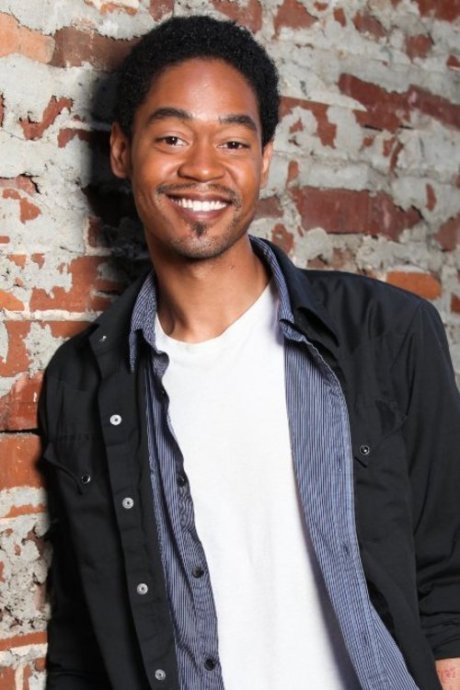
Among local performers, there are strong candidacies from Brian Logsdon (Pride and Prejudice and Ragtime), Jonavan Adams (Ma Rainey’s Black Bottom and The Christians), Scott A. Miller (Stupid F@#%ing Bird and The Submission), Jermaine Gamble (A Raisin in the Sun and Jitney) and Tyler Smith (Ragtime and Memphis). All of them sparkled on multiple occasions. But the runaway victory goes to Jeremy DeCarlos, who laps the field – in range and productivity – with four scintillating outings. Draped in a braided Hussar jacket, DeCarlos just finished channeling his inner Jimi Hendrix as the devilish St. Jimmy in American Idiot. That was the last of his Actor’s Theatre gems over the past year, including some cross-dressing preaching in Bootycandy, his insouciant devotion in Stupid F@#%ing Bird, and his amazing transformation – from Jerry Lewis nerd to Incredible Hulk-ish monster – in The Toxic Avenger.

Best Actress – Shar Marlin

The field of contenders is larger among the ladies, but the roles were more thinly distributed, eliminating productivity as a decisive criterion. But which other benchmark should override all others? If it’s flesh-crawling menace, Sarah Woldum gets the edge, bringing Sheridan LeFanu’s Carmilla to life in She Who Watches. Leslie Giles was the funniest as the blind librarian in The Toxic Avenger, Lucia Stetson the most revelatory as Mother in Ragtime, and Allison Snow Rhinehart was better than her Broadway counterpart as Mama in Memphis. And how can I forget the sizzling dominatrix arrogance of Nonye Obichere as Whatsername in American Idiot? I’m turning instead to Shar Marlin for her sheer power and imperial dominance in Ma Rainey’s Black Bottom, a dramatic stunner that also showed Shar’s blues singing chops. Dignity in the face of exploitation and discrimination. Diva!

Best Comedy – Women Playing Hamlet


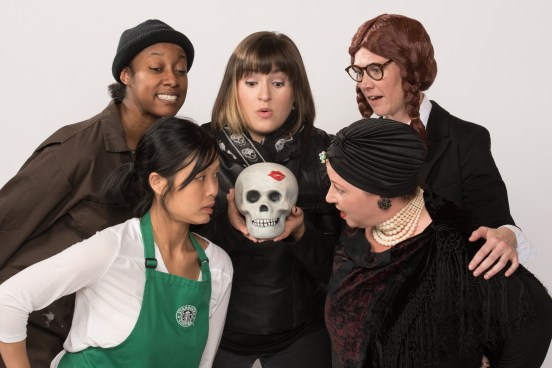
Theatre Charlotte’s You Can’t Take It With You and the Citizens of the Universe farewell, The Hitchhiker’s Guide to the Galaxy, were arguably the zaniest productions of the 2016-17, while the Chekhov knockoff from Actor’s Theatre, Stupid F@#%ing Bird, was surely the most poignant. And what about OnQ Productions’ A Brown Tale from James T. Alfred, maybe the funniest one-man show I’ve ever seen? All were worthy candidates, but I’m going to let Chickspeare split this prize with Donna Scott Productions for their joint production of Women Playing Hamlet. Glynnis O’Donoghue starred as the soap queen saddled with the lead role in the Mona Lisa of tragedies, and the galaxy of comediennes – all in multiple roles – offering her questionable advice included Tania Kelly, Andrea King, Vivian T Howell, and Sheila Snow Proctor.

Best Musical – Ragtime

Ragtime Promo Photos

Folks who confine their diet of musicals in Charlotte to touring productions at the PAC are missing out bigtime on the locally-produced blockbusters playing out at smaller venues around town. Actor’s Theatre scrambled to produce a marvelous Toxic Avenger at a storefront church because this city doesn’t have the vision to see the arts flourish on Freedom Drive without a needless morass of red tape. Still in exile, they just brought the noise of American Idiot to Queens University for a face-melting month. After reminding us how finely they can produce A Year With Frog and Toad, Children’s Theatre astonished with the world premiere of The Best Christmas Pageant Ever: The Musical. With more than one Broadway-level performance, Theatre showed us their mettle with Memphis, and CPCC re-emphasized that their musical excellence isn’t confined to summer anymore. Maybe it was sheer luck, but CP’s wintertime production of Ragtime was the most timely of the year, underscoring the sad fact that institutional racism, police brutality, and prejudice against immigrants aren’t quaint relics of the Jazz Age. As the martyred Coalhouse Walker, Tyler Smith’s impassioned “We are all Coalhouse!” reverberated through a city in turmoil.

Best Drama – Jitney

Early last season, PaperHouse Theatre proved that The Frock Shop on Central Avenue was the perfect site for a creepshow with a dazzling She Who Watches, and early this season, a legend made a comeback when Steve Umberger and his Playworks Group brought a sterling production of The Christians to Booth Playhouse. In between, as Charlotte was fully wakening to how badly we have neglected and mistreated our underclass, theatergoers may have finally been zonked by the realization that our city is exceptionally rife with African American acting and directing talent. Kim Parati made an auspicious directorial debut at Theatre Charlotte with a freshened-up Raisin in the Sun, but this was a vintage year for August Wilson – in two dramas directed by Corlis Hayes, Ma Rainey’s Black Bottom at CPCC and Brand New Sheriff’s Jitney at Spirit Square. Hayes brought out the best in John W. Price and Jermaine Gamble as the father-son antagonists in Jitney, with Gerard Hazelton adding a mix of comedy and poignancy as the gypsy cab company’s resident lush. Move over OnQ Productions, there really is a brand new black company in town – our second! – producing professional-grade work.

Best Night @ Symphony – Mahler’s “Resurrection”

While a well-played Beethoven symphony, a Rossini overture, a Strauss tone poem, or a Mozart concerto might be the secret sauce to get newcomers to become Charlotte Symphony subscribers, longtime concertgoers like me wish to dismount the warhorses and hear something off the beaten trail. There’s plenty out there that will please both camps: big, unfamiliar orchestral works that will instantly grab you by the lapels even if Symphony hasn’t reprised them within the last decade. Armed with an audacious orchestra and choir, plus two soloists who have sung with Opera Carolina, Davidson College showed the way with a rousing performance of Ralph Vaughan Williams’ A Sea Symphony, set to poetry by Walt Whitman. That’s the sort of daring we hope for from Charlotte Symphony’s British maestro, Christopher Warren-Green. We did get a British Isles-themed evening when pieces by Edward Elgar and Peter Maxwell Davies, spiced up with a bagpiper, were served with Mendelssohn’s “Scottish.” Utilizing the Symphony Chorus and distinguished guest vocalists, Warren-Green turned up the power with a pair of Bruckner chorales last November and Mendelssohn’s Elijah last March. If you wanted to sample the full capabilities of Symphony, their chorus, and the guest vocalists Warren-Green can summon to Belk Theater, you had to hear them introducing the wonders of Mahler’s “Resurrection” Symphony No. 2 to an astounded audience.

Best Night @ the Opera – The Girl of the West

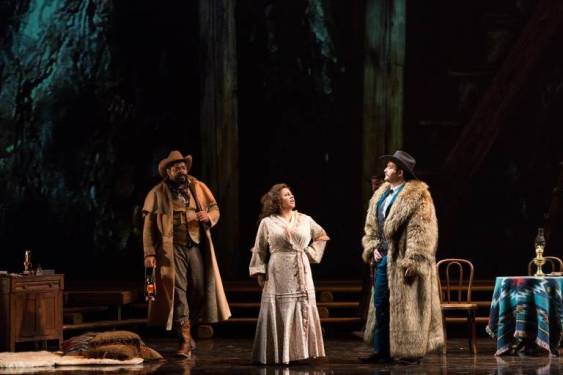
Under maestro James Meena, Opera Carolina does the oldies better than ever, as their uproarious Barber of Seville and their vivacious, ultimately anguished La Traviata amply proved. There was even some audacity in the 2016-17 programming as OpCar partnered with Warehouse Performing Arts Center and the D9 Brewing Company to produce an evening of three short operas – including the world premiere of Scott Joiner’s “Connection Lost (The Tinder Opera)” – at the brewery in Cornelius. Yes, a world premiere on Treynorth Drive! But most exciting was the Charlotte premiere of Puccini’s The Girl of the West, as Meena collaborated with six other international companies, including New York City Opera and Teatro del Giglio in Lucca, Puccini’s hometown. Singing was exemplary, persuading me that this second-tier Puccini opera was actually a first-rate work, and staging was anything but stodgy or conservative: much of the scenery was animated and bold, with authentic relics evoking the Wild West supplied by our own dearly beloved Wells Fargo. An appreciable, if infinitesimal, atonement for all the bank’s Wild West chicanery.