At a time when marquee classical artists of international stature are sidelined, unable to draw the fees and crowds they normally command, it’s been rather gratifying to watch the professionals in our own communities, while similarly sidelined, step forward and show their mettle in more intimate virtual settings. With the Durham-based Mallarmé Chamber Players, founded in 1984 but newly taking to streaming their concerts, it’s nothing new for musicians from local orchestras to stand forth and shine, but with our big orchestras and concert halls silenced, it may be new for some of our music lovers to take notice. Though Mallarmé may be new to the virtual concert game, their choice of Bösendorfer Hall at Ruggero Piano in Raleigh shows they’re savvy, for the acoustics proved to be of studio quality in the latest episode of their Ode to Joy series. An all-Beethoven concert is an inevitable part of such a series, particularly when we continue to celebrate Maestro Ludwig’s 250th birthday, pandemic or no.
Wearing matching black masks, aglitter with reflective beads, violinist Jacqueline Saed Wolborsky and pianist Danielle DeSwert Hahn performed a nice variety of seldom-heard pieces representing Beethoven’s early, middle, and late periods. Wolborsky is principal second violin of the North Carolina Symphony, and Hahn, a former principal pianist of the Baltimore Opera Company, currently heads the music programs at the National Gallery of Art in DC. Both players are prominent in the Living Art Collective Ensemble (LACE), which Wolborsky co-founded, so I expected to find an excellent rapport between the two.
The concert began with the Rondo for Violin and Piano in G, likely written during one of Beethoven’s early sojourns in Vienna around 1794. Hahn led into the piece at a brisk and lively pace, reveling in the ebullience of the piece and clearly at ease at the Bösendorfer as she sketched the recurring theme. That disadvantaged Wolborsky as the violinist floated in above Hahn’s playing, for she was not as well miked as the pianist (if miked at all), and she tended to mistake simple passages for insignificant ones, disinclined to seize the lead or to sustain it. I was fond of the pace that Hahn had chosen, more akin to the leisurely ramble of Wilhelm Kempff with Yehudi Menuhin than the feverish gallop of James Ehnes with Andrew Armstrong, and I liked how she guided us back and forth from the playful main theme to the alternate themes, engaging detours into graver depths or fantasy mists.
What lay before us was a fascinating pairing of final Beethoven statements, beginning with his final composition for solo piano and concluding the evening with his last violin sonata. The six Bagatelles for Piano were published in 1824 and challenge the musician to navigate a kaleidoscope of different colors and moods, with no lack of hairpin turns along the way. Of the many versions you can sample on Spotify, I prefer the Paul Lewis and Alfred Brendel versions to those by Sviatoslav Richter and Piotr Anderszewski. Glenn Gould is also a contender, but only if we ignore his perversely slow account of the middle Presto. Hahn seemed less confident in this suite, either because the spotlight fell solely on her or because of the treacherous terrain. The opening Andante con moto in G Major could have used sharper dynamic contrasts, yet the Allegro, still in G, was markedly improved in its sculpting and built to high drama. Hahn captured the lyricism at the start of the Andante in E-flat and the poignancy of its ending. She did not deny the Presto in B Major of its speed, and when the music possessed her, she found the flow. Though the triple meter rhythm of the Quasi allegretto in G slipped from her grasp, Hahn excitingly captured the flow and the argument of the concluding Presto in E-flat, delivering her most sensitive playing in the extended Andante amabile a con moto section that dominates the piece.
Written in 1812, at the very end of Beethoven’s middle period, the Sonata in G for Piano and Violin doesn’t get nearly as much attention, in concert halls or recording studios, as the Violin Sonata No. 9 that preceded it, the famed “Kreutzer Sonata” celebrated by Janacek and immortalized by Tolstoy. My favorite recordings of Violin Sonata No. 10 differ in their balance, Vladimir Ashkenazy and Itzhak Perlman achieving exquisite equilibrium while Lev Oborin allows the scales to tip slightly toward violinist David Oistrakh. So it was a bit startling at first to hear Wolborsky yielding dominance to Hahn in the opening two movements of the piece. The charm of the two musicians playing in unison through the most exquisite passages of the opening Allegro moderato disappeared with hardly a trace, and in the ensuing Adagio espressivo, Hahn’s echoes upstaged Wolborsky’s statements with their soulfulness.
Fortunately, Wolborsky rose to the occasion for the final two movement of the sonata, some of the most rousing music of the evening. There was plenty of spirit from the violinist pouncing on the penultimate Scherzo, which seemed to buoy Hahn to greater flights of bravura, and – with a page-turner appearing out of nowhere to help Hahn keep up the pace – the pianist had a wonderful lilt in introducing the melodies of the concluding Poco allegretto, while Wolborsky seemed equally transported. The headlong transition to allegro was the most thrilling moment of the concert, inevitably followed by a diversionary Beethoven cool-down. Hahn handled her cadenzas beautifully, and Wolborsky produced her finest sounds in her soulful responses. We seemed headed to the heated finishing strokes when Beethoven applied the brakes at what seemed to be the last note. Jollity triumphed at the end as both Hahn and Wolborsky relished regrouping and romping to the finish line.
The QC’s Arts Groups Face Up to Adversity and Diversity
By Perry Tannenbaum
Performing arts in Charlotte have been hit hard, halted, and placed on hold by a COVID-19 invasion that’s still going strong. Chip Decker, longtime artistic director at Actor’s Theatre of Charlotte, has taken this sort of punch before. Twice in the past five years, he has seen new venues for his company swept out from under his feet.
And now this.
“Seeing the thing you have sacrificed so much for be on the brink of disappearing, despite all of your best efforts, really quite sucks,” Decker observes. “Our business is dependent on lots of people gathering in small spaces. Not the best operating model during a pandemic.”
Nor is gathering lots of people in big spaces. Charlotte Ballet’s Sleeping Beauty at Knight Theater and a three-day Women in Jazz fest at the Stage Door were among the first events to be cancelled in March. Charlotte Symphony’s concert at Belk Theater and the Jewish Playwriting Contest at Shalom Park quickly followed.
Audiences have never seen the sets for Theatre Charlotte’s Cat on a Hot Tin Roof or Children’s Theatre’s Dragons Love Tacos. They were deserted onstage at their Queens Road and ImaginOn locations. CPCC Summer Theatre never got off its feet this year, and when we checked in with Blumenthal Performing Arts last month, president Tom Gabbard told us that over 300 events had already been cancelled.
Even the teeny Warehouse Performing Arts Center up in Cornelius has seen its storefront operation come to a halt.
“A good portion of our mission and aesthetic was bound up in the intimacy of the venue, the ability for small audiences to engage very closely with the dramatic world immediately before them,” says WPAC prez Marla Brown. “We can’t do that. Social distancing at WPAC would mean one audience member watching a monologue.”
Unlike Brown, who suspended efforts to stage live performances, Decker has raged against the dying of the spotlights. Actor’s Theatre lost three productions from its 31st season and now expects to lose all of Season 32. They’ve had to postpone their nuVoices new play festival and the follow-up to last summer’s Midsummer Nights @ Queens, presumably a Shakespearean comedy.
An outdoor revival of Hedwig and the Angry Inch fell through, compounding Decker’s woes, along with outdoor events planned at Freedom Park and a nearby Dilworth vacant lot at the intersection of Scott Avenue and East Boulevard. Charlotte Symphony was no less elaborate in its planning, seeing a three-week festival of concerts scheduled this month at Queens University, Knight Theater, Belk Theater, and Triple C Brewing Company dribble down the drain.
“It takes months of planning to get a show up, and one 30-second COVID announcement to derail it,” says Decker, “and to the layperson, that can come off as nothing has been done.”
Without any income from tickets and subscriptions to nourish them, hibernation is a more viable strategy at WPAC.
“The ironic ‘good news’ is that no artists made their living at WPAC, so the company is not seriously damaged economically,” Brown reports. “We have always been poor, relying on MacGyver Theatre tactics and the wonderful talent pool of Metrolina to make solid shows on a dime. We will be back.”
One size does not fit all when it comes to financial impact. The image of poor ragtag artists doesn’t fit Blumenthal Performing Arts operations, nor do Charlotte Symphony, Opera Carolina, Theatre Charlotte, Children’s Theatre, Charlotte Ballet, or Actor’s Theatre fit the same WPAC storefront template.
With the onset of COVID-19, Children’s Theatre of Charlotte pivoted and presented four OnStage productions in a virtual format
All of these companies have salaried employees. All applied – and received – PPP funding from the Small Business Administration, totaling upwards of $3 million.
“We received a PPP loan from SBA which covered staff salaries through June,” says Ron Law, who was slated to retire on June 30, but has signed on for another season as Theatre Charlotte’s executive director at the request of the board. “We have used up our cash reserves, but we have been able to generate revenue from an online web-a-thon and other asks. Many of those holding tickets for the two canceled main stage productions made their ticket purchases a donation to TC.”
Under COVID conditions, Theatre Charlotte has been able to achieve the improbable. Weather permitting, they’ve presented Grand Nights for Singing: The Parking Lot Performances on Friday Nights. Their audiences, capped at 25, are socially distanced – and so are their singers.
You bring your own snacks, beverages, and chairs – no reservations – and the suggested donation is $10. Each of the two vocalists gets his or her own mic, and there are no duets.
So far, thanks to lucrative TV contracts, professional sports leagues have returned with their superstar athletes to empty stadiums and coliseums. Unfortunately, that business model hasn’t worked for Blumenthal Performing Arts’ big three venues – Belk, Ovens, and the Knight. We can expect them to be shut down until at least December.
In the meantime, performing arts around the globe have migrated online. Charlotte Ballet was among the first to adapt. Within two weeks of cancelling the March 13 premiere of their “fairy-tailored” Sleeping Beauty – at the last minute – Ballet had dipped into their digital vaults and streamed Dispersal, their first free digital event.
Nor was it merely a rehash of the choreographies presented at Innovative Works 2019, when Charlotte Ballet collaborated with the Mint Museum, the Studio Drift duo, and choreographer Christopher Stuart. Intercut with the Innovative performance videos was behind-the-scenes footage that transformed the evening into a documentary, reaching an audience of more than 13,000.
Enter Zoom for a brand-new collaboration. Charlotte Ballet artistic director Hope Muir couldn’t help noticing that the web was becoming supersaturated with dance.
“We took a step back to regroup and to explore other means of engagement,” Muir reveals, “and I worked with choreographer Helen Pickett to discuss our options and resulted in an opportunity for five of our dancers. Charlotte Ballet joins artists from Alvin Ailey American Dance Theatre and Dance Theater of Harlem for Part III of a trilogy Helen developed titled Home Studies, which is entirely choreographed and rehearsed via Zoom.” (Airing on September 3 on Charlotte Ballet’s Facebook page.)
No less audacious, Muir has sidelined Nutcracker, Ballet’s traditional Yuletide cash cow, for the 2020-21 season. Fingers crossed, she’s replacing the beloved Russian ballet at Belk Theater this December with another Tchaikovsky masterwork, the previously abandoned Sleeping Beauty: A Fairy-Tailored Classic.
The reawakened Sleeping Beauty is the first live event to be planted on the 2020-21 calendar, but Theatre Charlotte has hatched – or is it hedged? – some hybrids. After purchasing video equipment, the Queens Road barn can now pivot to streaming.
Twelve Angry Men, originally scheduled for October, has been ditched because Theatre Charlotte couldn’t obtain streaming rights. Instead, the company will showcase A.R. Gurney’s What I Did Last Summer for three nights in September and Tennessee Williams’ Suddenly, Last Summer for three dates in October. Both productions will feature socially distanced casts – performing on the same Cat on a Hot Tin Roof set that has been waiting for action on Theatre Charlotte’s stage since March.
Theatre Charlotte’s set for “Cat on a Hot Tin Roof,” unseen back in March, will be resurrected for two online productions this fall
These shows will be ticketed, streamed behind a paywall. Law hopes that audiences will be able to attend the traditional holiday production of A Christmas Carol on Queens Road. But he isn’t taking chances. He had Chris Timmons shorten his own adaptation to 90 minutes so that it can be performed without intermission, utilizing a small cast and a narrator.
“If we can perform it live in TC by that time, we will,” Law declares. “We will also put it on video and stream it for those who don’t feel safe coming to the theatre or can’t be accommodated due to limited seating capacity.”
Three Bone Theatre has a four-person leadership team, the same number as Theatre Charlotte’s full-time staff – except that Three Bone executive director Becky Schultz serves on a volunteer basis. Because of their non-traditional staffing, the company wasn’t eligible to apply for PPP funding. Because they don’t control their own space, they can’t rehearse or perform as freely as Theatre Charlotte, Children’s Theatre, and Charlotte Ballet.
“When we do go back into production,” Schultz confides, “we are facing smaller house sizes and artists and patrons who are concerned about safety. We will need to prioritize shows with smaller casts and production costs, limiting the stories we can tell. It’s impossible to say when audiences will return to pre-COVID levels but we expect it will take a long time. We have lost the forward momentum that we’ve spent the last eight years developing, and dipping into our reserves delays our ability to finally add staff.”
It’s been over six months since Three Bone’s last production shut down. Revenue from their last two shows, Dada Woof Papa Hot scheduled for May and This Is Modern Art for July, was largely lost, representing 40 percent of their 2019-20 season. During the shutdown, Three Bone staffers have dealt with loss of jobs, taking on the rigors of homeschooling, experiencing the stresses of quarantine, and watching family members battle the virus.
Like other performing arts companies across Charlotte – we sent out questionnaires to 17 of them – Schultz and her Three Bone team are heeding the crosswinds of social unrest sweeping across the country. The Black Lives Matter reckoning is spilling onto our streets amid the pandemic, troubling consciences and challenging longstanding norms. Planning how to come back from COVID, arts leaders agree that it’s not just about making the smart business decisions necessary to cope with new realities. It’s about being better.
Schultz admits that Three Bone is re-evaluating 2020-21 programming.
“We believe that Black Lives Matter and Black theatre matters,” Schultz states, “and we have a responsibility to ensure that we are deliberately supporting that with our programming, both on stage and behind the scenes. We are taking this opportunity to further educate ourselves as individuals and as an organization. We are listening to BIPOC artists, engaging in difficult conversations and reflecting on how we can do more to be an anti-racist company.”
Black theatre has been part of Actor’s Theatre programming for every season since 2008-09, most recently with Lady Day at Emerson’s Bar & Grill – with Crowns on tap for their upcoming season – yet Decker is among the arts leaders of Charlotte unanimously proclaiming that they are rededicating themselves to BLM.
“ATC is working hard on recognizing and dismantling our own systemic racist culture,” Decker responds, “and we are in full support of the Black Lives Matter movement and having room at the table for BIPOC.”
Nor is Actor’s Theatre an exception. Inclusive programming is admirably pervasive across the spectrum of Charlotte’s performing arts scene. Opera Carolina was close to presenting I Dream for a second time – in a newly revised version – when the pandemic hit. Charlotte Ballet has a long history of showcasing African American dancers onstage and forging sturdy relationships with Black choreographers behind the scenes.
Up in Cornelius, WPAC was in mid-rehearsal of Lynn Nottage’s award-winning Sweat when COVID shut things down. Ron McClelland was directing a diverse cast that included Shar Marlin, Brian Daye, and Dominic Weaver. That show might pivot to a streaming format when the production team meets to decide.
Theatre Charlotte, with Ain’t Misbehavin’ in February 2019 and Dreamgirls missing-in-action back in May, certainly hasn’t been caught off-guard by pleas for Black programming. CPCC Theatre has presented multiple dramas by August Wilson, their Summer Theatre offered Beehive in 2019, and the college recently announced the onboarding of a new chief diversity officer.
Aside from the Johnson C. Smith theatre department and the Harvey B. Gantt Center for African-American Arts + Culture, there are two Black theatre companies based in Charlotte, On Q Performing Arts and Brand New Sheriff. We have hosted – and won – the National Poetry Slam, we have an annual jazz festival closely aligned with Jazz @ Lincoln Center, and we were the first American city to host Breakin’ Convention, with admirable outreach to urban youth.
Up in Winston-Salem, the National Black Theatre Festival has convened for a week in odd-numbered years since 1989, most recently in 2019 when they hosted more than 40 African American celebs, 30-odd Black theatre productions from across the nation, and the American Theatre Critics Association. So Charlotte and North Carolina have nothing to hang their heads about if you’re making comparisons about Black culture and programming.
Dig beneath Charlotte’s shiny surfaces and you do notice the structural, systemic problems that are drawing fire. Sixteen of the 17 questionnaires we sent out – to companies who had already found a spot on our 2020 calendars before COVID – were earmarked for Caucasians.
No arts organization in the Metrolina region presents a more diverse array of educational and onstage programming – or serves a more diverse audience – than Children’s Theatre of Charlotte. When they halted the hip-hop run of Grimmz Fairy Tales and shelved Dragons Love Tacos, staff at ImaginOn did not leave students enrolled in their 20-week School of Theatre Training program in the lurch.
Adroitly, they pivoted, so that two OnStage plays and two musicals were moved to virtual format. Summer camps began online, not skipping a beat, morphing to a hybrid program – your choice of online or in-person – when CDC, state, and federal guidelines could be met. Collaborating with 37 children’s theatres across the country, Children’s posted a new adaptation of A Kids Book About Racism as a virtual performance early this month, and they’re continuing work on their commission of Tropical Secrets: Holocaust Refugees in Cuba as part of The Kindness Project.
Yet executive director Adam Burke is among the good guys who are still doing some soul-searching.
“This is an incredibly important moment in the world, but also here in Charlotte, both socially and culturally,” Burke asserts. “Black Lives Matter is at the center of this moment. It is our responsibility to be checking to ensure that we are doing this in a way that is equitable and inclusive. What I, and Children’s Theatre of Charlotte, can do is work to acknowledge and eliminate unconscious bias through active education as well as examination of current practices and policies, and that is what we are doing.”
Systemically, the most obvious places to be on the lookout for change is on the roster of performing arts vacancies around town. Burke reports that his director of advancement position has been vacant since November and that managing director Linda Reynolds is retiring at the end of this month. Law isn’t the only leader who needs to be replaced once he’s allowed to retire – CP’s Tom Hollis ended his long tenure as department chair on August 1.
Our performing arts companies can address adversity and diversity at the same time, but we can also help with our interest, encouragement, and support. We can also look at ourselves and check our citizenship.
Decker probably says it best: “Tell your crazy uncle to put on his damn mask!”
Located on the west side of town, The Playroom bills itself as Charlotte’s oldest music production facility, offering rehearsal space and recording/mixing services. Lately, Playroom has changed its tune, becoming the site for the newest Jazz at the Bechtler webcast as the Ziad Jazz Quartet paid tribute to the music of Jimmy Heath, the composer and saxophonist who passed away back in January at the age of 93. As social distancing and severely restricted public gatherings become pandemic norms, the Bechtler-Playroom partnership makes beautiful sense from a musical standpoint. Technically, the museum can expect the studio to deliver optimum sound from expertly deployed state-of-the-art equipment, and if Ziad Rabie and his jazz quartet are to perform concerts without the vibe of a live audience, it would be hard to imagine a more comfortable place for them to play than the studio of their choice.
The risky element of this business had to be the video, for livestreams are not on Playroom’s pricing schedule. Any misgivings about this end of the Bechtler-Playroom collaboration were quickly dispelled when the program opened with an adroitly edited montage of Charlotte night scenes, including the city’s light rail and its iconic “Firebird” sculpture in front of the museum. Music from the quartet was already playing under the movie cuts, and aside from a voiceover “5-4-3-2” countdown, the Ziad Quartet’s set began without any formalities – or an emcee until Rabie himself spoke after the third selection.
Rabie gave his downbeat for the first Heath original of the evening, “Togetherness,” behind a second retro test pattern, but our first glimpse of The Playroom was not at all old-timey. Pinpoint lightbulbs studded a black backdrop, dispelling any worries of a rehearsal room ambiance. Lighting was otherwise ample, giving a nightclub feel to a venue that presumably offers limited seating. All four cameras came into play with nifty screen wipes as we transitioned from one view to another and pianist Noël Freidline soloed between two Ziad improvisations. An unobtrusive “Live from The Playroom” logo took up permanent residence at the upper righthand corner of our screens, no matter which camera view we saw. Occasionally, promo messages for donations and the Bechtler’s Facebook and Twitter hangouts swept across the lower lefthand corner. The cosmopolitan polish of the introductory montage was definitely sustained.
Freidline, drummer Rick Dior, and bassist Ron Brendle all wore masks – and all were admirably socially-distanced behind Rabie in a diamond-shaped configuration as Rabie blew on his tenor sax. Sitting upstage behind a plexiglass enclosure and wearing headphones as he wielded his drumsticks, Dior was the most conspicuous reminder that we were in a studio, but his bandmates were also wearing earbuds of some kind. Rabie would turn around between tunes as Dior launched “Gemini” and then “C.T.A.” in the opening cluster of Heath compositions, so they played with hardly a pause.
“Gemini” was most famously covered by Cannonball Adderley, a slower, bluesier title than “Togetherness” that settled comfortably into a waltzing 3/4 groove. Freidline had the first solo after Rabie played the melody, and then the leader returned with a rougher sax sound than we had heard earlier, not at all shy about revealing that he had listened to more John Coltrane and Sonny Rollins than to Heath in forming his style. Brendle soloed tastefully afterwards, though I wished his bass were potted up more at the soundboard, before Ziad then took the outchorus.
Another oldie, recorded by both Miles Davis and Lee Morgan when they vied for trumpet supremacy back in the ‘50s, “C.T.A.” returned us to uptempo. Rabie was already in bebop mode when he introduced the melody, bouncing when he laid out the melody, and he didn’t let go until he had wailed an extended improvisatory rant. Freidline took over authoritatively at the keyboard, swinging hard and comping aggressively when he handed the reins over to Brendle. Dior excelled in his first spotlight of the evening, trading four-bar thrusts with both Freidline and Ziad before the leader circled back to the theme.
Featuring all the members of the quartet, “C.T.A.” was the sort of arrangement that scales a summit that concerts should close with. So it was the right moment for Rabie to pause and speak to us, introducing his band and speaking briefly about Heath, his music, and his career. It was also the right moment to change the mood. Musically, Radie did the job beautifully with Heath’s “The Voice of the Saxophone” after an impressionistic and unaccompanied intro from Freidline. If you’ve heard Coltrane’s Ballads album, you can imagine the aching, romantic region that Rabie steered us toward after the full stop that preceded his solo. It was only here that it became apparent that we might be watching The Playroom’s maiden voyage into video. Lights didn’t dim for Rabie’s most lyrical moments of the evening, nor did we zoom closer to either of the soloists in “The Voice of the Saxophone,” laying bare the fact that both the lights and cameras were unmanned.
While the tech crew for this production didn’t sustain the nightclub vibe here, they were tasteful enough to refrain from marring the seriousness of Ziad’s balladeering with any promotional wipes on the video. Rabie also had a sure sense of drama, following his tenderest selection with his wildest so far. The percussive two-note phrase that is so salient in the melody of “The Thumper” probably gave this Heath piece its name – and it definitely stamps its hard-bop flavor. Ziad embraced its bounce from the beginning, with wilder, higher and screechier playing on tenor than ever, doubling back to the melody before handing soloing chores over to Freidline, who sprinkled broad hints of Charlie Parker and Gershwin into his launch, almost tipping his chair over with his gusto. Brendle also seemed to be keyed-up by this tune’s exuberance in his brief spot, his most impressive playing so far.
During an interval when Bechtler’s director of programming and public engagement, Daniel Ferrulli, punctuated his descriptions of the museum’s upcoming programming with pleas for financial support (rather than the other way around), one of the camera positions was altered, moving closer to Freidline and blocking off the leader from his rhythm section. “A Sound for Sore Ears” had the most irregular pacing of the night as Rabie unveiled the melody, Dior’s emphasis on his cymbals adding a Latin tinge. Freidline had no difficulty at all navigating the jagged terrain as he initiated the soloing, wailing and banging away as he riffed. Rabie answered with a majestic rant of his own before handing things over to Dior for his most extended soloing yet, and the saxophonist added extra trimmings when he returned with his outchorus.
The Ziad Quartet arrangement of “Gingerbread Boy,” by far Heath’s most recorded composition, emphasized its funkiness, effectively splitting the melody between Rabie and Freidline, who only needed to alter his introductory vamp slightly to make it mesh with the sax portion. First recorded in 1961 on Milt Jackson’s Statements album, where Heath played tenor sax in the vibraphonist’s quintet (with pianist Tommy Flanagan anchoring the rhythm section), “Gingerbread Boy” has attracted a sufficient number of proponents, from Miles Davis and Dexter Gordon back in day to more recent covers by Kendrick Scott and Kurt Elling, for it to be considered a jazz standard. Both Rabie and Freidline seemed to be having fun with their own slant on the tune, the saxophonist squonking merrily in his glee and the pianist shuffling through a variety of jazz styles in their solos. Rabie returned just briefly, supplying a launching pad for Dior’s firecracker rampage on the drums. Completing the admirable symmetry of this arrangement, the rhythm section led by Freidline chugged it out.
In effect, “Gingerbread” was the closer. Although the combo moved onto “Far Away Lands,” a tune that has been covered by saxophonist Hank Mobley and trumpeter Art Farmer, the webcast cut off abruptly about 30 seconds past the one-hour mark, just as Freidline was beginning to work up a lather in his solo. Rabie had given us a fine account before relinquishing the reins, leaning into the speedy piece with Coltrane-like intensity in his valedictory solo. No doubt when the Bechtler Museum and The Playroom look back on their first collaboration they will be very pleased, but they will also doubtless be thinking of adding a webcast sign-off that’s as slick and urbane as their intro.
Dedicated to the memory of Joe Restaino, who succumbed to complications from bone cancer in 2010 at the age of 20, the Joedance Film Festival has a clear vision of whom it represents and whom it benefits. The annual cinema showcase was established later in 2010 and held on the first weekend in August in Charlotte’s Fourth Ward, where Restaino resided. Most recently, the festival was staged at Charlotte Ballet’s Center for Dance before the onset of COVID-19 precluded a public event this year. Proceeds from the festival are funneled toward research into rare pediatric cancer and the Leon Levine Children’s Hospital managed by Atrium Health. New short and feature-length films are both eligible for inclusion, provided that the filmmaker can demonstrate a connection to North Carolina, South Carolina, Georgia or Tennessee.
There’s something to be said for the intimacy of a virtual Joedance as festival founder Diane Restaino welcomes us every night of the festival, filling a good portion of our computer monitors or TV screens. Many of us under lockdown have no doubt accustomed ourselves to streaming movies, miniseries, theatre, opera, and classical music into our living rooms and dens via Chromecast and Fire TV, but in this instance, unlike Charlotte Symphony’s recent livestreams on Facebook and YouTube, our setup wouldn’t work with our Apple computers. We would need to purchase Apple TV or Roku to stream on our smart TV’s. Obviously, the streaming process is complicated when you establish a paywall via Eventive.
Fortunately, my computer monitor is fairly large, with HD, and audio can be channeled to my Yamaha receiver via Bluetooth, so I can be as discriminating about the sound of Joedance films as I am about the photography. There were a couple of kinks in the ticketing process, but neither of these degraded the quality of the product. In hindsight, Restaino likely wishes she had recorded different intros for each night of Joedance, but she did a fairly slick job for a beginner in reading her remarks. A segment of testimonials from Levine and Atrium personnel ran the first night and again on the second. When Restaino turned the proceedings over to festival director Chip White, solemnity vanished. Relaxed and spontaneous, White’s touch of folksiness isn’t about the suffering children or himself – or even about our glorious region. He sticks personably and concisely to the films.
On opening night, there were a half dozen, viewable for 24 hours after your virtual ticket was punched. The first, Penny Press, was a documentary that sent Blythewood, South Carolina, filmmaker Anil Dhokai out to Oklahoma, where his father-in-law has a collection of elongated coin-rolling machines locked away in his squat backyard barn. It’s hard to say what Dhokai’s father-in-law, Tyler Tyson, loves most as he extols the wonders of the coin-rolling machines, the dies he has designed for them, or the elongated coins themselves, which he has collected from his own creations and from anyone from anywhere who was willing to part with one of these treasures. Tyson is clearly a man who is prone to obsessions, but he becomes a cheerfully enthusiastic voiceover talent as Dhokai – using macro and telephoto lenses – homes in on individual coins, details of the pressing machines, and the rolling cogs of the presses as they turn pennies into mementos. There was one memorable obsession within Tyler’s obsessions, a series of coins he designed of places and mile markers along the fabled Route 66. I was so immersed in this lapidary world that I found the closing interior shot, as Tyler exited and shut the door of his little barn, a useful reminder of where we had been. Pity that the cramped quarters prevented Dhokai from shooting an establishing shot of all Tyson’s machines.
Gunpowder and Paperboy, written and directed by Durham native Todd Tinkham, was the first of two comedies on the bill – a zany, resolutely retro romance by a filmmaker and cinematographer, Rachael Silberman, who clearly know what they’re about. Opposites attract and spark in this film as Paula, alias Gunpowder, is smitten by Paperboy, the new kid at school. The newcomer is hidden behind a white papier-mâché mask topped with a crown of brown and gold paper curls. White curlicue gloves and sleeves complement the mask. We’ve been introduced to Paula’s pyromaniac tendencies in the intro where she’s playing with fireworks, but it’s in the classroom where her role as Paperboy’s champion is concisely planted. Paperboy sits down next to two bullies and a geek who will appear in a subsequent outdoor scene. One of the bullies makes his play, getting into Paperboy’s mask. Eventually, we see the bullies out in a field, getting set to beat up the geek, but Paula arrives on the scene, a goggled superhero with rockets shooting from each hand. When the bully starts up with Paperboy in class the next day, all Gunpowder needs to do is glare at him to make him stop. Lovably naïve, right? In 2020, we expect the bully to show up with an AK-47.
Romance is treated equally concisely, beginning with a recess scene outside the school building, where Gunpowder sidles up to Paperboy and lights up a cig. Paperboy reacted by inching away. A closeup of Paula’s cigarette smooshed into the brick wall and extinguishing capsulized her consideration – and her resolve. Then Paperboy, still texting on his cellphone, inched right back. A later scene began with a drone shot over a bridge as Gunpowder trailed Paperboy across a bridge, where they introduced themselves to each other. The spare dialogue that followed, as Paula set up a rendezvous with now-identified Dale, was admirably compressed, with a memorable pickup line, “Wanna watch the sun set?” Maybe a little too compressed, since Dale departs while the sun is still out. The aftertalk with Silberman and Tinkham, intercut with winsome outtakes from the filming, was the best of the evening, disclosing that most of the budget had been spent on fireworks. Of course, the closing shots of fireworks bursting in a nighttime sky, symbolizing romance achieved, didn’t exactly blaze new trails, but they didn’t need to.
By far the longest film of the night, written by Allen Gies and Shawn Nguyen, Karma’s Shadow was easily the most polished and complex, thanks to director and producer Rob Underhill, who hails from Morrisville. We can grasp that instantly in Underhill’s opening film-noire shot of a manhole cover exhaling steam into out-of-focus lights dotting an urban nightscape – and we hear it in the deep rumble of the musical score. In less than 25 minutes, Karma’s Shadow shuttled me back and forth from New York City in 1980 to battlefields in Vietnam and a shady Saigon saloon in 1970. New York cop JW is at the center of the tensions that drive this international thriller, temperamentally at odds with his old war buddy, Billy Preston, now a dirty politician in New York. Our hero has also made an enemy of Preston’s drug-dealing connection in Ho Chi Min City, Tien. JW may hardly remember Tien, who was jealous of the love that had flamed up between JW and Lan, the woman he wished to marry – with added spite toward the ease with which he formed a bond with Lan’s son Vu.
The situation was more than a little combustible as JW accompanied Billy to a showdown at mobster Adolfini’s lair. JW had not yet discovered that Billy was dirty and did not realize that Adinolfi had kidnapped the grown-up Vu. He certainly didn’t realize that Tien had poisoned Vu’s mind against him by saying that JW had murdered the beautiful Lan. Everyone is surprised that the girlfriend Vu has picked up within two days of arriving in the US is JW’s daughter. They try to play this absurd coincidence as comic relief, which may help viewers forget that Vu has swiftly direct-dialed Vietnam without operator assistance in 1980, an operation that requires 13-15 digits even today. There are other plot points to nitpick in the Gies-Nyugen script, but Underhill paces the action so swiftly you probably won’t catch them. The acting was more than a cut above the Powder-Paper idyll, with fine outings by R. Keith Harris as JW, Michael Rosander as Billy, Alexis Camins as Tien, Jennifer Finley as Lan, David Dollar as Adinolfi, and Jessie Leung as the elder Vu.
Written, directed, and produced by Kerry Everett out of Charlotte, Ella dramatized the story of the only woman ever lynched in Wyoming, Ellen Liddy Watson Averell. Under 15 minutes long before the postscript titles come on, Everett’s screenplay is a little too compressed. What Everett told us in her aftertalk, that one of the reasons Ella settled in Wyoming was because she could vote there, is barely hinted at in the opening scene, where Ella extracts a “Votes for Women” sash from a hope chest before going downstairs to serve dinner at a boardinghouse where she is employed. Things move quickly. Ella flirts with one of the boarders, Jimmy, between slices of pie, and he proposes to her on the front porch in the next scene. The wedding had to be performed secretly in another county so that Ella could achieve her ultimate goal, owning her own homestead.
Everett has a down-to-earth feel for the western genre, and both Caitlin Kresse as Ella and James Self as Jimmy strike us and brave pioneers, helped by well-chosen period costumes. But their nemesis, cattle baron A.J. Bothwell, gets the most wicked and colorful lines. Feasting on them, Lon Bumgarner reminds us of all that is most treasurable in indie films. This is a homespun laughing villain, not rugged, dignified, or snarling as Bumgarner goes completely against the Hollywood grain. Awkward and slightly scruffy, this Bothwell even waves his gun in an unfrightening fashion. Evil doesn’t need to be awesome to leave its mark. Everett only succumbs to indie pretension in framing her piece. We begin with an outdoor closeup of Ella gazing out into the distance, a shot that will replay after she and Jimmy have been strung in nooses by Bothwell and his gang. We either surmise that Ella is looking back on her life in that moment, or we just scratch our heads.
In her aftertalk, writer Sophia Watson disclosed that her 11-minute film, #Slut, was distilled from a screenplay that was originally 96 pages in length. With multiple layers to cope with, #Slut seems too trimmed for comfort, but Watson’s talents, as a writer and as the actress in title role, are unmistakable. The film is a cautionary tale about Grace, who wears the hashtag brand after a surveillance photo taken on a cellphone and broadcast over a laptop spreads its venom at her high school. Somebody does call her “slut” as she passes along a row of lockers in the hallway, but it’s unclear whether the teacher who exploits and abuses her afterwards knows anything about the cyber-slur. That tenuous connection is further weakened by Grace when she lingers in class after everyone else has left, and Mr. Blake makes his first move. There’s even a shot of Grace’s current boyfriend hesitating at the doorway before leaving the two alone.
The enveloping layer of the guy who snapped and broadcast the photo is left dormant while Grace’s story unfolds, fulfilling the voiceover we hear as he opens his laptop: “One small lapse in judgment can change lives forever.” When Grace’s story is done, we cut to a publisher’s office where the snoopy photographer’s manuscript has been accepted for a book. Mitigating this further exploitation of Grace’s story is the writer’s insistence that proceeds should go to a women’s charity. Jenna Kanel is sophisticated and laudably succinct in her direction, while Keller Fornes brings the right combination of charm and menace to the teacher’s role. Somehow, Blake is a single parent taking care of an infant that Grace babysits.
Finally, from filmmaker James Sunshine, there was The Mountains We Climb, a sweet and madcap comedy romp directed by Jeremy Camp. All of this miniature, barely lasting more than three minutes, took us into the mind of Alex on a first date. Both the girl and their restaurant rendezvous were chosen with appropriate cellphone apps. We heard no onscreen dialogue between Michael Meza as the eternally self-doubting Alex and Amanda Cruz as his cheerful and receptive date. Visually as the voiceover unfurled (shared by Meza with Josh Calvin), we shuttled between scenes of the actual Alex (primping, driving to the restaurant, and engaging with Judy, his date) and the mental Alex among scrub brush at the foot of a chalky mountain, which he laboriously proceeded to scale. Since we never hear how Alex charms Judy, the main payoffs are in cutaways when Judy finds Alex funny and later in the parking lot, where they kiss before parting. With Judy’s laugh, we switched from wilderness to woods, where fantasy Alex danced with delight, and after the kiss, we escalated to Alex frolicking half-naked at the foot of a waterfall. Comically, Alex’s self-doubt ultimately prevailed in the dead of night, but a series of outtakes at the falls returned us to joy after the credits rolled.
Multiply all these delights by three and you can grasp the magnitude of the Joedance Film Festival and the regional talent that has made it possible.
The COVID collapse happened quickly on March 13. “We were hours away from the curtain rising on our all-new Fairy-Tailored Sleeping Beauty when we had to postpone the season,” says Hope Muir, Charlotte Ballet’s artistic director. On the morning before that, Charlotte Symphony’s new director of communications, Deirdre Roddin, met with me to discuss future concert coverage at this publication. But the upcoming Saint-Saëns Organ Concerto concert would soon be postponed, among the first performing arts dominoes to fall to the pandemic in the week that followed – along with an annual Women in Jazz fest at the Blumenthal Performing Arts Center, the annual Charlotte Jewish Playwriting Contest at the Levine JCC, a chamber music concert at the Bechtler Museum, and Theatre Charlotte’s production of Cat on a Hot Tin Roof.
Tom Gabbard, president and CEO at Blumenthal Performing Arts, last attended a live show on March 11 – in the UK, before he and his wife Vickie returned home and tested positive for COVID-19. The Gabbards quarantined and recovered, but by the day after Ballet’s postponement, Gabbard had announced that all events at all Blumenthal venues were suspended through April 12. Complying with NC Governor Roy Cooper’s executive order suspending all public gatherings of 100 or more people, the Blumenthal directive took all decision making on the Saint-Saëns concert, scheduled for March 20, out of Symphony’s hands. Both of CSO’s primary venues, Belk Theater and Knight Theater, are managed by Blumenthal.
So far, Symphony has had to cancel 49 concerts. “That’s obviously a huge blow to the organization, both artistically and financially,” says Michelle Hamilton, CSO’s interim president and CEO. “The estimated financial impact of these concerts alone is in excess of $1.5 million. This does not include the impact of the pandemic on future concerts and attendance.”
On the revenue side, Opera Carolina wasn’t as seriously damaged as Symphony, losing just one event, an extensively revised version of Douglas Tappin’s I Dream. “The company received support through the Payroll Protection Plan [PPP],” says Opera artistic director, James Meena. “That has allowed us to maintain our staff and redirect funds to our new online series iStream, which has provided employment to our resident company.”
PPP funding has flowed to the most established arts organizations in Charlotte, including Theatre Charlotte, Children’s Theatre of Charlotte, Actor’s Theatre of Charlotte, Blumenthal Performing Arts, and Charlotte Symphony. “However,” Children’s Theatre artistic director Adam Burke points out, “the PPP was designed to help organizations through what Congress thought was going to be a short-term, 8-week issue.”
Blumenthal drew the largest PPP allotment, $1.7 million, that helped with payroll in May and June. “We avoided furloughs until July 5,” says Gabbard, “when three full-time and 114 part-time team members were furloughed – 105 full-time remain, mostly working from home, with some working in the venues on various maintenance projects. PPP made a big difference.”
What lies ahead for all Charlotte performing arts groups is very murky, subject to weekly health directives from city or state government officials loosening or tightening restrictions. “Opera is dealing with a multitude of challenges,” says Meena, “caused by COVID-19 and now the 43% reduction in ASC [Arts & Science Council] support for the 2020-2021 season. We are evaluating audience concerns for attending performances, and perhaps more dauntingly, health and safety concerns for our performing company.
“Singing is one of the most effective ways to spread the coronavirus. Many church choirs are rehearsing remotely, so imagine a 50-voice opera chorus, principal artists, extras and the more than 30 technicians who normally work on an opera production. Additionally, health and safety concerns for the orchestra musicians (imagine being confined – maybe consigned is a better word – to the orchestra pit where social distancing is all but impossible) are challenges to performing Grand Opera that we have never experienced before.”
All of the companies we’ve mentioned have pivoted to online programming, but all weren’t equally prepared to make the switch. Charlotte Ballet, the first company impacted by the COVID ban on public assembly, was quickest to steer a fresh course. “I had implemented a much more robust structure for archiving and curating digital content over the past three years,” says Muir, “not just performance footage but interviews with artists, designers, collaborators and behind-the-scenes rehearsal footage as well as the documentation of the Choreographic Lab. That commitment, I think, is why we were able to get out of the gate so quickly.”
Raiding their digitized vaults, Ballet was able to present Dispersal online, repackaging the company’s Innovative Works 2019 program with behind-the-scenes footage for a new kind of digital experience on March 27, just two weeks after Sleeping Beauty had been scheduled to premiere. Opera Carolina’s iStream series began in April and is archived on its YouTube channel, while Charlotte Symphony has logged an assortment of live Zoom and pre-recorded material online. For six straight Wednesday evenings, ending on July 29, they streamed a series of Al Fresco chamber music concerts recorded on video in the backyard of principal cellist Alan Black. It’s an avenue that will likely be revisited. Meanwhile, CSO has extensive recorded inventory to call upon, but unlike Charlotte Ballet’s, it is entirely audio, so their outlet of choice has been WDAV 89.9, where past concerts are aired on Friday evenings.
The mass exodus to streaming platforms has been global, creating a glut of available online events that don’t quite measure up to live performances. Charlotte Ballet has responded to this oversaturation by thinking outside the box. “I worked with choreographer Helen Pickett to discuss our options and this resulted in an opportunity for five of our dancers,” says Muir. “Charlotte Ballet joins artists from Alvin Ailey American Dance Theatre and Dance Theater of Harlem for part III of a trilogy Helen developed titled Home Studies, which is entirely choreographed and rehearsed via Zoom.”
Other companies are pushing the envelope by reimagining live performance under COVID restrictions. Rehearsing with masks and performing unmasked live at their dance studio, Caroline Calouche & Co. presented two online showings of A Love Show on July 25, charging admission for a ticket link. Theatre Charlotte is trying a more audacious outdoor model, presenting Grand Nights for Singing: The Parking Lot Performances on Friday nights outside their building, limiting audience size to 25, and charging $10 per ticket. Each of two performing singers wields a separate mic, there are no duets, and the audience is expected to provide their own chairs, snacks, and beverages.
“We are most likely not going to be able to perform for an audience in TC until at least December and maybe beyond,” says Ron Law, who was scheduled to retire June 30 but has extended for another season as Theatre Charlotte artistic director – and as President of the Board of the North Carolina Theatre Conference. “We have purchased appropriate video equipment so we can livestream productions. At this time, we are planning on doing performances of What I Did Last Summer by A.R. Gurney that will be livestreamed, with a per household ticket charge, on three dates in September.’
Waiting until June 11 to announce their 2020-21 season, Theatre Charlotte has prudently delayed their musical productions, The Sound of Music and Pippin, until spring 2021 – with understandable contingency plans. For their fall plays, they are tentatively offering their audience the options of live performances or streaming. Children’s Theatre have allowed themselves less wiggle room for 2020-21, eliminating musicals entirely from their slate. Yet their company, with video production a longtime component of their educational offerings, is probably the most adept we have in Charlotte when it comes to hybrid, live-or-streamed presentation skills.
While closing down all public performances at their two ImaginOn theaters, Children’s Theatre was at the tail-end of a 20-week School of Theatre Training programs, which culminates in four fully-produced OnStage presentations, two plays and two musicals. “We decided to move all four productions to a virtual format,” says Burke. “We’ve made other adjustments as well. We started some online educational programming and shifted our June summer camps to virtual experiences. In July we offered students the choice of virtual or in-person camps. We’ve kept close watch on all CDC, state and federal guidelines and have invested in some technologies that help us to maintain safety.”
Like Charlotte Ballet, Children’s has plenty of past performance video on file. They’ve edited these multi-camera shoots and served them up on a series of “Watch Party” webcasts. The new work keeps coming, further underscoring CTC’s technical prowess. “We’ve continued to move forward, as best we can, with the works that are in development including a collaboration with 37 children’s theatres across the country to adapt, as a virtual performance, the book A Kids Book About Racism.” That new piece launched into cyberspace on August 1. Other projects in the pipeline are Tropical Secrets: Holocaust Refugees in Cuba, and a stage adaptation of the award-winning The Night Diary.
On March 12, the day before performing arts in Charlotte abruptly shut down, the town was abuzz in anticipation of Mecklenburg County announcing its first case of COVID-19. A surreal five months later – without any improvement, to be sure – announcements for the 2020-21 season, sensibly stalled in March, are beginning to flow amid a chaotic atmosphere in anticipation of the fall. Once again, Charlotte Ballet is at the vanguard, announcing that the long-delayed premiere of Sleeping Beauty: A Fairy-Tailored Classic will open at Belk Theater on December 10 – replacing the traditional Yuletide presentation of Nutcracker. Makes sense: the trimmed-down Tchaikovsky ballet remains family-friendly with a helpful narrator to keep us abreast of the storyline. Unlike Nutcracker, the Tailored Sleeping Beauty doesn’t consign the Charlotte Symphony to the orchestra pit, and it doesn’t recruit 150 sacrificial lambs for children’s roles, including the ever-lovable Clara.
Iffier but on the schedule is Charlotte Ballet’s 50th Anniversary Celebration, scheduled for April 22-24. Muir is “holding onto a beacon of hope” that CSO will be able to collaborate with Symphony on that auspicious event, booked at Belk Theater. Opera Carolina maestro Meena has seen his own commitments scuttled in Italy, where he had planned to conduct Andrea Chenier, Manon Lescaut and Turandot. He doesn’t expect opera to resume in Italy until December, so he isn’t counting on Opera Carolina collaborating with CSO before 2021. Meanwhile, expect the unexpected as OpCarolina fires up a new chamber music series, reviving their iStream Online concerts the week of September 11, returning every two weeks through November 16.
Keeping his eyes open for online options and live opportunities, Actor’s Theatre artistic director Chip Decker isn’t counting on returning to live performance at Queens University before July 2021. Tom Hollis, theatre program director at Central Piedmont Community College, retired on August 1. But he didn’t go out directing a final season of CPCC Summer Theatre as he had planned, so he’s expecting to reprise the complete 2020 slate in the spring or summer of 2021. Sense and Sensibility, originally set for this past April, may also figure in the mix.
Gabbard, the first to respond to our questionnaire on July 14, said that over 300 performances had already been cancelled at Blumenthal’s multiple facilities and wasn’t expecting national tours – their bread and butter – to resume “until at least late fall, and perhaps early 2021.” Even outdoor stopgaps that Gabbard might stage in Charlotte’s Uptown must remain on the back burner until public gatherings of 100 or more are approved.
On the lookout for best practices and inspiration, Gabbard is looking globally, “including Seoul, Korea, where big musicals like Phantom have played throughout the pandemic. I was asked to join the COVID-19 Theater Think Tank in New York, where we are speaking with academics and thought leaders in a search not only for short-term solutions, but also ways to improve our venues and hygiene practices long-term.”
Bach Akademie Charlotte artistic director Scott Allen Jarrett slowly realized last spring that there was no way to mobilize the musicians, patrons, and audience that would be necessary to make the third annual Charlotte Bach Festival happen last June. Hurriedly, he pulled together a four-day virtual festival that streamed on Facebook, YouTube, and Zoom. Much like Actor’s Theatre and CPCC Summer Theatre, Jarrett is hoping that the June 2020 event will happen in June 2021.
The experience shook him. “The recognition that I hadn’t made music with another human being in a month hit me hard on Easter Sunday morning,” Jarrett recalls, “and I grieved deeply for several weeks. Gradually, the shared recognition of all that we were losing with one another affirmed a shared value for communal music making. Those conversations continue to sustain me.”
Jarrett is busy, busy, busy these days up in Boston, working as artistic director with the Back Bay Chorale on their new Zoom curriculum and as director of music at Boston University’s Marsh Chapel – and expecting to stay healthy. BU has taken the plunge, plowing millions of dollars into testing in an attempt to bring their student body back to campus, aiming to test all faculty weekly and all students twice weekly. Plans for the 2021 Charlotte Bach Festival are on hold, says Jarrett, until a proven vaccine delivers true COVID immunity.
Yet he’s clearly upbeat, even if he’s forced to deliver the 2021 Bach Experience via Zoom. Describing her own company’s trials, Charlotte Ballet’s Muir offers the best explanation for this paradox: “Once we realized this virus was not going anywhere quickly, we had to pivot and focus on new ways to keep the team motivated and creative. And this is where artists thrive! At our core, we are shape-shifters and it’s exhilarating to think of new ways to communicate and engage with one another.”
On the day of the latest Al Fresco concert, Charlotte Symphony had good news and bad news. Getting ready to set a YouTube reminder for my Chromecast hookup to the 7:30 webcast, I was encouraged to discover – on the Al Fresco webpage – that the Wednesday night series had been extended through at least July 29. Unfortunately, that good news may have been an outgrowth of the bad news announced earlier in the day: Symphony had canceled their Three-Week Summer Festival, slated to begin on August 7. All of the Festival events – a finely judged assortment that included Beethoven’s “Pastoral,” The Best of James Bond, Peter and the Wolf, On Tap at the Triple C brewery, Raiders of the Lost Ark, and a free community concert – had been scheduled at indoor venues, running afoul of public assembly restrictions mandated in Raleigh and still in effect. It was merciful that Al Fresco concerts are pre-recorded, for host Alan Black and his “Romance of the Viola” guest musicians would have certainly been downcast if they were giving a live performance in the wake of this daunting setback.
As the latest program began in Black’s bosky backyard, with the CSO principal cellist in conversation with violist Kirsten Swanson, the series’ subtitle, “changing venues for changing times,” more than ever seemed to evoke an escape from Charlotte’s barren cultural climate under COVID siege, a welcome oasis in the musical wasteland. Adding to the freshness, Swanson and Black were discussing a pair of composers few Symphony subscribers had come across, Kjell Marcussen (1952- ) and Rebecca Clarke (1886-1979).
Black admitted discovering Marcussen a mere three weeks earlier while combing the internet – and, presumably, streaming services – in search of music written for the unique viola-cello instrumental combo. As a cursory YouTube search will confirm, the Norwegian composer does favor viola among orchestral instruments. Black could easily have found Marcussen’s “Berceuse” there, for it’s the first video that comes up in a Google search for the composer, but the composition also pops up readily on Spotify in a 2017 album, Dedications, recorded by the same Duo Oktava musicians, violist Povilas Syrrist-Gelgota and cellist Toril Syrrist-Gelgota. In solo compositions, Marcussen gravitates toward his own preferred instrument, the guitar, so it’s not at all surprising that guitarist Anders Clemens Øien shares the spotlight on the CD.
After watching Swanson and Black perform the “Berceuse,” I must say that I found the Oktava video stuffy and pretentious by comparison, and I’m only finding a new way to praise Bob Rydel’s audio engineering when I say that the sound at this Al Fresco concert was richer and more detailed than either the YouTube video or the CD (available on Apple Music as well as Spotify). Black gets a rich dark tone when he moves to the forefront in the exposition of this morose lullaby, but he’s more varied in his dynamics – and the pace is quicker, cutting more than 25 seconds off the Oktava’s fastest performance. The real difference maker, though, is Swanson when she takes the lead in the concluding half of the work with her lighter tone, making for a far more poignant experience than the Norwegian duo can muster. To be fair, I should say that I’ve been captivated – and perhaps swayed – by the open-air informality of the Al Fresco format, which certainly accentuated the élan of Black’s approach.
I have no record of hearing or reviewing Clarke’s music before March 2019 at the Savannah Music Festival, where chamber music host Daniel Hope reprised the composer’s Dumka, a piece the famed violinist had played on a Naxos recording of Clarke’s music. That estimable album, recorded in 2007, showcased Clarke’s most famous work, her Viola Sonata – played by violist Philip Dukes. As you may know, Dukes would have succeeded Hope as the chamber music director at Savannah Music Festival this year if the 17-day event hadn’t been canceled. Black and Swanson discussed Viola Sonata in the context of Clarke’s stature among her contemporaries. Clarke herself was a world-class violist (and violinist), and she submitted her chef d’oeuvre to a 1919 competition sponsored by Elizabeth Sprague Coolidge at the Berkshire Festival. Ernest Bloch and Paul Hindemith were also among the 72 entries, Swanson noted. Depending on which account you read, Clarke either tied Bloch for the Coolidge Prize until Coolidge bumped her down to second place, or she took the runner-up spot outright.
The piece that Swanson and Black would play, “Lullaby,” was more modest in its aspirations than the brooding, turbulent, three-movement Sonata – its epic first movement is marked Impetuoso! – but this more abbreviated work probably dates from the same period, in 1918. Black was quick to point out the piece’s accidental relevance to today, written during the Spanish Flu pandemic, and though Swanson remarked on how such periods of confinement often prove fertile for creativity, this “Lullaby” had an unmistakably mournful sound, not unlike Samuel Barber’s more funereal “Adagio,” with a similar peak before taking a breath for the last third of the piece. As beautiful as the playing is, from Black in particular, this duo’s interpretation lacks the contours you’ll find on the excellent Centaur recording of this work, where both cellist Moisés Molina and violist Kenneth Martinson assert themselves more forcefully and emotionally.
With Ernst von Dohnányi (1877-1960) taking us back to the brink of the modernity with his 1902 Serenade in C Major for string trio, Al Fresco completed its second consecutive concert of music written entirely since the dawn of the 20th century. Both Swanson and Black lauded the solos Dohnányi had written for viola at the outset of the Romanza second movement and toward the end of the theme-and-variations fourth movement. Submitting his regrets for sitting out the trio, Black was replaced onstage by cellist Marlene Ballena and associate concertmaster Joseph Meyer.
I found this performance more likable, in the early movements and in the Rondo Finale, than on my 2003 Naxos CD with members of the Spectrum Concerts Berlin, where the players sounded too slick and harmonious after hearing the fresher, livelier Charlotte trio. The Symphony musicians skipped over the middle Scherzo movement and didn’t find nearly as much emotion in the Tema con variazioni because their pacing and dynamics were more monochromatic. Yet in the passages extolled by our host and Swanson in their conversation, the violist lived up to the hype. Even so, it can be said that Swanson’s softly accompanied solo in the Romanza, about 75 seconds in length, became a launchpad when Meyer entered with his violin, picked up the pace, turned up the volume, and soared. Between Swanson’s best bits in the Tema con Variazioni, Ballena had her finest moments. Rydel’s engineering also merits special praise here, for the entire trio is subtly encased in a warm concert hall ambiance.
With the cancellation of Charlotte Symphony’s Three-Week Summer Festival, extension of this Al Fresco series was obviously a logical move. But it should be remarked that, with the cancellation of six upcoming programs, and with no orchestral programming on the near horizon, more of Symphony musicians’ energies can be devoted to future Al Fresco concerts. In their sound and musicianship, they can’t get much better, but in their scope, we can certainly anticipate bigger things to come. If there’s anything to carry away from Al Fresco – and carry over to CSO programming when it returns to our familiar concert halls – it’s the notion that repertoire isn’t merely a balancing act between what the public craves and what Symphony’s maestro longs to present. As we’ve already seen, Symphony’s musicians also have some entertaining and rewarding ideas.
Charlotte Symphony’s new Al Fresco series had already reached an admirable level of originality in its first four installments. Although they had launched many inventive series in the past, chamber music had been off-limits programming before the current pandemic, and we can only attribute the birth of an online-only series to the necessities of our current plight. But thanks to two multi-talented Symphony musicians, principal cellist Alan Black and French hornist Bob Rydel, weekly Al Fresco webcasts have not only been judiciously programmed and masterfully played, they have risen to admirable distinction with Black’s insightful interviews and Rydel’s remarkable audio engineering in an outdoor setting and his immaculate video editing.
The original touches enhancing all this artistry and virtuosity have been in Black’s emphasis on the musicians’ point-of-view in interviewing his guests and in the creative editing of each episode. Unlike a concert in real time, a prerecorded concert can dispense with scenery changes as we shift from one set of players to another – or from interview mode to performance. Beyond that, Black and Rydel have occasionally flipped the chronology of interviews and performances in their episodes. That innovation allows Black to discuss performances we’re about to see with his fellow musicians – as in the previous “Viennese Serenades” concert, where Black and two Symphony violinist discussed what it was like to play a swift Haydn divertimento while wearing masks.
The latest Al Fresco concert, “All-Lamb Jam,” added new layers of originality, an entire program of new compositions by Symphony cellist Jeremy Lamb and interviews with the composer that took us through how his music came to be written. After a brief welcome to us and an intro to Lamb, now a member of Symphony’s cello corps for three-and-a-half years, Black plunged right into the unique titles of the three-part Lamb Jam Set. As it turns out, they had a lot to do with the musicians that Lamb wrote the piece for, cellist Sarah Markle and bassist Taddes Korris, with whom he bonded shortly after joining Charlotte Symphony.
A prime motive for writing all the pieces on the program turned out to be the scarcity of music previously written for two cellos and a bass. Both Markle and Korris, Lamb soon found out, were vegans, so “The Hempeh Tempeh Jam” was an outgrowth of Lamb’s learning curve as he struggled to remember the difference between the two soy products. The entire Lamb Jam was itself an outgrowth, the composer revealed, of a melody that hit him during work on A Ride on Oumuamua, the more ambitious piece that would conclude the concert.
As for Lamb’s anecdotes about the other titles in the Lamb Jam, “A Stroll Down Alpha Mill Lane” and “Keepin’ It Schwifty,” those would have to wait until I replayed the episode later. Weather at my viewing location, across the state line in York County, scrambled the audio and visual signals that followed in this conversation between Black and Lamb. Fortunately, I was able to recover the YouTube channel in time for the music to begin. “Hempeh Tempeh” sported the back-and-forth feeling that might have been evoked by its title, for the harmonized melody line of the two cellos drew shuffling answers from Korris’s bowed double bass. In the next chorus, Lamb and Markle played higher and longer, and the Korris answer bridged the end of this chorus and the beginning of the next, where the cellos were now answering him. Lamb was clearly the lead afterwards as the music grew bluesier in the closing chorus. It was only after I replayed the episode that I heard Lamb’s confirmation that his template for “Hempeh Tempeh” and the ensuing “Alpha Mill Lane” was a 12-bar blues. As you could expect, “A Stroll Down Alpha Mill Lane,” named after the street where Markle and Korris reside, ambled along at a medium-speed loping gait, and you might find it (at the Al Fresco webpage) even jazzier than the opening piece in the Jam, with a nifty Korris glissando launching the final chorus.
The “Schwifty” title derives from the cartoon world of Rick and Morty, a realm where my erudition is limited to an animated 87-second clip on YouTube. It’s easily the most free and provocative movement in Lamb’s suite – and the one that most decisively deserves to be called a jam. It began with a Korris pizzicato intro, taken up by Markle as Lamb carried the melody. Two of the sections had the feel of an accelerating locomotive, with Markle emphatically seizing the lead at cruising speed the first time around as Lamb sawed a propulsive ostinato. Korris also had some telling licks during the fray, which was driving and bluesy in the medium-tempo sections. The rocking sway of the most memorable passages were even more reminiscent of Elvis Presley’s “Any Way You Want Me” than parts of “Alpha Mill Lane” had been.
Named for the first interstellar stellar object to have ever been observed passing through our solar system, A Ride on Oumuamua ambitiously chronicles the birth of the object (estimated in 2017 at perhaps more than a half-mile in length), its epic journey through space, its arrival in our solar system, its flybys the sun and the Earth, and its voyage beyond. In his second conversation with Black, Lamb credited a Glass-like riff that he heard Korris playing for inspiring his Oumuamua, but in his opening section, “In the beginning, the motion of the stars,” Korris contributes richly yet sparingly, his long, widely spaced notes simulating the primordial darkness in which the cellos’ arpeggios play out. With the opening notes of the ensuing section, “Oumuamua is hurled away; the journey begins,” Lamb has already broken free from Glass’s minimalism. Other notable sections follow before Oumuamua reaches our solar system. Korris has a fine melodic lead in “…icy worlds appear,” where the cellists both get chances to sing, and in “…a lonely voyage; calling out,” there was a forlorn cadenza for Lamb that seemed to float in deep space.
Because the titles flash only briefly onscreen, in thin white letters spread across an orange brushstroke design, you might miss some of the 14 section titles on your first viewing. That’s the only significant production flaw I’ve found so far in the Al Fresco concerts, requiring me to “rewind” numerous times as I documented the titles that flashed on and off the bottom of the screen. Oumuamua went on to make Lamb’s strongest case for composing music for this unique instrumental combination – and a strong argument for applying Glass’s hypnotic arpeggios to space travel. In the course of “…Earth appears,” “…Earth fades into the distance,” and his concluding “…infinite vistas: time loses meaning,” Lamb reminded me more than once of the sensation of interstellar travel that Star Trek delivered on TV, his fadeaways particularly evocative. Yet Lamb didn’t conclude with a fadeout. Instead, he seemed to circle back to the cello arpeggios that had signaled Oumuamua’s birth, stopping abruptly when the reprise had barely begun. The more I thought about it, the more appropriate it seemed.
We’ve learned so much about our nation’s leadership in the past few months – and perhaps even more about ourselves. Much of what we’ve seen has been disheartening and infuriating. Aside from the horrifying death and economic devastation, sweeping the globe and becoming so intense here in North Carolina, I’m most heartbroken by the spectacle of what has happened to arts and education. Vitally important to our quality-of-life and our future, both arts and education have been forced to retreat into self-imposed isolation while politicians and citizens have so catastrophically bungled our response to COVID-19. Virtuality has often been our refuge, a poor substitute for so many plans we made. One by one in May, my mom’s 100th birthday, Spoleto Festival USA, and a class reunion dropped off my event planner, so like many of you, I’ve had revelatory experiences in recent months coping with the quirks of ZOOM meetings and discovering new frontiers in streaming. Neither of these comes close to matching the benefits of live meetings and performances, but they do offer consolation.
Occasionally, the necessities of confinement and social distancing have mothered some worthwhile inventions. Celebrating Shakespeare’s birthday in April, the Chickspeare theatre company began with a fairly common 24-hour new play format, issuing a prompt to a select group of playwrights and expecting original 10-minute plays by each of them to be written, cast, rehearsed, and presented 24 hours later. Instead of the community projects I’d seen in past incarnations of this format, the new works were household creations – written, acted, and recorded by small groups of people, usually pairs, who were quarantining together. The results showed that these writers, actors .and stage directors were also quite adept at filming and wielding video editing software. Chickspeare had broken into an entirely new medium.
Charlotte Symphony’s new Al Fresco series of chamber music concerts has been similarly revelatory. The webcasts began steaming weekly on Wednesday nights on June 10, in a more relaxed environment than Belk or Knight Theater, where Symphony’s classics series is presented, and on a more intimate scale. Not surprisingly, the Al Fresco series is the brainchild of principal cellist Alan Black, a longtime catalyst for chamber music programming in the Charlotte area, beginning with a monthly series at St. Peter’s Episcopal Church back in the ‘90s and continuing with more acoustically pleasing seasons of Sunday afternoon concerts at Tyler-Tallman Hall on the Davidson College campus. The new series, subtitled “changing venues for changing times,” is performed outdoors in the backyard of Black’s bosky Davidson home.
Fortunately, while choosing his programming and recruiting personnel, Black brought French hornist Bob Rydel into the process for a set of wind quintets by Josef Haydn and Robert Muczynski. As Black tells us during the “Winds in the Woods” program, first streamed on June 24, his original concept called for recording the concerts with an iPhone or two, tools we have seen so very often behind the scenes at ZOOM meetings and guerilla theatre productions. Operating the Acoustic Mobility remote recording service, Rydel has been able to bring his engineering expertise to the task with state-of-the-art microphones, digital recording, and editing equipment. Video production has been a tack-sharp as the audio, boasting HD quality, with at least three cameras superbly integrated in the editing mix.
Before tuning in to “Viennese Serenades,” I had caught up on the previous Al Fresco concerts at their convenient webpage [https://www.charlottesymphony.org/csoalfresco/], playing the first three concerts through my home theatre system on the YouTube channel with a Chromecast streamer. This “Viennese” concert was already posted when I looked in on the site on Tuesday, so I was able to set a reminder at YouTube that worked perfectly, counting down the minutes to showtime. At exactly 7:30, a two-minute timer flashed colorfully onto my TV monitor, with jazzier old-style movie graphics counting down the final 10 seconds. In a rather elegant touch, you hear wind chimes when the opening title flashes on the screen.
The atmosphere is relaxed and informal, with Black invariably dressed in jeans, already sitting as our show begins. One or two other musicians are also seated on the small stage, which is still sufficiently large to devoutly maintain social distancing. They will talk before they play. In an earlier show, Black explained how he has chosen to deal with masks: if one of the musicians wishes to don a mask, all must. Only wind instrument players draw an exemption, so on a previous “Music in the Time of Mozart” webcast, flutist Victor Wang played the lead in Mozart’s Flute Quartet without a mask while the string players were all masked. Interestingly, Wang had a special appliance attached to his instrument, a Wind Defender. The device was originally designed to help flute players to perform outdoors, but in his conversation with Black, Wang said he was finding that it was useful during the COVID-19 crisis in minimizing the spread of airborne droplets as he blew across the instrument.
Black’s conversations with his guests frequently veer toward the players’ experiences in performing the music rather than sticking with the customary descriptions of the music and how it came to be written. More intriguing, Black doesn’t stick to the convention of talking about the music before it’s performed. We might see an interview that was recorded after a performance shown to us before the music begins – or Black and Rydel might edit the webcast so that an interview segment airs between movements.
Altering the focus and chronology was particularly insightful when, prior to airing Haydn’s Divertimento No. 12, Black interviewed his “Viennese Serenades” guests, violinists Jenny Topilow and Lenora Leggatt, and asked them point-blank what it had been like playing their music with masks on. Leggatt was almost exclusively concerned with the heat that wearing a mask dictated and its cumulative oppressiveness, but both Topilow and Black cited multiple challenges and annoyances that illuminated physical aspects of playing stringed instruments and the added communication needs of chamber music performance that go beyond playing in an orchestra.
After revealing that the neck of her violin collided unpleasantly with the part of her mask covering her chin and jaw, Topilow went on to describe how visibility, breathing, communication, and cuing were affected. Black confided that he hoped that a portion of his performance, when the fingers of his left hand got stuck momentarily in his mask, would be edited out of the final cut. Visibility and breathing were linked problems for Black, who customarily wears glasses when he plays the cello. Because his glasses repeatedly fog up in performance, Black finds that he needs to time his breathing as he plays! He also finds that he needs to listen more intently when seeing is so spotty. For her part, Topilow finds it startling to realize how much she normally uses her face for communicating in a chamber music setting, yet she vows to continue wearing a mask when Charlotte Symphony resumes live performances. Next month? Hope so.
The individuality of the musicians’ conversations carries over to their musicmaking. Uniform dress codes have been discarded for this series, so the players can be showy and comfortable at the same time. Topilow and Leggatt were the first guests so far to opt for standing as they played their violins in Stamitz’s Trio in G, and while I can remember Topilow rocking a splotch of blue hair at the Belk, I’m sure that I’ve never previously glimpsed her tattoo. Facing each other from opposite corners across the front of the cozy stage, the two violinists blended exquisitely in the opening Allegro moderato while Black, seated upstage between them, added a rich undercurrent as the tempo never quickened far beyond andante.
The mellow sound of the ensuing Andante made the best case for earlier remarks emphasizing how much both Stamitz and Haydn reflected their era. Although we could see fronds and leaves swaying throughout this concert – and multiple clips holding Topilow’s score in place – the sound maintained a studio-quality presence without a hint of wind even in the quietest moments. In the concluding Rondo-Allegretto, I found the most persuasive proof that both violinists revel in playing fast. Topilow remained the lead voice, but Leggatt kept pace beautifully with the harmony. I wasn’t completely pleased with the way Stamitz abruptly transitioned to the slow section of this movement, where Black shifted to a suddenly somber pizzicato, but the slowdown at the end of this section and the accelerating return to jollity were very satisfying.
What I wrote about Black’s series of St. Peter’s concerts in the ‘90s, that they show off the virtuosity of Charlotte Symphony’s musicians more fully, remains true today. But now that this new series is actually a part of Symphony’s programming, I can further observe that it offers the opportunity to venture beyond the composers who figure most prominently in the orchestra’s rotation of classics. Beside the likes of Stamitz, Muczynski, and Ignaz Pleyel, whose music has already been featured in Al Fresco, we can add Haydn to the roster of the neglected, for only two of his symphonies – and none of his concertos – have been presented in the classics series since 2015, and none are on tap in the already-announced 2020-21 lineup. And how many of us have heard of Haydn’s Divertimentos – or knew that they were chamber music? My 11-CD set of Mozart Divertimenti on Phillips certainly didn’t prepare me for anything as small as the string trio configuration of Haydn’s No. 12, the second to be featured in this series.
It’s a beautiful piece from the start, a soulful Adagio that was more serious and tender than the Stamitz, with a yearning undertow from Topilow’s lyrical lead. Hardly a leaf was stirring as she wove her spell, yet Haydn brightened the tone and quickened the pace to andante in a more genial midsection of this movement. Topilow was most fully in the spotlight when she leapt into the ensuing Allegro, sawing away with plenty of verve. The weather wasn’t quite as tranquil where I was watching, but it only stressed the transmission here once. What looked and sounded like a split-second edit disappeared when I subsequently replayed the movement – twice to be sure. The final movement, Tempo di Menuet, seemed to be a misstep at its somewhat plodding start. Once the 3/4 rhythm was established, however, Haydn loosened the reins, and Topilow had ample opportunity to show off her dexterity and Papa’s joie de vivre.
The concerts, the conversations, and Black’s hosting style are all winners for Symphony’s new Al Fresco. I’m hoping for more sinewy music, like a Beethoven string quartet, if the series reprises after the traditionally lighthearted summer season, and I’d love to see programs at least as long as the 75-minute noonday concerts that are traditional at Spoleto Festival USA. But what’s so nice about the Al Fresco format and its webpage is that you can replay multiple concerts one after another. More than enough for an evening out – or in – is now very handsomely at our disposal.
She tells me that she has only met one other Mabel in her lifetime. Multitudes of people have told me that there is no one like her. Yes, my mom is unique. One in a billion. And in just a few hours, Mom will be 100. One century.
My dad, who died at a mere 97 years of age, was a fine man – and a devastating loss for Mom, who has now persevered without her soulmate since November 2012. At his funeral service up in Queens, New York, a dear friend of the family, calling upon his rabbinic wisdom, memorialized Harry Tannenbaum as a man who was “samé’ach b’chelko” – a man who was happy with his lot.
Mom was his happiness. His joy.
Spend a few minutes with Mom and you quickly see why. Mabel has a flair. Last week, she fell and cracked her head open on the edge of her night table, so she was rushed from the Brookdale Carriage Club on Old Providence to a nearby urgent care. Donning my trusty COVID mask after 1:00am in the morning, I sped up to the Atrium facility on Fairview Road to pick her up. The gushing wound had been neatly patched up with Super Glue, the nurse told me, obviously sad to see her go.
Before I could even fold up Mom’s walker and stow it in my trunk, the nurse felt compelled to pull me aside and tell me how special this woman is.
That’s nothing compared to one of Mom’s hospital exploits before she moved down here. This one happened a few years ago at the end of a solo visit from Mom at Passover. Most people would have a coughing fit in the privacy of their guest bedroom or, at worst, among friends and family at the seder table. Not Mabel Tannenbaum. She had her coughing fit inside an airplane cabin on the runway of Charlotte-Douglas Airport as her flight was readying for takeoff.
She stopped that show, sure enough, as they whisked her – sirens blaring, no doubt – to the Carolinas Medical Center in the heart of town. I was reviewing a premiere at Theatre Charlotte that night, so we didn’t hear about the calamity until after the show was over. Guilt-ridden and concerned, I rushed over to the hospital with my wife Sue and our friend Carol, worrying whether our precious drama queen was still alive.
You know she was. What might normally be a bustling, brightly-lit consultation area with desperate, clamoring patients and harried nurses rushing around them was now mostly vacant and dark. At one end of the room, haloed in bright backlight, was a crowd of excited staffers. As we drew closer, we could hear the laughter, and as we finally saw past the silhouetted heads or nurses and orderlies, we could see Mom – perched over the edge of a gurney, about 40 minutes into a 45-minute set of quips, anecdotes, travel misadventures, and bubba mysehs.
Mom with her makeshift nightclub audience.
Just a few weeks ago, I donned my mask and delivered our first CARE package of groceries and bagels to the front gate of the Carriage Club. The senior facility was already in lockdown and only employees were admitted into residents’ apartments. I went to the trouble of writing out Mom’s full name – and her apartment number – on labels that I stapled to each of the grocery bags.
The gatekeeper lady looked at me slightly askance.
“Oh, Mabel!” she burst out. “Everybody knows Mabel!”
Well, maybe not everybody. A few outliers might remain at Carriage Club who haven’t witnessed her holding court in the huge dining room with her late great friend Susan Cernyak-Spatz. If they haven’t sampled Mom’s ready wit, don’t you worry: Mom has no problem dipping into her catalog of greatest hits and immodestly retelling barbs she has levelled at a complete stranger on Broadway, a French waiter at a chichi Parisian restaurant, a hapless school administrator and numerous other accounts she has painstakingly perfected over the years.
People who speak to me about her needn’t profess their affection. I can hear it instantly in their voices when they say “Your mom,” “Aunt Mabel,” “Grandma,” or even “How is Mabel?” Other folks’ personalities can be described as acquired tastes. Not my mom’s. She always connects quickly.
Many of Mom’s enthusiasms have lit up my life. She was a music major and a theatre minor – or vice versa? – at Hunter College, and after seeing me off to grad school and married life, she reinvented herself as a math teacher and union activist at a public school far off on the rough side of Queens. Dad, the English major of the fam at Brooklyn College, met Mom at The Met more than 75 years ago. It’s a long evening when you stand in line for The Met’s precious few standing room tickets and then stand together for all three acts of La Traviata.
If I had turned out to be a latter-day Mozart or Milton, Mom and Dad would have been ecstatic. You can bet that I heard plenty of opera from Texaco’s Metropolitan Opera broadcasts and on LPs spun on an enthusiast’s turntable submerged in a hi-fi cabinet that Dad custom-built himself. Broadway scores like South Pacific or My Fair Lady occasionally invaded the opera rotation, along with cantorial gems from Yossele Rosenblatt or folksongs from Moshe Nathanson, Theodore Bikel, and Sharona Aron.
Yeah, yeah, yeah, Mom also pushed me toward the piano that also dwelled in our living room and hooked me up with lessons – from multiple teachers long after I’d demonstrated my lack of talent or interest. When my own low-fi record player took up residence in my room, Mom and Dad put up a nice façade of tolerance for the rock 45s and, not too long afterwards, the jazz LPs that blared forth.
Mom also encouraged my literary bent, no matter how silly or self-indulgent my efforts might be. At an early age, she egged me on to write a lengthy letter on a fairly formal writing pad to my Aunt Evelyn. Why or what I wrote in my anklebiter years is way beyond recall. All I remember is that my words were deemed golden. Decades afterwards, I learned that Mom was not particularly fond of Aunt Evelyn.
Then came my mighty sixth-grade masterwork, The Terrible Times. Subversively written between lessons or under the lid of my desk on large construction paper, folded in half and carefully ruled with newspaper columns and handwritten lines, The Terrible Times was my heroic attempt to bring Mad Magazine culture to the Yeshiva of Central Queens.
Miraculously, this magnum opus, with its frontpage scoop on the Jack & Jill tragedy and its heart-wrenching ad for Allied Kidney Disorders, was never confiscated or ripped to shreds. At a recent Zoom reunion, a classmate actually remembered looking over my shoulder more than 60 years ago as I worked on the front page – its bold masthead lovingly traced in Gothic type.
Mom treasured every word of this deathless juvenilia, preserving it in my room for decades until the paper itself had begun to disintegrate. Dust mites may have also entered the equation.
Unlike my Mad newspaper, Mom gets better with age. She’s a better grandma than was a mother – and a superb great grandmother. They call her GG-Ma out west in El Paso, where my grandkids are in lockdown. Teaching was only half of Mom’s reinvention after the nest was emptied. Travel was the other.
I can’t remember roaming further from Queens Village than Rockport or Gloucester, Mass., before I lit out for the Writer’s Workshop in Iowa City. As my schools and vocation took me westward to Bellingham, WA, and Eugene, OR, before I swooped down to the Carolinas – first Columbia and then Charlotte – Mom and Dad built their summers around trips to Europe or Asia, with a Morocco or Machu Picchu trip thrown in for variety. Once or twice, they headed west, once to Alaska and once – when I was at Western Washington U – to Vancouver and Victoria.
Israel was their favorite, inexhaustible destination. They went there 13 times.
Sure, they did the tourist thing to some extent, but every trip was a treasure hunt for artworks and artifacts – and an epic photo-taking safari. Mom was the photographer.
Luckily, she caught the bug when I was 11 or 12, buying a Ricoh twin-lens reflex. Picking out my bar mitzvah present was a no-brainer after that: the first Kodak Retina Reflex. On the Mostofsky side of my family, photography is in our veins. My zaydee’s Zeiss Ikon Ikonta, taped bellows and all, sits on one of my bookcases to this day, a few inches from Mom’s Ricoh Diacord, and my Uncle David ably wielded a Leica overseas during WW2. I’d love to get my hands on that baby.
Traveling widely and shooting as a tourist, a communications pro, and a journalist – with the prodigious ease and convenience of digital photography – I’m sure that I’ve taken thousands more photos than Mom ever did. She doesn’t narrate epic slideshows these days any more than she caters her legendary Seders up in Queens that rocked with laughter and hearty belches until well after midnight. Mom’s color slides, 25 boxes of them, and her Kodak Carousel projector are at my house now, along with a legacy of 19 thick photo albums filled to the brim with prints and memorabilia.
Yet you can bet that Mom still relives her triumphs and her travels. With her salty, humorous anecdotes, she hopscotches the world and the years. A post-show talkback after a premiere at Duke Energy Theater can evolve into an audience with Mabel after patrons adjourn to the lobby of Spirit Square. Up in her apartment, she might turn the relics, the ceramics, the souvenirs and the Judaica that fill the glass shelves of her three mighty breakfronts into an hourlong tour.
And you might be one of those who hears about Mom’s living room travelogue – or recommends that others come and take the tour.
Ah, but all those delights of getting to know my mom are paused. So is the birthday bash Sue and I had been planning at the new Chabad Center on Sardis Road. Last I heard, the clock hasn’t paused, and my urge to celebrate – even without music, streamers, wine, audiovisual extravaganzas, and resounding mazel tovs shouted by guests from near and far – hasn’t been dampened one little bit.
So: Happy birthday, Mommie! Mazel tov on hitting 100.
Your life, your energy, your brave endurance, your wide-ranging passions, and your uniquely vibrant personality are all worth celebrating. Especially now!
Paige Johnston Thomas – Dynamic actor, director, casting agent, board member, and fundraiser
By Perry Tannenbaum
When Paige Johnston made her Charlotte Rep debut in 1995, she was 26 years old, exactly the same age as the character she portrayed in Edward Albee’s Three Tall Women. Can you imagine the thrill? The other two tall ladies were Lucille Patton, reprising the role I’d seen her play on Broadway the previous November, and Mary Lucy Bivins, at the start of her two-year reign as Creative Loafing Actress of the Year.
Paige held her own – and went on to carve a special place in Charlotte’s theatre scene as an actor, director, casting agent, and as a board member. CAST’s most successful fundraiser, from what I heard. After marrying ace videographer Jay Thomas 13 years ago, Paige Johnston Thomas almost made it to the same age Bivins was supposed to be, dying early last week of a rare form of cancer, compounded by liver disease, at the age 0f 51.
It wasn’t a one-sided battle. Less than a year ago, Thomas was being hailed for conquering cancer as she directed the local premiere of J.T. Rogers’ Oslo, winner of the 2017 Tony Award for Best New Play. Deploying a large cast on a key episode in the endless conflicts in the Middle East – when peace blazed as a real possibility – in Norway, of all places! – the poignancy and hope of Oslo certainly wasn’t a low-energy project. Directing it wasn’t for beginners.
The career highlights on the road to Oslo with Three Bone Theatre included her devastating turn as Elvira in Noël Coward’s Blithe Spirit (2003) at Theatre Charlotte. As a director at CAST, Thomas is most fondly remembered for dark play (2008) and No Exit (2009). Steel Magnolias (2010), the female Odd Couple (2012), and The Miracle Worker (2016) were probably her most resounding Theatre Charlotte hits. The local premiere of Three Days of Rain (2017) with Charlotte’s Off-Broadway was a handsome calling card prior to Thomas’s Oslo gig.
Yeah, the sun was shining a year ago – seemingly on an unclouded future – as Johnston was in rehearsals for Oslo. Here is the interview we did, along with excerpts from Q&A’s that I did with a few cast members.
🎭 🎭 🎭 🎭 🎭
Queen City Nerve: How did you become involved in directing Oslo for Three Bone Theatre? Were you familiar with the script before you were asked to come aboard?
Paige Johnston Thomas: About a year and a half ago, I received a call from Robin [Tynes-Miller] about helming this project. I had been very aware of Three Bone and the success that Robin and Becky [Schultz] had been enjoying. I also loved that they teamed up with a community partner for each show, which I found made their company really unique in the world of theatre. Also, the fact that their tag line was “To succeed in life you need three things – a wishbone, a backbone, and a funny bone” – always cracked me up, yet resonated strongly with me! I was familiar with Oslo and its successful run on Broadway, but I had not read the script or seen the play when they reached out to me.
Not ignoring the logistical problems of coordinating rehearsals for a cast of 15, what are the special challenges of directing Oslo?
Thomas: Yes, the rehearsal schedule for 15 cast members was quite the challenge. But so was planning rehearsals for 15 people for 65 scenes! As they say in the theatre, “I was told there’d be no math!” Many of the scenes are short, moving the story along briskly, but working on the rehearsal schedule was intense. Even before undertaking the schedule, one of my first challenges was the subject matter of the Israeli-Palestinian conflict. It seemed such an onerous undertaking, and I had two main concerns: I worried if my knowledge and comprehension of the conflict were up to the task, and was this process going to be arduous and depressing because of the subject matter.
But both those concerns quickly dissipated once I delved in to the script. Yes, as a director I was going to need to know the details of the conflict, and by starting my research early, I felt confident I could arrive to rehearsals prepared. But the beauty of the script is that it naturally reveals the necessary history and details needed to follow the story. One doesn’t need to know much, if anything, about the dissension between the two parties. And my concern about it being arduous and depressing were quelled once I realized that this is a story of hope, a story of success, and a story of the human spirit persevering through adversity. And thankfully, playwright J.T. Rogers has weaved in humor and witty badinage to keep the audience entertained and connected.
Are you thinking that the tortuous path to conflict resolution that happened in Oslo is in any way analogous/applicable to the polarization in American politics today – can we carry away any optimism after watching Oslo, or will seeing it deepen our sense of urgency and despair?
Thomas: Oslo is ultimately an optimistic play. It is filled with moments of solidarity, connection, and understanding; all the while underscored with the backdrop of hatred and distrust. Even more than when it opened on Broadway, I feel this play is extremely relevant and crucial in today’s political climate. How did two warring factions come together to forge an understanding? The play deals specifically with the Israeli/Palestinian conflict, which is still rearing its ugly head daily, but it is also dealing with the idea of peace, with the possibility of peace, and the hope for peace. Those themes are broader and relate to our American political parties, our foreign policies, and even to our smaller, but not less important, personal interactions. I hope our audience members leave the theatre with a sense of action and insight and see, like the characters in the play, that there is the possibility of peace and understanding even in the face of formidable obstacles.
🎭 🎭 🎭 🎭 🎭
QC Nerve: How do you see Mona as a person? She seems both exciting and enigmatic on the page to me, frustratingly cautious one minute, brilliantly resourceful the next, with no obvious partialities either way in the Middle East conflict. Did you need to research her to see what made her tick, or did you simply rely on the script and/or Kat Martin’s dramaturgy instead?
Tonya Bludsworth (Mona Juul in Oslo): Mona is certainly all those things and she has been so much fun to figure out as a character. I did some research about her on my own, but Kat Martin was definitely an invaluable resource. Kat is a rock star in my book. Her dramaturgy packet was so detailed and chock full of information on the history of the conflict and the people involved. That information gave all of us a solid foundation on which to build our characters and the show. That said, I also wanted to make sure I wasn’t just imitating Mona and our director, Paige Thomas, has been so great to work with in that regard. We wanted to make sure that Mona was not just a narrator or stern politician. She carries a lot of emotional weight and even though she is adamant about neutrality she also feels the importance of the situation and the opportunity, and she genuinely hopes that this “process” will make a difference for all sides.
🎭 🎭 🎭 🎭 🎭
QC Nerve: What impacts have the J.T. Rogers script, Paige Johnston Thomas’ directing, and Kat Martin’s dramaturgy had in developing your performance?
Victor Sayegh (Ahmed Qurie in Oslo): Rogers’ script is a beautiful tapestry of conflict, personal relationships, mistrust and humor. It is important to remember that, although the people portrayed in this play are real people, the words they speak are entirely the playwright’s. And he has done a beautiful job of portraying their roles in the story and their humanity without watering down their resolve. Qurie in particular is almost poetic in his language and there are lines he/I speak that touch my heart as the words leave my lips. Working under Paige’s direction also played into my interest in this project, and it has been a wonderful experience. She provides the perfect balance of direction and the freedom to make our own choices for our characters. Like the peace process itself, it has been an intense collaboration. Kat’s dramaturgy has allowed all of us to be immersed in the history of this conflict. She consistently reminds us all of the historical background that shaped each of our characters.
Going through the rehearsal process and Ahmed’s character arc night after night, does it get increasingly difficult each night to start out with the same degree of hatred and distrust every night towards characters/actors you’ve become accustomed to? What’s the secret to keeping your edge fresh?
Sayegh: This has been a challenge for me. Not only because of the many emotional ups and downs of the script, but also because Qurie often has an ulterior motive behind his words. He is very calculated. Like a poker player, he never lets his face give away his hand. Paige’s rehearsal process is very specific and organized. She has broken down the entire play into 67 scenes. Each night we know what scene or scenes we will be rehearsing. Therefore, I prepare myself each night by reliving what happened prior to that scene (the cards in my hand) as well as what I want to portray (my poker face).
🎭 🎭 🎭 🎭 🎭
QC Nerve: Are you tackling the singular Israeli accent in your portrayals, or is the cast steering clear of such minefields?
Dennis Delamar (Shimon Peres and Yair Hirschfield in Oslo): I enjoy trying to fine-tune an accent, and I was up for the Peres/Hirschfeld challenge, but Paige made the directorial decision for us not to use accents, to “steer clear of such minefields,” which I understand and respect. There are a few times accents are used because they are necessary for the humor in a scene (usually Norwegian), but for the most part, we are all using straightforward standard English dialect. However, there are places in the script where the playwright has us actually speaking a line or two in Arabic, Hebrew or Norwegian for a desired effect, which I find enjoyable. I am very proud of my one line of Hebrew I hopefully mastered, which I speak to Anne Lambert as Toril, the Norwegian chef who serves all us men her specialty, waffles from her mother’s recipe. Paige was able to get dialectician Fiona Jones to provide us with translations and pronunciations of names and cities, quite a help.
In a diverse cast working on a taut, dramatic script, were there any outbreaks of arguments or hostilities between members of the cast during the heat of rehearsals – or were these subsumed by politeness and professionalism?
Delamar: I have not observed any outbreaks of hostility between members of the cast during rehearsals. Professional, polite, committed to finding the truth in the scene and the point of view of the character we were each playing have seemed to be our standards and primary goals. I’ve really appreciated the way Paige approached each scene from the outset with reinforcement from Kat the dramaturg at the table with the facts and the reminder to us, only speak for yourself, not anyone else’s character. We were encouraged to respect and try to understand other characters’ differences, as we analyzed how our characters were feeling and why. The honesty we have developed in our dramatic scenes have been informed intelligently by dialogue at the table before we have put each scene on its feet. There was a delicate and respectful dance preceding the often-explosive interchanges, helping with the ease and success of these scenes.
How much work was it to see how incredible the Oslo process was from an Israeli point of view? How did the J.T. Rogers script, Paige’s direction, and Kat Martin’s dramaturgy contribute to properly shaping your mindset?
Delamar: I knew I was in for something special when this large cast of talent, many new faces to the Charlotte scene, showed up for the first read-through. My task, to find and appreciate the Israeli point of view was helped considerably by Paige’s guidance and the in-depth research provided by Kat Martin, our dramaturg. First, she provided articles and history on each of our characters, also the history of this part of the world, the Palestinians, the Israelis and the sequence of events before and after the Peace Accord. All helpful in understanding the Israeli point of view.
Links to documentaries and footage of interviews were also beneficial, although I got to a point I couldn’t watch them all. As I mentioned earlier, the playwright’s text also took me to that “point of view” awareness with some thoughtful analysis and good table discussion with the team. I found myself reading everything I could on Hirschfeld and Peres, of course, the two Israeli officials I am entrusted with playing. Such respect developed for their lifetime commitment to their cause and the State of Israel. When you play real human beings, there is a responsibility to bring life to their portrayals. Not a “spot on” impersonation, but achieving some sort of essence and dignity in their words and actions have been my goals.
Photos by Jay Thomas and courtesy of Theatre Charlotte


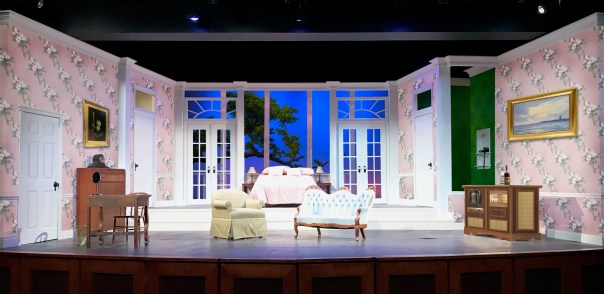
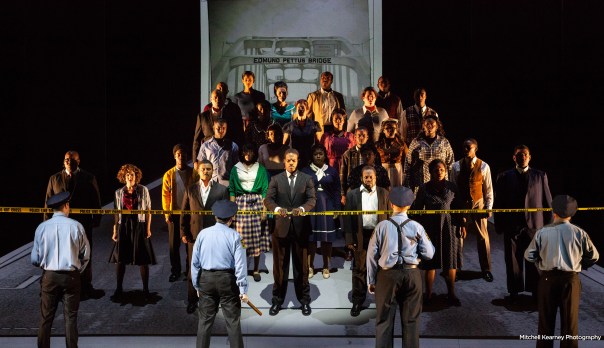



![Paige[3]](https://artonmysleeve.net/wp-content/uploads/2020/05/paige3.jpg?w=604)