Tag Archives: Tim Scott

Blackhawk Quintet Celebrates the Great Thelonious

Review: The Blackhawk Quintet @ Middle C Jazz

By Perry Tannenbaum
April 8, 2026, Charlotte, NC – Wynton Marsalis has more than a couple of things in common with me. But two stand out. We both spent an ill-fated October evening in his dressing room at Belk Theater watching the 2001 Derek Jeter-Andy Pettitte-Jorge Posada-Roger Clemens-Mariano Rivera New York Yankees inexplicably lose the World Series to a team of Arizona snakes. More pleasurably, we both adore the quirky music of Thelonious Monk.

Our cult includes musicians and critics of all stripes. The 1984 tribute album, That’s the Way I Feel, issued two years after the pianist/composer’s death, not only featured usual jazz suspects such as saxophonists Charlie Rouse and Johnny Griffin, but also rockers and blues greats including Todd Rundgren, Donald Fagen, Peter Frampton, Dr. John, Was (Not Was), and NRBQ.

So when I saw Middle C Jazz’s listing of “Tim Scott Presents Thelonious Monk at the Village Vanguard,” it went straight to my April wish list, partly out of love and partly out of curiosity. I’d heard of Tom Scott, the jazz saxophonist who crossed over to Joni Mitchell and came back to the luxury Jazz Cruises, but Tim did not ring a bell. Nor did the Blackhawk Quintet, though I have more than a couple of CDs recorded in live performance at San Francisco’s famed Blackhawk jazz club – including groups led by Monk and Miles Davis. My suspicion, notwithstanding the Village Vanguard listing, was that the quintet had been named after the San Fran club, and my curiosity, sharpened by the reliable imprimatur of a booking at Middle C, centered on how these upstarts would handle Monk’s music.
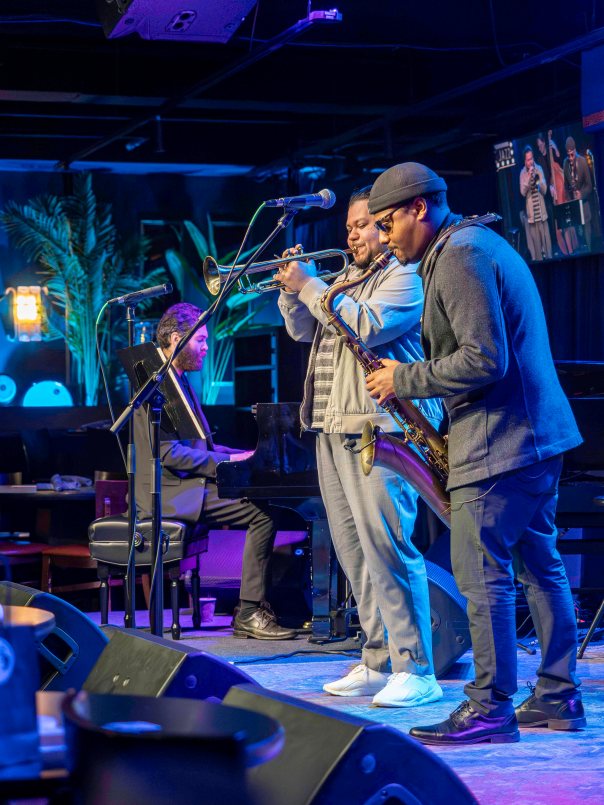
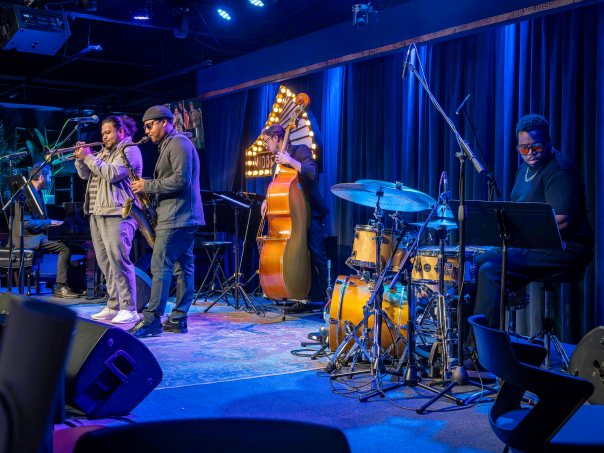
Very respectfully, as it turned out. Although the Vanguard was never referenced during the Quintet’s 6 o’clock set, both the West Coast club and Monk’s At the Blackhawk album drew frequent nods. In fact, the first two titles that the latter-day Blackhawks played, “Let’s Call This” and then “Four in One,” were the same as those that launched the 1960 recording. Combined, they provided fine showcases for all the band members, especially the frontliners: tenor saxophonist Elijah Freeman, trumpeter Ariel Mejia, and pianist Phillip Howe.

Appropriately enough, Howe played the intros on both of these pieces, not striving too much to emulate Monk’s signature style – he recalled asking at rehearsals, “How Monk do you want me to be?” – before the full ensemble reprised the themes. Mejia plunged into the release for his opening solo piercingly, sustaining his thrust with a rich tone before Freeman came powering in with his solo, his tenor tone sometimes a bit boozy like Rouse’s, at others defiant and declamatory like Monk’s most famous bandmate, fellow North Carolinian John Coltrane.
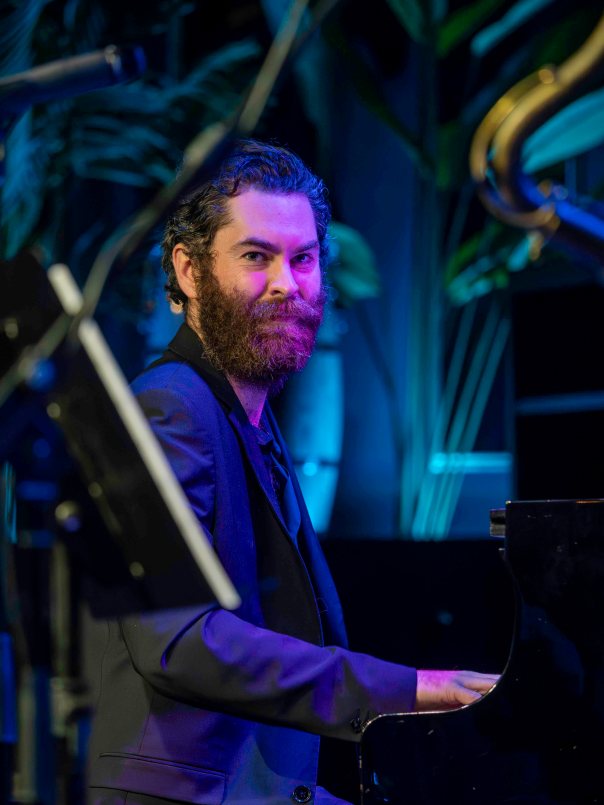
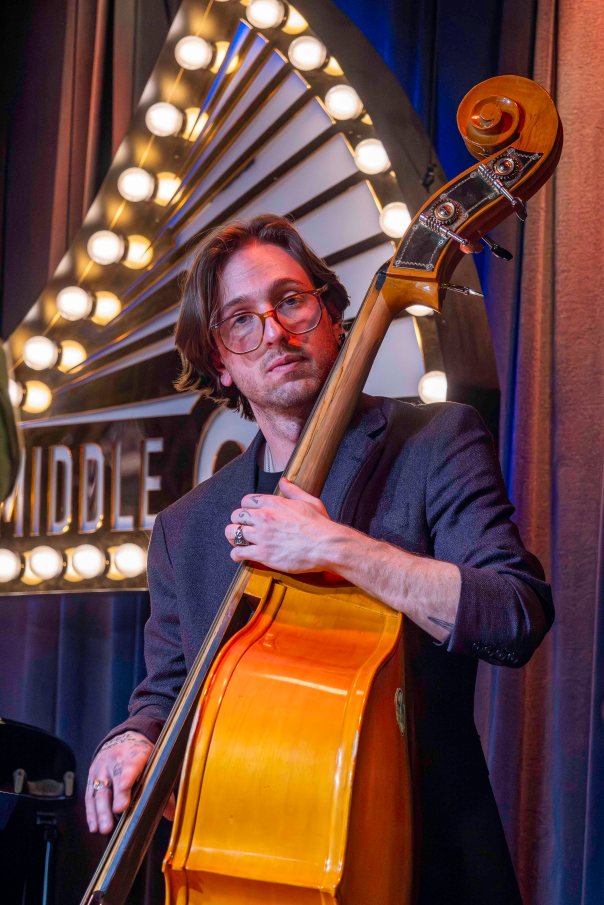
Howe’s creativity and touch were stellar when he weighed in with his solo, calming things down between expostulations, at times coaxing the Middle C’s Yamaha into sounding like an electric keyboard. Yet there was space left for bassist  Burns to show his mettle in a comparatively cameo role. Imagine if Symphony musicians were allowed to play on such bright, grainy, and colorful instruments!

As brilliant as before, Howe was more Monkish on the more familiar “Four in One,” second only to “Blue Monk” among my personal favorites, only holding back a little on punctuating the spiraling tune with Thelonious’s deliciously dissonant chords. Somehow, Howe managed to make the melody even weirder than normal, making up for his block chord omissions.
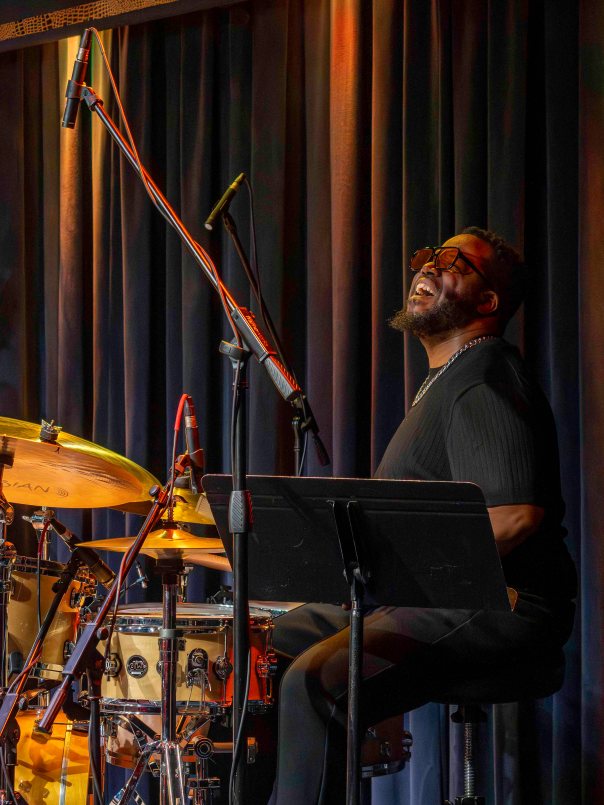
The melody’s spiraling sound invites more virtuosity, so Freeman’s work veered away more from Rouse toward Coltrane’s more swashbuckling approach, and Mejia followed with a solo that had emphatic flashes of Dizzy Gillespie splash and charisma, conjuring up one of Monk’s bebop mentors. Completing the arrangement with even more flair, drummer Tim Scott checked in thunderously, trading eight-bar solos with Mejia and Howe before Freeman fronted the outchorus.
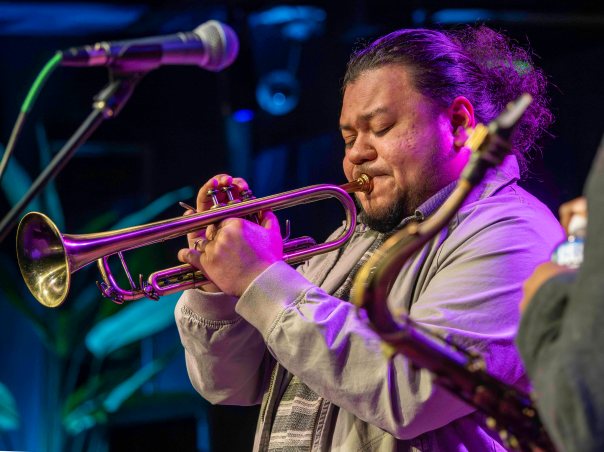
Among the remaining five tunes in the Quintet’s set, two more were from Monk’s Blackhawk album, the beloved “’Round Midnight” and the inimitable pianist’s hypnotic theme song, “Epistrophy.” Not surprisingly, since the most famous arrangements of the tune are by trumpeters Gillespie and Davis, “’Round Midnight” became a showcase for Mejia, with Freeman sitting out and Howe limiting himself to a respectful half-chorus intro. Without referencing either of the trumpet immortals who have imprinted the piece, Mejia’s entrance at the bridge and his ensuing solo were impactful and lyrical.
Yet it’s necessary to mention that the Quintet’s most overt nod to a trumpeter was to my fellow Yankee fan, Marsalis: “Green Chimneys” from Wynton’s Live at the House of Tribes album from 2023, a mere 13 albums ago. Mejia led off with the melody and the first solo, and Freeman, Howe, and Burns all followed with their best playing so far, but perhaps the arrangement upstaged the playing. The first half of Mejia’s solo was unusually hushed until Scott, at the drumkit, pounced on the beginning of a new chorus while the trumpeter ignited to a higher intensity, a pattern that repeated in subsequent solos.

After sitting out “’Round Midnight,” Freeman took off his knitted cap and bestowed it on Howe so that he could more fully get into character and emulate Monk’s most famous eccentricities in the band’s “Epistrophy” tribute. Back in my college days, I could hardly believe that Monk stood up and away from the keyboard during performances and danced to the music while his bandmates soloed. Then he came to Queens College to play with his quartet and proved those reports to be true.

Howe also leaned over his piano bench, still standing, and began to play, a Monk shtick I had never witnessed live. Of course, Howe’s musical style here followed suit, and Freeman, perhaps aware that Monk danced most when Rouse was his chief sideman, veered toward that tenor – with a couple of glints of Griffin – and away from Coltrane.

Naturally, the last Monk piece, “Blue Monk,” was the most blissful for me. Howe’s approach, disdaining his prior Monk emulations, also pleased me greatly with hints of Bud Powell and Oscar Peterson. The set concluded with a tune from the band’s 2025 Englewood album, “Stretch,” with a nice intro from Scott. Freeman lavished his mellowest playing here before shifting into a full Coltrane rant.

When Blackhawk Quintet releases their next album, my radar will try to pick up on it. The group will be cutting it at the historic Rudy Van Gelder Studio in Englewood Cliffs, New Jersey. Freeman seemed quite proud of that, and rightly so.

Janeta Bounces from Poppins to Billie

Review: Lady Day at Emerson’s Bar & Grill

By Perry Tannenbaum

LadyDay.Production.FenixFoto.5R4A3146

Forget the famous nickname for a second. Like only a handful of jazz artists – instrumentalists Miles Davis and John Coltrane come to mind – Billie Holiday’s vocal career had a distinctive arc, leaving the diva’s fans with a blithe and sunny early period of recordings, a forceful and dramatic middle period, and a worldly wise and poignant late period. The meteoric 25-year Lady Day career has stages as identifiable as Beethoven’s groundbreaking music or Shakespeare’s awesome procession of plays.

The legend of Billie Holiday took off almost instantly after her early death in 1959. That legend is easier to capture on film if you want to deliver the full breadth – and the full tragedy – of the story. But Lady Sings the Blues (1972) was a wasted opportunity, totally worthless as a biography, notwithstanding Diana Ross’s Oscar-nominated portrayal. Lady Day at Emerson’s Bar & Grill by playwright Lanie Robertson was a more serious attempt, though the 1986 drama didn’t gain real traction in the theatre world until 2014, when Audra McDonald brought it to Broadway – and subsequently to HBO.

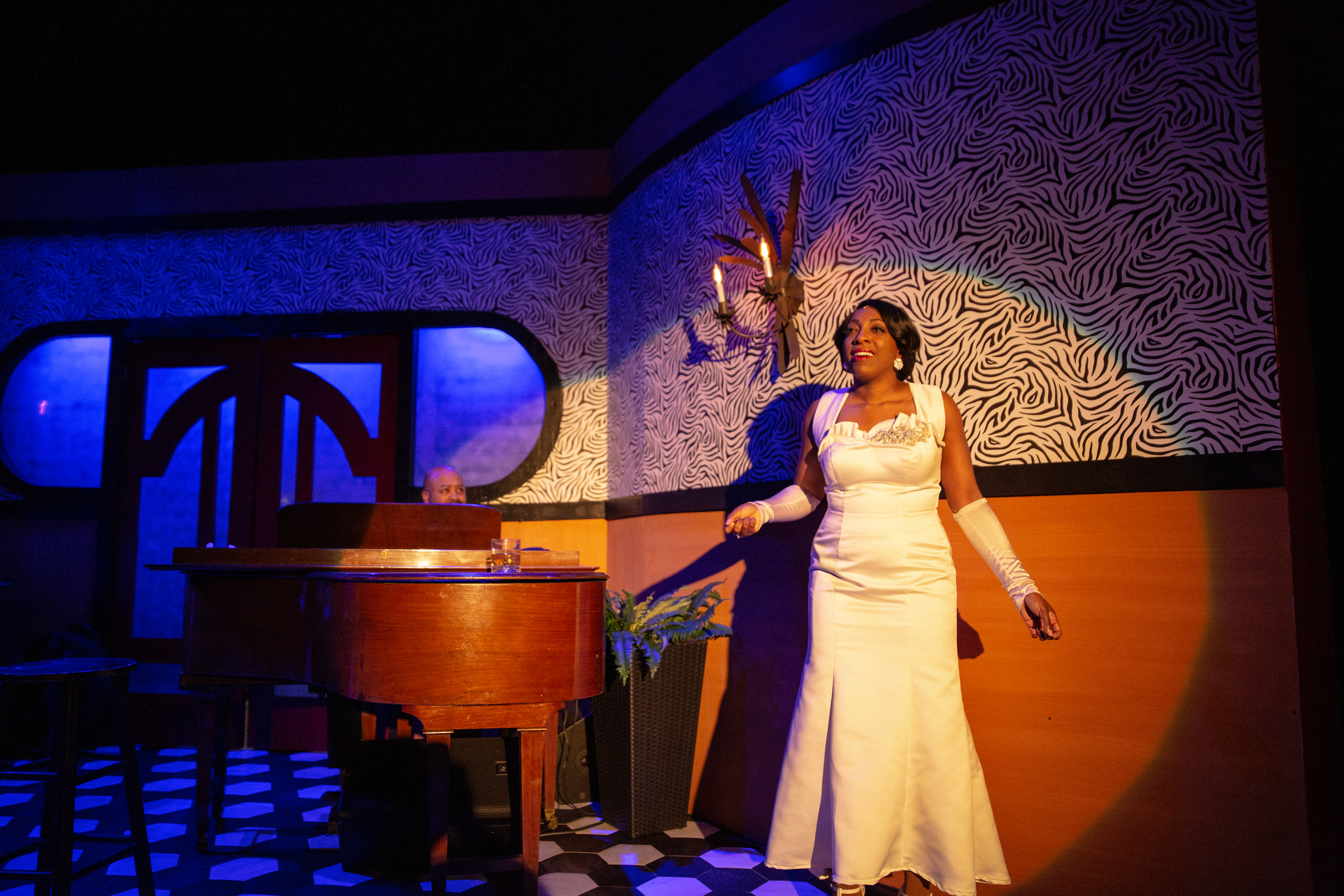
Now it’s here at Queens University, where Hadley Theatre has been transformed into Emerson’s in an Actor’s Theatre of Charlotte production directed by Jeremy DeCarlos. Janeta Jackson not only sings Billie’s songs and wears her signature gardenia, she mingles with the paying customers and engages them as they sit in casual cabaret style at cocktail tables. Chip Decker’s scenic setup also provides for extra stadium seating behind the many cocktail tables plus a bar at the rear of the hall.

Robertson focused on the most notorious part of Billie’s life, the final days when her deteriorating health and appalling finances sent her on a trajectory toward police custody on her deathbed. When she died of cardiac arrest and liver disease at the age of 44, handcuffed to her hospital bed, there was $7,500 in cash taped to her body and 70 cents in her bank account. It’s already 1959 when we see her at Emerson’s, and costume designer Carrie Cranford has outfitted Jackson in the same sort of satin dress that you’ll find on Billie’s valedictory Columbia album, Lady in Satin, and on the Verve memorial LP set, The Unforgettable Lady Day.

Not a total surprise, since Willis Hickerson, Jr., leading his trio at the keyboard in the role of Jimmy Power, plays Billie on with “Satin Doll.” When Jackson arrives, she mostly sings songs that are actually associated with Billie – but not necessarily with her latter days. With his choice of songs and with the rambling patter of his script, Robertson contrives to have latter-day Lady Day present an informal retrospective of her life and career, musically emphasizing the early and middle years, leaving space for songs that inspired her and, of course, the songs she wrote and championed.

LadyDay.Production.FenixFoto.5R4A2922

Among the early songs sprinkled on the Lady Day songlist are “When a Woman Loves a Man,” “Foolin’ Myself,” and “Easy Living” from Billie’s swinging early period, recorded in 1935-38 with the likes of Teddy Wilson, Benny Goodman, and Lester Young. Robertson does something interesting “What a Little Moonlight Can Do,” not only programming it early in Billie’s set but making it emblematic of her heroin habit as she staggers backstage midway through her show. Jackson arrives onstage slurping a drink, so Billie’s substance abuse is never a secret. It’s the main reason she’s performing in this Philadelphia dive, we quickly learn, for she had lost her license to perform in New York City cabarets a few arrests earlier.

Although we never hear any of the mighty heartbreakers on Billie’s final album, like “I’m a Fool to Want You” or “You’ve Changed,” the mood definitely darkens toward the end. Although lighting designer Evan Kinsley repeatedly flouts the words of the script, which should prompt him to keep the piano player in semi-darkness, he does turn down the houselights and shine a spot on Jackson for the climactic “Strange Fruit,” a searing depiction of a Southern-style lynching that became a Lady Day hallmark.

Or as she puts it, one of the songs we came to hear. She doesn’t say it quite that politely.

There are no “I’ve seen the mountaintop” moments in Lady Day at Emerson’s Bar & Grill, so the ending is more pathetic than tragic. Embedding an autobiography into a cabaret performance wasn’t the easiest assignment for Robertson, but his best line, “Mom and Pop were just a couple of kids when they got married: he was 18, she was 16, and I was three,” flows naturally out of the opening of Billie’s Lady Sings the Blues autobio.

He did his research, you will find, and so have DeCarlos and Jackson. DeCarlos has chosen his musicians well – bassist Peter de Klerk and drummer Tim Scott fill out the trio – and he gets an alert and spontaneous performance from Hickerson where Powers has to speak a few lines here and there, coping with Billie’s spaced-out eccentricities. And who what DeCarlos saw from Jackson at auditions, where she arrived with calling cards that included the doo-wop group in Beehive and the lead in Mary Poppins? Bet it wasn’t nearly the same Billie as we’re seeing now.

For there can be no doubting that, if she wasn’t a Lady Day fan when she showed up auditioned for DeCarlos, Jackson has certainly immersed herself in the recordings since landing the role. To a Billiephile, it’s obvious that Jackson concentrated most heavily on the Verve recordings of 1948-57, which have snippets of Billie’s spoken introductions, a nice compromise between the juicy early recordings and the raspy final releases. Jackson seems to have avoided or rejected the Emerson’s Bar recording by McDonald – a very wise choice, for Audra not only leans a bit on Billie’s raspiness, she occasionally exaggerates the mannerisms of her last years.

LadyDay.Production.FenixFoto.5R4A2686

Jackson echoes those mannerisms rather than imitating or caricaturing them, and she is almost as uncanny as McDonald in capturing the timbre of the speaking voice, though she eschews the telltale rasp. On other aspects of the speaking voice, Jackson might move closer to the six-time Tony Award winner, who won her sixth as Lady Day. Slowing down would help Jackson make Lady Day’s aging and physical deterioration more real, and slurring her speech a little more would couple nicely with the effects of the liquor and the junk.

The Jackson vocals are consistently wonderful in her chosen Verve groove, most Billie-like near the end of the evening in “Don’t Explain,” where she almost equals “Strange Fruit” as the highlight. If she puts a little too much mannered mustard on the bridge and at the end of “God Bless the Child,” Holiday’s most-admired original composition, it’s still outstanding – and she has none of the difficulties with the metre that plague the recorded covers by McDonald and Ross.

While the setting at Hadley isn’t as intimate as the HBO Special, it’s cozier than the Broadway production was and DeCarlos gives Jackson freedom to mingle with the clientele and roam away from the little stage – which she does with admirable poise. Ladylike, we can say. If you love Lady Day, there’s no need at all to hesitate, and if you’re looking to find out more, look no further.

Calouche and Crossroads Take Flight Outdoors

PeterZay151023CC-806_wide_trees

Preview: Crossroads Festival

By Perry Tannenbaum

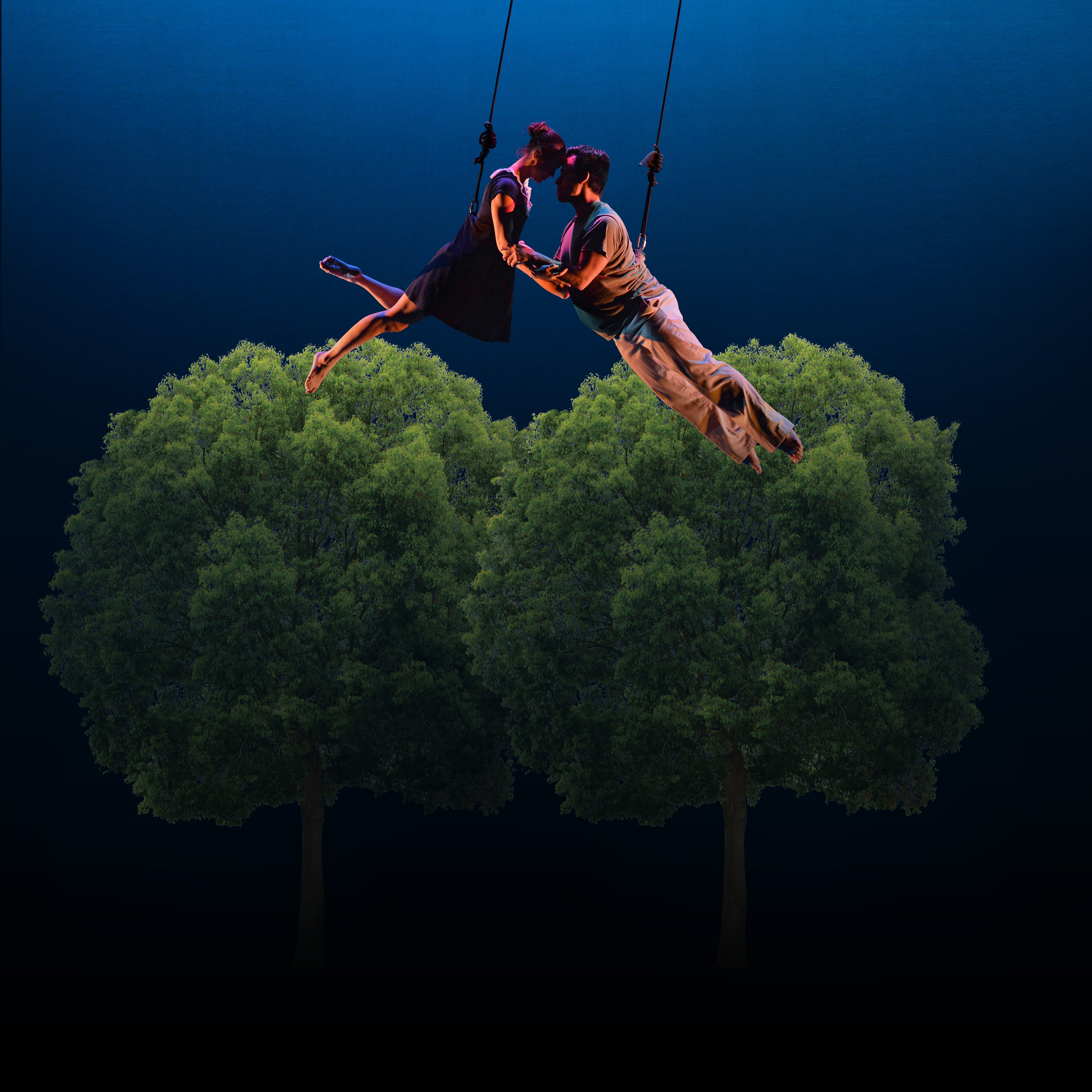
A new dance festival is leaping into the QC, touching down at First Ward Park for the Labor Day weekend, September 1-3. Pretty interesting idea, right? But the new Crossroads Festival isn’t merely an outdoor dance festival. It’s free, it features aerial dance classes and performances, and the main event starts just after sundown.

Now that’s pretty wild.

Caroline Calouche has been the queen of aerial dance in Charlotte for more than a decade. Her usual haunts have been Booth Playhouse; where Caroline Calouche & Co. offers its annual Clara’s Trip, an aerial Nutcracker; and Spirit Square, where she organizes a festival in early spring.

So what lured Calouche to the great outdoors?

“I was inspired by many great outdoor shows like Boston’s Shakespeare in the Park and Montreal’s Annual Circus Festival,” Calouche says. “Creating an outdoor show for the Charlotte community that reflects who we are has been a dream of mine for quite some time. Thankfully, the Knight Foundation helped make this dream come true.”

Though there are precedents in San Francisco, Boulder, and Victoria, bringing aerial dance outdoors – along with the Cirque du Soleil flavorings Calouche sprinkles into her choreography – is a fairly unique undertaking. Even Cirque doesn’t go all the way, opting for a bigtop on its famous tours.

“I did look into a circus tent so we can have the show rain or shine, but – whew! – that was crazy expensive!” Calouche confides. “Plus I would like the performance to take place under the stars with Uptown Charlotte as the backdrop to connect more to the location.”

Connecting with Charlotte was clearly a major factor in Calouche & Co.’s winning support from the Knight Foundation. Buy-in from Charlotte Center City Partners was also key before moving on to Mecklenburg Parks and Recreation to secure the festival’s location. Calouche’s Crossroads concept digs deep into Charlotte’s historical DNA.

Long before Charlotte became the crossroads for America’s most corrupt megabanks, it was a crossroads of commerce. If the Cherokee or Chippewa had named our city instead of the British, that name would likely mean crossroads. While the Uptown’s main crossroad is on Trade Street, Calouche’s event and choreography will remind us how Charlotte has also evolved into a crossroads for culture as well.

Each of the festival’s three days will begin with a potpourri of free dance and fitness classes. You can browse the online schedule and choose from hour-long sessions in samba, salsa, tap, hip-hop, capoeira, or aerial silks. Fitness freaks can contort themselves into the yoga and Pilates they truly deserve.

At 6pm, the pre-shows begin, also with various lineups of performers each evening. Constants in the lineup will be the MILA Dance Team, Mrudani School of Performing Arts, and the CC&Co. Youth Ensemble. If you’re itching for the NC Brazilian Arts Project, No Limits Dance Company, Hope of Israel, Maha’s Dances of IndiaHope of Israel, MufukaWorks Dance Company, or the Jazz Arts Initiative TrioMufukaWorks Dance Company,, consult the same handy webpage to see who’s up Friday, Saturday, and Sunday.

All of those evenings will conclude with Crossroads, starting at 8pm. Yes, it’s also free, and Calouche promises that there will be no letup in variety when she and her company take to the air. On the contrary:

“The show includes contemporary dance, breakdancing, tap, zapeando, shag, capoeira, aerial silks, trapeze, bungee, partner acrobatics, aerial rope, Cyr wheel, and aerial hoop,” Calouche reveals. “My artistic idea is to either cross history with dance and/or circus arts or cross cultural dances that are represented in Charlotte’s community today. Crossroads is designed as an event for unity and the opportunity for people to learn about Charlotte’s history and culture.”

Guest unifiers will include artists from an exciting mix of disciplines, including actress Iesha Hoffman, percussionist Tim Scott, and slam poet extraordinaire Boris “Bluz” Rogers. Hoffman will narrate, knitting the various segments together and maybe providing cover during aerial apparatus changes.

Scott will be featured during the segment where tap meets zapeando dance and during what promises to be a wild breakdance battle on aerial rope. Rogers takes Calouche’s unifying fantasia to a whole new dimension with an original poem inspired by a great unifier, Thaddeus Tate. During Rogers’ spot, he’ll connect with the entire Crossroads cast on the floor.

Tate was an African American leader in Charlotte from the 1880’s to the 1940’s. Instrumental in establishing a library branch, an insurance company, and the Grace A.M.E. Zion Church – while rubbing elbows with the Uptown elite as owner of the Uptown Barber Shop – Tate is particularly pertinent because he resided on the block that is now First Ward Park. So Rogers’ tribute will definitely strike home.

With its unifying and educational components, Calouche tells us to expect a casual atmosphere rather than a carnival one, more like Symphony in the Park or Shakespeare on the Green than Speedweeks. There definitely will be food trucks, and D9 Brewery will be on the scene to help keep beer bellies properly bloated.

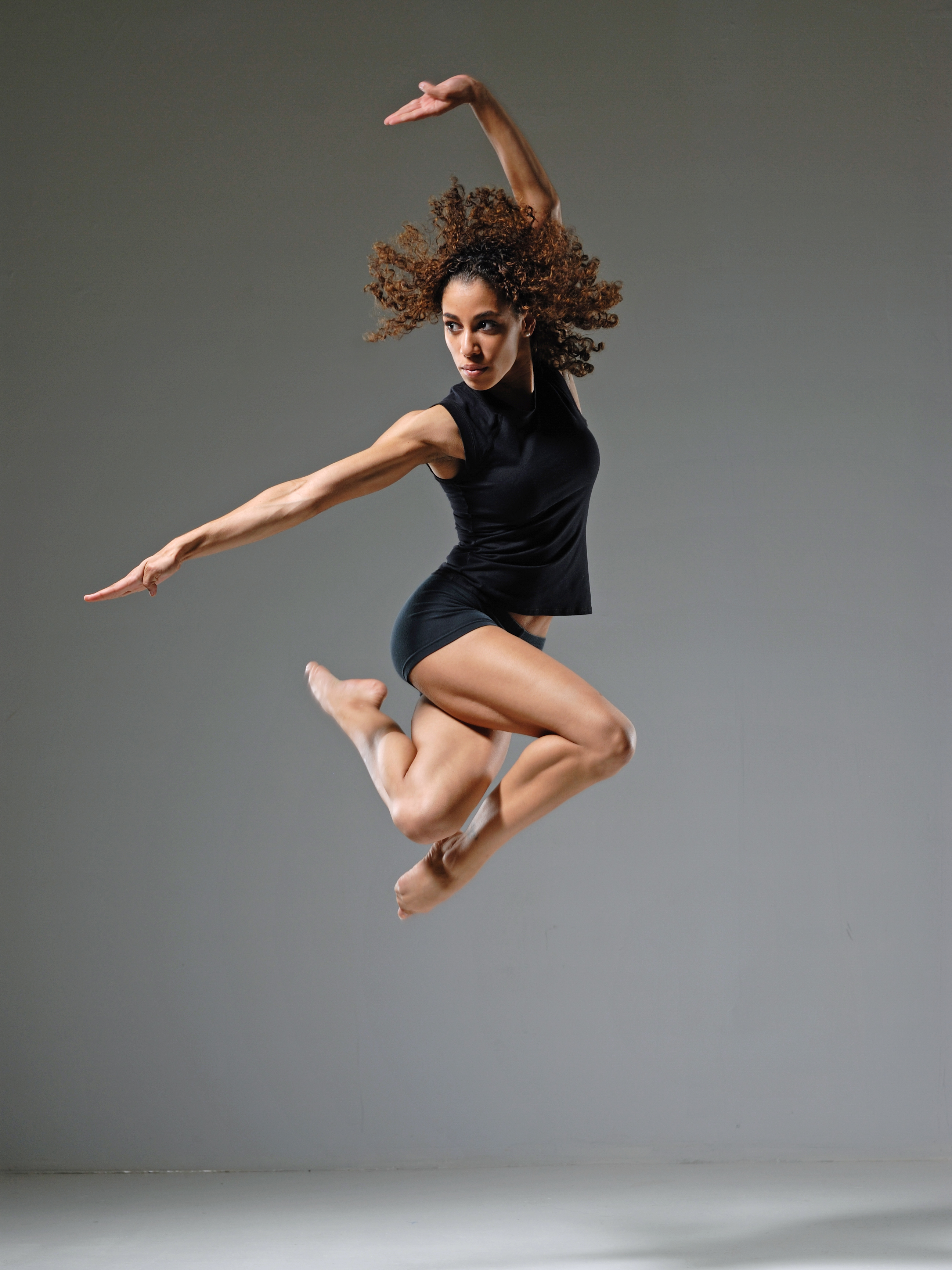
Like Clara’s Trip, which tends to shuffle its Nutcracker mix from year to year, Calouche expects to vary the content of Crossroads each time the festival rolls around. It’s not just a title – it’s a theme.Dominique jump color Michael Church

“Crossroads is the name of the event, and the theme will remain the same,” Calouche explains. “There might be some scenes that stay the same, but there is still more research I can do and other collaborators I would love to work with.”

Aerial dance is difficult enough to stage indoors, requiring a fly loft (ordinarily used to drop scenery from above) that’s sturdy enough to suspend up to four dancers on a dangling apparatus. Don’t try this at home. Or at Theatre Charlotte or Pease Auditorium.

So how exactly do you stage aerial dance outdoors? It sounds like CC&Co. will borrow from the big top concept and strip away the canvas.

“JHE is our production company who is building our stage, trussing, audio and lights,” Calouche says. “The stage will two feet from the ground on the grass near the 7th Street side of the park with four legs of truss crossing in the center at 25 feet high. Essentially we are building a theater in the round outside.”

Visualize a one-ring circus where 20 dancers, circus artists, musicians, and poets will perform under the stars – if the weather holds. So what happens if it rains?

“We wait it out and start when it passes,” Calouche replies.

Come to think of it, when most of your dancing is up in the air, you really don’t have to worry as much when the dance floor gets slick.