Review: The Blackhawk Quintet @ Middle C Jazz
By Perry Tannenbaum
April 8, 2026, Charlotte, NC – Wynton Marsalis has more than a couple of things in common with me. But two stand out. We both spent an ill-fated October evening in his dressing room at Belk Theater watching the 2001 Derek Jeter-Andy Pettitte-Jorge Posada-Roger Clemens-Mariano Rivera New York Yankees inexplicably lose the World Series to a team of Arizona snakes. More pleasurably, we both adore the quirky music of Thelonious Monk.
Our cult includes musicians and critics of all stripes. The 1984 tribute album, That’s the Way I Feel, issued two years after the pianist/composer’s death, not only featured usual jazz suspects such as saxophonists Charlie Rouse and Johnny Griffin, but also rockers and blues greats including Todd Rundgren, Donald Fagen, Peter Frampton, Dr. John, Was (Not Was), and NRBQ.
So when I saw Middle C Jazz’s listing of “Tim Scott Presents Thelonious Monk at the Village Vanguard,” it went straight to my April wish list, partly out of love and partly out of curiosity. I’d heard of Tom Scott, the jazz saxophonist who crossed over to Joni Mitchell and came back to the luxury Jazz Cruises, but Tim did not ring a bell. Nor did the Blackhawk Quintet, though I have more than a couple of CDs recorded in live performance at San Francisco’s famed Blackhawk jazz club – including groups led by Monk and Miles Davis. My suspicion, notwithstanding the Village Vanguard listing, was that the quintet had been named after the San Fran club, and my curiosity, sharpened by the reliable imprimatur of a booking at Middle C, centered on how these upstarts would handle Monk’s music.
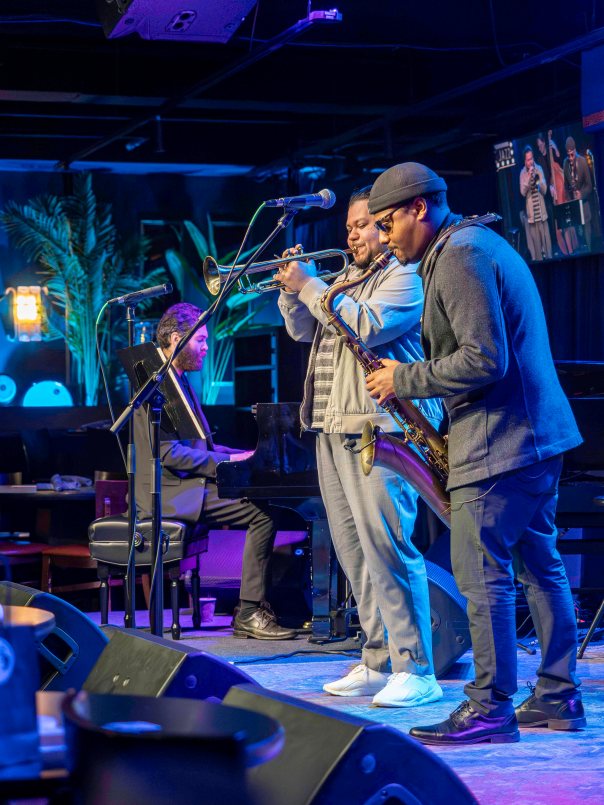
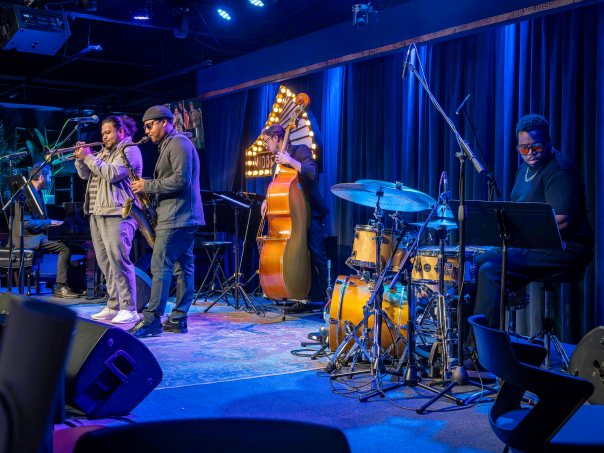
Very respectfully, as it turned out. Although the Vanguard was never referenced during the Quintet’s 6 o’clock set, both the West Coast club and Monk’s At the Blackhawk album drew frequent nods. In fact, the first two titles that the latter-day Blackhawks played, “Let’s Call This” and then “Four in One,” were the same as those that launched the 1960 recording. Combined, they provided fine showcases for all the band members, especially the frontliners: tenor saxophonist Elijah Freeman, trumpeter Ariel Mejia, and pianist Phillip Howe.
Appropriately enough, Howe played the intros on both of these pieces, not striving too much to emulate Monk’s signature style – he recalled asking at rehearsals, “How Monk do you want me to be?” – before the full ensemble reprised the themes. Mejia plunged into the release for his opening solo piercingly, sustaining his thrust with a rich tone before Freeman came powering in with his solo, his tenor tone sometimes a bit boozy like Rouse’s, at others defiant and declamatory like Monk’s most famous bandmate, fellow North Carolinian John Coltrane.
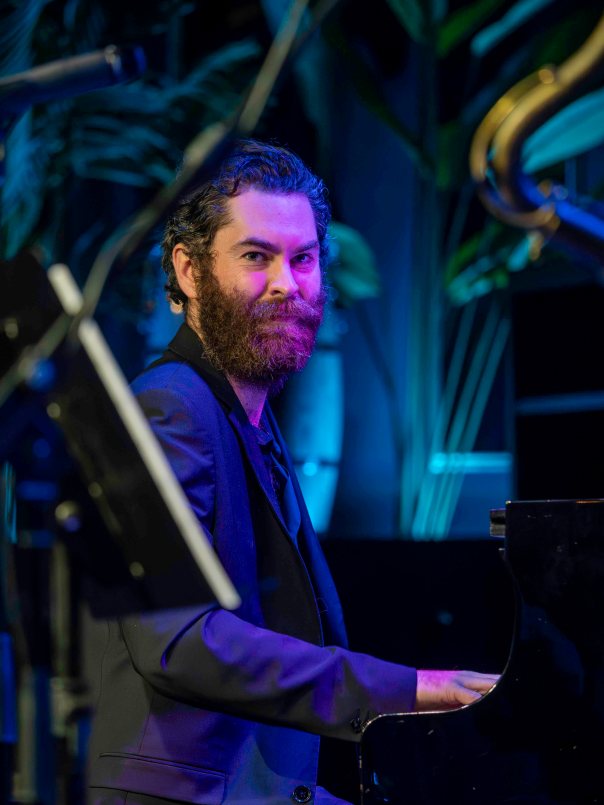
Howe’s creativity and touch were stellar when he weighed in with his solo, calming things down between expostulations, at times coaxing the Middle C’s Yamaha into sounding like an electric keyboard. Yet there was space left for bassist Burns to show his mettle in a comparatively cameo role. Imagine if Symphony musicians were allowed to play on such bright, grainy, and colorful instruments!
As brilliant as before, Howe was more Monkish on the more familiar “Four in One,” second only to “Blue Monk” among my personal favorites, only holding back a little on punctuating the spiraling tune with Thelonious’s deliciously dissonant chords. Somehow, Howe managed to make the melody even weirder than normal, making up for his block chord omissions.
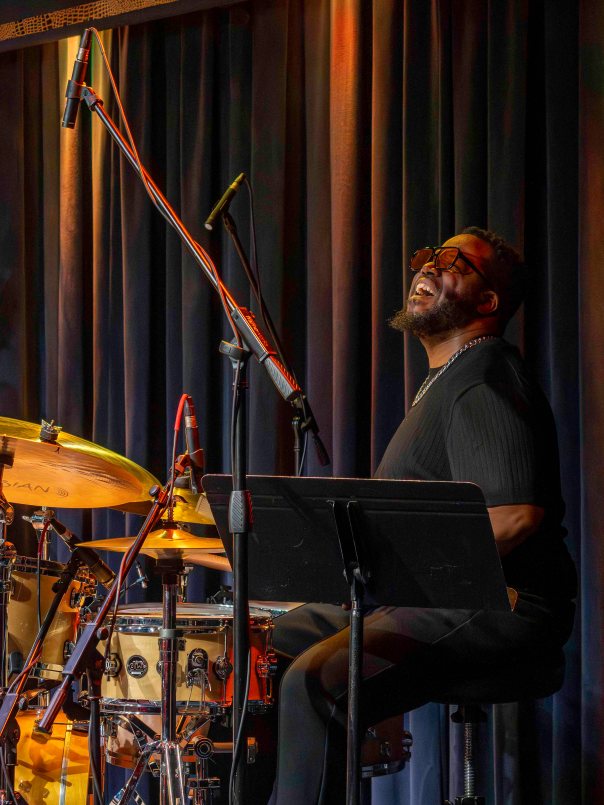
The melody’s spiraling sound invites more virtuosity, so Freeman’s work veered away more from Rouse toward Coltrane’s more swashbuckling approach, and Mejia followed with a solo that had emphatic flashes of Dizzy Gillespie splash and charisma, conjuring up one of Monk’s bebop mentors. Completing the arrangement with even more flair, drummer Tim Scott checked in thunderously, trading eight-bar solos with Mejia and Howe before Freeman fronted the outchorus.
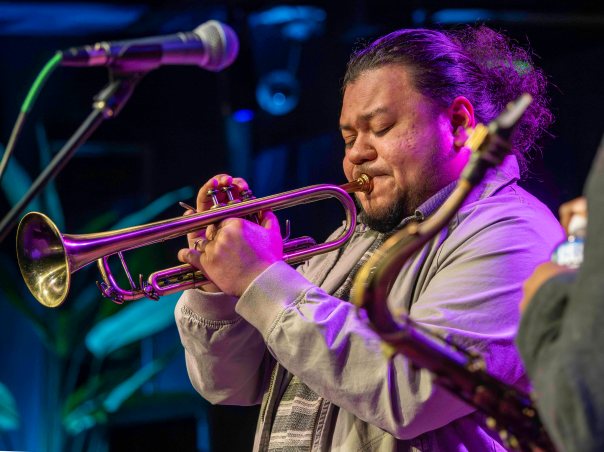
Among the remaining five tunes in the Quintet’s set, two more were from Monk’s Blackhawk album, the beloved “’Round Midnight” and the inimitable pianist’s hypnotic theme song, “Epistrophy.” Not surprisingly, since the most famous arrangements of the tune are by trumpeters Gillespie and Davis, “’Round Midnight” became a showcase for Mejia, with Freeman sitting out and Howe limiting himself to a respectful half-chorus intro. Without referencing either of the trumpet immortals who have imprinted the piece, Mejia’s entrance at the bridge and his ensuing solo were impactful and lyrical.
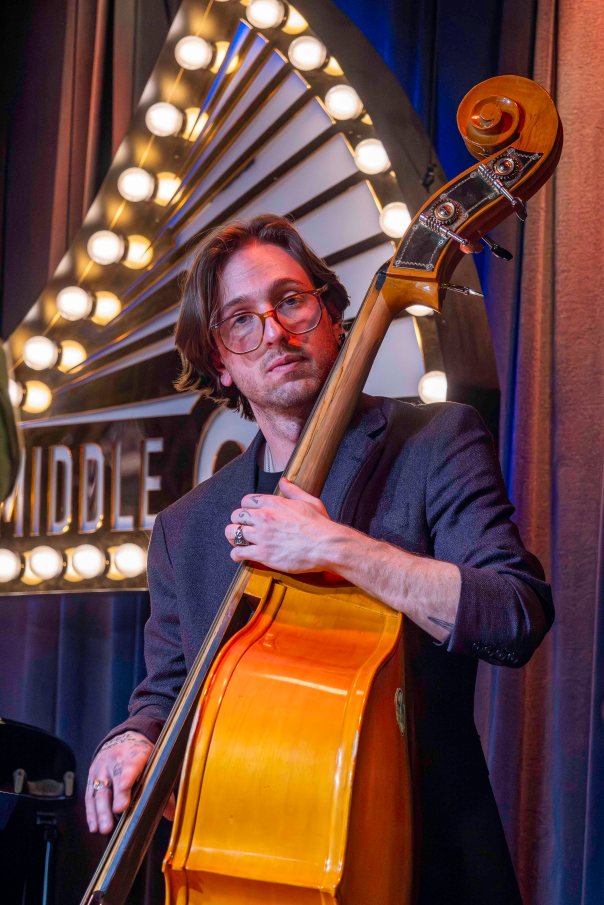
Yet it’s necessary to mention that the Quintet’s most overt nod to a trumpeter was to my fellow Yankee fan, Marsalis: “Green Chimneys” from Wynton’s Live at the House of Tribes album from 2023, a mere 13 albums ago. Mejia led off with the melody and the first solo, and Freeman, Howe, and Burns all followed with their best playing so far, but perhaps the arrangement upstaged the playing. The first half of Mejia’s solo was unusually hushed until Scott, at the drumkit, pounced on the beginning of a new chorus while the trumpeter ignited to a higher intensity, a pattern that repeated in subsequent solos.
After sitting out “’Round Midnight,” Freeman took off his knitted cap and bestowed it on Howe so that he could more fully get into character and emulate Monk’s most famous eccentricities in the band’s “Epistrophy” tribute. Back in my college days, I could hardly believe that Monk stood up and away from the keyboard during performances and danced to the music while his bandmates soloed. Then he came to Queens College to play with his quartet and proved those reports to be true.
Howe also leaned over his piano bench, still standing, and began to play, a Monk shtick I had never witnessed live. Of course, Howe’s musical style here followed suit, and Freeman, perhaps aware that Monk danced most when Rouse was his chief sideman, veered toward that tenor – with a couple of glints of Griffin – and away from Coltrane.
Naturally, the last Monk piece, “Blue Monk,” was the most blissful for me. Howe’s approach, disdaining his prior Monk emulations, also pleased me greatly with hints of Bud Powell and Oscar Peterson. The set concluded with a tune from the band’s 2025 Englewood album, “Stretch,” with a nice intro from Scott. Freeman lavished his mellowest playing here before shifting into a full Coltrane rant.
When Blackhawk Quintet releases their next album, my radar will try to pick up on it. The group will be cutting it at the historic Rudy Van Gelder Studio in Englewood Cliffs, New Jersey. Freeman seemed quite proud of that, and rightly so.