Tag Archives: Sidney Horton

Change Comes to Sixties Baltimore in a Rockin’ Good Way at Matthews Playhouse With “Hairspray”

Review: Hairspray at Matthews Playhouse
By Perry Tannenbaum

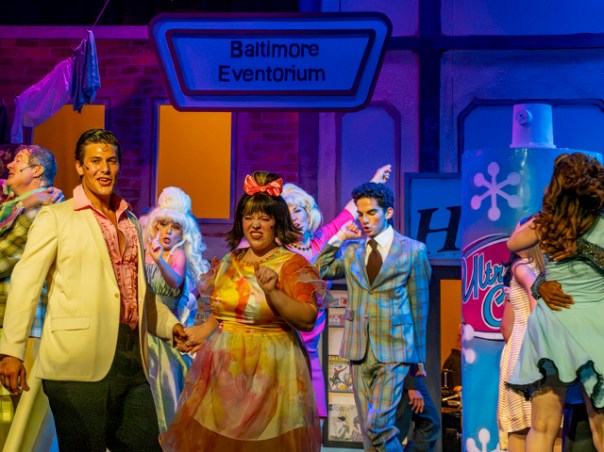
July 10, 2026, Matthews, NC – One of the most confounding things humans ask themselves and each other is “When are things going to change?” Too many things are changing all the time for that generalized question to be taken seriously – and too many people asking that question seriously have too little inclination to make change happen. In Hairspray, adapted from John Waters’ 1988 film, change comes to Baltimore in 1962, a year before Bob Dylan declared that “the answer, my friend, is blowing in the wind,” and two years before LBJ signed the Civil Rights Act into law.
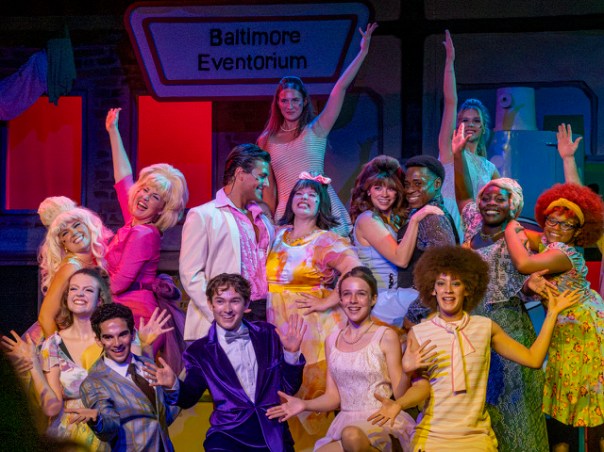
Waters’ script was a rewrite of history that stuck, given new life by the Tony Award musical adaptation. Because you not only can change things with a winning strategy and sufficient effort; when you do, and you’re one of history’s winners, you get to rewrite history as you see fit and invent new heroes. Watching Tracy Turnblad spark change in 1962 Baltimore, you just set aside the need for JFK, Dylan, MLK, and LBJ for a couple of hours. Leave it to Tracy, supported by her dad, to rally a whole city and overturn segregation at a teen dance show on local TV.

The current Matthews Playhouse production, directed by Sidney Horton, reminds us why Hairspray not only won Best Musical in 2003, but seven additional Tonys. These included Thomas Meehan and Mark O’Donnell for best script and statuettes for Marc Shaiman and Scott Wittman honoring their best musical score. When Horton put out the casting call, the Metrolina talent pool could eyeball four different roles that were juicy enough to deliver Tony nominations to the original Broadway cast. All three Turnblads won the prize, led by Harvey Fierstein as Edna, who undergoes a personal makeover, inspired by her plucky daughter.

Watching Horton’s players at the Matthews Playhouse, you may find yourself surprised that only four original cast members won Tony nominations. What about Corny Collins, the deejay who fronts the afternoon TV dance-a-thon, receptive to the new grooves on the airwaves and open to featuring Blacks more often than on the current once-a-month “Negro Day”? Or Motormouth Maybelle, Corny’s counterpart when the Afro-Americans get their brief chances to shine? Or Link Larkin, the dreamboat teen idol Tracy craves, pragmatic about his career, yet open to developing as a musician and a person?

All three of these prove to be plum roles for Johnny Hohenstein, so charismatic last July as the iconic baddie in Peter and the Starcatcher, and two newcomers, Carter Poulson and Olivia Greene. Corny’s pragmatism allows Hohenstein to be different characters when he’s on-air holding a mic, behind the scenes sparring with his station manager or the show’s sponsor, and out in the wild scouting talent. It’s a less outré ride than Black Stache, but there’s a wider range of phoniness to savor.
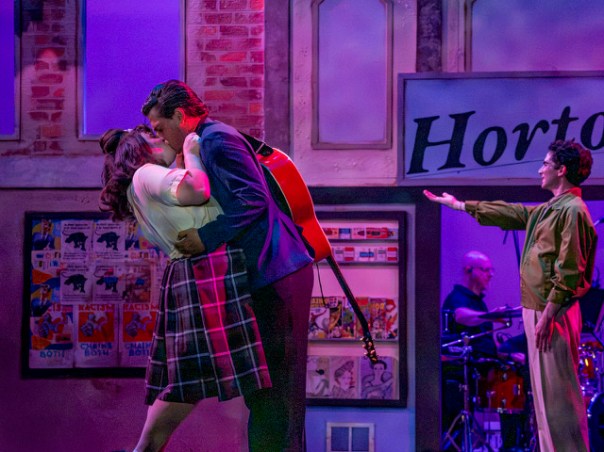
At first, Poulson appears to be the trophy boyfriend of fellow Corny Collins regular Amber Von Tussle, the daughter of WZZT station manager – and former Miss Baltimore Crab – Velma. But when Corny suggests that he croon his new song, “It Takes Two,” as a serenade to Tracy, newly installed on the show over the Van Tussles’ objections, he addresses only his opening overtures to Amber. With both lasses vying for his attention, Tracy nearly drooling, Poulson’s appeal swells the more he croons and swivels his guitar from back to front. Then he comes on to Tracy with a cinematic zeal that would make any girlfriend jealous. A dreamboat’s dream kiss ends the song.
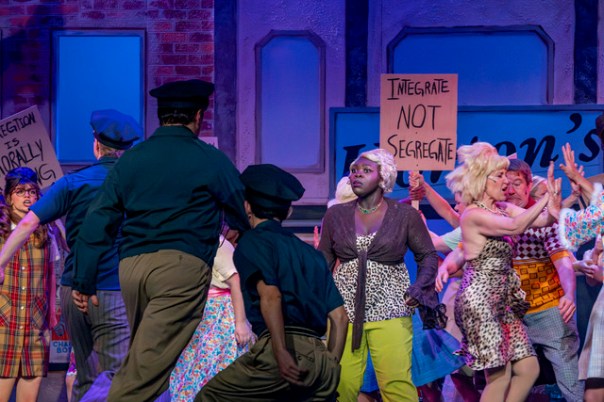
Thematically, Maybelle may be pre-eminent in Hairspray, the mother that Tracy, her bestie Penny, and Amber should have had in their earlier years. Off-air, she’s the den mother to all the talented Afros on The Corny Collins Show who have been relegated to second-class status. Her own brood includes Seaweed, the Afro stud who teaches Tracy and Link some slick moves, and Little Inez, whose audition for the open slot on Corny’s show is doomed by her race. As this living rebuke to Velma, Greene needed to be a big personality from the start. She must grow bigger when she and Tracy lead a street demonstration outside WZZT, demanding desegregation. By the end of the show, Greene must sing “I Know Where I’ve Been,” the anthemic peak of Hairspray.

In her auspicious Matthews debut, Greene showed us that her role in the doo-wop trio in Theatre Charlotte’s Little Shop of Horrors was a mere foretaste of her capabilities. True, she seemed a bit small for Motormouth’s shoes when we first saw her, yet she was more than ample for her climactic showstopper, her crusading gospel spirit getting by far the loudest roar from the opening night audience prior to the big crowning of Miss Teenage Hairspray and the spectacular Edna Turnblad reveal.
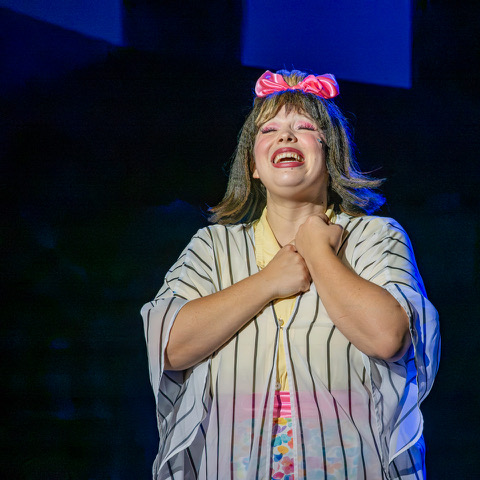
So at various times, the Turnblad clan was gloriously upstaged at Matthews’ Fullwood Theatre. When they’re all professionals or seasoned community performers, that’s not a problem at all. Although I’d never seen her in performance before, Logan Cosper took command of the full Fullwood stage as Tracy from the moment we woke up with her in “Good Morning Baltimore.” Not really your ideal candidate for body shaming, Cosper’s only truly plus-sized aspects were her energy and her smile. As the stage fills up around her, making her way through the city to her high school, those two ingredients are perfect: she needs that sunny cheer so the comedy will click when she passes a drunken derelict on the street. And make no mistake: she’s not merely one of Link’s admirers; she’s his most fanatical. We see significant personal growth from there.

If you spotted Leopard at Booth Playhouse a couple of months ago in his leather motorcycle outlaw outfit in Queen City Concerts’ We Will Rock You, you likely emerged with the impression that he’s way tall and rail thin, not the best fit for Edna. But if you’ve caught him at Theater Charlotte in either Something Rotten! or The Producers, where he formally cross-dressed as the Chrysler Building,you would also realize that sashaying and drag are right up his alley. God and costume designer Beth Levine-Chaitman only know what garments and appliances may lurk under Edna’s housecoat and subsequent makeovers to transform Leopard into the Turnblads’ plus-sized fashion plate.
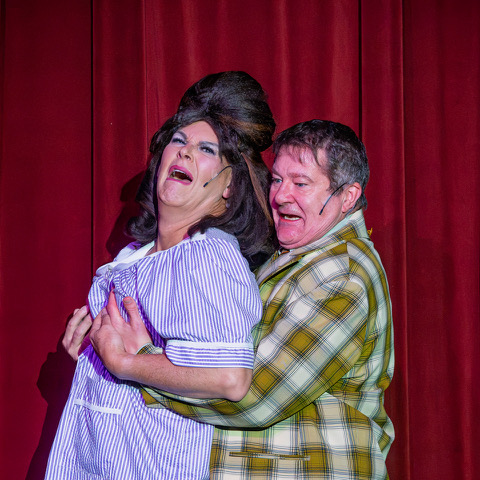
Yet I was a wee bit disappointed to see him so controlled and disciplined. Leopard’s voice could have been an octave lower at key moments for the fullest plus-sized Edna experience. Nor were the constraints strictly directorial. The kitchen or laundry room that scenic designer Chris Morgan provided for Tracy’s mom and dad was woefully minus-sized, barely allowing breathing, let alone stateliness or flamboyance. For the novelty showstopper, Edna’s “You’re Timeless to Me” duet with Wilbur, Horton wisely closed the curtains on the entire set. The effect was very vaudevillian, drawing lusty ovations before and after the couple’s reprise.

That duet was probably the best hook-up between Horton and choreographer Rachel Peterson – or one of the turning points. Through most of Act 1, dancers often moved in place rather than zipping around, so the tableaus lacked depth until the climactic chaos of the protest riot at WZZT. Seemed to me that the onrush of cops and Billy clubs was what transformed the righteous protest into a riot. You can be the judge whether Horton is making that point.

Honoring (or disregarding) the script, Horton allows Mike Carroll, in one of Levine-Chaitman’s tackiest costumes, to attend the big integration protest as Wilbur. Yet somehow, he isn’t arrested along with his family, the Von Tussles, and the Black folk. Overnight during intermission, he is able to sell his store and raise bail for everybody – except Tracy, specially targeted by the malign Velma. So despite his seeming subservience, Wilbur is a mover and shaker, a chief driver in the changes dramatized in Hairspray.Not only is he a struggling store owner, but also a believer in Tracy’s ambitions, in Edna’s dormant dreams, a liberator of jailed protestors, and a supporter of Tracy’s adopted Black community. Along with Tracy, Maybelle, and Corny, truly one of the chief engines of change.
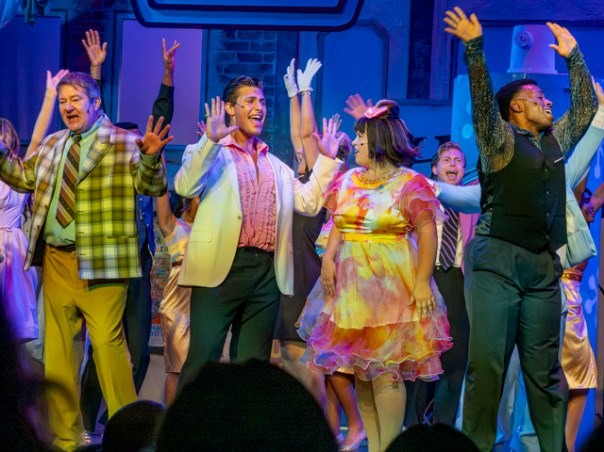
Yet at times, Carroll makes Wilbur cuddly if not diminutive. You may recognize a Buddy Hackett impishness to him in his “You’re Timeless to Me” serenade, before and after Edna warms to it. Apparently, he isn’t Jewish. His best quip, “Shabbat Shalom!” was mangled beyond recognition on opening night, with none of the requisite gusto. OK, Horton does not have the right DNA to make the correction by himself, but where were you, Levine-Chaitman, when we needed you?

On the other hand, we can probably credit L-C for the horrid wigs that crowned the VanTussles’ toxicity, so we can partially commute whatever punishment she deserves for not supplying Carroll with the necessary Hebrew. Keenan Tabor as Velma was far more repellent as Velma when the spotlight was on her for “Miss Baltimore Crabs” in Act 1, but the apple didn’t fall far from the tree when Layne Harder seized center stage for her “Cooties” showpiece. Most of the bug motif that infested the original Waters movie has been fumigated in this Meehan-O’Donnell adaptation. Mercifully so, but Harder’s opportunities to be singularly noxious are curtailed and muted by this cleansing.
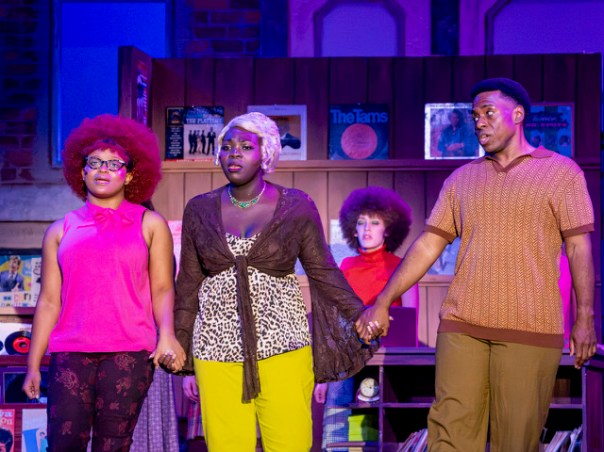
Who to single out among all the other players? Todd Burnette as Seeweed Stubbs was likely the coolest, hippest sight on stage, and Eve Monroe as Little Inez – the standout WZZT auditioner spurned for her race – also springs instantly to mind. As Tracy’s best friend, Penny Pingleton, Corinn Bordelon doesn’t gush over Burnette as Cosper does over Poulsen, but she’s ready enough for love in her shy way. In the breakout double-duet, “Without Love,” where both of the young couples exult over their newfound bliss, it’s a shame that the volume of the eight-piece band, so zestfully led by Ellen Robison, threatened to drown out Bordelon’s most hilarious lyric.

That budding romance Waters filmed in the late 80s wasn’t quite daring enough to say, “now I’ve tasted chocolate and I’m never going back.” So our journey back to the twist and shout and the Madison of the 60s has a sprinkling of the new millennium. Change is good.

“Thoughts of a Colored Man” Lauds Three Strong Women

Review: Thoughts of a Colored Man at the Arts Factory

By Perry Tannenbaum

So Lust and Passion walk into a bar… You can imagine how fervently I’ve longed to lead off a review with a line like that for close to 40 years. Well, now that Keenan Scott II’s Thoughts of a Colored Man has almost provided that opportunity, you can see that I’ve pulled the trigger. Jumped the gun. For in multiple scenes of Scott’s 2021 script, we can find Love, Lust, Depression, Passion, and Happiness all congregated in a Brooklyn barbershop run by Wisdom and Anger.

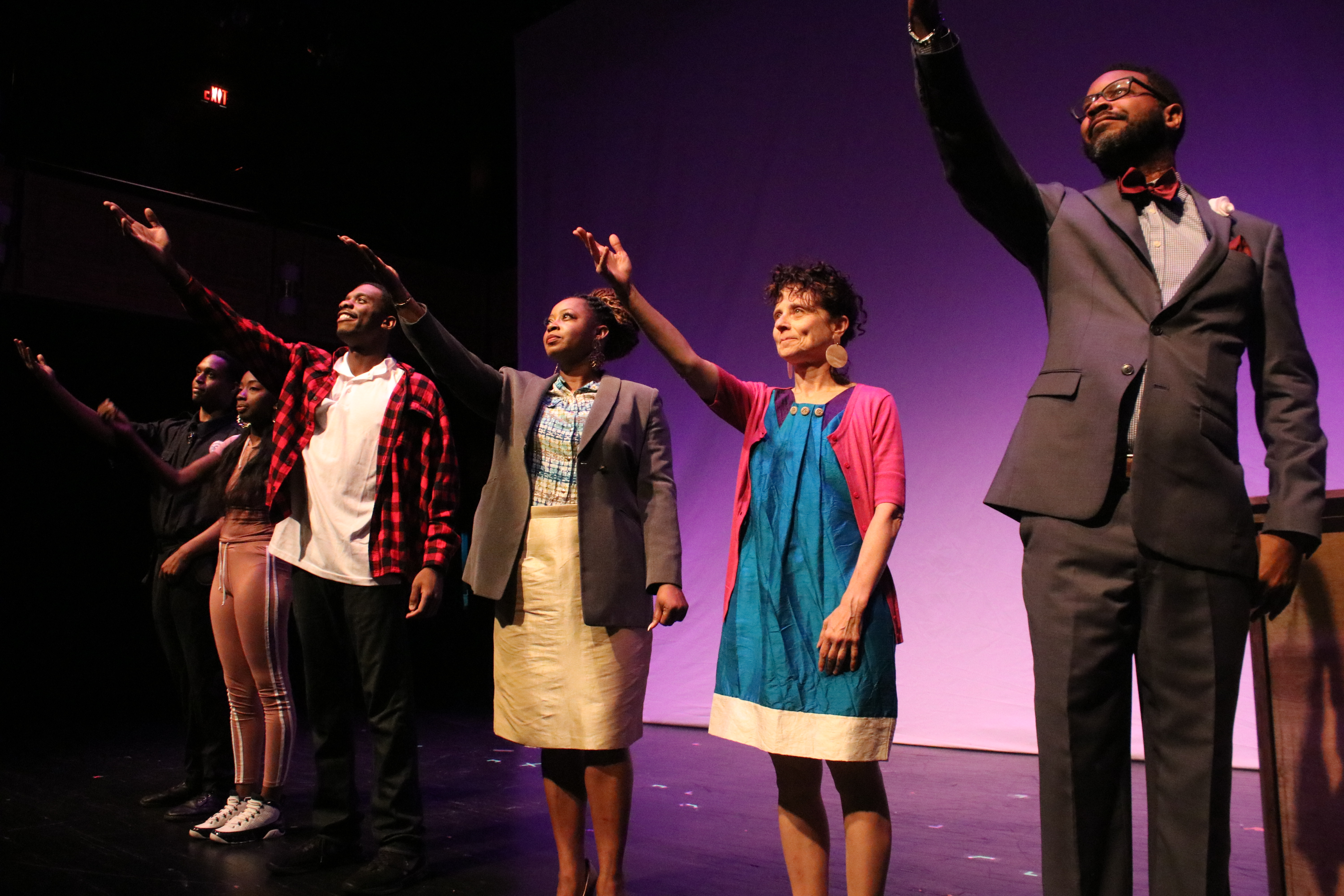
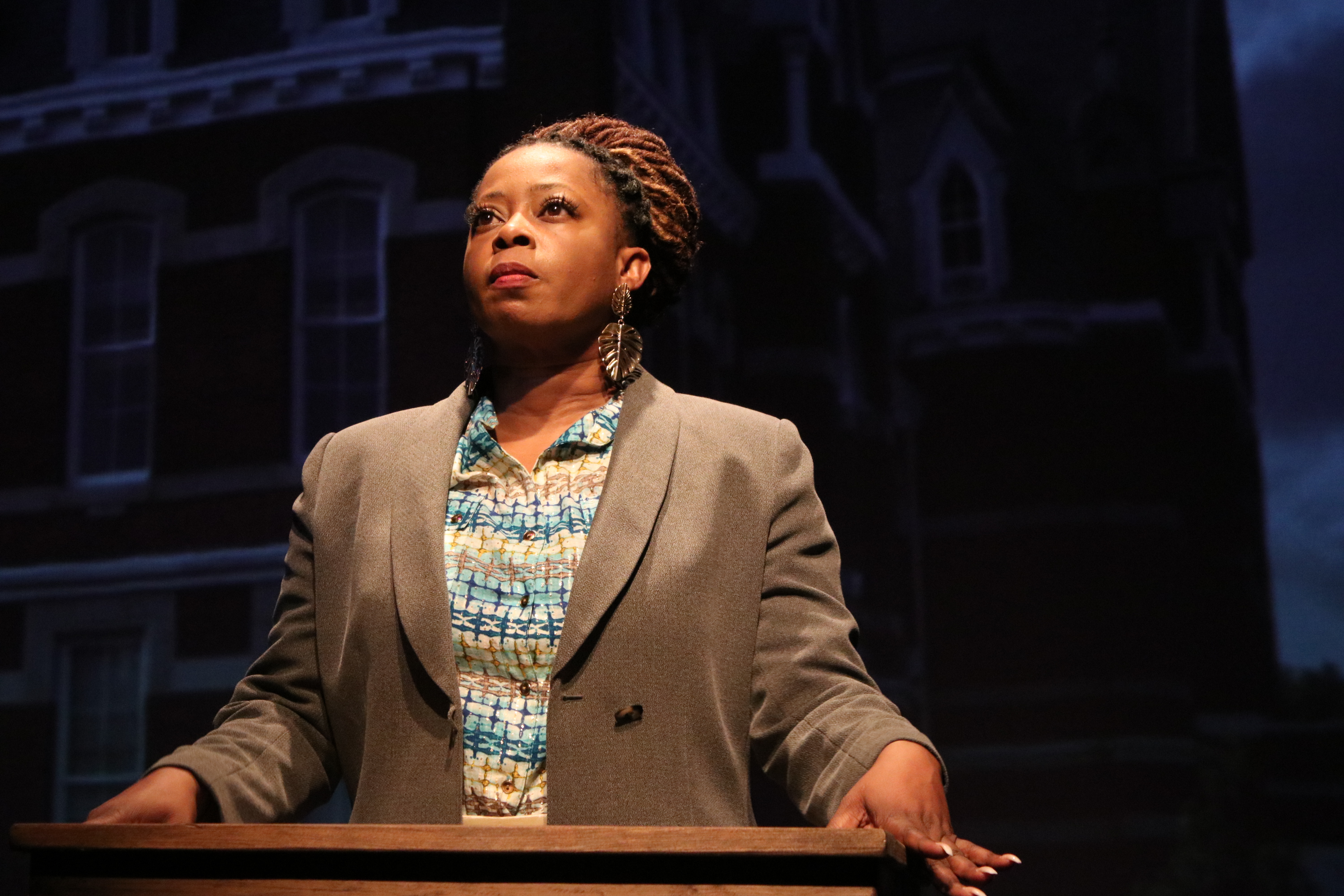
Scott gives us more than a hint that Colored Man was written as a companion piece of Ntozake Shange’s for colored girls who have considered suicide / when the rainbow is enuf. That 1976 “choreopoem” had seven women with similarly abstract names, corresponding with the colors of the rainbow, and it is similarly studded with monologues and poetry. Scott’s newer piece at the Arts Factory, flawlessly cast by director Sidney Horton for Three Bone Theatre and imbued with just the right sizzle and raw edge, comes at us evolved into SLAM poetry rants rather than incantatory spells.

Less obviously, Scott’s form is modeled on “Four Women,” one of Nina Simone’s signature songs. Simone gives us the names of her women after she has told their stories, but we’re usually not in suspense for appreciably more than a minute as the complete sequence clocks in at under five. Unless you’ve paid close attention to your playbill before the lights dim, this playwright will make you wait nearly the full intermission-less 90 minutes until, one by one, we get the group reveal.

Thankfully, plenty of names pop up in various scenes. At the barbershop, Kobe, LeBron, and MJ are upheld as the GOAT by bickering customers and kibitzers, moving right along to a similarly lightweight comparison of rap giants past and present. Equally memorable, and no less intense, there’s a lengthy dispute about the best basketball sneakers of all time as the group stands in line for a latenight release of the newest Jordans carrying the legendary Jumpman logo.

Wisdom welcomes us to Joe’s Barbershop, but it becomes clearer as the meandering chatter proceeds that old Joe has retired or passed away, leaving him in charge. Nor does anybody identify Depression as he’s bagging groceries, retrieving carts, or stocking shelves at Whole Foods, though he relays boss’s orders to an offstage Timmy. So as Scott veers and swerves on his path of SLAM poetry and raw prose, with some rhythmic prose bridging the gap, he is also at play with raw specifics and unspoken generalities.

The opening question that Depression poses, “Who is the Colored Man? Is he a king… or is he a slave?” invites that kind of approach. Or evasion. Ironically, only Depression will introduce himself well before the evening is over – at a little past 7:30 PM. One of the ways Scott has of stringing out his opposing tracks is by offering signposts in his stage directions that tell us what time of day it is, steadily moving us forward. Horton has these projected on the upstage wall perfectly on cue.

And whether you’re Love or Lust, Depression or Happiness, you have a personal story. Depression, for example, fumbled an opportunity to break away from Brooklyn and attend MIT on a full scholarship. Giving that up by taking care of his mom – without a moment’s hesitation – he settled for the ongoing indignity of Whole Foods.

On the other hand, Happiness is a stranger in town, living with his fiancé. He grew up in the South, his parents were the first in his family to earn six figures, and that’s why he was shunned by the relatives back home. Up in Brooklyn, he feels no less alienated, because he is prosperous and because he is gay.

Scott is pulling hard here against answering his own opening question. The reason that such fascinating hostility flares up between Depression and Happiness in an aisle at Whole Foods is that neither one can answer “Who is the Colored Man?” when they meet one. Both pointedly tell each other “you don’t know me” – which is what any of Scott’s characters could have shouted at us at the beginning if the playwright were less designing and discreet. Or if he hadn’t been aware that Colored Men themselves cannot answer any better than by telling us, one by one, who they are.

It’s hard for me to resist applying the same observation more widely to the whole Black theatre scene in Charlotte these days. Having sampled Penumbra in Minneapolis presenting August Wilson, Black Ensemble in Chicago celebrating Marvin Gaye, and a multitude of companies from across the US bringing their best to the National Black Theatre Festival in Winston-Salem in even numbered years – ahem, the International Black Theatre Festival for 2024 (July 29-August 3) – I’m always telling people that the Black performers, directors, and theatercraftsmen that we have in the QC are second to none.

Catch is: not only doesn’t the Charlotte theatergoing public seem to realize the bounty in our midst. The artists themselves seem to be sleeping on it. To a greater degree now than ever before, when we were merely equals.

Lesser performers and directors might struggle with the challenge of portraying Anger, Passion, or Wisdom and real people at the same time. Horton and his able cast wisely let it slide. When he’s not shaving, shearing, and trimming at Joe’s, Devin Clark as Anger trains and does drills with highly-ranked basketball players who aspire to the big-name colleges, the NBA draft, and huge commercial endorsements. Now they’re possible in college! Or he drifts into nostalgic recollections of his peak playing days when he was “nice.” He earned his scholarship back in the day, so he’s worried about how today’s NIL generation will maintain their dedication – and their grades, if b-ball doesn’t pan out.

Jonovan Adams, another mainstay on the local scene, also assumes a mentor’s role as Passion, a seasoned teacher of 26 students – plus cameo roles as social worker, psychiatrist, and surrogate parent, depending on the kid and his or her homelife. Neither Passion nor Anger is likely to strike you as particularly tough: more likely, Clark and Adams will come across as personable and authentic as ever.

It is well that Passion invokes the OGs of yesteryear who helped him growing up, hanging around the hood and doling out free advice. He wants to be one of those old heads now, a street scholar. That’s what cool, easygoing-yet-stern Graham Williams personifies at his shop as Wisdom, conscientiously doling out sharp cuts and implacably demanding a buck for the swear jar each time a customer – or Anger – curses or breaches decorum.

Dionte Darko as Lust is the most-often-fined in the group, a youngblood with repeat offenses in swearing, misogyny, and homophobia in and out of the barbershop. With his undimmed geniality, Darko is so useful to have around. Aside from needing to apologize to Wisdom for his multiple trespasses, he also riles up the romantic Daylon Jones as Love, so vulnerably poetic in his amatory feelings that he has not yet dared to approach his beloved – while Lust will instantly harass any skirt that walks by, previously known or not.

With similar boorishness, Lust also runs afoul of Nehemiah Lawson as Happiness. Renowned as the Minstrel of Something Rotten and Leading Player of Pippin at Theatre Charlotte, lead Drifter in Beautiful at Matthews Playhouse, and _thesingingdentist on Instagram, Lawson has more than sufficient urbanity and polish for portraying a relatively mundane financial director, so it’s interesting to see him in a performance that discards stage magic in favor of wariness, loneliness, and a touch of anxiety.

Maybe Scott would have preferred someone older than Lawson in Happiness’s encounters with Lust and Depression, but in the Whole Foods scene especially, Horton’s calculus paid off for me though it changed the chemistry. If there was any bullying flavor intended in the hostility between Lust and Happiness, that is gone.

Marvin King bookends the show as Depression and, with a long white tunic that echoes the twin white fires of his flowing beard, sanctifies it with a mystic, ceremonial aura that the more worldly SLAM poetry and prose never dispels. King’s mighty presence certainly endures when he descends to the degradation of a Whole Foods grocery drudge, and the reason why he discloses his name before anyone else will become clear enough if we’ve watched closely. In this cityscape of living, breathing, struggling abstractions, Depression is probably the one who best encompasses them all. By that time, Scott has fastened upon a fresh muse, supplanting Shange’s Colored Girls and Simone’s “Four Women.” This third inspiration is Lorraine Hansberry’s Raisin, handed down from Langston Hughes, and the effects of the sun are still the same as they were at the height of the Harlem Renaissance

Trying an Offramp on the Highway to Prison

Review: Pipeline by Three Bone Theatre

By Perry Tannenbaum

Pipeline Cast 

One of 25 winners of the MacArthur Foundation’s “Genius Grant” last year, playwright Dominique Morisseau has begun, somewhat belatedly, a stealth invasion of the Queen City. How stealthy? UNC Charlotte and Three Bone Theatre, the first two outfits to present Morisseau works here, both latched onto the same acclaimed Detroit ‘67 for productions that would have opened a little more than a month apart.

That mutual unawareness was mercifully cleared up. Instead of two competing productions of the same 2013 script, we’re introduced to Morisseau by Three Bone with a newer work, Pipeline, that premiered at Lincoln Center two summers ago. ’67 matriculates on September 27 at the Robinson Hall Black Box.

Nya2

With a detached black dad checking his smartphone instead of making quality time for his teen-aged son, Pipeline feels 50 years more contemporary than Detroit must be. Yet the tide that high school English teacher Nya desperately resists, the progression of young black men’s lives from school to prison, comes at her with the lethal force of an eternal verity. Like mythic Greek royals seeking to avoid a sure fate pronounced by a Delphic oracle, Nya and her ex-husband Xavier have sent their son Omari off to a private boarding school to avoid the inner-city trail to incarceration.

It isn’t working. Although he isn’t dealing drugs, isn’t in a gang, and has a girlfriend who values him, Omari is volatile. In a classroom discussion of Richard Wright’s Native Son, the teacher has zeroed in on him to explain why Bigger Thomas explodes with such anger and violence – presumably because he, as the black kid the class, was best qualified to understand.

Omari

The questioning escalated in a confrontation and then a physical action from Omari that seems open to dispute. Push, shove, assault, or a simple attempt to leave the room? Whatever happened – we never see the video that went viral – Omari not only faces possible expulsion but the teacher might press charges. Jail may already be on the horizon.

Nobody takes this unexpected defeat harder than Nya. She hasn’t merely been fighting against this tide of imprisonment and doom in her family. Every day in her classroom, she fights the good fight with wave after wave of young men, period after period, year after year. Teaching Gwendolyn Brooks’s “We Real Cool,” written in 1959, Nya doesn’t merely wish her students to understand what the dropout pool players are saying in their semi-literate three-word sentences, she wants them to avoid living it.

So as Nya melts down in front of her students, Omari’s fate and her defeat acquire an Arthur Miller All My Sons moral weight, for she is angered and tinged with guilt at the same time. She is dangerous and out of control as she barges into Jasmine’s dorm room, demanding to know where her son has run off to.

Here is probably the best entry point into Morisseau’s subtext, for Nya gets a free pass on losing her cool and overstepping where Omari doesn’t. Just don’t get so caught up in Nya’s trespasses that you sleep on those of her colleague, Laurie, a white teacher. My first impulses were to see her as an empathizing sounding board for Nya’s anguished feelings and, together with security guard Dun, as a co-worker who underscores the sense of working in a terrifying, corrupting jungle teeming with at-risk youth.

Nya&Omari_2

Ah, but keep your eye on what happens after Laurie snaps, striking one of her students – to break up a fight! Criticism gets hurled at Laurie by Nya and Dun, and surely there will be consequences from New York City school administration. But nobody onstage, not even Nya, believes that Laurie might be fired (in effect, expelled) and nobody, including me, entertains the notion that she might be brought up on assault charges.

These assumptions are the exact opposite of what we take for granted as applying to the Omaris, the Trayvons, and their black brethren striving to reach adulthood in America without being jailed or shot down in cold blood. We’ve all been numbed by this norm that is so hard-wired into American life.

While scene changes at Duke Energy Theater are a bit plodding in this Three Bone production, Ryan Maloney’s set design takes us where we need to go, and his projections add liveliness to the action, especially the poetry demo. Directing this meaty, turbulent, and layered script, Sidney Horton keeps the heat at about medium-high, so the playwright’s light shines through and we don’t suffer exhaustion.

And my goodness, the high-grade performances we get from LeShea Nicole as Nya and Susan Stein as Laurie make Horton look like the genius. Nicole discards all the irony we’ve seen from her in the past and gives us an earnestness and a heart-on-my-sleeve openness that marks an artistic breakthrough. When Nya teaches the last sentence of the Brooks poem, “We Die soon,” we get the full impact of what she feels is at stake.

Yet Nicole doesn’t get the luxury of delivering full-bore anger and toughness all the time as Stein does. Nya has a tender maternal side that peeps through even in the confrontation with Jasmine, Omari’s girlfriend. Stein offers us the sort of scrappy New Yorker whom I remember seeing and hearing so often when I was growing up. Yeah, her Laurie is back on the job after having her face put back together, but don’t you dare pity her.

Nya&Omari_1

All of Nya’s fire and fury would be for naught if Morisseau hadn’t endowed Omari with enough complexity, strength and nuance for her to care about. Deandre Sanders takes a beautiful approach, playing Omari as a troubled young man rather than an immature teen. Nor does Sanders mute Omari’s big blind spot, his perpetually seething anger toward his dad. Omari’s scenes with Jasmine, his mom, and his dad are all multifaceted, Sanders projecting a manly grace and style that only partly veil the powder keg. Omari and his dad arguably draw the most noteworthy of Davita Galloway’s costume designs. That never hurts.

Slick, cold, and distant as he may be, Graham Williams as Xavier lets us know with only a trace of bitterness that he has taken the bullet for the breakup of his marriage to Nya. She slammed the door on him, now wants him back, and all this while has been peddling the myth that he abandoned his family – stoking Omari’s anger and partiality with the deception. So the guilt that afflicts Nya is not at all numinous.

Morisseau and Horton don’t neglect the smallest roles. While somewhat annoying in his pursuit of Nya, Marcus Fitzpatrick as Dun ably makes his point that the English teacher might be doing some income group profiling in undervaluing the school security guard. Meanwhile Alexis Jones gets to spray Jasmine with a few immature traits, letting us know there are some smarts mixed in with the coed’s insecurities and, in her showdown with Nya, that there is true worth behind her petulance.

People Messing With Other People Keep “The Luckiest People” Lively

Review: The Luckiest People

By Perry Tannenbaum

“Grow old along with me, The best is yet to be,” Rabbi Ben Ezra famously says in a Robert Browning poem, but tragic heroes King Lear and Willy Loman would probably have sided with my mom. She keeps telling me: “Young is better.” At Hadley Theatre, tucked away on the Queens University campus, playwright Meridith Friedman significantly compounds the controversy in The Luckiest People. In this Actor’s Theatre of Charlotte production directed by Sidney Horton, Friedman’s charming comedy-drama revolves around Oscar Hoffman, who is stranded by the death of his beloved wife, Dorothy, in a California assisted-living community, deeply lonely with myriad aches, pains, and complaints.

Most of these complaints, some fairly hilarious, are poured into his son Richard’s ears – plus the insinuation that he was responsible for letting his mom die. Oscar’s other child, Laura, has managed to distance herself from the fray, living in Shanghai and delaying her arrival until the funeral because she couldn’t stand to face her mom during her final hours.

So yes, Friedman sometimes seems to hint that caring for your parents as they journey toward their final transition might be at least as agonizing as experiencing it. That impression, however, is undercut by another perspective.

Layered onto all the love-hate friction between Oscar and his children is Richard’s relationship with his partner David. Richard and David are close to adopting a son when Oscar, ignorant of these plans, decides that the time has come for him to leave his place and move in with his son.

One transitioning child is enough for Richard and David to handle in their household, but David watches as Richard uses his father’s needs – and the possibility of his moving in – as excuses to drag his feet on the adoption. Although he himself becomes the target of Oscar’s testiness, David also sees that Richard is more than a little hypertense in dealing with Dad’s needs, complaints, and accusations. Oscar and Richard were born and raised as New York Jews while David is a comparatively mellow California Christian, apparently unacquainted with weaponized guilt.

Because Laura must return to Shanghai, Friedman compresses the bulk of her action into just a few days. That’s long enough for David – and us – to get the notion that Richard and Laura aren’t suffering so much because their dad is really tormenting them. They’re suffering because neither of them is really a grownup. Maybe Richard isn’t ready for parenthood after all.

Leaning over to that point of view can happen if we forget what a handful Oscar can be. Or we can catch ourselves laying the blame on Oscar for his children’s stunted growth. It’s complicated. Fully drawn dramatic families usually are.

Clearly reveling in the height of the Hadley, where Actor’s Theatre has recently inked a deal to be Queens U’s resident theatre for the next five years, executive director Chip Decker has put on his scenic designer hat and built two adjoining rooms at different levels. One of them is Oscar’s modest living room and the other, tellingly larger, is Robert’s kitchen. Of course there’s room for everybody!

Horton has a great sense for how Friedman’s comedy and drama should mix and how the Hoffman family’s humor and anger should suddenly erupt – and there’s a pretty wonderful cast at his command. In this rolling world premiere, Dennis Delamar gets the chance to reprise and further develop his Oscar, a role he originated in staged readings at the NuVoices Festival of 2016. Stooped over, stubborn, selfish, whip smart, and half blind, he is a thorny person to deal with. He’s still holding a grudge over transplanting from Great Neck, New York, to sunny California; yet late in life, Delamar shows us very naturally that Oscar still has possibilities for personal growth.

On the other hand, we might resist the notion that the perpetually tentative or exasperated Richard will ever loosen up, for until the final scene, in a nuanced performance seething with hidden fire, Tim Ross keeps him looking stressed or depressed. Some of that anger even carries over from his scenes with his father and his lover to his scattered tête-à-têtes with his wayward sister. Huddled with little Laura, Ross makes sure we also see an older, wiser brother, with glints of maturity, responsibility, and an aptitude for parenting.

Eventually, both Oscar and Richard emerge as our protagonists. When that happens, we’re likely to realize that Laura and David have both been part of the alchemy. Susan Stein makes an auspicious Charlotte debut as Laura, obviously the loosey-goosey sib from the moment she first enters. Laura is the one who has taken all the leaps into matrimony, motherhood, and now infidelity that Richard is wary of, and Stein makes her self-justifying zingers nearly as memorable as those Oscar aims at his caregivers and over-the-hill neighbors.

All of Friedman’s illuminating edifice probably wouldn’t have collapsed if she had made David a little less perfect, but Scott A. Miller, one of our best, finds a way to texturize him. Mostly, we empathize with David because we see how hurt he is by Oscar’s slights and Richard’s failures to commit, smiling weakly yet persevering with firm resolve. He also has a tête-à-tête or two with Laura, but you can count on Miller to make these more relaxed, conspiratorial, and gossipy.

My only disappointment on opening night was the size of the crowd. The place on Radcliffe Avenue can be a little difficult to find the first time out, but a show this warm and rich is definitely worth the trouble. These are, as the relevant song says, “people who need people,” and you’ll likely never see Delamar or Ross in better form than at the Hadley in The Luckiest People.

Playwright Imposter Goes Off-Script in “The Submission”

Group1_HiRes

Review: The Submission

By Perry Tannenbaum

A gay white playwright and a black actress walk into a bar… Not a promising lead-in to a joke, because nothing funny or violent should happen. Writers who pen scripts about racists or homophobes for theatre, film, and TV usually draw a free pass when we ask ourselves if they might be harboring prejudices of their own. Same with the actors who appear in such productions. Surely they are as progressive and tolerant as the authors who create their roles.

Maybe more progressive and tolerant than we are.

In Jeff Talbott’s The Submission, currently at Spirit Square in a Three Bone Theatre presentation, we can trash those presumptions – under circumstances that would ordinarily strengthen them. Talbott’s protagonist, white gay playwright Danny Larsen, has written a drama about a black alcoholic mom, her cardsharping son, and their struggles to escape the projects. Takes some empathy to do that, right?

Danny has never had a play of his produced before, but he thinks this one might be special. His best friend Trevor agrees, so Danny submits his street saga to the prestigious Humana Festival, hoping that he will be among the elite few whose work will be premiered at the annual New Play Festival in Louisville. But to make sure his whiteness doesn’t become an obstacle in recognizing the merits of a play with black leads, he invents the African name of Shaleeha G’ntamobi to become its author.

When Humana phones to tell Danny that his script has been selected for the New Play Festival, he could own up to his subterfuge right then. But – reasonably or not – Danny is afraid that the prize will be withdrawn of he comes clean. So he temporizes, saying the playwright isn’t at home, and hurries out to hire an actress to impersonate Shaleeha.

It takes a few moments before the chosen actress, Emilie, can grasp Danny’s intentions – and for Danny to convince her that there’s no kinkiness involved. Wile Danny has demonstrated considerable empathy toward black people, Emilie is honestly impressed with the play, despite the playwright’s fears that he has trespassed onto forbidden territory. Plenty of goodwill on both sides.

Yet things go badly after the first meeting. Danny has a number of personal insecurities, more than a little buyer’s remorse, but worst of all, casual prejudices against black artists that he hasn’t faced up to. They begin to pour out during a second meeting – at a coffee shop, not a bar – when Danny refers to black actors as “blactors” and the awards they win as “blawards.” The unsavoriness of that viewpoint is compounded for me by the signals I get from Danny that feels entitled to speak his mind so brusquely because he’s Emilie’s employer.

Emilie doesn’t listen to these slurs passively – unless you construe a response like “You’re so full of shit your eyes are brown” as deferential. What began as a mutually beneficial relationship has already degraded into an uneasy détente. As the pre-production process unfolds in Louisville, with Danny missing out on all the little perks of close contact and communication with the big-name artists converging on the festival, Danny’s resentments and jealousies heat up and his attitude toward Emilie becomes more toxic. Dropping the director’s nickname can set him off.

No doubt about it, the balance of my sympathies went out to Emilie as she kept drawing Danny’s scorn for merely doing what he hired her for. Even when some of Emilie’s anti-gay attitudes surfaced, things didn’t even out for me, because some rational thought verifiable observation was actually mixed in with her resentment – and because Danny goes nuclear in their final verbal faceoff.

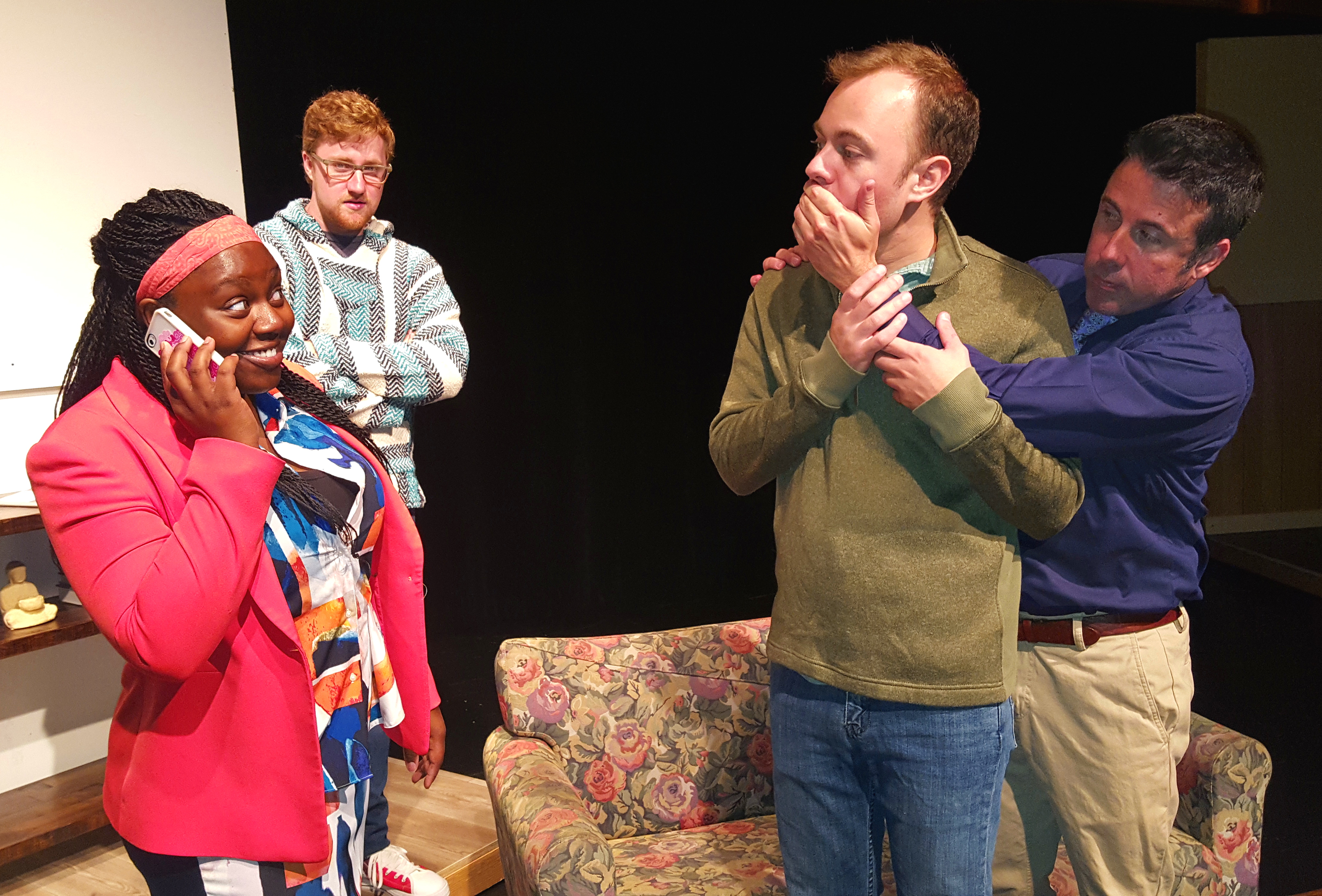
If you can see this explosion coming, the venomous crossfire may feel a wee bit overlong, and I was not very convinced by the way Talbott has Danny handling the aftermath of his festival acclaim. But director Sidney Horton keeps the action as taut as possible, and Scott A. Miller keeps us fascinated with each new slimy twist of Danny’s personality. We can believe that the same insecurities inside Danny that produce such aberrant attitudes might also produce great art.

On the other hand, Talbott has incorporated some entertaining – and dramatic – complexities into Emilie. In her Charlotte debut, Lechetze D. Lewis captures all that’s engaging and spontaneous about Emilie and all that’s strong. Not only does she deliver a groupie’s euphoria while she’s mingling with theatre royalty, she adds an extra dollop of giddiness as romance blossoms between her and Trevor. You don’t really marvel that a free spirit like this would go off-script when she’s supposed to read Danny’s acceptance speech.

But is she more cunning and All-About-Eve than she first appears? That’s a big question Talbott keeps nicely float, helped by Lewis’s pugnacity.

Trevor is caught in the middle of the crossfire as he becomes more seriously involved with Emilie. He’s somebody who readily grasps Danny’s blind spots, and Daniel Henry perfectly calibrates his weakness as a right-minded peacemaker – so I completely bought his allowing himself to be told to shut up while the main battle raged.

I’m not sure that Talbott didn’t intend Pete, Danny’s CPA-like partner, to be more of a clueless hunk. Yet Horton’s somewhat outré casting choice, Dan Grogan, keeps things very real during the marital infighting. Though Pete remains a needless appendage in the plot, he’s a stuffy outsider who makes our badly behaving protagonists seem more palatable. There’s an intentional poetic justice when Grogan’s best moment happens while he’s offstage. He’s that untheatrical.

Talbott is appealing with his self-regarding cleverness, particularly when Danny’s play mirrors his own. But more often, he seems intent on wearing the David Mamet mantle for faithfully transcribing Generation X. Sentences from these 28-year-olds repeatedly proceed after multiple false starts and loose fragments, often getting tangled in multiple detours before reaching a period – particularly when Miller deftly navigates as Danny. Every person onstage, especially the artists, seems compelled to drop at least two f-bombs with every breath.

Peppered with fucks and the occasional shit, the dialogue at Duke Energy Theatre doesn’t shock me so much as irritate me as The Submission barrels along. If this tedium and annoying effect are the crux of Talbott’s point, he’s making it too obliquely. And if he’s trying to assert that effing Gen-Xers really effing talk this way, I do not effing agree.

But selfies of a hot actress’s boobs messaged to her boyfriend? In the age of Anthony Weiner (and Snapchat), I wouldn’t be shocked to learn it’s happening right now.

A Farce That Turns Fierce

Preview :  Three Bone Theatre’s The Submission

By Perry Tannenbaum

We’re right to be suspicious of leaders who loudly spout their righteous certitudes. Thoughtful people know that moral rectitude, ethnic traditions, civil liberties, and political correctness can often crisscross into bewildering tangles and conundrums.

Sidney Horton, who is directing Three Bone Theatre’s The Submission, puts it more bluntly: “We all are clumsy when we deal with race and sexual orientation.”

Opening at Spirit Square this Thursday, Jeff Talbott’s comedy drama goes one better than holding up a mirror to our clumsiness. The playwright turns his mirror back around from his audience and shows that the same clumsiness – and assorted prejudices – also afflict theatre artists.

Talbott’s protagonist, Danny Larsen, has written a play about an African American mother and her cardsharping son striving to escape the projects to build a better life. Trouble is, Danny is white, which could seriously hurt his chances of getting produced at the prestigious Humana Theatre Festival, where he submits his manuscript. At an ill-advised moment, Danny decides to overcome this liability by submitting his playscript under the very African name of Shaleeha G’ntamobi.

Getting selected for the festival compounds Danny’s woes, because he can’t come clean about his true race and gender. Instead, he decides to hire a black actress to bring Shaleeha to life. But Danny is in for a lot more blowback than he bargains for: Emilie isn’t buying Danny’s premise that, just because he’s gay, he can understand the challenges of growing up black in America.

Horton’s choice to play Danny isn’t exactly surprising. Tackling Talbott’s playwright, Scott Miller is playing his second writer in the past four months after his role as Trigorin in Stupid F@#%ing Bird, an Anton Chekhov knockoff staged by Actor’s Theatre. It’s also déjà vu for Miller with Three Bone at Duke Energy Theater, where he was Martin, the most promising writing student in the acerbic Seminar last August.

“Trigorin in Stupid F@#%ing Bird was a joy to play because he’s one of those characters that knows how sleazy he is and revels in it,” Miller says. “Danny is the most troubling to play, and the most challenging in many regards. He justifies his prejudices and thinks his self-appointed victimhood gives him license to do more-or-less whatever he wants.”

Standing up to such insidious entitlement is a formidable task, and Horton has made a bold choice in casting his Emilie. After returning to the Carolinas from Emerson College in Boston, where she earned a graduate degree in publishing, Lechetze D. Lewis has circled the QC in three previous outings – two in Concord, one in Mooresville – but her role in The Submission will mark her Charlotte debut.

“Lechetze had a fire about her in auditions,” Horton recalls. “I knew I had to have someone strong that could more than hold her own against Scott. I took a chance with Lechetze, and boy did it pay off.”

Needing to ensure that all four of his cast members felt comfortable with one another at rehearsals, Horton made sure there was plenty of discussion about the issues that Talbott’s script addresses. Yes, there were disagreements as the cast talked things out, but professionalism has prevailed.

“The play deals with LGBT rights, racism, discrimination, affirmative action, non-traditional casting and who has the right to say or do things when it comes to someone else’s identity or culture,” Horton declares. “All of these issues are pretty hot right now in America – we are more divided now that we have been in recent years. The thing that strikes me most, and one of the main reasons I wanted to do this play, is it deals with these issues in the arts community. We as artists like to think of ourselves as being all-accepting and non-judgmental. Are we really?”

With such questions floating in the air, rehearsals can be stressful. In the heat of the moment, hurtful comments hurled in your face by a fellow actor addressing your fictional character can still hurt. Identifying with Emilie as a black artist, as Lewis must, she can hardly be invulnerable when the conflict with Danny has so much relevance to her daily life and self-image.

“Something that really gets to me is his idea that black actors who win awards don’t deserve to win what was created for whites,” Lewis says. “As an artist, I hope that any awards I receive will be acknowledged as something that my hard work has earned… but Danny doesn’t see it that way. Scott is an amazing actor to work with and he definitely doesn’t hold these views, but he’s talented enough to make those words sting. I am so lucky to be working with an actor who takes the time to check in on how we’re both feeling and if we’re okay to move forward.”

Horton has also been helpful for Lewis, frequently reminding her that she does win in the end. Conversations with Miller and the other two cast members, Dan Grogan and Daniel Henry, about how the script has affected them personally have been doubly beneficial for Lewis – not only soothing her emotions but helping her to shape her performance.

Of course, Emilie also dishes out a harsh word or two.

“I will admit to having a bit of fear regarding how she’ll be perceived,” Lewis confides, “because so much of what she says is hypocritical. But it doesn’t mean that, in some aspects, she’s completely wrong.”

Horton has another succinct comment about the intensity of the crossfire in The Submission: “Thank God for the comedy in this show – it makes it palatable.”

Talbott doesn’t turn on the heat immediately. There’s a certain point, says Miller, when the tone begins to change. Even then, there’s a gradual crescendo leading up to the inevitable fireworks between Danny and Emilie. Along the way, we realize that Talbott’s farcical plotline isn’t going to play out strictly for laughs.

At the same time, the playwright is turning his telltale mirror toward us. There will likely be a recoil factor when we recognize ourselves.

“While watching The Submission,” Miller cautions, “many people will agree with some of the controversial things the characters say. I predict several lines will get a chuckle before the audience realizes the inappropriateness of the character’s comment. The play is not out to condemn or chastise anyone in the audience. But I think – or hope – it will make many think about their implicit and explicit biases.”