Tag Archives: Zachary Tarlton

Hollywood Superstars Who Graced the QC’s Park-N-Shop

Preview: QC Concerts’ Side Show at Booth Playhouse

By Perry Tannenbaum
When Louella Parsons, the undisputed queen of Hollywood gossip, saw the Hilton Sisters’ first movie in 1932, she proclaimed: “For pure sensationalism, Freaks tops any picture yet produced. It’s more fantastic and grotesque than any shocker ever written.” At the height of their fame, Daisy and Violet Hilton could fill a large stadium.

Or at least, they tried. On July 18, 1936, billboards all around Dallas – some as large as 60 feet tall – invited the public to the Centennial Exposition at the Texas State Fairgrounds. For just 25 cents, you could enter the Fair Park Stadium, newly rebranded as the Cotton Bowl, and attend Violet’s wedding, with twin sister Daisy as her maid of honor. Afterwards, the sibs would perform with their dance band.

How could it be otherwise? For Violet and Daisy were Siamese twins, joined at the hip. Superstars. During their careers, they performed with Bob Hope, Jack Benny, and Burns & Allen. Hope and Burns were the sisters’ most illustrious dance partners! But the Hiltons died in relative obscurity. When they hadn’t shown up for work at the Park-N-Shop on Wilkinson Boulevard for a few days, Charlotte Police found them dead in their nearby apartment on January 4, 1969 at the age 0f 60.

The Siamese twins – actually born in Brighton, England – had succumbed to the Hong Kong flu. Blame it all on the Asians, right?

There should be a soft spot in Charlotteans’ hearts for two of our own and for Bill Russell’s Side Show, the 1997 Broadway musical about the Hilton Twins’ rise to fame. But no matter how thoughtful and intriguing the original version and the revised 2014 revival were to reviewers, neither production gained box office traction in New York and neither toured here.

Until now, the only adult company to present Side Show in the Queen City was the Queen City Theatre Company at McLohon Theater in 2008. The McLohon was an ideal locale for the seedy, carnival ambiance of Side Show. Russell’s cast includes not just the Twins, after all, but also a Cannibal King, a Snake Woman, a Reptile Man, three Harem Girls, and – perhaps most monstrous of all – The Boss who employs, exploits, and abuses them.

Though pennies won’t get you into this show unless you have a huge jarful, the freaks return to Charlotte this week – with their startling welcome.

Come look at the freaks

come gape at the geeks

come examine these aberrations

their malformations

grotesque physiques

only pennies for peeks

Once again, The Boss will invite you into his “odditorium.” While the McGlohon and its Spirit Square cohort, Duke Energy Theater, remain in hibernation until 2027, undergoing their makeovers, Queen City Concerts is reviving Side Show at Booth Playhouse. It’s a more intimate Blumenthal Arts venue than the McGlohon, true enough, but not quite as creepy.

Chief chef directing this colorful cast – and leading a full orchestra playing Henry Krieger’s music in Harold Wheeler’s original orchestral arrangements – is QC founder Zachary Tarlton. Adoration of the original score is Tarlton’s specialty, but here he had the luxury of cherry-picking from two Broadway versions, maybe shuffling the songlist a little and restoring some of the 1997 tunes that had been dropped in crafting the more historically accurate 2014 revision.

“We chose to do the original 1997 Broadway version of Side Show,” says Tarlton, “because it is Side Show in its purest form. While the show closed quickly, it garnered several Tony nominations and launched the careers of its leading ladies: Alice Ripley and Emily Skinner. For those unfamiliar with the original show, the 2014 production seemed polished and pristine. For fans of the original, it was met with harsh criticism.”

Fans of the original, Tarlton will tell you, are a cult following. Whether the stars of the new QC Concerts production, Ava Smith as Daisy and Sierra Key as Violet, are members of that cult is an open question. But they are both fervid admirers of the show.

Before Tarlton saw her as his Daisy, Smith had portrayed Violet in a Teen City Stage presentation at CPCC’s Pease Auditorium in 2016 – while she was still a high schooler in Gastonia. Key was also in high school when she first met Smith in 2013, and they’ve been besties ever since their first show together.

Naturally, Key saw the 2016 show that starred her bestie. In a freakish reenactment of Side Show scheduled for later this year, Smith will be one of Key’s bridesmaids at her wedding.

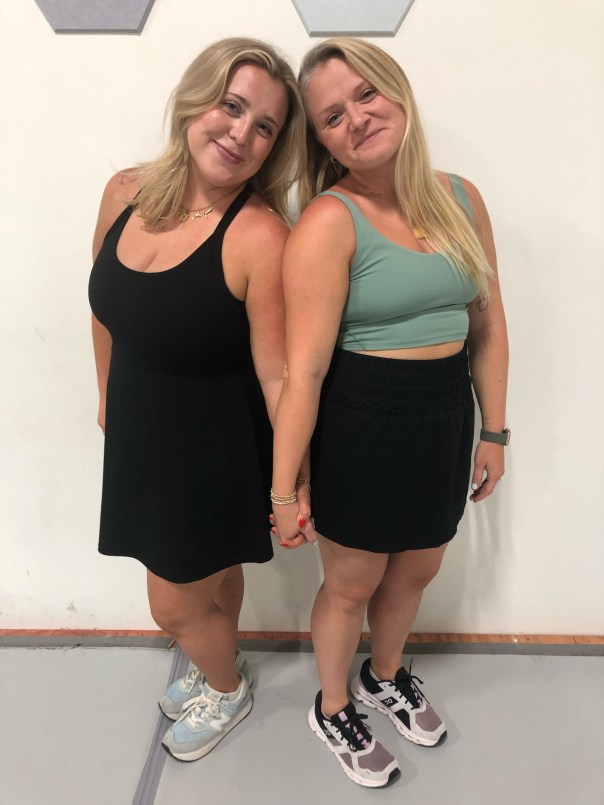
“A little fun fact,” Smith adds, “people often mistake us for sisters! Just like Daisy and Violet, we have stood by each other through the good and bad times. Our connection in real life makes the necessary onstage connection come naturally.”

Russell sharply differentiates Daisy from Violet early on in his script, while they’re still slaving on the midway. Two young men, Terry Connor and Buddy Foster, secure a private audience with the sibs after their freakshow. Buddy’s idea is that he could teach the Hilton Twins how to sing and dance while Terry can get them a shot in vaudeville as their booking agent.

Both of the women would jump at the chance to escape the side show, but until now, they haven’t been offered a feasible alternative. The Boss keeps them under lock-and-key as part of his freak collection.

It’s Terry, not quite on board with the vaudeville scheme, who asks what the sisters yearn for.

“Daisy is bold, outgoing, stubborn, and determined to be famous,” Smith says. “She loves performing and knows exactly what she wants. Violet is shy, sensitive, and just wants a simpler, quieter life. But even with those differences, they share such a deep love for each other and a longing to just be ‘Like Everyone Else.’ I believe Daisy and Violet really are two halves of a whole.”

As halves or opposites, they are both keenly and perpetually aware of how laughable their aspirations are to their captors and the people who pay to peep at them. Even if they are at odds, every choice they’ve made individually has been with the tacit agreement of their twin. Yes, the fiery Daisy can aspire to vengeance against the mockers and the detractors while Violet merely hopes to prove them wrong and be rid of them.

But they must move together, whatever they do, and cannot pretend they’re the same as everyone else. Daisy aims higher, fired by the full breadth of the American dream, but it’s Violet, no less American, who is more poignant and relatable.

“What’s so powerful about Side Show,” Key declares, “is that it tells the story of people who are seen as ‘different’ simply for existing in the world as they are. As someone who is part of the LGBTQ+ community, that resonates with me deeply – especially right now, in a time where identity and visibility are still so politicized and debated. Violet’s longing for love, acceptance, and belonging is incredibly human, and that’s what I focus on.

“The physical connection with another actor may be unusual, but it’s all in service of telling a story that challenges perceptions and invites empathy.”

Going back eight or nine decades, Russell can take us beyond empathy and show us quite bluntly how the Hiltons themselves had yet to evolve. Their strongest champion before Buddy and Terry arrive as deliverers is Jake. He’s not really a Cannibal King “from the inky jungles of the darkest continent,” as The Boss would have us think, nor a poster boy for his collection of “god’s mistakes.”

He’s simply a rather strong African-American man. With a very soft spot for Violet. His inability to say no to her becomes the ticket to the Hilton Twins’ freedom.

So yes, they are also capable of prejudice and exploitation.

“One of the darkest moments in the show comes late in Act Two,” Tarlton observes, “when Jake asks Violet why she will not accept his deformities when he accepts hers, acknowledging the color of his skin while he accepts her as a conjoined twin. While that was during the Great Depression, we realize this same conversation could just as easily have been today. It is a show that is challenging at the core.”

Amen. Two of my most unforgettable moments in a Broadway theater happened on the evening when I first laid eyes on Ripley and Skinner. They didn’t instantly appear as the two Hilton sisters. They converged from opposite sides of the Richard Rodgers Theatre, facing each other as they sang and, just seconds afterwards, facing us. Then they conjoined right there, magically becoming one and moving as one – as naturally as Daisy and Violet had presumably done all their lives – for the remainder of the evening until taking their bows.

This must have been exactly as Russell envisioned it. “In the Broadway production,” he wrote in his Production Note. “Daisy and Violet’s connection was created by the two actors standing side by side. They were never literally connected by corsets, Velcro or any other costume piece. This allowed the audience to participate in creating the twins’ connection with their collective imagination and made the actors’ achievement of appearing to be joined all the more impressive.”

Even more primal and gripping was The Boss’s follow-up introduction as we were led inside his side show tent alongside the other freak seekers who had paid their dimes. “Please remain in your seats,” he told us commandingly, “to experience our premiere attraction in its most revealing display.”

A dazzling blast of backlight assaulted us as the conjoined twins, standing together with their limbs splayed out, appeared in dark silhouette. The sight was shocking, like a gigantic black spider writhing before us, twice the size of a normal person.

Fascinating. Fearsome. And yet… hauntingly beautiful.

The More Things Change, the More Confederates Shocks and Delights

Review: Confederates at The Arts Factory

By Perry Tannenbaum

Symmetry, parallelism, continuity, and evolution are intricately interwoven throughout Confederates, Dominique Morriseau’s comical and sometimes farcical drama of 2022. The Charlotte premiere, now at the Arts Factory, comes to us less than two years after its Off-Broadway premiere in a highly polished, smartly aware Three Bone Theatre production.

Morriseau’s symmetry isn’t subtle: it hits us straight in the eyes the first time we see Zachary Tarlton’s scenic design. Split down the middle, the Arts Factory stage gives two eras and two institutions equal play in an intimate black box format. One side evokes Civil War slavery on a Southern plantation, while the other half introduces us to contemporary academia.

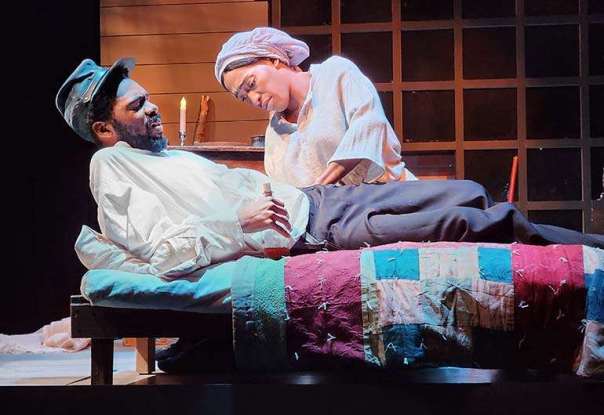
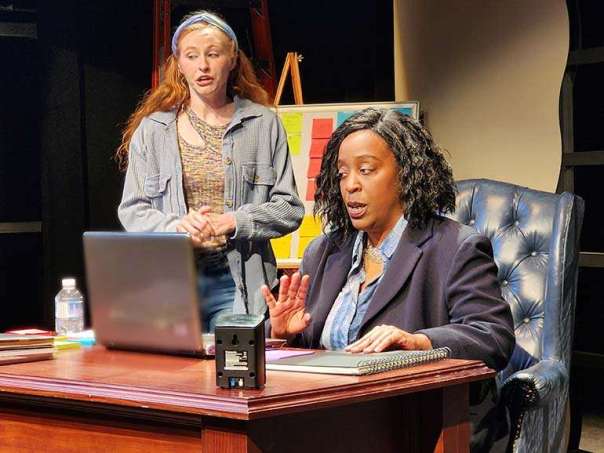
We alternate between settings, starting with Sandra, a modern tenured Black professor, proclaiming her outrage and sense of violation in vivid terms – yet with the poise and sleekness of a contemporary college lecture accessorized with slides. From that peep into scandal in present-day academia, we flash back to the slave quarters of Sara as her brother Abner sneaks into her bedroom through a concealed trap door.

Sandra has been maliciously targeted by a student or teacher who pasted a demeaning old Civil War photo of a bare-breasted black wetnurse suckling a white baby – with Sandra’s face photoshopped to replace the original slave’s. Jumping to conclusions or instinctively making connections, we’re apt to immediately believe that Sara was that nurse. Abner has volunteered for the Union Army and has been wounded in battle, so as she sews up Abner’s wound, the subject of Sara’s nursing skills is inevitably addressed.

Sara’s skills and ambitions extend further. Dangerously. She has already learned how to read, breaking one terrible white taboo, and she wishes to nurse and fight for the Union alongside her brother – to learn how to fire a rifle right now. That’s a pill Abner can’t easily swallow.

Otherwise, the two women have separate storylines until Morisseau split-screens them together at the end. Portraying Abner in his Three Bone debut, Daylen Jones is the first subordinate character to cross the invisible line between pre-Emancipation Dixie and the hope and refuge of modern-day academia. Shedding his rags and his Union blue greatcoat, Abner becomes the aggrieved Malik in today’s world. He’s obviously a gifted student, and his gripe with Professor Sandra is that she grades his papers more harshly because he’s Black, protecting her immunity from being charged with favoritism.

Seeing that there are only Black females on faculty – and no men – Malik feels doubly oppressed by bias in academe: racial bias compounded by gender bias. Notwithstanding her starchy professional manner, Sandra is more of a crusading sociologist than a sober judge. So she may indeed have fallen prey to the trope heaped upon oppressed races and genders that says, “If you wish to be treated as an equal, you need to be better.” Pragmatic? Sure. But for a gifted scholarship student seeking to maintain his A average, cold comfort.

We eventually see that there are four characters on each side of the time divide, three of whom repeatedly change costumes to play double roles. Before and after we can tally all this, director DonnaMarie and sound designer Tiffany Eck place two snippets from Nina Simone’s “Four Women” at strategic spots in their playlist, layering on extra meaning – and mythic aura – during scene changes.

If Jones can be labeled as two provocatively different militants as he roams back-and-forth from opposite sides of the stage, then Holli Armstrong (also on my radar for the first time) can be regarded as two variants of an imperfectly enlightened white racist. She is most exaggerated and hilarious on the Southern plantation as Missy Sue, the master’s daughter, when she comes back home as an undercover born-again Abolitionist. It is Morisseau as much as DonnaMarie who is prompting Armstrong to bring a Gone With the Wind air-headedness to Missy Sue – and a twisted lesbian desire for Sara – and she obliges with fiddle-dee-dee gusto.

She offers Sara a perk in exchange for executing a dangerous mission: if Sara will transcribe and transmit Master’s battleplans, she gets to live in the big house while Sue delivers Dad’s secret intelligence across enemy lines. Sure, that’s an appreciable upgrade for Sara, but she’ll still be a slave doing Missy Sue’s dirty work.

Armstrong discards Missy Sue’s pea-brained giddiness when she transitions to Candice, retaining her sycophant tendencies and much of her high energy as she haunts Professor Sandra’s office, working off her tuition debt and gathering gossip. Her true manipulativeness gradually emerges in successive office scenes, but Candice never becomes as juicy a role as Missy Sue is, for she somewhat downplays her suck-up moments with faculty.

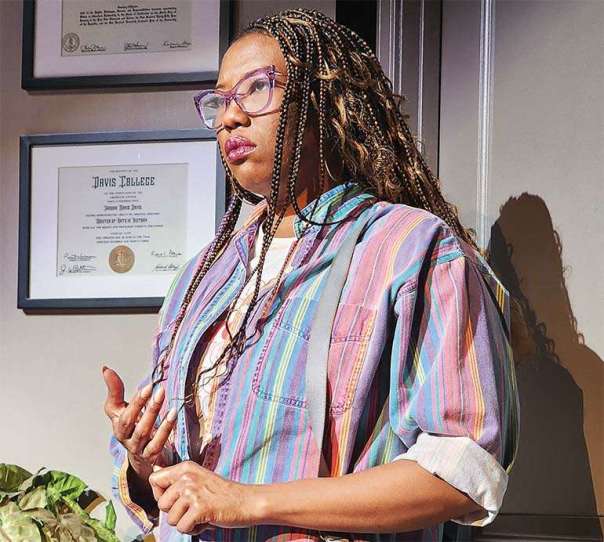
Last to appear onstage, Jess Johnson draws the most balanced – and delicious – of the dual-role combos. As the master’s Black mistress, the opportunistic Luanne effortlessly sniffs out that Sara’s access to the master’s office and desk are coming at a price the newcomer must pay, possibly beyond accepting Missy Sue’s sexual advances. On the academic side, Johnson gets the most radical of costume designer Chelsea Retalic’s backstage makeovers when she becomes Jade. Professor Jade is more stylish and popular than Sandra because she’s chummier with her students and would never dream of hamstringing the Black ones.

At both ends of the stage, Johnson gets to be a wily master of psychological warfare. Both Luanne and Jade want something vital from our protagonists. Luanne wants friendship from Sara and a path to freedom, but if Sara bars the way, she can work her charms on Abner. Needing Sandra’s endorsement, Jade doesn’t tiptoe around her differences with her superior, unleashing a torrent of scorn and chutzpah that took my breath away.

Indeed, Johnson unlocks Morisseau’s grimmest joke on her protagonists. Whether you’re at the bottom of the pecking order or at the top, you’re still the most oppressed person in the room. Times have changed, but not that much.

Sara is always being pulled at from multiple directions. Abner needs to be sewn back together, Missy Sue wants to recruit her as a spy, and Luanne wants her to plot an escape to freedom. Maybe that’s why the playwright stretched out Sara’s name to Sandra for the New Millennium! Our Professor is no less pressed upon, strongly urged to re-examine her grading philosophy, softly reassured that she is more admired than she really is, and arrogantly lobbied for tenure backing. Nobody seems to really care about the bare-breasted insult that was slapped on her office door.

Neither of these roles is fun-filled, but the challenges Sara and Sandra face allow them to grow in strength and stature before our eyes. Valerie Thames and Nonye Obichere are so fiery and authoritative in their separate roles that you can comfortably watch Confederates as two separate plays without constantly considering how meanings and brilliance bounce off the facets of the two gems. Not feeling compelled to track the finer points of Morisseau’s disquisition on racial or gender bias makes it all the easier for an audience to enjoy them.

Thames effortlessly takes on the self-assurance of an established TV guest whose knowledge and viewpoint are proven commodities, wearing Professor Sandra’s celebrity status with insouciant dignity. Just watch out when she bursts into flames! Maybe run for cover.

Although Sandra’s speeches frame the drama, Obichere gets to be a more physical presence as Sara – as nurse, spy, soldier, and lover – and she navigates a far wider character arc. Hers isn’t the funniest performance you’ll find this weekend at The Arts Factory. But it’s the most vivid, shocking, and memorable.

You may leave the theater convinced that both Sara and Sandra are depicted in that horribly racist slide. But it will mean more at the end than at the beginning. The magic of Morisseau and Photoshop are both at work.

COVID Kindred Behind the Scenes of Local Singles

Preview: Local Singles at The Arts Factory

By Perry Tannenbaum

Once you’ve scaled the summit and staged the legendary Sunset Boulevard at Booth Playhouse with a 40-piece orchestra – the pinnacle of Andrew Lloyd Webber’s achievement, or at least the K2 rivaling the Everest of Phantom –you might think that QC Concerts founder Zachary Tarlton would ask himself how can I top this? But when Tarlton formed his company in 2020, the Q stood for Quarantine, and the modest aim was to keep musical theatre going online via Instagram when actual theatergoing wasn’t possible.

So pianist/actor/musical director Tarlton can think small, no matter how wildly Queen City Concerts has grown and overachieved in less than four years. His idea of following up Sunset Boulevard is to take us from the macabre Hollywood mansion of movie icon Norma Desmond to a room at a Pittsburgh YMCA where Nancy and Richard host weekly therapy sessions that struggle to attract lovelorn clientele. That’s the main HQ for Local Singles (down the hall from Hot Local Singles), the new musical by Nick Navari.

Never heard of Navari? You are forgiven. While Lloyd Webber has been bringing hit musicals to Broadway since 1971, Navari is counting on his first Off-Broadway production to open in January 2025.

That’s the allure for Tarlton and his loyal QC Concerts fanatics: being in on a new creation from a new talent as the new organism develops. Instead of begging publishers and Broadway legends for the rights to produce their masterworks – or in the case of Parade, the stirring piece by Jason Robert Brown and Alfred Uhry, going through the ordeal of having those rights suddenly snatched away – Tarlton had the less stressful experience of Navari coming to him.

Flashing back to the summer of 2022, when QC Concerts was readying to begin its second season with the regional premiere of Kinky Boots, Tarlton recalls Navari reaching out.

“He had somehow found us on Instagram and, through the power of social media, followed along with what we were doing,” Tarlton confides. “Then he reached out to me, presented his whole kind of sales pitch for the musical.”

And why not? Backed by a grant from the National Endowment of the Arts, Navari wrote the music, the lyrics, the script, and the six-piece orchestrations for Local Singles. Then he directed the stage premiere at the New Hazlett Theater in 2021 as well as the cast album and a pro-shot film version. Musicians in the promo video for the world premiere jammed the score in surgical face masks, and the first production of Local Singles in front of a live audience didn’t happen until February 2022 at the Lamp Theater in Irwin, PA. Actors caught on-camera in rehearsals for that production were still sporting N-95s.

That second premiere was midway through QC’s opening season, a mere five months before Kinky Boots gave notice that Tarlton had his eye on blockbuster productions like Titanic, Angels in America, and Sunset Boulevard. The prevailing Tick, Tick… Boom! template of Tarlton’s opening seasonmust have seemed rightdown Navari’s alley.

So while Tarlton was navigating beyond his comfort zone with his first company, taking his quarantine concept live, Navari was venturing beyond writing, directing and performing into the wild frontiers of publicity and promotion, hawking his own work. You could say they were kindred COVID spirits. Accidental entrepreneurs.

Nor are they averse to doctoring their creations. By the time Sunset Boulevard dazzled at the Booth, Tarlton had totally discarded QC’s script-in-hand format in favor of a workshop concept with costumes, lighting, barebones, scenery and onstage orchestra. Meanwhile, Navari has not been idle. After the Pittsburgh premiere and the cast album, one of Navari’s numerous videos proclaims that he has written five new songs and added a character to Local Singles.

You don’t need to go far in the playscript to see a difference. By the second scene – and the second track of the cast album – the script and Spotify diverge. The version we will get at the Arts Factory this weekend will be the closest yet to the Off-Broadway edition slated to open at Players Theatre in Greenwich Village for a five-week engagement next January.

“He’s made a few more changes for our production,” Tarlton reveals. “So I know that he’s excited to have this chance to get it in front of another audience just to see what still may need to be tweaked and changed before it goes to New York.”

When we first see them, Richard and Nancy have been life companions for nine years, not exactly flush with success. Not only are they competing with the Hot Singles group down the hall, they are tied into a six-year deal for this cursed time-slot for another 42 months. The group seems to have been founded in order to help their friend Jack, a good-hearted paranoid mess.

We don’t meet them right away, likely because we need to be prepared for Jack’s eccentricities and for Nancy’s arsenal of therapy tools – including pairs of yellow rubber gloves, a bubble gun, a portable park bench (with an important plaque), and Morgan. In rehearsal photos, she is portrayed by a piece of hard-sided rolling luggage and the head of a mop. But she may evolve – or devolve – before performances begin at the Arts Factory later this week.

A couple of messy breakup scenes pave our way to the Y.

“So the show opens with Penny, who has just discovered that she is pregnant,” Tarlton explains. “Then we meet Wes and then Wes’s ex-girlfriend. There’s a great [new] song where she’s, like, throwing all these clothes out of the apartment. It’s the whole breakdown moment. It’s lovely.”

And it’s fair to say both Penny and Wes are hurting.

Then we travel into the support group,” says Tarlton. “Over the course of the first act, we find how Wes and then Penny makes their way into the group, one of them on purpose, one of them by accident. And then basically it tracks their continual journey with the group where they both end up continuing to come back week after week, getting to know each other more, getting to be a part of each other’s lives.”

The musical’s through-path is the support group bonding with Penny along the journey of her pregnancy. Navari tosses in some goofy detours, including overtures to Morgan and Jack’s daring adventure with his personalized park bench.

“There’s kind of a big twist at the end of act one with Jack as he’s trying to put himself out there and meet the person of his dreams.”

One advantage of turning down Local Singles for QC’s second season would be Tarlton’s ability to increase prep time for its upcoming run. Hitching onto the CharlotteShout Festival last April gave QC the opportunity to preview Season Three in a revue-style concert – and for Tarlton and director Kel Wright to cast all the younger roles. By the time Titanic was staged in the fall of 2022, Wright and all four of the younger players had already worked with QC: Mary Beth Ritter would sing the preggy Penny; Patrick Stepp would be Wes, our leading man; the versatile Lamar Davis would be the pitiful Jack; and Hannah Risser would belt and bellow The Ex, the key cameo.

Thinking big had allowed Tarlton to test-drive a multitude of singers and musicians.

But what about the adults in the room? Those decisions weren’t cinched until last fall in the weeks following the Sunset Boulevard run at the Booth – when Wright and Tarlton saw Nicia and Charlie Carla on Eastway Drive at VisArt Video in a deathless PaperHouse Theatre production of Vampire Lesbians of Sodom.

Turns out that Wright and Tarlton wished to emphasize the acting skills of their therapist partners, especially the zany Nancy, and the Carlas fit the bill perfectly. So let’s forget that we can’t remember the last time Nicia performed in a musical!

“I am super excited that we’re getting to work with Nicia on the show,” Tarlton gushes. “Just the acting presence she brings to the role of Nancy is astounding. We crack up in rehearsal every day – just her line delivery and the way she handles all these moments is perfection. The stuff that Nancy sings in the show is definitely very much still that talk thingy vibe, and she is owning it and comfortable with it.”

Sitting at the keyboard as music director, Tarlton will have a prime vantage point as the Carlas and their castmates work their magic. Maybe a few in the audience will recognize the vestiges of COVID as the musicians play along. The show is scored for keyboard, guitar (Daniel Hight), bass (Ben Stewart), drums (Mike Charlton), violin (Nikki Redman), and cello (Peter Case).

No winds and no brass. Remember those days?

Navari himself plays piano, guitar, and “a few other instruments,” Tarlton reports, explaining the composer’s facility in handling the chamber-sized orchestrations.

He savors the flavor of the strings. “It adds a little mix of more classical string music,” Tarlton observes, “with your very contemporary rock band feel of a traditional kind of modern contemporary, musical theater, off-Broadway sound.”

The idea is for this kooky Y therapy to go beyond the little support group and become contagious. For us.

Rendezvous With Our “Sunset Boulevard” Diva

Interview: Allison Rhinehardt

By Perry Tannenbaum

After an amazing reading stage production of Angels in America in Matthews this past spring, followed by a regal Diana: The Musical up in NoDa this summer, nothing seemed to be beyond the grasp of Queen City Concerts. Their unique concert style has seemingly been bent to the breaking point, with actors mostly going off-book while more and more scenery and costumes have been layered on.

Yet the upcoming Sunset Boulevard this weekend takes everything that Zachary Tarlton and his sensational company have done so far to an even higher level. Onstage with diva Norma Desmond, her youthful paramour, Joe Gillis, and the legendary Cecil B. DeMille will be a 40-piece orchestra led by Tarlton, the first band of that size to play the full Andrew Lloyd Webber score since the 2017 Broadway revival starring Glenn Close.

“When I got the email out of blue asking to talk about the possibility of me directing it,” says Stuart Spencer, “I did have to read it a couple times before it sunk in.”

It’s a preciously short and intense opportunity for performers and audiences alike. Rehearsals are few and audiences will only get three shots at witnessing this glorious Sunset, perhaps Lloyd Webber’s very best musical. With 40 musicians onstage with his cast, Stuart’s time and space are severely cramped as opening night approaches.

“With fewer rehearsals, I have to be more specific and move faster,” Spencer admits. “A few times, I thought ‘if I had more time, I’d run that again… but we have to keep moving.’ In the end, you have to trust that your actors will do the extra work on their own to keep us moving.”

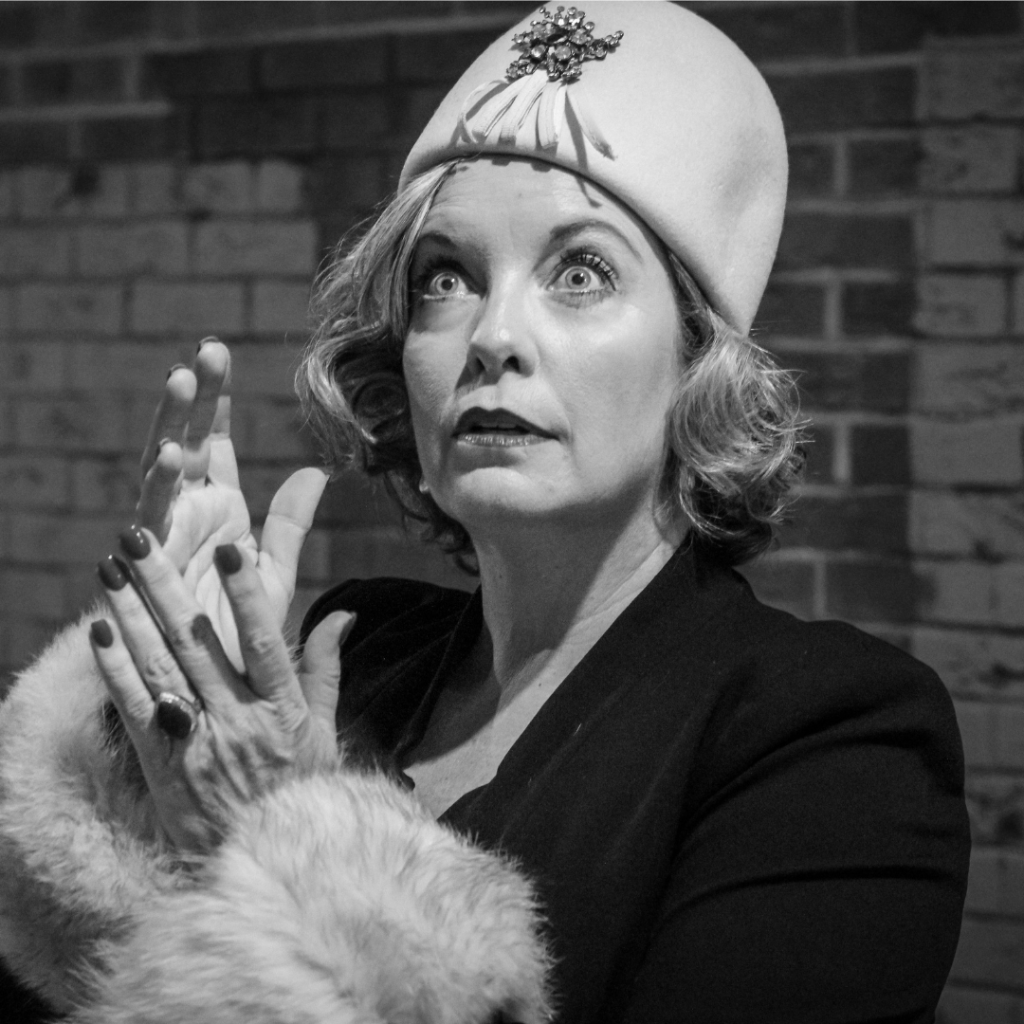
As Norma, Charlotte diva Allison Rhinehardt will be the performer that Spencer must trust the most. We had this exchange with Rhinehardt about the role, her prep, and the whole giddy experience.

QC Nerve: Is Norma Desmond the role of roles for you, or does the concert format – and the brevity of both the process and the run – dampen your enthusiasm?

Allison Rhinehardt: Norma Desmond isn’t just the role of a lifetime, it’s the role of a generation. I had never even considered taking on this role as a possibility in my life, so spending these last several weeks studying Norma, singing her iconic songs, retorting: “I am big, it’s the pictures that got small,” and watching this entire cast bring 1,000% has been both my honor and sheer delight. I think you will find this concert format to be different from past QC Concerts. This is fully staged and costumed with set pieces and props. Everyone is off-book, which was definitely a feat for some of us! Would I like more time? Absolutely. But not just for me. This show is something incredibly special. I would love to be able to share it with as many people as possible.

What in your mind makes Norma unique?

I love Norma Desmond. She is wonderfully complex. She is bursting with passion, and despite her grandeur, there is insecurity and need for validation. As a working actor in Charlotte, one of my gigs is working as a simulated patient for Atrium. This program gives med students and nursing students the opportunity to practice in a safe environment of simulated situations to help with diagnosis and patient care. One of my regular characters is exhibiting signs of mania with bipolar disorder. The character is undiagnosed and just living her life at this point. I am not a doctor and certainly wouldn’t try to diagnose anyone, but I see a lot of similarities in both characters.

Norma’s emotions swing wildly between elation and despair. She clings to “what once was” instead of forging ahead during a time of big change. Falling in [a perverted co-dependent version of] love with Joe, is just the current obsession that the audience witnesses. You get to have a 6-month living room view of a decades-long “normal.”

If you’ve experienced the performances of Patti LuPone, Glenn Close, or Betty Buckley in the role, is it a struggle not to be intimidated by the challenge – and to resist emulating at least one of them?

I have studied A LOT since being cast in this iconic role. I read an interesting book (Close-Up on Sunset Boulevard by Sam Staggs) which was a fascinating retrospective on the darkness of Hollywood dreams and the actresses that may have inspired the character Norma Desmond. I also had a trip to London the beginning of October, so I went to see the reimagined Sunset Boulevard starring Nicole Scherzinger in the West End (a whole separate interview, haha!).

Naturally, as a musical theatre person, I have always adored Betty Buckley, Glenn Close, and Patti LuPone (I saw her when I was child in Evita!). It’s impossible not to be influenced by these Broadway divas in general, but I have made a conscious effort to make my performance my own and to not rely on those before me. You may find a vocal nod to Stephanie J. Block or Elaine Paige, but Norma Desmond is such a rich and complex character, she deserves genuine authenticity which requires one to be fully immersed and present in the moment.

Am I intimidated? A month ago I would have said “intimidated” wasn’t a strong enough word (Zack and Stuart can tell you when I got the casting offer, I emailed back making sure they knew it was me they had sent it to). But now, I almost feel like I’ve joined a sisterhood of strong women telling a tragically beautiful story…or is it beautifully tragic? Am I still intimidated? Of course. I always am with any role honestly. If you’re not a bit afraid, then there’s no risk, nothing to fight for, and you’ve lost your edge.

Is the point for you to penetrate beyond the musical divas and Gloria Swanson to your own authentic Norma Desmond, or must you stop at Gloria’s iconic screen performance, obviously Lloyd Weber’s inspiration, and transfuse Swanson’s screen Norma into a fresh musical Norma?

I think it’s important to understand that while this story is on a grand scale, it is not a fairytale. The movie came out in 1950, yet it’s a tale as old as time, still relevant today. I remember distinctly the moment I was made aware that I was no longer in consideration for the ingénue; that I had moved on to the more matronly roles. It hurt. A LOT. I myself struggled with identity. Who I had always been, I no longer was, and never would be again. There were still roles I wanted to play, but had somehow “aged out of.”

As a woman in her 50s, who has been in the business for nearly 5 decades and is now looking for where I fit, I absolutely empathize with Norma. I understand her. I love Gloria Swanson’s embodiment in the movie. I love Glenn Close’s embodiment in the musical. My goal is to bring the story to life through Andrew Lloyd Webber’s words and music having not just my own decades of experiences, but also having whispers with me of all the Glorias, Glenns, Bettys, Diahanns, Pattis, Stephanies, Elaines…all the actresses “of a certain age” in my life.

What excites, frustrates, or frightens you about working in the concert stage format? How much will you be able to abandon script and score to become Norma?

What I love about the concert format that Zack has created is the trust between the creative team and the actors. We may only have a handful of official rehearsals, but that doesn’t mean work is not being done outside that time. The entire cast received the script before rehearsals began. On day one of rehearsal we were running and staging songs because everyone had done their homework, everyone came in knowing the music.

Trusting the actors to do what good actors do is what makes it work. While my script and score have been an extension of my right arm for weeks now…it goes everywhere I go and is currently sitting right next to my laptop…I’ve been off-book for at least a couple of weeks and able to really concentrate on nuance. Of course moving into the Booth on Wednesday and gaining a 40-piece orchestra on the stage will present new logistical challenges, but that is par for the course in theatre. I think theatre folk roll with the punches better than most. As Little Red so aptly put it, I’m “excited and scared.”

More rehearsal time would help, right?

More rehearsal time for a show this size certainly wouldn’t hurt, though I firmly believe things can (and often are) over rehearsed. I wish we could run the show for more than 3 performances over 2 days after putting so much heart and hard work into it. We have to work within the reality many theatre groups in Charlotte face. Rehearsal space takes money. Performance space takes money. Charlotte is a vibrant city with an incredible network of talented artists. Support and funding for the arts in Charlotte is imperative to the community.

Fun fact: This 40-piece symphonic orchestration production is only the 2nd of its kind in the country with the first being the 2017 Broadway revival with Glenn Close. So New York’s Broadway and now Charlotte, NC? That is cool. The Booth holds about 400 seats, so over our three performances, 1,200 people in a city of nearly 1 million will get to see Sunset Boulevard. That is Zachary Tarlton and QC Concerts’ gift to the city of Charlotte…

“Angels” and QC Concerts Are Aiming High

Preview: Angels in America at the Georgia Tucker Fine Arts Hall

By Perry Tannenbaum

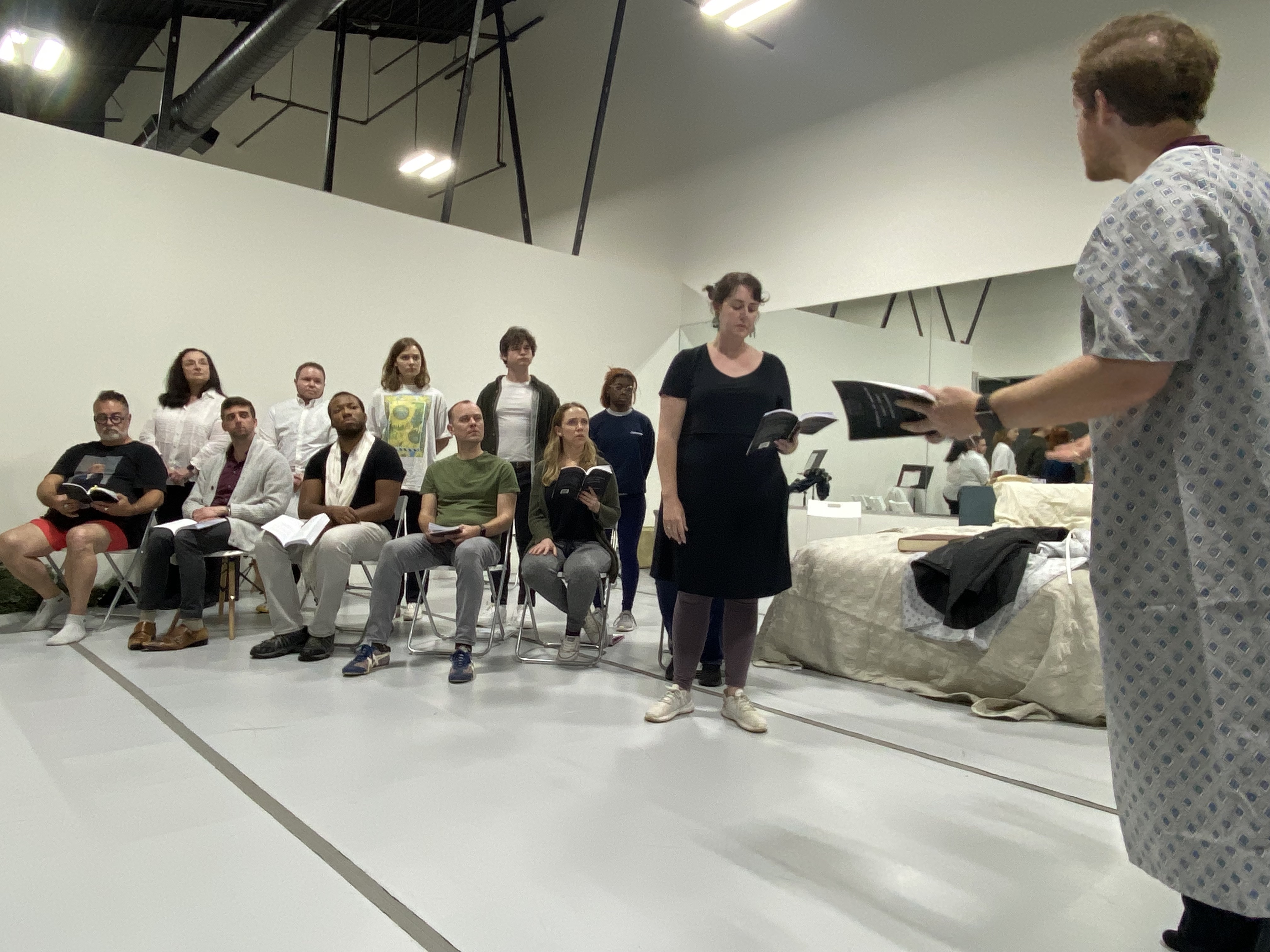
AIA Rehearsal Photo 1.6

We’ve had historic productions of Tony Kushner’s Angels in America here before, most famously the Charlotte Rep bombshell of 1996, which blew up into a culture-war disgrace that shamed the Queen City nationwide. Rep’s greatest hit – in attendance and critical esteem – sowed the festering seeds of the regional company’s eventual demise in 2005.

Nor did Carolina Actors Studio Theatre (CAST) have any better success in 2014 when, following in Rep’s footsteps, they also staged both Part 1 and Part 2 of Angels: Kushner’s Millennium Approaches, which won the Tony Award for Best Play and the Pulitzer Prize for Drama in 1993; and Perestroika, which repeated for the 1994 Tony, Drama Desk, and Olivier awards in 1994. After just one more production, CAST folded.2023~Georgia Tucker Center-07

By even contemplating an Angels revival, QC Concerts and music director/founder Zachary Tarlton are obviously tempting fate. More than that, they’re smashing their own musical template and flouting the company’s brand – by airlifting their upcoming production to Matthews and the new Georgia Tucker Fine Arts Hall.

QC Concerts has happened by accident, beginning like Angels with the onset of an unheard-of disease. In Tarlton’s case, the plague was COVID-19 rather than HIV AIDS.

The company started small. Smack in the middle of preparing to spearhead an Actor’s Theatre of Charlotte fundraiser at Middle C Jazz, Tarlton was faced with the suddenness of the pandemic shutdown and the uncertainty of what would follow. He didn’t want to sit around idly by his keyboard.

“So I launched kind of an online streaming platform,” Tarlton recalls. “We were then known as QC Quarantine Concerts – a bit of a play on words. What we did was we modeled ourselves after a program in New York that Seth Rudetsky [and his husband, James Wesley] from Sirius XM started called Stars in the House, where he was running these broadcasts at the same time that shows would have been running.”

Thursdays through Sundays, for a 10-week run extending from mid-March through June of 2020, Tarlton’s piano room became a streamcasting studio. To create these mini-concerts, Theatre Charlotte’s go-to music director networked with Matthews Playhouse, Davidson Community Players, and Children’s Theatre of Charlotte, as well as Actor’s Theatre.

Tracks recorded in the Tarlton piano room also went beyond the QC to contacts who became singing collaborators in Chicago, New York, and musical performers who had been left in the lurch by stalled national tours.

“It was a good opportunity to kind of bring the arts together at a time when that was not really possible and people were kind of starving for the arts. And it gave us a chance to really get to know and meet and work with a lot of really, really wonderful people.”

That sweet taste of collaboration – and that newly-forged network of musical artists – seemed like a shame to waste. When live theatre began to return late in the summer of 2021, Tarlton dropped the Quarantine from his brand, fired up his network, and launched the live programming of QC Concerts, season one. Angels will mark the end of season two, detouring from a cavalcade of musicals that has included Titanic, Kinky Boots, Head Over Heels, and Cruel Intentions.

Season three scheduling was unveiled last month, and the all-musical lineup will include Diana The Musical, Hit the Wall, Local Singles, Merrily We Roll Along, Parade, and Sunset Boulevard. Late in July, the season kicks off with Diana at Free Will Craft + Vine, a favorite NoDa haunt where Tarlton staged Kinky Boots. The season reaches its pinnacle in November, when Sunset Boulevard opens Uptown at Booth Playhouse – backed by a 40-piece orchestra.

The emphasis, except when Angels are flown in, is always on the music.

“We do concert stage productions of shows,” Tarlton explains. “So we do them with the full orchestra, whatever the complement is that the show is written for. A lot of our musicians are Symphony subs that play all the Broadway national tours, and their schedules fill up super quickly. So to get those folks willing to come on board and play Titanic [boasting a 22-piece orchestra] for one weekend with two rehearsals is astounding.”

Dramatic presentation continues to evolve, though Tarlton has no plans to move beyond the concert format. In the beginning, it was a fairly straightforward reading-stage layout, with the singers at music stands behind a row of mics and the orchestra lurking upstage. At Free Will in NoDa, they built a drag-show style runway and the audience surrounded the players.

Prodded by imaginative guest directors, Tarlton kept pushing the envelope, adding light costumes, some props, and moving his leading men and women away from their scripts for the key musical numbers. While guest director J. Christopher Brown won’t be crashing ceilings or flying angels when QC Concerts travels to the Georgia Tucker, he will be using projections and sound design to clarify the narrative and amp up the key moments.

That will put the traditional reading-stage setup on steroids. Written for an eight-person ensemble, Angels could be expected to add on a narrator for the script-in-hand format to read the scene settings and stage directions. Brown is expanding his cast to 18, using multiple narrators and cutting down on actors playing two or more roles. There are 21 roles in Millennium Approaches and 25 in the stupendous Perestroika.AIA Rehearsal Photo 1.5

Only one cast member doesn’t double, the actor who portrays protagonist Prior Walter. It’s an epic role that single-handedly justifies Kushner’s audacious Angels subtitle, A Gay Fantasia on National Themes. Not the kind of role you plunge into if you’re accustomed to singing “The Surrey With the Fringe on Top” or “Marian the Librarian.”AIA Rehearsal Photo 1.7

Casts from previous QC Concerts productions fill only four of the 18 slots for the company’s first nonmusical foray. Most notorious among these usual suspects will be Beau Stroupe as Roy Cohn, the demonic counterpart of the angelic Prior. Both of these powerhouse characters are AIDS victims, and another QC mainstay, Lamar Davis as Belize, is the link between the two – he’s the registered nurse who cares for the hospitalized Cohn, and he’s Prior’s prior lover.

The other major roles came from outside QC’s musical circle, a daring outreach since Brown didn’t bring a wealth of local experience to the table.

“It was 100% a leap into the void,” Tarlton admits. “I hoped that [Angels] was a title that would catch people’s eyes and they’d be like, ‘I might never get the chance to do this again.’ Foundational to the work we do is that idea of creating a home for everybody and really doing a lot of diverse work to challenge the way we think about and view the world. We’re not a company with a 95-year history – I’m totally out there to push the envelope and to bring something new and exciting and fresh, and if it makes people mad, it makes people mad. If people love it, people love it.”

Tarlton’s zest for challenging himself evidently goes beyond founding a theatre company unlike any we’ve seen before in Charlotte. Although he hadn’t appeared onstage since he was “in college a million years ago,” he auditioned for Angels after telling Brown not to use him if he sucked.AIA Rehearsal Photo 1.2

He’ll be playing Louis Ironson, the self-pitying nebbish and seducer who connects Prior with a third plotline. Too weak to stand by Prior in his AIDS sufferings, he abandons him in favor of his Mormon co-worker, Joe Pitt, luring him away from his religious principles and from his flaky, pill-popping wife, Harper Pitt. While Angels on high are recruiting Prior to redeem America, Harper is taking flight to a narcotic dreamworld and Roy Cohn is haunted by the ghost of Ethel Rosenberg. Enter Hannah Pitt, flying in from Salt Lake City to save her dear son Joe from the mortal sin of sodomy.

Yeah, it’s a lot.

Additionally, Tarlton is glad that two married couples, neither of whom have appeared with QC before – or at Theatre Charlotte – have become core players in Concerts’ Angels.AIA Rehearsal Photo 1.4

Rachel and Brandon Dawson, both faculty members at Winthrop University, are making their Charlotte debuts, Rachel as the confused, jilted, and somewhat spacey Harper and Brandon as our gay visionary Prior Walter. The scene they will have together is among the most incredible of the entire epic. Scott and Robin Tynes-Miller, on the other hand, have been mainstays on the Charlotte theatre scene for the last decade, ever since Robin founded Three Bone Theatre in 2013.AIA Rehearsal Photo 1.1

She is also the one solid link between the current QC Concerts Angels and the CAST production, shifting from the role of Harper Pitt in 2014 to the more elevated role The Angel. Rehearsal photos repeatedly depict Robin rising above ground level, even if she doesn’t fly. Scott figures to be more earthbound as the straight-arrow Joe Pitt.

While Actor’s Theatre of Charlotte provided the platform for QC Quarantine’s launch at their website, Theatre Charlotte deserves credit as the more significant source of inspiration for Tarlton’s unique enterprise – and its true birthplace. At about the same time that Tynes-Miller was piloting her first Three Bone production in 2013, the old Queens Road barn began hosting a series of annual fundraising concerts, Grand Nights for Singing, showcasing showtunes.

Tarlton was a fixture at the keyboard for these concerts. That’s where he started to become the only theaterperson in Charlotte to be connected with two different Tony Kushner works. Instead of the customary medley format, focusing on a particular era (like pre-1965) and highlights from a signature show (like Funny Girl), Tarlton approached executive director Ron Law with the idea of doing a full show.

So on February 26, 2016, the new concert musical concept took wing in the lobby of Theatre Charlotte with Caroline, or Change – music by Jeanine Tesori, book and lyrics by Kushner.

Caroline, or Change was one of those shows that I just felt like it was the right time, the right group of people in Charlotte to be able to pull something like that off. It was an incredible experience,” Tarlton says.

He caught the return of that musical to Broadway in 2021 as well as the Nathan Lane Angels in 2018. Taking his first leaps away from musicals with Angels – as a producer and as an actor – was pretty much a no-brainer.

“There’s no better show to do than something that means so much to me and the community.”

Georgia Tucker Fine Arts Hall, July 13th, 2021Publicity photos for the Georgia Tucker Fine Arts Hall are delicious, showing a 145-seat black box with ample projection and soundbooth resources for a knockout Angels. As the new fringe theatre movement continues to gain momentum around town, the Tucker becomes another tempting place for it to hang out.
The runs of QC Concerts’ shows remain tantalizingly short, a limitation Tarlton hopes to address in the coming years. This week’s Angels run, four performances from May 18-21, offer only two opportunities for us to see both parts of Kushner’s masterwork. Then it’s gone.

For Tarlton, that ephemerality is part of QC Concerts’ attraction. Like New York City Encores or the Broadway Center Stage Program at Kennedy Center in DC, the concept might be stretched to a full week. Maybe the sweet spot for ticket sales, publicity, reviews, and word-of-mouth will be found in that discreet degree of expansion.

“The idea is that these shows live and breathe in one specific moment in time,” Tarlton insists. “Our goal is to become a fully professional company in the next five years so we’re able to kind of pay everybody along the way.”

Triumphant “Aïda” Cast Slogs Through Tedious Sir Elton Score

Review: Aïda

By Perry Tannenbaum

Strip away the triumphal march, the trumpets, and the whole processional parade – complete with elephants, if you’re lucky enough to see the famed outdoor productions in Verona – and we discover that Verdi’s Aïda is a rather compact story. The captured Ethiopian princess is at one corner of the love triangle, opposite her slavemistress, Princess Amneris. Both of them love Radamès, the dynamic Egyptian general who is ordained by the goddess Isis to lead the Pharaoh’s army against the forces led by King Amonasro, Aïda’s father.

Pulling against the strong Aïda-Radamès chemistry are their loyalties to their warring countries, the jealousy of Amneris, and the obedience that Aïda owes to her father. Sealing their fates, Pharoah rewards Radamès for capturing Amonasro in battle by promising his daughter’s hand in marriage to the victorious chieftain.

It’s fascinating to watch how Linda Woolverton modernizes the 1871 libretto in her book for the Disney version currently running at Theatre Charlotte – with a couple of deft feminist touches layered on.

Raised on soaps and romcoms, modern audiences could never abide a torrid relationship between romantic leads already established before the curtain rises. So Woolverton efficiently wedges a mini-courtship into her storyline, with Radamès giving Aïda to Amneris as a gift to lighten his beloved’s sufferings in captivity.

Verdi and librettist Antonio Ghislanzoni were perfectly content to portray Amneris as a cunning, vicious shrew from beginning to end. Not Woolverton. She gives the beautiful princess a slick character arc in a thorough makeover, starting her off as a vain and pampered clothes horse on loan from Legally Blonde. Amneris evolves into a peace-loving reformer who not only empathizes with the martyred lovers but also narrates their story, three or more millennia later, returning in mummified form, a shining presence in a gooey stew of museum mystery and reincarnation.

If composer Elton John and lyricist Tim Rice had done their jobs as well as Woolverton, Aïda would be a masterwork. It’s often amusing to see what John, Rice, and Theatre Charlotte do to compensate for the absence of Verdian spectacle – but it’s never thrilling, despite the collection of talent that director Corey Mitchell has assembled at the Queens Road barn. John’s parade of power ballads grows tedious as the evening wears on, and the longueurs are compounded by unnecessary outbreaks of dance that, notwithstanding choreographer Ashlyn Summer’s exertions, display little precision and less sensuality.

Mitchell previously directed this show for Northwest School of the Arts with a little more sparkle, orchestra, and budget – a production that ran briefly at Booth Playhouse in 2009. Maybe Sir Elton’s Aïda works better in the hands of high schoolers. The one holdover from the NWSA edition, Emily Witte as Amneris, is even more stunning this time around, most notably when she hits us with the full force of her arrogance in her “My Strongest Suit” showcase. It’s the kind of superficial villainy that will deeply satisfy fans of Wicked, Glee, and Kristin Chenoweth.

There is a slight country twang to Witte’s singing that would have added a bit of unique abrasiveness to Amneris, but music director Zachary Tarlton encourages the same style from Ron T. Diaz as Radamès, so that twang becomes an Egyptian trait – as if, in Disneyworld, everybody who hails from Memphis, whether it’s Egypt or Tennessee, sounds alike.

Further detracting from the gravitas Diaz should be aiming for is Radamès’ bizarre confrontation with his father, the evil priest Zoser. You wonder just how seriously we can take either adversary when costume designer Hali Hutchison seems to be mimicking Disney’s Aladdin in designing the mighty general’s costume and Zoser’s ministers brandish glowing fuchsia staves.

Diaz never gets a shot at a passionate solo, so he shines brightest in “Elaborate Lives,” sharing the best of the power ballads with his darling Aïda. They sing it full out, face-to-face, no frills, near the end of Act 1, Victoria Fisher’s lighting dimming around them to augment the drama. Maya Sistruck does nearly the whole evening as Aïda with a simple resolute dignity, allowing herself the luxury of discernable facial expressions only at peak moments when she is romantically consumed or royally pissed.

Other than taking radical precautions not to reveal her royal origins, I’m not sure what justifies Hutchison’s humble sackcloth design for a captive princess. We do upgrade to red in the palace, but why Amneris would tolerate such a plainly dressed servant is still baffling. Yet the illogic does pay off in an enduring dramatic contrast, first in the climactic tête-à-tête duet before intermission and shortly afterwards in the “Step Too Far” trio, the most self-consciously operatic moment in the John-Rice score.

Aïda is simply better and purer than these Egyptians are – not Memphis or Nashville at all! – and just knowing her ultimately makes them better and purer.

While Josh Webb’s set design is no more impressive than the costumes or the choreography, budgetary constraints may have been holding him back. The cut-rate budget and the lackluster score might obscure the fact that the excellence of the cast runs deep. Aside from most of the dancers, Howl Cooper makes the only inauspicious debut as Amonasro, though he definitely has a warrior’s demeanor.

Jason Hickerson makes a wonderfully scruffy Pharaoh, a Charlotte debut only slightly eclipsed by Carlos Jimenez’s usefully cheerful depiction of Mereb, the perfect Disney servant. Implausibly, Mereb draws more solo spotlight than Radamès, yet Jimenez is decisively upstaged among the supporting players by the steely-voiced Paul Leopard, fulminating melodramatically as the murderous, conniving Zoser.

Thank heaven for vampires, witches, and pagans. Otherwise, there would be no class of people left for all of us to wholeheartedly hate.

Bravura Aplenty in Theatre Charlotte’s “Memphis”

Review:  Memphis

By Perry Tannenbaum

As you may have found out, ignorant buffoons can make it big in America. So why not ignorant eccentrics? If Huey Calhoun didn’t make it big as a ‘50s deejay in Memphis, the musical by Joe DiPietro and David Bryan, then his fall from celebrity wouldn’t be nearly as reckless or spectacular. When he has lost his local TV show, tossed away his shot at national fame, and blown his romantic chances with the R&B queen he has catapulted to stardom, Huey defiantly delivers the anthem he has earned, “Memphis Lives in Me.”

“One more drink and you’ll see God everywhere,” sings Huey in tribute to his chief consolation: a bluesy Beale Street honky-tonk bar. It’s the culmination of a Broadway- caliber performance that Joe McCourt is currently giving at Theatre Charlotte in the lead role that DiPietro patterned after legendary rock pioneer Dewey Phillips.

Contrary to the preproduction signals that McCourt and director Corey Mitchell were sending, McCourt hasn’t muted Huey’s nasal drawl or portrayed him as much less of a rube than Chad Kimball did on Broadway. That’s a good thing. “Sounds just like him!” my wife Sue concurred at intermission.

Whether it’s the pork-pie hat and costume by designer Rachel Engstrom, or Huey’s sidling walk – seemingly unable to unbend his knees, straighten his back, or take two consecutive steps in the same direction – McCourt also looks a lot like Kimball’s Tony-nominated portrait. Perhaps rehearsals with Dani Burke as hot young singer Felicia Farrell revealed that, if McCourt were to tone down Huey’s goofball attributes, he would come off as more of a creepy stalker.

Ultimately, McCourt has arrived at a very likable blend of naïveté, chutzpah, neediness, awkwardness, and hipness – not the easiest elements to combine – and as usual, he torches every song he touches. For her part, Burke hasn’t lost any of the voltage she first brought to the Queens Road barn when she electrified audiences with “Aquarius” in the 2014 production of Hair.


Felicia isn’t nearly the plum role Huey is, but Burke proves to be fairly formidable in her first full-fledged lead. A few of Engstrom’s creations glam her up, and I liked Burke’s regality at the “WRNB” studio, where Huey has the nerve to ask Felicia to perform live. We’ve only seen Felicia in a seedy honky-tonk before, and the top radio station in Memphis also looks pretty shabby, but Burke demands, “Where are my backup singers?” as if she’s already a star.

What’s happening here in Memphis doubly crosses racial lines as Huey brings black music to the middle of the AM radio dial and presumes to romance Felicia while promoting her talent. Both of these audacities bring powerful characters into the flow of the action. Station owner Mr. Simmons is easily the most comical of these, and Mike Carroll beautifully brings out the businessman’s starchy pomposity – and astonishment – each time a new Huey atrocity increases his listening audience, his sponsor’s satisfaction, and finally his own teenage son’s admiration.

I hardly even remembered the role of Huey’s mom from the original Broadway production, so I was fairly blown away by the heart – and the pipes – that Allison Snow Rhinehart brings to Mama. Of course, she’s as déclassé as Huey, so his outsized dreams and successes are a total shock to her, not to mention coming home one day to find his black girlfriend in her kitchen. But Mama’s prejudices occupy the same space as her love and loyalty, so Rhinehart has a couple of gratifying surprises in store for us after intermission.

Least surprising, after his triumph as Coalhouse Walker in last winter’s CPCC production of Ragtime, is Tyler Smith’s powerful portrayal of Delray, Felicia’s fiercely protective brother and owner of the dive where Huey discovers her. It doesn’t take long to catch on to Smith’s power, since he’s toe-to-toe with Burke in the opening “Underground” ensemble, and he’ll prove equally capable of facing off with McCourt on “She’s My Sister” when Delray flares up about Felicia’s interracial affair. In fact, when the catastrophe strikes that ends Act 1, I suspect that Mitchell may have imposed some unnecessary restraint on Delray’s ferocity.

But there was more than enough power from all the frontliners to justify the “Why didn’t you tell me about this place?” comments I was overhearing during the break. Apparently these newbies were undeterred by the lackluster scenic design by Chris Timmons or the generic choreography by Ashlyn Summer, which never reminded me of what my teen elders were dancing on Dick Clark’s American Bandstand or Alan Freed’s The Big Beat. Victoria Fisher’s lighting design goes a long way to redeeming the drab sets, and music director Zachary Tarlton makes sure there is always a lively jump to Bryan’s score when needed.

Maybe the best reason to be wowed by Theatre Charlotte’s Memphis is how deep the excellence goes in this cast. After AJ White literally glows in a lemon yellow outfit as Wailin’ Joe on the first R&B track that Huey spins, there are two marvelous rebirths among the black folk that Huey’s musical mission reaches. First there’s Traven Harrington as Bobby, the radio station janitor, who will pile one shocker upon another before he’s done. Then there’s Clayton Stephenson, whose transformation as Gator may leave you weeping as Act 1 climaxes.

It ain’t perfect, but Mitchell has directed one of the best efforts I’ve ever seen on Queens Road in 30+ years of covering Theatre Charlotte. Chances are better than even that Memphis will live in you if you’re in the house when this company comes out for their final bows.

The Bee Gees Lose Their Falsettos

Theater Reviews: Saturday Night Fever and 5 Lesbians Eating a Quiche

By Perry Tannenbaum


img_4913

(Photo by Chris Timmons)

John Travolta at his peak: has there ever been anyone like him? The ruggedness, the grace, the strut, the conceit, and the boyish charisma — all of these studmuffin assets uniquely tinged with a robust Brooklynese vulgarity that took America by storm from the moment Welcome Back, Kotter hit the airwaves in 1975. But the full bloom of Travolta-mania didn’t happen until 1977, when Saturday Night Fever hit the big screen.

Surely the music of the Bee Gees was a prime component in the mystique of that breakthrough film. Yet the Bee Gees’ film score underpinning Travolta’s disco exploits was exquisitely subordinated to the heart of Tony Manero’s halting, confusing, and sometimes comical progress toward manhood in Norman Wexler’s screenplay. Bring the song hits more to the fore, as the Broadway musical version of 1999 attempted to do, and the narrow emotional range of disco is cruelly exposed.

“More Than a Woman” is unquestionably less than a woman to me, “Tragedy” is barely morose, and the answer to “How Deep Is Your Love?” is not very deep at all. I’d say that the Gibbs Brothers chose wisely in never attempting to write music for the Broadway stage.

We can only guess why director Ron Law, kicking off Theatre Charlotte’s 89th season, passed on the original Broadway adaptation by Nan Knighton in favor of a newer 2015 adaptation by Sean Cercone and David Abbinanti that has never been on Broadway — or even a national tour. Either way, Law faced an uphill battle with his core of teenage performers.

After playing the somewhat delicate boy protagonist in Caroline, or Change earlier this year in the Theatre Charlotte lobby, Rixey Terry attempts a huge leap forward from that concert production in tackling the iconic Travolta role of Tony. While the welter of tunes launched at us — the worst are those newly penned by Abbinanti — dilute the impact of the drama, they don’t obscure the complexity of Tony’s character or his double lives.

By day, Tony works a dead-end job at a Brooklyn paint store, coming home to parents who adulate his older brother Frank, a priest, while belittling his talents. A huge chunk of Tony’s paint store paycheck — and some elaborate rehearsals and primping rituals — go into Saturday nights, when he reigns as king of the dance floor at the 2001 Odyssey club. Local girls long to be his partner, thrilling to the privilege of even mopping his brow after a dance.

So at work and at home, Tony is meek, querulous, and downtrodden, but out on the street or at the club among his friends and admirers, he’s self-absorbed, arrogant, and cruel. He ignores and snaps at his good friend Bobby, who leans on him for advice, and he forcefully rejects all advances from Annette, the best dancing partner in the neighborhood.

From the moment he first sees Stephanie Mangano at the club, Tony’s world turns upside-down. Classically trained, Stephanie’s moves are easily a match for Tony’s — and her savoir-faire is miles ahead. She has a job in Manhattan! Suddenly, Tony is the supplicant and the pursuer, hoping Stephanie will be his partner for an upcoming prize competition. Yeah, the story has been slightly altered.

Terry wraps his arms around the meek, downtrodden, and needy aspects of Tony a lot more readily than his imperial arrogance. Terry’s ordinariness carries over to Tony’s first few turns on the dance floor, where he just doesn’t look masterful. So the true turning point on opening night last week came when we reached Terry’s solo on “You Should Be Dancing” at the end of Act 1. Adding acrobatic break dancing moves never seen in the iconic film, choreographer Lisa Blanton unleashed the beast in Terry.

In less than a minute, Rixey proved that, even among triple-threats, he possesses unique gifts.

img_4851

Whether or not Stephanie is intended to have more confidence and dancing polish than Tony, Susannah Upchurch definitely brings it. The way things are between Tony and his groupies doesn’t always come off precisely as they should, but when Upchurch is around, Tony’s shortcomings and vulnerabilities snap sharply into focus. Her Stephanie is almost unattainable, not quite.

Meanwhile Ava Smith is acting up a frenetic whirlwind as Annette, almost convincing us that Tony is the dreamboat we never quite see. Vic Sayegh and Mara Rosenberg make Tony’s parents a rather squalid couple, contributing mightily to the Brooklyn ambiance, and Jay Masanotti brings out all of the older brother’s cryptic contradictions.

The fabled three-piece suit from the film isn’t quite equaled by costume designer Jamey Varnadore, whose budget was likely too strict for all the clotheshorses and wannabes he’s called upon to outfit. Zachary Tarlton leads a tight five-piece band, but the real heat is mostly generated by Blanton’s choreography — and Dani Burke’s solos as Candy, the 2001 chanteuse. Burke’s “Dance Inferno,” not a Bee Gees song, is the chief showstopper among the vocals. With so many three-part harmonies discarded, it’s hard to pick a lowlight among the songs that the Gibbs Brothers made famous. Not one falsetto all evening long!

I’ll go with “Stayin’ Alive” as the nadir. For decades, I’ve despaired of explaining how tone-deaf most renditions of “If I Were a Rich Man” sound to Yiddish-speaking Jews when Christian singers navigate the vocalise, non-verbal sections of the lyrics. Now I can finally point to an equivalent.


4cab0c_8e61596cf00f4ad2a25425910884a614mv2

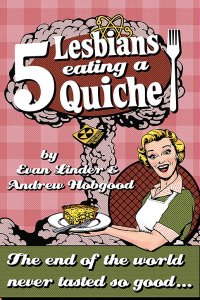
At first, I could hardly believe how over-the-top director Sarah Provencal was wanting her cast to act in 5 Lesbians Eating a Quiche, currently at the Warehouse Performing Arts Center in Cornelius. This was the customarily sophisticated Lane Morris as Wren, one of our five quiche bake-off hostesses? The effusive audience interaction, from the time we enter the Westmoreland Road storefront, makes Pump Boys and Dinettes seem funereal by comparison.

But after a while we realize just how strange this script by Evan Linder and Andrew Hobgood truly is. For this egg-worshipping black comedy takes us back to a 1950s dystopia in an alternate universe. Only the desperation of our hostesses’ plight can prod them into coming proudly out of the closet, a delicious juxtaposition with their ’50s primness.

Actually, Morris with her “victory curls” looks more like a throwback to the ’40s and the Andrews Sisters (yes, these Daughters of Susan B. Anthony and Gertrude Stein have a club song). It’s Joanna Gerdy as Vern who’s the outright lesbian of this quiche quintet from the start, flinging away her customary sophistication even further from the norm in a comedy performance to relish.

Ginny, played by Stephanie DiPaolo, is a diffident Brit who almost seems catatonic at times. Vying with her for the distinction of being the most repressed in the house is Nikki Stepanek as Dale, who hasn’t spoken to a man since the age of three. She’s definitely the youngest, which is why she becomes the chosen vessel — for a while, anyway — to save mankind.

Every one of us in the audience must come out and admit that, yes, we are also lesbians, a quite unique moment in the annals of theatre. The only remaining holdout is Pam Coble Coffman as club president Lulie, a veritable Betty Crocker of propriety and discipline. Lulie hits us with the startling revelation that sends this 73-minute production into its unnecessary break. My wife Sue balked at this intermission, but the folks taking hits from the boxes of wine on the buffet seemed to be okay with it.

So real men and real women don’t eat quiche? Please forget I said that.


Still Creepy and Kooky

Theater Review: The Addams Family at Theatre Charlotte

The Addams Family runs through May 29 at Theatre Charlotte.

By Perry Tannenbaum

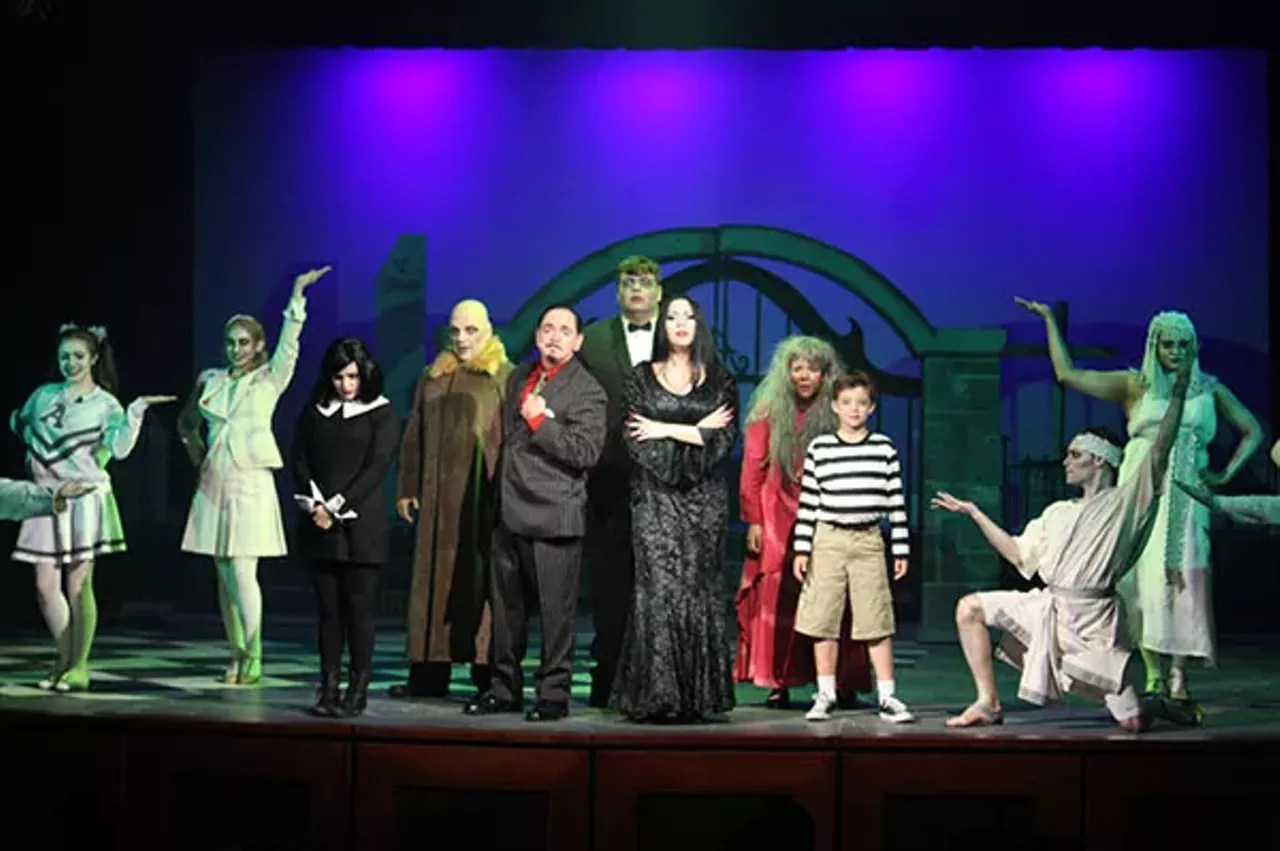
Gloomy lighting and cobwebs. Raging thunderstorms and decrepit dungeons. The whole Gothic horror thing, on screen or onstage, is a carnival of special effects — the bizarre compounded by the supernatural. Vampires, ghosts, werewolves, and monsters don’t often wear jeans and T-shirts. Costumers, wigmakers, prosthetic manufacturers, and makeup artists work overtime to get the right look. Buckets of blood must spew on cue, get mopped up, and spew again for the next take.

Even though fangs and gore aren’t factors in The Addams Family, there was sufficient tech wizardry in the 2010 Broadway musical to give Theatre Charlotte pause. Past springtime hits at the Queens Road barn like Rent, Hair, and Jesus Christ Superstar haven’t required fog, fangs, or extensive set changes. As we reported back in 2011 when Charlotte was the third city it visited, the national Addams Family tour cut back significantly on the tech pizzazz because it was so daunting. On Broadway, the curtain was so active, talented, and amusing that a Tony nomination wouldn’t have surprised me.

There’s a vestige of that precocity before the curtains part, but don’t expect it to last. On opening night, the raging storm that sound designer Erik Christensen concocted to assail the Addams mansion was mighty enough, but it inexplicably subsided in a matter of seconds. Morticia’s flaming red tango skirt peeped through her funereal black evening gown at least a minute too early, spoiling the surprise. And the apple that Wednesday Addams was destined to split with her crossbow on her fiance’s head fell apart when Lucas Beineke first brought it in from the wings, half of it popping hilariously into the first row of the orchestra.

Perhaps because the script by Marshall Brickman and Rick Elice seemed more akin to the Addams Family sitcom on TV than the darkly comical Charles Addams cartoons in the pages of The New Yorker, the musical drew no more respect from New York critics than its Mel Brooks cousin, Young Frankenstein. That lack of critical cachet may explain why there are so many relatively unfamiliar names in the cast. Rest assured, the uptick in no-shows at Addams auditions hasn’t been replicated at the box office. Locals filled the house pretty well for the opening and brought plenty of enthusiasm with them. Throughout the hall, finger snaps came resoundingly on cue during the overture.

Audience enthusiasm is the main thing stage director Jill Bloede, music director Zachary Tarlton, choreographer Lisa Blanton and the title characters keep going, earning almost every bit of the fervor with their high energy. With a storyline that echoes You Can’t Take It With You, the Addams family has a license to be every bit as weird as George S. Kaufman’s Sycamores. Each of these families has a mutant daughter who wishes to couple with a normal person, each of the daughters’ beaus has parents who are conspicuously boring and respectable, and each of the hosts launches a game at the dinner table that causes the guests to reveal a deep-set fissure in their marriage.

Wednesday is the new wrinkle in the old formula, which most recently recurred on Queens Road in La Cage aux Folles. This mutant child is not as normal and wholesome as previous defectors who fled their kooky coops. No, our rockin’ culture has overtaken the Addamses to the extent that Goths like them have established themselves on the fringes of high school life. Only those who enter the hall with black lipstick will fully recognize Wednesday as a kindred spirit. Yet the crossbow keeps her securely outré for everyone.

As a result, Wednesday can rock when the whole William Tell scene circuitously makes its point in the “Crazier Than You” duet. This role is not at all as humdrum as Alice Sycamore, and Emily Roy takes full advantage of Wednesday’s weird glamor. Standing next to Morticia, Roy looks puritanical and punkishly pugnacious at the same time — and she can definitely belt her half of the duets. In his debut, Christian Regan is noticeably underpowered as Lucas the apple-bobbler, but his shortcomings are poignantly effective. After all, he and his family hail from Ohio.

“A swing state!” is how the horrified Gomez describes the unfathomable gulf. But you look at how sloppily Lucas is dressed and you already see that he is more than meeting Wednesday halfway. Regan talks his talk far better than he sings it.

Challenged by Blanton’s choreography and a Morticia decades younger than he is, Kevin Roberge surpasses himself as Gomez, even if he is visibly panting at the finish line. He may not have the essence of this unctuous patriarch as thoroughly as Nathan Lane did on Broadway, but he has the Gomez sound perfectly, and there is such fatherly pathos when Roberge sings “Happy/Sad” in Act 2 that the power of it took me by surprise. Followed by “Crazier Than You” before Gomez teams up with Morticia for “Tango de Amor,” the hits do keep coming as Roberge gasps for breath.

Nor is Aubrey Young less than breathtaking as the preternaturally tensile Morticia, though her dress is disappointingly less revealing than Bebe Neuwirth’s was on Broadway. Young is also less Zombie-like than Neuwirth, further altering the icy marital chemistry. Ah, but when Morticia pines for the sewers of Paris, Young is just as wry. I was every bit as impatient as the red skirt for the tango to begin, and when Young stretched herself into its most extreme choreography, her youth provided ample rewards.

With the Addamses’ pet squid axed from the script, Mal Beineke is no longer the sort of role that would warrant Terrence Mann’s bravura. Instead of being asked to sing the bodacious “In the Arms of a Squid” in the Act 2 denouement, Jonathan McDonald merely piggybacks onto the “Crazier Than You” duet playing Mal with Jenn Grabenstetter as Alice Beineke. There is no diminution of the éclat Grabenstetter is allowed to make in Act 1 after Alice drinks the misdirected potion in the “Full Disclosure” game. She’s a pure undersexed animal in the “Waiting” showstopper.

Delicacies are doled out deeper into the cast. After stomping around inarticulately on platform shoes for nearly the entire evening, Johnny Hohenstein makes good on his liberation as the family’s Zombie butler Lurch. And who could possibly have a more ardent crush on the moon than Vito Abate as Uncle Fester? Abate was simply born for this role and the epic passion of “The Moon and Me.” The lightbulb prop he messes with was still a work-in-progress on opening night, but his rocket backpack was pure bliss.

The wig and costume Vanessa Davis wears as Grandmama and the grimy makeup sported by Jackson Davis as Pugsley, Wednesday’s masochistic little brother, help to make their Theatre Charlotte debuts successful. Up on Broadway, if you were buried in the Addams Ancestors ensemble, you went home with a paycheck. Down here in Charlotte, it’s nice to find that the eight members of our ensemble are individualized in the cast bios with such identifiers as stewardess, baseball player, and Greek.

Make no mistake, there’s plenty of authentic Charles Addams embedded in the script, nowhere more effectively than at the end. What Gomez and Morticia say to one another in the closing dialogue is quoted verbatim from an Addams cartoon. It still worked the third time I heard it.

Jews, Blacks, and JFK Converge at Concertized Kushner

Theatre Review: Caroline, or Change

2016~Caroline or Change_0028-1_edited-3
L-R: Brittany Currie, Tracie Frank, and Veda Covington

By Perry Tannenbaum

The relationship between African Americans and Jews has been a fascinating convergence of parallel histories and unavoidable class conflict. We’ve had a couple of dramas here before that dramatized the relationship, beginning with Alfred Uhry’s famed Driving Miss Daisy, which reached the Charlotte stage in 1991, just two years after the Oscar-winning movie. The 1988 Pulitzer Prize winner took us back to Atlanta after World War 2, when the curmudgeonly Daisy was in denial about her physical deterioration, her racist attitudes, and the prevalence of anti-Semitism in her city.

Just over three years ago, Actor’s Theatre of Charlotte brought us Matthew Lopez’s The Whipping Boy, transporting us to the first days of Reconstruction after the Civil War, when two emancipated slaves returned to their former owner’s home for Passover. Between Uhry’s drama and Lopez’s auspicious 2011 debut, Tony Kushner collaborated with composer Jeanine Tesori on a musical – a chamber opera, really – that looks at yet another Jewish household where an African American was employed.

Until last February 26, when Theatre Charlotte brought Caroline, or Change to its lobby for one night only, the widely-hailed 2003 piece had never been performed in the Queen City. It’s unquestionably the most ambitious Grand Night for Singing event held at the 501 Queens Road barn. The format has been in a cabaret spirit, songs selected from a rarely performed musical taking up half of the program, more rarities by the same composers after intermission. With Caroline, music director Zachary Tarlton staged a concert-style production of the full show – and so many people bought tickets that Theatre Charlotte executive director Ron Law nearly had to move the performance out of the lobby and into the auditorium.

Caroline Thibodeaux works in the bowels of a home owned by Stuart Gellman and his second wife, Rose, but the core of Kushner’s story – an autobiographical one according to the playwright’s intro to the printed edition – is the relationship between Caroline and Noah, Stuart’s 8-year-old son from a previous marriage. Although Caroline takes place in 1963, closer in time to Daisy than Whipping Boy, its resemblances to Lopez’s script are strong enough that it could have served as the younger playwright’s model. During the Passover holiday celebrated by Caleb DeLeon in Whipping Boy, President Abraham Lincoln is assassinated. In the November-December timeline of Caroline, John F. Kennedy is assassinated before the Gellmans’ Chanukah celebration.

If Kushner had a model, the likeliest candidate would be another autobiographical play, Athol Fugard’s Master Harold, in which the title character also behaves unforgivably toward a black person working for his dad. In her dignity, in the way Caroline absorbs Noah’s abuse in apartheid Lake Charles, Louisiana, she very much resembles Sam’s forbearance toward Hally in apartheid Port Elizabeth, South Africa, in 1950. The big difference is that Kushner looks at Caroline as critically as he looked at Noah.

She’s a divorced, conspicuously joyless mother of three, staunchly resistant to change. The entire cast was outstanding, but we were especially fortunate to have Tracie Frank in the title role. We had a brief sampling of Frank’s gospel fire last spring in Theatre Charlotte’s production of Jesus Christ Superstar, but even her Whitney Houston bravura singing “I Don’t Know How to Love Him” hardly cushioned the surprise of this sustained excellence, her silent reactions nearly as taut as her vocals.

Stuart and Rose realize they’re not paying Caroline enough to comfortably take care of her three children, but they do what they can. In order to teach her stepson a lesson – and to slip the Thibodeauxs some extra cash – Rose decrees that Caroline can have whatever loose change Noah carelessly leaves in his pockets when she puts his clothes in the washing machine. Noah is more softhearted than Rose, so he starts leaving loose change in his pockets on purpose – until Chanukah rolls around.

Grandpa Stocknick, Rose’s dad, gives Noah a $20 bill in Chanukah gelt. Some days later, Noah is back in school and realizes that he has left the 20 in a pair of pants earmarked for the laundry. His piddling charity is in serious jeopardy of becoming lavish generosity, and he rushes home to retrieve his gift. Too late. It’s nearly Christmas, her three kids expect something under the tree, so do you think Caroline is going to put that $20 bill back in the bleach cup for Noah?

Noah is even less likable than Caroline in the fight that ensues, so it’s to Rixey Terry’s credit that he made the transition from adulating schoolboy to beneficent master to sore and abrasive loser so convincingly over the course of the night – and no fewer than 15 songs. Terry didn’t try to emulate an eight-year-old, so he didn’t sound at all like Harrison Chad on the cast album, a prudent choice for this reading-stage style presentation, adroitly stage directed by Corey Mitchell. He and the other younger members – the three Thibodeaux siblings and The Radio – had their music down pat, thanks to some good hard work and, I suspect, that cast album.

2016~Caroline or Change_0017-1_edited-1

Yes, the dramatis personae included some inanimate objects that brought Caroline’s basement domain quirkily to life, often with a gospel flavor. Dani Burke was Caroline’s Washing Machine while Maya Sistruck, Dominique Atwater, and Kayla Ferguson were The Radio, even more amazing when they harmonized than when they soloed. Among these kitchen accouterments, Tyler Smith was the king of appliances as The Dryer in an electrifying performance, Tesori’s score starting him off with a mix of street shout, yelped with Porgy and Bess gusto, and R&B that he crushed into the depths of his velvety bass baritone – with The Radio providing backup.

More of Kushner’s fanciful universe turned up outside of Caroline’s basement. Much to our delight, Smith returned to the row of lecterns at centerstage as The Bus taking Caroline and her friend Dotty home from work, but Brittany Currie often lurked on the side as The Moon, emblematic of change. The change that Noah leaves in his pants isn’t the only change Caroline struggles with. Although $30 a week isn’t enough to get by, it’s Dotty who is resolved to do something about it, going to night school in an effort to better herself.

So it’s both Dotty’s energy and initiative at the end of a long workday that irritates Caroline. Watching Veda Covington as Dotty, bragging that her daytime employer is actually proud of what she’s doing, I found myself a little irritated with both women, Dotty for needling her friend and Caroline for her unremitting sullenness. Currie as The Moon was a somewhat soothing presence crooning about change, but there was also a wisp of sultry sensuality in her vocals, very effective in this cabaret setting.

2016~Caroline or Change_0030-1_edited-1
L-R: Yabi Gedewan, Ibrahim Web, and TyNia Brandon as Caroline’s children

Mitchell had the races sitting at opposite sides of the stage when they weren’t at the lecterns, accentuating how little they actually interact during this musical. It’s mostly Noah and stepmama Rose who show an active interest in Caroline. Although she badly flubbed the Yiddish word for navel, Allison Snow Rhinehardt was an otherwise credible balaboosteh: a little unsure of her footing with both the new stepson and the help, somewhat sensitive to their feelings, yet definitely reveling in her mission to run the household and to command.

Upstairs-downstairs decorum was broken momentarily at the Chanukah party in one of Kushner’s most insightful scenes. Asked to help with the extra party housework, Caroline’s eldest daughter Emmie gets into an argument with Rose’s father about the efficacy of Dr. King’s non-violent civil rights movement. Caroline is outraged by her daughter’s presumption, Emmie is angered by her mother’s inbred meekness, and Mr. Stopnick thinks this is the first real conversation he has had since coming South to visit his daughter. Excellent work here from Frank, TyNia Brandon, and Vito Abate.

I would have been quite content just to witness some local theatre company putting Caroline on its feet after all these years. The fortunate few who attended the February 26 performance saw something far finer. With a minimum of rehearsal, the 17 singers and Tarlton performed nearly flawlessly, all the more astonishing when you consider that the musical director was never in the line of sight of any of the performers even once as they performed this challenging two-hour Tesori score.

Here’s hoping that we don’t have to wait another 13 years before Caroline, or Change is produced here again – and that, when Kushner’s lone musical returns, it will be fully staged in a larger hall for a larger audience in a longer run. As it deserves.

Photos by Perry Tannenbaum