Review: Thought for Food at Warehouse PAC
By Perry Tannenbaum

Cornelius, NC – When Hollywood studios look for hot new stories for their next blockbusters, the bestseller lists, whether New York Times or Amazon, are among their top go-tos, even if it ignites a bidding war. But if you’re an aspiring playwright out in Concord, looking for a prime property after a 30-year career in secondary theatre education, pickings and budgets are slimmer.
By chance or by design, Andrea Rassler came upon the perfect formula. Ranked a lowly 231,578th in Kindle Store popularity and 2,027th in Women’s Psychological Fiction, Vicky Zimmerman’s Miss Cecily’s Recipes for Exceptional Ladies is temptingly obscure for anybody seeking to obtain adaptation rights on the cheap. First published in the UK in 2019 with a far more moribund title, Zimmerman apparently crafted a laudable gem, boasting a 4.5-star average from nearly a thousand Amazon readers of the American edition, 90% of them four stars and above.
Premiered at the Warehouse Performing Center as Thought for Food, three years after getting a public reading at Charlotte’s CAPA Center, Rassler’s adaptation skillfully distills and compresses Zimmerman’s 427-page novel. In the process, with a kind of Steel Magnolias sway from laughter to tears, our emerging local playwright arguably intensifies the chick-lit flavor of the original.

Nor will they mind that Nick, Kate’s “intimacy anorexic” boyfriend, has been stripped of the opportunity to appear onstage and say a single word on his own behalf. This cast, like Magnolias, is all-women, but two of them, Kate’s mom and crotchety 97-year-old Cecily, were so quirky and nutsy that I didn’t mind.
Who wanted the first-hand experience of hearing Nick alternately gushing his fitful adoration for our protagonist and then venting all his anxieties, trepidations, self-doubts, and frustrations? Enough stage time already falls to Kate for those purposes. And she’s right here. We can judge for ourselves and recalibrate as the story unfolds.

Better to have Cecily scalding Kate with her no-holds-barred tough love and Rita, Kate’s mom, bombarding her with unsolicited advice. From a comedy standpoint, the best decision Kate will ever make in life is to move back in with her mom. Though there were no mentions of Kate’s biological clock (maybe universal recognition that it was her own damn business?), the lady is undoubtedly behind the curve in establishing her independence and developing a backbone.
Men can quietly see that Cecily, who can ultimately tell Kate not to darken her door at the old folks’ home unless she can report some progress, is actually the father figure Kate needs in disguise. Cranky? Absolutely. Add in bullying and demanding. But able to impart the rigid standards that are the foundations of self-regard.
Women, meanwhile, can see Cecily as the tough old bird that saves Kate’s life.
These traits are normally in Becca Worthington’s wheelhouse, but here we had the pleasure of experiencing her playing against her usual type as the needy, befuddled, and irresolute Kate. One or two of the barbs and zingers hurled at her didn’t seem to hurt as much as they should. But mostly, the toughness we saw from Worthington in The Lehman Trilogy and the savagery at the forefront of Misery had vanished into Kate’s vulnerability, unrewarded patience, her wide streak of cluelessness, and her occasional wit.
Even without Kate’s dubious beau on the scene, her female tormentors found ample means of rattling, angering, and humiliating her. Amid that fertile forest of comedy gold, Kate had to glean whatever kernels of encouragement and sound advice that she could. Helping her out – when not piling on well-meant advice of her own – was her best friend, Bailey.
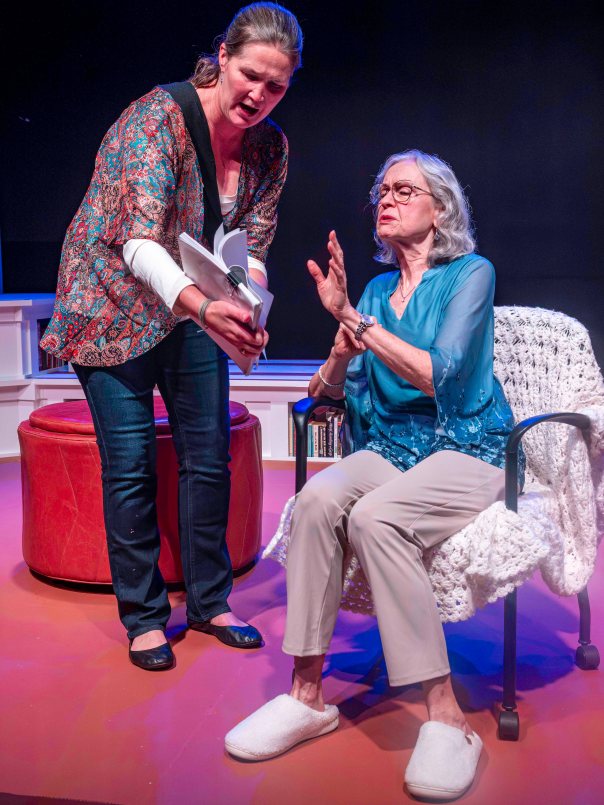
At times, Allison Graham’s chief comedy value as Bailey was in helping Kate fend off her mom’s chirruping criticisms and ill-judged suggestions – or in helping Worthington to convey the prodigiousness of Rita’s bad parenting. Just by the fussy and officious way she walked in on her first arrival, Stephanie Dipaolo signaled that there wasn’t a nurturing bone in Rita’s body. All of her recommendations tended to aim Kate toward fulfilling her vision of what her daughter should be, without the slightest recognition or consideration of who Kate is.
She only hits paydirt when those two visions accidentally coincide. Luckily, Bailey is on the scene to help Kate recognize this cosmic event.
Dipaolo’s sprightly energy underscores how much delight she’s taking in blithely inflicting so much suffering, and her quick, snippy exits assure us that numerous other opportunities urgently await her elsewhere. A busy bee, she is, with multiple stingers.
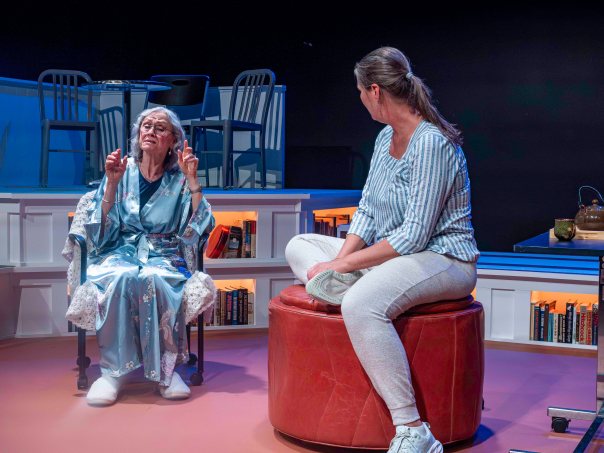
That makes for a fabulous contrast with Paula Baldwin as the memorable Cecily Finn, who reigns at the Lauderdale House from a throne that doubles as a walker. Indeed, Baldwin frequently reminded me of my own mum, oozing superiority at the Carriage Club past her 103rd birthday, especially after she lost her determination to regularly get her hair done.
So, on a couple of occasions in Act 2 as her tutelage neared an end, I expected Kate to make her weekly pilgrimage to Lauderdale only to find her mentor’s room empty. There was a bit of sugar mixed into Cecily’s saltiness that would make an acolyte wish to return, stray drops of sympathy and empathy mixed into her contempt for Kate, and a grain of self-interest at the center of her impatience.
Baldwin has done many more celebrated roles on stage, but she still appreciates the measure of this one.
As for Rassler, she hasn’t yet poured enough into all of her characters just yet. Bailey’s ultimate function in her storyline sticks out all too clearly because she draws too little opportunity to divert us, and Lesi Jonap is similarly shortchanged as Jackie Gaffney, the director of care at Lauderdale. As the administrator who guided Kate into Cecily’s austere presence, there was danger that we would see her as mere courtier. I would have appreciated more insight from Jackie, maybe a choice cut or two of what she knows about Cecily’s background.
That would certainly enhance her regal aura even more.
Ultimately, Food for Thought transcended its title without those finishing touches, delivering profundities beyond what it seemed to promise.


