June 6, 2025, Charleston, SC – Jazz roots run deep in the Carolinas, where such international jazz ambassadors as Thelonious Monk, Dizzy Gillespie, Nina Simone, and John Coltrane were born. Though we’re usually not mentioned in the same breath as Newport, Monterey, SFJazz, DC, or Montreal, the Carolinas are home to significant festivals worth celebrating in High Point, Columbia, and – in years when we get our act together – Charlotte. Yet our most significant jazz festival has been hiding in plain view for nearly 50 years: Spoleto Festival USA. From its first year in 1977; when the headliners included Phil Woods, Urbie Green, and Louis Bellson; jazz has been a constant at Charleston’s international performing arts revels. Unlike visual arts, country music, puppetry, or circus, jazz has been on the bill at every Spoleto.
Of course, so much more besides jazz is offered at Spoleto. Any of the staple components of the festival – opera, theatre, chamber music, choral music, or dance – can find itself hiding in plain view amid the prodigious entirety of the festival, 120+ performances this year over 17 days. Strip away that mass of other stuff and it isn’t really hard to see that the 2025 lineup down in Charleston measures up with the best in North America. Cécile McLorin Salvant, Branford Marsalis, Vijay Iyer, Ambrose Akinmusire, Phillip Golub, and Etienne Charles not only match up well with the most elite festivals on the continent. Two of them, trumpeter Akinmusire and keyboardist Golub, lingered at multiple festival sites for three-day residencies, giving four and six performances respectively.
Thanks to the efforts of general director Mena Mark Hanna to make the massive festival more navigable, the jazz artists were listed on consecutive pages in the festival’s promotional brochure and the free – and comprehensive – festival program books for the first time. Scheduling was also conveniently compressed so that you could sample all of these jazz giants within the space of 10 days. Mavis Staples and Arooj Aftab, headliners at multiple jazz festivals around the country, were also slotted into Spoleto’s Front Row pop/country/rock/folk series, and accessible during that same timeframe.
My own jazz feast started on Day 5 of the festival with Golub’s quintet, his final program at the Circular Congregational Church. My fondest memory of the Circular dates back to 1997 when Spoleto’s production of Benjamin Britten’s moody Curlew River was staged there in dim gilded light. As a jazz venue, the Church was most unkind to Golub’s piano, which seemed to emerge from its corner as a somewhat muffled echo, though the bandleader’s perch was fortified with a Rhodes synthesizer. Neither Alec Goldfarb’s electric guitar nor Daniel Hass’s cello was spooked by the hall’s acoustics, and the remainder of the rhythm, Sam Minaie’s bass and Adriano Vicentino’s drums, may have actually been enhanced.
The quintet played Golub’s Abiding Memory Suite in its entirety, with Vicentino as the only newcomer to the ensemble that recorded the studio album released in 2024. Once the piece, played without significant pauses, drifted away from the piano, it proved to be nicely varied and unpredictable. After Goldfarb’s guitar pierced the hall with its ethereally thin and silvery timbre in “Threads Gather,” the oddest, most scattered and modernistic episodes, “A Regrouping” and “Unspooled (Waiting Quietly),” cast a quiescent spell. “In a Secret Corner” carried that irregular flow forward, building gradually before breaking back into metrical jazz. Though he played provocatively in spots, Hass seemed underemployed until late in in the suite, when he at last justified his presence with some memorable solo work in “At the 11th Hour.”
It was fascinating to see and hear various configurations of the Spoleto Festival USA Orchestra throughout our 12-night stay. Massenet’s Thaïs, a Mozart symphony, Britten’s The Turn of the Screw, the Sibelius Violin Concerto, and Cécile McLorin Salvant each had a uniquely configured ensemble – led by three different conductors. It was a bit surprising for me, nonetheless, that the ensemble playing behind Alexi Kenney in the Sibelius underperformed compared with the superb support Salvant received three nights earlier in the same hall, Gaillard Center.
There was a sense, after three previous appearances at Spoleto, that both the festival and Salvant were wanting to try something different and reach higher. And until the festival premiered its production of The Turn of the Screw, Salvant was incontestably the highlight. We haven’t seen a new album from Salvant in two years, but none of Darcy James Argue’s orchestral arrangements were from that mostly French Mélusine release. Neither of the songs in the set that the diva has recorded, her own “Left Over” and Noël Coward’s “Mad About the Boy,” had orchestral arrangements before Salvant brought them to Charleston, and she sat down at the piano to replace the esteemed Sullivan Fortner (cover boy on the February 2025 issue of DownBeat) for her own original.
The highlights of the set were Salvant and Argue’s fresh takes on Duke Ellington’s “Sophisticated Lady” and Billy Strayhorn’s “Lush Life,” perhaps their most beloved ballads. But the audience showed even more enthusiasm for Stephen Sondheim’s “Send in the Clowns” and Michel Legrand’s “I Will Wait for You” from The Umbrellas of Cherbourg. With a disdain that would have pleased Parisians, Salvant sang the original French lyrics, “Je ne pourrai jamais vivre sans toi,” without a single interpolation of the English lyric. Salvant’s “Send in the Clowns” reminded us of the quirkiness that charmed the world from the outset of her career, flouting the usual 3/4 groove, speak-singing some of the familiar lyric, and wiping away some of the usual nostalgia and sentimental goo. Best version I’ve heard since Carmen McRae.
Naturally enough, since Branford Marsalis was on the May cover of DownBeat, he and his quartet surely do have a new album out there to tour with, Belonging. Marsalis didn’t lean on the recent release as heavily as Golub leaned on his, but he certainly referenced his magazine celebrity with the two titles he did pluck from that CD, “’Long as You Know You’re Living Yours” and “Blossom.” Both were Keith Jarrett compositions, chiming well with the front page May headline, “Marsalis Tackles Keith Jarrett.”
Branford was pretty cool as a bandleader, usually slipping away after his soprano or tenor sax solos were done – often abruptly – behind Justin Faulkner and his drumkit when others were soloing. Pianist Joey Calderazzo not only had ample chances to shine in the Jarrett pieces, but he also had two of his compositions, “The Mighty Sword” and “Conversation Among the Ruins,” prominently featured on the setlist.
With past stints jammin’ with Sting and leading The Tonight Show band, it would appear Branford’s appetite for celebrity has long since been satisfied. Bassist Eric Revis also got some love when Marsalis called for his “Nilaste” toward the end of the concert. Lighter gems – and more popular with the Charleston Music Hall crowd – were Jimmy McHugh’s “On the Sunny Side of the Street” and the rousing encore, “My Bucket’s Got a Hole in It” (more likely by Buddy Bolden or Clarence Williams than Hank Williams).
Iyer took over Sottile Theatre with his supertrio two nights after Marsalis. Like Iyer, bassist Linda May Han Oh and drummer Tyshawn Sorey (a fellow MacArthur Fellow) had both headlined at Spoleto in past festivals. As a group, they’ve put out two albums in the past four years, but in live performance, it was hard to see them as close-knit. Whether they wished to simulate a recording studio ambiance or someone in the group wished to remain unmasked despite COVID fears is anyone’s guess. But they sat and stood at more than the customary distance away from each other. When I last saw Iyer play at the Jazz Standard in New York, my wife Sue and I were seated closer to Iyer than either Sorey or Oh.
Despite the trio’s separation, their chemistry and interaction were all the more amazing. Each appeared to be in his or her own world, yet they were constantly interconnected. If one of them was not playing, he or she seemed to have peeled off at a predetermined or spontaneously signaled moment. Intensity didn’t wane in those moments when balances shifted among the players. Sorey could assert himself with a single stroke anywhere in a measure and take complete control with a sudden flurry, endlessly inventive and colorful. Oh showed us once and for all that she is a composer/improviser who can easily hold her own in the presence of two major virtuoso composers – even though her bass didn’t penetrate at the Sottile like it does on the trio’s recent Compassion recording, where it’s as intimate as your heartbeat.
As for Iyer, he once again proved nonpareil. In the space of a single piece or solo, he could build to the epic force of McCoy Tyner, jet through that thunderous cloud he and Sorey stirred up, and emerge with all the purposefulness, lyricism, and freedom from mannerism of Bill Evans. “Overjoyed,” a very inventive and angular cover of Stevie Wonder’s tune, was probably the easiest for newcomers to Iyer’s music to latch onto. The “Free Spirits/Drummer’s Song” pairing was far more exciting for me because Sorey was so much sparer, explosive, and creative than he was on the Compassion track. Other trios might have swung harder, but since the great Evans trios, none I’ve heard was more beautiful or compelling.
Since I had seen him live at the Seixal Jazz Festival in Portugal with his quartet less than three years earlier, Akinmusire’s residency was by far the most intriguing for me. But we had to find out what “An Evening with Isaac Mizrahi” was all about – the festival brochure and program book seemed to imply that Mizrahi was everything – so we had to miss out on Akinmusire’s quartet and trio concerts, both of which overlapped. It was especially brutal for me not to attend what would have been my first jazz concerts at Dock Street Theatre after more than 30 years of attending Spoleto, but Sue’s reactions to the giddy Mizrahi and the cutting-edge trumpeter vindicated my choice.
Akinmusire’s gig at the Sottile, our last event in the Holy City this year, was likely the most unique and accessible of his residency, though I’m still bemoaning my lost opportunity to behold an Akinmusire-Fortner-Sorey trio at the Dock. The nine performers in the Honey from a Winter’s Stone concert, including the PUBLIQuartet and vocalist Kokayi, were spread out across the Sottile stage even more widely than the Iyer Trio. Boundaries between what was written by Akinmusire for the string quartet and what was improvised by his quartet were more distinct, but it seemed like Kokayi’s rap rants, rhythmic and melodically on key, straddled those boundaries as the speed of the spewed verbiage increased. Most infectious rap performance I’ve ever experienced, even though most of the words weren’t clear.
Reggie Washington on electric bass and Justin Brown on drums counterbalanced the strings and Kokayi by sticking to their jazz rhythms, but keyboardist Sam Harris brought an acoustic and an electric instrument to the stage, another straddler. Through the course of the evening, as the group traversed their 2025 honey from a winter’s stone recording – with nearly identical personnel – Harris might lay down a vamp on his synthesizer or trigger a modulating drone as frequently as he soloed. Generous space was also set aside for Brown’s thrashings.
Akinmusire had little to say between selections, usually pointing to and naming one of his bandmates, but his horn said plenty, with judicious electronic alterations here and there. You could argue that Akinmusire had somehow synthesized the earliest electronic explorations of Bitches Brew Miles Davis with the two acoustic periods that preceded that revolution, the Kind of Blue period and Davis’s playing with the quintet he led that introduced Herbie Hancock and Wayne Shorter to the universe. But the living trumpeter is undoubtedly building upon that legacy.
None of this year’s jazz events took place outdoors at Cistern Yard, the temple of Spoleto jazz in years gone by. Like last year, when Trombone Shorty had to move his show to the College of Charleston’s TD Arena, weather intervened between us and seeing Etienne Charles and his Gullah Rootsband under the live oaks. By now, such last-minute schedule switches are almost routine at the festival: the sound system is tight and the lurid outdoor lighting arrives somewhat intact. Charles’s show was not quite as rambunctious or gaudy as Shorty’s extravaganza had been, but his suite – soon to be officially released on CD – was far more profound, moving, and relevant.
Nor was there any lack of showmanship in the presentation of this epical suite, which traversed the arrival of the Gullah in the New World via the Middle Passage to the morning when Lincoln’s Emancipation Proclamation took effect. In three stages, the Gullah Roots ensemble grew from six to seven, seven to eight, and eight to 14 as the massiveness of Charles’s concept enlarged. Those two historical watersheds were both marked with two-part compositions, “Igbo Landing” and “Watch Night.” After the foundational “Gullah Roots” piece, special guest Quentin Baxter, a longtime Charleston-and-Spoleto fixture, joined the group as a second percussionist for the dramatic “Landing.” Later for “Bilali,” Samir LaGus came forth in more striking African garb than we had seen before, bringing with him a guembri, a three-stringed lute-like instrument that merited its own introduction from Charles.
For “Watch Night,” taking us back to New Year’s Eve on December 31, 1862, a four-woman choir (The Wives), vocal soloist Quiana Parker, and organist/choir conductor Damian Sneed joined the solemn vigil and ultimate jubilation. Visually the spectacle was as grand as the music as Sneed and his singers filled the side of the stage opposite LaGus and the percussion. Issued on September 22, the iconic Proclamation would become law at midnight, the beginning of Freedom Day. One day after Juneteenth 2025, Charles brought his Gullah Roots to the Stage Door at Blumenthal Center for what promised to be a very special Jazz Room concert presented by JazzArts Charlotte.
Reviews: Opera, Chamber Music, Orchestral Music, and Alisa at Spoleto
By Perry Tannenbaum
Three different sea changes have reshaped Spoleto Festival USA since Nigel Redden, responding to the WSYWAT turmoil that followed in the wake of George Floyd’s brutal murder, departed after the 2021 season. Redden saw himself in the crosshairs of the 2020 We See You White American Theatre manifesto, though he wasn’t strictly a theatre person, and felt that steeping as aside was the honorable thing to do.
Diversity has never been inimical to Spoleto, which has always looked more Euro and Afro than American. Yet as Spoleto 2025 concludes, a near-total change of artistic leadership has transpired – with an unmistakable lean toward diversity. Mena Mark Hanna has replaced Redden as general director. Paul Wiancko has filled the void left by the charismatic Geoff Nuttall’s sudden death, taking over the reins of chamber music programming. When John Kennedy was abruptly dismissed after the 2023 season, Timothy Myers became music director, wielding the Spoleto Orchestra baton.
And Joe Miller, after 20 seasons as director of choral activities, is resigning to lead the Vocal Arts Ensemble in Cincinnati. His Spoleto farewell, Bach’s Mass in B Minor, will be followed soon by an announcement of his successor in Charleston.
Conversely, Spoleto is responding to fiscal, box office, and government funding pressures to be more self-sufficient. While Kennedy’s programming arguably made the festival America’s chief hub for 21st century classical music composition, his afternoon Music in Time programs were as much box office poison as they were cutting edge. That experimental ghetto has disappeared while Wiancko and Myers have integrated more infusions of contemporary, new, and world premiere music into the festival’s chamber music and orchestral offerings.
Beyond shrinking the outré and avant garde, Spoleto is expanding its pop, punk, folk, and R&B presentations to no less than a dozen Front Row events with Patti Smith, Band of Horses, Mavis Staples, Lucinda Williams, and Jeff Tweedy among the headliners. The strategy is to “expand the aperture” in Hanna’s words, offset the losses of more adventurous fare, and make Spoleto more accessible to a wider audience. Hopefully, these newbies may be tempted into tasting the 17-day festival’s higher protein offerings.
Other belt-tightening measures include offering 15%-off discount packages of tickets to multiple events, and ending of the longstanding tradition of inviting a theatre company from abroad to co-tenant the Dock Street Theatre with the lunchtime chamber music series. Wilder still, two of the Dock Street chamber music concerts were staged during evening hours! Sacrilege.
Finally, little touches in the festival brochure and the program booklet underscored a deepset commitment to making Spoleto more navigable and customer-friendly. Jazz fans could gorge on all the Spoleto headliners within the space of 10 days, while theatre lovers could get their fill in seven.
While both of these lineups were tilted toward the latter half of the festival; opera, dance, and orchestral music could be largely traversed within the first 10 days; along with seven of the eleven chamber music programs. As compacted as the scheduling was for festivalgoers devoted to one genre, omnivores like me who preferred a mix found themselves stretched. For us, the scheduling was scattered and fragmented.
How appropriate, then, that the most awesome classical music event this season, intertwining 27 new works by living composers with J.S. Bach’s Six Cello Suites, was Alisa Weilerstein’s FRAGMENTS. Conceived during the global pandemic, FRAGMENTS has some of the randomness and the quirky, curated individuality of a mixtape. Weilerstein did not commit herself to playing the Suites in their entirety or – within each Suite – in their traditional order. Or tempo.
Beyond that, in commissioning 27 three-part compositions roughly 10 minutes long, Weilerstein obtained the right to shuffle the order of the parts and to slice and dice the new works to create smooth transitions into each other and the Bach. Layering on stage direction at Sottile Theatre by Elkhanah Pulitzer, scenic and lighting design by Seth Reiser, and costumes by Molly Irelan, Weilerstein crafted her FRAGMENTS into a creation you literally had to see.
As revealed in an interview event moderated by Martha Teichner, Weilerstein has no intentions of releasing an audio recording of FRAGMENTS. Video only. However, the cellist will honor the composers she commissioned by recording their works as written. All in all, Weilerstein was onstage soloing and fielding interview questions for more than seven hours spaced over six days, capped with world premiere performances of FRAGMENTS 5: Lament and 6: Radiance on her final day.
Review: Spoleto Festival USA Chamber Music at Dock Street Theatre
By Perry Tannenbaum
When Geoff Nuttall died of pancreatic cancer in October 2022, Spoleto Festival USA lost its most distinctive personality, the “Jon Stewart of chamber music,” before any of us had noticed a single gray hair on his glorious mane. Replacing him as director of the festival’s noonday chamber music series, the backbone of Spoleto, seemed like sacrilege last season to those close to the ebullient violinist. However, Nuttall’s stylish hosting chores still needed to be done.
Fittingly, a cavalcade of other chamber music players stepped into the role, for hosting at Dock Street Theatre had always been handled by musicians who contributed to the playing. Esteemed harpsichordist Charles Wadsworth had passed the baton over to Nuttall after many years as Spoleto’s most recognizable personality and the series’ jovial noonday host. Nobody would say whether the parading pinch-hitters were auditioning for the role of Nuttall’s successor. Still, it felt that way, especially since the festival’s general director, Mena Mark Hanna, had declared that the musician-host tradition would go on in Charleston.
And Charleston is a very traditional city.
So for cellist/composer Paul Wiancko, 2023 was an auspicious year. In late winter, before his fourth appearance at Spoleto, Wiancko became the new cellist with the pioneering Kronos Quartet, and in early fall, he was named SFUSA’s third chamber music director. Changes to the series have been noticeable: nine of the 22 performers in the 2024 festival are making their Spoleto debuts, and there are 50 percent more pieces by living composers in the program lineup.
Coupled with the abrupt terminations of resident conductor/director of orchestral activities John Kennedy and his Music in Time series, Wiancko becomes not only Spoleto’s chamber music guru but also the festival’s chief purveyor of contemporary classical music.
And he’s doing it with his own unique style.
Wiancko is more about theming each of the 11 concerts in the chamber music, more about the Zen of each program. Nuttall was very laid-back and West Coast in his attitude toward programming and concertgoing, stressing variety in his repertoire choices and encouraging his audiences to be at ease. If you want to applaud between movements, go right ahead. At a couple of concerts, Wiancko took what seemed like a Far Eastern approach, requesting that we withhold applause – to magnify the cumulative effect of two pieces he was presenting in tandem.
The first time Wiancko employed this tactic, it became emotional on the Dock Street stage. In retrospect, we can understand why. For this coupling, Wiancko led off with an unfamiliar work, Marejada, created during the 2020 pandemic by Puerto Rican composer Angélica Negrón, and then in the silence segued to Franz Schubert’s posthumous String Quintet in C, perhaps the most-played chamber work in Spoleto history – for many years, the last piece performed in the lunchtime series.
Written for string quartet, assorted percussion, and pre-recorded ocean waves (referenced in Negrón’s title), performers for Marejeda included Wiancko, violinists Alexi Kenney and Livia Sohn, and Wiancko’s spouse, violist Ayane Kozasa. Kenney would leave crumpled paper onstage after the piece as he exited along with Wiancko and Kozasa, respectively carrying a conch shell and a can – plus a spoon to hit it with.
That left Sohn and her gong onstage as Owen Dalby entered to take over the first violin chair, Lesley Robertson replaced Kozasa place on viola, and cellists Christopher Constanza and Ramakrishnan spelled Wiancko. It was quite possible to overlook the fact that three of the four members of the now-defunct St. Lawrence String Quartet – Dalby, Robertson, and Constanza – were now reassembled, minus their first violin, Geoff Nuttall. Or it was until, more than a half hour later, the sweetly mournful, fiercely and achingly turbulent second movement Adagio concluded and Sohn, Nuttall’s widow, broke down momentarily.
Dalby understood as the delay continued, softly clutching Sohn’s bow hand until she could go on. More of us would have shed tears, I believe, if they had reprised that Adagio.
More tears flowed more predictably three days later when Wiancko coupled two contemporary composers, Jonathan Dove and Valentin Silvestrov, in his next hold-your-applause tandem. Another string quartet was augmented by a fifth voice, this time tenor Karim Sulayman in Dove’s In Damascus, set to the prose poem sequence by Syrian poet Ali Safar, as translated by Anne-Marie McManus.
Eclipsed by Rhiannon Giddens’ Omar when he brought his Unholy Wars to Charleston in 2022, Sulayman has been indelible this year, first in the world premiere of Layale Chakar’s new opera, Ruinous Gods, which embraces the most vulnerable refugee children from war and terror worldwide, and then in this absolute Dove-Safir stunner.
Two days ago we were standing where the long line of Syrians trying to leave the country waited… Nothing happened, except that we saw a nation where the sun had burned out. Over time, no spark remained for its residents except the sparks of their eyes, which were fading… Like tears…
After Dove’s 11-part cycle – only the sixth part was wholly instrumental, featuring Wiancko, violist Masumi Per Rostad, and violinists Alexi Kenney and Benjamin Beilman – the lights dimmed as Pedja Mužijević entered from the wings to play Silvestrov’s touching Lullaby at the Steinway. But the funereal gloom and Mužijević’s entrance at stage right weren’t sufficient to distract us from Sulayman, still standing at centerstage, weeping profusely before he daubed his eyes.
Preceded by Beethoven’s Piano Trio No. 3, with Beilman playing violin, Ramakrishnan cello, and newcomer Amy Yang at the keyboard, this was surely one of the greatest of the many great chamber music concerts ever performed at the Dock. Yet just two hours earlier, I’d witnessed Yang’s debut at Spoleto, definitely one of the most sensational in recent years as she teamed with Kenney on Robert Schumann’s majestic Violin Sonata No. 1, the best and most passionate live performance I’ve seen of a violin sonata since Daniel Hope and Sebastian Knauer played Beethoven’s Kreutzer at the Savannah Music Festival in 2011.
Both Yang and Kenney can be regarded as among Wiancko’s inner circle, Kenney along with Kozasa being fellow members of Owls, an “inverted string quartet” with two cellists, and Yang being one of the artists Wiancko has composed for. They seemed to be kindred spirits from the opening bars. With admirable subtlety, Wiancko themed this concert as a “Celebration of Resonance,” never mentioning that Yang’s debut solo album of 2019 was Resonance, including pieces by Bach, Caroline Shaw, and Schumann.
Of the 11 programs presented during the lunch hours at Spoleto in 2024, I only saw seven, so I cannot offer an authoritative judgment on whether Yang’s big splash was surpassed by any of the other debuts. But two strong contenders emerged in Program VII on my last day in Charleston, cellist Sterling Elliott and percussionist Ian Rosenbaum, both of whom made their debuts in Program VI the previous day.
Elliott had slipped in among a string septet that played the original 1978 version of John Adams’ breakthrough piece, Shaker Loops, where fitting in was a prime objective. Standing out became the mission when the cellist sat down with Mužijević to play William Grant Still’s Mother and Child – Elliott’s transcription of Still’s 1943 Suite for Violin and Piano, Part II. It really sounded like his own piece, the tenderness of the composition darker and more aching and the affirmation nearly as joyous.
Rosenbaum’s debut had kicked off Program VI, more high-profile since he was paired with Wiancko on Andy Akiho’s 21 for cello, marimba, bass drum, tambourine, and electronics. Plucking strings, clapping, tapping the top and sides of the cello, and pedaling the big drum – as well as plain bowing – Wiancko garnered most of the attention at the beginning and end of the piece, though the percussionist was also performing some extracurricular antics behind the marimba, switching mallets, rapping the tambourine, and triggering the electronics.
Played on steel pans as it was originally written, Akiho’s piece looks and sounds a little better, particularly when the sides of the pans are struck. But the marimba version was still spectacular, building to a pounding climax, four instruments and electronics sounding simultaneously. Almost as spectacular, Christopher Cerrone’s Double Happiness, with Rosenbaum playing vibraphone and a small array of malleted instruments in duet with a prepared piano, was far more sublime. We watched over Wiancko’s shoulder as Yang prepared the Steinway’s innards.
Nor did Wiancko disappear after he and Yang delivered their play-by-play of the piano prep, retreating to one wing to operate electronics on cue. At a somewhat hypnotic pace, Yang was obliged to stand up at the keyboard, plucking or strumming or dampening the strings inside the Steinway, sometimes while playing the keys with her free hand. Usually wielding two mallets in each hand, Rosenbaum performed similar wonders at his instruments, occasionally striking both the vibraphone and a smaller instrument behind it with mallets wielded by the same hand.
Paradoxically, the prerecorded electronics and reverb effects layered onto Double Happiness added the echoey steel pan aura that was missing the day before. The cathedral of sound at Dock Street Theatre was magical, like nothing I had experienced since I first heard A Genuine Tong Funeral,composed by Carla Bley, on Gary Burton’s memorable CD with quartet and orchestra.
Wiancko may not be a perfect fit for the Jon Stewart label, but there’s something in each of his programs that reminds me of the Comedy Central shows I once watched regularly. More than Nuttall ever did, Wiancko makes it his business to interview at least one other musician or composer during every program. More often than not, he frames these encounters like a podcast. Very entertaining.
When composer-in-residence Reena Esmail made her debut on the same program where Rosenbaum and Elliott made their bows, Wiancko greeted her like a starstruck fan. The build-up stood up as Yang and longtime Spoleto stalwart Todd Palmer gave a very fine account of Esmail’s Jhula Jhule for clarinet and piano.
It’s been a tumultuous year for Mena Mark Hanna in his second season as the new general manager at Spoleto Festival USA. Chamber music director Geoff Nuttall, the festival’s most recognizable personality – the charismatic violinist who convinced Hanna to come aboard at Spoleto – died in mid-October at the age of 56 while undergoing treatment for pancreatic cancer.
Amid all his antics and flamboyance, Nuttall never seemed to be that old.
Then as all the pieces of Spoleto 2023 fell into place, including the memorial concert for Nuttall scheduled on the opening holiday weekend, last year’s centerpiece, the world premiere of Omar, won the Pulitzer Prize for composers Rhiannon Giddens and Michael Abels. That opera, rooted in the festival’s Charleston home, would stand as the signature achievement of Nigel Redden, Hanna’s predecessor. Redden handed over final alterations and trimmings to the new GM, who piloted the grand project into port.
So this year’s festival will likely be remembered as Hanna’s first true lineup, though Scottish Ballet, mandolin sensation Chris Thile, and iconic jazz artist Abdullah Ibrahim will be the last holdovers to file into Spoleto from the 2020 event that never happened. Yet without a replacement for Nuttall, a key member of Hanna’s hiring committee as well as an engaging host and performer, there’s a feeling that the festival remains in flux.
Even as I spoke to Hanna, a week before this year’s Spoleto began, he wavered between declaring he was in no hurry to replace Nuttall and assuring me that considering his successor was definitely on his to-do list during the festival and in the summer ahead.
It’s safer to say that sustaining the momentum for opera is an urgent priority for Hanna. Programming Samuel Barber’s Vanessa in 2023 is certainly a major statement, since its strong libretto was written by Spoleto founder Gian Carlo Menotti, and for 2024, the festival is commissioning a new opera. Announced at the same time the curtain was rising for the final performance of Vanessa, the new piece, Ruinous Gods by composer Layale Chaker and librettist Lisa Schlesinger is ballyhooed as “another bold project with powerful themes” in the mold of Omar. Opera Wuppertal and Nederlandse Reisopera will be co-commissioners and co-producers of the new chamber opera.
Menotti hasn’t been regularly involved at Spoleto since 1993, when he stage-directed one of his weakest works, The Singing Child. True, there was a revival of Menotti’s most heralded opera, The Medium, in 2011, but that production has come to seem like an obligatory celebration of the composer’s 100th birthday. Twelve years later, Vanessa feels like a whole-hearted embrace: bolder and more contemporary with Rodula Gaitanou’s daring stage direction, more searching with Timothy Myers wielding the baton.
A long pandemic after Gaitanou’s vision of Vanessa was first presented in 2016, the loneliness and isolation of Vanessa resonated more keenly in its US premiere, the effect only enhanced because her icy-cold vigil is self-imposed. The entire household seems to be in suspended animation, The Old Baroness mother perpetually painting at her easel, daughter Vanessa faithfully awaiting her former lover’s return after 20 years, and Vanessa’s niece Erika as much on auto-pilot as the maids and butlers.
All the many paintings and mirrors on the walls are covered, adding to the surreal atmosphere. It’s as if Vanessa were protecting herself from a raging plague, or as if this were a summer home about to be abandoned until next year. The futile circularity of the Baroness painting pictures that will be covered up as soon as they are hung up on the wall subtly prefigures what will happen when Vanessa’s beloved Anton arrives.
As Hanna had promised, the cast was killer. Nicole Heaston brought a neurotic hauteur to Vanessa, a steely cold soprano in her rendering of the tense “Do Not Utter a Word” aria that weirdly echoed Rosalind Plowright’s iciness as the Baroness, a role that the English mezzo originated at the Wexford Festival premiere of this production – before she reprised the role at Glyndebourne in 2018 (available on DVD and Blu-Ray). Compared to the stony and unwavering Plowright, Heaston’s Vanessa proved to be vulnerable, capricious, malleable, and oblivious in a quietly disturbing way.
If Heaston personified the creepiness and the supernatural tinge of Menotti operas, mezzo Zoie Reams as Erika inclined more to Barber’s sad and wistful Romanticism. More emotion poured out of her in “Must the Winter Come So Soon” than on any of the full-length recordings this side of the original live recording conducted by Dmitri Mitropoulos in 1958. Heaston ably gets across to us that her attraction to the second-generation Anton is a rekindling of her youthful ardor, but Reams shows us that Erika’s love for Anton is a first flowering, with a more hormonal heat and fire.
Yet Erika never wears her heart on her sleeve. Perhaps because of her more precarious finances, there’s a secretive and withdrawn aspect to Reams’ performance that marks her as a member of the family. So self-denying and self-destructive are they all that it becomes richly ambiguous whether tenor Edward Graves as young Anton is a ruthless fortune hunter or an idealistic romantic. It was rather wonderful, when Graves engaged Heaston in the slowly cresting “Love Has a Bitter Core” duet, how Anton and Vanessa could be seen triggering spontaneous passion in each other.
The denouement was a walloping “To Leave, To Break, To Find, To Keep” quintet with baritone Malcolm MacKenzie, a welcome presence as The Old Doctor, completing the fugal fabric. It all sounded so present and powerful at Gaillard Center, the singing perfectly balanced with Myers’ ardent work in the pit, while ever-present, precisely synced supertitles projected above facilitated transmission of Menotti’s text.
For those of us who were fortunate to attend Vanessa and the big orchestral performances of Spoleto 2023 – John Kennedy conducting The Rite of Spring, Mei-Ann Chen navigating the New World Symphony, and Jonathon Heyward reveling in the Symphonie Fantastique – the Gaillard and its fine acoustics were arguably the center of the festival. Both the Spoleto Festival Orchestra and the Spoleto Chorus, recruited in nationwide auditions, are rather awesome. And fortunate: not only do they get to perform at the Gaillard, they individually and collectively get to perform edgy, outré, and contemporary pieces at other Spoleto venues that you’re unlikely to experience anywhere else.
Chen, the music director at Chicago Sinfonietta, dug into her wide-ranging repertoire to greet us with Florence B. Price’s Ethiopia’s Shadow in America, a three-movement work that likely begins a mile or two away with an Introduction and Allegretto depicting the arrival of slaves in America. The brief yet solemn middle movement vividly evoked the famous New World Largo we would hear later in the evening, and the concluding Allegro, “His Adaptation,” had the urbane Ellingtonian strut of the Jazz Age.
Delights and Dances, gleaned from Chen’s 2013 Cedille CD that gathered three different concertos for string quartet and the Sinfonietta, was a welcome dive into an earlier Abels work in the wake of his Pulitzer. Nor was it difficult for me to exit the Gaillard feeling that the New World was Antonín Dvořák’s fantastic symphony, for the onset of the trombones in the final movement brought on goosebumps.
The lesser-known Heyward, the music director designate at the Baltimore Symphony, was not to be upstaged – not by Chen, at any rate. A native of Charleston, Heyward received a hearty greeting from the hometown crowd that puzzled the out-of-towners sitting behind me. Heyward began his grand homecoming with the US premiere of Nymphéa, a 2019 work by Doina Rotaru inspired by Borin Vian’snovel, L’écume des jours, with a sprinkling of Duke Ellington’s “Chloe,” the namesake of Vian’s heroine.
What the music evokes, partly through a delicate combo of piano and muted trumpet that grows fearsome and awesome – embroidered by plentiful percussion – is the growth of a huge destructive water lily (nymphéa) inside Chloé. Call it a 19th-century tone poem written with a 21st-century quirkiness, with a rubbed oriental gong, a plucked Steinway, and a stray mallet head that accidentally bounced into the front row of the audience.
Yet all of this spookiness was upstaged in an instant by the return of another local musician, pianist Micah McLaurin. With a glittery, androgynous, and otherworldly David Bowie aura, the slender McLaurin strutted onstage to a huge ovation in a blinding fuchsia jumpsuit with a lowcut back and a single silver sleeve. He proceeded to pound out the opening chords of Grieg’s Piano Concerto once the startled crowd had quieted, working the pedals with platform shoes, which had only increased his considerable height and the éclat of his entrance.
The outer Allegro movements showed off McLaurin’s strengths better than middle Adagio. Even there, the soft and loud passages were gorgeously shaped until late in the movement when his tone grew too steely for maximum effect. But the latter stages of the final movement were irresistible, crackling with authentic thunder.
When he reached Hector Berlioz’s Symphonie, Heyward benefited from the luck of the draw in delivering a more consistently satisfying account than we had of the New World. All 100 members of the Festival Orchestra don’t appear together, and the principals who performed featured solos with Heyward outperformed Chen’s chosen.
Not only did Heyward send his principal oboist offstage in the wondrous countryside movement, he deployed tubular bells to the wings for the closing “Witches’ Sabbath” movement to chilling effect. The drumbeats and sforzandos in that movement and in the preceding “March to the Scaffold” were nothing short of electrifying. Audience buzz after the Fantastique was every bit as enthusiastic as it had been at intermission in the wake of McLaurin’s exit.
The other Spoleto venues were rich in talent and adventurous spirit. At Dock Street Theatre, countertenor Anthony Roth Costanzo performed an outrageous hybrid lark, Only an Octave Apart, with cabaret icon Justin Vivian Bond, nary a male outfit in their wardrobes. Otherwise, we could compile an epic review of the 11 lunchtime chamber music programs that rocked the Dock, though my wife Sue and I only witnessed seven – enough for us to see 11 different hosts standing in for Nuttall introducing 25 pieces (nine by living composers), including an original score by pianist Stephen Prutsman for 7 Chances, the most hilarious Buster Keaton film we’ve ever seen.
St. Matthews Lutheran Church and Sottile Theatre were both graced with concerts led by director of choral activities director Joe Miller. Surprisingly, the Festival Chorus program at the church, Density 40:1, was more secular than the one two blocks south, a precedent-breaking concept from beginning to end. Miller and his 32+8 voices all ascended to the organ loft in order to spread out over us and perform the 40 parts of Thomas Tallis’s Spem in alium. More earth-shattering, the choir did not perform “Danny Boy” or an encore. Instead, we all sang “Over the Rainbow” together.
A new venue, the Queen Street Playhouse, was added to the Spoleto portfolio with mixed success. Artistically, A Poet’s Love was a resounding triumph for tenor Jamez McCorkle, powerfully following up his exploits of last season in the title role of Omar by singing Robert Schumann’s Dichterliebe – while accompanying the entire song cycle by himself at the piano. Designer and choreographer Miwa Matreyek made this a completely immersive experience with animated projections, shadow puppetry, and the movement she designed for Jah’Mar Coakley.
But the staging was badly bungled. Once McCorkle sat himself behind the Steinway, I never saw more of him than his scalp from my second-row seat. Fortunately, Matreyek and Coakley combined on a magnificent performance I didn’t miss.
After a rather bizarre foray at Festival Hall (formerly Memminger Auditorium) for his first Music in Time concert, Kennedy made better use of Queen Street Playhouse for Sanctum, a wild collection of contemporary pieces, concluding with the 2020 work by Courtney Bryan that gave the program its title.
That piece was decisively upstaged by Everything Else, a 2016 composition that I will likely never forget. For this novelty, 15 members of the Spoleto Festival USA Orchestra laid aside their instruments and drove the everyday concept of music to new frontiers most of us had never pondered before. One musician sat with a newspaper, turning the pages at leisurely intervals, another put on a jacket and zipped it up, three of the women passed around and munched a bag of chips, and another tapped obsessively on the keyboard of a laptop while, across the stage, another blew bubbles.
All of this low-volume action – and a multitude of louder acts – continued simultaneously. There were pennywhistles, a kazoo, somebody blowing on the rim of a bottle, two guys slapping cards down on a table in a game of war, and balloons blown up, shaped, and worn as comical crowns. Of course, there was the obligatory popping of balloons near a woman who insouciantly demonstrated how many different things can be done with a bottle of water without hardly making a sound.
Kennedy had seated himself with us in the audience so he could join us. Yet every musician onstage seemed to know exactly what to do onstage, when exactly it was time to launch into a new action, and when exactly to initiate interactions with other musicians. Anyone who thought about it had to wonder how such a multifarious sea of chaos could be taught, rehearsed, and performed – so precisely that the entire ensemble, without a conductor in front of them, stopped at the same instant.
I still can’t decide whether or not I wish to know.
I first ran into Mena Mark Hanna at last year’s Spoleto Festival USA, when he was sitting near to us at Sottile Theatre, enthusiastically selling the merits of the festival to a total stranger. Almost immediately, I walked up to him and filed a complaint: my wife Sue and I couldn’t see everything! Again and again, we were forced to choose between missing the end of one performance or missing the beginning of another. Hanna, the new incoming general director at Spoleto, empathized, having faced the same dilemma.
So we were off to a good start, good enough when the calendar circled around for me to call up the Spoleto office and ask for 15 minutes of Hanna’s time after I received the green light from Queen City Nerve to write up a festival preview. To my surprise and delight, he gave me 40 and far more prime insights, experiences, and hype than I needed.
This edit of the complete interview contains all the overflow.
Perry Tannenbaum: How are you doing?
Mena Mark Hanna: Very well. Happy to have the conversation.
Yeah, this is really a treat for me too. So tell me how Spoleto is doing this year financially.
Well, knock on wood, we seem to be doing pretty well with ticket sales. And you know, we’re working to create a culture of belonging with the institution that goes into some of our accessibility efforts, like Pay What You Will and Open Stagedoor.
So I’m looking at that Pay What You Will initiative, looking into it a little bit more in terms of which events will be eligible, and it’s a pretty impressive list.
Thank you.
I was worried at first about the timing, but now I’m understanding that the timing may not have been in response to wanting to fill up houses so much as the fact that somebody, some anonymous somebody, wanted to launch this initiative.
Yeah. When you think about our society, right, we’ve got three types of institutions. We’ve got public institutions, local governmental you bodies and things like that. We also have private for-profit entities, publicly traded companies, and then we have nonprofits that kind of sit in between that public and private space.
And to me, we sort of fill in the gaps that our public sector cannot extend to our community and our private sector cannot compensate for. What that means is that we should be holders, we should be generators, we should be engendering public value for our community.
So Spoleto is not just one of the preeminent performing arts festivals. It’s also a place where people can have transformational experiences. We want to make that shared to a wider segment of our audience. We want to share to a wider segment of the public and a wider slice of the community of the Lowcountry in the greater Charleston area.
I believe very deeply in that mission. And I also think that that leads to a healthier understanding of some of the principles and values that are at the center and core of the art that we produce and create at Spoleto – principles of diversity, of access, of inclusivity. Those principles are really about engendering and creating a culture of belonging through the festival.
What art can do is that it can endow you with a new experience, an experience that you did not have before you took your seat. It can help create an understanding of another side that is normally seen by one perspective as socially disparate, as highly politicized, as a discourse that’s just way too far away. And it can break down that barrier through the magic and through the enchantment of performance.
Having those artists on stage representative of a demographic we wish to serve only takes us so far. We also have to lower the barrier of entry so that we can actually serve that demographic.
So is that a kind of a flowery way of hinting that you were in search of such an anonymous donor and pitching it in the way you were explaining it to me just now?
Well, this anonymous donor is someone whos also very passionate about these principles and about these core values at the festival. We can only do so much in order to make something like this offer to a wide range of our audience. I mean, it’s a significant amount of ticket inventory. It’s about $50,000 of ticket inventory.
Not only is that a significant amount of ticket inventory, but we have to create our own private landing page for it. There’s community outreach and initiatives that go into it. There is a whole set of staff and human resources that go into creating a program like this and running a program like this effectively. And that also takes money. So it’s not just the ticket inventory that takes money. It’s running the program.
And the hope is that we would be able to do this in a way where we would be able to offer this to our community without really losing money on it. And that’s where the generosity of this anonymous donor really shone through. And it’s someone that I think is an incredible person to be supporting the festival.
Yeah, it must be. I mean, kudos. And many thanks, I should say.
Thank you.
Is this something that even comes too late to be a part of the festival program booklet? Or is there like a special place that will be set aside for acknowledging this new program?
I don’t know if it’s going to be in the program booklet, but it’s definitely a program that we will keep up in future years.
Ah, OK! That’s through the same anonymous donor, or are you just going to carry the torch from here on in?
Well, carry the torch from here on in. I haven’t spoken with the anonymous donor about future years.
So is this like a combination of you and this donor putting your heads together and coming up with this concept or is this something that was brought fully to you, concepted by him or her?
No, no. We brought this idea to the donor.
Ah, okay. That sounds terrific. So are you feeling a certain kind of anxiety about actually coming out with a festival that has no more legacy elements in it, especially after Omar won the Pulitzer Prize?
You know, the great thing about 2022 is that it really was a collaborative effort between myself and Nigel [Redden]. And even Omar was a collaborative effort between myself and Nigel. When I came in in 2021, we had a significant production consortium of co-producers and co-commissioners for the piece.
And there were things about the piece that really needed to be addressed because the piece had sort of been in this kind of COVID stasis. So the way, you know, we think about it that even there, there was kind of a handover from Nigel to me about making sure that Omar can really work for 2022 – and that was exciting.
I mean, it’s kind of incredible to be someone who comes from Egyptian parentage, speaks Arabic, grew up sort of fascinated by opera and stage work, and spent their career in opera and was a boy soprano, to then have this opportunity to bring to life the words of an enslaved African in Charleston, South Carolina.
And those words are Arabic!
That’s a remarkable, strange serendipity for me to have been in that position of helping steward that piece to life. So it really was very much a collaborative effort in 2022. Even 2023 will have some things that are kind of holdovers from the pre-pandemic era or the canceled season of 2020. I mean, the idea of bringing Jonathon Heyward down was something that Nigel had worked on for the 2020 season as well.
So I don’t think you can point at one thing and say this is Nigel, this is Mena, this is Nigel, this is Mena. I think that there are a lot of different sorts of personalities and curators and thinkers that touch something like Spoleto Festival. It’s very, very much a collaborative entity, the way we create and curate the season.
I have expertise in music, and I have a lot of expertise in opera and maybe I have some secondary expertise in theater, but I certainly do not know enough about all of the performing arts to know every single thing so intimately wherein I would be able to curate every single chamber concert performance, every single orchestral performance, every single jazz performance.
It’s very, very, very diverse and we have a great team at the festival with our lead producer, Liz Keller-Tripp, our jazz curator, Larry Blumenfeld, our director of orchestral activities, John Kennedy, and our choral director Joe Miller. Between all of us, we curate together and try to come up with a spectacular entity that is Spoleto Festival USA.
I mean, there’s a reason why you don’t see many producing multidisciplinary festivals. They don’t really exist.
Because it’s really hard to create something like this collaboratively and source all of the right expertise in all of these different disciplines and then kind of find the right artists who could work in between those disciplines. Someone like Jamez McCorkle, for example, who’s doing A Poet’s Love this year, which is wonderful.
It’s a difficult, strange operation. It’s different from an opera company, a dance company, a theater, so on and so forth. It’s all of these things combined, and then it’s sort of event-oriented and time-delimited. So to bring these things together, it’s really about, you know, all of this being greater than the sum of its parts and that’s due to some great expertise that we have at the festival.
Yeah. I have two questions about the formatting of the festival. One is whether the clearly discernible thematic structure of last year’s festival, bringing the East or Middle East to the West, has been repeated in any way that I have not been able to so far discern in this year’s festival. And second, whether the position that Geoff Nuttall held is just being kept vacant for this one festival or whether he’ll be replaced by next year?
So let me tackle the first question first. I am not a fan of really obvious themes that kind of are pedantic and hit you over the head. Last year was a unique case insofar as it was the first festival coming out of the pandemic, and there was a lot in that festival that also addressed some of the concerns that were raised in the pandemic that have to do with our own societal dissensus and our own inability to reckon with our past culturally, historically, politically as a country.
And Omar is a part of that, but it was only a part of that. It was maybe the centerpiece of that, but a lot of that just kind of overflowed outside of Omar. The idea of centering Africa as also an origin point of the United States is something that will always be a particular concern of the Spoleto Festival because we’re in Charleston. And Charleston was the port of entry for the Middle Passage.
Charleston has at its core an incredibly rich Gullah-Geechee-West African-American tradition that is part of the reason this is such a special, beautiful place to live in with its baleful history. So I think that you see that this year, you see that with Kiki [Gakire] Katese and The Book of Life, you see that with Dada Masilo and the Sacrifice, you see that with Abdullah Ibrahim and Ekaya.
You see that these are also artists from Africa that are engaging in their own social, cultural and political discourses. That Kiki is engaging with how a country tries to reconcile with its recent, terrifically horrific past of the Rwandan genocide as someone who grew up Rwandan in exile. You see that in the work of Abdallah Ibrahim, who was really one of the great musicians of the anti-apartheid movement, who composed an anthem for the anti-apartheid movement, was in a kind of exile between Europe and North America in the 80s.
Then when he finally came back to South Africa for Nelson Mandela’s inauguration, Nelson Mandela called him our Mozart, South Africa’s Mozart. So you see that with these artists, how they are engaged in their own social, cultural and political discourse, and how they are trying to reckon with their own past. And that’s something that is an important lesson that we want to take on and learn in a place like Charleston.
We can look to African artists and understand that they are also part of this place and that they are also part of America’s origin story. It’s not just about Europe and North America. So I think that’s always going to be something that’s on prominent display at the festival.
But even more so than that, this is a festival that, if you look at a kind of undercurrent thematically, there is unity there. I always want the festival to kind of have a cohesiveness, a cogency, without necessarily saying, “This year we are talking about crime and punishment,” or “this year we are talking about love’s labour’s lost” or something like that.
No, I want there to be a kind of cohesiveness without necessarily us being able to see what the theme is. That’s what is kind of exciting and unifying about putting all of these different pieces together. If there is something that unifies a lot of these pieces, it’s about us understanding that we are telling stories from our past, some of them the most ancient stories that we have in our intellectual heritage. We are looking at these stories with a different sense that takes on the reverberations of today’s social discourse.
I mean, An Iliad going back to the Trojan War is as much about war and plague then as it can be today with the reverberations of Ukraine and the pandemic. Vanessa, which is an opera that was premiered in 1958 and then brought back to the festival in 1978, is reinterpreted here through the lens of a remarkable female director, Rodula Gaitanou. And there is a quite strange ambiguous moment in the opera of either an abortion or a miscarriage.
What does that mean now when we are looking at a renewed political assault on female autonomy? So these stories take on new messaging, new reverberation in 2023. And we need to retell these stories with the new lens of today.
You look through all of these pieces, The Crucible, The Rite of Spring, Vanessa, An Iliad, even Dichterliebe by Schumann, and it’s all about taking those stories and kind of having a renewed understanding of how we tell those stories and who we are telling them to, and who is telling those stories.
About the second point, chamber music. Yeah, I think all in due time, there will be new leadership in the chamber music series. I mean, Geoff was this remarkable figure who, speaking of storytelling, was perhaps one of the most incredible practitioners of his practice insofar as making chamber music accessible and having us sort of like look at Brahms, Beethoven, and Haydn – maybe not Brahms, he didn’t like Brahms very much – with a renewed sense of understanding, and he did that by sort of giving the story of chamber music in America a completely new life and a new understanding.
I became really close to Geoff over the last two years. He was actually on the hiring committee for me, and he was one of two people that would report to me on the hiring committee, and it was a committee of ten people. I largely took this position because Jeff convinced me to. He convinced me to because he was so excited about what we could invent, what we could create together.
He was so excited by the interdisciplinary-ness of the festival and how that could actually spill over into chamber music. We at least got one festival together. We started to make changes.
At least we had one festival together, but it’s tough, man. This has been a really, really tough year without Geoff. It’s been a year of enormous highs and lows. It’s been a year where the festival won, helped to produce and create an opera that did win the Pulitzer and a year where it lost its lodestar in Geoff.
It’s been a very, very, very difficult year. We are making sure that we are celebrating Geoff through the festival. The festival opens with a celebration of all the music that he loved and in the grandest statement possible at the Gaillard with orchestra and chamber music members and so on and so forth and different soloists.
Then all through the chamber music series, it’s going to be a celebration of Geoff through the people who loved him the most, his chamber music family. People that you know: Paul Wiancko, Pedja Muzijevic, Livia Sohn, Alisa Weilerstein, Anthony Roth Costanzo. That was his family. They will all have an opportunity – of course, also the St. Lawrence String Quartet will be here – they will all have an opportunity to celebrate him and live and love what Geoff was so great at by performing and playing together.
So will there be chamber music at the festival in the future? Of course. The music will continue to rock at the Dock.
I was more specifically interested in who will replace Geoff in his hosting chores, and I guess attached to that question, whether or not it might be time to step back and ask yourself if there isn’t a lot of room for improving the diversity of the people who are in charge of the various music departments at Spoleto, who seem to be conspicuously white and male, and remembering that Nigel stepped down because he felt he was part of that pattern.
Yeah, at the very least, I’m Arab. No, I think Perry, you’re 100% right. To me, the important thing is that we don’t put someone in a place out of a sense of performative duty. We put someone in that place because they are going to be of great accretionary value to the festival, because they espouse the ideals of the festival, and because they are the best person to be in that position.
I’m the first to say that I would balk at any kind of jingoistic declaration that I’m in such and such position because I’m an Arab American. I think people of color want to be recognized for the work that they do and often, the structural sort of biases that they have to overcome in these imperfect institutions in order to get to those positions.
To me, it’s about the best person, and of course, making sure that we look extra hard to find some of those people that may have been swept under the rug by these implicit biases that exist in our imperfect institutions. We’re definitely going to take a keen look at chamber music over the next few years. Well, actually, through this festival, let me say, and into the summer.
And yeah, there will be some structure that will replace Geoff. Additionally, it’s important to mention that this year, we did not want to put someone in place immediately to replace Geoff. We didn’t think that was appropriate.
We wanted to make sure that this was a celebration of Geoff, and that the people who were celebrating him and honoring him were doing so by performing at the Chamber Music Series, helping to co-curate the Chamber Music Series, and helping to emcee the Chamber Music Series. This year, we decided to make that a collective effort in his honor.
But if there is a template in the Chamber Music Series about who does host, until now, 2023, the hosts have all been people who occasionally perform on the Dock Street stage. So do you feel locked into that?
Oh yeah, I don’t think we’ll peel that back. No, no, no, no, no. Because I think one of the important things is actually the ability to host Chamber Music and make it feel approachable and intimate. That should come from a practitioner of Chamber Music, someone who could actually perform it on stage.
Yeah, bravo. I was hoping I wasn’t misinterpreting what you were saying. Like you could have done a nationwide search for somebody else.
No, no. Thank you for the clarifying question. There’s no way we’re going to hire John Malkovich to host Chamber Music. That’s not the vibe.
And the great thing about Geoff is that he was able to demonstrate the pieces effectively as such a great performer. And that’s what made that Chamber Music Series, and that’s also true of Charles Wadsworth, and that’s also true of Leonard Bernstein. That’s what makes the great communicators in classical music great, is that they can sit there, they can communicate it, they can perform it, and they can do so without any compunction or any sense of superiority.
For sure, the people who will be hosting Chamber Music this year and into the future will be practitioners of Chamber Music and people who are playing in the Chamber Music Series.
Hooray. So what do you think, or is it dangerous to say what you think the highlights of Spoleto 2023 are?
Well if you allow me a kind of punchy suggestion as a general director, which is very carefully branded and thought through, my suggestion for a first-time participant would be to see two things you like and feel comfortable about seeing, maybe that’s Nickel Creek and Kishi Bashi, and two things that are really pushing the envelope for you. So maybe that’s Dada Masilo and Only an Octave Apart.
Personally, I’m extremely excited about A Poet’s Love, which is a world premiere project we’re doing with Jamez McCorkle, who was Omar in Omar last year. And it’s partly exciting because you have the sheer unadulterated joy of seeing this piece be performed by a single accompanist and vocalist.
You know, I’m a pianist by background and trade, and I’ve accompanied Dichterliebe before, and it’s enormously difficult to perform. And the fact that Jamez can just kind of do it in one essence – it’s just like music incarnate. It’s totally, totally insane that he can do that. I mean, he’s one of the most spectacular artists that I’ve ever come across.
He’s doing it with collaboration with Miwa Matreyek, who does this kind of like shadow puppetry, moving image art that’s kind of like in a gothic whimsy that feels very appropriately 19th century, but also with this kind of magical technology through projection and shadow work. So it’s a really cool, strange project and I assure you that you will never have seen anything like it before.
I’m also extremely excited about this production of Vanessa. I mean, the cast is just killer.
You have Nicole Heaston as the lead with Zoie Reams and Edward Graves and Malcolm MacKenzie and Rosalind Plowright. I mean, that is just a world class cast at the very, very top. And it’s also really cool to see these roles, which are traditionally sung by Caucasian people, being sung by people of color. I think that’s also an incredible sort of sense of joy and interpretation in this piece. And it’s conducted with absolute precision and aplomb by Tim Myers. So I’m excited about that.
I’m very excited about Only an Octave Apart. You could only have seen it publicly in either New York or London. So to have it here, it shows sort of how prominent Spoleto is on the world stage – that even if we’re not producing something and we’re presenting something, most of the time, if you’re going to see something here, it’s going to be very, very difficult for you to see it at a local theater or in a place other than New York or London.
So it’s cool to see that. I’m extremely excited about Scottish Ballet and The Crucible. I mean, that’s a new score by a composer named, believe it or not, Peter Salem.
That is unbelievable. I’ll give you that.
It is hard for me to say: I’m also excited about Kishi Bashi. That’s something you’re going to start seeing a little bit more in the festival on the popular music side, an expansion of what we normally do in our genres. We want to try to find these artists that are like pivot artists that occupy these interstitial spaces between dance and theater and classical music and jazz and folk music. And Kishi Bashi is one of those.
He plays the violin on stage. He has all of these violinists on stage with him, but it’s this kind of strange, hallucinatory, intoxicating music that’s like somehow trance music and Japanese folk music, but using sort of Western classical instruments. But it’s very much in an indie rock tradition as well.
And to kind of see us expand and experiment a little bit more and try to widen the tent of what the festival does is exciting in 2023. And you’re going to see a little bit more of that in ‘24, ‘25, and ‘26.
That’s definitely promising. Are we also experiencing or witnessing at Spoleto something of a reconciliation with Gian Carlo Menotti beginning?
Hooo!
You didn’t expect that one, did you?
I did not expect that one. All I can say about Gian Carlo is that he had great vision in founding the Spoleto Festival and was a spectacular impresario. I never knew him personally. And you know, if you’re talking about a reconciliation or reckoning artistically, I’m very happy to speak about that, because I think that Vanessa is a work that was premiered in 1958 at the Met, it won a Pulitzer that year, it was then done in Spoleto in 1978. I think Barber lived until 1991.
So that moment when Vanessa was done in 1978 was not just a moment for the festival. Because it was a Great Performances capture that was syndicated throughout the country on PBS. It was a great moment of national recognition for the festival. But it was a great moment of re-evaluating Samuel Barber as a composer nationally.
And it was really when people started to look at Samuel Barber. You know, in 1978 there was a great decade-and-a-half of serious intellectual academic ultra-serialism in classical music, the likes of not just Boulez but on the American side with Milton Babbitt and so on. The work of Samuel Barber in his kind of neo-romantic lyricism had fallen out of fashion and out of favor by the late ‘70s, especially also with the rise of the minimalism movement with the likes of Terry Riley, Steve Reich, and Philip Glass and now John Adams.
So it’s really a moment of recognizing Samuel Barber and Gian Carlo Menotti in the creation of this work of Vanessa, and I think that Vanessa is a great American opera that has truly been underappreciated. It tells a story that is urgent, is psychologically harrowing, is about reclusion in a way, which is very appropriate after the pandemic, perhaps kind of scarily so. It tells a story about love and about the blurriness and ambiguity that can happen in love.
It’s a harrowing kind of weird story that is told on stage, especially in this setting, through a very Ingmar Bergman-like production that has such spectacular force perception, such great theatrical ambiguity onstage, such depth where you can sort of see through one wall, see through past another wall, and then see through a third wall, and you have this sense that the stage is never ending. It’s just a sense of false prosceniums.
I think if we’re going to reevaluate Gian Carlo Menotti, let’s do so from an artistic perspective and look at what he had given to us, not just as a great impresario, but as a librettist and as a director, as well as a composer, but as a librettist and a director through the work of Vanessa by Samuel Barber.
Yeah, I think it might be overdue for us all being reminded just how talented he was as a writer.
Yeah, I agree. And also how important he was for opera in North America. I mean we have not just one of the great festivals in this country due to him. We have one of the great producing opera festivals in this country due to him. He was a key figure not just as an impresario, but as a composer and a librettist and a director working in American opera and creating a voice for American opera on both sides of the Atlantic.
So yes, I think that’s correct.
In terms of being underappreciated, I would look at Spoleto itself in addition to Barber from the standpoint of becoming maybe the most important force for new music that we have right now.
I don’t know if we can say we’re underappreciated. I mean, we put on Omar, and it’s going all over the place, and we’ve certainly received recognition through the incredible work of Rhiannon [Giddens] and Michael [Abels] and their work being recognized for a Pulitzer. But I think the festival has always been recognized as a great center for new music and new opera specifically.
Especially in the last five, 10 years, you’ve seen some works, Quartett by Luca Francesconi and Das Mädchen [The Little Match Girl] by [Helmut] Lachenmann, and Tree of Codes by Liza Lim, which were either North American premieres or world premieres. And in those cases, you see a real sense that there’s an internationalism to the festival, that the festival is promoting work that is truly importing from Italy, Germany, Australia, and so on, putting it on here and doing so at the highest sort of caliber of creative excellence.
But I also think that the festival is about creating new work and creating new American work. And that was something that you see more in the Menotti years in the ‘70s and ‘80s, where this is the center of new American opera and new American work.
That’s something that we’re going to be looking at over the next few years: How can Spoleto be a sandbox of creative ingenuity, not just in opera, but across multiple disciplines? How can it be an incubator, an accelerator of new ideas when we are in a city with a tragic past and an incredible outward beauty? What does that mean for the creation of work here and how that work can potentially have national and international reverberations?
So I think that this is a center of new work, generally speaking, and it’s really going to lean into that over the next few years.
It’s difficult to imagine what the stage and the audience would have looked like at Gaillard Center if Rhiannon Giddens’ new opera, Omar, had premiered as scheduled at Spoleto Festival USA in May 2020. #BlackLivesMatter and the COVID-19 pandemic have affected the trajectory of our lives since then, also deflecting the course of the Festival. Leadership of the Festival has changed, with Mena Mark Hanna replacing retired general director Nigel Redden, while Giddens added a half hour to her new work and ditched her stage director over artistic differences.
So when we saw more masks and dashikis in the audience than we had ever seen at Gaillard before – and more Arabic script on the scenery and costumes of Omar than I could remember in all my previous 29 years at Spoleto – it really felt like the Festival had taken a hairpin turn under Hanna’s leadership. But if you look at the past three Festivals dispassionately, including the canceled 2020 edition, you must also realize that the past two years have also been, to a large extent, a timed-release rollout of the Festival that didn’t happen two years ago.
At the abbreviated Festival last year, held mostly outdoors, the Preservation Hall Jazz Band, The Cookers, and the Two Wings retrospective on The Music of Black America in Migration produced by Jason and Alicia Moran were all rainchecks from the previous year. Similarly, this year’s concerts by Linda May Han Oh and Fabian Almazan, Giddens and Francesco Turrisi, and The War and Treaty were all holdovers from 2020, as were the appearance of Machine de Cirque and the staging of Dael Orlandersmith’s Until the Flood.
If the back-to-back appearances Youssou N’Dour and Nduduzo Makhathini during the Memorial Day weekend at The Cistern seemed like a spirited invocation of Mother Africa in response to #BlackLivesMatter, it should be remembered that Abdullah Ibrahim and Eyaka were also signed up for Spoleto 2020 months ahead of their scheduled June 2 concert, which would have happened a mere eight days after George Floyd’s murder.
Since Redden had cited #BlackLivesMatter as a key reason why he had decided to resign after Spoleto 2021, it really did feel like opening weekend in 2022 – with the opening of Omar followed by back-to-back-to-back concerts by Giddens, N’Dour, and Makhathini – was both an endorsement of that movement and a delayed, but still powerful, denunciation of the 2017 Muslim Ban. Giddens’ Omar dramatized The Autobiography of Omar ibn Said, the only known account by an African slave written in Arabic, placing special emphasis on Omar’s Islamic faith, his spirituality, and the Christian proselytizing he was subjected to by even his most benign master.
Another layer of Black spirituality graced the Festival during its second weekend when Ravi Coltrane paid tribute to his mother, Alice Coltrane, and her pathfinding Universal Consciousness album of 1971. That universality embraced India, Egypt, continental Africa, and the Holy Land according to the original Turina Aparna (Alice Coltrane) liner notes, and the all-star quintet assembled by the son included harp sensation Brandee Younger and keyboardist David Virelles as the chief conjurers of the mother.
What a wondrous concert that was at Cistern Yard, concentrating on the seminal works the elder Coltrane composed and released in the 1970s, including the title pieces from Universal Consciousness and Journey in Satchidanada (1971) served up with prime cuts from Ptah, The El Daoud (1970) and Eternity (1976). Perhaps the summit of that experience was when Ravi extended his mom Alice’s ethereal “Journey in Satchidanada” with a reverent excursion into John Coltrane’s “Alabama” from 1963, saluting his dad.
Younger was a constant delight, especially sublime when she was spotlighted in Alice’s “Turia & Ramakrishna,” while Virelles at the piano reminded us that the Coltrane matriarch’s sound at the acoustic keyboard was not that distant from McCoy Tyner’s, the pianist in her husband’s famed quartet. While there was no organ onstage to fully replicate the range of instruments that Alice played on Universal Consciousness, Virelles did double with an electric piano, occasionally playing both keyboards simultaneously.
Raindrops kept falling intermittently during the concert, becoming an issue near the end, when Ravi allowed the audience to coax him into playing an encore, “Los Caballos.” Stagehands did not appear panicked about the sound system, but it looked like Virelles turned off his electric to be extra careful. Meanwhile, Coltrane switched from tenor to soprano sax for the closer and gave the other members of his rhythm section, bassist Rashaan Carter and the ebullient Jeff “Tain” Watts on drums, extra space for some fine soloing. Carter cooled us off after Ravi and Virelles brought their fire, and then Watts turned back the heat.
It was Younger, of course, who made the concert experience so unique, the sprinkling of her runs and glisses more refreshing than the raindrops.
There was no downpour the following night when we showed up early at Cistern Yard, but this time Spoleto officials decided to be more cautious with percussionist/composer Tyshawn Sorey, the second big star at the Festival – and, following Giddens, the second MacArthur Genius. Two days after his jazz gig, Sorey was slated to conduct a symphony orchestra at Sottile Theater in a program completely devoted to his classical compositions, so the abundance of caution was warranted, and the backup site, TD Arena, proved to be perfectly calibrated sound-wise.
Sorey’s jazz trio, featuring bassist Matt Brewer and the estimable Aaron Diehl on piano, linked the pieces on their program together more frequently than Coltrane had done the night before. For those of us who didn’t pick up Sorey’s new Mesmerism release after the concert, already sold-out in its first limited vinyl edition, we can only guess whether the performance differed significantly from the recording in its length and nearly seamless format. Diehl marked the borderline between Horace Silver’s “Enchantment” and Bill Evans’ “Detour Ahead” clearly enough, but the hand-offs between Diehl and Brewer, who took an epic-length solo, piled detour upon detour, so it was difficult to determine when – or if – we had crossed over to “Autumn Leaves.”
Diehl barely grazed the familiar Joseph Kosma melody, so it was helpful that, after Sorey paused – “Are you still with us?” – he let us know where we were amid the titles he had announced at the start. The boundary between Paul Motian’s “From Time to Time” and Muhal Richard Abrams’ “Two Over One” was far more easily discerned, yet the onset of Duke Ellington’s “REM Blues” was like coming out of an impressionistic tunnel into sunshine, Diehl reveling in his mastery of a totally different idiom and Sorey at last unleashing his full artillery.
Linda May Han Oh had actually recorded with Sorey on a Vijay Iyer session for ECM just before Spoleto’s 2020 slate was announced, so the separate appearances of bassist and the percussionist over the same weekend could be seen as serendipitous. Or merely premature, for they will be touring with Iyer in Europe – and playing Newport – during July. It sounded like parenthood happened for Oh and her pianist husband Fabian Almazan sometime between the date their debut was supposed to take place and when it actually did. Oh described herself and Almazan as new parents – just not brand new.
While their household might have been changing, the venue where they would perform – six sets over five days – definitely changed, moving them from the Simons Center, on the College of Charleston campus, to Festival Hall. A welcome shift for most festivalgoers, since the setup now included cocktail tables, changing the vibe from clinical to cabaret.
Bracing myself for the “postmodern sonic disruption” touted in Spoleto’s 2020 season brochure, in its pull quote from The Boston Globe, I happily found – attending two of the six sets – that NPR’s description in the 2022 preview, citing Oh’s “gift of liquid dynamism” was far more apt. Though Almazan had installed some electronics on Spoleto’s house piano that could alter the sound, it would be a gross exaggeration to declare that they were employed more than 5% of the time – or that the disruptions he created were more virulent than the sounds of a growling ogre the first time we heard him playing on “Una Foto.”
Almazan proved to be rather charming and self-deprecating as he introduced another of his originals, “Pet Steps Sitters Theme Song,” freely admitting that it was rejected within his own family for advertising purposes, “and for good reason.” That good reason turned out to be the ample chops he lavished upon his melody in embroidering it, not as dark or thundering as McCoy Tyner but definitely devoid of saccharine.
Playing electric bass as well upright, Oh would have surprised those on hand who were only familiar with her through tracks that are readily searchable on Spotify. YouTube followers are more likely to have experienced Oh’s liquid on her Fender Jazz Bass and her original songs. Oh’s notably vibrato-less vocals certainly covered a broad topical spectrum, ranging from anchovy innards in “Ikan Billis” to “Jus ad Bellum,” dedicated to people who find themselves caught up in the Ukraine conflict.
Almazan’s compositions were mostly instrumental, which Oh usually played on acoustic bass, “Sol Del Mar” and “The Vicarious Life” impressing me as much as the composer’s abortive foray into advertising. He also challenged Oh with an original song of his own, “Everglades,” which resulted in a pleasing overall balance of Oh vocals and instrumentals.
Programmed midway during the Memorial Day weekend celebration of Africa and Islam, Youssou N’Dour was closer in spirit to the true jazz of pianist-composer Nduduzo Makhathini, who followed him the next night, than he was to Rhiannon Giddens singing and playing banjo, with the spare accompaniment of Jason Sypher on bass and her husband Francesco Turrisi on accordion and piano. Nearly 40 years into his career, N’Dour’s voice is still sensational and strikingly expressive. The interplay between his incantatory chants and the mbalax rhythms of his percussion-heavy 12-man band often paralleled the sound of Latin jazz vocalists volleying back and forth with their orchestras – minus the brass.
With Lonnie Plaxico filling in as his bassist on short notice, Makhathini and his quartet seemed buoyed and refreshed rather than tentative or nervous, bringing noticeably more energy to their performances at Cistern Yard than you’ll hear on his recent studio recording, In the Spirit of Ntu, which isn’t exactly tame. The percolating Bitches Brew aspects of that new release, along with the coolness of Robin Fassie-Kock’s flugelhorn and trumpet, were dispelled by this more compact combo, with alto saxophonist Jaleel Shaw vying for dominance with the leader’s powerful keyboard style, a meshing of Ibrahim and Tyner.
No less than three tunes came from Spirit of Ntu, including “Emlilweni,” “Amathongo,” and “Unonkanyamba.” Going back a couple of years, Makhathini unearthed “Umyalez’oPhuthumayo,” a jagged gem from Modes of Communication: Letters from the Underworld, and gave it a fresh polishing so that it no longer sounded influenced by Ornette Coleman, though Francisco Mela’s pounding and thrashing on drums retained plenty of bite.
Tenderest of the selections was “For You,” reaching back to Makhathini’s 2015 album, Listening to the Ground, and offering Plaxico his best opportunity to shine. Among the three vocals in the set, “Amathongo” was probably the leader’s most impressive, his quicksilver soloing on piano as delightful as his incantatory singing while Shaw switched briefly to soprano sax. As for the most prodigious face-off between Shaw on alto and Makhathini, that was “Ithemba” from the 2017 Ikhambi album, a groovy powerhouse noticeably influenced by the John Coltrane Quartet.
In. the wake of last year’s abbreviated jazz lineup, headlined by Preservation Hall and The Cookers, this year’s not only felt vaster but also younger, more audacious. Spoleto was resoundingly back in 2022, appealing to a newly energized audience, with Sorey, Ravi, and Makhathini especially demonstrating they have more to give us in years to come.
Review: Opera, Chamber, and Orchestral Music @ Spoleto Festival USA
By Perry Tannenbaum
Recognition of the #BlackLivesMatter Movement and the We See You White American Theatre manifesto (issued by a coalition of BIPOC artists in 2020) were certainly on Nigel Redden’s mind when he decided that the 2021 Spoleto Festival USA would be his last as general director. White and long-tenured at the Charleston arts fest, Redden saw himself personifying what needed to be changed, not merely in American theatre but across the nation’s arts.
Yet that wasn’t to say that Spoleto was backward in infusing diversity into its programming or in embracing contemporary, cutting-edge work in its presentations of music, theatre, and dance – which made Redden’s swan song, at a Festival that constricted and hamstrung by Covid-19, all the more poignant. But all Redden’s work was not truly done, even after he officially stepped down last October, for there was one grand project of his that had yet to be completed. Spoleto’s commission of Omar, the much-anticipated new opera by Rhiannon Giddens and Michael Abels would at last be unveiled after being shelved for two years.
Based on the slim autobiography of Omar Ibn Said, the only known narrative by an American slave written in Arabic, Giddens’ new work was appropriately co-commissioned by the University of North Carolina, for Omar’s servitude began in Charleston before he escaped to a more benign slaveholder up in Fayetteville, NC. Rather than letting this world premiere stand as an isolated testament to Redden’s legacy – or a belated rebuke targeting the infamous Muslim ban of 2017 – incoming general director Mena Mark Hanna has emphatically made Omar the tone-setting centerpiece of his first Spoleto.
Predictably enough, Giddens and Abels sat for a public interview with Martha Teichner on the afternoon following the premiere, just a few hours before she and her husband, Francesco Turrissi, appeared in an outdoor concert at Cistern Yard. Five days after the world premiere at Sottile Theatre, the principal singers from Omar and the choir resurfaced at Charleston Gaillard Center for a “Lift Every Voice” concert, further affirming Black Lives. But that theme, as well as Ibn Said’s African origins and Islamic faith, suffused the Festival’s programming more deeply than that.
In the jazz sector, for example, two African artists were featured with their ensembles at the Cistern on successive night after Giddens’ concert, Senegalese singer Youssou N’Dour and his orchestra followed by South African pianist Nduduzo Makhatini and his quartet. More importantly, saxophonist Ravi Coltrane, three years after participating in a Geri Allen tribute, paid homage to his distinguished mom, harpist/organist/composer Alice Coltrane and her 1971 Universal Consciousness album, a spiritual landmark that defined Indocentric jazz, laced with flavorings of Africa, India, Egypt, and the Holy Land.
Unholy Wars was another Spoleto commission, with tenor Karim Sulayman as its lead creator, furthering the pro-Muslim thrust of the Festival’s opera lineup. Taking up Claudio Monteverdi’s Il combattimento di Tancredi e Clorinda, the 1624 opera that extracted its tragic love story from Torquato Tasso’s epic Jerusalem Delivered, Sulayman boldly flipped the First Crusade narrative. Sulayman, a first-generation American born in Chicago to Lebanese immigrants, conceived a counter-Crusade, attempting to render vocal compositions by Monteverdi, Handel, and others through the perspective of those defamed and marginalized by the prevailing white Western narrative.
Portraying the narrator, Sulayman chiefly championed the warrior woman Clorinda – who needed to be white-skinned and convert to Christianity for 17th century Europe to see her as worthy of Tancredi, the valiant Christian knight who mistakenly slayed his beloved in combat. Soprano Raha Mirzadegan as Clorinda outshone bass baritone John Taylor Ward’s portrayal of Tancredi, while dancer Coral Dolphin, devising her moves with choreographer Ebony Williams, upstaged them both. We could conclude, in stage director Kevin Newberry’s scheme of things, that Dolphin’s dancing silently represented the Black beauty that Clorinda was never allowed to be.
Known for directing such cutting-edge operas as Doubt, Fellow Travelers, and The (R)evolution of Steve Jobs, Newberry had no qualms about creating huge disconnects between his actors’ actions and the Italian they sang. Costume designer David C. Woolard was similarly liberated in attiring them, evoking Lawrence of Arabia more readily than Richard the Lion-Hearted. Water, sand, heavy rope, and four simple chairs supplanted onstage scenery at Dock Stage Theater, but Michael Commendatore’s steady stream of animated projection designs, coupled with the production’s supertitles, more than compensated for the sparseness onstage, keeping us awash in sensory overload. If you tried to keep pace with the supertitles on high, sometimes barely legible, you could easily be distracted from the action below.
Consulting your program booklet to determine what was being sung by which composer would only have compounded your confusion. Best to listen, look, and enjoy. For if this sensory-rich spectacle – laden with mysterious sand and water ceremony – strayed far from fulfilling Sulayman’s intentions, the music, the voices, and the dance yielded constant pleasure, wonder, and delight.
More touted and deliciously marketable, Giddens’ Omar proved to be more treasurable and on-task, providing tenor Jamez McCorkle with a career-making opportunity in the title role. Directing this stunning world premiere, director Kaneza Schall is laser-focused on the most pivotal event in Said’s life in America when, imprisoned in Fayetteville, he is released from jail and purchased by a benign master because of he has – miraculously, in the eyes of local yokels – written in Arabic script on the walls of his cell.
Written and printed language, from the floor upwards to the Sottile’s fly loft, is everywhere in Schall’s concept: dominant in Amy Rubin’s set, Joshua Higgason’s video, even permeating the costumes by April Hickman and Micheline Russell-Brown. If you ever believed the libelous presumption that Africans were all brought to America bereft of any literacy, maintained in their pristine backwardness by their benevolent masters, Schall’s vision of Omar was here to brashly disabuse you.
And if you were under the impression that Africans came ashore in Charleston without any coherent Abrahamic religion, their poor souls yearning to be redeemed by the beneficence of Christianity, Giddens labored lovingly to enlighten you, the beauty and spirituality of her score enhanced by Abels’ deft orchestrations. As a librettist, Giddens could have benefited from some discreet assistance – and the challenge of scoring somebody else’s text. Melodious and religious as it is, Omar could stand to be a more dramatic opera, and as a librettist, Giddens could have usefully been more detailed.
Stressing Said’s spirituality, Giddens neglects his intellect, never referencing the range of his studies or the full spectrum of his manuscripts. Nor is there a full fleshing-out of why Said was imprisoned in Fayetteville or how it could be that Major General James Owen could take him home without returning the fugitive slave to his previous master, described in The Autobiography as “a small, weak, and wicked man, called Johnson, a complete infidel, who had no fear of God at all.”
The embellishments that Giddens gives us are all gorgeous. Owen’s daughter, Eliza, has a beautiful aria sung by Rebecca Jo Loeb, entreating her dignified dad to see the providence in Omar’s coming to their city. Further mentoring our hero, soprano Laquita Mitchell was Julie, a fellow slave in Fayetteville who will vividly remember her previous meeting with Omar at a Charleston slave auction. More majestically, mezzo-soprano Cheryse McLeod Lewis is a recurring presence as Omar’s mother, Fatima. Long after she is slain by the marauders who enslave Omar, she comes back to her son in a dream, warning him that Johnson is fast approaching to murder him. Mitchell and Lewis subsequently team up to urge Omar to write his story, a summit meeting with McCorkle that is the clear musical – and emotional – high point of the evening.
Plum roles also go to baritone Malcolm MacKenzie, who gets to sing both of Omar’s masters, the cruel and godless Johnson before intermission and the benign, bible-toting Owen afterwards. The question of whether Said sincerely converts from Islam to Christianity is pointedly left open. Notwithstanding his utter triumph, we probably have not seen the full magnificence that McCorkle can bring to Omar, for he was hobbled in the opening performances, wearing a therapeutic boot over his left ankle that I, for one, didn’t notice until he resurfaced as the highlight of the “Lift Every Voice” concert, bringing down the house with a powerful “His Eye is on the Sparrow.”
Scanning the remainder of Spoleto’s classical offerings, I’m tempted to linger in the operatic realm, for Yuval Sharon’s upside-down reimagining of La bohème at Gaillard Center, despite its time-saving cuts to Act 2, completely overcame my misgivings about seeing Puccini’s four acts staged in reverse order. Yet there were more flooring innovations, debuts, and premieres elsewhere.
Program III of the chamber music series epitomized how the lunchtime concerts have evolved at Dock Street Theater under violinist and host Geoff Nuttall’s stewardship. Baritone saxophonist Steven Banks brought a composition of his, “As I Am,” for his debut, a winsome duet with pianist Pedja Muzijevic. Renowned composer Osvaldo Golijov, a longtime collaborator with Nuttall’s St. Lawrence Quartet, was on hand to introduce his Ever Yours octet, which neatly followed a performance of the work that inspired him, Franz Joseph Haydn’s String Quartet, op. 76 no. 2.
Upstaging all of these guys was the smashing debut of recorder virtuoso Tabea Debus, playing three different instruments – often two simultaneously – on German composer Moritz Eggert’s Auẞer Atem for three recorders and one player. Equally outré and modernistic, More or Less for pre-recorded and live violin was a new composition by Mark Applebaum, customized for Livia Sohn (Nuttall’s spouse) while she was recuperating from a hand injury that only allowed her to play with two fingers on her left hand. If it weren’t bizarre enough to see Sohn on the Dock Street stage facing a mounted bookshelf speaker, the prankish Applebaum was on hand to drape the speaker in a loud yellow wig after the performance was done.
On the orchestral front, two works at different concerts wowed me. Capping a program at Gaillard which had featured works by György Ligeti and Edmund Thornton Jenkins, John Kennedy conducted Aiōn, an extraordinary three-movement work by Icelandic composer Anna Thorvaldsdottir. Hatching a soundworld that could be massively placid, deafeningly chaotic, weirdly unearthly, or awesome with oceanic majesty, Aiōn decisively quashed my urge to slip away to The Cistern for Coltrane and his luminous harpist, Brandee Younger. We were forced to arrive a full 30 minutes after that religious rite began.
My final event before saying goodbye to Spoleto 2022 treated me to sights I’d never seen before. On an all-Tyshawn Sorey program, Sorey ascended to the podium at Sottile Theatre and took us all to a pioneering borderland between composition and improvisation that he titled Autoschiadisms. Instead of a baton, Sorey brandished a sharpie beating time, sheets of typing paper with written prompts, or simply his bare hands making signals. Sometimes Sorey simply allowed the Spoleto Festival USA Orchestra (splendid as usual) to run on autopilot while he huddled over his score, writing new prompts with his sharpie on blank pages before holding them high.
And the music was as wonderful as it was exciting, clearly an advance upon the other compositions on the bill, For Roscoe Mitchell and For Marcos Balter, conducted respectively by Kennedy and Kellen Gray. In the surreal aftermath of his triumphant premiere, Sorey had reason to linger onstage during a good chunk of the intermission. Musicians from the Orchestra swarmed him, waiting patiently for Sorey to autograph the sheets of paper that the composer had just used to lead them. The ink was barely dry where the MacArthur Genius of 2017 was obliged to write some more.

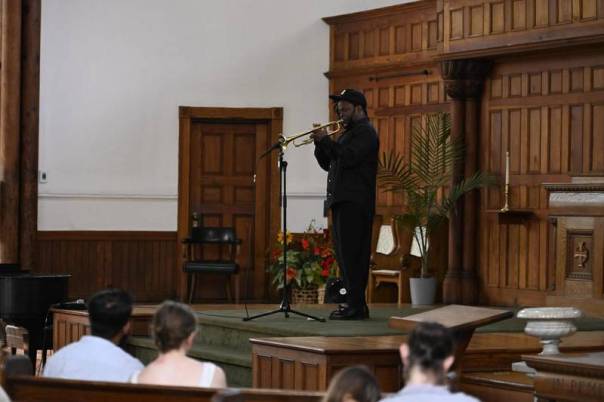


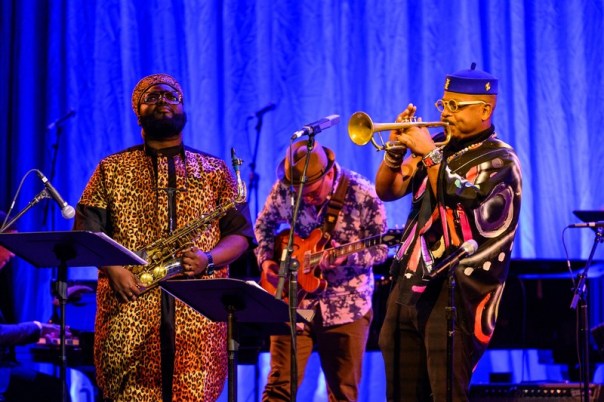


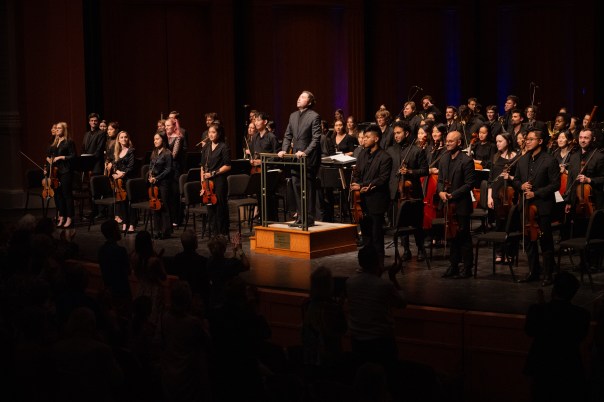


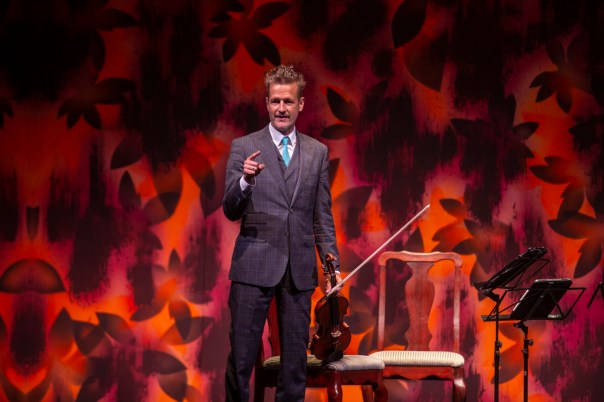
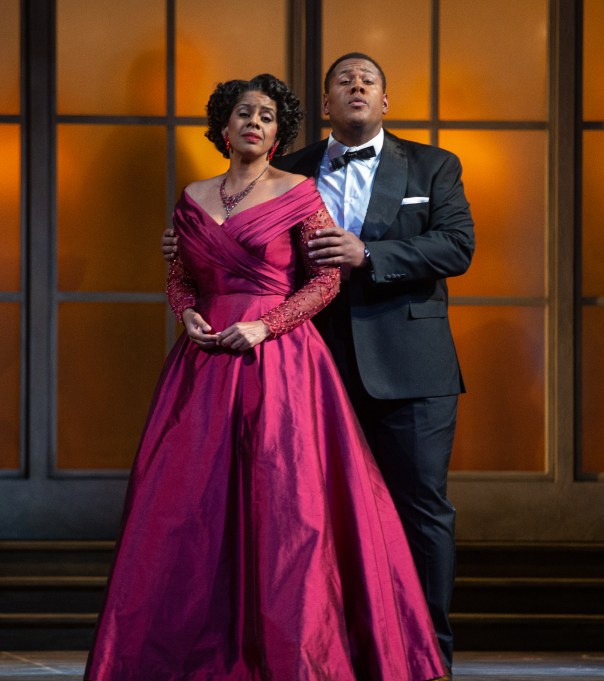
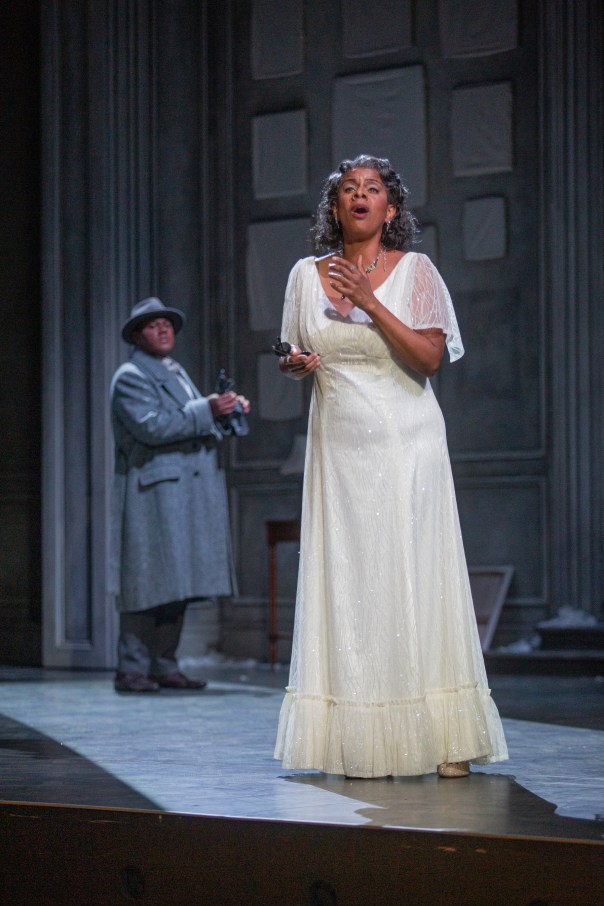
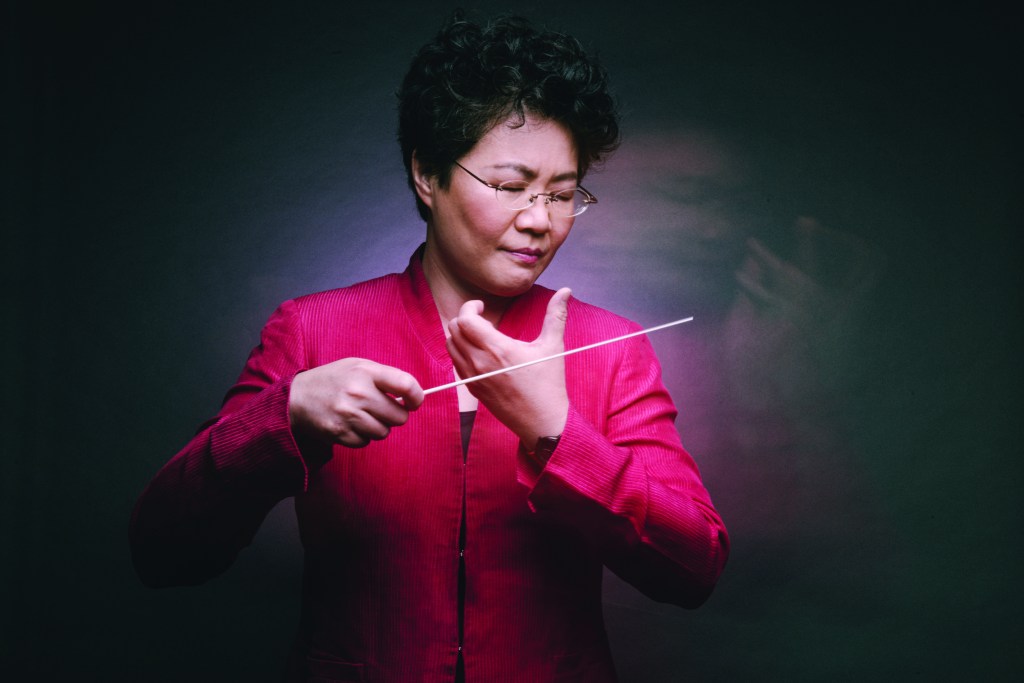
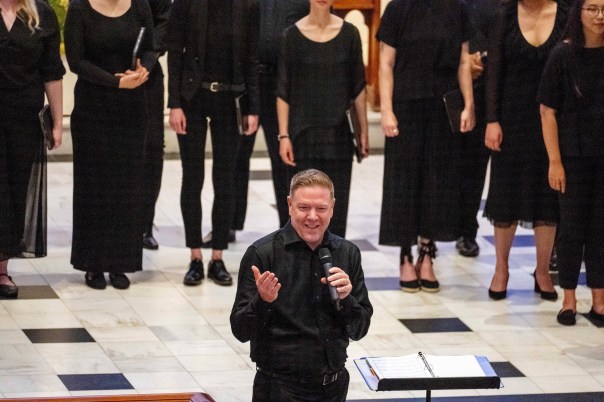
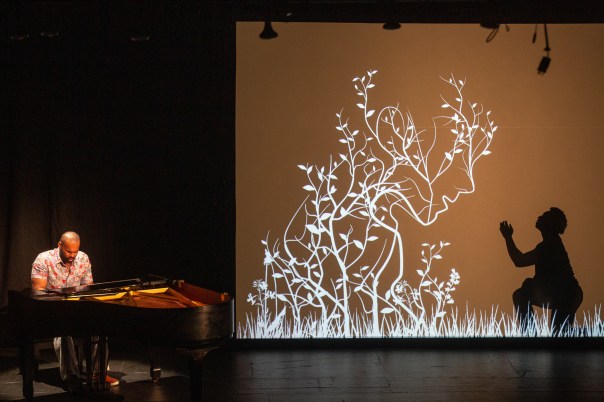




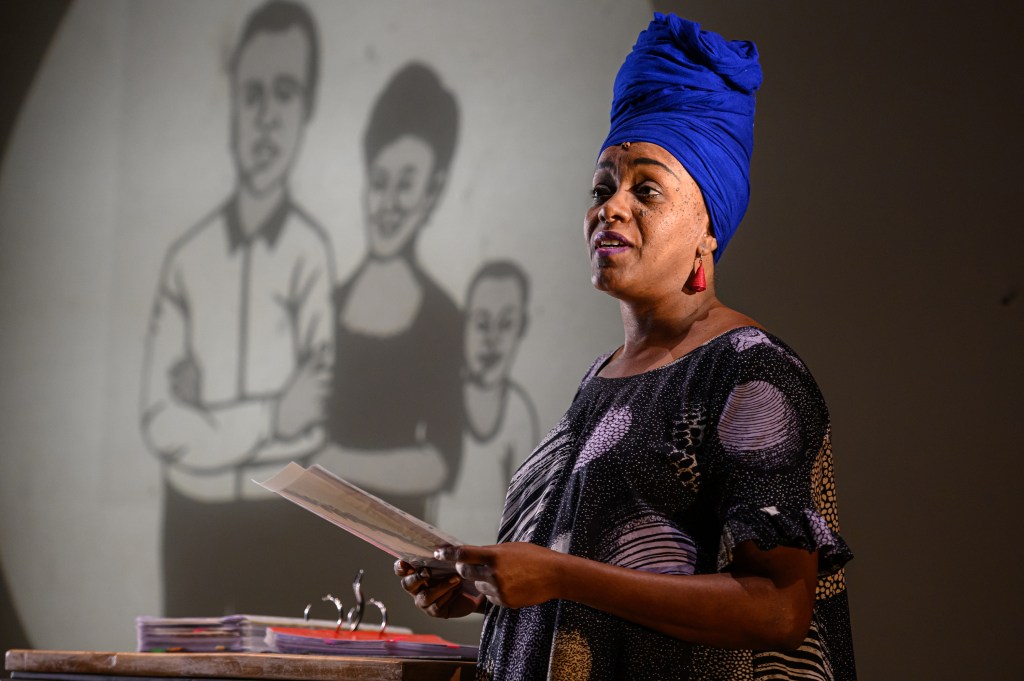


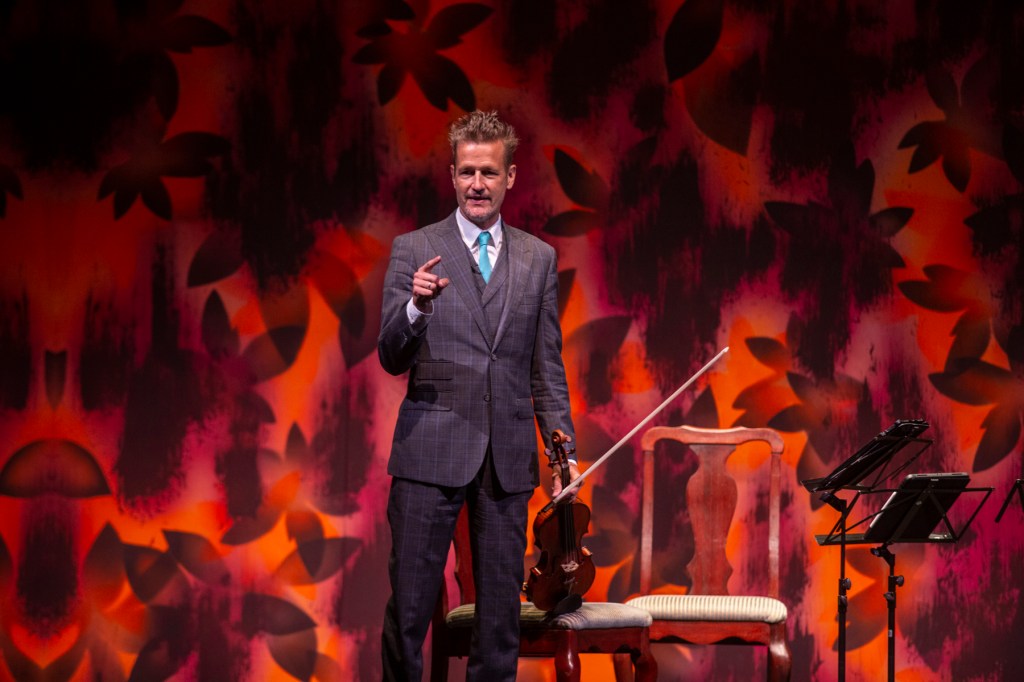
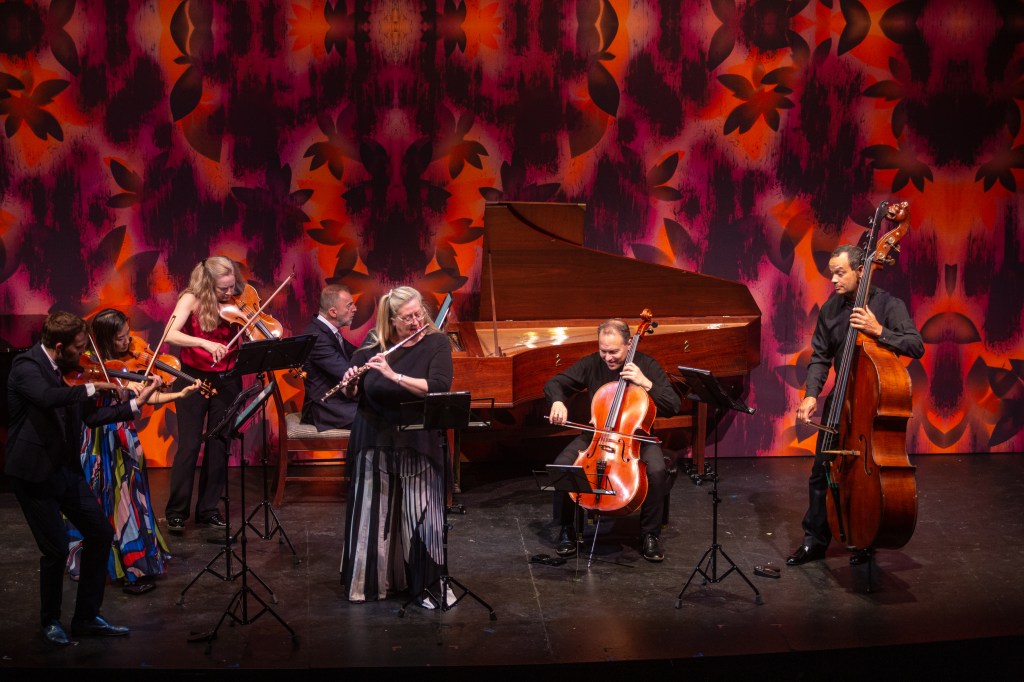
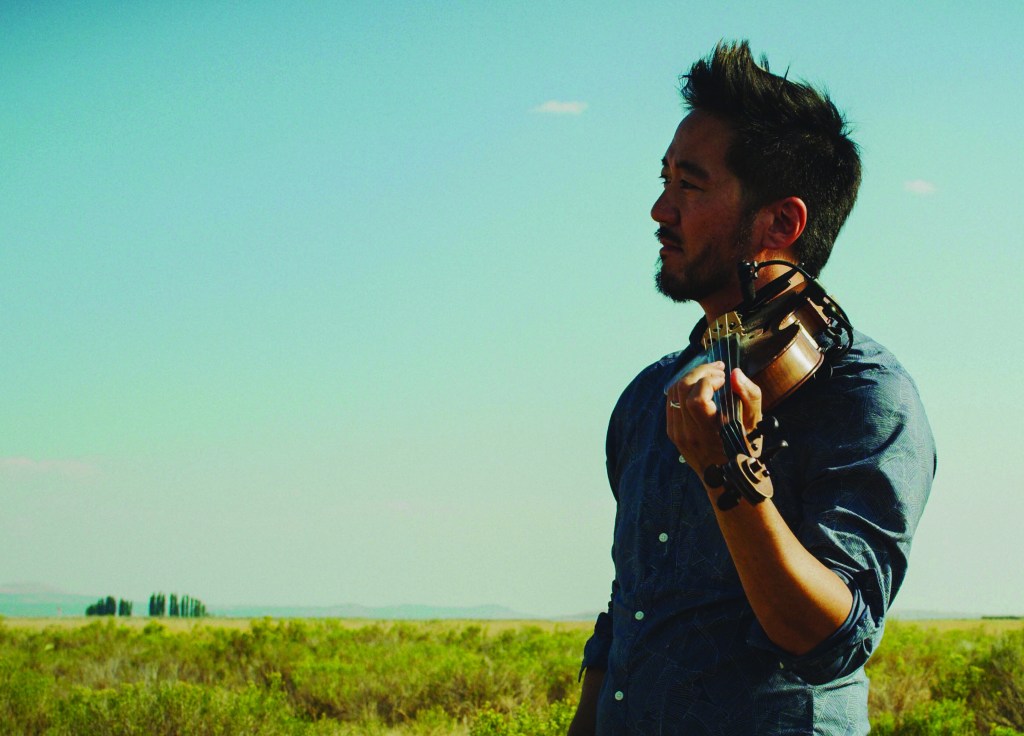

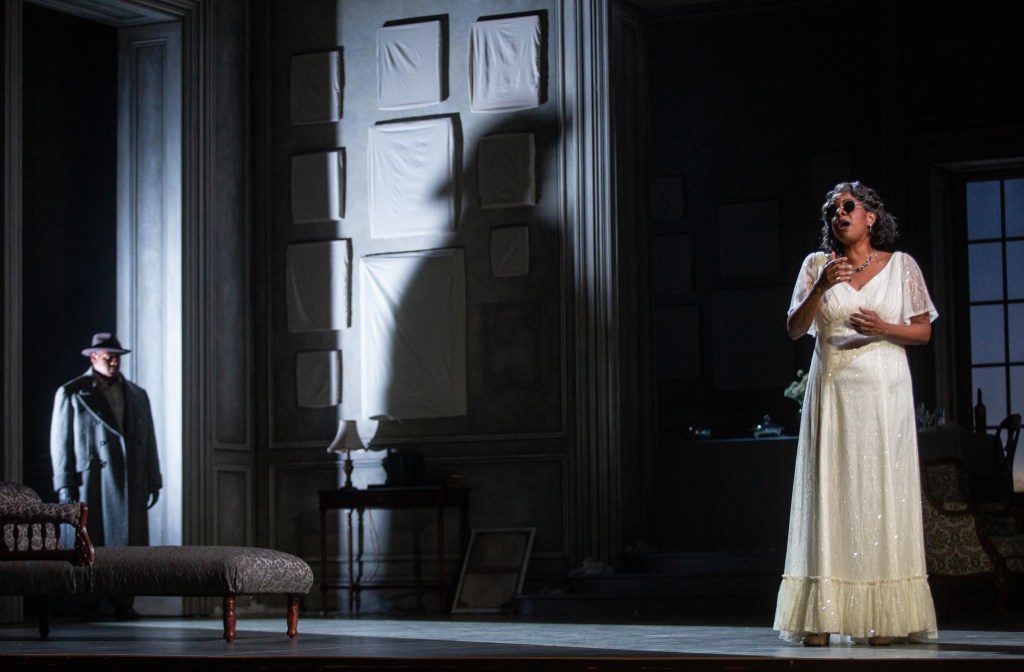
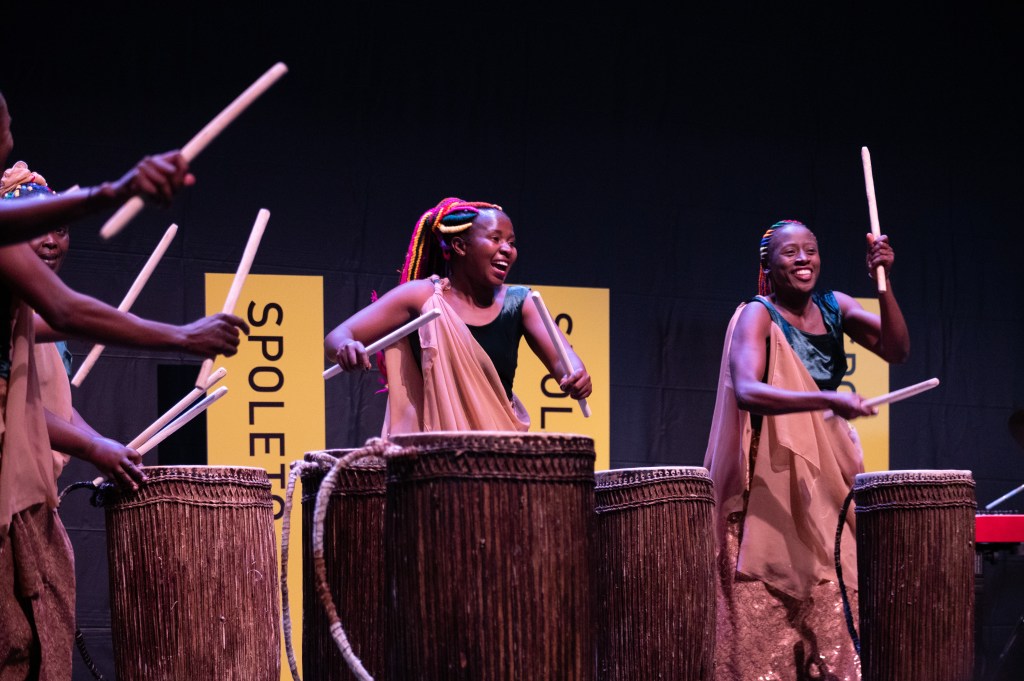

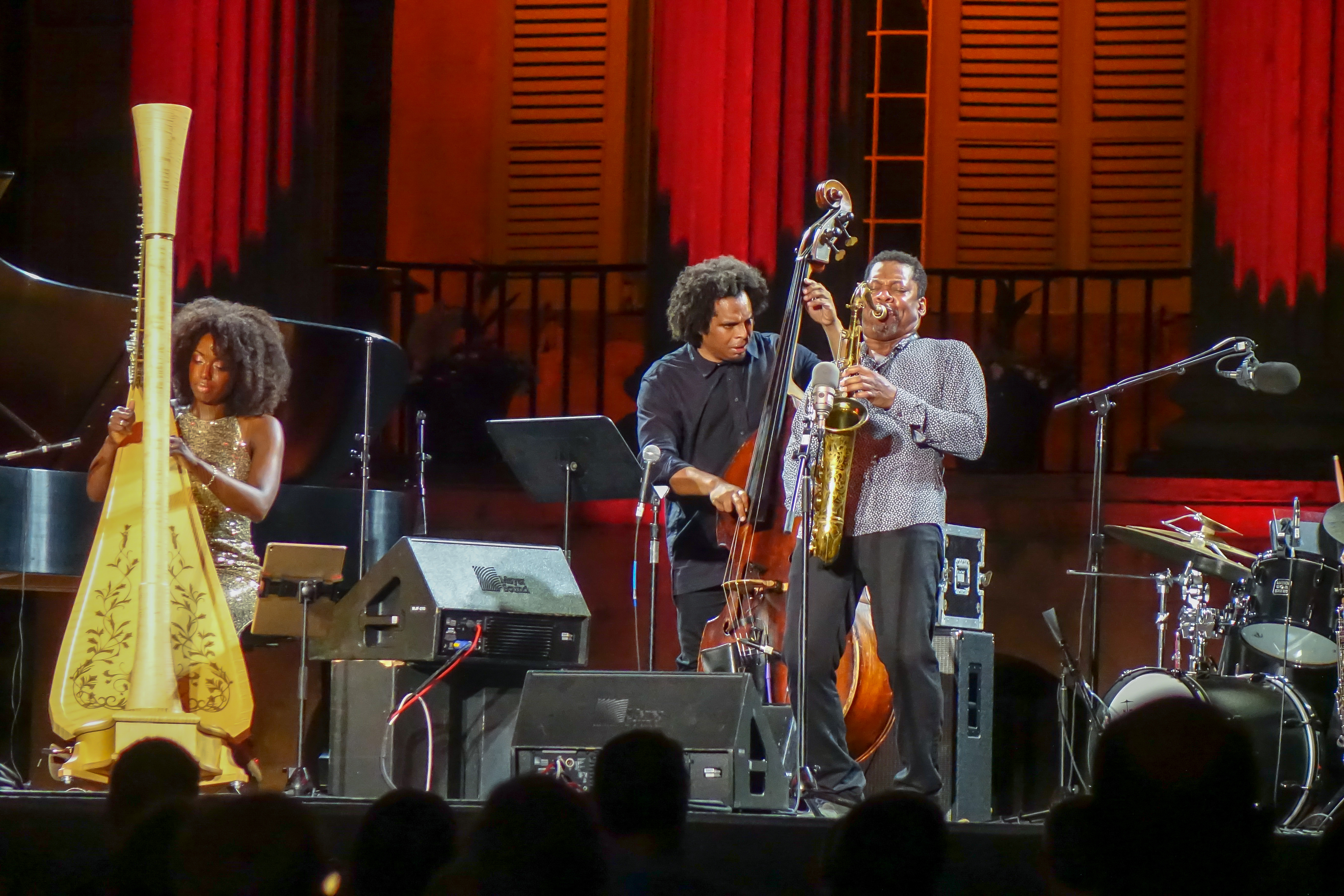


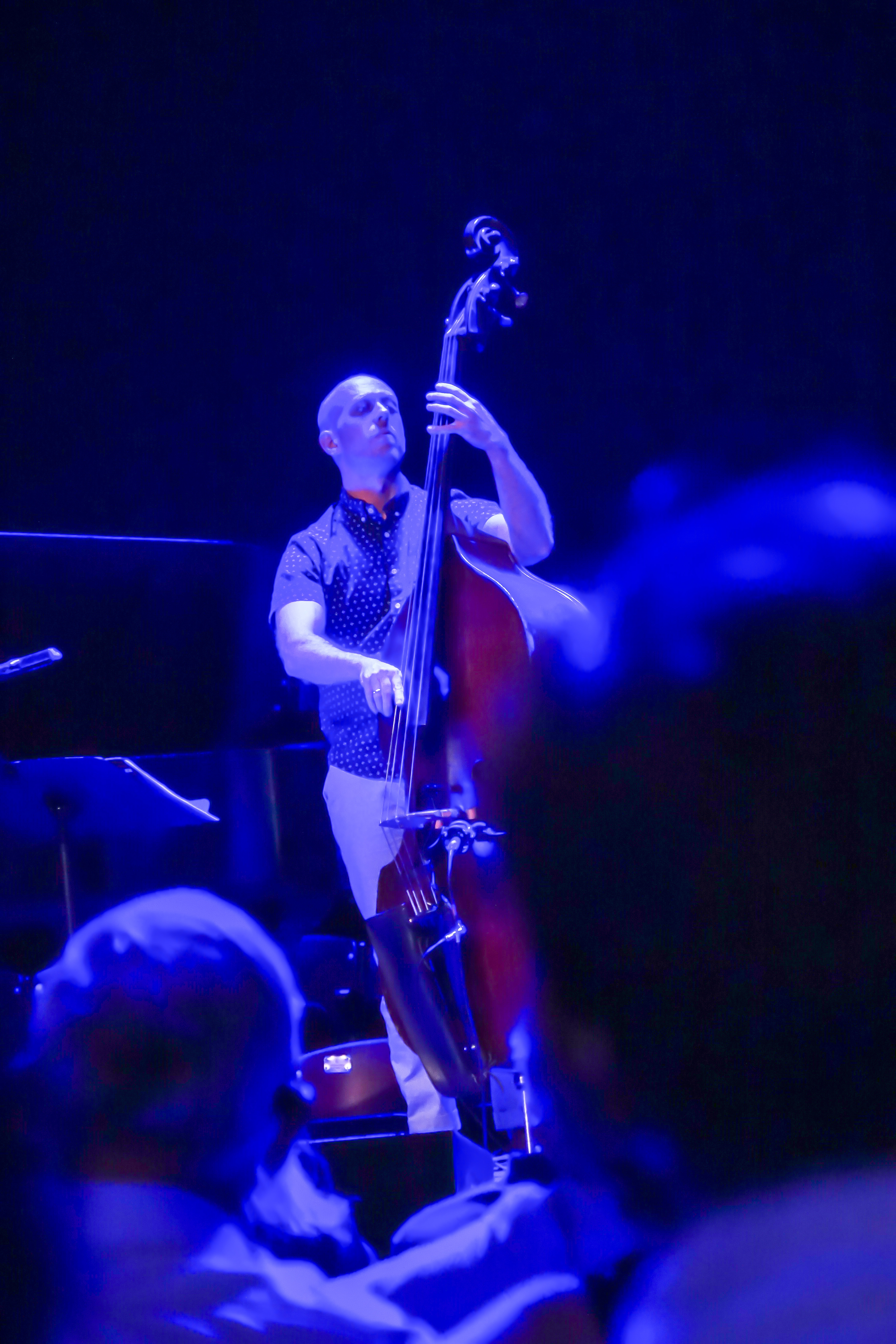


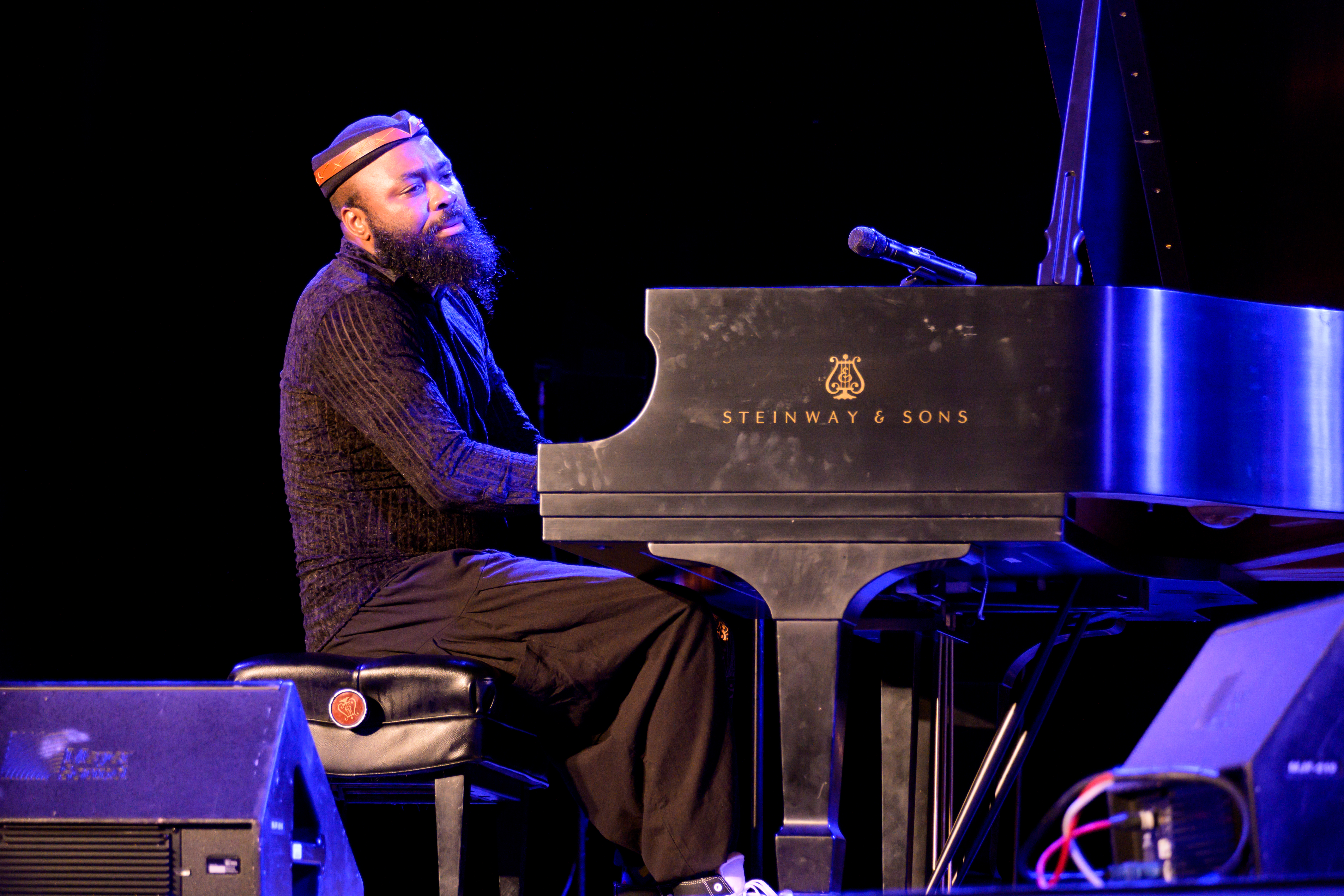


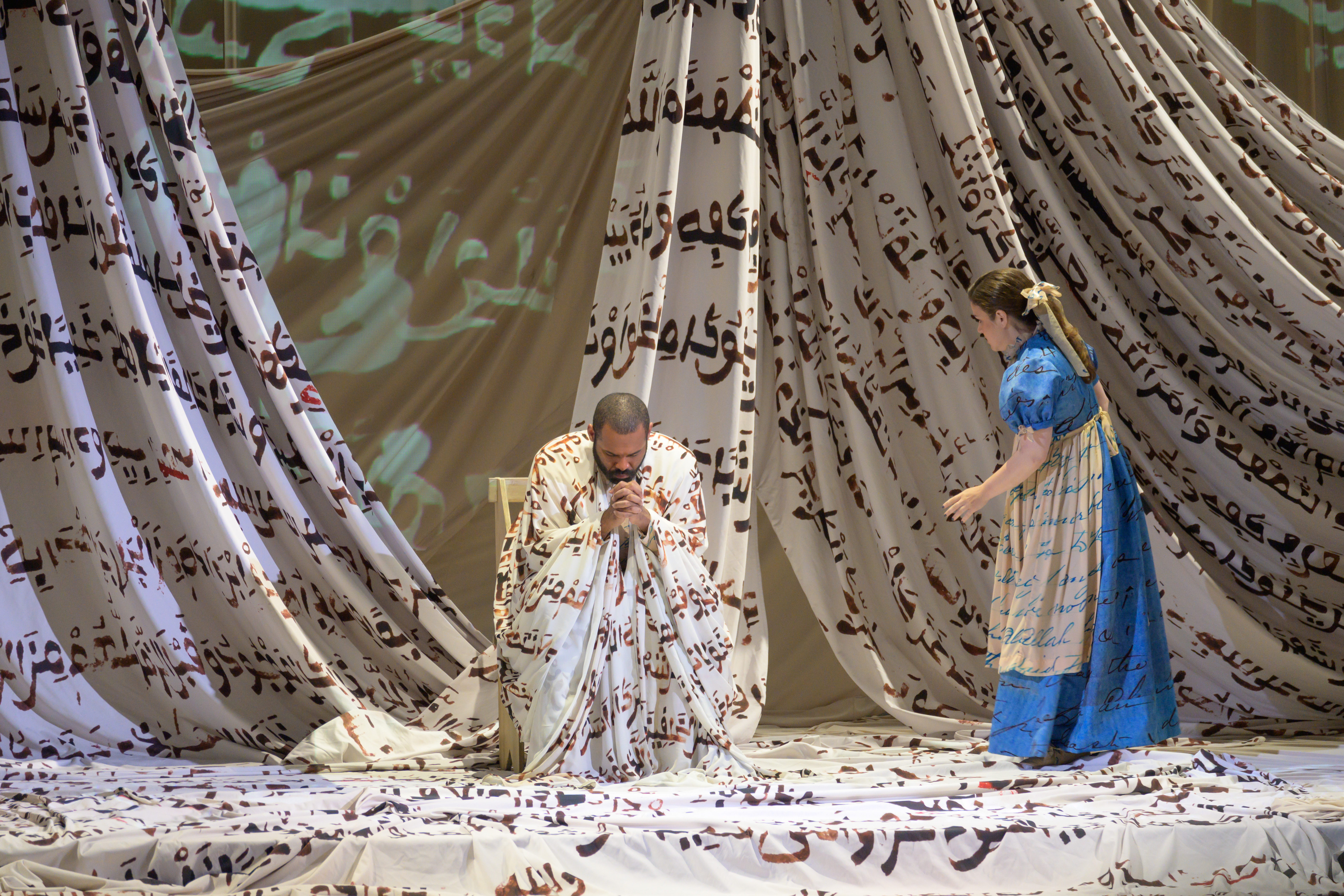


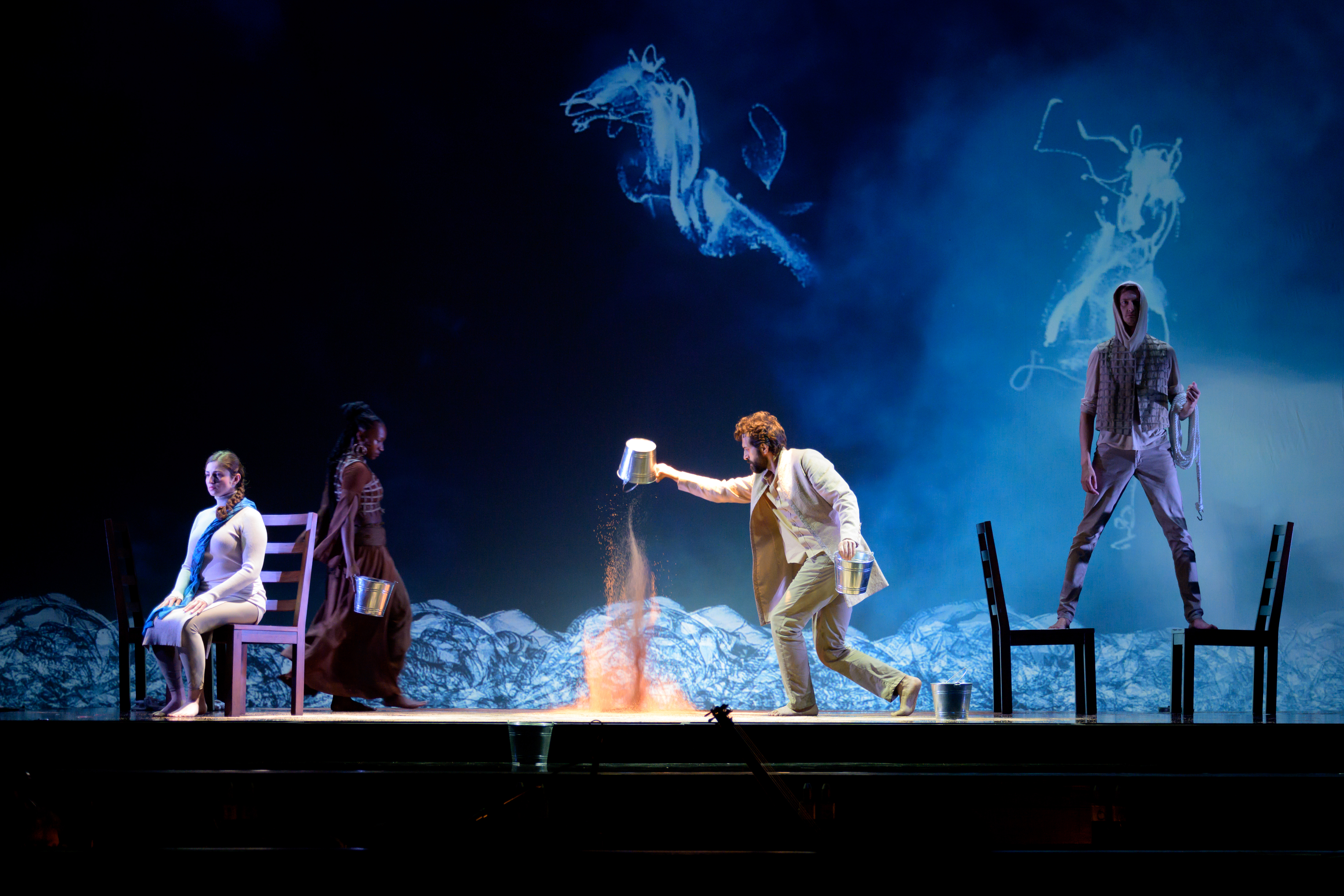

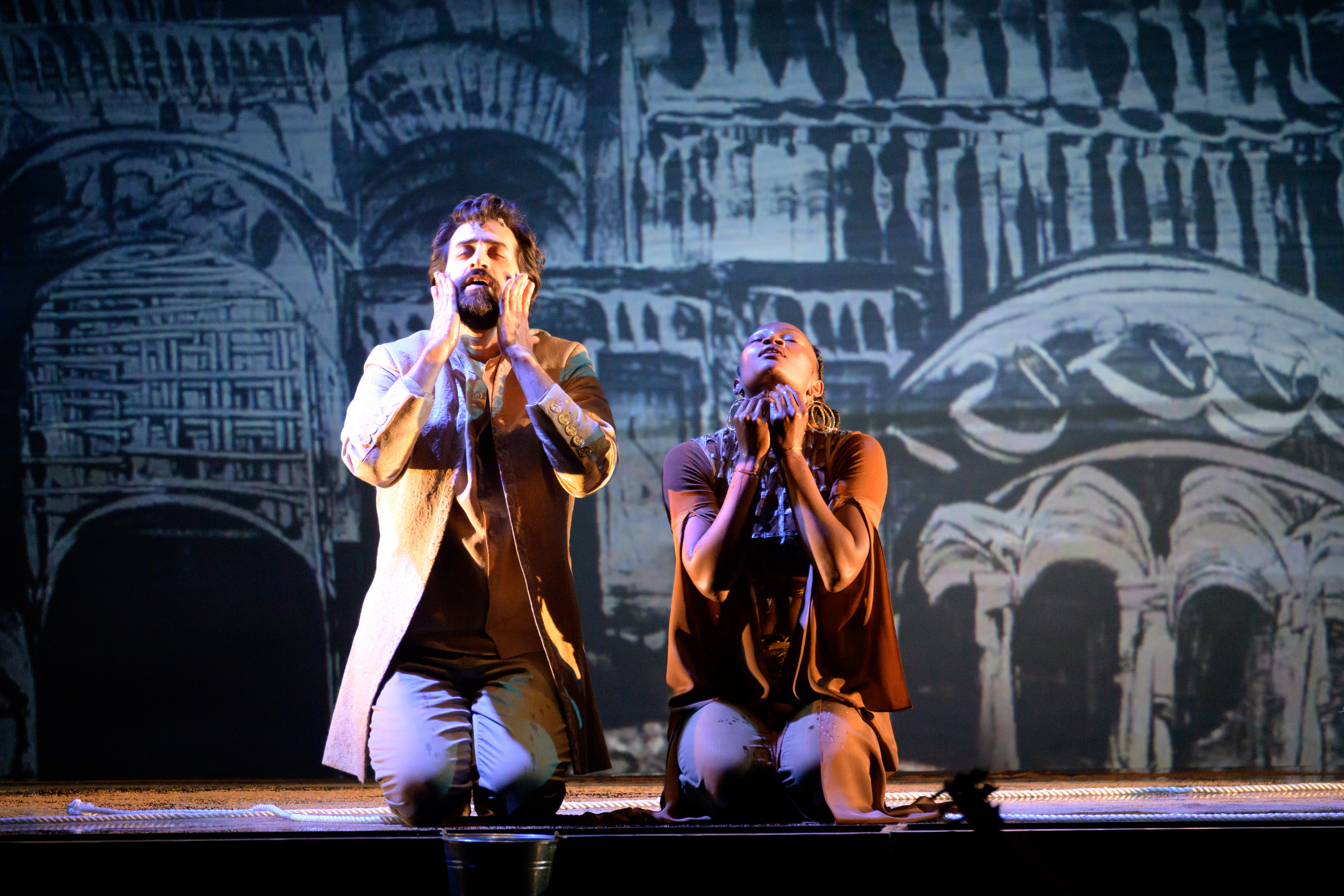
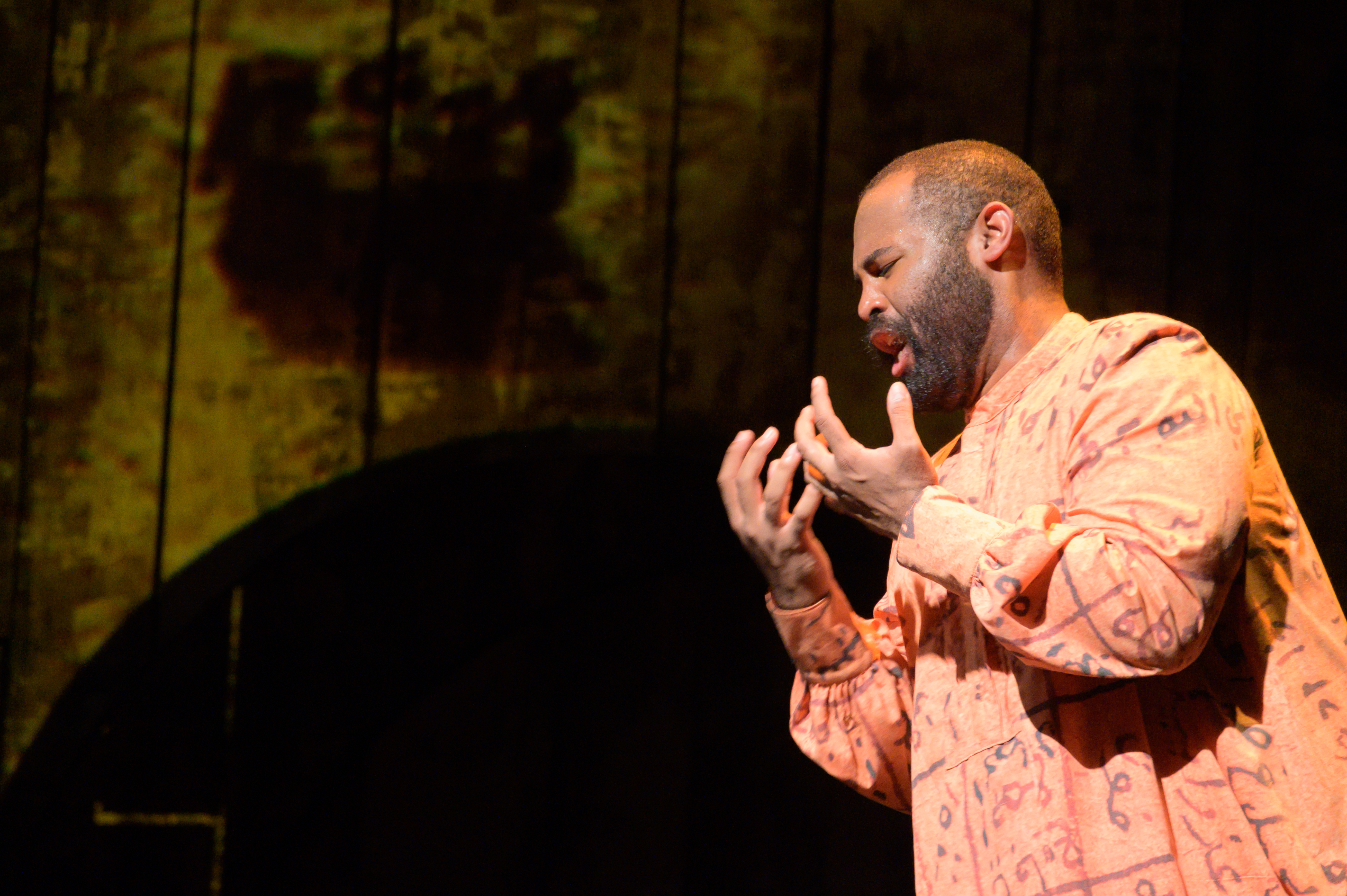
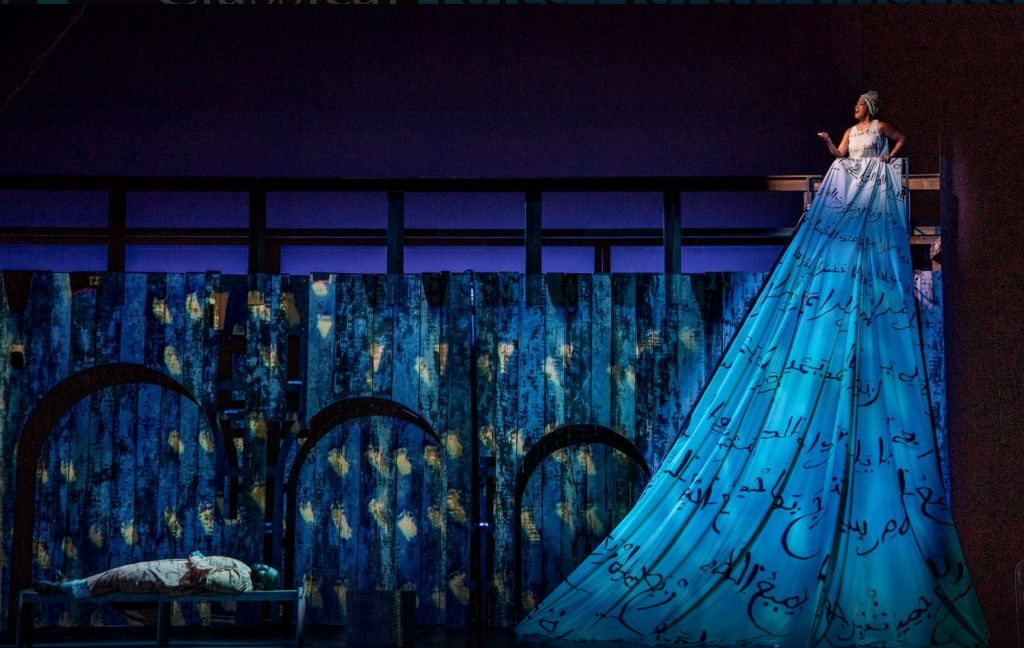
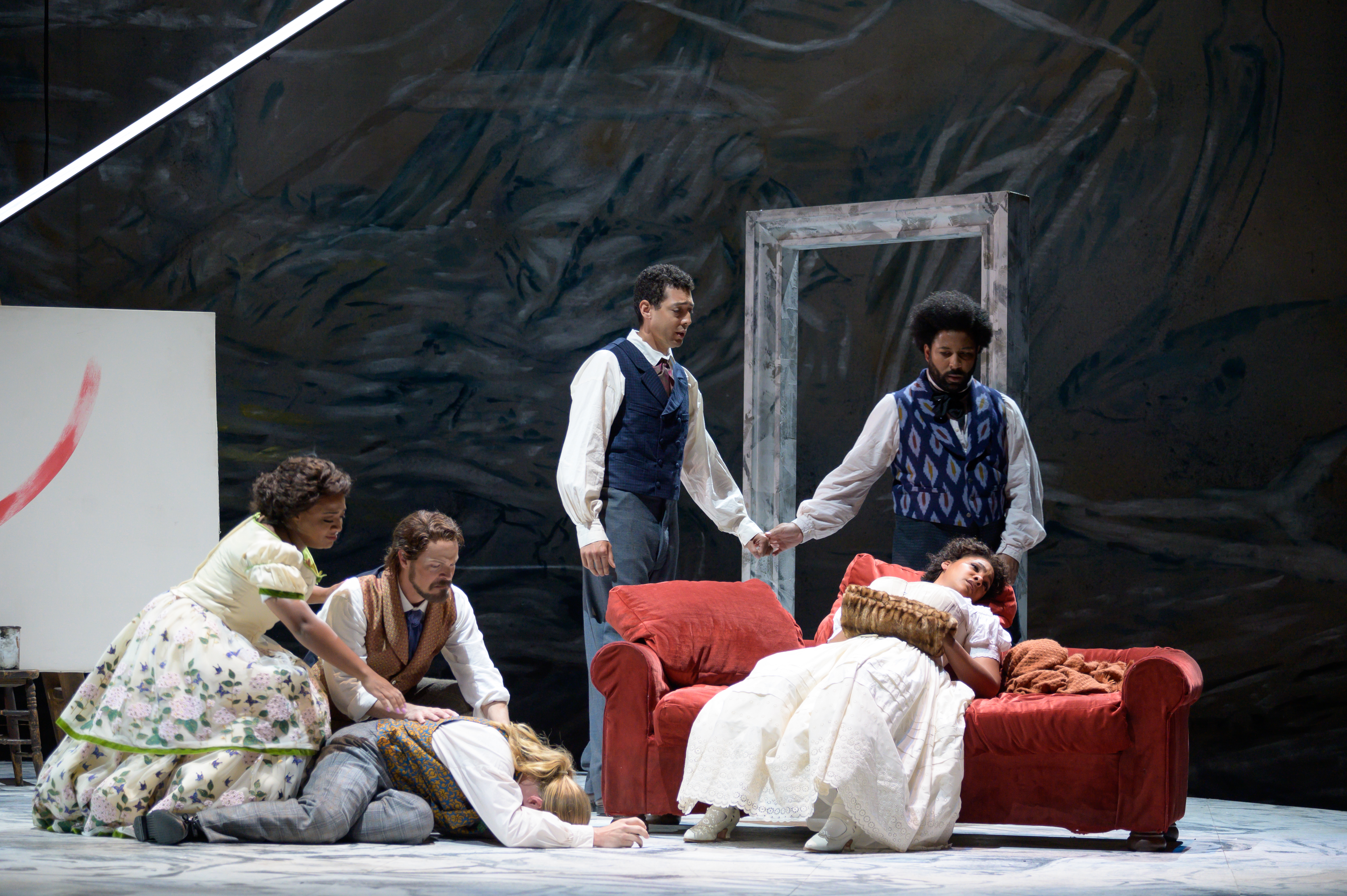


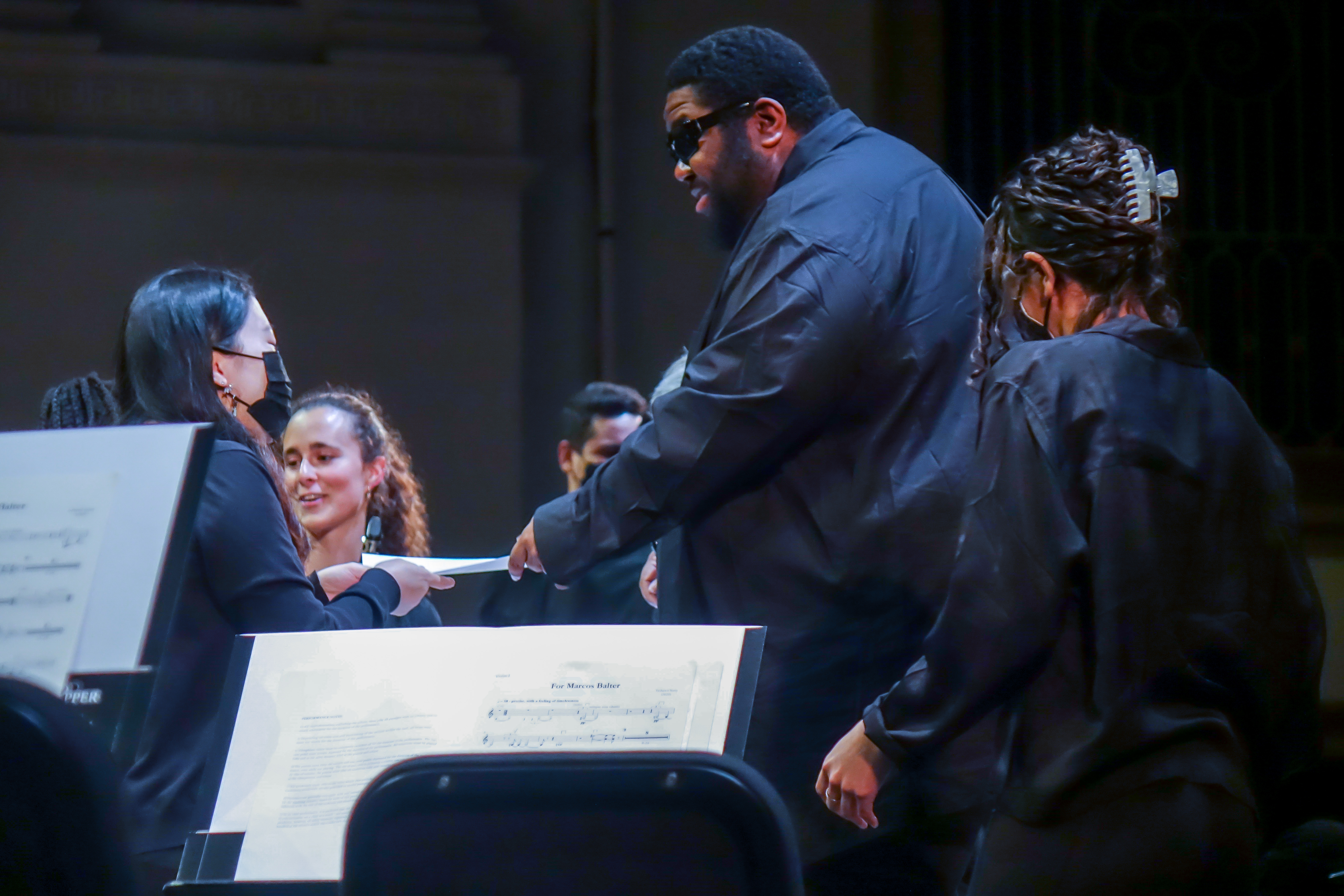

 Art on My Sleeve