Tag Archives: Lisa Schacher

The Delphic Oracle Sings The Go-Go’s

Review: Head Over Heels at Duke Family Performance Hall by Davidson Community Players

By Perry Tannenbaum
Heaven, Elysium, Utopia, Paradise, and Arcadia are all perfect places in our minds, too placid and static to be considered as settings for comedy, thrilling action, or drama. If you were in search of a perfect backdrop for the music of The Go-Go’s, you would more likely pick a city on the California coast, Las Vegas, or even Indianapolis than opting for heaven or the Elysian Fields.

That’s not how Jeff Whitty saw it when he conceived Head Over Heels. You get the idea that, after birthing Avenue Q, Whitty almost had free rein from the Oregon Shakespeare Festival to do anything he pleased. Whether he was inspired by the Elizabethan aura of OSF’s outdoor and indoor stages in greeny Ashland, Oregon – or bound to play up to them – Whitty reached back to The Countess of Pembroke’s Arcadia by Sir Philip Sidney, first published by the Countess in 1593.

Whitty had absolutely no intention of bridging the two eras – or smoothing the discordance between Elizabethan and Go-Go’s English. Whitty does tone it down a bit when Philoclea, the younger daughter of Arcadia’s King Basilius, tells her ardent admirer Musidorus to “Speak English, not Eclogue” when the shepherd boy begins his wooings.

At about the time that Head Over Heels premiered at OSF in 2015, Something Rotten!, with Will Shakespeare as its rockstar, was premiering on Broadway. That might explain the lukewarm reception that greeted Whitty’s show when it had its NYC premiere in 2018, for its Broadway run fizzled out in less than six months.

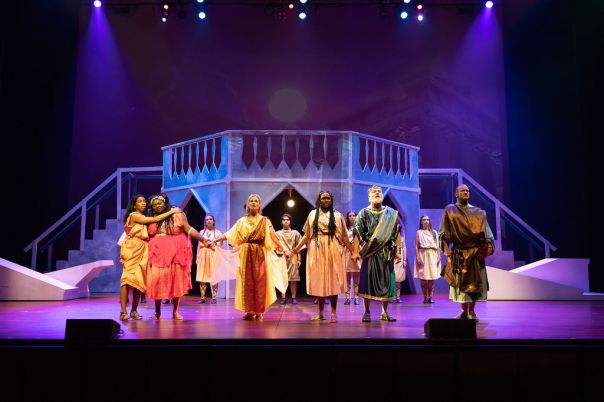
You can judge for yourself at spacious Duke Family Performance Hall as Davidson Community Playhouse rather splendidly presents its summer musical in nearly all of its gender bending glory. For this Metrolina premiere, projection designer Caleb Sigmon, scenic designer Ryan Maloney, and costume designer Yvette Moten fill the Broadway-sized stage on the Davidson College campus with eye-popping color and Hellenic style.

With the disclaimer that I’d never heard a single bar of Go-Go’s music before Head Over Heels came to our region, I can say that I delved into The Go-Go’s greatest hits afterwards on Spotify and listened to the original Broadway cast album. From the opening “We Got the Beat” onwards, the two generations of singers up at Exit 30 on I-77 beat them both.

Word of DCP’s excellence has extended its reach, and director Chris Patton and music director Matthew Primm have reaped the benefits. Belting the Go-Go’s “Beautiful” to her own mirror, Jassi Bynum is the vain elder sister, Pamela (a name apparently invented by Sir Philip). No less capable of letting loose, Kiearra Gary is the obedient “Good Girl” sister, Philoclea. And the well-established powerhouse, Nonye Obichere, is Mopsa, who seems for awhile to be a third sister until we learn that she is actually the daughter of the King’s steward, Dametas.

When Mopsa’s heart is broken, she will flee to Lesbos (wink, wink) and sing “Vacation.” Obichere slays at least as convincingly as the sisters.

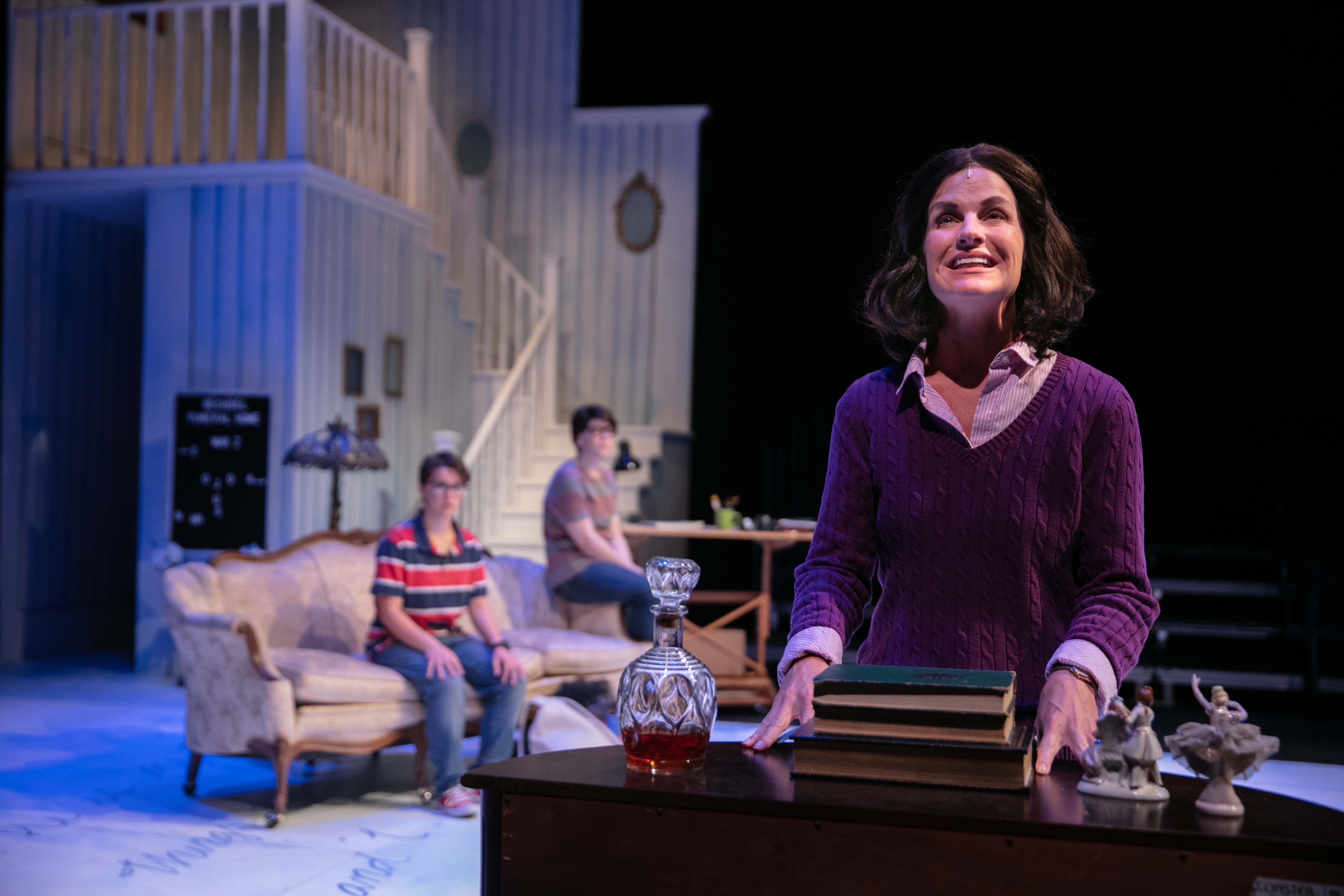
It’s easy enough to get confused by the parents because they’re all white folk who fit nicely into Sidney’s Grecian mold but look nothing like their offspring. Yet Lisa Schacher, not seen hereabouts in a truly breakout musical role since the early days of QC Concerts, keeps her where-have-you-been-all-my-life belting capabilities under wraps until after intermission as Gynecia, the Arcadian queen. We’re not just talking Judy Garland belting, for Schacher crosses over the borderline to Whitney Houston territory along with Bynum, Gary, and Obichere.
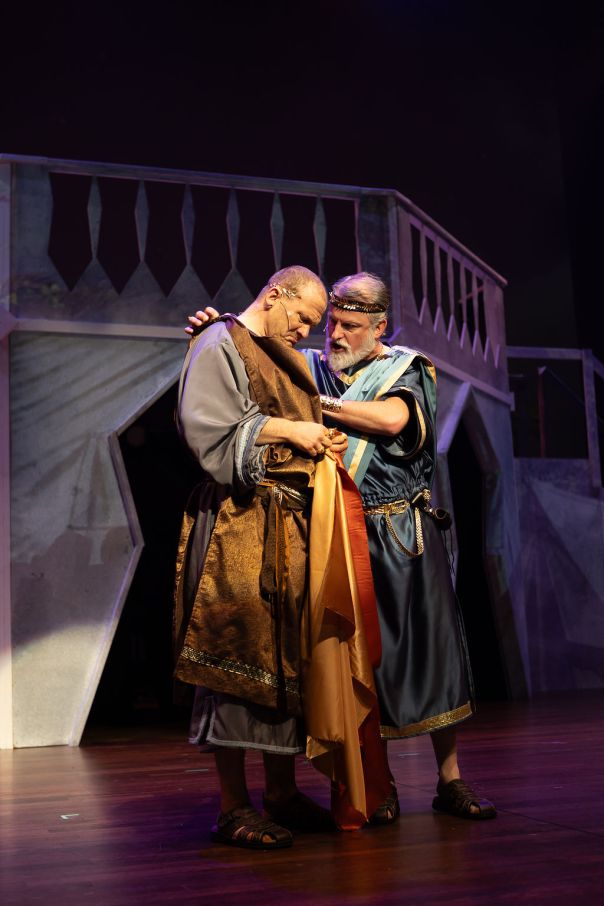
Once whatever was clogging Tommy Foster’s larynx in the first moments of Saturday night’s performance as Dametas was expelled, the longtime veteran reminded us that he could also wail. Saddled with a more earthbound voice, Rob Addison brings a nicely grizzled dignity to King Basilius that is forceful enough for the lead vocal of “Get Up and Go” and his climactic king-and-queen duet with Schacher, “This Old Feeling.”

Kel Wright, whose pronouns are Kel and I in her coy bio, is the gender-fluid complication roiling the eternal placidity of Arcadia. She is the ardent shepherd boy Musidorus, Philoclea’s bestie since her tomboy days, who must disguise himself as an Amazon warrior, Cleophila, after he’s banished from Arcadia in order to regain access to his lady love.

Everybody seems to be attracted to Cleophila, though they come to all the possible conclusions about the Amazon’s true gender. It’s a mess – a hormonal thundershower that afflicts the King, the Queen, and their daughters. All of them scurry about in a mad passion that comes off with all the innocent merriment of a musical comedy. Adding to all of this hilarity is the disconnect between Wright’s tinniness and the Amazon’s virility, so feverishly irresistible to Pamela and her mom.

All of this mad pursuit, however, happens under the cloud of a prophesy that threatens Arcadia’s doom. A snake sent by Pythio, the Delphic Oracle, lets loose of a letter summoning King Basilius to the temple to hear the Oracle’s oracle. In Sidney’s original manuscript, not recovered until 1908, the prophecy is given concisely in verse at the end of the novel’s opening paragraph.

Thy elder care shall from thy careful face

By princely mean be stolen and yet not lost;

Thy younger shall with nature’s bliss embrace

An uncouth love, which nature hateth most.

Thou with thy wife adult’ry shalt commit,

And in thy throne a foreign state shall sit.

All this on thee this fatal year shall hit.

Whitty actually retains the adultery line – with its apostrophe! – but flips the plotlines of the elder and younger daughters. In Arcadia, Basilius is seeking to preserve his family and kingdom, but in Head Over Heels, he’s also battling to ward off the mass extinction of Arcadians. Forget about the “fatal year”: Each time one of the four prophecies is fulfilled, a flag will fall. If Basilius fails to confound the Delphic Oracle’s prophecy and the fourth flag falls… game over. If he succeeds in thwarting the prophecy even once, Arcadia is saved.
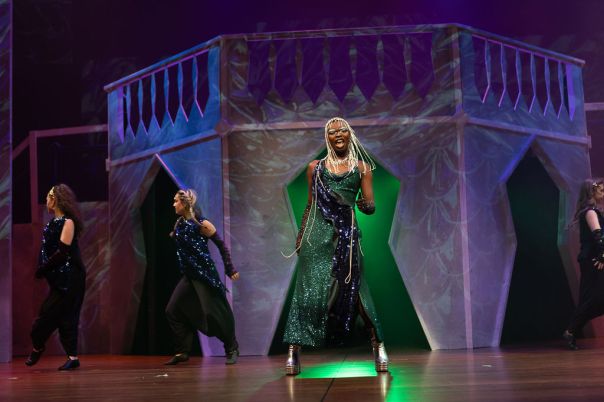
The roadblock to all this heroic questing and defying taking hold at Duke Family is the sensational Treyveon Purvis as the glittery Pythio, who describes themselves as a “non-binary plural.” No, that isn’t verbatim from Arcadia. We don’t need to understand every word of “Vision of Nowness” instantly as Pythio bodaciously belts it. If you don’t catch a phrase the first time or Purvis slurs it, you’ll get a second chance. Besides, the Go-Go’s lyrics are of little consequence once the song is done.

But the four prophecies and the fluttery flag drops are the whole damn evening, so when Purvis garbled every one of Pythio’s pronouncements – and the flag bit as well – much of what followed became equally incomprehensible. Why were those flags falling again? Was Foster wildly excited when he caught those falling flags, or was his Dametas frantically panicked?

Never could get a read on all these things until I sorted them out later at home. A few other gems had eluded me when I perused the script. For example, when Wright is lavishing her outsized voice on Musidorus’s “Mad About You,” the shepherd’s backup group are his sheep, altering the Go-Go’s deathless lyric to “Ma-ad about ewe.” Bleating as they sang? I don’t remember.

Nor did it quite register that Pythio’s backup were all snakes. So there was little chance for me to savor Purvis’s best line of the night: “Snakelettes, slither hither!” They are only named that one time, so catch it if you can.

Arguably, the main historic aspect of Head Over Heels was that it offered Peppermint, as Pythio, the opportunity to be the first openly trans actor taking on a major role on Broadway. There’s summery breeziness to this show and a cozy ending, not nearly as biting as Avenue Q. Maybe if the Broadway production had had the chance to run for a full summer, it might have found its legs instead of perishing in the dead of winter.

It’s the Go-Go’s, after all. Just don’t go in expecting the usual Jack-shall-have-Jill windup. Whitty remains a bit queer.

Children’s Theatre Puts a Cherry on Top of a Joyous “Peter Pan”

Review: Peter Pan

By Perry Tannenbaum

DSC01463_sized

It has been well over 100 years since Captain Hook first asked James M. Barrie’s signature protagonist, “Who and what art thou?” Hook has certainly evolved since then, shedding his antiquated diction, but so has “The Boy Who Wouldn’t Grow Up,” as the current Children’s Theatre of Charlotte production of Peter Pan jubilantly reminds us. Peter no longer answers as Barrie prescribed, “I’m youth, I’m joy! I’m a little bird that has broken out of the egg!” Ever since Jerome Robbins, Betty Comden, Adolf Green, and Jule Styne got hold of him for their musical adaptation, Peter says, “I am youth. I am joy. I am freedom!” Without any official conquest or treaty, Neverland became an American territory.

Yet it must be said that, directing the show at McColl Theatre in the ImaginOn complex, Jenny Male has turned back the clock in a couple of key respects. Like the Darling family of Londoners – Wendy, John, Michael, and their parents – Renee Welsh-Noel as Peter spoke with an unmistakable British accent. Better yet, she radiated more pure bird-broken-out-of-the-egg joy than anyone I’ve seen since Mary Martin introduced this musical ages ago. The voice is also very fine, with richer low notes than I’ve heard before from a lady Peter and only a negligible loss of power at the top. Welsh-Noel also boasts more youthful energy than Cathy Rigby, the last marquee name to tour Charlotte in the title role, with a dancer’s athleticism rather than a gymnast’s.

DSC01768_sized

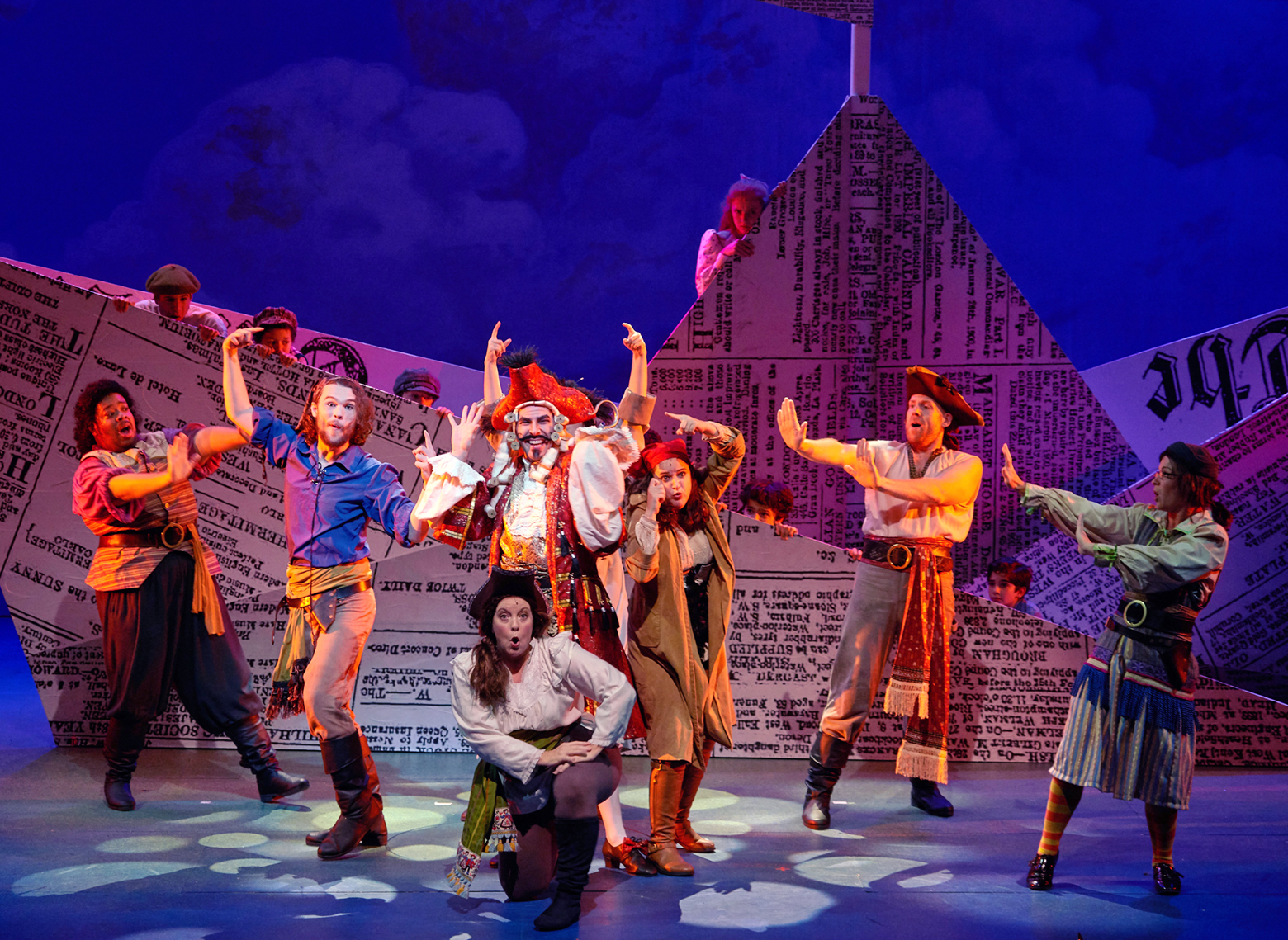
Fresh new joy also radiates from Caleb Ryan Sigmon, who sashays across Neverland and his pirate ship in a silken, spangled, flaming-red greatcoat designed by Ryan Moller that skirts the borders of effeminacy without quite crossing over. Male and choreographer Mavis Scully supply Sigmon with abundant shtick to feast on, and his antics kept the kiddies in a hysterical uproar of laughter. I’m not sure I’ve ever heard more excited glee during an intermission, as if parents had discovered buried treasure in the comedy, the music, and the flying action. Sigmon excelled most notably in “Hook’s Waltz,” slightly eclipsing the éclat he and his crew had created in his previous “Tango” and “Tarantella.” After he concluded the “Waltz” once, I hoped Sigmon would get a second ending to croon. Hamming up “Mrs. Hook’s little baby boy,” he did.

Political correctness, however, has taken away Tiger Lily’s former Native American zest, short-changing Desirae Powell’s chances to shine. “Indians!” and “The Pow-Wow Polka” have gone the way of the passenger pigeon, along with the “Ugg-a-Wugg” title and much of the Styne melody from what is now “True Brothers to the End.” A percussion orgy, maybe African- or Caribbean-inspired, and a splash of Scully choreography replaced the tom-tom tattoo. Hard to say what the main sore point was here, referring to Native Americans or the treaties we made with them. Either way, despite Moller’s evocative costuming, it was difficult for Powell to sustain any traction in her severely pruned role. I’m not sure it was even kosher for her to acknowledge that she was leading a tribe. Gender may also be off limits in our hypersensitive new world: Hook’s “Mysterious Lady” has disappeared, and the first greeting from Wendy to Peter is no longer “Boy.”

The Darling children, products of the Children’s Theatre of Charlotte School of Theatre Training, were absolutely wonderful, perfect examples Male’s meticulous directing. Mary Kathryn Brown artlessly delivered the full range of Wendy – eldest sib, adventurous girl, fantasy mother and wife – with all the joy and frustration of dealing with Peter. Wearing the traditional top hat, Eli Fischer was suitably priggish as John, and Andrew Ahdieh dispatched some endearing business with a teddy bear as Michael. Of course, the boys wanted to go to Neverland – Wendy hardly needed to invite them – but of course they soon got homesick after a few adventures and asked to schlep back across the galaxy. Alison Snow-Rhinehardt presided over the sleepy opening action with a sweet Julie Andrews accent as Mrs. Darling, starting off the canonic “Tender Shepherd” lullaby with a warmth that justified her children’s affections. Snow-Rhinehardt shed her formal during her brood’s absence, transforming into one of the pirate crew, but Jeremy Shane Kinser as Mr. Darling moonlights more prominently, becoming Starkey, one of Hook’s chief henchmen.

Male’s inventive overlays are certainly open to question. She frames the action with a little girl, Wendy’s future daughter, off to the side of the stage, reading the story and ultimately stepping into it for the final scene. In the meanwhile, lights come up on her occasionally as she gets swept up in the action – it seems that she’s supplanting the role of an interpreter for the hearing impaired. And if you think the woman listed in the cast as Tinker Bell is a celesta virtuoso, guess again. After twinkling on walls, furniture, and foliage all through the story, she suddenly flies into Peter’s hideout in the corporeal form of Haley Vogel, drinking Hook’s poison to save dear Peter and dying a fairy’s death. The tableau, Tink cradled in Peter’s arms before we’re entreated to resurrect her with our clapping, is like a Pietà. Kids at the Saturday matinee were as amazed as I was – and responsive. And how about Lisa Schacher as Smee? She was so lovably servile towards Hook that I didn’t begrudge her tagging along behind the Lost Boys at the end.

DSC02046_sized

Sets by Robin Best weren’t the most eye-popping that I’ve seen at the McColl, a little humdrum in the framing London scenes but bursting with life in Neverland with a preternaturally large dragonfly painted onto the skein along with clusters of grapes larger than Hook himself. The deck of Hook’s ship was, in the same vein, a monstrously enlarged replica of the boat we first saw on John’s bed, made from a folded-up newspaper. Dreamy and odd. The idea of making Nanna, the Darlings’ dog, into a big floppy puppet was brilliant, but I’m sorry to report that Male and her design team bungled the Croc rather badly, giving us only a tail dangling over the side of that newspaper boat as the action crested. Evidently, nobody at ImaginOn has checked out the wondrous Charlotte Ballet production of Peter Pan and discovered just how hilarious a costumed Croc can be.

But it would be foolish to assert that Children’s Theatre didn’t know what they were doing in this spectacular season opener. Clocking in at 140 minutes, Peter Pan surely ranks among the longest shows ever staged at the McColl Theatre, its opening act longer than most of the shows the company produces. Maybe the cagiest – and subtly effective – thing Male does is in the careful placement of her intermission. Flouting the norm, she doesn’t bring down the curtain on a rousing climax. Instead, we adjourn at the moment when Peter and Tiger Lily shake hands after saving each other from the pirates. When the lights came up, everybody in the audience – children of all ages – knew that there was more to come and that it would be good. The flying by Peter, Wendy, her sibs, and the surprising Tink is delightful throughout, but the curtain call sends Peter out over the audience, an artful cherry on top.

Actor’s Theatre Shines New Light on Bechdel’s “Family Tragicomic”

Review: Fun Home at Actor’s Theatre of Charlotte

By Perry Tannenbaum

FUN HOME 5

Graphic novelist Alison Bechdel’s Fun Home grabs – and sustains – our attention in large measure because the title is a misnomer, the nickname given by Alison and her siblings to the family business, the Bechdel Funeral Home. Yet as the story unfolds, with its cargo of closeted homosexuality, sexual molestation, and suicide, we realize that Alison is stressing – and cherishing – the fun times she had with her siblings and her troubled dad. Sweetened by Lisa Kron’s stage adaptation and juiced by Jeanine Tesori’s music, the fun in Fun Home gains further momentum.

It keeps rolling in the Actor’s Theatre of Charlotte production at Queens University with lively stage directing, choreography, and preteen actors playing the young Bechdel pranksters. Aiming in that enlightened direction, set designer Dee Blackburn starts with the thrust stage configuration I saw at Circle in the Square for the Broadway, but she departs from the funereal darkness that characterized the New York run and the national tour. Abetted by Hallie Gray’s lighting design, Blackburn gives us the kind of bright home that Alison’s neat freak dad might fuss over.

FUN HOME 3

Or not. We also get darkness when Bruce, Alison’s dad, summons her to assist him in prepping a cadaver – and on numerous occasions when we leave the Bechdel house. Bruce’s nocturnal rambles, creepy and predatory, might occur far away on a family trip or in his car cruising the neighborhood for prey. If you’ve seen Fun Home before, you might find Bruce’s rambles more chilling, since his household isn’t an Addams Family lookalike. Bechdel’s original subtitle, “a family tragicomic,” wickedly sets the tone.

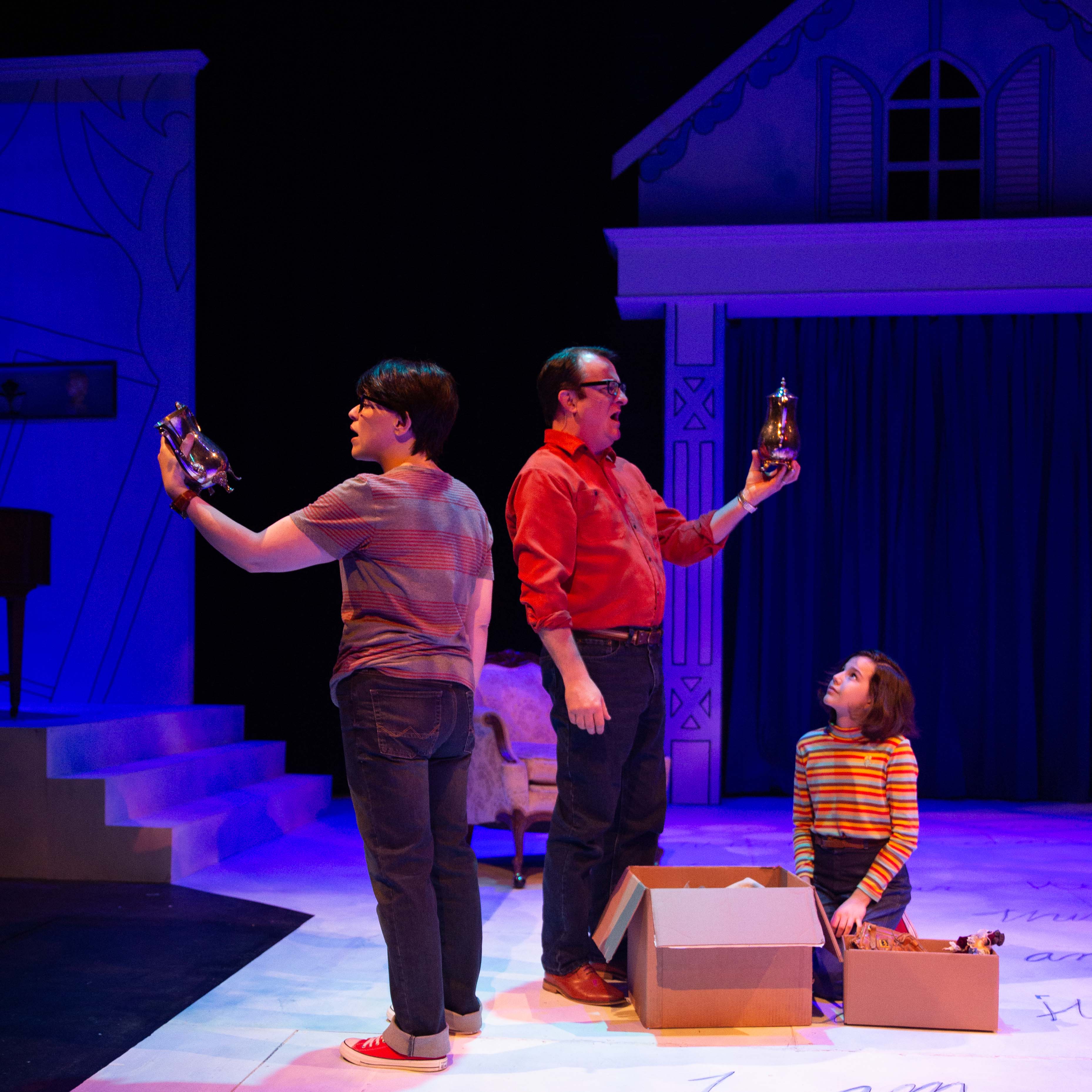
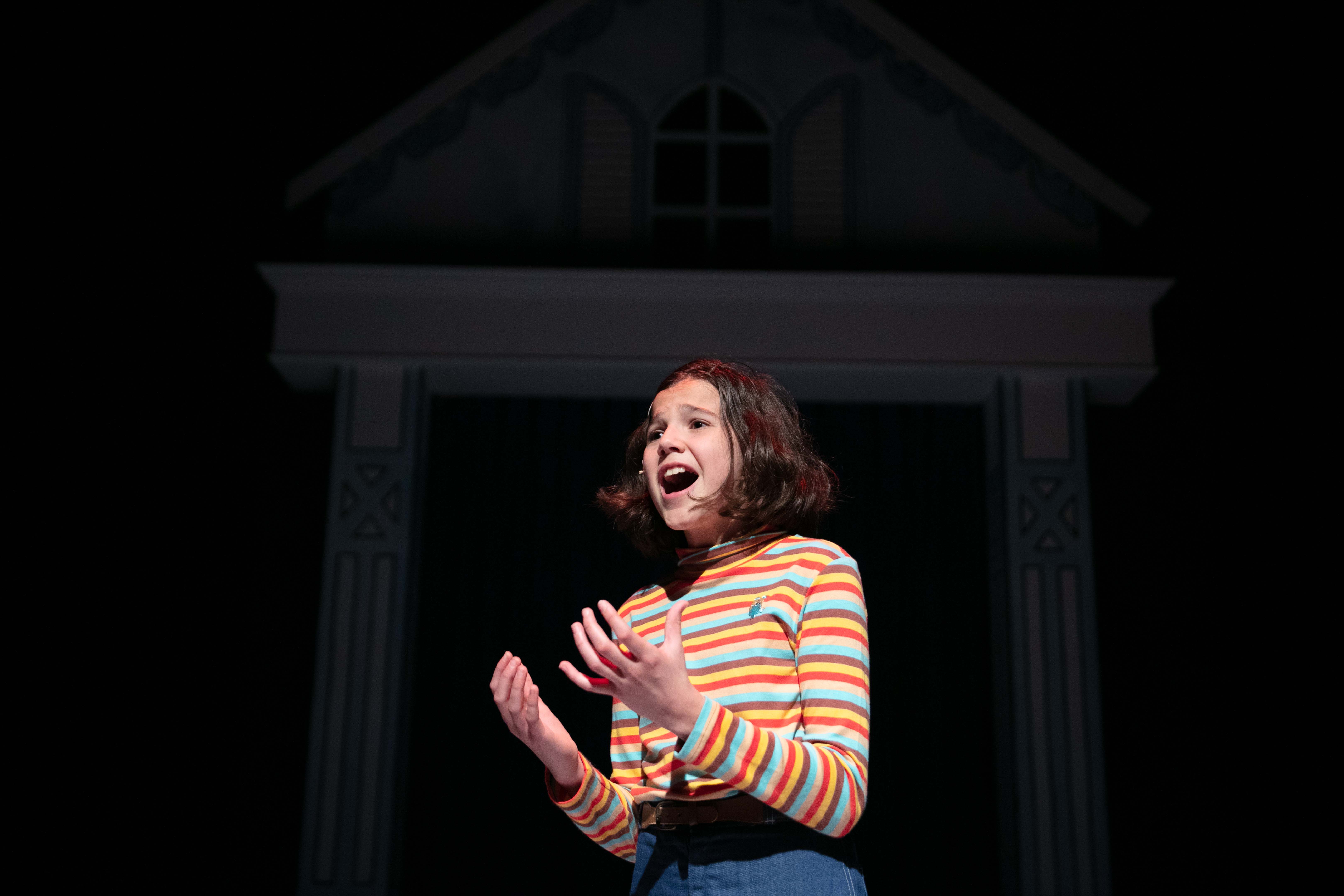
The most fun is when the three Bechdel kids do the big “Come to the Fun Home” song, pretending to cut a TV commercial for the funeral parlor, with choreography by Tod Kubo that captures all the goofy giddiness of the previous productions I’ve seen. Both Allie Joseph and Ryan Campos distinguished themselves at the start of this season in Children’s Theatre of Charlotte’s admirable Matilda, while Donavan Abeshaus has flown a little more under the radar, appearing as the young anti-hero in Bonnie and Clyde at Matthews Playhouse in February 2018. They make a fine set of Bechdel sibs now, though Joseph once again draws the plumiest role.

FUN HOME 7

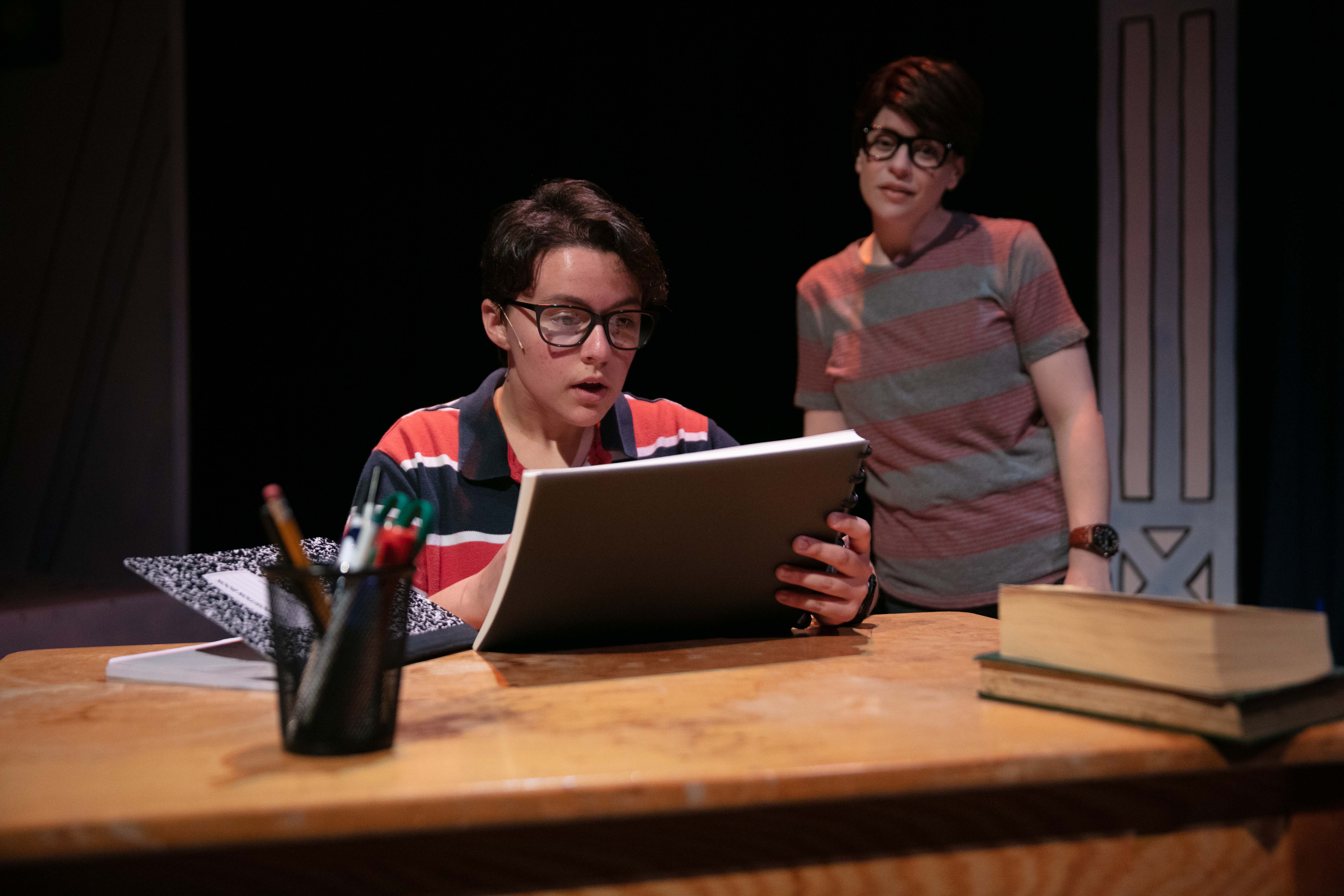
Joseph is so brash and brilliant as Small Alison that she steals a little of the thunder from Amanda Ortega’s somewhat understated Medium Alison, the collegian who discovers her true sexuality at Oberlin and comes out as a lesbian. Ortega’s “Changing My Major” (to Joan, her first lover) was still an uproarious showstopper for those at opening night encountering it for the first time, though it brought nothing fresh that I hadn’t seen, but Lisa Hatt as our narrating Alison did offer something new, besting even the Tony-nominated Beth Malone as our storyteller.

FUN HOME 1.jpg

Maybe director Chip Decker believed she could be more than what she was on Broadway and on tour, for liberating Hatt – just by freeing her from the nerdy sketchpad she perpetually carried – is likely the foundation for all the Hatt achieves. Even when focus is elsewhere, on Bruce or one of the other Alisons, Hatt’s reactions matter, and her delivery of the climactic “Telephone Lines” is star quality. Yet there’s less of a feeling that this Alison has it all worked out after coming to terms with her sexuality and the fact that, as a graphic novelist, she isn’t going to join Faulkner and Hemingway in her English teacher dad’s pantheon. Hatt strikes me as a less confident Alison, still searching.

Hatt’s take on Alison allows Rob Addison as Bruce to be a little less formidable – more lifesize – than Michael Cerveris was on Broadway. A little more nuance helps because the ground has shifted somewhat since 2015, when Fun Home premiered, under the issues that Alison’s dad straddles. Though nothing excuses Bruce’s sexual predatoriness, fears of exposure and disgrace as a homosexual may be prime reasons why Dad is so rigid, regardful of others’ impressions, and so virulently bossy. You can believe it when Addison lets down his guard and plays with Young Alison at the start of Fun Home, and you can eventually see why this might be so atypical of Dad that our narrator would cherish the memory.

FUN HOME 8

Of course, the tortured and torturing Bruce can have more empathy with Alison – and be more grimly protective of her – than Helen Bechdel, her mom, and Lisa Schacher delivers a nicely nuanced portrait. Submissive, disapproving, and beneath it all, the caretaker, with a self-loathing to match her husband’s. Maybe a little more nuance from Sebastian Sowell as Joan to go along with her invincible cool would help me see why everyone, especially Medium, is so impressed with her. You can see, however, that a medium-energy Medium Alison is attractive to her.

Rounding out the cast as a couple of Bruce’s trespasses, Patrick Stepp shows enough self-awareness as Roy, the yard boy that Bruce plies with drinks – while Mom is elsewhere in the house! – to let us suppose that all this isn’t as surprising to Roy as it might be to us. Or unprecedented. In a scene that Alison isn’t narrating from her own experience, giving Dad a small benefit of the doubt is probably the perfect path to take. A little more sugar – and a soaring flight of fancy – will help Alison bring an uneasy but upbeat closure to her engaging memoir

Children’s Theatre’s “Mary Poppins” Raises the Bar While Flying Its Star

Poppins(C)DBise063

Review:  Mary Poppins

By Perry Tannenbaum

It’s a strange proposition when you decide to bring Mary Poppins to Children’s Theatre at ImaginOn, Charlotte’s pre-eminent fantasy palace. Yes, it’s Disney, but it shatters the Children’s Theatre norm of 90 minutes or less, running over 145 minutes. And the story of how Mary Poppins turns the Banks family from bitterness to joy is only half about children.

Mary Poppins 7

Mary P is definitely needed to halt the vicious cycle of bad behavior from Jane and Michael, the Banks siblings, who seem to live for the thrill of defying and driving away their nannies. But there are marital issues plaguing George and Winifred Banks at the same time, some of them rooted in Victorian sexism; and their ideas about nannies, parenting, and the primacy of money could use a reset. George’s basic failures of self-examination and communication are ultimately the prime reasons why his family is so dysfunctional.

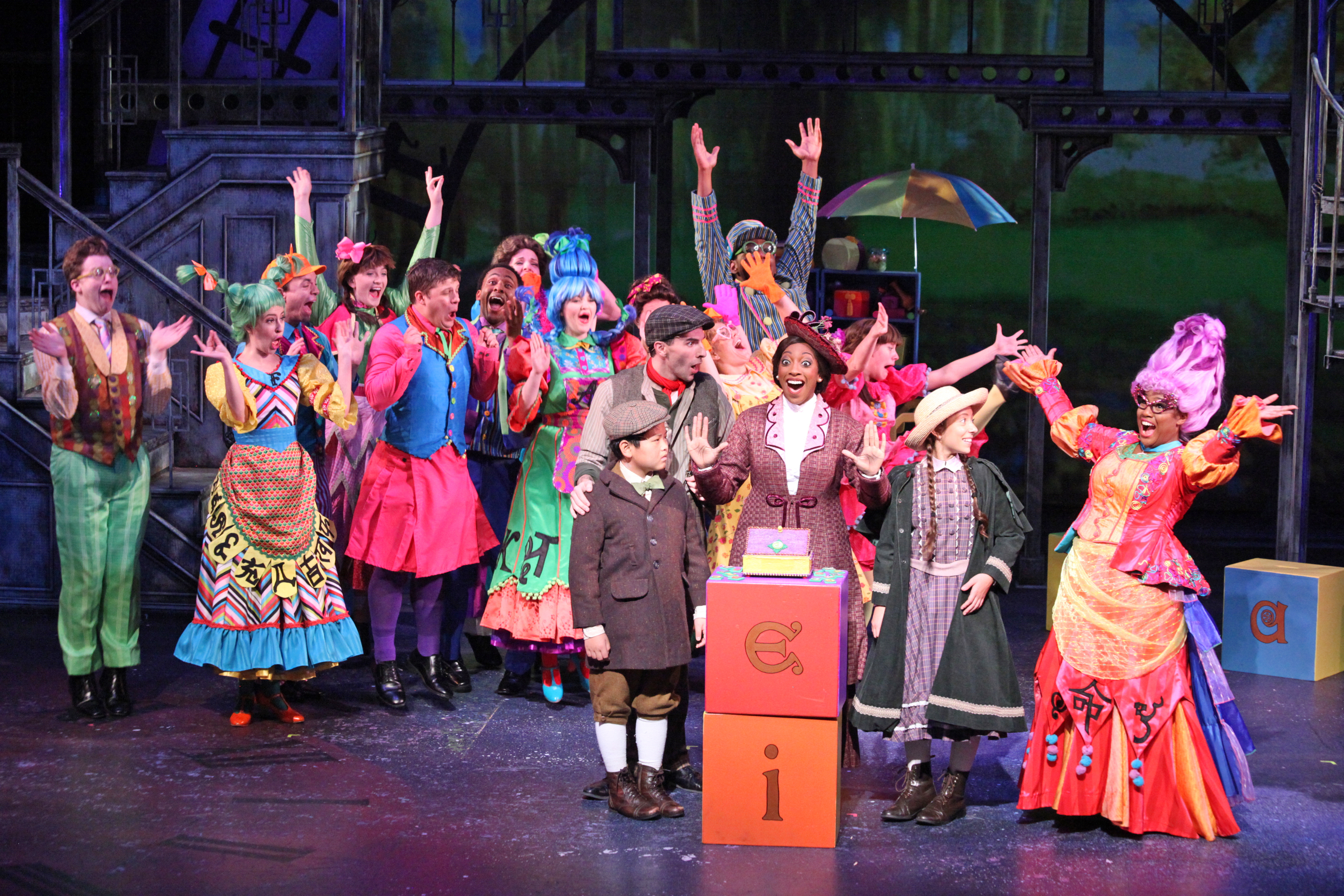
Although the problems are nicely laid out, neither of the two rehab stories is told cogently. Yet the re-education of Jane and Michael certainly has sensational episodes. Statues come to life at a park, a beggar lady sings a heartfelt ballad, the sibs frolic with a preternaturally long word, they cavort with all of London’s chimney sweeps on top of their roof under a midnight moon, and most importantly, they get to discard their castor oil regimen in favor of a sugary tonic. Surely, these are experiences that all good moms and nannies can give their children, right?

Well, they can at ImaginOn, where Children’s Theatre has raised the bar for spectacular technical derring-do – a bar that, among local theatre companies, has mostly been theirs during my 30 years on the beat. While the “Feed the Birds” street scene might strike you as saccharine, and you might accuse the magical park scenes of silly pandering to the anklebiters in the audience, it’s difficult for children of all ages to resist the enchantment of the darkling rooftop scene, further elevated and charmingly smudged by Ron Chisholm’s choreography.

Even that wonder is eclipsed by the flying effects engineered by ZFX, Inc. The only thing I can compare with Mary’s final voyage at ImaginOn are the flying effects I witnessed in the Broadway production of Spider-Man: Turn Off the Dark. Credit Aimee Hanyzewski’s lighting design for enhancing the wonder.

Poppins(C)DBise 142

Swimming against the current of the kid-friendly storyline, Steven M. Levine and Lisa Schacher do their best to stretch fledgling attention spans when they dominate the actionas the elder Bankses. Poor Winifred gets the impression – like we all do – that George reveres his childhood nanny, since he keeps invoking her as a standard, yet Schacher manages to make Mrs. Banks seem credulous rather than stupid, loving rather than meek.

We like her as much as we despise the perversity of George’s parenting ideas, but the simple intervention of Mary – just showing up at his workplace with his children – seems to be enough of an influence for him to do the right thing. All of George’s contradictions and vacillations may seem to be dubious on paper, but Levine makes them work onstage, merging essential morality with a starchy aloofness.

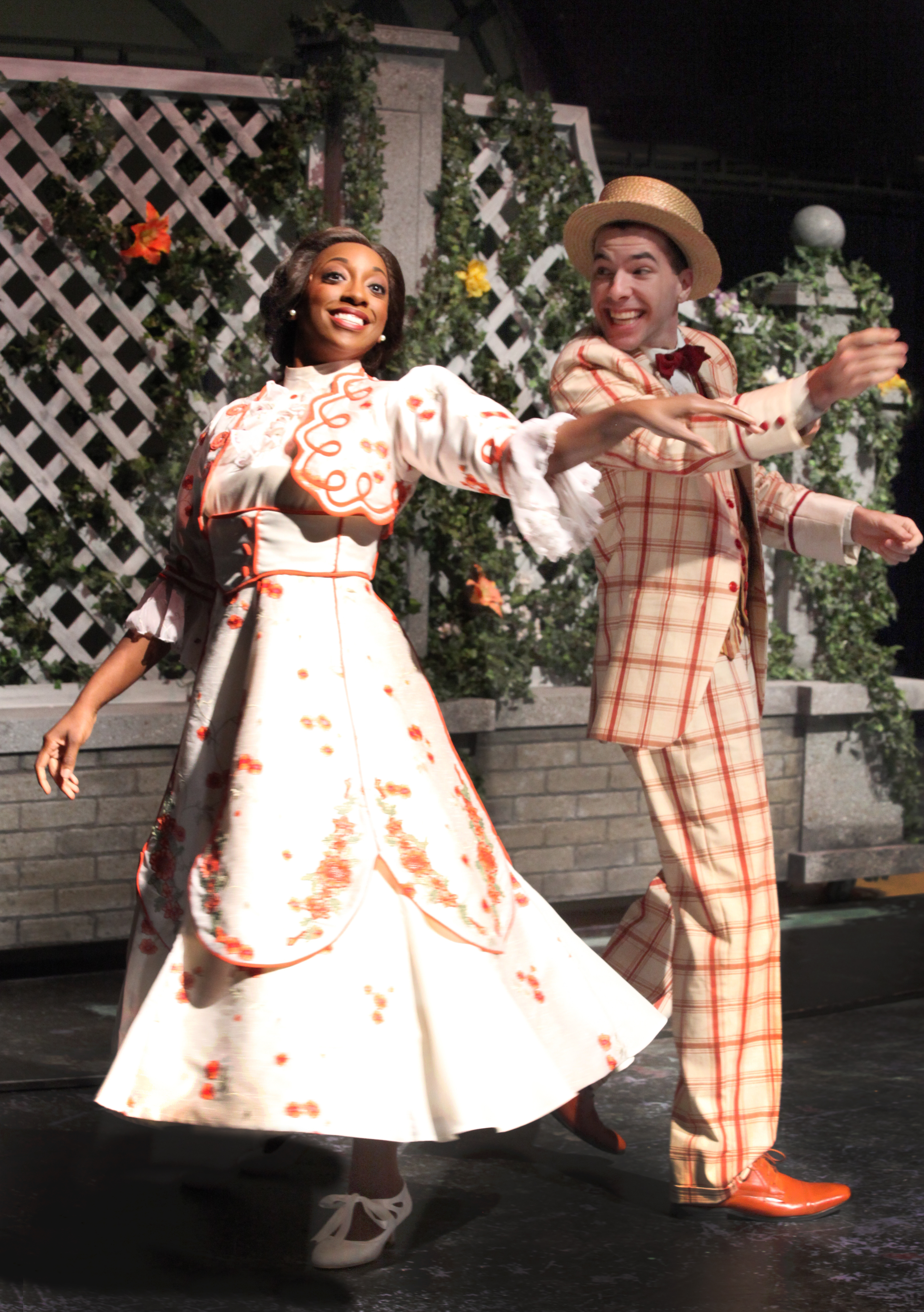
As we get to know Mary better and better, we realize that Bert, her admirer and confidante, is by far the warmest character in the whole crew. Poppins may be able to furlough some statues from their pedestals, but who can muster all the chimney sweeps in London for a midnight frolic other than good ole Bert? Caleb Ryan Sigmon reminds me that Bert is a slightly mischievous and broadly chameleonic creature more than any actor I’ve seen onstage before. Sigmon is also a practicing magician who serves as the show’s magic consultant, so he definitely holds up that end of the bargain.

Mary Poppins 4

Perhaps because of Jill Bloede’s offstage ministrations as dialect coach, I could believe that Janeta Jackson was channeling Julie Andrews in almost every word and note. We probably perceive Jackson as a starchier Poppins than Andrews because she doesn’t arrive with any Sound of Music baggage. Her elegant serenity is hardly sweet at all, even when she sings her signature “Spoonful of Sugar”: she almost makes a point of not emphasizing the sugar, thereby adding weight to the medicine.

The starchier approach helps us to believe in the nurturing distance she maintains with the Banks kids – whom she claims not to love – and in her fundamental capriciousness. Normally, I’m somewhat aghast when “The Perfect Nanny” punishes Jane and Michael by abandoning them. For abusing a ragdoll? Next thing you know, that beggar lady will be wailing “Feed the Toys.”

Jackson comes the closest I’ve ever seen to making this cruel medicine go down, and she has the highest voice I’ve ever heard singing Mary. That extra range pays extra dividends when Olivia Edge enters the fray as Miss Anderson, Mr. Banks’ fearsome nanny of yore. Not only do Jane and Michael flee in terror from Miss Anderson, so does Papa George!

Poppins(C)DBise 572

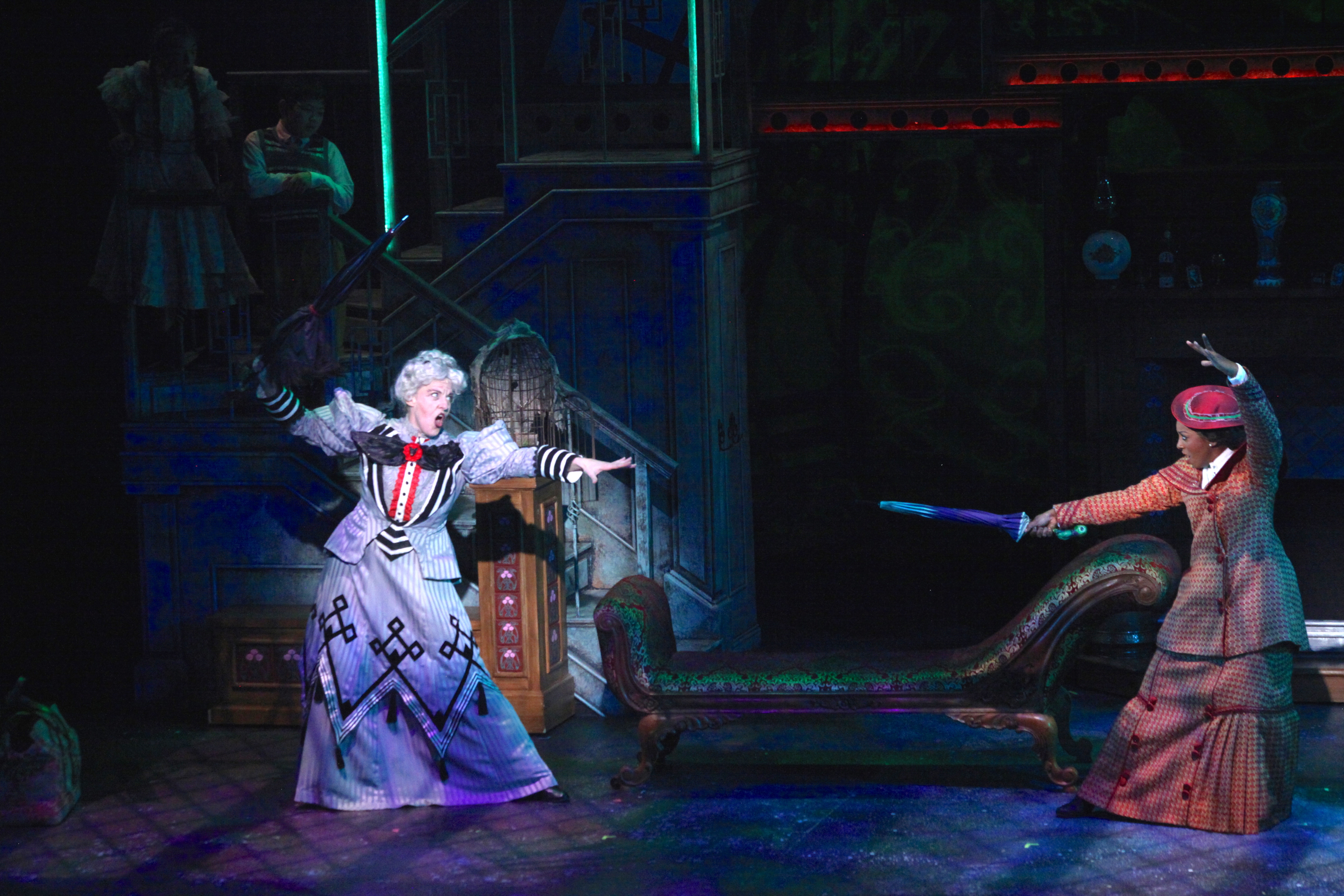
Edge’s preternaturally high range, fueling her “Brimstone and Treacle” showstopper, pitted against Jackson’s stratospheric soprano – and her “Spoonful of Sugar” philosophy – makes for a climactic showdown of double-barreled power. Since Edge is also fearsomely large in her frilly, funereal gray-and-black dress (designed by costumer Ryan J. Moller), her disposal is specially delightful, a sadistic mix of the witches we loved in Hansel and Gretel and Wizard of Oz.

Poppins(C)DBise 160

Somehow, director Michael J. Bobbitt gets a Charlotte cast that is stronger than the national tour that blew through here in 2010. Getting their equals from the local talent pool of children, 15-year-old Haley Vogel as Jane and 12-year-old Alex Kim as Michael, not only underscores Bobbit’s discernment and directing skills, it also reaffirms what we’ve come to expect at Children’s Theatre: the ability to attract, excite, and mentor the best young theatre talent in town.

Bratty and lovable is a tough balance to sustain, but Vogel and Kim have just the right energy and verve, with a grasp of their character arcs and an appreciation of how the Banks kids might be helping their dad to get his head straight. Like the original Broadway cast and the national tour, Vogel and Kim share their roles with alternates. If Lydia Farr and Ryan Campos are up to the same standard, you will not be disappointed.