Tag Archives: Jermaine Gamble

Best of Charlotte, 2017

Best of Charlotte, 2017

By Perry Tannenbaum

                                           Best ActorJeremy DeCarlos


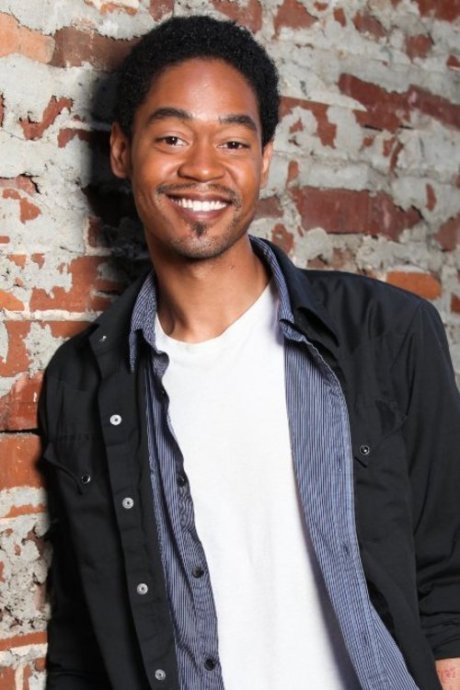
Among local performers, there are strong candidacies from Brian Logsdon (Pride and Prejudice and Ragtime), Jonavan Adams (Ma Rainey’s Black Bottom and The Christians), Scott A. Miller (Stupid F@#%ing Bird and The Submission), Jermaine Gamble (A Raisin in the Sun and Jitney) and Tyler Smith (Ragtime and Memphis). All of them sparkled on multiple occasions. But the runaway victory goes to Jeremy DeCarlos, who laps the field – in range and productivity – with four scintillating outings. Draped in a braided Hussar jacket, DeCarlos just finished channeling his inner Jimi Hendrix as the devilish St. Jimmy in American Idiot. That was the last of his Actor’s Theatre gems over the past year, including some cross-dressing preaching in Bootycandy, his insouciant devotion in Stupid F@#%ing Bird, and his amazing transformation – from Jerry Lewis nerd to Incredible Hulk-ish monster – in The Toxic Avenger.

Best Actress – Shar Marlin

The field of contenders is larger among the ladies, but the roles were more thinly distributed, eliminating productivity as a decisive criterion. But which other benchmark should override all others? If it’s flesh-crawling menace, Sarah Woldum gets the edge, bringing Sheridan LeFanu’s Carmilla to life in She Who Watches. Leslie Giles was the funniest as the blind librarian in The Toxic Avenger, Lucia Stetson the most revelatory as Mother in Ragtime, and Allison Snow Rhinehart was better than her Broadway counterpart as Mama in Memphis. And how can I forget the sizzling dominatrix arrogance of Nonye Obichere as Whatsername in American Idiot? I’m turning instead to Shar Marlin for her sheer power and imperial dominance in Ma Rainey’s Black Bottom, a dramatic stunner that also showed Shar’s blues singing chops. Dignity in the face of exploitation and discrimination. Diva!

Best Comedy – Women Playing Hamlet
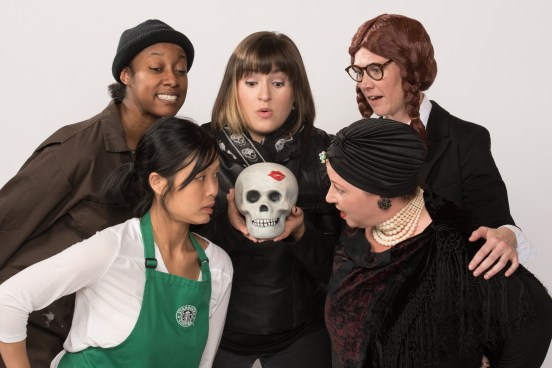
 

Theatre Charlotte’s You Can’t Take It With You and the Citizens of the Universe farewell, The Hitchhiker’s Guide to the Galaxy, were arguably the zaniest productions of the 2016-17, while the Chekhov knockoff from Actor’s Theatre, Stupid F@#%ing Bird, was surely the most poignant. And what about OnQ Productions’ A Brown Tale from James T. Alfred, maybe the funniest one-man show I’ve ever seen? All were worthy candidates, but I’m going to let Chickspeare split this prize with Donna Scott Productions for their joint production of Women Playing Hamlet. Glynnis O’Donoghue starred as the soap queen saddled with the lead role in the Mona Lisa of tragedies, and the galaxy of comediennes – all in multiple roles – offering her questionable advice included Tania Kelly, Andrea King, Vivian T Howell, and Sheila Snow Proctor.

Best Musical – Ragtime

Ragtime Promo Photos

Folks who confine their diet of musicals in Charlotte to touring productions at the PAC are missing out bigtime on the locally-produced blockbusters playing out at smaller venues around town. Actor’s Theatre scrambled to produce a marvelous Toxic Avenger at a storefront church because this city doesn’t have the vision to see the arts flourish on Freedom Drive without a needless morass of red tape. Still in exile, they just brought the noise of American Idiot to Queens University for a face-melting month. After reminding us how finely they can produce A Year With Frog and Toad, Children’s Theatre astonished with the world premiere of The Best Christmas Pageant Ever: The Musical. With more than one Broadway-level performance, Theatre showed us their mettle with Memphis, and CPCC re-emphasized that their musical excellence isn’t confined to summer anymore. Maybe it was sheer luck, but CP’s wintertime production of Ragtime was the most timely of the year, underscoring the sad fact that institutional racism, police brutality, and prejudice against immigrants aren’t quaint relics of the Jazz Age. As the martyred Coalhouse Walker, Tyler Smith’s impassioned “We are all Coalhouse!” reverberated through a city in turmoil.

Best Drama – Jitney

Early last season, PaperHouse Theatre proved that The Frock Shop on Central Avenue was the perfect site for a creepshow with a dazzling She Who Watches, and early this season, a legend made a comeback when Steve Umberger and his Playworks Group brought a sterling production of The Christians to Booth Playhouse. In between, as Charlotte was fully wakening to how badly we have neglected and mistreated our underclass, theatergoers may have finally been zonked by the realization that our city is exceptionally rife with African American acting and directing talent. Kim Parati made an auspicious directorial debut at Theatre Charlotte with a freshened-up Raisin in the Sun, but this was a vintage year for August Wilson – in two dramas directed by Corlis Hayes, Ma Rainey’s Black Bottom at CPCC and Brand New Sheriff’s Jitney at Spirit Square. Hayes brought out the best in John W. Price and Jermaine Gamble as the father-son antagonists in Jitney, with Gerard Hazelton adding a mix of comedy and poignancy as the gypsy cab company’s resident lush. Move over OnQ Productions, there really is a brand new black company in town – our second! – producing professional-grade work.

Best Night @ Symphony – Mahler’s “Resurrection”
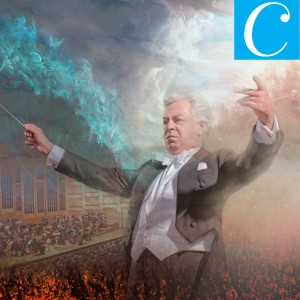
While a well-played Beethoven symphony, a Rossini overture, a Strauss tone poem, or a Mozart concerto might be the secret sauce to get newcomers to become Charlotte Symphony subscribers, longtime concertgoers like me wish to dismount the warhorses and hear something off the beaten trail. There’s plenty out there that will please both camps: big, unfamiliar orchestral works that will instantly grab you by the lapels even if Symphony hasn’t reprised them within the last decade. Armed with an audacious orchestra and choir, plus two soloists who have sung with Opera Carolina, Davidson College showed the way with a rousing performance of Ralph Vaughan Williams’ A Sea Symphony, set to poetry by Walt Whitman. That’s the sort of daring we hope for from Charlotte Symphony’s British maestro, Christopher Warren-Green. We did get a British Isles-themed evening when pieces by Edward Elgar and Peter Maxwell Davies, spiced up with a bagpiper, were served with Mendelssohn’s “Scottish.” Utilizing the Symphony Chorus and distinguished guest vocalists, Warren-Green turned up the power with a pair of Bruckner chorales last November and Mendelssohn’s Elijah last March. If you wanted to sample the full capabilities of Symphony, their chorus, and the guest vocalists Warren-Green can summon to Belk Theater, you had to hear them introducing the wonders of Mahler’s “Resurrection” Symphony No. 2 to an astounded audience.

Best Night @ the Opera – The Girl of the West
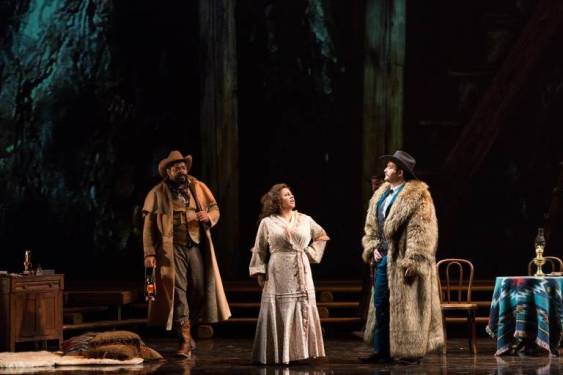
Under maestro James Meena, Opera Carolina does the oldies better than ever, as their uproarious Barber of Seville and their vivacious, ultimately anguished La Traviata amply proved. There was even some audacity in the 2016-17 programming as OpCar partnered with Warehouse Performing Arts Center and the D9 Brewing Company to produce an evening of three short operas – including the world premiere of Scott Joiner’s “Connection Lost (The Tinder Opera)” – at the brewery in Cornelius. Yes, a world premiere on Treynorth Drive! But most exciting was the Charlotte premiere of Puccini’s The Girl of the West, as Meena collaborated with six other international companies, including New York City Opera and Teatro del Giglio in Lucca, Puccini’s hometown. Singing was exemplary, persuading me that this second-tier Puccini opera was actually a first-rate work, and staging was anything but stodgy or conservative: much of the scenery was animated and bold, with authentic relics evoking the Wild West supplied by our own dearly beloved Wells Fargo. An appreciable, if infinitesimal, atonement for all the bank’s Wild West chicanery.

 

Fire, Fury, and Painful Memories Drive Wilson’s “Jitney”

Review: Jitney


By Perry Tannenbaum

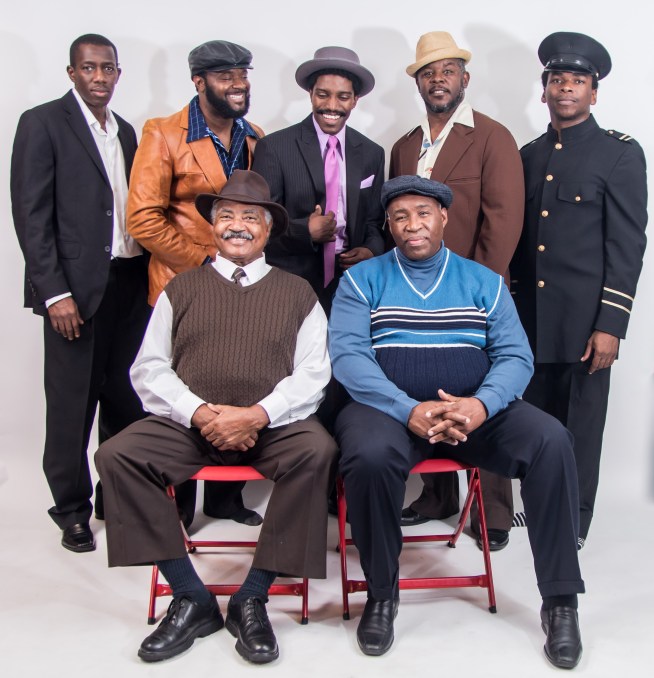
Allowing for inflation and cost-of-living increases since 1977, fares at Becker’s Car Service seem to be fiercely competitive – so competitive that the five cab drivers at the core of August Wilson’s Jitney all seem to be barely scraping by. The drivers’ lounge, adorned with a decaying Ali-Frazier poster, has a ramshackle look to it with a dust-colored couch held together by generous swaths of duct tape.

We never see whether the drivers’ jitneys (slang for gypsy cabs) are in any better repair than this crumbling HQ, but the idea seeps in that the struggling black customers in the Hill district of Pittsburgh are in no position to press the point. Early on in this fine BNS Productions effort at Spirit Square, director Corlis Hayes pushes the pace hard enough for us to assume that we’re in the midst of an urban rush hour.

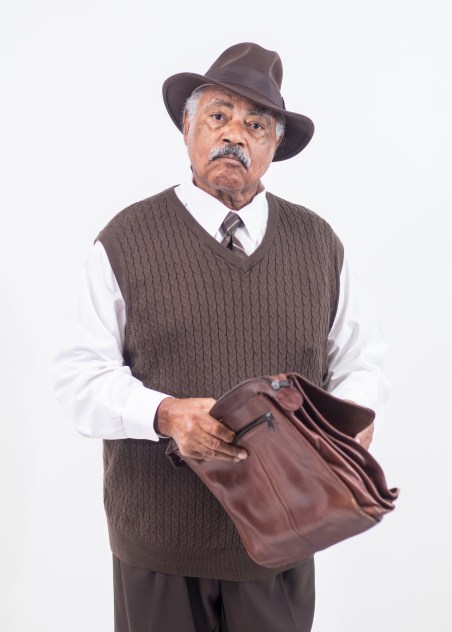
These are men in a hurry – who aren’t necessarily getting anywhere. Pretty much the same can be said for Wilson’s story until Becker himself arrives. He takes off a fedora hat and lays down a satchel, signs that he’s better off than his employees, but he takes turns answering the phone – a pay phone – and giving rides. Still not rushing his story along in his flurry of driver entrances and exits, Wilson has Becker announcing two key strands of the plot.

After keeping it from his drivers a little longer than he should, Becker tells Doub, his steadiest driver, that the city has earmarked the property for urban renewal. The Car Service office will be boarded up in a matter of weeks. If that weren’t enough upheaval, Becker’s son Booster is getting out of the slammer after serving 20 years for murder. Becker never visited his son even once during his incarceration, so this does not figure to be a joyous reunion.

If you’ve seen Wilson’s Fences recently, you will likely find echoes of Troy Maxson in the elder Becker’s sternness and stubbornness. If anything, the father-son chemistry will prove even more important here. But Becker is more of a people person, as he would need to be in running a business, and he has a few soft spots beneath his tough hide.

We see one of those when he gives Fielding, a former tailor who has destroyed himself with drink, yet one more chance to come back on the job and straighten himself out. Becker also shows strength and courage defusing a heated confrontation between Vietnam War vet Youngblood and the gossipy Turnbo, who has meddled in the younger driver’s domestic affairs, frustrated at not stealing his girlfriend Rena.

There’s a fascinating range of personalities and back stories among the core quintet of drivers plus the boss’s son. Baring their souls – and their motives – everybody seems to get a monologue. Nor do Hayes and lighting designer Tony Wright veil the kinship between these monologues and long, lyrical jazz solos. Hayes usually directs her actors to blow their solos straight into the Duke Energy Theater audience, while Wright intensifies the light where they deliver.

During the passionate showdown between Youngblood and Rena, where both have been right and wrong, each of the combatants has a heartfelt monologue. Yet Wilson had even more pure audacity in a casual scene where the often-comical Fielding meets the tightly-wound Booster. The playwright brashly showcases his virtuosity by unleashing two consecutive monologues, one by the rueful Fielding recalling his better days when he tailored suits for Billy Eckstein and Count Basie, followed by Booster’s recollection of his first hard lesson in life when, as a child, he had a vivid dream about riding a red bicycle.

With so many monologues so evenly distributed, you need a cast that’s strong, deep and – when Wilson digresses – engaging. Hayes and producer Rory D. Sheriff have definitely produced with this ensemble. Though he isn’t given free enough rein in the opening scene as Fielding (we should be sure that the $4 he borrows from Doub will go toward refilling his whisky flask), Gerard Hazleton shoulders enough of the drunkard’s comedy without letting us lose our warm feelings toward him.

There’s a little more comedy squeezed from the gossipy Turnbo by Tim Bradley, probably because his sleaziness and nosiness are so outrageous, but he also forces us to take him seriously when he goes ballistic on Youngblood. More on the periphery, James Lee Walker II gives the local numbers runner, Shealy, a dandified flair though we still empathize with his romantic difficulties. On the other end of the cunning spectrum, Danius Jones makes Philmore a singularly quirky and clueless passenger, attaining full dopiness only when he returns in his bellhop uniform.

Partly because they subtly echo the central father-son relationship, Doub and Youngblood are closer to the heart of Wilson’s drama than the men who garnish it with comedy or the colorful aspects of city life. Both of them are war vets, but Youngblood – if not as senseless as Turnbo makes him out to be – has been slightly warped by his Vietnam experience. Doub, traumatized and shaken to his core in the Korean War, has retained a stone-cold outlook beneath his cheery, avuncular demeanor.

With Keith Logan delivering Doub’s Korea monologue, it becomes the warmest moment of the evening, transcending its payload of advice for Youngblood. In its tacit acknowledgement of Youngblood’s essential goodness – and his confidence in Youngblood’s ability to benefit from sound advice – he’s a perfect model of the parenting skills that Becker lacks. Ironically, there are times when Logan’s acting is similarly exemplary for Jonathan Caldwell. While Caldwell brilliantly projects Youngblood’s immaturity and confusion, he could use a tip or two on either quickening his cue pickup or timing his delayed reactions.

Caldwell’s occasional awkwardness may slightly mar Youngblood’s scenes with Doub and Turnbo, but it meshes very well with Juanita Green in the confrontations with Rena. Hayes decrees a more conciliatory rapport between the lovers when we last see them than you might find in other productions, but Green keeps this becalmed closure from becoming saccharine.

Although Becker isn’t quite the perfect boss, he deals empathetically with his drivers, so there needs to be a powerful reason why he is so cold and cruel toward his son. John W. Price provides it indelibly in the most electrifying monologue of the night. The fire and thunder from Price as he’s excoriating Booster are unlike anything I’ve seen or heard from him before, fueled by white-hot fury and pain.

It’s an earthquake, and you can see Jermaine Gamble as Booster trembling amid the seismic shock. We get the idea from Gamble that Becker’s boy has grown up, hardened by prison, a fully formed yet scarred individual. Booster does fire back at his dad, but Gamble acutely calibrates the restraint and the hope that are wrapped into his resentments, almost like he’s still an adolescent in his father’s presence. It’s simply respect – all the more moving for its futility.

Within the space of two weeks, we’ve heard from two playwrights, Jeff Talbott in The Submission and August Wilson in Jitney, who have ignited their peak moments with the N-word. This one is far more unexpected – and shattering.

A New “Raisin” Is Set to Explode

Review: Raisin in the Sun

By Perry Tannenbaum

At a distance of 58 years, people who read Lorraine Hansberry’s A Raisin in the Sun and its familiar epigraph, “A Dream Deferred,” may get the idea that the playwright was exhuming a poem written by Langston Hughes back in his heyday during the Harlem Renaissance. Truth is, Hughes published this poem as part of his Montage of a Dream Deferred in 1951, a quarter of a century after his first book of poetry appeared.

When Hansberry seized upon it, “A Dream Deferred” could hardly have been anthologized more than a couple of times, let alone become an acknowledged part of America’s literary heritage. Hansberry’s script and the performances by Claudia McNeil and Sidney Poitier as Lena and Walter Lee Younger – in both the 1959 Broadway production and the 1961 Hollywood adaptation – were almost surely the bridge that carried Hughes’s poem across that gulf.

And was Raisin perhaps the key link between Langston’s “Dream” poem and a certain speech by the Rev. Martin Luther King?

The questions of how prescient or pivotal the works of Hughes and Hansberry were in anticipating or sparking the Civil Rights advances that followed are temptingly open to conjecture. What the current Theatre Charlotte production shows us to be indisputable is Hansberry’s intention to show us all of the possible answers Hughes offers to his poem’s opening question, “What happens to a dream deferred?” She clearly opts for the idea that the right answer to Hughes’s multiple choices is all of the above.

Yes, we see all that is festering and rotting within the Younger family in Walter Lee’s deteriorating relationships with his mom Lena and his wife Ruth. But thanks to Natasha T. Wall as Lena and Jermaine Gamble as Walter Lee, we see the most compelling and decisive turns that deferred dreams take. It’s Lena who is most sensitive when the dreams of her family, including her own, begin to dry up like that raisin, and it’s Walter Lee who personifies the explosions that can occur after a lifetime of being thwarted and disrespected.

In her Theatre Charlotte debut, director Kim Parati wisely scales down these two titans to less mythic, more human dimensions. With Wall, there’s also a subtle update: this matriarch isn’t crossing the stage to slap her daughter Beneatha when the spirited collegian implies that God no longer resides in the Younger household. But this Lena does take firm hold of her daughter and give her a firm shaking.

So okay, maybe Parati has discreetly tossed the sagging “like a heavy load” aspect of deferred dreams off the shoulders of the elder Youngers. The less-burdened Gamble becomes a less monumentally whiney Walter Lee than we usually see, more of a victim and less of a screw-up. I noted with surprise that this Walter Lee actually seems to have given some thought to his liquor store scheme. I find more in Gamble’s failure that makes me think that Walter Lee feels like he let his father down as much as his mother.

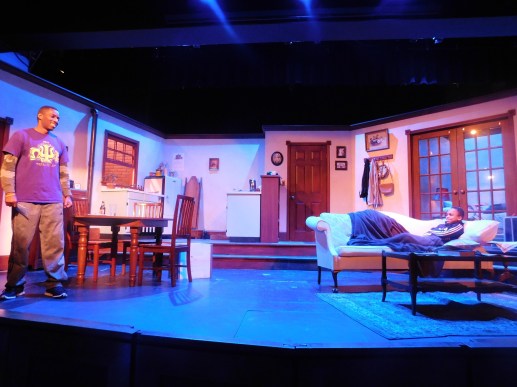
Of course, we never see dad, though set designer Tim Parati hangs a strategic photograph near the Younger front door that must be him. It’s the $10,000 from his life insurance that fuels the newborn hopes and storm clouds that besiege the Youngers in their undersized apartment, where Walter Lee’s son Travis conspicuously sleeps on the couch. If that merely seems cute, then there’s also the spectacle of the family racing out the front door to snare the bathroom that they share with their neighbors.

A real newborn threatens to make the living situation worse as the family waits for the big insurance check to come in the mail – Ruth is pregnant with a second child that she dreads telling Walter Lee about. There’s a dark conspiratorial tone to the way Hadassah McGill as Ruth talks about the prospect of abortion, reminding us of the prehistoric life-of-the-mother era before Roe v. Wade.

Now I can’t defend Hansberry from the charge that she neglects the “stink like rotten meat” line in Hughes’s poem. Yet Parati seems very keen on giving new emphasis to the most cryptic outcome of deferred dreams – if “crust and sugar over Like a syrupy sweet” is the bluesy, jazzy sublimation I think it is. When Beneatha puts her newfound African music on the phonograph and starts dancing in the African garb that her Nigerian beau Asagai has given her, the temperature is already pretty warm because costume designer Tiffany Eck has done her work in sparkling fashion.

More importantly, Silka Salih El Bey as Beneatha knows exactly how to shake what needs to be shook. Layer on Walter Lee staggering into the apartment after a daylong bender he’s been on since Mama’s rejection and Ruth’s news, and you have a virtual orgy. For Walter quickly imagines himself as one of the warriors that Beneatha’s folk dance is welcoming back to the village, joining his sister in her primitive dance – before exiting to puke. The joy and the warrior spirit merged here like I’d never seen it before.

El Bey is a stunning actress for her age (a senior at Northwest School of the Arts), but she gets plenty to play off of. Not only is there rawness and seething fury from Gamble – as a sibling, a son, and a husband – there is also charming equipoise and bemused detachment from Gerard Hazelton as Asagai, most pointedly when he chides Beneatha for her assimilationist dress and her straightened hair.

There’s a visible age difference between Hazelton and El Bey, so her eagerness to make herself over to his liking still plays credibly. But the takeaway between this Beneatha and Walter Lee doesn’t sustain itself so easily. When El Bey is backing down against Mama about God still residing in their home, there’s too much vivacity in her to think she’s crushed. And when Walter Lee so memorably comes into his manhood in the final scene, his assumption that Beneatha must get his permission before following Asagai back to Nigeria no longer seems to have the weight it had when Poitier laid down the law in 1961.

Among the many satisfactions of this Theatre Charlotte Raisin is its clear vision. Parati and her cast know what still holds strong, what parts can stand stronger emphasis, and where to mute some attitudes that would soon lapse after Hansberry’s time. There’s even a character we’ve never seen before, neighbor lady Mrs. Johnson (an intrusive, snoopy, and hint-dropping Eryn Victoria), who drops by and quickly overstays her welcome.

The scene, discarded from the show before it originally opened on Broadway, doesn’t add to the power of Hansberry’s script. But it ensures that this Raisin is like none you’ve ever seen before