Category Archives: Concert

“Deadly Sins” Upstage Jazzy Ravel in Fun-Filled CSO Concert

Review: Charlotte Symphony Plays Ravel’s Piano Concerto

By Perry Tannenbaum

2022~Ravel Piano Concerto-07

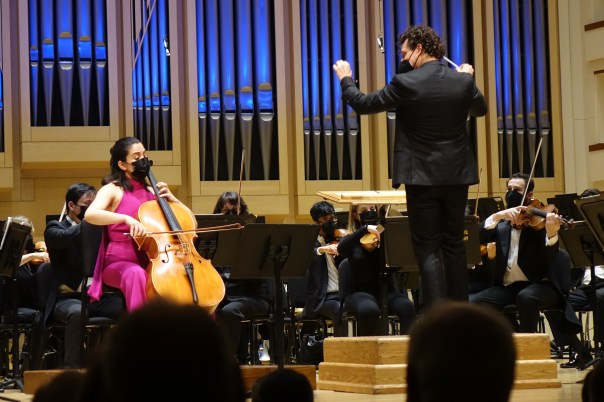
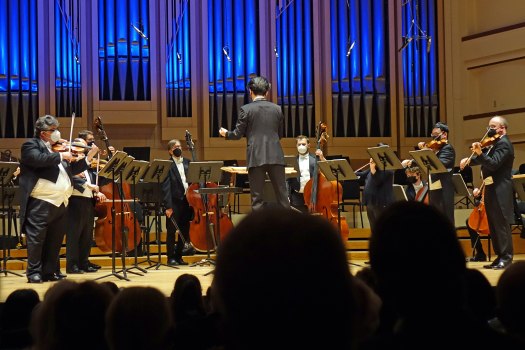
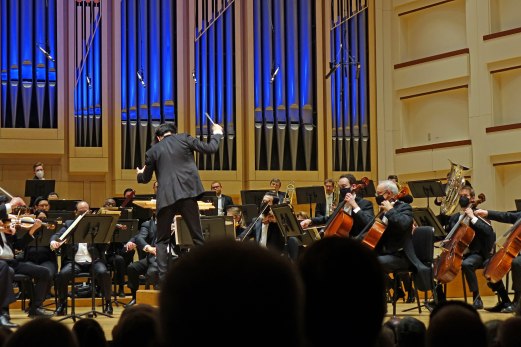
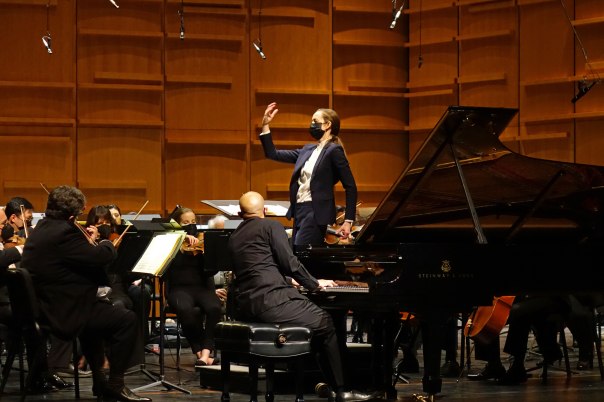
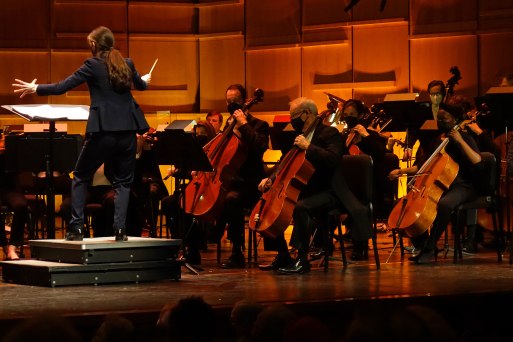
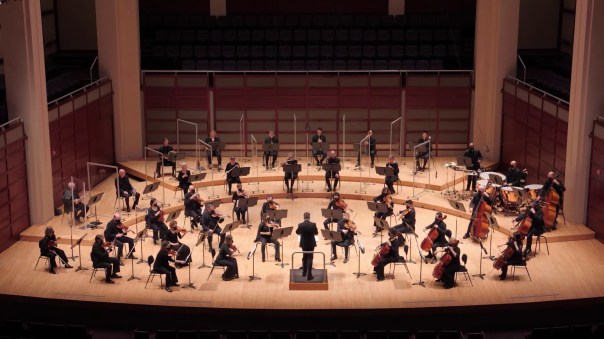
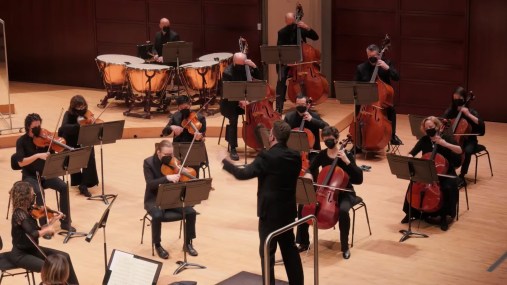
January 28, 2022, Charlotte, NC – You could arguably call it a facelift. After Charlotte Symphony’s powerful performance of Mahler’s somber, morbid, mercurial, epic, and sometimes phantasmagorical Ninth Symphony, almost everything seemed changed two weeks later. A new conductor was onstage, Australia-born maestra Jessica Cottis, making her Queen City debut. All six guest artists were making their debuts in Symphony’s Classics Series, and even the site of their musicmaking was different, moving southward from Belk Theater at the Blumenthal PAC to Knight Theater at Levine Avenue of the Arts. Most transformative was the music, a kaleidoscopic multinational program connected by a distinct American thread.

The headliner on the program was Maurice Ravel’s Piano Concerto, last performed by Symphony in 2013 when the wondrous Pascal Rogé made his Belk Theater debut at the keyboard. Jesse Montgomery’s folksy, bluegrass-flavored Strum preceded the main event, when Canadian pianist Stewart Goodyear seated himself at the Steinway. Cottis had plenty more excitement in store for us after intermission, plunging into Igor Stravinsky’s Circus Polka, for a Young Elephant – actually written at choreographer George Balanchine’s request in 1942 for Ringling Brothers Barnum & Bailey’s massive troupe of not-yet-controversial young elephants. Uncannily, another Balanchine commission rounded out the program, Kurt Weill’s The Seven Deadly Sins (1932) with lyrics by Bertold Brecht – obviously written for people rather than pachyderms.2022~Ravel Piano Concerto-36

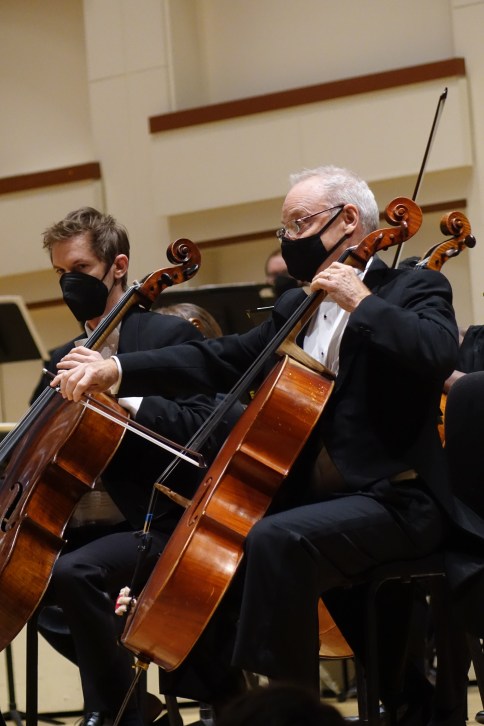
Nearly a year ago, Montgomery’s Starburst aptly keynoted a program that showcased Mozart’s Eine Kleine Nachtmusik (“A Little Night Music”). Longer and decidedly sunnier, Strum set the tone for CSO’s American evening as perfectly as the title readied us for a work written exclusively for strings. Reading Montgomery’s program notes, chronicling the various incarnations of the piece, we get the sense of experiencing its evolution as it unfolds, for it bounces around among three principal string players before beginning its breathtaking ascent to full power and beauty. Laying out the first pizzicatos, violist Benjamin Geller was soon joined by cellist Alan Black, strumming and then bowing. But it was concertmaster Calin Ovidiu Lupanu’s treacherous entrance that truly ignited the fray, triggering Montgomery’s ricochet effects and banjo-like strumming.

Honestly, the performance by CSO became a more massive, lovelier, and less ferocious thing than the studio version by the Catalyst Quartet on Montgomery’s 2015 Strum CD. With a full string orchestra came more majesty when the main melodies were revealed – and extra bite when the piece ended with a collective pizzicato. Nor are “folksy” and “bluegrass” any less flattering in describing Montgomery’s music here than they are in describing many of Aaron Copland’s signature works.2022~Ravel Piano Concerto-01

From the first time I saw him in 2017, playing all of Beethoven’s piano sonatas in a single day at Savannah Music Festival, Goodyear stamped himself in my mind as a prodigious talent. Prior to those three three-hour immersions, Goodyear’s distillation of Tchaikovsky’s The Nutcracker, on his 2015 solo CD, had clued me in. The soloist starts at a disadvantage in the Ravel Piano Concerto, having to follow the famed whipcrack that launches the opening Allegramente. Not to worry, Goodyear showed his mastery of the bluesy and jazzy licks of the movement soon afterwards, and harpist Andrea Mumm Trammell had a lovely interlude.

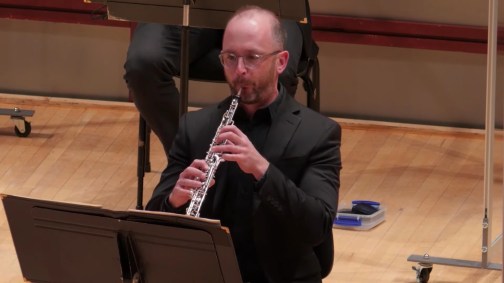
Inspired by Mozart’s Clarinet Quintet, Ravel’s middle movement drew absolutely mesmerizing lyricism from Goodyear, with English hornist Terry Maskin as stellar behind him as he was for Rogé. Yet everyone on the Knight stage seemed most inspired by the concluding Presto. Goodyear unleashed dazzling intensity and bravura, never easing up on the tempo, and the ensemble didn’t merely keep up: they seemed to be prodding their guest to play faster. Turbulence from the winds, brass, and percussion made the climax even more exhilarating.

Apparently, music for dancing elephant isn’t classified as ballet, since it doesn’t appear on The Robert Craft Edition of The Ballets on the notoriously completist Naxos label. Yet Stravinsky never disavowed his Balanchine bagatelle, conducting “Circus Polka” among his voluminous recordings of his own works, where it clocked in at a modest 3:27 on Columbia. Why this rambunctious crowdpleaser isn’t played more often as a concert appetizer is beyond me. While Cottis and the Symphony may have been a tad helter-skelter where Ravel called for more élan, they were marvelously attuned to Igor’s riotous absurdities, his brassy bombast, and the celebratory glee of his wild, galumphing jamboree. It seemed to start in mid-parade before the dainty spots hilariously evoked the pachyderm pixies.2022~Ravel Piano Concerto-31

The zaniness had hardly begun. Bass-baritone Reginald Powell, dressed in a flowery kitchen apron in order to portray the mother of our tempted/temptress heroine, led a barbershop quartet across the stage, sitting down at the end of their march behind a bank of microphones. Strange accessories for a classical concert. So Seven Deadly Sins was classical with a three-penny Kurt Weill twist. Nor was this an opera, though a cabaret table and some props were set in place before our chanteuse, soprano Lindsay Kesselman as Anna I + II, made her/their noire-ish entrance in a spymaster trench coat.2022~Ravel Piano Concerto-37

More than a hint of decadent vaudeville came with her, since each of the nine sections of Weill’s confection was heralded by an old-timey placard placed onto an easel. Prologue, Epilogue, Greed, and the gang were all embroidered with an apt skull-and-crossbones motif. Sad to say, much of this flavorful creativity was outweighed by Charlotte Symphony’s failure to provide supertitle projections once Anna I + II began vocalizing with her/their Family. A few audience members down with us in the orchestra section had the temerity to fire up their cellphones, where they had previously downloaded Symphony’s digital program, so they could follow along.

Not the best experience when you’re trying to keep up with columns of German and English on your iPhone while there is also action onstage to follow. The magnitude of this blunder would only be compounded if you returned home, flipped through the digital program, and discovered that the translation was written by life partners W.H. Auden & Chester Kallman, esteemed poets and librettists in their own rights – they worked on Stravinsky operas! Not only does their Deadly Sins translation rhyme, the syllable counts of every line meticulously match Brecht’s text. Learning that all five vocalists had North Carolina roots – and afterwards listening on Spotify to a recording with the Auden-Kallman lyrics – only deepened my incredulity.

Everyone at Knight Theater, singers and audience alike, could have been so comfortable, and all Brecht’s wit, irony, and satire could have been so clear!

Stepping up to one of mics, Cottis was helpful in her introductory remarks in laying out Brecht’s storyline, which is basically Anna’s odyssey across seven American cities on a mission to sustain her family back home in Louisiana, encountering one of the deadlies in each locale. Ideally, the Balanchine concept is fulfilled when Anna I is the soprano and Anna II is a sublime dancer. Part of the comedy that got lost when Kesselman was both Annas was in the lopsidedness of the dialogue between them. Anna II has very little to say.2022~Ravel Piano Concerto-28

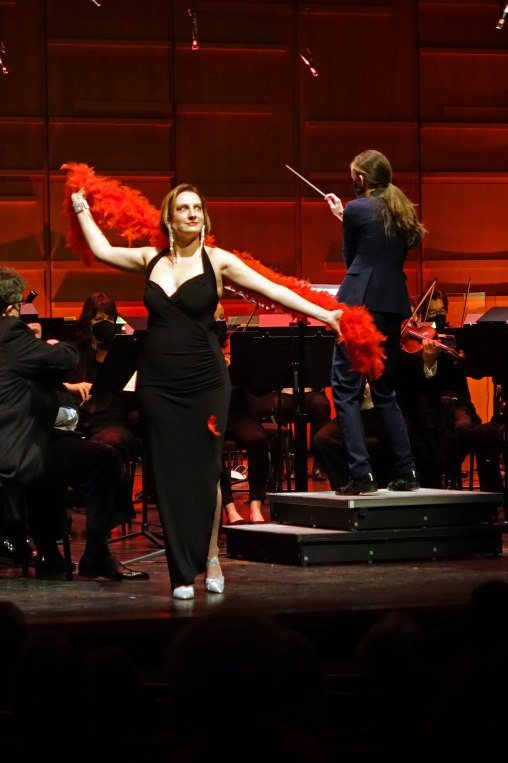
The staging helped this decadent Weill bauble to upstage Ravel’s merriment – or at least prevented it from being an anticlimax. Kesselman soon peeled off her trench coat, revealing an evening dress as the Family’s Sloth along the Mississippi River transitioned to Pride as Anna II took a job in Memphis as a cabaret dancer. Anna added a flaming red boa encountering Wrath in LA, and an uncredited lighting designer made a similarly lurid choice illuminating the Knight’s acoustic shell. Purple became apropos for Gluttony in Philly, a lighter pinkish red presided over Lust in Boston, and a dark golden hue settled in over Baltimore when she battled Greed. So I had to think that nobody wanted to offend New York during the Great Depression.

Need we say that when Anna’s journeying ended with Envy in San Fran, where Kesselman made her final grand entrance as a rich celeb, totally soused and brandishing a nearly empty bottle of vodka, that the stage was flooded in a deep dark green? Didn’t think so.

A wonderful ending to a melodious, fun-filled, and dance-filled evening. Even without dancers. Facelift and uplift.

Originally published on 1/30 at CVNC.org

Symphony Arrives at Sublimity, Amping Up Mahler to Heavy-Metal Decibels Along the Way

Review: CSO Plays Mahler’s Ninth Symphony

By Perry Tannenbaum

2022~CSO Mahler's Ninth-17

January 14, 2022, Charlotte, NC – When the new Compact Disc digital recordings were first heralded and released in the early 1980s, the mythic story began circulating from Sony and Philips that the dimensions and capacity of the new CD format were determined by its ability to present all of Beethoven’s Ninth Symphony on a single disc. Subsequent refinements to the technology increased the capacity of those discs from 74 minutes of music to 80, leaving Ludwig far out of the equation. The 80-minute capacity we see on today’s prerecorded discs and the recordable CD-Rs we might dub them onto is more suitable for containing Gustav Mahler’s Ninth Symphony – but only if conductor and orchestra are in a hurry. Only the very quickest of the many recordings of Mahler’s last completed orchestral work clock in at 79 or 80 minutes. Completing his Mahler Journey with the Charlotte Symphony Orchestra in his final season as music director, Christopher Warren-Green let it be known that his Ninth would be a more expansive 90-minute experience. There was no intermission at Belk Theater, and program booklets remain a strictly online affair.

Vaccination cards were scrutinized at both the outdoor entrances to the Blumenthal Performing Arts Center and at the indoor entrance from Founders Hall. My mom and I felt very comfortable with the social distancing downstairs in the orchestra section, but no such amenity was granted to subscribers who entered the hall from the lobby – in fact, I’ve never seen the Grand Tier more fully occupied, a gratifying affirmation of the Queen City’s Mahler enthusiasm. The balcony above looked similarly packed. Masking, of course, was compulsory, but ticketholders should chiefly be forewarned that vigilance was strictly enforced at the entrance to the orchestra section. Folks that were late for the first notes of the Mahler performance, between 7:35 and 7:40pm, were obliged to wait in front of TV monitors in the lobby until the conclusion of the opening Andante comodo movement at approximately 8:05.

Each of the outer movements, both preoccupied with mortality and dying, is as lengthy as the two inner movements combined. Only the second movement can be described as lighthearted, and all four are teeming with mood swings. Without adding audible gaps between episodes, recordings conducted by Leonard Bernstein and Herbert von Karajan with the Berlin Philharmonic are divided into 33 and 30 tracks respectively. Those seemed to be very conservative numbers when Warren-Green and Charlotte Symphony immersed themselves in the score, reveling in its seemingly countless contrasts. Emerging with the opening melody from a backdrop of cellos, basses, horns, and harp, the second violins emphatically signaled that all sections of the vast ensemble would have their chances to shine.

2022~CSO Mahler's Ninth-04

This was by far the most extensive instrumentation we had seen at either Belk Theater or Knight Theater since the beginning of the pandemic. From orchestra level, it was difficult to precisely count all the unmasked flute, clarinet, oboe, bassoon, French horn, and trumpet players arrayed behind the masked string sections. But the percussionists were plain enough when they stood up, either singly or as an ominous group, and there was additional space set aside, upstage and on the stage left wing, for the three trombones, two harps, and the tuba. Curving around stage right to the upstage was an armada that included timpani, a mighty bass drum, cymbals, a gong, snare drums, and tubular bells.

So the prospect of high-volume music was apparent before all the Symphony musicians were fully congregated. Yet when these expected Mahler explosions actually occurred, Mom and I were both taken aback by how loud they were. The difference between sitting at the rear of the grand tier late last spring and sitting in Row O below was compounded by the additional troops and artillery onstage. Earplugs weren’t quite necessary for these fortissimos, but rock-concert decibels weren’t far in the distance. Mom may have nodded off for a few seconds during Gershwin’s Lullaby last year or when Branford Marsalis luxuriated in the luscious Larghetto middle movement of Jacques Ibert’s Concertino da camera. Not this year. Onsets of trumpets, trombones, or percussion could be so sudden that, even if she didn’t revere Mahler, Mom wouldn’t dare close her eyes.

There were plenty of less aggressive surprises scattered across the lordly length of this symphony. In the epic Andante, the harpists reached out to pluck a bass line, and the mournful funereal dirge had the backbone of a military march, punctuated by the wan tubular bells. If you’re new to Mahler, the waltzing liveliness of the “Im Tempo eines gemächlichen Ländlers” (in the tempo of leisurely country dances) might catch you pleasantly off-guard – and what plan did the composer have for a triangle and cymbals playing in unison? The third movement Rondo-Burlesk was brimful of contrasts and contradictions as Warren-Green kept us on the lookout for the next twist. A busy, contrapuntal opening suggested a fugue with frolicsome and comical touches, but midway through this Burlesk, each of the orchestra’s sections seemed to have something soulful to say – not at all the path you would expect leading to a screaming conclusion.

2022~CSO Mahler's Ninth-15

Perhaps the biggest surprise of the evening came at the climax of the Adagio finale when a furious pounding of the big bass drum, topping off a majestic crescendo, suddenly gave way to – in the hushed blink of an eye – nearly total silence. This abrupt whisper of weepy violins, proved that Mahler’s precipitous subsidings can be almost as dramatic as his volcanic peaks. Most of Symphony’s principals distinguished themselves over the course of this epic evening, including oboist Hollis Ulaky, clarinetist Taylor Marino, cellist Alan Black, and concertmaster Calin Ovidiu Lupanu, but the final movement underscored the special praise earned by French horn principal Byron Johns and principal flutist Victor Wang. Even Johns’ one little wobble on the horn came at an ideally aching moment, and Wang was merely perfection in the sublime epilogue.

Originally published on 1/15 at CVNC.org

Thorgy Brings Plenty of Christmas Cheer – and Drag Artistry – to the Queen City

Review: Charlotte Symphony Premieres A Very Thorgy Christmas

By Perry Tannenbaum

2021~Thorgy Xmas-37

The first thing to know about Thorgy Thor, a distinguished alum from the eighth season of RuPaul’s Drag Race, is that she is outrageous. If political correctness is your passion, then the next thing to know is that I’ve chosen her pronouns after consulting the program for the world premiere of A Very Thorgy Christmas, performed with the Charlotte Symphony and resident conductor Christopher James Lees. The Wikipedia entry for Thor, née Shane Galligan, is a tossed salad of pronouns that doesn’t conclusively settle the question.

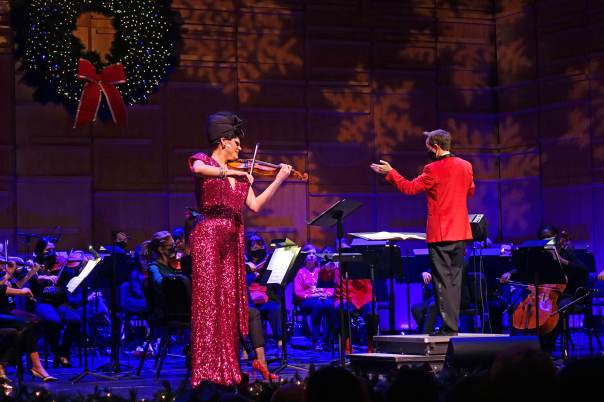
Headlining a Christmas show with a full symphony orchestra, Thorgy proved to have multiple talents. Not only did she serve as a guest violin soloist on three Christmas songs, she performed a standup monologue, screened a self-produced takeoff on an NPR podcast, presided like a gameshow host over a farcical giftwrap contest between four Symphony musicians, sang an autobiographical rewrite of “The 12 Days of Christmas,” and interviewed Lees a la late-night TV.2021~Thorgy Xmas-18

If Thorgy’s debut with Symphony in January 2020 had even half the variety and surprises of her Christmas extravaganza, it’s easy to understand why she was invited back so quickly – to basically do whatever she wished. The only restriction she acknowledged was an imposed limit of one f-bomb, and she certainly detonated that one with maximum impact. Lees and the ensemble began conventionally enough at Knight Theater for a very full house, launching into a merry rendition of “Joy to the World.” But the arrangement of this familiar carol soon became a mashup of several other carols and then an outright Christmas barrage – “Jingle Bells” and “Silent Night” at the same time? – before I began to wonder what few Christmas carols might be left over after this extravagant overture.

Unlike Jack Benny or Henny Youngman, the only other violinist comedians I can reference, Thorgy took herself seriously as she came on to play “O Holy Night.” Her tone was actually quite beautiful when she played, even though the arrangement and tempo didn’t demand impressive dexterity. “Carol of the Bells,” played just before intermission, required fleeter fingering, but even with this more energetic fare, Thorgy was flawless, unstressed, and only wisecracked once or twice over her performance. More of her freewheeling flamboyance came out when she put away the lumber and spoke out. This Very Thorgy Christmas was clearly a 2021 edition if Thor has any intentions of reprising her show as a Yuletide tradition. Not only was the new show silly, as Thorgy herself off-handedly remarked, it was also ephemeral.

Thorgy’s monologue was largely about her upcoming prospects and what she had done during the pandemic. Her pandemic shenanigans were plentiful enough, in fact, to supply prime fodder for her next two comical exploits prior to intermission. In the first, she went through the lowlights of her stint as a cameo celeb, that seemingly wholesome profession of producing customized video greetings for clients’ loved ones. As the smut piled on, we quickly realized that Thorgy didn’t attract a Hallmark Cards clientele. In the NPR video she showed us afterwards, Thorgy and a fellow drag queen, rather sedately dressed for this studio format, interviewed a comparatively blue-collar guy named Chef Schwetty. Judging by the varied colors of the samples he brought with him, I’d say Schwetty was a pastry chef. Without adding flavors or adjectives, Schwetty described his specialty as balls. Needless to say, the two gay interviewers feasted on the possibilities.

2021~Thorgy Xmas-36.jpgMore signals came after intermission that a 2022 edition of Thorgy Christmas would undergo drastic changes, for it was obvious that Thor revels in surprises. Dispensing with the customary concert preludes served up by her symphonic hosts, Thorgy burst onto the stage and kicked things off with a brash “Jingle Bells” spot. Of course, she had changed her outfit during intermission – from an ensemble highlighted by garish red-and-green-striped slacks to a fiery, glittery, fuchsia spectacular. She almost visually jingled in this one-piece caprice, and she discarded her dazzling Dolly Parton white wig in favor of a towering brunette bouffant. Thorgy is rather tall already.
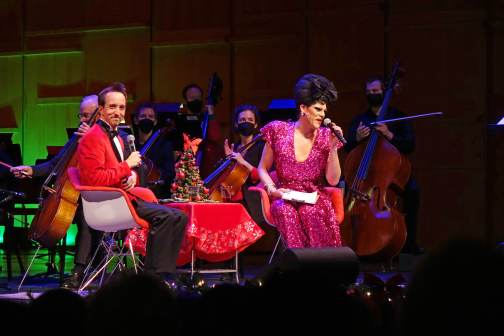
Genial, easygoing, and relaxed, Lees complemented his guest artist handsomely. After the opening overture pillaged a huge chunk of Christmas inventory, Lees allowed the orchestra to stray briefly from holiday fare with an excursion to Grieg’s “Hall of the Mountain King.” When he returned to the podium, after the screening of Thorgy’s cameos, he and his cohort basically coasted along with a couple of snatches from Tchaikovsky’s Nutcracker, rep that they play repeatedly for Charlotte Ballet every December. After Thorgy made her splash to open the second half, Lees engaged with the Knight Theater audience to help him out with the whipcracks in Leroy Anderson’s “Sleigh Ride.” A woman in a lower box seat happened to have a black fan that made a whippier sound than our claps when she opened it, adding to the fun (especially when she was late).

Although the Knight audience was heavily infused with RuPaul devotees, the “12 Days of Christmas” parody was too crammed with obscure references to Thorgy’s misadventures on Drag Race and its All-Stars spinoff – and often too unintelligible – to garner universal laughter. And of course, the repetitions built into the familiar song didn’t help, a lesson for Thorgy to learn for her 2022 edition. After this partial misfire, Thorgy came up with her most hilarious bit of the night, the giftwrap contest with four surprisingly smart-alecky Symphony musicians. With a connoisseur’s unerring judgment, Thorgy chose four gifts for wrapping that offered maximum opportunity for failure and embarrassment: a cluster of inflated balloons, an open umbrella (closing it was strictly forbidden), a toilet plunger, and a broom and dustpan combo.

Like those frenetic cookoffs you may have watched on TV, the four wrappers had to cope with a tight time limit, so Lees and the orchestra timed the competition by performing… something. The action was too engrossing for me to take heed, but the ending and Thorgy’s flamboyant flourish were emphatic enough to signal the sudden frantic finish. The cluster of balloons proved to be disappointingly wrappable and humdrum, but the unopened umbrella was such a colossal fail that I found myself howling with laughter.2021~Thorgy Xmas-29

On the other hand, the wrapping for the plunger, cunningly separated into two pieces, was an absolute triumph. But flutist Jill O’Neill ultimately won the night – via a plurality of audience applause – with her amazing wrapping for the broom and dustpan. Audaciously rolling the merchandise on the floor helped O’Neill execute her design, and I suspect that adopting a witch persona as soon as she first held the broom helped to sway the judges. I was actually impressed by the rapport that Thorgy developed with each of the four contestants as they displayed their handiwork.2021~Thorgy Xmas-31

We gracefully glided homeward after this high-energy highlight, as Thorgy sat down for her cozy interview with Lees, occasionally prompting principal cellist Alan Black to imbibe from a tumbler of alcoholic beverage during the course of the conversation. Things became unexpectedly revelatory when, after a very personal question, Lees suddenly asked his interrogator if they could continue their conversation backstage later on. Some marital history soon followed. Those hilarious moments prevented the sitdown with Thorgy from becoming overly anticlimactic after the madcap giftwrap – and it segued nicely into Thorgy’s closing performance on violin, a beautiful and heartfelt “Silent Night.”

Originally published on 12/25 at CVNC.org

The Bechtler Ensemble’s Birthday Beatles Is a Big Hit

Review: The Bechtler Ensemble Plays The Beatles

By Perry Tannenbaum

DSC08879

Celebrating her father’s 80th birthday, Tanja Bechtler and her string quartet found a charming way to mark the occasion, commissioning composer/arranger Mark Adam Watkins to produce a bouquet of a dozen new Beatle song arrangements for the Bechtler Ensemble. The gift was presented in the form of a world premiere concert, part of the Music and Museum series at the Bechtler Museum of Modern Art, where Andreas Bechtler, founder of the Museum, sat proudly and happily in the front row. Making the concert even more of an artsy (and family) affair, Polaroid shots of the Bechtler family taken by Andy Warhol in 1973 – and the artworks that resulted from them – were projected on the upstage wall, during the musicmaking and during Tanja’s meticulously researched remarks on the tunes and arrangements.

DSC08875

Watkins’ arrangements gave due deference to the leader of the Bechtler Ensemble’s instrument, the cello, but they were remarkably even-handed in offering extended opportunities for violist Vasily Gorkovoy and second violinist Tatiana Karpova to excel. Lenora Leggatt on first violin hardly eclipsed her cohorts, so evenly were the labors divided, and guitarist Bob Teixeira joined this Fab Four on a couple of the tunes, becoming an honorary Fifth Bechtler.

Watkins lists Beyoncé, Al Jarreau, and Lou Rawls most prominently among his previous collaborations, but it quickly became apparent that he knew his way around arranging for string quartet. On the other hand, arrangements of “Eleanor Rigby,” “Let It Be,” and “Live and Let Die” underscored how much classical influence already infused the original Top 40 hits. Lesser known selections like “Julia,” “Norwegian Wood,” and “Blackbird” supplanted such imperishable earworms as “Yesterdays,” “Lady Madonna,” and “Penny Lane” in the Ensemble’s survey, making the daughter’s gift to her father more heartfelt and personal. Oftentimes in her intros, Tanja would also spotlight phrases or sections of a lyric that were meaningful for her.

DSC08887

Not at all surprisingly, the Ensemble started off with one of the Beatles’ most familiar tunes, George Harrison’s “Here Comes the Sun,” the most streamed song on Spotify by the British rockers. Conceived as a song celebrating the joyous arrival of spring after “a long cold lonely winter,” Watkins seemed to imagine a more instantaneous scenario, sprinkling a series of pizzicatos across his quartet and then launching the melody from Bechtler’s cello as the plucking subsided – like his sun was emerging after rain showers. The melody itself never quite made it up to the violins as Gorkovoy carried us forward on viola, but there was a radiant aura of violins as the arrangement crested to its zenith.

Notorious for its cryptic and surreal John Lennon lyric – and its infusion of Eastern sitar by Harrison – “Norwegian Wood” became even friskier in Watkins’ hands as the bridge of the song, lugubriously slowed down by Bechtler, circled back to a lively intro that reminded me of a Latin street dance. Gorkovoy and Leggatt restarted the song, handing the melody back and forth until Bechtler checked back in. The Latin syncopation hung around stealthily in various guises underneath, maybe a sly suggestion of the song’s extramarital origin.

DSC08888

There were other instances where Watkins reacted as thoughtfully to the lyric as to the music. Paul McCartney’s “Eleanor Rigby” began very low in the cello with a mournful gliss from Bechtler, reminding us that the song was a breakthrough for a pop music confection in dealing with the loneliness and depression of the elderly. The inchoate intro of “Imagine,” as Bechtler pointed out, was like a blind groping for a melody – the cello seemed to hit the tune tentatively, and suddenly when it found the path, the sound became achingly sweet. “Revolution” started out like the four instruments were an inarticulate, unruly mob, but the melody lightened to a relaxed Western swing groove when Gorkovoy played it over volleys of triplets – as far from angry as Lennon’s lyric was from supporting violent revolution. When the violins took it to the next level, corresponding with Lennon’s “don’t you know it’s going to be,” the pulse was so swift that it sounded like the Gypsy jazz that violinist Stephane Grappelli pioneered with Romani guitarist Django Reinhardt. Karpova played the full-out licks, soaring high into the treble while Leggatt bowed ferociously behind her.

Hints of jazz lightened a couple of other Watkins arrangements. There was a bluesy boogie-woogie insistence from Bechtler, churning like the pistons of a locomotive or an R&B combustion engine, under the blend of the higher strings in McCartney’s “Drive My Car.” We nearly ended in jubilation when we reached the repeated “beep beep yeah” exclamations, but a wicked decelerating gliss instigated by Bechtler on her cello hinted instead that the car may have comically run out of gas. Karpova had the loveliest variants on the memorable melody of “Michelle,” the song McCartney serenaded the First Lady with at the White House, before Gorkovoy and Leggatt had a nice exchange over Bechtler’s jazzy pizzicato.

DSC08878

Teixeira first appeared with the Ensemble to enrich the very classical-sounding rendition of McCartney’s “Let It Be,” and he returned, logically enough, for the grand finale, “While My Guitar Gently Weeps.” Bechtler came most beautifully to the fore starting the melody, Leggatt was a fine exponent of the first violin’s role, and Karpova shone in some truly sublime treble, but Teixeira’s guitar was mostly relegated to a subservient strumming role, nothing at all like Eric Clapton’s electric exploits on the Beatles famed White Album. The Bechtler Museum’s lobby, where I was hearing my first classical concert after many amplified jazz concerts, wasn’t as kind to Teixeira’s acoustic guitar as it was to the other string instruments onstage. Bechtler, in fact, sounded far richer here on her cello than I’d heard her many times before upstairs at the Museum. Hopefully, Music and Museum will continue downstairs alongside the Jazz at the Bechtler series, but I hope more care will be taken in the future the next time Teixeira is called upon to mesh with the Bechtler Ensemble’s wonderful ecology.

Originally published on 11/14 at CVNC.org

Major and Minor Keys and Composers Besprinkle NC Baroque’s “Les fontaines de Versailles”

Review: Les fontaines de Versailles – Music @ St. Alban’s

 By Perry Tannenbaum

2021~NC Baroque-01

Yet another classical music ensemble, the North Carolina Baroque Orchestra, has joyfully returned to the stage and the thrill of live performance. Led by Frances Blaker, who also presided as emcee and took a turn as a recorder soloist, the authentic-instrument players assembled at Sharon Presbyterian Church, which has happily returned to hosting and sponsoring concerts in their sanctuary. The title of the concert, “Les fontaines de Versailles,” deftly signaled that the baroque offerings would not be limited to works by the usual German and Italian suspects. Aside from pieces by Handel, Telemann, Vivaldi and Albinoni, we heard music by Michel-Richard de Lalande, André Campra, Johann Fasch, Michel Corrette, and Jean-Philippe Rameau. Lalande’s Les fontaines de Versailles wasn’t the pièce de resistance of the evening, but it certainly keynoted the multiple infusions of Gallic flavor into the program.

2021~NC Baroque-14Georg Friedrich Handel’s “Overture to Alessandro” was likely the most familiar composition on a warhorse-free playlist, so there were multiple reasons for us sitting in the Sharon Presbyterian pews to experience frissons of pleasure. We could be surprised by the unexpected familiarity of the music or by how wonderful a live baroque orchestra sounded in a sanctuary after more than a year-and-a-half of being deprived of the satisfaction. This place was what this kind of music was for, though the complete Alessandro was a somewhat comical opera of royal intrigue with Alexander the Great in the middle of a romantic triangle. Violins were at the center of the gorgeous orchestral texture at the start of the Overture, its stately gait blooming emphatically and effortlessly throughout the hall. Tempos sped up and slowed with an ebb and flow that suggested the full opera in miniature – responses by the wind instruments growing boldest in the swift episode before the music settled into its ultimate repose.2021~NC Baroque-02

Lalande’s little gem, with grand treble harmonies from trilling winds over dancing strings in 3/4 meter, was actually nestled between two multi-movement concertos by Georg Philipp Telemann and Antonio Vivaldi. Each of these concertos, in turn, featured multiple soloists. In Telemann’s E Minor Concerto for Recorder and Flute, TWV 52:e1, Blaker teamed with flutist Kathleen Kraft on the first two movements of the four-movement work. The opening Largo had a more balanced interplay between the soloists, with exquisitely intertwined melodies and harmonies, but Kraft was clearly at the forefront in the ensuing Allegro, delightfully fleet in her playing with Blaker surfacing most deliciously when her recorder blended with the virtuosic flute.

Vivaldi’s D Major Concerto for two violins and two cellos, RV 564, was presented in its entirety, two Allegro movements separated by a shorter Largo. Blaker added some engaging showmanship by calling upon a different pair of violinists for each movement, thereby showcasing most of the section. Tom Lajoie and concertmaster Martie Perry, playing the violin solos in the brisk opening movement, with churning violins and foreboding cellos behind them, proved to be a tough act to follow. The Largo, pairing violinists David Wilson and Janelle Davis, reminded me of Vivaldi’s most familiar Mandolin Concerto, and the closing Allegro brought us spirited exchanges between Annie Loud and Steph Zimmerman – with cellists Alexa Hanes-Pilon and Lisa Liske making their most distinctive contributions.

After a halved intermission that Blaker proclaimed would be seven-and-a-half minutes, NC Baroque demonstrated that multi-movement pieces would not be devoted exclusively to famous composers. Gleaned from Campra’s three-act comédie-lyrique of 1699, Le Carnaval de Venise, the ensemble played four instrumental excerpts, shuttling between slow and fast. The Ouverture began as a stately processional before the winds began mimicking the accelerated strings in canonical fashion, gliding into a dignified slowdown. Two “Airs pour les Arts” followed, the second noticeably swifter than the first, and then a “Marche de la Fortune” for the Followers of Fortune, achingly slow and mesmerizing. Two passe-pieds offered joyous compensation for this lull, closing out this charming sampler, both of them very sprightly, bringing smiles to those faces that weren’t masked.2021~NC Baroque-10

Looking forward to the oncoming classical period, Fasch’s Allegro, from his three-movement Concerto Grosso in D minor, FaWV L:d7, was the pleasant little departure that Blaker promised, retaining many baroque traits with its woodwind filigree, yet more homophonic in its string textures. At times, the wind voicings sounded almost brassy. In the French segment that followed, Blaker and the orchestra began with the “Rondeau – Danse exécutée par les sauvages” from Rameau’s Les Indes Galantes and moved smoothly into Corrette’s “Carillon des Mortes.” Compared with the most outré moments of Stravinsky’s Rite of Spring, Rameau’s Danse was not savage at all, rather formal, and the alternate title, “Danse du Grand Calumet de la Paix,” is more accurately descriptive of this Rondeau, which was nearly as familiar to me as the Handel selection. Similarly, the back and forth of flutes in the Corrette composition was rather blandly descriptive compared to more percussive evocations of bells by modern composers. All in all, there was an amusing quaintness and restraint to these paired programmatic ventures.

Albinoni’s Sinfonia in G minor for two flutes, two oboes, bassoon and strings, Si 7, was a great way to conclude this concert, though I wondered why the wind soloists didn’t come downstage as Blaker and Kraft had done. On an I Solisti Veneti compilation of 12 concertos and three Sinfonias, conducted by Claudio Scimone, this G minor also concludes that program, so its appeal is far from subtle – which was likely why we heard much of the finest playing of the night in these three delectable movements, the whole of this petite symphony. Liveliness was apparent in the first notes of the Allegro, featuring some choice exchanges between bassoonists Chuck Wines and Hanes-Pilon, who abandoned her cello here. Flutes separated themselves melodiously from the full ensemble in the ensuing Larghetto e sempre piano, offered up in beguiling 3/4 time. We finished with what sounded like the fastest Allegro of the night, with especially dazzling ensemble bowing from the violins. This was not only a joyous return for NC Baroque, it was also a reaffirmation that Charlotte, with a return of our Bach Festival looming in 2022, is a hotbed for this music.

Originally published on 11/12 at CVNC.org

Noel Freidline and Jon Metzger Deftly Distill the Essence of MJQ

Review: Noel Freidline Jazz Quartet @ St. Alban’s

 By Perry Tannenbaum

2021~Freidline-Metzger MJQ-03

Celtic, classic, folk, and jazz – the Music @ St. Alban’s concert series at the acoustically splendid Episcopal church in Davidson has embraced a wide variety of music over the years. So it was interesting to observe their welcoming approach to resuming live performances after an abbreviated season of online events. For their first concert of 2021-22, the Noel Freidline Quartet’s tribute to the Modern Jazz Quartet, St. Alban’s requested that all audience members be fully vaccinated and wear masks throughout the performance. No vaccination cards were checked at the entrance, while the series website invited anyone who wasn’t vaccinated to enjoy the live-stream of the concert – a trusting, responsible, and inclusive approach.

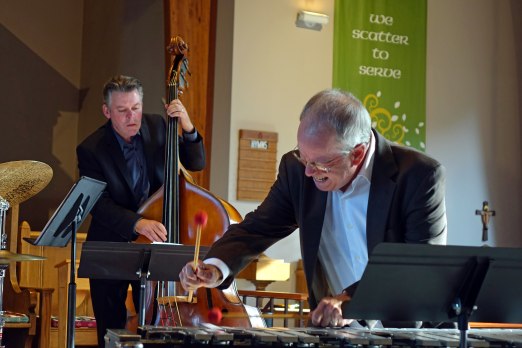
Any exploration of the Modern Jazz Quartet must begin with the special MJQ instrumentation and sound. Formed in 1952, MJQ always centered around its pianist-composer-arranger John Lewis and vibraphonist Milt Jackson, whose interplay and musical rapport were legendary. By 1955, the formula and sound congealed as percussionist Connie Kay and bassist Percy Heath replaced their flashier, starrier predecessors, Kenny Clarke and Ray Brown. The Freidline combo featured Jon Metzger playing the vibraphone, Rick Dior on drums, Zack Page on bass, and the leader at the keyboard. Clearly, it was Freidline and Metzger who cooked up the program between them, since Dior replaced the drummer originally announced on our events calendar. As for Page, Freidline exposed his unfamiliarity with the bassist when he presumed that none of the other musicians onstage was familiar with “Rose Room”: Page not only knew the tune, he had played it with his twin brother, guitarist Andy Page, in a “Gypsy Jazz” tribute to Django Reinhardt less than two years ago at Charlotte’s Stage Door Theater.

2021~Freidline-Metzger MJQ-20

Freidline and Metzger were savvier in their sampling of the MJQ legacy, which stretched over 40 years and 50 recordings. They played compositions that are musts for anyone coming to this music for the first time, including Lewis’s classically sophisticated “Django” and “Vendôme,” offset by Jackson’s funkier “Bluesology” and “Bags’ Groove.” There were also discriminating choices like “Concorde,” perhaps Lewis’s most challenging composition, and standards such as “Softly as in a Morning Sunrise,” “All the Things You Are” and “Summertime,” that crystallized the pianist’s arranging genius. The rest of the selections were less expected, almost equally fresh for longtime MJQ fans as they were for neophytes, including “Afternoon in Paris,” “Autumn in New York,” “Delauney’s Dilemma,” and “Blues in C Minor.”

One of the characteristics that made MJQ so unique was their pioneering conservatism. They preferred outdoor festivals and concert halls to seedy clubs, dressed up for their performances in matching tuxedos like orchestra musicians, and insisted on being listened to rather than being taken for granted as dance or background music. For a long while, these practices, not terribly outré nowadays, were viewed as outlandish and pretentious. Less notorious, but no less innovative, was their practice of offering spoken intros to each of their pieces as they performed. Freidline, without self-consciously noting MJQ’s influence, adopted this practice himself.

2021~Freidline-Metzger MJQ-07

Beginning with “Afternoon in Paris,” probably Lewis’s earliest jazz standard, the Freidline Quartet made it evident that there would be some give-and-take in terms of their replication of the MJQ sound and style. If you had ever heard the quartet live – or spent hours and hours of quality time with their most revered albums – the sound of Metzger playing his Musser vibraphone repeatedly seemed to bring the playing of Milt “Bags” Jackson back to life. Metzger’s tremolo may not have been as slow, and his sustains may not have been quite as long or rich, but the Jackson swing and flow kept on coming – chiming – wave after luscious wave.

2021~Freidline-Metzger MJQ-14

As a leader, Freidline doled out far more spotlight to his supporting players than Lewis, trading four-bar improvisations with Dior toward the end of the opening piece and giving Page a solo on the ensuing “Bluesology,” where Metzger sounded even more like Jackson in playing on the legendary vibes master’s famed composition. Freidline, on the other hand, was nowhere near as trim or spare in his soloing as Lewis, sounding more like Dave Brubeck at the keyboard, full chords showering down at times from both hands rather than single note phrases. It wasn’t until we reached “Summertime,” whose silences Freidline extolled in his charming intro, that the pianist came near to echoing Lewis’s single-note soloing style, which always contrasted so beautifully with Jackson’s deluges.

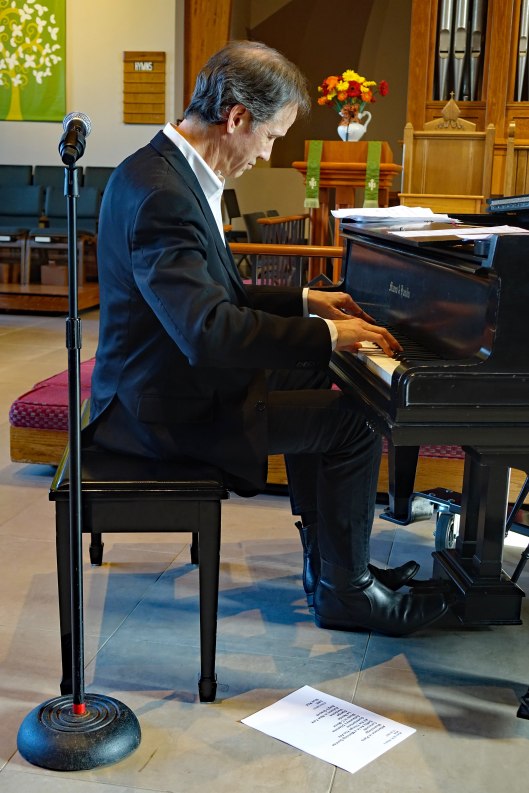
Lewis was not at all discarded otherwise, for Freidline delighted in playing the pianist’s arrangements framing the MJQ’s interpretations of the standards, and when it came to “Concorde” and “Vendôme,” presenting Lewis’s own compositions as written. Perhaps the most eloquent moment in Freidline’s intro to “Concorde” was when he held out its nine pages of sheet music and allowed it to unfold down to the floor. So we heard the Bach-like layering that opens “Concorde,” the contrapuntal prelude that gives way to “Softly as in a Morning Sunrise,” and the solemn chiming that leads us in and out of George Gershwin’s “Summertime.” The most outrageous heresy of the concert, when Dior brandished sticks and played a full-out solo on “La Ronde,” wasn’t a heresy at all, for the group wasn’t referencing the hallowed European Concert version of 1960, featuring bassist Heath. They were hearkening back instead to the first MJQ recording, when Kenny Clarke was behind the drum kit wailing away in “La Ronde” from beginning to end – and soloing – on December 22, 1952.

2021~Freidline-Metzger MJQ-25

The tribute within the tribute, Lewis’s “Django,” was the highlight of the concert for me, and I’m sure I wasn’t the only audience member who was moved by the composer’s hushed and sacred framing of the solos. Metzger was perfection in handling the transition between the bittersweet melody and the accelerated improvisations lavished upon it, turning the lament into a quiet celebration and making the lament all the more poignant as the Romani guitarist’s signature swing was wistfully evoked. Page had his best moments of the afternoon as he eloquently soloed, and Freidline was no less perfect than Metzger in his soloing and decelerating back to the mournful melody. Every note of this fine concert is preserved on YouTube.

“Appalachian Spring” Brings Glory to Picnickers on the Symphony Park Greensward

Review: Charlotte Symphony’s Evenings at the Park Concert

By Perry Tannenbaum

2021~Symphony Evening @ Park-08

Whether or not history ultimately judges them premature, the reawakenings happening across America this past month – at sports and performing arts – are destined to be lasting memories for those of us who make it to the other side of this waning pandemic. More than Charlotte Symphony’s return to Belk Theater five weeks ago, more than the five events my wife Sue and I attended at Spoleto Festival USA in Charleston earlier this month, the most recent Evenings at the Park concert at Symphony Park felt like a regathering and reaffirmation of our community. String players and the Symphony president had worn masks on the Belk Theater stage, and the spacing of the musicians underscored how few there were behind guest soloist Branford Marsalis. At Spoleto, the absence of the usual opera, orchestral, and choral presentations left the indoor and outdoor stages in Charleston similarly depopulated.

Onstage at Symphony Park for Father’s Day weekend, the string players, associate conductor Christopher James Lees, and all the other players were unmasked, apparently spaced normally. Woodwinds, brass, and percussion were amply represented, so the selections from Gershwin’s Porgy and Bess and Copland’s Appalachian Spring Suite weren’t drained of their customary colors. Wedged between them, David R. Gillingham’s Appalachian Counterpoint rounded out a 50-minute program of music connected to the Carolinas.

2021~Symphony Evening @ Park-03Malleted percussion and a harp were in the forefront as the Porgy and Bess selections began in a mysterious mood, veering toward the romantic with the iconic “Bess, You Is My Woman Now” and – after an interjection from a 747 jet – taking a jaunty, brassy turn with “A Woman Is a Sometime Thing.” Violins ushered in “Summertime” with a softly cradling sway, handing off to a forlorn oboe before “I Got Plenty of Nuttin’” entered brashly with the swagger of a trombone over a clarinet. After so many months of watching masked string players soldiering on, I felt gratified to be in a crowd listening to long-sidelined flutes, a muted trumpet, wood blocks, and a xylophone joining with their bowing comrades as the orchestra cruised through “There’s A Boat Dat’s Leavin’ Soon for New York,” “It Ain’t Necessarily So,” and “Oh Lawd, I’m on My Way” before circling back to the inevitable “Bess.”

After all the heavy-lifting and going-it-alone that the string sections of Charlotte Symphony have done on local stages since last October, it was nice to hear Lees telling us that the strings would be sitting out the next piece while the winds, brass, and percussion carried on. A luxury well-earned! Originally written for a tuba-euphonium quartet last year, Gillingham based his Appalachian Counterpoint on an old folk lullaby, “All the Pretty Little Horses.” As the absence of strings hints, Gillingham didn’t keep the tune in that sleepy idiom in composing his contrapuntal contortions. This expanded version gave the different strands of the original quartet to different instruments, so it lost much of its original mellowness while ascending into the treble.

Even in the slow middle section, sandwiched between the two speedier sections that were conspicuously cast in a mountain mode, Gillingham wasn’t about lulling us. Since a brassy modernistic scattering was happening in this more diverse version than in the quartet original, it would have been useful for Lees to let us hear the traditional “All the Pretty Little Horses” melody briefly before performing Gillingham’s Counterpoint. That way, those of us hearing the piece for the first time could track the theme more easily.

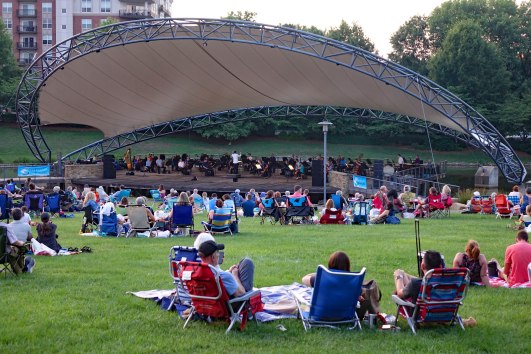
Darkness didn’t envelop the park until after Appalachian Spring concluded, so those attending an outdoor Charlotte Symphony concert for the first time never did get to see the beauty of the vast stage canopy when it is lit up – in a succession of vivid colors – under the stars. Nonetheless, we could hear how ideally suited this vernal piece is for the outdoors in its quiet beginnings when the chirping of the birds and the chuffing of the cicadas mingled with the music, casting a twilight spell over the greensward and our assembly of picnickers. The cavalcade of beautifully-stitched-together ballet episodes ranged from hoedown to scenic grandeur and from slapstick to sanctity, giving various sections of the orchestra a workout while evoking the variety of moods and costumes that Martha Graham and her dance company envisioned in the 1944 choreography.

2021~Symphony Evening @ Park-09

During the ebb and flow of energy and sublimity, Lees never allowed his ensemble – or his audience – to drift into doldrums, deftly insinuating the strains of the Shaker tune, “Simple Gifts,” into the shifting panorama. At first, the tune danced tentatively. Soon it frolicked. While the stage never illuminated, it seemed to burst into bloom at that spectacular moment when, out of an expectant hush, Copland brings his recurring tune to full force and glory. It was only in the quiet aftermath that the riskiness of programming Appalachian Spring as an outdoor concert finale was cruelly exposed. However this performance may have ended, presumably with a poignantly fading flute solo peeping out in the gloaming, it was almost totally upstaged by the drone of a passing passenger jet overhead. While this wasn’t a triumphant note to end on, few in the crowd left unsatisfied with the occasion – or unaware of its overall uplift.

NC Symphony, Audience, and Life-Affirming Beethoven Return to Meymandi

Review: “Meymandi Concert Hall was relatively teeming with musicians”.

By Perry Tannenbaum

2021~NCSymphony Beethoven-14

Gradually, the classical music scene is coming back to life across the state, with fuller ensembles performing in our concert halls and audiences finding more access to seats. Back in December, streaming was our only avenue to Meymandi Concert Hall when cellist Zuill Bailey and pianist Natasha Paremski performed an all-Rachmaninoff program to an empty house. Even then, the incremental return to normal was foreshadowed in the second half of the program. Having followed pandemic propriety in collaborating with North Carolina Symphony associate concertmaster Karen Strittmatter Galvin on the Trio élégiaque, the duo shed their masks for Sergei’s Cello Sonata.

Flash forward to last Saturday night’s NCS concert, and the Meymandi was relatively teeming with musicians. Two percussionists and 23 string players were now on the Woolner Stage, along with 13 brass and wind players splayed across the upstage in two rows, separated by plexiglass panels – all gathered to perform Joan Tower’s Chamber Dance and Ludwig van Beethoven’s Symphony No. 4. Looking over guest conductor Brett Mitchell’s shoulders, we could see socially-distanced audience members as close as the third or fourth row, masked as dutifully as the maestro, the string players, and the percussionists.2021~NCSymphony Beethoven-11

Unchanged were the evocative footage introducing the pre-recorded webcast, ushering us into the Duke Energy Center for the Performing Arts, settling us its eerily empty lobby, and leading us up the stairway to Meymandi, where oboist Joseph Peters greeted us as before. Peters’ hosting reached a higher level here, both in his introduction to the Tower piece and in his onstage sit-down with Mitchell between pieces. So did the camera work at Meymandi, offering us more vantage points, closer views of the musicians, and far more polished editing. Recorded sound was also outstanding, on par with last month’s Mozart-Handel concert by the Charlotte Symphony.

Peters ably described the treacherous terrain of Chamber Dance, written for the Orpheus Chamber Orchestra in 2006, pointing out its unusual scales and harmonies, its rhythmic intensity, and complexity – particularly in sections where rhythm and meter changed in every bar. Our host’s credibility was quickly underscored when the performance began, for the oboist drew the first solo. After volleying with principal clarinetist Samuel Almaguer, principal flutist Anne Whaley Laney drew a solo that was arguably lovelier than the oboe’s. You’ll need to have the volume up if you wish to hear the beginning of Galvin’s violin solo, the loveliest of all, with Almaguer layering on. Yet it was also refreshing to see the timpani, tambourine, and two trumpets back in action after their COVID lockdowns. There were other interesting chamber-sized matchups besides violin and clarinet as the cameras zeroed in on a wind quartet and afterwards split-screened pairings of principal bassoonist Aaron Apaza with principal cellist Bonnie Thron and Peters with violist 2021~NCSymphony Beethoven-39.

Belying Peters’ description, which had me bracing for a work that was rhythmically jagged and musically discordant, Chamber Dance turned out to be energetic and invigorating, with a natural flow between its solo, chamber, and orchestral episodes – though Dick Clark and I would refrain from calling it a dance. What I found most refreshing when Peters and Mitchell sat down at the break was the non-passive attitude Peters took as an interviewer and the pushback from Mitchell. Rather than agreeing with the description of Tower’s piece as a hybrid between chamber music and symphonic dance, Mitchell favored the idea that Chamber Dance was more like a concerto for orchestra.

The two also split on where the influence of Haydn was strongest in Beethoven’s Fourth, Peters hearing it in the pulse of Adagio second movement and Mitchell pointing to the mischief and misdirection in the Allegro ma non troppo finale, where Beethoven brings the music to a hushed halt before the furious gallop to the finish. Mitchell was also provocative in describing what the impact of this Symphony must have had at its Vienna premieres in 1807 and 1808, two to three years after the mighty Eroica. The ghostly, creepy, stealthy opening, circling back to solemnity, does seem to signal an even graver, more monumental work than its predecessor – until Beethoven’s infectious giddyaps merrily assure us that we’re off to the races.2021~NCSymphony Beethoven-05

The double basses deepened the spell of Beethoven’s intro in his Adagio–Allegro vivace opening movement, and a couple of timpani tattoos triggered Mitchell’s well-judged ignition of the conquering merriment. Laney offered a lithe repeat of the main theme on flute, and we had nice contrasts in those delightful moments when the restless strings quieted and chomped at the bit until Beethoven applied the whip. There was plenty in the ensuing Adagio besides its Haydnesque lilt at the start. The timps alerted us once again that there was more in the larder. A fade-dissolve to the clarinet spotlighted Almaguer’s admirable contributions to come as he dominated the solos. Beethoven’s own restlessness wasn’t ignored, and we could discern in his faintly militaristic moments what Mitchell had meant when he had prompted us on the rigor in this movement.

2021~NCSymphony Beethoven-37Shuttling between the blaring ensemble and Apaza’s gurgling bassoon, the penultimate Allegro vivace had as much mischief as merriment to delight us, with quiet passages that had light fluty colorings and oboe shadings. Of course, Apaza had his most special moment when he keyed the recap of the final Allegro ma non troppo movement. That should tell you that Beethoven has taken us far from this Symphony’s brooding beginnings, that it was written when the composer could still joyously hear, see, smell, taste, and touch our material world in the full flush of his success and celebrity. Sunlight suffused this grand finale, with none of the gloom of the cathedral or the grave in sight. The stop-and-go was more dramatic here than it was in the opening, yet there was no sadness sat all mixed into the affirmation that Beethoven offered or in the way the North Carolina Symphony played. Looking forward to the end of a plague instead of back to its havoc and carnage, Symphony struck the right notes and a responsive chord.

Branford Marsalis Helps Bring Charlotte Symphony and Subscribers Back Together at Last

Review:  Branford Marsalis Plays Ibert

By Perry Tannenbaum

2021~Branford Plays Ibert-04.jpg

More than 15 months had elapsed since my wife Sue and I had sat together at Belk Theater and enjoyed a Charlotte Symphony concert – exactly 15 months since we had seen Gabriella Martinez with the orchestra on Valentine’s Day at Knight Theater. Needless to say, much had changed since our last night out in Uptown Charlotte. Until we turned off the I-287 innerbelt onto College Street, we had no idea what a solemn concrete canyon the Center City has become – because the explosion of new buildings, high-rises, penthouses, and parking garages has hit us while foot traffic on a Friday night remains nearly extinct. Fortunately, we had allowed for extra travel time as we made our way to the landmark “Branford Marsalis Plays Ibert” concert, for the capricious Saturday night traffic was as heavy as usual, doubling our surprise when we left I-77. There wasn’t a Hornets basketball game scheduled that night, so we were among the first to enter the BankAmerica parking garage, with hundreds of spaces to choose from.

Thwarted by travel restrictions that kept him on the other side of the Atlantic, Christopher Warren-Green was unable to preside over our auspicious reunion, so resident conductor Christopher James Lees was called into action, acquitting himself quite brilliantly. Attendance for the concert was capped at 500, about 24% of capacity, and our tickets had been channeled to the Apple Wallet app on my iPhone, which the usher firing his QR scanner gun was able to wield better than I. We were so eager to enter the hall and see the CSO again that I forgot to get an exit parking stub in the lobby, but there was no crowd lined up for them after the concert when I did remember. Masking was still in effect for everyone except wind players, so it was helpful to find staff at their customary posts in the lobby – at the ticket booths and at the entry to the grand tier – so we could recognize and happily greet one another.

Marsalis, the Grammy Award-winning saxophonist, would be playing Erwin Schulhoff’s Hot-Sonate in addition to Jacques Ibert’s Concertino da camera, so there was plenty to bone up on in our seats before the lights went down. Sadly, there were no program booklets to assist our preparations, only the sort of glossy 5”x8” cards subscribers will remember from the pre-pandemic KnightSounds series. An informational email from the ticket office had popped into my inbox that afternoon, which contained a link to a PDF version of a 24-page program booklet. If you’re among the lucky 500 attending the sold-out concerts, you’re covered.

2021~Branford Plays Ibert-01

Filled out by Béla Bartók’s Romanian Folk Dances and Gershwin’s Lullaby for string orchestra, the program was an adventurous delight from start to finish – about an hour in length, as promised in that handy email, without an intermission. Bartók was particularly shortchanged by the abbreviated program handouts, for the names and tempos of his six Folk Dances couldn’t fit on the same card with all the movements Marsalis would be playing. Even if the Bartók movements had been listed they would hardly be indicative of what we would see and hear. Until the penultimate “Poargă românească (Romanian Polka): Allegro,” the dances weren’t at all festive. The “Brâul (Sash Dance): Allegro” was rather poignant, despite its nimble pace, and the “Pê-loc (Stamping Dance): Andante” was actually bleak. Even the gorgeous “Buciumeana (Hornpipe Dance): Moderato” had a forlorn fiddler-on-the-roof sadness to it. Otherwise, what was surprising was the extent that all these arrangements by Arthur Willner were miniature violin concertos, here featuring concertmaster Calin Ovidiu Lupanu, who was especially impressive high up in the treble of the “Stamping Dance.”

A nice array of winds and brass – including principals Victor Wang on flute, French hornist Byron Johns, and trumpeter Alex Wilborn – joined the strings onstage as Marsalis made his first appearance. Beginning with “quarter note = 66,” the movement markings in Schulhoff’s concerto for alto saxophone were deceptively fussy and clinical, for the heat of the Hot-Sonate came from jazz, just emerging from its raucous childhood when this suite was composed in 1930. Originally written for sax and piano, the arrangement by Harry Kinross White is most beguiling in its bluesy third movement, where the horns added an astringent accompaniment. Quaintly described by the composer “lamentuoso ma molto grottesco (plaintive, but very grotesque),” this “quarter note = 80” movement delivered the deepest jazz flavor, and I could easily imagine Johnny Hodges, on leave from Duke Ellington’s Orchestra, playing its premiere. Unfortunately, Schulhoff’s idea of the grotesque was no more edgy than his grasp of the alto saxophone’s capabilities. Despite the undeniable appeal of the music, Marsalis wasn’t really tested by the demands of Hot-Sonate.

Gershwin’s Lullaby, not jazzy at all, was a perfect palate cleanser between the two Marsalis stints. The strings wafted a tropical lightness that had a “Catch a Falling Star” lilt and laziness. Little showcases were set aside for the string section leaders, most notably Lupanu and cellist Alan Black, and the piece ended deliciously in bubbly geniality, with rounds of delicate pizzicatos. Absent during the Gershwin, horns and winds reasserted themselves forcefully in the Concertino da camera, originally scored by Ibert for 12 instruments, including the soloist, with only five string players. Marsalis was noticeably more tasked now, from the opening Allegro con moto movement onwards: more speed, more range, more complexity, and more technique were required from him, while the vibrant accompaniment offered more distractions. There’s actually some percussion from the strings amid this opening movement, but I was so focused on Marsalis and his unmasked accompanists that I didn’t notice which string players were tapping their bows.

2021~Branford Plays Ibert-09

An achingly lovely, oboe-like lament by Marsalis began the Larghetto section, with the strings gradually creeping in ever-so-stealthily behind him. Extra strings, 22 in all, were a definite asset here as the music swelled. Wang’s flute and Wilborn’s trumpet had the most impact behind Marsalis as we cheerfully swung into the concluding Animato. Though often labeled as separate movements on CDs (including Branford’s recording with the Orpheus Chamber Orchestra in 2000), this concluding Larghetto-Animato was in itself like a three-movement concerto, for Marsalis drew a second cadenza between orchestral bursts that was far more demanding than anything he had played so far, nearly requiring circular breathing to execute its cascading, fleet-fingered runs. The audience was keenly attuned to the saxophonist’s virtuosity, for they gave him a lusty standing ovation when he was done, a judicious upgrade from the warm applause showered on the Schulhoff.

A wonderful evening, all in all, and a giant step back to normality.

Chang and Yang Offer a Rousing Ladies’ Night Before Mother’s Day

Review: Celebration of Amy Beach and Florence Price

By Perry Tannenbaum

2021~Beach and Price-03

Surely there couldn’t be a more natural concept than having two women instrumentalists sharing a concert stage and playing works by two female composers on Mother’s Day weekend. Or we can certainly hope that view will continue to prevail when we are past COVID-19, now that #MeToo has swept the nation, now that Black Lives Matter is opening the way to reconsidering African-American composers, and now that Trumpism is on the wane. Right now, I think we must admit, this oh-so-natural concept, brought to life on the UNC Department of Music’s YouTube channel by pianist Clara Yang and violinist Sunmi Chang, still felt rather refreshing and innovative. The duo showcased two pieces by Amy Beach, one of them excerpted from her epic Violin Sonata, plus a welcome reclamation from Florence Price, the African-American composer’s Fantasie No. 1 in G Minor.

2021~Beach and Price-31

The 30-minute stream was impeccably recorded at two locations with an imaginative video mix layered on in post-production. Just to disabuse us of the notion that all this wizardry was happening live – and maybe to add some glam – the ladies changed costumes between each of the pieces. Nor was there much of a letup before the evening’s encore, William Bolcom’s “Graceful Ghost Rag.” It was rather charming, in fact, to see Chang going casual and sporting a tee shirt, ponytail, and jeans to underscore the bluesy informality of this segment, while the video mixers had some fun of their own, tossing in some funky effects, including a foray into artsy black-and-white.

2021~Beach and Price-21

Compared with traditional chamber music programs staged in concert halls – or even those convened in the parlors of wealthy patrons – this offering had the claustrophobic TikTok feel we have grown familiar with during the pandemic. No view of Yang included all of her piano, and as the more mobile Chang moved from an austere bare wall for the Sonata to a furnished room for the Romance, her visible stage was barely as wide as her mantelpiece, slightly expanded after Chang introduced us to Price. Viewers will be able to see the earbuds sprouting from the ladies’ ears as they performed, but whether they were in any proximity with each other for their “remote collaborations” remains cloaked in mystery. Both of the Beach pieces began with piano intros, so synchronization was relatively easy to achieve. Price’s Fantasie, however, required instant alignment between the musicians, visually cued, which may be why there was a wee tablet (or a very large cellphone) perched next to Yang’s score on her piano.

2021~Beach and Price-13

Introducing Beach and her works, Yang readily admitted that the logistics of these collaborations had been challenging, but there was no strain evident as she played the lyrical intro to the Allegro moderato opening movement. Although the distributor of these UNC webcasts is YouTube and not Sony, the sonic quality when Chang layered on in the treble was on a par with any of the half dozen studio recordings you can readily hunt down on Spotify, possibly eclipsed only by the Chandos recording with Tasmin Little teaming with pianist John Lenehan. The challenges facing UNC’s duo inhibited the kind of fluid synergy captured by Chandos, but Yang triggered plenty turbulence and drama from Chang, and the video editing underscores the dialogue between the two musicians in the refrain that partitions Beach’s structure.

Actually, there was marvelous ebb and flow as the repeated refrains dominated by Yang gave way to more and more turbulence each time the focus switched back to Chang’s violin. Perhaps the more obvious choice for sampling the grandeur of Beach’s Violin Sonata would have been the concluding Allegro con fuoco with its rousing final rush, but the opening movement is lengthier, and the women ably advocated the ethereal virtue of the Allegro moderato’s serene final bars. I’d gladly listen to this duo in a performance of the full Sonata, especially if it were boosted by the electricity of a live concert with all of us in the same hall.

2021~Beach and Price-16

While the changes in attire and location for Chang chimed well with the more luxuriant lyricism of Beach’s Romance, this piece also plunged into turbulence in response to Yang’s eloquence at the keyboard. Beautiful ebb-and-flow was evident once again in the duo’s sculpting of this piece, both Chang and Yang tethering their crescendos and decrescendos to the intensity or tenderness of the moment, ending with a more soaring sublimity than we had heard in the Sonata. Apparently, multiple takes went into this segment of the video. How else can we explain a fade-dissolve from pianist Yang to… pianist Yang? Yet the audio seemed to flow seamlessly, a feat not quite replicated at the outset of Price’s Fantasie, after Chang gave us an impressive spoken intro and an even more impressive cadenza.

Was that merely an awkward fade after the duo veered into an outburst of folksy merriment – or was that an edit? While the web reliably confirms Price’s 1933 crowd-pleaser and the cover page of the sheet music, there is no confirmation that this piece has ever had a studio recording. All three of the YouTube listings have been logged in since last March, the majority by masked musicians, so when Chang told us in her intro that the piece was new to the duo, she was speaking for the rest of us. Total number of views has yet to reach four thousand, and only Dawn Posey’s recording with pianist Jack Kurutz (618 views) is truly a worthy rival to the new Chang-Yang offering in sound quality and artistry. As Chang rightly observed, Fantasy No. 1 in G Minor is a beautiful mix of classical tradition and African-American folk heritage, and we can see that the criminal neglect of this composer is only now beginning to be rectified. There’s obviously a long way to go as the piddling YouTube roster of videos attests, for a black violinist or pianist has yet to check in with this piece.

2021~Beach and Price-29

That would also be a natural concept. In the meanwhile, kudos to the ladies for their inclusiveness in holding a place open for Bolcom’s piece in signing off, a courtesy that I’ve never seen extended by male performers to a female composer. “Graceful Ghost” appears in numerous forms, including for solo piano, four-hands piano, and string quartet. Chang’s genial performance, wresting dominance from the piano, hasn’t been equaled yet by any that I’ve auditioned on Spotify. There are 35, so I’m not done. I’d resist the lure of Gil Shaham’s star quality if you’re interested in samples of this work, for he perversely ignores Bolcom’s injunction against letting the moderate tempo drag, giving us a singularly lugubrious and listless “Ghost.” Chang’s bouncy take was far more preferable, a very enjoyable way to end a concert that left me wishing for much, much more.