Review: Over the River and Through the Woods at Theatre Charlotte
By Perry Tannenbaum
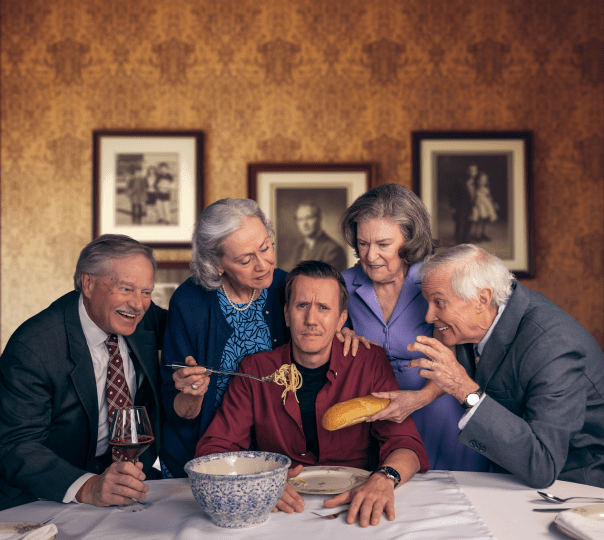
Back in the days of Woodstock and hippies, my generation spoke solemnly, defiantly, or even sarcastically about the Generation Gap. For a long time, it was sincerely believed to be the most telling division in our country. With the return of Joe DiPietro’s Over the River and Through the Woods to Theatre Charlotte after previous runs in 2002 with Rock Hill Community Theatre, 2004 with Charlotte Rep, 2013 at Fort Mill Community, 2014 with CPCC Summer Theatre, and 2016 with Davidson Community, it’s rather shocking to realize how recently that belief has become so quaint and outdated.
Good thing, then, that Over the Woods is mostly a comedy that doesn’t take itself seriously – for the gap is huge. Our floundering Nick Cristano, career success and social schlub, is two generations younger than his Hoboken elders. The gap is further multiplied by the aggregation of both sets of grandparents, Nunzio and Emma Cristano coming over for Sunday dinner every week chez Frank and Aida Gianelli.

For added zest, the gulf between the grands and the hopelessly outnumbered Nick is more than a little exaggerated. A game of Trivial Pursuit plays a little like an Abbott & Costello shtick, capped by an epic global route to Nunzio’s single correct answer.
In fact, the two scenes we see before intermission at the Queens Road Barn would not feel out-of-place if we encountered them as sketches on classic TV variety shows, ranging from Sid Caesar’s Show of Shows to Saturday Night Live. The first is Nick’s hilariously arduous attempt to break some big news to the grandfolk.
Whether it’s a glib interruption, a conversational detour, a remembered anecdote, a temporary defection to another room, or Aida’s never-ending blandishments of irresistible Italian home cooking, one obstacle after another keeps Nick’s news on perpetual back order until we’ve had to question if it will ever make it off the runway.
Hitting Broadway a year before The Sopranos cemented the connection between Italians and New Jersey, Over the River overflows with ethnicity, thanks to director Elizabeth Sickerman and dialect coach Marilyn Carter. Nor is this pure and delicate spring water. It’s an aromatic sludge with the consistency of Grandma’s legendary marinara. Two dominant flavors: Italiano and Joisey.

More cringeworthy is the folk medicine cure that the elders concoct in the wake of Nicky’s stunning disclosures. Enter Caitlin O’Hare, a nice local Irish girl unafflicted by any ethnic accent and hopefully alluring enough to keep Nick from straying too far from Hoboken. It’s a brash set-up that catches poor Nick unawares, an impromptu first date with unabashed interruptions, interrogations, and interferences from the well-intentioned seniors.
So here is where everything becomes so quaint, halcyon, and naïve. Both of the Gianellis that Caitlin finds so adorable are Italian immigrants. We find ourselves reacting in the same way to both of the elder couples, no matter how far Emma overreaches with her matchmaking and her prying or how much excessive food Aida lavishes upon her young guests, including veal for a vegetarian.
They are truly personable. Speaking directly to the audience before anybody picks up a dinner napkin, Frank genially tells us that he arrived in America with just 200 lira in his pocket (about $10.50 US back in 1930), along with the Hoboken address of a cousin who had already moved to “a faraway land called Brooklyn.” And 65 years or so after reaching our shores, reminiscing about living under a Hudson River pier for six weeks, he’s still speaking with an accent!
“Tengo famiglia!” he and his grandson declaim, the taste of their Italian roots still sweet to their lips.
Before even saying grace, Frank has already checked three of the immigrant boxes that 47 would label as garbage. Yet there’s more ICE bait: Emma remains as proud of her husband as she is of the family she raised here, proud to describe him as a laborer. After all, he built this house with his bare hands!
Ironically, when DePietro was prefacing his 1998 comedy with Frank’s migrant memories, he probably wasn’t trying to score a political point. “What point?” he might have asked. On the day after our Republic’s 288th birthday, when I last saw Over the River at Pease Auditorium, my reaction was likely aligned with the playwright’s.
My 2014 review, “Matchmaking With Veal and Provolone”? Not a single mention of politics or immigration.
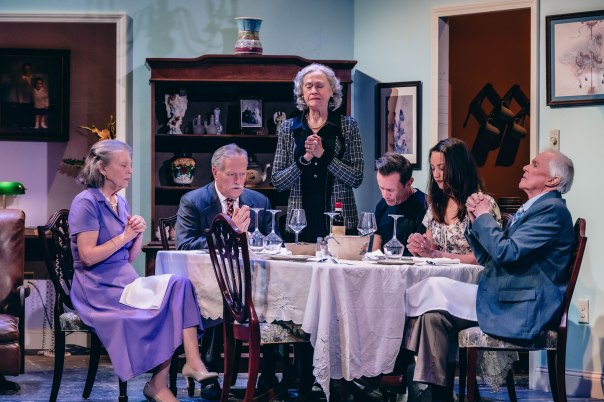
That was the first time we encountered Gerald Colbert’s portrayal of Nunzio, the weightiest counterbalance to DiPietro’s comedy. As a second-generation American, Colbert’s Nunzio, with his gray hair slicked down traditionally, tracked extremely close to my dad, who had passed away less than two years earlier, and my Uncle Abe – often mistaken for Dad’s identical twin – who had died just five days earlier.
Looking so much like them that day added to the weight of the mortality that Nunzio was staring in the face, in the grips of terminal cancer and grappling with the question of whether he should weaponize his condition to keep Nicky in Hoboken. Both of my elder Tannenbaums reached their nineties, so there’s plenty of gap left for Colbert to navigate, but his affinity with and empathy toward Nunzio have noticeably deepened.
Nunzio’s climactic valedictory dialogue with Nicky was especially heartbreaking for me, but it also offers new dimensions of topicality for all.
As the lovingly coddled and embattled Nicky, Timothy Hager is almost too perfectly cast. A walking bundle of ambivalence and insecurity, Hager is also sufficiently tall, stooped, and slender to be viewed as crying out to Aida to feed and overfeed him again and again so dear Nicky can finally take shape. He does make an awful impression on Caitlin with his defensiveness, but his awkwardness – and gawkiness – keep him a bit lovable in his discomfiture.
He’s aware that he’s a mess: a work-in-progress.
Quaint and manipulative as these harpies are in their quest to tie Nicky down in Hoboken, they need to be ambivalent because they honestly love him – and because they have previously allowed their sons and daughters to fly the coop. Paula Baldwin isn’t taking on the toughest challenge of her career with Aida, the Einstein of pasta, but she handles the matriarch’s ignorance with a zest that brings fresh life to the g-mama stereotype.
If we hadn’t seen the like with so many stage husbands before, we could say that Baldwin pairs amazingly well with Henk Bouhuys as Frank Gianelli. Can we agree, though, that he delivers the tangiest Italian accent? He must also navigate a preternatural ignorance that matches the blank that Aida draws on vegetarians, for Frank doesn’t know where Seattle is. Notwithstanding Frank’s humble beginnings – and the accent – Bouhuys consistently radiates the well-to-do dignity of an octogenarian enjoying his golden years.
DiPetro’s subtlest move is making sure that Nunzio and Emma Cristano are second-generation Americans with urban accents. This isn’t as crucial for Colbert as Nunzio as it is for Kasey Lathem as Emma. Hers will be the only familiar face that Caitlin expects to see when, politely bearing a bottle of wine, she knocks on the Gianellis’ door.
Lathem must be glib and modernized enough to be a supermarket buddy of Karisa Maxwell McKee as Caitlin O’Hare. Offsetting her laudable sociableness, Emma must also be tactless and tone-deaf enough to introduce this chum to everyone as “the unmarried niece of my canasta partner.” Nunzio and Frank can be counted on to immediately join in with the same high level of unsubtlety.
Sensing the gauntlet that she will have to run, McKee gets to show considerable backbone as Caitlin, though DiPietro would have been more imaginative if he had made her something other than a nurse. Her ultimate effect on Nick, dispensing her objective opinion on his behavior vis-à-vis his grandparents’, is not at all medicinal. She becomes a timely barometer in gauging how much growing Nick still needs to do in his thirties – and paradoxically, how urgent it is for him to strike out on his own.
We’re sort of circling back to Frank getting on that boat with 200 lira, aren’t we? In her digital program intro, Sickerman rightly targets the immigration themes lurking in this script, linking us to a Library of Congress page on “Immigration and Relocation in U.S. History.”





















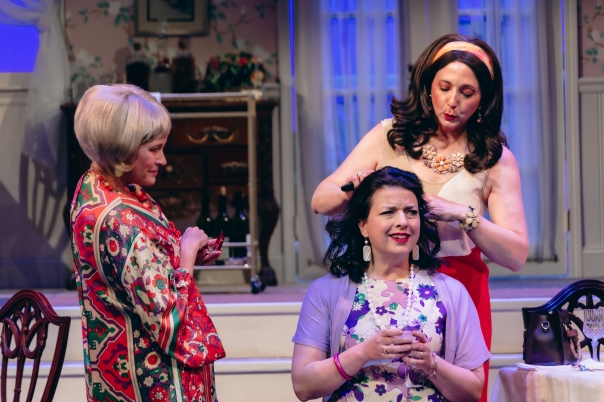

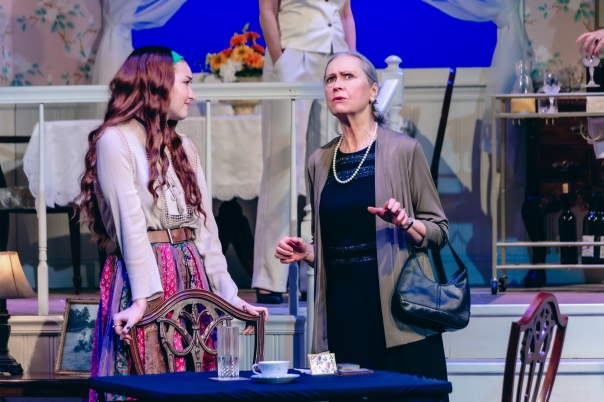












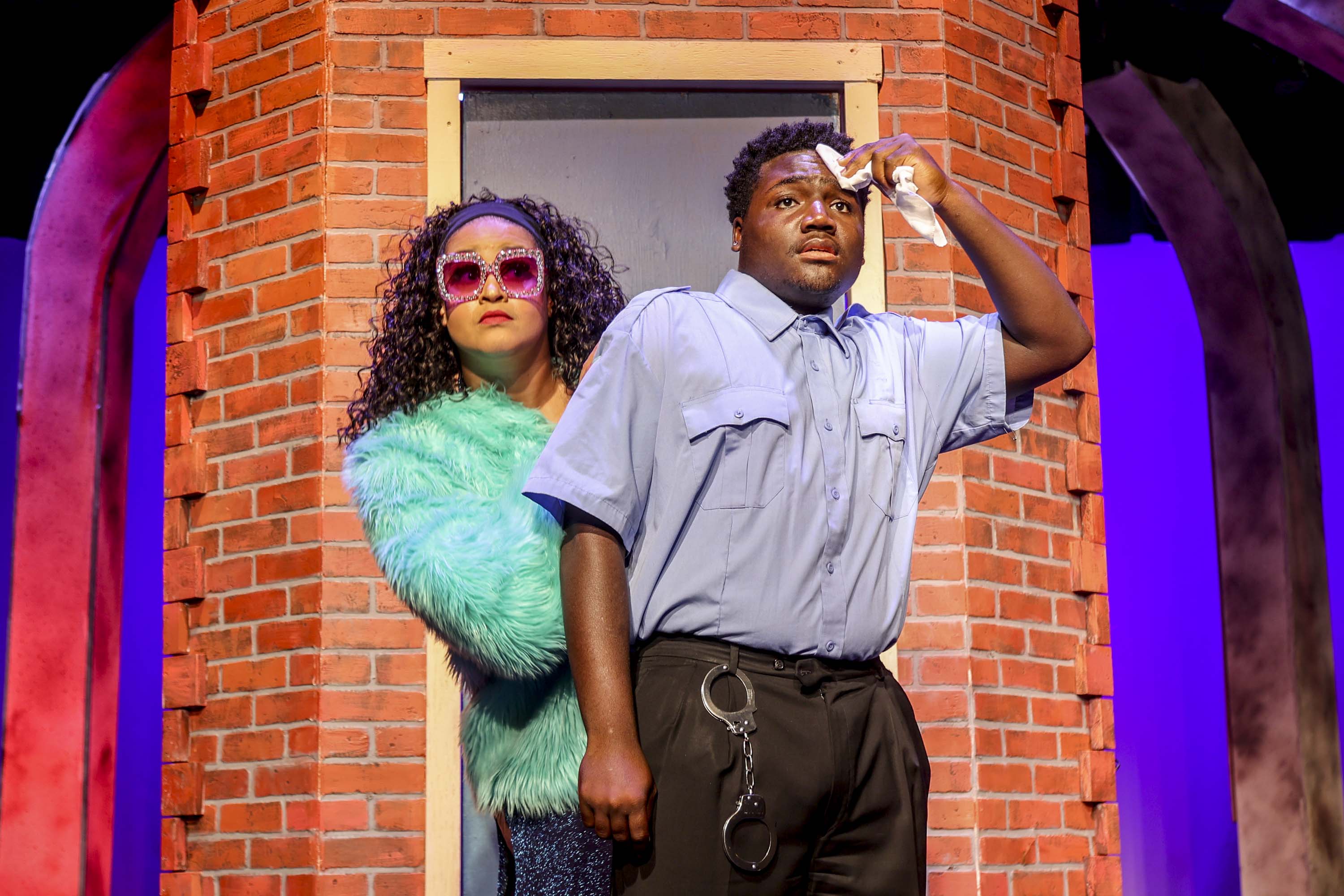


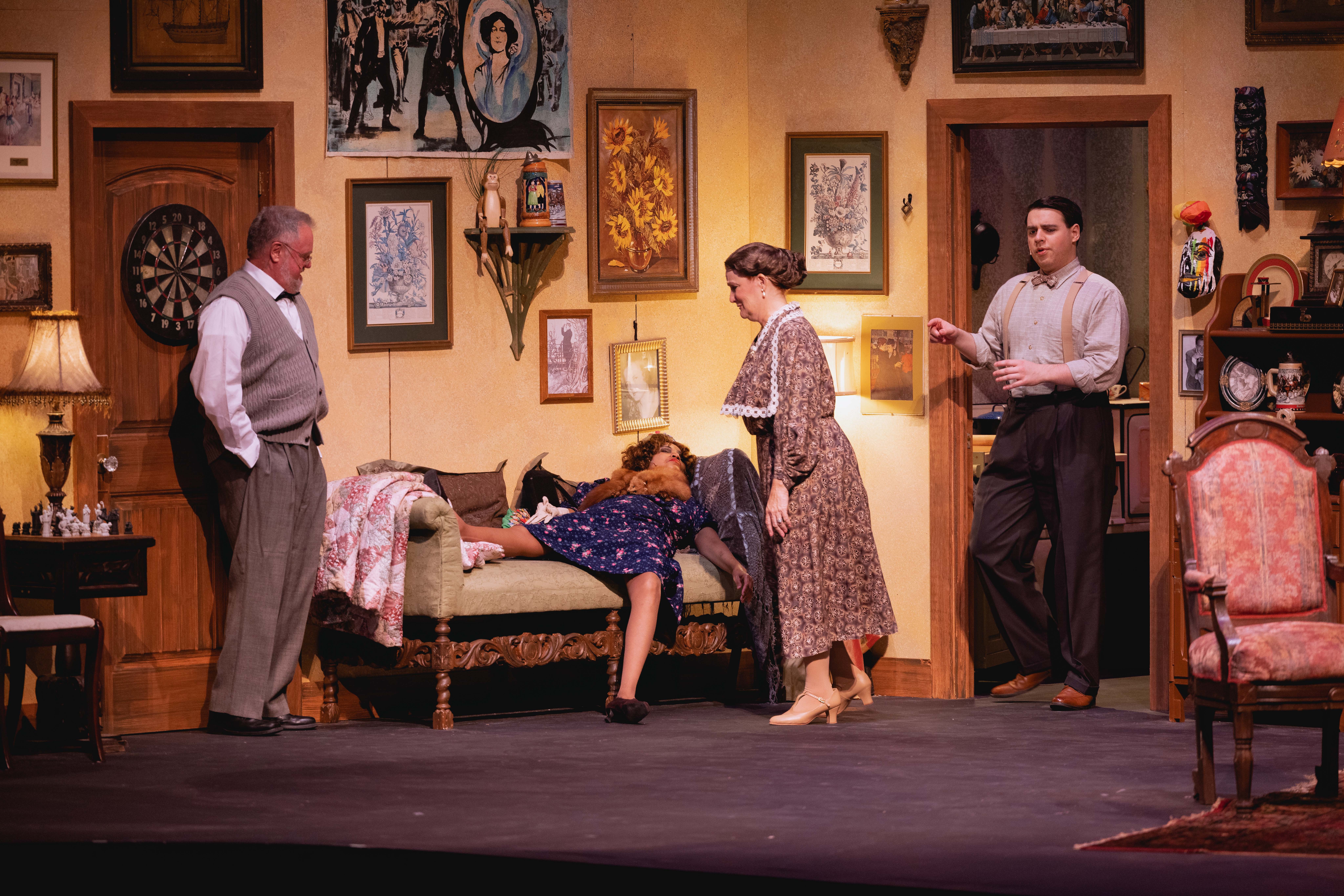
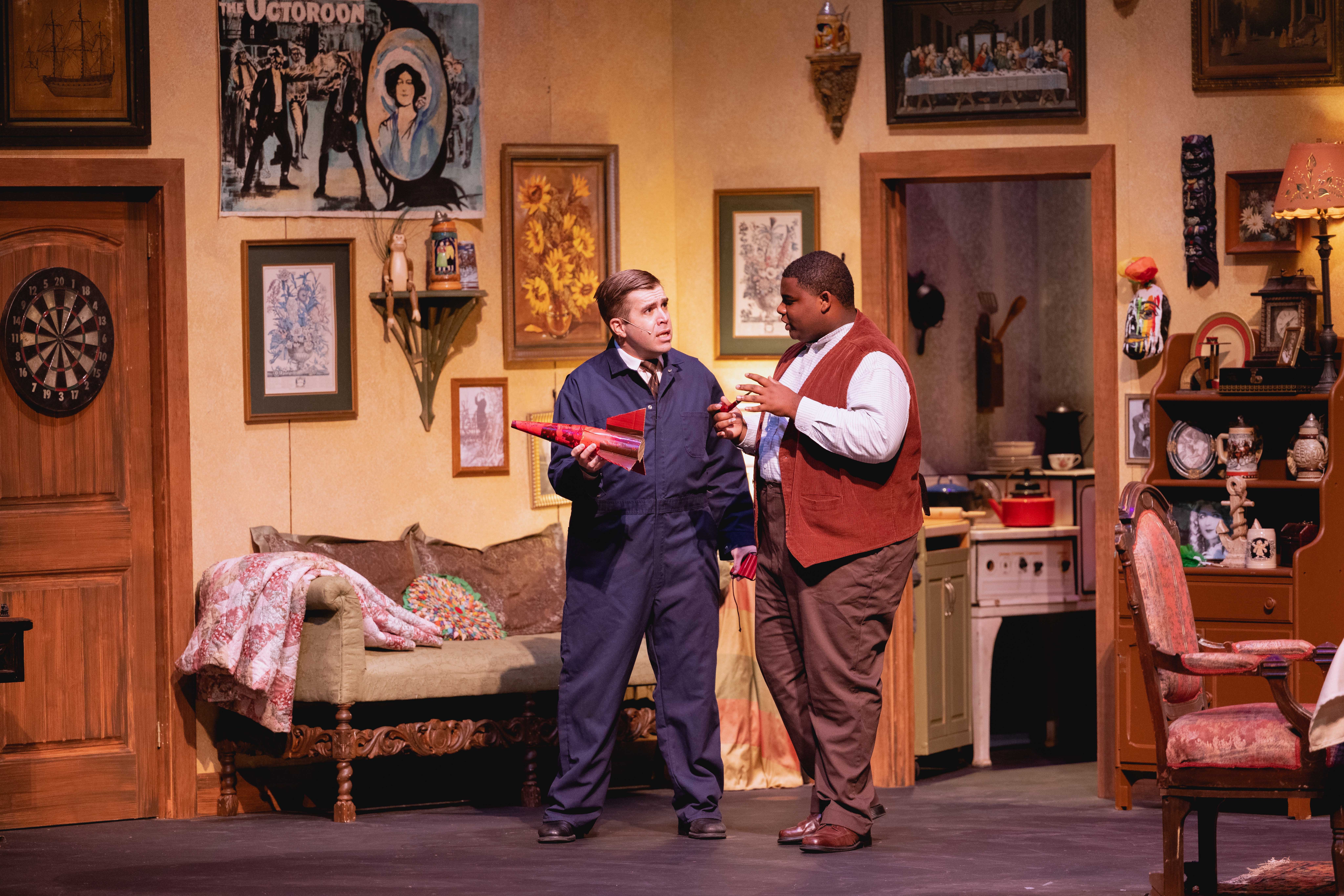 In the face of such humiliating catastrophe, Alice wished to exile herself to the Adirondacks, but Charlie Grass managed even here not to be overly annoying in her shame and mortification as the one “normal” member of her family. Love and practicality are nicely mixed in this Alice. Serene and optimistic as ever, Martin, Penny, and Paul are able to laugh off the misadventures of the previous night. Newcomer as Penny, Jeremy Cartee as Paul, and Dennis Delamar as Martin became especially endearing from this moment forward, maintaining their equanimity after this buffeting of adversity. Galumphing and awkward in the early going, in and out of his mad scientist coveralls, Cartee showed some touching solicitude toward the wife and daughter when crisis struck. Delamar, in his second go-round as Martin, has thoroughly mastered his dignity and glow, aided by Emily McCurdy’s costume design and James Duke’s lighting.



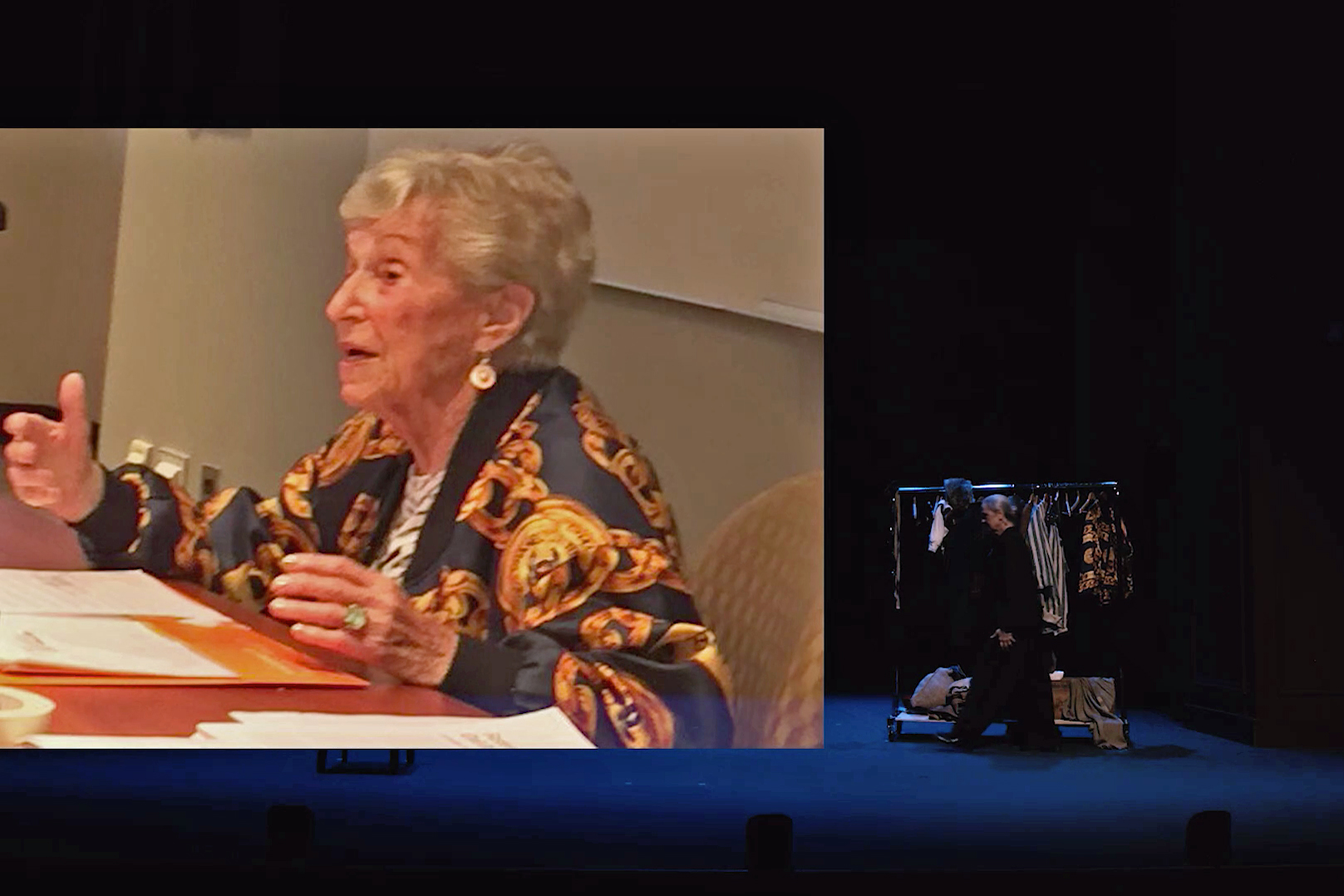
 Detachment and inhumanity are inevitable results of the plum jobs Susan is able to land at Auschwitz. The cushiest requires nothing more of her than drawing a line through the names of fellow prisoners, thousands of them, who have passed through “the gas” and the crematoriums. Another requires her to sort through the clothes and possessions of those who haven’t been as lucky as she has been – she can even scavenge some choice articles of clothing. No doubt this aspect of the story fascinated LaBorde as he adapted Cernyak-Spatz’s sprawling memoir for the stage. Thinking of changes in wardrobe as the organizing principle of Susan’s narrative is his idea, not hers. Magda Guichard’s wide range of costume designs help LaBorde depict Susan’s precipitous fall from her upper middle-class status in Vienna to her total degradation at the Birkenau death camp. Delamar spares Giles from the fullest indignities that the script allows, letting his star wear a flesh-colored leotard when Susan is ordered to strip for a delousing shower and allowing her to retain her own disheveled hair when she is shaven bald. A sleekly coiffed wig is removed to suggest the transition.



 Art on My Sleeve