Review: A Musical Offering @ Davidson Bach Festival
By Perry Tannenbaum
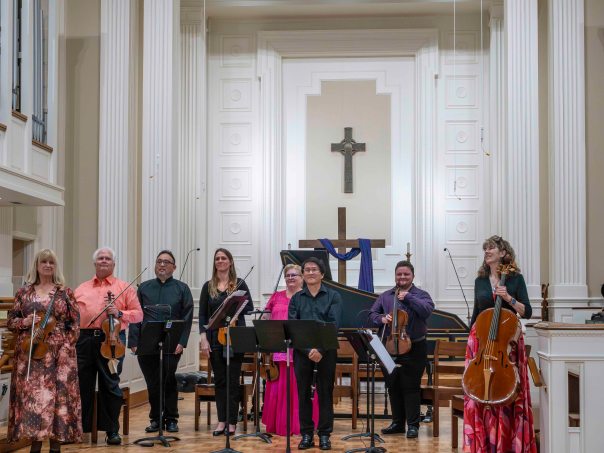
March 7, 2026, Charlotte, NC – Since I hadn’t reviewed a North Carolina Baroque Orchestra performance at Davidson College Presbyterian Church in over 10 years, you are welcome to conclude that my return trip this past weekend was also my first sampling of the Davidson Bach Festival, which launched its first season slightly less than a year ago. In some respects – age, size, duration, number of venues, and variety – the Davidson fest is like the Charlotte Bach Festival in miniature. They don’t import a world-class chorus or perform the mighty masses and oratorios, and they don’t offer noonday lecture concerts with choir, orchestra, AV presentations, and scholarly erudition.
Yet there are aspects of this relative simplicity that can be prized. Unlike the Charlotte fest or the Oregon Bach Festival, its regal template, Davidson hasn’t ventured beyond Bach so far. Nor has it hopscotched around the city or the college campus, cleaving exclusively to the Presbyterian. Upon reacquainting myself with that sanctuary, I found what many would consider an advantage. Although the organ at St. Peter’s Episcopal, in uptown Charlotte, can speak in earthshaking thunder, an organist performing a concert for over an hour at Davidson Presbyterian can be viewed far more comfortably. You have to turn around in your pew to even glimpse the organ and the organist at St. Peter’s. Even then, you’ll only see his back, often at a greater distance, and always in dimmer light.
That was my only pang of regret when I opened the festival program and recalled that the “Bach Birthday Bash” with award-winning organist Chase Loomer was scheduled for the following afternoon. Meanwhile, “A Musical Offering,” with three Bach concertos (culminating in a Brandenburg) and a Trio Sonata from his Musikalisches Opfer, would provide ample consolation for missing tomorrow’s rumble. Playing lead oboe or flute on three of the four pieces, Sung Lee was certainly going to draw the most scrutiny.
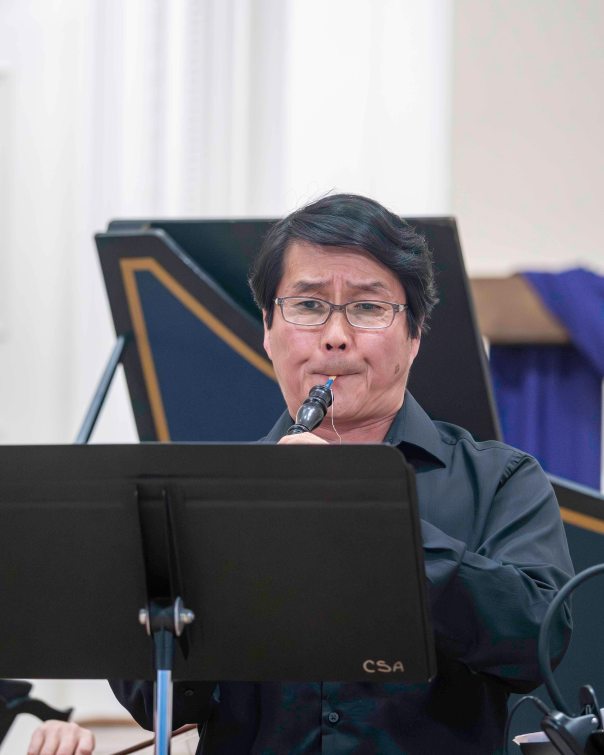
On the other hand, harpsichordist Francis Yun seemed destined to lurk inconspicuously behind the other musicians until the opening movement of the treasurable Brandenburg Concerto No. 5. Unless you were already with the epic harpsichord cadenza in the opening Allegro, you had little idea how emphatically Yun would emerge.
The same can be said, of course, for the myriad Bach compositions known to us chiefly by their featured instruments and BWV numbers. Familiar melodies lurk in them that multitudes of music lovers will instantly remember, but only specialist musicians and musicologists can anticipate. For most of us, Bach’s delicious Easter eggs are only further scrambled by the multiple times he might repurpose his best melodies in various compositions.
The Concerto for Oboe and Violin in C minor, BWV 1060r, starting off BC Bach’s “Musical Offering,” is an apt example. Starting out as a concerto for two harpsichords and strings, it was recast into a Violin and Oboe version. Either way, there were sighs of satisfaction – and relaxation – when the melody of the opening Allegro was recognized with its delightful echo motif. Lee was partnered with violinist Jeanne Johnson for the main instrumental interplay, perhaps even more beautifully in the middle Adagio movement, because it sounded less familiar, with a more minor-key flavor. As one becomes more experienced as a listener, one appreciates the variety of Allegro that sensitive and discerning soloists bring to the stage. The closing Allegro here was brisker than the earlier one.
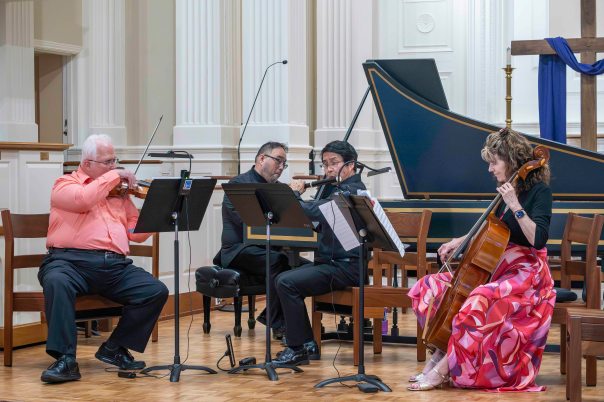
Even if you were sitting in the second row, as we were, the hall was part of the sound, softening it. Yet the second piece, the Trio from A Musical Offering, was more subdued in various ways. The ensemble was reduced by half to four players, and all were seated in a chamber music style. Compared with recent recordings we might sample on Spotify or Apple Classical, NC Baroque’s chamber ensemble played the second movement Allegro conspicuously slower after a perfectly judged Largo with gorgeous counterpoint.
Lee, Yun, violinist David Wilson, and cellist Barbara Krumdieck meshed beautifully throughout, rightly reveling in the sonority of the penultimate Andante, which is always slowed down – even on the Kujiken brothers’1994 recording, the best of the bunch. Less of an outlier than the earlier Allegro, the concluding movement was also a bit lethargic, better propelled by Krumdieck’s continuo. Overall, the interpretation aligned best with the 1974 recording by the Academy of St. Martin in the Fields, where the middle movements are marked Allegro Moderato and Andante Larghetto.
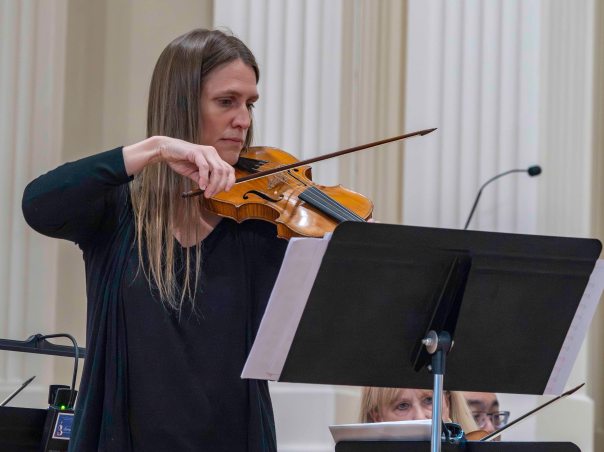
Everything about the E Major Violin Concerto No. 2 sounded wonderfully familiar to me, even the slow movement. Bach lovers could have come to the catchy melodies through this BWV 1042 violin version, almost perfectly judged at Davidson Presbyterian by soloist Janelle Davis, or a subsequent BWV 1054 harpsichord version, pitched a full step lower. Davis was very close to the speed that unlocks the opening Allegro’s full flair and immersed herself lyrically in the middle Adagio. But it was Davis’s joyful playing in the closing Allegro assai that made this Concerto such a tough act to follow.
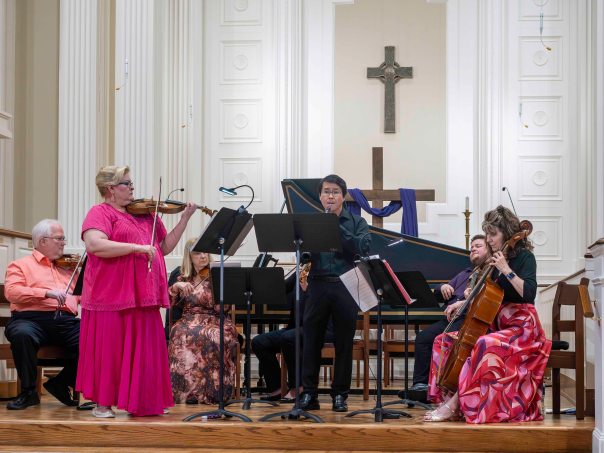
In hindsight, Davis’s joyous tempo provided the perfect launching pad for Yun’s prodigious three-minute rampage, climaxing the opening Allegro of the Brandenburg 5. Tempo-wise, the whole movement was perfectly grooved. A little more ardor from Lee in the middle Affetuoso would not have been amiss, but we ascended to a far loftier plane when Bach’s harmonies flooded the music. Though a little less prayerful and sublime than the opening Allegro, the final movement of this immortal concerto – especially appealing with Lee sparkling jubilantly – is no less quintessentially Bach and baroque. Every time we recall these bookended gems, we realize that they’re living inside us all the time.


