Baked into many great American plays is the notion that dreaming big, striving for the golden apple of success, is a kind of latter-day hubris – sure to be tragically quashed and beaten down. Walter Lee Younger in Lorraine Hansberry’s A Raisin in the Sun was a grim example of such a tragic hero, dreaming of owning a liquor store in Chicago during the 1950s. It was hard for me not to think of Walter Lee’s beatdown – and paradoxically, the soaring success of Sidney Poitier, the breakthrough actor who portrayed him – as Dominique Morisseau’s Detroit ’67 unfolded at Theatre Charlotte.
Tautly directed by Ron McClelland and superbly designed by Chris Timmons, Morisseau’s work is darker and bloodier than Hansberry’s classic but emphatically more hopeful. Even with the background of the Detroit race riots of 1967, the pride of Black culture never leaves our eardrums for long as a clunky old record turntable, replaced by a slicker 8-track player and a pair of bookshelf loudspeakers, cranks out the hits of Motown’s famed music machine.
Come on, David Ruffin! The Temptations! Smokey Robinson and The Miracles. Mary Wells. Martha and the Vandellas. The Four Tops. Gladys Knight and the Pips. Marvin Gaye.
Morisseau’s protagonist, Lank, and his sister Chelle are trying to upgrade their unlicensed basement bar so that it will become more competitive with other after-hours speakeasies – when Sly, Lank’s best friend and a numbers runner, offers him an opportunity to buy into a legit bar. History lesson: a police raid on one of the unlicensed bars Lank and Chelle are seeking to emulate triggered the Detroit riots, the worst in 20th century America until another shining example of policing, the Rodney King riots in LA, eclipsed them in 1992.
While the riots rage and Michigan guv George Romney is calling in the National Guard, Lank and Sly are striving to scout out their hoped-for property and close on a deal – against Chelle’s wishes. Meanwhile, a second hubris slowly develops as Lank shelters a lovely white woman, Caroline, who has been battered and is mysteriously linked with the white underworld. She’s actually in more mortal danger than Lank.
Despite mutual suspicions, Caroline and Lank are drawn to each other. But they bond over Motown music, and they are both capable of busting a dance move.
The rioting in the Motor City was a prelude to the Black Power demonstrations at the Mexico City Olympics in 1968. We can also view them as a precipitating factor leading to the pride-filled Summer of Soul celebrations in Harlem and the rapprochement between the races on the musical scene that accelerated at the gloriously chaotic and inspiring Woodstock Festival of 1969, for so many of us the decade-defining event of the ‘60s.
So Detroit ’67 not captures a city in turmoil, it echoes the prime crosscurrents of that era, the struggle of Black people for their legitimate rights, the backlash from white people and government, and the mainstreaming of Motown as it breaks into pop culture. And by the way, Sidney Poitier’s To Sir With Love and Guess Who’s Coming to Dinner were both released in 1967. The question of whether Blacks were making significant progress, suffice it to say, was very much up in the air as we watch this action at the Queens Road barn.
Running an underground business together, Lank and Chelle are more advanced in their autonomy, street smarts, and connections than Walter Lee and his sister Beneatha were, still living under their mother’s roof with Walter Lee’s wife and child. Pushback against Lank’s feasible but difficult dream comes entirely from Chelle, who can realize deep down that continuing to run an illegal operation is also a risky choice.
Morriseau, McClelland, and Shinitra Lockett, making her acting debut as Chelle, all seem to have made this same calculation. So Lockett seems noticeably more vehement in her opposition toward Lank’s romance with Caroline than in her objections toward his business venture with Sly. On the business end, Sly’s persistence and charm in pursuit of Chelle’s affections bodes well for his deal-making prospects, another softening factor, for Lockett occasionally shows us that the slickster is making headway.
Because we see Graham Williams is so composed and self-assured as Sly, we can begin to see Lank as acting audaciously and responsibly. Yet there’s enough shiftiness mixed with Williams’ confidence for us to retain Walter-Lee misgivings about their venture, especially when the riots and the National Guard are thrown into the mix. Devin Clark, one of Charlotte’s best and most consistent performers for more than nine years, gives Lank a stressed and urgent edge. He’s not as regal and commanding as he was portraying Brutus last summer, but he’s far more spontaneous and charismatic.
Chandler Pelliciotta, in their Theatre Charlotte debut, brings a bit of shy diffidence to Caroline that meshes well with her story. Her worldly swagger has obviously been dealt a severe blow as she wakens, bruised and disoriented, in the basement of a Black man’s home she has never seen before. While Lank is drawn to her and wishes to protect her – we aren’t always sure which of these impulses is in play – Chelle has a couple of good reasons to wish her gone.
Not the least of these is the trouble Caroline is in with people who have battered her with impunity. The trouble might pursue her and find her at this fledgling underground speakeasy. It’s an awkward position tinged with risqué allure, but Pelliciotta’s performance leans more into the awkwardness, their glamor far less in the forefront than their fearfulness – for Caroline herself and for her protectors.
You can probably name 15 Black sitcoms that have characters like Chelle’s mismatched chum, Bunny: sexy, flirty, quick-witted, and imperturbable. Germôna Sharp, in her bodacious Charlotte debut, takes on her life-of-the-party role with gusto and sass. Sharp makes sure we’re not getting a PG-17 version of Bunny: slithery, regal, carnal, and militantly unattached. She will dance with anybody – Lank, Sly, or Chelle – but not for long, totally neutral amid the sibling fray.
Costume designer Dee Abdullah helps turn on the glam, more flamboyant for Sharp and more elegant for Pelliciotta. Morriseau withholds from her characters any sententious awareness that they are standing at Ground Zero of anything historic, now or in the future, but she clearly wishes that awareness on us. A distinctive black fist is prominently painted on one of the basement walls, right above the record player and the 8-track, and its presence is meaningfully explained.
Nor should we consider evocations of Hansberry’s classic urban drama as accidental. Morriseau’s script tells us that her protagonist’s name, Lank, is short for Langston. It cannot be a coincidence that the poet Langston Hughes wrote “Harlem,” the iconic poem from which Hansberry drew the title of her masterwork, A Raisin in the Sun.
I first ran into Mena Mark Hanna at last year’s Spoleto Festival USA, when he was sitting near to us at Sottile Theatre, enthusiastically selling the merits of the festival to a total stranger. Almost immediately, I walked up to him and filed a complaint: my wife Sue and I couldn’t see everything! Again and again, we were forced to choose between missing the end of one performance or missing the beginning of another. Hanna, the new incoming general director at Spoleto, empathized, having faced the same dilemma.
So we were off to a good start, good enough when the calendar circled around for me to call up the Spoleto office and ask for 15 minutes of Hanna’s time after I received the green light from Queen City Nerve to write up a festival preview. To my surprise and delight, he gave me 40 and far more prime insights, experiences, and hype than I needed.
This edit of the complete interview contains all the overflow.
Perry Tannenbaum: How are you doing?
Mena Mark Hanna: Very well. Happy to have the conversation.
Yeah, this is really a treat for me too. So tell me how Spoleto is doing this year financially.
Well, knock on wood, we seem to be doing pretty well with ticket sales. And you know, we’re working to create a culture of belonging with the institution that goes into some of our accessibility efforts, like Pay What You Will and Open Stagedoor.
So I’m looking at that Pay What You Will initiative, looking into it a little bit more in terms of which events will be eligible, and it’s a pretty impressive list.
Thank you.
I was worried at first about the timing, but now I’m understanding that the timing may not have been in response to wanting to fill up houses so much as the fact that somebody, some anonymous somebody, wanted to launch this initiative.
Yeah. When you think about our society, right, we’ve got three types of institutions. We’ve got public institutions, local governmental you bodies and things like that. We also have private for-profit entities, publicly traded companies, and then we have nonprofits that kind of sit in between that public and private space.
And to me, we sort of fill in the gaps that our public sector cannot extend to our community and our private sector cannot compensate for. What that means is that we should be holders, we should be generators, we should be engendering public value for our community.
So Spoleto is not just one of the preeminent performing arts festivals. It’s also a place where people can have transformational experiences. We want to make that shared to a wider segment of our audience. We want to share to a wider segment of the public and a wider slice of the community of the Lowcountry in the greater Charleston area.
I believe very deeply in that mission. And I also think that that leads to a healthier understanding of some of the principles and values that are at the center and core of the art that we produce and create at Spoleto – principles of diversity, of access, of inclusivity. Those principles are really about engendering and creating a culture of belonging through the festival.
What art can do is that it can endow you with a new experience, an experience that you did not have before you took your seat. It can help create an understanding of another side that is normally seen by one perspective as socially disparate, as highly politicized, as a discourse that’s just way too far away. And it can break down that barrier through the magic and through the enchantment of performance.
Having those artists on stage representative of a demographic we wish to serve only takes us so far. We also have to lower the barrier of entry so that we can actually serve that demographic.
So is that a kind of a flowery way of hinting that you were in search of such an anonymous donor and pitching it in the way you were explaining it to me just now?
Well, this anonymous donor is someone whos also very passionate about these principles and about these core values at the festival. We can only do so much in order to make something like this offer to a wide range of our audience. I mean, it’s a significant amount of ticket inventory. It’s about $50,000 of ticket inventory.
Not only is that a significant amount of ticket inventory, but we have to create our own private landing page for it. There’s community outreach and initiatives that go into it. There is a whole set of staff and human resources that go into creating a program like this and running a program like this effectively. And that also takes money. So it’s not just the ticket inventory that takes money. It’s running the program.
And the hope is that we would be able to do this in a way where we would be able to offer this to our community without really losing money on it. And that’s where the generosity of this anonymous donor really shone through. And it’s someone that I think is an incredible person to be supporting the festival.
Yeah, it must be. I mean, kudos. And many thanks, I should say.
Thank you.
Is this something that even comes too late to be a part of the festival program booklet? Or is there like a special place that will be set aside for acknowledging this new program?
I don’t know if it’s going to be in the program booklet, but it’s definitely a program that we will keep up in future years.
Ah, OK! That’s through the same anonymous donor, or are you just going to carry the torch from here on in?
Well, carry the torch from here on in. I haven’t spoken with the anonymous donor about future years.
So is this like a combination of you and this donor putting your heads together and coming up with this concept or is this something that was brought fully to you, concepted by him or her?
No, no. We brought this idea to the donor.
Ah, okay. That sounds terrific. So are you feeling a certain kind of anxiety about actually coming out with a festival that has no more legacy elements in it, especially after Omar won the Pulitzer Prize?
You know, the great thing about 2022 is that it really was a collaborative effort between myself and Nigel [Redden]. And even Omar was a collaborative effort between myself and Nigel. When I came in in 2021, we had a significant production consortium of co-producers and co-commissioners for the piece.
And there were things about the piece that really needed to be addressed because the piece had sort of been in this kind of COVID stasis. So the way, you know, we think about it that even there, there was kind of a handover from Nigel to me about making sure that Omar can really work for 2022 – and that was exciting.
I mean, it’s kind of incredible to be someone who comes from Egyptian parentage, speaks Arabic, grew up sort of fascinated by opera and stage work, and spent their career in opera and was a boy soprano, to then have this opportunity to bring to life the words of an enslaved African in Charleston, South Carolina.
And those words are Arabic!
That’s a remarkable, strange serendipity for me to have been in that position of helping steward that piece to life. So it really was very much a collaborative effort in 2022. Even 2023 will have some things that are kind of holdovers from the pre-pandemic era or the canceled season of 2020. I mean, the idea of bringing Jonathon Heyward down was something that Nigel had worked on for the 2020 season as well.
So I don’t think you can point at one thing and say this is Nigel, this is Mena, this is Nigel, this is Mena. I think that there are a lot of different sorts of personalities and curators and thinkers that touch something like Spoleto Festival. It’s very, very much a collaborative entity, the way we create and curate the season.
I have expertise in music, and I have a lot of expertise in opera and maybe I have some secondary expertise in theater, but I certainly do not know enough about all of the performing arts to know every single thing so intimately wherein I would be able to curate every single chamber concert performance, every single orchestral performance, every single jazz performance.
It’s very, very, very diverse and we have a great team at the festival with our lead producer, Liz Keller-Tripp, our jazz curator, Larry Blumenfeld, our director of orchestral activities, John Kennedy, and our choral director Joe Miller. Between all of us, we curate together and try to come up with a spectacular entity that is Spoleto Festival USA.
I mean, there’s a reason why you don’t see many producing multidisciplinary festivals. They don’t really exist.
Because it’s really hard to create something like this collaboratively and source all of the right expertise in all of these different disciplines and then kind of find the right artists who could work in between those disciplines. Someone like Jamez McCorkle, for example, who’s doing A Poet’s Love this year, which is wonderful.
It’s a difficult, strange operation. It’s different from an opera company, a dance company, a theater, so on and so forth. It’s all of these things combined, and then it’s sort of event-oriented and time-delimited. So to bring these things together, it’s really about, you know, all of this being greater than the sum of its parts and that’s due to some great expertise that we have at the festival.
Yeah. I have two questions about the formatting of the festival. One is whether the clearly discernible thematic structure of last year’s festival, bringing the East or Middle East to the West, has been repeated in any way that I have not been able to so far discern in this year’s festival. And second, whether the position that Geoff Nuttall held is just being kept vacant for this one festival or whether he’ll be replaced by next year?
So let me tackle the first question first. I am not a fan of really obvious themes that kind of are pedantic and hit you over the head. Last year was a unique case insofar as it was the first festival coming out of the pandemic, and there was a lot in that festival that also addressed some of the concerns that were raised in the pandemic that have to do with our own societal dissensus and our own inability to reckon with our past culturally, historically, politically as a country.
And Omar is a part of that, but it was only a part of that. It was maybe the centerpiece of that, but a lot of that just kind of overflowed outside of Omar. The idea of centering Africa as also an origin point of the United States is something that will always be a particular concern of the Spoleto Festival because we’re in Charleston. And Charleston was the port of entry for the Middle Passage.
Charleston has at its core an incredibly rich Gullah-Geechee-West African-American tradition that is part of the reason this is such a special, beautiful place to live in with its baleful history. So I think that you see that this year, you see that with Kiki [Gakire] Katese and The Book of Life, you see that with Dada Masilo and the Sacrifice, you see that with Abdullah Ibrahim and Ekaya.
You see that these are also artists from Africa that are engaging in their own social, cultural and political discourses. That Kiki is engaging with how a country tries to reconcile with its recent, terrifically horrific past of the Rwandan genocide as someone who grew up Rwandan in exile. You see that in the work of Abdallah Ibrahim, who was really one of the great musicians of the anti-apartheid movement, who composed an anthem for the anti-apartheid movement, was in a kind of exile between Europe and North America in the 80s.
Then when he finally came back to South Africa for Nelson Mandela’s inauguration, Nelson Mandela called him our Mozart, South Africa’s Mozart. So you see that with these artists, how they are engaged in their own social, cultural and political discourse, and how they are trying to reckon with their own past. And that’s something that is an important lesson that we want to take on and learn in a place like Charleston.
We can look to African artists and understand that they are also part of this place and that they are also part of America’s origin story. It’s not just about Europe and North America. So I think that’s always going to be something that’s on prominent display at the festival.
But even more so than that, this is a festival that, if you look at a kind of undercurrent thematically, there is unity there. I always want the festival to kind of have a cohesiveness, a cogency, without necessarily saying, “This year we are talking about crime and punishment,” or “this year we are talking about love’s labour’s lost” or something like that.
No, I want there to be a kind of cohesiveness without necessarily us being able to see what the theme is. That’s what is kind of exciting and unifying about putting all of these different pieces together. If there is something that unifies a lot of these pieces, it’s about us understanding that we are telling stories from our past, some of them the most ancient stories that we have in our intellectual heritage. We are looking at these stories with a different sense that takes on the reverberations of today’s social discourse.
I mean, An Iliad going back to the Trojan War is as much about war and plague then as it can be today with the reverberations of Ukraine and the pandemic. Vanessa, which is an opera that was premiered in 1958 and then brought back to the festival in 1978, is reinterpreted here through the lens of a remarkable female director, Rodula Gaitanou. And there is a quite strange ambiguous moment in the opera of either an abortion or a miscarriage.
What does that mean now when we are looking at a renewed political assault on female autonomy? So these stories take on new messaging, new reverberation in 2023. And we need to retell these stories with the new lens of today.
You look through all of these pieces, The Crucible, The Rite of Spring, Vanessa, An Iliad, even Dichterliebe by Schumann, and it’s all about taking those stories and kind of having a renewed understanding of how we tell those stories and who we are telling them to, and who is telling those stories.
About the second point, chamber music. Yeah, I think all in due time, there will be new leadership in the chamber music series. I mean, Geoff was this remarkable figure who, speaking of storytelling, was perhaps one of the most incredible practitioners of his practice insofar as making chamber music accessible and having us sort of like look at Brahms, Beethoven, and Haydn – maybe not Brahms, he didn’t like Brahms very much – with a renewed sense of understanding, and he did that by sort of giving the story of chamber music in America a completely new life and a new understanding.
I became really close to Geoff over the last two years. He was actually on the hiring committee for me, and he was one of two people that would report to me on the hiring committee, and it was a committee of ten people. I largely took this position because Jeff convinced me to. He convinced me to because he was so excited about what we could invent, what we could create together.
He was so excited by the interdisciplinary-ness of the festival and how that could actually spill over into chamber music. We at least got one festival together. We started to make changes.
At least we had one festival together, but it’s tough, man. This has been a really, really tough year without Geoff. It’s been a year of enormous highs and lows. It’s been a year where the festival won, helped to produce and create an opera that did win the Pulitzer and a year where it lost its lodestar in Geoff.
It’s been a very, very, very difficult year. We are making sure that we are celebrating Geoff through the festival. The festival opens with a celebration of all the music that he loved and in the grandest statement possible at the Gaillard with orchestra and chamber music members and so on and so forth and different soloists.
Then all through the chamber music series, it’s going to be a celebration of Geoff through the people who loved him the most, his chamber music family. People that you know: Paul Wiancko, Pedja Muzijevic, Livia Sohn, Alisa Weilerstein, Anthony Roth Costanzo. That was his family. They will all have an opportunity – of course, also the St. Lawrence String Quartet will be here – they will all have an opportunity to celebrate him and live and love what Geoff was so great at by performing and playing together.
So will there be chamber music at the festival in the future? Of course. The music will continue to rock at the Dock.
I was more specifically interested in who will replace Geoff in his hosting chores, and I guess attached to that question, whether or not it might be time to step back and ask yourself if there isn’t a lot of room for improving the diversity of the people who are in charge of the various music departments at Spoleto, who seem to be conspicuously white and male, and remembering that Nigel stepped down because he felt he was part of that pattern.
Yeah, at the very least, I’m Arab. No, I think Perry, you’re 100% right. To me, the important thing is that we don’t put someone in a place out of a sense of performative duty. We put someone in that place because they are going to be of great accretionary value to the festival, because they espouse the ideals of the festival, and because they are the best person to be in that position.
I’m the first to say that I would balk at any kind of jingoistic declaration that I’m in such and such position because I’m an Arab American. I think people of color want to be recognized for the work that they do and often, the structural sort of biases that they have to overcome in these imperfect institutions in order to get to those positions.
To me, it’s about the best person, and of course, making sure that we look extra hard to find some of those people that may have been swept under the rug by these implicit biases that exist in our imperfect institutions. We’re definitely going to take a keen look at chamber music over the next few years. Well, actually, through this festival, let me say, and into the summer.
And yeah, there will be some structure that will replace Geoff. Additionally, it’s important to mention that this year, we did not want to put someone in place immediately to replace Geoff. We didn’t think that was appropriate.
We wanted to make sure that this was a celebration of Geoff, and that the people who were celebrating him and honoring him were doing so by performing at the Chamber Music Series, helping to co-curate the Chamber Music Series, and helping to emcee the Chamber Music Series. This year, we decided to make that a collective effort in his honor.
But if there is a template in the Chamber Music Series about who does host, until now, 2023, the hosts have all been people who occasionally perform on the Dock Street stage. So do you feel locked into that?
Oh yeah, I don’t think we’ll peel that back. No, no, no, no, no. Because I think one of the important things is actually the ability to host Chamber Music and make it feel approachable and intimate. That should come from a practitioner of Chamber Music, someone who could actually perform it on stage.
Yeah, bravo. I was hoping I wasn’t misinterpreting what you were saying. Like you could have done a nationwide search for somebody else.
No, no. Thank you for the clarifying question. There’s no way we’re going to hire John Malkovich to host Chamber Music. That’s not the vibe.
And the great thing about Geoff is that he was able to demonstrate the pieces effectively as such a great performer. And that’s what made that Chamber Music Series, and that’s also true of Charles Wadsworth, and that’s also true of Leonard Bernstein. That’s what makes the great communicators in classical music great, is that they can sit there, they can communicate it, they can perform it, and they can do so without any compunction or any sense of superiority.
For sure, the people who will be hosting Chamber Music this year and into the future will be practitioners of Chamber Music and people who are playing in the Chamber Music Series.
Hooray. So what do you think, or is it dangerous to say what you think the highlights of Spoleto 2023 are?
Well if you allow me a kind of punchy suggestion as a general director, which is very carefully branded and thought through, my suggestion for a first-time participant would be to see two things you like and feel comfortable about seeing, maybe that’s Nickel Creek and Kishi Bashi, and two things that are really pushing the envelope for you. So maybe that’s Dada Masilo and Only an Octave Apart.
Personally, I’m extremely excited about A Poet’s Love, which is a world premiere project we’re doing with Jamez McCorkle, who was Omar in Omar last year. And it’s partly exciting because you have the sheer unadulterated joy of seeing this piece be performed by a single accompanist and vocalist.
You know, I’m a pianist by background and trade, and I’ve accompanied Dichterliebe before, and it’s enormously difficult to perform. And the fact that Jamez can just kind of do it in one essence – it’s just like music incarnate. It’s totally, totally insane that he can do that. I mean, he’s one of the most spectacular artists that I’ve ever come across.
He’s doing it with collaboration with Miwa Matreyek, who does this kind of like shadow puppetry, moving image art that’s kind of like in a gothic whimsy that feels very appropriately 19th century, but also with this kind of magical technology through projection and shadow work. So it’s a really cool, strange project and I assure you that you will never have seen anything like it before.
I’m also extremely excited about this production of Vanessa. I mean, the cast is just killer.
You have Nicole Heaston as the lead with Zoie Reams and Edward Graves and Malcolm MacKenzie and Rosalind Plowright. I mean, that is just a world class cast at the very, very top. And it’s also really cool to see these roles, which are traditionally sung by Caucasian people, being sung by people of color. I think that’s also an incredible sort of sense of joy and interpretation in this piece. And it’s conducted with absolute precision and aplomb by Tim Myers. So I’m excited about that.
I’m very excited about Only an Octave Apart. You could only have seen it publicly in either New York or London. So to have it here, it shows sort of how prominent Spoleto is on the world stage – that even if we’re not producing something and we’re presenting something, most of the time, if you’re going to see something here, it’s going to be very, very difficult for you to see it at a local theater or in a place other than New York or London.
So it’s cool to see that. I’m extremely excited about Scottish Ballet and The Crucible. I mean, that’s a new score by a composer named, believe it or not, Peter Salem.
That is unbelievable. I’ll give you that.
It is hard for me to say: I’m also excited about Kishi Bashi. That’s something you’re going to start seeing a little bit more in the festival on the popular music side, an expansion of what we normally do in our genres. We want to try to find these artists that are like pivot artists that occupy these interstitial spaces between dance and theater and classical music and jazz and folk music. And Kishi Bashi is one of those.
He plays the violin on stage. He has all of these violinists on stage with him, but it’s this kind of strange, hallucinatory, intoxicating music that’s like somehow trance music and Japanese folk music, but using sort of Western classical instruments. But it’s very much in an indie rock tradition as well.
And to kind of see us expand and experiment a little bit more and try to widen the tent of what the festival does is exciting in 2023. And you’re going to see a little bit more of that in ‘24, ‘25, and ‘26.
That’s definitely promising. Are we also experiencing or witnessing at Spoleto something of a reconciliation with Gian Carlo Menotti beginning?
Hooo!
You didn’t expect that one, did you?
I did not expect that one. All I can say about Gian Carlo is that he had great vision in founding the Spoleto Festival and was a spectacular impresario. I never knew him personally. And you know, if you’re talking about a reconciliation or reckoning artistically, I’m very happy to speak about that, because I think that Vanessa is a work that was premiered in 1958 at the Met, it won a Pulitzer that year, it was then done in Spoleto in 1978. I think Barber lived until 1991.
So that moment when Vanessa was done in 1978 was not just a moment for the festival. Because it was a Great Performances capture that was syndicated throughout the country on PBS. It was a great moment of national recognition for the festival. But it was a great moment of re-evaluating Samuel Barber as a composer nationally.
And it was really when people started to look at Samuel Barber. You know, in 1978 there was a great decade-and-a-half of serious intellectual academic ultra-serialism in classical music, the likes of not just Boulez but on the American side with Milton Babbitt and so on. The work of Samuel Barber in his kind of neo-romantic lyricism had fallen out of fashion and out of favor by the late ‘70s, especially also with the rise of the minimalism movement with the likes of Terry Riley, Steve Reich, and Philip Glass and now John Adams.
So it’s really a moment of recognizing Samuel Barber and Gian Carlo Menotti in the creation of this work of Vanessa, and I think that Vanessa is a great American opera that has truly been underappreciated. It tells a story that is urgent, is psychologically harrowing, is about reclusion in a way, which is very appropriate after the pandemic, perhaps kind of scarily so. It tells a story about love and about the blurriness and ambiguity that can happen in love.
It’s a harrowing kind of weird story that is told on stage, especially in this setting, through a very Ingmar Bergman-like production that has such spectacular force perception, such great theatrical ambiguity onstage, such depth where you can sort of see through one wall, see through past another wall, and then see through a third wall, and you have this sense that the stage is never ending. It’s just a sense of false prosceniums.
I think if we’re going to reevaluate Gian Carlo Menotti, let’s do so from an artistic perspective and look at what he had given to us, not just as a great impresario, but as a librettist and as a director, as well as a composer, but as a librettist and a director through the work of Vanessa by Samuel Barber.
Yeah, I think it might be overdue for us all being reminded just how talented he was as a writer.
Yeah, I agree. And also how important he was for opera in North America. I mean we have not just one of the great festivals in this country due to him. We have one of the great producing opera festivals in this country due to him. He was a key figure not just as an impresario, but as a composer and a librettist and a director working in American opera and creating a voice for American opera on both sides of the Atlantic.
So yes, I think that’s correct.
In terms of being underappreciated, I would look at Spoleto itself in addition to Barber from the standpoint of becoming maybe the most important force for new music that we have right now.
I don’t know if we can say we’re underappreciated. I mean, we put on Omar, and it’s going all over the place, and we’ve certainly received recognition through the incredible work of Rhiannon [Giddens] and Michael [Abels] and their work being recognized for a Pulitzer. But I think the festival has always been recognized as a great center for new music and new opera specifically.
Especially in the last five, 10 years, you’ve seen some works, Quartett by Luca Francesconi and Das Mädchen [The Little Match Girl] by [Helmut] Lachenmann, and Tree of Codes by Liza Lim, which were either North American premieres or world premieres. And in those cases, you see a real sense that there’s an internationalism to the festival, that the festival is promoting work that is truly importing from Italy, Germany, Australia, and so on, putting it on here and doing so at the highest sort of caliber of creative excellence.
But I also think that the festival is about creating new work and creating new American work. And that was something that you see more in the Menotti years in the ‘70s and ‘80s, where this is the center of new American opera and new American work.
That’s something that we’re going to be looking at over the next few years: How can Spoleto be a sandbox of creative ingenuity, not just in opera, but across multiple disciplines? How can it be an incubator, an accelerator of new ideas when we are in a city with a tragic past and an incredible outward beauty? What does that mean for the creation of work here and how that work can potentially have national and international reverberations?
So I think that this is a center of new work, generally speaking, and it’s really going to lean into that over the next few years.
Preview: Angels in America at the Georgia Tucker Fine Arts Hall
By Perry Tannenbaum
We’ve had historic productions of Tony Kushner’s Angels in America here before, most famously the Charlotte Rep bombshell of 1996, which blew up into a culture-war disgrace that shamed the Queen City nationwide. Rep’s greatest hit – in attendance and critical esteem – sowed the festering seeds of the regional company’s eventual demise in 2005.
Nor did Carolina Actors Studio Theatre (CAST) have any better success in 2014 when, following in Rep’s footsteps, they also staged both Part 1 and Part 2 of Angels: Kushner’s Millennium Approaches, which won the Tony Award for Best Play and the Pulitzer Prize for Drama in 1993; and Perestroika, which repeated for the 1994 Tony, Drama Desk, and Olivier awards in 1994. After just one more production, CAST folded.
By even contemplating an Angels revival, QC Concerts and music director/founder Zachary Tarlton are obviously tempting fate. More than that, they’re smashing their own musical template and flouting the company’s brand – by airlifting their upcoming production to Matthews and the new Georgia Tucker Fine Arts Hall.
QC Concerts has happened by accident, beginning like Angels with the onset of an unheard-of disease. In Tarlton’s case, the plague was COVID-19 rather than HIV AIDS.
The company started small. Smack in the middle of preparing to spearhead an Actor’s Theatre of Charlotte fundraiser at Middle C Jazz, Tarlton was faced with the suddenness of the pandemic shutdown and the uncertainty of what would follow. He didn’t want to sit around idly by his keyboard.
“So I launched kind of an online streaming platform,” Tarlton recalls. “We were then known as QC Quarantine Concerts – a bit of a play on words. What we did was we modeled ourselves after a program in New York that Seth Rudetsky [and his husband, James Wesley] from Sirius XM started called Stars in the House, where he was running these broadcasts at the same time that shows would have been running.”
Thursdays through Sundays, for a 10-week run extending from mid-March through June of 2020, Tarlton’s piano room became a streamcasting studio. To create these mini-concerts, Theatre Charlotte’s go-to music director networked with Matthews Playhouse, Davidson Community Players, and Children’s Theatre of Charlotte, as well as Actor’s Theatre.
Tracks recorded in the Tarlton piano room also went beyond the QC to contacts who became singing collaborators in Chicago, New York, and musical performers who had been left in the lurch by stalled national tours.
“It was a good opportunity to kind of bring the arts together at a time when that was not really possible and people were kind of starving for the arts. And it gave us a chance to really get to know and meet and work with a lot of really, really wonderful people.”
That sweet taste of collaboration – and that newly-forged network of musical artists – seemed like a shame to waste. When live theatre began to return late in the summer of 2021, Tarlton dropped the Quarantine from his brand, fired up his network, and launched the live programming of QC Concerts, season one. Angels will mark the end of season two, detouring from a cavalcade of musicals that has included Titanic, Kinky Boots, Head Over Heels, and Cruel Intentions.
Season three scheduling was unveiled last month, and the all-musical lineup will include Diana The Musical, Hit the Wall, Local Singles, Merrily We Roll Along, Parade, and Sunset Boulevard. Late in July, the season kicks off with Diana at Free Will Craft + Vine, a favorite NoDa haunt where Tarlton staged Kinky Boots. The season reaches its pinnacle in November, when Sunset Boulevard opens Uptown at Booth Playhouse – backed by a 40-piece orchestra.
The emphasis, except when Angels are flown in, is always on the music.
“We do concert stage productions of shows,” Tarlton explains. “So we do them with the full orchestra, whatever the complement is that the show is written for. A lot of our musicians are Symphony subs that play all the Broadway national tours, and their schedules fill up super quickly. So to get those folks willing to come on board and play Titanic [boasting a 22-piece orchestra] for one weekend with two rehearsals is astounding.”
Dramatic presentation continues to evolve, though Tarlton has no plans to move beyond the concert format. In the beginning, it was a fairly straightforward reading-stage layout, with the singers at music stands behind a row of mics and the orchestra lurking upstage. At Free Will in NoDa, they built a drag-show style runway and the audience surrounded the players.
Prodded by imaginative guest directors, Tarlton kept pushing the envelope, adding light costumes, some props, and moving his leading men and women away from their scripts for the key musical numbers. While guest director J. Christopher Brown won’t be crashing ceilings or flying angels when QC Concerts travels to the Georgia Tucker, he will be using projections and sound design to clarify the narrative and amp up the key moments.
That will put the traditional reading-stage setup on steroids. Written for an eight-person ensemble, Angels could be expected to add on a narrator for the script-in-hand format to read the scene settings and stage directions. Brown is expanding his cast to 18, using multiple narrators and cutting down on actors playing two or more roles. There are 21 roles in Millennium Approaches and 25 in the stupendous Perestroika.
Only one cast member doesn’t double, the actor who portrays protagonist Prior Walter. It’s an epic role that single-handedly justifies Kushner’s audacious Angels subtitle, A Gay Fantasia on National Themes. Not the kind of role you plunge into if you’re accustomed to singing “The Surrey With the Fringe on Top” or “Marian the Librarian.”
Casts from previous QC Concerts productions fill only four of the 18 slots for the company’s first nonmusical foray. Most notorious among these usual suspects will be Beau Stroupe as Roy Cohn, the demonic counterpart of the angelic Prior. Both of these powerhouse characters are AIDS victims, and another QC mainstay, Lamar Davis as Belize, is the link between the two – he’s the registered nurse who cares for the hospitalized Cohn, and he’s Prior’s prior lover.
The other major roles came from outside QC’s musical circle, a daring outreach since Brown didn’t bring a wealth of local experience to the table.
“It was 100% a leap into the void,” Tarlton admits. “I hoped that [Angels] was a title that would catch people’s eyes and they’d be like, ‘I might never get the chance to do this again.’ Foundational to the work we do is that idea of creating a home for everybody and really doing a lot of diverse work to challenge the way we think about and view the world. We’re not a company with a 95-year history – I’m totally out there to push the envelope and to bring something new and exciting and fresh, and if it makes people mad, it makes people mad. If people love it, people love it.”
Tarlton’s zest for challenging himself evidently goes beyond founding a theatre company unlike any we’ve seen before in Charlotte. Although he hadn’t appeared onstage since he was “in college a million years ago,” he auditioned for Angels after telling Brown not to use him if he sucked.
He’ll be playing Louis Ironson, the self-pitying nebbish and seducer who connects Prior with a third plotline. Too weak to stand by Prior in his AIDS sufferings, he abandons him in favor of his Mormon co-worker, Joe Pitt, luring him away from his religious principles and from his flaky, pill-popping wife, Harper Pitt. While Angels on high are recruiting Prior to redeem America, Harper is taking flight to a narcotic dreamworld and Roy Cohn is haunted by the ghost of Ethel Rosenberg. Enter Hannah Pitt, flying in from Salt Lake City to save her dear son Joe from the mortal sin of sodomy.
Yeah, it’s a lot.
Additionally, Tarlton is glad that two married couples, neither of whom have appeared with QC before – or at Theatre Charlotte – have become core players in Concerts’ Angels.
Rachel and Brandon Dawson, both faculty members at Winthrop University, are making their Charlotte debuts, Rachel as the confused, jilted, and somewhat spacey Harper and Brandon as our gay visionary Prior Walter. The scene they will have together is among the most incredible of the entire epic. Scott and Robin Tynes-Miller, on the other hand, have been mainstays on the Charlotte theatre scene for the last decade, ever since Robin founded Three Bone Theatre in 2013.
She is also the one solid link between the current QC Concerts Angels and the CAST production, shifting from the role of Harper Pitt in 2014 to the more elevated role The Angel. Rehearsal photos repeatedly depict Robin rising above ground level, even if she doesn’t fly. Scott figures to be more earthbound as the straight-arrow Joe Pitt.
While Actor’s Theatre of Charlotte provided the platform for QC Quarantine’s launch at their website, Theatre Charlotte deserves credit as the more significant source of inspiration for Tarlton’s unique enterprise – and its true birthplace. At about the same time that Tynes-Miller was piloting her first Three Bone production in 2013, the old Queens Road barn began hosting a series of annual fundraising concerts, Grand Nights for Singing, showcasing showtunes.
Tarlton was a fixture at the keyboard for these concerts. That’s where he started to become the only theaterperson in Charlotte to be connected with two different Tony Kushner works. Instead of the customary medley format, focusing on a particular era (like pre-1965) and highlights from a signature show (like Funny Girl), Tarlton approached executive director Ron Law with the idea of doing a full show.
So on February 26, 2016, the new concert musical concept took wing in the lobby of Theatre Charlotte with Caroline, or Change – music by Jeanine Tesori, book and lyrics by Kushner.
“Caroline, or Change was one of those shows that I just felt like it was the right time, the right group of people in Charlotte to be able to pull something like that off. It was an incredible experience,” Tarlton says.
He caught the return of that musical to Broadway in 2021 as well as the Nathan Lane Angels in 2018. Taking his first leaps away from musicals with Angels – as a producer and as an actor – was pretty much a no-brainer.
“There’s no better show to do than something that means so much to me and the community.”
Publicity photos for the Georgia Tucker Fine Arts Hall are delicious, showing a 145-seat black box with ample projection and soundbooth resources for a knockout Angels. As the new fringe theatre movement continues to gain momentum around town, the Tucker becomes another tempting place for it to hang out.
The runs of QC Concerts’ shows remain tantalizingly short, a limitation Tarlton hopes to address in the coming years. This week’s Angels run, four performances from May 18-21, offer only two opportunities for us to see both parts of Kushner’s masterwork. Then it’s gone.
For Tarlton, that ephemerality is part of QC Concerts’ attraction. Like New York City Encores or the Broadway Center Stage Program at Kennedy Center in DC, the concept might be stretched to a full week. Maybe the sweet spot for ticket sales, publicity, reviews, and word-of-mouth will be found in that discreet degree of expansion.
“The idea is that these shows live and breathe in one specific moment in time,” Tarlton insists. “Our goal is to become a fully professional company in the next five years so we’re able to kind of pay everybody along the way.”
Review: The Glorious World of Crowns, Kinks and Curls at The Arts Factory
By Perry Tannenbaum
If you weren’t aware that Black women have a special relationship with their hair, Keli Goff’s THE GLORIOUS WORLD OF CROWNS, KINKS AND CURLS, now premiering at The Arts Factory, will set you straight. Although a streamed three-woman version of the show produced by Baltimore Center Stage aired in 2021, Three Bone Theatre is currently performing the first live production – with a six-woman cast.
Doubling the cast turns out to be a wise decision by director Tina Kelly, enabling costume designer Toi A. Reynolds Johnson and hair designer Blue Edmonds to show off more of their work, while allowing the sextet of actors to concentrate on their performances instead of how to manage frenetic backstage changes. With 20 different monologues, sketches, and rhymed rants along the way, there’s still plenty of material to go around.
Maybe Kelly and her artistic team decided to add players during the rehearsal process, for the distribution of acting chores certainly isn’t even – and the script came into their hands without the logistics of staging the show having ever been worked out in live performance. The impact of a larger cast performing for a live audience might also be a revelation for Goff when she comes down to the Queen City this coming weekend to witness Three Bone’s handiwork.
More heads of hair onstage seemed to add weight – maybe even universality – to their cumulative testimony, and the audience reaction layered on at the Sunday matinee I saw made their words gospel. Short of outright amens, there were a variety of audible affirmations.
Anxiety over black women’s hair seems to crop up most impactfully in the workplace, where long-ingrained attitudes and prejudices can affect hiring, performance evaluations, and advancement. Ashleigh Gilliam seems to get off to a wobbly start as she welcomes the audience to an experience beyond theatre, where we can hope to encounter humorous and engaging therapists, feel like we’ve met up with old friends, or maybe make new ones.
But there’s a finely calibrated stage fright in Gilliam’s delivery that had me worrying, until Goff had Gilliam flipping the script with a bit of sleight-of-hand. It turned out that her character was auditioning for her role. Then an unseen casting director makes it quite clear that the role will not be going Gilliam’s way – unless she does something with her hair to make it more “ladylike.”
While I knew that racism was ubiquitous, centuries old, and ongoing, it was revelatory for me to learn that all Black women – no matter what kind of hair they have or how much, whether they are rich or poor – have a story to tell about their “crown and glory.” Even more stunning, as three specific stories began the cavalcade of testimonies, all three women before us had stories of people who had the nerve to reach out, without permission, to touch their hair.
At work. On a date. On a yacht.
Recalling the horror, they reached out toward us in unison: “The hand!” “The hand!” “The hand!” The lady executive, the hip-hop producer, and the plutocrat yachtswoman were all the same. Rude, insensitive, and invasive.
“Don’t ever touch a black woman’s hair without her permission,” they finish in unison. By leaving out seven exclamation points and over 140 capital letters from Goff’s playscript, I don’t think I’m exaggerating her emphasis. But to the Sunday matinee crowd’s credit, there was a healthy amount of laughter mixed in with the affirmations as these horror stories climaxed and the lights went out.
The slights don’t all come from white people. In the ensuing monologue, “Dear God, It’s Me, Amaya,” the little girl has been told by a Black classmate that her hair is nappy. She prays for pretty hair for her eighth birthday. Dressed in purest white for her wedding, it’s Gabrielle in the next sketch who is still hearing her mom’s outrage and weeping – because she has opted for short hair – as she tells us her story.
Aside from cataloging the slings, slights, and chemicals that have assailed Black women’s hair over the years, Goff also creates an arc of progress and a hopeful outlook, fortified by her humor. Here we can fault Kelly and projection designer Will Jenkins for not including the date markers that the script calls for, blurring Goff’s somewhat faint timeline. Nor are Kelly and Gilliam quite helpful enough in cementing the full connection between Goff’s first scene and her last.
But there are also detours in between, like the prerecorded segment that informs us that Black moms often experience post-partum hair loss. An extended scene at a DC beauty parlor, “The Ball.” goes slack and loses its comical edge long before Goff attempts to rescue it with a notable historical context that grounds us in 2009. These are missteps that a playwright will notice more readily when she watches her work alongside a live audience. Goff’s visit may very well provide her with the first opportunity she’s had to remediate CROWNS, KINKS AND CURLS with that kind of precious feedback.
She will definitely enjoy the Three Bone ensemble. Only Vanessa Robinson has performed at The Arts Factory before as the down-to-earth social worker in Three Bones’ Andy and the Orphans back in February. Here she delivers impressively as a rape victim preparing to testify in “Chantal’s Fierce Magic.” Among various roles, Michelle Washington shines most memorably as Amaya in her debut, while Cailin Harrison is alternately poignant and adorable as Gabrielle, the conflicted bride.
Dior Scott had one of the juiciest monologues in her debut, resplendently dressed for “Adaora and Her Little Princess,” perhaps Goff’s best segment. Yet Scott was a force to be reckoned with in multiple ensemble pieces, such as the “Don’t Touch!” freak-out and her confrontation with Washington in “Office Politics.” Ka’Shara Hall was stateliest as the Congresswoman in the “Pauline on When Hair Gets Political” monologue, but her give-and-take with Scott on “It’s Just Hair” crackled with vivacity, making Goff’s rhyming easier to swallow.
Goff plans to linger after the next Sunday matinee for a talkback. It will be interesting to hear her reactions to the live performance – and maybe find out if she’s having second thoughts about Adaora’s adoration of Meghan Markle.
April 28, 2023, Charlotte, NC – It’s time to admit that Charlotte Symphony has flipped the script. After a string of four consecutive concerts that I’ve reviewed in 2023, with four different guest conductors, every one of them immaculately played, I can no longer agree that CSO is in search of a new music director who will take the orchestra to the next level. The virtuosity and consistency are here, the responsiveness to varied composers and conducting styles is here, and the mastery of a multitude of musical styles can no longer be overlooked.
My moment of revelation came after the intermission in this week’s program at Belk Theater with guest conductor Lan Shui. Everything had been wonderful so far: Samuel Barber’s “Overture to The School for Scandal” had been colorful, cohesive, and melodious; the accompaniment of guest pianist Mari Kodama’s scintillating work on Mendelssohn’s Piano Concerto No. 1 had been as robust as the support Canadian soprano Alexandra Smither received on Benjamin Britten’s Les Illuminations with guest conductor Vinay Parameswaran on the podium.
My moment of realization came as the opening Largo-Allegro movement of Sergei Rachmaninoff’s Symphony No. 2 came to its finish – epic in its variety, impeccable in its flow, and utterly convincing in its pacing and drama. I had never appreciated how rich and gorgeous this music was. Repeatedly over the years, I have written about the low points in my CSO concertgoing experiences, when I needed to hurry home after performances of Beethoven’s Eroica and Copland’s Appalachian Spring to re-establish, via CDs in my collection, that I actually liked and admired this music. Finding out at Belk Theater what I’d missed on recordings I have heard before at home, as I did last night with Symphony’s Rachmaninoff, was a complete 180-degree turnaround.
Mei-Ann Chen’s exhortations that Charlotte should support their orchestra as much as it deserved weren’t tainted at all with pragmatic flattery as I had thought, it was plain honesty. The only reason she remains the top candidate among those I’ve heard after Shui’s equal triumph is that I still feel Chen will bring more youth and effort to the true tasks at hand – keeping CSO’s performance level at its admirable height, enlarging its numbers, and enhancing its reputation and touring opportunities. Nor should I leave what is implied here unspoken, that Christopher Warren-Green completed his mission of lifting Symphony’s quality to international standards by the time his tenure ended in 2022.
Triggering the lush and playful violins, principal oboist Hollis Ulaky and principal clarinetist Taylor Marino played beguiling solos. Pacing and dynamics were beautifully judged until the cycle repeated, the violins seeming to respond lower in the treble and Marino playing more challenging passages. The Mendelssohn that followed was Molto allegro from the start, Kodama’s febrile attack matched by Symphony’s zesty engagement. When we flowed into quieter interludes the transitions were utterly seamless, with lyricism spontaneous enough to foreshadow an ethereal rapturous treat when we reached the middle movement – so transporting that I need to rouse myself and realize we were already in that dreamy movement and that the orchestra had arrived there without a pause.
Kodama caressed the treble at times with her delicate right hand while cherishing it in her left hand with a closed fist, at other times, she leaned back and gazed almost directly upwards. Shui and the orchestra were far more emphatic in signaling the segue to the finale, a rousing Presto-Molto allegro. Early in the movement, Kodama wasn’t as crystalline in her fingering as Howard Shelley in his recording with the London Mozart Players, and I’m not sure she quite equaled the drama of the manic build at the very end that Stephen Hough achieved with the City of Birmingham Orchestra. Overall, though, the live Kodama-CSO performance matched them both.
As the glory of Symphony’s performance of the Largo-Allegro moderato opening movement flowed so gorgeously from pinnacle to pinnacle, cogent and suffused with seething tension, it occurred to me that the orchestra’s immersions outside their mainstage classical offerings – in big band jazz charts and film scores – has paid off in handsome dividends. From measure to measure, like frame to frame at the movies, connections remained ironclad. Shui’s spoken intro was entertaining and informative, not above repeating some of the information in the digital program booklet, a practice that Warren-Green religiously avoided. He warned us of the hourlong length of the piece and had us on the lookout for Marino’s lovely clarinet spot at the beginning of the Adagio third movement. It emerged unforgettably out of a hush and took sad flight until the strings joined in the restless, aching keening, flowing into work’s biggest tune.
I couldn’t trace any previous CSO performances of this grand piece on my calendar or in my document dating back to 1994, so few if any of the musicians onstage were much more familiar with this gem than those of us in the audience marveling at its beauty. Shui has recorded all the Rachmaninoff symphonies with Singapore Symphony Orchestra, where he was music director from 1997 to 2019, so he has a special affinity for this music. Getting to hear his interpretation of the E minor No. 2 is a special gift for us.
Review: Sister Mary Ignatius Explains It All for You at CATCh
By Perry Tannenbaum
For playwright Christopher Durang and now for the Queen City, Sister Mary Ignatius Explains It All for You has a special historical significance. When it premiered in 1979, Sister Mary was presented Off-Broadway in an evening of one-act plays that included works by Tennessee Williams, David Mamet, Marsha Norman, Romulus Linney, and Murray Schisgal – a pretty decent lineup.
Just that billing would have put Durang on the map. More distinctions swiftly followed: Not only was Durang’s satire proclaimed the best of that distinguished group, he and Elizabeth Franz (who would ultimately play the title role in three separate productions) won Obie Awards for that season.
While the Innovative Theatre production of 1989, directed by George Brown and starring Barbara Hird (of Lost Colony fame), may not have been a Charlotte premiere, it marked the auspicious debut of Brown’s company. Over the next five years, as actor/director wunderkind Alan Poindexter moved into the Innovative orbit, critically acclaimed productions gushed forth, including The Illuminati, The Chairs, Old Times, and The Search for Signs of Intelligent Life in the Universe. Innovative is also fondly recalled for its laugh riots at the legendary Pterodactyl Club, chiefly Psycho Beach Party and the imperishable Vampire Lesbians of Sodom.
Although Comedy Arts Theater of Charlotte or CATCh has been around since 2017, presenting standup and improv comedy most weekends at their South Boulevard location, Sister Mary Ignatius is their first foray into scripted live theatre. Perhaps it shouldn’t be that surprising that two Charlotte companies would begin with this same outrageous satire.
“The stage is fairly simple,” Durang has said. “There should be a lectern, a potted palm, a chair to the side for Sister to sit on.” Find a nun’s habit and a couple of Nativity play costumes – could be as simple as a bathrobe, a towel, and a couple of bedsheets – and your stage director can start thinking about holding auditions.
Kevin Shimko, a co-founder of CATCh with Abby Head, has been fitfully involved in the Charlotte theatre scene before – and with storefront theatre production. Interestingly enough, Shimko’s storefront outing at the former SouthEnd location of the Charlotte Art League was a semi-improv experience. Eight actors rehearsed all seven roles in Eat the Runt, and the audience decided who would play each of the unisex roles.
So none of the actors was sure he or she would go on! On the night we attended the performance on Camden Road, Shimko was the last actor selected, barely avoiding being left out. Among those preceding him in the casting that night were Andrea King and Jenn Grabenstetter, both of whom are on the Sister Mary team. King is in charge of lighting and sound while Grabenstetter as Diane Symonds, is the bitterest of Sister Mary’s former students, playing the virgin in the Christmas play.
The CATCh location off South Boulevard, visible only when you reach their parking lot, is more clubby than quaint. Beyond the lobby space, the theater within has black-box dimensions and ambiance comparable to the performing venues at the VAPA Center on Tryon Street. So Shimko goes a little high-tech at the outset. Instead of the simple pointer and easel that Durang envisioned Sister working with, Joanna Gerdy gets a retractable projection screen – one that opens and closes electronically via remote control – and she picks on a front-row audience member to help her extend a more business-like collapsible pointer to its full, slightly obscene length.
Shimko himself greets us in clergy robes and prepares us for Sister’s lecture. These added touches of formality and presentation polish make the childish simplicities of the first two projected slides and Sister’s remarks about them all the more surprising. First slide, world: Earth, sun, and moon. Second slide, universe: Heaven, Purgatory, and Hell. From these simplicities, we plunge into the incomprehensible absurdity of Limbo, where unbaptized babies were sent before Vatican 2 and Pope John XXIII.
Like the Earth and moon, all that follows from Sister Mary is to be accepted as fact, not merely belief. This is Catholicism, boys, and girls, so theory and uncertainty have no place here. To underscore this point, Gerdy introduces us with twinkling pride to Thomas, Sister’s prize seven-year-old student. With a curly head of hair you could easily mistake for a wig, Sydney Kai Qualls will not so easily be mistaken for seven, particularly when Gerdy braces herself in inviting him to sit on her lap.
Thomas is Sister Mary’s echo chamber, acolyte, and mouthpiece. He’ll bring Sister water on command, and Sister will reward him with little cookies when he answers her questions correctly – as he invariably does. Correct may not adequately describe the precision of Thomas’s answers, which emerge from Qualls as three-quarters angelic, one-quarter robotic, with a bit of space given over to beaming teacher’s-pet pride.
More Q&A format follows as Gerdy picks up a little wicker basket that Shimko has left near the lectern, with little index cards supposedly containing personal and religious questions submitted by the audience. Gerdy’s answers have a smug cordiality to them, curt in matters of Jesus and nuns, a bit more spontaneous when asked about Sister’s family, yet somehow always rigidly doctrinaire. If she has no answer to a question, she calmly goes on to the next. If you ask her about Sodom, she will get a bit upset.
While Hird was ever-insouciant and imperious as Sister Mary, Gerdy gives her more latitude, allowing some slippage in her equipoise and then regaining it. Things will gradually change as four of Sister’s former students from her 1959 class, all adults now, come in without any introduction, to perform the same Christmas pageant they performed annually when they were classmates. The pageant’s Joseph recalls that the script was written in 1948 by one of Mary’s star pupils.
It’s amazing how much of what we’ve heard earlier in Sister’s lecturing is recycled into the pageant of Jesus’s birth, crucifixion, and resurrection. Just as Sister can’t remember for sure whether she actually invited these former students, we can’t be sure how Sister’s quirky pronouncements made their way into the pageant. They could have been part of the 1948 script and approved by Sister Mary, or they could have been inserted by former students when they reviewed and rehearsed their old routine. Or maybe they just now overheard Sister’s bromides as they lurked in the shadows, waiting to appear, and decided to repeat them.
Regardless of how – or when – Sister’s quirky gospel was intermixed with the traditional story, we may wonder why. Either these passages are heartfelt tributes to the ordained teacher or irreverent mockery.
After witnessing all of Gerdy’s fulsome dogma and certitude, all of Thomas’s recitations (he’s so well-trained that he can answer a handful of Sister’s index-card queries so she can take a catnap), you will likely find these outbreaks of ambiguity refreshing. Surely they are forebodings of more insane comedy or a flip to drama. Or both.
When the darling little pageant wraps up, Sister begins to learn about her former students. One of 26 children herself, Mary begins with a progeny count. It’s not promising: children barely outnumber abortions.
Matthias Burrell as Gary Sullivan quickly becomes the pageant emcee, wearing a terry cloth robe to introduce the story before becoming St. Joseph. Having heard Sister’s thoughts on Sodom earlier in the evening – and likely many times before – Gary will be hesitant about explaining why he isn’t married. He has had the most benign memories of Sister Mary until now, merely scared of her.
Durang may have intended all the bygone abuse of the other three 1959 seminary grads as a comical exaggeration when he penned his 1979 satire. He certainly doesn’t insist, in his 1995 intro to Sister Mary, that the prevalence of abuse at Catholic schools hinted at here is simply based on fact or his own Catholic upbringing. So a little of the sharp satiric impact that hit me when I first saw Sister in 1989 has been dulled by subsequent scandals and revelations.
Cate Jo as Philomela Rostovich and Joe Watson as Aloysius Benheim are the front and rear ends, respectively, of Misty, Joseph and Mary’s talking camel. Philomela remembers being banged around a bit, worse than Diane (the Virgin Mary) was, but we quickly sense that Sister Mary was crueler by far to Aloysius. With two children, Sister can readily forgive Aloysius’s shortcomings, which are no worse than wife-beating.
Grabenstetter gets the best supporting role as Diane. After sharing the pageant narrative with Burrell, Grabenstetter draws the only truly lengthy and impactful monologue aside from Gerdy as she catalogs the torments of her life. It rather sticks out because it’s not part of the pageant script and breaks free of Sister’s ensuing interrogation. Going overboard in blaming Sister for all her life’s mishaps, Grabenstetter triggers the unpredictable denouement.
All of the absurdity and mayhem, Gerdy assures us with sacramental calmness, accords perfectly with Vatican teachings and logic, which makes it all the more delicious.
One last historical footnote: after the second successful Off-Broadway run of Sister Mary in 1982, a small St. Louis company planned to stage Durang’s play at the Mayfair Hotel in January 1983. The local chapter of the Catholic League for Religious and Civil Rights made enough of a fuss, asserting that the play was anti-Catholic, that the St. Louis Archbishop got involved and the hotel withdrew their hospitality.
When Washington University and the University of Missouri offered to host the play, the state senate became involved, threatening funding repercussions. Two daily newspapers in St. Loo took opposite sides in the controversy. The brouhaha received national attention, including spots on CBS Sunday Morning, Phil Donohue, and Entertainment Tonight. Defunding threatened against the universities never happened. The little professional outfit that staged Sister, Theatre Project Company, felt the full financial consequences.
If that sounds a bit parallel to Angels in America and Charlotte Repertory Theatre, listen up. Theatre Project bit the dust in 1991, eight years after they succeeded in staging Sister Mary, just like Rep, which folded in 2003, eight years after Angels.
So belatedly, Charlotte can take a couple of bows. Between the St. Louis dust-up – followed by a string of Sister Mary controversies in Boston, Detroit, Erie, and Coral Gables – and our own Angels humiliation, George Brown and Innovative Theatre opened up Sister Mary in our Uptown without a murmur of protest. And now, Kevin Shimko and CATCh have followed suit. In fine style.
We don’t grow up with the various incarnations of James M. Barrie’s Peter Pan as much as we used to. The aged Mary Martin musical is no longer resuscitated every year, the Disney animation has been relegated to a fairy-dust sprinkling for their theme park promotions, and I honestly can’t remember the last time I saw an ad for the peanut butter. And gosh, wasn’t there once a popcorn? Not a kernel remains in all of Googledom.
Yet the young flying prince of Neverland is still a powerful presence. Whether in touring musicals, glittery ballets, the original stage version, or that bizarre Broadway offshoot, Peter and the Starcatcher, the eternally young green sprite has visited our Metrolina stages at least 15 times during the new millennium. And tomorrow, Disney’s refresh, Peter and Wendy, starts to stream in your home if you’re subscribed.
Renaissance or evolution? The amended title begins to tell the direction of the Disney+ refresh. Meanwhile at Knight Theater, Charlotte Ballet unveiled their new Peter Pan, choreographed by Christopher Stuart. Building upon the previous version choreographed by Jean-Pierre Bonnefoux in 2004 for Peter’s centenary, Stuart has retained Howard Jones’s set design and most of A. Christina Giannini’s costume designs.
The jolly pastiche of Rossini favorites that Bonnefoux leaned on for his score, with gossamer drizzles of Respighi, is replaced by a full-length ballet score by Stephen Warbeck, best known for his Billy Elliott and Shakespeare in Love film scores. In exchange for the one step backward in his scenario, restoring the traditional resurrect of Tinker Bell, Stuart took the evolution of Barrie’s story a couple of steps forward toward political correctness.
Was such evolution necessary? When Mary Martin first flew in from Neverland on the wings of Moose Charlap and Jule Styne’s music, she turned Peter into a female action hero, smoked the peace pipe with Tiger Lily and her tribe, and depended on the Darling women across the generations. Not that these were radical changes, either, since Nina Boucicault (daughter of the famed playwright Dion) originated the title role in 1904.
So with respect to women and Native Americans, termed Indians back in 1954, Peter Pan easily passed for progressive in my eyes. But in recent touring versions and in the Bonnefoux remake, you could see these sore points addressed. Styne’s “Ugg-a-Wugg,” with its Comden and Green lyric, remained in all the Broadway revivals through 1999, but has been discreetly reworked or dropped in recent tours. Bonnefoux turned the Indians into Incas in 2004, and when he brought his version back in 2013 with the new sets and costumes, Captain Hook’s pirate crew were equally divided between men and swashbuckling S&M women.
Stuart’s Tiger Lily, gracefully danced by Raven Barkley, is now a fighting flower. Thanks to new costumes by Kerri Martinsen, Tiger’s all-female militia are now billed as the Lillies of Neverland. While the Lost Boys haven’t changed their name (or costumes), half are now girls. The feminine swarm is augmented by a dozen female butterflies, but there are now a few more gigs for boys. Following in the wake of the funky Crocodile that Bonnefoux reconceived, a new gaggle of Little Crocodiles added microscopically to Pierce Gallagher’s menace at the premiere.
A quarter of this reptilian dozen are boys, so I’m guessing that the gender breakdown among the younglings parallels enrollment at the Charlotte Ballet school. The pre-recorded music, the hand-me-down costumes and sets, and especially the profusion of child labor – all of these economies make perfect sense. But did Stuart really think it would fly with a 2023 audience if Peter, Wendy, and the Darling bros didn’t fly?
Surely there were mommies and daddies out there in Knight Theater who had promised that Peter and Wendy would fly. Hell, there were adults out there counting on it. I couldn’t think of a single reason, not even a politically correct or environmentally responsible reason, why they didn’t fly. Flying by Foy is on strike, they missed their flight, or their train was derailed. Try those.
If nothing else, the gaps and hybrid aspects of the new Peter emphatically indicate that it is a production in flux, ready for new twists, new replacement parts, upgrades, and embellishments in years to come. To Stuart’s credit, he tinkers brilliantly with Tinker Bell, impishly danced by Isabella Franco at the premiere. The new opening scene, at the newly-discovered Darling Orphanage, shows her stealing a newborn from its cradle and whisking it off to Neverland.
In the ensuing scene, when the curtain goes up, Tink is more jealous of Wendy than usual, a resentment and hostility that will carry over to Neverland – where Peter, the little babe she has raised, must eventually put her in time-out! A delicious moment. Michael Darling and John Darling, danced by Tyler Diggs and Lorenzo Dunton, also get more development than I usually note before Peter’s arrival. Their mom and dad, Sarah Lapointe and James Kopecky, were admirably contoured as well. Kopecky showed a little achiness after dancing with his sons, yet Lapointe regally summoned him for another spin or two on the floor.
Both Sarah Hayes Harkins and Maurice Mouzon Jr. were youth and joy from the moment they met, but their start was a bit awkward in the Darlings’ bedroom compared to their outdoor adventures in Neverland. Aside from the no-fly-zone reveal we had to overcome, Stuart needs to clean up the sequence and the lighting of Peter’s lost and found shadow. He seems to have his shadow quite dramatically soon after he comes in, but then he inexplicably loses it.
There are usually two scenarios to choose from. The musical has Peter returning in search of a shadow left behind an indeterminate time ago. In other tellings, he might fly away from Wendy in a huff only to realize that his pesky shadow has stuck on the supersized window sill when he left. Stuart and lighting designer Jennifer Propst have to be on the same page with these niggling details.
Up in sunny Neverland, it all goes so beautifully. As always, Franco as Tink has taken the shortcut, arrives before all the others, and instigates the shooting down of our airborne Wendy by one of the Lost Boys. With a slingshot, not a bow and arrow.
For a flower, Barkley does seem to have a lot of fight in her, so her kidnapping by Ben Ingel as Captain Hook remains a satisfying battle. In his rescue of Tiger Lilly, Peter is wounded by Hook, proving that the pirate is a worthy foe. But don’t expect Ingel to be as fearsome as Jude Law will be on Disney+. He retains some of the comical blood that Bonnefoux infused into previous Hooks, lurking and skulking across the stage when he isn’t prancing merrily or fleeing in terror from the cheerfully chomping Croc.
There’s plenty of lovely, charming, and colorful mayhem as the nearly poisoned Peter rescues Wendy, the Darling bros, and the Lost Boys. Joy is abundant in the homecoming, and Stuart tacks on the cherishable postscript when Peter returns a generation later for Wendy. Four little girls will get to play the touching part of Jane during the 12-show run, one more than any other role.
Now aside from a phone call to Foy, Stuart and company might consider returning to that Darling Orphanage they’ve left dangling for future editions. In Barrie’s novelization, one of the Lost Boys, adopted by the Darlings, becomes a titled lord and another becomes a judge. The least Stuart and CharBallet could do is bring them home.
Replete with wit and amazingly intricate rhyme and wordplay, intertwining no less than five fairytales, all brightly sprinkled with pseudo profundity, Steven Sondheim’s INTO THE WOODS has always left me with an aftertaste of being too clever and too cerebral. For me, it’s the polar opposite of The Sound of Music, which always has me worrying whether my glucose reading will spike the following morning. Dreading my next encounter with both of these musicals, I’m invariably surprised by how satisfied I am while I’m still in the hall and their stories unfold.
Until this week, that is, when the touring version of the posthumous 2022 revival of Sondheim’s gem rolled into Charlotte, just a little over three months after closing on Broadway. Directed by Lear deBessonet and bringing a generous bouquet from the Great White Way of players who were in the opening-night and replacement casts, this new INTO THE WOODS, dedicated to Sondheim’s memory and now at Belk Theater, breaks the spell, dispelling the aftertaste of so many local and regional productions I have seen.
Of course, the clever and resourceful meshing of multiple fairytales in Act 1 still delights, but after so many reprises, it doesn’t astonish anymore. No, what knocked me over was the extensive rebalancing and reimagining of Act 2, which had always scored many of its points but had also seemed intent on ruining the magic that Sondheim had crafted before intermission.
In deBessonet’s hands, the emphasis has shifted away from the spurious “children will listen” trope that was so loudly flouted by the strayings of Little Red Riding Hood, Rapunzel, Cinderella, and Jack of “Beanstalk” fame. You may also perceive the connection between “The Last Midnight” sung by the Witch deep into Act 2 with the three midnights she gave the Baker and his Wife before intermission to collect various charms from those more famous fairytale protagonists in order to achieve the couple’s dream of having a child.
With its new emphasis on the “you are not alone” refrain, this journey Into the Woods proves that Sondheim does have a heart – and plenty of it. Tears were already welling up for me as soon as I knew that soothing phrase was about to be sung.
At the center of all this wonder is Montego Glover’s electrifying performance as the Witch. All too often, the defanged and chastened Witch is portrayed as reformed and fundamentally changed after intermission. That impression, a holdover from previous encounters with Sondheim’s Witch, didn’t last long here. Glover is still playing the blame game viciously, maliciously, and fiercely after regaining her youth, pointing her crooked finger at Jack as a surviving She-Giant from above wreaks rampaging vengeance upon the whole kingdom.
Feeling the impact of the Witch’s damage as keenly as her primal yearning for motherhood, Stephanie J. Block as the Baker’s Wife comes fairly close to stealing the show back from Glover. Until Glover’s devastating “Last Midnight” comes along, Block’s “Moments in the Woods” stands as the peak showstopper of the evening, poignant, raunchy, and comical.
Before those powerhouse women take charge, Gavin Creel and Jason Forbach file legitimate claims to sovereignty as the two Princes in their “Agony” duets. Creel clearly drew the juicier royal role, reprising his Broadway turns as Cinderella’s Prince and Riding Hood’s Wolf. So he gets to woo Little Red with “Hello, Little Girl” in Act 1 and the Baker’s Wife with “Any Moment” after intermission. Fortunately for the audience, Creel is as full of himself as Glover.
Sebastian Arcelus, Block’s husband in real life, brings more self-doubt and less smug complacency to the Baker than I’ve seen before, further updating and humanizing the pair. As Jack, Cole Thompson gives us a credulous farmboy who might not be stupid. But the lad definitely needs looking after, and Aymee Garcia as Jack’s Mother gets plenty of free rein for motherly fretting and pragmatic exasperation.
While deBessonet had little leeway in making over Diane Phelan’s modest and wholesome Cinderella and even less with Alysia Velez’s Rapunzel – who sings only a few notes but no words – he allowed Katy Geraghty to go radically bratty as Little Red Riding Hood. With the “children will listen” motif thrown to the wolves, Little Red’s new orneriness works well.
Fans who treasure Sondheim’s braininess still have plenty to savor. With music director John Bell and his orchestra onstage behind the action; and with puppeteers wielding the monstrous feet of the Giant, a golden egg-laying chicken, and Jack’s personable Milky White cow (a mischievous Kennedy Kanagawa); the tension between magic and artifice remains suspended all evening long.
David Patrick Kelly as our Narrator even gets his own rostrum to declaim from as he pipes up every so often to tell our tale, dutifully turning pages as he pretends to read. Kelly’s various turns as the wizened and crouching Mysterious Man, switching from his Wizard of Oz formalwear to filthy rags as he bedevils the Baker, are a recurring treat, one of many, many winking reminders that we’re watching children’s theatre as adults.
Kudos to costume designer Andrea Hood, totally in on the mischief and fun, and puppet maker James Ortiz, whose designs will enchant young and old. Only a small but substantial number of empty seats were visible on Media Night, way up in the back of the second and third balconies. Count them as precious opportunities that were missed.
There was plenty of magic to do last Friday night as Theatre Charlotte opened their new production of Pippin at the Queens Road barn. Opening night was happening in the wake of a dazzling Broadway Lights reveal at Belk Theater of a star-studded touring version of Into the Woods just three nights earlier. That compounded the new challenges already added by the 2013 Broadway revival of Stephen Schwartz’s 1972 hit, layering on new illusions, flying effects, circus acrobatics, and fire.
Behind the scenes, budgets and available talent are also stressed and stretched. Theatre Charlotte is embarking on an unprecedented series of four consecutive shows, hosting performances of Detroit ’67 (opening May 26) and I and You (June 16) at the old barn through June 25, after an excursion to the Uptown Mint Museum, where Picasso at the Lapin Agile will pay a visit beginning on May 5, the weekend after Pippin shutters. At home and on the road, TC’s running crews are booked for the next 10 weekends.
At first blush, it was tough for me to escape the notion that Woods witch Montego Glover’s wardrobe alone – not to mention her paycheck – was more expensive than this entire pipsqueak Pippin production. But the five-piece stage band directed by Lindsey Schroeder is tight, the ensemble directed by director/choreographer Lisa Blanton is brash and teeming with pro-grade talent, and the dance stylings by Sterling Masters-Deeney (home from a 12-year stint with the Broadway company of Wicked) are besprinkled with Fosse hands and pizzazz.
Before he composed Wicked, Schwartz wasn’t exactly sold on serious storytelling, so it isn’t difficult to swap out the narrative frameworks of Godspell and Pippin. Not for directors and most of the design team, anyway. For the acting troupe, most of whom are billed as Players; and for those designing the new Pippin effects and teaching performers how to execute them; it’s a different story. A granny on a trapeze? The original Javert from Les Miz learning parlor tricks? Tall orders.
Community theatres have scaled-down prep schedules as well as Slimfast budgets, so there were a few times – particularly when fire is involved – when you’ll need to brace yourself for disappointment. Otherwise, the acrobatics, the sawed woman, and the levitation stunt overachieved magnificently. Who knows, maybe by the second weekend, the kinks will be ironed out of the flame-throwings.
With Nehemiah Lawson as the Leading Player and Bart Copeland in the title role, both emerging from the ensemble of Theatre Charlotte’s Something Rotten, the bulk of Schwartz’s music and lyrics is in good hands. Lawson is a powerful presence and an excellent dancer, and the costume Beth Killion has designed for him strongly suggests black magic wizardry. Yet Lawson sometimes undercuts his own authority when he appears to be striving to precisely execute the choreography instead of taking over his moves, manhandling them, and making them his own.
The flimsy book by Roger O. Hirson is already lax in reminding us that the Leading Player is in charge of all the other players and their storytelling, so Lawson’s occasional spasms of fidelity don’t help. Yet his scenes with Sophie Lanser as the flawed and recalcitrant Catherine, Pippin’s true love, are beautifully calibrated in their give-and-take, and his climactic tantrum when Pippin rejects martyrdom is fairly breathtaking.
As Prince Pippin, Holy Roman Emperor Charlemagne’s son, Copeland is disarmingly wholesome, earnest, and at ease. His dancing prowess seems to improve before our eyes as he ages and becomes more worldly-wise, with an added grace that may stem from Copeland’s not taking himself seriously as a dancer. That kind of modesty works well for the major Pippin role that hasn’t won two Tony Awards (Ben Vereen in 1973 and Patina Miller in 2014), particularly when you’re a protagonist who finds himself beaten down in life no matter which path he follows toward fulfillment, his ”Corner of the Sky.”
While we savor the blithe amorality of Darren Spencer as Charlemagne, more aristocratic zest emanates from two female royals. Reveling in her corruption as Fastrada, Charlemagne’s current wife, Alyson Lowe gets to scheme against both her Emperor husband and her stepson Pippin, slyly maneuvering to install her valorous dimwitted son Lewis on the throne. Louann Vaughan draws the sunnier role as Charlemagne’s mom, exiled from court by the conniving Fastrada.
Her sunnier song, “No Time at All,” is the catchiest, a carpe diem song from Granny that espouses hedonism to Pippin as a better path than ambition. It also draws some of the most surprising staging as Berthe proves she hasn’t sunk into stagnant retirement. She’s as much of an opposite of Catherine as the cold-blooded Fastrada, for Lanser quickly forms a domesticated trio with Copeland and Logan Campbell as the widow’s son Theo, bonding together in the precious “Prayer for a Duck.”
Common farmer she may be – and maybe, according to Leading Player, the lowliest actor in the troupe – but Lanser reminds us she isn’t a doormat, aggressively seeking out a replacement husband when she’s on script in the Leading Player’s story and then pugnaciously inserting a song that he has not approved. Catherine needs Pippin and her “I Guess I’ll Miss the Man” is a long way from worshipful.
Matt Howie is the only other cast member who speaks, giving Pippin’s half-brother Lewis a surprisingly sweet tinge. After seeing him in numerous productions, most recently in Something Rotten, I’m not sure he can help it. Among the dozen dancers in unnamed roles, captains Georgie DeCosmo and Mitchell Dudas consistently excelled. Charlton Alicia Tapp also stood out as a slick ballroom lizard, and lithe Riley Gray breathtakingly took acrobatic honors ascending and descending the silks.
Feature Review: Charlotte Conservatory Theatre’s POTUS Transfers to Cain Center
By Perry Tannenbaum
After the morning press conference, there’s China, an international meeting on nuclear proliferation, followed by a photo op with blinded-and-maimed Iraq War vets, and a much-anticipated endorsement of a gubernatorial candidate somewhere out in the Midwest. Pretty typical day at the White House.
But in Selina Fillinger’s frenetic presidential comedy, POTUS, neither the man in the Oval Office nor the playwright’s viewpoint is typical. Fillinger made that clear in her subtitle, Behind Every Great Dumbass are Seven Women Trying to Keep Him Alive. At opening night of Charlotte Conservatory Theatre’s production of this romp, seven frantic women directed by Stephen Kaliski had their audience laughing nearly non-stop at Booth Playhouse.
It was the second consecutive Conservatory production that reminded many of us of the last resident company at the Booth, Charlotte Repertory Theatre, which expired way back in 2005. Members of Actors Equity are back in the mix, along with members of Stage Directors and Choreographers behind the scenes. Other professional groups are involved, including the local IATSE union and United Scenic Artists. Kaliski and Conservatory Theatre co-founder Marla Brown also harbor the long-term ambition of ascending to the highest rung of regional companies and becoming Charlotte’s first LORT (League of Resident Theatres) company since Rep’s demise.
Kaliski wasn’t behind the scenes for Conservatory’s debut at the Booth last August. No, he was onstage as a rather charismatic devil named Scratch in a surprisingly amorous faceoff with Elizabeth Sawyer. Jen Silverman’s Witch was the playwright’s fresh 2018 spin on The Witch of Edmonton, first staged in 1621, and Sawyer was a dramatization of a real-life woman burned for witchcraft earlier that same year. Brown wasn’t onstage in that “then-ish” setting, but her inclination toward making Conservatory a classics-flavored company definitely was.
With POTUS, it’s Brown who is taking the stage – nearly assuming the title role late in Act 2 as she prepares to take the place of her lookalike brother, the Prez, at a posh speaking engagement. Speaking with Brown for this story, I opined that the recent POTUS she most closely resembled was The Donald. Nope, she countered, it was Obama.
You can decide who’s right. For the Conservatory Theatre production, after closing at the Booth several weeks ago, reopens at the new Cain Center in Cornelius for another three-performance run on April 26.
Until her shocking transformation into formalwear, Brown as the drug-dealing presidential sib Bernadette looked to me like a punkish Rob Roy on the skids. Here Brown and I are in much closer agreement, since she has proclaimed, “I got that role because I can rock shorts that are hideous.”
Yet Brown’s shorts may not be the most bizarre or hideous thing we saw at the Booth in POTUS. Iris DeWitt as Chris, a beat reporter fishing for a scoop, multitasked by sporting a pair of noisy breast pumps that reminded me of football fan craziness, helmets retooled to hold beer cans emptying into drinking straws. Katy Shepherd as presidential secretary Stephanie may be the queen oddball. After unwittingly sampling an overdose of Bernadette’s merchandise, Steph goes so far off the rails that, by intermission, she’s prancing around the West Wing dreamily with a pink swimming pool floating around her waist.
The zany, comical mayhem that brings POTUS to the end of Act 1, with all seven women in action and Chris somehow stealing focus from the ever-twirling-and-spacey Stephanie, is the closest equivalent I’ve seen in many years to the explosive circus that engulfs the stage at the second intermission of George S. Kaufman’s You Can’t Take It With You. And that fizzy moment was the only time in Fillingers’ comedy that I caught anything like a whiff of classical flavor.
Conservatory’s swerve from classicism has been both intentional and fortuitous in terms of POTUS coming here and moving up the road to Cornelius.
“We want to leave our options open in these early days,” Kaliski says, “so there was a consideration early on of, okay, we’ll always do something that has some sort of anchor in a classical story. Right now, the aesthetic we’re landing on is, you know, how can we be that company? The plays in New York that are either your non-touring Broadway shows or prestige Off-Broadway shows – we want to be the group that picks a lot of those off and brings them to Charlotte. And I think Actor’s Theatre filled this role.”
Yeah, it’s clear that the closure of Actor’s Theatre rocked this town – arguably harder than the shuttering of Rep, which left CAST (Carolina Actor’s Studio Theatre) and Actor’s Theatre in its wake. Now? We’ve devolved into a bunch of small black box theatre outfits, counterbalanced by the bigger BNS Productions. They all produce consistently fine work, but none of them can be called “that company.”
Actor’s and CAST hardly messed with the classics at all. BNS, when it isn’t producing works by its founder, Rory Sheriff, mostly does the classics by August Wilson. So there’s definitely a niche for a major company in Charlotte that plans to straddle recent hits and the classics. Or any major LORT company at all, since we’re probably the largest US market without one.
Even in its beginnings, Conservatory is flipping the script written by Queen City theatre behemoths that perished in the past. Whether suddenly or gradually, Rep, CAST, and Actor’s all disgorged their founders through actions of their boards of directors, who then proceeded to dissolve their companies – without alerting the public that they were in crisis, let alone appealing for aid.
Having founded The Warehouse up in Cornelius in 2009, Brown and her board have not liquidated her brainchild. Utilizing Warehouse’s non-profit 501c3 credentials, they have rebranded as Charlotte Conservatory, upsized their mission and ambition, and – here’s a twist – amicably disbanded their board.
“I love that space very much,” Brown still says of The Warehouse. “But I also knew that after ten years, if I continued to produce there, I would regret it. Because Charlotte has seen such a de-evolution of theatre since Rep’s demise, and such a de-evolution of our talent pool. Anybody who works on a professional level or who understands the craft either has to do it for very little money or they have to teach and then do it at theaters, other LORT companies at other cities, or they work for Children’s Theatre only.”
In the wake of COVID, which gave theatre companies plenty of time to pause and reflect; and in the wake of We See You, White Theatre, a scathing BIPOC indictment of American theatre companies’ lack of inclusivity; Conservatory Theatre is intent on being more open-ended – and more open-minded – as it continues to take shape.
Neither cliques nor permanent positions have formed as Conservatory blazes its new path.
“We didn’t start with, okay, here’s our artistic director and the managing director, and here’s our director of development, etc., etc.,” Kaliski explains. “We didn’t start with a typical organizational structure. We were kind of thinking, all right, we’re a collective in this room together, and we’re going to take it project by project to start, and each project can have its own set of showrunners, if you will, kind of like a TV show. And they’ll be in charge of that, and then we’ll kind of have a different group of showrunners or a different producing pod for the next one.”
That kind of inclusivity has allowed Kaliski and Brown to reach out, in Conservatory’s formative phase, to Matt Cosper, who still cranks out XOXO productions, and playwright/actor/director Brian Daye, a former member of the Warehouse board. Nor is this core group and others limiting their horizons to the Booth Playhouse and the Cain Center, especially since Conservatory doesn’t have the kind of sweetheart rental deal the would come with official residency at either venue.
Mint Museum, the Stage Door, and the new Parr Center are all in play for future reconnoitering and producing, along with whatever the epic renovation of Uptown’s Carolina Theatre winds up offering. Meanwhile at Cain Center, whose stage does not sport a fly loft, there’s a mutual feeling-out process as both newbie organizations find their bearings.
Both Brown and Kaliski were surprised and delighted that rights to perform POTUS became available so soon after the Broadway production closed last August. Many in their circle presumed there might be a national tour in the offing. But POTUS doesn’t make the most discreet or decorous entrance for a Cornelius audience, that’s for sure.
Brown had some trepidations when she approached Cain director Justin Dionne. “Okay, Justin,” she remembers thinking, “you understand that the first word is the C word. And I know you don’t want people coming and going, ‘This is not what we built the Cain center for.’” She squeals in a high falsetto, half-relishing this possibility.
Yes, before Fillinger’s action even begins, POTUS has used this word at his morning presser – in describing the First Lady, no less. In her presence. He doesn’t know she’s there, due to a couple of additional plot points – one, we’ll learn, involving anal sex – so he explains her absence by saying, “She’s having a cunty morning.”
So Valerie Thames as chief of staff Harriet opens the show by storming onstage and exclaiming the offending adjective in its root form. Instantly radiating dignity, morality, and competence – qualities that will not be attributed to POTUS – Thames authoritatively dumps this crisis of the day in Jean’s relatively cool hands. Slim and conceivably serene, Jennifer Adams as POTUS’s beleaguered press secretary wastes little time in convincing us that poor Jean likely holds the most combustible burnout position in the West Wing.
Harriet and Jean are the women most seriously invested in keeping the dumbass alive and the most adept at getting the job done. This often involves prodding Stephanie, quite intelligent beneath her scared-rabbit exterior, into action. Bernadette, ankle monitor on her leg, is also very interested in keeping her brother alive, if for no other reason than her nefarious enterprises will ultimately require a presidential pardon.
“Harriet,” Jean memorably informs Bernadette, “is the number one reason this country continues to function.” By this time, Jean has perpetrated a monumental screw-up of her own.
Wielding a blue slushy, Sarah Molloy makes an entrance as Dusty that rivals Harriet’s, rushing across the stage to vomit into a trashcan. Not the subtlest indication you’ll ever see that somebody is pregnant. Yet the West Wing brain trust struggles to put two and together. Bernadette sees it all rather quickly, though. You need to be truly family to understand POTUS.
Iesha Nyree as The First Lady sizes up Dusty nearly as quickly as his sister-in-law. Assailed by presidential insult and infidelity, Margaret is also complicit and invested in her dumbass husband’s political machinations. Never playing a victim card, Nyree makes Margaret formidable and conflicted. But while Fillinger flips the meaning of her subtitle upside down, hinting that impulsiveness and incompetence aren’t confined to POTUS or his gender, she spreads the inner conflict around: lurking among these ladies are two lesbians who will consider rekindling the old flames that once blazed secretly on the campaign trail.
“At least three of the characters must be women of color,” Fillinger prescribed in her script. “Actors can be cis or trans. Age is flexible. Beauty is subjective. So long as they’re fast, fierce, and fucking hilarious.”
Kaliski, Brown, and Charlotte Conservatory Theatre checked all of those boxes at the Booth. True, POTUS is a bit lightweight and more than a little over-the-top. But if you missed it in Charlotte, it’s worth the trip to follow this production up to the new Cain Center. Seeing how it all goes over with the Cornelius crowd might be an extra treat.





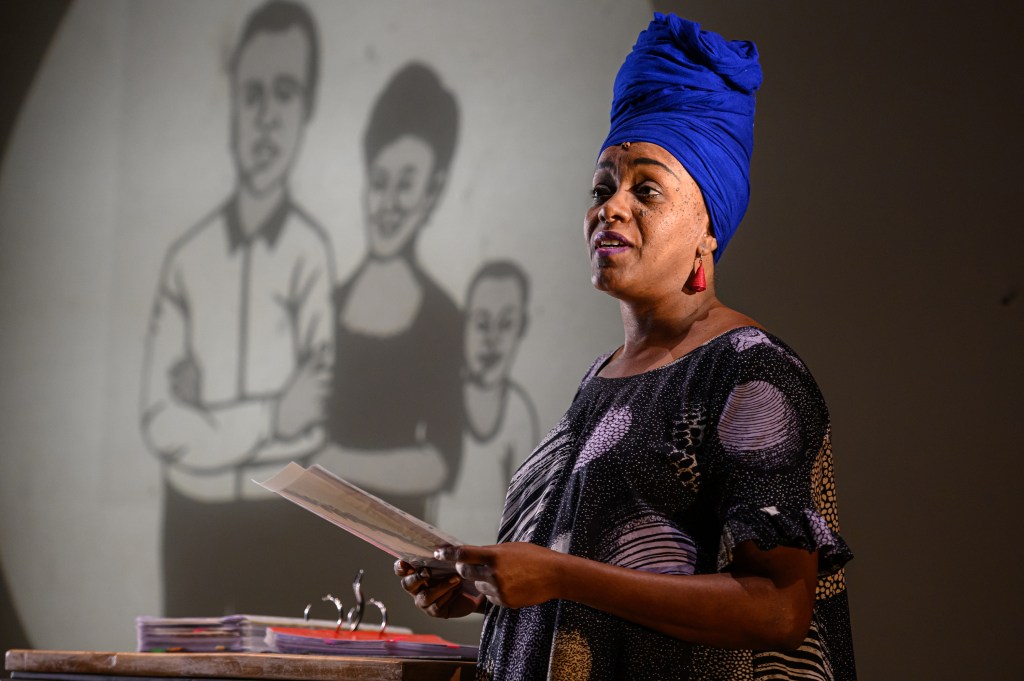


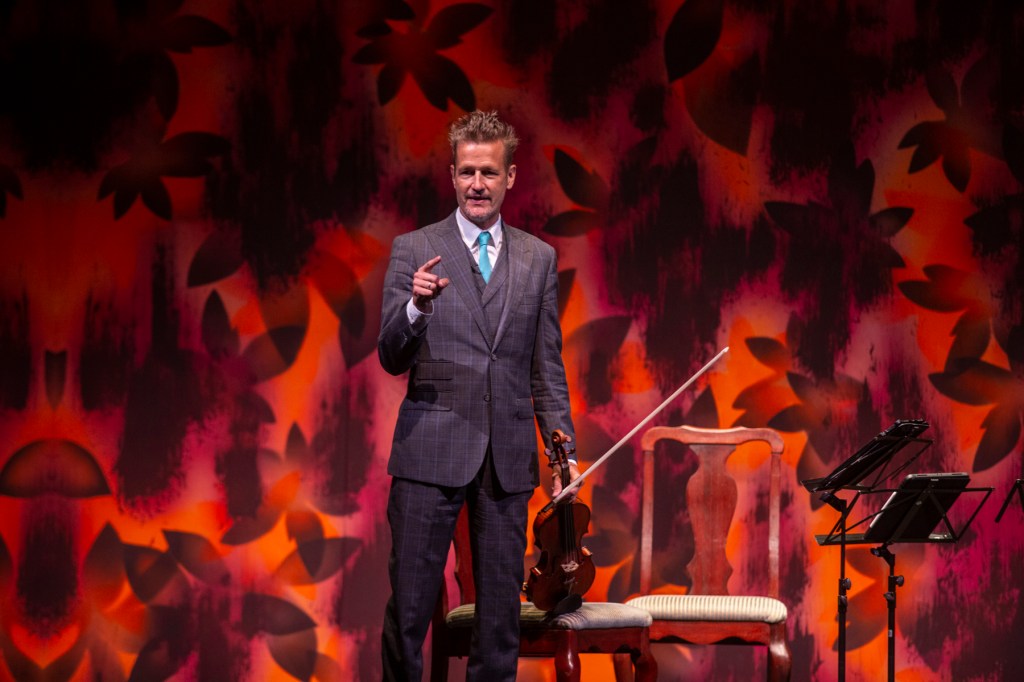
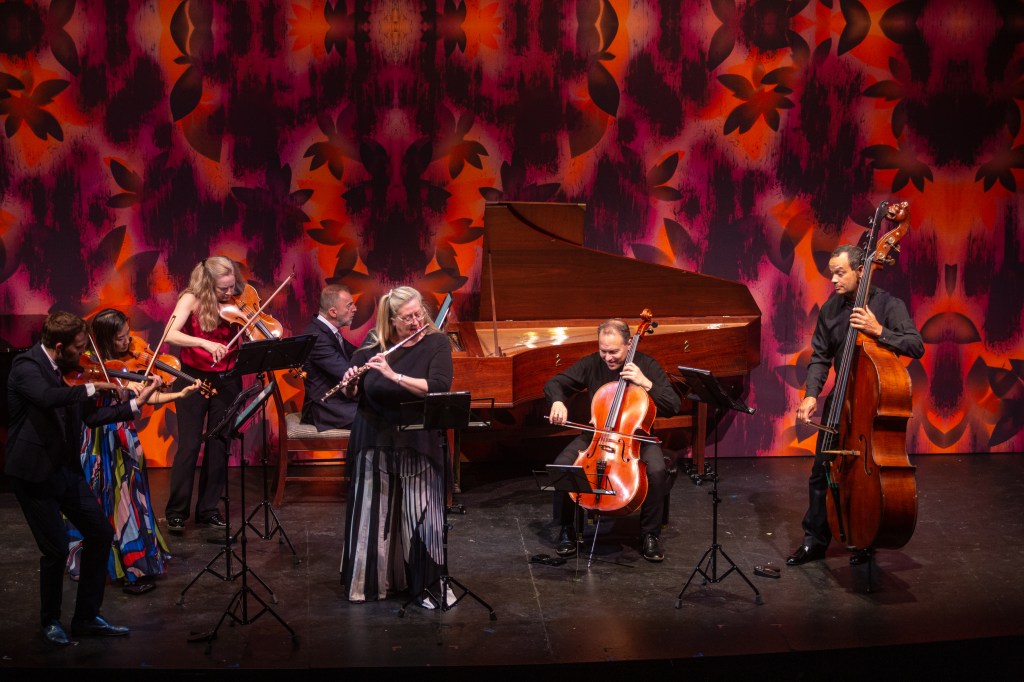
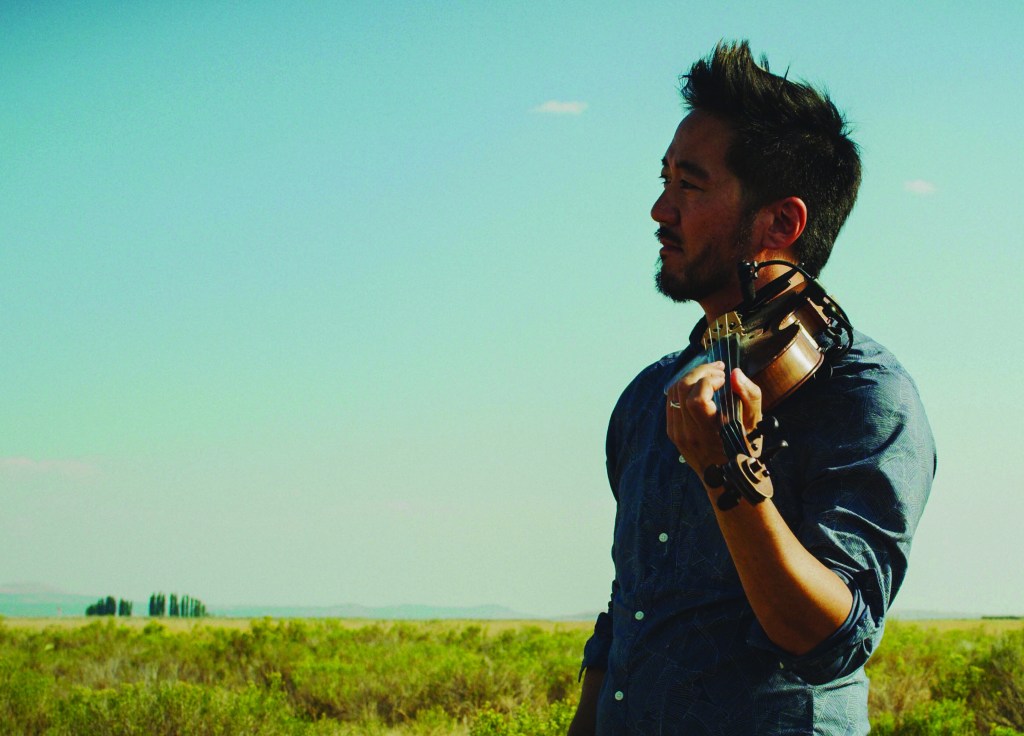

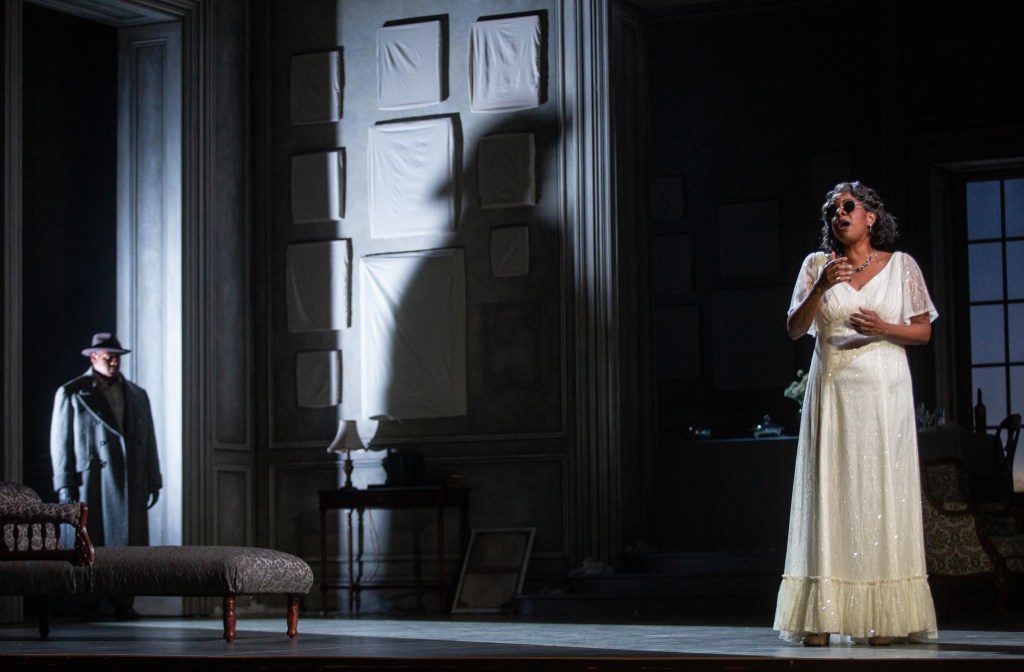





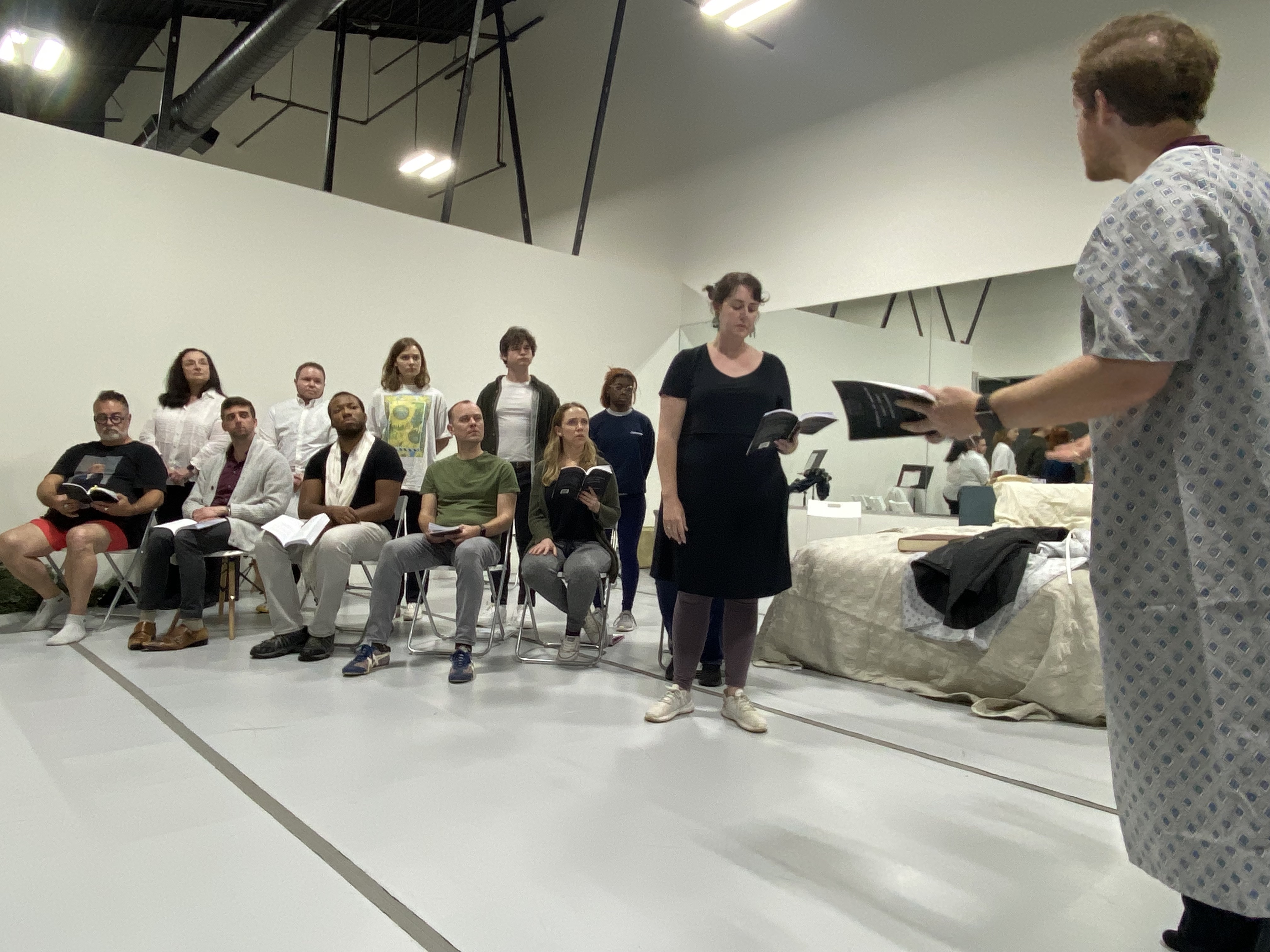

 Publicity photos for the Georgia Tucker Fine Arts Hall are delicious, showing a 145-seat black box with ample projection and soundbooth resources for a knockout Angels. As the new fringe theatre movement continues to gain momentum around town, the Tucker becomes another tempting place for it to hang out.
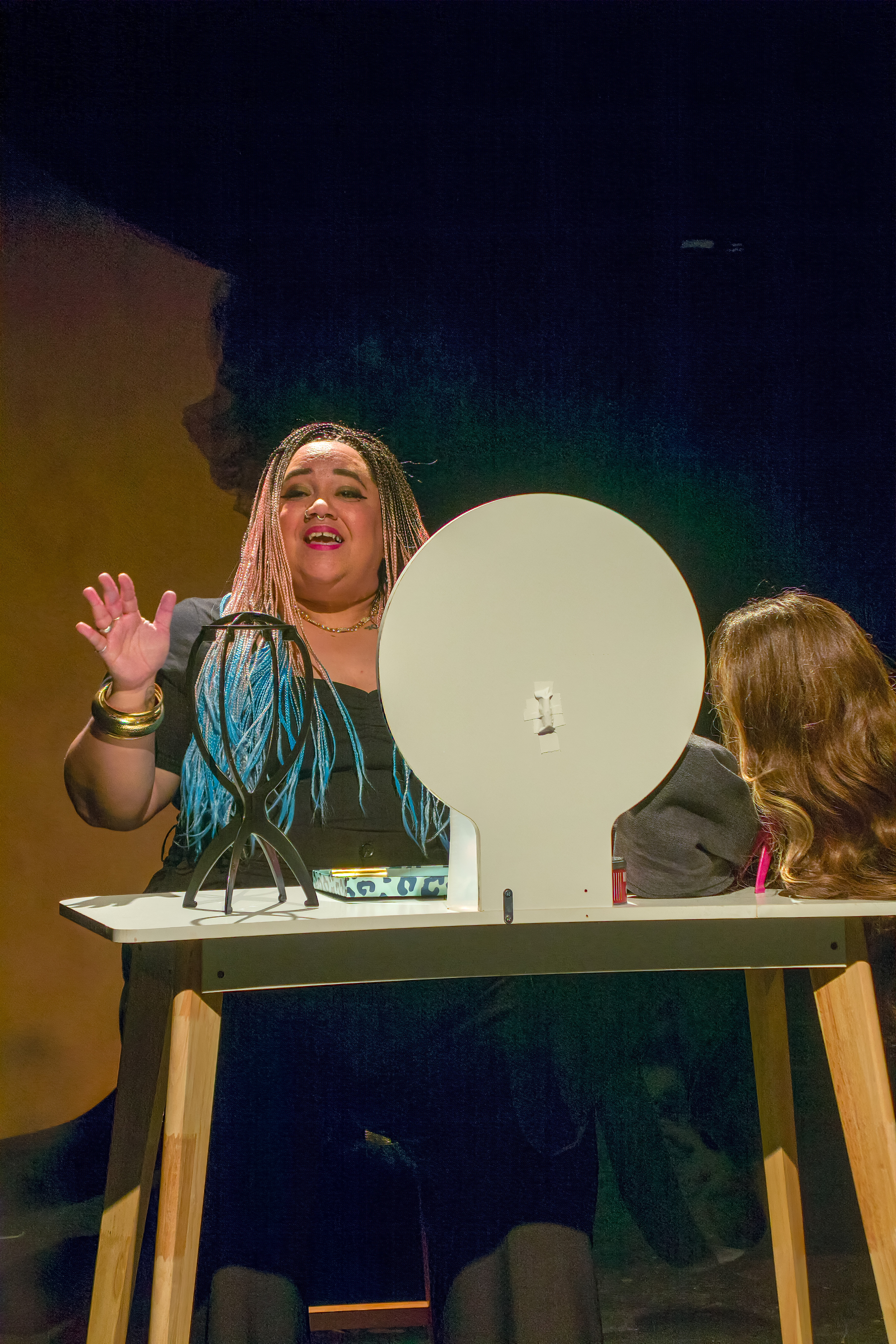


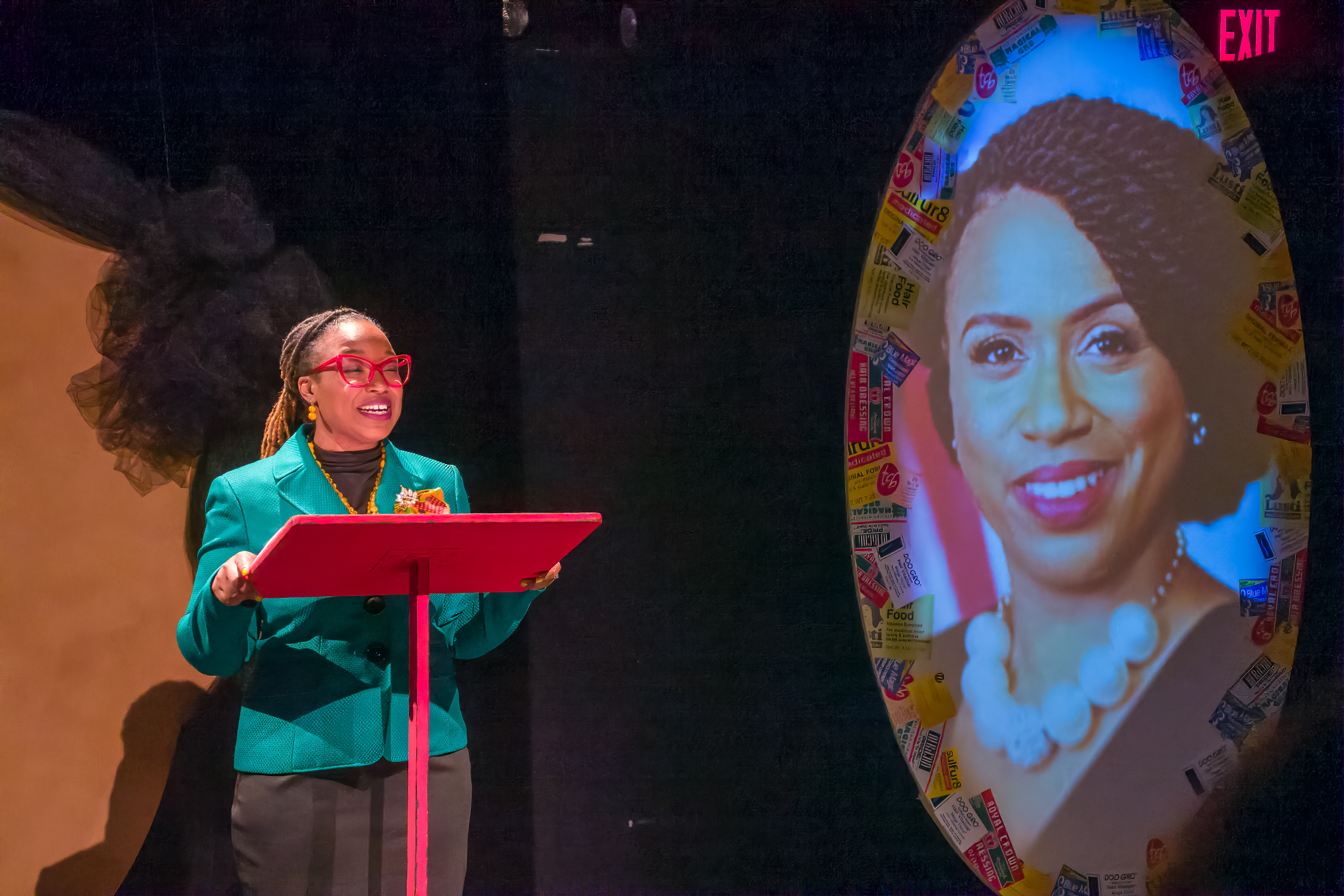


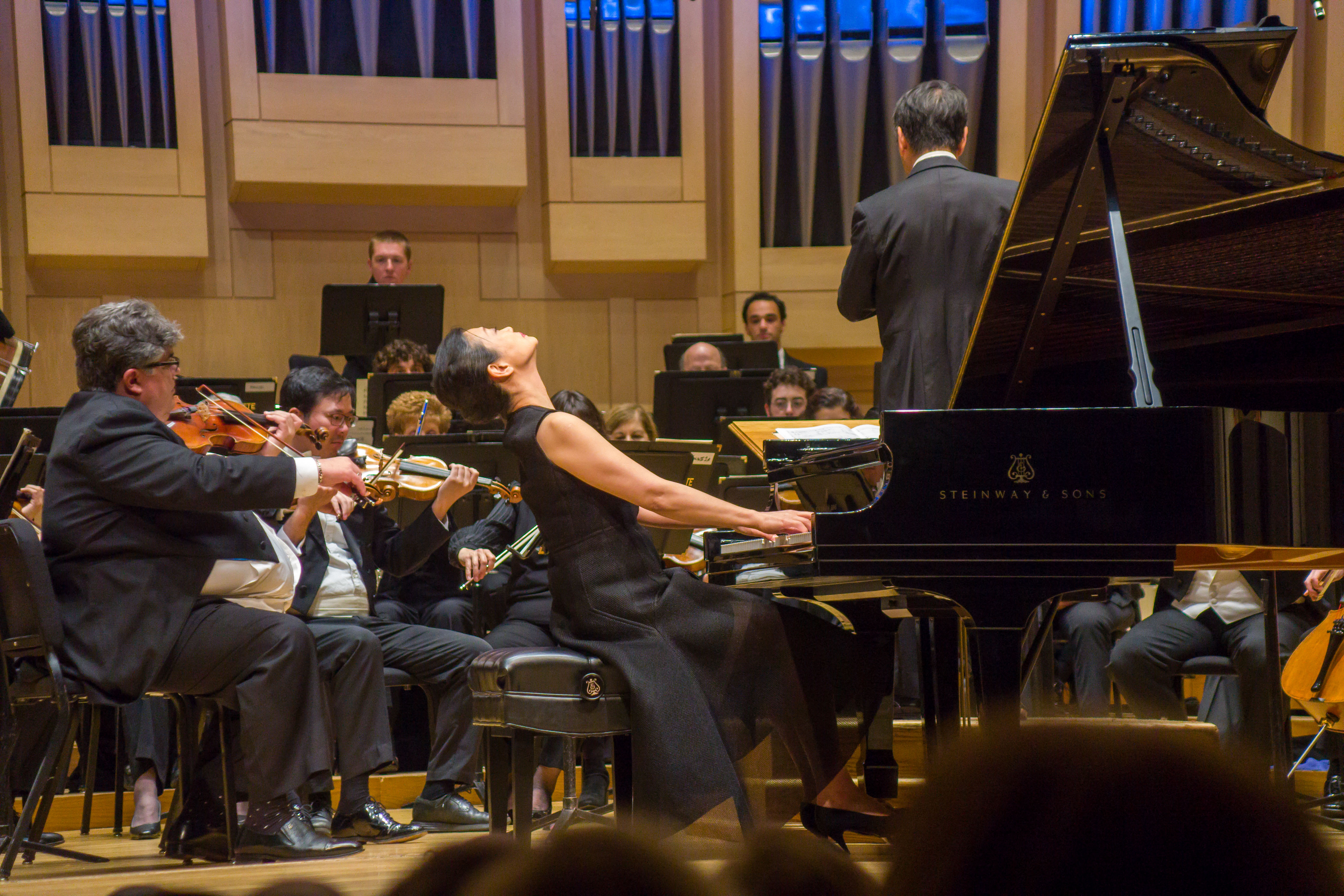
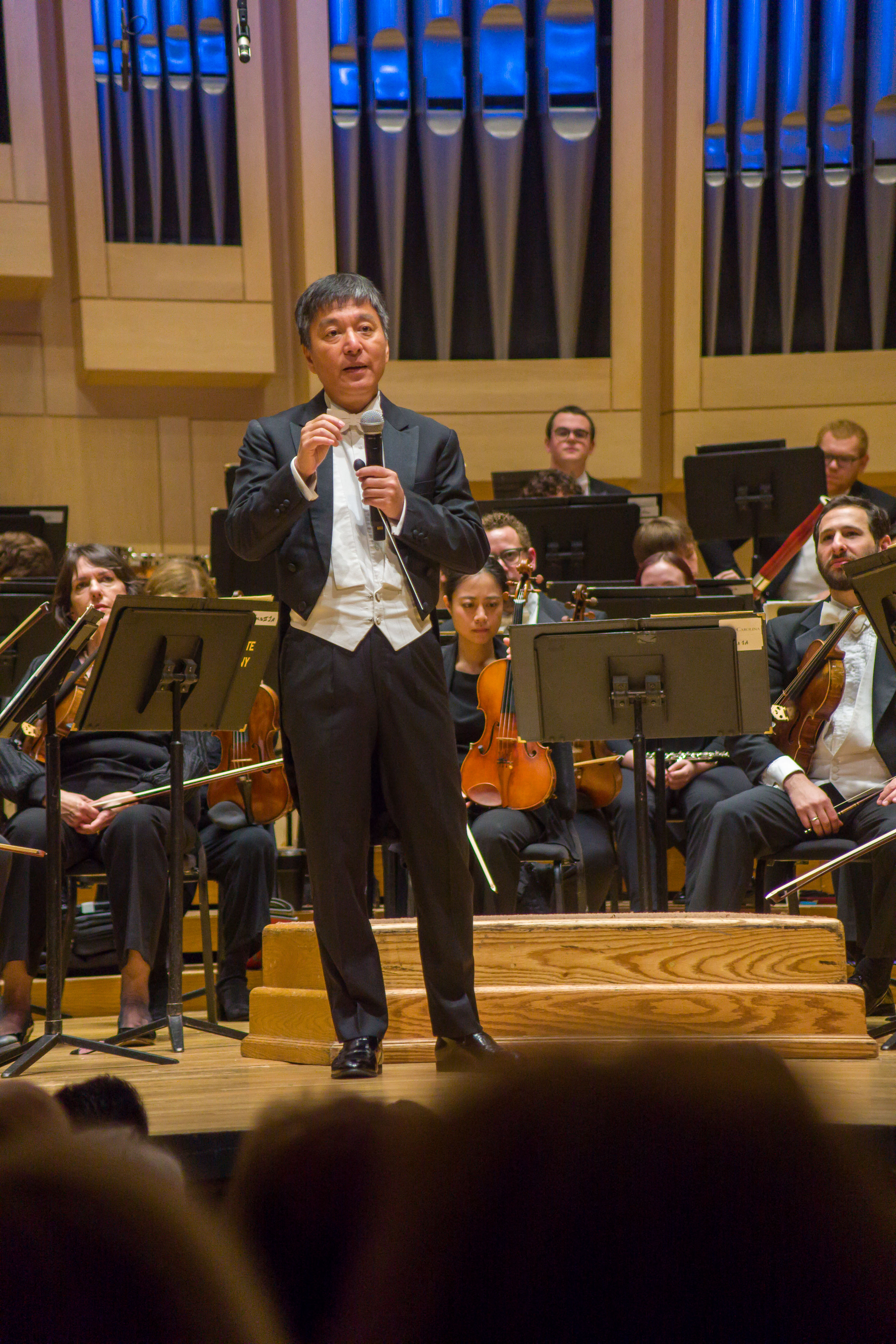


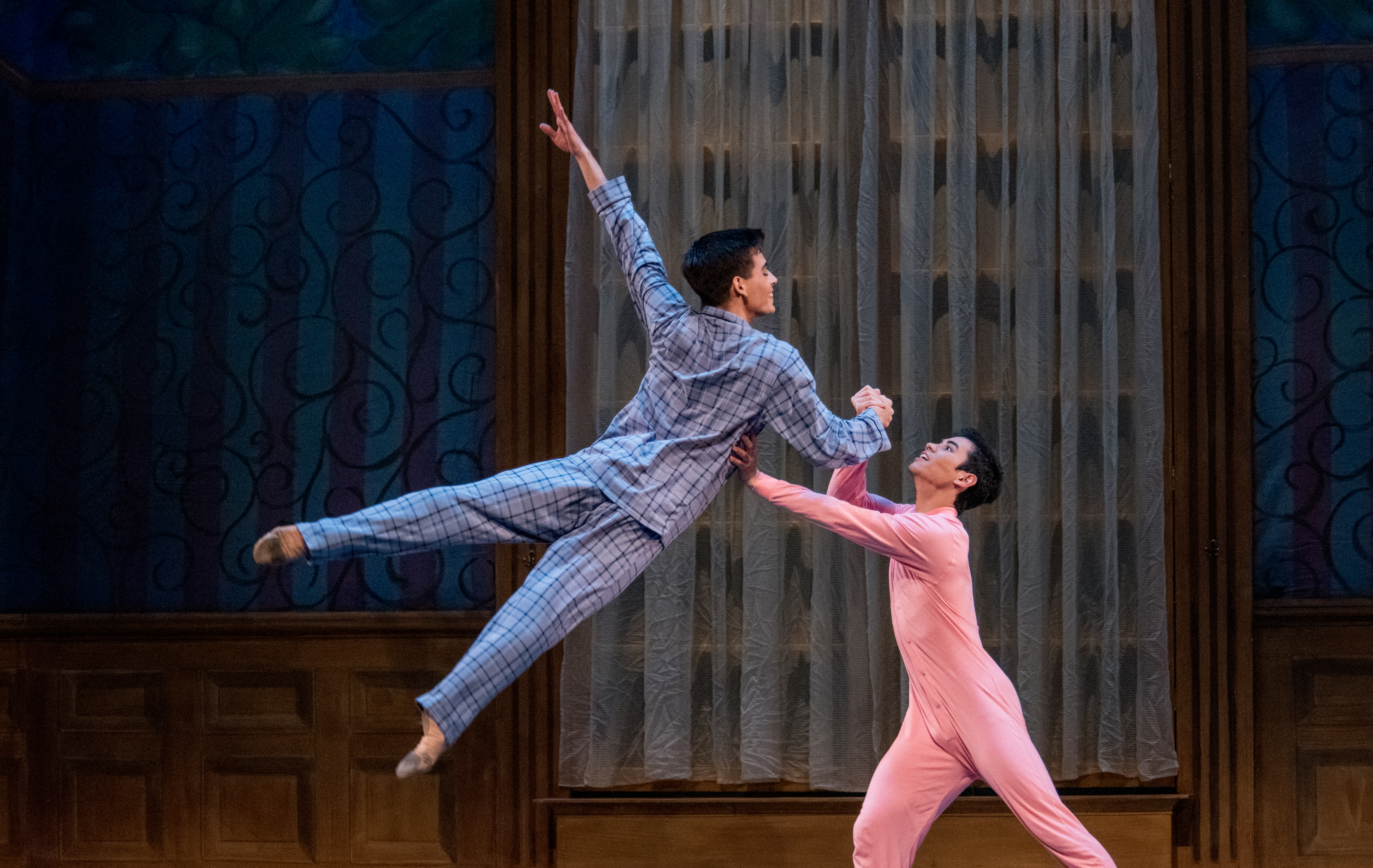

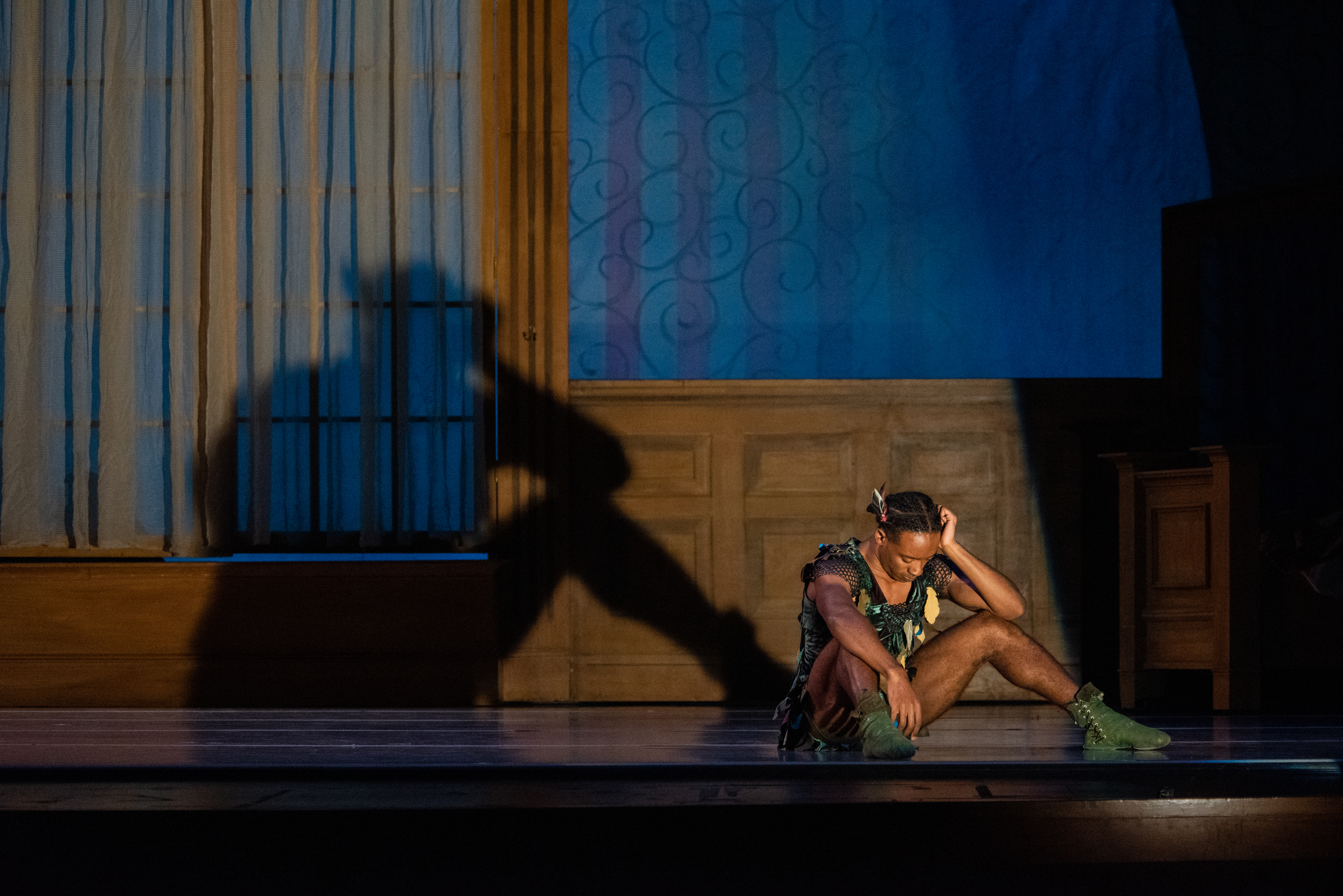


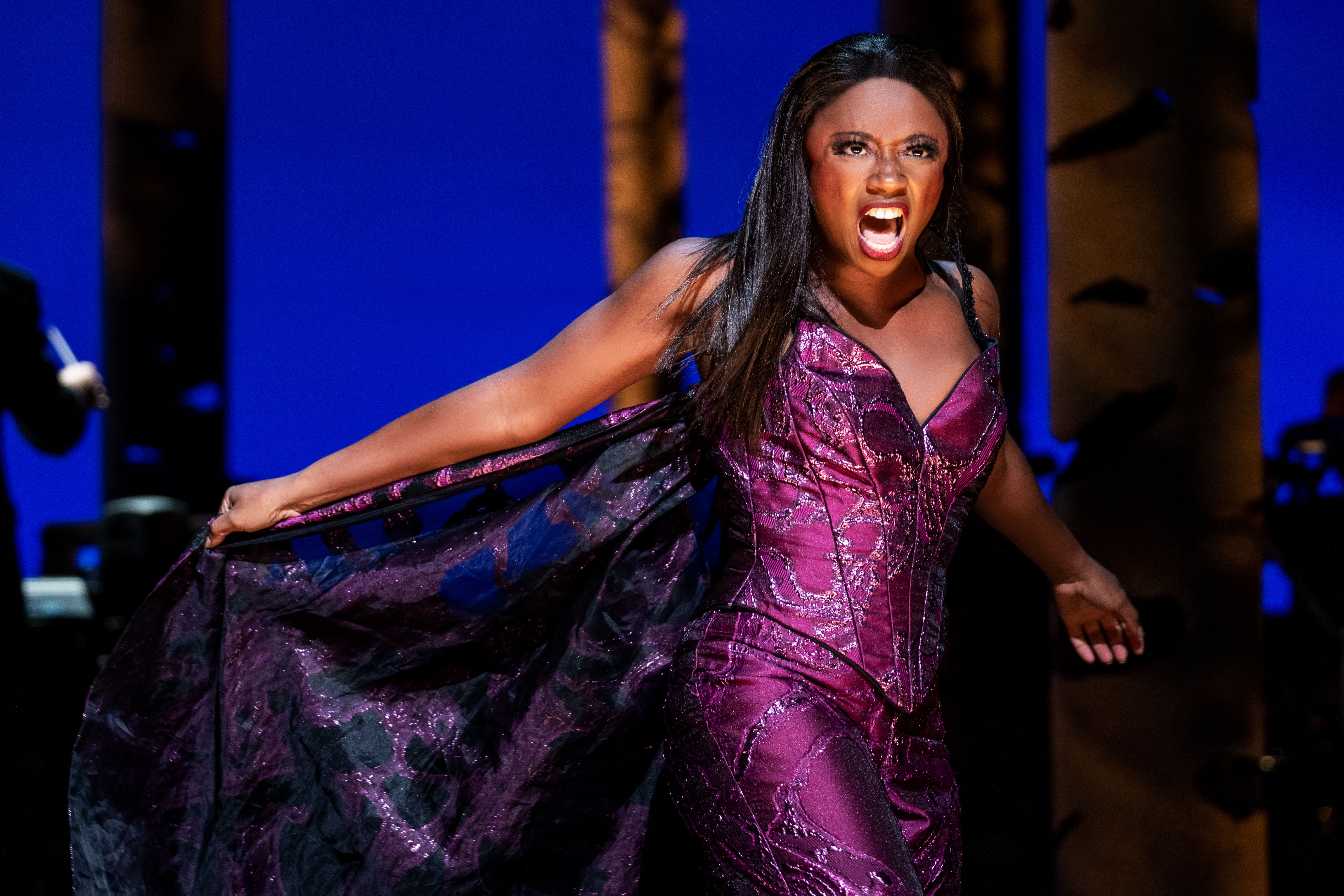
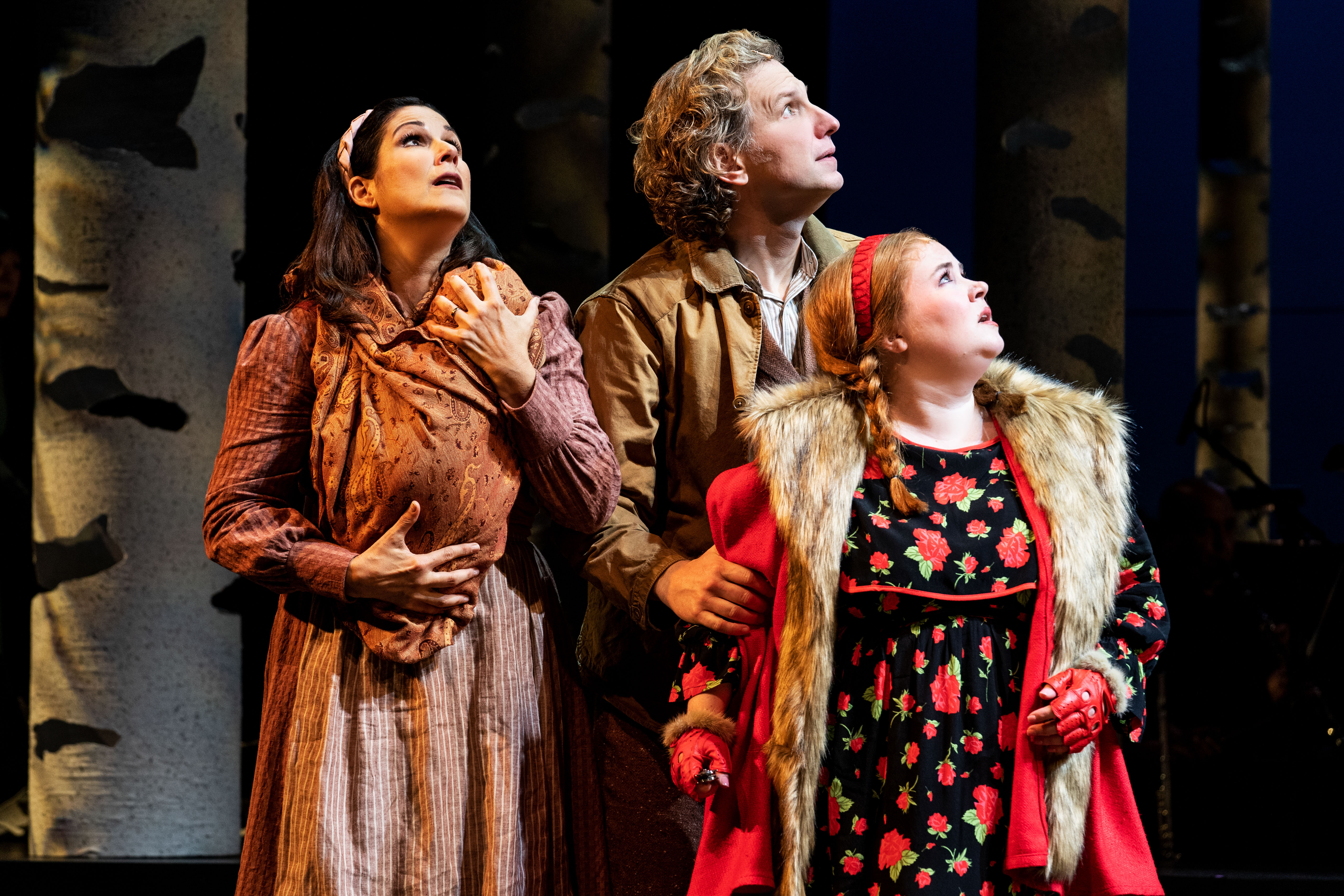

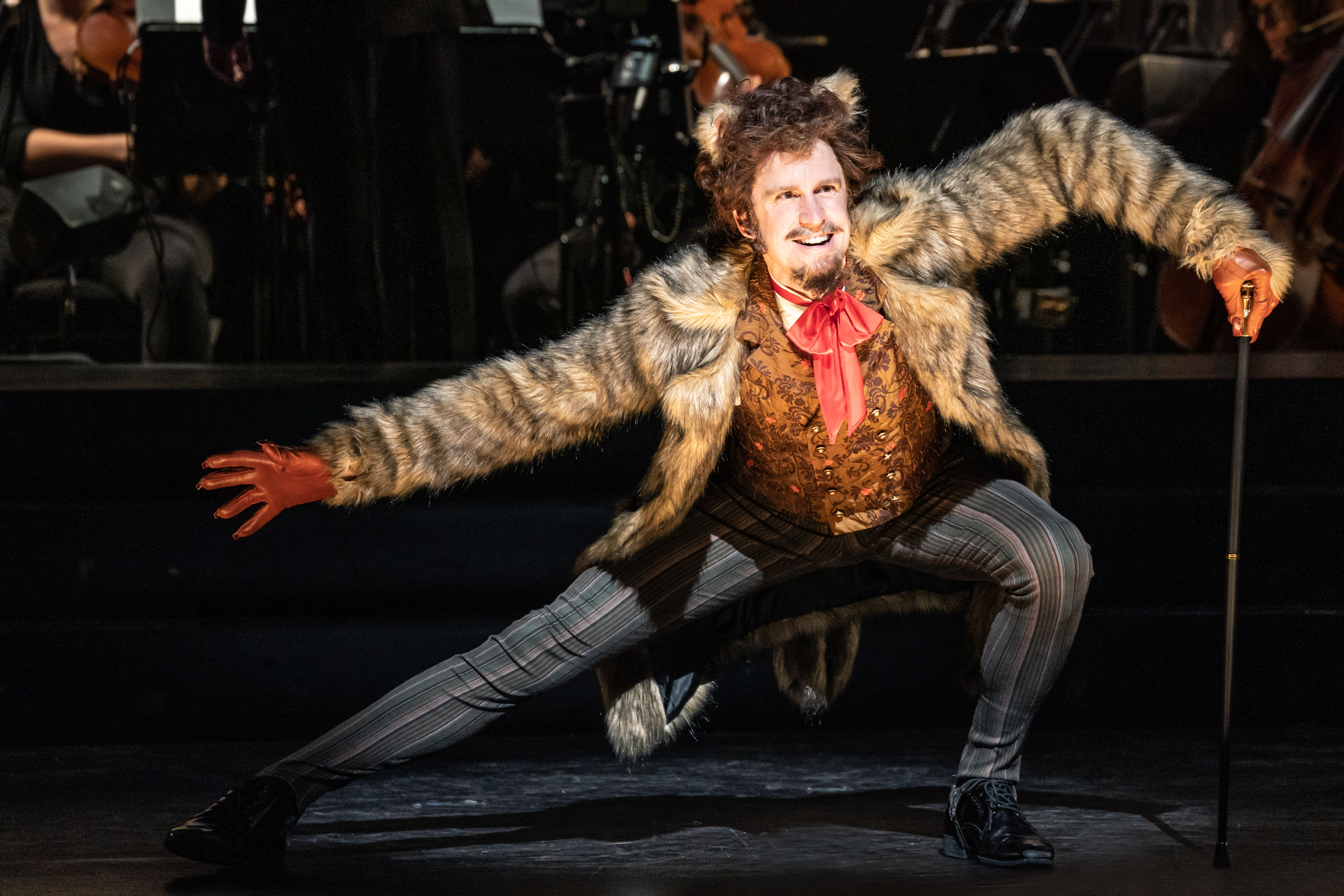


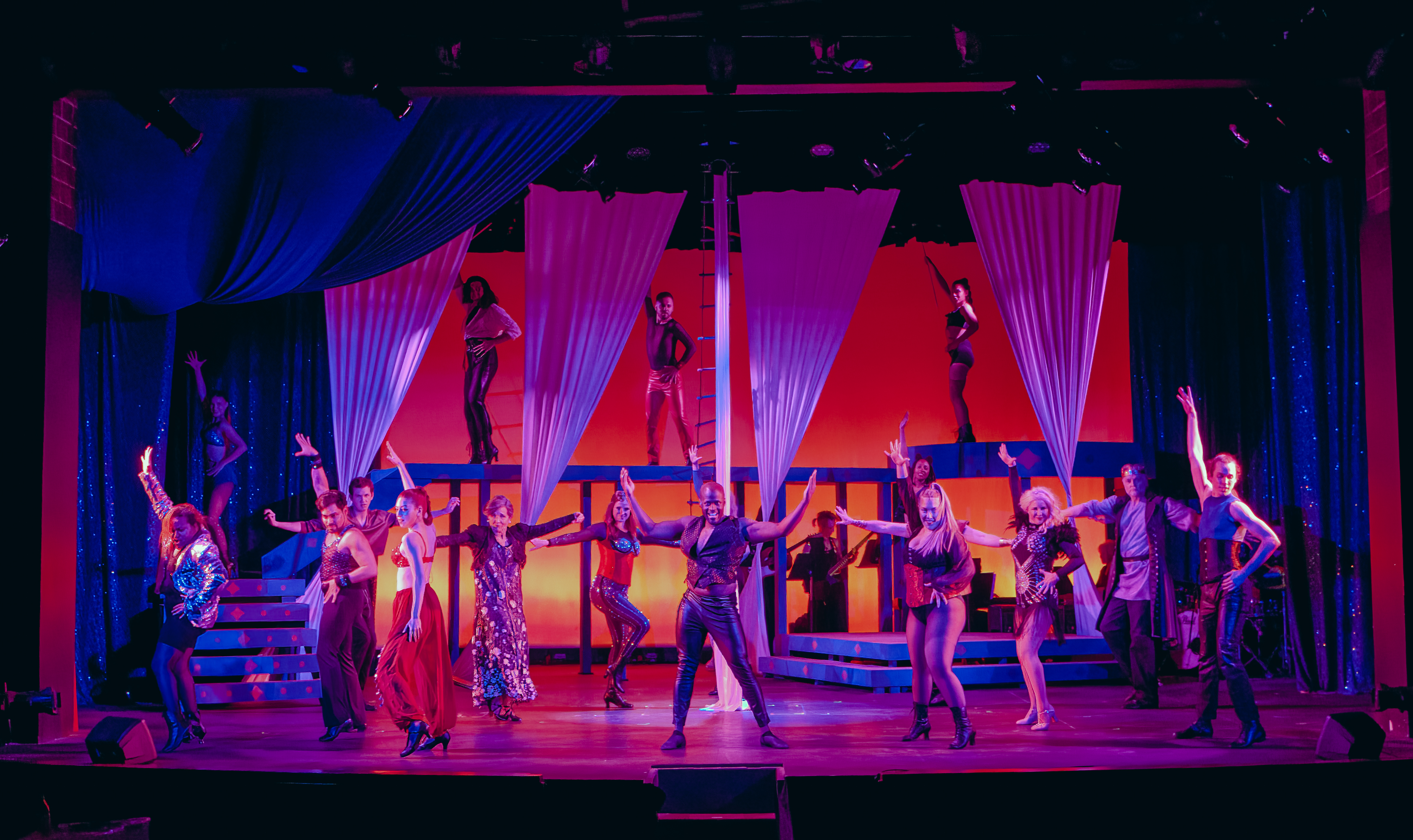

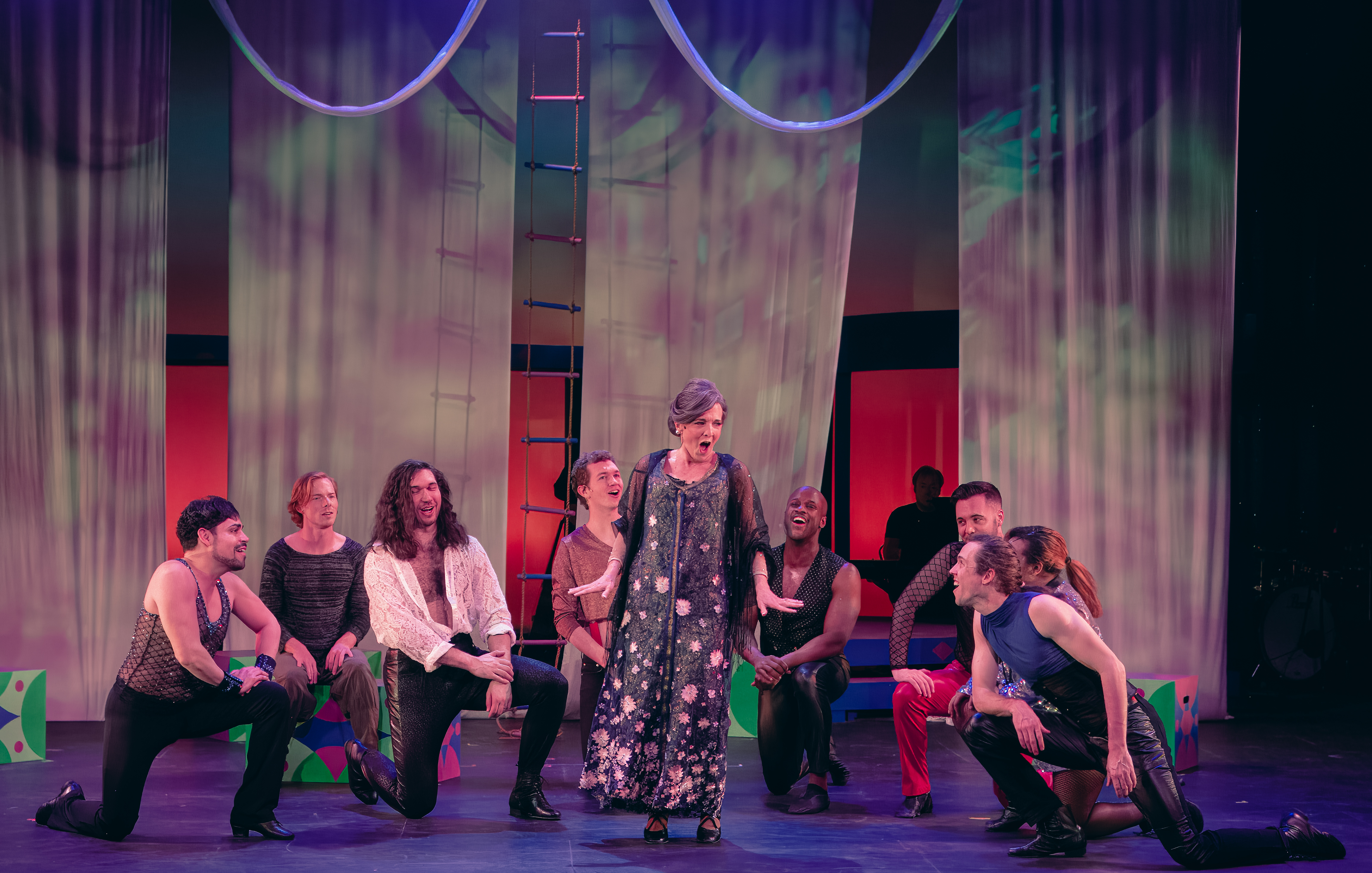


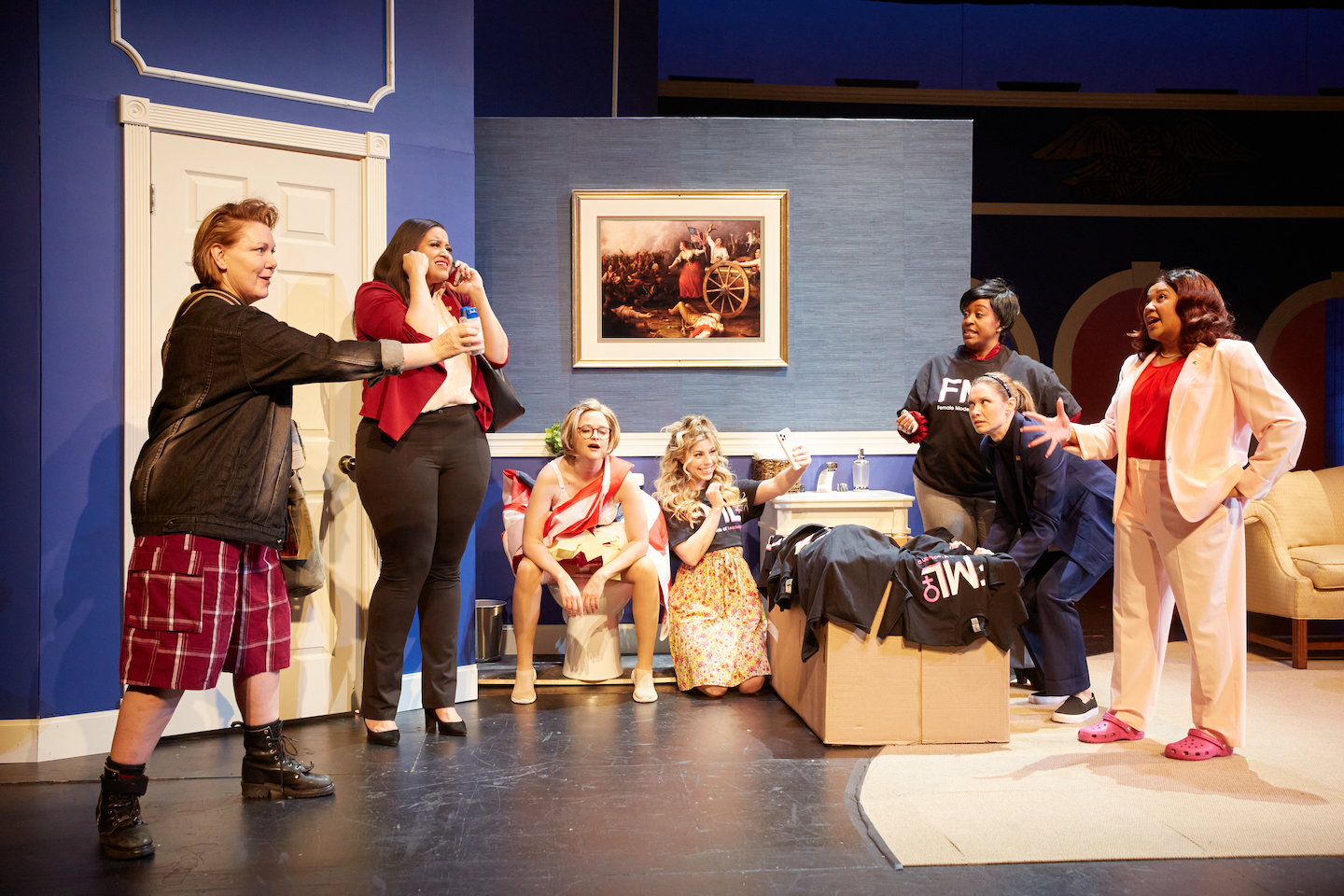


 Art on My Sleeve