
Still in Flux, Spoleto USA Runs Brash Gamut From Barber To Balloon Pops

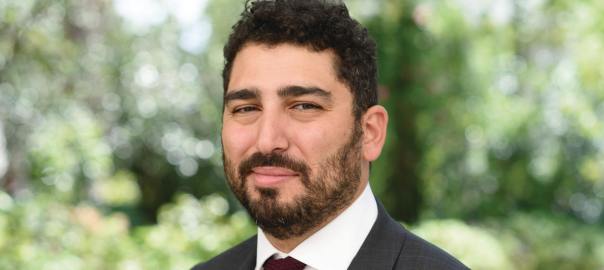

I first ran into Mena Mark Hanna at last year’s Spoleto Festival USA, when he was sitting near to us at Sottile Theatre, enthusiastically selling the merits of the festival to a total stranger. Almost immediately, I walked up to him and filed a complaint: my wife Sue and I couldn’t see everything! Again and again, we were forced to choose between missing the end of one performance or missing the beginning of another. Hanna, the new incoming general director at Spoleto, empathized, having faced the same dilemma.
So we were off to a good start, good enough when the calendar circled around for me to call up the Spoleto office and ask for 15 minutes of Hanna’s time after I received the green light from Queen City Nerve to write up a festival preview. To my surprise and delight, he gave me 40 and far more prime insights, experiences, and hype than I needed.
This edit of the complete interview contains all the overflow.

Perry Tannenbaum: How are you doing?
Mena Mark Hanna: Very well. Happy to have the conversation.
Yeah, this is really a treat for me too. So tell me how Spoleto is doing this year financially.
Well, knock on wood, we seem to be doing pretty well with ticket sales. And you know, we’re working to create a culture of belonging with the institution that goes into some of our accessibility efforts, like Pay What You Will and Open Stagedoor.
So I’m looking at that Pay What You Will initiative, looking into it a little bit more in terms of which events will be eligible, and it’s a pretty impressive list.
Thank you.
I was worried at first about the timing, but now I’m understanding that the timing may not have been in response to wanting to fill up houses so much as the fact that somebody, some anonymous somebody, wanted to launch this initiative.
Yeah. When you think about our society, right, we’ve got three types of institutions. We’ve got public institutions, local governmental you bodies and things like that. We also have private for-profit entities, publicly traded companies, and then we have nonprofits that kind of sit in between that public and private space.
And to me, we sort of fill in the gaps that our public sector cannot extend to our community and our private sector cannot compensate for. What that means is that we should be holders, we should be generators, we should be engendering public value for our community.

So Spoleto is not just one of the preeminent performing arts festivals. It’s also a place where people can have transformational experiences. We want to make that shared to a wider segment of our audience. We want to share to a wider segment of the public and a wider slice of the community of the Lowcountry in the greater Charleston area.
I believe very deeply in that mission. And I also think that that leads to a healthier understanding of some of the principles and values that are at the center and core of the art that we produce and create at Spoleto – principles of diversity, of access, of inclusivity. Those principles are really about engendering and creating a culture of belonging through the festival.
What art can do is that it can endow you with a new experience, an experience that you did not have before you took your seat. It can help create an understanding of another side that is normally seen by one perspective as socially disparate, as highly politicized, as a discourse that’s just way too far away. And it can break down that barrier through the magic and through the enchantment of performance.
Having those artists on stage representative of a demographic we wish to serve only takes us so far. We also have to lower the barrier of entry so that we can actually serve that demographic.
So is that a kind of a flowery way of hinting that you were in search of such an anonymous donor and pitching it in the way you were explaining it to me just now?
Well, this anonymous donor is someone whos also very passionate about these principles and about these core values at the festival. We can only do so much in order to make something like this offer to a wide range of our audience. I mean, it’s a significant amount of ticket inventory. It’s about $50,000 of ticket inventory.
Not only is that a significant amount of ticket inventory, but we have to create our own private landing page for it. There’s community outreach and initiatives that go into it. There is a whole set of staff and human resources that go into creating a program like this and running a program like this effectively. And that also takes money. So it’s not just the ticket inventory that takes money. It’s running the program.
And the hope is that we would be able to do this in a way where we would be able to offer this to our community without really losing money on it. And that’s where the generosity of this anonymous donor really shone through. And it’s someone that I think is an incredible person to be supporting the festival.
Yeah, it must be. I mean, kudos. And many thanks, I should say.
Thank you.
Is this something that even comes too late to be a part of the festival program booklet? Or is there like a special place that will be set aside for acknowledging this new program?
I don’t know if it’s going to be in the program booklet, but it’s definitely a program that we will keep up in future years.
Ah, OK! That’s through the same anonymous donor, or are you just going to carry the torch from here on in?
Well, carry the torch from here on in. I haven’t spoken with the anonymous donor about future years.
So is this like a combination of you and this donor putting your heads together and coming up with this concept or is this something that was brought fully to you, concepted by him or her?
No, no. We brought this idea to the donor.
Ah, okay. That sounds terrific. So are you feeling a certain kind of anxiety about actually coming out with a festival that has no more legacy elements in it, especially after Omar won the Pulitzer Prize?
You know, the great thing about 2022 is that it really was a collaborative effort between myself and Nigel [Redden]. And even Omar was a collaborative effort between myself and Nigel. When I came in in 2021, we had a significant production consortium of co-producers and co-commissioners for the piece.
And there were things about the piece that really needed to be addressed because the piece had sort of been in this kind of COVID stasis. So the way, you know, we think about it that even there, there was kind of a handover from Nigel to me about making sure that Omar can really work for 2022 – and that was exciting.
I mean, it’s kind of incredible to be someone who comes from Egyptian parentage, speaks Arabic, grew up sort of fascinated by opera and stage work, and spent their career in opera and was a boy soprano, to then have this opportunity to bring to life the words of an enslaved African in Charleston, South Carolina.
And those words are Arabic!
That’s a remarkable, strange serendipity for me to have been in that position of helping steward that piece to life. So it really was very much a collaborative effort in 2022. Even 2023 will have some things that are kind of holdovers from the pre-pandemic era or the canceled season of 2020. I mean, the idea of bringing Jonathon Heyward down was something that Nigel had worked on for the 2020 season as well.

So I don’t think you can point at one thing and say this is Nigel, this is Mena, this is Nigel, this is Mena. I think that there are a lot of different sorts of personalities and curators and thinkers that touch something like Spoleto Festival. It’s very, very much a collaborative entity, the way we create and curate the season.
I have expertise in music, and I have a lot of expertise in opera and maybe I have some secondary expertise in theater, but I certainly do not know enough about all of the performing arts to know every single thing so intimately wherein I would be able to curate every single chamber concert performance, every single orchestral performance, every single jazz performance.
It’s very, very, very diverse and we have a great team at the festival with our lead producer, Liz Keller-Tripp, our jazz curator, Larry Blumenfeld, our director of orchestral activities, John Kennedy, and our choral director Joe Miller. Between all of us, we curate together and try to come up with a spectacular entity that is Spoleto Festival USA.
I mean, there’s a reason why you don’t see many producing multidisciplinary festivals. They don’t really exist.
Because it’s really hard to create something like this collaboratively and source all of the right expertise in all of these different disciplines and then kind of find the right artists who could work in between those disciplines. Someone like Jamez McCorkle, for example, who’s doing A Poet’s Love this year, which is wonderful.
It’s a difficult, strange operation. It’s different from an opera company, a dance company, a theater, so on and so forth. It’s all of these things combined, and then it’s sort of event-oriented and time-delimited. So to bring these things together, it’s really about, you know, all of this being greater than the sum of its parts and that’s due to some great expertise that we have at the festival.
Yeah. I have two questions about the formatting of the festival. One is whether the clearly discernible thematic structure of last year’s festival, bringing the East or Middle East to the West, has been repeated in any way that I have not been able to so far discern in this year’s festival. And second, whether the position that Geoff Nuttall held is just being kept vacant for this one festival or whether he’ll be replaced by next year?
So let me tackle the first question first. I am not a fan of really obvious themes that kind of are pedantic and hit you over the head. Last year was a unique case insofar as it was the first festival coming out of the pandemic, and there was a lot in that festival that also addressed some of the concerns that were raised in the pandemic that have to do with our own societal dissensus and our own inability to reckon with our past culturally, historically, politically as a country.
And Omar is a part of that, but it was only a part of that. It was maybe the centerpiece of that, but a lot of that just kind of overflowed outside of Omar. The idea of centering Africa as also an origin point of the United States is something that will always be a particular concern of the Spoleto Festival because we’re in Charleston. And Charleston was the port of entry for the Middle Passage.
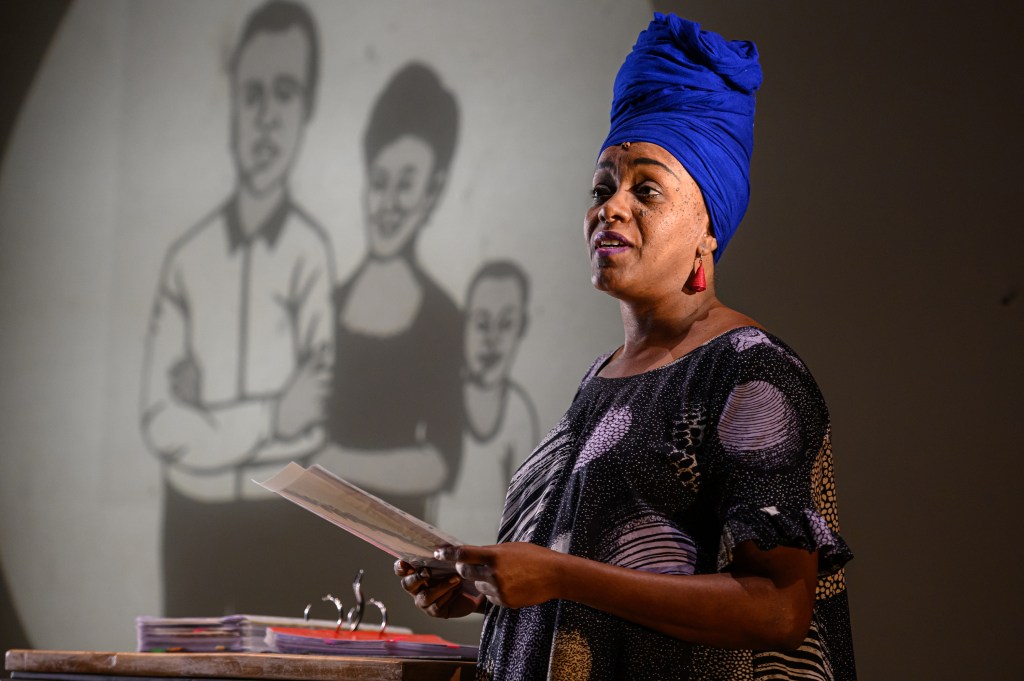
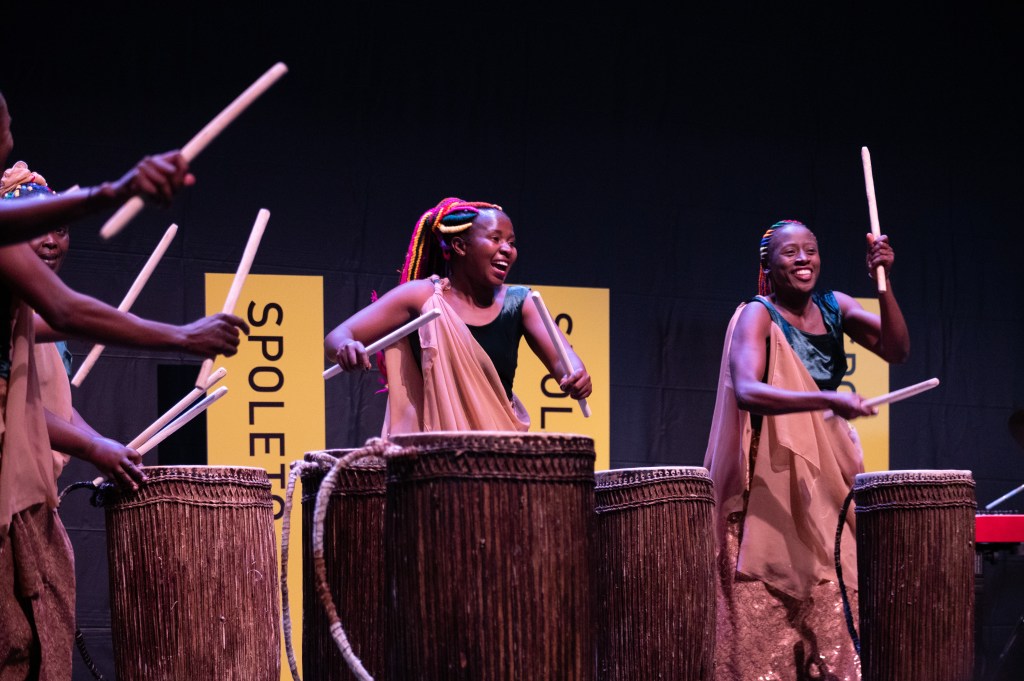
Charleston has at its core an incredibly rich Gullah-Geechee-West African-American tradition that is part of the reason this is such a special, beautiful place to live in with its baleful history. So I think that you see that this year, you see that with Kiki [Gakire] Katese and The Book of Life, you see that with Dada Masilo and the Sacrifice, you see that with Abdullah Ibrahim and Ekaya.
You see that these are also artists from Africa that are engaging in their own social, cultural and political discourses. That Kiki is engaging with how a country tries to reconcile with its recent, terrifically horrific past of the Rwandan genocide as someone who grew up Rwandan in exile. You see that in the work of Abdallah Ibrahim, who was really one of the great musicians of the anti-apartheid movement, who composed an anthem for the anti-apartheid movement, was in a kind of exile between Europe and North America in the 80s.
Then when he finally came back to South Africa for Nelson Mandela’s inauguration, Nelson Mandela called him our Mozart, South Africa’s Mozart. So you see that with these artists, how they are engaged in their own social, cultural and political discourse, and how they are trying to reckon with their own past. And that’s something that is an important lesson that we want to take on and learn in a place like Charleston.

We can look to African artists and understand that they are also part of this place and that they are also part of America’s origin story. It’s not just about Europe and North America. So I think that’s always going to be something that’s on prominent display at the festival.
But even more so than that, this is a festival that, if you look at a kind of undercurrent thematically, there is unity there. I always want the festival to kind of have a cohesiveness, a cogency, without necessarily saying, “This year we are talking about crime and punishment,” or “this year we are talking about love’s labour’s lost” or something like that.
No, I want there to be a kind of cohesiveness without necessarily us being able to see what the theme is. That’s what is kind of exciting and unifying about putting all of these different pieces together. If there is something that unifies a lot of these pieces, it’s about us understanding that we are telling stories from our past, some of them the most ancient stories that we have in our intellectual heritage. We are looking at these stories with a different sense that takes on the reverberations of today’s social discourse.
I mean, An Iliad going back to the Trojan War is as much about war and plague then as it can be today with the reverberations of Ukraine and the pandemic. Vanessa, which is an opera that was premiered in 1958 and then brought back to the festival in 1978, is reinterpreted here through the lens of a remarkable female director, Rodula Gaitanou. And there is a quite strange ambiguous moment in the opera of either an abortion or a miscarriage.
What does that mean now when we are looking at a renewed political assault on female autonomy? So these stories take on new messaging, new reverberation in 2023. And we need to retell these stories with the new lens of today.

You look through all of these pieces, The Crucible, The Rite of Spring, Vanessa, An Iliad, even Dichterliebe by Schumann, and it’s all about taking those stories and kind of having a renewed understanding of how we tell those stories and who we are telling them to, and who is telling those stories.
About the second point, chamber music. Yeah, I think all in due time, there will be new leadership in the chamber music series. I mean, Geoff was this remarkable figure who, speaking of storytelling, was perhaps one of the most incredible practitioners of his practice insofar as making chamber music accessible and having us sort of like look at Brahms, Beethoven, and Haydn – maybe not Brahms, he didn’t like Brahms very much – with a renewed sense of understanding, and he did that by sort of giving the story of chamber music in America a completely new life and a new understanding.
I became really close to Geoff over the last two years. He was actually on the hiring committee for me, and he was one of two people that would report to me on the hiring committee, and it was a committee of ten people. I largely took this position because Jeff convinced me to. He convinced me to because he was so excited about what we could invent, what we could create together.
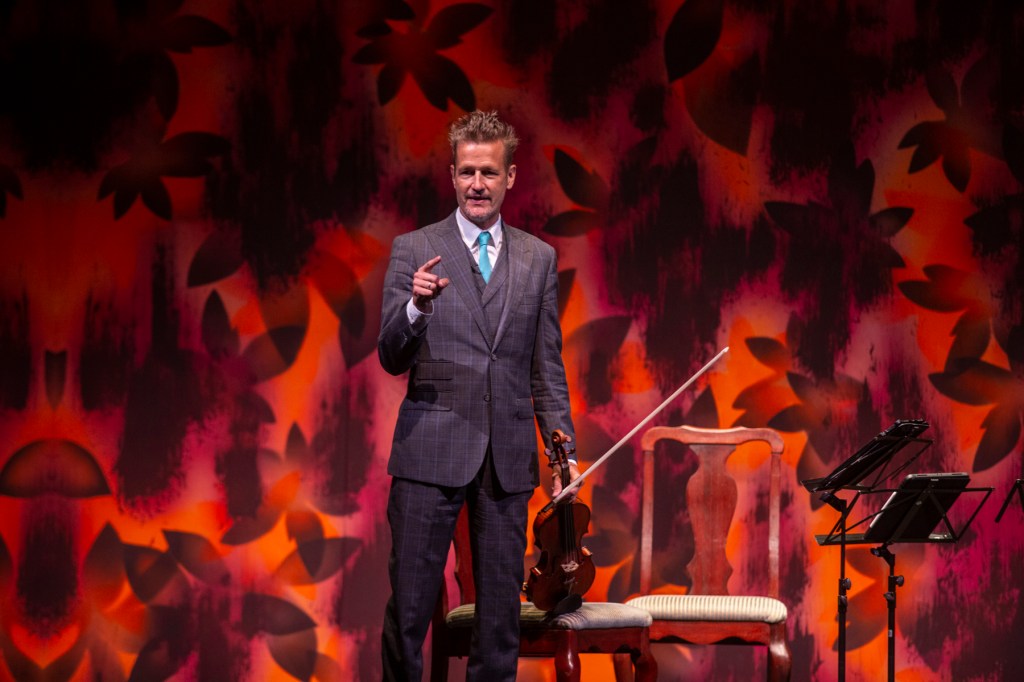
He was so excited by the interdisciplinary-ness of the festival and how that could actually spill over into chamber music. We at least got one festival together. We started to make changes.
At least we had one festival together, but it’s tough, man. This has been a really, really tough year without Geoff. It’s been a year of enormous highs and lows. It’s been a year where the festival won, helped to produce and create an opera that did win the Pulitzer and a year where it lost its lodestar in Geoff.
It’s been a very, very, very difficult year. We are making sure that we are celebrating Geoff through the festival. The festival opens with a celebration of all the music that he loved and in the grandest statement possible at the Gaillard with orchestra and chamber music members and so on and so forth and different soloists.
Then all through the chamber music series, it’s going to be a celebration of Geoff through the people who loved him the most, his chamber music family. People that you know: Paul Wiancko, Pedja Muzijevic, Livia Sohn, Alisa Weilerstein, Anthony Roth Costanzo. That was his family. They will all have an opportunity – of course, also the St. Lawrence String Quartet will be here – they will all have an opportunity to celebrate him and live and love what Geoff was so great at by performing and playing together.
So will there be chamber music at the festival in the future? Of course. The music will continue to rock at the Dock.
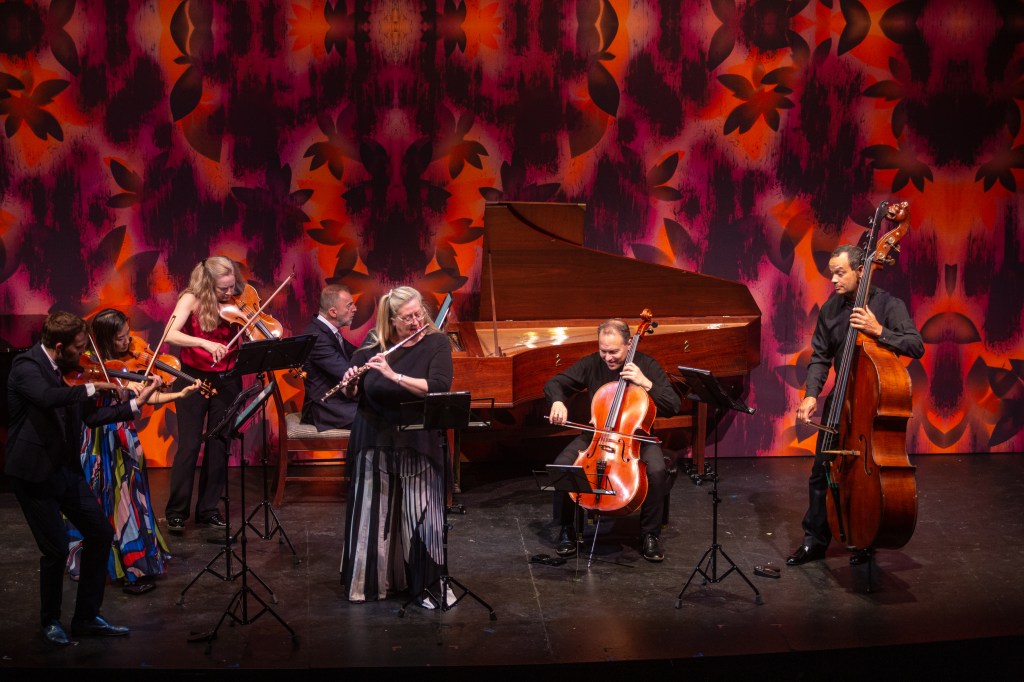
I was more specifically interested in who will replace Geoff in his hosting chores, and I guess attached to that question, whether or not it might be time to step back and ask yourself if there isn’t a lot of room for improving the diversity of the people who are in charge of the various music departments at Spoleto, who seem to be conspicuously white and male, and remembering that Nigel stepped down because he felt he was part of that pattern.
Yeah, at the very least, I’m Arab. No, I think Perry, you’re 100% right. To me, the important thing is that we don’t put someone in a place out of a sense of performative duty. We put someone in that place because they are going to be of great accretionary value to the festival, because they espouse the ideals of the festival, and because they are the best person to be in that position.
I’m the first to say that I would balk at any kind of jingoistic declaration that I’m in such and such position because I’m an Arab American. I think people of color want to be recognized for the work that they do and often, the structural sort of biases that they have to overcome in these imperfect institutions in order to get to those positions.
To me, it’s about the best person, and of course, making sure that we look extra hard to find some of those people that may have been swept under the rug by these implicit biases that exist in our imperfect institutions. We’re definitely going to take a keen look at chamber music over the next few years. Well, actually, through this festival, let me say, and into the summer.
And yeah, there will be some structure that will replace Geoff. Additionally, it’s important to mention that this year, we did not want to put someone in place immediately to replace Geoff. We didn’t think that was appropriate.
We wanted to make sure that this was a celebration of Geoff, and that the people who were celebrating him and honoring him were doing so by performing at the Chamber Music Series, helping to co-curate the Chamber Music Series, and helping to emcee the Chamber Music Series. This year, we decided to make that a collective effort in his honor.
But if there is a template in the Chamber Music Series about who does host, until now, 2023, the hosts have all been people who occasionally perform on the Dock Street stage. So do you feel locked into that?
Oh yeah, I don’t think we’ll peel that back. No, no, no, no, no. Because I think one of the important things is actually the ability to host Chamber Music and make it feel approachable and intimate. That should come from a practitioner of Chamber Music, someone who could actually perform it on stage.
Yeah, bravo. I was hoping I wasn’t misinterpreting what you were saying. Like you could have done a nationwide search for somebody else.
No, no. Thank you for the clarifying question. There’s no way we’re going to hire John Malkovich to host Chamber Music. That’s not the vibe.
And the great thing about Geoff is that he was able to demonstrate the pieces effectively as such a great performer. And that’s what made that Chamber Music Series, and that’s also true of Charles Wadsworth, and that’s also true of Leonard Bernstein. That’s what makes the great communicators in classical music great, is that they can sit there, they can communicate it, they can perform it, and they can do so without any compunction or any sense of superiority.
For sure, the people who will be hosting Chamber Music this year and into the future will be practitioners of Chamber Music and people who are playing in the Chamber Music Series.
Hooray. So what do you think, or is it dangerous to say what you think the highlights of Spoleto 2023 are?
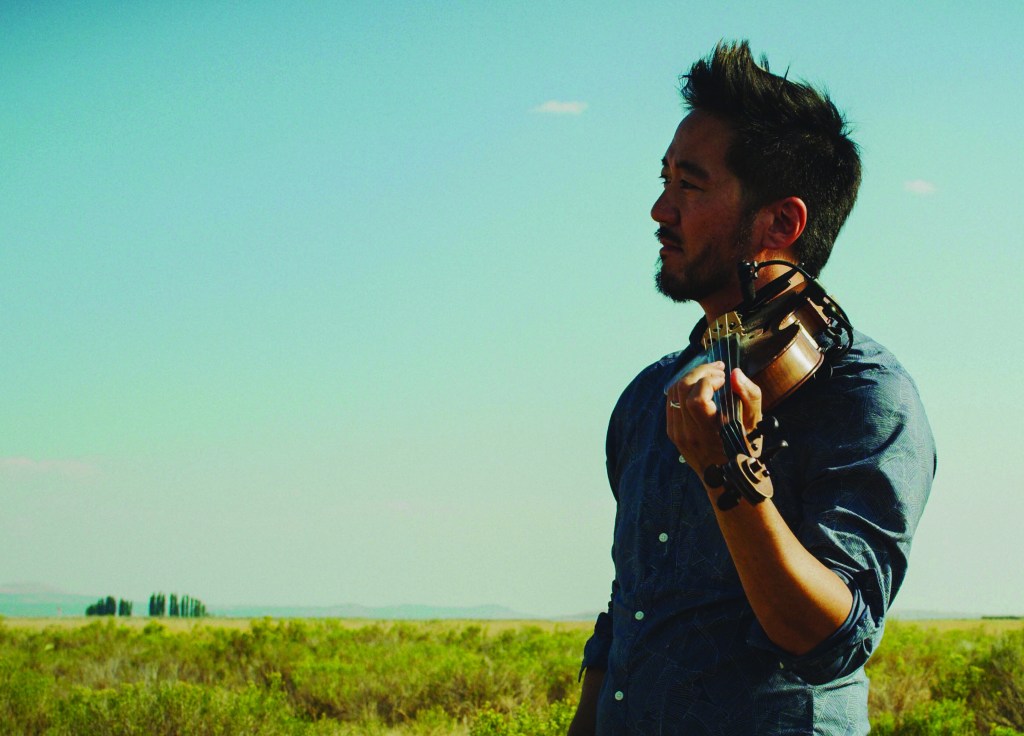
Well if you allow me a kind of punchy suggestion as a general director, which is very carefully branded and thought through, my suggestion for a first-time participant would be to see two things you like and feel comfortable about seeing, maybe that’s Nickel Creek and Kishi Bashi, and two things that are really pushing the envelope for you. So maybe that’s Dada Masilo and Only an Octave Apart.
Personally, I’m extremely excited about A Poet’s Love, which is a world premiere project we’re doing with Jamez McCorkle, who was Omar in Omar last year. And it’s partly exciting because you have the sheer unadulterated joy of seeing this piece be performed by a single accompanist and vocalist.
You know, I’m a pianist by background and trade, and I’ve accompanied Dichterliebe before, and it’s enormously difficult to perform. And the fact that Jamez can just kind of do it in one essence – it’s just like music incarnate. It’s totally, totally insane that he can do that. I mean, he’s one of the most spectacular artists that I’ve ever come across.
He’s doing it with collaboration with Miwa Matreyek, who does this kind of like shadow puppetry, moving image art that’s kind of like in a gothic whimsy that feels very appropriately 19th century, but also with this kind of magical technology through projection and shadow work. So it’s a really cool, strange project and I assure you that you will never have seen anything like it before.

I’m also extremely excited about this production of Vanessa. I mean, the cast is just killer.
You have Nicole Heaston as the lead with Zoie Reams and Edward Graves and Malcolm MacKenzie and Rosalind Plowright. I mean, that is just a world class cast at the very, very top. And it’s also really cool to see these roles, which are traditionally sung by Caucasian people, being sung by people of color. I think that’s also an incredible sort of sense of joy and interpretation in this piece. And it’s conducted with absolute precision and aplomb by Tim Myers. So I’m excited about that.
I’m very excited about Only an Octave Apart. You could only have seen it publicly in either New York or London. So to have it here, it shows sort of how prominent Spoleto is on the world stage – that even if we’re not producing something and we’re presenting something, most of the time, if you’re going to see something here, it’s going to be very, very difficult for you to see it at a local theater or in a place other than New York or London.
So it’s cool to see that. I’m extremely excited about Scottish Ballet and The Crucible. I mean, that’s a new score by a composer named, believe it or not, Peter Salem.
That is unbelievable. I’ll give you that.
It is hard for me to say: I’m also excited about Kishi Bashi. That’s something you’re going to start seeing a little bit more in the festival on the popular music side, an expansion of what we normally do in our genres. We want to try to find these artists that are like pivot artists that occupy these interstitial spaces between dance and theater and classical music and jazz and folk music. And Kishi Bashi is one of those.
He plays the violin on stage. He has all of these violinists on stage with him, but it’s this kind of strange, hallucinatory, intoxicating music that’s like somehow trance music and Japanese folk music, but using sort of Western classical instruments. But it’s very much in an indie rock tradition as well.
And to kind of see us expand and experiment a little bit more and try to widen the tent of what the festival does is exciting in 2023. And you’re going to see a little bit more of that in ‘24, ‘25, and ‘26.
That’s definitely promising. Are we also experiencing or witnessing at Spoleto something of a reconciliation with Gian Carlo Menotti beginning?
Hooo!
You didn’t expect that one, did you?
I did not expect that one. All I can say about Gian Carlo is that he had great vision in founding the Spoleto Festival and was a spectacular impresario. I never knew him personally. And you know, if you’re talking about a reconciliation or reckoning artistically, I’m very happy to speak about that, because I think that Vanessa is a work that was premiered in 1958 at the Met, it won a Pulitzer that year, it was then done in Spoleto in 1978. I think Barber lived until 1991.
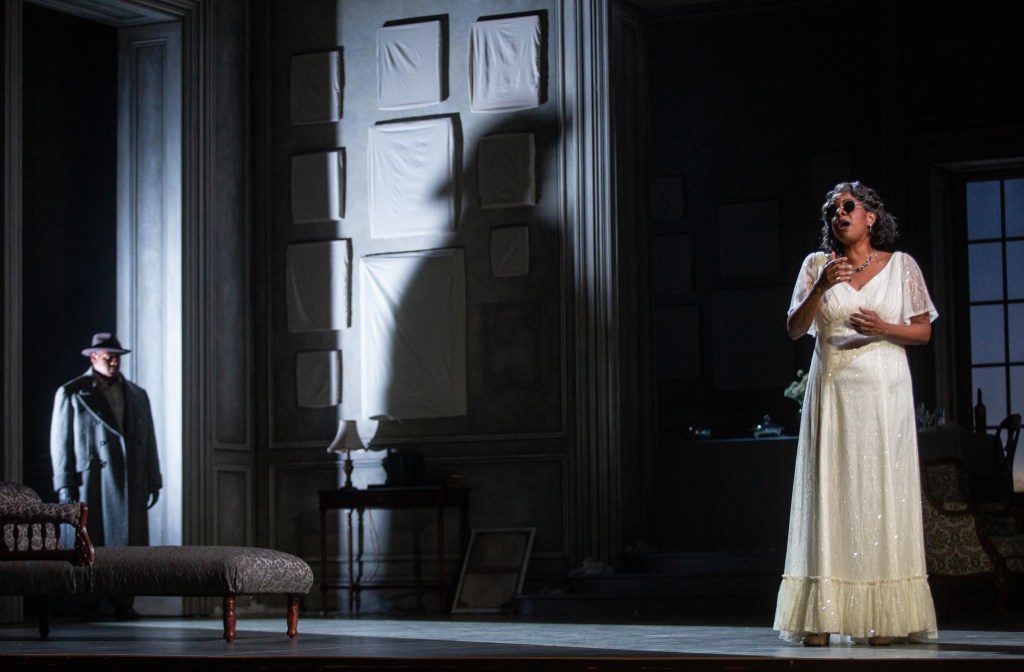
So that moment when Vanessa was done in 1978 was not just a moment for the festival. Because it was a Great Performances capture that was syndicated throughout the country on PBS. It was a great moment of national recognition for the festival. But it was a great moment of re-evaluating Samuel Barber as a composer nationally.
And it was really when people started to look at Samuel Barber. You know, in 1978 there was a great decade-and-a-half of serious intellectual academic ultra-serialism in classical music, the likes of not just Boulez but on the American side with Milton Babbitt and so on. The work of Samuel Barber in his kind of neo-romantic lyricism had fallen out of fashion and out of favor by the late ‘70s, especially also with the rise of the minimalism movement with the likes of Terry Riley, Steve Reich, and Philip Glass and now John Adams.
So it’s really a moment of recognizing Samuel Barber and Gian Carlo Menotti in the creation of this work of Vanessa, and I think that Vanessa is a great American opera that has truly been underappreciated. It tells a story that is urgent, is psychologically harrowing, is about reclusion in a way, which is very appropriate after the pandemic, perhaps kind of scarily so. It tells a story about love and about the blurriness and ambiguity that can happen in love.
It’s a harrowing kind of weird story that is told on stage, especially in this setting, through a very Ingmar Bergman-like production that has such spectacular force perception, such great theatrical ambiguity onstage, such depth where you can sort of see through one wall, see through past another wall, and then see through a third wall, and you have this sense that the stage is never ending. It’s just a sense of false prosceniums.
I think if we’re going to reevaluate Gian Carlo Menotti, let’s do so from an artistic perspective and look at what he had given to us, not just as a great impresario, but as a librettist and as a director, as well as a composer, but as a librettist and a director through the work of Vanessa by Samuel Barber.
Yeah, I think it might be overdue for us all being reminded just how talented he was as a writer.
Yeah, I agree. And also how important he was for opera in North America. I mean we have not just one of the great festivals in this country due to him. We have one of the great producing opera festivals in this country due to him. He was a key figure not just as an impresario, but as a composer and a librettist and a director working in American opera and creating a voice for American opera on both sides of the Atlantic.
So yes, I think that’s correct.
In terms of being underappreciated, I would look at Spoleto itself in addition to Barber from the standpoint of becoming maybe the most important force for new music that we have right now.
I don’t know if we can say we’re underappreciated. I mean, we put on Omar, and it’s going all over the place, and we’ve certainly received recognition through the incredible work of Rhiannon [Giddens] and Michael [Abels] and their work being recognized for a Pulitzer. But I think the festival has always been recognized as a great center for new music and new opera specifically.
Especially in the last five, 10 years, you’ve seen some works, Quartett by Luca Francesconi and Das Mädchen [The Little Match Girl] by [Helmut] Lachenmann, and Tree of Codes by Liza Lim, which were either North American premieres or world premieres. And in those cases, you see a real sense that there’s an internationalism to the festival, that the festival is promoting work that is truly importing from Italy, Germany, Australia, and so on, putting it on here and doing so at the highest sort of caliber of creative excellence.
But I also think that the festival is about creating new work and creating new American work. And that was something that you see more in the Menotti years in the ‘70s and ‘80s, where this is the center of new American opera and new American work.
That’s something that we’re going to be looking at over the next few years: How can Spoleto be a sandbox of creative ingenuity, not just in opera, but across multiple disciplines? How can it be an incubator, an accelerator of new ideas when we are in a city with a tragic past and an incredible outward beauty? What does that mean for the creation of work here and how that work can potentially have national and international reverberations?
So I think that this is a center of new work, generally speaking, and it’s really going to lean into that over the next few years.
Great to hear it.
Thank you, Perry.
And marvelous to talk with you.
I can’t believe it’s taken us so long.

Hold your horses! That was the directive that went out to operators of horse-driven carriages that usually swing Memorial Day tourists around Charleston during Spoleto Festival USA. It takes readings of 95º or higher for tourism officials to order the drivers and their carriages back to their stables. During this year’s festival, the mercury hit that mark on the first Saturday and eclipsed that high for five consecutive days afterwards. On Memorial Day – and the next day– official highs hit 100º, the first times that plateau had ever been reached during the month of May.
Naturally, the heatwave was the hottest topic among concert audiences and operagoers during the first week of Spoleto. The sensational – or sensationalized – new production of Richard Strauss’s Salome was a distant second in generating buzz, while the proliferation of new music at all of Spoleto’s music venues hardly generated a peep.
You could say that grumblings about new music had receded because new opera at Spoleto had retreated. Although the directing team of Patrice Caurier and Moshe Leiser, rethinking their 1987 approach to Salome, had made their modernized version steamy enough to rival the weather, it stood alone. There were no new operas at the festival, such as last season’s Tree of Codes or Quartett from the year before, both given their American premieres. Nor were there any exciting excavations like the past two seasons’, when we saw Donizetti’s Pia de’ Tolomei and Vivaldi’s Farnace in American premieres.
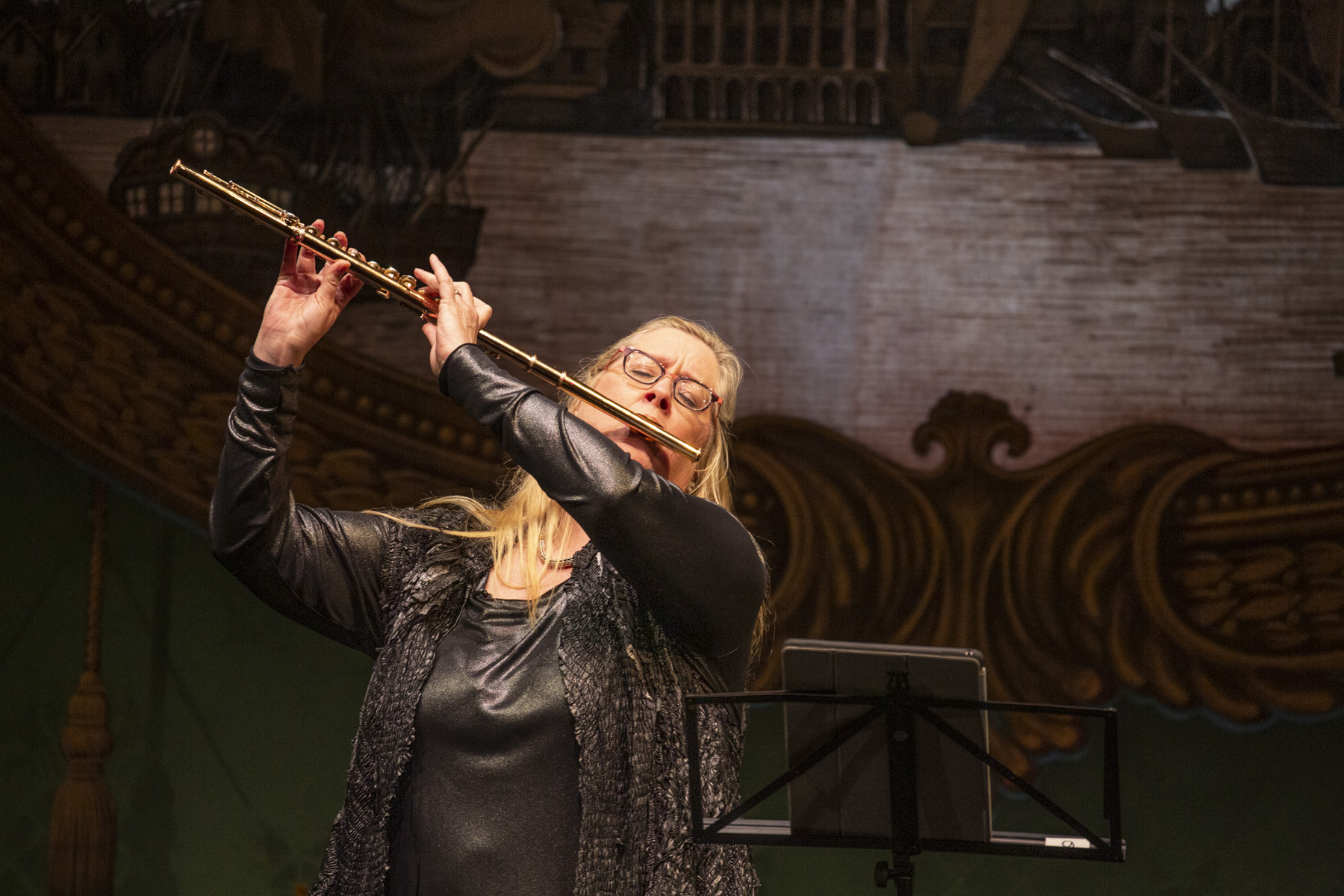
On the other hand, you could also say that orchestral director John Kennedy, Westminster Choir leader Joe Miller, and chamber music director Geoff Nuttall have opened the gates to new music to such a degree that it now permeates Spoleto’s classical programming. At Dock Street Theatre, the chamber music venue dripping with antiquity, I don’t recall an after-concert buzz that quite equaled what I heard when Karen Gomyo made her festival debut. On the heels of a gorgeous Bach sonata from flutist Tara Helen O’Connor and an exhilarating Concerto for Two Celli by Vivaldi, featuring cellists Joshua Roman and Christopher Costanza, Gomyo gave an electrifying account of Sarasate’s “Carmen Fantasy” that left me trembling.
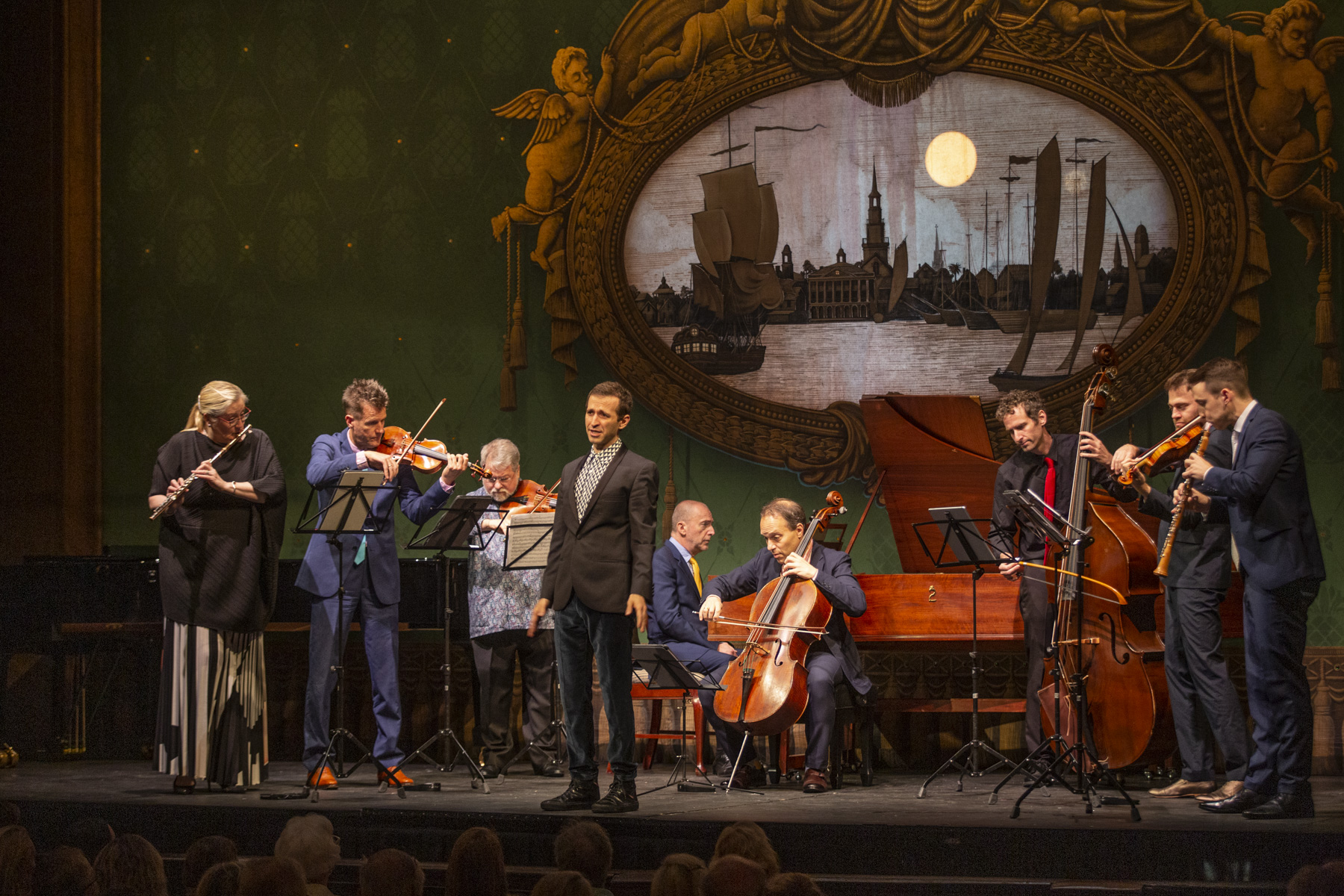
That performance seemed the obvious choice when I reached the outdoor courtyard, probably no warmer than 98º, and I overheard one guy asking his lady which piece she had liked best. After a couple of seconds of reflection, she answered, “I think I preferred the quartet!” That piece was When the Night for Cello Quartet by composer-in-residence Paul Wiancko, with Roman, Costanza, the composer, and Nina Lee in her Spoleto debut. Introducing the piece, Nuttall outed Lee as the musician who had asked Wiancko where his title had come from. Then he had Wiancko play the bass intro to Ben E. King’s “Stand by Me” and, to complete Lee’s hazing, asked everybody who knew the first three words to sing them. We were fairly loud responding to our cue. Twice.
Like Charles Wadsworth before him, Nuttall feels no compulsion to solemnly match the mood of his intros to the music that will follow. So it’s typical of his hosting style that, while pranking the newbie, Nuttall also let us know that the three movements of When the Night would be ethereal and serene.
Wiancko’s previous pieces had been more multicolored in mood and instrumentation. Closed Universe, written in the wake of the 2016 election, pondered the dark days to come with Costanza tilting the instrumental makeup of a piano quartet toward his solo cello. The composer added another intriguing twist, playing a second cello and a glockenspiel, which chimed in to signify the glimmers of hope he felt amid the gloom. On Program III, oboist James Austin Smith and the St. Lawrence String Quartet premiered Wiancko’s newest piece, Faults. It was also the brightest of the works played during the composer’s residency, with abrupt shifts between lyrical beauty and discordant chaos – with a little mischief tossed in. Smith seemed to be having fun on the bumpy terrain, particularly late in the piece when he and St. Lawrence violist Lesley Robertson performed a clapping accompaniment for the other players. Playing first violin with his quartet, Nuttall was so gleeful that he seemed like a kid.
In the more traditional repertoire, Nuttall was playing with more fire and flair than we had seen from him since he took over as chamber music director after the 2009 festival. Following on the heels of Closed Universe in Program I, Nuttall absolutely scorched the first violin part of Ernst von Dohnányi’s Piano Quintet, smiling as he burned with pianist Stephen Prutsman and the St. Lawrence. Nuttall and the St. Lawrence also played the coveted finale spot – with its guaranteed standing O – in Program II, Haydn’s “Emperor” Quartet, after the violinist’s alert that the “Deutschland über alles” melody was upcoming in the quiet second movement.
If we can accept that Ben E. King would go on to upstage Carmen, then I’m emboldened to proclaim that Prutsman turned the St. Lawrence’s heroics with Haydn into something of an anticlimax in his rendition of Beethoven’s “Moonlight” Sonata. Nuttall’s intro stressed the range of emotions we were about to experience, warning the Dock Street audience that the opening Adagio sostenuto might bring them to tears. My tears actually welled up in the closing Presto agitato, one of my favorite piano pieces, for I’d never heard it played live with such white-hot ferocity and fury.
As far as audience favor that afternoon, that may have been secured by the chunk of Ovid’s Metamorphoses that bassist-composer Doug Balliett so charmingly modernized in his Echo and Narcissus, with countertenor Anthony Roth Costanzo singing both of the title roles and the composer narrating. Prutsman was literally upstaged in Program IV when he performed a rollicking film score for piano quintet – with Nuttall doubling on a cheesy toy trumpet – that he composed for Buster Keaton’s 1927 silent film, College. At the start of the concert, Nuttall promised that anybody who didn’t laugh hard at least once could ask for his or her money back at the end of the show. Projected on a fairly wide screen while the musicians played off to the side, Keaton’s antics prevailed. Even if I hadn’t been comped, I couldn’t have collected.
Prutsman also had a salutary impact on Kennedy’s more militantly modern Music in Time series, which split its four concerts between the funky Woolfe Street Playhouse, with its Bohemian cocktail tables and faux candles, and the Simons Center Recital Hall with its clean-room sterility. Looking very much at ease at Woolfe Street, Prutsman introduced his 30: An American Kaleidoscope and left the performing to a string quartet comprised of four Spoleto Festival USA Orchestra members – except for the pre-recorded soundtrack that the composer provided for accompaniment. The idea was to simulate a road trip across the US, the quartet acting as the riders and Prutsman’s audio imitating the sound of a car radio as the travelers sped in and out of the wavelength of stations that they passed. Sped might be an understatement, since Prutsman claimed to have condensed snips of some 400 songs into his soundtrack, far more than he stole for his feature-length College score.
Kaleidoscope was somewhat unique in the “Rebellion in Greenery” concert, since Britta Byström’s title piece, Pauline Oliveros’ From Unknown Silences, and Anna Thorvaldsdottir’s Ró were all more tranquil nature studies, not speedy at all. Ró was easily the most exotic, with bass flute and bass clarinet included in the texture, and punctuations on the piano that included hitting the strings with a mallet. Percussionist Ye Young Yoon had even more outré assignments: rubbing a drum with a disc, bowing a vibraphone, applying a crumpled piece of paper to gong, and simply crumpling a second piece of paper! Except when Yoon banged the bass drum, the music hardly rose above a whisper, mesmerizing.
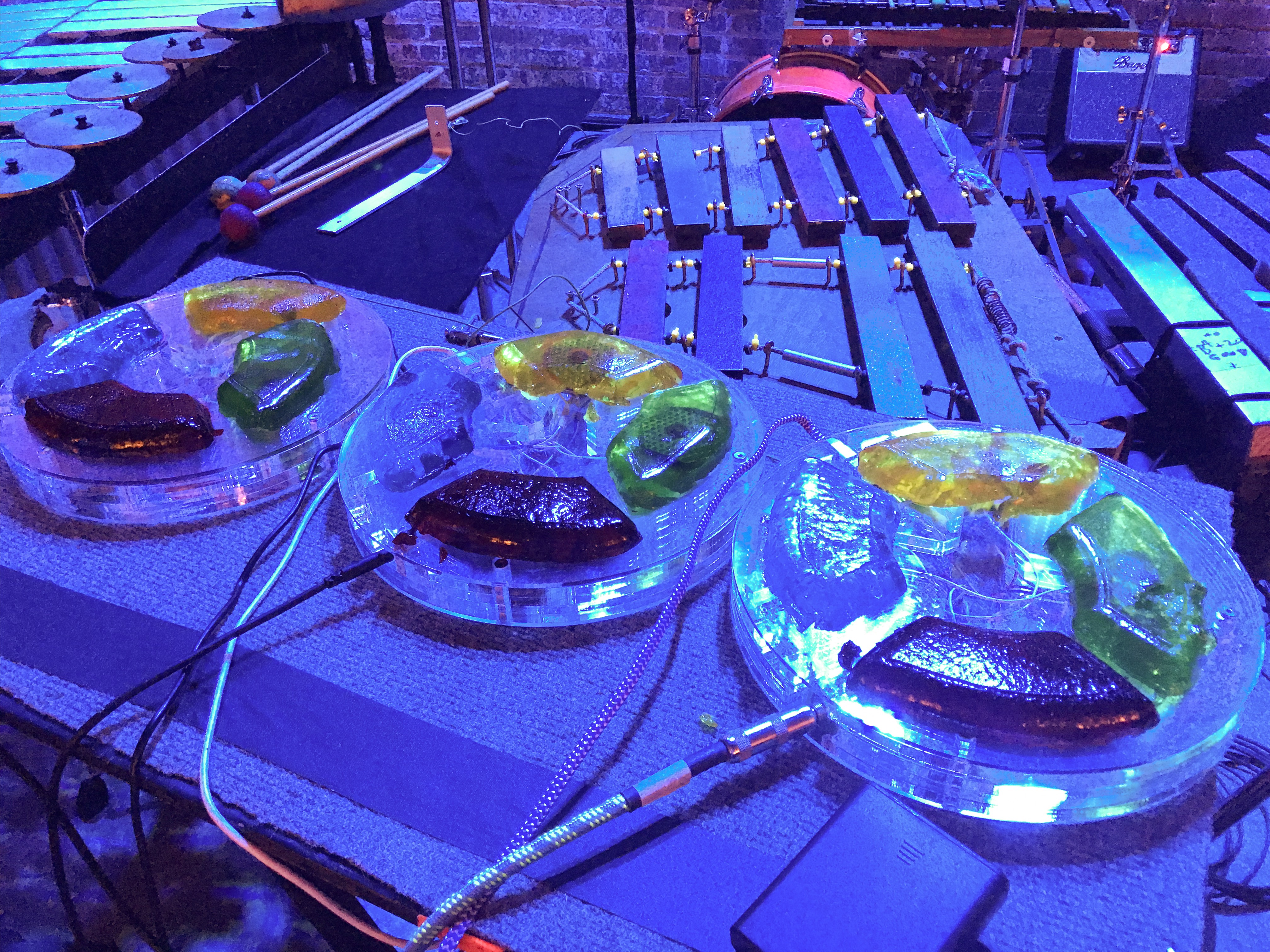
Dedicated to bringing rock instrumentation to new – and old – classical music, The Living Earth Show was more rowdy, raucous, and crowdpleasing in their second Spoleto appearance. Both members of this Left Coast duo, stoked percussionist Andy Meyerson and slightly mellow guitarist Travis Andrews, took turns personably introducing their repertoire along with one or two of the many instruments that littered the stage. By far the most unusual of these was the electric percussion instrument Myerson played with mallets during Dennis Aman’s Prelude #5/Fugue #4, based on Bach. It seemed to be fashioned from three plastic disks, about the size of an old studio tape reel, each of which sported four blobs of primary colored Jell-O – lemon, lime, blueberry, and cherry – sufficiently solidified so they wouldn’t splatter.
Living Earth’s exploration of what is possible was fun. Before Nicole Lizée’s Family Sing-A-Long and Game Night, I’d never seen anybody bowing a guitar, and before Raven Chacon’s Tributary, I’d never contemplated the musical possibilities of smashing a drinking glass into a bucket and mucking around with the broken shards. Also memorable was Sarah Hennies’ update of Bolero, emphasizing the snare drum tattoo until the piece dissolved into a percussion orgy.
As opposed to the more retro and conservative music performed at Woolfe Street, mostly by female composers, the slate at Simons was strictly modern, often minimalistic, and exclusively male-composed. In the “Stay on It” concert, the title piece by Julius Eastman was preceded by two more recent works by Steve Reich, Pulse and Runner. Before conducting, Kennedy prefaced the Reich works, comparing Pulse (2015), in particular with the late symphonies of Haydn for its clarity. A bit of a stretch, I thought when the piece was done, so the whoops of enthusiasm that welled up from the audience took me a little aback. Patches of fanatical support enlivened the entire Music in Time series.
Written for two orchestras, each deployed to one side of the stage, Runner (2016) struck me as livelier and more engaging, but the Eastman piece, exhumed from 1973, had the most color and chaos, with stretches of jungle riot and jazz. Soprano saxophonist Jeffrey Siegfried led the ensemble, playing with and without his mouthpiece and reed, contributing the elephant roar to Eastman’s sonic Africa.
After my Spotify preview, I had somewhat dreaded staying an extra day for Georg Friedrich Haas’s in vain (2000), but Kennedy hinted that seeing the work staged would add an extra dimension, and he was right. Aside from its tuning complexities, this apocalyptic work, over an hour in length, was written to be played through two extended periods of total darkness. Not only did the 24 musicians from the Spoleto Orchestra need to memorize long stretches of their parts, they needed to play them together without Kennedy’s direction, shifting dynamics and tempos by listening to each other.
I found myself getting more accustomed to the gloom during the second episode of darkness, able to see Kennedy’s motionless silhouette – and also able to more keenly perceive the musicians’ striving for unity and community. Their struggles were all the more poignant when brief flashes of light pierced the darkness without providing any help.

Kennedy was one of five conductors at the podium for Spoleto’s larger musical productions. After serving as assistant director for the 2017 production of Eugene Onegin, Michelle Rofrano made her formal debut conducting a groundbreaking Classical Showcase concert that brought the Spoleto Festival USA Orchestra out of the pit and onto the stage at Dock Street Theatre. She also brought Fanny Mendelssohn’s Overture in C on board to share the stage with works by Bach, Stravinsky, and Beethoven. A hefty piece it was, for there were more musicians exiting after the Mendelssohn than entering for Beethoven’s Symphony No. 1.

Memminger Auditorium, where Amistad, Peony Pavilion and Paradise Interrupted have been staged, was the right choice for Michael Gordon’s City Symphonies trilogy, paired with films by Bill Morrison. Kennedy took on this edgier fare, getting wonderful work for the Festival USA Orchestra, but the most provocative elements of this evening were Morrison’s depictions of New York in Gotham, LA in Dystopia, and – let there be color! – Miami in El Sol Caliente.
Aside from the customary Westminster Choir concerts, which included touching tributes to their late former director Joseph Flummerfelt, Miller and his Princeton-based ensemble were unusually active. Before and between the two choral potpourris at St. Matthew’s Lutheran Church, there were two blockbusters at Gaillard Center, Joby Talbot’s Path of Miracles and Bach’s St. John Passion.
Stage directed and set designed by John La Bouchardière, Spoleto’s Path of Miracles took a score that wasn’t intended for the stage and plopped it down at St. James the apostle’s tomb in Santiago and the Camino de Santiago path across Spain that pilgrims take to the shrine to be healed and shriven. Talbot’s music handed out 17 different vocal lines to the Choir, set to a Robert Dickinson libretto in seven languages. Seven, including Basque.
 A circle of rocks onstage seemed to allude to the circle of stars that originally helped a hermit to discover what is called Santiago de Compostela – Saint James of the field of stars. Having seen so many Westminster concerts before, I was probably more disoriented than anyone. La Bouchardière began with a procession of choristers parading down the aisles to the stage, skipping over the miraculous 9th century discovery of St. James’s tomb and introducing us immediately to the flocks of pilgrims trudging there on foot.
Didn’t La Bouchardière know that Miller does that same processional shtick at the beginning of every Westminster concert? Yes, he did it this year, too.
Somewhat overshadowed by Caurier and Leiser’s bold restaging of Salome – and the outstanding cast he was fortunate enough to lead – Steven Sloane did not instantly emerge as the most outstanding conductor at the festival this year. Sure, the score absolutely crackled under his baton, but the new twists were sensational, Salome baring her breasts as she attempted to seduce Jokanaan and a “Dance of the Seven Veils” set to a full ten-thrust sexual encounter with Herod. Hail, Viagara! The modernized rooftop set design by Christian Fenouillat became spectacular when he dropped Jokanaan’s entire bedroom down on it, glowing against the nighttime sky.

Scenery and stage directing screamed audacity, but consider: Sloane’s Salome, soprano Melanie Henley Heyn, was singing professionally for the first time ever in a full-length operatic production – and she was amazing, validating the awesome risk of casting her. Heyn wasn’t a temptress; she was more of a petulant Salome, a privileged teen accustomed to being worshipped. So she wasn’t tasked with performing diva exploits when she came on to rich-voiced baritone Erik Van Heyningen in Jokanaan’s bedroom, and she could be unusually passive – if not absolutely a victim, since she knew she would be repaid! – when tenor Paul Groves dropped his pants for the “Seven Veils” dance.
The hauteur and conceit of Salome came across best when she prevailed upon the helplessly enamored tenor Zach Borichevsky as captain of the guard Narraboth (easily on a par with Groves and Van Heyningen in this admirably deep cast) to let her visit Jokanaan in his cell – and later when she demanded his head, stretching his name each time to seven chilling syllables. Caurier and Leiser stumbled a bit after Herod hitched his belt, for they didn’t make a serious attempt to equal the shock value of Salome’s failed seduction and faux dance when she claimed her prize. Heyn and Sloane were arguably most impressive there, because the succeeded in making up the slack.
Newly appointed as music director of the Jerusalem Symphony, Sloane may have been the most underappreciated conductor at Spoleto this year in his mostly underground performance, but Evan Rogister vied with him for excellence in a program of Prokofiev and Shostakovich. He also has big things in the works as the newly appointed principal conductor of Washington National Opera. What all these conductors accomplish with the Spoleto Festival USA Orchestra, young professionals and grad students freshly gathered through nationwide auditions every year, is routinely astonishing.

But with selections from Prokofiev’s two Romeo and Juliet orchestral suites, what Rogister achieved was unique for me. What I heard at Gaillard not only eclipsed every live or recorded performance I’d experienced before, it made me admire and thrill to music that I had strained to tolerate before, beginning with the familiar “Montagues and Capulets” theme that had grown hackneyed and noxious for me. I can hardly explain the difference other than to say that Rogister had channeled the youthfulness and energy of this orchestra and somewhat pierced through to the soul of the gritty, grudgy, and utterly rhapsodic story Shakespeare had written, a story whose essence is youth. Of course, the proficiency of the musicians and the acoustics of the hall didn’t hurt.
A window into how Rogister accomplishes such wonders may have been opened when he prefaced the Orchestra’s rendition of Shostakovich’s Symphony No. 5. He went beyond talking about Shostakovich’s tribulations during the Stalinist regime, the framing of this symphony as a penitential offering, a step toward political and cultural rehabilitation. Rogister took an additional moment to pay tribute to three virtuosi who made so much of modern Russian music possible with their encouragement, sponsorship, and artistry – cellist Mstislav Rostropovich, pianist Sviatoslav Richter, and violinist David Oistrakh.
That’s valuing musicians to the highest degree.
For the past two years at Spoleto Festival USA, opera has been the bellwether of how this massive festiv
al of the performing arts – including theatre, jazz, dance, symphonic and chamber music – has been changing and evolving. In 2015, opera programming untethered itself from its customary balance of new works with outré offerings from recognized masters. The tandem of Paradise Interrupted in its world premiere and Veremonda in its American debut underscored the transformation of Spoleto into the world’s leading showcase for new and/or different classical music.
Last year, what seemed like a move toward more populist programming, with Porgy and Bess as the marquee opera and an increased presence of American jazz artists, did not affect a continuing drift toward more modernist music. What the Porgy and Bess celebration of the festival’s 40th season really signaled was that, with the radical facelift to the reopened Gaillard Center, truly grand productions of grand operas were now possible in Charleston, SC.
Even before the Gaillard closed down for its makeover after the 2012 season, it was clear that, from a technical standpoint, only lackluster stagings could be expected there. Gustave Charpentier’s Louise had been the last operatic attempt in 2009. During the renovations, you could be charmed by Spoleto’s productions of Kát’a Kabanová and Le Villi at Sottile Theatre, but you could hardly pretend they were on a grand scale.
With this year’s presentation of Tchaikovsky’s Eugene Onegin, grand lyric opera was emphatically enthroned at the festival, although I suspect there were budgetary constraints in the wake of last year’s anniversary extravagances. Now that might not explain why there was no bed, no window, and no writing desk – all mentioned in the libretto – for Tatyana’s famed letter scene. Why would stage director Chen Shi-Zheng’s austerity extend to depriving the poor woman of pen and paper until after she has finished writing?
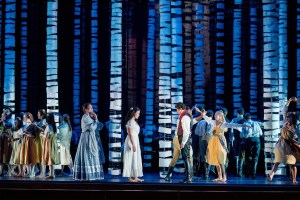
Suspicions came unbidden when, after a snowbound video of a Russian forest ran over the overture, spindly trunks of wintry trees descended from the fly lofts and haunted nearly the entire production. The concept didn’t jibe with arrival of the family estate’s peasants heralding their completion of the harvest. More puzzling, the lovely trees were whisked to the wings prior to the scene where they might make the most sense, the duel between Onegin and the hotheaded poet Lensky.
Projections that replaced the trees for the duel and for the ultimate denouement, where he receives his richly deserved rejection from Tatyana, were actually darkly effective. But the best use of set designer Christopher Barreca’s trees came when, half-lifted into the flies and colorfully illuminated, they simulated chandeliers at the regal ball in Prince Gremin’s palace, where Onegin is thunderstruck by the transformation of Tatyana into a poised and polished aristocrat.
Whatever toll austerity might have taken on the scenery, it was not a factor in the singing. Taxed with delivering the letter scene with no props except a chair (those lingering tree trunks did fill up momentarily with projections of Tatyana’s handwriting), soprano Natalia Pavolova glowed with youthful longing in her American debut. She was hardly less impressive as a mature princess, bearing herself imperially in the ballroom, and her creamy voice thickened pleasingly with emotion in the final tête-à-tête with Onegin. Lacking the hauteur I saw from Dmitri Hvorostovsky when I saw him in the role opposite Renee Fleming, baritone Franco Pomponi was less of a cold-hearted jerk when Onegin rejected Tatyana and killed Lensky – and more pitiable when he comprehended his mistakes.
Solid as he was vocally, Pomponi was thoroughly upstaged by tenor Jamez McCorkle as Lensky. The pride and pathos that McCorkle brought to Lensky’s final pre-duel meditations were shattering. Nearly as touching – and as vocally powerful – baritone Peter Volpe’s weighty, twilit confessions to Onegin as Prince Gremin were the perfect prelude to the cad’s comeuppance.
Acoustics at the new 1,800-seat facility helped to keep the front-liners relaxed, unless they had the misfortune of singing from the rear half of the stage, which introduced a noticeable echo effect. Clarity and presence improve markedly for the Spoleto Festival USA Orchestra when it ascends from the pit to the stage, where it is wrapped in a tall, wood-grained shell and covered by a sloped and sculpted acoustic ceiling.
With the addition of the Westminster Choir conducted by Joe Miller, the worthy heir to Joseph Flummerfelt, orchestral concerts have also grown grander in recent years. Ramping up to the return of the Gaillard, Miller and the Westminsters presented the St. Matthew Passion at the Sottile in 2015 before helping to break in the new hall last year with Beethoven’s Mass in C and his Choral Fantasy. Once again mixing the sacred with the secular at the Gaillard, Miller programmed Mozart’s unfinished “Great” Mass in C Minor, preceded by two Ralph Vaughan Williams settings, one for Psalm 90 (“Lord, Thou Hast Been Our Refuge” and the other from the moonlit Act 5 love scene that punctuates the hurly-burly of Shakespeare’s Merchant of Venice (“Serenade to Music”).

Augmented by the Charleston Symphony Orchestra, the Westminster Choir sounded massive and sure, and the Festival Orchestra, culled from advanced conservatory students and young professionals through nationwide auditions, still strikes me as the best American orchestra of its kind. The bigger sound of the choir made the “Lord, Thou Hast Been Our Refuge” more soothing and cosmic, building to a majestic finish. An exquisite dialogue between orchestra and vocalists followed in the Shakespeare setting, as six of the Westminster choristers then came downstage and formed a mini-choir, joining the four guest artists who would sing in the Mozart.

It was gratifying to see McCorkle again after his fine Lensky, but once again, he didn’t draw a leading role in the Mass after shining briefly in the “Serenade.” Mozart began this liturgical piece as a showcase for his wife, Constanza, and soprano Sherezade Panthaki shone in much of the coloratura spotlight that he managed to finish, especially when powering the climax of the Credo. Soprano Clara Rottsolk ably complemented Panthaki in the Gloria, and bass André Courville rounded out the quartet of soloists in the concluding Benedictus.
Of course, there was nothing miniscule about the other orchestral concert, beginning with Anna Thorvaldsdottir’s icily atmospheric Dreaming and climaxing with Mahler’s Symphony No. 4. Following up brilliantly on her lustrous 2013 debut in the title role of Matsukaze, soprano Pureum Jo filled the folksy jollity of the Sehr behaglich (“Very comfortable”) finale with a heavenly purity.

Yet I found myself even more encouraged and excited by what’s happening in the chamber music sector of the festival. For the first time since taking over the reins of the daily chamber music series in 2010, violinist Geoff Nuttall had to acknowledge the absence of his mentor and predecessor, Charles Wadsworth, on the mend up in New York. As host and programmer of the lunchtime Dock Street Theatre concerts, Nuttall has come into his own, greatly increasing the amount of modern and contemporary music that is played while chipping away at the barrier that previously distinguished the genial, comical, and witty introductions to the music from the formality of the performances that followed.
There’s likely a connection between the two developments. When a percussionist provides the entire audience with pairs of rocks to bang together during a performance of new music, or a composer triggers video and sound cues with an iPhone, formality begins to break down. The effect spread to more antique music when countertenor Anthony Roth Costanzo called attention to the kinship between a Vivaldi aria and Elvis Presley’s “Don’t Be Cruel.”
Performances have sprouted a jocular dimension here and there, thanks to the deployment of clarinetist Todd Palmer as comedian-in-chief. After Nuttall spoke vividly of Giovanni Bottesini’s virtuosic displays on double bass during operas that he conducted in the mid-1800’s, appearing mid-performance to dazzle with improvised fantasias on tunes from that evening’s opera, Palmer joined double bassist Anthony Manzo and pianist Gilles Vonsattel in Bottesini’s Duetto for Clarinet and Double Bass with Piano. Between two of the fantasias, Palmer did a riff of his own on the diva aspects of the spoken intro, flashing some leg and modeling a sock that was more flamboyant than any I’ve seen on even Nuttall’s feet.
There was more later as Nuttall and his St. Lawrence String Quartet joined Manzo, flutist Tara Helen O’Connor, and pianist Pedja Muzijevic in a cunning reduction of Symphony No. 100 by Haydn, our host’s favorite composer. As Nuttall explained how this “Military” Symphony came by its nickname, you had to wonder where the hellish percussive roar would come from when the second movement started. The answer came during the interval between the opening Adagio-Allegro and the signature Allegretto: emerging from the wings, Palmer marched onstage – literally marched, mind you – harnessed into a big bass marching drum and brandishing two mallets.
It was actually a military parade, since cellist Joshua Roman with a pair of cymbals and violinist Benjamin Bellman with a wee triangle marched in right behind Palmer. Earlier in the concert, right after the Bottesini, these two accomplices had given an absolutely delicious account of Ravel’s Sonata for Violin and Cello. If anything, the exit after Haydn’s second movement, led again by Palmer, was even more ceremonial. Yet there were more surprises to come. Violinist Daniel Phillips (flutist O’Connor’s husband) heralded the opening passages of the Presto finale from the balcony, and Palmer’s percussion trio resurfaced at the rear of the hall to pound, clang, and clink the final measures.
Musically, Palmer’s shining moments came three programs earlier when he played the Beethoven Clarinet Trio with Muzijevic and Roman, while the best of Nuttall came when he led an inspired performance of the Mendelssohn Octet. Some of the inspiration no doubt came from the meet-up between Nuttall’s St. Lawrence Quartet and his newest Spoleto recruits, the Rolston String Quartet. They won the Banff International String Quartet Competition 24 years after the elder Canadian quartet won the same prize in 1992. There were moments when Rolston cellist Jonathan Lo and violist Hezekiah Leung gazed upon Nuttall’s rapt antics – his back-and-forth swaying on the first chair and his spasmodic knee-lifts – with undisguised, wide-eyed wonder, apparently unaware that he played with the same abandon, eccentricity, and charisma when he first came to Spoleto in 1995. Except that his hair was longer then.

Effects of Nuttall’s stewardship now extend beyond the Dock Street Theatre. Two of the chamber music pianists had concerts booked at other venues. Muzijevic, who also traveled to Hamburg to select the new Steinway for the Dock Street series, fashioned a set of “Haydn Dialogues” at the Simons Center Recital Hall – four Papa pieces interspersed with works by Jonathan Berger, Morton Feldman, and (with an alternate prepared piano) John Cage. Stephen Prutsman put on his composing hat at Woolfe Street Playhouse, plucking a string quartet from the Festival Orchestra to score three silent films, “Suspense,” “The Cameraman’s Revenge,” and “Mighty Like a Moose.”
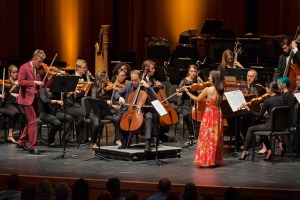
For the past two years, Nuttall has performed at Gaillard Center in chamber music segments of Spoleto Celebration Concerts, further extending his presence. He and his spouse, violinist spouse Livia Sohn formed half of a quartet, including Muzijevic and St. Lawrence cellist Christopher Costanza, in a reduced adaptation from Vivaldi’s L’estro armonico concertos. Until 2013, when oboist James Austin Smith joined his chamber music stable, Nuttall was no more likely to program Vivaldi’s music than Wadsworth was, let alone play it.
What really brought Vivaldi to centerstage at Spoleto was the sensation that countertenor Anthony Roth Costanzo created last season in his first three programs at Dock Street. Costanzo didn’t sing Vivaldi then, ranging instead from Handel to Gershwin to Osvaldo Golijov, but it was obvious to he could sing the Red Priest’s rep with a vengeance. Having Costanzo on board to play the title role made it easy to green-light the American premiere of Vivaldi’s Farnace, the most popular of the composer’s operas during his lifetime.

You had to be able to accept the old-timey ethos of death before dishonor to the point of absurdity if you were to reach the end of Antonio Lucchini’s 1727 libretto without guffaws or derisive laughter. Dethroned from the kingdom of Pontus by invaders from Rome, Farnace orders his queen Tamiri to kill their son and herself to avoid the disgrace of captivity. Meanwhile Farnace and his captive sister Selinda separately plot to bring down their conquerors, Roman general Pompeo and his merciless ally, Queen Berenice of Cappadocia, a gargoyle who turns out to be Tamiri’s mom.

Somehow everything sorted out happily. More amazingly, Costanzo managed to bring down the house just before intermission – bemoaning the death of the angelic little son whom he himself condemned to death!
With Costanzo singing two additional Vivaldi arias at the lunchtime concerts and Smith fronting an oboe concerto, the Red Priest explosion was major theme in Spoleto’s 2017 classical music lineup. But the countertenor continued to show his wide range. What I most regretted about skipping the final weekend in Charleston was seeing Costanzo introduce and deliver Roy Orbison’s deathless “Crying!” An 11-piece ensemble, including Palmer and Nuttall, was weeping behind him. Or maybe not.


 Art on My Sleeve