Tag Archives: Amy Orsinger Whitehead

Bach and Mozart Strive With Stravinsky at Knight Theater

Review: Orion Weiss with Charlotte Symphony

By Perry Tannenbaum

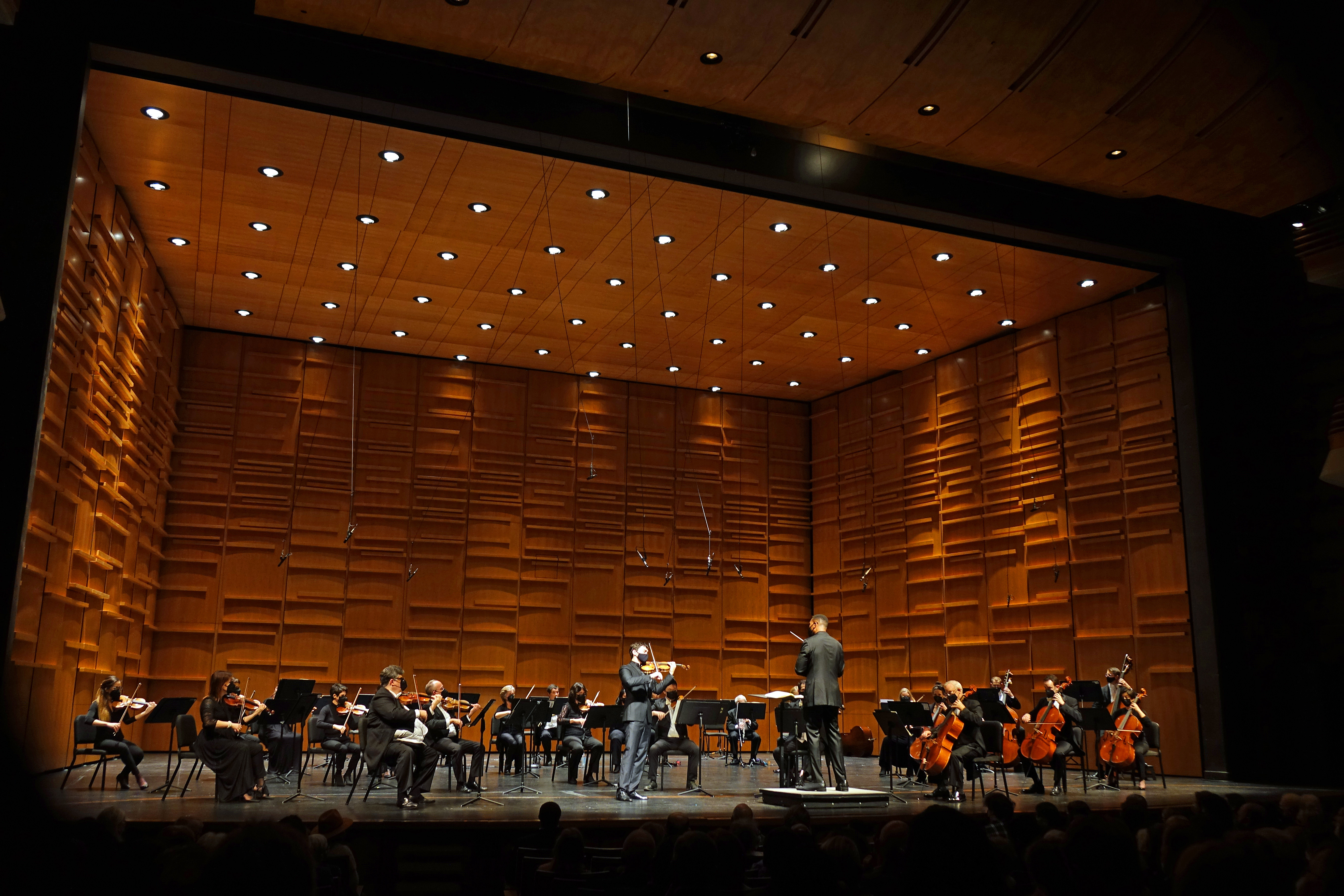
January 11, 2025, Charlotte, NC – Although we still get steady rations of Mozart from Charlotte Symphony since the days when Christof Perick passed the baton to Christopher Warren-Green, we havn’t heard much Bach from the orchestra since the autumnal Bachtoberfest faded from Symphony’s portfolio nearly a decade ago. This is understandable, if lamentable: after bringing us a double dose of the Baroque titan in 2018 – plus a shot of Vivaldi’s Four Seasons – violinist/conductor Aisslinn Nosky became a mainstay at Bach Akademie Charlotte (and one of the annual Charlotte Bach Festival’s primary claims to national prominence). A return to the Classics Series, set for 2020 via the Leipzig master’s Brandenburg Concerto #2, was quashed by the onset of COVID.

You could say that the suspense has been building. For a while, it seemed like CSO was tacitly conceding the high ground to the Akademie and its festival, presented by musicians from across the country who perform on authentic Baroque instruments. Playing the music of Bach on modern instruments, you could argue, has become paradoxically retro.

Yet the more deeply you explore musical history and authenticity, the more obvious it becomes that ancient (looking at you, Vivaldi-Schubert-Tchaikovsky) composers eagerly embraced new instruments, recycled their compositions for different instruments and different-sized ensembles, and encouraged musicians to copy, interpret, modify, and spread their music as they pleased. Reverence for absolute fidelity to original compositions is as absurd as assuming that top recording artists, whether it were Bob Dylan or Taylor Swift, would never allow covers of their greatest hits. If it sounds good – and magahits often do – go for it!

So it was heartening to find that CSO was intrepid enough to present a Bach Orchestral Suite in a modern-instrument performance and, perhaps to underscore the point, Johann Sebastian’s Keyboard Concerto No. 6, adapted by the composer himself from the Brandenburg No. 4. A certain amount of ambiguity pervaded Knight Theater as guest conductor Jeri Lynne Johnson made her debut. The house that greeted her was packed to the topmost row of the balcony. Yet the cause for the crush may have been the cancellation of the previous evening’s performance due to a “snowstorm” that had generated more bloated hype than solid news.

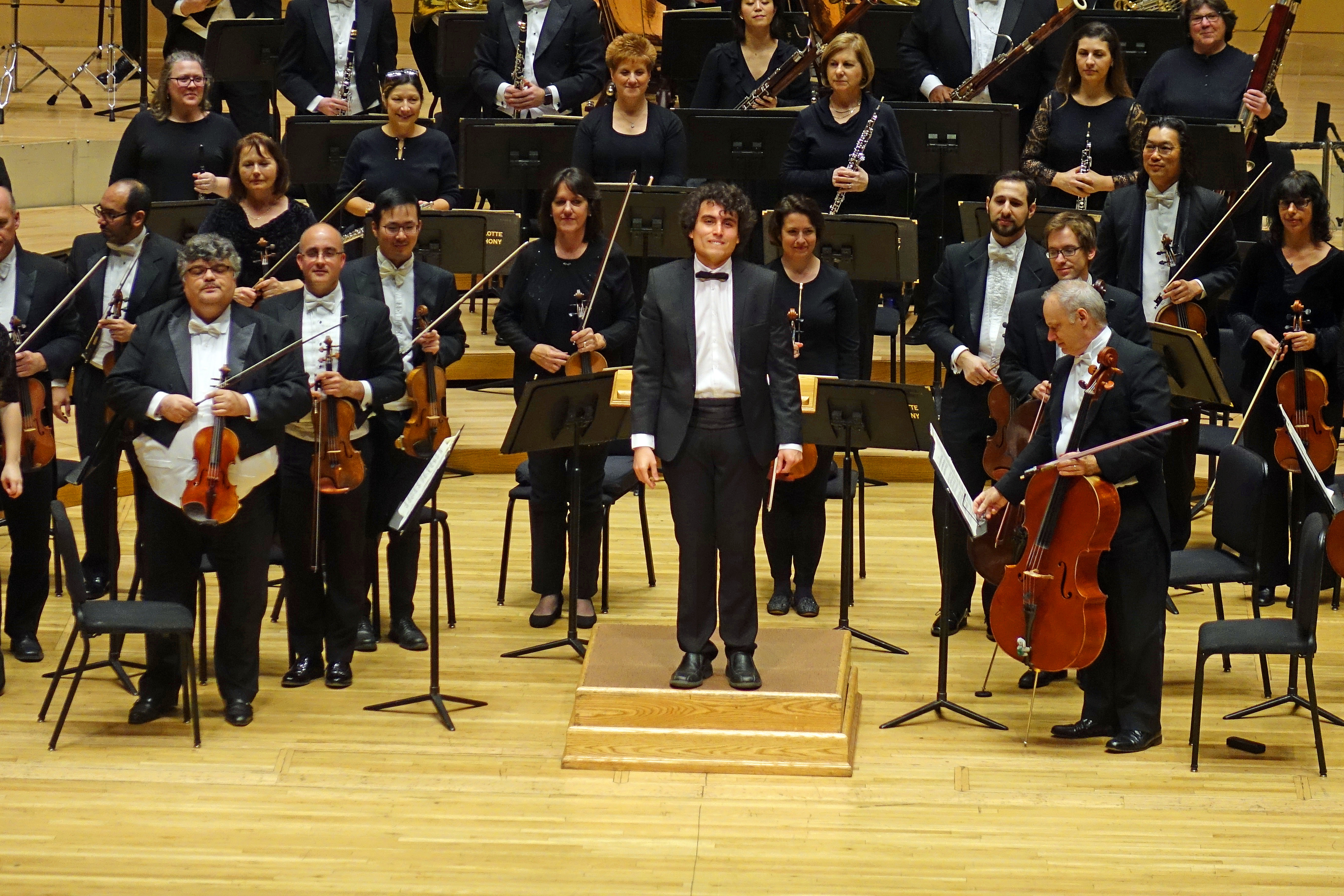
The only sparsity was on the Knight Theater stage. Johnson and the CSO would not be discarding all of the orthodoxies of the authenticists: the size of the orchestra had been scaled back to those employed in Bach’s days and those that would have played Mozart’s Symphony No. 25. The interloper on the program, Stravinsky’s Concerto for Piano & Wind Instruments, was also conspicuously downsized.

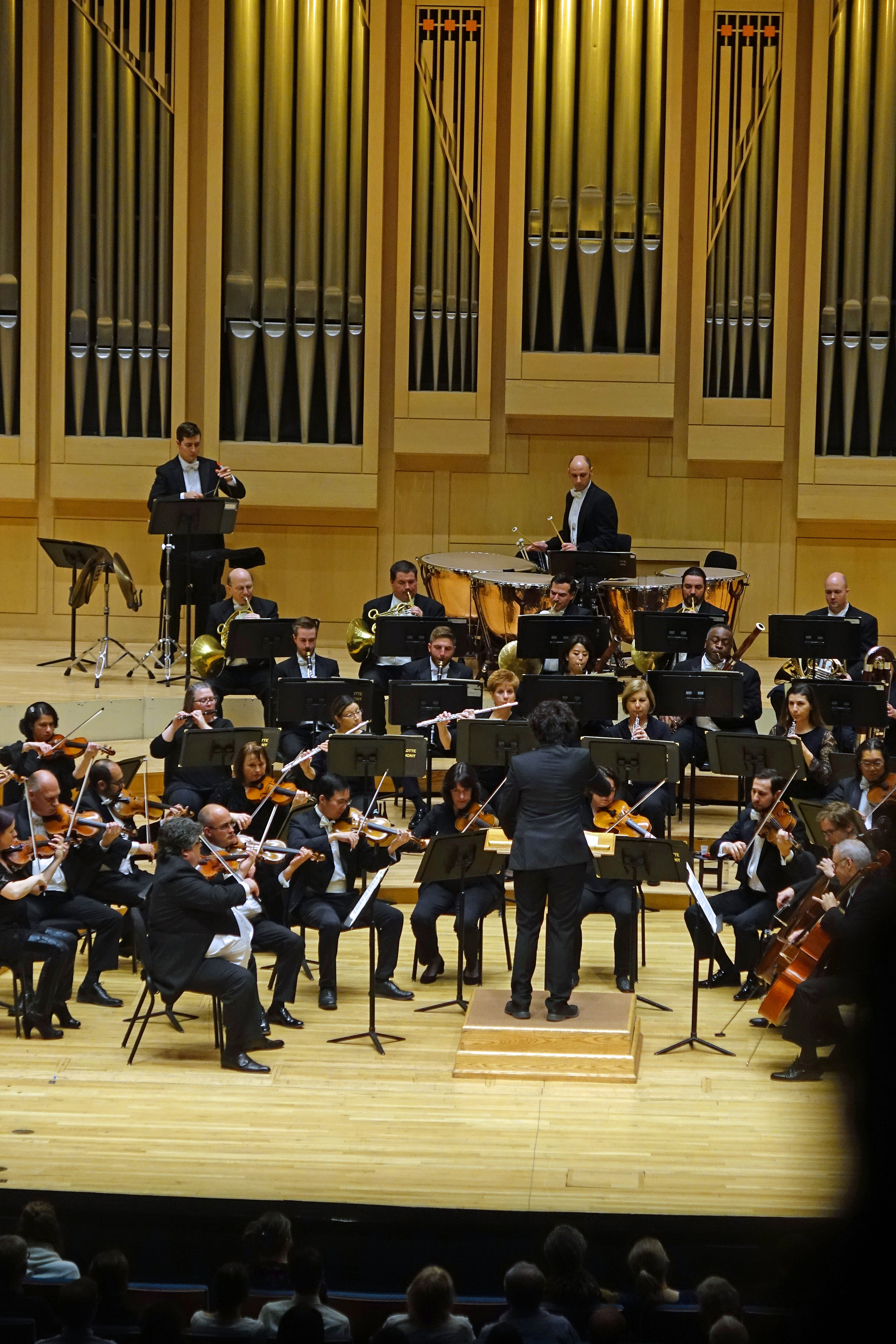
Viewed in profile, Johnson’s black suit – and her decisiveness – enhanced her resemblance to Kamala Harris. Symphony responded energetically to her baton all evening long, yet there was no lack of lyricism or finesse when Bach’s Orchestral Suite No. 3 transitioned from its brassy opening Overture to the famed Air (on a G string). Concertmaster Calin Lupanu, accorded considerable space in the opening movement, spearheaded the ethereal violin section to the requisite sublimity as the big tune gracefully swelled. Their intimacy quickly pointed up the advantage of a trimmed ensemble.

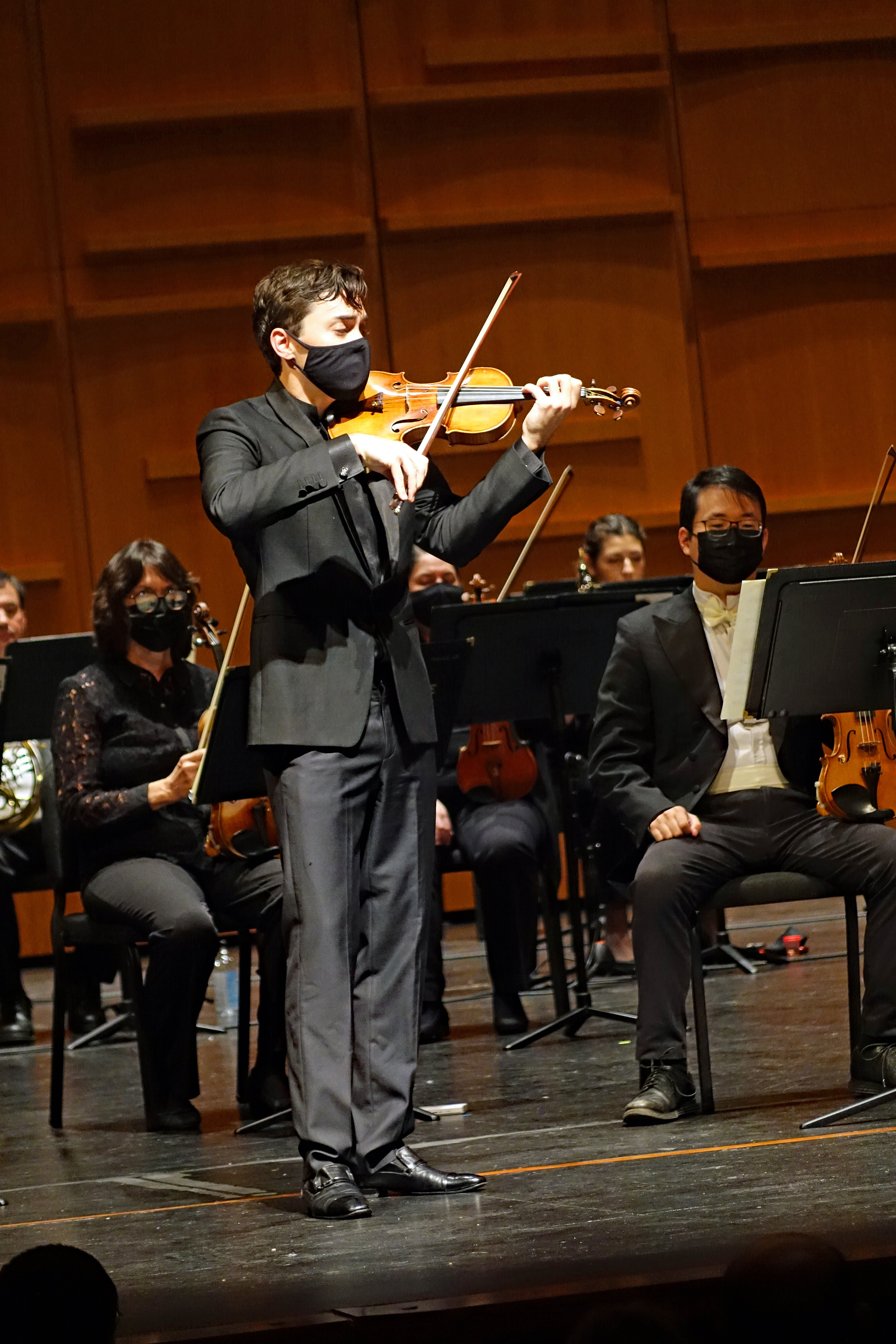
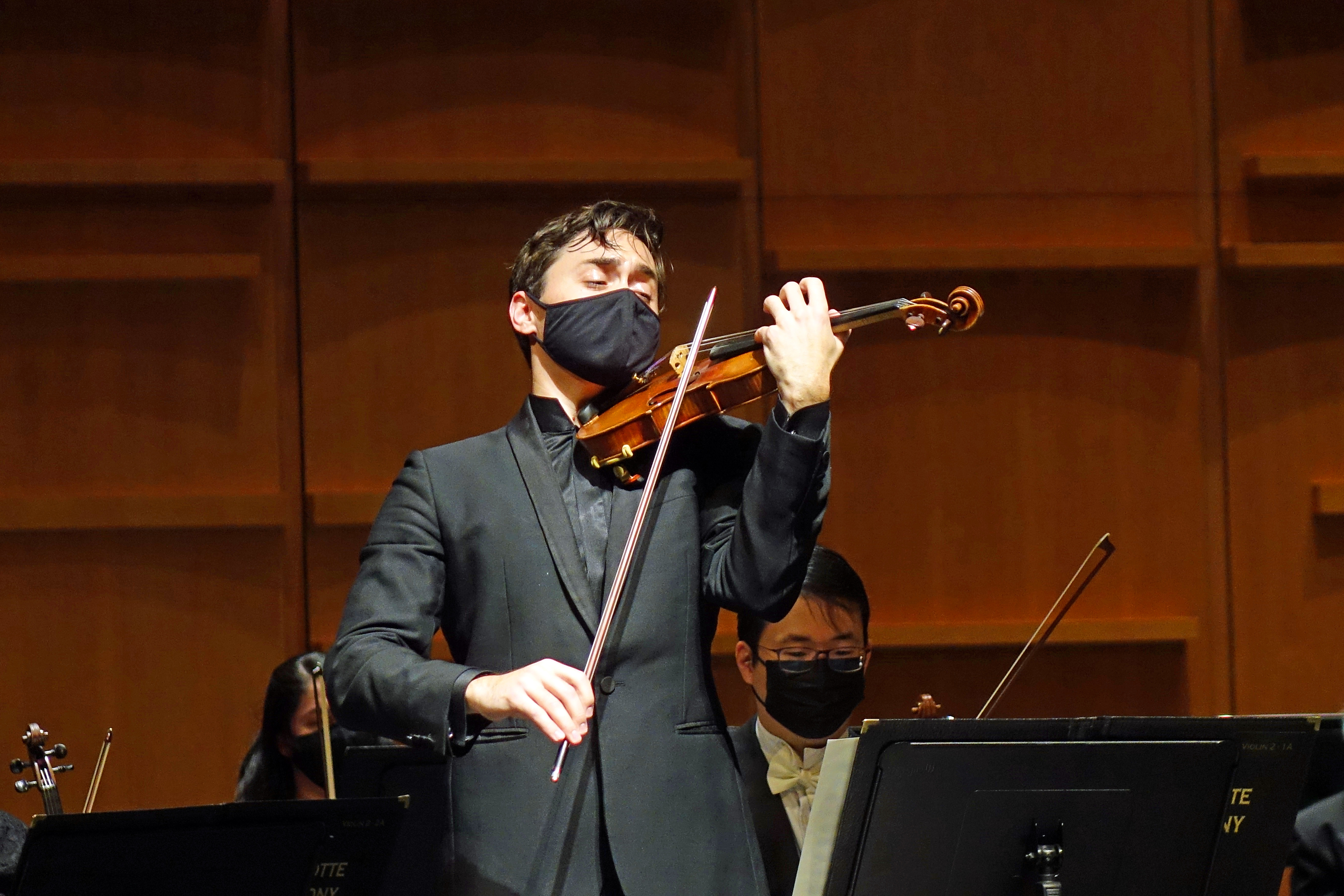
Subscribers who hadn’t scrutinized their program leaflets, let alone scanned its QR code for the full booklet, were likely shocked by the mass departure of the string sections, the arrival of the Steinway, and the empty chairs that remained as pianist Orion Weiss made his genial entrance. Deceptive! After a rather solemn Largo opening from the winds, with a somewhat promising crescendo at its center, Weiss’s first notes from the keyboard in the Allegro section were savage knuckle-busting clusters, met by a lusty clamor from the previously wan winds, crowned by a thumping of timpani.

Amid the cascade of chords that Weiss inflicted on the keyboard, a jazzy percussive rhythm infectiously emerged – even if it was impossible to determine whether the blizzard of notes Weiss was playing were the right notes. Suddenly, Weiss had taken on the appearance of a febrile Russian madman! The ensuing Largo provided lyrical reassurance, with some primeval passages set aside for oboists Erica Cice and principal Timothy Swanson. The pacing of the closing Allegro was almost as frenetic as the opening: if there were wrong notes here, Stravinsky had put them there with wicked glee.
This image has an empty alt attribute; its file name is 2025bach-mozart-7.jpg

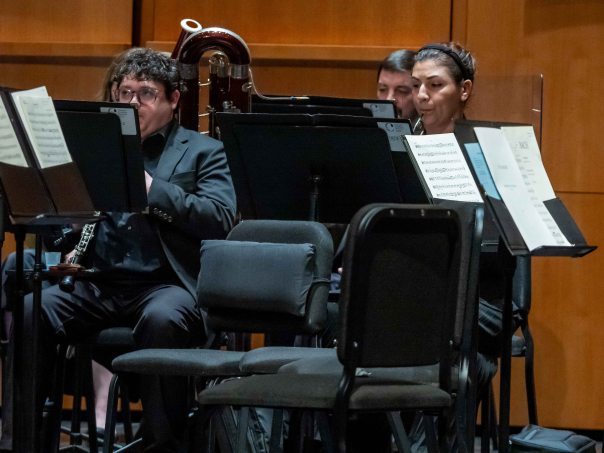
Unless you were expecting an enormous horde of string players to flood the stage for the Mozart symphony, the biggest surprise after intermission was at the beginning, when Weiss returned for the Bach Keyboard Concerto. When Johnson stood by, she applauded not only Weiss but also flutists Amy Orsinger Whitehead and principal Victor Wang. Jackson’s outfit hadn’t been the only one I’d noticed until then. As she took her place with the winds for the Orchestral Suite, Whitehead’s black attire seemed to be strikingly ornate and elegant. So this featured slot explained the seeming breach of decorum.

Nor do you need to go more than a couple of bars into the Brandenburg Concerto No. 4 or its Keyboard Concerto offspring to savor the impact of its paired flutes delivering the catchy theme of its opening Allegro. Baroque aficionados, on the other hand, might have needed a minute or so to acclimate themselves to hearing the more rounded and gilded timbres of modern metal flutes. Their record shelves are likely clogged with trendier authentic recordings, marked by the presence of ancient wooden flutes and their hollower sound. Frankly, it was refreshing – and fun – for me, and Weiss bore a distinctly merrier look as well, though his cadenzas remained challenging.

Let’s not waste any more time in declaring that Charlotte Symphony retains its zest for Mozart. With this trim ensemble and Jackson’s accenting, what we heard at the Knight ranked among the most exemplary performances CSO has lavished on a Mozart symphony, even if the youthful No. 25 doesn’t rank among his very best. The opening 25-note sequence from the legendary 17-year-old prodigy, a 16-note vamp followed by a nine-note melody, hasn’t worn out its winsomeness in over 250 years.

Standing out almost as much as the crispness of the orchestra were the lovely solo spots from Swanson, capping what was perhaps his finest evening since assuming the first oboe chair this season. Jackson was gratifyingly bold in differentiating Mozart’s dynamics, finishing out the penultimate Menuetto with a satisfying crescendo. The closing Allegro featured more assertive playing from the winds pitted against the ferocity of the strings. Every now and then, we could discern Swanson’s oboe hovering above the fray.

Saltwater Glory from the CSO in Seafaring Works by Britten, Williams, and Vaughan Williams

Review: A Sea Symphony at Belk Theater

By Perry Tannenbaum

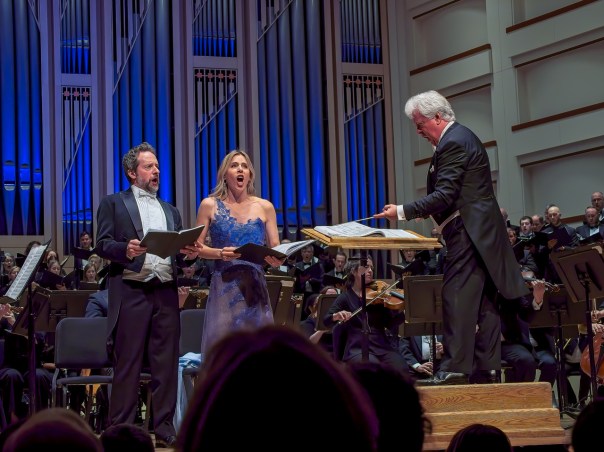
April 26, 2024, Charlotte, NC – Whether you love the sea for its surf, its tidal rhythms, its abundance of exotic creatures large and small, or its sheer vastness, Charlotte Symphony’s A Sea Symphony will deliver manifold delights – and a thrilling storm or two at no extra charge. The marquee piece, also known as Ralph Vaughan Williams’ Symphony No. 1, soars with enough poetry and ambition to be compared with Beethoven’s Ninth. The four-movement piece, studded throughout with the poetry of Walt Whitman, takes only five minutes less the Beethoven colossus to play, with the assistance of the Charlotte Master Chorale and two fine guest soloists, soprano Georgia Jarman and bass-baritone Andrew Foster-Williams. More than one Symphony season has concluded with the mighty Choral Symphony and nothing else on the bill, so it is quite generous that conductor laureate Christopher Warren-Green precedes A Sea Symphony with two other substantial seafaring works, Benjamin Britten’s Peter Grimes: Four Sea Interludes and Grace Williams’ Sea Sketches.

Artistically, opening night was a conquering hero’s triumphant return. Yet it was a mixed bag from a box office perspective. While the orchestra level was conspicuous disappointment, pocked with empty seats on a cloudy, balmy night, the grand tier was packed with loyalists and plutocrats, rewarding the performers’ upward gaze (if they ignored the sparsely populated balconies above). Warren-Green’s affinity for this music from the British Isles proved to be as deep as Vaughan Williams’ affection for Whitman.

Across the Carolinas, I’d venture to say that full-length productions of Britten operas are thinly scattered over the years, even at Spoleto Festival USA (Curlew River) or Brevard (A Midsummer Night’s Dream and The Turn of the Screw). Nobody around here realizes that Britten set another great classic, Herman Melville’s Billy Budd, to music?The scraps of Peter Grimes that Warren-Green brings us are therefore hugely philanthropic, even if they reprise a work the maestro introduced at Belk Theater ten years back.

In the first three of the four movements, Warren-Green reminded us how exquisitely he crafted color and texture. Following a dreamy “Dawn,” the middle movements were especially sublime. “Sunday Morning” was dotted with tubular bells – you could almost feel the mist they were ringing through – and that tolling was echoed in “Moonlight” with a simple conspiracy between harpist Andrea Mumm and flutist Amy Orsinger Whitehead. Not really simple if you listened closely, for the single notes they played were not in strictly regular tempo. The magical ritardando was guided by Warren-Green’s instinctive baton. Most everybody will be impressed with the orchestral power of the “Storm,” fueled upstage by the percussionists, but Britten provides an added wallop with the lull in his tempest, ominous with subterranean quaking.

If he weren’t almost a Welshman by birth, you wonder how Warren-Green would have become smitten by the music of Grace Williams (1906-1977). Looking the Welshwoman up in Spotify or Apple Music will likely steer you wrong – to a Christian music artist by the same name who looks, depending on how her hair is combed, like either Renee Fleming or Celine Dion on her album covers. If you dig a bit deeper on Spotify and Apple Classical, you can find a fine 2000 recording of the five Sea Sketches for string orchestra on the CBC label with Roy Goodman leading the Manitoba Chamber Orchestra. As you might imagine in a piece that is as meticulously pictorial as Debussy’s La Mer, a live performance discloses buried treasures above and beyond Warren-Green’s more sensitive response to the score. Most memorable for me were the ethereal “Sailing Song” and the concluding “Calm Sea in Summer,” distinguished by its beautifully modulating tempo and its simulation of the quiet wash of wet sands on the shore.

All isn’t dainty, however, though the opening “High Wind” isn’t blessed with full orchestral artillery. That movement is powerful in its own right, and “Breakers” is definitely punchy. In the middle of the five pieces, “Channel Sirens” might be the most intriguing, not seeming to target either the glamorous temptresses of The Odyssey or any kind of alarm. Williams may have been picturing tugboats in muddy or nocturnal waters, I don’t know. The music cast a uniquely portentous spell.

You really need to hear A Sea Symphony in live performance, not only for the bone-rattling surges of orchestra, chorus, and vocal soloists resounding through the Belk, but for the extended pianissimo at the end of the concluding “Explorers” movement. The outer movements, “A Song for All Seas, All Ships” and “The Explorers,” are epics in themselves, fittingly for Whitman containing multitudes. You might feel that we have reached the end of this mighty chorale when the opening movement ends, but it we are less than a third of the way into our voyage. The finale will be longer, grander, and more oceanic. In between, there’s the relative quiescence of “On the Beach at Night Alone” and the jaunty heraldic “Scherzo: The Waves,” where the Master Chorale, wonderfully prepared by Kenney Potter, give the lead vocalists a well-needed rest before their final cosmic exploits.

And if you’re familiar with Whitman’s “A Passage to India,” you know that cosmic is no exaggeration as the souls of the singers join the Good Gray Poet, in his most pantheistic and mystic dimensions, beyond the seas to the far reaches of the universe. Some big names have been attracted to the baritone part, including Thomas Hampson and Simon Keenlyside on the CDs that I own, but Foster-Williams emphatically holds his own – while Jarman easily surpasses most of the sopranos I’ve heard on recordings of this demanding work, nicely combining the power and beauty of both camps. She’s formidable as both a dramatic and lyric soprano.

Big Names and Big Sound Mark Symphony’s Return to Mainstream Programming

Review: Charlotte Symphony Plays Beethoven’s Fourth

 By Perry Tannenbaum

Vaccinated, boostered, masked, and carded, we’re all starting to feel more comfortable at public events these days. Charlotte Symphony had more than twice the number of musicians onstage on Friday night at Knight Theater, compared with just a couple of months ago. Social distancing is suddenly an ancient artifact. The stranger who presumed she could safely poach my seat at intermission readily took consolation by poaching the empty seat right next to me. Christopher Warren-Green felt so much at ease that, instead of scrounging for orchestral pieces that could be credibly performed by a reduced number of masked and distanced musicians, he stuck with a program of Mozart, Beethoven, and Prokofiev – returning to brand-name white male composers who have been dead for at least 65 years. And in a show of restraint that was unthinkable at the beginning of Symphony’s 2021-22 season, subscribers didn’t feel obliged to give every piece a standing ovation and every movement applause.

Premiered in 1918, Sergei Prokofiev’s “Classical” Symphony No. 1 actually qualifies as an antique. Looking back to Josef Haydn and Nikolai Rimsky-Korsakov for inspiration, with a third-movement Gavotte that the composer reworked for his 1935 Romeo and Juliet, the aim of the “Classical” was to straddle old and new styles. Warren-Green took a more delicate and reposeful view of the work than the one we find in the acclaimed London Symphony collection of Prokofiev’s seven symphonies conducted by Valery Gergiev. The joy of the work was also arguably purer at Knight Theater than that recording if you find Gergiev’s accelerated tempos more than slightly manic.

There was more than sufficient zest and high-stepping marching spirit in the opening Allegro con brio for the delicate episodes to stand out in relief. Lovely orchestral textures were lavished on the ensuing Larghetto, with principal Victor Wang and fellow flutist Amy Orsinger Whitehead peeping through to admirable effect. The CSO actually made better sense of the Gavotte than either of the recordings in my collection by the National Orchestra of the Ukraine and Gergiev’s London Symphony, starting out with a mock grandeur and ending a stealthy impish exit, better than the usual awkward afterthought. The purity of Warren-Green’s concept was especially apt in the joy emanating from the Molto Vivace final movement, where the composer made a special point of avoiding minor chords.

Although Beethoven’s Symphony No. 4 is the marquee piece now, Mozart’s Clarinet Concerto had top billing when it was last performed at the Knight in 2016 by guest soloist Michael Collins – interestingly enough, paired with selections from Prokofiev’s Romeo and Juliet. Charlotte native Taylor Marino was the soloist this time around. Maybe that was the reason that the Concerto surrendered top billing to the Symphony, but there was no surrender in quality. In the opening Allegro, Marino quickly demonstrated why he won numerous concerto competitions before joining Charlotte Symphony as principal clarinetist in 2019. Here there was ample drama from the orchestra behind Marino’s virtuosity, maintaining a brisk, effervescent tempo that subsided effectively into a sedate whimper.

The lovely Adagio, singled out in Amadeus as the quintessence of Mozart’s genius, was absolutely exquisite in Marino’s hands, answered richly by the lower strings and woodwinds. I can never help reminiscing, when I hear this concerto, about the shining moment in 2004 when I heard it played by Martin Fröst on a basset horn at the Concertgebouw in Amsterdam, conducted by Ton Koopman. There was no applause or standing ovation here, but a couple of people sitting behind me could be heard marveling. The concluding Rondo: Allegro was only a slight anticlimax after such sublimity, for Marino’s virtuosity shone brightly again, and the bassoons added extra punch as we rounded toward intermission.

Between the heroic Symphony No. 3 and the mighty No. 5, Beethoven’s No. 4 can be seen as a merry middleweight. Returning from intermission without a score, Warren-Green wanted us to be in on Ludwig’s prank, making the Adagio opening to the first movement extra grave before it broke through to the galloping panache of its dominant Allegro vivace section. Violins snapped off phases with whiplash sharpness, the trumpets added steel while the flutes frolicked. The languid Adagio never quite lapsed into lullaby as the bumptious trumpets maintained patrol – with more restlessness from the lower strings and principal timpanist Jacob Lipham, while Wang on flute was an island of lyricism. Acting principal bassoonist Joshua Hood earned a subsequent curtain call from Warren-Green in the cheerful Allegro vivace, heckling the cheerleading strings. Yet the violins had the emphatic last word in the closing Allegro ma non troppo, busily sawing when they weren’t dominating. The cellos and the double basses only momentarily stole their thunder in preparing us for the ultimate climax.

Looking ahead, the concert was a fine bridge to the weightier fare that lies in front of us, as the 2021-22 season builds toward a Mahler symphony and Beethoven’s Ninth.

Originally published on 11/21 at CVNC.org

Cox and Beilman Play the Changes, Guesting with CSO

Review: Charlotte Symphony Plays Wagner, Mozart, and Brahms

 By Perry Tannenbaum

2021~CSO Brahms Serenade-03

Holding our collective breaths, subscribers can hope that the current Charlotte Symphony program represents the last retreats from the fare originally announced for the 2021-22 season. Although Richard Wagner’s Siegfried Idyll replaced Zoltan Kodály’s Dances of Galánta and Johannes Brahms’ Serenade No. 2 replaced his Symphony No. 3, we still had guest conductor Roderick Cox and guest soloist Benjamin Beilman, though Beilman needed to be as flexible as the orchestra, switching from the Charlotte premiere of Samuel Coleridge-Taylor’s Violin Concerto to Mozart’s “Turkish” Violin Concerto No. 5. Of course, Brahms himself might have laughed out loud at the hasty substitution, since he had been so famously averse to attempting a symphony while Beethoven’s shadow still loomed so large. Compounding the hilarity, the Serenade No. 2 may have been historic, possibly the first closing piece at a Symphony Classics Series concert to be played without violins onstage.

Written for his wife, Cosima, in 1870 and later dedicated to their son upon publication, Wagner’s Siegfried Idyll isn’t extracted from any of his operas, though the music sometimes smacks of themes from The Ring cycle, especially Siegfried. It begins intimately enough, with a quiet string quartet, comprised of principals from the string sections, with concertmaster Calin Ovidiu Lupanu unmistakably the lead voice. So audience members at Knight Theater could easily imagine the romantic story of the music’s informal premiere, when Wagner stealthily placed his little orchestra (just 13 on that morning) on the stairway leading to Cosima’s bedroom while she was still sleeping – gradually awakening her as the music swelled. A couple of French horns and a trumpet eventually added force and volume to the composition, and principal oboist Hollis Ulaky played memorably in numerous spots.

2021~CSO Brahms Serenade-02

Beilman seemed to be even better matched with the Mozart than he had been with the Beethoven in his 2017 Charlotte debut. Hearing a live performance at this level was more rewarding than listening to my favorite recordings by Arthur Grumiaux, David Oistrakh, and Julia Fischer. By this time, it was quite obvious that Cox had taken the eleventh-hour changes in programming totally in stride, for the introductory orchestral passages of first two movements of the Mozart, an Allegro aperto followed by an Adagio, had a bloom that rivaled the most sublime passages in the Wagner, with no less polish. Beilman’s highest notes had admirable muscle, his pianissimos in that stratosphere were ethereal, and his midrange was as burnished as I had remembered from the Beethoven. The closing Rondeau showed us how truly ingratiating Beilman can be as he genially swayed us in a waltzing 3/4 tempo – then suddenly jerked us out of our comfort zone as he and Cox conspired, nearly halfway in, to bring extra drama to the sudden lurch into the “Turkish” section of this movement and its lively duple tempo. Try counting this section any other way than 1-2, 1-2, 1-2… I couldn’t.

2021~CSO Brahms Serenade-07

Unlike so many of the serenades inflicted on us – there, I’ve said it! – during the pandemic, Brahms didn’t limit either of his to strings alone. The Serenade No. 2 includes a full complement of woodwinds and a pair of French horns. Bassoonists Joshua Hood and Naho Zhu were unusually prominent in the reedy opening measures of the Allegro moderato, with flutists Victor Wang and Amy Orsinger Whitehead soon afterwards coming to the forefront. Violins over plucked cellos and basses heightened the intensity and made a pathway for Ulaky on oboe to shine again. Rigidly on-the-beat handling his stick, Cox made the ensuing Scherzo: Vivace more march-like than the acclaimed Michael Tilson Thomas recording, but the rhythmic thrust and liveliness remained unmistakable.

2021~CSO Brahms Serenade-09

Audience members should have noticed by this time that Brahms intended his clarinetists to switch between A, C, and B-flat clarinets over the course of this Serenade. Churning lower strings (remember, there weren’t any violins) ushered in the middle Adagio non troppo movement, but principal woodwind players had sufficient time to leave their imprints, including Ulaky, Wang, and – far in the treble – clarinetist Taylor Marino. With Cox taking a notably sprightly take, the penultimate Quasi menuetto was more of a trinket than the Scherzo had been, Ulaky and Wang excelling once again. Discarding all remaining restraint and tenderness that we might have expected from a Serenade, Cox and Symphony made the closing Rondo a rollicking romp from the first bars, clearly taking aim at compensating for the lack of a symphony on the program. Oboes, clarinets, and horns led the charge, with the low strings high-stepping right behind them. Erinn Frechette finally had chances to tweedle on her piccolo as the winds reached their maximum effervescence, but the congregation of strings eventually had their say, building to a satisfying ending.

Dvořák’s New World Picks Up Slack in Symphony Concert

Review: Charlotte Symphony’s Dvořák’s New World Symphony

By Perry Tannenbaum

2019~Dvořák’s New World-5

Sometimes orchestras program pieces to meet popular demand, and at other times, they program works to meet expectations or fulfill a sense of obligation. It’s so easy to yield to inertia! This past weekend’s Charlotte Symphony concerts balanced both types of choices. Dvořák’s New World Symphony is so popular in the Queen City that an extra row of seats was set up at Belk Theater behind the already-packed Grand Tier.

Before subscribers could be appeased with the New World they were waiting for, we had to withstand lackluster performances by the CSO and guest conductor Ilyich Rivas of Robert Schumann’s “Overture to Manfred” and Johannes Brahms’ Variations on a Theme by Haydn. Neither performance convinced me that Symphony musicians were familiar with the music or took much pleasure in playing it. I was unsure myself whether I had ever heard these pieces before at the Belk.

My files confirmed how consistently forgettable the ensemble had been tackling this repertoire. CSO had last played the Schumann at the Belk in 2001, when I declared that the orchestra had fallen far short of the composer’s Byronic ambitions. Each of the two occasions since then, when Symphony had played the Haydn Variations in 2002 and 2010, I had found that the results were similarly moribund. Outcomes were perhaps marginally better last Friday night, though it’s still uncertain whether our musicians are completely sold on either of these works.

Wouldn’t it be better for everybody if Symphony put fresh new or unfamiliar scores on their players’ music stands – instead of repeatedly exhuming stuff like this so unenthusiastically?

While Amy Orsinger Whitehead ably headed the flutes and the brass accented well, violins seemed sloppy and lackadaisical in the Manfred, their exchanges with the brass and winds more precise than those with the lower strings. Rivas probably sparked more energy and cohesion than in the performance of the Variations led by Christof Perick in 2010, which observed pauses between variations.

But there still wasn’t enough zest – or dramatic contrast – to assure us that everyone was relishing their part, and there was little of the exquisite delicacy we have come to expect in softer, slower movements since Christopher Warren-Green took over the musical director’s baton. A limpid calm prevailed in successive reposeful Con moto movements that descended into lifelessness before a Vivace revival, and even the Finale, an Andante that can be grander than grand, grew slightly slack though it was still strong.

2019~Dvořák’s New World-6

Indicative of the éclat they created the last time they performed Dvořák’s Symphony No. 9, “From the New World,” Warren-Green and the CSO waited only four-and-a-half years to reprise their triumph – and with Rivas on the podium, the orchestra satisfied its subscribers just as fully. The magical mojo of 2015 wasn’t quite replicated, but then again, my expectations could no longer be taken so completely by surprise.

And to be truthful, Symphony didn’t get off to a great start this time, the French horns not as solid as the lordly trombones when we moved from the Adagio section of the opening movement to the sweeping Allegro molto. But the horns didn’t take long to steady and the flutes, Orsinger and Erinn Frechette, were superb; and gosh, the sforzando at the end of the movement had a fierce snap.

Four years ago, Warren-Green took the trouble to wade into the orchestra after its New World performance and embrace English horn principal Terry Maskin for his playing of the “Goin’ Home” theme in Dvořák’s lovely Largo movement. Rivas would not have been faulted if he had done the same. The flutes had a sunshiney glint in their frolics, the soft violins wove mystical enchantment, and the brasses and horns added dignity each time they were cued.

Dvořák’s crowning achievement fittingly premiered in the New World at Carnegie Hall in 1893, and the third movement Molto vivace, inspired by Longfellow’s Song of Hiawatha, has always seemed the most prophetic to me, spawning the film scores of multitudes of Westerns yet to be shot in our rugged plains, canyons, and badlands. All went well here until the ending became too disjointed for comfort.

Rivas regained – and then retained – his mastery in the awesome Allegro con fuoco, where the Old World can be felt birthing the New World and our fearsome Manifest Destiny marches westward, arrogant and irresistible. (“Get over it!” professed patriots might respond.) The Venezuelan-born conductor beautifully navigated the protean moods, and the orchestra keenly grasped the moment. In the wake of the heraldic brass, the violins burst forth with a vigor that had been missing earlier in the evening, adding new summits of grandeur. When the music grew soft, the woodwinds, especially the flutes, sweetened it; each time the brass and strings rallied, Ariel Zaviezo and his timpani triggered the uprising.

Cherokee Anguish Upstages “Sleeping Beauty” in Symphony Concert

Review:  Sleeping Beauty

By Perry Tannenbaum

We’ve had a copious amount of Russian music from Charlotte Symphony this year. Rachmaninoff’s Symphonic Dances and Rimsky-Korsakov’s Scheherazade headlined the first two classics concerts of 2019, and Tchaikovsky’s Sleeping Beauty suite is continuing the trend. Even after Symphony emerged from their annual retreat in the Belk Theater pit with Charlotte Ballet’s production of Nutcracker, subscribers do not seem to tire of this steady Russian diet.

The presumption may be that we’ll see better attendance if the featured piece is Russian rather than American, old-style rather than new. Sleeping Beauty wasn’t as long as Michael Daugherty’s Trail of Tears concerto or as new as Aaron Copland’s more familiar Billy the Kid suite, which kicked off the evening. Nor was it played with the same verve at Knight Theater under the baton of guest conductor Joseph Young, who actually has educational, vocational and family ties in the Carolinas.

Principal flutist Victor Wang stepped downstage to play the solos in Daugherty’s concerto, deftly flutter-tonguing, overblowing, and producing multiphonics and glissandos – upstaging the marquee ballet suite that followed after intermission. In the context of the forced Cherokee migration carried out by the U.S. Army in 1838-39, pursuant to Indian Removal Act of 1830, the chord-like multiphonics and glissandos sounded like laments or nostalgic reflections, the overblowing sounded somber and contemplative like a Japanese shakuhachi flute, and the flutter-tonguing had a range of emotional connotations, submission one moment and terror at other times.

There was so much more to admire in Wang’s playing beyond the special effects, particularly in the lyrical middle movement “incantation” that followed the longer, more turbulent “where the wind blew free” section. You might wonder why the concluding “sun dance,” starting off so lightly, becomes as turbulent as the opening movement. Daugherty gives us a moving explanation in his program notes, reminding us that the religious dance ceremony of the Plains Indians was banned for a full century by the U.S. government.

While Wang had a clear path, consistently giving voice to the soul and anguish of Native Americans, Young had a more jagged course steering the orchestra. The delicate early percussion at the start of the outer movements – xylophone, harp, and piano – was obviously consonant with the flute, but the drums sent different signals. In the opening “wind blew free” movement, the snares cued the Trail of Tears march, taking on the role of the Army tormentors, but in the closing “dance,” the timpani were unmistakably tom-toms. Strings could also be mellow or suddenly abrasive as Young navigated this fascinating, bumpy trail.

Notwithstanding the timings provided in Symphony’s program booklet, the Sleeping Beauty suite was actually the shortest piece on the program. But there’s nothing at all sleepy about the opening episode of its opening movement. It should sound like we’ve been improbably dropped into the raucous section of Tchaikovsky’s Romeo and Juliet fantasy overture where the composer simulates the strife between the Montagues and the Capulets. Instead of medieval Verona or ancient fairyland, the orchestra sounded more like contemporary Vegas – or a carryover of Daugherty’s prairie.

When the music becalmed the brass bloomed, and the Tchaikovsky ballet style became recognizable, but rarely with the charm that Symphony radiates every December in Nutcracker. The grandeur of the Pas d’action didn’t quite wake up, and though I love the eerie foreboding sound of the Puss and Boots sketch, this performance didn’t deliver the predatory snap that should make it memorable. The shimmering magic of the “Panorama” section was mostly moribund until principal harpist Andrea Mumm Trammell gracefully soloed to close it out.

Symphony recovered its swagger to close the evening with the familiar Sleeping Beauty waltz, but this wasn’t the sort of piece that Peter Ilyich intended to climax an evening of ballet, let alone an evening of orchestral music. A lead-off spot would have been more appropriate. As it turned out, Copland’s Billy the Kid suite vied with Trail of Tears as the best performance on this night.

Amy Orsinger Whitehead ably took over the flute chair while Wang waited in the wings, leading a volley of wind solos sounding Copland’s recurring “Open Prairie” theme, followed by principal clarinet Taylor Marino, principal oboe Hollis Ulaky, and French hornist Byron Johns. Pounding the timpani, acting principal Ariel Zaviezo Arriagada signaled the onset of the “Gun Battle,” but this dark episode didn’t eclipse the sunny impression made by Erinn Frechette, merrily playing the piccolo solo when we reached Copland’s “Frontier Town.”

With players of this caliber – and the zest that Young brought to this repertoire – I daresay that even Symphony’s stodgy subscribers would have been better pleased by an All-American evening. Whether they would have attended is a different question.

Charlotte Symphony Concertmaster Spearheads a Devastating “Scheherazade”

Review:  Scheherazade

By Perry Tannenbaum

Among over 100 versions of Rimsky-Korsakov’s Scheherazade that you can find on Spotify, the name of the violinist who plays the title role, in rare instances, will appear on the album cover. Given the enduring popularity of this Arabian Nights suite and the challenges it presents for our narrator, you can probably assume that the part of Scheherazade would be a prime arrow for an aspiring concertmaster to have in his or her quiver. Charlotte Symphony’s ace violinist, Calin Ovidiu Lupanu, proved once again that he had it. Unlike his previous triumph at Belk Theater as the spellbinding Arabian in 2009, Lupanu didn’t upstage conductor Christopher Warren-Green, who was then auditioning for the music directorship he now holds. No, this triumph could be credited to the entire orchestra, a redemption that was lifted even higher with a sense of renewal as Symphony’s new principal clarinetist Taylor Marino and their new principal bassoonist Olivia Oh made auspicious Belk Theater debuts. The program was also more propitiously supplemented, with the prelude to Englebert Humperdinck’s Hansel and Gretel launching the evening and Richard Strauss’s youthful Don Juan bringing us to intermission.

If you were expecting that lineup to be altogether spirited, lyrical, and upbeat, Humperdinck’s “Prelude” would have been a surprise. After Warren-Green dedicated the evening to the late Wolfgang Roth, Symphony’s former principal second violin, the soft and soothing choir of French horns set an appropriate tone and the sheen of the violins added soulfulness to the dedication. In the uptempo section that followed, Warren-Green banished all Wagnerian influences, so the piece became summery and bucolic. When the music crested and became rather grand for a children’s fairytale, the mood we arrived at was jubilation rather than conquest.

Maybe the Warren-Green dedication, assuring us that Herr Roth was listening, was the reason that everybody in the orchestra brought their A-game. Not only did Symphony eclipse their previous Scheherazade of 2009, they bettered their Don Juan performance of 2005 under the able baton Christof Perick. Lupanu gave us foretastes of things to come, sparkling in his early exchange with the glockenspiel and getting in on more of the storytelling late in Strauss’s tone poem with principal harpist Andrea Mumm Trammell, another harbinger of sweets to come. But it was the horn section and principal Frank Portone who atoned most mightily for the blemishes of yesteryear, announcing the Don’s heroic theme and keying a thrilling climax before the timpani and brass piled on. Warren-Green not only measured up to Perick’s Strauss expertise, he provided a useful explication, in his introductory remarks, of the full stop at the climax of the piece and drew our attention to the beautiful love song that principal oboist Hollis Ulaky would play. She did not disappoint.

All across Scheherazade, Lupanu and Trammell renewed their gorgeous partnership, stitching the narrative together, but it was Lupanu who reveled in the most virtuosic opportunities. In the opening “Sea and Sinbad” movement, Lupanu played so softly that Trammell’s harp actually sounded louder at times. He was commanding in one of the passages I most look forward to, the speed-up that cues the full orchestra’s build to the full epic, oceanic majesty of Rimsky’s symphony. Oh emerged impressively at the forefront for the bassoon’s graceful statement of the “Kalendar Prince” theme, and Marino was scintillating in the lyrical “Young Prince and the Young Prince” movement, first in the magical run after the gorgeous theme and later in the accelerated waltz section, dancing with the two flutes. Yet Lupanu reasserted his dominion with a narration that included some ricochet bowing before the orchestral repeat of the waltz and a delicate fadeout.

Lupanu’s double-bowed intro to the eventful finale – “Carnival,” “Sea,” shipwreck, “Bronze Warrior” – moodily contrasted with the busy tumult to come, beautifully dispelled by flutists Amy Orsinger Whitehead and principal Victor Wang as we arrived at the boisterousness of Baghdad. It had seemed that Warren-Green and Symphony couldn’t surpass the power and majesty of the opening movement, but they had not peaked too soon. There was a phantasmagorical speed and madness to the festival that broke dramatically into the “Sea” section with muscular brass and towering grandeur. Not an easy episode to follow, but Lupanu saved his most devastating eloquence for his final cadenza, sustaining a cluster of long high harmonics over the harp.

Mendelssohn’s “Italian” Symphony Upstaged by Epic Paganini Concerto

Review:  Italian Symphony

By Perry Tannenbaum

Last week’s Symphony concert at Knight Theater, Italian Symphony, was a bit of a double entendre. Yes, the featured work on the program was Felix Mendelssohn’s Symphony No. 4, also known as the “Italian,” but all the other pieces on the bill had something Italian about them, even if the composers hailed from cooler climes. Other than Mendelssohn, we heard from Parisian maestro Hector Berlioz, whose musical marinara, gleaned from his poorly-received Benvenuto Cellini opera, was discreetly called “Roman Carnival Overture.”

In between these two non-Italians, we heard from Luciano Berio and the virtuosic Niccolò Paganini. Our guest conductor, Milan native Roberto Abbado, sustained the Italian connection. Only our guest soloist, Muscovite violinist Sergej Krylov, broke the Italian mold – unless we also consider the Charlotte Symphony musicians.

The last time Symphony played the “Roman Carnival Overture” in 2012, we were also at Knight Theater, but maestro Christopher Warren-Green had to battle the embryonic acoustics of the stage, which swallowed much of sonic details before they reached the audience. With the handsome wood-grained shell that now encloses the orchestra, strings sounded mellower and more immediate, the thrumming percussion that prodded the tempo had a far more audible and visceral effect, and the whole piece was livelier, with trombones asserting themselves in the final build.

Abbado seized upon the intro to Paganini’s Violin Concerto No. 1 – its precipitous pauses, hairpin tempo changes, sudden thunderous outcries, and outbreaks of joyous melody – and brought out its kinship with Rossini’s overtures. The pause before Krylov’s bravura entrance was so emphatic that the intro might rightly be looked upon as an overture. As for Krylov, while he isn’t Italian, his pedigree for the Paganini concerto can hardly be bettered, for he studied under the renowned Salvatore Accardo, arguably the greatest living exponent of the entire Paganini violin repertoire. Accardo’s six-CD collection; including six concertos, the famed Caprices, and more; is calling out loudly to everybody at Knight Theater who sampled the goodies.

Of course, seeing this music performed live surpasses what you can merely hear. The speed, the exquisite harmonics, the double bowing, and the ricochet bowing heighten the drama when you watch them executed with such energy, deftness, and excitement. In the heat of the opening Allegro maestoso movement, you could see concertmaster Calin Lupanu and principal cellist Alan Black craning their necks to see around Abbado and fully savor what Krylov was doing. Not only was it epic enough to draw their smiles, most of the audience jumped up and gave the violinist a rousing ovation – forcing him, somewhat sheepishly, to remind us that there were two more movements to come.

The middle Adagio movement really required the audience to quiet down if it were to be heard, an oasis of tranquility before another onset of dazzle and fireworks. Anyone who had overlooked the purity of Krylov’s tone, particularly on the low notes and midrange of his instrument, could savor it here. Where the movement builds in volume and passion, both the soloist and the orchestra were up to the drama. The final Rondo: Allegro was shorter than the epic opening, but with some bodacious pizzicato work sprinkled amidst more frequent ricochet episodes, Krylov was no less spectacular, sparring a little with acting principal trumpeter Alex Wilborn along the way.

For those of us who love Luigi Boccherini’s guitar quintets, it bordered on criminal that credit to Luigi as the original creator of “La ritirata di Madrid” was deferred to the program notes on Berio in Symphony’s program booklet instead of in the main concert listing. All the guitar quintets are delightful, but the named pieces, the “Fandango” and “La ritirata,” are the stunners. Both take their names from their fourth and final movements, where Boccherini stretches the limits of his ensemble – string quartet plus guitar – by adding percussion effects. In the “Fandango,” he sneaks in a pair of castanets while the guitarist forcefully strums, but in the “Ritirata,” the strumming of the guitar simulates the fanfare of a full marching band, supplying all the percussion as the platoon moves through town and retires quietly to its barracks.

With principal Andrea Mumm Trammell sweetly plucking her harp, Berio’s orchestration of the arrival could be even quieter and stealthier. Nor did Berio deprive us of the services of traditional percussion – plus trumpets – where Boccherini had brought his quintet to a full roar. It was quite obvious that Abbado and Symphony relished their opportunity to bring orchestral power to this chamber music classic, and the fadeaway finish was absolutely adorable.

If Krylov’s pedigree was optimal for the Paganini, then no less can be said for Abbado’s with the Mendelssohn. Many regard the recordings by Claudio Abbado, Roberto’s uncle, as the most definitive traversal of Mendelssohn’s five symphonies. The nephew stamped his authority on the “Italian” in the opening measures of the most familiar movement, the vibrant Allegro vivace. Unlike the metronomic statement of the long melody line that we heard from Warren-Green and the ensemble in 2013, Abbado had a freer feel for the opening movement, the violins setting an exuberant pace and the winds injecting softer replies.

While the middle movements were mellow and satisfyingly cohesive, contrasting effectively with the bracing beginning, Abbado seemed to allow the lull to have a lingering effect on the Saltarello: Presto finale. The two flutists, Amy Orsinger Whitehead and principal Victor Wang, led a spirited charge into the breech, but when the strings answered back, it was merely with their former exuberance and not with a new ferocity or fire. Instead of Mozart bumping into Beethoven, it was more like Mozart flowing into Mozart, insufficiently bolstered by the timpani and brass. The flutes’ charge should have ignited more magic.

Beethoven’s Fifth Recaptures Its Elemental Fire

Review:  Beethoven’s Fifth

By Perry Tannenbaum

Meeting an anticipated demand, Charlotte Symphony is programming their 2018-19 season opener, Beethoven’s Fifth, for three concerts instead of the usual two – and meeting subscribers’ hopes, they’re playing it beautifully. Leading off their season with an all-Beethoven program, music director Christopher Warren-Green and his ensemble weren’t exactly blazing new trails.

Last fall, Symphony also led off all-Beethoven, playing his mighty Ninth, and followed that program with more Beethoven in two of the next three concerts. So if anything, Symphony is tapering off on their Beethoven offerings this year – but not ignoring their audience’s rabid enthusiasm for his music. What’s impressive is that the musicians have maintained their enthusiasm as well.

A surprisingly small contingent, less than 50 players by my count, came out and played the “Overture to The Ruins of Athens,” one of Beethoven’s less familiar orchestral works, before guest soloist Garrick Ohlsson came out to perform the Piano Concerto No. 4. I couldn’t detect much desolation in The Ruins after its slightly gloomy intro. The first oboe statement was like a dewy sunrise, triggering a burst of orchestral merriment that drew a festive rejoinder from the oboe and jollity from the two flutes fluttering over the bassoons.

Such a charming appetizer! Then a big video screen descended from the Belk Theater proscenium, and the Steinway was wheeled to centerstage.

Ohlsson’s last appearance with Symphony was back in the early ‘90s, long before an overhead shot of the keyboard could disclose the size of this man’s hands for all to see as he attacked the keyboard. Those prodigious digits didn’t quite stop moving long enough for a conclusive measurement, but it sure looked like his pinkies were as large as the black keys. With that view, what was perhaps most impressive about Ohlsson in the first two movements was his delicacy and grace.

The opening Allegro moderato shuttled between swift, powerful passages and soft lyrical episodes. Ohlsson played both admirably, effortlessly, trilling with both hands simultaneously and, in the dramatic cadenza, clearly articulating its counterpoint. Warren-Green asserted himself more noticeably in the middle Andante con moto movement, so that it became a dreamy dialogue.

Every note of the concerto sounded fresh and new – until we slid into the familiar final movement with hardly a pause. Everyone onstage lit into it with gusto, the swift finger work at the start of this Rondo presenting no difficulty at all for Ohlsson, who proved that he was holding his full power in reserve for this celebratory climax. Ebb and flow weren’t so much about tempo here as they were about dynamics. Ohlsson and Warren-Green meshed beautifully to sculpt the loud and soft moments in a most satisfying way.

As the program notes on the concerto pointed out, it was especially fitting that Symphony had paired Piano No. 4 with the Fifth Symphony, for they were both premiered on the same December evening in 1808 – at a concert in Vienna, where Beethoven played and conducted. That marathon event also unveiled the Sixth Symphony, the Choral Fantasy, four movements of the Mass in C, and the “Ah! Perfido” aria for soprano. Although Warren-Green didn’t mention this historic landmark, when Beethoven would play for the last time in public due to approaching deafness, you can bet he was aware of it.

Six years ago, when Warren-Green conducted the concerto for the first time at Belk Theater, he paired it with Symphony No. 4, also in an all-Beethoven concert that launched the season. On that occasion, Warren-Green did mention that the very first time Beethoven performed the piece in a private concert at the palace of his patron Prince Joseph Lobkowitz in March 1807, he also conducted his Fourth Symphony.

This time around, Maestro called our attention to the fateful opening of Symphony No. 5, “the most famous four notes in the history of music,” saying that this was also the most familiar instance of Beethoven utilizing the music of the French Revolution, something he did throughout his career. Well, that pungent insight illuminated the entire symphony for me. Partly because of Warren-Green’s remarks, a piece that I had come to regard – and describe – as the most perfect ever written became freshly infused with its revolutionary spirit and elemental fire. Repeated hearings of recorded performance, I realized, had dimmed that fire for me.

Even in the relatively quiescent third movement, mostly notable for its 3/4 time and exquisite pizzicatos, there are brief outbreaks of revolutionary marching spirit, and afterwards, a gentle thrumming of the seething timpani as the whole simmering string section comes majestically to a boil and explodes – with a mighty entrance of trumpets – into the joyous, triumphant finale.

From the outset, Warren-Green spikes the sforzandos with terrific force, but the opening Allegro also features fine spots by principal oboist Hollis Ulaky and the French hornist to mellow the brew. It’s the trumpets that ignite the revolutionary fervor at the beginning of second movement Andante, exactly the kind of march that Warren-Green’s prefatory remarks suggested, but you’ll also hit a heavenly patch from the cellos that struck me as a foretaste of Wagner’s Rhein at this listen. Wonderful hushes of strings here hit me as one of the underappreciated reasons why we adore Beethoven. Some exquisite work lightly showered from flutists Amy Orsinger Whitehead and principal Victor Wang.

Maybe Erinn Frechette as well. From my vantage point up in the Grand Tier, I didn’t notice her until I heard her amid the tutti of the final Allegro, when she picked up her Little David of instruments, the piccolo. There she was, perfectly obscured in my line of sight behind Warren-Green! By contrast, I had noticed the elephantine contrabassoon lying neglected on its stand all evening. Only when the whole orchestra was wailing underneath Frechette in the symphony’s full-throated climax did I realize that Lori Tiberio had picked up her lumbering Goliath and was playing with everyone else. Why Beethoven had bothered with her and her contrabassoon I couldn’t say, for I cannot claim to have heard a single note.

I’m sure it was there. But I’ll stop short of making another claim, for I’d likely be surrendering a chunk of my judicial credibility if I told you that Beethoven not only wrote more stirring movements than the immortal “Da-da-da-DAA,” but that one of them is just a short distance down the road in the same Fifth Symphony. That’s one key reason why you need to experience this orchestra playing this music in live performance at the Belk.

Charlotte Symphony Spotlights the Balcony in “Romeo and Juliet” Tribute

et-romeo-juliet-maria-kochetkova-joan-boada-end_1000

By Perry Tannenbaum

May 20, 2016, Charlotte, NC – A distinguished scholar who taught my undergrad Shakespeare course once told us that a precious folio edition of the Bard’s plays was on display at one of England’s most prestigious libraries, available to all to peruse, and that the most well-worn page in the whole book – by far – was the balcony scene from Romeo and Juliet. “Rightly so,” she added after a brief pause, defusing my presumption that she was about to sneer at popular taste. Charlotte Symphony Orchestra musical director Christopher Warren-Green might very well agree with my professor’s sentiments, for at the latest KnightSounds concert, he programmed that scene twice in succession, underscoring the fact that we still haven’t tired of that balcony 400 years after Shakespeare’s death.

Helping the demonstration at Knight Theater were emissaries from UNC Charlotte’s Theatre Department and Charlotte Ballet. Charlotte-based soprano Melinda Whittington helped to similarly double-underline the appeal of two other prime Juliet moments. So in the space of a mere 70 minutes, 50 less than the “two hours’ traffic of our stage” promised in the tragedy’s prologue, we not only had orchestral and operatic works inspired by Shakespeare’s first great tragedy, we had the lovers themselves speaking the lines of their most memorable scenes.

Tchaikovsky, Gounod, Prokofiev, and Nino Rota all took their cues from the blank verse and rhymed couplets in different ways. Of course, Tchaikovsky’s famed Fantasy-Overture wasn’t written for any specific production of Romeo and Juliet. With three fully developed themes for Friar Lawrence, the Montague-Capulet strife, and the R&J romance, the flavor of the piece is more like a Liszt tone poem than a true overture. About half the size of a Tchaikovsky symphony, the KnightSounds performance quickly offered us opportunities to savor the work of the clarinets, the double basses, the violins, the French horns, the cellos, the flutes, and harpist Andrea Mumm.

At the same time, the performance was streamed outdoors to the plaza at the nearby plaza on the Levine Avenue of Arts, and the screen hovering above the Knight Theater stage gave us the pleasure of seeing what the outdoor audience saw with the added thrill of the live sound. There were more than enough cameras deftly at work to prove that this video production had been nearly as meticulously rehearsed as the music. We didn’t cut to the French horns or the cellos in the early going, and the cameras later settled on the second violins too late and missed English hornist Terry Maskin entirely. Yet overall, direction was quite polished.

Romeo & Juliet 'Plazacast' Closes KnightSounds Sitting toward the front of the orchestra, I found that the cameras consistently revealed who was playing upstage when the musicians in front of them blocked my sightline. My fears of being overwhelmed by the sheer loudness of the orchestra were also allayed: the acoustic shell that graces the Knight stage gathers in the orchestral sound while still allowing it to breathe. This was different from the old school presentation that the CSO brought us of the Fantasy-Overture at Belk Theater in 2011, and while there was little to prefer musically at either performance, I have to say that the camera work lifted the current experience above the one I praised five years ago, enriching what I saw and heard then with occasional close-ups of Warren-Green’s expressions.

I had little hopes for the UNC Charlotte segments of the evening, with Jennifer Huddleston appearing as Juliet and Sammy Hajmahmoud as Romeo. When their stage director, Professor Andrew Hartley, appeared onstage to recite Shakespeare’s prologue, he didn’t exactly fire up my hopes. Nor was I initially impressed with Hajmahmoud when he initially came onstage to launch the party scene where the masked Romeo first meets Juliet. But Huddleston was pure luminosity as Juliet, instantly proving the advantage of casting the role as youthfully as possible. The glow of her performance magically turned Hajmahmoud’s halting awkwardnesses into virtues and he gradually relaxed into Romeo, further igniting their chemistry. Together they grew irresistibly charming, somewhat upstaging their elders when they followed.

13263907_1718667768397005_7712306438347482717_nAfter Huddleston, Whittington seemed woefully mature as Juliette singing the bubbly “Je veux vivre” from Gounod’s opera. The costume she wore was comparatively formal and neither the suppleness of her coloratura nor the lightness of her tone matched what we hear from elite sopranos in this showpiece. But she returned later in the concert and absolutely scorched Juliette’s “Potion Aria,” demonstrating the power that opera can add to turbulent moments of indecision. Huddleston and Hajmahmoud do all the potions and suicides as well, but their most glorious moments – and Hartley’s as well – come when they do the balcony scene.

Romeo initiates the scene onstage, but a spotlight cues us to the likelihood that Juliet will appear in the box seat section of the Knight’s balcony. It’s absolutely sublime when she does. Part of the magic is sculptural, after all, for the moonlit Juliet is not only more divine at a height, Romeo is more ardent and worshipful below her with his upward gaze. Hartley played around with the usual blocking and Romeo’s climbing up and down, but somehow he contrived to have Juliet down at the orchestra level and onstage for the latter half of the scene and its exquisite farewells.

The “Balcony Scene Pas de Deux” from Prokofiev’s ballet score had to follow this sublimity, and the presence of two eminent Charlotte Ballet principals, Josh Hall and Alexandra Ball, helped to ease the descent. Hall and Ball were so impressive, in fact, that I fairly well ignored Prokofiev’s music and the excellence of the orchestra. But as majestic as the lifts were – Ball’s hands as she rises have a musicality that most ballerinas can only envy – the sculptural advantages of the theatrical staging we had just seen were surrendered, along with Hajmahmoud’s touching awkwardness and Huddleston’s youth. An impossibly acrobatic final kiss partially compensated for those missing elements

After the stunning sequence of balcony scenes and potion scenes, the concert grew more somber with Rota’s “Romeo and Juliet: A Renaissance Timepiece” and Hartley’s pronouncement of the tragedy’s concluding lines. Until I heard CSO’s performance, I’d assumed that the Rota melody most familiar to me was his “Theme from The Godfather.” As often as I’ve heard that tune over the years, I wouldn’t be surprised if I’d heard Rota’s Romeo and Juliet melody even more often. The familiar melody nestles nicely in a composition that has more to offer, with some gorgeous work from Mumm, oboist Hollis Ulaky, and flutists Amy Orsinger Whitehead and Erica Cice.

An evening that I expected to be pleasantly light and superficial turned out to be rich and deeply satisfying. Programs were in the funky style that usually characterizes the KnightSounds series, but they are augmented by the Charlotte Symphony app that can be downloaded to your smartphone. You can get bios of the featured professionals from this app as you ease into your seat – it’s general admission, so early arrival can be recommended. While I couldn’t confirm my suspicion that Charlotte Ballet artistic director Jean-Pierre Bonnefoux was the choreographer, the app did supply translations of the Gounod arias.