Reviews: Opera, Chamber Music, Orchestral Music, and Alisa at Spoleto
By Perry Tannenbaum
Three different sea changes have reshaped Spoleto Festival USA since Nigel Redden, responding to the WSYWAT turmoil that followed in the wake of George Floyd’s brutal murder, departed after the 2021 season. Redden saw himself in the crosshairs of the 2020 We See You White American Theatre manifesto, though he wasn’t strictly a theatre person, and felt that steeping as aside was the honorable thing to do.
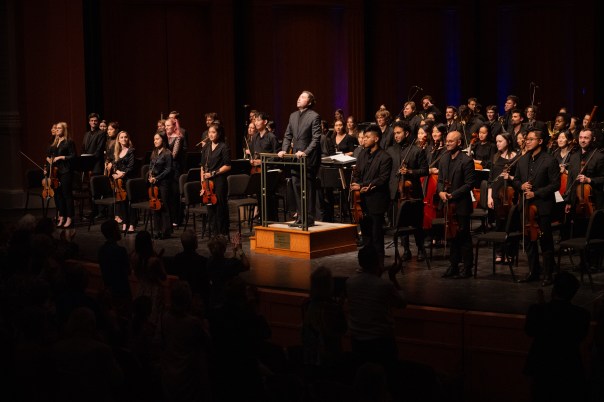
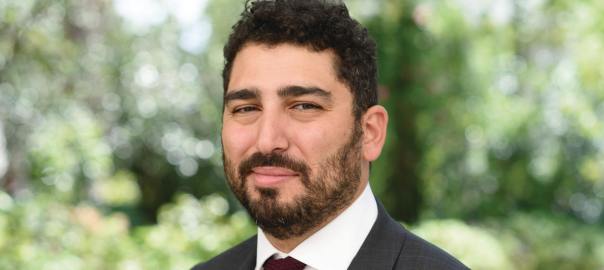
Diversity has never been inimical to Spoleto, which has always looked more Euro and Afro than American. Yet as Spoleto 2025 concludes, a near-total change of artistic leadership has transpired – with an unmistakable lean toward diversity. Mena Mark Hanna has replaced Redden as general director. Paul Wiancko has filled the void left by the charismatic Geoff Nuttall’s sudden death, taking over the reins of chamber music programming. When John Kennedy was abruptly dismissed after the 2023 season, Timothy Myers became music director, wielding the Spoleto Orchestra baton.
And Joe Miller, after 20 seasons as director of choral activities, is resigning to lead the Vocal Arts Ensemble in Cincinnati. His Spoleto farewell, Bach’s Mass in B Minor, will be followed soon by an announcement of his successor in Charleston.
Conversely, Spoleto is responding to fiscal, box office, and government funding pressures to be more self-sufficient. While Kennedy’s programming arguably made the festival America’s chief hub for 21st century classical music composition, his afternoon Music in Time programs were as much box office poison as they were cutting edge. That experimental ghetto has disappeared while Wiancko and Myers have integrated more infusions of contemporary, new, and world premiere music into the festival’s chamber music and orchestral offerings.
Beyond shrinking the outré and avant garde, Spoleto is expanding its pop, punk, folk, and R&B presentations to no less than a dozen Front Row events with Patti Smith, Band of Horses, Mavis Staples, Lucinda Williams, and Jeff Tweedy among the headliners. The strategy is to “expand the aperture” in Hanna’s words, offset the losses of more adventurous fare, and make Spoleto more accessible to a wider audience. Hopefully, these newbies may be tempted into tasting the 17-day festival’s higher protein offerings.
Other belt-tightening measures include offering 15%-off discount packages of tickets to multiple events, and ending of the longstanding tradition of inviting a theatre company from abroad to co-tenant the Dock Street Theatre with the lunchtime chamber music series. Wilder still, two of the Dock Street chamber music concerts were staged during evening hours! Sacrilege.
Finally, little touches in the festival brochure and the program booklet underscored a deepset commitment to making Spoleto more navigable and customer-friendly. Jazz fans could gorge on all the Spoleto headliners within the space of 10 days, while theatre lovers could get their fill in seven.
While both of these lineups were tilted toward the latter half of the festival; opera, dance, and orchestral music could be largely traversed within the first 10 days; along with seven of the eleven chamber music programs. As compacted as the scheduling was for festivalgoers devoted to one genre, omnivores like me who preferred a mix found themselves stretched. For us, the scheduling was scattered and fragmented.
How appropriate, then, that the most awesome classical music event this season, intertwining 27 new works by living composers with J.S. Bach’s Six Cello Suites, was Alisa Weilerstein’s FRAGMENTS. Conceived during the global pandemic, FRAGMENTS has some of the randomness and the quirky, curated individuality of a mixtape. Weilerstein did not commit herself to playing the Suites in their entirety or – within each Suite – in their traditional order. Or tempo.
Beyond that, in commissioning 27 three-part compositions roughly 10 minutes long, Weilerstein obtained the right to shuffle the order of the parts and to slice and dice the new works to create smooth transitions into each other and the Bach. Layering on stage direction at Sottile Theatre by Elkhanah Pulitzer, scenic and lighting design by Seth Reiser, and costumes by Molly Irelan, Weilerstein crafted her FRAGMENTS into a creation you literally had to see.
As revealed in an interview event moderated by Martha Teichner, Weilerstein has no intentions of releasing an audio recording of FRAGMENTS. Video only. However, the cellist will honor the composers she commissioned by recording their works as written. All in all, Weilerstein was onstage soloing and fielding interview questions for more than seven hours spaced over six days, capped with world premiere performances of FRAGMENTS 5: Lament and 6: Radiance on her final day.
I first ran into Mena Mark Hanna at last year’s Spoleto Festival USA, when he was sitting near to us at Sottile Theatre, enthusiastically selling the merits of the festival to a total stranger. Almost immediately, I walked up to him and filed a complaint: my wife Sue and I couldn’t see everything! Again and again, we were forced to choose between missing the end of one performance or missing the beginning of another. Hanna, the new incoming general director at Spoleto, empathized, having faced the same dilemma.
So we were off to a good start, good enough when the calendar circled around for me to call up the Spoleto office and ask for 15 minutes of Hanna’s time after I received the green light from Queen City Nerve to write up a festival preview. To my surprise and delight, he gave me 40 and far more prime insights, experiences, and hype than I needed.
This edit of the complete interview contains all the overflow.
Perry Tannenbaum: How are you doing?
Mena Mark Hanna: Very well. Happy to have the conversation.
Yeah, this is really a treat for me too. So tell me how Spoleto is doing this year financially.
Well, knock on wood, we seem to be doing pretty well with ticket sales. And you know, we’re working to create a culture of belonging with the institution that goes into some of our accessibility efforts, like Pay What You Will and Open Stagedoor.
So I’m looking at that Pay What You Will initiative, looking into it a little bit more in terms of which events will be eligible, and it’s a pretty impressive list.
Thank you.
I was worried at first about the timing, but now I’m understanding that the timing may not have been in response to wanting to fill up houses so much as the fact that somebody, some anonymous somebody, wanted to launch this initiative.
Yeah. When you think about our society, right, we’ve got three types of institutions. We’ve got public institutions, local governmental you bodies and things like that. We also have private for-profit entities, publicly traded companies, and then we have nonprofits that kind of sit in between that public and private space.
And to me, we sort of fill in the gaps that our public sector cannot extend to our community and our private sector cannot compensate for. What that means is that we should be holders, we should be generators, we should be engendering public value for our community.
So Spoleto is not just one of the preeminent performing arts festivals. It’s also a place where people can have transformational experiences. We want to make that shared to a wider segment of our audience. We want to share to a wider segment of the public and a wider slice of the community of the Lowcountry in the greater Charleston area.
I believe very deeply in that mission. And I also think that that leads to a healthier understanding of some of the principles and values that are at the center and core of the art that we produce and create at Spoleto – principles of diversity, of access, of inclusivity. Those principles are really about engendering and creating a culture of belonging through the festival.
What art can do is that it can endow you with a new experience, an experience that you did not have before you took your seat. It can help create an understanding of another side that is normally seen by one perspective as socially disparate, as highly politicized, as a discourse that’s just way too far away. And it can break down that barrier through the magic and through the enchantment of performance.
Having those artists on stage representative of a demographic we wish to serve only takes us so far. We also have to lower the barrier of entry so that we can actually serve that demographic.
So is that a kind of a flowery way of hinting that you were in search of such an anonymous donor and pitching it in the way you were explaining it to me just now?
Well, this anonymous donor is someone whos also very passionate about these principles and about these core values at the festival. We can only do so much in order to make something like this offer to a wide range of our audience. I mean, it’s a significant amount of ticket inventory. It’s about $50,000 of ticket inventory.
Not only is that a significant amount of ticket inventory, but we have to create our own private landing page for it. There’s community outreach and initiatives that go into it. There is a whole set of staff and human resources that go into creating a program like this and running a program like this effectively. And that also takes money. So it’s not just the ticket inventory that takes money. It’s running the program.
And the hope is that we would be able to do this in a way where we would be able to offer this to our community without really losing money on it. And that’s where the generosity of this anonymous donor really shone through. And it’s someone that I think is an incredible person to be supporting the festival.
Yeah, it must be. I mean, kudos. And many thanks, I should say.
Thank you.
Is this something that even comes too late to be a part of the festival program booklet? Or is there like a special place that will be set aside for acknowledging this new program?
I don’t know if it’s going to be in the program booklet, but it’s definitely a program that we will keep up in future years.
Ah, OK! That’s through the same anonymous donor, or are you just going to carry the torch from here on in?
Well, carry the torch from here on in. I haven’t spoken with the anonymous donor about future years.
So is this like a combination of you and this donor putting your heads together and coming up with this concept or is this something that was brought fully to you, concepted by him or her?
No, no. We brought this idea to the donor.
Ah, okay. That sounds terrific. So are you feeling a certain kind of anxiety about actually coming out with a festival that has no more legacy elements in it, especially after Omar won the Pulitzer Prize?
You know, the great thing about 2022 is that it really was a collaborative effort between myself and Nigel [Redden]. And even Omar was a collaborative effort between myself and Nigel. When I came in in 2021, we had a significant production consortium of co-producers and co-commissioners for the piece.
And there were things about the piece that really needed to be addressed because the piece had sort of been in this kind of COVID stasis. So the way, you know, we think about it that even there, there was kind of a handover from Nigel to me about making sure that Omar can really work for 2022 – and that was exciting.
I mean, it’s kind of incredible to be someone who comes from Egyptian parentage, speaks Arabic, grew up sort of fascinated by opera and stage work, and spent their career in opera and was a boy soprano, to then have this opportunity to bring to life the words of an enslaved African in Charleston, South Carolina.
And those words are Arabic!
That’s a remarkable, strange serendipity for me to have been in that position of helping steward that piece to life. So it really was very much a collaborative effort in 2022. Even 2023 will have some things that are kind of holdovers from the pre-pandemic era or the canceled season of 2020. I mean, the idea of bringing Jonathon Heyward down was something that Nigel had worked on for the 2020 season as well.
So I don’t think you can point at one thing and say this is Nigel, this is Mena, this is Nigel, this is Mena. I think that there are a lot of different sorts of personalities and curators and thinkers that touch something like Spoleto Festival. It’s very, very much a collaborative entity, the way we create and curate the season.
I have expertise in music, and I have a lot of expertise in opera and maybe I have some secondary expertise in theater, but I certainly do not know enough about all of the performing arts to know every single thing so intimately wherein I would be able to curate every single chamber concert performance, every single orchestral performance, every single jazz performance.
It’s very, very, very diverse and we have a great team at the festival with our lead producer, Liz Keller-Tripp, our jazz curator, Larry Blumenfeld, our director of orchestral activities, John Kennedy, and our choral director Joe Miller. Between all of us, we curate together and try to come up with a spectacular entity that is Spoleto Festival USA.
I mean, there’s a reason why you don’t see many producing multidisciplinary festivals. They don’t really exist.
Because it’s really hard to create something like this collaboratively and source all of the right expertise in all of these different disciplines and then kind of find the right artists who could work in between those disciplines. Someone like Jamez McCorkle, for example, who’s doing A Poet’s Love this year, which is wonderful.
It’s a difficult, strange operation. It’s different from an opera company, a dance company, a theater, so on and so forth. It’s all of these things combined, and then it’s sort of event-oriented and time-delimited. So to bring these things together, it’s really about, you know, all of this being greater than the sum of its parts and that’s due to some great expertise that we have at the festival.
Yeah. I have two questions about the formatting of the festival. One is whether the clearly discernible thematic structure of last year’s festival, bringing the East or Middle East to the West, has been repeated in any way that I have not been able to so far discern in this year’s festival. And second, whether the position that Geoff Nuttall held is just being kept vacant for this one festival or whether he’ll be replaced by next year?
So let me tackle the first question first. I am not a fan of really obvious themes that kind of are pedantic and hit you over the head. Last year was a unique case insofar as it was the first festival coming out of the pandemic, and there was a lot in that festival that also addressed some of the concerns that were raised in the pandemic that have to do with our own societal dissensus and our own inability to reckon with our past culturally, historically, politically as a country.
And Omar is a part of that, but it was only a part of that. It was maybe the centerpiece of that, but a lot of that just kind of overflowed outside of Omar. The idea of centering Africa as also an origin point of the United States is something that will always be a particular concern of the Spoleto Festival because we’re in Charleston. And Charleston was the port of entry for the Middle Passage.
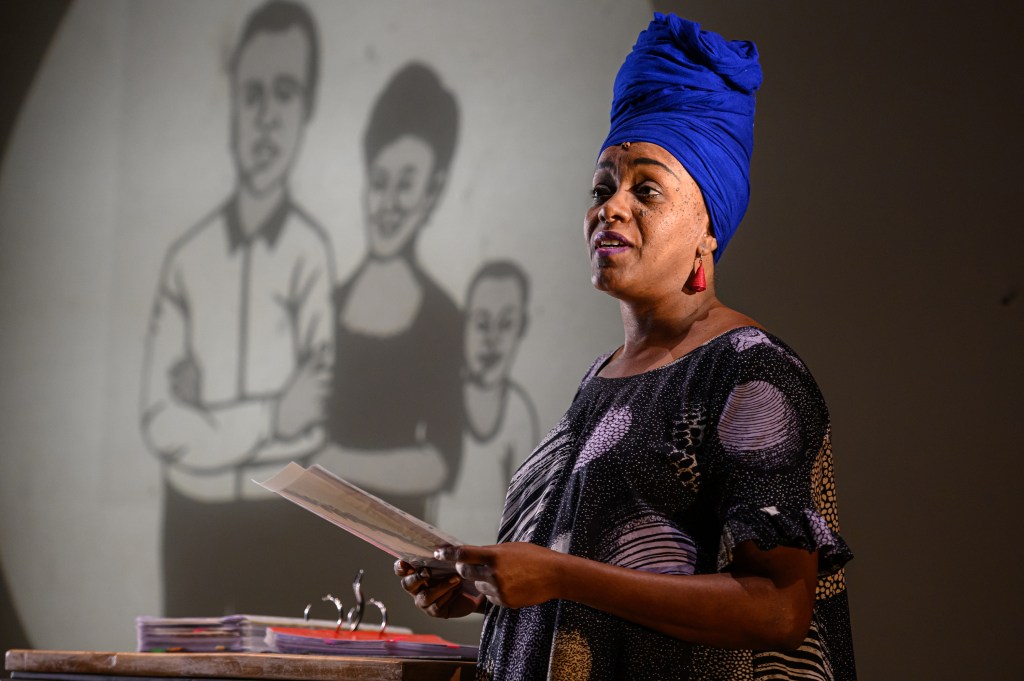
Charleston has at its core an incredibly rich Gullah-Geechee-West African-American tradition that is part of the reason this is such a special, beautiful place to live in with its baleful history. So I think that you see that this year, you see that with Kiki [Gakire] Katese and The Book of Life, you see that with Dada Masilo and the Sacrifice, you see that with Abdullah Ibrahim and Ekaya.
You see that these are also artists from Africa that are engaging in their own social, cultural and political discourses. That Kiki is engaging with how a country tries to reconcile with its recent, terrifically horrific past of the Rwandan genocide as someone who grew up Rwandan in exile. You see that in the work of Abdallah Ibrahim, who was really one of the great musicians of the anti-apartheid movement, who composed an anthem for the anti-apartheid movement, was in a kind of exile between Europe and North America in the 80s.
Then when he finally came back to South Africa for Nelson Mandela’s inauguration, Nelson Mandela called him our Mozart, South Africa’s Mozart. So you see that with these artists, how they are engaged in their own social, cultural and political discourse, and how they are trying to reckon with their own past. And that’s something that is an important lesson that we want to take on and learn in a place like Charleston.
We can look to African artists and understand that they are also part of this place and that they are also part of America’s origin story. It’s not just about Europe and North America. So I think that’s always going to be something that’s on prominent display at the festival.
But even more so than that, this is a festival that, if you look at a kind of undercurrent thematically, there is unity there. I always want the festival to kind of have a cohesiveness, a cogency, without necessarily saying, “This year we are talking about crime and punishment,” or “this year we are talking about love’s labour’s lost” or something like that.
No, I want there to be a kind of cohesiveness without necessarily us being able to see what the theme is. That’s what is kind of exciting and unifying about putting all of these different pieces together. If there is something that unifies a lot of these pieces, it’s about us understanding that we are telling stories from our past, some of them the most ancient stories that we have in our intellectual heritage. We are looking at these stories with a different sense that takes on the reverberations of today’s social discourse.
I mean, An Iliad going back to the Trojan War is as much about war and plague then as it can be today with the reverberations of Ukraine and the pandemic. Vanessa, which is an opera that was premiered in 1958 and then brought back to the festival in 1978, is reinterpreted here through the lens of a remarkable female director, Rodula Gaitanou. And there is a quite strange ambiguous moment in the opera of either an abortion or a miscarriage.
What does that mean now when we are looking at a renewed political assault on female autonomy? So these stories take on new messaging, new reverberation in 2023. And we need to retell these stories with the new lens of today.
You look through all of these pieces, The Crucible, The Rite of Spring, Vanessa, An Iliad, even Dichterliebe by Schumann, and it’s all about taking those stories and kind of having a renewed understanding of how we tell those stories and who we are telling them to, and who is telling those stories.
About the second point, chamber music. Yeah, I think all in due time, there will be new leadership in the chamber music series. I mean, Geoff was this remarkable figure who, speaking of storytelling, was perhaps one of the most incredible practitioners of his practice insofar as making chamber music accessible and having us sort of like look at Brahms, Beethoven, and Haydn – maybe not Brahms, he didn’t like Brahms very much – with a renewed sense of understanding, and he did that by sort of giving the story of chamber music in America a completely new life and a new understanding.
I became really close to Geoff over the last two years. He was actually on the hiring committee for me, and he was one of two people that would report to me on the hiring committee, and it was a committee of ten people. I largely took this position because Jeff convinced me to. He convinced me to because he was so excited about what we could invent, what we could create together.
He was so excited by the interdisciplinary-ness of the festival and how that could actually spill over into chamber music. We at least got one festival together. We started to make changes.
At least we had one festival together, but it’s tough, man. This has been a really, really tough year without Geoff. It’s been a year of enormous highs and lows. It’s been a year where the festival won, helped to produce and create an opera that did win the Pulitzer and a year where it lost its lodestar in Geoff.
It’s been a very, very, very difficult year. We are making sure that we are celebrating Geoff through the festival. The festival opens with a celebration of all the music that he loved and in the grandest statement possible at the Gaillard with orchestra and chamber music members and so on and so forth and different soloists.
Then all through the chamber music series, it’s going to be a celebration of Geoff through the people who loved him the most, his chamber music family. People that you know: Paul Wiancko, Pedja Muzijevic, Livia Sohn, Alisa Weilerstein, Anthony Roth Costanzo. That was his family. They will all have an opportunity – of course, also the St. Lawrence String Quartet will be here – they will all have an opportunity to celebrate him and live and love what Geoff was so great at by performing and playing together.
So will there be chamber music at the festival in the future? Of course. The music will continue to rock at the Dock.
I was more specifically interested in who will replace Geoff in his hosting chores, and I guess attached to that question, whether or not it might be time to step back and ask yourself if there isn’t a lot of room for improving the diversity of the people who are in charge of the various music departments at Spoleto, who seem to be conspicuously white and male, and remembering that Nigel stepped down because he felt he was part of that pattern.
Yeah, at the very least, I’m Arab. No, I think Perry, you’re 100% right. To me, the important thing is that we don’t put someone in a place out of a sense of performative duty. We put someone in that place because they are going to be of great accretionary value to the festival, because they espouse the ideals of the festival, and because they are the best person to be in that position.
I’m the first to say that I would balk at any kind of jingoistic declaration that I’m in such and such position because I’m an Arab American. I think people of color want to be recognized for the work that they do and often, the structural sort of biases that they have to overcome in these imperfect institutions in order to get to those positions.
To me, it’s about the best person, and of course, making sure that we look extra hard to find some of those people that may have been swept under the rug by these implicit biases that exist in our imperfect institutions. We’re definitely going to take a keen look at chamber music over the next few years. Well, actually, through this festival, let me say, and into the summer.
And yeah, there will be some structure that will replace Geoff. Additionally, it’s important to mention that this year, we did not want to put someone in place immediately to replace Geoff. We didn’t think that was appropriate.
We wanted to make sure that this was a celebration of Geoff, and that the people who were celebrating him and honoring him were doing so by performing at the Chamber Music Series, helping to co-curate the Chamber Music Series, and helping to emcee the Chamber Music Series. This year, we decided to make that a collective effort in his honor.
But if there is a template in the Chamber Music Series about who does host, until now, 2023, the hosts have all been people who occasionally perform on the Dock Street stage. So do you feel locked into that?
Oh yeah, I don’t think we’ll peel that back. No, no, no, no, no. Because I think one of the important things is actually the ability to host Chamber Music and make it feel approachable and intimate. That should come from a practitioner of Chamber Music, someone who could actually perform it on stage.
Yeah, bravo. I was hoping I wasn’t misinterpreting what you were saying. Like you could have done a nationwide search for somebody else.
No, no. Thank you for the clarifying question. There’s no way we’re going to hire John Malkovich to host Chamber Music. That’s not the vibe.
And the great thing about Geoff is that he was able to demonstrate the pieces effectively as such a great performer. And that’s what made that Chamber Music Series, and that’s also true of Charles Wadsworth, and that’s also true of Leonard Bernstein. That’s what makes the great communicators in classical music great, is that they can sit there, they can communicate it, they can perform it, and they can do so without any compunction or any sense of superiority.
For sure, the people who will be hosting Chamber Music this year and into the future will be practitioners of Chamber Music and people who are playing in the Chamber Music Series.
Hooray. So what do you think, or is it dangerous to say what you think the highlights of Spoleto 2023 are?
Well if you allow me a kind of punchy suggestion as a general director, which is very carefully branded and thought through, my suggestion for a first-time participant would be to see two things you like and feel comfortable about seeing, maybe that’s Nickel Creek and Kishi Bashi, and two things that are really pushing the envelope for you. So maybe that’s Dada Masilo and Only an Octave Apart.
Personally, I’m extremely excited about A Poet’s Love, which is a world premiere project we’re doing with Jamez McCorkle, who was Omar in Omar last year. And it’s partly exciting because you have the sheer unadulterated joy of seeing this piece be performed by a single accompanist and vocalist.
You know, I’m a pianist by background and trade, and I’ve accompanied Dichterliebe before, and it’s enormously difficult to perform. And the fact that Jamez can just kind of do it in one essence – it’s just like music incarnate. It’s totally, totally insane that he can do that. I mean, he’s one of the most spectacular artists that I’ve ever come across.
He’s doing it with collaboration with Miwa Matreyek, who does this kind of like shadow puppetry, moving image art that’s kind of like in a gothic whimsy that feels very appropriately 19th century, but also with this kind of magical technology through projection and shadow work. So it’s a really cool, strange project and I assure you that you will never have seen anything like it before.
I’m also extremely excited about this production of Vanessa. I mean, the cast is just killer.
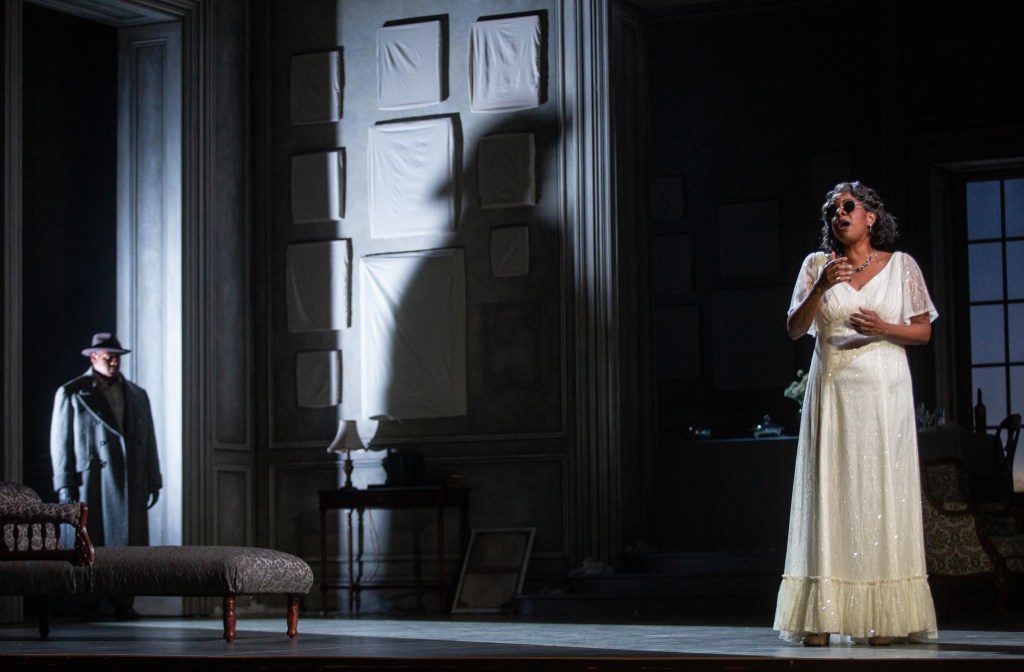
You have Nicole Heaston as the lead with Zoie Reams and Edward Graves and Malcolm MacKenzie and Rosalind Plowright. I mean, that is just a world class cast at the very, very top. And it’s also really cool to see these roles, which are traditionally sung by Caucasian people, being sung by people of color. I think that’s also an incredible sort of sense of joy and interpretation in this piece. And it’s conducted with absolute precision and aplomb by Tim Myers. So I’m excited about that.
I’m very excited about Only an Octave Apart. You could only have seen it publicly in either New York or London. So to have it here, it shows sort of how prominent Spoleto is on the world stage – that even if we’re not producing something and we’re presenting something, most of the time, if you’re going to see something here, it’s going to be very, very difficult for you to see it at a local theater or in a place other than New York or London.
So it’s cool to see that. I’m extremely excited about Scottish Ballet and The Crucible. I mean, that’s a new score by a composer named, believe it or not, Peter Salem.
That is unbelievable. I’ll give you that.
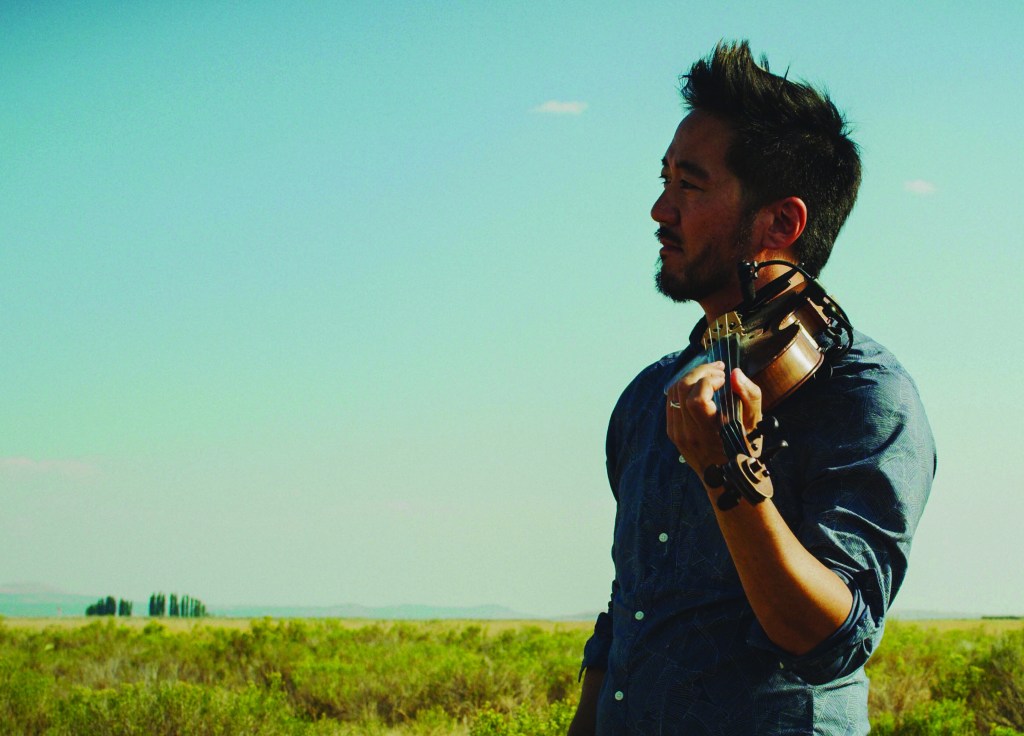
It is hard for me to say: I’m also excited about Kishi Bashi. That’s something you’re going to start seeing a little bit more in the festival on the popular music side, an expansion of what we normally do in our genres. We want to try to find these artists that are like pivot artists that occupy these interstitial spaces between dance and theater and classical music and jazz and folk music. And Kishi Bashi is one of those.
He plays the violin on stage. He has all of these violinists on stage with him, but it’s this kind of strange, hallucinatory, intoxicating music that’s like somehow trance music and Japanese folk music, but using sort of Western classical instruments. But it’s very much in an indie rock tradition as well.
And to kind of see us expand and experiment a little bit more and try to widen the tent of what the festival does is exciting in 2023. And you’re going to see a little bit more of that in ‘24, ‘25, and ‘26.
That’s definitely promising. Are we also experiencing or witnessing at Spoleto something of a reconciliation with Gian Carlo Menotti beginning?
Hooo!
You didn’t expect that one, did you?
I did not expect that one. All I can say about Gian Carlo is that he had great vision in founding the Spoleto Festival and was a spectacular impresario. I never knew him personally. And you know, if you’re talking about a reconciliation or reckoning artistically, I’m very happy to speak about that, because I think that Vanessa is a work that was premiered in 1958 at the Met, it won a Pulitzer that year, it was then done in Spoleto in 1978. I think Barber lived until 1991.
So that moment when Vanessa was done in 1978 was not just a moment for the festival. Because it was a Great Performances capture that was syndicated throughout the country on PBS. It was a great moment of national recognition for the festival. But it was a great moment of re-evaluating Samuel Barber as a composer nationally.
And it was really when people started to look at Samuel Barber. You know, in 1978 there was a great decade-and-a-half of serious intellectual academic ultra-serialism in classical music, the likes of not just Boulez but on the American side with Milton Babbitt and so on. The work of Samuel Barber in his kind of neo-romantic lyricism had fallen out of fashion and out of favor by the late ‘70s, especially also with the rise of the minimalism movement with the likes of Terry Riley, Steve Reich, and Philip Glass and now John Adams.
So it’s really a moment of recognizing Samuel Barber and Gian Carlo Menotti in the creation of this work of Vanessa, and I think that Vanessa is a great American opera that has truly been underappreciated. It tells a story that is urgent, is psychologically harrowing, is about reclusion in a way, which is very appropriate after the pandemic, perhaps kind of scarily so. It tells a story about love and about the blurriness and ambiguity that can happen in love.
It’s a harrowing kind of weird story that is told on stage, especially in this setting, through a very Ingmar Bergman-like production that has such spectacular force perception, such great theatrical ambiguity onstage, such depth where you can sort of see through one wall, see through past another wall, and then see through a third wall, and you have this sense that the stage is never ending. It’s just a sense of false prosceniums.
I think if we’re going to reevaluate Gian Carlo Menotti, let’s do so from an artistic perspective and look at what he had given to us, not just as a great impresario, but as a librettist and as a director, as well as a composer, but as a librettist and a director through the work of Vanessa by Samuel Barber.
Yeah, I think it might be overdue for us all being reminded just how talented he was as a writer.
Yeah, I agree. And also how important he was for opera in North America. I mean we have not just one of the great festivals in this country due to him. We have one of the great producing opera festivals in this country due to him. He was a key figure not just as an impresario, but as a composer and a librettist and a director working in American opera and creating a voice for American opera on both sides of the Atlantic.
So yes, I think that’s correct.
In terms of being underappreciated, I would look at Spoleto itself in addition to Barber from the standpoint of becoming maybe the most important force for new music that we have right now.
I don’t know if we can say we’re underappreciated. I mean, we put on Omar, and it’s going all over the place, and we’ve certainly received recognition through the incredible work of Rhiannon [Giddens] and Michael [Abels] and their work being recognized for a Pulitzer. But I think the festival has always been recognized as a great center for new music and new opera specifically.
Especially in the last five, 10 years, you’ve seen some works, Quartett by Luca Francesconi and Das Mädchen [The Little Match Girl] by [Helmut] Lachenmann, and Tree of Codes by Liza Lim, which were either North American premieres or world premieres. And in those cases, you see a real sense that there’s an internationalism to the festival, that the festival is promoting work that is truly importing from Italy, Germany, Australia, and so on, putting it on here and doing so at the highest sort of caliber of creative excellence.
But I also think that the festival is about creating new work and creating new American work. And that was something that you see more in the Menotti years in the ‘70s and ‘80s, where this is the center of new American opera and new American work.
That’s something that we’re going to be looking at over the next few years: How can Spoleto be a sandbox of creative ingenuity, not just in opera, but across multiple disciplines? How can it be an incubator, an accelerator of new ideas when we are in a city with a tragic past and an incredible outward beauty? What does that mean for the creation of work here and how that work can potentially have national and international reverberations?
So I think that this is a center of new work, generally speaking, and it’s really going to lean into that over the next few years.
When Martha Teichner spoke with Nigel Redden over the Memorial Day weekend, there were three major takeaways from the Spoleto Festival USA general director – in what will stand as his exit interview for most of us in the live or online audience. As we might have guessed, setting up the 2021 festival has been notably awkward after the cancellation last year’s 17-day event: if Redden and his staff had anticipated how quickly vaccinations would open up Charleston’s indoor venues, Spoleto scheduling could have been more robust.
Because this year’s festival is so downsized after the hiatus, Redden also stated, next year’s festival will be pivotal for Spoleto’s survival. The normal balance between popular and outré events will need to be skewed toward the cash cows. Staying on until October but keeping his hands off the search for his successor, Redden will certainly play a key role in framing the 2022 lineup.
Notably modest about his impact and achievements during his most recent 26-year tenure – and his prior stint at the helm from 1986 to 1991 – Redden was surprisingly frank about his decision to step down. He pointed unhesitatingly to the #BlackLivesMatter Movement that arose amid the turbulence of 2020 and, more specifically, to the manifesto issued by the We See You White American Theatre coalition of BIPOC theatre artists demanding radical, immediate, and long overdue reforms.
Or to those willing to overlook the often-scathing tone and occasional militancy of the 29-page “Accountability Report” and its demands, WSYWAT was offering a blueprint on how to create an anti-racist American Theatre. Though not primarily a theatre person, Redden saw himself checking two major boxes in the laundry list of justifiable grievances, the color of his skin and the length of his reign.
What Redden said back in September, that the cancellation of the 2020 Spoleto and enforced isolation had weighed heavily upon him, sounded right for a press release. This more recent elucidation sounds right for Redden. We can see a continuous line of white males at the helms of various sectors of Spoleto since its opening season in 1977, beginning with festival founder Gian Carlo Menotti leading the student orchestra, Charles Wadsworth hosting the lunchtime chamber music concerts, and Joseph Flummerfelt leading the Westminster Choir.
The younger men carrying on their tradition are notably more adventurous in their programming, Joe Miller leading Westminster, Geoff Nuttall hosting the chamber music at Dock Street Theatre, and John Kennedy wearing one of the two hats worn by Menotti as resident conductor of the orchestra. Since the Westminster is a separate entity from Spoleto and Nuttall was Wadsworth’s hand-picked successor, Redden’s hand in pushing the festival to a fuller embrace of new and contemporary music was most emphatic in his appointment of Kennedy.
Yet the international tone and resources of the festival have led Kennedy to widen his horizons in recent years, and an unmistakable tidal shift has occurred in the choral and chamber music programming as well, now permeated with contemporary repertoire and studded with world premieres. COVID restrictions have kept Kennedy and Miller away from Spoleto for two seasons now, relegated to digital presentations on YouTube during this year’s festival – video self-portraits and bite-sized performances that will linger online through June 18. So it has been Nuttall’s responsibility to carry the torch in live events for the 2021 season, reasserting the festival’s right to be recognized among the world’s preeminent champions of new music.
Nine of the 11 programs at this year’s festival (each one is repeated three times) are showcasing works by living composers, including five pieces by composers appearing live at Dock Street Theatre, and four world premieres. Most of these were clustered at the top end of the schedule, making tickets – tough to score on opening weekends of all Spoletos – particularly tight in this atypical year of social distancing. So we were obliged to miss all four live performances of works by this year’s composer-in-residence, Jessica Meyer, and asked to limit our requests for press seats to one concert.
Turning my attention to the second of Spoleto’s three weekends, I had little difficulty settling on my choice: Program VII, the return of cellist Alisa Weilerstein to the festival in the world premiere of Osvaldo Golijov’s Milonga. With Beethoven’s Septet in E flat on the same program, I would also get to see five players I’d never seen before at Dock Street.
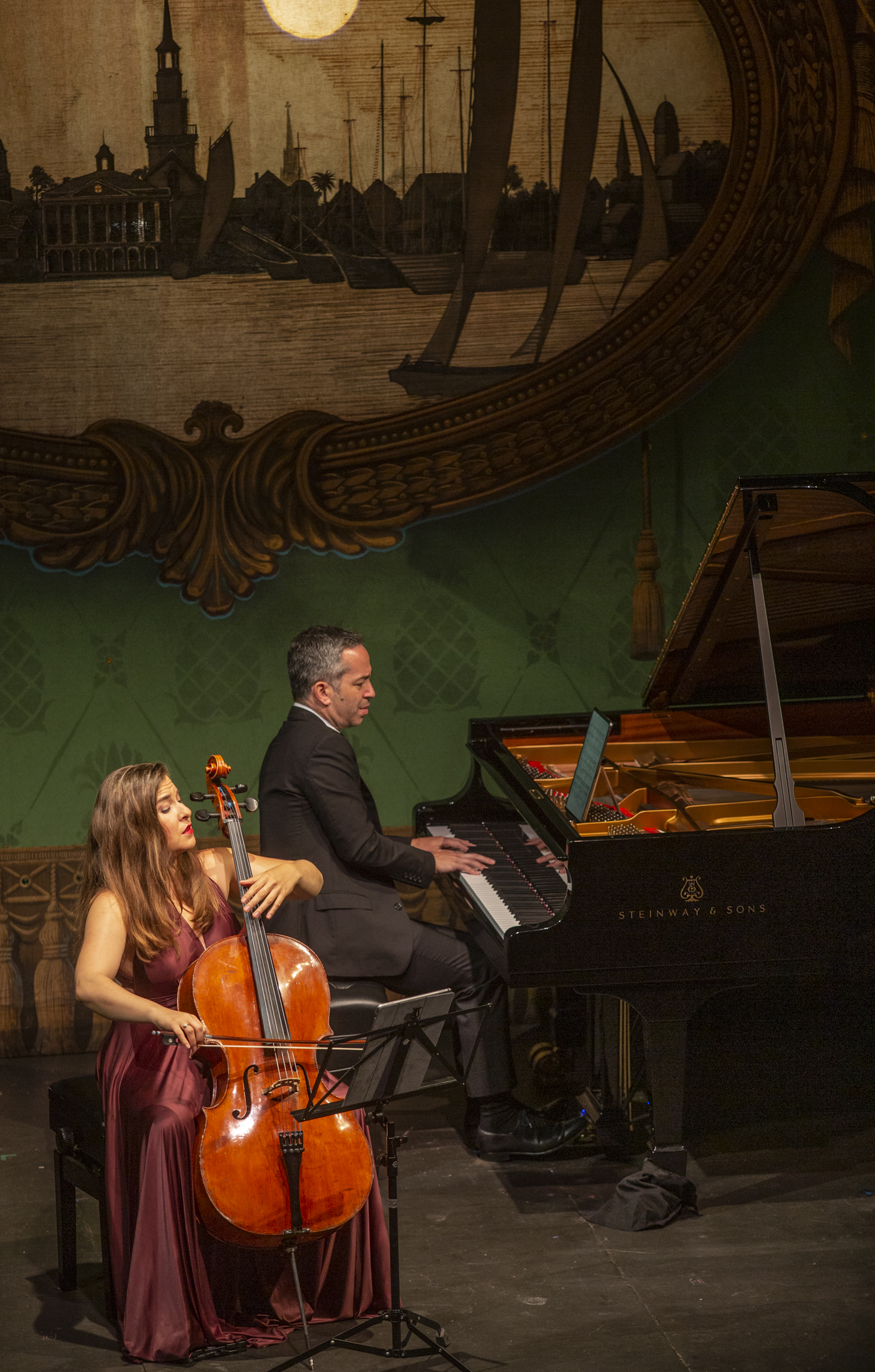
Hoping against hope, I also requested Program VIII: more Alisa Weilerstein – again paired with pianist Inon Barnatan – and the return of Anthony Roth Costanzo, the superstar countertenor, beloved at Spoleto years before the huge éclat of his Met Opera debut. “Nothing ventured…,” right? My first choice was granted. Although Costanzo’s return was solidly sold-out for all three of its iterations, my chutzpah was rewarded with an offer to choose between two additional programs.
Had I known that violinist Livia Sohn, Nuttall’s spouse, would be returning from a hand injury in Program III to premiere a Meyer composition written specially for her, From Our Ashes, my choice of her subsequent appearance in Program V would have been easier to make. That concert included the Handel Oboe Concerto in G minor and Saint-Saëns’ fearsome “Hippogriff” violin sonata, with a contemporary wildcard in between them, Kenji Bunch’s The 3 Gs for solo viola.
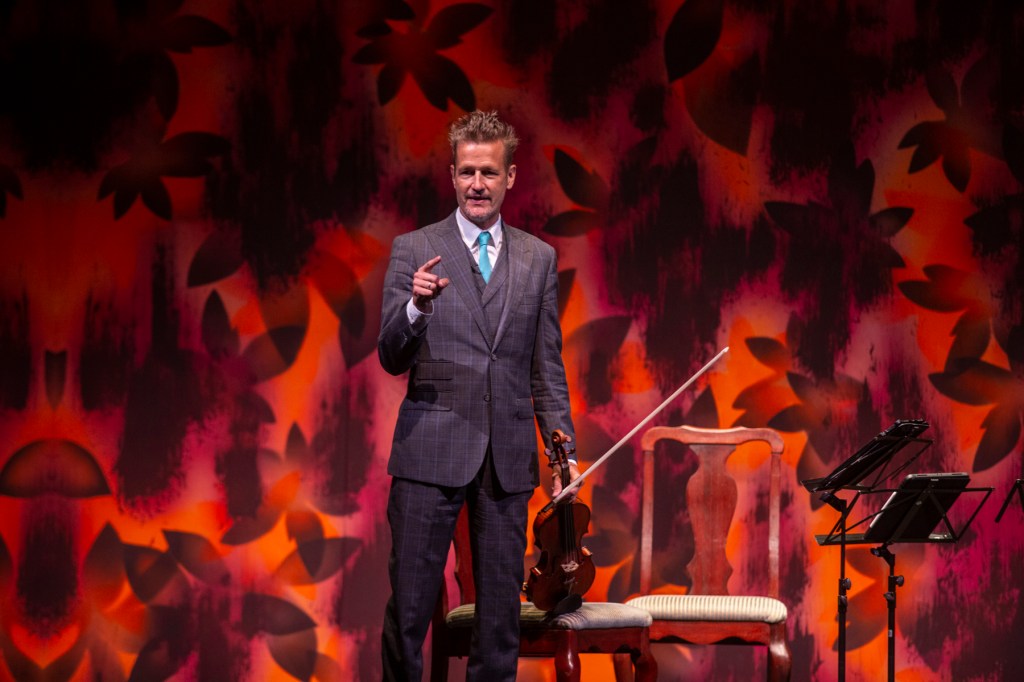
Whether he’s anticipating next season’s make-or-break festival or simply realizing that much of what he does on the Dock Street stage will endure in perpetuity on YouTube, where excerpts of every concert are streamed as little as one day after a program bows out, Nuttall has noticeably sharpened his emceeing. Simply watch the streamed excerpts of Program VII and you’ll see.
To gin up excitement for Golijov’s Milonga, Nuttall not only hailed the return of the Weilerstein-Barnatan duo and the stature of the composer, he brought on hornist David Byrd-Marrow to help demonstrate the two rhythms clashing with each other in the piece. These two rhythms, the 3-3-2 pattern of the milonga and the 4/4 of Joseph Achron’s “Hebrew Melody” (written for Jascha Heifetz), repeatedly diverging and converging, personify the composer himself and his Argentinian/Jewish heritage.
Before bringing Byrd-Marrow on, Nuttall mocked himself a little by confessing that Barnatan had suggested that he demonstrate the milonga beat with one hand and the 4/4 with the other – a “total fail,” he recounted, when he made the attempt. At the end of the demo, having said that the two rhythms bumped against each other, Nuttall and Byrd-Marrow actually finished back-to-back, bumping each other.
In short, Nuttall scorns the seriousness of “setting the mood” in favor of trying to make his enthusiasm contagious. Remarkably, this humorous approach worked for a melancholy piece, cuing us to look for something we would surely find. That turned out to be chiefly Achron’s tune and Golijov’s variations on it, for Weilerstein is such a mesmerizing and rapturous performer that I gladly dwelled in the soul of Jewish melody while I was at Dock Street Theatre, mostly oblivious to the countercurrent of Barnatan’s Argentinian flavorings at the keyboard. That friction was more readily savored a day later when the YouTube replay was released.
Nuttall analyzed the Septet in a manner that would have pleased Wadsworth, but he added a couple of layers: the wild popularity of the piece, which eventually annoyed the more mature Beethoven, and his own iconoclastic preference for early Beethoven over the more widely admired masterworks of the middle and late periods. The sunniness of the music and the fecundity of melody, Nuttall extravagantly predicted, would surely send us off into the streets singing and dancing.
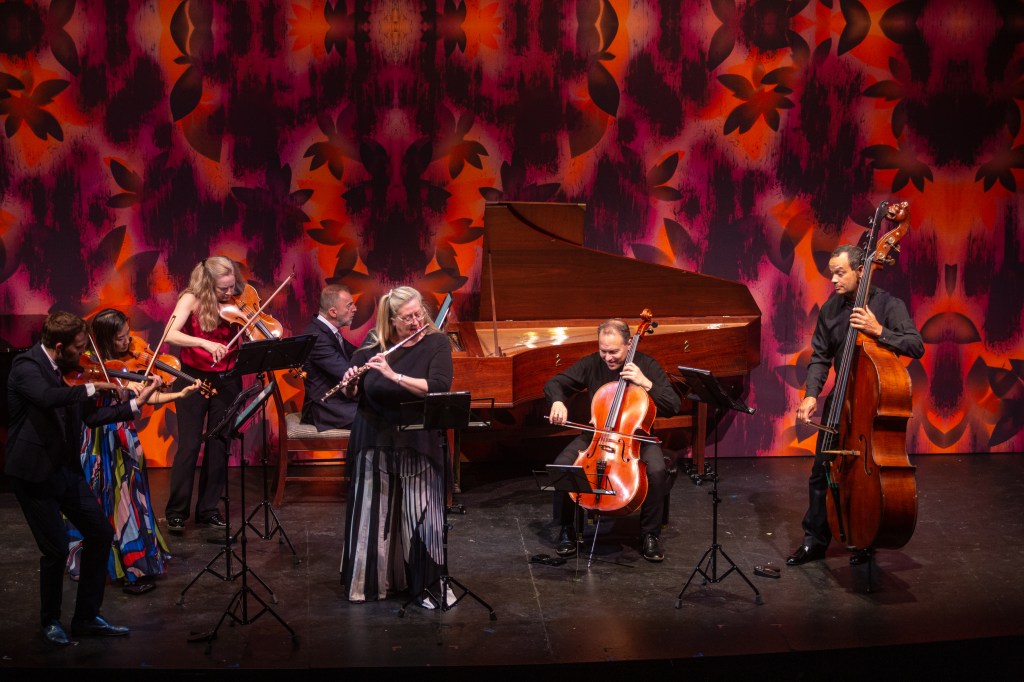
The Septet was a wonderful chance to see most of the newcomers in action, including bassoonist Monica Ellis, violinist Jennifer Frautschi, violist Ayane Kozasa, cellist Arlen Hlusko, and Byrd-Marrow. While this genial romp gave Byrd-Marrow a merry workout on the French horn with repeated hunting calls, the chief protagonists were Frautschi and clarinetist Todd Palmer, facing off at opposite sides of the stage. Palmer was as jocund and propulsive as ever, leading the woodwinds, while Frautschi was liveliness, intensity, and joy leading the strings. Anthony Manzo, like Palmer a longtime fixture at Spoleto, stood like a pillar between the two sections, genially keeping time on the double bass.
Frautschi had already distinguished herself in the “Hippogriff,” lavishing her bold fruity tone on the Saint-Saëns sonata with even greater intensity, zest, and decisiveness, bringing Program V to a triumphant conclusion. Peak ferocity was reached minutes after the notorious torrent of 704 sixteenth notes that begin the closing Allegro Molto, when Frautschi and pianist Pedja Muzijevic, already red-lining the tempo, turned on the turbojets.
Ignoring the note count of the frantic Allegro Molto, Nuttall cited it as among the greatest moments in all of chamber music and asserted that Saint-Saëns is inexplicably underrated in the pantheon of great composers, a genius in the Mozart mold. His intro for the Handel concerto was more droll, embarrassing oboist Smith by floating the idea of celebrating his manly beauty by making him a centerfold in a Spoleto swimsuit calendar. Then he prevailed on Smith to demonstrate how Handel expected his featured soloists to improvise. To contrast, Nuttall now invited all the musicians onstage, instead of playing their written parts, to improvise behind Smith as he repeated his little performance.
Cacophony. A bad idea – illustrating the Baroque balance Handel adhered to. One of Nuttall’s cornier shticks.
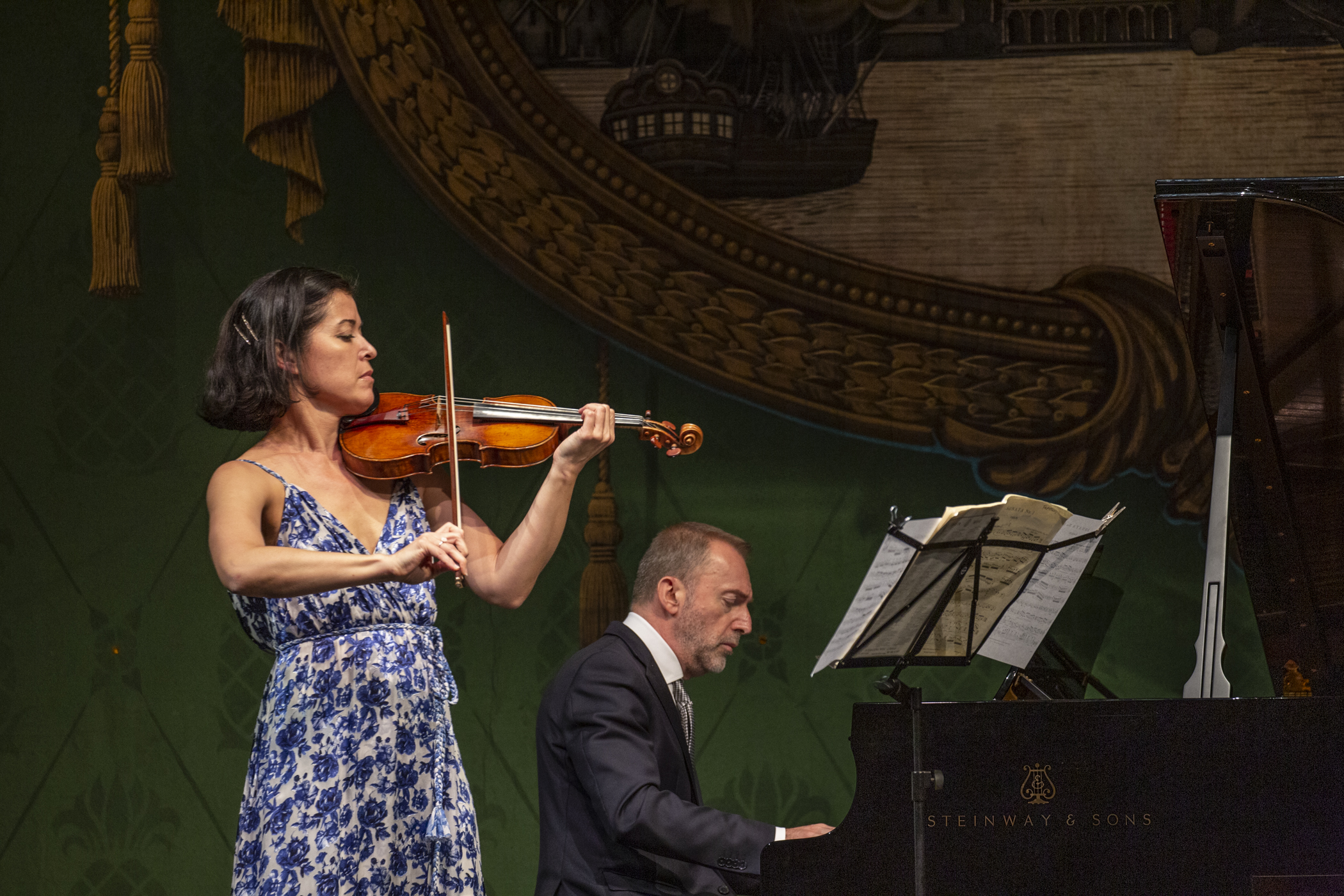
Like Wadsworth before him, Nuttall doesn’t scorn pedagogy altogether. He seemed to revel, in fact, in teaching us the concept of scordatura, purposeful mistuning, as violist Hsin-Yun Huang prepared to make her Spoleto debut soloing on Bunch’s The 3 Gs. Nuttall and Huang showed us the normal tuning of her instrument from top to bottom, A-D-G-C, and how Bunch would be obliging the violist to retune two of strings to an A-G-G-G configuration.
Then a parting shot for us to mull over as Nuttall exited to the wings: “Hsin-Yun will never be closer to Jimi Hendrix as you are about to see her.” We soon realized what he had meant – and why there was a piano bench onstage next to Huang. Strums on the strings were the easiest of Bunch’s demands on the violist’s right hand in the hectic opening section of his piece. A sprinkling and then a barrage of finger taps on the four strings and along the fingerboard launches the solo, utilizing three or four fingers and making it impossible to grasp a bow.
When the piece did permit Huang to pick up her bow from its resting place on the piano bench, the music moved slightly closer to Hendrix, settling in a region somewhere between jazz and bluegrass, a bit funky and definitely appealing – with plenty of ricochet and double bowing to test the soloist’s mettle. In the video excerpt, which remains free online through June 18, Huang’s exploits on viola are followed almost instantly by Frautschi’s bravura in the Saint-Saëns finale, a rather remarkable sequence.
Three of the four Jessica Meyer works featured at Spoleto this year are also preserved on the streamable excerpts. Sohn’s comeback is predictably captured, as is “American Haiku,” cellist Paul Wiancko’s touching tribute to his wife, Kozasa, and their mixed heritages, which the couple performed in a memorable cello-viola duet. Kozasa is even more impressive in Program IV, where she teams with Palmer – at the top of his game – and Muzijevic in Mozart’s “Kegelstatt” Trio. None of that performance is omitted. Nuttall’s intro, a typical mix of humor and nostalgia, will tell you why.
Redden’s valedictory season will have a momentous afterword when the curtain goes up fully again in 2022. Then we will finally behold the world premiere of Omar, the new opera by Rhiannon Giddens. Originally scheduled for a 2020 premiere, Omar is based on the autobiography, written in Arabic, of Omar Ibn Said, a Muslim-African man who was enslaved and transported to Charleston. The twice-postponed premiere will be a final testament that Redden’s vision for Spoleto is grounded in diversity – and firmly rooted in Charleston’s chequered history.













 Art on My Sleeve