“Hadestown” Serves Up a Jazzy, Godly Nectar

Review: Hadestown at Blumenthal PAC

 By Perry Tannenbaum

2296_Hadestown North American Tour 2022_photo by T Charles Erickson

In Blumenthal Performing Arts’ Encore playbill, the distance between Anaïs Mitchell, who created the music, lyrics, and script of HADESTOWN, and Rachel Chavkin, who developed and directed Mitchell’s creation, is a scant three-and-a-quarter inches. Inside that space are the neatly typeset names of 42 actors, designers, and organizations who have helped bring their vision, the 2019 Tony Award winner for Best Musical, so vividly, raucously, and meaningfully to life.

You get the idea that, in crafting and concepting this marvelous retelling of the Orpheus-and-Eurydice myth, Mitchell and Chavkin became even closer than those 82+ millimeters. Together they have created a work that is slick and glitzy, yet we find primal and profound truths amid the razzle-dazzle.

Those truths can sting, particularly when we descend into the dark underworld ruled by Hades and his abducted queen, Persephone. While Mitchell and Chavkin discard the #MeToo aspect of the royals’ union, reimagining them as formerly true lovers, they point up King Hades’ inclinations toward greed, exploitation, oppression, and mindless acquisition, layering on prejudice and xenophobia for good measure.

So when Matthew Patrick Quinn as Hades brought down the curtain on the first act with “Why We Build the Wall,” written years before The Donald took up politics, the satire bit hard enough for the MAGA morons seated in front of us to get up in a mighty huff at intermission, never to return. Yet this concept of Hades, casually linking his excesses to global warming and climate change, isn’t really an absurd overreach. Why shouldn’t Mitchell and Chavkin portray him as the vilest of plutocrats, when Pluto is actually Hades’ most familiar alias?

And plutocracy is where we’re at.

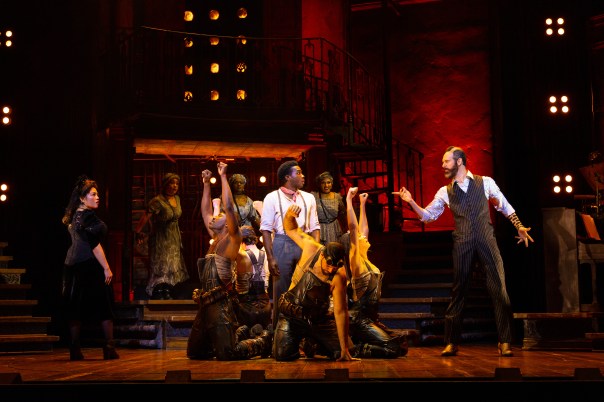
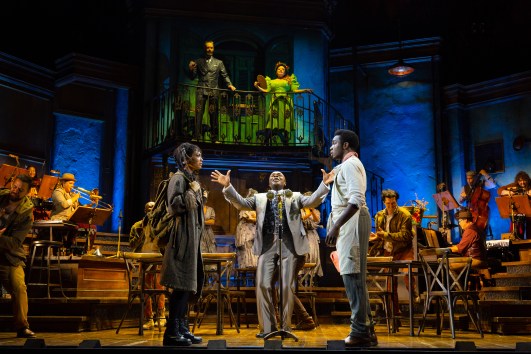
Mitchell enriches her devilish brew with a score steeped in the decadence of New Orleans jazz, repeatedly underlined by a doo-wop trio of Fates whose only moral failing is going along with the flow. These stylish female backups are ultimately more successful in getting into the impoverished Eurydice’s head than Orpheus, who is preoccupied with finishing the song he believes will restore springtime to the world. Quinn’s basso sleaziness is given a robber baron vibe with an infectiously chugging railroad line running directly to his realm, and the combination of Rachel Hauck’s scenery and Michael Krauss’s costumes makes our dystopian world seem nearly as nocturnal as the netherworld.2022_(from top left clockwise) Matthew Patrick Quinn, Maria-Christina Oliveras, Chibueze Ihuoma, Nathan Lee Graham, Hannah Whitley and company in the Hadestown North American Tour 2022_photo by T Charles Erickson

Presiding over the action and gleefully shattering the fourth wall again and again, Nathan Lee Graham as Hermes keeps us from forgetting – graceful and gliding charmer that he is – the artifice and theatricality of all we see. At the same time, he is frequently seconding the ethereal voice of Chibueze Ihuoma as Orpheus, asserting the power of music in changing our world by envisioning a better one, reminding us how music and language intertwine in the ancient ritual of storytelling.

Singing has always been key in preserving our world and our heritage. Musical narrative, after all, isn’t a recent discovery championed by Verdi, Jerome Kern, Rodgers & Hammerstein, and Lin-Manuel Miranda. It dates back to King David’s psalter, anonymous campfire bards, Orpheus’ legendary lyre, and the Homeric Hymns, where the story of Hades and Persephone was originally told. By design, three of the pivotal songs Orpheus sings are grouped as a series of epics.

Potentially, as we find here, songs have magic. Consequence. “The Wedding Song,” a beguiling duet early in Act 1 where Orpheus responds to a sequence of challenges from Eurydice, is as memorable as Hades’ sardonic affirmation of walls. “Epic I” from Orpheus, the embryonic song he is working on, is enough to establish his magical power and win Eurydice’s belief in him. Doesn’t last when Hades comes personally calling with his saucy come-hither, “Hey, Little Songbird.”2260_Chibueze Ihuoma in the Hadestown North American Tour 2022_photo by T Charles Erickson

But Orpheus is able to march into hell for a heavenly cause (a recurring theme in world literature and religion, it would seem) when he melts Hades’ heart with his completed “Epic III” after intermission, transporting the steely King back to his tender courting days and reconciling him with Persephone. It’s here that the Fates get into Hades’ head as effectively as they had gotten into Eurydice’s earlier, so that the King of the Underworld attaches one pesky condition that prevents Eurydice’s release into Orpheus’ care from being unconditional.

Ihuoma’s naivete and spontaneity turn the moment when he succumbs to sudden heartbreaking tragedy, beautifully staged as everything freezes into silence. The essence of that heartbreak registers so poignantly in Hannah Whitley’s eyes as Eurydice, so achingly close to restoration, almost clearing the threshold of the railroad car that must now take her irrevocably down. All of Belk Theater and all of creation seem disappointed in that moment, even the lively and cynical Fates (Dominique Kempf, Belén Moyano, and Nyla Watson).

Paradoxically, when all stops for a precious few heartbeats, we may realize most keenly that the working relationship between Chavkin and choreographer David Neumann has been as close and precisely calibrated as the relationship between the director and Mitchell. Indeed, our director, composer, and choreographer are involved in perhaps the most delicious conspiracy of all in HADESTOWN, those precisely chosen beats when an unseen centerstage circle suddenly begins to revolve or abruptly halt.

Most of the players, particularly the drones who make up the Workers Chorus, are swept round and round by the wheel. Others like Hades and Orpheus walk at the precise pace that makes them seem like they’re stationary as they move, floating on air. Then the wheel stops, and on they go, like clockwork. Or since the subplot of Persephone’s arrangement with Hades is a mythic explanation of the cycle of the seasons, the circular motion we see is clockwork.2282_Matthew Patrick Quinn, Chibueze Ihuoma, and Maria-Christina Oliveras in the Hadestown North American Tour 2022_photo by T Charles Erickson

As fine as the Fates are in moving about the stage, sometimes while wielding musical instruments, our eyes are most intently riveted to the lithe movements – and eye-popping costumes – of Graham as Hermes and Lana Gordon as Persephone, bringer of springtime and wicked beverage. Graham and Gordon are both electrifying performers, so it’s rather amazing when Quinn, after brooding quietly in the background for most of the first act, instantly proves himself their equal.

Together, they are the spice, the heady godly nectar that helps us savor the purity and fragility of the mere humans, Eurydice and Orpheus, all the more.

Charlotte Ballet Roars into a New Era With FALL WORKS

Review: Fall Works by Charlotte Ballet

By Perry Tannenbaum

Under the Lights_Taylor Jones

Knight Theater should have been abuzz last Friday night. Yet somehow, a year after Charlotte Ballet’s 50th-anniversary celebration – celebrated a year after the company’s actual 50th anniversary – my excitement wasn’t reflected by the community at large. A night after Opera Carolina had opened its 2022-23 season at Belk Theater to an empty upper balcony and a disappointing crowd, the curtain went up on Ballet’s new era with a similarly sparse turnout.

Our takeaways from this phenomenon need not be terribly dire, for it may be up to OpCar and CharBallet to learn a simple lesson: don’t open your seasons on the same night! Or on the night that a megahit like Hamilton – or the NBA season – is opening down the block. Your two companies collaborate every December on The Nutcracker, so you ought to be able to ace October.

It can be disheartening for performers to see the curtain rise on a hall pocked with vacant seats, but the effect seemed more noticeable on the soloists singing Tosca than on the dancers bringing us FALL WORKS. Understandable. Charlotte Ballet is a more resident company, devoid of prima donnas who swoop into town for one rehearsal and one weekend, they’ve worked hard perfecting their moves at their own studio, and nearly 40% of them have been in the company for less than two years.

They can be as excited to be working with new comrades and new partners as we are to see the diverse new faces. Implacable prerecorded music – synced to crucial interactions with other corps members – keeps them in step, and they don’t need to worry whether their voices will betray their nerves. Or hold up through Act III.

We can question the wisdom of reprising two works that premiered here within the past three years. Both Helen Pickett’s IN Cognito and Crystal Pite’s A Picture of You are fascinating, edgy pieces, neither one saddled with music we might readily recall months or years afterward. Although the choreographies jogged my memory, the freshness of the experiences was enhanced by watching different dancers perform them, especially after missing opening night to attend the opera.

OK, so I must admit a little frustration that, more than six months after he was named CharBallet’s new artistic director, we still haven’t seen any of Alejandro Cerrudo’s choreography here in Charlotte. After all, it’s over eight years since I lobbied specifically for our most prestigious performing arts company to take up Cerrudo’s work when I first saw it at Spoleto Festival USA, tabbing it a “winner” after witnessing Hubbard Street Chicago’s staging. Nor have I yet seen Cerrudo onstage to address his company’s loyal audience.Anna Mains_Ben Ingel_UTL_by Taylor Jones

Instead, we could take consolation in getting the local premiere of Under the Lights by Christopher Stuart, the new director of Charlotte Ballet II. After the heaviness and intensity before intermission, Stuart’s medley, set to nine tunes by Johnny Cash and June Carter Cash, was a light and lively chaser. A couple of dancers from Ballet II occasionally infiltrated the frontliners in this entertaining suite, adding their youth to the bustle and effervescence onstage.

Similar incursions occurred over the course of Pickett’s IN Cognito, which proved to be the most free-flowing work of the evening, hardest to follow, and by far the easiest to forget. As a result, the impact for me was almost as fresh as Stuart’s piece, a good thing, and I didn’t find myself comparing the dancers of 2022 with those who gave the world premiere performance in 2019. Only one of the nine I saw on Friday had danced it two years ago. I hardly ever knew what was coming next, but when it came, it usually struck me as familiar – and the flow of the piece seemed far more organic this time.

So much was going on with the dancers, in multitudinous permutations moving hither and thither, that I often lost track of the props and furnishings whisked onto the stage and then off to the wings. One of the two table lamps would suddenly be missing, lounge chairs might multiply while the sofa exited, or a quartet of mismatched chandeliers might arrive randomly from the fly loft without reason. The dancer hiding behind the shrub – incognito? – would exit elaborately, crossing the entire upstage to the opposite wing, making herself absurd.

Sarah Lapointe_Ben Ingel_UTL_by Taylor JonesDancers communicated and coordinated. They partnered, interacted, and created beauty together. Yet they never connected, perhaps incognito to each other and to everyone else. Busy and beautifully baffling, very much like the modern world.

A Picture of You Falling, with choreographer Pite also supplying the biting prerecorded text, was edgier, more satirically impersonal. At times catatonically repetitive, this strange pas de deux imprints itself readily and deeply – an almost sinful delight, since it lays bare the careless ways we talk about love and romance. Sarah Lapointe and Ben Ingel first connect by accidentally bumping into one another. We’re speaking literally here, as they walk in opposite directions across a geometrical space outlined at regular intervals by strobe lights.

When Ingel falls, he literally falls, and his heart literally hits the floor when he is smitten and when the makeshift couple breaks apart. Unlike the score that Pickett cobbled together to move and regulate her dancers, the original music by Owen Belton never seems to register as a pulse or an emotional coloring, particularly when Pite tells us “This is the place” and “This is how it happens” – over and over.

What lighting designer Robert Sondergaard creates with his symmetrical formation of strobes is emphatically not a space. Nor can we be sure whether Pite is telling us again and again and again that this is how this ephemeral intimacy happens or whether – in some kind of condensed or looping timeframe – it’s actually happening again and again. Focus does shift for a while from Ingel to Lapointe in the moments of intimacy leading to the breakup, but this is ultimately the man’s story. Or a picture of what men have made out of love.Maurice Mouzon Jr_Shaina Wire_IN Cognito_by Taylor Jones

We confronted a couple of filters between ourselves and the music of the Cashes in Under the Lights. The least discordant of these was Stuart’s choreography, which briefly stumbled with his blithe setting for “Folsom Prison Blues,” when his five men carried on merrily during the vocalist’s confession that he “shot a man in Reno just to watch him die,” a jarring disconnect. More problematic were the recordings of The Man in Black’s signature songs by Sugar + the Hi-Lows, most egregiously lightweight when they missed the gravitas and drama of “Hurt,” leaving Nadine Barton little to work with, though she worked it well.

James Kopecky got us off to a charismatic start with “I Walk the Line” as it dawned on us what we would have to cope with from the Bi-Los. Anyone who had heard a definitive rendition of “Ring of Fire” or “Jackson” could empathize with the struggles Stuart faced, but Sarah Hayes Harkins didn’t flinch at all as she joined Kopecky for the coolish “Fire,” and a couple of winsome couples, Isabella Bertolotti with Humberto Ramazzina and Meredith Hwang with Oliver Oguma, redeemed the Mississippi superficiality.

Sugar plus or minus the Hi-Lows was hard for me to swallow, which may account for my liking Stuart’s settings best for songs I was least familiar with. “Two Day High” offered us three dynamic duos, Isabella Franco with Maurice Mouzon Jr., Shaina Wire with Luke Csordas, and Olivia Parsons with Juan Castellanos. With “I’ve Got You Covered,” we got a glimpse of Amelia Sturt-Dilly partnered with Kopecky, just one night after she danced A Picture of You, the CharBallet commission she premiered a year ago. Stuart’s best pas de deux by far.

“Tennessee Quick” was the most attractive track I heard from Sugar +, complemented by some really rousing ensemble work from Stuart and a swarm of 14 dancers. Couldn’t imagine Johnny singing that one. That harmonious taste of “Tennessee” was a perfect setup for Stuart’s stomping ensemble finale, “God’s Gonna Cut You Down,” fronted by Kopecky, the hardest-working man in Charlotte that night. Johnny didn’t get to that golden nugget until late in his career, so it wasn’t among his best recordings, but to hear the Hi-Lows attacking that traditional come-to-Jesus song with an electric guitar was almost as much of a kick as Kopecky and his backups.

Stunning and Grand, Opera Carolina Recreates the Original Designs of “Tosca”

Review: Opera Carolina Presents Puccini’s Tosca

By Perry Tannenbaum

2022~Tosca-40 

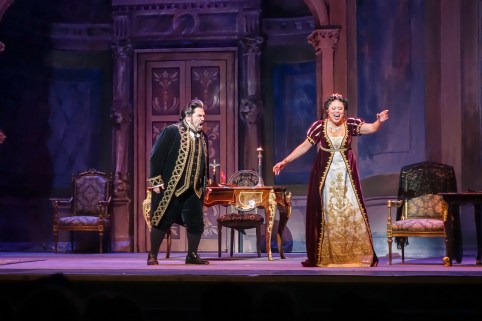
October 13, 2022, Charlotte, NC – Even in an Opera Carolina production with merely eight solo vocalists in the cast, it was easy enough to see what makes grand opera so grand. Most of the musicians on Charlotte Symphony’s payroll were in the orchestra pit when we entered Belk Theater, tuning up or rehearsing. The program booklets handed to us at the door had the size and stylishness of a glossy fashion magazine, and when the curtain rose on Giacomo Puccini’s Tosca, we saw the interior of a Roman cathedral, the first of Adolph Hohenstein’s three diverse set designs. By the end of the opening act, the stage was filled with clergy, a cardinal, and a throng of Opera Carolina choristers, all celebrating a mistaken report of a royalist victory over Napoleon’s invading army.

All of these blandishments – and extras – spell out expensive in big, bold capital letters. So it was particularly disappointing to see the Belk’s uppermost balcony completely empty and so many unclaimed seats below. If Hohenstein’s name rings a bell, we can multiply our disappointment, because he designed the sets, the costumes, the props, and the poster art for the original Milanese production of Tosca in January 1900. We can thank the New York City Opera for this meticulous recreation of Hohenstein’s handiwork – by heading out to the Belk Theater and seeing it.2022~Tosca-13

Opera Carolina lighting designer Michael Baumgarten certainly helps to capture the melodramatic spirit of Puccini’s deft adaptation of Victorien Sardou’s La Tosca, written for Sarah Bernhardt in 1887. But perhaps disheartened by all those empty seats, the opening night performance didn’t attain its full potboiler heat until late in Act 1 when bass baritone Steven Condy entered as Baron Scarpia, the cruel, lascivious, and unscrupulous chief of Rome’s city police. Until then, soprano Alyson Cambridge as opera diva Floria Tosca and tenor John Viscardi as principled painter Mario Cavaradossi hadn’t belittled the love, intrigue, jealousy, and playfulness of their relationship. Not at all. But against the backdrop of the Charlotte Symphony Orchestra, tempestuously conducted by OpCar artistic director James Meena from the opening bars onwards, both sounded somewhat underpowered, though they were clearly gifted as actors.2022~Tosca-10

Chasing after former Roman Republic consul Cesare Angelotti, who has escaped from prison and has already been secreted into hiding by Cavaradossi, Condy as Scarpia quickly injected menace and urgency into the drama. Then he cunningly worked on Tosca’s unfounded jealousy to freshen the trail to her paramour’s hideout before the curtain fell. In his tense confrontation with Tosca, Condy seemed to kindle some of the spark we would see unceasingly from Cambridge in the two acts that followed.

Stage director James Marvel takes full advantage of his principals’ gifts as the intricacies of Sardou’s plot come brutally to fruition in Act 2. Tosca has led Scarpia’s spies to Cavaradossi’s hideout, and soon the painter will be in custody while Angelotti has once again escaped. Scarpia dispatches his prisoner to a torture chamber adjoining his lavish apartment, hoping to extract information about Angelotti’s whereabouts. He and his thugs cannot break Cavaradossi, but they don’t have to. Tosca is with him, ruefully aware that her jealousy was baseless, and able to hear her beloved’s outcries as Scarpia’s men inflict their torture. Where the fiend has failed with Cavaradossi, he succeeds with Tosca, breaking her twice. In exchange for stopping the torture, Tosca gives up Angelotti, and to barter for Cavaradossi’s freedom, the price will be Tosca’s virtue.

2022~Tosca-16Beyond having doubted her true love’s fidelity, there was so much more for Tosca to regret now. In singing the famous “Vissi d’arte” aria before nodding her consent to Scarpia, Cambridge drew upon all the additional anguish Puccini had written for her. All of the art she had lived for, all of her passionate love, all her charitable deeds, and all her fervent prayers have been for naught in the face of this perverted monster. God has shortchanged her. With all the grim delight that Condy took in tormenting her in their crackling duets, it certainly seemed so. But Marvel was no less cold-blooded in staging “Tosca’s kiss,” where the diva settles all her debts with the Baron and appends a chilling religious ceremony.2022~Tosca-35

Courageous and bloodied in his brief appearances, Viscardi’s energy jumped nearly as much as Cambridge’s after the first intermission, but he didn’t reach his zenith until he staggered onto the rooftop battlements of the Sant’Angelo Castle in the pre-dawn light of Act 3, sentenced to face a firing squad. Maybe not quite as electrifying as Cambridge’s signature aria, Viscardi filled Cavaradossi’s “E lucevan le stelle” with sweet lyrical despair that soared upwards into the dawn appointed for his death. Alone for an extended conspiratorial duet, when both lovers grew joyous at the prospect of their coming bliss, Cambridge and Viscardi poignantly lit up the stage one last time before fate cruelly closed its fist on them. Stunning – and grand.

New Charlotte Symphony Season Brings New Sounds and Welcome Echoes

Review: CSO Plays Elgar’s Cello Concerto and Strauss’s Aus Italien

2022~Elgar Cello-05By Perry Tannenbaum

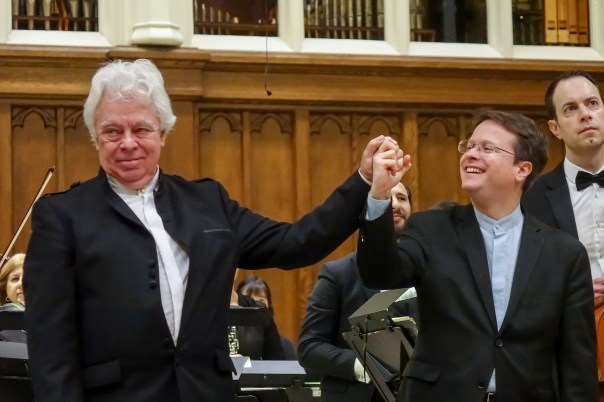
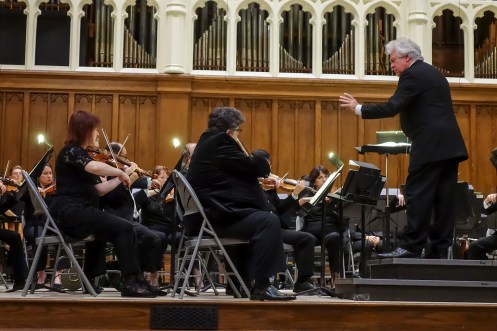
October 7, 2022, Charlotte, NC – Charlotte Symphony’s conductor laureate, Christopher Warren-Green, had been gone nearly a full week, but the echo of his presence remained at the kickoff of the 2022-23 season at Knight Theater. Once again, the Orchestra fired off the “Star-Spangled Banner” to inaugurate the new season, and once again, the ensemble achieved lift-off with Edward Elgar’s Cello Concerto – just like they did in 2012 at Belk Theater in Warren-Green’s first concert as musical director. Now Andrew Grams wielded the baton, his first guest shot with Symphony since 2016, and the soloist making her Charlotte debut was Israeli cellist Inbal Segev rather than Alisa Weilerstein.

Both artists have recorded the Elgar, Bloch’s Kol Nidre, and the complete Bach Cello Suites, so they may be described as kindred spirits. Perhaps Segev gets the nod over Weilerstein in being more simpatico with Grams, who began his program with PIVOT by British composer Anna Clyne. Not only did Segev commission a new Clyne concerto, DANCE, but she also premiered it on the same 2020 album where she plays the Elgar. Grams returned after intermission with Richard Strauss’s rarely-heard Aus Italien, arguably a more outlaw piece than the composer’s Don Juan.

Always forthcoming and charming when he addresses an audience, Grams likened the transitions of PIVOT to pressing the “previous channel” button on a TV remote control. True enough, shifts back and forth from the slow to the fast sections of the piece were often abrupt, incongruous jumps, sometimes startlingly so. But compared to the premiere performance, recorded at the Edinburgh International Festival in 2021, Grams seemed a bit heavy-handed in making his point. Instead of reveling in the contrasts, I found myself longing for the return of the calmer, quieter interludes – a sad waltz, a lazy Irish reel, and an Eastern European lament flavored with paprika – because Grams was more inclined to make the dominant loud sections raucous rather than catchy, though I was certainly delighted by the double-bass section providing whip-crack percussion, snapping their strings. I found myself rehabbing my appreciation for Clyne by listening to Segev’s recording of DANCE the following morning.2022~Elgar Cello-26

In person, Segev’s playing on the Elgar moved me far more than her excellent recording. Clearly, she was as comfortable with the orchestra as Grams and his musicians were with her. Hardly showy at all, her relaxed and dignified manner welcomed the audience and musicians to immerse themselves in the music along with her. Technical obstacles and difficulties never fazed Segev, so instead of capping strenuous journeys, we seemed to arrive more suddenly and dramatically at peak moments, where the cellist and Grams simultaneously turned up the voltage. The outer movements, the opening Adagio and an epic closing Allegro with no less than five sections, were teeming with rich contours and vivid contrasts. The more homogeneous middle movements, a Lento followed an Adagio, were object lessons in how an accomplished artist keeps our interest between musical tempests.

Although the Knight wasn’t filled to overflowing, a robust crowd was wildly appreciative of Inbal’s grace and verve. Nor was her encore, the Courante from Bach’s Suite No. 3, chosen to reconcile us to her departure. The standing ovation for this sparkly gem was every bit as enthusiastic as the reception for the Elgar. Deservedly.2022~Elgar Cello-22

Somewhere in Germany or possibly Austria, Christof Perick, Charlotte Symphony’s most ardent champion of Strauss, must have been smiling when Grams deftly navigated the many delights of Aus Italien. This youthful symphonic poem, premiered in 1887 while Strauss was in his early 20s, committed the folly of stealing “Funiculì, Funiculà” for the cornerstone of his final movement when composer Luigi Denza could readily sue him for the theft. But the inventiveness of the young genius is unalloyed in the previous three movements. Opening Strauss’s travelogue, “In the Country” isn’t bucolic in the manner of Copeland or Beethoven. Its serenity, filled with gravity and sadness, builds to yearning drama and then to majestic triumph. Surprisingly, for a movement titled “Amid the Ruins of Rome,” the music becomes livelier and turbulent, more like Strauss’s later heroic tone poems – for as he wanders amid the remnants of the past, he conjures up the glories.

Most impressive and precocious for me was the penultimate “At the Shore of Sorrento” movement, written more than a quarter of a century before Claude Debussy’s La Mer and no less accurate in sketching seagulls with the woodwinds and rippling waters with a harp. Grams had the Charlotte Symphony as immersed in Aus Italien as they had been in the Elgar, and the ebullience of the Orchestra in the closing “Neopolitan Folk Life” was irresistible, no matter how cheesy you might find Strauss’s “Funiculì” thievery. Hearing this still familiar tune played on bassoon and then as a march was just plain fun.

Delayed More Than Two Years, Saint-Saëns’ “Organ Symphony” Gets a Powerhouse CSO Performance

Review: Camille Saint-Saëns’ “Organ Symphony” No. 3 with the Charlotte Symphony and Paul Jacobs

 By Perry Tannenbaum

2022~Saint-Saëns-19

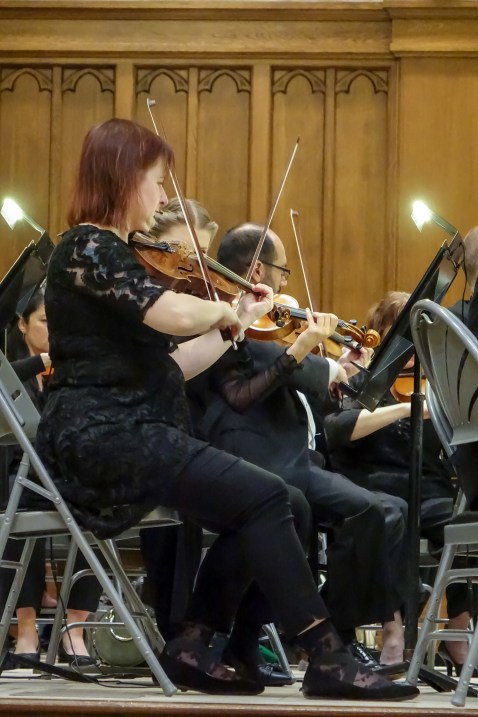
October 1, 2022, Charlotte, NC – When Christopher Warren-Green took over as music director of the Charlotte Symphony in September 2010, nobody could foresee that his transition to conductor laureate a dozen years later at the Orchestra would coincide with the 75th anniversary of the Charlotte chapter of the American Guild of Organists – and the 55th anniversary of the mighty M.P. Möller pipe organ at the First United Methodist Church on Tryon Street. As this confluence became manifest, so did an auspicious event to celebrate it, a partnering of the Symphony with the Church in a concert showing off the magnificence of the Möller pipes in action. These dual anniversaries provided Warren-Green with his first opportunity to return to Charlotte and perform in his new role, and the glitter of a prestigious occasion was enhanced with Grammy Award-winning organist Paul Jacobs at the console.

The choice of repertoire for this special event was especially enticing, including Camille Saëns’ thunderous “Organ Symphony” No. 3, George Frideric Handel’s most familiar Organ Concerto, and a prodigious Bach encore from Jacobs that decisively upstaged Felix Mendelssohn’s “Reformation” Symphony No. 5. With the remnants of Hurricane Ian keeping many subscribers away from the opening night performance on Friday night, the Saturday sequel filled the hall – down below and up in the stately balcony – to the bursting point.

For all of us who have felt a pang of frustration each time we gazed upon the vestigial organ pipes at Belk Theater, keenest when the Saint-Saëns Symphony was presented there with a piddling electronic substitute, this concert provided rich consolations. There were also redemptive aspects to this special program, for both Symphony subscribers and the Orchestra’s musicians, since the last time that the “Organ Symphony” was programmed at Belk Theater on March 20, 2020, it was one of the first musical cancellations of the COVID pandemic. All of those rehearsals were not in vain after all.

My own enthusiasm for organ recordings goes back to the vinyl days of Daniel Chorzempa’s performances of the complete concertos and Peter Hurford’s renowned compilation of Bach’s organ works, later reissued as a 17-CD doorstop. Recordings of the “Organ Symphony,” on the other hand, were always earmarked in audiophile reviews as demo treasures that could prove the mettle of cream-of-the-crop loudspeakers far beyond my budget. With the advent of the Charlotte Bach Festival four years ago, we’ve been able to hear live performances of the Bach solos by topnotch organists, a rare enough blessing. But I’d never hoped to hear a live rendition of a Handel Organ Concerto, even on a piddling portable at the Belk.2022~Saint-Saëns-06

If your concept of classical organ has been shaped by Bach, who inspired countless grandiose organ compositions by notables of every generation since – and the ginormous instruments around the world built to play them – then the sunny, playful sound of Handel’s concerti could take you aback. Of course, the nickname of Concerto No. 13, “The Cuckoo & the Nightingale,” would have provided a broad hint if you picked up a program entering the sanctuary. Although marked Larghetto, there was nothing solemn about the opening movement, which began with Jacobs parroting the orchestral intro. The true merriment of the piece became evident in the ensuing Allegro, where cuckoo-clock sounds proliferated. As Jacobs took greater command, he played a little duet with himself, those plodding cuckoo sounds facing off with some nightingale filigree in the treble.

The middle movement was marked Organo ad libitum in our programs, in contrast with the Chorzempa version, where the “ad libs” were split into two tracks explicitly adapted from two movements of a Handel violin sonata. In the penultimate movement, another Larghetto, Jacobs finally gave us a hushed foretaste of the grander churchly sounds he would offer up in his Bach encore. Nearly as virtuosic as his crowdpleasing cuckoo-nightingale counterpoint, the closing Allegro was the most jocund and celebratory movement of this concerto – and arguably the best incentive for seeking out the other 15 on recordings. Adding to the pleasure, the silky Symphony violins were as cheery as the organ, and Jacobs crowned this confection by soloing with his feet on the Möller’s pedals.2022~Saint-Saëns-14

There’s little shame in not identifying a Bach organ work when it’s played – unless it’s the famed Toccata and Fugue in D minor with its instantly recognizable opening and Gothic drama. Not knowing the precise title, key, and BWV catalog number certainly didn’t deter the First United audience from showering worshipful admiration on Jacobs’ dazzling performance. For the record, it was Bach’s A Minor Fugue BWV 543. The roar from the crowd in their protracted standing ovation was nearly as stunning as the performance. You couldn’t question this massive communal judgment when Jacobs had given life to the idea of “pulling out all the stops,” but we could wonder whether anything afterwards would measure up.

Reduced in number for the Church’s oratory platform and hampered by an acoustic environment less friendly to visiting orchestras than to the house organ, Charlotte Symphony gave Mendelssohn’s “Reformation” the old college try for their former maestro. There was an unmistakable contrast in the opening movement between the sublimity of the Andante introduction and the turbulence that follows in the dominant Allegro con fuoco section. Mendelssohn’s middle movements retained their engaging contrast as well, though the sanctuary’s sonics stole a bit of their sparkle. It helped that the Allegro vivace presented the work’s most familiar melody and that Symphony played the penultimate Andante so tenderly. Most impactful, however, was how Warren-Green shaped the closing Chorale with its joyous sunny components, the woodland purity of the Andante con moto and the conquering march of the Allegro vivace. Brassy, stately, and triumphant, the “Reformation” ended grandly with the stamp of Rose Lipham’s timpani.2022~Saint-Saëns-07

While Symphony’s performance of the Mendelssohn did not match the éclat of Jacobs’ exploits with the Bach, the verve of their assault on the Chorale boded well for the Saint-Saëns masterwork when Warren-Green and the organist returned after intermission. A few more musicians fortified the strings onstage during the break, but the full thunder of the “Organ Symphony” isn’t unleashed until the Maestoso section midway through the second (and final) movement, a sudden onslaught that must have snapped more than a few heads back. At last, this was the prime reason why it was worth hearing this massive work live with the might of a true church organ, an unforgettable experience. But that sforzando can be simulated in your living room easily enough if you wish to startle yourself without the more unique experience of feeling a whole sanctuary, with a congregation of over a thousand, trembling to its foundations. What most loudspeakers cannot deliver at home came earlier in the piece, when the opening movement Allegro moderato gave way to an almost serene Poco adagio.

Here Jacobs and the Möller organ produced a more primal subterranean sound, eerie and uncanny in its force, an octave or more below what most loudspeakers can audibly reproduce with anything approaching this power. Sitting in the second row, I felt like a monster whale or a legendary Leviathan was about to surface from directly below me. Warren-Green and his orchestra were in top form in the first halves of Saint-Saëns’ two movements, particularly appealing in the ominous Allegro moderato that opens the second movement, surely the most familiar melody in this score. Most thrilling was when the orchestra vied in sheer volume with the pipe organ and Symphony’s new conductor laureate sleekly accelerated the tempo into the rousing Allegro finish. Coming at the end of an evening suffused with music from the “king of instruments,” these moments had all the grandeur of a coronation.

Gelb and La Fiesta Latin Jazz Quintet Dim the Party Lights on New CD

Review: The Latin Jazz Pandemic Suite – CD

By Perry Tannenbaum
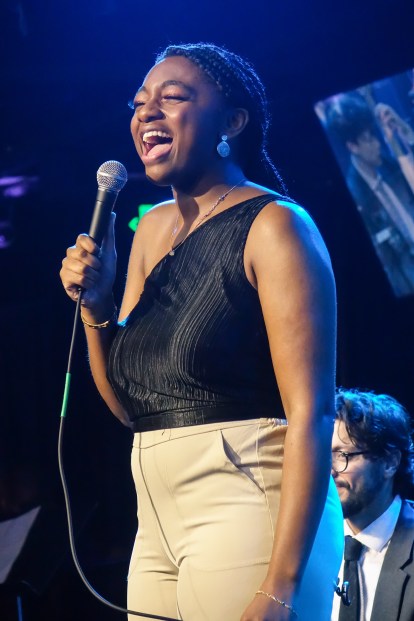
image006

CD: The Latin Jazz Pandemic Suite – Gregg Gelb, leader, tenor saxophone; Stephen Anderson, piano; Andy Kleindienst, bass; Beverly Botsford, percussion; Ramon Ortiz, drums – 30:10

If you think about the makeup of a Latin jazz quintet, your expectations would likely include a pianist, a drummer, a conguero, an acoustic or electric bassist, and another soloing musician – on marimba or vibes if you’re looking for a tropical flavor, on trumpet if your taste runs to South-of-the-border salsa. The sound is easier to conjure: light, breezy, festive, or celebratory. Always joyous. So it’s almost redundant that tenor saxophonist Gregg Gelb and his group named themselves the La Fiesta Latin Jazz Quintet. By far more surprising for this quintet is their ambitious new project, composed by Gelb, that provides the main core – and the title – for the group’s second album, The Latin Jazz Pandemic Suite. Sunshine and celebration discarded in favor of morose ruminations on COVID-19?

No, that never quite happens in the new six-track collection, five of them forming the Suite. Yet a haze of lassitude, discomfort, or discontent hangs over the entire set – sheer jubilation never fully breaks out, even in the “Tiempo de Fiesta (Party Time)” finale. Millions of us have had many of the same thoughts, agonized in similar isolation, and experienced many of the same fears and frustrations. But however much we have experienced in common during our nearly two years apart, the global pandemic has done little to bring us together – and plenty to increase our divisions. Serving as a preamble to the Suite, Gelb’s first composition for La Fiesta during the pandemic, “Juntos De Nuevos (Together Again),” would likely be merrier and more anthemic if the togetherness were accomplished rather than merely yearned for – and if it extended beyond his quintet, which was “looking forward to when we would be together again and be able to play,” in the composer’s words.

image002

“Juntos” starts with a lush rain-forest quietude, Stephen Anderson’s piano faintly dripping, Andy Kleindienst’s bass replicating a soft acoustic guitar, and Beverly Botsford’s exotic percussion clucking, ticking and moaning rather than pounding. The pounding arrives when drummer Ramon Ortiz switches away from his cymbals and rims to the heart of his drums, making a nice launchpad for the saxophonist’s brash entrance and the announcement of his virile theme, more like Sonny Rollins’ or John Coltrane’s concept of Latin jazz than Cal Tjader’s. Anderson’s soloing, on the other hand, is suppler, more apt to feature Latin rhythms as well as chords, yet able to layer on some McCoy Tyner gravitas as the pianist builds to peak moments. The rhythm section gets ample space here to show why Gelb missed them, Kleindienst’s airy bass solo leading into a more intense jam between Ortiz and Botsford before the leader returned with the theme. After repeating his melody, Gelb played on it briefly, bringing the track to an abrupt, invigorating halt. A zesty reunion.

None of the five parts of the Suite is nearly as long as “Juntos de Nuevos,” but hardly a beat separates the flow – none at all between parts 2 and 3. With shifting tempos and themes, Gelb’s Pandemic Suite acquires a cumulative heft, only let down in those two fused sections, “New Normal” and “Mucha Positiva,” where the quintet becomes a bit too literal, first the rhythm section and then the leader, in simulating the monotony and repetitiveness of isolation. The outside sections, “Quarantine Dance” and “Tiempo de Fiesta,” both find the right balance between the festive impulses of Latin jazz and the grim reality of COVID confinement. Sunshine dominates, occasionally dimmed. Introduced by a mildly domesticated Mongo Santamaria shuffle, “Quarantine” soars midway through its melody line before falling down and stomping with a jazz riff. All of the solos that follow from Gelb, Anderson, and Kleindiest ultimately tumble into that recurring riff. Unlike his arrangement on “Justos,” Gelb didn’t play on the melody when he returned with it, signing off abruptly after repeating one chorus, stomping his riff one last time with Anderson.

Gelb injects a little more Latin spice into his “Fiesta” riff, with a sax component all his own interspersed with emphatic punctuation from the rhythm section, so the composition sports a bit of hard-bop jauntiness a la Horace Silver, one of the two composers the Quintet covered in their eponymous 2016 debut album. Unadorned by this zippy sax riff, Anderson’s piano solo is energetic and inspired as ever, nicely complementing Gelb’s best blowing on this set. Percussion kicks in twice surrounding Gelb’s final solo, the last a rather chastened jam, pointedly slowed down to underscore that we cannot readily recover our carefree pre-pandemic sunniness just yet.

The penultimate piece in the Pandemic Suite, “The Sad Truth,” the ballad that it sorely needed: as Gelb’s liner notes tell us, “As March 2022, almost one million Americans have died from the virus. We still wait for it to end.” This is the saxophonist at his most soulful, invoking the gruff artistry of Dexter Gordon and Rollins. What I do wish for here is a composition that would have extended more than 16 bars – and solos that lengthened with it. Anderson enters ever so lightly and, abetted by Ortiz’s work, succeeds in making this ballad a Latin Jazz “Truth.” The pianist, in fact, seems to love this composition more than the composer, for he continues to lavish filigree upon it even after Gelb reprises the theme. Botsford asserts herself along with Anderson toward the very end of the arrangement, where the saxophone becomes slower and softer. That makes the sudden onset of the “Fiesta” finale explosive and satisfying.


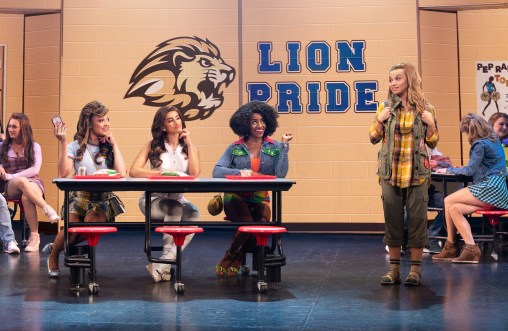
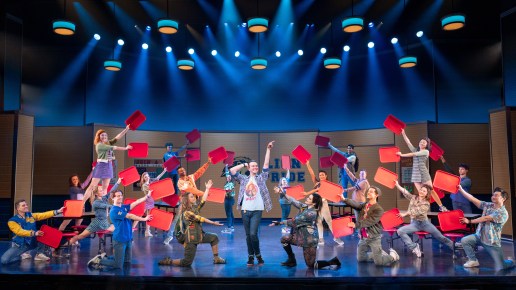
“Mean Girls” Delivers High School Intrigue and Nostalgia

Review: Mean Girls at Blumenthal PAC

 By Perry Tannenbaum

Mean-Girls-11

John Keats, the great poet who never saw his 26th birthday, bid his younger brother George to look at the world as a “vale of soul-making,” a useful rewrite of the “valley of tears” handed down to generations of good Christians through the Latin liturgy. Two centuries later, when our world views were more likely to be molded by Tina Fey, that same epithet was nearly as apt a description of high school. That passageway, a hermetically sealed microcosm of the real world we seeped back into after the last bell rang, was seen to be the place where we were memorably loved, betrayed, scarred, pigeonholed and inspired to find our style, our niche, and our selves.

For the first time, anyway – or forever.

Amid stints as creator of 30 Rock and head writer on Saturday Night Live, a matched set of adult microcosms, Fey demonstrated her mastery of high school reality with her screenplay for Mean Girls in 2004 and, to a lesser extent, in the book she contributed to the musical adaptation of the box office success 14 years later. You’ll be better oriented to the touring version of the Broadway hit, now at Belk Theater, if you cuddle up with the 97-minute original on Netflix.Mean-Girls-1

There you will get a better feel for Evansville, the university town near Chicago where 16-year-old Cady Heron gets her first tastes of high school – and America – after growing up home-schooled in Africa. Markers along the way are clearer on film, where Cady checks in with her folks after days at school, and the progress of the conspiracy to take down queen bee Regina George is itemized and commemorated step-by-step. The musical score was written by Jeff Richmond, Fey’s husband, and clocks in at 66 minutes, supplanting those markers and eating into other key specifics.Mean-Girls-2

A couple of times when I was catching up with the film, where Lindsay Lohan squared off against Rachel McAdams, I found myself exclaiming inwardly, “Oh, that’s how mean she is!” when I saw Regina in action. The most egregious of these omissions from the musical occurred right before McAdams invited Lohan to come and sit with her exalted clique, The Plastics, and have lunch with them for the rest of the week. It’s a cringeworthy humiliation episode in front of the whole cafeteria that gets swallowed up by “Meet the Plastics,” the fourth consecutive lame and overloud song at the top of the show.

Or so it was in the early going on opening night at the Belk, where techs in the soundbooth offered more than a judicious amount of support for the lead singers and ensemble combatting the fortissimo orchestrations by John Clancy. They seemed to get the hang of the hall after intermission, so I was able to decipher more than half of Nell Benjamin’s lyrics. That will be a tremendous godsend at future performances before intermission, when some in the audience might otherwise be struggling to get their bearings.Mean-Girls-8

The show improves when it moves to Cady’s Calculus class, where English Bernhardt gets to sing the calmer, relatively low-key “Stupid With Love” when she’s smitten by the dreamboat sitting in front of her, Adante Carter as Aaron Samuels, Regina’s ex. A nice complex of intrigues begins soon after Janis, Cady’s Goth guide to the treacherous terrain, hatches her three-pronged strategy to dethrone Regina. While Cady sets about infiltrating the Plastics, sowing dissension among Regina’s acolytes, and ruining her perfect bod; Regina learns of Cady’s crush on Aaron and nonchalantly lures him back.

Cady doesn’t blow her cover by showing her anger and jealousy, but she doesn’t give up on Aaron. She begins pretending that she’s dumb rather than brilliant at math, starts taking dives on exams, and reaches out to Aaron to be her tutor – when she should actually be tutoring him. Since Regina’s crimes against her classmates are abridged, we can wonder more readily here in the musical who’s the real meanie than we could in the movie.Mean-Girls-3

These intrigues get to be pretty tasty as the thrust of the songs switches from sketching the horrors of high school to more personal feelings and drama. After Barnhardt bemoans Cady’s Calculus crush, Lindsay Heather Pearce gets to vent her fury at Regina in “Apex Predator,” hoping to destroy Cady’s naïve delusions about the reigning prom queen. It’s apex of this musical’s hard-rock pretensions. Even Eric Huffman as Damian, Janis’s genial gay chum, gets a nice cautionary confessional at the top of Act 2, though “Stop” sounds like he’s shamelessly stealing from Avenue Q or The Book of Mormon.

Reveling in our tragic teen diva, standby Adriana Scalice* subbed on relatively short notice for Nadina Hassan as Regina, growing more admirable in her screaming power ballads as the sound system settled down. You could pretty much get the onslaught of her cattiness late in the opening act as she thrust her predatory claws into Aaron with “Someone Gets Hurt,” but she was far more sensational after the break in her apocalyptic “World Burn.” That’s when Regina discovers that she’s been played.

Hassan disappeared so suddenly from the tour that her name still appears in the top row of both the cast marquee and the photo gallery in the playbill. More amazing at the sold-out opening night performance, a woman sitting close behind me screamed her head off – and nearly mine – each time Scalice appeared! Most amazing was driving home with my wife Sue and two other women: I found myself surrounded by pure nostalgic bliss. High School USA!

*For the Saturday matinee, understudy Olivia Renteria steps in

Joy and Grasso Revivify the Kings and Queens of Bebop at Middle C

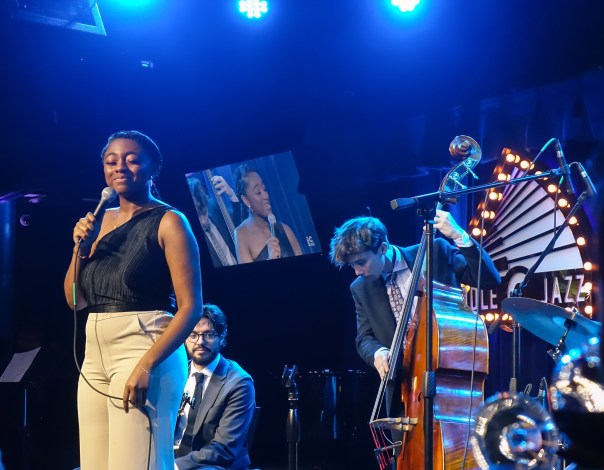
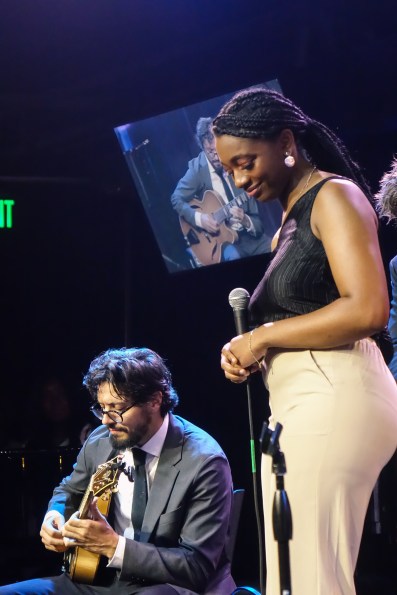
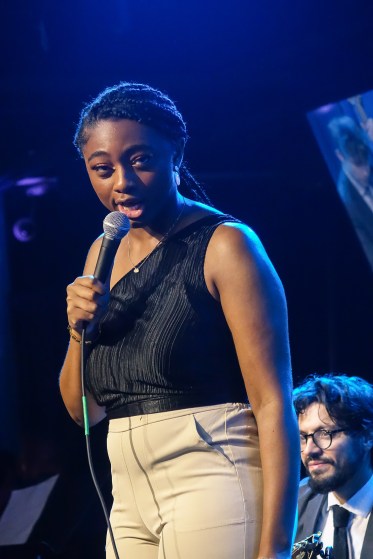
Review: Samara Joy and the Pasquale Grasso Trio at Middle C Jazz Club

 By Perry Tannenbaum
2022~Samara Joy~13-1

August 27, 2022, Charlotte, NC – Born in the Bronx, Samara Joy didn’t stray far from home to win best vocalist honors in the annual Essentially Ellington high school competition at Lincoln Center. You can get to that Versailles of Jazz overlooking Columbus Circle by taking any of four Bronx subway lines, including the A train. Nor was it much of a drive – if she didn’t simply hop a bus – for Joy to go across the Hudson River to Newark and win the prestigious Sarah Vaughan International Jazz Vocal Competition in 2019 while still a collegian.

Recently, she graduated from the jazz program at the State University of New York at Purchase, less than 35 miles from the Big Apple, where she was an Ella Fitzgerald Scholar. No, Joy hasn’t needed to hit the road to pick up these auspicious accolades. But make no mistake, teamed up with an extraordinary bebop guitarist, Pasquale Grasso, young Joy is going far. The 7:00pm set last Saturday evening was sold out at Middle C Jazz, where Joy and Grasso’s trio made their Charlotte debut, testifying to the already impressive momentum of Joy’s career and the spiraling sophistication of the Queen City’s jazz audience.2022~Samara Joy~12-1

Hard to say where the crowd had caught the buzz. A year ago, both Joy and Grasso were featured in August issues of major magazines, the singer in Downbeat and the guitarist in a JazzTimes write-up. Both have toured recently and both have been listed in their respective “Rising Star” categories for the past two years in Downbeat’s International Critics Polls, the more established Grasso rising to #3 in this year’s rankings. Grasso’s discography is also more extensive, but news of Joy’s triumphs is hitting my inbox more frequently these days. Verve, one of the choicest pearls among jazz recording companies, has signed Joy and will be dropping her first CD (and vinyl) on her new label in mid-September, and she has recently climbed aboard the list of heavyweight headliners for Jazz Cruise 2023. Yes, Grasso will be in the same boat, not quite as high on the quirky marquee.

Although only two tracks from the new album, Linger Awhile, have been released, the full songlist – otherwise greyed out – can already be viewed at Apple Music, and you can hunt down one other new song in a YouTube concert. Maybe even more exciting and auspicious than the half dozen songs she sang from the new release, including the title track, were the five songs that have not appeared on either of her two albums to date, including new lyrics for tunes by Thelonious Monk, Fats Navarro, and a tryout for Joy’s French translation of “April in Paris,” mashed up with the original English by Yip Harburg for composer Vernon Duke.2022~Samara Joy~16-1

Nor was Hoagy Carmichael’s “Stardust,” the lone tune Samara performed from her eponymous debut album of 2021, merely a lazy reprise. The YouTube concert recorded last July at Duck Creek, just after the release of Samara Joy, leans far more heavily toward Sarah Vaughan than the studio version, which shuttled between Sassy Sarah and Ella Fitzgerald in its timbre and interpretation. At Middle C, she was bolder, more self-assured, more venturesome, and more individual. Freed by Grasso’s lacy and linear accompaniment to take liberties with the beat, Joy bent the melody – and the lyric – more audaciously, particularly in the final sentence, letting Hoagy’s vain “dream” float longer than those previous versions and ending with a little cadenza that stretched out the final “refrain” to two or three long breaths.

Since Vaughan was the vocal great most closely associated with bebop, it was inevitable that Joy would gravitate toward melodies by Monk and bebop phrases coined by Charlie “Bird” Parker – especially since Grasso, in addition to his latest Be-Bop! album on the Sony label, has also released solo EPs devoted exclusively to Bird, Monk, and the wellspring of his unique guitar style, bebop pianist extraordinaire Bud Powell. Sprays of dazzling lucidity poured from Grasso’s fingers whether he was setting the stage for Joy’s vocals with oblique intros or soloing midway to give our featured artist a well-deserved breather. Not that this future diva ever took a seat or even a sip of water. She’s just 22!2022~Samara Joy~4-1

Jumping right into “Can’t Get Out of This Mood,” a somewhat neglected gem that Vaughan introduced in 1950 on her first LP, Joy’s vocal kinship with Sassy was instantly apparent – but she was getting to the song a few years earlier in her career, so her voice had a lighter, more youthful sound. She sounded like a younger Vaughan from back in the ‘40s, when you could only hear her “Perdido” on 78rpm. That made a difference when Joy sang the payoff line, “Heartbreak, here I come!” almost embracing disaster. After giving her “April in Paris” a French twist, Joy played around a little bit with Cole Porter’s “Just One of Those Things,” starting at a ballad tempo with the bridge, which slightly veiled the song’s identity before she hit the familiar opening line with an abrupt uptempo splash.

For me, the most delightful segment of the program came at the midpoint, when Joy concentrated on retrofitting some lost bop treasures with fresh lyrics. “Sweet Pumpkin,” already gathering plays on the streaming sites as the B-side of Joy’s first Verve single, has had two separate lives – as a Ronnell Bright song recorded by Bill Henderson in 1959 and as a Blue Mitchell instrumental in 1960. Joy’s second chorus was so unlike her first that you could accuse her of a second melody in vocalese, a precipice from which Neal Caine’s ensuing bass solo contrasted like a pleasant, peaceful valley. The young singer really did craft new lyrics for the next tune, Navarro’s “Nostalgia,” which will pick up a parenthetical new title, “The Day I Knew,” when the new album releases. Most fun of all for me was the Monk tune that Joy may not have taken to the studio yet, her new setting for “San Francisco Holiday,” nearly renamed “Don’t Worry Now” – I say nearly because one cover of the tune I’ve found has “Worry Later” as its parenthetical title.

Joy sang her song so slowly that it was unrecognizable at first. Aside from Carmen McRae, the only diva I know who has dared to devote a whole album Monk’s marvelously eccentric music, nobody has ever sung such a prickly, astringent song so slowly. It is blaring, repetitive, brassy music that would lose most of its flavor on piano or guitar, cresting with a bridge that echoes the main theme maybe an octave higher – with more discordant harmony. Only when Joy sped up the melody on her second pass did I recognize the Frisco melody and the wan, soused gleefulness of the original 1960 recordings by Monk’s quintet. Prudently, Grasso took a pass on soloing here, ceding that honor to drummer Keith Balla, who fashioned a fine and witty tribute to Monk’s legendary eccentricity, playing three-quarters of his solo quietly with his bare hands and his finale with a pair of sticks held no further than three inches above his drum kit.2022~Samara Joy~17

There was no letdown after this delight. Joy will be building to the climax of the Linger Awhile CD with the title song followed by the pinnacle of Monk’s composing genius, “’Round Midnight” – a fairly objective judgment if our measuring stick is either the number of cover versions the work has drawn by other jazz greats or the number of plays the pianist’s own versions have tallied on Spotify. If Joy’s recording is like the Charlotte performance, you will not be disappointed. The live version had all the trimmings and more, with Joy singing the verse, the vocal, and what seemed to be an even longer version of the familiar out-chorus vamp than even McRae’s, with little melodic variants all Joy’s own. Separating the two vocals, Pasquale played his most soulful solo in the set. Arriving as a signature song for her upcoming album, “Linger Awhile” was capped by a gleeful trading of fours by the instrumental trio, another pleasant and cordial valley after another majestic peak.

For the Middle C audience, the most delight was probably delivered with Duke Ellington’s “Just Squeeze Me.” Not only did Joy wail it with two pairs of soaring choruses, she challenged the crowd to repeat a series of scatted riffs, breaking the room into two competing teams, and choosing sides. Just a bunch of fun, underscoring how relaxed and self-confident Joy had been throughout her sellout set. The encore was a nicely chosen mellowing agent from the forthcoming album, “Guess Who I Saw Today,” a special bouquet for Nancy Wilson fans. There seemed to be many of them in the house.

Toni Stone’s Path to Glory Goes Beyond Winning and Losing

Review: Three Bone Theatre’ Toni Stone at The Arts Factory

By Perry Tannenbaum

202208173480315507725654890

Trivia questions: who replaced Hank Aaron when the future home run king moved up from the Indianapolis Clowns of the Negro American League to the majors? And who was the first woman to sign a professional baseball contract and play with a men’s team? The answer to both questions is Toni Stone, nee Marcenia Lyle Stone (1921-1996) – unless you’re a stickler for fact-checking and historical accuracy.

Then we need to face the truth that Hammerin’ Hank was already playing for the Braves’ farm club, the Eau Claire Bears, a season before Stone made her Negro League debut at second base with the Clowns. And before team owner Syd Pollock signed her to a Clowns contract, Stone had played in professional men’s leagues – if not the topmost major league – for 16 or 17 years, depending on which capsule biography you read.

Hearing all this for perhaps the first time, you’ll probably ask a truly important question, one that playwright Lydia R. Diamond surely asked after reading Martha Ackmann’s 2010 biography, Curveball: The Remarkable Story of Toni Stone the First Woman to Play Professional Baseball in the Negro League. Why haven’t we all heard about Toni Stone before, and why isn’t she more celebrated?

202208031526236485966839727

Amazingly enough, when Diamond’s Toni Stone premiered Off-Broadway in June 2019, the playwright didn’t blare out the answers that would become so glaringly obvious to everyone the following summer in the midst of #MeToo, #BlackLivesMatter, and our communal COVID hibernation. Diamond’s portrait of the pioneer nicknamed Tomboy during her childhood in St. Paul is more nuanced, diffuse, and detailed than it might be if she had begun sketching it after the cataclysms, polarization, and pandemic chaos of 2020. Or the nationwide schism of January 6.

Lucky us? In some ways, Three Bone Theatre’s production at The Arts Factory, meticulously directed by Dr. Corlis Hayes, reminds us how relatively dispassionate we were less than three years ago when we looked at neglected pathfinders and feminist icons. There’s a certain amount of useful calibration when Diamond seemingly steps aside and lets Toni tell us her story – and what she thinks of herself.

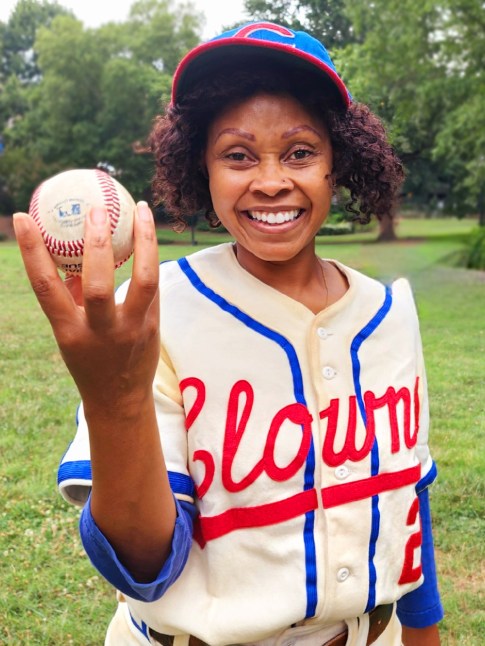
In her third standout outing of the year, Nasha Shandri immerses herself engagingly in all of Toni’s quirks, vulnerabilities, and strengths; candid rather than arrogant, sassy rather than seductive. Above all else, Toni loves baseball – the ball, the glove, the game. Both Diamond and Shandri make us believe it.

When she runs out of things to say, to us or her teammates, Toni will recite major league player stats, as if she’s collected and memorized every baseball card out there – as if the numbers have magic healing powers when she’s distressed. Diamond makes her so obsessed with baseball that romance and sexuality make her uncomfortable. Shandri has a mumbling recitation of stats at her disposal, or a Peter Pan aversion to being touched, whenever hormones begin flowing around her. She’s a natural, either way she goes.

202208174341351609522811290

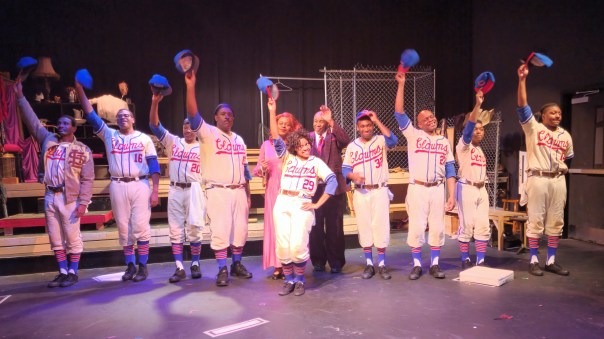
An all-Black ensemble of eight men hustles around Jennifer O’Kelly’s appropriately seedy set, which packages a movable tavern, a ramshackle players’ dugout, and a dimly lit brothel, leaving most of the Arts Factory playing space free to fancifully, maybe laughably, serve as a baseball diamond. Eight men aren’t going to be enough to bring us all the mentors, parents, teammates, and romantic interests of multiple races and genders that Toni will deal with from her childhood through her baseball career (1936-1954). Props and costumes are stowed in the dugout as well as offstage to keep things flowing.

Cutting through much of the confusion, Diamond keeps the names, personalities, and fielding positions of Toni’s teammates as constant as the parks she plays in. All evening long, Shandri and her team wear the same Clowns uniforms, authentically rendered by costume designer Kara Harman. That way, Toni’s path comes across as less solitary while she moves from her early ballplaying days in a local church league to a series of American Legion and minor league teams in Minnesota, San Francisco, and New Orleans before her major-league apotheosis: a full year with the Indy Clowns in 1953, before she joined the famed Kansas City Monarchs for her final season.

Diamond and Hayes are both aware of the perils of allowing Toni and the shorthand differentiation of her crew to devolve into a wholesome replay of Snow White and the Seven Dwarfs. The playwright not only gives us frequent glimpses of the racism that dogs Toni’s progress, she also shows us the sexism and piggishness behind the scenes in the clubhouse, occasionally checked but never eradicated.

We also see that there are good reasons for the men’s resentments when Stone signs on with the Clowns. When Jackie Robinson broke the color barrier in 1947 and Larry Doby integrated the American League during the following season, the Negro Leagues began to crumble. By the time Aaron is signing with the Braves in 1952, the talent drain is on the verge of killing Negro League baseball, reducing its remaining teams to barnstorming roadshows.

Clowns owner Syd Pollock – nearly overacted here by James Lee Walker II – didn’t sign Stone to make his team better. Unlike previous owners, who signed Toni on her merit, Pollock signed her as a novelty to improve the marketability and entertainment value of the team, already baseball’s equivalent of the Harlem Globetrotters. In a notable confrontation between Shandri and Walker, Diamond shows us that Pollock isn’t interested in showcasing his new acquisition on a level playing field. To ensure his investment – not very much, if we’re talking about Toni’s salary – Pollock colludes with other owners to ease up on her in the middle innings, when their pitchers will throw her more hittable pitches.

Toni grudgingly keeps the secret, but her teammates aren’t as oblivious or dimwitted as Pollock presumes.  202208175826162527256458676

Hayes does her part, casting the other Clowns, so that Shandri doesn’t stick out uncomfortably as the smallest on the team. In particular, the other middle infielder is diminutive, in the vein of Phil Rizzuto, Jose Altuve, or Joe Morgan. On the other hand, Miles Thompson as Spec, the team intellectual, is not at all the dwarf that he was reputed to be. Along with Justin Jordan as Woody, the embittered teammate who is by far the most trouble for Toni, Thompson is quite an imposing figure.

More than one of the Clowns points up Toni’s sexual inexperience in their dugout and locker room banter. One whole scene, a rather bawdy little prank played on her with a baseball bat, more than emphasizes her naivete. It also heightens uncertainty among the men about Toni’s sexual orientation.

Clearly, Diamond wants to keep us guessing, too. The juiciest roles outside the clubhouse go to Robert Rankin as Millie, the madam of that brothel, and Keith Logan as Captain Aurelious Alberga, an elderly admirer who persistently pursues her at Jack’s Tavern, a San Francisco joint. Skittishly resisting Alberga’s initial advances, Shandri seems more attracted to Millie, whose sexual appeal is aimed at her teammates. Both Rankin and Logan give charismatic performances, worldly and mature, charismatic and confident.

Doubling as Drunk Willie when he dons his Clown uniform, Walker as Pollock is probably the best at marking those moments when white men enter the story. Hayes could have sharpened the portraiture a bit more when we meet the other white folk: Father Charles Keefe, the neighborhood parish priest who paves the way for Toni to play organized ball; and Gabby Street, nicely handled by Thompson, the former manager of the world champion St. Louis Cardinals, who yields to Toni’s repeated entreaties, making it possible for her to aim higher.

Melissa McDaniel Grisham’s choreography seems a bit toothless and pointless when the Clowns team goes into their pre-game shtick. From reviews I’ve read on the Off-Broadway production, the aim there was not just to show how athletic and entertaining the players were but also to show the degradation and of being clowns as well as ballplayers. There’s not even a hint of cringeworthiness here at The Arts Factory that critics had perceived in New York.

202206295146239102907529957

Yet the chemistry among the players has exactly the tang we want when they’re playing the game they love – under shabby, hateful conditions. Johnathan McKnight as the catcher Stretch exudes the authority of the team’s quarterback, and Devin Clark has the aloof dignity of Elzie, the Clowns’ pitching ace. Tito Holder energetically grins and pouts as Jimmy, the team dumbass, and Frank FaCheaux makes the most of the glimpse Diamond gives us of team comedian King Tut, whom Pollock dubbed “The Clown Prince of Negro Baseball.”

Toni Stone has a hazy mythic aura to it unlike most biographical baseball sagas. Intense nail-biting games down to the last pitch or the cumulative drama of a torrid pennant race are nowhere to be found. They are as irretrievable as the barnstorming Clowns’ won-lost records, batting averages, ERAs, and boxscores. What binds the roaming Clowns together like family, in spite of their frustrations and resentments, is the love they share with Toni – for the game.

Newborn Charlotte Conservatory Conjures Theatre Magic – and Memories of Charlotte Rep – with “Witch”

Review: Witch from Charlotte Conservatory Theatre

By Perry Tannenbaum

Witch Photo

August 11, 2022, Charlotte, NC – Last April, when theatre was just beginning to emerge from its pandemic hibernation, would have the perfect moment for Charlotte Conservatory Theatre to spring to life with its first production, Jen Silverman’s Witch, now at Booth Playhouse. For the 2018 tragicomedy was based on The Witch of Edmonton, a lurid script written by William Rowley, Thomas Dekker and John Ford. All of that original play – all five acts, mostly in iambic pentameter – was written and readied for performance within the space of four months. That’s how long it had been since the true-life “witch” the play was based upon, Elizabeth Sawyer, was hanged for witchcraft on April 19, 1621. A year and four months after the quadricentennial of that execution, when our fears have shifted from death by COVID to inflation and monkeypox, the sardonic tear-it-all-down thrust of Silverman’s play may have blunted a little, but its fierce feminism remains intact.

Make no mistake, most of the gripping power of this evening at the Booth emanates from the white-hot Charlotte debut of Audrey Deitz as the lonely, defiant, and principled Elizabeth. But then there’s also the Charlotte debut of Stephen Kaliski as Scratch to bring out all of Dietz’s bewitching charisma, for his portrayal of the Devil has plenty of charisma to vie with Elizabeth’s. Kaliski was guileful, quick-witted, disarmingly frank, and surprisingly vulnerable on opening night. Here the Devil had met his match and more.

Such stunning simultaneous debuts of two experienced out-of-town actors with a local theatre company at Booth Playhouse are phenomena we haven’t enjoyed since the demise of Charlotte Repertory Theatre in early 2005. The regional professional aroma of that long-gone LORT company was sustained by the polish of the design team, led by scenic designer Tom Burch, whose previous local gigs I’ve praised at UNC Charlotte and Children’s Theatre. With their brushwork, scenic artist Lane Morris and portrait artist Eva Crawford clash a bit with Burch’s 17th century furnishings, echoing how Silverman pulls against the bygone era with her idiomatic dialogue. But Kellee Stall’s costume designs settle the matter, sort of. “Then-ish. But equally of our moment,” is Silverman’s dictate on the era of her work.

We see the “Then” most vividly in Stall’s costumes when we shuttle to Silverman’s other plotline at Sir Arthur Banks’s castle, which occupies most of the stage. After Elizabeth’s opening burn-it-all-down aria, delivered under a sharply brilliant spotlight, the other actors parade onstage, following the lead of Cuddy Banks, Sir Arthur’s foppish/effeminate son, who may be morris-dancing around Dad’s imposing dinner table. Anyway, he will soon tell Scratch that he performs in a morris-dancing troupe. What Silverman and Elizabeth seem to enjoy most about Scratch is that he’s selective.

So what Cuddy likes about Scratch, when he comes offering temptations in exchange for his soul, is that he’s coming to him before approaching either Elizabeth or the up-and-coming Frank Thorney. You see, Dad has taken Frank into his household and is now thinking about adopting the upstart, because Frank is clearly more likely to produce an heir. Robert Lutfy, who has been off our radar as a director for over a decade, makes an interesting alteration in how he sees Cuddy, pointing up his sexuality and discarding his shyness, handing a plum comical role to Jeremy DeCarlos, who feasts on it. What was easy to forget on opening night, amid DeCarlos’s prancing and his Percy Blakeney fopperies, was that Cuddy first considered asking for Winnifred, Dad’s servant, in exchange for his soul. Scratch short-circuits that request by pointing out that Winnifred is secretly married to Frank – a revelation that is doubly devastating to Cuddy. Even as he switches the bargain, exchanging his soul for Frank’s life, he is wildly in love with his manly, dashing nemesis.

If you’re scratching your head a little over Scratch’s objection to Winnifred, you will learn more intriguing details about Silverman’s concept of the tempter. He is not all to be confused with Satan or Lucifer – or with their supernatural omniscience. Instead, he’s like a traveling salesman, assigned to a specific territory, not exactly a rookie but lacking in past prestigious catches to boast of. Watching Witch at the Booth, I had the feeling that, after bagging Cuddy, Scratch moved on to Elizabeth and Frank because his bargaining with Cuddy yielded those leads. Dominic Weaver plays the confident and ambitious Frank with a hulking, self-assured swagger that contrasts perfectly with DeCarlos’s spindly fidgeting.

When Frank sets his price at becoming Sir Arthur’s heir, in exchange for his soul, Scratch’s answer is exactly the same as when Cuddy asked him to kill Frank: “I think we can make that work.” You might wonder how Satan’s Edmonton rep accommodates both rivals. Without explicitly answering, I’ll surmise that Silverman may have read Macbeth as profitably as she read The Witch of Edmonton. Fulfilling the devil’s work delivers some complications, of course, not the least of them are Winnifred’s flare-ups when she hears that her husband is yielding to Sir Arthur’s efforts to fix Frank up with a nobly-born wife.

It’s not just Elizabeth and Cuddy, then, who get their opportunities to sing their woes. From her multiple cares and troubles, Savannah Deal gets to deliver a fine aria – Silverman’s term for all the soliloquies she doles out to her players – touching us as she transcends her worldly status of peasant wench. Ron McClelland certainly gets multiple chances to humanize Sir Arthur, pouring his heart out to his deceased wife (the woman in the portrait) and agonizing over the future of his family name.

Witch Photo 2

Your only worry, as Silverman’s separate plotliness develop, is whether she will ever tie them together. It’s not a terrible concern, for Elizabeth’s destiny becomes as fascinating as the love triangle at the castle once Scratch becomes as besotted with Elizabeth as we are. Silverman offers the choice of casting the outcast witch as a woman from her 40s to her 60s, but after seeing the vibrancy of Dietz in the title role, I believed Lutfy made the ideal choice in going for the low end of that scale. Aside from one single bobbled line, the opening night performance was seamless, magical perfection. What an auspicious beginning for Charlotte Conservatory Theatre! May their future runs be longer than four days.