“Sunlight and Solstice” Balances Seasons, Continents, and Testaments

Review: CP Dance Theatre’s Sunlight and Solstice

 By Perry Tannenbaum

2022~Sunlight and Solstice-06

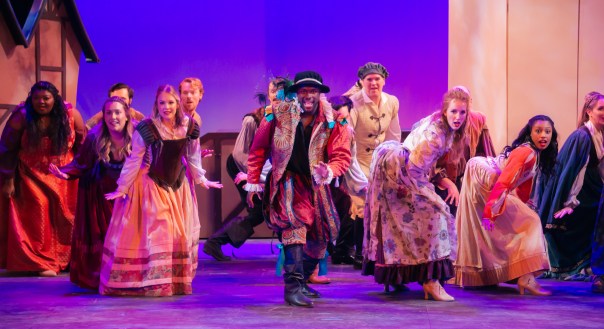
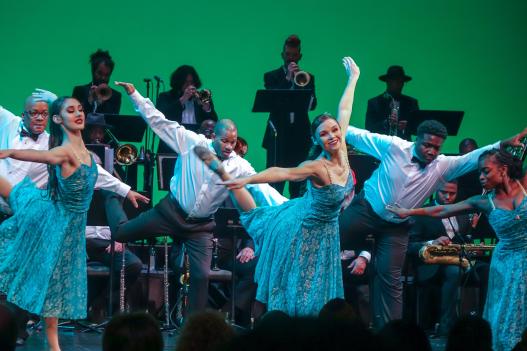
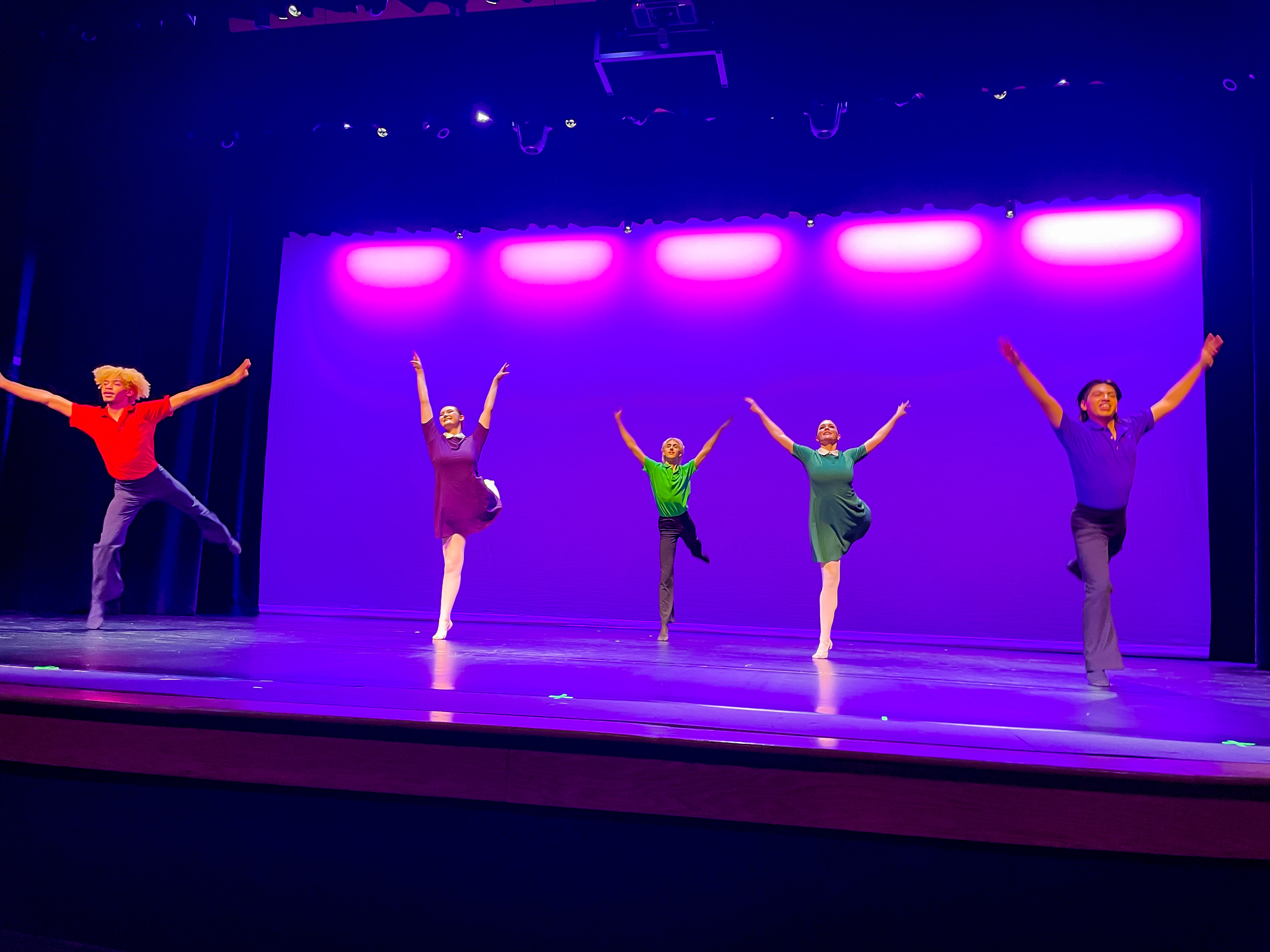
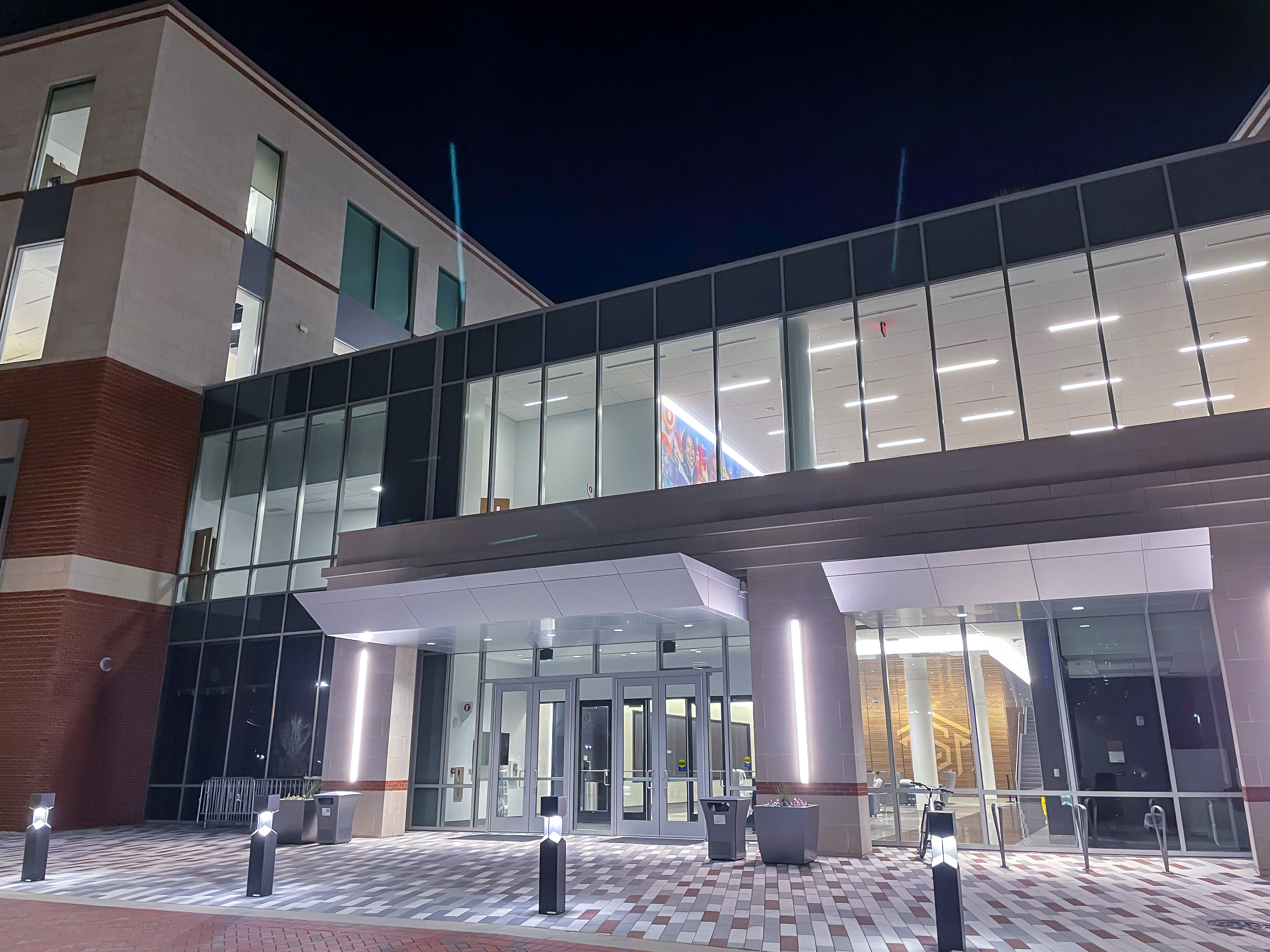
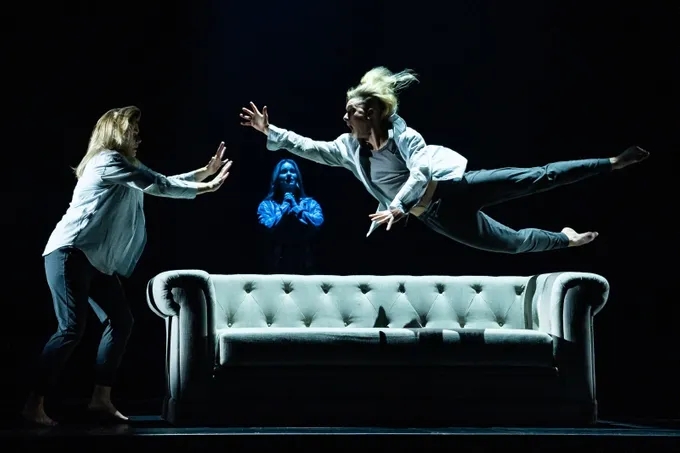
December 2, 2022, Charlotte, NC – Compared with Charlotte Youth Ballet’s annual production of Tchaikovsky’s beloved Nutcracker, Central Piedmont Dance Theatre’s fall presentation, Sunlight and Solstice, drew only a small fraction of the huge crowd that converged on the CP Community College campus for the second weekend of the 2022 holiday season. Yet the few of us who chose the less-ballyhooed event were rewarded with more new things to see, for Sunlight and Solstice delivered plenty of new choreography in its bouquet of seven dance pieces, and the program was staged at The New Theatre – in the spanking new Parr Center complex. Dance faculty members Clay Daniel and Tracie Chan each created three pieces for the auspicious event, working with their students to synchronize and refine their performances.2022~Sunlight and Solstice-08

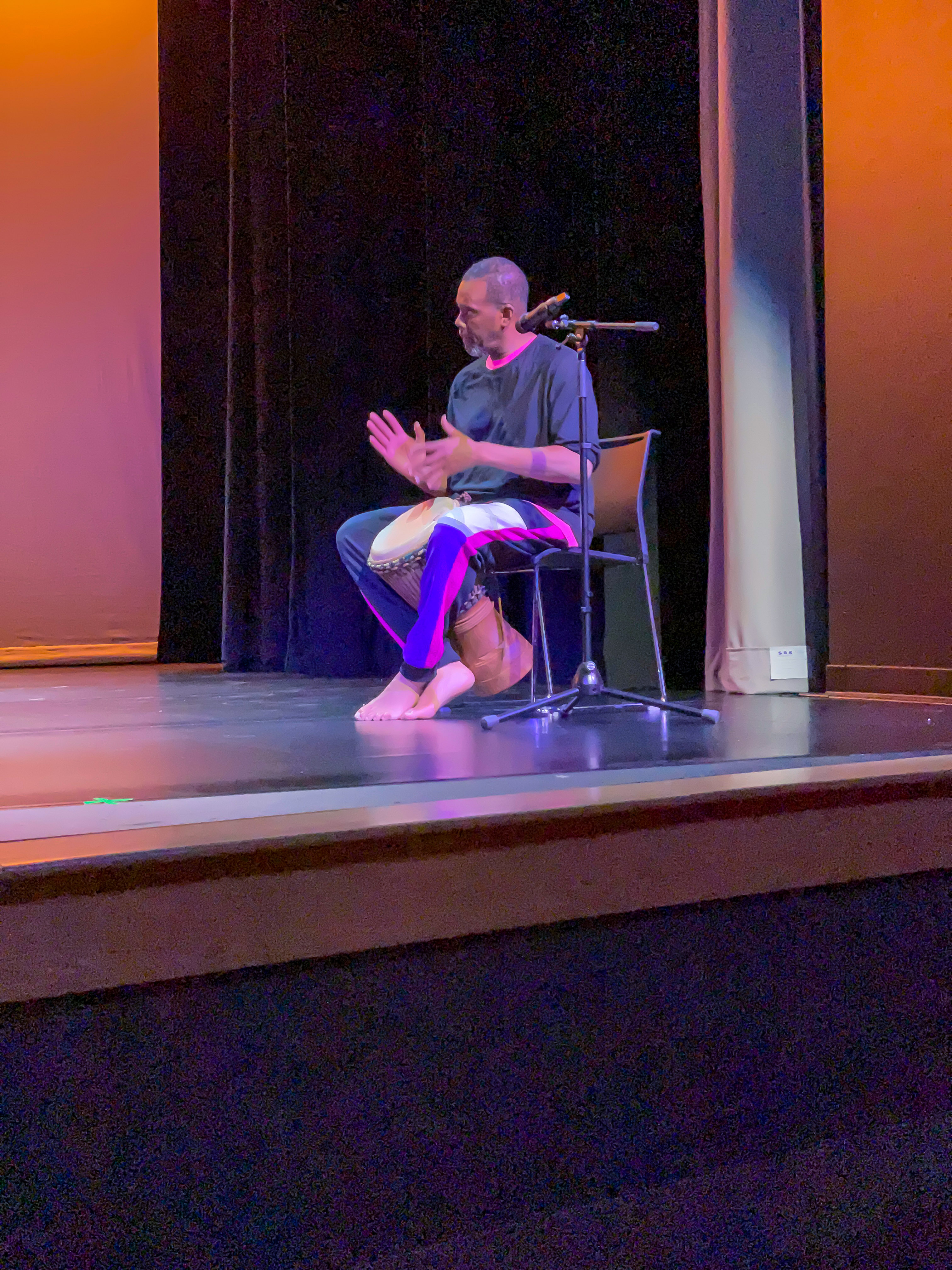
The program closed with a guest appearance from the Chris Thompson Cultural Ensemble, with live singing and drumming by their leader.

Sadly, the newness of the venue was underscored by the fewness of the audience. That increased my admiration for Daniel, who maintained his poise and geniality in handling his hosting chores. Without a printed program in our hands, you could say that Daniel’s intros were godsends, and as our host candidly disclosed, they also spread a convenient veil over the time needed backstage for costume changes between dances. Daniel was no less savvy in choosing his own 2014 settings for Shel Silverstein’s A Light in the Attic to start us off, for they provided a satisfying variety of little nuggets from the 1985 recording while introducing us to a wide swath of CP’s dance corps. Among the ten different vignettes, a couple as brief as 18 or 19 seconds, my favorites were “Bear in There,” “Homework Machine,” and “Monsters I’ve Met,” but all of these were decisively upstaged by “Eight Balloons,” which featured a helium balloon (an unbeatable prop) and an engaging array of dancers and movement.2022~Sunlight and Solstice-02

My first audition of the New Theatre’s sound system was a letdown after the brilliant impression made by the hall, the seats, and the sightlines. Silverstein’s poems should have been louder and clearer. Even more ominously, the backup music promised by Daniel was rarely audible. Replay at home on Spotify was necessary for me to confirm it was actually there.2022~Sunlight and Solstice-04

Nor was there instant redemption or revelation when the soundbooth cued up Camille Saint-Saëns’ Danse macabre for “Cadence,” the first of two Chan pieces that followed. Impact of the music was tepid rather than electrifying. The men who launched the dance were freer to move around than the more balletic women who came afterward, so the best of the work’s three segments was the last, when both groups joined together and movements emphasized leaps more than en pointe work. “Hannah” was an even more delightful piece, though I refuse to believe that Chan chose the best recording of “Hard-Hearted Hannah” she could find. On the other hand, Chan did choose Aubrey Conrad, her best and most alluring dancer, to portray the Vamp of Savannah, GA. Costumer Emily McCurdy dressed her in a tight, eye-popping red outfit to make sure we noticed. Backups (aged 17-69 as Daniel pointed out) were in slacks, their black tops besprinkled with coppery spangles.

A couple of interestingly varied Daniel pieces ensued, with music by JS Bach and Mark O’Connor. Their titles, Art of the Fugue and Appalachian Waltz, were sufficient to distinguish who composed what. Once again, Daniel’s programming was on-the-money, following the splashy éclat of “Hannah” with a piece for three men – Carson Fullwood, Dawsyn Ransome, and Nicolas Hare – more quietly titled “Prelude.” This agreeable trio also provided Conrad with extra time for a breather as well as the costume change she needed to reappear as the soloist in “Moonlit,” the dreamiest piece of the night.2022~Sunlight and Solstice-11

The perkiest piece of the night was undoubtedly Chan’s “Winter’s Frolic,” set to three choice cuts by the Vince Guaraldi Trio. Or maybe two choice cuts would be more accurate, since the choreographer’s musical taste could be questioned once again when she chose Guaraldi’s take on Beethoven’s “Für Elise” as the middle piece in her three-piece suite – not wintry, not frolicsome, and not typically Guaraldi, with no redeeming Christmas or Halloween spirit. The icy skating motif established by the dancers in “Skating” was stopped cold, thankfully returning with Chan’s finale. Somehow, Conrad managed another costume change to slip in among the six dancers, but it was Rieonna Weldon and Carson Fullwood who were featured.

2022~Sunlight and Solstice-09

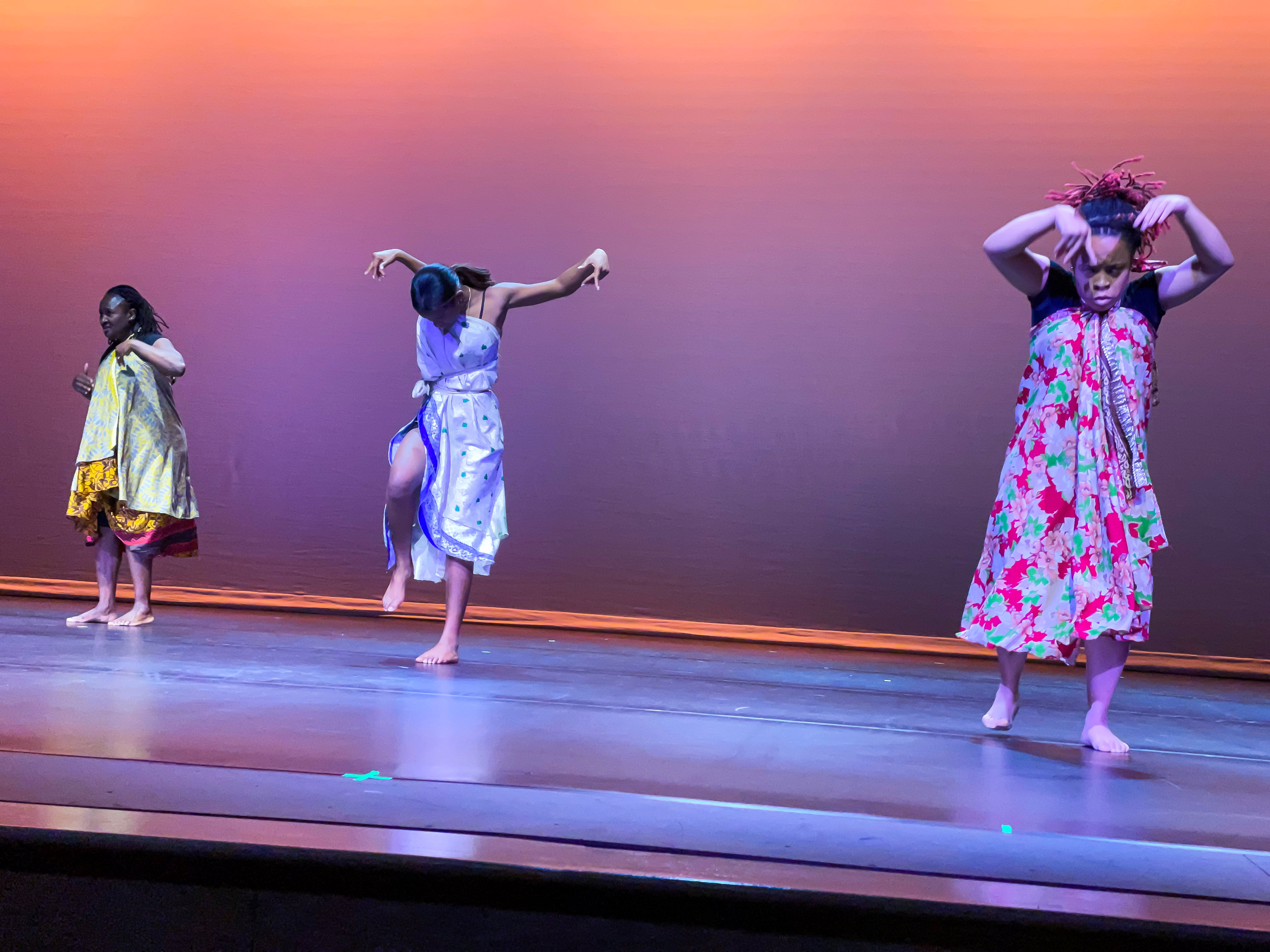
Whether it was the African style of clothing Chris Thompson’s dancers wore or the lighting shift behind them from the rich violet of “Winter’s Frolic” to a peachy sunset hue, “Rivers of Babylon” brought on the most sunshine of the evening and reminded us that there are two solstices. With Thomson beating out rhythm on his drum, we could readily feel transported from winter to summer as his three dancers – Micheline Ruffin, Erika Guzman, and Briana Hubbard – moved gracefully onto the brightly-lit stage. Then it all came together as Thompson sang the reggae song: summer meshed with winter, one solstice followed another, and the words of an Old Testament song were sung in the season of the New Testament’s most joyous holiday.

For Alanis Fanatics, “Jagged Little Pill” Is Easy to Swallow

Review: Jagged Little Pill at Blumenthal PAC

By Perry Tannenbaum

1250-3edd718564fff89d8d3205232f5ddccc

Overamped opening nights seem to be a tradition at Belk Theater when Broadway tours hit town, but this week’s JAGGED LITTLE PILL set a new standard, catapulting me out of my seat with the first words of the pre-show announcement – before the onstage band launched into the overture. Things quieted down mercifully after sound levels peaked at 103dB just before intermission, but despite an early lull, Act 2 peaked a couple of times at 104dB as the Alanis Morissette musical climaxed.

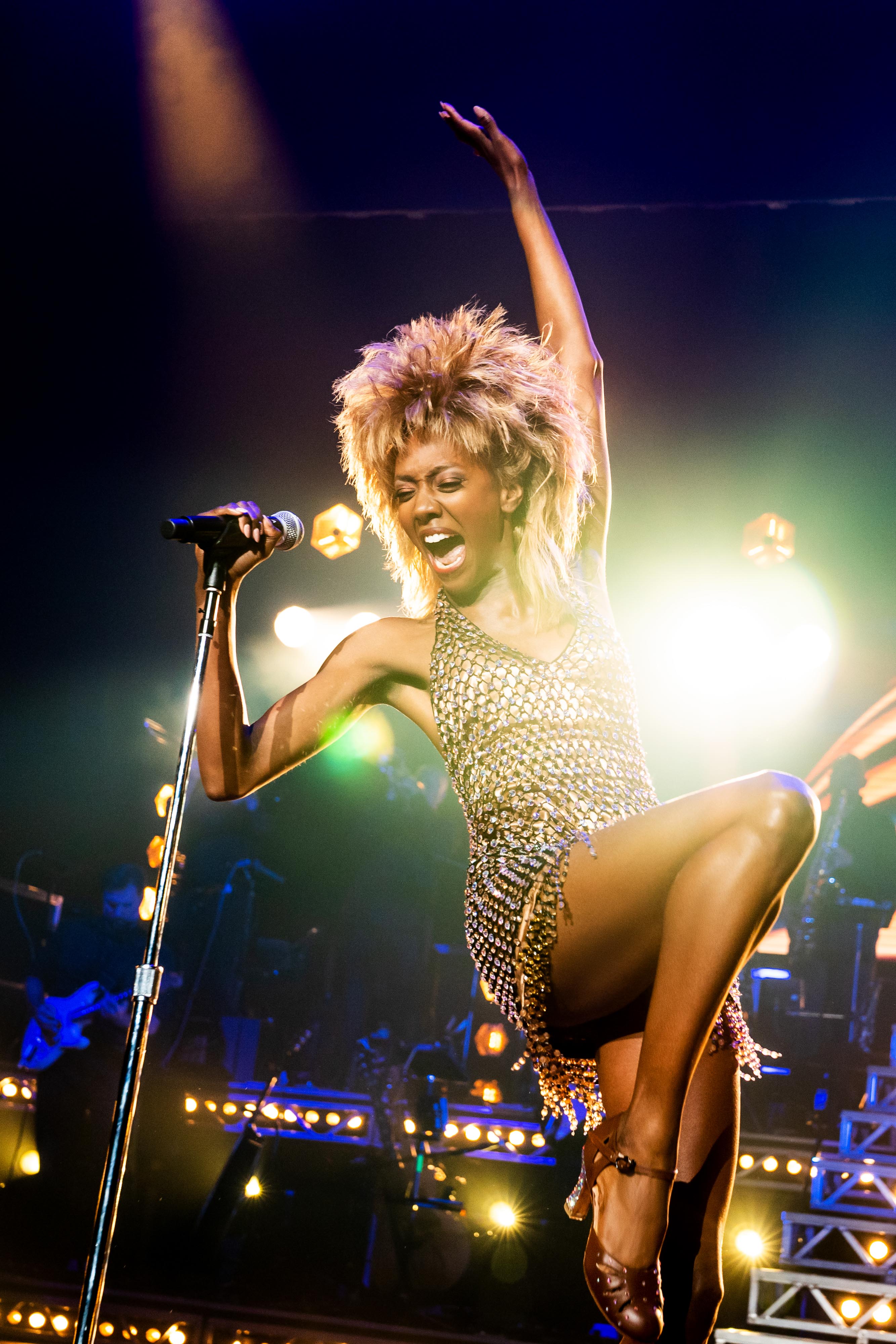
Diablo Cody’s stage adaptation of Morissette’s breakthrough Grammy Award album meshes well with those teen-anguished songs and the Belk’s high decibels. Sporting a fresh overload of angst and suffering unimagined by Morissette in 1995, Cody’s book shuttles between three plotlines and eight characters for most of the evening, ostensibly linked by the normal, successful, and well-adjusted Healy family, represented in each of the three stories – and not nearly as happy or well-adjusted as they appear.Heidi Blickenstaff and the North American Touring Company of JAGGED LITTLE PILL_ Photo by Matthew Murphy for MurphyMade, 2022

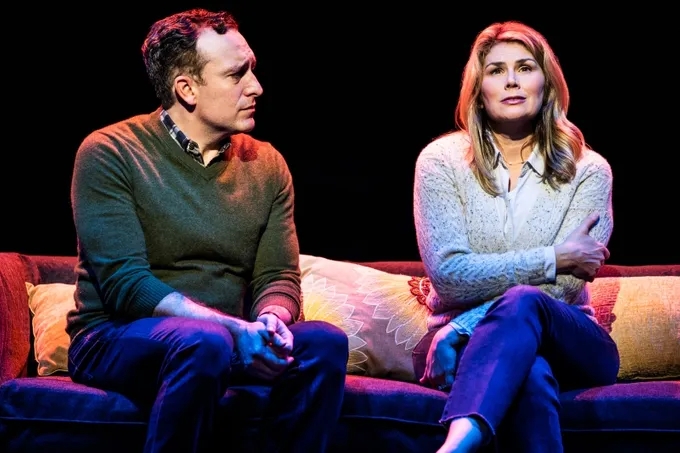
The somewhat disjointed stories are neatly bookended by Christmas letters that sunny matriarch Mary Jane Healy reads to us from her living room. Her first letter, prior to the humility and honesty she will learn during the coming year, whitewashes the Healy family’s struggles, discomforts, and resentments for public consumption. Mary Jane is not truly healing from her car accident earlier in the year with the wholesome aid of herbal essences or natural medicines: she is hooked on prescription Oxycodone and will soon be seeking out the neighborhood drug dealer when her doctors and pharmacist cut off her supply.

Meanwhile, all is not bliss in the Healy marriage, because husband Steve is working 60 hours at an unfulfilling job, spurned by his pill-popping wife in bed, and turning to porn for solace.Chris Hoch and Heidi Blickenstaff in the North American Tour of JAGGED LITTLE PILL - photo by Matthew Murphy, Evan Zimmerman for MurphyMade, 2022

MJ can be justifiably proud of her kids, whom Steve has done more to support than to father. Nick, the eldest, has just earned early admission into Harvard, a fabulous achievement he is not as excited about as his parents. Like his exemplary mom, he feels the pressure to be perfect – and remain the best thing she’s ever done.

Bisexual and African-American in a lily-white Connecticut town, young Frankie is obviously an adopted child, yet she remains the most normal of the Healys despite the dogged colorblindness of her parents, her brother, and her community. She already has a girlfriend that she’s keeping secret from her family, and just before Christmas break, Frankie attracts a new boyfriend in their creative writing class.

Frankie is an earnest rebel at first, in search of a cause. Her social consciousness leads her to spearhead a campaign to give out free tampons at her high school. The protest placards we see in Act 1 can be pretty droll.Jade McLeod and Lauren Chanel in the North American Tour of JAGGED LITTLE PILL - photo by Matthew Murphy, Evan Zimmerman for MurphyMade, 2022

Amid this underwhelming welter of decadence and angst, it’s the jilted girlfriend, Jo, who has the best reasons to feel aggrieved, upstaging the Healys and torching some choice vocals. Condemned by her Evangelical mom for her sexuality, obliged to keep her relationship a secret from Frankie’s parents, and thrown over for this upstart Phoenix guy just because he defends her writing in class, Jo is the twitchiest and most upset in her set. Topping all that, Jo is dragged to a Christmas Eve service by her pious mom while Phoenix puts his moves on Frankie at the school party.

All of these indignities set Jo afire amid this otherwise humdrum scenario. What sets it all ablaze is the febrile stage direction of Diane Paulus and the trembling all-shook-up movement and choreography of Sidi Larbi Cherkaoui. Every surreal sight and unmotivated tremor is further whipped to a frenzy by Morisette’s music and the overamped vocalists, often unintelligible in their cries and wails. Unless you’re moving furniture to the wings, no member of this cast makes an exit without a hugely melodramatic gesture of anger or frustration.(L to R) Heidi Blickenstaff, Allison Sheppard and Jena VanElslander in the North American Tour of JAGGED LITTLE PILL_ Photo by Matthew Murphy for MurphyMade, 2022

For all the Morissette fanatics who filled the Belk to its topmost balcony, all this excess, performed with gusto and bravura, was nirvana. You would have thought, with a title like Jagged Little Pill and all the enthusiasm greeting it, that we were watching a devastating denunciation of adult hypocrisy, rampant drug culture, industrial greed, and the onset of environmental catastrophe rather than much ado about nothing.

Until the Christmas party. This is where Cody finds a dramatic core to her script and adds two key dramatis personae, a rapist and his victim. As a result, Nick proves to be very imperfect, disagreeing with both his sister and MJ in his initial reactions to the assault. After meeting with Bella, the rape victim, Frankie now has a substantial cause to crusade for. Nick must decide whether to break with his rich best friend, Andrew, who perpetrated the rape and snapped the humiliating photos that are being texted during the Christmas break.Allison Sheppard and the North American Touring Company of JAGGED LITTLE PILL_ Photo by Matthew Murphy for MurphyMade, 2022

Wishing to protect her son’s future, MJ sides against Frankie, but her impregnable pill-fed armor begins to crack. She will begin some long overdue introspection and face up to her past. Poof, Cody’s chimerical soufflé of universal discontent will mostly deflate before MJ composes her next Christmas card.

Duke grad Heidi Blickenstaff shows us how – and why – she won the lead role of Mary Jane on Broadway after the COVID hiatus, bringing us an affecting mix of maternal warmth, diligence, cluelessness, and neurosis. Paired with Chris Hoch as a decidedly corporate-looking Steve, Blickenstaff as MJ struck me at times as somewhat surreal delving with her partner into the marrow of Morissette’s songbook.

Here the wildly enthusiastic audience was helpful in reminding me that the Healy parents, though clearly older than the 19-year-old or 20-something who wrote most of their lyrics, are younger than Morissette is now – like so many of us in the roaring crowd listening to their anguish. And it’s also helpful that they both yearn so earnestly to recapture and redeem their past.Lauren Chanel and the company of the North American Tour of JAGGED LITTLE PILL - photo by Matthew Murphy, Evan Zimmerman for MurphyMade, 2022

Dillon Klena and Lauren Chanel are marvelously mismatched as the siblings, Chanel as Frankie making the abrupt voyage from Connecticut to Greenwich Village in an effortless manner hard to imagine for Klena as the preppy elder brother. Both of these sustained presences, especially Nick, are upstaged by the more seriously aggrieved teens, Jade McLeod as the raffish Jo and Allison Sheppard as the flirtatious Bella.

McLeod pours their renegade voltage into two of Jo’s prime cuts from Little Pill, “Hand in My Pocket” and “You Oughta Know,” as well as the subsequently revealed phantom cut from that album, “Your House,” when they reveal their nasty side. Underscoring the best craftsmanship that went into updating the Morissette playlist with fresh #MeToo flavoring, Sheppard draws two new songs. “Predator” was released by Alanis as a single in 2021, two years after the JAGGED LITTLE PILL cast album came out, and she has never recorded “No,” an overtly didactic song penned by Guy Sigsworth.

Sheppard makes both of these late additions fit seamlessly into the musical as she grabs much of the spotlight after intermission. But she’s also fine in Bella’s first interactions with Frankie and Jo, accepting her victimhood with a nicely calibrated reluctance.

My suspicion is that while Bella ascended in prominence as this musical’s creative team tinkered with their handiwork, Phoenix and Andrew lost ground. Jason Goldstein as Andrew hardly utters a word, let alone sings one, after giving our story so much impetus by raping and humiliating Bella. If only the evildoers in our politics could be so totally silenced and ignored!Lauren Chanel and Rishi Golani in the North American Tour of JAGGED LITTLE PILL_ Photo by Matthew Murphy for MurphyMade, 2022

Perhaps Cody should be tossed from her scriptwriters’ union for neglecting her villain, but I felt we suffered more from the hasty dispatch of Rishi Golani as Phoenix. Golani shines in “Ironic,” his classroom duet with Chanel, and subsequently serves charmingly as the mellow edge of Frankie’s love triangle in “That Would Be Good,” sharply contrasting with the belligerent McLeod.

After fleeing from Frankie’s bedroom, we never really see Golani as the genial Phoenix again. Cody offers us a rather flimsy pretext for the cooldown in their relationship before Golani even gets a chance to weigh in on what happened to Bella. Surely, it’s the talk of the school – and the town, once Bella hits the police station.

So MJ’s valedictory Christmas letter gives us the illusion that all loose ends have been addressed, and Cody ultimately packages Morissette’s hits with the best giftwrap a jukebox musical has gotten since Mamma Mia. It’s more than enough to satisfy Alanis fandom, and it’s a forward-looking attempt that bodes well for a more woke future up on Broadway.

Joy and Akinmusire Cap SeixalJazz 2022

Review:  Ambrose Akinmusire and Samara Joy at SeixalJazz 2022

By Perry Tannenbaum

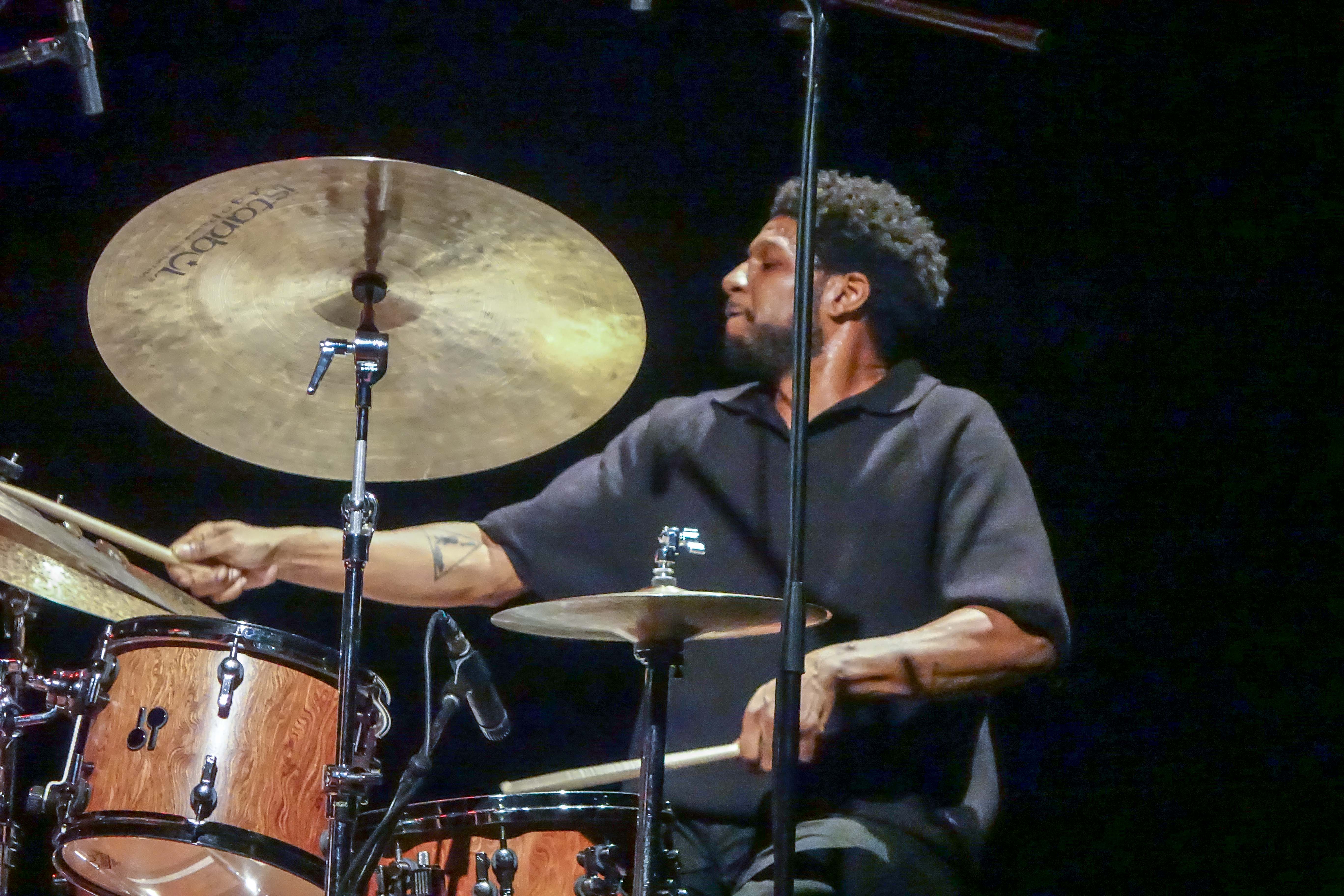
2022~Portugal-190At SeixalJazz, across the graceful April 25th Suspension Bridge from Lisbon, Portugal’s renowned capital, the festival must go on. The last couple of pandemic editions, in annual two-meters-apart format, had been muted echoes of the expansive new direction SeixalJazz had taken in 2019, when Kenny Barron, Ralph Towner, Peter Bernstein, and the John Beasley Monk’estra had all been headliners – while afternoon and latenight concerts had been added at separate venues.

After a strategic retreat to an all-Portuguese lineup in 2020, the 2021 festival celebrated its 25th anniversary with a stellar smorgasbord for its socially-distanced audience, including Seamus Blake, Melissa Aldana, Ted Nash, and a high-powered Billy Hart Quartet that slipped in Mark Turner and Ethan Iverson. But it was SJ 2022 that turned on the burners full blast once again at the Municipal Auditorium of the Seixal Cultural Forum, discarding the social-distancing of previous years and restoring the alternate slate of free-admission “Clube” programming at the Sociedade Filarmónica Democrática.

2022~Portugal-186Monty Alexander, Ambrose Akinmusire, and Samara Joy were the big names ready to cook at the Municipal. Breaking our own personal travel bans, my wife Sue and I had already shortlisted Portugal as an attractive autumn destination. Seeing Joy perform with guitarist Pasquale Grasso in August, at Charlotte’s Middle C Jazz Club, pretty much cinched our decision. The opportunity to also see Akinmusire, whose albums I had supported on multiple JazzTimes Critics Picks lists in past years, made the closing weekend at SeixalJazz even more irresistible.

If that weren’t enough, the 10:00pm starting time for all Municipal Auditorium concerts left us free to tour as we wished during daylight hours without being rushed or constricted in our evening dining choices. Across the Tagus River from Lisbon, atop an imposing slope overlooking the shore, the Municipal sports a hillside parking lot that could likely accommodate an audience of 1000. We were rather surprised when the hall, unlike most festival spaces we’ve experienced, had a cozy capacity of 400 or less – completely sold out on both nights we attended.2022~Portugal-196

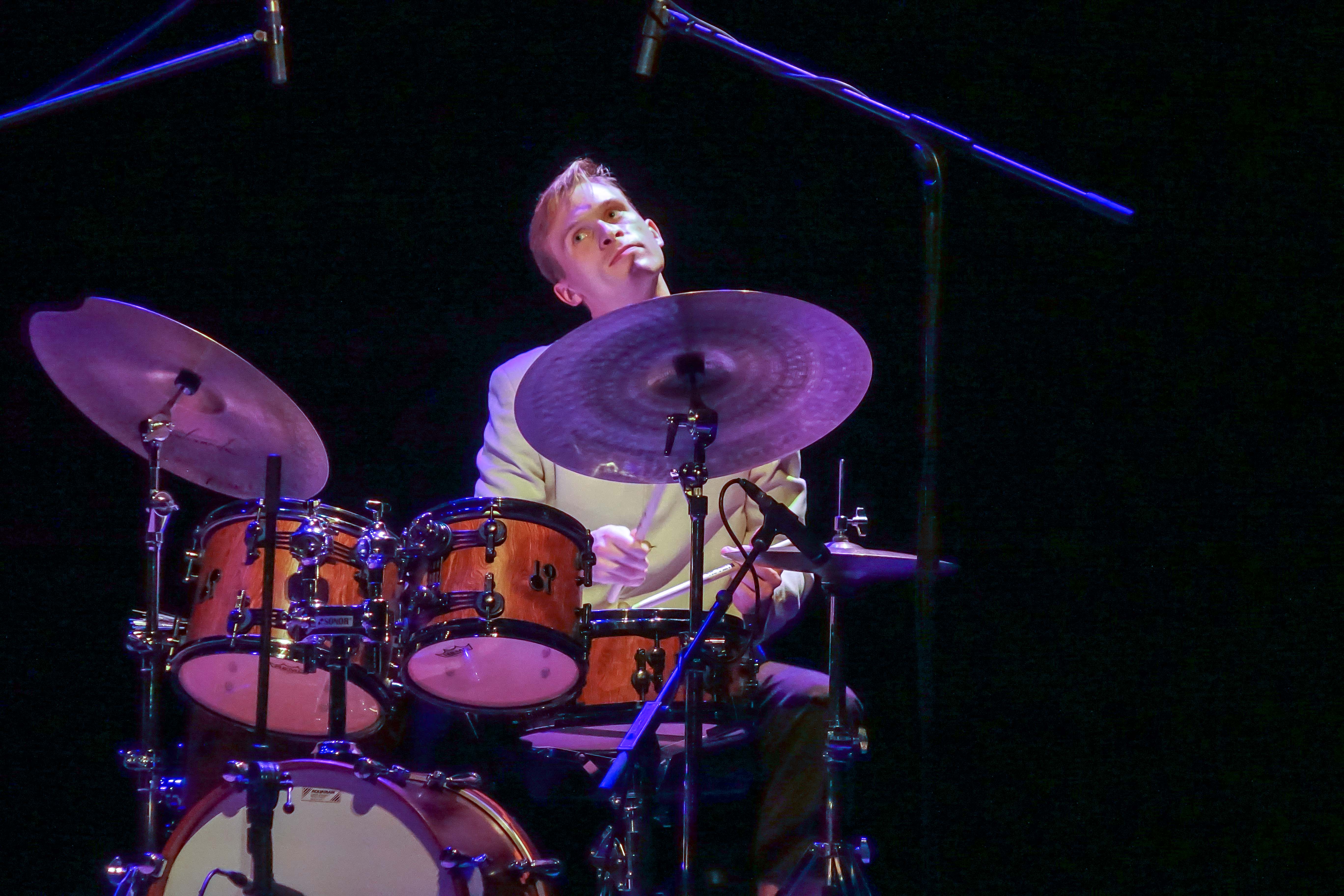
Akinmusire was actually more familiar with the Municipal than we were, having played on closing night of SeixalJazz 2014 with two other members of his current quartet, pianist Sam Harris and drummer Justin Brown. Missing in action from that gig eight years ago were tenor saxophonist Walter Smith III and bassist Harish Raghavan, staples in the trumpeter’s formative years, replaced by Joe Sanders wielding the upright.

So the rapport between Akinmusire’s bandmates – and between the band and their festival audience – figured to be solid. Knowing each other for more than 20 years, the returning members of the Akinmusire Quartet could hearken back to the leader’s earliest recordings, play off on the tender spot of every calloused moment, Ambrose’s latest release, and even play a new composition for the first time. Adding to the band’s comfort level, no doubt, the acoustics and the sound crew at the Municipal quickly proved to be admirable, and the audience’s energy and courtesy were outstanding.2022~Portugal-066

While the sound of Akinmusire’s band put me in mind of the Miles Davis Quintet that astounded me at the Village Vanguard in the mid-1960s, with Wayne Shorter and Herbie Hancock in the lineup, the shape of the compositions and the composer’s arrangements were freer in form. Meters, tempos, moods, and dynamics could all change abruptly during each piece on multiple occasions. Except perhaps for Sanders’ occasional bass solos, bars and choruses seemed to be an arcane concept when the soloing players took the spotlight.

Nor did Harris or Brown diligently withdraw into accompaniment when handing off the lead to each other – or even when Akinmusire was had the reins. Because Harris and/or Brown were so persistently expressive instead of subordinating themselves, the very definition of soloing was often in flux as each arrangement organically unfolded. It was as if all were so eagerly joining in on a narrative – and so comfortable with each other – that nobody ever hesitated to speak up or interrupt.2022~Portugal-072

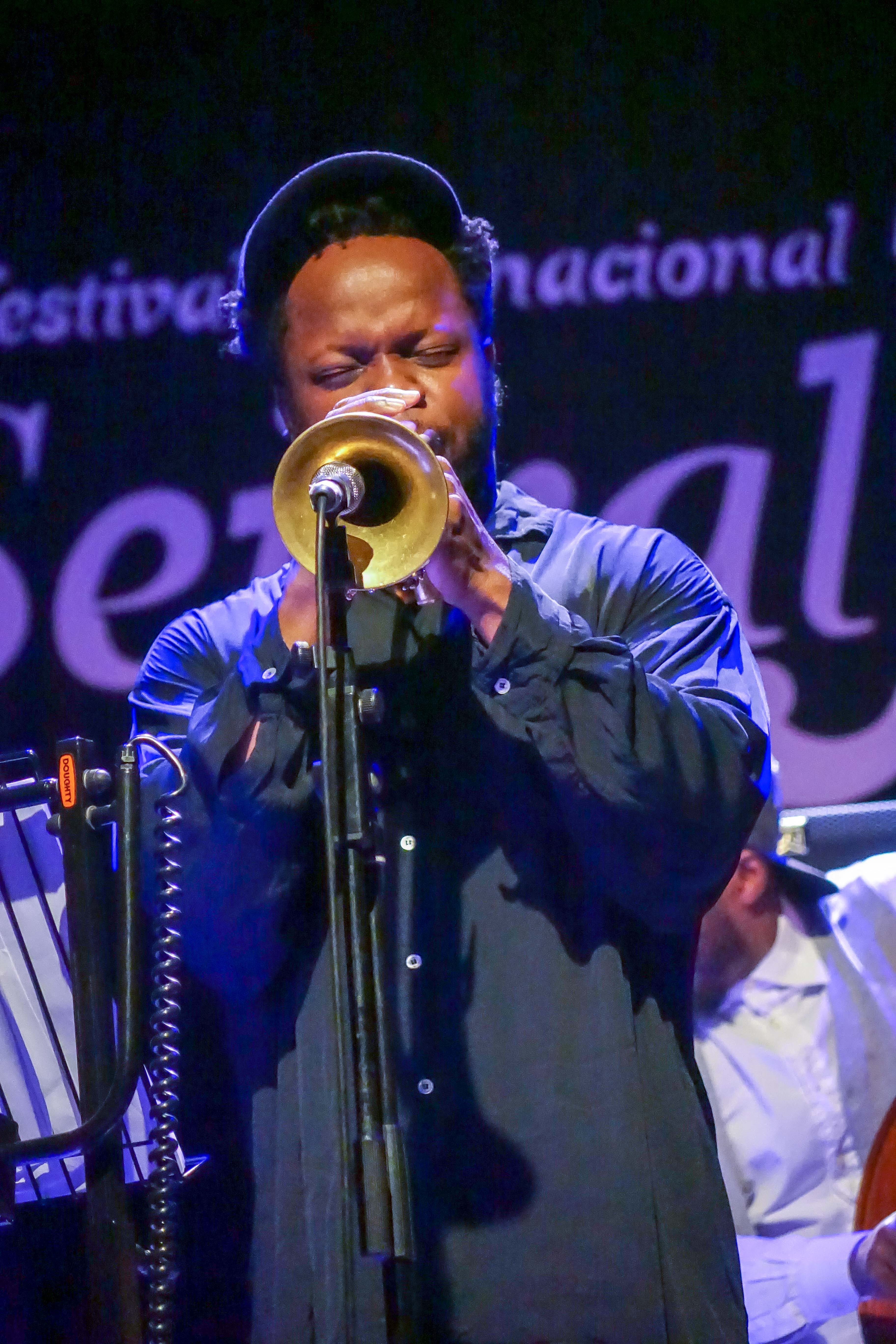
Yet the Quartet’s volatile brew never gave any sign of devolving into cacophonous chaos. Most freely expressive was Akinmusire, growling, squealing, whining, sighing, or ranting – angrily or urgently or plaintively – with his horn. Nearly always, he had the last word, more like a soliloquy than a cadenza. Pieces often seemed to end after a moment of reflection when Ambrose decided he had said exactly enough.

The crowd was only thrown once by the Quartet, three pieces into the concert, when a cooldown Akinmusire offering was followed by a titanic solo by Brown. It was so epic that the hall burst into wild applause when the drummer simply paused for a breath and a mood shift – followed by a briefer trumpet solo crackling with fury. “Mr. Roscoe (consider the simultaneous),” for composer and multi-instrumentalist Roscoe Mitchell, was the most cerebral and rigidly arranged nugget on the playlist, showcasing Harris in a wonderfully thoughtful vein.2022~Portugal-062

That provided a perfect segue to Akinmusire immersing us in his ballad mode with “Roy” for trumpet great Roy Hargrove, also from the most recent album but in a live version that was more extended and virtuosic. Not having seen Ambrose playing live before – or even on YouTube, I’ll confess – I was more than a little surprised that this brass player, unlike Wynton Marsalis or Wycliffe Gordon, didn’t bring a collection of mutes, plungers, or assorted doodads onstage to help him produce that wide array of signature sounds he perfected.

And of course, I was impressed. Even Miles had his famed Harmon mute in his arsenal.

Nestled at the bottom of the hilltop commanded by the Municipal Auditorium, a gaudy riverboat with a gangway leading down to it stood gleaming on the shore. Our first night at SeixalJazz, we mistook the riverboat for the ferry from Lisbon, which had its last run of the night when festival concerts began. As it turned out, the posh vessel was the Lisboa à Vista, a truly fine seafood restaurant where we had booked reservations for the following night – and where we first encountered Samara Joy and her band, already seated at the table next to ours.

2022~Portugal-054

My wife recognized her first, but I soon felt compelled to confront jazz’s newest diva with a question that had been nagging at me all the way across the Atlantic. Since Joy had favored us back in August with a song she had written in French for a previous concert abroad, could I get a scoop on a new song she had written in Portuguese?

Not quite. Joy hadn’t written a song in Portuguese for tonight, but she assured us that she would be singing one.

Joy’s career has certainly been in high gear over the past few months, so I’ve needed to shift into overdrive just to keep up with the news. At Middle C, she was signing pre-release copies of Linger Awhile, and eight weeks later when she sang at Seixal, the new album was rapidly climbing the charts. By the time we returned stateside, Linger Awhile was #1 on the Jazz Week airplay chart. Two Grammy nominations came in shortly afterwards, including Best New Artist, and word of a seven-city Big Band Holidays tour with the Jazz @ Lincoln Center Orchestra was posted online, to be followed with a stint on the 2023 Jazz Cruise.

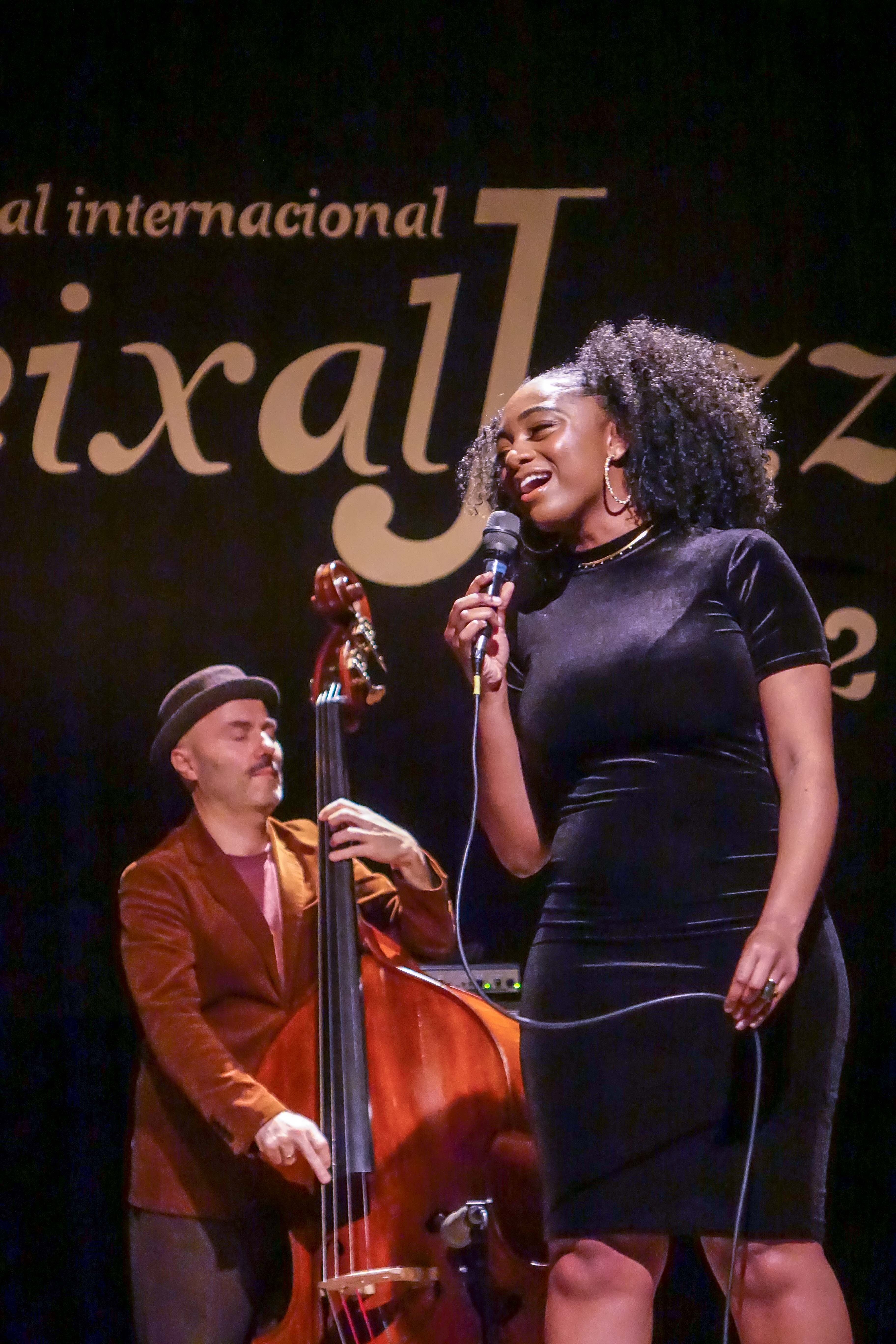
At the Municipal, the contour of Joy’s set was very much as it had been back in North Carolina, about half of the songs from her two albums, leaving her plenty of space for pleasant surprises – and leaving us plenty of additional delights to discover in her new album if we hadn’t heard it. Unlike Akinmusire (one Grammy nom, we should mention), who started off full steam and never let up except for his well-placed but no-less-intense balladry, Joy started off at a high level, less chatty and playful than she had been at Middle C, but there was a gradual build in the second half of her set list.2022~Portugal-218

Once again, “Can’t Get Out of This Mood” was near the beginning of the program, unmistakably echoing the Sarah Vaughan arrangement from her landmark In Hi-Fi album of 1950. This time, pianist Ben Paterson instead of Grasso was Joy’s prime collaborator, so the performance was far closer to the sound of the Grammy-nominated studio version. On the other hand, Grasso – like Paterson, a major voice on Linger Awhile – had played the intro and instrumental solo on “Nostalgia (The Day I Knew)” where Joy has added fresh lyric to Fats Navarro’s 1947 solo on the Tadd Dameron original. So that tune got a fresh twist in Seixal, with a Euro edge as French bassist Mathias Allamane and Danish drummer Malte Arndal rounded out Joy’s rhythm.

“’Round Midnight” has a bigger horn arrangement in the studio version, so I preferred the intimacy that Joy established with her audience in both of her live performances here and abroad, though I’d be eager to hear a J@LC arrangement. The other Monk tune, with Joy’s vocalese on “San Francisco Holiday (Don’t Worry Now),” hasn’t been recorded yet. Both Grasso and Paterson were exemplary when I heard them, so it will be interesting to see which one Joy will choose for her studio take.

With his work on “If You Never Fall in Love With Me,” swung with Joy more confidently and energetically than “This Mood,” Paterson made his case that the vocalist’s eponymous debut album, cut exclusively with Grasso’s trio, could have benefitted from his presence. The lingering rush of adrenalin from that uptempo romp provided a perfect moment for Joy to spring her Portuguese surprise, a lyrical tribute to Lisbon’s own “Queen of Fado,” Amália Rodrigues (1920-1999).2022~Portugal-201

Not attempting to emulate the fadista’s oft-imitated style, Joy charmed her audience with her sincerity, humility, and individuality. Clearly, she was buoyed by their response, for after rocking the house with a newly-minted “Blues in Five,” Joy ripped my heart out with the best “Guess Who I Saw Today” I’ve heard from her, better than the cut on Linger Awhile and better than her Middle C encore. I can’t honestly say the same about her rendition of the title song: it flashes by so quickly every time, like lightning – ironically, the shortest track on both Joy’s and Sassy Sarah’s Linger Awhile albums.

The truest measure Joy’s growth over the past couple of years – she’s still only a tender 22! – was her valedictory rendition of Hoagy Carmichael’s “Stardust,” with multiple levels of depth beyond what you’ll hear on the opening track of last year’s Samara Joy debut. Coupled with her extraordinary voice and command, she seems to possess an unquenchable urge to seek out the purest essence of the music and the lyrics she sings.

Photos by Perry Tannenbaum

DREAMers on Guard in Three Bone’s “Sanctuary City”

Review: Sanctuary City @ The Arts Factory

By Perry Tannenbaum

202211203709590007197567742

In the wake of the 9/11 attack on the Twin Towers, as lethal smoke and dust afflicted policemen, firemen, and medics who converged upon Ground Zero, a wave of xenophobia began to sweep across America. Muslims and air travel were the prime targets of paranoia and impulsive policy adjustments in the early days, with follies in Iraq and Afghanistan soon to follow. As Martyna Majok’s Sanctuary City demonstrates, the seismic shock of the attack and the insidious xenophobia it unleashed were keenly felt across the Hudson River in Newark, New Jersey, where her two teenage protagonists face uncertain futures as undocumented Latinx immigrants.

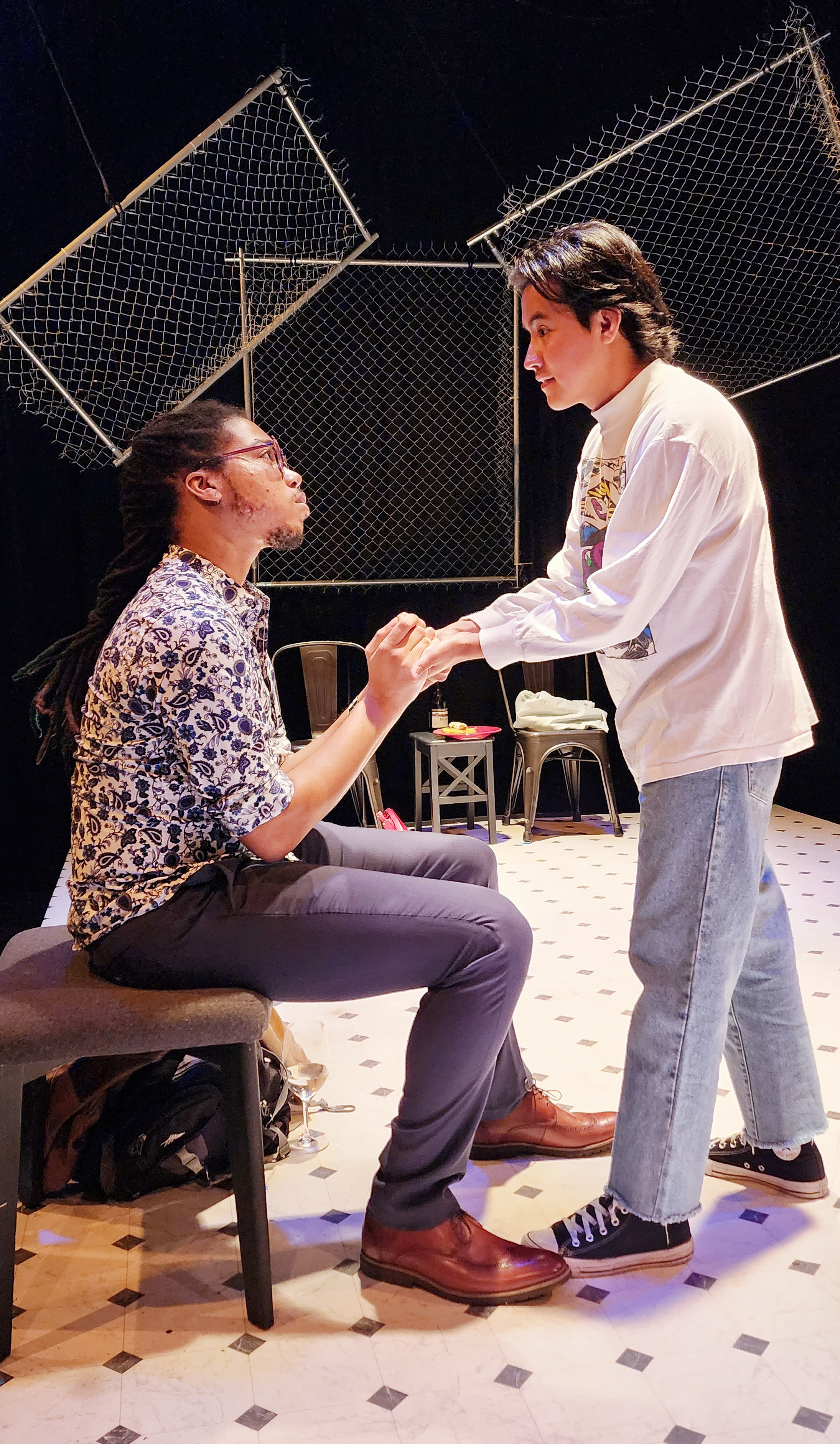
Adapting a thrust-stage configuration at the Arts Factory black box, director Caroline Bower places the audience close to the action – and to the hearts of Majok’s teens as they navigate their treacherous paths to adulthood and possible US citizenship. We may look down pityingly on the adolescent recklessness and naivete of B and G, the rather generic names our playwright assigns to her main characters. G has a litany of fictional excuses for her serial truancies at school, but she can still coach B on his math homework.

Yet there’s plenty here in this Three Bone Theatre production to rattle our smug complacency. Humble and ignorant as they may seem, both B and G often school us in the brambly terrain of daily life in a Sanctuary City and the vagaries of US immigration law. As we will see, their paranoia wasn’t over-the-top in 2001, when most of us would have been skeptical, and their fears proved prophetic 15 years later when MAGA morons began to dominate our national discourse.202211205681389164319280691

G needs to fabricate reasons for skipping school because the welts and bruises that keep appearing on her face and limbs might be noticed by teachers, prompting a home visit from social services, a check of her mom’s immigration papers, a disclosure that her work visa expired years ago – and a swift deportation. Instead, B must tell G’s teachers that she is bedridden with flu until her black eye has cleared up.

Nor does B have it easy just because his mother isn’t tyrannized by a drunken, sadistic SOB. He and his mom can be easily shortchanged on their wages, since they have no legal recourse unless they’re willing to risk deportation. Indeed, it’s B’s mom, not G’s, who gets collared and deported. Paradoxically, Northerners can be smug and complacent in their convictions that such deportations define the inhumanity of red border states in the South, and that heartless Immigration feds are to blame for cruelly separating Latinx families.

Wrong on both counts, Majok reminds us. By not seeking out Federal assistance in clearing out undocumented immigrants, Sanctuary Cities do not prevent the Feds from swooping in, and it’s federal immigration law that discriminates between parents and their children. When B learns that his mom has been nabbed, he must make the painful call on whether to board the plane with her.

Bad news or good news often arrives suddenly as G climbs up the fire escape to B’s bedroom after dark and he mimes a window to let her in. Or occasionally the simple Bunny Gregory set design transforms and B visits G’s place to bring her some urgent news. Neither B nor G has any furnishings until years after B’s mom has been deported and he’s forced to survive on his own.Gus Zamudio

Meanwhile, G’s mom evolves, after seeming to be a hopeless doormat according to her daughter’s early reports. She sheds her abuser, secretly studies for – and passes – her citizenship exam, and achieves the naturalization that eluded B’s mom. In the blink of an eye, G is a legal as well, able to pursue higher education beyond a Newark community college when she graduates high school. Just as suddenly, since both of them know the laws, G can help B reach the same goals. Citizenship plus education.

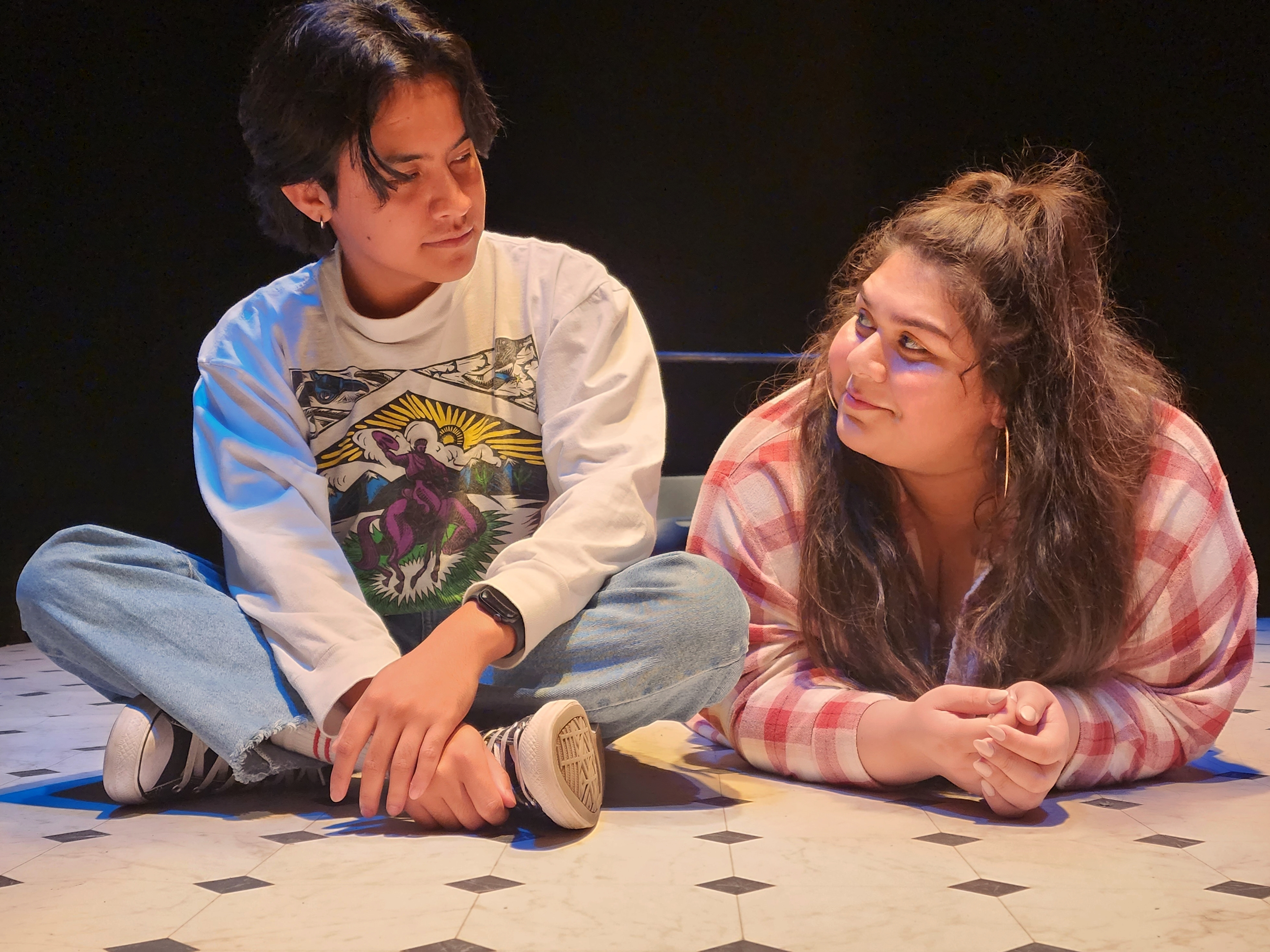
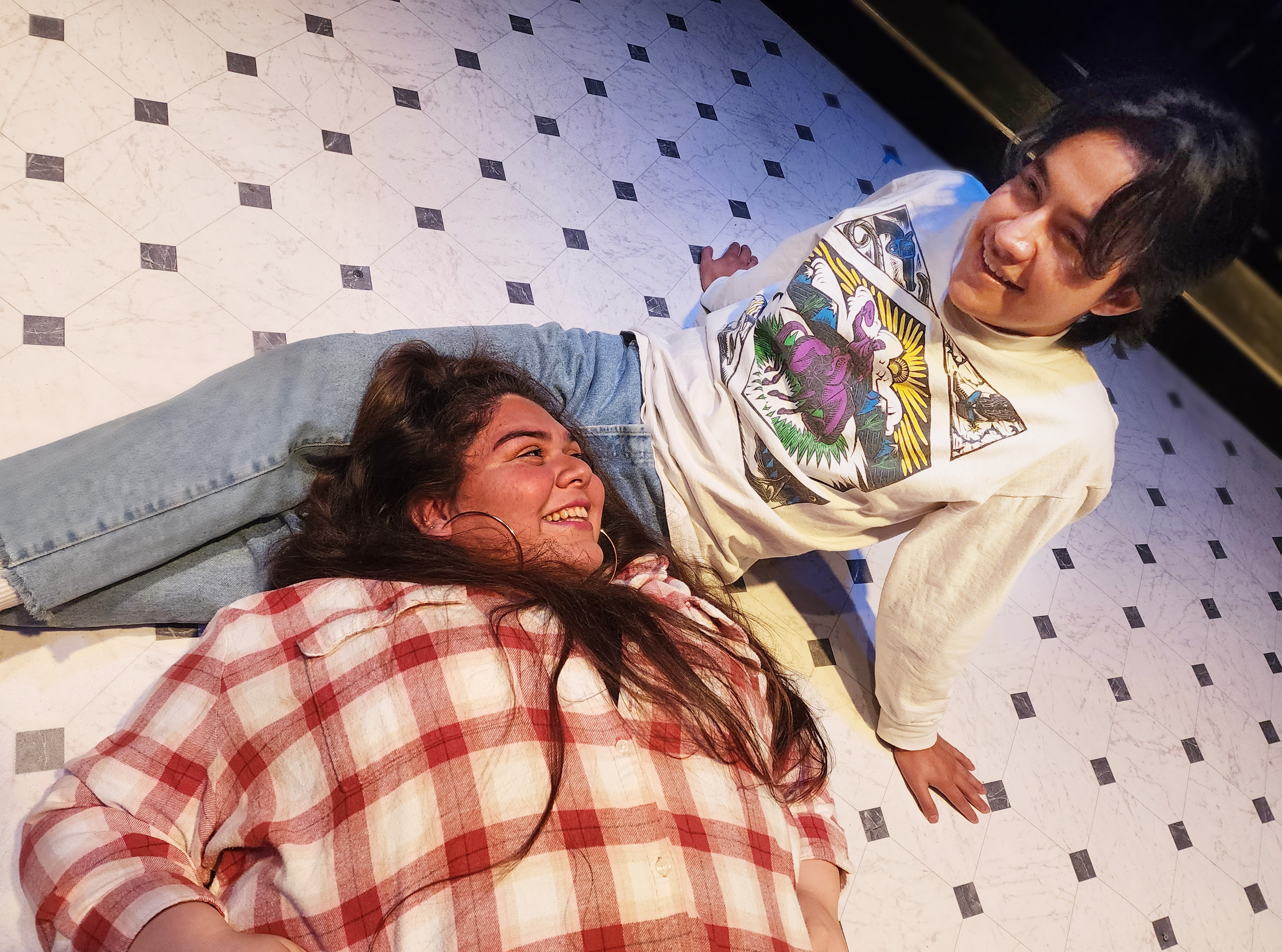
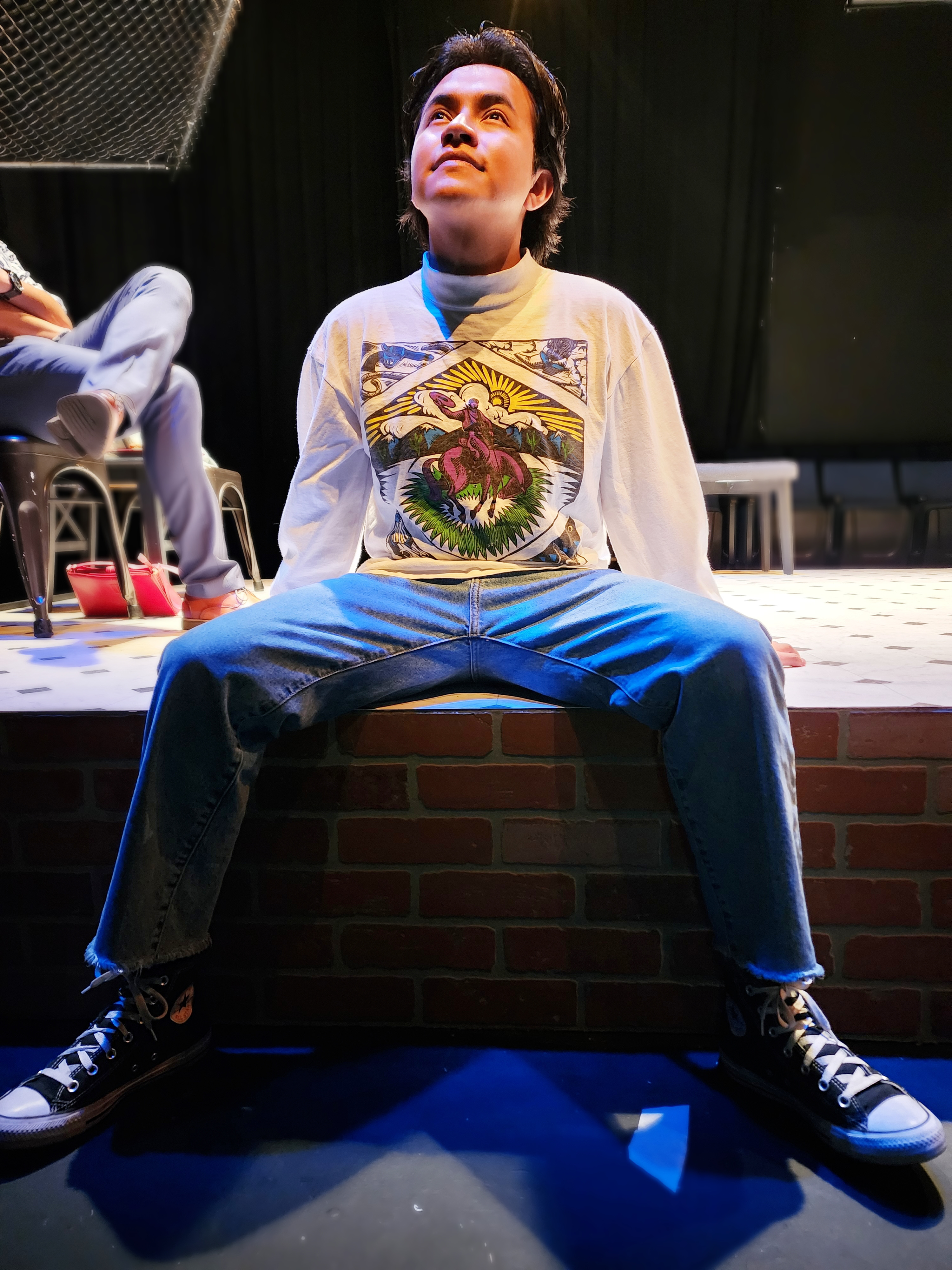
Isabel Gonzalez sparkles in the rapidfire scenes with Gus Zamudio that open Sanctuary City. Some are brief flashbacks and flash-forwards, others a series of riffs on recurring events, and still others are jump cuts between parallel events in the illegals’ lives. Zamudio, who lived out a real-life DACA deportation drama chronicled by local media in 2017, taken into ICE custody just before he graduated from Northwest School of the Arts, has no problems at all internalizing B’s plight – or still passing for 17.

Making her Charlotte debut last year, portraying 10-year-old Paloma in Children’s Theatre’s Tropical Secrets, Gonzalez doesn’t have to regress nearly as far to bring us all the adolescent vitality, anxiety, and ambivalence of G. Somehow, it’s through Gonzalez and her wary intimacy with her bestie that I began to grasp why Northerners and Southerners alike fathom so little about how immigrants live in citizenship limbo. They’re a secret – and secretive – society who can only truly trust each other.Grant Cunningham and Gus Zamudio(1)

When Grant Cunningham entered as Howard deep into the second half of this no-intermission production, more than a couple of notable shifts came into play, including two new plot twists and an abrupt change in pacing as Majok’s script settled into one extended closing scene. All three actors quickly rev up intensity as the cluster of revelations forces them to rapidly shift their perspectives on each other. You couldn’t help feeling impressed by the melee and how well Cunningham fit into it, and you couldn’t help smiling when you saw the blind spot they all shared, for we have seen the social and political progress that can happen in less than two decades.

Howard, the first character we encounter here with a full name also comes equipped with a fuller character. Yes, he seems far more confident that he belongs here, and as a law student, far more definite about who he is and what he aspires to be. Gradually, he brings out one of the playwright’s salient points, that B’s plight not only focuses him sharply on the niceties of immigration law and enforcement, it makes him adept at attaching himself to people he can use to help his cause.

But really, I didn’t think arriving at that point was as important as the basic heartbeat of what Majok leaves us to speculate about: what specifically are these DREAMer hopefuls’ dreams? What aspirations stir their souls as they struggle to emerge from the shadows into full American lives?

A little more of that kind of intimate disclosure would have helped the emotional magnitude of Sanctuary City to align better with its cerebral clout. Even the dimwitted Lenny in Of Mice and Men had his rabbits to break our hearts. So even a Lin-Manuel Miranda bodega would help Majok’s taut drama – with a few stray spritzes of comedy – to sprout a little more Latinx color. And we shouldn’t have to Google a New York Times review or call upon Three Bone Theatre’s playbill to inform us that the drama is happening in Newark.20221111578320097703585702

More urban and aspirational detail would certainly make Majok’s brew more combustible, but Gonzalez, Zamudio, and Cunningham deliver plenty of firepower. Sarandon Shindon steps in to play G at the Wednesday and Thursday performances, with Gonzalez returning to close out the run on Friday and Saturday.

Rhiannon Giddens Returns to Charlotte and Leaves Plenty of Music in the Air

Review: Rhiannon Giddens with Charlotte Symphony

By Perry Tannenbaum

2022~Rhiannon Giddens-33

November 5, 2022, Charlotte, NC – Since the long-anticipated world premiere of her new opera, Omar, at Spoleto Festival USA back in May, composer-singer-instrumentalist Rhiannon Giddens has hopscotched the worlds of folk, jazz, and classical music. Her Spoleto apotheosis down in Charleston was embellished with a sit-down interview event and an outdoor concert with multi-instrumentalist Francesco Turrisi, her collaborator on They’re Calling Me Home, the 2022 Grammy-Award-winner for Best Folk Album. Among Giddens’ many gigs since then, she has headlined at the San Francisco Jazz Festival and Carnegie Hall before entering downstage at Belk Theater for a rendezvous with the Charlotte Symphony and resident conductor Christopher James Lees. As you might presume of a MacArthur “Genius Grant” recipient, Giddens is not easily pigeonholed.

2022~Rhiannon Giddens-23Yet the Greensboro native co-founded the Carolina Chocolate Drops, her first Grammy Award exploit, and now has an opera firmly rooted in the Carolinas to her credit, so an audience studded with black ties and tuxes had no difficulty embracing the polyglot Giddens as their own – even as she navigated a songlist that included Parisian and Celtic selections. They may not have realized that Giddens had played Charlotte before, as far back as 2008 when I caught her with the Chocolate Drops at Northwest School of the Arts. Turrisi and bassist Jason Sypher, who shared the Cistern Yards stage with Giddens at the College of Charleston in May, accompanied her once again, though Lees and Symphony lightened their load. Nor was it obvious that Turrisi would be playing piano until late in the concert when he insinuated himself upstage.

As soon as my QR code scanner brought up the evening’s program, I could see that the Symphony offerings would be more eclectic, accessible, and daring than the set Giddens performed at Spoleto. Even before Giddens led her trio onstage, Lees and the orchestra demonstrated that they would not be content to trot out the stale and familiar, following up on John Williams’ brassy Liberty Fanfare with Samuel Coleridge-Taylor’s Overture to Hiawatha, referencing a half dozen episodes from the composer’s trilogy of Longfellow-inspired cantatas. In the wake of the fervid Fanfare, a little more finesse could have been applied to the opening of the African Britisher’s evocation of the primeval American classic, letting the harp sound more clearly, but Lees was certainly simpatico with the shifting moods and tempos afterward. Violins were gossamer-light in “The Wooing” section, the waltzing section that followed had admirable propulsion, and the cello corps warmed the tenderest episode, before the big build in the “Reunion” finale.2022~Rhiannon Giddens-31

The truly treasurable experiences began when Giddens strode onstage and picked up her banjo; for her first song, “Spanish Mary,” was co-written with Bob Dylan, with a fine orchestral arrangement for Lees and Symphony to luxuriate in. Shedding the banjo, Giddens followed up with “Julie’s Aria” from Omar, co-written with Michael Abels, reminding us of her own capabilities as an operatic soprano. Yet within minutes, Giddens was delivering a smoking-hot version of “Water Boy,” the pile-driving prison song immortalized in recorded versions by Paul Robeson, Odetta, and Harry Belafonte.

No doubt, Giddens has listened repeatedly to all three of these cultural touchstones, for the simple hammering arrangement was borrowed from Odetta and Belafonte while the lyrical clarity hearkened back to Robeson. The Odetta recordings of “Water Boy” are unparalleled, particularly when it caps a medley begun with “I’ve Been Driving on Bald Mountain,” shot through with explosive grunts and gasps from the hammer-wielding prisoner. But Giddens has found her own path toward heightening the intensity at the end, and the orchestra beats delivered by Symphony added jolts of electricity throughout the piece that simple guitar strums couldn’t match. Better still, Giddens’ preamble, “At the Purchaser’s Option,” was certainly a coupling with “Water Boy” that civil rights champion Odetta would have appreciated, repeatedly delivering a “you can take my body, you can take my bones, you can take my blood but not my soul” mantra.

2022~Rhiannon Giddens-19“Mouth Music” was all we needed to hear if we needed assurance that Giddens could make a credible showing at a jazz festival, and there would be more to follow. Lees ceded the stage to the guest trio, lightening the vibe, and Giddens picked up a viola and yielded some of the spotlight to her bandmates, especially Turrisi when he sizzled on his accordion during one of the fiddle tunes. The merriment faded when Lees returned to the podium, replaced by the romance of “Autumn Leaves” en français until Giddens favored us with the English lyric as well. If you hadn’t glimpsed the program, just the tropical sway of the violins was enough to announce our return to the Carolinas and “Summertime” from the Gershwins’ Porgy and Bess, sweetly sung. Plenty of space was afforded to both Giddens and Symphony in the arrangement of “La Vie en Rose,” and the singer did not seem to be straining to sound like Edith Piaf, which was more than OK with me.2022~Rhiannon Giddens-15

Homing in on the end of the evening, Giddens and Symphony tacked toward the spiritual. With Turrisi at the keyboard, Giddens embarked on this final journey with “He Will See You Through,” followed by “Wayfaring Stranger,” opting to travel through this world “alone” rather than “below” or “of woe” as others have sung. These songs of faith certainly cleared the way for the affirmation and joy of Giddens’ final two selections, an irresistible pairing of “That Lonesome Road” and “Up Above My Head,” a perennial YouTube favorite that can’t be found on her albums. The last of these was memorably inspired. We all heard so much “music in the air” that we could leave more than satisfied, even without the planned encore.

“Hadestown” Serves Up a Jazzy, Godly Nectar

Review: Hadestown at Blumenthal PAC

 By Perry Tannenbaum
2296_Hadestown North American Tour 2022_photo by T Charles Erickson

In Blumenthal Performing Arts’ Encore playbill, the distance between Anaïs Mitchell, who created the music, lyrics, and script of HADESTOWN, and Rachel Chavkin, who developed and directed Mitchell’s creation, is a scant three-and-a-quarter inches. Inside that space are the neatly typeset names of 42 actors, designers, and organizations who have helped bring their vision, the 2019 Tony Award winner for Best Musical, so vividly, raucously, and meaningfully to life.

You get the idea that, in crafting and concepting this marvelous retelling of the Orpheus-and-Eurydice myth, Mitchell and Chavkin became even closer than those 82+ millimeters. Together they have created a work that is slick and glitzy, yet we find primal and profound truths amid the razzle-dazzle.

Those truths can sting, particularly when we descend into the dark underworld ruled by Hades and his abducted queen, Persephone. While Mitchell and Chavkin discard the #MeToo aspect of the royals’ union, reimagining them as formerly true lovers, they point up King Hades’ inclinations toward greed, exploitation, oppression, and mindless acquisition, layering on prejudice and xenophobia for good measure.

So when Matthew Patrick Quinn as Hades brought down the curtain on the first act with “Why We Build the Wall,” written years before The Donald took up politics, the satire bit hard enough for the MAGA morons seated in front of us to get up in a mighty huff at intermission, never to return. Yet this concept of Hades, casually linking his excesses to global warming and climate change, isn’t really an absurd overreach. Why shouldn’t Mitchell and Chavkin portray him as the vilest of plutocrats, when Pluto is actually Hades’ most familiar alias?

And plutocracy is where we’re at.

Mitchell enriches her devilish brew with a score steeped in the decadence of New Orleans jazz, repeatedly underlined by a doo-wop trio of Fates whose only moral failing is going along with the flow. These stylish female backups are ultimately more successful in getting into the impoverished Eurydice’s head than Orpheus, who is preoccupied with finishing the song he believes will restore springtime to the world. Quinn’s basso sleaziness is given a robber baron vibe with an infectiously chugging railroad line running directly to his realm, and the combination of Rachel Hauck’s scenery and Michael Krauss’s costumes makes our dystopian world seem nearly as nocturnal as the netherworld.2022_(from top left clockwise) Matthew Patrick Quinn, Maria-Christina Oliveras, Chibueze Ihuoma, Nathan Lee Graham, Hannah Whitley and company in the Hadestown North American Tour 2022_photo by T Charles Erickson

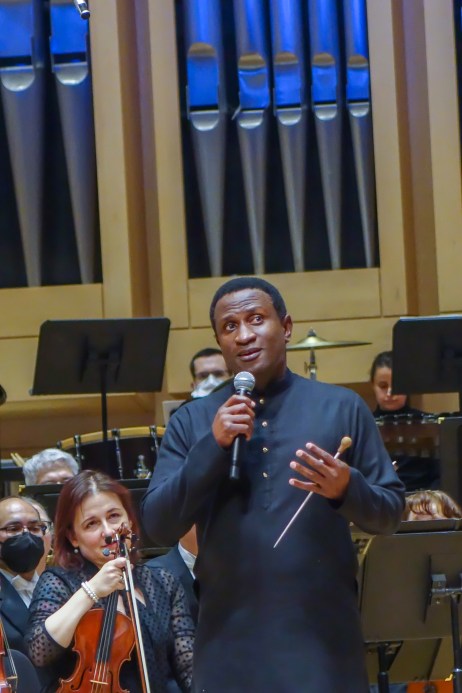
Presiding over the action and gleefully shattering the fourth wall again and again, Nathan Lee Graham as Hermes keeps us from forgetting – graceful and gliding charmer that he is – the artifice and theatricality of all we see. At the same time, he is frequently seconding the ethereal voice of Chibueze Ihuoma as Orpheus, asserting the power of music in changing our world by envisioning a better one, reminding us how music and language intertwine in the ancient ritual of storytelling.

Singing has always been key in preserving our world and our heritage. Musical narrative, after all, isn’t a recent discovery championed by Verdi, Jerome Kern, Rodgers & Hammerstein, and Lin-Manuel Miranda. It dates back to King David’s psalter, anonymous campfire bards, Orpheus’ legendary lyre, and the Homeric Hymns, where the story of Hades and Persephone was originally told. By design, three of the pivotal songs Orpheus sings are grouped as a series of epics.

Potentially, as we find here, songs have magic. Consequence. “The Wedding Song,” a beguiling duet early in Act 1 where Orpheus responds to a sequence of challenges from Eurydice, is as memorable as Hades’ sardonic affirmation of walls. “Epic I” from Orpheus, the embryonic song he is working on, is enough to establish his magical power and win Eurydice’s belief in him. Doesn’t last when Hades comes personally calling with his saucy come-hither, “Hey, Little Songbird.”2260_Chibueze Ihuoma in the Hadestown North American Tour 2022_photo by T Charles Erickson

But Orpheus is able to march into hell for a heavenly cause (a recurring theme in world literature and religion, it would seem) when he melts Hades’ heart with his completed “Epic III” after intermission, transporting the steely King back to his tender courting days and reconciling him with Persephone. It’s here that the Fates get into Hades’ head as effectively as they had gotten into Eurydice’s earlier, so that the King of the Underworld attaches one pesky condition that prevents Eurydice’s release into Orpheus’ care from being unconditional.

Ihuoma’s naivete and spontaneity turn the moment when he succumbs to sudden heartbreaking tragedy, beautifully staged as everything freezes into silence. The essence of that heartbreak registers so poignantly in Hannah Whitley’s eyes as Eurydice, so achingly close to restoration, almost clearing the threshold of the railroad car that must now take her irrevocably down. All of Belk Theater and all of creation seem disappointed in that moment, even the lively and cynical Fates (Dominique Kempf, Belén Moyano, and Nyla Watson).

Paradoxically, when all stops for a precious few heartbeats, we may realize most keenly that the working relationship between Chavkin and choreographer David Neumann has been as close and precisely calibrated as the relationship between the director and Mitchell. Indeed, our director, composer, and choreographer are involved in perhaps the most delicious conspiracy of all in HADESTOWN, those precisely chosen beats when an unseen centerstage circle suddenly begins to revolve or abruptly halt.

Most of the players, particularly the drones who make up the Workers Chorus, are swept round and round by the wheel. Others like Hades and Orpheus walk at the precise pace that makes them seem like they’re stationary as they move, floating on air. Then the wheel stops, and on they go, like clockwork. Or since the subplot of Persephone’s arrangement with Hades is a mythic explanation of the cycle of the seasons, the circular motion we see is clockwork.2282_Matthew Patrick Quinn, Chibueze Ihuoma, and Maria-Christina Oliveras in the Hadestown North American Tour 2022_photo by T Charles Erickson

As fine as the Fates are in moving about the stage, sometimes while wielding musical instruments, our eyes are most intently riveted to the lithe movements – and eye-popping costumes – of Graham as Hermes and Lana Gordon as Persephone, bringer of springtime and wicked beverage. Graham and Gordon are both electrifying performers, so it’s rather amazing when Quinn, after brooding quietly in the background for most of the first act, instantly proves himself their equal.

Together, they are the spice, the heady godly nectar that helps us savor the purity and fragility of the mere humans, Eurydice and Orpheus, all the more.

Charlotte Ballet Roars into a New Era With FALL WORKS

Review: Fall Works by Charlotte Ballet

By Perry Tannenbaum

Under the Lights_Taylor Jones

Knight Theater should have been abuzz last Friday night. Yet somehow, a year after Charlotte Ballet’s 50th-anniversary celebration – celebrated a year after the company’s actual 50th anniversary – my excitement wasn’t reflected by the community at large. A night after Opera Carolina had opened its 2022-23 season at Belk Theater to an empty upper balcony and a disappointing crowd, the curtain went up on Ballet’s new era with a similarly sparse turnout.

Our takeaways from this phenomenon need not be terribly dire, for it may be up to OpCar and CharBallet to learn a simple lesson: don’t open your seasons on the same night! Or on the night that a megahit like Hamilton – or the NBA season – is opening down the block. Your two companies collaborate every December on The Nutcracker, so you ought to be able to ace October.

It can be disheartening for performers to see the curtain rise on a hall pocked with vacant seats, but the effect seemed more noticeable on the soloists singing Tosca than on the dancers bringing us FALL WORKS. Understandable. Charlotte Ballet is a more resident company, devoid of prima donnas who swoop into town for one rehearsal and one weekend, they’ve worked hard perfecting their moves at their own studio, and nearly 40% of them have been in the company for less than two years.

They can be as excited to be working with new comrades and new partners as we are to see the diverse new faces. Implacable prerecorded music – synced to crucial interactions with other corps members – keeps them in step, and they don’t need to worry whether their voices will betray their nerves. Or hold up through Act III.

We can question the wisdom of reprising two works that premiered here within the past three years. Both Helen Pickett’s IN Cognito and Crystal Pite’s A Picture of You are fascinating, edgy pieces, neither one saddled with music we might readily recall months or years afterward. Although the choreographies jogged my memory, the freshness of the experiences was enhanced by watching different dancers perform them, especially after missing opening night to attend the opera.

OK, so I must admit a little frustration that, more than six months after he was named CharBallet’s new artistic director, we still haven’t seen any of Alejandro Cerrudo’s choreography here in Charlotte. After all, it’s over eight years since I lobbied specifically for our most prestigious performing arts company to take up Cerrudo’s work when I first saw it at Spoleto Festival USA, tabbing it a “winner” after witnessing Hubbard Street Chicago’s staging. Nor have I yet seen Cerrudo onstage to address his company’s loyal audience.Anna Mains_Ben Ingel_UTL_by Taylor Jones

Instead, we could take consolation in getting the local premiere of Under the Lights by Christopher Stuart, the new director of Charlotte Ballet II. After the heaviness and intensity before intermission, Stuart’s medley, set to nine tunes by Johnny Cash and June Carter Cash, was a light and lively chaser. A couple of dancers from Ballet II occasionally infiltrated the frontliners in this entertaining suite, adding their youth to the bustle and effervescence onstage.

Similar incursions occurred over the course of Pickett’s IN Cognito, which proved to be the most free-flowing work of the evening, hardest to follow, and by far the easiest to forget. As a result, the impact for me was almost as fresh as Stuart’s piece, a good thing, and I didn’t find myself comparing the dancers of 2022 with those who gave the world premiere performance in 2019. Only one of the nine I saw on Friday had danced it two years ago. I hardly ever knew what was coming next, but when it came, it usually struck me as familiar – and the flow of the piece seemed far more organic this time.

So much was going on with the dancers, in multitudinous permutations moving hither and thither, that I often lost track of the props and furnishings whisked onto the stage and then off to the wings. One of the two table lamps would suddenly be missing, lounge chairs might multiply while the sofa exited, or a quartet of mismatched chandeliers might arrive randomly from the fly loft without reason. The dancer hiding behind the shrub – incognito? – would exit elaborately, crossing the entire upstage to the opposite wing, making herself absurd.

Sarah Lapointe_Ben Ingel_UTL_by Taylor JonesDancers communicated and coordinated. They partnered, interacted, and created beauty together. Yet they never connected, perhaps incognito to each other and to everyone else. Busy and beautifully baffling, very much like the modern world.

A Picture of You Falling, with choreographer Pite also supplying the biting prerecorded text, was edgier, more satirically impersonal. At times catatonically repetitive, this strange pas de deux imprints itself readily and deeply – an almost sinful delight, since it lays bare the careless ways we talk about love and romance. Sarah Lapointe and Ben Ingel first connect by accidentally bumping into one another. We’re speaking literally here, as they walk in opposite directions across a geometrical space outlined at regular intervals by strobe lights.

When Ingel falls, he literally falls, and his heart literally hits the floor when he is smitten and when the makeshift couple breaks apart. Unlike the score that Pickett cobbled together to move and regulate her dancers, the original music by Owen Belton never seems to register as a pulse or an emotional coloring, particularly when Pite tells us “This is the place” and “This is how it happens” – over and over.

What lighting designer Robert Sondergaard creates with his symmetrical formation of strobes is emphatically not a space. Nor can we be sure whether Pite is telling us again and again and again that this is how this ephemeral intimacy happens or whether – in some kind of condensed or looping timeframe – it’s actually happening again and again. Focus does shift for a while from Ingel to Lapointe in the moments of intimacy leading to the breakup, but this is ultimately the man’s story. Or a picture of what men have made out of love.Maurice Mouzon Jr_Shaina Wire_IN Cognito_by Taylor Jones

We confronted a couple of filters between ourselves and the music of the Cashes in Under the Lights. The least discordant of these was Stuart’s choreography, which briefly stumbled with his blithe setting for “Folsom Prison Blues,” when his five men carried on merrily during the vocalist’s confession that he “shot a man in Reno just to watch him die,” a jarring disconnect. More problematic were the recordings of The Man in Black’s signature songs by Sugar + the Hi-Lows, most egregiously lightweight when they missed the gravitas and drama of “Hurt,” leaving Nadine Barton little to work with, though she worked it well.

James Kopecky got us off to a charismatic start with “I Walk the Line” as it dawned on us what we would have to cope with from the Bi-Los. Anyone who had heard a definitive rendition of “Ring of Fire” or “Jackson” could empathize with the struggles Stuart faced, but Sarah Hayes Harkins didn’t flinch at all as she joined Kopecky for the coolish “Fire,” and a couple of winsome couples, Isabella Bertolotti with Humberto Ramazzina and Meredith Hwang with Oliver Oguma, redeemed the Mississippi superficiality.

Sugar plus or minus the Hi-Lows was hard for me to swallow, which may account for my liking Stuart’s settings best for songs I was least familiar with. “Two Day High” offered us three dynamic duos, Isabella Franco with Maurice Mouzon Jr., Shaina Wire with Luke Csordas, and Olivia Parsons with Juan Castellanos. With “I’ve Got You Covered,” we got a glimpse of Amelia Sturt-Dilly partnered with Kopecky, just one night after she danced A Picture of You, the CharBallet commission she premiered a year ago. Stuart’s best pas de deux by far.

“Tennessee Quick” was the most attractive track I heard from Sugar +, complemented by some really rousing ensemble work from Stuart and a swarm of 14 dancers. Couldn’t imagine Johnny singing that one. That harmonious taste of “Tennessee” was a perfect setup for Stuart’s stomping ensemble finale, “God’s Gonna Cut You Down,” fronted by Kopecky, the hardest-working man in Charlotte that night. Johnny didn’t get to that golden nugget until late in his career, so it wasn’t among his best recordings, but to hear the Hi-Lows attacking that traditional come-to-Jesus song with an electric guitar was almost as much of a kick as Kopecky and his backups.

Stunning and Grand, Opera Carolina Recreates the Original Designs of “Tosca”

Review: Opera Carolina Presents Puccini’s Tosca

By Perry Tannenbaum
2022~Tosca-40 

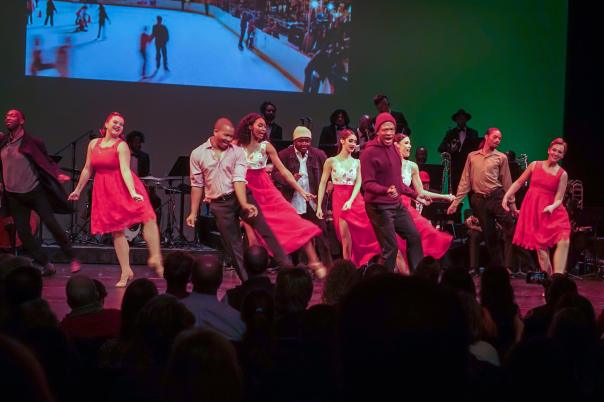
October 13, 2022, Charlotte, NC – Even in an Opera Carolina production with merely eight solo vocalists in the cast, it was easy enough to see what makes grand opera so grand. Most of the musicians on Charlotte Symphony’s payroll were in the orchestra pit when we entered Belk Theater, tuning up or rehearsing. The program booklets handed to us at the door had the size and stylishness of a glossy fashion magazine, and when the curtain rose on Giacomo Puccini’s Tosca, we saw the interior of a Roman cathedral, the first of Adolph Hohenstein’s three diverse set designs. By the end of the opening act, the stage was filled with clergy, a cardinal, and a throng of Opera Carolina choristers, all celebrating a mistaken report of a royalist victory over Napoleon’s invading army.

All of these blandishments – and extras – spell out expensive in big, bold capital letters. So it was particularly disappointing to see the Belk’s uppermost balcony completely empty and so many unclaimed seats below. If Hohenstein’s name rings a bell, we can multiply our disappointment, because he designed the sets, the costumes, the props, and the poster art for the original Milanese production of Tosca in January 1900. We can thank the New York City Opera for this meticulous recreation of Hohenstein’s handiwork – by heading out to the Belk Theater and seeing it.2022~Tosca-13

Opera Carolina lighting designer Michael Baumgarten certainly helps to capture the melodramatic spirit of Puccini’s deft adaptation of Victorien Sardou’s La Tosca, written for Sarah Bernhardt in 1887. But perhaps disheartened by all those empty seats, the opening night performance didn’t attain its full potboiler heat until late in Act 1 when bass baritone Steven Condy entered as Baron Scarpia, the cruel, lascivious, and unscrupulous chief of Rome’s city police. Until then, soprano Alyson Cambridge as opera diva Floria Tosca and tenor John Viscardi as principled painter Mario Cavaradossi hadn’t belittled the love, intrigue, jealousy, and playfulness of their relationship. Not at all. But against the backdrop of the Charlotte Symphony Orchestra, tempestuously conducted by OpCar artistic director James Meena from the opening bars onwards, both sounded somewhat underpowered, though they were clearly gifted as actors.2022~Tosca-10

Chasing after former Roman Republic consul Cesare Angelotti, who has escaped from prison and has already been secreted into hiding by Cavaradossi, Condy as Scarpia quickly injected menace and urgency into the drama. Then he cunningly worked on Tosca’s unfounded jealousy to freshen the trail to her paramour’s hideout before the curtain fell. In his tense confrontation with Tosca, Condy seemed to kindle some of the spark we would see unceasingly from Cambridge in the two acts that followed.

Stage director James Marvel takes full advantage of his principals’ gifts as the intricacies of Sardou’s plot come brutally to fruition in Act 2. Tosca has led Scarpia’s spies to Cavaradossi’s hideout, and soon the painter will be in custody while Angelotti has once again escaped. Scarpia dispatches his prisoner to a torture chamber adjoining his lavish apartment, hoping to extract information about Angelotti’s whereabouts. He and his thugs cannot break Cavaradossi, but they don’t have to. Tosca is with him, ruefully aware that her jealousy was baseless, and able to hear her beloved’s outcries as Scarpia’s men inflict their torture. Where the fiend has failed with Cavaradossi, he succeeds with Tosca, breaking her twice. In exchange for stopping the torture, Tosca gives up Angelotti, and to barter for Cavaradossi’s freedom, the price will be Tosca’s virtue.

2022~Tosca-16Beyond having doubted her true love’s fidelity, there was so much more for Tosca to regret now. In singing the famous “Vissi d’arte” aria before nodding her consent to Scarpia, Cambridge drew upon all the additional anguish Puccini had written for her. All of the art she had lived for, all of her passionate love, all her charitable deeds, and all her fervent prayers have been for naught in the face of this perverted monster. God has shortchanged her. With all the grim delight that Condy took in tormenting her in their crackling duets, it certainly seemed so. But Marvel was no less cold-blooded in staging “Tosca’s kiss,” where the diva settles all her debts with the Baron and appends a chilling religious ceremony.2022~Tosca-35

Courageous and bloodied in his brief appearances, Viscardi’s energy jumped nearly as much as Cambridge’s after the first intermission, but he didn’t reach his zenith until he staggered onto the rooftop battlements of the Sant’Angelo Castle in the pre-dawn light of Act 3, sentenced to face a firing squad. Maybe not quite as electrifying as Cambridge’s signature aria, Viscardi filled Cavaradossi’s “E lucevan le stelle” with sweet lyrical despair that soared upwards into the dawn appointed for his death. Alone for an extended conspiratorial duet, when both lovers grew joyous at the prospect of their coming bliss, Cambridge and Viscardi poignantly lit up the stage one last time before fate cruelly closed its fist on them. Stunning – and grand.

New Charlotte Symphony Season Brings New Sounds and Welcome Echoes

Review: CSO Plays Elgar’s Cello Concerto and Strauss’s Aus Italien

2022~Elgar Cello-05By Perry Tannenbaum
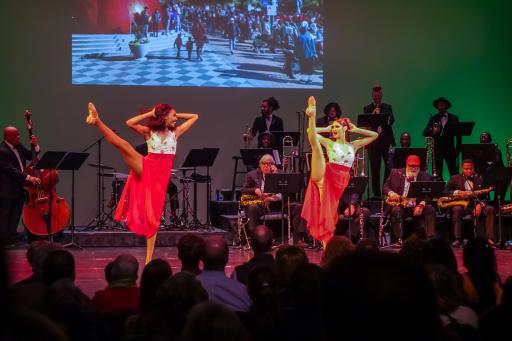
October 7, 2022, Charlotte, NC – Charlotte Symphony’s conductor laureate, Christopher Warren-Green, had been gone nearly a full week, but the echo of his presence remained at the kickoff of the 2022-23 season at Knight Theater. Once again, the Orchestra fired off the “Star-Spangled Banner” to inaugurate the new season, and once again, the ensemble achieved lift-off with Edward Elgar’s Cello Concerto – just like they did in 2012 at Belk Theater in Warren-Green’s first concert as musical director. Now Andrew Grams wielded the baton, his first guest shot with Symphony since 2016, and the soloist making her Charlotte debut was Israeli cellist Inbal Segev rather than Alisa Weilerstein.

Both artists have recorded the Elgar, Bloch’s Kol Nidre, and the complete Bach Cello Suites, so they may be described as kindred spirits. Perhaps Segev gets the nod over Weilerstein in being more simpatico with Grams, who began his program with PIVOT by British composer Anna Clyne. Not only did Segev commission a new Clyne concerto, DANCE, but she also premiered it on the same 2020 album where she plays the Elgar. Grams returned after intermission with Richard Strauss’s rarely-heard Aus Italien, arguably a more outlaw piece than the composer’s Don Juan.

Always forthcoming and charming when he addresses an audience, Grams likened the transitions of PIVOT to pressing the “previous channel” button on a TV remote control. True enough, shifts back and forth from the slow to the fast sections of the piece were often abrupt, incongruous jumps, sometimes startlingly so. But compared to the premiere performance, recorded at the Edinburgh International Festival in 2021, Grams seemed a bit heavy-handed in making his point. Instead of reveling in the contrasts, I found myself longing for the return of the calmer, quieter interludes – a sad waltz, a lazy Irish reel, and an Eastern European lament flavored with paprika – because Grams was more inclined to make the dominant loud sections raucous rather than catchy, though I was certainly delighted by the double-bass section providing whip-crack percussion, snapping their strings. I found myself rehabbing my appreciation for Clyne by listening to Segev’s recording of DANCE the following morning.2022~Elgar Cello-26

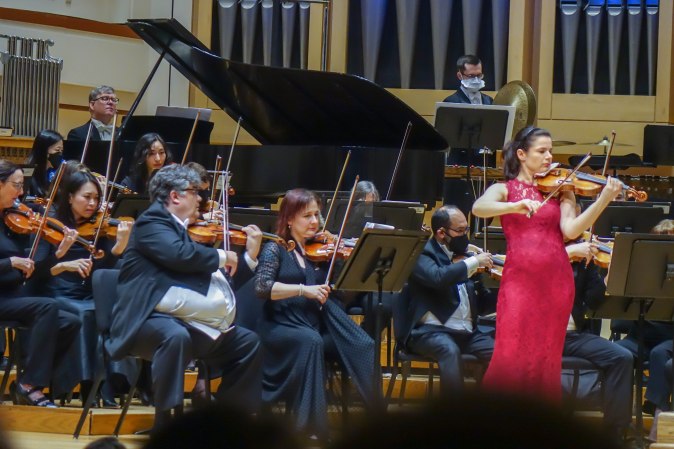
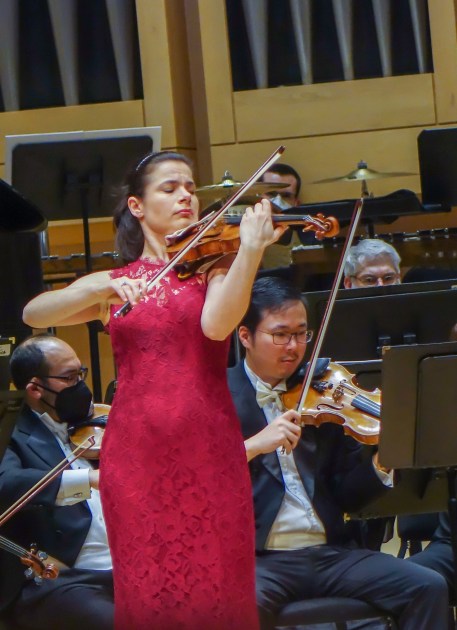
In person, Segev’s playing on the Elgar moved me far more than her excellent recording. Clearly, she was as comfortable with the orchestra as Grams and his musicians were with her. Hardly showy at all, her relaxed and dignified manner welcomed the audience and musicians to immerse themselves in the music along with her. Technical obstacles and difficulties never fazed Segev, so instead of capping strenuous journeys, we seemed to arrive more suddenly and dramatically at peak moments, where the cellist and Grams simultaneously turned up the voltage. The outer movements, the opening Adagio and an epic closing Allegro with no less than five sections, were teeming with rich contours and vivid contrasts. The more homogeneous middle movements, a Lento followed an Adagio, were object lessons in how an accomplished artist keeps our interest between musical tempests.

Although the Knight wasn’t filled to overflowing, a robust crowd was wildly appreciative of Inbal’s grace and verve. Nor was her encore, the Courante from Bach’s Suite No. 3, chosen to reconcile us to her departure. The standing ovation for this sparkly gem was every bit as enthusiastic as the reception for the Elgar. Deservedly.2022~Elgar Cello-22

Somewhere in Germany or possibly Austria, Christof Perick, Charlotte Symphony’s most ardent champion of Strauss, must have been smiling when Grams deftly navigated the many delights of Aus Italien. This youthful symphonic poem, premiered in 1887 while Strauss was in his early 20s, committed the folly of stealing “Funiculì, Funiculà” for the cornerstone of his final movement when composer Luigi Denza could readily sue him for the theft. But the inventiveness of the young genius is unalloyed in the previous three movements. Opening Strauss’s travelogue, “In the Country” isn’t bucolic in the manner of Copeland or Beethoven. Its serenity, filled with gravity and sadness, builds to yearning drama and then to majestic triumph. Surprisingly, for a movement titled “Amid the Ruins of Rome,” the music becomes livelier and turbulent, more like Strauss’s later heroic tone poems – for as he wanders amid the remnants of the past, he conjures up the glories.

Most impressive and precocious for me was the penultimate “At the Shore of Sorrento” movement, written more than a quarter of a century before Claude Debussy’s La Mer and no less accurate in sketching seagulls with the woodwinds and rippling waters with a harp. Grams had the Charlotte Symphony as immersed in Aus Italien as they had been in the Elgar, and the ebullience of the Orchestra in the closing “Neopolitan Folk Life” was irresistible, no matter how cheesy you might find Strauss’s “Funiculì” thievery. Hearing this still familiar tune played on bassoon and then as a march was just plain fun.

Delayed More Than Two Years, Saint-Saëns’ “Organ Symphony” Gets a Powerhouse CSO Performance

Review: Camille Saint-Saëns’ “Organ Symphony” No. 3 with the Charlotte Symphony and Paul Jacobs

 By Perry Tannenbaum
2022~Saint-Saëns-19

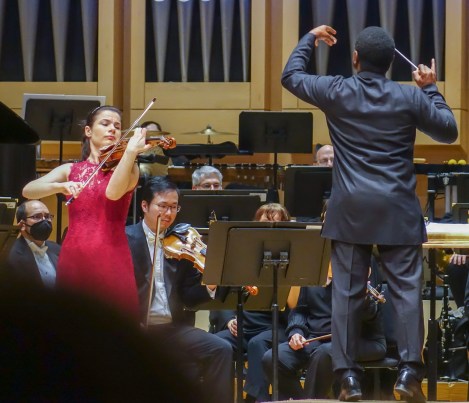
October 1, 2022, Charlotte, NC – When Christopher Warren-Green took over as music director of the Charlotte Symphony in September 2010, nobody could foresee that his transition to conductor laureate a dozen years later at the Orchestra would coincide with the 75th anniversary of the Charlotte chapter of the American Guild of Organists – and the 55th anniversary of the mighty M.P. Möller pipe organ at the First United Methodist Church on Tryon Street. As this confluence became manifest, so did an auspicious event to celebrate it, a partnering of the Symphony with the Church in a concert showing off the magnificence of the Möller pipes in action. These dual anniversaries provided Warren-Green with his first opportunity to return to Charlotte and perform in his new role, and the glitter of a prestigious occasion was enhanced with Grammy Award-winning organist Paul Jacobs at the console.

The choice of repertoire for this special event was especially enticing, including Camille Saëns’ thunderous “Organ Symphony” No. 3, George Frideric Handel’s most familiar Organ Concerto, and a prodigious Bach encore from Jacobs that decisively upstaged Felix Mendelssohn’s “Reformation” Symphony No. 5. With the remnants of Hurricane Ian keeping many subscribers away from the opening night performance on Friday night, the Saturday sequel filled the hall – down below and up in the stately balcony – to the bursting point.

For all of us who have felt a pang of frustration each time we gazed upon the vestigial organ pipes at Belk Theater, keenest when the Saint-Saëns Symphony was presented there with a piddling electronic substitute, this concert provided rich consolations. There were also redemptive aspects to this special program, for both Symphony subscribers and the Orchestra’s musicians, since the last time that the “Organ Symphony” was programmed at Belk Theater on March 20, 2020, it was one of the first musical cancellations of the COVID pandemic. All of those rehearsals were not in vain after all.

My own enthusiasm for organ recordings goes back to the vinyl days of Daniel Chorzempa’s performances of the complete concertos and Peter Hurford’s renowned compilation of Bach’s organ works, later reissued as a 17-CD doorstop. Recordings of the “Organ Symphony,” on the other hand, were always earmarked in audiophile reviews as demo treasures that could prove the mettle of cream-of-the-crop loudspeakers far beyond my budget. With the advent of the Charlotte Bach Festival four years ago, we’ve been able to hear live performances of the Bach solos by topnotch organists, a rare enough blessing. But I’d never hoped to hear a live rendition of a Handel Organ Concerto, even on a piddling portable at the Belk.2022~Saint-Saëns-06

If your concept of classical organ has been shaped by Bach, who inspired countless grandiose organ compositions by notables of every generation since – and the ginormous instruments around the world built to play them – then the sunny, playful sound of Handel’s concerti could take you aback. Of course, the nickname of Concerto No. 13, “The Cuckoo & the Nightingale,” would have provided a broad hint if you picked up a program entering the sanctuary. Although marked Larghetto, there was nothing solemn about the opening movement, which began with Jacobs parroting the orchestral intro. The true merriment of the piece became evident in the ensuing Allegro, where cuckoo-clock sounds proliferated. As Jacobs took greater command, he played a little duet with himself, those plodding cuckoo sounds facing off with some nightingale filigree in the treble.

The middle movement was marked Organo ad libitum in our programs, in contrast with the Chorzempa version, where the “ad libs” were split into two tracks explicitly adapted from two movements of a Handel violin sonata. In the penultimate movement, another Larghetto, Jacobs finally gave us a hushed foretaste of the grander churchly sounds he would offer up in his Bach encore. Nearly as virtuosic as his crowdpleasing cuckoo-nightingale counterpoint, the closing Allegro was the most jocund and celebratory movement of this concerto – and arguably the best incentive for seeking out the other 15 on recordings. Adding to the pleasure, the silky Symphony violins were as cheery as the organ, and Jacobs crowned this confection by soloing with his feet on the Möller’s pedals.2022~Saint-Saëns-14

There’s little shame in not identifying a Bach organ work when it’s played – unless it’s the famed Toccata and Fugue in D minor with its instantly recognizable opening and Gothic drama. Not knowing the precise title, key, and BWV catalog number certainly didn’t deter the First United audience from showering worshipful admiration on Jacobs’ dazzling performance. For the record, it was Bach’s A Minor Fugue BWV 543. The roar from the crowd in their protracted standing ovation was nearly as stunning as the performance. You couldn’t question this massive communal judgment when Jacobs had given life to the idea of “pulling out all the stops,” but we could wonder whether anything afterwards would measure up.

Reduced in number for the Church’s oratory platform and hampered by an acoustic environment less friendly to visiting orchestras than to the house organ, Charlotte Symphony gave Mendelssohn’s “Reformation” the old college try for their former maestro. There was an unmistakable contrast in the opening movement between the sublimity of the Andante introduction and the turbulence that follows in the dominant Allegro con fuoco section. Mendelssohn’s middle movements retained their engaging contrast as well, though the sanctuary’s sonics stole a bit of their sparkle. It helped that the Allegro vivace presented the work’s most familiar melody and that Symphony played the penultimate Andante so tenderly. Most impactful, however, was how Warren-Green shaped the closing Chorale with its joyous sunny components, the woodland purity of the Andante con moto and the conquering march of the Allegro vivace. Brassy, stately, and triumphant, the “Reformation” ended grandly with the stamp of Rose Lipham’s timpani.2022~Saint-Saëns-07

While Symphony’s performance of the Mendelssohn did not match the éclat of Jacobs’ exploits with the Bach, the verve of their assault on the Chorale boded well for the Saint-Saëns masterwork when Warren-Green and the organist returned after intermission. A few more musicians fortified the strings onstage during the break, but the full thunder of the “Organ Symphony” isn’t unleashed until the Maestoso section midway through the second (and final) movement, a sudden onslaught that must have snapped more than a few heads back. At last, this was the prime reason why it was worth hearing this massive work live with the might of a true church organ, an unforgettable experience. But that sforzando can be simulated in your living room easily enough if you wish to startle yourself without the more unique experience of feeling a whole sanctuary, with a congregation of over a thousand, trembling to its foundations. What most loudspeakers cannot deliver at home came earlier in the piece, when the opening movement Allegro moderato gave way to an almost serene Poco adagio.

Here Jacobs and the Möller organ produced a more primal subterranean sound, eerie and uncanny in its force, an octave or more below what most loudspeakers can audibly reproduce with anything approaching this power. Sitting in the second row, I felt like a monster whale or a legendary Leviathan was about to surface from directly below me. Warren-Green and his orchestra were in top form in the first halves of Saint-Saëns’ two movements, particularly appealing in the ominous Allegro moderato that opens the second movement, surely the most familiar melody in this score. Most thrilling was when the orchestra vied in sheer volume with the pipe organ and Symphony’s new conductor laureate sleekly accelerated the tempo into the rousing Allegro finish. Coming at the end of an evening suffused with music from the “king of instruments,” these moments had all the grandeur of a coronation.