Category Archives: Theatre

Most of CP’s “Phantom” Tricks Are Treats

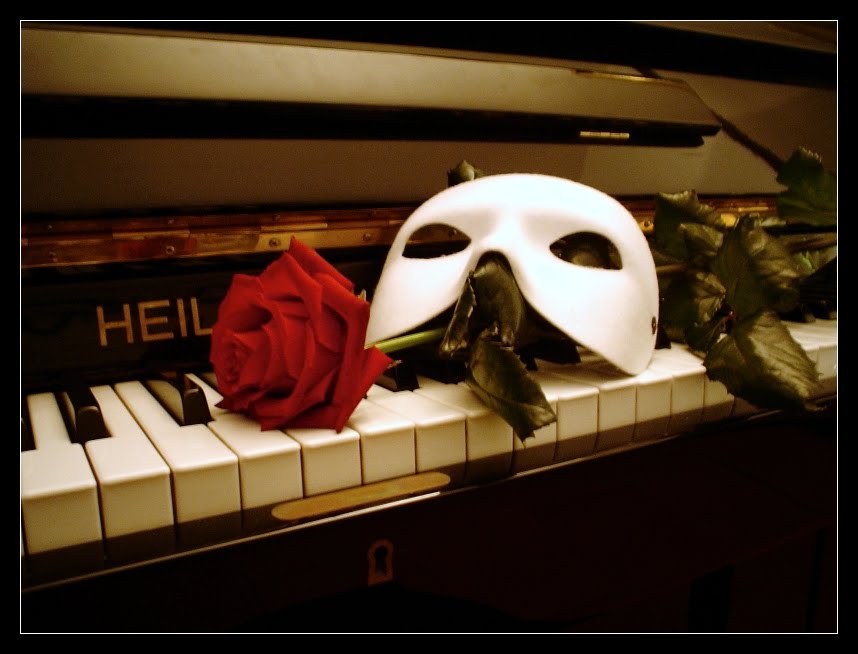
CPCC Ambitiously Celebrates 10 Years at Halton Theater With The Phantom of the Opera
By Perry Tannenbaum

Celebrating their 10th anniversary at Halton Theater, CPCC has found the perfect way to outdo anything they’ve attempted there before. With their current production of Andrew Lloyd Webber’s The Phantom of the Opera, CPCC Theatre – teaming up with CP’s Opera Theatre and Dance Theatre – have achieved one feat that even the original Broadway production, now in its 28th year, can never claim: they’ve sold out every performance in the run.

With that unprecedented presale, it’s safe to say that the longest-running show in Broadway history is a powerful brand. But how close can this community college’s Theatre-Opera-Dance alliance come to fulfilling those towering expectations? Closer than I would have predicted.

The technical demands are prodigious, beginning with the iconic Paris Opera House chandelier that lifts off the stage at the end of the Prologue and comes crashing down at the Phantom’s summons, cuing the intermission. You watch the CP production, and even when it doesn’t quite measure up to Broadway original or the two touring versions, you marvel at the audacity and prodigality of an effort that will only be in town for 10 days.

Sure, the chandelier looks a bit like an oversized Chinese lantern, a flimsy Horn & Hardart affair compared to the ritzy glitter that has floated over the Belk in recent incarnations. But I was more intimidated when this trinket was hoisted above me at the Halton. Awesome and cheesy also go hand-in-hand in Robert Croghan’s set design. Although the gloomy staircase leading down to the subterranean lagoon was unimpressive, Croghan’s evocation of the Phantom’s lair is gothic splendor, and the boat that carries Christine Daaé to and from that dungeon is magical.

Like the recent SlimFast remake of the touring Phantom that came to the Belk back in February, CPCC has liquidated the majestic stairway that wowed us in the Broadway concept of the Act 2 opening scene. But at this New Year’s Eve masquerade, we have the most conspicuous consumption of yard goods in the eye-popping costumes by Croghan and Jamey Varnadore, a rainbow of colors that fills the Halton stage. Arm-and-arm with the cardboard elephants, all of the opera costumes radiate a musty Elizabethan authenticity.

Some of the things that fall short at CP point up the niceties we’ve probably overlooked before, like the cunning of those multiple levels built into the auction scenery of the Prologue. Without it, the chandelier plopped onto the centerstage foreground blocked my sightline for the latter moments of the scene before it was borne aloft. Raoul’s presence in that scene was merely hearsay to me.

Saturday night’s misadventures with Don Ketcham’s technical effects also underscored the effortlessly-overcome challenges we take for granted when we treat ourselves to a Broadway production or a topflight tour. Snow that was intended to fall on the rooftop scene stopped abruptly after a mere 10 seconds. All the onstage fireworks went off flawlessly, covering the Phantom’s disappearances, but I seemed to hear an extra explosion backstage that was surely accidental, and the final vanishing through the Phantom’s chair was laughably botched. When Christine slammed a cup down in her climactic opera scene, it broke like one of those two-piece disposables you buy at a dime store, another unintentionally comical moment.

All of those things will be cleaned up by the time the run resumes on Wednesday, right? Already admirable are the sound designs by Steve Gamble. We customarily shout hosannahs when the much-maligned Halton sound system desists from assaulting us with sonic dropouts, body-mic thumping, and screechy feedback. In this landmark Phantom, the demons of yore are more than merely exorcised. They are supplanted by profusion of echo effects that add a charming, ethereal luster to the whole evening. I can’t say that I hear all the contrapuntal parts of the sextet scenes in the Paris Opera manager’s office, but the unamped voices of Opera Carolina principals can be just as murky at the Belk when Puccini and Verdi veer into counterpoint.

More than any of the touring productions I’ve seen, CP’s version vividly reminds me that Webber’s Phantom really is an opera – perhaps because Opera Theatre’s guiding light, Rebecca Cook-Carter, wields the reins on musical direction. She certainly has some wonderful voices at her command, including her own as aging prima donna Carlotta Guidicelli, distinctly audible in every ensemble with a vibrato that spans two time zones. Down in the pit, I counted 25 desks and keyboards – more than you’ll find at most Broadway productions nowadays – but the program actually lists 33 musicians, all of them zestfully led by former Charlotte Symphony resident conductor Alan Yamamoto.

You don’t want to do this show without synthesizers that convincingly render the Grand Guignol sound of a mighty pipe organ. Mission accomplished there.

Aside from the quality of the lead voices, I need to mention their commitment. Listening to the duets between Ryan Deal as The Phantom and Anna Belle Lusk as Christine, it was difficult to overlook the probability that singers who get to perform these roles just eight times – or a precious four in the case of the double-cast Lusk – pour far more passion into it than leads who have rendered these same roles hundreds of times before with additional months and years ahead. It was striking to hear “The Music of the Night,” “Angel of Music,” the title song, and even the choral “Masquerade” attacked so freshly.

Lusk’s exertions did convince me of the prudence in double-casting the role of Christine, and you’ll be totally satisfied if Karley Kornegay – who opened last Friday – is nearly as fine. Completing the complex love triangle as Raoul, Matt Carlson has matured astonishingly, shedding the rocker swagger that has served him so well in musicals from Aïda to Rock of Ages and becoming a standard-issue Broadway leading man.

The dungeon denouement crackles with excitement as the three purest voices wail way against the show’s most impressive backdrop. Nor are you likely to forget the lovers’ escaping on the underground lake, Carlson’s and Christine’s voices echoing in the distance with the despairing disfigured Phantom in the foreground. Kudos to Jason Estrada for the make-up and wig design.

As opera idol Ubaldo Piang, Robert Piang is wonderfully paired with Cook-Carter, nearly matching her grandiloquent excess. Disdaining the mugging that usually makes the Paris Opera’s new owners so obnoxious, Eric Johnston and Chris Chandler only slightly rob the Phantom of the sympathy due to a mad composer.

Amid all the color, pageantry, and pyrotechnics, it’s easy to overlook the contributions of choreographers Ron Chisholm and Clay Daniel with CP’s Dance Theatre corps. Not only does Christine emerge from the Paris Opera’s little ballet chorus, so do the Girys, dancer Meg and her stern maman, Madame Giry. As Meg, Aubrey Young gradually recedes into the background while her friend Christine’s star rises – but Meg is luminously the last person we see. Kristine Reynolds is a more constant, powerful, and sinister presence as the dance mistress, dressed in black and imperiously pounding her staff. Fittingly, there’s a mystery to her, Judith Anderson mixed with Gandalf, for she alone knows the secret origin of the crazed Phantom and the subterranean region where he dwells.


“The Woolgatherer”: A Romantic Clash of Losers

By Perry Tannenbaum

Anyone who has seen William Mastrosimone’s Extremities, either onstage or at the movies, is likely to approach the playwright’s previous 1979 drama, The Woolgatherer, with a certain amount of wariness. For me, the violence that erupted in Extremities when I saw it at UNC Charlotte in 1991 was shocking – and I’m not easily shocked. The new Citizens of the Universe production of that earlier script often seems to be headed down a similar harrowing path as Rose, a painfully shy and paranoid hemophiliac who works at a dime store candy counter, entertains a grubby long-haul trucker named Cliff in her boarded-up South Philly apartment.

Obviously, there are echoes of Rocky (1976) in this coupling, with Rose’s counter work and Cliff’s corny jocularity fitting the Adrian & Balboa mold. But Rose’s fragility also seems partly inspired by Laura in The Glass Menagerie. As for the seething aggression that we see churning inside Cliff as Rose neurotically fends off his advances, it seems to be rooted in a deep underclass place, the wild soil of our industrial jungle. Cliff’s restless, predatory instinctiveness in David Pollack’s performance reminded me of the fearsome yet inwardly broken Pale in Lanford Wilson’s Burn This (1987).

Yet the drama does prove to share some crucial DNA with Extremities, for Mastrosimone also toys with the idea that the shrinking Rose is as much a predator as the well-traveled and rugged Cliff. So as the story unfolds, and the balance of power teeters, it’s advisable to forget that Pollack himself is directing this tense two-hander. Aspects of Megan Sky’s manner as Rose may strike you as overly directed or insufficiently spontaneous at first. Her arm folding, her cowed bent-over head, and her sideways movements pulling away from Cliff are the most obvious ways an actress can signal that she’s shy.

Then as the truth emerges in Act 2, you may perceive hints from Sky that rudimentary acting may be Rose’s primary weapon. Buying that will likely raise your estimate of Sky’s performance after the previously fleeced Cliff returns, knocking on Rose’s door in the middle of the night.

No set builder was required to provide this sturdy door, for COTU’s newest production is at the unleased site where Carolina Actors Studio Theatre once stood – the same 2424 N. Davidson St. address previously occupied by Charlotte Rep and NC Dance Theatre. Both of the CAST theater venues have now been liquidated, but COTU is actually using the space where Rep and NCDT had their lobbies, elevated above the floor where performances and rehearsals were previously staged, directly accessible from a doorway facing 28th Street. Folks are manning the old CAST entrance on the side of the parking lot, but we found parking less iffy last Friday out on 28th Street.

It’s a much cozier performing space than any that’s been used by the three previous tenants, raw and ramshackle in the true COTU spirit. This corner of 2424 works especially well with Mastrosimone’s raw, déclassé script. The chemistry between Pollack and Sky frequently shuttles between attraction and repulsion, veering more toward extremes when antagonisms are roused. Whether either of these commitment-averse losers could be redeemed kept me guessing until the emotional denouement.

“La Cage aux Folles”: New Shtick and New Significance

Zaza (Steve Bryan) and his six well-synchronized Cagelles (Steven James, Ryan Kapur, Michael Julliard, Matt Mitchell, Charlton Alicea and Christian Munoz) explain life in “La Cage aux Folles.”

By Perry Tannenbaum

For anyone who has watched Steve Bryan over the years – in local musicals that include Jesus Christ Superstar, The Producers, Annie, Cinderella, Joseph and the Technicolor Dreamcoat, Bye Bye Birdie, Beauty and the Beast, Cabaret, Chicago, and Ruthless! – little more needs to be said about the excellence of Theatre Charlotte’s current production of La Cage aux Folles besides confirming that he’s playing one of the leads. Nobody in a homegrown musical has come close to matching the hilarity of Bryan’s cross-dressing exploits since 1995, when he portrayed the mysterious Sylvia St. Croix, talent agent for the fiercely talented, in Ruthless! After his bravura in La Cage as Albin and his cabaret alter ego, Zaza, it’s fairly safe to say that Bryan’s supremacy has been renewed for another 20 years.

Along with the leggy cross-dressing dancers behind him, the notorious Cagelles, Zaza is the prime attraction at La Cage, the St. Tropez club managed and emceed by Georges, his longtime husband. All is well, except for the difficulty Georges has in persuading Albin that Zaza is growing too old to impersonate the diva roles of her youth. Then Georges learns that his 24-year-old son Jean-Michel, the fruit of a one-night descent into heterosexuality, is planning to get married – to a woman!

That’s not the worst of it. Jean-Michel’s prospective bride, Anne, is the daughter of the notoriously righteous Edouard Dindon, leader of the Tradition, Family and Morality Party, sworn to the destruction of such dens of sin as La Cage. To make matters worse, the Dindons are all coming over to visit in order to size up their daughter’s possible in-laws before approving her engagement. Nothing less than an elaborate masquerade, Jean-Michel believes, can succeed in securing Monsieur Dindon’s consent.

So the set-up calls for a transformation of the lewdly decorated apartment and a reconfiguration of Jean-Michel’s family. These miraculous transformations need to occur at a speed never attempted by HGTV.

Our first encounter with Albin ratchets up our expectations of how funny this will all be, for he hasn’t begun transforming himself into the incomparable Zaza, and she’s already been introduced onstage. Moving quickly and making snap decisions aren’t Albin’s way. Far from immune from a diva’s prime attribute, Albin is also highly temperamental.

So breaking each one of Jean-Michel’s sensible demands to Albin, heartless and craven though they may be, becomes an opportunity for detonating a fresh comedy bombshell. Beyond these, scriptwriter Harvey Fierstein gets additional mileage out of Albin’s insulted sulking. Even then, Fierstein isn’t through milking laughs from the frantic preparations. The compromise between Georges and Albin yields an uproarious shtick. Instead of slinking away into seclusion, Albin will be allowed to masquerade as Jean-Michel’s Uncle Al. But this flaming queen must submit to tutoring from Georges on how to walk, talk, and hold a coffee cup with a semblance of masculinity.

Bryan does these shticks as well as any La Cage diva I’ve seen, including those in the last two Broadway revivals. What truly sets Bryan apart is the freedom director Dennis Delamar gives him to go wild as Zaza. Coming on to audience members in the front rows of the Queens Road barn is merely the beginning of Bryan’s blandishments. Turning his impressionist jets on, Bryan lampoons Carol Channing, Edith Piaf, Mae West, Marlene Dietrich, Ethel Merman, and – likely garnished by the medium of Carol Burnett – the husky vamping of either Martha Raye or Tallulah Bankhead.

More elaborate than any of these are the dollops of Marilyn Monroe. At one point, Delamar has somebody sliding an electric fan onstage so that Bryan’s dress can simulate the famous flutter from The Seven Year Itch. Otherwise, the comedy is administered as written, with Matt Kenyon as the other chief perpetrator in the role of Jacob. Smitten by the showbiz bug, Jacob is the household maid chez Georges & Albin – or their bewigged butler when the Dindons come calling. Kenyon makes sure we delight in all Jacob’s duplicity, opportunism, corruption, and immaturity.

Ideal casting, such as we find in Bryan and Kenyon, isn’t what we expect at community theatre, but it has become fairly routine at Theatre Charlotte in recent years. Delamar likely had an interesting choice at auditions when hopefuls read for the role of the debonair Georges. Filling a role that has been played by Gene Barry and Kelsey Grammer, Delamar’s pick goes interestingly against the grain with Jon Jones, who is more adept at singing than acting.

Jones’s deficiencies as a schmoozer weighed most heavily at the beginning of the show, when the burden falls on Georges to welcome us to La Cage. But the beauty of Delamar’s decision – and Jerry Herman’s musical score – emerges when Jones digs into Georges’s two big ballads, wooing Albin in “Song on the Sand” and then reminding Jean-Michel of his stepfather’s virtues in “Look Over There.”

Perhaps distracted by a loose body microphone on opening night, Peter Basone as Minister Dindon was the only other performer who wasn’t all I’d desire. Hank Santos was a more sympathetic Jean-Michel than any I’d seen – I’m a bit ambivalent about that – and Allison O’Connor certainly helped to keep him that way as Anne, more than worthy of J-M despite her Dindon upbringing.

On the technical side, even the budget doesn’t betray this as a community effort, for Emily Hunter’s choreography and Kahei Shum’s costume designs are clearly overachievements, while Mike Wilkins’ musical direction, Matthew Emerson’s sets, and Victoria Fisher’s lighting are all spot-on. Les Cagelles consistently delighted and occasionally amazed, most notably Steven James as the S&M-flavored Hanna and Michael Juilliard with his Queen-of-the-Night falsetto as Chantal.

Attitudes have evolved greatly since 1983, when La cage aux Folles first opened on Broadway, and since 1988, when Theatre Charlotte last brought the show to town. In the intervening years, we may have caught up with what Fierstein truly intended in his adaptation of the play by Jean Poiret. If you head on over to Queens Road, you might also realize that this musical I once assumed was about tolerance is actually about family values. As Anne quickly discovers, there’s a huge difference between those who loudly talk the talk of family values and those who truly walk the walk.

“Lunch at the Piccadilly”: For Old-Timers’ Sake

By Perry Tannenbaum

Clyde Edgerton, Mike Craver, and Steve Umberger are all involved in the musical adaptation of Edgerton’s 2003 novel, Lunch at the Piccadilly. Umberger, the founder of Charlotte Repertory Theatre in 1976, is back as the producer/director of The Playworks Group, lovingly developing the piece, but there are a few other people onstage and behind the scenes whose names are in the marrow of the Queen City’s theatre heritage.

Besides Rebecca Koon, our leading senior lady at the Rosehaven old age home, we have Bob Croghan designing scenery and costumes, Linda Booth choreographing, Fred Story contributing sound design, John Coffey directing the music, and Eric Winkenwerder tweaking the lights. With Craver and two other cast members reprising roles from an earlier version of the show that I saw in Winston-Salem over four years ago, the musical continues to be a work-in-development. I’d like to say work-in-progress, but I’d be lying.

Lil Olive is a widowed homemaker who has fallen twice in recent months, stubbornly refusing to let go of her car keys and grab onto her walker. It’s her devoted nephew, Carl Turnage, who must tear Lil away from her beloved Kirby vacuum cleaner and check her into Rosehaven. Surprising even herself, she quickly takes a liking to the place, finding friendship and, soon afterwards, purpose and renewed value on the sunny front porch among the residents in their rocking chairs.

What Lil doesn’t find at Rosehaven is very much pushback against her initiatives and radical ideas. Carl is the only relative who visits, so there’s no great family disapproval. Anna Rhodes is the only caretaker we see, the daughter of Rosehaven’s benevolent founder, and she’s quickly won over by Lil – quickly won over by Carl when it comes to it. But he’s shy.

The only person we’re intended to take seriously as an antagonist is Dr. Ted Sears, the chancellor of a nearby Christian college who hopes to commandeer Rosehaven and repurpose it as a Christian geriatric department. Still considering whether she wishes to sell to Sears, but not seeing any better prospects for the future – and financially strapped right now – Anna harbors definite misgivings about the changes he has already decreed. But Sears isn’t there very much, and when he is, Edgerton takes more care to portray him as conceited and lecherous, less interested in Rosehaven than in getting under the skirt of a board member he’s wooing on his cell phone. He’s softer, more innocuous now than he was four years ago.

Edgerton is too intent on not doing stuff: not offending old age homes – excuse me, retirement and care facilities – not offending Christian colleges, not displaying intense emotions, and not having too many people scurrying around onstage. There’s nothing inherently wrong with conflating multiple characters in a novel into fewer stage actors or in the concept of a chamber musical. But at some point, artful economy can strangle the spirit of your novel and make a production stingy instead of simple.

On the occasions that Lil hosts her open-mic presentations, there’s no microphone, real or fake. Similarly, when she appears at a news conference that will be broadcast on local TV, nobody materializes to represent the media or tote a TV camera. At least two stagehands efficiently slide the screens on the set to transition us from one scene to the next, so there are bodies available for such duty, and there are also two musicians behind the set who might occasionally serve as extras.

There was already an iPod in the 2011 version, triggering the best comedy segment of Piccadilly, when the oldsters embrace hip-hop. The new version updates that to an iPhone, part of a technology update that strengthens the arc of the story a little. But what I said four years ago applies more than ever: Piccadilly isn’t intent on taking us far and is in no particular hurry to get there. The current version clocks in with ten minutes of additional running time, and though a song has been cut from the opening act, getting Lil to the home seemed longer to me the second time around.

Once we do get the gang together (after four songs now instead of six), Koon and the rest of Rosehaven’s quartet of “Porchers” succeed in charming us even when the meager plot isn’t exactly barreling forward. On “How Does a Glass Eye Work,” Koon teams up comically with Patricia L. Cucco, reprising her role as former librarian Clara Cochran. Nearly as funny is “The Safety Patrol,” a high school reminiscence done in low-key hootenanny style by Craver and Trip Plymale, returning to his role as the wheelchair-bound Rev. L. Ray Flowers.

Fancying herself a poet, Clara has her eccentricities for Cucco to feast on, but L. Ray and Lil are the true Rosehaven radicals. She’s the spark of the new thinking, founder of the open mic and the First Breakfast Club. Lil also puts forth the revolutionary idea of creating a co-op between their nursing home and the mostly vacant church building at the other end of the parking lot. L. Ray supplies the fire with his sermonizing oratory, hoping to spread the new concept of “nurches” (the church-nursing home combo) across America.

L. Ray seems mellower than he was in 2011, so there’s nothing toxic in the chemistry between Koon and Plymale as Lil and Rev Flowers inspire each other, but few people at Booth Playhouse wouldn’t be more comfy if Plymale were allowed to toss his horrid wig to the wings. Cosmetic enhancements also run counter to the attention Edgerton gives to the Rev’s decrepitude. He’s getting therapy for his leg, but once he’s done, he’s in jeopardy of losing his medical benefits and getting shipped down to the dreaded Shady Dell home down the road.

Edgerton puts a lot of senior issues on his plate, but the complexities and absurdities of Medicaid are probably what he handles best. Wisely, he’s moved L. Ray’s dark “Tunnel Song” deep into Act 2, adding some much-needed gravitas. We must also navigate the slow-blooming romance between Anna and Carl while she’s preoccupied with the fate of Rosehaven and he’s worried about settling his aunt into her new life and taking away her car keys. Common cause eventually unites them.

We might get a more forceful satire if these young people complicated their elders’ lives a little more, but Edgerton doesn’t go so far in sketching their benevolence that they ever upstage the old folks. Mary Mossberg and Greg King are asked to be wholesome, and they are, with beautiful voices well-suited for their empathetic, innocuous ballads. Beau Stroupe gets decent comedy mileage crooning about Dr. Sears’ longed-for “Geraldine,” but his dramatic impact has been reduced to a couple of pouts.

If the darker aspects of growing old at Rosehaven don’t depress you, the light-hearted charms of these elders will win you over. With so many Charlotte theatre greats involved, I can certainly recommend Piccadilly to longtime theatergoers for old times’ sake. But Edgerton and Umberger will need to work harder at resuscitating the heart and point of their story before I can fully recommended it for old-timers’ sake.

Postscript: After reading the original novel, I have to admit that my presumptions about Edgerton’s stage adaptation of Lunch at the Piccadilly were completely wrong.  Far from strangling the spirit of the novel, the musical infuses fresh life and spirit into both the characters and the moribund plot of the book.  Just not enough.

Three Stages of a Grim Life

Albee’s Three Tall Women, So Well-Served by Charlotte Rep in ’95, Gets Another Fine Production from Innate Productions

Three Tall Women Poster

By Perry Tannenbaum

It’s a pity that Edward Albee’s Three Tall Women is presented so rarely in the Queen City, for we’ve gotten very lucky both times. When Charlotte Rep premiered the play at Booth Playhouse in 1995, less than a year after I’d seen the original off-Broadway production of the Pulitzer Prize winner, director Steve Umberger plucked the star I had seen up in New York – Lucille Patton, who spelled Myra Carter for Wednesday matinees – and drew a better performance from her. The local actresses who surrounded Patton as women B and C, Mary Lucy Bivins and Paige Johnston, were at least as satisfying as their Big Apple counterparts.

Now at UpStage in NoDa, Innate Productions is overachieving with the same script, as Paula Baldwin stars as 92-year-old A, ably backed by Shawna Pledger as 52-year-old B and Rachel Bammel as 26-year-old C. Directed by Debora Stanton, the work sometimes feels cerebral and brittle – as it often did in New York – but the performances of Baldwin and Pledger quicken the pace and the pulse, adding a numinous layer of urgency. Farrell Paules is bolder in her costume and makeup designs than the piously drab New York production, and Sean Kimbro makes sure Albee’s gravity is maintained in his lighting design.

It would be fascinating to look over the playwright’s shoulder to watch how this work developed, for Acts 1 and 2 almost seem to be separate stabs at the same subject – A, Albee’s estranged foster mother, who was unsympathetic to his homosexuality. With a few minor adjustments, the order of the two acts could be flipped. Act 1 shows us the externals of the 92-year-old’s character as she interacts with an indulgent, empathetic caretaker (B) and an officious legal aide (C) who is nearly as irritated by the inaccuracies and inconsistencies of A’s anecdotes as she is by A’s string of ethnic and racial slurs.

As a lifelike bust of A slips discreetly under the bedcovers – sleeping, comatose, or dead – the same three women materialize after intermission. But now they are all the same tall woman at different stages of her life, and Albee explores how C evolved into A. There’s always a wicked edge to Albee, and it manifests itself here in the need for B to mediate between the idealistic C and the fully evolved, totally disgusted, and absolutely uninhibited A.

In the opening act, A is no more able to control her bodily functions than the hateful words that spew from her, so there’s a physical dimension that buttresses B’s pleas for indulgence and compassion. Here we find Pledger noticeably stressed and straining to be cheery, knowing deep down that there is no excuse for A’s intolerance and paranoia. Inside A’s skin in Act 2, a good deal of ethical and idealistic decay has already happened, so Pledger is a different kind of mediator as B: experienced, wised-up, cynical, and – joining with A against C – contemptuous of the 26-year-old’s innocence.

Pledger’s concept of B is the most satisfying that I’ve seen, and Baldwin’s work here ranks with the best we’ve had from her, placing meticulous emphasis on A’s age as she rules the stage. Albee didn’t have to be kind to a parent he hated and fled, didn’t have to concede that she was once likable, so the naïve and judgmental C is as irritating as anyone else we encounter. Bammel makes her stiffer and taller than the others, as inflexible in her ideals as C is in her settled fears and prejudices, horrified by her elders’ infallible sketches of her devolution. There isn’t as much dimension to her, but that’s part of the point, right?

Seeing Three Tall Women on Sunday night, less than 24 hours after Clyde Edgerton’s Lunch at the Piccadilly at Booth Playhouse, made for an often grim old folks’ weekend. Albee is no doubt the more sardonic of the two writers, but his view of aging becomes most horrific when perceived as a new vista opened up to young adults still radiant in their optimism. From this standpoint, C is a stand-in for us, and Bammel subtly convinces us that her generation is Albee’s target audience – or younger, purer versions of ourselves that we’ve conveniently buried.

“Wonder of the World”: A Downsized, Goofball Chase

https://i0.wp.com/photos1.meetupstatic.com/photos/event/5/d/0/4/600_341663812.jpeg

By Perry Tannenbaum

September 12, 2015, Cornelius, NC – Tarnished by his complicity in the scripts of two lackluster musicals, Shrek and High Fidelity, playwright David Lindsay-Abaire’s reputation still gleams through the zaniness of two early comedies, Fuddy Mears and Wonder of the World, and his two subsequent dramas, Rabbit Hole and Good People. Twenty miles north of uptown Charlotte, the Warehouse Performing Arts Center is clearly more attracted to Lindsay-Abaire’s comical works, never mind their age. After bringing Fuddy Meers to their Cornelius storefront last September, 15 years after its Manhattan Theatre Club premiere, Warehouse has turned to Wonder of the World, Lindsay-Abaire’s 2001 MTC hit, with Marla Brown directing once again.

The cramped venue proves more ideal this time around, even if the denouement does involve two ditzy dames heading downstream in a barrel toward Niagara Falls. One of them, Cass, drives the story after ditching her husband Kip way back in the opening scene. What passes for Cass’s motivation doesn’t emerge until after she’s long gone, but Kip’s perversion will likely change how you think about Barbie dolls for the next couple of years. Nor is Kip in hopeless despair after Cass leaves him. While Cass is dedicating herself to preventing suicidal alcoholic Lois from ending it all with a barrel ride over the falls, Kip has dispatched a pair of novice detectives, Karla and Glen, hoping to track his wife down, spy on her, determine whether there’s another man, and beg for a reconciliation once he catches up with her.

So like Fuddy Meers – and about a thousand Hollywood comedies before and after the advent of talkies – Wonder of the World becomes a goofball chase. Normality is chiefly anchored in Captain Mike, the tour boat pilot that Cass seduces by dint of her sheer candor and vitality. There’s a uniquely American quality to Cass that’s summed up in the to-do list she carries around with her, so lengthy that she needs to frequently unravel it just to remind herself what’s on it. Precisely because she has absolutely no clue about what she wants or how to live, Cass wants to do it all. Cass’s bucket list is a treat in itself.

When Wonder of the World first came to Charlotte in 2004, it was by far the best locally-produced comedy that year, so credit goes to Brown and her cast for repolishing and refreshing this gem. Paralleling the downsizing of the venue, the Warehouse has taken this movie-like comedy and discarded its scenic and personal glamor. Wonder of wonders, Lindsay-Abaire’s romp plays rather handsomely when it’s about frumpy, ordinary people. What’s chiefly attractive about Zendyn Duellman as the wildly irrational Cass is the bright optimistic zest of her willfulness. Yet she’s a fairy princess compared to Anne Lambert as the world-weary Lois, who dully deadpans some the most devastating lines in the show.

With a juicy contrast like this, you wouldn’t expect to need much in the way of comic relief, but there’s plenty. Lesi Jonap and Brian Rassler are endearingly humdrum as the bumbling, dysfunctional detective duo, with Karla clearly being the brains of the outfit. Della Freedman gets to romp around in a cluster of cameos, including a helicopter pilot, waitresses at three diverse restaurants simultaneously serving the rest of the cast, and – most colossal of all – a paroled family therapist in a clown suit who fulfills Cass’s fantasy of appearing on an episode of The Dating Game.

Cass’s hapless liaisons are both adorable. With his strange Barbie fetish, Kip is clearly the more outré of the two, which adds to the strangeness of Cass melting into the arms of Captain Mike, the most wholesome person we see, then shying away when he suggests they do something wildly adventurous together. Amos McCandless makes Kip so weak and whiny in his adoring servility that you feel sympathy for him immediately while recognizing that the boy needs serious psychological help. Like Lambert as Lois, Roger Watson adds some edginess to the comedy as Captain Mike that wasn’t there in the 2004 edition at Actor’s Theatre of Charlotte. Watson isn’t the young, fresh, wholesome dreamboat Michael Nester was, simply because a couple more decades have weathered his tall, winsome frame. There’s just a little more poignancy to his romance with Cass, more of a belated midlife rebirth, and the ending of the show felt just a little more right because Watson was our Captain.

Three One-Acts That Didn’t Quite Click

Theatre reviews: A Guide to the Newly DeadHansel & Gretel, and The Amish Project

by  (posted on Fri, Nov 1, 2013 at 4:30 PM)

No fewer than three companies were offering quickie plays last weekend, all clocking in at 55-67 minutes and richly deserving praise – though some also merited a modicum of caution. The most eagerly awaited was the return of Machine Theatre to Duke Energy Theater with Matt Cosper’s newest foray into the comically surreal, A Guide to the Newly Dead. Rarely have I seen the slick and the shambling so perfectly wed.

I’ll need to defer judgment on Cosper’s marriage of outlandish absurdism and genuine intimate confessions. That’s because Newly Dead is Episode 2 of a three-part narrative, Bohemian Grove, which began unfolding this past spring at UpStage in a co-production with PaperHouse Theatre. In the hurly-burly of Passover, I missed Who Shot Carmella? so I can’t tell you how well – or if – Newly Dead connects with the previous episode. We get Episode 3: Tuba next March and, in May, The Box Set, “a long form performance created from all three episodes.”

“…we’re in a weird Mayberry-Meets-the-Wolfman world…”

That’s a fairly broad hint from Cosper that all three parts of Bohemian Grove are likely to evolve further before they’re Machine-packaged. Cosper credits himself with conceiving and directing the show, it should be noted, while “The Machinists” are designated as the creators and performers. Group improvisation plays a role in Machine’s developing script, yet there’s one little oasis where the actors sit down for an underworld group therapy session, and all four characters shed their theatre masks, each taking on the performer’s true name as he or she offers up a personal reflection. Continue reading Three One-Acts That Didn’t Quite Click