Daily Archives: November 5, 2017

Miller’s “Crucible” Roars Its Power at CP

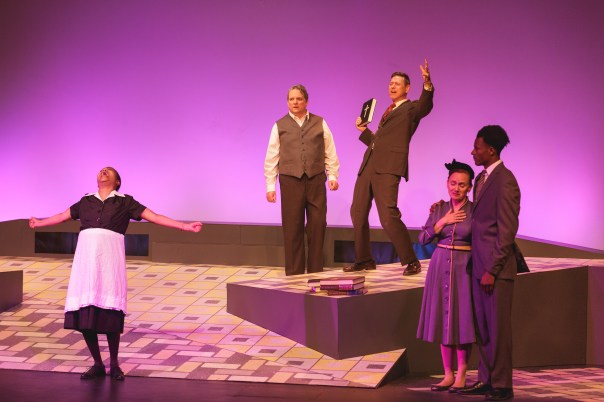
Final Dress Rehearsal for The Crucible; Pearse Auditorium, October 26th, 2017

Review: The Crucible

By Perry Tannenbaum

Powerful men abound in the annals of drama, but few can vie with the formidability of Deputy-Governor Danforth in Arthur Miller’s The Crucible. Reminding the petitioning Francis Nurse just exactly whom he’s dealing with, he can honestly claim to have jailed nearly 400 people in various towns across Massachusetts with his signature – and sent 72 to the gallows with that many strokes of his pen.

“We burn a hot fire here,” he warns soon-to-be martyred John Proctor. “It melts down all concealment.”

If those declarations sound to you like they should be spoken softly, you are not reading them the way stage director Tom Hollis did for the current CPCC Theatre production at Pease Auditorium. Panoramic Pease is a challenging place acoustically, often frustrating audience members, especially the elderly, who chance to be seated in one of the side sections, trying to hear what actors are saying at the other end of the stage.

Anybody who has been reluctant to go to Pease, or stayed away because of that frustration is now encouraged to come back. There has never been such a roaring production at Pease – or anywhere else on the CPCC campus. It would be misleading to say that it begins with Tim Huffman, who gives a fearsome account of the Dep Governor in the climactic scene at the Salem Meeting House, ground zero of the infamous Salem Witch Trials. He doesn’t appear in the drama until the second scene after intermission, or Act 3 in the original script.

Final Dress Rehearsal for The Crucible; Pearse Auditorium, October 26th, 2017

We don’t hear anything about the full extent of Danforth’s rampage until he announces it himself, but the steady roar of the panicked citizens of Salem – and the shrieks of the pubescent girls who incredibly become their accusers – testify to the hysteria that has gripped the whole colony. Reverend Samuel Parris intrudes upon his servant Tituba leading a pagan moonlight ritual, with his daughter Betty and his niece Abigail Williams among her acolytes, in a marvelously creepy scene that Miller added to his 1953 script for his 1996 screenplay.

The secret of how that cinematic lagniappe was converted to stage may be locked in a local recipe, since the brief prologue isn’t referenced in the playbill’s rundown of the scenes. When we cut to the original opening scene in an upstairs bedroom of the Reverend’s home, Parris is huddled over the seemingly comatose Betty who will not waken since returning from her midnight revels. As great as Parris’s fears may be for his daughter’s life, his greatest fear is that the word “witchcraft” might be whispered around town about members of his family. His career is at stake.

The fear flips Reverend Parris from his initial condemnation of Betty and Abigail to becoming their staunchest supporter no matter how outrageously they overreach in their reign of terror. Cole Long may be giving us the most chilling performance here as Parris for he is never in the least soft-spoken. This rabid weasel speaks in a passionate, panicky squeal that threatens to shatter glass, most heinously in his waspish attacks upon John Proctor. Long’s high-voltage intemperance makes it easy for Huffman to become mightily annoyed with his zeal.

Final Dress Rehearsal for The Crucible; Pearse Auditorium, October 26th, 2017

Hollis also finds strong – yet sweet – voices for the two most important accusers: Sarah Clifford is the implacably wicked and wanton Abigail, and Ashley Gildersleeve is the ambivalent Mary Warren, the witness Proctor enlists to debunk Abigail’s masquerade. Interestingly, Mary is Abigail’s successor in the Proctor household, hired after Abigail was told to hit the road when she had committed adultery with a now-penitent John.

Clifford gives us a shameless and forceful Abigail. Hollis is wise to include the nocturnal confrontation between Abigail and Proctor, written by Miller for the stage shortly after the original Broadway production, for it reveals Clifford’s full range. Switches between Abigail’s vamping, seductive mode to her imperious affirmations of divine judicial authority can be played so abruptly that the wench can seem to have an insanely split personality. But Hollis and Clifford find the bridge between the two Aby’s in her arrogant self-confidence – she obviously has no doubt that John will ultimately succumb to her charms.
Final Dress Rehearsal for The Crucible; Pearse Auditorium, October 26th, 2017

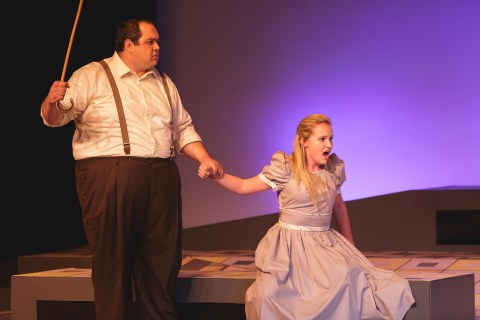
Gildersleeve proves to us that Mary is also quite a powerful role, pulled ferociously hard in opposite directions by John and Abigail, pivotal in the outcome of the climactic court scene. Hollis is going against the usual impulse to cast Mary as a diminutive mouse who will cower in the proximity of the domineering Abigail. Making her more substantial magnifies the power of both adversaries who tug at her, and Hollis – not withstanding today’s political correctness – does not gloss over John’s abusiveness toward his servant.

The biggest payoff with Gildersleeve is how taut the tension can become before Mary makes her fatal choice. We can see that she isn’t going to break easily. When inevitability sets in, the chaos that breaks out in Danforth’s court is as alarming as you’ll ever see, like a vast cauldron coming to a boil and overflowing.

Nothing less can bring Josh Logsdon down in his hulking, near-Promethean performance as Proctor. There are few mild-mannered moments in his tragic odyssey toward the gallows. If, as he claims, he has walked tiptoe around his own home since his great sin, Logsdon certainly turns the corner when John confronts Elizabeth, raging and roaring at her like a tyrant before her unexpected arrest. Then he turns on the gendarmes with leonine fury as they take her into custody. Then on the quailing Mary, who has brought the incriminating poppet to his house from Salem.

Final Dress Rehearsal for The Crucible; Pearse Auditorium, October 26th, 2017

Torn between taking advantage of Abigail’s affection and risking her fury, Logsdon is comparatively becalmed in their forest scene, but he’s only truly temperate in the presence of the Dep Governor when Elizabeth’s fate hangs in the balance. Even then, we see him as a powder keg, ready to explode in a heartbeat.

The Gothic aspects of such sulfurous action are somewhat muted by the raked and abstract set design by Beth Aderhold and costume designer Jason Estrada’s execution of what could have been Hollis’s most daring concept – transporting the 1692 atrocities to the McCarthy Era 1950s when Miller’s tragedy premiered. But the concept gathers little further momentum. We find no TV in the Proctor home that could be tuned to the HUA or Army-McCarthy hearings, and no projections on the blank upstage wall from contemporary newspapers heralding the anti-Commie hysteria that Miller was obliquely targeting.
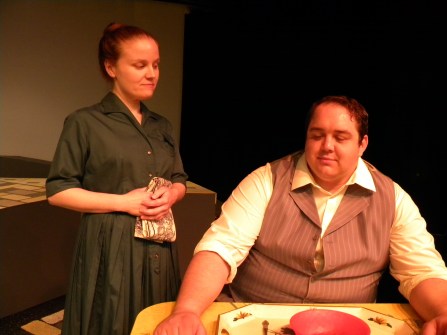
It’s Caryn Crye who unexpectedly brought me the strongest flashback to the 50s as Elizabeth. Again and again, Crye’s quietly assertive and judgmental portrayal evoked the Emmy Award-winning Audrey Meadows in her iconic role as Alice Kramden on The Honeymooners (1952-57). This is a cold and grudging Elizabeth who knows a woman’s place yet never backs down. She comes to see her own failings and their causes in the poignant final dialogue with John. Yet when we hear her last words, it’s hard to discard the notion that nothing less John’s march to the gallows could convince her of his complete atonement for his infidelity.

The depth and power of the CP cast helps to shine new light on Miller’s lesser characters. Giles Corey usually comes off as a contentious, litigious, and ultimately harmless old fool, but Tom Ollis – among the loudest actors we have – bellows him to a different place, now fully consistent with the defiant eulogy Elizabeth gives him. Reverend John Hale is also prone to trivializing, apt to be portrayed as a naïve student who needs the books he carries to substantiate his witch-sleuthing credentials.

Tony Wright plops those books down in the Parris bedroom as if he has read and absorbed very word, needing them merely to double-check his vast erudition and point out chapter and verse to the common folk who have hired him. Most Hales seem to be windblown by the dizzying events in Salem, but Wright’s is open-minded and discerning, ultimately bewildered by the insanity that surrounds him, still grasping and feeling the tragedy as deeply anyone.
Final Dress Rehearsal for The Crucible; Pearse Auditorium, October 26th, 2017

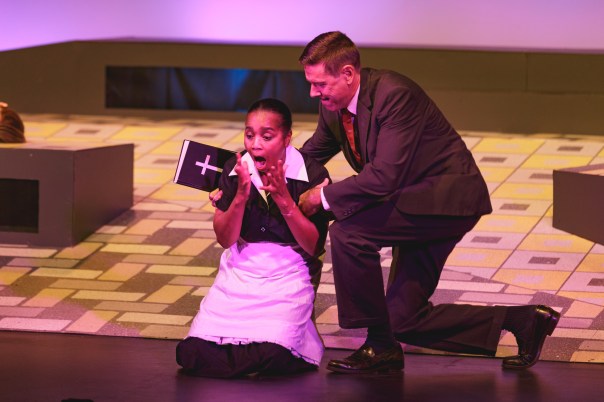
My only disappointment was Corlis Hayes, who starts off so spectacularly in her second pass at Tituba at CP, where she also excelled in 2001. Abetted by James Duke’s lighting design and Marilyn Carter’s movement coaching, she’s an object of terror in the opening blood ritual. She “lays low” obsequiously enough, if I might be permitted an Uncle Remus allusion, as cries of witchcraft pursue her like the Eumenides. Hayes breaks so pitifully under the merest pressure that it’s almost comical.

Ah, but when she reaches the prison – the first to be branded a witch – Hayes mangles the words of Rev. Parris’s hapless servant so badly that they are unintelligible. That’s a shame, because Tituba has the freshest, wittiest, big-picture perspective on the whole Puritan catastrophe.

“Devil, him be pleasure-man in Barbados, him be singin’ and dancin’ in Barbados. It’s you folks – you riles him up ‘round here; it be too cold ‘round here for that Old Boy.”

Those who profess to fear and loathe Satan come to rule in 1692 Salem – zealots, scoundrels, and a pack of screaming she-wolves led by a vengeful, slatternly she-devil – wreaking havoc that even Satan might marvel at. Miller wrote The Crucible in 1952 to show postwar Americans that history can repeat itself, destroying us from within. Miller’s message still resonates in post-2016 America, and CP is serving it up scorching hot at maximum volume.

Classics Collide!!

Preview:  The Grapes of Wrath and The Crucible

By Perry Tannenbaum

We can’t explain this curious phenomenon, but the Queen City’s performing arts companies seem to have outgrown their customary October fixations with vampires and spooks. Instead, this coming Halloween weekend, if not entirely witch-free, will be more haunted by a swarm of classics.

After gorging on the full score of Harry Potter and the Sorcerer’s Stone last weekend, Charlotte Symphony returns to Belk Theater on a strict diet of Mozart & Beethoven. As a spectacular Mary Poppins finishes its run on the east side of ImaginOn, Children’s Theatre of Charlotte slips Ezra Jack Keats’s The Snowy Day and Other Stories into the west.

Saturnalia Central will be located at Central Piedmont Community College, where CPCC Theatre presents The Crucible, Arthur Miller’s weaponizing of the Salem Witch Trials to take aim at the infamous anti-Communist witch-hunts led by Senator Joseph McCarthy in the 1950s. Counting the Robert Ward adaptation produced by Opera Carolina, we’ve had at least five opportunities to view this classic in the Metrolina area since 1998.

Another Tony Award winner has had to wait longer than that for its first run here. Frank Galati adapted and directed John Steinbeck’s epic Depression Era novel, The Grapes of Wrath, winning the 1990 Tony less than three months after its Broadway opening. To all those theatre lovers wondering over the past 27+ years when this classic would finally reach us, Theatre Charlotte is answering: now’s the time.

Steinbeck’s biblical exodus begins in the Dust Bowl during the Depression Era, focusing on one family of dispossessed Oklahoma farmers, the Joads, as they journey to California in search of jobs – and their lost dignity. What the Okies find at the end of their journey isn’t a Promised Land at all. Joining a severely overpopulated workforce, they’re plunged into a sun-kissed cesspool of migrant worker exploitation.

The sheer size of the story, in geography and humanity, is a prime reason why it took so long before the 1939 Pulitzer Prize winner was adapted for the stage – and for the additional delay before a local theatre company brought it here. Galati’s Broadway edition had a cast of 31 playing 45 roles, and that’s not counting the seven musicians on hand to play Mike Smith’s original incidental music.

Theatre Charlotte executive director Ron Law, taking over the creative reins for this production, is taking a simplifying approach, reducing his cast to a mere 23. Running the first local company to pick up the gauntlet on producing this behemoth, he can empathize with those that haven’t.

“The cast is large, which means a bigger costume budget,” Law points out. “If you are paying actors, that makes for a big salary line. There are also some very violent scenes in the play that really require a certified fight choreographer. The play calls for a river, campfires, a grave and a truck. Our space is very limited – virtually no wing space, no traps, no fly system. I truly favor minimalism in theatre, focusing on narrative and characters. But sometimes minimalism is not really all that simple.”

With so many roles, Charlotte’s community also had to worry about who would sign up. Decreasing the cast creates more multiple roles to keep the volunteers busy, and Law was pleased to be able to fill nearly half of his cast list with local theatre vets, including Vic Sayegh, Annette Gill and Paula Baldwin.

Gill and Baldwin have similar pedigrees at the Queens Road barn, playing Linda Loman in the two most recent revivals of Death of a Salesman in 1998 and 2009. Baldwin, the more recent Linda, has also aced auditions at a variety of local companies for prominent – and powerful – roles in Three Tall Women, August: Osage County, The Actress, and Who’s Afraid of Virginia Woolf?

Baldwin chafes against the notion that Ma Joad, her role in The Grapes, is a softie by comparison.

“She fulfills her role as the Mother who nurtures, cooks and cleans,” she admits, “but Pa comes to her for her opinion and follows it even when he, at first, doesn’t agree with her. She is truly the backbone of the family. When the men start to falter and give up, she continues to be positive and strong. Ma has several wonderful monologues, and one of my favorites is when Pa has all but given up and she tells him that life for a woman is ‘all one flow, like a stream, little eddies, little waterfalls, but the river, it goes right on.’”

Vilified by bankers and landowners for his workingman sympathies, scorned by literary critics who preferred the apolitical beauties of Hemingway, Faulkner, and Fitzgerald, the sun began to set on Steinbeck’s reputation and continued to decline after he won the Nobel Prize in 1962. The socialist label, not a problem in Europe, hampered him here.

So let’s look around and see the political reasons why the time may be ripe for The Grapes. An avowed socialist nearly captured the presidential nomination of one of our major parties, and the shadows of fascism and demagoguery hang over our land as heavily as they did when Steinbeck published his masterwork.

Baldwin and Law both cite the sowing of divisions and the widening chasm between the haves and have-nots as reasons why the Joads’ odyssey still resonates today.

“The question then seems to be the same as today,” says Baldwin. “What price are we willing to pay to affect change? Is America truly a land of opportunity for all?”

In the 2007 production of The Crucible at Theatre Charlotte, director Matt Cosper dipped into the screenplay that Miller had written for the 1996 film, freshening the version that had previously run on Queens Road in 1988. Tom Hollis, chairman of the CPCC Drama Department, has settled on an even more daring way to give the old classic a new look.

Directing at Pease Auditorium, Hollis is transposing the 1692 Salem Witch Trials to 1952, when the Miller script was released, while preserving the antique Puritan dialect that the playwright invented for his historical characters. From what we’re told about the impact Hollis hopes to achieve in juxtaposing Salem’s infamous trials and Sen. McCarthy’s infamous Senate hearings, we could possibly see a trace of Sen. Joe or his nemesis, Joseph Welch. Maybe some video cameos?

“The naming of names and the accuser being somehow sacrosanct has been an age-old issue in human affairs,” Hollis observes. “The hysteria of the Salem Witch Trials and the 50’s Communist hunts all echo with the proliferation of ‘fake news’ today. Did not Orwell predict that the shouting of a lie loud enough and long enough will make it true? The inability of many to separate belief from objective reality is more disturbing today than ever.”

After a couple of memorable performances in 1776 and Ragtime last season, Josh Logsdon gets an even meatier role as Miller’s martyr, John Proctor, in his first non-musical foray at CP. He is tempted and traduced by the adulterous Abigail Williams while further tortured and frustrated by his unforgiving wife, Elizabeth – tasked with finding his authentic self while living in a sexist world.

“The text does paint him as domineering and harsh at times when arguing with Elizabeth,” Logsdon says. “But I try to draw on more of his softness with both Abi and Elizabeth. His relationship with Elizabeth transitions from one of resentment and more pain to a reclaimed love and a final peace. He has a softness to Abigail as much as he denies it, but he eventually sees that she’s willing to destroy everything and everyone to have what she wants, and he’s definitely horrified by it.”

Not quite a vampire, but chillingly close – and certainly in season.

Best of Charlotte, 2017

Best of Charlotte, 2017

By Perry Tannenbaum

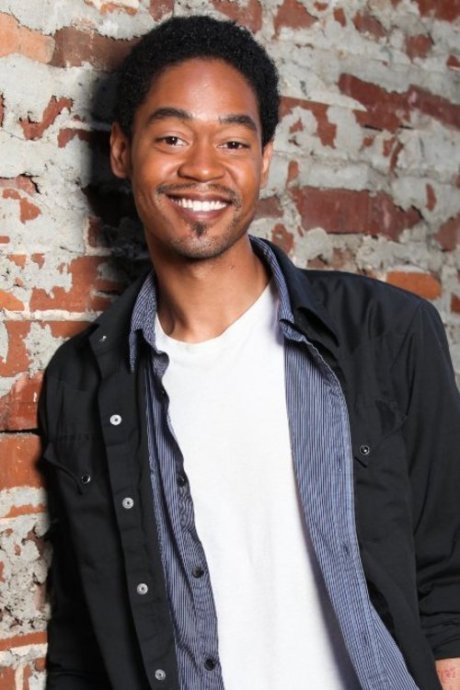
                                           Best ActorJeremy DeCarlos


Among local performers, there are strong candidacies from Brian Logsdon (Pride and Prejudice and Ragtime), Jonavan Adams (Ma Rainey’s Black Bottom and The Christians), Scott A. Miller (Stupid F@#%ing Bird and The Submission), Jermaine Gamble (A Raisin in the Sun and Jitney) and Tyler Smith (Ragtime and Memphis). All of them sparkled on multiple occasions. But the runaway victory goes to Jeremy DeCarlos, who laps the field – in range and productivity – with four scintillating outings. Draped in a braided Hussar jacket, DeCarlos just finished channeling his inner Jimi Hendrix as the devilish St. Jimmy in American Idiot. That was the last of his Actor’s Theatre gems over the past year, including some cross-dressing preaching in Bootycandy, his insouciant devotion in Stupid F@#%ing Bird, and his amazing transformation – from Jerry Lewis nerd to Incredible Hulk-ish monster – in The Toxic Avenger.

Best Actress – Shar Marlin

The field of contenders is larger among the ladies, but the roles were more thinly distributed, eliminating productivity as a decisive criterion. But which other benchmark should override all others? If it’s flesh-crawling menace, Sarah Woldum gets the edge, bringing Sheridan LeFanu’s Carmilla to life in She Who Watches. Leslie Giles was the funniest as the blind librarian in The Toxic Avenger, Lucia Stetson the most revelatory as Mother in Ragtime, and Allison Snow Rhinehart was better than her Broadway counterpart as Mama in Memphis. And how can I forget the sizzling dominatrix arrogance of Nonye Obichere as Whatsername in American Idiot? I’m turning instead to Shar Marlin for her sheer power and imperial dominance in Ma Rainey’s Black Bottom, a dramatic stunner that also showed Shar’s blues singing chops. Dignity in the face of exploitation and discrimination. Diva!

Best Comedy – Women Playing Hamlet


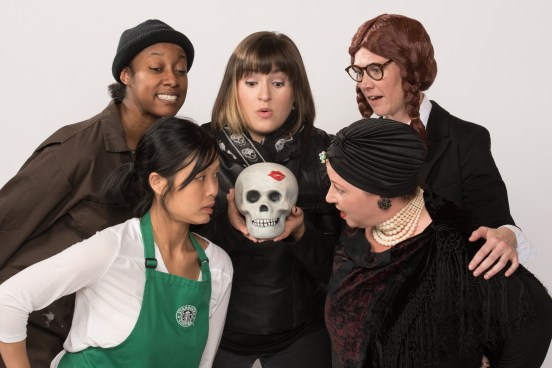
Theatre Charlotte’s You Can’t Take It With You and the Citizens of the Universe farewell, The Hitchhiker’s Guide to the Galaxy, were arguably the zaniest productions of the 2016-17, while the Chekhov knockoff from Actor’s Theatre, Stupid F@#%ing Bird, was surely the most poignant. And what about OnQ Productions’ A Brown Tale from James T. Alfred, maybe the funniest one-man show I’ve ever seen? All were worthy candidates, but I’m going to let Chickspeare split this prize with Donna Scott Productions for their joint production of Women Playing Hamlet. Glynnis O’Donoghue starred as the soap queen saddled with the lead role in the Mona Lisa of tragedies, and the galaxy of comediennes – all in multiple roles – offering her questionable advice included Tania Kelly, Andrea King, Vivian T Howell, and Sheila Snow Proctor.

Best Musical – Ragtime

Ragtime Promo Photos

Folks who confine their diet of musicals in Charlotte to touring productions at the PAC are missing out bigtime on the locally-produced blockbusters playing out at smaller venues around town. Actor’s Theatre scrambled to produce a marvelous Toxic Avenger at a storefront church because this city doesn’t have the vision to see the arts flourish on Freedom Drive without a needless morass of red tape. Still in exile, they just brought the noise of American Idiot to Queens University for a face-melting month. After reminding us how finely they can produce A Year With Frog and Toad, Children’s Theatre astonished with the world premiere of The Best Christmas Pageant Ever: The Musical. With more than one Broadway-level performance, Theatre showed us their mettle with Memphis, and CPCC re-emphasized that their musical excellence isn’t confined to summer anymore. Maybe it was sheer luck, but CP’s wintertime production of Ragtime was the most timely of the year, underscoring the sad fact that institutional racism, police brutality, and prejudice against immigrants aren’t quaint relics of the Jazz Age. As the martyred Coalhouse Walker, Tyler Smith’s impassioned “We are all Coalhouse!” reverberated through a city in turmoil.

Best Drama – Jitney

Early last season, PaperHouse Theatre proved that The Frock Shop on Central Avenue was the perfect site for a creepshow with a dazzling She Who Watches, and early this season, a legend made a comeback when Steve Umberger and his Playworks Group brought a sterling production of The Christians to Booth Playhouse. In between, as Charlotte was fully wakening to how badly we have neglected and mistreated our underclass, theatergoers may have finally been zonked by the realization that our city is exceptionally rife with African American acting and directing talent. Kim Parati made an auspicious directorial debut at Theatre Charlotte with a freshened-up Raisin in the Sun, but this was a vintage year for August Wilson – in two dramas directed by Corlis Hayes, Ma Rainey’s Black Bottom at CPCC and Brand New Sheriff’s Jitney at Spirit Square. Hayes brought out the best in John W. Price and Jermaine Gamble as the father-son antagonists in Jitney, with Gerard Hazelton adding a mix of comedy and poignancy as the gypsy cab company’s resident lush. Move over OnQ Productions, there really is a brand new black company in town – our second! – producing professional-grade work.

Best Night @ Symphony – Mahler’s “Resurrection”

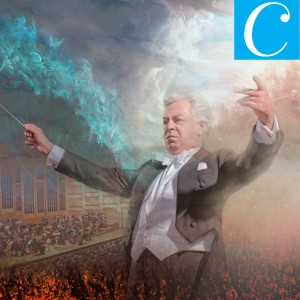
While a well-played Beethoven symphony, a Rossini overture, a Strauss tone poem, or a Mozart concerto might be the secret sauce to get newcomers to become Charlotte Symphony subscribers, longtime concertgoers like me wish to dismount the warhorses and hear something off the beaten trail. There’s plenty out there that will please both camps: big, unfamiliar orchestral works that will instantly grab you by the lapels even if Symphony hasn’t reprised them within the last decade. Armed with an audacious orchestra and choir, plus two soloists who have sung with Opera Carolina, Davidson College showed the way with a rousing performance of Ralph Vaughan Williams’ A Sea Symphony, set to poetry by Walt Whitman. That’s the sort of daring we hope for from Charlotte Symphony’s British maestro, Christopher Warren-Green. We did get a British Isles-themed evening when pieces by Edward Elgar and Peter Maxwell Davies, spiced up with a bagpiper, were served with Mendelssohn’s “Scottish.” Utilizing the Symphony Chorus and distinguished guest vocalists, Warren-Green turned up the power with a pair of Bruckner chorales last November and Mendelssohn’s Elijah last March. If you wanted to sample the full capabilities of Symphony, their chorus, and the guest vocalists Warren-Green can summon to Belk Theater, you had to hear them introducing the wonders of Mahler’s “Resurrection” Symphony No. 2 to an astounded audience.

Best Night @ the Opera – The Girl of the West

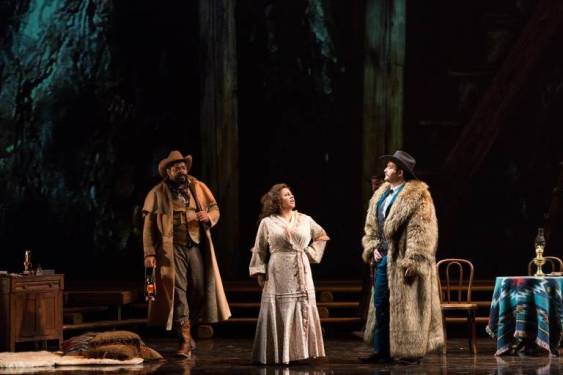
Under maestro James Meena, Opera Carolina does the oldies better than ever, as their uproarious Barber of Seville and their vivacious, ultimately anguished La Traviata amply proved. There was even some audacity in the 2016-17 programming as OpCar partnered with Warehouse Performing Arts Center and the D9 Brewing Company to produce an evening of three short operas – including the world premiere of Scott Joiner’s “Connection Lost (The Tinder Opera)” – at the brewery in Cornelius. Yes, a world premiere on Treynorth Drive! But most exciting was the Charlotte premiere of Puccini’s The Girl of the West, as Meena collaborated with six other international companies, including New York City Opera and Teatro del Giglio in Lucca, Puccini’s hometown. Singing was exemplary, persuading me that this second-tier Puccini opera was actually a first-rate work, and staging was anything but stodgy or conservative: much of the scenery was animated and bold, with authentic relics evoking the Wild West supplied by our own dearly beloved Wells Fargo. An appreciable, if infinitesimal, atonement for all the bank’s Wild West chicanery.