Tag Archives: Parr Center

The Passion of Mary Cardwell Dawson Brings a Neglected Pioneer Back into the Spotlight

Review: The Passion of Mary Cardwell Dawson at the Parr Center

By Perry Tannenbaum
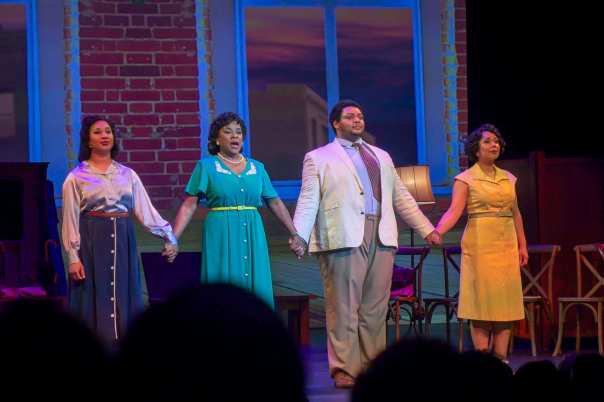
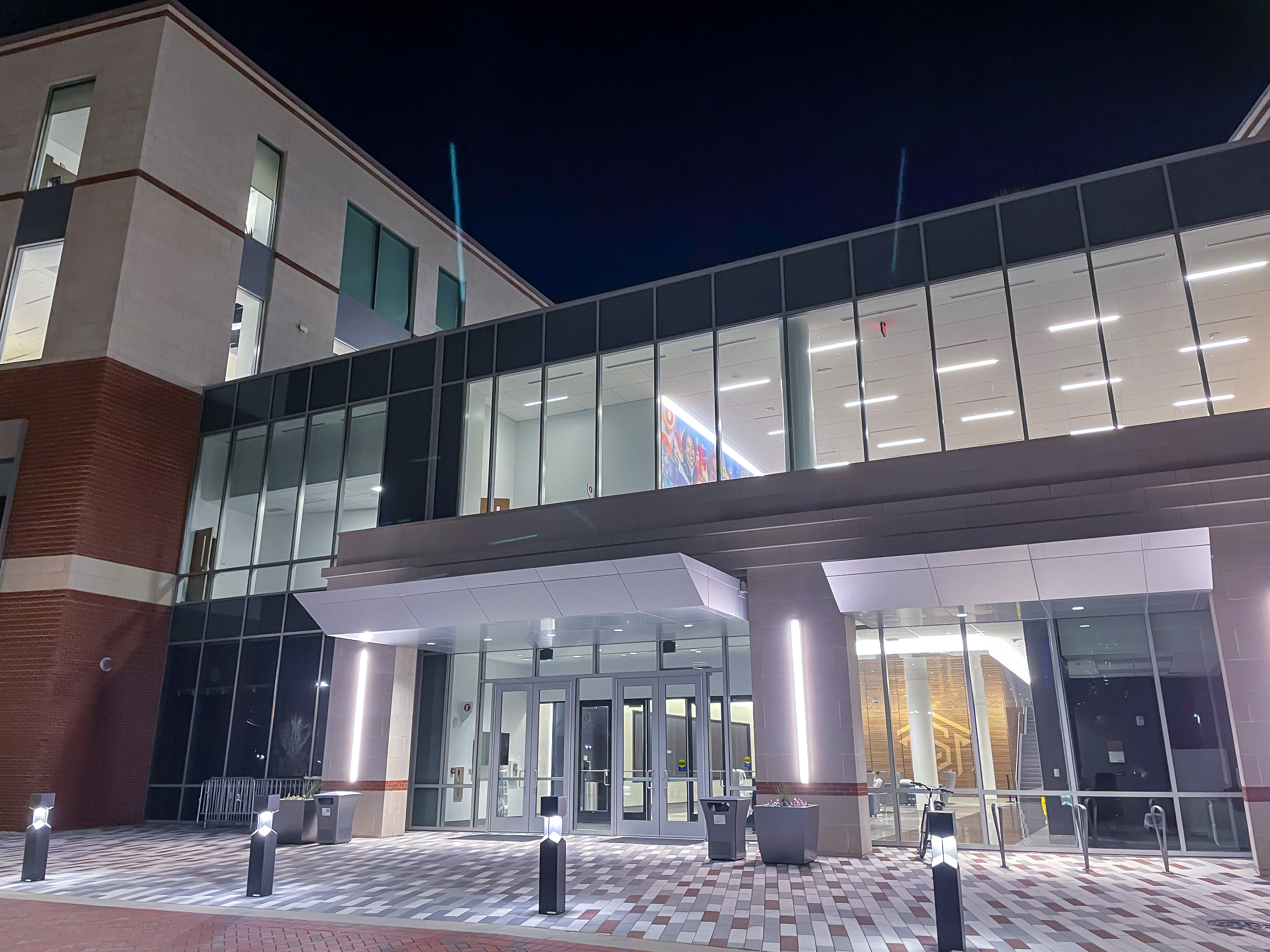
  February 15, 2024, Charlotte, NC – Commissioned by the Glimmerglass Festival and premiered there during the summer of 2021, The Passion of Mary Cardwell Dawson is a fascinating, informative, and inspiring hybrid. Part documentary, partly a new play by Sandra Seton with operatic arias composed by Carlos Simon, and partly an eye-opening “Building the Stage” exhibition, the new co-production by Opera Carolina and The Denyce Graves Foundation have found a perfect landing spot at the posh Parr Center on the CPCC campus.
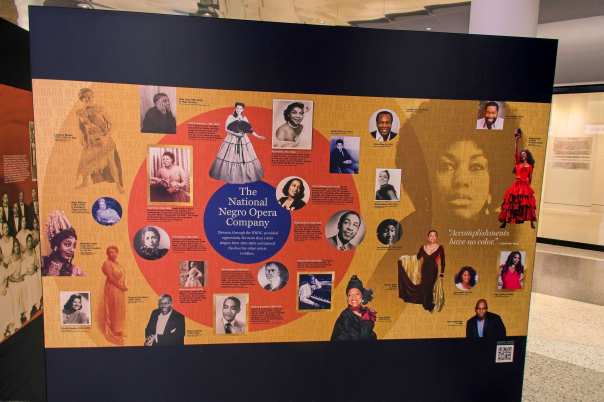
With numerous glitterati on hand from Charlotte’s African American community to celebrate opening night, Dawson, and Black History Month, the Parr Center lobby dazzled as never before. Just 15 minutes before the curtain was scheduled to rise, I encountered a roomful of beautiful people and formalwear; imposing billboard-sized exhibits of museum quality devoted to Dawson, the National Negro Opera Company she founded, and the luminaries of opera – and jazz – that she tutored; accessorized with video stretching from one entrance to the New Theater to the other. All the bells, whistles, and glamor you could want, with a live bass and alto sax duo playing Charlie Parker bebop in the background.

The production was certainly equal to the new hall. Accompanied solely at this point of its development by pianist Gregory Thompson, The Passion would seem smallish at Belk Theater with its cast of four and an orchestra of one. Unfortunately, the Seaton-Simon creation also struck me as too small for Dawson, its subject, and too small for Graves, its star. With a sympathetic director like Kimille Howard already on board, and Op Carolina’s set designer demonstrating fresh possibilities with his wonderful projections on the upstage wall, the avenues are certainly opened for a fuller exploration of Dawson’s talents and achievements.

Seaton places all of the action in Pittsburgh, mostly at the headquarters of Dawson’s company on Apple Street, in a studio upstairs from her husband Walter’s electric company. Her compressed timeline results in a format that wavers between masterclass and a professional rehearsal. On one side of the stage, Thompson presides at a Steinway, and at the other, we see three humble chairs that might be occupied by students in a Dawson masterclass. If the libretto were allowed to breathe a little, the curtain would rise on the three students we will see, either seated and ready to perform or engaged in conversation, giving Simon – composer-in-residence at the Kennedy Center in DC – a chance to begin penning some recitative, and giving Graves a grander entrance.

Alas, this is a rehearsal of Bizet’s Carmen on the day that the Negro Opera Company’s production is set to premiere on a floating outdoor stage by the shore of one of Pitt’s famed three rivers. This setup gets more improbable as the story unfolds, undercutting Dawson’s wisdom as a performing artist, an opera director, and a business person. Would an operatic director allow her performers to risk overtaxing their voices by rehearsing on the day they perform? Wouldn’t the entire cast be summoned to a last-minute rehearsal? Wouldn’t it be in full dress? Wouldn’t standard rep like Carmen be so far under the belts of professional-grade singers that their director wouldn’t feel compelled to instruct them on how to present Bizet’s music or penetrate to his protagonists’ cores?

By heightening her drama on the day of the opening, Seaton actually manages to be more unflattering to the Dawsons. A rainstorm is raging across Pittsburgh, threatening the cancellation of tonight’s outdoor performance and the ruination of Dawson’s company. Administrators at Spoleto Festival USA and ticketholders from around the globe would laugh out loud at the notion that a scheduled outdoor production would bring in national and international stars to Charleston without making contingency plans for bad weather beforehand. Not sound judgment for Dawson or her husband, who handled her company’s business end.

Of course, Seaton’s scheme makes it easier for The Passion to have legs, because the roles of Dawson’s singers – Isabelle as Micaela, Phoebe as Carmen, and Frank as Don José – only need to be versed in their presumably familiar Bizet music rather than having to learn anything written by Simon. Even so, Diana Thompson-Brewer as Isabella, Ladejia Tenille as Phoebe, and Johnnie Felder as Frank, are all forced to look and sound slightly amateurish at times during their lamentably brief moments in the spotlight. Howard helps them all out from her director’s chair, occasionally obliging Graves to be a bit fussier – and a lot more prudish – than Seaton may have imagined Dawson when she wrote the script.

I was most impressed by Felder in the tenor role, and wondered how much his superiority might have figured in Seaton’s concept or Howard’s casting. Most of Graves’ vocal coaching, after all, is reserved for the younger women onstage and the music she has excelled in all the way the Metropolitan Opera, Covent Garden, and the Vienna Staatsoper, to name a few – so it would be a pity not to hear Graves in this repertoire while we have her here and not perceive her superiority to Dawson’s protégées. The diva and the drama deserve that. Simon’s music, scant as it is, is also worthy of Graves. Those two arias, when Dawson is alone with her thoughts and later when her class/rehearsal is done, both have the qualities of the best arias sung at Spoleto’s production of Barber’s Vanessa last spring.

A fuller version of The Passion of Mary Cardwell Dawson would be a full-length opera with a fuller view of Dawson as a singer, teacher, and impresaria. Ideally, it would take us back to the North Carolina native’s childhood and the foundations of her love for music and opera, but we should at least cover the arc of Dawson’s founding of her company, a more substantial exploration of her teaching methods and philosophy, and a nicely drawn arc of her prize students’ development into professional opera singers that do full credit to Dawson and her pioneering company in their Carmen. A full opera company at the end – with a fuller orchestra – would bring the entire enterprise up to scale. Make no mistake, though, this handsome Opera Carolina production is an exciting coup for Charlotte and a compelling argument for Denyce Graves’ project to reach its fullest fruition.

BNS Conquers Adversity in Opening of Speakeasy, Shining at the New Parr Center

Review: Speakeasy by Rory D. Sheriff

 By Perry Tannenbaum

2023~Speakeasy-15

February 17, 2023, Charlotte, NC – Quick adaptation and a be-ready-for-anything state of mind are key survival tools for any performer who ventures into the minefield of live performance. But as opening night for BNS Productions’ Speakeasy inched closer, booked for this weekend at the new Parr Center – where no local theatre company has performed before – Charlotte’s preeminent black repertory company stepped on an explosive they couldn’t avoid. Just before the three-day run was scheduled to begin, one of their lead players came down with COVID.

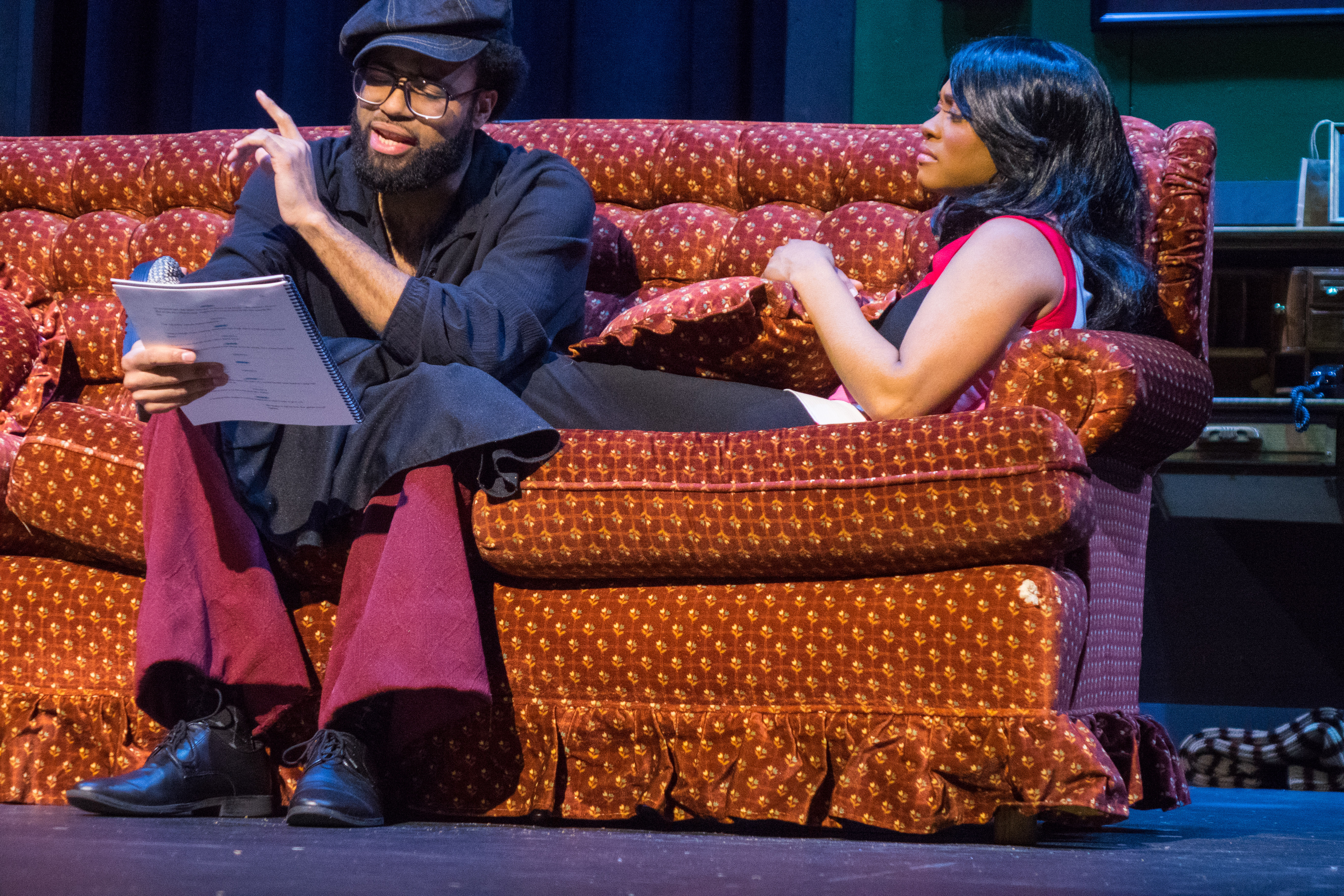
Rory D. Sheriff, the author of the new script and founding artistic director of BNS, was forced to shuffle his cast, elevating Marcus Looney from a minor role to leading man while stepping into the vacated role himself. Both of these actors appeared on opening night, turning what would ordinarily be termed a workshop production into a rather fancy reading stage effort, enhanced by the scenery and lighting (also by Sheriff) we would expect in a full production, with six of the eight cast members off-book.

A couple of the main themes in Sheriff’s new work, starting over and working together to save the day, mesh well with the behind-the-scenes tumult. After leaving her abusive husband, Virginia is hoping to make a new life for herself – without a man, for a change – back at her dead parents’ home in 1978 Reading, Pennsylvania. Doing this her way is hindered by her wanton sister Marge, who is tirelessly “pimping” the newly-available Virginia around town, and the inevitable pursuit of men who have heard about the breakup.

The most aggressive of these is Percy, the horny neighborhood cable guy. On top of that, while leering at Marge, the mailman delivers an alarming formal letter informing Virginia that her parents left their property taxes unpaid for over 10 years. She must quickly come up with over $1000 or get out. Older brother Roosevelt, a starchy preacher man, would much rather sell the place than provide her sister with the balance.

Well, if you already have a cable guy and a mailman knocking at your door and salivating, Marge proposes that Virginia do the next best thing to prostituting herself: jointly turning the family homestead into a speakeasy, where local men can pay out to enjoy the sisters’ company in exchange for alcoholic beverage, assorted snacks, and free cable TV, courtesy of Percy. Prohibition hasn’t returned to Pennsylvania, but the sisters can’t legally peddle booze without a state license.2023~Speakeasy-09

A volatile triangle develops before intermission as Percy feels entitled to take further advantage of Virginia, spending the night and tiptoeing out the back door with the speakeasy’s take. Hard to report a crime like that to police. Virginia might have a white knight willing to champion her cause, a Winston-Salem refugee named Horse who has fallen hard for her, but she keeps pushing him away even after he wins Marge’s sincere endorsement. Cecilia McNeill has taken on a very conflicted role in Virginia, earning our empathy with her troubles while drawing our impatience – and occasionally our annoyance – with her negativity and her deafness to what Marge, Horse, and her own heart are telling her about her new beau.

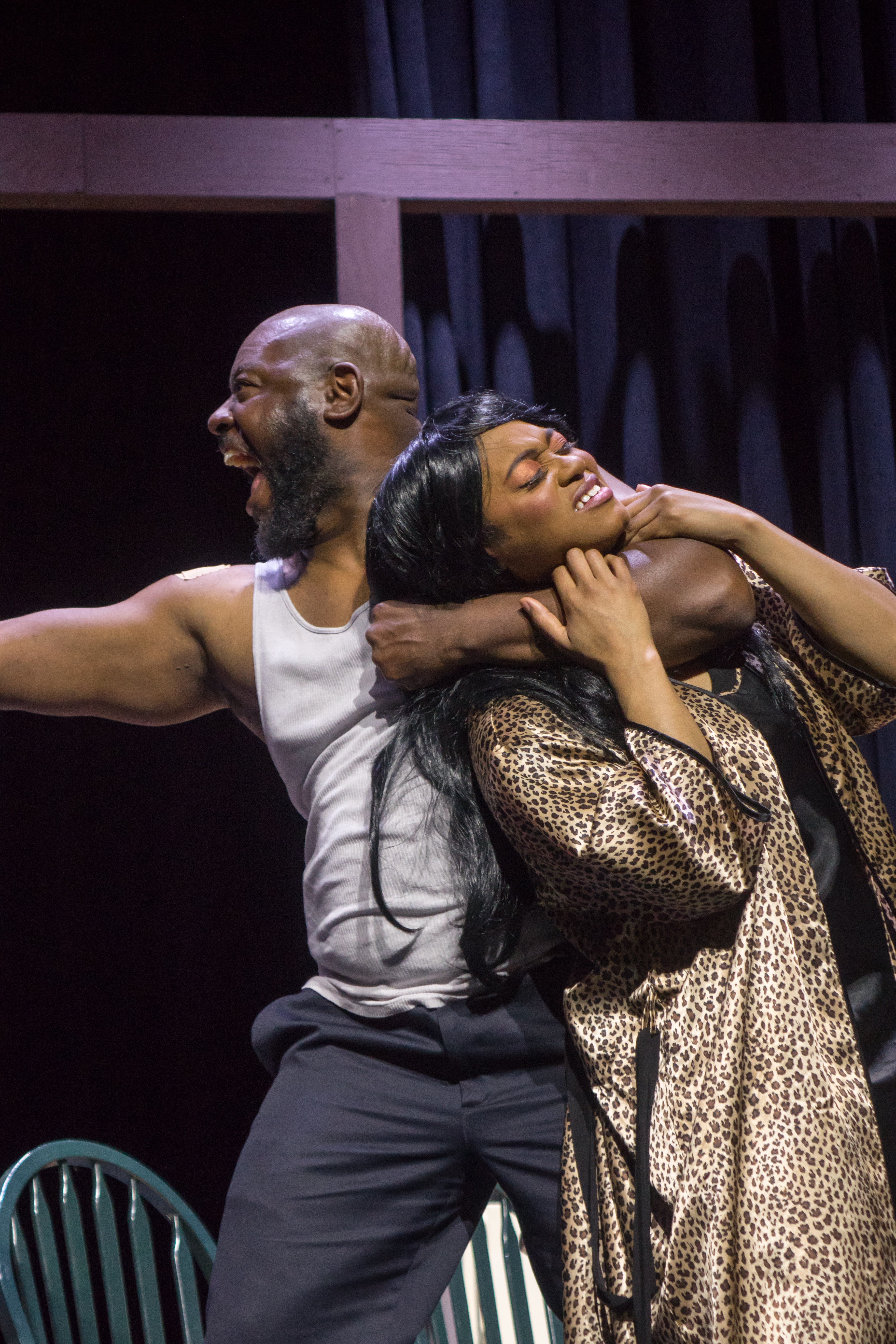
McNeill carried it all off rather brilliantly in her auspicious debut if you consider how little time she had been given to acclimate to Looney as her co-star and how often her true love had to gaze downwards at his script. It was hugely helpful that Looney was off-book when he made his first entrances through the back door to the sisters’ speakeasy, and that after intermission, when he always had his script with him, he prioritized memorizing those lines where Horse should be gazing most intently at Virginia instead of the script. Otherwise, the role never appeared to be beyond Looney’s depth. A lingering photo at the BNS website of Jonathan Caldwell, originally cast as Horse, made me think that Virginia’s worries about him tossing her over would be more credible if he were there. If it were Caldwell standing up to Tim Bradley as Percy when the action peaked, I also suspect that it would have looked more like an equal match and not as brave or quixotic.2023~Speakeasy-12

Such alterations are always the byproduct of casting different actors in the same role. Sheriff can make peace with them or he could possibly like them better, but I’m sure that he would hate to discard Bradley with his imposing presence and his boisterous vulgarity. Horse the outsider and Percy the loose cannon are the two men that remind me most readily of the American Century drama cycle by August Wilson, an inspiration that Sheriff candidly acknowledges. Having appeared in three different BNS productions of Wilson’s dramas – and importing an extra roar from the title role in Sheriff’s Be a Lion – Bradley straddles those two realms magnificently, a lowlife rascal who can be quite formidable and menacing.

Alana Jones, Bradley’s slinky consort in Lion, is a bit over-directed and overly frisky here as Marge, her broad comedy projecting far beyond the stage and hall to faraway Gaston County. But the audience adored her, so Jones will likely continue mincing around her speakeasy like a cartoon cat. The contrast is certainly effective when she becomes candid and caring with Virginia. A bit of a clothes horse, Jones is my prime suspect for slowing down scene changes, for costume designer Dee Abdullah’s ample wardrobe has her feverishly changing costumes whenever she’s not sashaying onstage. I’d be surprised if she wears less than five get-ups, but the guys also have multiple outfits.

All the guys are nicely seasoned and excellent, providing additional Wilson flavoring. Dominic Weaver as Roosevelt puts a nice soft spot for Virginia in the middle of his sanctimonious hauteur that we can see from the beginning, when the upright minister is difficult, obstinate, and stingy. In his BNS debut, Andrew C. Roberts gives us some meaty civil-rights-movement context in a powerfully delivered monologue, although it seems to come from nowhere. James Lee Walker, II, has done so many uniquely stylish roles for BNS and other companies around town that I was not at all surprised to see him shine – in one scene literally shine in a glittery shirt.

A bit of the stilted dialogue we heard an opening night will likely vanish as Sheriff refines his script, and more variety in how extended monologues are staged and lit will likely materialize in the hands of a defter director. For starters, the guys might explicitly confirm what card game they’re playing at the speakeasy and which Ali fight they’re watching on TV. Feedback that Sheriff receives from this workshop edition will likely help him to sharpen his characters’ sparring and deepen their drama. He and BNS are off to a great start at their new venue.

“Sunlight and Solstice” Balances Seasons, Continents, and Testaments

Review: CP Dance Theatre’s Sunlight and Solstice

 By Perry Tannenbaum

2022~Sunlight and Solstice-06

December 2, 2022, Charlotte, NC – Compared with Charlotte Youth Ballet’s annual production of Tchaikovsky’s beloved Nutcracker, Central Piedmont Dance Theatre’s fall presentation, Sunlight and Solstice, drew only a small fraction of the huge crowd that converged on the CP Community College campus for the second weekend of the 2022 holiday season. Yet the few of us who chose the less-ballyhooed event were rewarded with more new things to see, for Sunlight and Solstice delivered plenty of new choreography in its bouquet of seven dance pieces, and the program was staged at The New Theatre – in the spanking new Parr Center complex. Dance faculty members Clay Daniel and Tracie Chan each created three pieces for the auspicious event, working with their students to synchronize and refine their performances.2022~Sunlight and Solstice-08

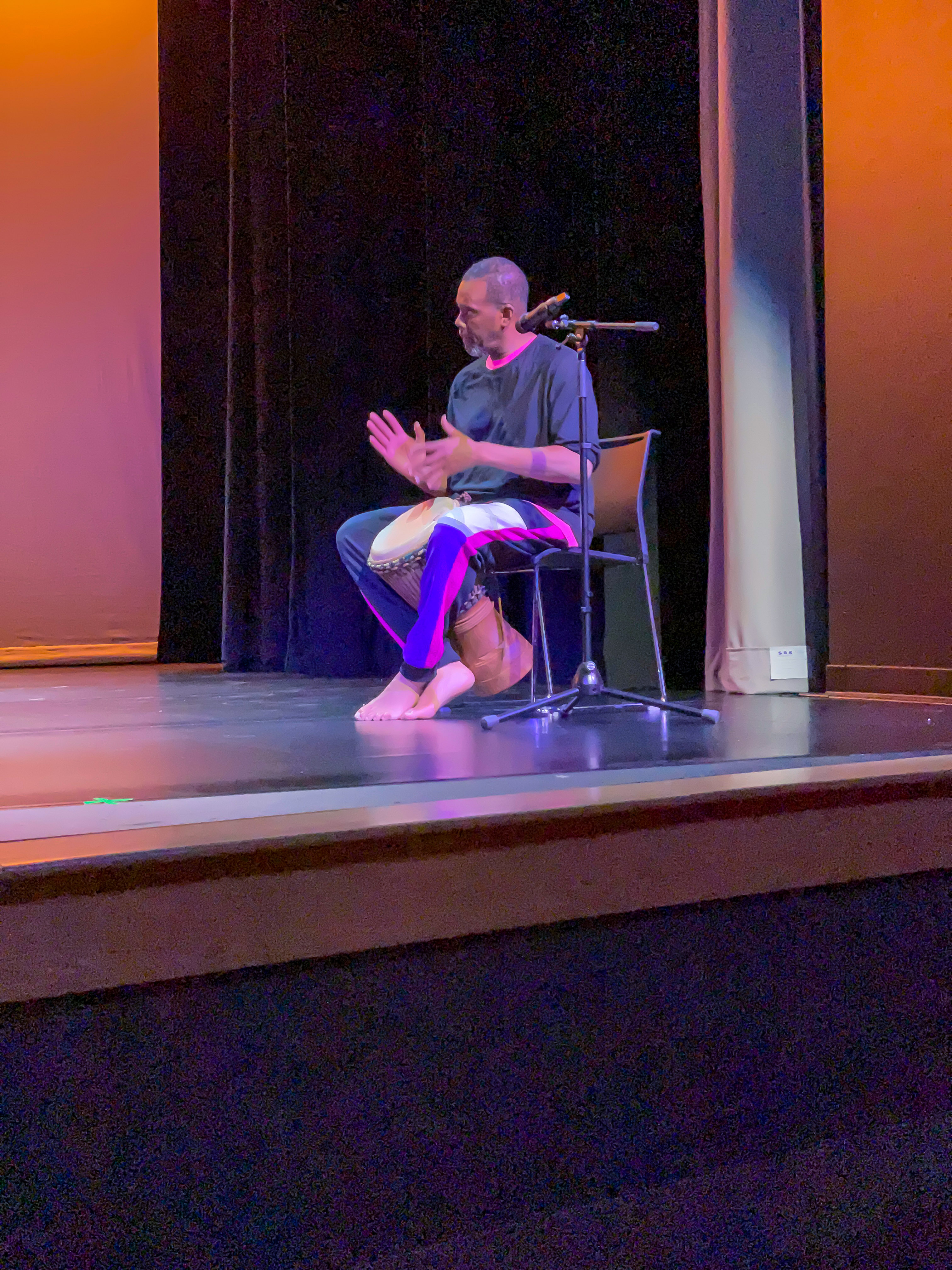
The program closed with a guest appearance from the Chris Thompson Cultural Ensemble, with live singing and drumming by their leader.

Sadly, the newness of the venue was underscored by the fewness of the audience. That increased my admiration for Daniel, who maintained his poise and geniality in handling his hosting chores. Without a printed program in our hands, you could say that Daniel’s intros were godsends, and as our host candidly disclosed, they also spread a convenient veil over the time needed backstage for costume changes between dances. Daniel was no less savvy in choosing his own 2014 settings for Shel Silverstein’s A Light in the Attic to start us off, for they provided a satisfying variety of little nuggets from the 1985 recording while introducing us to a wide swath of CP’s dance corps. Among the ten different vignettes, a couple as brief as 18 or 19 seconds, my favorites were “Bear in There,” “Homework Machine,” and “Monsters I’ve Met,” but all of these were decisively upstaged by “Eight Balloons,” which featured a helium balloon (an unbeatable prop) and an engaging array of dancers and movement.2022~Sunlight and Solstice-02

My first audition of the New Theatre’s sound system was a letdown after the brilliant impression made by the hall, the seats, and the sightlines. Silverstein’s poems should have been louder and clearer. Even more ominously, the backup music promised by Daniel was rarely audible. Replay at home on Spotify was necessary for me to confirm it was actually there.2022~Sunlight and Solstice-04

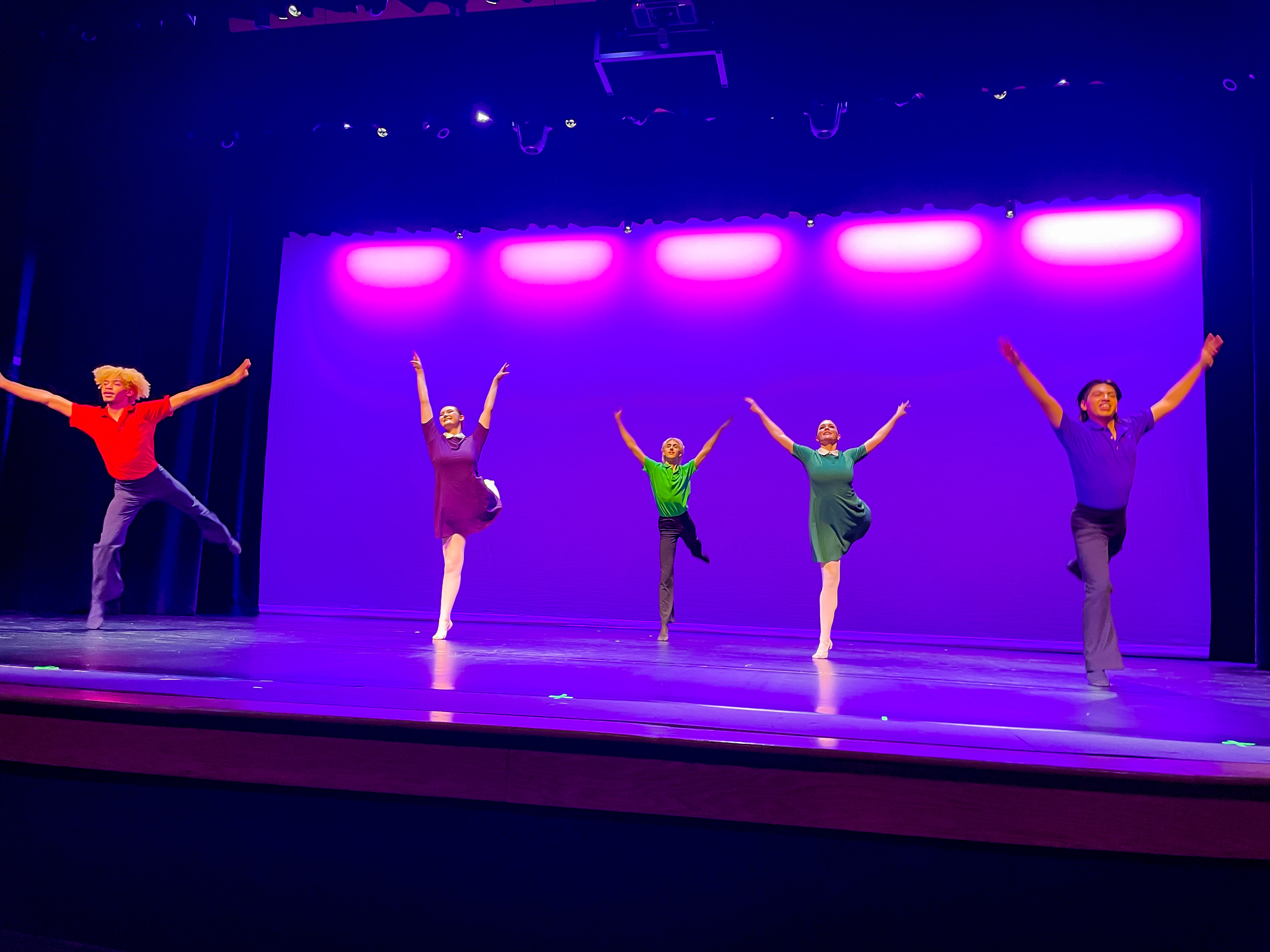
Nor was there instant redemption or revelation when the soundbooth cued up Camille Saint-Saëns’ Danse macabre for “Cadence,” the first of two Chan pieces that followed. Impact of the music was tepid rather than electrifying. The men who launched the dance were freer to move around than the more balletic women who came afterward, so the best of the work’s three segments was the last, when both groups joined together and movements emphasized leaps more than en pointe work. “Hannah” was an even more delightful piece, though I refuse to believe that Chan chose the best recording of “Hard-Hearted Hannah” she could find. On the other hand, Chan did choose Aubrey Conrad, her best and most alluring dancer, to portray the Vamp of Savannah, GA. Costumer Emily McCurdy dressed her in a tight, eye-popping red outfit to make sure we noticed. Backups (aged 17-69 as Daniel pointed out) were in slacks, their black tops besprinkled with coppery spangles.

A couple of interestingly varied Daniel pieces ensued, with music by JS Bach and Mark O’Connor. Their titles, Art of the Fugue and Appalachian Waltz, were sufficient to distinguish who composed what. Once again, Daniel’s programming was on-the-money, following the splashy éclat of “Hannah” with a piece for three men – Carson Fullwood, Dawsyn Ransome, and Nicolas Hare – more quietly titled “Prelude.” This agreeable trio also provided Conrad with extra time for a breather as well as the costume change she needed to reappear as the soloist in “Moonlit,” the dreamiest piece of the night.2022~Sunlight and Solstice-11

The perkiest piece of the night was undoubtedly Chan’s “Winter’s Frolic,” set to three choice cuts by the Vince Guaraldi Trio. Or maybe two choice cuts would be more accurate, since the choreographer’s musical taste could be questioned once again when she chose Guaraldi’s take on Beethoven’s “Für Elise” as the middle piece in her three-piece suite – not wintry, not frolicsome, and not typically Guaraldi, with no redeeming Christmas or Halloween spirit. The icy skating motif established by the dancers in “Skating” was stopped cold, thankfully returning with Chan’s finale. Somehow, Conrad managed another costume change to slip in among the six dancers, but it was Rieonna Weldon and Carson Fullwood who were featured.

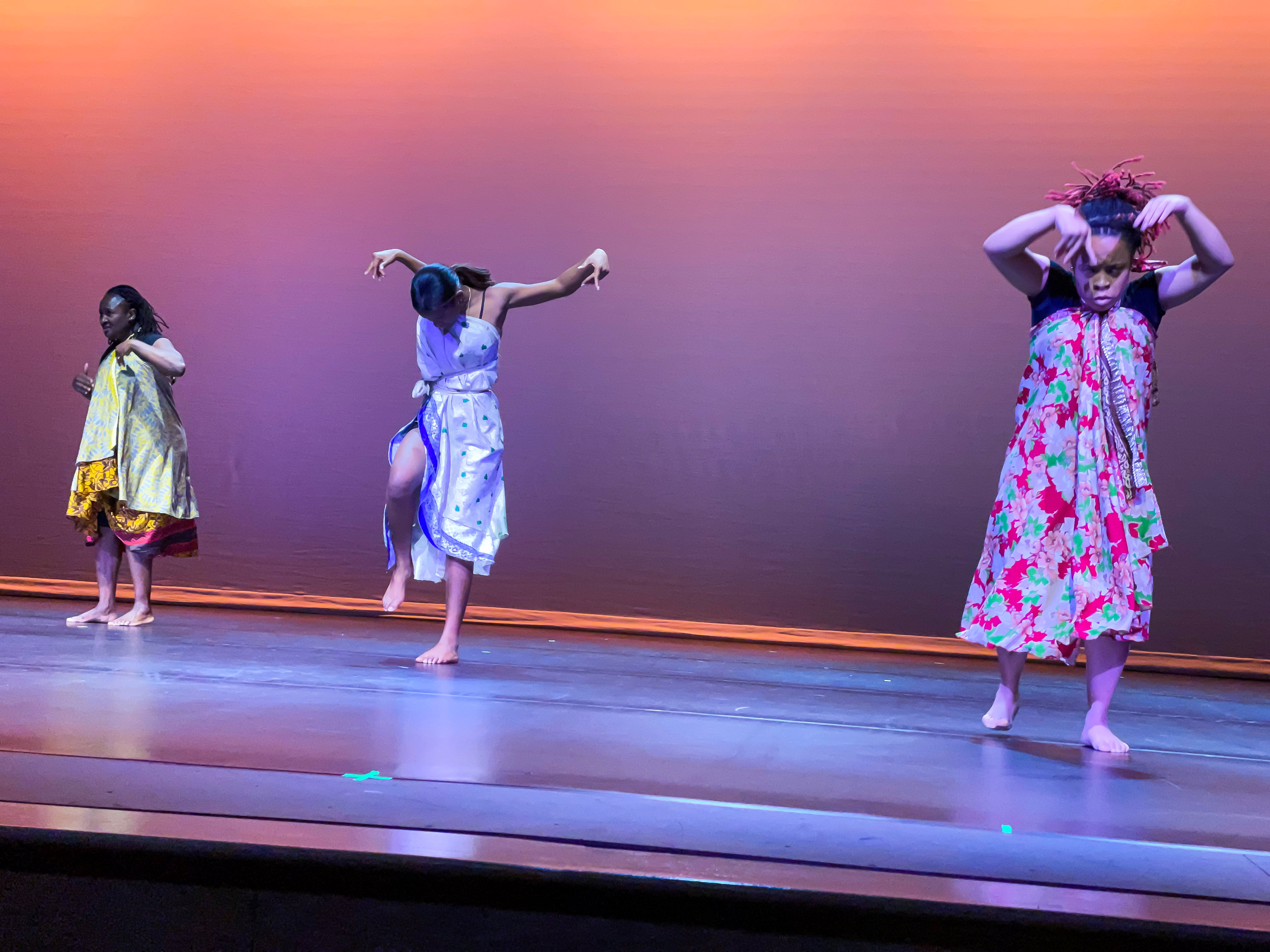
2022~Sunlight and Solstice-09

Whether it was the African style of clothing Chris Thompson’s dancers wore or the lighting shift behind them from the rich violet of “Winter’s Frolic” to a peachy sunset hue, “Rivers of Babylon” brought on the most sunshine of the evening and reminded us that there are two solstices. With Thomson beating out rhythm on his drum, we could readily feel transported from winter to summer as his three dancers – Micheline Ruffin, Erika Guzman, and Briana Hubbard – moved gracefully onto the brightly-lit stage. Then it all came together as Thompson sang the reggae song: summer meshed with winter, one solstice followed another, and the words of an Old Testament song were sung in the season of the New Testament’s most joyous holiday.