Tag Archives: Christopher Warren-Green

With a Riddling Program, Sphinx Virtuosi Youthfully Inspire Symphony’s Gala

Review: Sphinx Virtuosi @ Charlotte Symphony’s Annual Gala

By Perry Tannenbaum
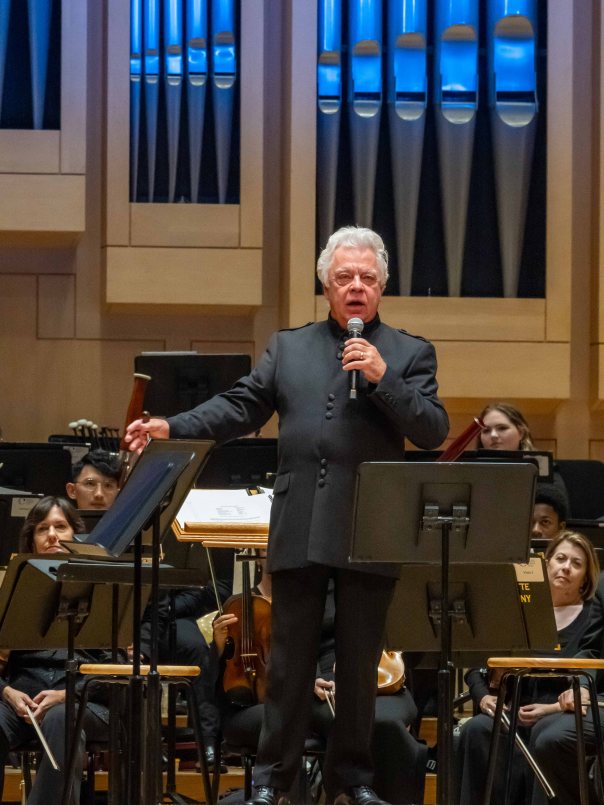
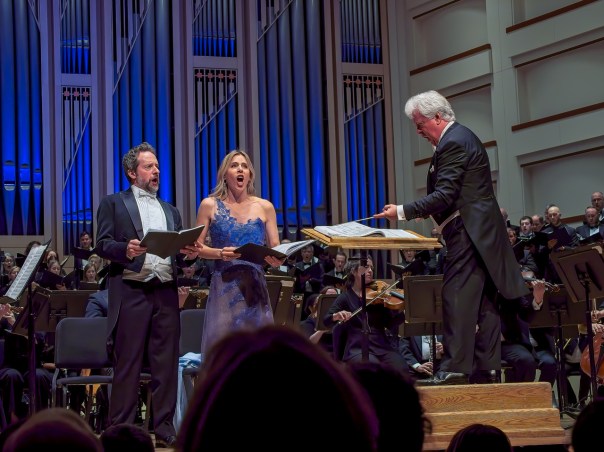
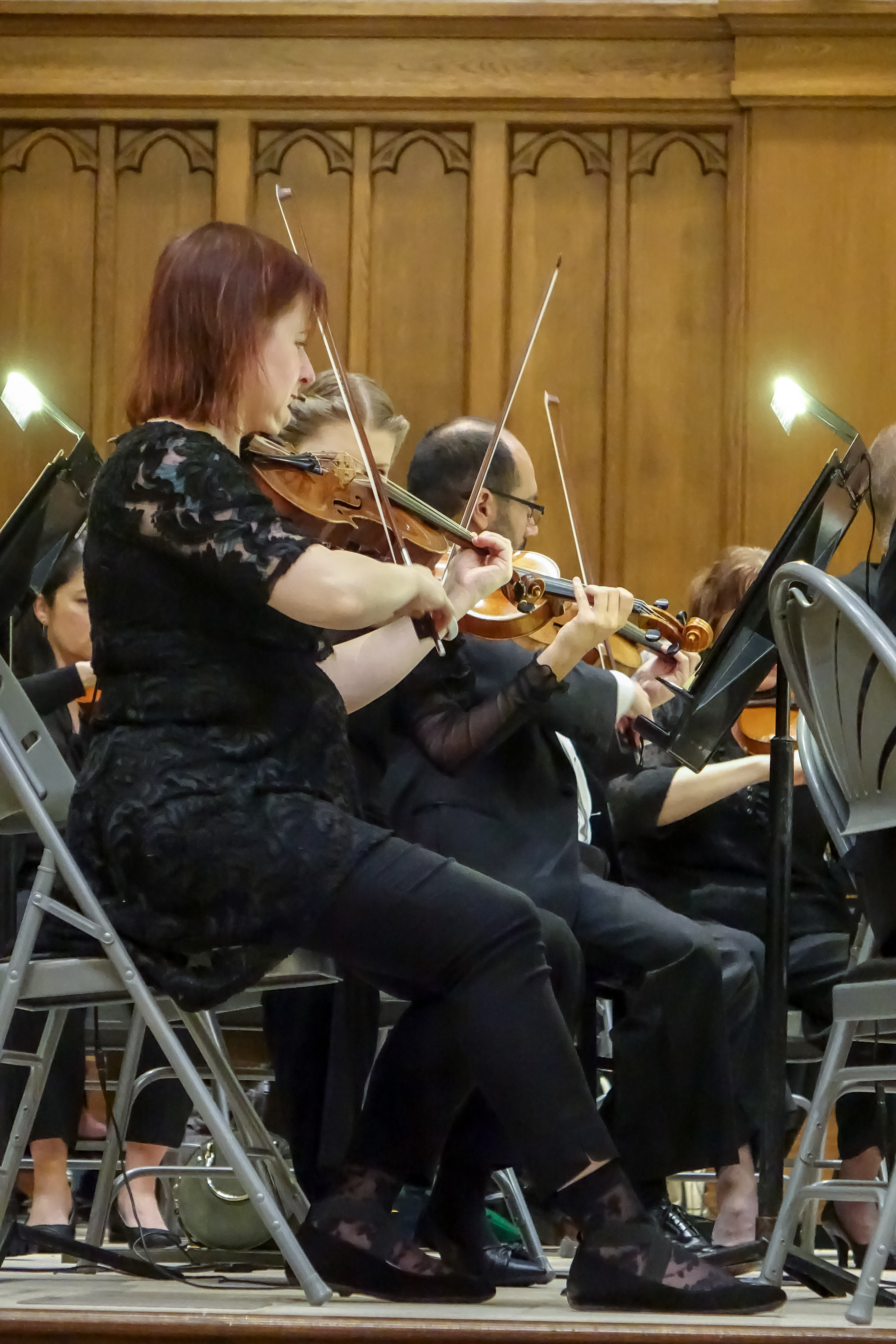
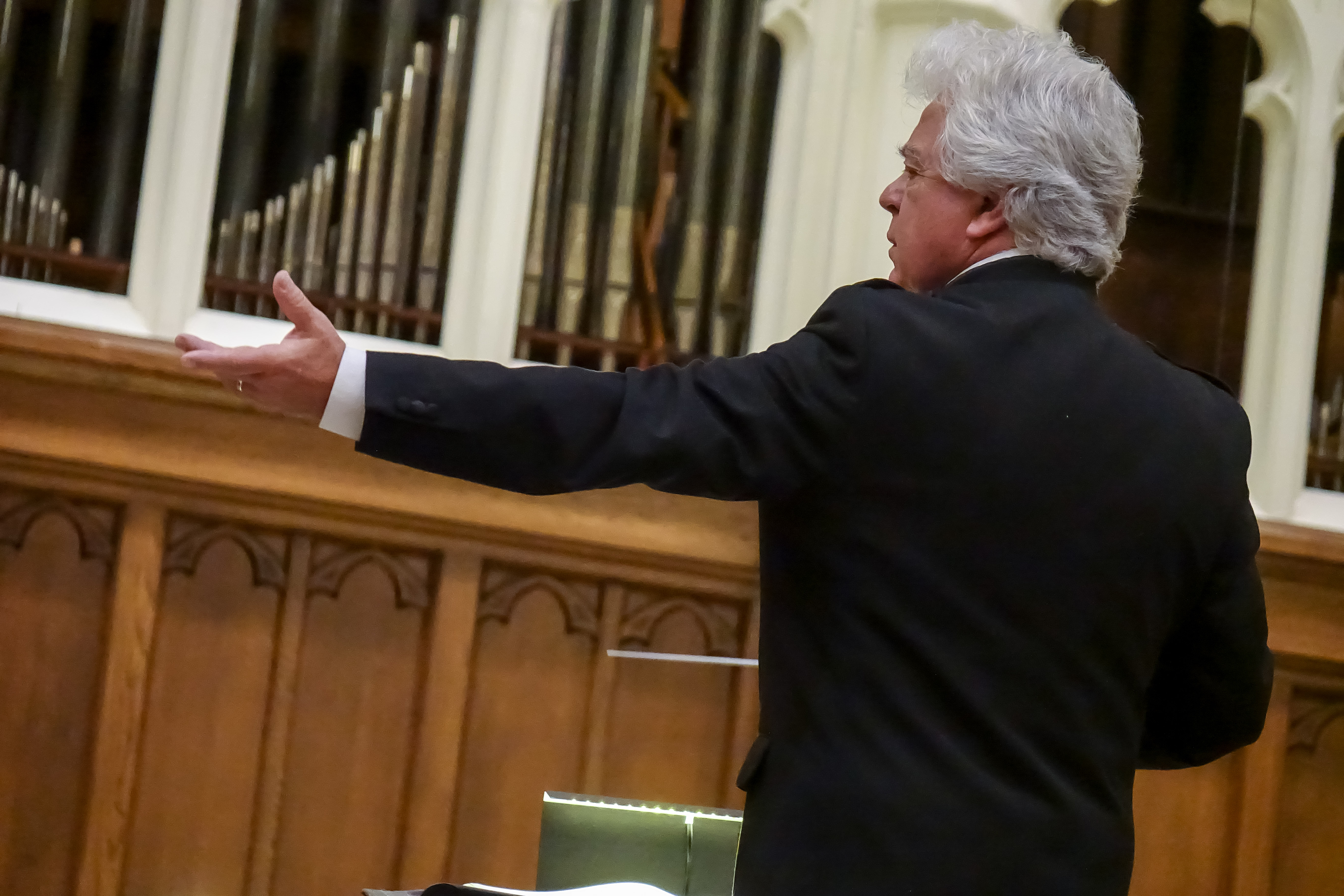
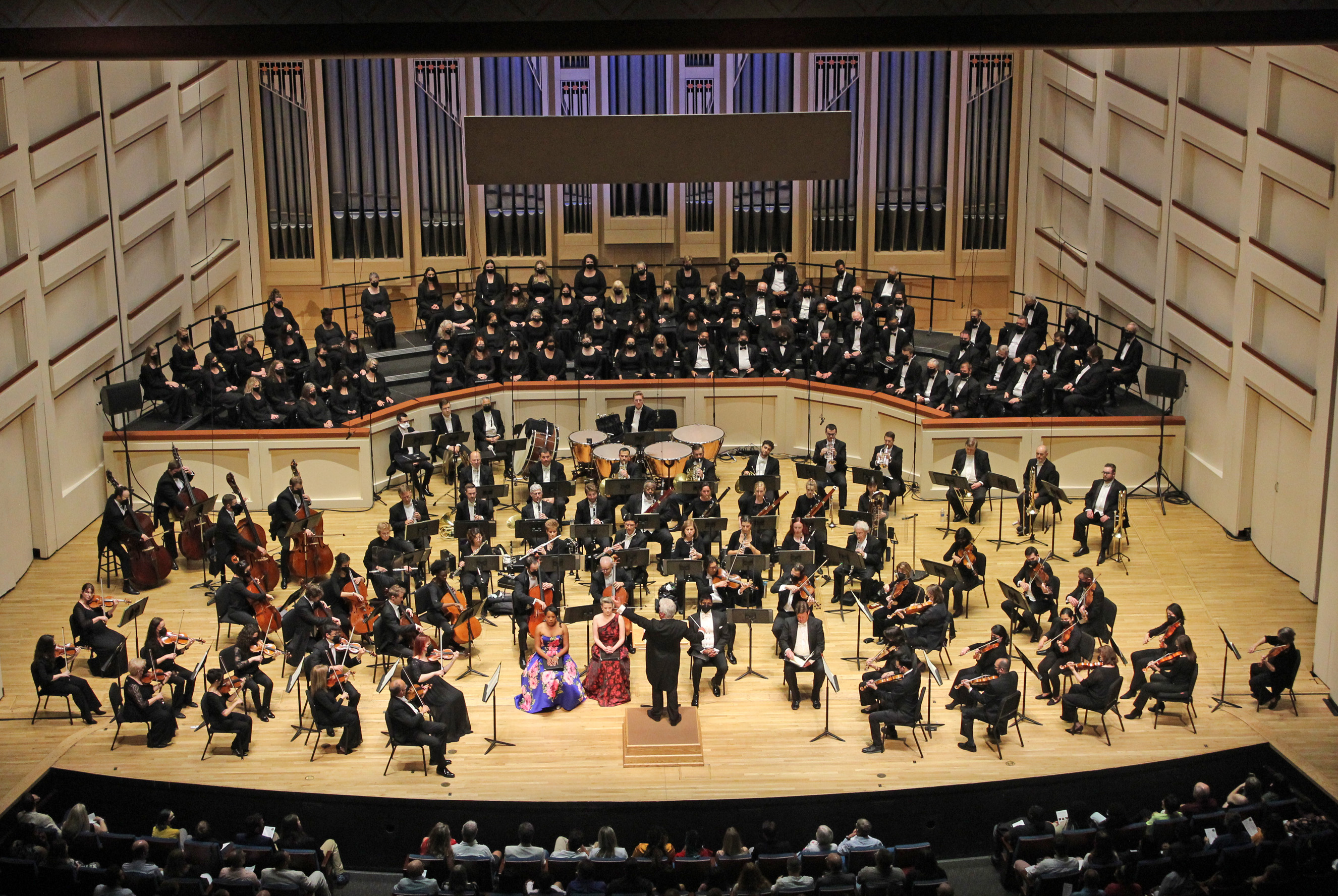
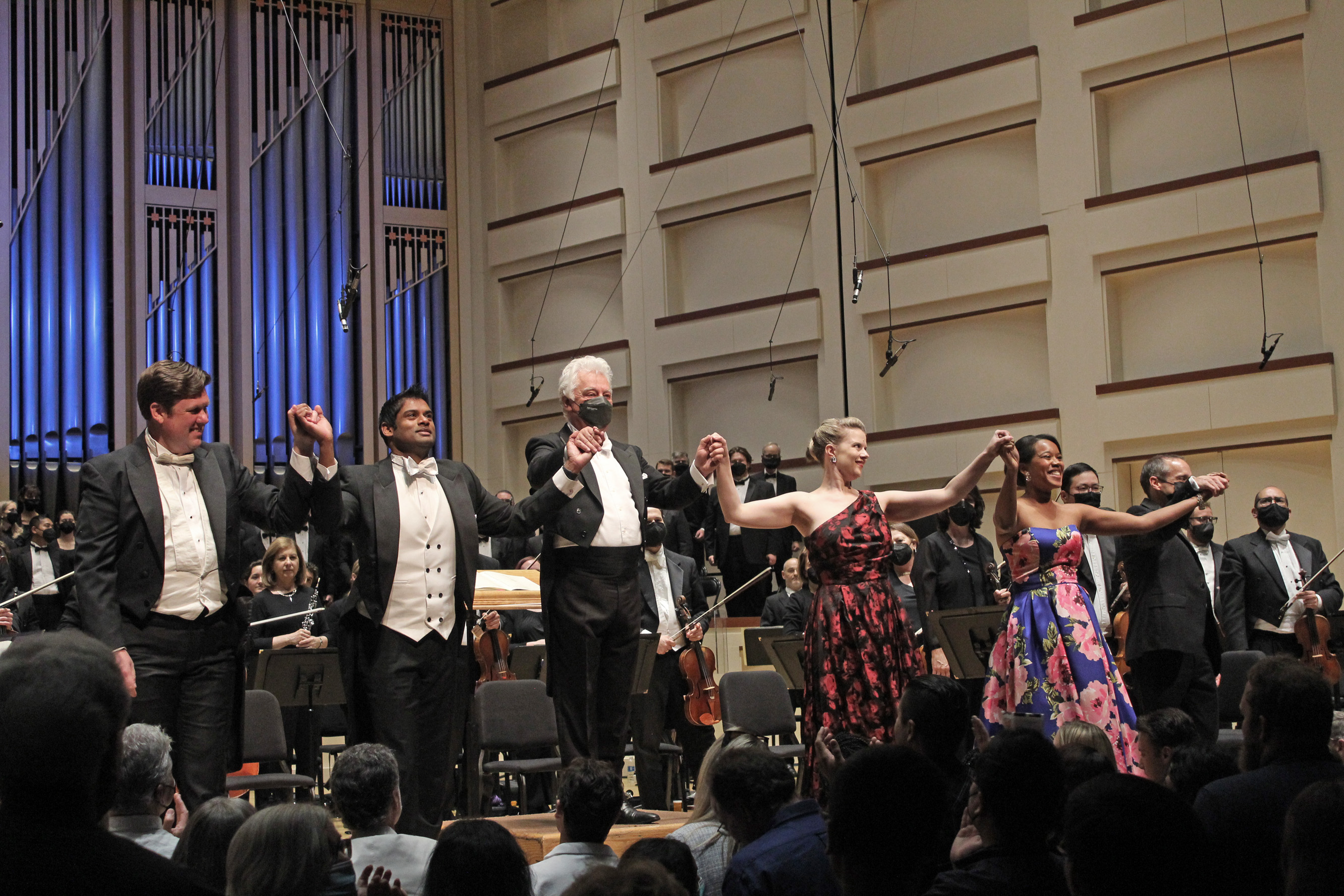
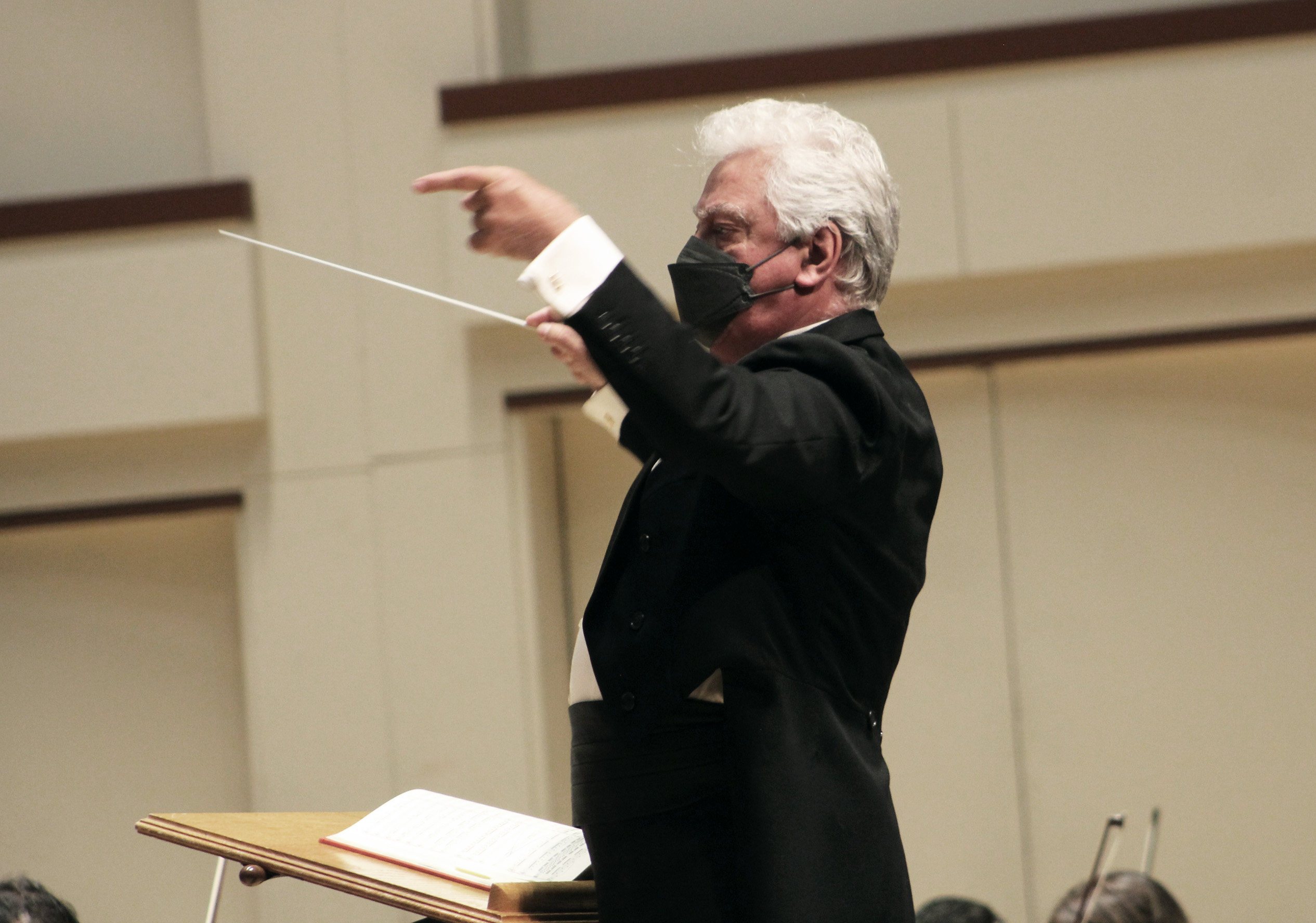
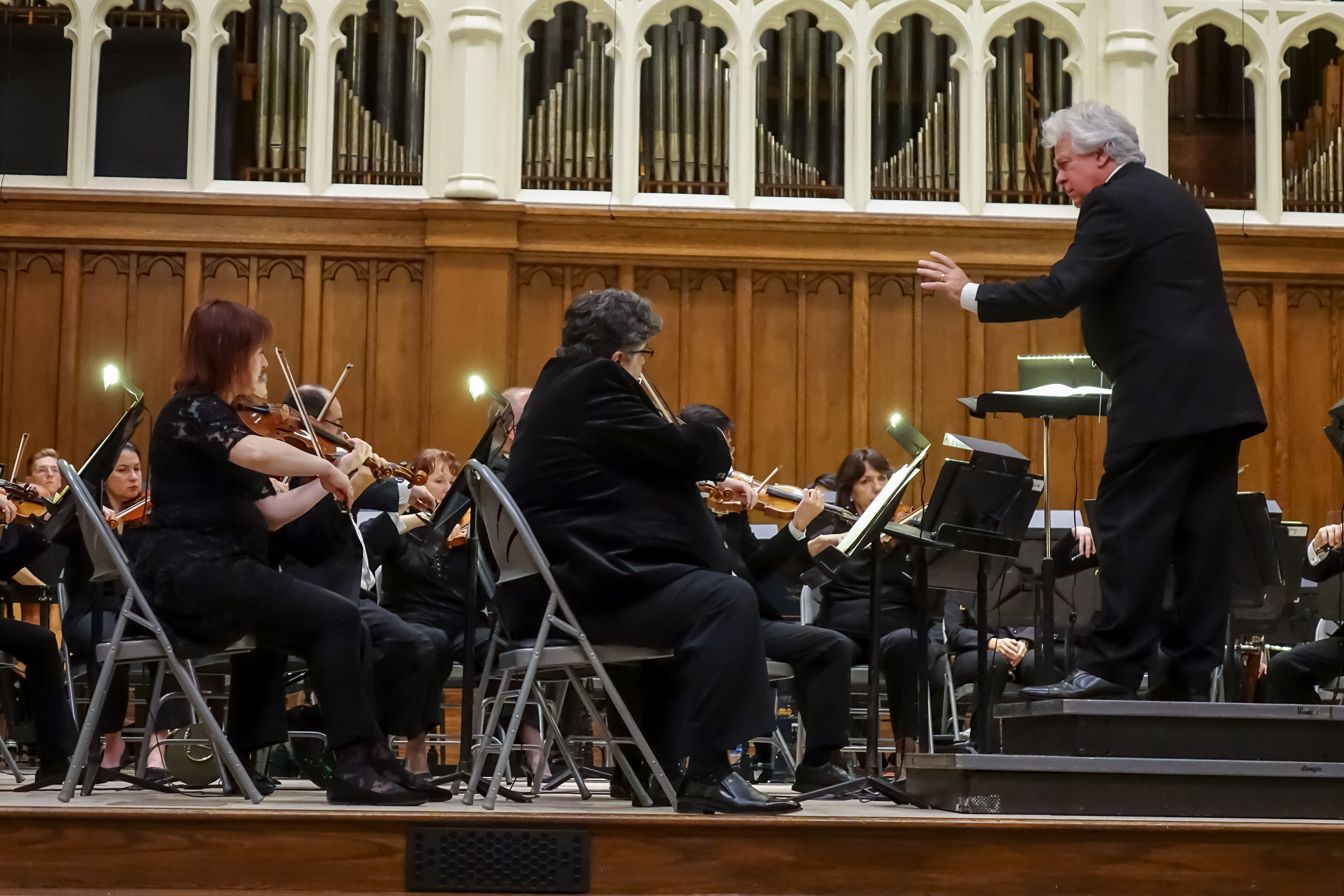
October 9, 2024, Charlotte, NC – It’s always encouraging when an annual gala at least partially sheds its patrician aura of black ties, ball gowns, and champagne toasts. So I heartily applauded Charlotte Symphony’s musical director emeritus Christopher Warren-Green when, instead of mentioning crass sums of moneys raised or needed, he notified us that a part of tonight’s proceeds would be sent to those in dire straits in Western North Carolina in the wake of Hurricane Helene. In an even more unexpected gesture, the evening’s guests, Sphinx Virtuosi, announced that they would linger in Charlotte to play an additional concert on Friday at Charlotte Preparatory School – free if you bring a Hurricane Helene contribution.

They all worked well, together and apart, in gifting the gala audience at Belk Theater with a fine show, though not exactly what was initially planned. Or even what was listed in the printed program. Instead, a series of changes to the program were announced by email before and after the program went to press. Even then, a couple of new wrinkles emerged after the lineup seemed to be settled in the last inbox update on September 19. Maybe the plutocrats who dined and toasted earlier at the pre-concert cocktail and dinner sessions got a heads-up.

As a result of the first alteration, changing the title of LA-based composer Levi Taylor’s from American Forms to Daydreaming (A Fantasy on Scott Joplin), the opening segment of the concert became an explicitly extended tribute to Joplin. Actually, the Overture from Joplin’s only surviving opera, Treemonisha (1911), was nearly as new as Taylor’s offering and similar in length. The orchestration chosen by Warren-Green, arranged by Jannina Norpoth with Jessie Montgomery (a Sphinx Medal of Excellence winner in 2020), was premiered last year in Toronto as part of a “reimagining” of Joplin’s opera, so it didn’t quite sound like any of the handful of versions that Spotify can offer. Principal clarinetist Taylor Marino was brilliant playing the catchy recurring theme, an instrumental assignment that Norpoth reaffirms, but principal trumpeter Alex Wilborn’s spot struck me as a lively improvement upon Norpoth’s predecessors.

In a shorter, no-intermission program, it was nice to have a proper mood-setter leading into Taylor’s premiere – and Sphinx Virtuosi’s entrance – rather than a genial throwaway aperitif. Paradoxically, the Joplin overture, aimed for an opera house, was not as raggy as Taylor’s new work, an homage to the Joplin music we’re most familiar with. Personably introduced by cellist Lindsey Sharpe, the piece had an engaging solo spot for principal cellist Tommy Mesa and a refreshing jauntiness. Amazing how much more highbrow and classical the Joplin idiom sounds when you ditch the piano so justifiably associated with the “King of Ragtime.” Taylor took a well-deserved, enthusiastically applauded bow when concertmaster Alex Gonzalez pointed him out in the audience.

Sphinx’s outreach to Helene victims is quite natural when you consider its DNA. Conceived in Ann Arbor at the University of Michigan in 1997, Sphinx quickly became an important of young Black and Latino talent with its annual junior and senior competitions, open to musicians up to age 26, and its Performance Academy, a competitive boot camp, where faculty members include Norpoth, Gonzalez, and second violinist Rainel Joubert – who would play in the Delights and Dances string quartet when the Michael Abels composition, commissioned by Sphinx, had its Charlotte premiere.

The full ensemble departed – all too briefly – as Warren-Green and CSO delivered a more familiar Leonard Bernstein overture to his opera, Candide. If Sphinx had lingered offstage longer, the CSO performance might have been more prudently paced. Dynamics were OK, but when piece started off too swiftly, there was little room for Symphony to speed up when the piece thundered and thrust to its climax. The whole acceleration plus crescendo effect, so exciting in multiple Rossini overtures, was never even a possibility, surely the nadir of Warren-Green’s work with CSO as far back as I can remember.

Then the listed world premiere of Curtis Stewart’s Drill went AWOL, along with guest percussionist Britton-René Collins. This surprise was less of a disaster than the lackluster Bernstein, for the Sphinx Virtuosi returned instead with Samuel Coleridge-Taylor’s Allegro Moderato, the opening movement from his Four Novelleten (1903) for string orchestra. So many of Coleridge-Taylor’s principal works have yet to be recorded that it’s probable that this excavation, listed as Op. 59 in Wikipedia, has yet to get a hearing outside of Sphinx’s orbit – another gladdening example of the ensemble’s vital and generous outreach.

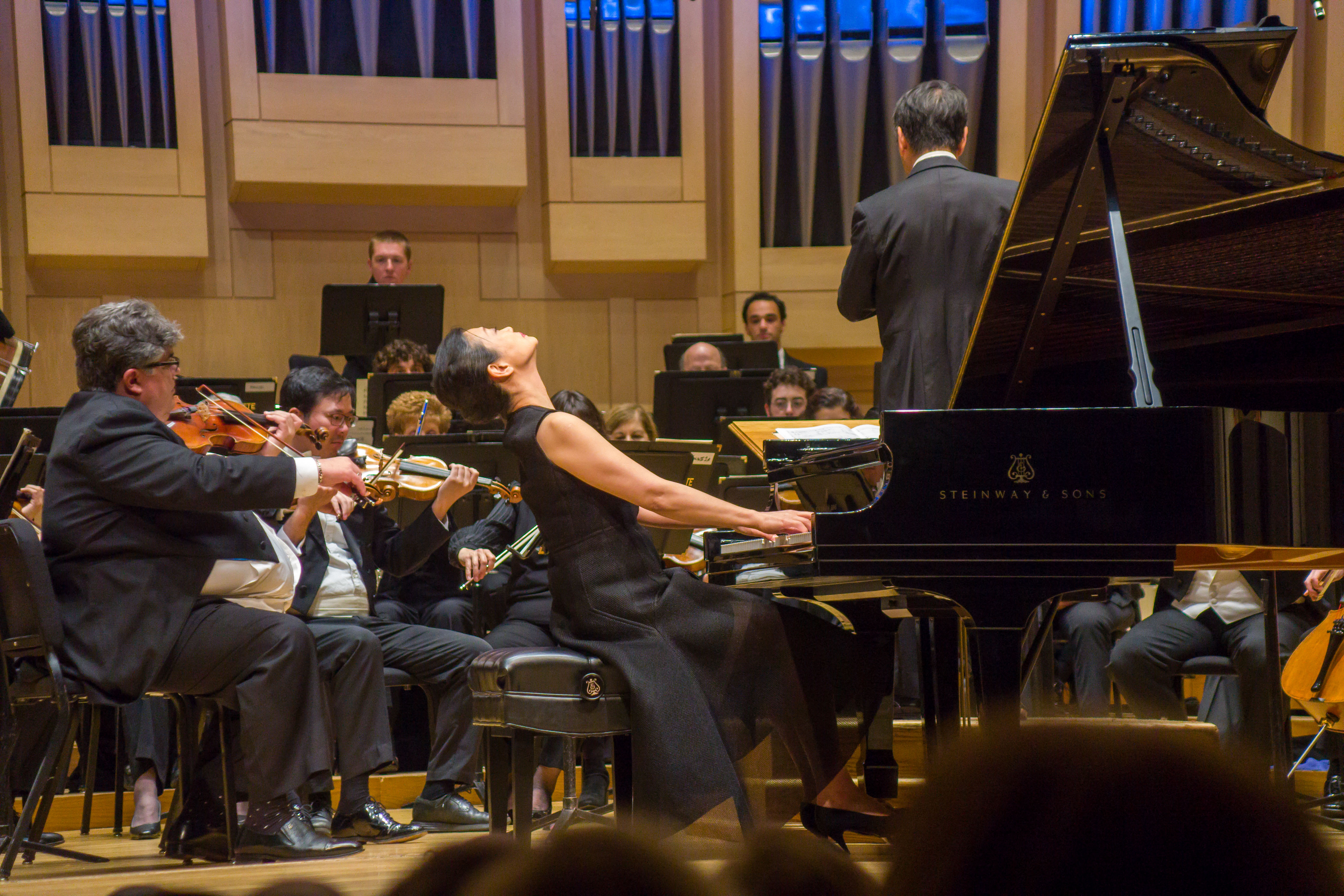
All the remaining works were glorious, throwing the Bernstein blooper far into our rearview mirrors. It helped a little to know your Vivaldi when Sphinx moved upstage to merge with the CSO as tango king Astor Piazzola’s “Verano Porteño (Buenos Aires Summer)” movement from his Four Seasons of Buenos Aires filled the stage with violinist Adé Williams as guest soloist. For those who saw Aisslinn Nosky playing the complete Vivaldi at the Charlotte Bach Festival, the Piazzola Four Seasons evoked some pleasant nostalgia, especially since the Festival Orchestra, like the Virtuosi, often performs without a conductor.
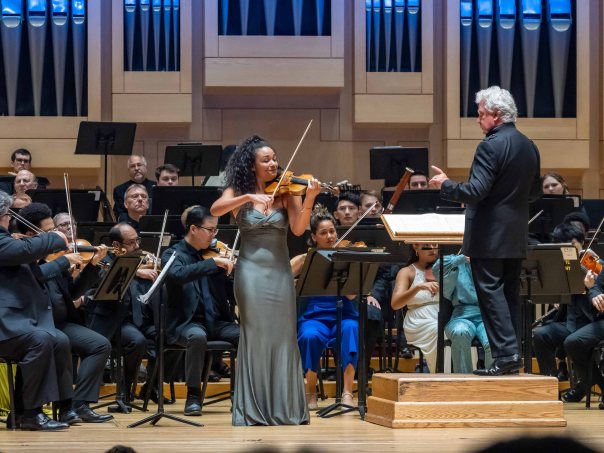
Williams, a winner of the Sphinx Junior Division back in 2012, still played with youthful vitality and joy. Both Symphony and Warren-Green were obviously fond of her playing, her swooping glisses, and the tango twists Piazzola brought to his baroque inspiration. Controversial in Argentina for his modifications of the trad tango – cab drivers often turned him away! – this summer piece was popular enough for Piazzola to draw encouragement for him to complete his seasonal cycle. The Belk audience responded favorably as well, with their first standing O of the evening.

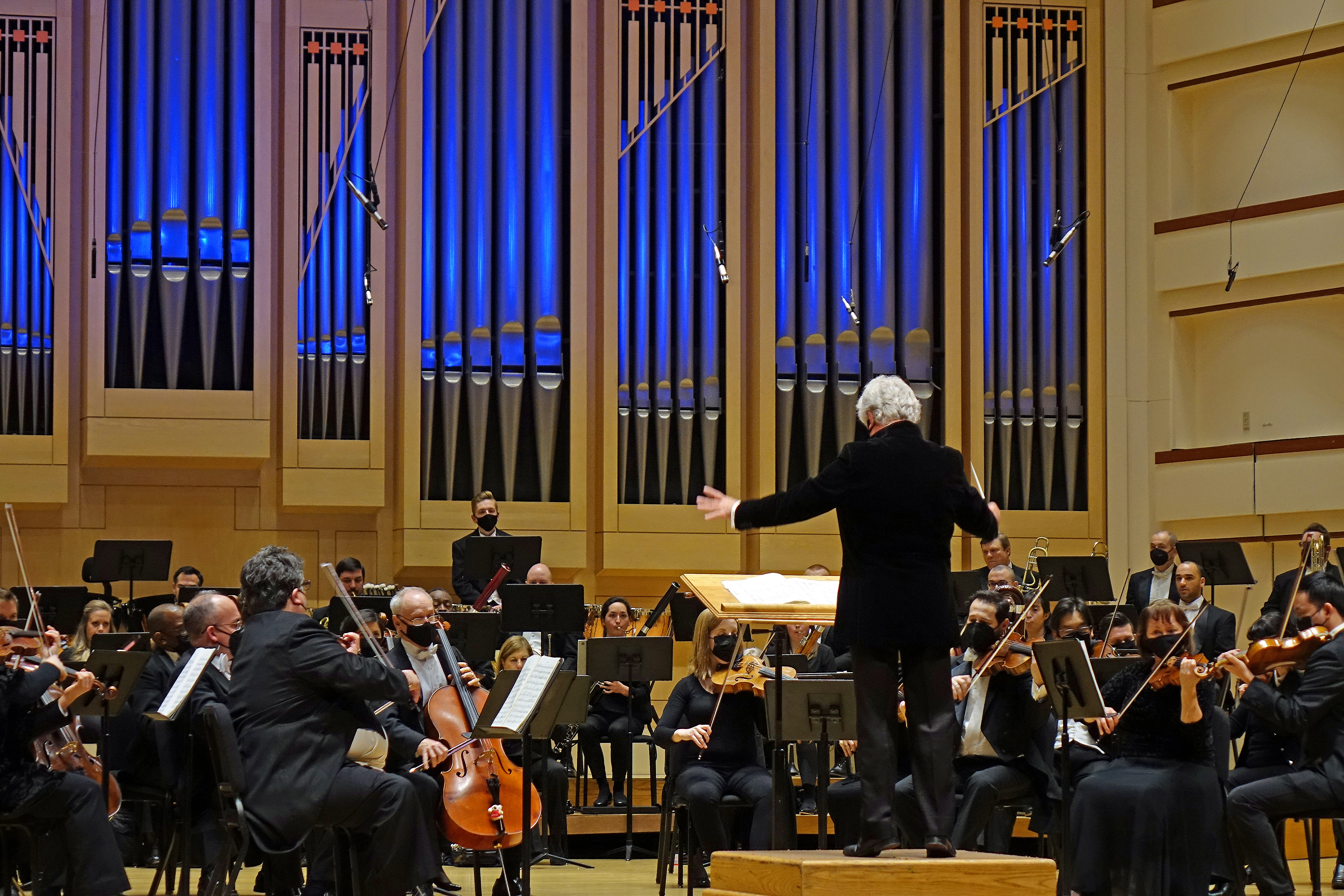
The Abels piece was an even longer, grander gatherum, with the string quartet arriving upstage where Williams had just stood. Joubert and CSO principal second violin were to Warren-Green’s left opposite CSO principal viola Benjamin Geller and cellist Gabriel Cabezas, the Sphinx Medal of Excellence winner in 2016. The Delights were rather delicate before the composer, who famously co-wrote the acclaimed Omar with Rhiannon Giddens, gradually ramped up to the Dances.Cabezas was more than able to eloquently launch Abel’s slow-building piece, which tacked leftward after his engaging solo with additional solo spots for the rest of the quartet members.
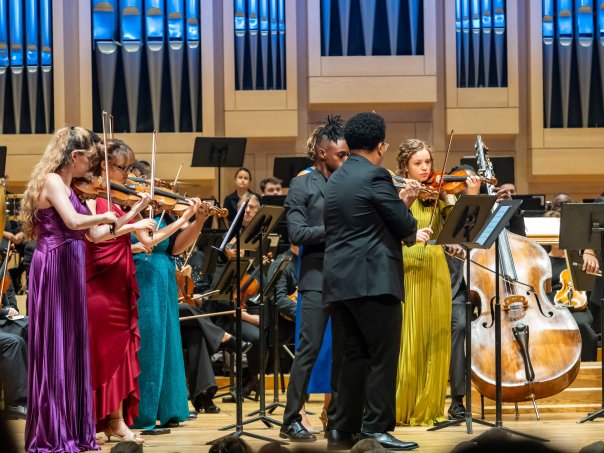
Nor was Abels in any hurry to layer on the orchestra, for their first contributions were background pizzicatos behind the full quartet before they picked up their bows. The piece is no less than the title work on a 2013 album recorded by the Harlem Quartet and the Chicago Sinfonietta conducted by Mei-Ann Chen. Definitely worth a listen if you missed the gala – and Abels’ Global Warming leads off the Sphinx Virtuosi’s recent Songs of Our Times release, their first album. Some rousing fiddling embroidered the loud and lively climax of Delights & Dances, easily the most epic piece of the night, programmed in exactly the right spot.

Mexican composer Arturo Márquez’s Conga del Fuego Nuevo (1996) was no less appropriately placed in the encore slot, starting up white-hot and danceable without lowering its flame. Fully recovered from his Bernstein misadventure, Warren-Green not only led the combined ensembles zestfully, he exhibited some winsome showmanship of his own, not only bidding Wilborn to stand up for his solos on muted and unmuted trumpet, but also commanding the winds and the brass to rise when moments came. How can a piece we’ve never heard before sound so familiar? Maybe via discreet borrowing and insistent repetition. No matter, CSO’s jolly encore became a curtain call at the same time – and a wonderful welcome to the 2024-25 season. Hopefully, the Coleridge-Taylor and the Abels were previews of the next Sphinx recording.

Photos by Perry Tannenbaum

Saltwater Glory from the CSO in Seafaring Works by Britten, Williams, and Vaughan Williams

Review: A Sea Symphony at Belk Theater

By Perry Tannenbaum

April 26, 2024, Charlotte, NC – Whether you love the sea for its surf, its tidal rhythms, its abundance of exotic creatures large and small, or its sheer vastness, Charlotte Symphony’s A Sea Symphony will deliver manifold delights – and a thrilling storm or two at no extra charge. The marquee piece, also known as Ralph Vaughan Williams’ Symphony No. 1, soars with enough poetry and ambition to be compared with Beethoven’s Ninth. The four-movement piece, studded throughout with the poetry of Walt Whitman, takes only five minutes less the Beethoven colossus to play, with the assistance of the Charlotte Master Chorale and two fine guest soloists, soprano Georgia Jarman and bass-baritone Andrew Foster-Williams. More than one Symphony season has concluded with the mighty Choral Symphony and nothing else on the bill, so it is quite generous that conductor laureate Christopher Warren-Green precedes A Sea Symphony with two other substantial seafaring works, Benjamin Britten’s Peter Grimes: Four Sea Interludes and Grace Williams’ Sea Sketches.

Artistically, opening night was a conquering hero’s triumphant return. Yet it was a mixed bag from a box office perspective. While the orchestra level was conspicuous disappointment, pocked with empty seats on a cloudy, balmy night, the grand tier was packed with loyalists and plutocrats, rewarding the performers’ upward gaze (if they ignored the sparsely populated balconies above). Warren-Green’s affinity for this music from the British Isles proved to be as deep as Vaughan Williams’ affection for Whitman.

Across the Carolinas, I’d venture to say that full-length productions of Britten operas are thinly scattered over the years, even at Spoleto Festival USA (Curlew River) or Brevard (A Midsummer Night’s Dream and The Turn of the Screw). Nobody around here realizes that Britten set another great classic, Herman Melville’s Billy Budd, to music?The scraps of Peter Grimes that Warren-Green brings us are therefore hugely philanthropic, even if they reprise a work the maestro introduced at Belk Theater ten years back.

In the first three of the four movements, Warren-Green reminded us how exquisitely he crafted color and texture. Following a dreamy “Dawn,” the middle movements were especially sublime. “Sunday Morning” was dotted with tubular bells – you could almost feel the mist they were ringing through – and that tolling was echoed in “Moonlight” with a simple conspiracy between harpist Andrea Mumm and flutist Amy Orsinger Whitehead. Not really simple if you listened closely, for the single notes they played were not in strictly regular tempo. The magical ritardando was guided by Warren-Green’s instinctive baton. Most everybody will be impressed with the orchestral power of the “Storm,” fueled upstage by the percussionists, but Britten provides an added wallop with the lull in his tempest, ominous with subterranean quaking.

If he weren’t almost a Welshman by birth, you wonder how Warren-Green would have become smitten by the music of Grace Williams (1906-1977). Looking the Welshwoman up in Spotify or Apple Music will likely steer you wrong – to a Christian music artist by the same name who looks, depending on how her hair is combed, like either Renee Fleming or Celine Dion on her album covers. If you dig a bit deeper on Spotify and Apple Classical, you can find a fine 2000 recording of the five Sea Sketches for string orchestra on the CBC label with Roy Goodman leading the Manitoba Chamber Orchestra. As you might imagine in a piece that is as meticulously pictorial as Debussy’s La Mer, a live performance discloses buried treasures above and beyond Warren-Green’s more sensitive response to the score. Most memorable for me were the ethereal “Sailing Song” and the concluding “Calm Sea in Summer,” distinguished by its beautifully modulating tempo and its simulation of the quiet wash of wet sands on the shore.

All isn’t dainty, however, though the opening “High Wind” isn’t blessed with full orchestral artillery. That movement is powerful in its own right, and “Breakers” is definitely punchy. In the middle of the five pieces, “Channel Sirens” might be the most intriguing, not seeming to target either the glamorous temptresses of The Odyssey or any kind of alarm. Williams may have been picturing tugboats in muddy or nocturnal waters, I don’t know. The music cast a uniquely portentous spell.

You really need to hear A Sea Symphony in live performance, not only for the bone-rattling surges of orchestra, chorus, and vocal soloists resounding through the Belk, but for the extended pianissimo at the end of the concluding “Explorers” movement. The outer movements, “A Song for All Seas, All Ships” and “The Explorers,” are epics in themselves, fittingly for Whitman containing multitudes. You might feel that we have reached the end of this mighty chorale when the opening movement ends, but it we are less than a third of the way into our voyage. The finale will be longer, grander, and more oceanic. In between, there’s the relative quiescence of “On the Beach at Night Alone” and the jaunty heraldic “Scherzo: The Waves,” where the Master Chorale, wonderfully prepared by Kenney Potter, give the lead vocalists a well-needed rest before their final cosmic exploits.

And if you’re familiar with Whitman’s “A Passage to India,” you know that cosmic is no exaggeration as the souls of the singers join the Good Gray Poet, in his most pantheistic and mystic dimensions, beyond the seas to the far reaches of the universe. Some big names have been attracted to the baritone part, including Thomas Hampson and Simon Keenlyside on the CDs that I own, but Foster-Williams emphatically holds his own – while Jarman easily surpasses most of the sopranos I’ve heard on recordings of this demanding work, nicely combining the power and beauty of both camps. She’s formidable as both a dramatic and lyric soprano.

Lan Shui’s Rachmaninoff Is a Special Gift – and a Flexion Point for Charlotte Symphony

By Perry Tannenbaum

2023~Rahmaninoff 2-19

April 28, 2023, Charlotte, NC – It’s time to admit that Charlotte Symphony has flipped the script. After a string of four consecutive concerts that I’ve reviewed in 2023, with four different guest conductors, every one of them immaculately played, I can no longer agree that CSO is in search of a new music director who will take the orchestra to the next level. The virtuosity and consistency are here, the responsiveness to varied composers and conducting styles is here, and the mastery of a multitude of musical styles can no longer be overlooked.

My moment of revelation came after the intermission in this week’s program at Belk Theater with guest conductor Lan Shui. Everything had been wonderful so far: Samuel Barber’s “Overture to The School for Scandal” had been colorful, cohesive, and melodious; the accompaniment of guest pianist Mari Kodama’s scintillating work on Mendelssohn’s Piano Concerto No. 1 had been as robust as the support Canadian soprano Alexandra Smither received on Benjamin Britten’s Les Illuminations with guest conductor Vinay Parameswaran on the podium.

My moment of realization came as the opening Largo-Allegro movement of Sergei Rachmaninoff’s Symphony No. 2 came to its finish – epic in its variety, impeccable in its flow, and utterly convincing in its pacing and drama. I had never appreciated how rich and gorgeous this music was. Repeatedly over the years, I have written about the low points in my CSO concertgoing experiences, when I needed to hurry home after performances of Beethoven’s Eroica and Copland’s Appalachian Spring to re-establish, via CDs in my collection, that I actually liked and admired this music. Finding out at Belk Theater what I’d missed on recordings I have heard before at home, as I did last night with Symphony’s Rachmaninoff, was a complete 180-degree turnaround.

Mei-Ann Chen’s exhortations that Charlotte should support their orchestra as much as it deserved weren’t tainted at all with pragmatic flattery as I had thought, it was plain honesty. The only reason she remains the top candidate among those I’ve heard after Shui’s equal triumph is that I still feel Chen will bring more youth and effort to the true tasks at hand – keeping CSO’s performance level at its admirable height, enlarging its numbers, and enhancing its reputation and touring opportunities. Nor should I leave what is implied here unspoken, that Christopher Warren-Green completed his mission of lifting Symphony’s quality to international standards by the time his tenure ended in 2022.

2023~Rahmaninoff 2-24

Triggering the lush and playful violins, principal oboist Hollis Ulaky and principal clarinetist Taylor Marino played beguiling solos. Pacing and dynamics were beautifully judged until the cycle repeated, the violins seeming to respond lower in the treble and Marino playing more challenging passages. The Mendelssohn that followed was Molto allegro from the start, Kodama’s febrile attack matched by Symphony’s zesty engagement. When we flowed into quieter interludes the transitions were utterly seamless, with lyricism spontaneous enough to foreshadow an ethereal rapturous treat when we reached the middle movement – so transporting that I need to rouse myself and realize we were already in that dreamy movement and that the orchestra had arrived there without a pause.

2023~Rahmaninoff 2-12

Kodama caressed the treble at times with her delicate right hand while cherishing it in her left hand with a closed fist, at other times, she leaned back and gazed almost directly upwards. Shui and the orchestra were far more emphatic in signaling the segue to the finale, a rousing Presto-Molto allegro. Early in the movement, Kodama wasn’t as crystalline in her fingering as Howard Shelley in his recording with the London Mozart Players, and I’m not sure she quite equaled the drama of the manic build at the very end that Stephen Hough achieved with the City of Birmingham Orchestra. Overall, though, the live Kodama-CSO performance matched them both.

2023~Rahmaninoff 2-21

As the glory of Symphony’s performance of the Largo-Allegro moderato opening movement flowed so gorgeously from pinnacle to pinnacle, cogent and suffused with seething tension, it occurred to me that the orchestra’s immersions outside their mainstage classical offerings – in big band jazz charts and film scores – has paid off in handsome dividends. From measure to measure, like frame to frame at the movies, connections remained ironclad. Shui’s spoken intro was entertaining and informative, not above repeating some of the information in the digital program booklet, a practice that Warren-Green religiously avoided. He warned us of the hourlong length of the piece and had us on the lookout for Marino’s lovely clarinet spot at the beginning of the Adagio third movement. It emerged unforgettably out of a hush and took sad flight until the strings joined in the restless, aching keening, flowing into work’s biggest tune.

I couldn’t trace any previous CSO performances of this grand piece on my calendar or in my document dating back to 1994, so few if any of the musicians onstage were much more familiar with this gem than those of us in the audience marveling at its beauty. Shui has recorded all the Rachmaninoff symphonies with Singapore Symphony Orchestra, where he was music director from 1997 to 2019, so he has a special affinity for this music. Getting to hear his interpretation of the E minor No. 2 is a special gift for us.

CSO and the JCSU Concert Choir Lift Every Spirit at Brayboy

Review: Johnson C. Smith University and Charlotte Symphony

By Perry Tannenbaum

2023~CSO at JCSU-35

March 21, 2023, Charlotte, NC – You might have thought that a symphony orchestra performing in a college gymnasium would prove to be an odd coupling. Sure, there can be satisfying concerts staged at coliseums where a city’s basketball team plays, but those are usually performed by rockstars, pop icons, and the occasional Cirque du Soleil troupe when every note is processed electronically. My curiosity was certainly piqued when Charlotte Symphony Orchestra announced that its “In Concert with Johnson C. Smith University” program would be happening on campus at the Brayboy Gymnasium. Led by resident conductor Christopher James Lees, Symphony would be joined on the court – the hardwood covered with bright blue tarpaulin – by the JCSU Concert Choir, led by soprano Shawn-Allyce White and accompanied by pianist Frank Williams.2023~CSO at JCSU-13

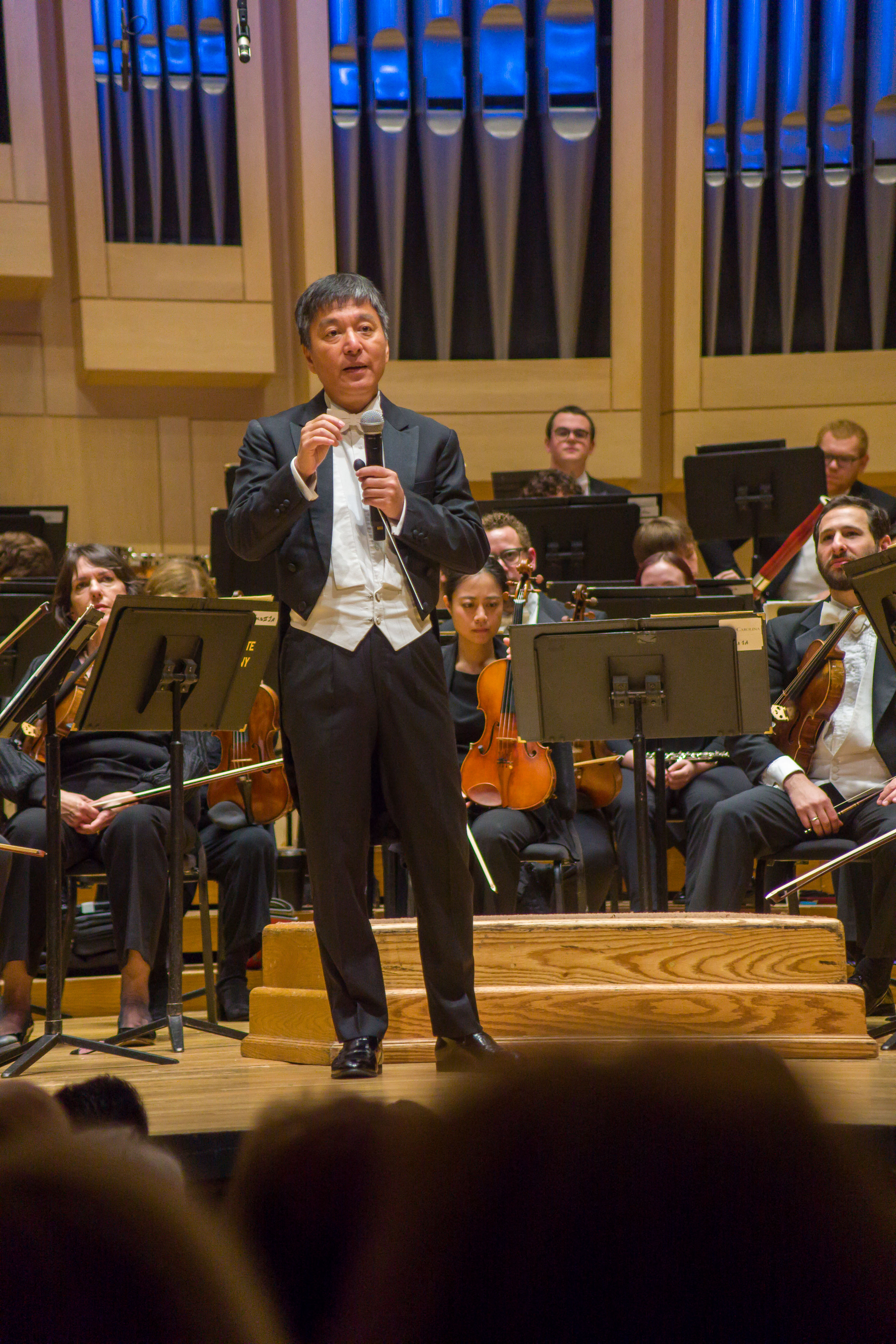
A hookup between Symphony and JCSU at a more established concert venue should have seemed inevitable as long ago as 2015, when the leadership of Spoleto Festival USA visited the campus to announce that the Concert Choir would be participating in the high-profile production of Porgy and Bess the following year, celebrating the festival’s 40th anniversary. Yet when Lees picked up a microphone to greet the crowd, he reminded us that Symphony hadn’t been on campus for 13 years – indicating that this was his first time on campus and implying that CSO’s last musical director, Christopher Warren-Green, had never gotten around to the inevitable before his tenure ended. Were the optics or the acoustics the obstacles that had forestalled a return visit? Or was the idea simply slept on after Opera Carolina enlisted the men of the Concert Choir for their production of Cyrano in 2017, followed by the full choir’s appearance in I Dream in 2018?

Any questions about the Brayboy’s acoustics were swiftly dispelled. The sound from Lees’ microphone was crisp and present, nothing like the muffled sound from a faraway galaxy that emanates from PA systems at some basketball arenas or outdoor stadiums. As the brass heralded the assault of Franz von Suppé’s “Overture from Light Cavalry,” the sound remained bright and forward for all sections of the orchestra, not at all like an echoey gymnasium. French hornist Robert Rydel and principal flutist Victor Wang stood out sharply from the ensemble in their little cameos.

Rather than the controlled gallop and fury of Karajan’s recording with the Berlin Philharmonic, Lees seemed to favor the frantic onrush of Paul Paray’s recording with the Detroit Symphony, which shaves more than a minute off the Berliners’ 7:38 timing. The strings could show off their fast fingering as well as their lush tone, and when the familiar big tune surfaced, four percussionists sprang into action to make the cavalry charge more thrilling. Maybe more impressive – and surely boding well for the 14-member Concert Choir standing by for their pieces – was the syrupy sweetness of principal clarinetist Taylor Marino’s eloquence during a lull between two of the Cavalry dust storms.2023~CSO at JCSU-23

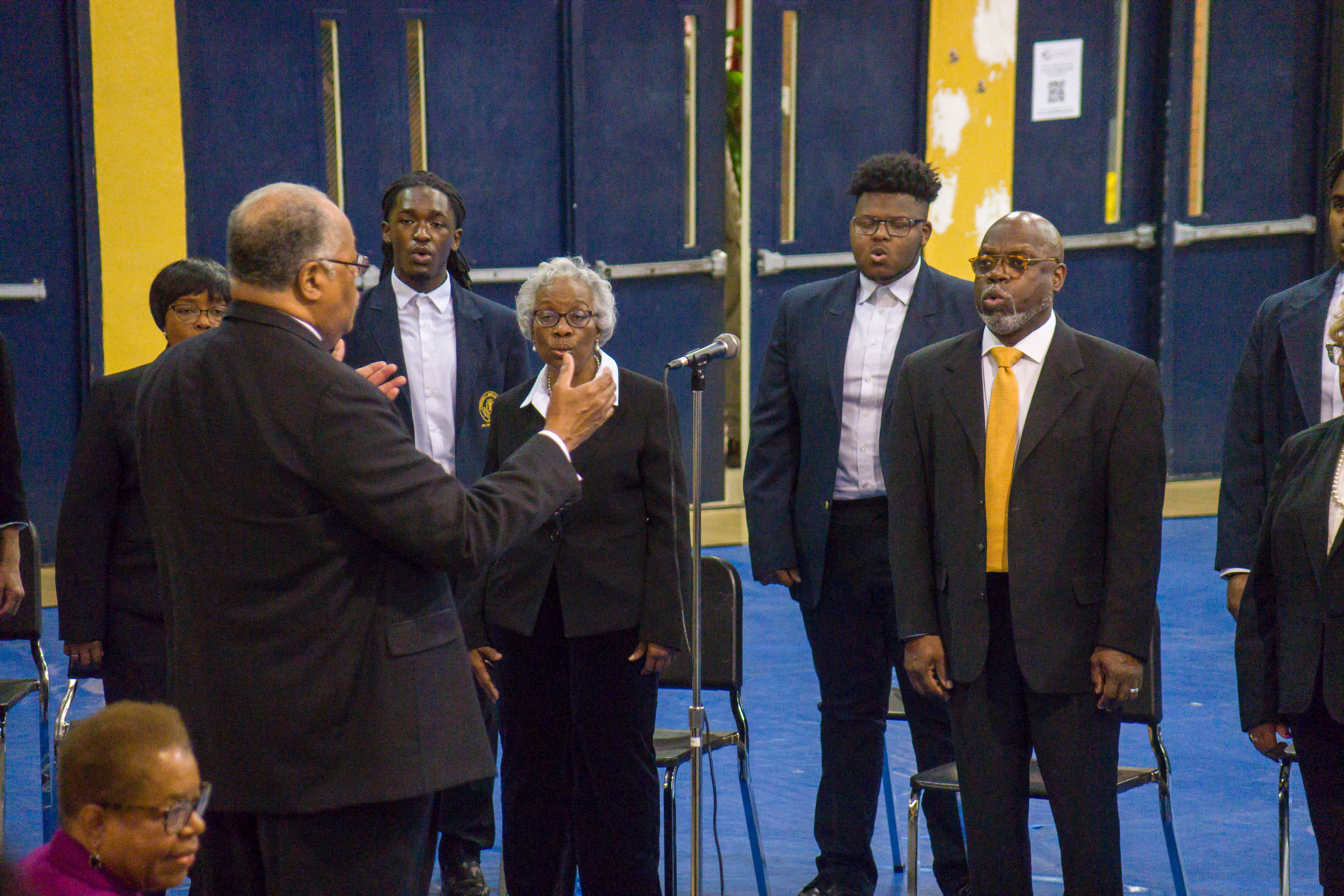
Fortified by two floor-standing mikes, the Concert Choir, eight women and six men on this occasion, were as stirring and powerful as ever at Brayboy, opening with William Henry Smith’s acapella arrangement of the traditional “Walk Together, Children.” Mostly tinted with treble and infused with jubilation, the main takeaway from the Choir’s performance wasn’t the urging of walking together but the excitement of “a great camp meeting in the Promised Land.” Richard Smallwood’s “Trust Me” was statelier, more equally weighted between the men and the women, never deteriorating into the sluggishness or singsong repetitiveness of other performances I’ve heard. The pause midway was particularly dramatic, daring to linger in silence long enough for the first smatterings of applause to break out before returning with thunder.

In between these two righteous chorales, Lees slipped in Jessica Meyer’s Slow Burn, reminding us in his intro that the composer was a violist and to be on the lookout for principal CSO violist Benjam2023~CSO at JCSU-07in Geller’s pivotal solo – but somehow neglecting to mention that the 2018 composition was written for a burlesque dancer. The piece was wonderfully apt when Symphony first performed it in early 2021, when wind players weren’t yet allowed back in concert halls due to pandemic restrictions, and the worldliness of this all-strings piece was a fine fit at the Brayboy. Bluesy strings did all of the sensual slitherings, while a pair of double basses provided percussion via pizzicatos, hand slaps, and vigorous thwacks of the bow on the necks of the instruments, accentuating Meyer’s jazzier passages. Most alluring was Geller’s suggestive glissando triggering the key swell of the strings that most vividly evoked Meyer’s title. Nor did Geller’s subsequent solo disappoint.
The two orchestral pieces that followed were more like what we expect from a city’s Symphony, but a pleasant surprise lurked in the first of these, a work dating back to the days of Haydn and Mozart, the Symphony No. 2 by Joseph Bologne, Chevalier de Saint-Georges. A champion swordsman, military leader, and political revolutionary, Saint-Georges was the son of a French planter and an African slave who would be called “The Black Mozart” because of his varied musical output, including orchestral works and operas. Saint-Georges played a key role in commissioning Haydn’s Paris Symphonies and may have mentored the younger Mozart. The outer movements, Allegro and then Presto, reminded me instantly of Mozart’s symphonic pieces, while the inner Andante brought Papa Haydn to mind. Violins dominated throughout, subtly backed by French horn and oboe in the opening movement, then by pizzicatos from the lower strings in the finale.

Some Slavic coloring had peeped into the Cavalry overture, but the performance of Antonín Dvořák’s Slavonic Dance No. 8 was the pure essence, a percussion orgy driving the main theme and the high woodwinds taking the spotlight. Anything less would have been anticlimactic in the wake of Dr. White’s stirring vocal on the Hall Johnson arrangement of “Ride on, King Jesus,” accompanied by Williams at the keyboard and crowned with a flurry of vocal fireworks. White was only slightly less impressive after the Dvořák, taking the lead vocal on the Moses Hogan arrangement of “Ev’ry Time I Feel the Spirit,” backed by the full choir with Williams conducting.

Lees stated the obvious when he declared that we were all waiting to see Charlotte Symphony and JCSU Concert Choir perform together. Would we get the Gershwin brothers or the Johnson brothers? Nothing less than the “National Black Anthem” would do at this point of the evening. While there are many YouTube examples of Dr. Roland Carter’s arrangement of “Lift Every Voice and Sing,” none on my radar sport more than a piano and an organ for their instrumentation. So Charlotte Symphony may have broken some new ground here with its uncredited orchestration.

The effect was electrifying as the entire audience rose to their feet to honor the anthem. In Carter’s arrangement, there are instrumental sections before each of the three stanzas where James Weldon Johnson’s lyrics are set to J. Rosamond Johnson’s music. Each of these interludes affording sufficient space where an orchestra can shine while providing an orchestrator with engaging new melodic material. Of course, you also want the orchestra to actively support the choir each time it enters, so the new CSO orchestration added a dimension that has always been missing in the YouTube versions. Together, Charlotte Symphony and the Johnson C. Smith Concert lifted the impact of “Lift Every Voice.”2023~CSO at JCSU-29

We weren’t quite done even now. Lees had hedged a bit in announcing that a surprise awaited us, probably remembering as he spoke that the JCSU Drumline, alias the Funk Phi MOB, was already mentioned in the digital program. But before they brought on the rhythm and the funk, we were all invited to participate in a lighter CSO-JCSU hookup. After a brief rehearsal of the seven-note melody, we all joined in on cue for vocal sections of Daniel Bernard Roumain’s La, La, La, La. Needless to say, the lyrics were not a challenge.

2023~CSO at JCSU-32

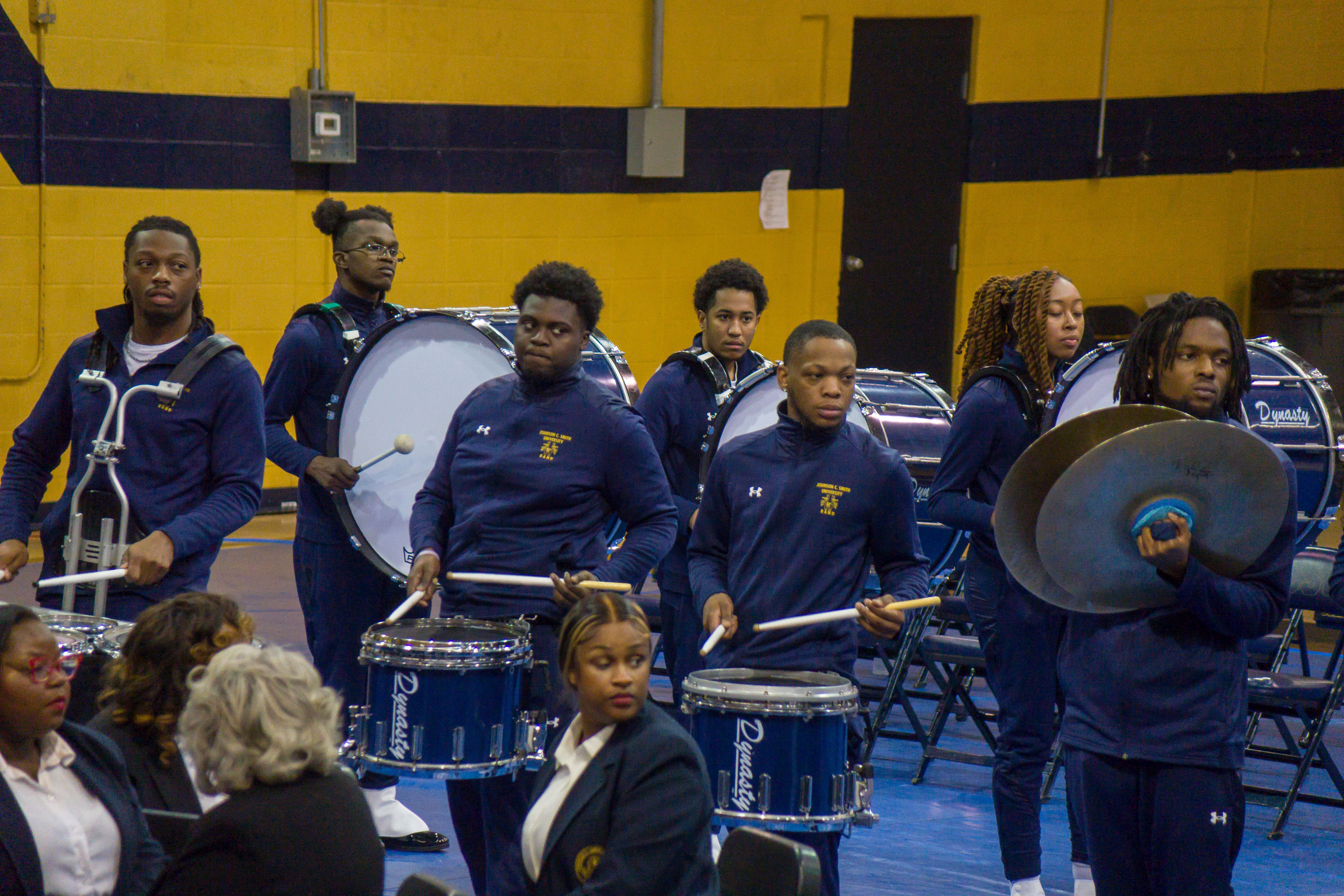
Amid this glee, Funk Phi MOB came marching in with their purely collegiate pandemonium, carrying me back to long-ago Saturday afternoons at the University of Iowa, the University of Oregon, and Williams-Brice Stadium where my shivers were alleviated or intensified by the fortunes of my hometown college football teams. This drumline was a bit more up-to-date than the drum corps I remember stationing themselves at midfield. Beside the customary bass drums and snare drums, a couple of these percussionists were outfitted with some sort of Yamaha hybrid, five or six flat shiny surfaces arrayed like a cross between timpani and a xylophone. If you’ve experienced how a stadium rocks during halftime, you can imagine the gymnasium version, peaking at a sensible 94dB according to my Apple Watch.

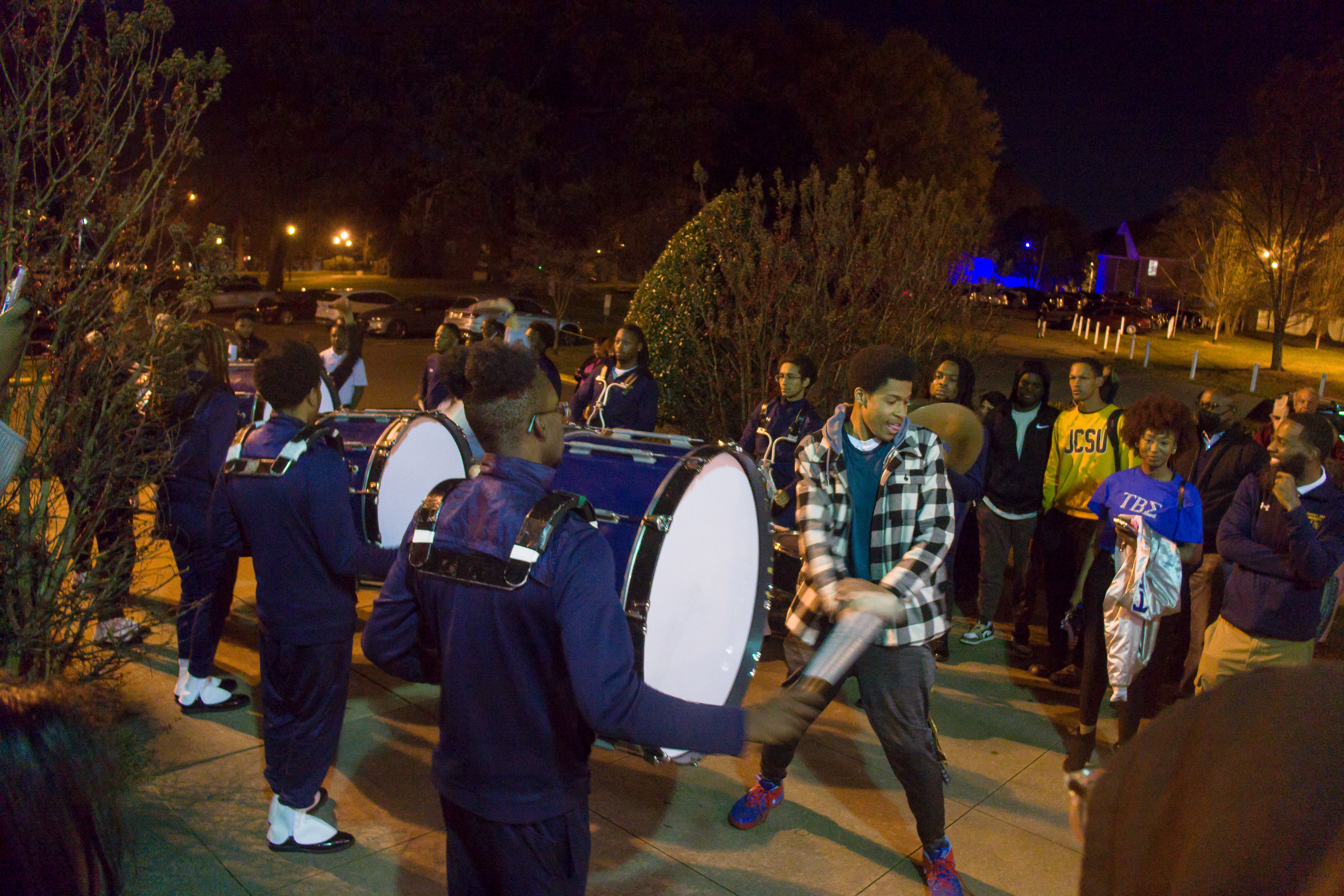
Topping off this mighty2023~CSO at JCSU-38mayhem, a drum major arrived with all his spirited, ceremonial, and high-stepping antics. Thanks for being here had been expressed long before this all-American climax, so without further adieus, the drum major could end the concert by leading the Drumline, Dr. White, and Lees out of the hall. When my wife Sue and I managed to navigate from our seats through the exiting audience and folks still milling on the court – conversing, posing for photos, and taking selfies – we emerged from the Brayboy Gymnasium and found that a drum party was still going on outside the entrance. Fortunately, I had brought my camera. Sue wouldn’t let me proceed to the parking lot until I took a few shots.

Delayed More Than Two Years, Saint-Saëns’ “Organ Symphony” Gets a Powerhouse CSO Performance

Review: Camille Saint-Saëns’ “Organ Symphony” No. 3 with the Charlotte Symphony and Paul Jacobs

 By Perry Tannenbaum

2022~Saint-Saëns-19

October 1, 2022, Charlotte, NC – When Christopher Warren-Green took over as music director of the Charlotte Symphony in September 2010, nobody could foresee that his transition to conductor laureate a dozen years later at the Orchestra would coincide with the 75th anniversary of the Charlotte chapter of the American Guild of Organists – and the 55th anniversary of the mighty M.P. Möller pipe organ at the First United Methodist Church on Tryon Street. As this confluence became manifest, so did an auspicious event to celebrate it, a partnering of the Symphony with the Church in a concert showing off the magnificence of the Möller pipes in action. These dual anniversaries provided Warren-Green with his first opportunity to return to Charlotte and perform in his new role, and the glitter of a prestigious occasion was enhanced with Grammy Award-winning organist Paul Jacobs at the console.

The choice of repertoire for this special event was especially enticing, including Camille Saëns’ thunderous “Organ Symphony” No. 3, George Frideric Handel’s most familiar Organ Concerto, and a prodigious Bach encore from Jacobs that decisively upstaged Felix Mendelssohn’s “Reformation” Symphony No. 5. With the remnants of Hurricane Ian keeping many subscribers away from the opening night performance on Friday night, the Saturday sequel filled the hall – down below and up in the stately balcony – to the bursting point.

For all of us who have felt a pang of frustration each time we gazed upon the vestigial organ pipes at Belk Theater, keenest when the Saint-Saëns Symphony was presented there with a piddling electronic substitute, this concert provided rich consolations. There were also redemptive aspects to this special program, for both Symphony subscribers and the Orchestra’s musicians, since the last time that the “Organ Symphony” was programmed at Belk Theater on March 20, 2020, it was one of the first musical cancellations of the COVID pandemic. All of those rehearsals were not in vain after all.

My own enthusiasm for organ recordings goes back to the vinyl days of Daniel Chorzempa’s performances of the complete concertos and Peter Hurford’s renowned compilation of Bach’s organ works, later reissued as a 17-CD doorstop. Recordings of the “Organ Symphony,” on the other hand, were always earmarked in audiophile reviews as demo treasures that could prove the mettle of cream-of-the-crop loudspeakers far beyond my budget. With the advent of the Charlotte Bach Festival four years ago, we’ve been able to hear live performances of the Bach solos by topnotch organists, a rare enough blessing. But I’d never hoped to hear a live rendition of a Handel Organ Concerto, even on a piddling portable at the Belk.2022~Saint-Saëns-06

If your concept of classical organ has been shaped by Bach, who inspired countless grandiose organ compositions by notables of every generation since – and the ginormous instruments around the world built to play them – then the sunny, playful sound of Handel’s concerti could take you aback. Of course, the nickname of Concerto No. 13, “The Cuckoo & the Nightingale,” would have provided a broad hint if you picked up a program entering the sanctuary. Although marked Larghetto, there was nothing solemn about the opening movement, which began with Jacobs parroting the orchestral intro. The true merriment of the piece became evident in the ensuing Allegro, where cuckoo-clock sounds proliferated. As Jacobs took greater command, he played a little duet with himself, those plodding cuckoo sounds facing off with some nightingale filigree in the treble.

The middle movement was marked Organo ad libitum in our programs, in contrast with the Chorzempa version, where the “ad libs” were split into two tracks explicitly adapted from two movements of a Handel violin sonata. In the penultimate movement, another Larghetto, Jacobs finally gave us a hushed foretaste of the grander churchly sounds he would offer up in his Bach encore. Nearly as virtuosic as his crowdpleasing cuckoo-nightingale counterpoint, the closing Allegro was the most jocund and celebratory movement of this concerto – and arguably the best incentive for seeking out the other 15 on recordings. Adding to the pleasure, the silky Symphony violins were as cheery as the organ, and Jacobs crowned this confection by soloing with his feet on the Möller’s pedals.2022~Saint-Saëns-14

There’s little shame in not identifying a Bach organ work when it’s played – unless it’s the famed Toccata and Fugue in D minor with its instantly recognizable opening and Gothic drama. Not knowing the precise title, key, and BWV catalog number certainly didn’t deter the First United audience from showering worshipful admiration on Jacobs’ dazzling performance. For the record, it was Bach’s A Minor Fugue BWV 543. The roar from the crowd in their protracted standing ovation was nearly as stunning as the performance. You couldn’t question this massive communal judgment when Jacobs had given life to the idea of “pulling out all the stops,” but we could wonder whether anything afterwards would measure up.

Reduced in number for the Church’s oratory platform and hampered by an acoustic environment less friendly to visiting orchestras than to the house organ, Charlotte Symphony gave Mendelssohn’s “Reformation” the old college try for their former maestro. There was an unmistakable contrast in the opening movement between the sublimity of the Andante introduction and the turbulence that follows in the dominant Allegro con fuoco section. Mendelssohn’s middle movements retained their engaging contrast as well, though the sanctuary’s sonics stole a bit of their sparkle. It helped that the Allegro vivace presented the work’s most familiar melody and that Symphony played the penultimate Andante so tenderly. Most impactful, however, was how Warren-Green shaped the closing Chorale with its joyous sunny components, the woodland purity of the Andante con moto and the conquering march of the Allegro vivace. Brassy, stately, and triumphant, the “Reformation” ended grandly with the stamp of Rose Lipham’s timpani.2022~Saint-Saëns-07

While Symphony’s performance of the Mendelssohn did not match the éclat of Jacobs’ exploits with the Bach, the verve of their assault on the Chorale boded well for the Saint-Saëns masterwork when Warren-Green and the organist returned after intermission. A few more musicians fortified the strings onstage during the break, but the full thunder of the “Organ Symphony” isn’t unleashed until the Maestoso section midway through the second (and final) movement, a sudden onslaught that must have snapped more than a few heads back. At last, this was the prime reason why it was worth hearing this massive work live with the might of a true church organ, an unforgettable experience. But that sforzando can be simulated in your living room easily enough if you wish to startle yourself without the more unique experience of feeling a whole sanctuary, with a congregation of over a thousand, trembling to its foundations. What most loudspeakers cannot deliver at home came earlier in the piece, when the opening movement Allegro moderato gave way to an almost serene Poco adagio.

Here Jacobs and the Möller organ produced a more primal subterranean sound, eerie and uncanny in its force, an octave or more below what most loudspeakers can audibly reproduce with anything approaching this power. Sitting in the second row, I felt like a monster whale or a legendary Leviathan was about to surface from directly below me. Warren-Green and his orchestra were in top form in the first halves of Saint-Saëns’ two movements, particularly appealing in the ominous Allegro moderato that opens the second movement, surely the most familiar melody in this score. Most thrilling was when the orchestra vied in sheer volume with the pipe organ and Symphony’s new conductor laureate sleekly accelerated the tempo into the rousing Allegro finish. Coming at the end of an evening suffused with music from the “king of instruments,” these moments had all the grandeur of a coronation.

Warren-Green Bids Farewell With a Rousing Beethoven “Ode to Joy”

Review: Charlotte Symphony Plays Beethoven’s Ninth

 By Perry Tannenbaum

IMG_6604_dcoston

May 20, 2022, Charlotte, NC – Even back in the early ‘90s, when Charlotte Symphony struggled to sustain respectable mediocrity, the valedictory concert led by Leo Driehuys in 1993 proved that the orchestra could always rise to the occasion when called upon to perform Beethoven’s thrilling Ninth Symphony. Having heard the same ensemble bludgeon Beethoven’s “Eroica” to blandness just months earlier, it was hard for me to believe that the inspiration came solely from the composer. I struggled with the answer to this anomaly until I interviewed Driehuys’s successor, Peter McCoppin, shortly before his final season at the end of the millennium.

Not referencing Beethoven at all, but explaining why he enjoyed his years in Charlotte so thoroughly, McCoppin observed that the Queen City is incredibly fertile ground for choristers and choruses. You just had to count the churches around town to see his point. Not only had the Oratorio Singers of Charlotte brought extra spark to Beethoven’s “Choral Symphony,” they had also arguably sparked the Charlotte Symphony musicians they were partnering with.

The Oratorios have undergone numerous metamorphoses during the past three decades, at discreet intervals absorbed into Symphony, renamed the Charlotte Symphony Chorus, and eventually set free to seek their own gigs, rebranded once again as the Charlotte Master Chorale. Yet each time it was necessary to muster the instrumental and vocal artillery needed for Beethoven’s masterwork – indeed, classical music’s masterwork – the Chorale has admirably answered the call.

In a recent interview prefacing his valedictory concert as Symphony’s music director after 12 fruitful seasons, Christopher Warren-Green revealed that the chorus had been “one of the big incentives for me to come to Charlotte because of the great repertoire that was written for orchestra and chorus.” Little wonder, then, that Maestro Warren-Green has chosen to conclude his tenure by including the Master Chorale in his final “Ode to Joy” concert – or that he has already announced that, when he returns this coming December as Symphony’s music adviser and conductor laureate, the choir will be in the mix once more as he conducts Handel’s Messiah at Knight Theater.

There always seem to be extra layers of drama and excitement when the “Choral Symphony” returns to Belk Theater, never more than when Christof Perick made his 2001 debut as music director just 10 days after 9/11. Fast forward to the fourth Ninth that Symphony has programmed since then, and there was still a palpable sense of a special occasion in the hall. Symphony president and CEO David Fisk saluted Warren-Green before he made his grand entrance, greeted with a lusty standing ovation. Maestro then pooh-poohed all of Fisk’s accolades, paid tribute to four newly retired Symphony musicians, and – prior to a nifty and brief exit – exhorted the audience to keep supporting the CSO “or I’ll never forgive you.”

That was the last laugh of the evening as Warren-Green returned to the podium, signaled the Chorale to be seated, and presided over the Symphony as Beethoven brought them to a boil, quicker than a microwave oven, in his opening Allegro ma non troppo. Warren-Green’s Ninth would by a turbulent one, far more timely than timeless, discarding many chances for liquid lyricism in favor of alert and spirited rigor – almost militant but never quite lapsing into rigidity with the onset of its rousing quicker tempos. The incisiveness of Jacob Lipham’s timpani came upon us quickly, never allowing us to rest for long, while the affecting woodwinds and the lively strings offered eloquent counterweights.

When we reached the Molto vivace second movement, with its industrious bustle and perpetual overlapping, Warren-Green enabled us to hear early foreshadowings of the teeming humanity we’ll find in the epic fourth movement, struggling toward togetherness and brotherhood. Excitement in the overlaps between various sections of the orchestra was increased dramatically by spasmodic boosts in dynamics and the sharp whacks of the timpani. Also pushing against the flow of the violins and the warmth of the cellos were the percolating winds and the moaning French horns.

IMG_6891_dcoston

Between the second and third movements, the last true pause in this symphony, the guest soloists entered and took their seats at center stage: bass baritone Jordan Bisch, tenor Sean Panikkar, soprano Alicia Russell Tagert, and (substituting for Briana Hunter) mezzo-soprano Sarah Larson. The two little girls seated in front of my mom and me perked up expectantly at this point, only to be let down by the relatively tranquil Adagio molto e cantabile. The little girls weren’t as restless or fidgety during this lovely movement as you might expect little boys to be, but their attentiveness waned noticeably – despite the sweetness of the first violins, the affecting violas and second violins, and the mellifluous woodwinds and horns. Their adorable decorum was threatened most by the beautiful confluence between clarinet, horn, and flute as the penultimate movement faded into the concluding Presto.

IMG_6511_dcoston

Having this glorious score in front of you, with its magnificent build-up to the signature fireworks waiting to explode, must be so gratifying and fulfilling as a musical conductor stands on the podium, heading into the homestretch of his 12-year tenure. Surely, the musicians and choristers sensed the excitement and shared an eagerness to deliver. The first violins were certainly ardent and rich over the churning violas and second violins as the build-up began, yet as the gradual gravitation toward the brotherhood theme was beginning, I noticed that Warren-Green was doing something different and new. Instead of seating his cellos and double basses to our right, they were now spread in a long row, starting in front of the podium and reaching to the left edge of the stage in nearly a straight line.

So there was a little more than the usual edge as the journey to the brotherhood theme launched, continuing with dogged inevitability after the woodwinds mischievously flashed back to the agitations of the second movement. Violas layered onto the cellos and basses, adding to the smoldering sensation, and the violins accelerated the familiar strains until the brass made them soar. The little girls in front of us were completely re-engaged ahead of the next magnificent build. Bisch sounded stronger and more robust in his opening declaration, “O Freunde, nicht diese Töne! (Oh friends, not these sounds!),” culminating in the announcement of his Joy agenda (“Freude!”), than he did reprising the brotherhood refrain as he plunged into Friedrich Schiller’s “An die Freude (Ode to Joy).” More than a couple of bass baritones who have recorded these passages have fared the same. Perhaps that was Beethoven’s design, for ample reinforcements will emphatically arrive on the scene, first the soloists and then the phalanxes of choristers who were elevated over everyone upstage, ably representing Schiller’s millions.

At least a couple of regatherings follow, as all of us who love the Ninth well know. There’s a grand, brassy military march while the vocalists inhale for awhile and hold their fire, and then there are those sublime audible inhalations as Schiller’s lyrics, helpfully translated in supertitles above the Belk stage, took us “above the canopy of stars” in an ethereally protracted chord. When the Master Chorale reached peak tempo in the concluding Allegro assai vivace, like a herd of horses urged by Warren-Green to full gallop, one of the little girls turned to the other with an OMG expression on her face that her mom would have treasured until her dying day if she had seen it. At this moment, the greatest pleasure in watching kids experience this magnificent storm of sound for the first time is being able to say to yourself. “You ain’t heard nuthin’ yet!”

Originally published on 5/22 at CVNC.org

Ukraine’s Colors Shine Through Charlotte Symphony Celebration

Review: Dona Nobis Pacem at Belk Theater

 By Perry Tannenbaum

2022~Dona Nobis Pacem-31

March 12, 2022, Charlotte, NC – When 57 musicians gathered at the Carolina Theatre on Tryon Street to present the inaugural Charlotte Symphony concert on March 20, 1932, none of them could have possibly predicted how the orchestra’s 90th anniversary would be celebrated in 2022. Three of the five pieces that Christopher Warren-Green conducted, nearing the end of his distinguished tenure as Symphony’s music director, hadn’t been written yet, and one of the composers hadn’t been born. Even last May, when CSO’s 2021-22 season was announced, Warren-Green himself couldn’t have predicted how grimly appropriate Ralph Vaughan Williams’ Dona Nobis Pacem would be for the occasion. As originally conceived, the program was an olive branch from England to America, three British composers conducted by one of the Crown’s finest, two of the pieces paying homage to Walt Whitman, our greatest poet.

A small dent in the all-English lineup turned up when Symphony’s Australian second trombone, Thomas Burge, finished enough of his to-be-continued “Charlotte Symphony Fanfare” for it to serve as a preamble to the orchestra’s celebration. What truly turned the tone of the anniversary festivities upside-down was Vladimir Putin’s horrific invasion of Ukraine, lending Dona Nobis Pacem – “Grant us peace” – unforeseen pertinence and meaning. With St. Patrick’s Day weekend revelers teeming along the sidewalks and spilling over onto Tryon and Fifth Streets, there was a dramatic contrast for concertgoers who became pedestrians shortly after hearing Williams’ Fantasia on a Theme by Thomas Tallis and the Dona Nobis at Belk Theater on Saturday night. The most festive of the night’s festivities were outside the hall.

Burge’s new composition will no doubt impress more when it takes its intended place at the launch of a future Symphony’s classics season and the composer’s showy post-pandemic staging can be realized: three brass choirs spread out across the Belk balcony. For the 90th, the brass battalion was confined behind the masked string sections, but the peep we had into the work-in-progress was sunny and glorious. Gustav Holst’s Walt Whitman Overture, a youthful piece completed in 1899 when the composer would turn 25, was arguably the most sustained celebration of the evening, though it might be somewhat deflating to learn that Holst had been dead for over 48 years when the piece was first performed in 1982. The transparent violins at the beginning, hovering over churning basses and cellos before flutes and brass peeped in, struck me more like Schubert than any American or British music. When the brass first broke through, however, there may have been a glint of Sousa, and the final swell of the piece was in a grand Victorian vein.

The Four Scottish Dances by Malcolm Arnold (1921-2006), premiered in 1957, were clearly the most winsome offering of the evening, shuttling between slow and fast tempos – not only between dances but sometimes within them. Inspired by Louis Armstrong more strongly than by Whitman, Arnold’s music displayed a more American élan, geniality, and broad humor than the other Brits’. If your head wasn’t spinning from the abrupt acceleration that Warren-Green called forth in the opening “Strathspey Pesante,” which ended with a pedestrian “shave and a haircut” phrase, then the slowdown in the ensuing Vivace (Reel), initiated by Joshua Hood galumphing on his bassoon, would certainly have caught your ear. And if that weren’t sufficient mischief, Warren-Green’s hambone slacking and slouching at the podium added a visual cue. Perish the thought that Maestro Warren-Green’s predecessor, Christof Perick, would ever have tainted himself with such levity.

After these pranks, which reminded me of the Western merriment in Copland’s folksier pieces, the work of principal harpist Andrea Mumm Trammell, principal flutist Victor Wang, and oboist Erica Cice was sublime in the penultimate “Hebridean Song,” shining through the shimmer of the strings. The concluding “Highland Fling” had as much Scottish flavor as the “Pesante,” rushing at us unabated with sudden shifts in volume, the tweedling of the high woodwinds answered by onrushes of orchestra colored with fiery alarms from the trombones.

If the customary programming conventions for galas were being observed, I’d strongly question the wisdom of delaying the comparatively solemn and serene Tallis Fantasia until after Arnold’s suite, which would have sent us off to intermission in a lighter mood. But Symphony president David Fisk had already solemnized the occasion by dedicating the concert “to Ukraine and the courage, strength, and resilience of its people,” a theme that would subsequently be echoed in the digital program and by Warren-Green, when he prefaced his performance of the Dona Nobis. By coincidence surely, Vaughan-Williams composed his 1910 Fantasia very similarly to Burge’s spanking new “Fanfare,” dividing his aggregation of strings into three parts, two string orchestras with a string quartet within the larger orchestra. Concertmaster Calin Ovidiu Lupanu had the last and most eloquent solo among those doled out to the four principal string players, but kudos should also go to principal violist Benjamin Geller, whose solo launched the memorable quartet episode.

What will stand out for me, however, was the extraordinary alchemy of this performance. Whether it has always been baked into Vaughan-Williams’ orchestration, maybe something special that Warren-Green was able to elicit from his musicians, or whether it was the unprecedented high placement of the small string orchestra on the platform where the Charlotte Master Chorale would soon sing, flush against the upstage vestigial pipes at the Belk… I could have sworn that there was a softly playing organ in the orchestral mix. Needless to say: amazing.2022~Dona Nobis Pacem-27

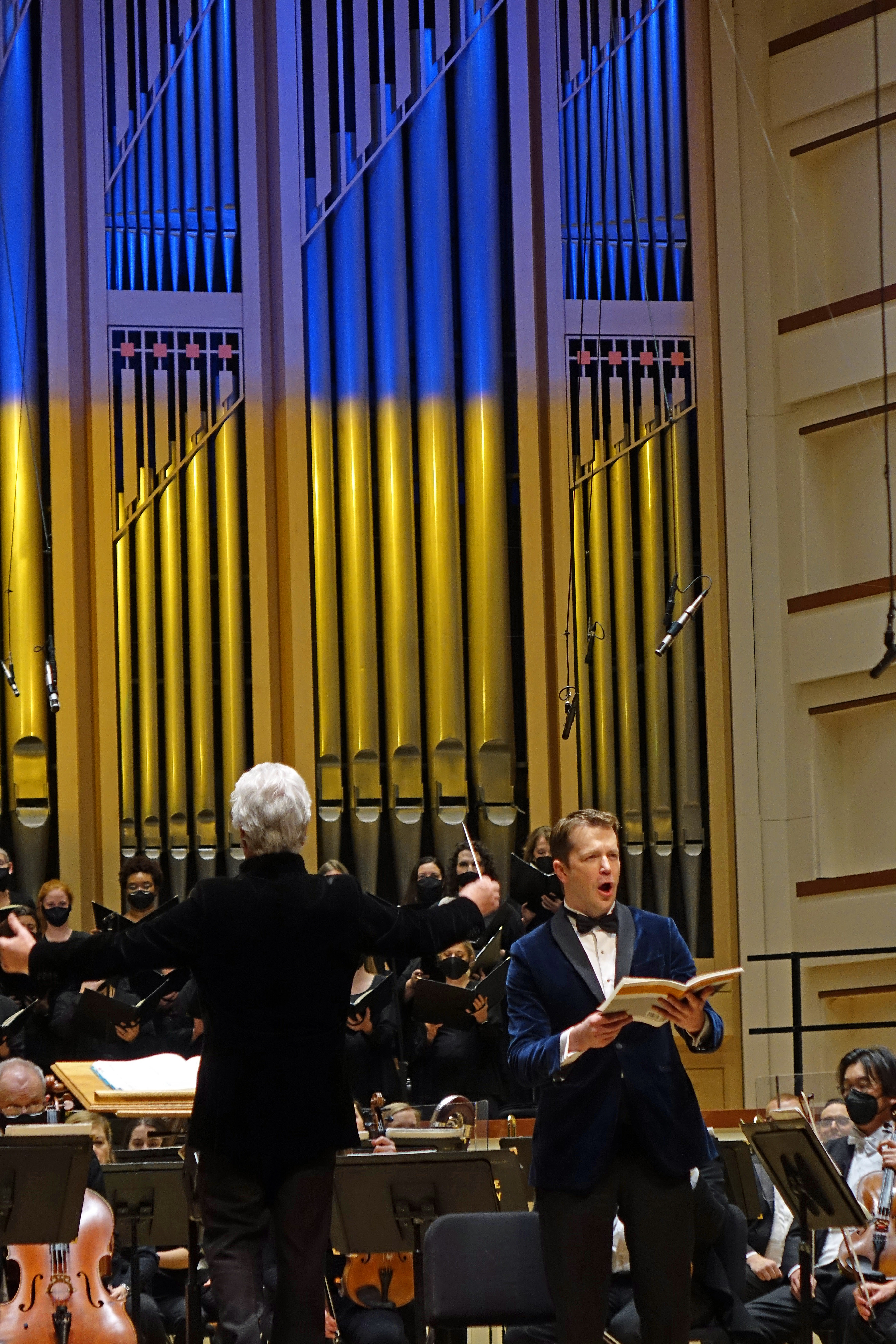
Those organ pipes were more verifiably involved in the culminating performance of the Dona Nobis Pacem, after more than 40 Master choristers filed in, followed by our two guest soloists: soprano Christina Pier and, in his Charlotte debut, bass-baritone Daniel Okulitch. It was then that Warren-Green dedicated this piece to the valiant, freedom-loving people of Ukraine. Between the moment that the maestro turned away from us and Symphony began to play, those silvery pipes, illuminated until then entirely in blue light, suddenly became halved into stripes of gleaming blue and yellow gold, the colors of the Ukrainian flag. A proud moment for us all.

Whether prescribed by COVID protocols, Warren-Green’s decree, or the unmasked singers’ personal preferences, Pier and Okulitch sat further apart than the vocal soloists we usually encounter at Symphony concerts. With Pier mostly singing the “Agnus Dei” refrain that contains the Latin title, and Okulitch confining himself in the middle movements in Walt Whitman’s English – and Old Testament translations in the Finale – the separation between the singers wasn’t awkward at all.

2022~Dona Nobis Pacem-24

Pier tended to sing with the orchestra and the choir, but there was an extended stretch where Okulitch, standing to Warren-Green’s right, was accompanied solely by Lupanu, seated to his left. So the tableau enhanced the intimacy of their duet. What was really unfortunate and compromising for us were the vast stretches of incomprehensible text from the chorus that Vaughan-Williams had scored so splendidly. If there had been supertitles above the stage or printed programs in our hands, the experience would have been even more powerful. Those of us who were able to download the digital program were adequately equipped, but the Blumenthal Performing Arts Center has had repeated problems with transmitting these copious, colorful, and informative materials.

In future performances where we’re expecting to follow along at the Belk, I will try to download the digital materials before I leave home. Clearest of all was the chorus’s mighty “Beat! Beat! Drums!” refrain from one of Whitman’s most metrical Civil War compositions. Even when we might be lost in the less familiar words of other war poems by the Good Gray Poet (“Reconciliation” and “Dirge for Two Veterans”), the music, the voices, and the colors of the fighting Ukrainians’ flag landed on us forcefully. It was thrilling.

Originally published on 3/14 at CVNC.org

Symphony Arrives at Sublimity, Amping Up Mahler to Heavy-Metal Decibels Along the Way

Review: CSO Plays Mahler’s Ninth Symphony

By Perry Tannenbaum

2022~CSO Mahler's Ninth-17

January 14, 2022, Charlotte, NC – When the new Compact Disc digital recordings were first heralded and released in the early 1980s, the mythic story began circulating from Sony and Philips that the dimensions and capacity of the new CD format were determined by its ability to present all of Beethoven’s Ninth Symphony on a single disc. Subsequent refinements to the technology increased the capacity of those discs from 74 minutes of music to 80, leaving Ludwig far out of the equation. The 80-minute capacity we see on today’s prerecorded discs and the recordable CD-Rs we might dub them onto is more suitable for containing Gustav Mahler’s Ninth Symphony – but only if conductor and orchestra are in a hurry. Only the very quickest of the many recordings of Mahler’s last completed orchestral work clock in at 79 or 80 minutes. Completing his Mahler Journey with the Charlotte Symphony Orchestra in his final season as music director, Christopher Warren-Green let it be known that his Ninth would be a more expansive 90-minute experience. There was no intermission at Belk Theater, and program booklets remain a strictly online affair.

Vaccination cards were scrutinized at both the outdoor entrances to the Blumenthal Performing Arts Center and at the indoor entrance from Founders Hall. My mom and I felt very comfortable with the social distancing downstairs in the orchestra section, but no such amenity was granted to subscribers who entered the hall from the lobby – in fact, I’ve never seen the Grand Tier more fully occupied, a gratifying affirmation of the Queen City’s Mahler enthusiasm. The balcony above looked similarly packed. Masking, of course, was compulsory, but ticketholders should chiefly be forewarned that vigilance was strictly enforced at the entrance to the orchestra section. Folks that were late for the first notes of the Mahler performance, between 7:35 and 7:40pm, were obliged to wait in front of TV monitors in the lobby until the conclusion of the opening Andante comodo movement at approximately 8:05.

Each of the outer movements, both preoccupied with mortality and dying, is as lengthy as the two inner movements combined. Only the second movement can be described as lighthearted, and all four are teeming with mood swings. Without adding audible gaps between episodes, recordings conducted by Leonard Bernstein and Herbert von Karajan with the Berlin Philharmonic are divided into 33 and 30 tracks respectively. Those seemed to be very conservative numbers when Warren-Green and Charlotte Symphony immersed themselves in the score, reveling in its seemingly countless contrasts. Emerging with the opening melody from a backdrop of cellos, basses, horns, and harp, the second violins emphatically signaled that all sections of the vast ensemble would have their chances to shine.

2022~CSO Mahler's Ninth-04

This was by far the most extensive instrumentation we had seen at either Belk Theater or Knight Theater since the beginning of the pandemic. From orchestra level, it was difficult to precisely count all the unmasked flute, clarinet, oboe, bassoon, French horn, and trumpet players arrayed behind the masked string sections. But the percussionists were plain enough when they stood up, either singly or as an ominous group, and there was additional space set aside, upstage and on the stage left wing, for the three trombones, two harps, and the tuba. Curving around stage right to the upstage was an armada that included timpani, a mighty bass drum, cymbals, a gong, snare drums, and tubular bells.

So the prospect of high-volume music was apparent before all the Symphony musicians were fully congregated. Yet when these expected Mahler explosions actually occurred, Mom and I were both taken aback by how loud they were. The difference between sitting at the rear of the grand tier late last spring and sitting in Row O below was compounded by the additional troops and artillery onstage. Earplugs weren’t quite necessary for these fortissimos, but rock-concert decibels weren’t far in the distance. Mom may have nodded off for a few seconds during Gershwin’s Lullaby last year or when Branford Marsalis luxuriated in the luscious Larghetto middle movement of Jacques Ibert’s Concertino da camera. Not this year. Onsets of trumpets, trombones, or percussion could be so sudden that, even if she didn’t revere Mahler, Mom wouldn’t dare close her eyes.

There were plenty of less aggressive surprises scattered across the lordly length of this symphony. In the epic Andante, the harpists reached out to pluck a bass line, and the mournful funereal dirge had the backbone of a military march, punctuated by the wan tubular bells. If you’re new to Mahler, the waltzing liveliness of the “Im Tempo eines gemächlichen Ländlers” (in the tempo of leisurely country dances) might catch you pleasantly off-guard – and what plan did the composer have for a triangle and cymbals playing in unison? The third movement Rondo-Burlesk was brimful of contrasts and contradictions as Warren-Green kept us on the lookout for the next twist. A busy, contrapuntal opening suggested a fugue with frolicsome and comical touches, but midway through this Burlesk, each of the orchestra’s sections seemed to have something soulful to say – not at all the path you would expect leading to a screaming conclusion.

2022~CSO Mahler's Ninth-15

Perhaps the biggest surprise of the evening came at the climax of the Adagio finale when a furious pounding of the big bass drum, topping off a majestic crescendo, suddenly gave way to – in the hushed blink of an eye – nearly total silence. This abrupt whisper of weepy violins, proved that Mahler’s precipitous subsidings can be almost as dramatic as his volcanic peaks. Most of Symphony’s principals distinguished themselves over the course of this epic evening, including oboist Hollis Ulaky, clarinetist Taylor Marino, cellist Alan Black, and concertmaster Calin Ovidiu Lupanu, but the final movement underscored the special praise earned by French horn principal Byron Johns and principal flutist Victor Wang. Even Johns’ one little wobble on the horn came at an ideally aching moment, and Wang was merely perfection in the sublime epilogue.

Originally published on 1/15 at CVNC.org

Big Names and Big Sound Mark Symphony’s Return to Mainstream Programming

Review: Charlotte Symphony Plays Beethoven’s Fourth

 By Perry Tannenbaum

Vaccinated, boostered, masked, and carded, we’re all starting to feel more comfortable at public events these days. Charlotte Symphony had more than twice the number of musicians onstage on Friday night at Knight Theater, compared with just a couple of months ago. Social distancing is suddenly an ancient artifact. The stranger who presumed she could safely poach my seat at intermission readily took consolation by poaching the empty seat right next to me. Christopher Warren-Green felt so much at ease that, instead of scrounging for orchestral pieces that could be credibly performed by a reduced number of masked and distanced musicians, he stuck with a program of Mozart, Beethoven, and Prokofiev – returning to brand-name white male composers who have been dead for at least 65 years. And in a show of restraint that was unthinkable at the beginning of Symphony’s 2021-22 season, subscribers didn’t feel obliged to give every piece a standing ovation and every movement applause.

Premiered in 1918, Sergei Prokofiev’s “Classical” Symphony No. 1 actually qualifies as an antique. Looking back to Josef Haydn and Nikolai Rimsky-Korsakov for inspiration, with a third-movement Gavotte that the composer reworked for his 1935 Romeo and Juliet, the aim of the “Classical” was to straddle old and new styles. Warren-Green took a more delicate and reposeful view of the work than the one we find in the acclaimed London Symphony collection of Prokofiev’s seven symphonies conducted by Valery Gergiev. The joy of the work was also arguably purer at Knight Theater than that recording if you find Gergiev’s accelerated tempos more than slightly manic.

There was more than sufficient zest and high-stepping marching spirit in the opening Allegro con brio for the delicate episodes to stand out in relief. Lovely orchestral textures were lavished on the ensuing Larghetto, with principal Victor Wang and fellow flutist Amy Orsinger Whitehead peeping through to admirable effect. The CSO actually made better sense of the Gavotte than either of the recordings in my collection by the National Orchestra of the Ukraine and Gergiev’s London Symphony, starting out with a mock grandeur and ending a stealthy impish exit, better than the usual awkward afterthought. The purity of Warren-Green’s concept was especially apt in the joy emanating from the Molto Vivace final movement, where the composer made a special point of avoiding minor chords.

Although Beethoven’s Symphony No. 4 is the marquee piece now, Mozart’s Clarinet Concerto had top billing when it was last performed at the Knight in 2016 by guest soloist Michael Collins – interestingly enough, paired with selections from Prokofiev’s Romeo and Juliet. Charlotte native Taylor Marino was the soloist this time around. Maybe that was the reason that the Concerto surrendered top billing to the Symphony, but there was no surrender in quality. In the opening Allegro, Marino quickly demonstrated why he won numerous concerto competitions before joining Charlotte Symphony as principal clarinetist in 2019. Here there was ample drama from the orchestra behind Marino’s virtuosity, maintaining a brisk, effervescent tempo that subsided effectively into a sedate whimper.

The lovely Adagio, singled out in Amadeus as the quintessence of Mozart’s genius, was absolutely exquisite in Marino’s hands, answered richly by the lower strings and woodwinds. I can never help reminiscing, when I hear this concerto, about the shining moment in 2004 when I heard it played by Martin Fröst on a basset horn at the Concertgebouw in Amsterdam, conducted by Ton Koopman. There was no applause or standing ovation here, but a couple of people sitting behind me could be heard marveling. The concluding Rondo: Allegro was only a slight anticlimax after such sublimity, for Marino’s virtuosity shone brightly again, and the bassoons added extra punch as we rounded toward intermission.

Between the heroic Symphony No. 3 and the mighty No. 5, Beethoven’s No. 4 can be seen as a merry middleweight. Returning from intermission without a score, Warren-Green wanted us to be in on Ludwig’s prank, making the Adagio opening to the first movement extra grave before it broke through to the galloping panache of its dominant Allegro vivace section. Violins snapped off phases with whiplash sharpness, the trumpets added steel while the flutes frolicked. The languid Adagio never quite lapsed into lullaby as the bumptious trumpets maintained patrol – with more restlessness from the lower strings and principal timpanist Jacob Lipham, while Wang on flute was an island of lyricism. Acting principal bassoonist Joshua Hood earned a subsequent curtain call from Warren-Green in the cheerful Allegro vivace, heckling the cheerleading strings. Yet the violins had the emphatic last word in the closing Allegro ma non troppo, busily sawing when they weren’t dominating. The cellos and the double basses only momentarily stole their thunder in preparing us for the ultimate climax.

Looking ahead, the concert was a fine bridge to the weightier fare that lies in front of us, as the 2021-22 season builds toward a Mahler symphony and Beethoven’s Ninth.

Originally published on 11/21 at CVNC.org

Anthem, Summer, and Winter Bring Enthusiastic Charlotte Symphony Audience to Its Feet

Review: CSO Plays Vivaldi’s Four Seasons

 By Perry Tannenbaum

2021~CSO Four Seasons-12-1

Charlotte Symphony had plenty to celebrate as their 2021-22 Classical Series began: they were playing on the Knight Theater stage for the first time since February 2020, they were beginning what is expected to be their first full season since 2018-19, it’s their 90th season, and it’s maestro Christopher Warren-Green’s farewell season as CSO’s musical director. Happy as Warren-Green and all the musicians appeared to be, there was no hiding that the return was not altogether smooth. The disconnect between what brochures in the lobby said the orchestra would be playing and the reality was fairly dramatic. All three of the selections originally scheduled in the “Russian Masters” program – including a Shostakovich symphony, a Glinka overture, and Tchaikovsky’s Violin Concerto, featuring Paul Huang – were dropped. Now we were three-quarters Italian, with works by Ottorino Respighi, Pietro Mascagni, and Heinrich von Biber served up before intermission and Huang switching off to Antonio Vivaldi’s beloved Four Seasons after the break.

When last season belatedly opened back in May at Belk Theater, in front of a socially-distanced audience, I wondered whether Warren-Green would honor Symphony’s tradition of playing our National Anthem to mark the first live concert. He declined then, and it seemed quite possible that he would hold off yet again, since the vaccinated audience, masked but no longer distanced, would be obliged to stand and sing together. But the mood was different now. Concertmaster Calin Ovidiu Lupanu preceded the maestro to the stage, gesturing so victoriously that you would have thought the orchestra had won the Super Bowl. After Warren-Green told us how glad he and his orchestra were to be playing to a live audience once again, he indeed turned sideways to cue the drumroll for the Anthem. As we stood together singing, rounding into the final eight bars, Warren-Green’s previous hesitance felt justified. For after the onset of the COVID-19 pandemic and the January 6 invasion of the nation’s Capitol, the affirmation that “our flag was still there” was more vivid now in a closely bunched crowd, suddenly fresh and renewed.

2021~CSO Four Seasons-02-1

All of the pieces that Warren-Green followed up with were musically descriptive in some fashion. Respighi chose three masterworks by Renaissance painter Sandro Botticelli for his Trittico botticelliano. The first, “La Primavera (Spring),” offered a tasty comparison with the opening Vivaldi concerto, light and airy with little solo passages that reintroduced us to the orchestra’s worthy principals playing French horn, trumpet, celesta, glockenspiel, flute, and reeds. Beauty and liveliness were nicely counterpoised in the steady, brisk tempo until the strings imposed their serenity. “L’Adorazione dei Magi (The Adoration of the Magi)” belied its expected bustle and ecstasy as it began, dark and solemn as acting principal Joshua Hood began on the bassoon and principal oboist Hollis Ulaky layered on. After some lovely runs by principal flutist Victor Wang, the middle of this movement did become more hectic and dramatic, keyed by harp and percussion, with a gently quickened tempo as the strings asserted themselves. Wang returned to the forefront at the start of the climactic “La nascita di Venere (The Birth of Venus),” surely Botticelli’s greatest hit, but the slow massing and building of the judiciously trimmed string section, forcefully topped by the violins, was the prime wonder in this satisfying ending.

2021~CSO Four Seasons-03-1

With unerring instinct, Warren-Green programmed Mascagni’s “Intermezzo from Cavelleria Rusticana” between the more substantial Respighi and Biber compositions so the three-minute piece for strings and harp played like an interlude as originally intended. The throbbing harp gave this lyrical gem a heartbeat, while the singing strings made it affecting like an aria. Now it was time for some fun as Warren-Green reveled in introducing Biber’s Battalia à 10, an eight-part evocation of warfare with some astonishing quirks. Most of these were novel ways that the musicians were called upon to replicate percussion instruments, beginning with the entire ensemble stamping their feet. Fingerboards of the basses and cellos were wrapped in paper and rapped with bows to simulate marching drums in the “Mars” section while Lupanu impersonated the piper on his violin. “Bartók slaps” were inflicted on the basses to mimic canon fire in the climactic “Battle” section, made more bizarre when the cellists turned their instruments sideways like guitars – with added mock drama when the harpsichordist fainted comically over her keyboard. Vying with this spectacle for the most memorable aspect of Battalia – and certainly the most modernistic – was the Bohemian composer’s second movement, “The lusty society of all types of humor.” Evoking the drunkenness of a teeming tavern, Biber split his little ensemble into four parts, each one playing a different song and blithely oblivious to the others. Warren-Green half-turned to us during this unspeakable cacophony and gave a little shrug.

2021~CSO Four Seasons-11-1

Returning to Charlotte for the first time since his Symphony debut two years ago, when he played the Dvořák Violin Concerto, Huang did not pale at all in comparison with the charismatic Aisslinn Nosky when she played – and conducted – The Four Seasons in 2018, the last time it had been presented here. The magnificent tone Huang achieved on his coveted 1742 “ex-Wieniawski” Guarneri del Gesù instrument was nearly as impressive as his fleet-fingered virtuosity and intensity. Even on normal occasions, recordings do not nearly capture the excitement of a live Four Seasons performance. On opening night, the pent-up hunger of this audience was palpable enough for the soloist, the musicians, and Warren-Green to feed off, and in the most turgid moments of these four familiar concertos, there was a feverish frenzy to the onset of the wind and storms that Vivaldi brings on. After the final notes of “Summer,” the crowd sprang to their feet, either electrified by Huang’s bravura or convinced that nothing could possibly follow what they had just heard. There are 12 movements, after all, so any confusion was easily forgiven – and the string players also joined the ovation, tapping their bows.

Yet there was more to come, including some nifty double bowing from Huang in the first movement of “Autumn” and a sprinkling of “Bartók slaps” from the upright basses in the last. Nor was “Winter” at all anticlimactic as Huang reached hyperintensity once again as Sirocco and Boreas engaged in windy combat. The final standing ovation was no less deserved than the previous outburst, and it lasted longer.