Category Archives: Theatre

Sports Seasons and Generations Clash in Brand New Sheriff’s “Fences”

Review: August Wilson’s Fences

By Perry Tannenbaum

DSC07128

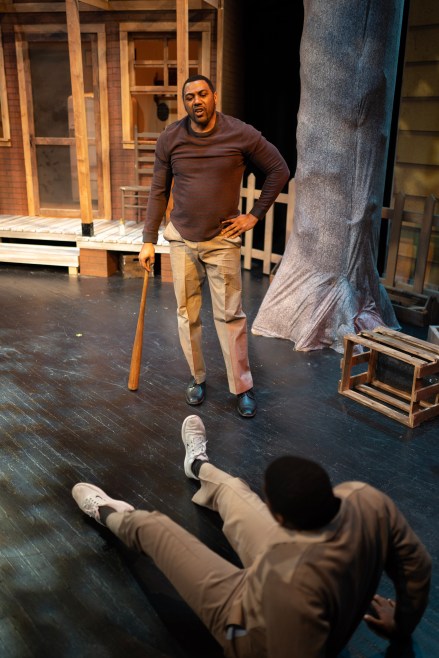
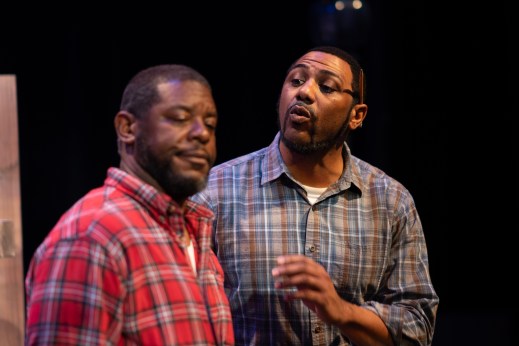
Sports fans quickly get a feel for what time of year it is in August Wilson’s Fences, set in 1957 Pittsburgh. Baseball seems to be supreme as you walk in to Brand New Sheriff’s production at Spirit Square. James Duke’s impressive set design doles out the left side of the Duke Energy Theater stage to a ramshackle two-story house. But a shabby yard dominates the right side, where a baseball dangles on a rope from an old gray tree. Pick up a bat, this is Troy Maxson’s place.

Maxson, an ex-baseball great, talks about the icons of the game, past and present, mostly contemptuous toward the white men who dominate the scene, while his friend Jim Bono rates Troy only below Babe Ruth and Josh Gibson as the best who have ever played. Since Gibson played in the Negro Leagues for the Homestead Grays, based in a mill town adjacent to Pittsburgh, it’s likely that he’s seen Josh far more often on the field than the Babe – especially since he introduced Troy to the sport during a prison stretch.

By the time Jackie Robinson had broken Major League Baseball’s color line in 1947, Troy was already 43, just missing the boat to national fame and power-hitting glory. Instead, he’s a garbage collector when we first see him on a Friday Night, as he and Jim observe their weekly ritual of getting drunk in Troy’s yard. We’ll hear mentions of Pittsburgh Pirates players, Dick Scofield and the under-utilized Roberto Clemente, who seems promising to Troy’s keen eye, so baseball is always in the air.

DSC07579

We begin to zero in on the time of year it is when Troy’s son Cory first appears, trying to get dad’s permission for a visit from a college scout wanting to offer the kid a football scholarship. Troy doesn’t want Cory to give up his job to start his final season with his high school team, and in subsequent scenes, we’ll see his football jersey and shoulder pads, further assuring us that we’ve reached that point in the year when baseball and football seasons overlap. We hear about the Milwaukee Braves leading the National League pennant race, their wicked pitching duo of Warren Spahn and Lew Burdette, and their young slugger, Henry Aaron.

Hank, we hear, has hit 43 homers in a year he finished with 44, so it must be late September. Within a few weeks, the Brooklyn Dodgers and the New York Giants will play their last home games in New York City before moving out to California, and Aaron – destined to surpass the Babe on the all-time home run list – will lead the Braves to victory over the Yankees in the World Series.

As Troy’s pal Bono and his wife Rose keep telling him, times are changing. A Goliath among ballplayers, accustomed to idol worship, Troy doesn’t easily change his thinking, so it’s interesting to watch how Bono and Rose make headway on those rare occasions when they do. Cory really doesn’t stand a chance against Troy’s tyrannical whims unless Rose intercedes on his behalf. Maybe he should have chosen baseball over football?

The father-son relationship is complicated by jealousy and resentment on both sides. Troy is ambivalent about seeing his son succeed in a way that he couldn’t, and Cory is wary of comparisons with his legendary dad, perhaps seeking to sidestep his shadow by turning to a different sport.

Wilson doesn’t downplay the Troy legend. On the contrary, he delightfully magnifies his mythic dimensions. Troy tells us how he has stared down the Devil, tells us how he wrestled with Death for three days, and he shouts his defiance toward the Grim Reaper before our eyes. So Troy’s practical advice toward his son clashes with his own swollen self-regard – and with his disregard for social norms. On the job, his strength and pugnacity will enable him to become the first black garbage truck driver in town, but at home, his unchecked infidelity will cost him.

DSC06873

Part baseball legend, part Greek epic hero, and – as Bono observes – part “Uncle Remus,” Troy is the powerhouse that makes Fences among the most produced and anthologized of Wilson’s plays. Of the four productions I’ve seen in Charlotte, beginning in 1991 when Charlotte Repertory Theatre presented the local premiere, Brand New Sheriff’s best demonstrates how a strong overall cast elevates the script to the stratosphere of a classic.

And we’re seeing the best Troy we’ve had here in Jonavan Adams, who combines Ed Bernard’s physical presence from the Rep production of 1991 with the corrosive meanness and fiery defiance of Wayne DeHart at Theatre Charlotte in 1996. Snarling, cajoling, roaring, and willing us to see his distorted vision of the world, Adams is more outsized and supernatural than we’ve seen him before.

It likely helps that he and director Corlis Hayes are on their second go-round with Fences. The 2013 version at CPCC, where Adams played Lyons, Troy’s jazzy musician son, wasn’t the best of the previous versions, to be honest. But the current BNS production sure does demonstrate the benefits of taking a second shot at a work you revere. Cumulative experience with the playwright helps, too, for Adams builds upon what he learned in other parts of Wilson’s century-spanning Pittsburgh Cycle, with roles in The Piano Lesson, Two Trains Running, Ma Rainey’s Black Bottom, and Joe Turner’s Come and Gone.

With BNS committed to presenting all of Wilson’s Cycle, others who have appeared with the company and in plays by this playwright are also shining lights here, most conspicuously Tim Bradley as Bono and LeShea Nicole as Rose. Audience members who hopped aboard the Pittsburgh train in 2017 with Jitney are certainly enjoying the ride the most. Bradley has been onstage at Duke Energy at every stop so far, and his Bono is a worthy – and compatible – longtime companion for Troy, not quite as righteous and upstanding as Memphis from Two Trains but strong and honorable when Troy could use a reality check.

DSC06918[6]Nicole was paired with Adams last year in Two Trains, so their rich and nuanced chemistry as Rose and Troy shouldn’t be a surprise. Rose is a stronger woman here, so when she holds out her hand on Friday nights, she isn’t merely asking for Troy’s pay envelope. Rose is Troy’s equal, and then some – the family nucleus. Everybody but Troy seems to get that until her climactic utterances deep in Act 2.

Still a junior at UNC Charlotte, Dylan Ireland is no stranger to BNS, having starred as Huey in Rory Sheriff’s Boys to Baghdad. As Cory, Ireland stands up to his dad without strapping on his shoulder pads. Eventually, he even disrespects Troy when he’s drunk and blocking the front door.

It’s a complex role for Ireland, who must forcefully declare that he doesn’t fear his father while imperfectly hiding that he does. He’s the reluctant, resentful free labor that Troy enlists to help build a fence around his property. So Ireland’s confrontations with Adams – along with Troy’s run-ins with Death – will come to mind when you contemplate the meaning of Wilson’s title.DSC07475

Graham Williams, lately the Tin Man in BNS’s Be A Lion, has the cool-cat swagger you expect to see from Lyons. Though he does scrupulously pay Dad back on his loans, Lyons does not prosper as a musician, and Williams gives us a poignant picture of his decline. Seven-year-old Raynell appears late in the show, a bit of a consolation for the misfortunes that befall the other Maxsons, and Lauren Vinson plays her sweetly, only slightly difficult to manage.DSC07936

Seven years younger than his brother Troy, Gabriel is a World War 2 vet who came back from the battlefield delusional, with a metal plate in his head. Troy may have seen Death and the Devil, but Gabriel believes that he has seen St. Peter and that he is the archangel Gabriel, destined the blow his junky trumpet on Judgment Day. James Lee Walker II plays this extravagant simpleton, the only cast member from the 2013 CPCC production to return in the same role.

More than ever, I must lament that I missed Walker when I reviewed the Sunday matinee of the 2013 production, when he was replaced by an understudy. Walker’s crazed, sunshiney energy this time around is a constant joy, and the ending, botched by the understudy or Hayes’ stage direction back then, was absolute perfection when I saw it on Saturday night. The glow of that ending may convince many that Fences is Wilson’s finest drama, and there’s plenty of firepower from the rest of the cast to fuel that feeling.


Climb Aboard a Retro Laugh Riot

Review: A highly animated Odd Couple revival with a professional-grade cast

By Perry Tannenbaum


IMG_2229

With the benefit of hindsight, we can see more clearly that Neil Simon and his esteemed stablemates – Woody Allen, Larry Gelbart, and Mel Brooks – who all wrote for Sid Caesar during the early days of television, didn’t simply disperse into the realms of stand-up, movies, and theatre for the obvious practical reasons. Autonomy, fame, and fortune were surely enticing, but so was the satisfaction of working in longer forms than TV sketch comedy or a star comedian’s monologues.

Come back to The Odd Couple – or revisit Bananas and Zelig, A Funny Thing Happened and Tootsie, The Producers and Blazing Saddles – and we see a mature writer working beyond the limitations of zany characters and snappy one-liners. Simon develops his Oscar and Felix, tells a full-length story about them, and keeps the hilarity going. Entering Theatre Charlotte, where Jill Bloede is directing a highly animated Odd Couple revival with a professional-grade cast, I wasn’t thinking that I’d be seeing this old cash cow so freshly.

Somehow the difference between this 1965 comedy and TV sitcoms of the same era – including the spinoff Odd Couple sitcom that came to ABC in 1970 – suddenly seemed rather radical. The cardinal rule for most 22-minute sitcom writers back then was to hit the reset button at the end of each episode, so that next week’s episode would start out as if this week’s had never happened. On Broadway, you could expect the uptight, neurotic, neat freak Felix to wear out his slovenly pal Oscar’s patience by the time the curtain came down. On TV? No way. Felix made himself at home in Oscar’s Manhattan apartment for nearly five seasons.

IMG_2222

Many in the sold-out house at the Queens Road barn on opening night were struck even more freshly by Felix, Oscar, their poker-night buddies, and the neighboring Pigeon Sisters. Unless the younger people in the house had been hooked on the Matthew Perry reincarnation of the sitcom during 2015-2017 on CBS, they likely hadn’t run into much Simon or Oscar in their lifetimes. I was a little taken aback when I came home, double-checked, and found that I’d only seen Odd Couple once in Charlotte during the last 30+ years, back in 2007 at CPCC.

On the other hand, this comedy staple had been quasi road-tested at Theatre Charlotte when the Female Version – with Florence, Olive and a klatch of Trivial Pursuit-playing women replacing the poker buddies – dropped by in the summer of 2012. Bloede also directed then, an overachievement that certainly warranted her current return engagement.

Whether it’s Lady Bracknell or Lucy Ricardo, Bloede knows her comedy, and she has prospected long enough in Charlotte to be able to mine its finest talent. Doesn’t look like she had to twist any arms, either. For her Oscar, she landed the most experienced Simon exponent in town, Brian Lafontaine. Breaking in to Charlotte theatre in 1992-1994, Lafontaine played leads in three of Simon’s comedies, Brighton Beach Memoirs and Biloxi Blues on Queens Road – and Lost in Yonkers at Charlotte Rep.

Bloede goes edgier and high-energy for her Felix with Mark Scarboro, who first carved out his eccentric niche in 2001-02 with standout performances in Thumbs, The Pitchfork Disney, and Fuddy Meers. Yet Bloede has Lafontaine playing the 43-year-old Oscar with more energy than I’ve ever seen from this slovenly New York Post sportswriter. If she’s going to turn Scarboro loose to be as anal, neurotic, outré, and irritating as he can imagine Felix to be, then she’s returning the favor to Lafontaine and turning him loose to be as irritated, provoked, and out-of-control as he can imagine a devout 44-year-old slob can be.

No less pleasurable is the build-up to Felix’s first entrance. That’s because Bloede has a deep bench sitting around Oscar’s dining room poker table, supporting her stars. If we’re returning to Odd Couple, we’re likely surprised to find that Felix isn’t going to show up until we’re 17 pages into the script. Even Oscar isn’t onstage at the outset in his own apartment! Simon’s poker preamble steadily stokes concern for fragile Felix’s welfare in the wake of his breakup with his wife, but there’s already hostility and comedy shtick at the table before the two marquee combatants show up.

Just watch Michael Corrigan and Patrick Keenan at work, sparring as Murray and Speed, and you’ll see that Bloede has selected a second comedy team for us to revel in, very much in the same Felix-Oscar, Laurel-Hardy template. Decades ago, when Corrigan was younger and slimmer, he tended to remind you of Tim Conway. So the particular quirks of Murray the policeman come to readily to Corrigan, his exasperating slowness in shuffling cards and his alarmist reactions to any new news about Felix. Keenan is the master of the slow burn and the bellowing explosion, repeatedly supplying perfect exclamation points to punctuate the comedy.

Tall and lanky Matt Olin is the perfect choice for the spineless Vinnie, the guy Murray and Speed can both agree to pick on, the dutiful husband who submits to his wife’s curfew, and the man who deeply appreciates Felix’s sissy sandwiches. Meanwhile, Lee Thomas continues to ply his teddy bear charm as Oscar’s diffident, occasionally witty accountant, Roy.

IMG_2270

If you’re worried that Bloede might be taking PC pains to update the Pigeon Sisters and present them as more evolved, rest easy. Vanessa Davis as Gwendolyn and Johanna Jowett as Cecily stay true to their origins, Davis the flirtier sister and Jowett the more empathetic bleeding heart. Set designer Rick Moll, costumer Yvette Moten, and sound designer Rick Wiggins have all climbed aboard Theatre Charlotte’s retro train. With a soundtrack that includes James Brown, Petula Clark, Jack Jones, Herb Alpert, and The Shirelles, Bloede and her all-pro cast are bent on taking you back to the ‘60s, like it or not. I’m betting you’ll like it.

Matthews Mamma Mia! Mixes Summer Romance and Autumn Regret

Review: Mamma Mia! is playing this ABBA hit parade

By Perry Tannenbaum

Promo.1

There’s typical teenybopper inanity – and melodrama – in the lyrics of ABBA tunes that infiltrated the pop charts during the glam rock supergroup’s heyday, 1974-82. It’s all about desire, baby, followed by intense workouts on the hormonal treadmill of adolescence. Prospecting for ABBA gold, you’re rewarded with the age-old cycle of blissful acceptance or bitter ejection, romantic pleasure and conflict, burnout and breakup, cynicism and regret, all rendered in the elegantly engineered shorthand of a Top-40 hit.

Something interesting happened in 2001, after even the youngest member of ABBA had turned 50 and the quartet’s jukebox faves were cunningly transformed into a hit Broadway musical. You can feel it at Matthews Playhouse of the Performing Arts, where Mamma Mia! is playing through February 9. Writing the book for this ABBA hit parade, Catherine Johnson gave most of the songs to characters we could presume were nearly her own age, almost 44 on opening night. Old enough to have teenybopper kids of their own.

When a teenybopper pout is transformed into a midlife lament, regret takes on a whole new coloration in the title song as Donna Sheridan sings:

Yes, I’ve been brokenhearted,

Blue since the day we parted.

Why, why did I ever let you go?

The “day we parted” isn’t two melodramatic weeks ago. Not anymore. It’s over two decades ago, long enough for Donna to be experiencing the autumnal chill of lost youth. But hold on, Donna! You’re on a colorful Greek Isle, with lively cabana studs serving your taverna’s drinks, bikini-clad nymphs frolicking everywhere, dazzling eternal sunshine – and your darling daughter Sophie is getting married tomorrow!

It was easier to see Mamma Mia! from Sophie’s point of view in its Broadway days, pre-Meryl Streep, for Sophie really kickstarts the plot by prying into Mom’s secret diary and inviting all three of her possible dads to her wedding. Imagine if your three exes showed up unexpectedly for your daughter’s wedding. Sophie might as well have hired a skywriter to spell it all out: MOM, I READ YOUR SECRET DIARY AND INVITED ALL THREE OF MY POSSIBLE DADS TO MY WEDDING. Donna probably wouldn’t have looked up and noticed.

Promo.3

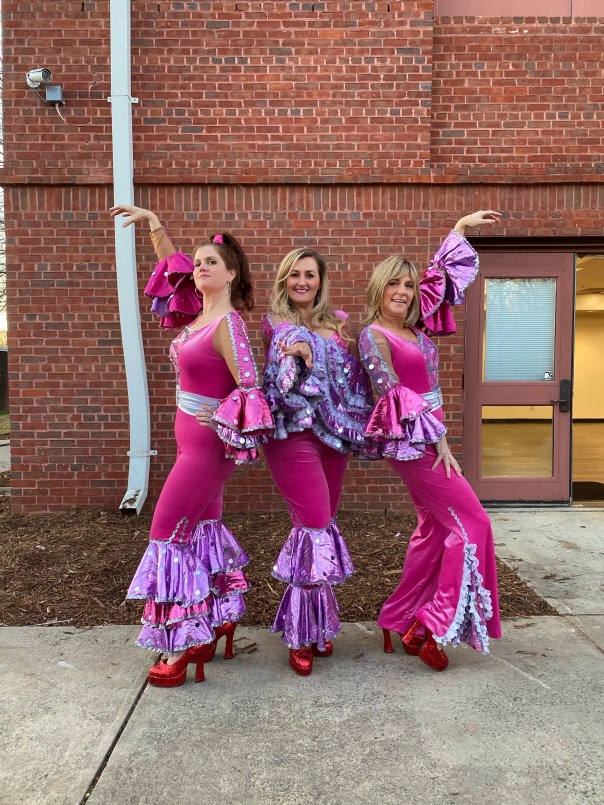
Presumably, Mamma is preoccupied with wedding preparations, but Donna compounds her distractions by inviting two of her old chums, Tanya and Rosie, to the festivities. Plenty of catching up to do, but conveniently, the three women were a glam rock vocal trio back in their salad days, Donna and the Dynamos, so they can provide the party entertainment. With this makeshift guest list and its ‘90s setting, the prevailing outlook of the story shifts emphatically toward the baby boomers, ABBA’s perennial demographic.

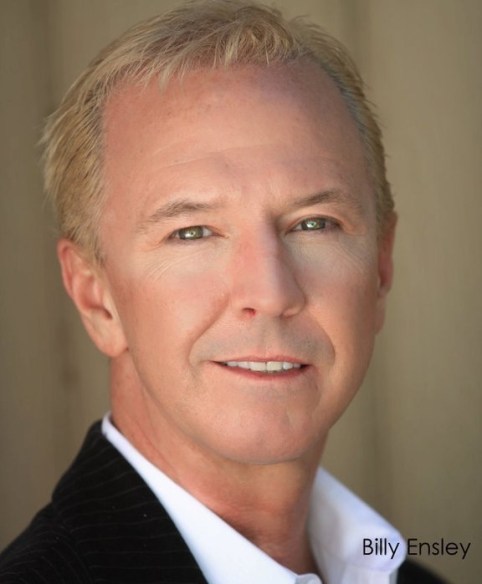
Directing the show, Billy Ensley clearly gets the boomer drift, and more than a couple of seasoned Charlotte musical stars ride the wave with him to the Matthews Playhouse stage. With a richly detailed scenic design by John Bayless and a sumptuous array of costumes by Lisa Altieri – including a surprise set of glam rock duds for the dads – it’s likely that all of these vets appreciated the warmth of their welcome.

We don’t need to wait around for all these elders to gather in the Mediterranean sun before the excitement begins, for Ensley has found newcomer Alexis Thomas to ignite the action as the nubile Sophie. Thomas quickly proves she’s a precocious belter, bookending Act 1 with lead vocals on “Honey, Honey” and “The Name of the Game.”

Having deceptively invited her three possible dads – Sam, Bill, and Harry – using Mom’s letterhead, Sophie must also subject each of the candidates to an impromptu paternity test, inviting all three to give her away at tomorrow’s wedding. The hurried brevity of these scenes would make any self-respecting playwright blush, but Thomas carries them off as if they were hallowed Broadway formalities, codified as cliché. Which they are. Spencer Ellis doesn’t get nearly as much opportunity to shine as Sky, Sophie’s fiancé, but he makes his big moment in Act 2 count, letting Sophie know that he feels her quest for her true dad is a bigger thing to her than their wedding.

Of course, the ABBA songs, stirred by island breezes and mixed with the celebratory vibe of the oncoming nuptials, become a cocktail that takes all six of the mid-lifers sip by sip from the tipsiness of nostalgia to the full inebriation of regression and reawakening. The women are the most intoxicated here, each arriving at her own pace. Burdened with a mother’s cares and saddled with the bitterness of a jilted sweetheart, Lucia Stetson as Donna travels the longest path – though the magic is there from the moment she sees Sam.

Promo.4

Stetson staunchly deals with the fact that Donna is prone to some truly stupid-ass choices, flexing the same regal star-quality insouciance that carried her through the title role of Evita a couple of summers back. Notwithstanding the baggy overalls she wears early on, we’re not surprised that she’ll soon emerge as a “Dancing Queen” and a “Super Trouper” – singing lead vocals, of course. You wonder a bit at first about Lisa Smith-Bradley, sporting a pair of mousy eyeglasses as Rosie, a far cry from the charismatic Mama Rose she brought to Theatre Charlotte seven years ago.

Never fear, Ensley and Smith-Bradley are cooking up a startling mouse-to-tigress rejuvenation as Rosie sets her sights on Bill, sinking her slinky claws into him in their “Take a Chance on Me” duet. Lisa Blanton talks like the bawdiest woman onstage as Tanya, but is it all talk? No, it is definitely not as we watch Blanton’s cougar rampage on “Does Your Mother Know?” Blanton pulls double duty at Matthews, doubling as the production’s choreographer, captaining her own carnivorous showcase with obvious gusto.

Aside from Thomas, a young talent to watch, the most promising of the young Greeks is Adrian White as Pepper, prime target for Tanya’s predations in “Does Your Mother Know?” – agile and slightly bewildered. He’s the dancing king here, for none of his elders, aside from Blanton, was chosen for hoofing prowess.

We’ve seen all the middle-aged guys before in Charlotte, Bob Mauney most recently starring in The Music Man at Theatre Charlotte, Steven B. Martin in Evita and Bridges of Madison County, and Patrick Ratchford in anything he has ever auditioned for over the last 25+ years, most recently 1776, Ragtime, and Charlotte Squawks! The Ratchford voice is still in peak condition, mostly held in reserve until Sam’s “S.O.S.” duet with Donna in Act 2, an all-out cri de Coeur in the top-40 world. Those smooth baritone tonsils also wrap themselves around two other hit singles, “Knowing Me, Knowing You” and – spoiler alert – the climactic “I Do, I Do, I Do, I Do, I Do” duet.

Sam isn’t the most comical of Donna’s exes, just the most interesting: the last he heard from her before Sophie’s faux invite was that she didn’t want to see him again. Understandably, he’s a bit uncomfortable and ambivalent when Sophie admits the subterfuge, but like the other guys who are also residually fond of Donna in various degrees, the possibility of being Sophie’s father keeps him hanging around in hopes of closure – and maybe making amends.

Martin as Harry and Mauny as Bill follow parallel tracks, not called upon to do much singing. Neither squanders his opportunity, Martin in a nostalgic “Our Last Summer” duet in Donna’s bedroom (here we go again?) and Mauny as Rosie’s willing prey in their “Take a Chance on Me” tête-à-tête. Bill claims to be an adventurer, so a tigress should be just right up his Aussie alley.

Dancing in the Aisles for 36 Years

Interview: Billy Ensley

By Perry Tannenbaum

image001

Call him Mister Versatility. To find anyone else in the Charlotte theatre scene who has been celebrated for excellence in so many different areas as Billy Ensley, you would have to summon up the memory of Alan Poindexter, the wunderkind who came out of the UNC Charlotte theatre program and won accolades as an actor, director, and sound designer. Ensley’s awards, a total of 16 from Creative Loafing and the Metrolina Theatre Association, have been for his work as an actor, director – in musicals, comedies, and dramas – and as a choreographer.

Song and dance were Ensley’s calling cards from the beginning, and they remain handy skills as he directs the upcoming Matthews Playhouse production of Mamma Mia! – the fifth musical that he has directed there. We interviewed Ensley about his evolution as an artist, the enduring popularity of Mamma Mia! and the vital importance of our community theatres.

QC Nerve: Take us back to the early days. Outside of school productions, what was your first appearance on a Charlotte stage? Can you tell us how you felt about theatre at that time and the part it would play in your life?

My first appearance on a Charlotte stage after school was in Seesaw (1983) at Theatre Charlotte [then known as Little Theatre of Charlotte]. At that time, I was moving into theatre as a result of having dance training throughout my youth. Male dancers were in demand, and therefore I was able to make that transition and learn acting and singing as well. While performing on Charlotte stages in my 20’s, I regularly got work in professional theatres, some of which include The Blowing Rock Stage Company, Opera Carolina, Busch Gardens, and Cook/Loughlin productions at Spirit Square.

IMG_6979

I wanted to dedicate my life to the theatre arts, but I also had a strong desire to own a home and be self-sufficient. I worked for over a decade as the director of office operations for the Robinson, Bradshaw & Hinson law firm. After a couple of years in the travel industry, I went to work for Rexus Corporation, a national background screening company, where I am their chief operations officer for 15+ years.

By the time I first saw you back in the late 80s, in House of Blue Leaves and The 1940s Radio Hour, you were well on your way to establishing yourself as Charlotte’s pre-eminent triple threat. How committed were you at that time to accomplishing that goal, and how did you hone your acting, singing, and dancing skills?

At the time, I was not aware that I was establishing myself in any way actually. I was merely doing what I loved and what I was driven to do. Of course, it helped that I was receiving good reviews in the local press and support from the theatre community. That was positive reinforcement to keep working basically two full time jobs.

IMG_6589

Through the support and training of many people in Charlotte – including Tom Vance, Tom Hollis, Ron Chisholm, Terry Loughlin, Steve Umberger, to name a few – I was fortunate enough to work in the theatre almost constantly. I received a lot of my acting and singing training by being in productions, but I also continued to take dance classes, study voice with Joyce Marshall and study acting privately.

What role did our community theatre play in launching your career in theatre? How do see Theatre Charlotte and Matthews Playhouse figuring in the local scene today?

Theatre Charlotte often had the best directors and performers in the region. I was surrounded by some of the best and, as a result, I almost always got a paying gig from that exposure in community theatre. In addition, I was getting excellent hands-on training from them.

IMG_6982

Theatre Charlotte and Matthews Playhouse figure prominently in the local scene today, attracting good directors and seasoned performers as well as exciting new talent. In addition to cultivating new talent, they both are providing a venue for professional performers to have the opportunity to perform roles that may not be possible otherwise, due to the fact that Charlotte still struggles with sustaining many theatre companies.

You’ve made a couple of dramatic changes to reignite your career. First, you stopped doing musical after musical and took on a major role in a straight play, You Should Be So Lucky, in 1997. Then in 2003-04, we suddenly found you directing local productions of Evita, Bat Boy, and Hedwig and the Angry Inch. What motivated you in each of these instances to break out of your previous mold – were there practical considerations involved, or was it all about self-fulfillment?

For me, it was a combination of both. As a dancer, you learn pretty early in life that the thing you have been training for, performing and loving, must eventually come to an end, or at least morph considerably. The same applies to playing the young male leads in musical theatre. I knew that I wanted the theatre to remain in my life, and I wanted to continue growing in other ways so that I could facilitate that.

IMG_6981

As a youngster, I marveled at performers that were always reinventing themselves – David Bowie comes to mind, actually – and I thought that was a great way to remain relevant. I also did not want to be pigeonholed in musical theatre, which I felt I clearly was. I wanted the challenges of dramatic acting like McDonagh’s The Pillowman (2007), in which I was lucky enough to play the lead, Katurian, in the Actor’s Theatre of Charlotte production.

As for directing, that was a slow and methodical process, and not an easy career to break in to. I started choreographing and directing in theatres outside of Charlotte like Belmont Abbey College and Wingate University. Eventually, the executive director at Theatre Charlotte, Candace Sorensen, offered me my first directing job in Charlotte with Sweet Charity (2002). After a few Charlotte shows, I got a great deal of support from Dan Shoemaker and Chip Decker at Actor’s Theatre of Charlotte.

Tell us about your history with Matthews Playhouse and what you have experienced there in terms of the quality of their facilities, staff, and talent pool.

I have directed Shrek, Joseph and the Amazing Technicolor Dreamcoat, Bonnie & Clyde and Grey Gardens for Matthews Playhouse. Matthews Playhouse is an excellent example of a successful and vibrant community theatre. Under the leadership of June Bayless, they have an excellent staff, a remarkable youth training program, combined with a very nice auditorium and excellent technical staff.

Who are the familiar audience favorites and the hot new discoveries that are going to make your Mamma Mia! a smashing success? Who are the scenic design, costume design, and choreographer aces on the case?

IMG_6570Lucia Stetson and Lisa Blanton are audience favorites. Lucia having played Maria in The Sound of Music and Lisa Blanton having played Little Edie in Grey Gardens. Our two young romantic leads both qualify as hot new discoveries. They are Alexa Thomas and Spencer Ellis as Sophie and Sky. Lisa Blanton agreed to pull double duty for this show by both choregraphing and playing the role of Tanya. Lisa Altieri is handling costumes and Emmy Award-winning John Bayless is the scenic designer. His work is amazing and his talents run very, very deep.

What do you continue to find in Mamma Mia! that keeps us from getting tired of it?

Well, ABBA of course! The music is familiar and well loved; bringing back lots of memories of love and romance for us middle-aged folk. The women characters in the show are strong and independent, the male characters are sensitive and compassionate. Like other jukebox musicals, it is fun to watch a scene that evolves into a song that most of us know at least some of the lyrics to. It is a show where the audience should come in with their hair down, their troubles stowed away, and perhaps their inhibitions stowed away as well – in favor of singing along or dancing in the aisles!


Janeta Bounces from Poppins to Billie

Review: Lady Day at Emerson’s Bar & Grill

By Perry Tannenbaum

LadyDay.Production.FenixFoto.5R4A3146

Forget the famous nickname for a second. Like only a handful of jazz artists – instrumentalists Miles Davis and John Coltrane come to mind – Billie Holiday’s vocal career had a distinctive arc, leaving the diva’s fans with a blithe and sunny early period of recordings, a forceful and dramatic middle period, and a worldly wise and poignant late period. The meteoric 25-year Lady Day career has stages as identifiable as Beethoven’s groundbreaking music or Shakespeare’s awesome procession of plays.

The legend of Billie Holiday took off almost instantly after her early death in 1959. That legend is easier to capture on film if you want to deliver the full breadth – and the full tragedy – of the story. But Lady Sings the Blues (1972) was a wasted opportunity, totally worthless as a biography, notwithstanding Diana Ross’s Oscar-nominated portrayal. Lady Day at Emerson’s Bar & Grill by playwright Lanie Robertson was a more serious attempt, though the 1986 drama didn’t gain real traction in the theatre world until 2014, when Audra McDonald brought it to Broadway – and subsequently to HBO.

Now it’s here at Queens University, where Hadley Theatre has been transformed into Emerson’s in an Actor’s Theatre of Charlotte production directed by Jeremy DeCarlos. Janeta Jackson not only sings Billie’s songs and wears her signature gardenia, she mingles with the paying customers and engages them as they sit in casual cabaret style at cocktail tables. Chip Decker’s scenic setup also provides for extra stadium seating behind the many cocktail tables plus a bar at the rear of the hall.

Robertson focused on the most notorious part of Billie’s life, the final days when her deteriorating health and appalling finances sent her on a trajectory toward police custody on her deathbed. When she died of cardiac arrest and liver disease at the age of 44, handcuffed to her hospital bed, there was $7,500 in cash taped to her body and 70 cents in her bank account. It’s already 1959 when we see her at Emerson’s, and costume designer Carrie Cranford has outfitted Jackson in the same sort of satin dress that you’ll find on Billie’s valedictory Columbia album, Lady in Satin, and on the Verve memorial LP set, The Unforgettable Lady Day.

Not a total surprise, since Willis Hickerson, Jr., leading his trio at the keyboard in the role of Jimmy Power, plays Billie on with “Satin Doll.” When Jackson arrives, she mostly sings songs that are actually associated with Billie – but not necessarily with her latter days. With his choice of songs and with the rambling patter of his script, Robertson contrives to have latter-day Lady Day present an informal retrospective of her life and career, musically emphasizing the early and middle years, leaving space for songs that inspired her and, of course, the songs she wrote and championed.

LadyDay.Production.FenixFoto.5R4A2922

Among the early songs sprinkled on the Lady Day songlist are “When a Woman Loves a Man,” “Foolin’ Myself,” and “Easy Living” from Billie’s swinging early period, recorded in 1935-38 with the likes of Teddy Wilson, Benny Goodman, and Lester Young. Robertson does something interesting “What a Little Moonlight Can Do,” not only programming it early in Billie’s set but making it emblematic of her heroin habit as she staggers backstage midway through her show. Jackson arrives onstage slurping a drink, so Billie’s substance abuse is never a secret. It’s the main reason she’s performing in this Philadelphia dive, we quickly learn, for she had lost her license to perform in New York City cabarets a few arrests earlier.

Although we never hear any of the mighty heartbreakers on Billie’s final album, like “I’m a Fool to Want You” or “You’ve Changed,” the mood definitely darkens toward the end. Although lighting designer Evan Kinsley repeatedly flouts the words of the script, which should prompt him to keep the piano player in semi-darkness, he does turn down the houselights and shine a spot on Jackson for the climactic “Strange Fruit,” a searing depiction of a Southern-style lynching that became a Lady Day hallmark.

Or as she puts it, one of the songs we came to hear. She doesn’t say it quite that politely.

There are no “I’ve seen the mountaintop” moments in Lady Day at Emerson’s Bar & Grill, so the ending is more pathetic than tragic. Embedding an autobiography into a cabaret performance wasn’t the easiest assignment for Robertson, but his best line, “Mom and Pop were just a couple of kids when they got married: he was 18, she was 16, and I was three,” flows naturally out of the opening of Billie’s Lady Sings the Blues autobio.

He did his research, you will find, and so have DeCarlos and Jackson. DeCarlos has chosen his musicians well – bassist Peter de Klerk and drummer Tim Scott fill out the trio – and he gets an alert and spontaneous performance from Hickerson where Powers has to speak a few lines here and there, coping with Billie’s spaced-out eccentricities. And who what DeCarlos saw from Jackson at auditions, where she arrived with calling cards that included the doo-wop group in Beehive and the lead in Mary Poppins? Bet it wasn’t nearly the same Billie as we’re seeing now.

For there can be no doubting that, if she wasn’t a Lady Day fan when she showed up auditioned for DeCarlos, Jackson has certainly immersed herself in the recordings since landing the role. To a Billiephile, it’s obvious that Jackson concentrated most heavily on the Verve recordings of 1948-57, which have snippets of Billie’s spoken introductions, a nice compromise between the juicy early recordings and the raspy final releases. Jackson seems to have avoided or rejected the Emerson’s Bar recording by McDonald – a very wise choice, for Audra not only leans a bit on Billie’s raspiness, she occasionally exaggerates the mannerisms of her last years.

LadyDay.Production.FenixFoto.5R4A2686

Jackson echoes those mannerisms rather than imitating or caricaturing them, and she is almost as uncanny as McDonald in capturing the timbre of the speaking voice, though she eschews the telltale rasp. On other aspects of the speaking voice, Jackson might move closer to the six-time Tony Award winner, who won her sixth as Lady Day. Slowing down would help Jackson make Lady Day’s aging and physical deterioration more real, and slurring her speech a little more would couple nicely with the effects of the liquor and the junk.

The Jackson vocals are consistently wonderful in her chosen Verve groove, most Billie-like near the end of the evening in “Don’t Explain,” where she almost equals “Strange Fruit” as the highlight. If she puts a little too much mannered mustard on the bridge and at the end of “God Bless the Child,” Holiday’s most-admired original composition, it’s still outstanding – and she has none of the difficulties with the metre that plague the recorded covers by McDonald and Ross.

While the setting at Hadley isn’t as intimate as the HBO Special, it’s cozier than the Broadway production was and DeCarlos gives Jackson freedom to mingle with the clientele and roam away from the little stage – which she does with admirable poise. Ladylike, we can say. If you love Lady Day, there’s no need at all to hesitate, and if you’re looking to find out more, look no further.

Robbins Hatches an Immigrant Experience

Quonta Beasley, Stephanie Lee, photo by Ashley Randall_Edit_1

Review: The New Colossus

By Perry Tannenbaum

If you are one of those knuckleheads who oppose illegal and legal immigration – “good” folks who scoff at the notion of allowing terrorists onto our sacred soil under the flimsy guise of political asylum – you won’t need to watch The New Colossus for long before concluding that this is not the show for you. On the other hand, if you were expecting Tim Robbins and his co-writers, The Actors’ Gang Ensemble, to bring a play to Knight Theater – or a suite of touching immigrant narratives – you might hang in there considerably longer before deciding that maybe you should have passed on this show as well.

For despite the assurances of the playbill that we would be watching scenes and stories, The New Colossus was not a play on the opening night of its national tour. Actors in the Ensemble, representing refugees from 12 different countries – including the US Confederate States – speak 12 different languages in portraying their own ancestors.

But not that often. In his director’s notes, Robbins clarifies his intentions, describing Colossus as a movement piece, a “calling up of ancestors.” Here and there, we see supertitles as each of the 12 refugees voices the perils in his or her birthplace – Iran, Turkey, Malaysia, Germany, Vietnam, Mexico, Finland, Hungary, Yugoslavia, Russia, Austria, and Louisiana – driving them to find liberty and new lives in America.

The cast of The New Colossus, photo by Ashley Randall

More often, we see them as a raggedy group, toting valises that contain everything they own, then fleeing from pursuers, squatting by a stream to quench their thirsts, helping each other to dig a tunnel with their hands, freezing in the cold, urgently struggling to build a fire, basking in the heat and light once they’ve succeeded, scurrying for cover when they believe their pursuers might see them, standing at a border wall where they’re not allowed to cross, and desperately hailing passersby who might assist their journeys to freedom. It’s fair to say that these wordless actions and movements are at least two-thirds of the 90-minute piece that Robbins and Ensemble “wrote.”

No doubt about it, Actor’s Gang delivers an immigrant experience. There were moments during these diverse and harrowing pilgrimages to our shores that were heart-rending – moments when I couldn’t help thinking about people fleeing today from wartime atrocities in Syria or murderous drug gangs in Guatamala. What has become of governments here and in Europe that close their borders to such desperate refugees? What has become of those peoples who demand, with the force of their votes, such absolute callousness from their governments and elected leaders?

Around the 14th time, or maybe the 27th time, these immigrants circled the Knight stage; grunting, panting, and sometimes muttering phrases in their native tongues; I couldn’t help feeling that my liberal tolerance was being stretched past its breaking point, even if the Ensemble was credibly simulating the tedium of their forefathers’ and foremothers’ exhausting treks toward freedom. Robbins not only co-wrote The New Colossus, he directed it. Sitting at rehearsals or announcing his reactions afterwards, he should have had the sense to say, “We can definitely cut some of that action.”

Music by cellist Mikala Schmitz and percussionist David Robbins alleviates the tedium, while projections by technical director Josh Keh open up fresh possibilities. Those possibilities surfaced during the post-show powwow that Robbins emceed from the stage. By a show of hands, our opening night audience revealed how many descended from indigenous Native Americans, how many of us were immigrants, sons and daughters of immigrants, grandsons and granddaughters of immigrants, etc., all the way back to the Mayflower.

The indigenous folk were also prompted to give us their names and tribes, immigrants gave their countries of origin and dates of arrival, while sons and daughters of immigrants gave the names, dates, and countries of origin of family members who first set foot here. When all these names, tribes, countries of origin and dates had been called out, Robbins asked for volunteers in the audience to share their special immigration stories.

At times, the speakers became emotional, and again, this was no place for anti-immigration, America-is-closed knuckleheads. But this wasn’t necessarily the end of Robbins’ show, even after the add-on segment. If they wished, people who had shared their stories could come backstage afterwards and retell their tales with a camera rolling. Robbins even invited the shyer folk who hadn’t ventured to share their stories with the entire Knight crowd to come backstage and open up in a more intimate setting.

So I can only hope that Robbins is conceiving The Colossus as something more than a play, a movement piece, or a simulated immigration experience. I hope he really sees it as a dynamic project and that, someday soon, the stories he is filming will nestle in among the images projected behind his performers – filling in their silences and preventing the images already chosen from overstaying their welcome.

None of the actors gets to dominate the stage for very long amid the hurly-burly of fleeing their motherlands, so it probably shouldn’t surprise anyone that performers representing familiar stories resonated most with me, namely Quonta Shannell Beasley as the emancipated Sadie Duncan from Louisiana and Jeanette Rothschild as her grandmother Yetta Rothschild, escaped from Germany. It also helped that the stories of Stephanie Lee as Ly My Dung from Vietnam and Paulette Zubata as her mother Gabriela Mia Garcia from Mexico also arrived somewhat pre-warmed.

Zirko Petkovic and Pierre Adeli, photo by Ashley Randall

Influenced by my own ancestry, I had a special fondness for the performers who delivered the most Eastern European flavor, Zivko Petkovic as his Yugoslavian grandfather, Mirko Petkovic, and Dora Kiss as Hungarian grandmother Aranka Markus. Of course, Emma Lazarus, the Jewish American poet who gave the Statue of Liberty her voice when she wrote her “New Colossus” sonnet, had a soft spot in her heart for Eastern Europe. Small wonder, then, that Petkovic and Kiss strongly evoked for me the immigrants famously described by Lady Liberty in the Lazarus poem:

“Keep, ancient lands, your storied pomp!” cries she

With silent lips. “Give me your tired, your poor,

Your huddled masses yearning to breathe free,

The wretched refuse of your teeming shore.

Send these, the homeless, tempest-tossed to me;

I lift my lamp beside the golden door!”

Sobering reminders when even our courts are okaying the concept of income requirements for aspiring citizens – and the idea of rejecting other countries’ rejects has become White House policy. Hopefully, Robbins’ new piece will blossom into a project that will be heeded.

A Disfigured War Vet Struggles to Find – and See – Herself

Review: Ugly Lies the Bone

By Perry Tannenbaum

Jess-Kacie-Mom

When Jess returns to her Florida hometown from her third deployment in Afghanistan, there are multiple obstacles littering her path to reintegrating into family and community life. Mentally, she’s suffering from PTSD. Physically, she’s tormented by the aftereffects of injuries inflicted by an exploding IED: she gets around – slowly – with help from a walker, her face is disfigured by burns and skin grafts, and she’s constantly in excruciating pain from burns and grafts all over her body.

That’s just the beginning in Lindsey Ferrentino’s Ugly Lies the Bone, now at Spirit Square in a Three Bone Theatre production. There’s a certain amount of friction between Jess and her sunny sister, Kacie, that reads like ingratitude for all the help and care Kacie is trying to give her. Jess also reflexively despises Kacie’s vulgar, tactless, and boisterous boyfriend, Kelvin, and she doesn’t express that feeling daintily. Nor does it help that Jess’s former boyfriend, Stevie, didn’t religiously wait for her to come back home. Instead, he went on with his life and got married.

Located near Cape Kennedy, Jess’s hometown of Titusville offers additional challenges. Not only do the sands on the nearby beaches trigger Jess’s PTSD, so will the earthshaking tremors from rocket launches at the Kennedy Space Center. True, NASA’s space shuttle program is about to end, minimizing the obstacles posed by future launch events. But layoffs have already struck the Space Center, reducing job opportunities in the citywide. Stevie was one of the impacted NASA workers, and Jess finds him behind the counter at a local gas station, making change, selling lottery cards, and wearing a dopey space beanie.

But wait a second. Jess had to run and conquer obstacle courses just to earn the dubious privilege of being deployed to Afghanistan in the first place, right? This nasty, bitter, and disfigured woman has grit. We also get hints from both Kacie and Stevie that, once upon a time, Jess had vitality and appeal. And notwithstanding all her current pain, disability, and orneriness, Ugly Jess gets meaningful help.

Jess2

The most intriguing – and theatrical – form of help is a form of VR therapy that Ferrentino tells us, in a program note, was actually the inspiration for her play. You can google “Snow World” therapy and find that its use with severely injured soldiers dates back to 2008, though it seemed pretty cutting-edge to me. Each time Andrea King as Jess puts on her VR goggles and immerses herself in a fabricated 3D snow-world, the Duke Energy Theater fills with dreamy projection designs by Ryan Maloney – so we’re fairly immersed as well.

Since the theory of the therapy is as much sensory bombardment as fantastical escape, the second ingredient of the treatments is music. Jess gets to choose between patriotic soldiering music and Paul Simon. The treatment is curiously impersonal: we never see Jess’s therapist; we only hear her voice. Amid the sensory overload, Jess’s sufferings subside sufficiently for the therapist to prompt her to move her legs through the snowdrifts and lift her arms – movements that would normally exacerbate her terrible pain by stretching her newly grafted skin.

For us as well as for Jess, these dreamy cinematic episodes are oases of calm that punctuate the stresses and occasional comedy of her readjustment to civilian life. She momentarily abandons her walker as she grabs the videogame controls, almost straightens up, and we find ourselves relaxing with her in the dimmed light.

Jess-Kelvin

Perverse as it was, I enjoyed the oafishness of Peter Finnegan as Kelvin and the nerdiness of Scott Tynes-Miller as Stevie. Anyone who saw Finnegan last summer as he feasted on the role of Bottom in the outdoor production of A Midsummer Night’s Dream at Queens University will need no further incentive to behold his Kelvin, which is nearly that far south of normal. And who better for director Dee Abdullah to turn to than Tynes-Miller for the wishy-washy, conflicted, and adorably humbled Stevie? We’ve watched his auditions for years.

Abdullah can allow both Finnegan and Tynes-Miller to go slightly overboard in making asses out of Kelvin and Stevie because Ferrentino eventually brings them back to conscience and virtue. Becky Schultz as Jess’s sister Kacie may seem too wholesome at first to go the distance with Kelvin. With only a trace of trashiness from Schultz, Finnegan’s loutishness startles us all the more, so we tend to empathize with Jess a little bit when she explodes on him early – and later on when she harbors darker suspicions.

Jess-Stevie1

Before singing King’s praises as Jess, I’d be remiss if I didn’t insert some prefatory kudos to makeup designer Gregory Hewett and makeup artist Natasha Kay, unsparing in showing us what Jess is dealing with. You don’t need to imagine much of the pain when King slowly makes her first entrance with her walker. The pain really does seem to permeate every inch of her as she struggles to move and the endure the ocean of ache. When King declares that three operations were necessary to restore one eyelid, you believe it. Vulnerability, bitterness, anger, need, and an all-powerful doggedness course through her, slackened only when Jess dons those transporting goggles, or when she joins Stevie – again in relative darkness – for their climactic rooftop rendezvous.

We get to know Debbie Swanson as the voice of the therapist strictly from her performance up in the Duke’s soundbooth, so it’s gratifying to see her at last when she doubles as Jess and Kacie’s mom as the drama concludes. Swanson’s disembodied voice isn’t tough love so much as clinical care for Jess at the VR sessions. Sometimes soothingly, she patiently counsels Jess to move forward instead of looking back, following procedures with firm military precision.

Eventually, the voice from the booth warms up to Jess just enough to bend the rules. All this time, even before she appears, mom is adding to Jess’s stress and our suspense. Suffering from dementia, Mom may not recognize her own daughter anymore, another devastating blow for Jess. Or she might recognize Jess and freak out, which would hurt them both.

For Jess, avoidance of that confrontation brings little relief. Looking into the mirror, Jess is struggling to recognize herself.

Sher Tinkers With “My Fair Lady,” Recalibrating Its Perfections

Review: Lerner & Loewe’s My Fair Lady

By Perry Tannenbaum

My fair Lady

Ah, perfection! It’s what so many of us unthinkingly strive for. Yet achieving perfection, the pedestal Lerner & Loewe’s My Fair Lady perches upon in the eyes of so many, invites a whole set of calamities, chiefly complacency and inertia. Worshipers at the altar of perfection would understandably strive to replicate the voice of Julie Andrews and the grace of Audrey Hepburn in presenting Eliza Doolittle – or the sublimely calibrated gruffness of Rex Harrison in reviving Professor Henry Higgins.

Their perfection has seemed to add layers of tamper-proof portrayals to Frederick Loewe’s cavalcade of memorable melodies, Alan Jay Lerner’s concise and pungent lyrics, and the duo’s deft adaptation of George Bernard Shaw’s Pygmalion. Over the decades since it premiered on Broadway in 1959, our concepts of the ideal Fair Lady have become the sound of the original cast album (a #1 best seller) and the lavish look of the Hollywood film (Oscar for Best Picture).

But what about the stage show? There we tend to be rather vague. If you’ve been following theatre in Charlotte for the past 30 years or so, seeing as many as half-a-dozen local revivals as I have, you dimly remember one or two of them. Last national Fair Lady tour to stop in Charlotte? Never happened before the current tour now playing at Ovens Auditorium.

Launched this past December, five months after it closed on Broadway, the acclaimed Lincoln Center Theater production directed by Bartlett Sher dares to mess with the perfect musical. You’ll most readily notice Sher’s ministrations in the final scene, where Eliza’s response to Higgins’ peremptory “Fetch me my slippers!” seems to draw a “did-that-really-happen?” reaction from the Professor. But Sher also makes a sumptuous meal of “The Servant’s Chorus,” a song that I could not remember hearing live before, an 84-second relic from the film soundtrack that was apparently shoehorned into the 1993 revival.

My fair Lady

The insertion of this interlude, between “Just You Wait” – with its gawky vowels and dropped aitches – and Liza’s breakthrough “Rain in Spain,” makes delicious dramatic sense, giving us some idea of the flower girl’s arduous toil to master proper English pronunciation and Higgins’ merciless prodding. A gaggle of servants scurries through a mammoth two-story house that Sher has tasked set designer Michael Yeargen to build in such grand fashion that it revolves, showing us three different rooms in Higgins’ home.

Extending Liza’s struggles into epic spectacle makes her sudden latenight “Rain in Spain” triumph that much more rewarding. The crowning point of the sequence, Liza’s exuberant “I Could Have Danced All Night” after Higgins and servants have wearily trudged off to sleep, had never moved me so much before, a true revelation.

But improving on perfection ran into technical difficulties on opening night. To clear the upstage wall for its subsequent rotations – and likely to ensure its stability – the two-story set must come forward a few feet toward the audience before it’s properly secured and ready to roll. Instead, there was a slight lurch before the mighty edifice stalled. True to the hallowed show-must-go-on spirit, Laird Mackintosh as Higgins launched into the scene with one of his butlers, only to be shut down by the crew. Houselights came up as the curtain came down, and we heard the dreaded announcement on the PA, which confirmed a problem rather than describing it.

The third stop on the new My Fair Lady tour had come to a dead stop. After a half-hour delay, I felt thankful that the snafu had occurred at the top of the scene so that the whole revelatory sequence was eventually delivered without interruption. Mackintosh as Professor Higgins and Shereen Ahmed as Eliza make a wonderful pair. Ahmed doesn’t have the #MeToo energy and cleverness attributed to Lauren Ambrose when she brought this production to Lincoln Center in 2018. She almost doesn’t need to with all the abrasiveness, conceit, and disregard that Mackintosh brings to Higgins’ misogynistic treatment of Eliza.

We feel like Eliza is being abused long before the Professor’s aborted physical attack on her, and Mackintosh never surrenders all the cruel edge of Lerner’s lyrics in “I’m an Ordinary Man” and “A Hymn to Him” to their comedy. Nor is there more potent testimony to Eliza’s triumph than Mackintosh’s chastened, broken rendition of “I’ve Grown Accustomed to Her Face.” Sher manages to remind us in his nuanced staging that women are still mobilizing behind the cause of suffrage at the time the action is set in 1912. We can cut some slack, then, if Ahmed seems a little deferential towards Higgins’ erudition, wealth, and gender – and, in turn, we can cut Mackintosh some slack for his troglodyte arrogance.

Sher also judges keenly in giving us a more youthful Higgins, for Mackintosh can react to Ahmed emotionally as she wins his admiration, almost sweeping away thoughts of her desirability as a maidservant or private secretary. That youthful casting gives Ahmed more to be giddy about when Higgins shows her his first glimmer of approval and pride. In “I Could Have Danced All Night,” Ahmed’s whole body seems to awaken to undreamed-of possibilities that surpass the prospect of becoming a private secretary or a flower shop owner.

MyFairLadyTour0052

Ahmed does sing superbly, showing steel and vitality in her bellicose songs, “Just You Wait,” “Show Me,” and “Without You.” Helped along by Catherine Zuber’s smashing costumes, Ahmed also transforms magnificently from the grubby Cockney we meet in the opening scene into a vision of regal elegance that credibly explodes Higgins’ wildest expectations of success for his phonetic experimentations – and his gentlemen’s bet with Colonel Pickering.

Pickering and Higgins’ patrician mom, whom you might expect to oppose Eliza, turn out to be her staunchest supporters. Sher doesn’t tamper with their traditional essences, bespeaking the good-heartedness of upper-crust Brits, getting zesty and stylish performances from Leslie Alexander as Mrs. Higgins and Kevin Pariseau as the Colonel.

My fair Lady

Yet when it comes to the young gentleman smitten by Eliza, Freddy Eynsford-Hill, Sher calls upon Sam Simahk to augment the chap’s dopiness and devotion. That allows for a broader comical take on Eliza’s gaucheries at the Ascot races in her society debut. And it equips Liza with a lovestruck, puppy dog valet throughout most of Act 2, reaffirming her new sheen. Simahk only slightly trims back the rhapsodic splendor of “On the Street Where You Live” in pulling off this alteration.

My fair Lady

Drunken, vulgar, and rascally, Adam Grupper as the irrepressible Alfred P. Doolittle now seems heaven-sent, purposed to make Higgins seem enlightened and evolved by comparison. Holding his hat respectfully in Higgins’ study as he sells his daughter’s virtue for five pounds sterling, or dancing the night away with barroom sluts the night before his wedding, Grupper is a quintessential scoundrel, lit up with earthy, peasant merriment. His “Get Me to the Church on Time” production number is even more extravagant than the pivotal “Servant’s Chorus,” with climactic funeral imagery in Christopher Gattelli’s choreography on loan from the Scrooge movie musical.

As Higgins proceeded afterwards to toy with thoughts of reconciliation and matrimony, I could see more clearly than ever before that he and Doolittle are kindred spirits. I could also appreciate more keenly the delicious irony that Higgins’ benevolent sponsorship of Doolittle’s welfare, which has a sequel beyond that five-pound note, is what lands Alfred P. in his matrimonial pickle.

But if you don’t like the ambiguous ending of My Fair Lady, you can take comfort in the fact that George Bernard Shaw didn’t write it. Unlike the 1938 screen version, the true source of Lerner’s adaptation, the GBS play ends with Higgins exclaiming, “Marry Freddy, ha!” A 14-page postscript incorporates Shaw’s prognostications about his vibrant protagonists’ futures.

Jilted Women at a Wine Bar Thirsting for Blood

Review: The Norwegians

By Perry Tannenbaum

IMG_1262 (2)

Bundle up! If you head north on I-77 to the Warehouse PAC later this week, playwright C. Denby Swanson will carry you off to the wilds of Minnesota, where she learned the frigid core lesson that inspired her dark arctic comedy, The Norwegians: “You gotta find a lover before the first freeze, or else it’s too late.” Two unescorted women, already bundled up in igloo mode, meet in a ladies’ room at a wine bar, get sloshed together, and bitterly commiserate over recently lost boyfriends.

But Betty, a devious plotter from Kentucky, and Olive, more recently arrived from Texas, aren’t passively drowning their sorrows.

No, no, no. Our first glimpse Olive is a far weirder scene. She’s hiring two hitmen, Tor and Gus, to knock off her asshole boyfriend. It just doesn’t look that way. Tor and Gus are questioning Olive as if she were the one who was trying to get hired for a job – making her sweat sometimes like cops grilling a criminal suspect.

Less askew, but with a definitely mean edge, are the barbs that the women aim at Minnesota and Texas. The Norwegians, Tor and Gus, pretty much demolish their own nationality by describing themselves and their Lutheran ways. These aren’t Lake Wobegon bachelor Norwegians, we should remember, that Garrison Keillor described so whimsically on the Prairie Home Companion comedy franchise. These are killers – and businessmen in competition with other area hitmen, most notably the Swedish outfit.

IMG_1170 (1)They are also pathologically serious, intense, and straightforward. Late in the action, Betty will take great satisfaction in bursting Tor’s “irony cherry.” Nor is there homespun solidarity between the carnivores that Betty has recommended to Olive. Every now and then, Tor will throw the fact that Gus is only half-Norwegian in his face.

Confronted by the strangely hostile and aggressive personalities of the Norwegians, Olive begins to have second thoughts and Tor begins to question Gus’s marketing expertise. We still haven’t heard anything concrete about her ex’s atrocities, or a solid reason for this radical payback, when Olive also has qualms about Gus’s weapon of choice, a baseball bat.

More complications, plot twists, and ironies ensue – and more second thoughts. After berating Gus for mixing business with pleasure, Tor realizes that he has feelings for Olive, who is resolving not to have the warmth of a lover during the oncoming winter. Or beyond. And Betty? She’s seriously considering contacting the Swedes and canceling the hit she ordered.

Well, everybody is serious here. Swanson has a knack for spicing up her dramatic tensions with wicked barbs and comedy. Meanwhile the oddity of her situations is enhanced by her odd structuring, which keeps us glued to Olive as she shuttles back and forth – in time as well as place – from the fateful wine bar meetup to the assassins’ lair.

Directing this exotic Slurpee of intrigue, Jessica Zingher doesn’t go overboard in finessing these transitions as Becca Worthington traverses the Warehouse. Together, Zingher and Worthington make a convincing case that a low-budget production at a storefront theater is an ideal way to present the shivery eccentricity of The Norwegians. The down-market wine bar is virtually built in!

Swanson’s quirky storytelling allows Worthington to shed her victim and protagonist roles, becoming a bystander like us. Her reactions are often more fun than her spoken responses. What she sees, when Tor and Gus regularly forget about her and engage with each other, is that they are not running a good-cop, bad-cop con. There’s real friction there, personality differences that go bone-deep. Bryce Mac as Gus is seething, suspicious, and volatile. Bill Reilly as Tor is comparatively stolid, stoical, trusting, and calm. He might erupt, and there are moments when we sense that there are limits to Tor’s patience for both Olive and Gus to be wary of.

Yet both of the Norwegians are rather tight-lipped and purposeful, which keeps their interrogation and negotiation scenes with Olive taut and quick-paced. Will Olive freak out or will Gus? Worthington and Mac keep us guessing.

IMG_1296 (1)

Over bottles of wine at a cocktail table, Olive’s conversations with Betty are noticeably less hostile, more leisurely paced, even if they’re mulling over similar homicidal subjects. Although Olive is clearly – visibly – the glue that binds the plot together, not to mention the two halves of the Warehouse stage, it’s Kerstin VanHuss as Betty who is the most loquacious of Swanson’s characters. VanHuss feasts on Swanson’s lengthiest and most outré monologues, giving Olive the lowdown on Minnesota life and persuading her that murder is the way to go.

Watching VanHuss cajoling her newfound chum and shakily delivering her pontifications, you begin to get the skewed idea that the Norwegians are more scrupulous than Betty. Another calibration might also happen as Worthington shuttles across the stage after each of her wine bar flashbacks: you may be thinking that the grilling Gus and Tor are giving her is helping Olive snap out of a hangover and back to sobriety.

The plot thickens after Betty makes her entrance for her first scene with the guys – and the action comically intensifies. Here we ultimately find the most intricate ensemble coordination, with Zingher’s most precisely timed direction, as Betty performs an epic ransacking of her supersized handbag that seems to extend at least five minutes and spill across a quarter of the stage. Others onstage while VanHuss performs this frantic, sloppy meltdown, searching for the Swedes’ business card, are largely unconcerned with Betty’s distress, digesting other news.

But as Betty’s junk pours out, and VanHuss feverishly rummages everywhere – inside the bag and out, on the table or under it – or on the floor – her epic search syncs with maximum comical impact on the dramatic conversation proceeding on a totally different topic. Amid an avalanche of trivial debris, pauses occur and certain items emerge on cue. Maybe we can compare this unique climax to a jazz improvisation, seemingly chaotic but precisely timed.

It’s funny and memorable, that’s for sure. If not altogether happily, everything falls satisfyingly into place as Swanson’s zany, treacherous comedy concludes.

Farewell, America

Review: Come from Away

By Perry Tannenbaum

9195_The First North American Tour Company of COME FROM AWAY, Photo by Matthew Murphy, 2018

Traveling to Europe by air, you may recall the animated maps that flash onto the seatback screens facing you, orienting passengers during the flight as your pilot follows the great circle route over the Atlantic. At the very eastern edge of North America, you’re likely to notice the name of Gander, a Newfoundland outpost oddly mixed among the names of larger, more familiar cities.

So when all of North America’s airspace was shut down during the emergency of September 11, 2001, and 38 commercial and 4 military flights were diverted to the Gander International Airport, it was the next-worst thing to forcing more than 6,600 civilians and soldiers to wait it out on the ocean. Passengers almost had to bid America farewell. It was no picnic for the citizens of nearby Gander, either, who suddenly discovered that their airport had been transformed into a major immigration hub – while the population of their sleepy town mushroomed by over 66%.

Yet somehow, the hubbub sorted itself out beyond all expectations. At the time when news hit of the warm-hearted welcome strangers were experiencing in the wilds of Newfoundland, it was the feel-good story to break through a tsunami of anger, grieving, finger-pointing, and Islamophobia. A little island of hospitality in an ocean of hostility.

Sixteen years later, when Canadian husband-and-wife team Irene Sankoff and David Hein retold the story in a Broadway musical, Come from Away, the time was ripe for the Gander love-in to strike a nerve once again. When the show opened for previews in mid-February 2017, less than a month after Inauguration Day, an infamous Muslim ban had recently gone into effect, a thousand-mile Southern border wall was still a political imperative – most intensely among small town rustics, it seemed – and a wave of anti-immigration sentiment was sweeping Europe.

In that climate, Come from Away must have seemed like a rallying cry, hearkening back to a time when Christian values hadn’t devolved into round-the-clock xenophobia. This week, as the touring version of the Broadway hit rolls through Belk Theater, there hasn’t been a politically-charged photo op from an internment camp in recent memory. Iran, Ukraine, Russia, or our pathetic Panthers are more likely to inflame our passions than any imminent threat from Guatemala.

We’ve turned the page, right? I wondered if the warmth of the quirky Canadians and their spontaneous connection with a global hoard of uninvited guests would still resonate, especially when the storytelling turned out to be so objective, bland, and non-confrontational.

As studiously as Sankoff and Hein avoid controversy, analysis, or agonized post-mortems, they do go into admirable detail about the logistical challenges of accommodating thousands of detainees in the middle of nowhere. Pandemonium may have broken loose near Ground Zero, but airspace across the continent was in virtual lockdown, security precautions around aircraft especially tight. Our first peeps inside a passenger cabin, as planes languish on the ground until proper processing can be set up, show us people going stir crazy during the 28 hours they must wait before deplaning – separated from their checked luggage in an information blackout.

The North American Tour of Come From Away Photo Credit Matthew Murphy_0423-Edit

Raiding their supply cabinets and freely handing out booze is one remedy a crew might try to ease the tedium, even if it doesn’t altogether restore quiet and calm – or appease the claustrophobic crone in the back row. Twelve actors draw the task of simulating all the global passengers and all the Newfoundlanders involved in this massive coping drill, so there’s an electric bustle as the actors switch from their traveler roles to townspeople.

While the passengers hovering over airstrips are disoriented, experiencing the surreal, on the ground in Gander, the impact is very much like a benign invasion has suddenly hit. An ordinary day that begins with the mayor ordering up his customary cuppa joe at Tim Horton’s is no longer pre-programmed. Instead of meeting with the leader of the school bus drivers to negotiate an end to their strike, he’ll be soliciting cooperation from this foe in transporting over 6,000 aliens from the airport to town.

Elsewhere, a school teacher will need to take charge of opening an emergency shelter and breaking the news of the attack to the passengers. Feeding, washing, and bedding all these travel-weary people must also be managed. The newcomers speak a host of languages and have a host of unforeseen needs – including kosher meals – and helping so many to simply check in with friends and relatives, by phone or by email, is a formidable challenge. It is almost comical when a local SPCA worker pops up, concerned about the plight of the cats, dogs, and monkeys stowed in the belly of the planes with the cargo.

In short, there’s a multitude of practicalities in the hurly-burly of this 100-minute musical that largely distract us from the two main things: the massive kindness that the Newfies showered on the newbies, and the massive changes to our world that came with the events in Manhattan, at the Pentagon, and aboard Flight 93. A few of the passengers remind us of the big picture. Beverley, a pilot, and Hannah, a mom, worry that loved ones may have perished, and there are multiple hints that the seeds of Islamophobia have already started germinating.

Otherwise, life goes on. Kevin T and Kevin J, a gay couple with personality differences, may or may not break up. A Texas woman and a British guy may get together, overcoming wariness, shyness, and the brevity of their acquaintance.

We aren’t deluged with one-on-one kindness from the friendly natives, but there are choice examples. The teacher, Julie Johnson as Beulah, bonds with Danielle K. Thomas as Hannah because her son is also a firefighter. Two Kevins walk into a Gander bar and find that their fears of Laramie homophobia are groundless – they’re accepted warmly and instantly. A nearby mayor invites the wary Bob to his home, opens up his liquor cabinet to the stranger, and helps him overcome his fear that he’ll wake up tomorrow without his wallet. Or how about the local store clerk? After thanking a first-time customer for shopping at Walmart, she invites her home to take a shower.

The North American Tour of Come From Away Photo Credit Matthew Murphy_0950-Edit

Beginning with “Welcome to the Rock,” most of the songs in the score are sung by the entire ensemble, choreographed with the right kind of vivacity by Kelly Devine, so we often get a sense that we are watching an energetic community response after all. With a script that doesn’t have the Twin Towers, al-Qaeda, radical Islam, Osama, or even terrorism prominently in its vocabulary, that communal energy seemed to be the most potent reason why Come from Away connected so viscerally with the near-capacity crowd at Belk Theater on opening night.

While there are plenty of feel-good experiences to be found on our current media landscape, including synthetic fantasies of communities bonding together and accepting one another, Come from Away comes to us at a time when we seem hopelessly fractious and divided, digging in against each other instead of helping each other out. And the comity of Come from Away strikes us as very real, very possible – and as a rebuke that isn’t saddled with a party label.

After the opening ensemble, there isn’t much in the Sankoff and Hein score to keep us airborne until we reach “Me and the Sky,” a showcase for Beverley, who turns out to be first female airline pilot at American Airlines. Marika Aubrey ably takes the controls here, counterbalancing the levity of the barroom scene that precedes. In that episode, we get the most genuinely communal spectacle of the evening, presided over by Kevin Carolan as the mayor.

The North American Tour of Come From Away Photo Credit Matthew Murphy_0503-Edit

While visitors get the opportunity to be initiated as honorary Newfies, Andrew Samonsky as Kevin T and Nick Duckart as Kevin J get to define their differences, while Chamblee Ferguson as the Brit and Christine Toy Johnson as the Texan get to share their first sloppy kiss. A local liquor, “Screech,” lubricates the zany ritual, along with a freshly-caught codfish.

Others in the cast who make an impression come across as the youngest – and maybe as surrogates or prompters for us as we watch. James Earl Jones II as the skeptical Bob registers his wonder at Northern hospitality most tellingly and holds our attention after he and his fellow passengers have returned home. When she isn’t clerking at Walmart, Julia Knitel is most notably a cub reporter on the local TV station, faced with the ginormous cataclysm of 9/11 on her first day in the field. Lanky, gawky, and adorable.

Sharone Sayegh may just be even more adorable as the SPCA zealot so mindful of the animals when all of humanity’s minds are elsewhere. No doubt about it, Come from Away comes to us with plenty of heart. Question is, will we come to Belk Theater to escape what we have become 18+ years later, or will we come to experience a reckoning? No matter which, audience reception on opening night seemed to hint that they had felt an unexpectedly positive vibe – an affirmation that, in the face of so much division and adversity assailing us, we can be better.