Review: Johnson C. Smith University and Charlotte Symphony
By Perry Tannenbaum

March 21, 2023, Charlotte, NC – You might have thought that a symphony orchestra performing in a college gymnasium would prove to be an odd coupling. Sure, there can be satisfying concerts staged at coliseums where a city’s basketball team plays, but those are usually performed by rockstars, pop icons, and the occasional Cirque du Soleil troupe when every note is processed electronically. My curiosity was certainly piqued when Charlotte Symphony Orchestra announced that its “In Concert with Johnson C. Smith University” program would be happening on campus at the Brayboy Gymnasium. Led by resident conductor Christopher James Lees, Symphony would be joined on the court – the hardwood covered with bright blue tarpaulin – by the JCSU Concert Choir, led by soprano Shawn-Allyce White and accompanied by pianist Frank Williams.
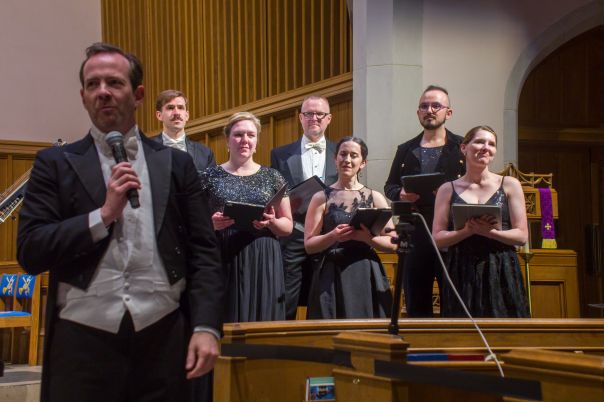
A hookup between Symphony and JCSU at a more established concert venue should have seemed inevitable as long ago as 2015, when the leadership of Spoleto Festival USA visited the campus to announce that the Concert Choir would be participating in the high-profile production of Porgy and Bess the following year, celebrating the festival’s 40th anniversary. Yet when Lees picked up a microphone to greet the crowd, he reminded us that Symphony hadn’t been on campus for 13 years – indicating that this was his first time on campus and implying that CSO’s last musical director, Christopher Warren-Green, had never gotten around to the inevitable before his tenure ended. Were the optics or the acoustics the obstacles that had forestalled a return visit? Or was the idea simply slept on after Opera Carolina enlisted the men of the Concert Choir for their production of Cyrano in 2017, followed by the full choir’s appearance in I Dream in 2018?
Any questions about the Brayboy’s acoustics were swiftly dispelled. The sound from Lees’ microphone was crisp and present, nothing like the muffled sound from a faraway galaxy that emanates from PA systems at some basketball arenas or outdoor stadiums. As the brass heralded the assault of Franz von Suppé’s “Overture from Light Cavalry,” the sound remained bright and forward for all sections of the orchestra, not at all like an echoey gymnasium. French hornist Robert Rydel and principal flutist Victor Wang stood out sharply from the ensemble in their little cameos.
Rather than the controlled gallop and fury of Karajan’s recording with the Berlin Philharmonic, Lees seemed to favor the frantic onrush of Paul Paray’s recording with the Detroit Symphony, which shaves more than a minute off the Berliners’ 7:38 timing. The strings could show off their fast fingering as well as their lush tone, and when the familiar big tune surfaced, four percussionists sprang into action to make the cavalry charge more thrilling. Maybe more impressive – and surely boding well for the 14-member Concert Choir standing by for their pieces – was the syrupy sweetness of principal clarinetist Taylor Marino’s eloquence during a lull between two of the Cavalry dust storms.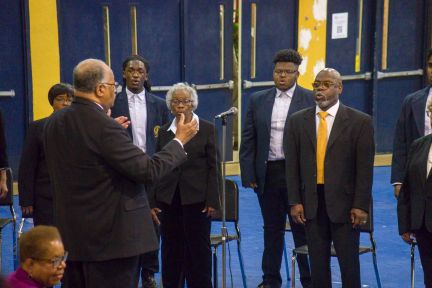
Fortified by two floor-standing mikes, the Concert Choir, eight women and six men on this occasion, were as stirring and powerful as ever at Brayboy, opening with William Henry Smith’s acapella arrangement of the traditional “Walk Together, Children.” Mostly tinted with treble and infused with jubilation, the main takeaway from the Choir’s performance wasn’t the urging of walking together but the excitement of “a great camp meeting in the Promised Land.” Richard Smallwood’s “Trust Me” was statelier, more equally weighted between the men and the women, never deteriorating into the sluggishness or singsong repetitiveness of other performances I’ve heard. The pause midway was particularly dramatic, daring to linger in silence long enough for the first smatterings of applause to break out before returning with thunder.
In between these two righteous chorales, Lees slipped in Jessica Meyer’s Slow Burn, reminding us in his intro that the composer was a violist and to be on the lookout for principal CSO violist Benjam in Geller’s pivotal solo – but somehow neglecting to mention that the 2018 composition was written for a burlesque dancer. The piece was wonderfully apt when Symphony first performed it in early 2021, when wind players weren’t yet allowed back in concert halls due to pandemic restrictions, and the worldliness of this all-strings piece was a fine fit at the Brayboy. Bluesy strings did all of the sensual slitherings, while a pair of double basses provided percussion via pizzicatos, hand slaps, and vigorous thwacks of the bow on the necks of the instruments, accentuating Meyer’s jazzier passages. Most alluring was Geller’s suggestive glissando triggering the key swell of the strings that most vividly evoked Meyer’s title. Nor did Geller’s subsequent solo disappoint.
The two orchestral pieces that followed were more like what we expect from a city’s Symphony, but a pleasant surprise lurked in the first of these, a work dating back to the days of Haydn and Mozart, the Symphony No. 2 by Joseph Bologne, Chevalier de Saint-Georges. A champion swordsman, military leader, and political revolutionary, Saint-Georges was the son of a French planter and an African slave who would be called “The Black Mozart” because of his varied musical output, including orchestral works and operas. Saint-Georges played a key role in commissioning Haydn’s Paris Symphonies and may have mentored the younger Mozart. The outer movements, Allegro and then Presto, reminded me instantly of Mozart’s symphonic pieces, while the inner Andante brought Papa Haydn to mind. Violins dominated throughout, subtly backed by French horn and oboe in the opening movement, then by pizzicatos from the lower strings in the finale.
Some Slavic coloring had peeped into the Cavalry overture, but the performance of Antonín Dvořák’s Slavonic Dance No. 8 was the pure essence, a percussion orgy driving the main theme and the high woodwinds taking the spotlight. Anything less would have been anticlimactic in the wake of Dr. White’s stirring vocal on the Hall Johnson arrangement of “Ride on, King Jesus,” accompanied by Williams at the keyboard and crowned with a flurry of vocal fireworks. White was only slightly less impressive after the Dvořák, taking the lead vocal on the Moses Hogan arrangement of “Ev’ry Time I Feel the Spirit,” backed by the full choir with Williams conducting.
Lees stated the obvious when he declared that we were all waiting to see Charlotte Symphony and JCSU Concert Choir perform together. Would we get the Gershwin brothers or the Johnson brothers? Nothing less than the “National Black Anthem” would do at this point of the evening. While there are many YouTube examples of Dr. Roland Carter’s arrangement of “Lift Every Voice and Sing,” none on my radar sport more than a piano and an organ for their instrumentation. So Charlotte Symphony may have broken some new ground here with its uncredited orchestration.
The effect was electrifying as the entire audience rose to their feet to honor the anthem. In Carter’s arrangement, there are instrumental sections before each of the three stanzas where James Weldon Johnson’s lyrics are set to J. Rosamond Johnson’s music. Each of these interludes affording sufficient space where an orchestra can shine while providing an orchestrator with engaging new melodic material. Of course, you also want the orchestra to actively support the choir each time it enters, so the new CSO orchestration added a dimension that has always been missing in the YouTube versions. Together, Charlotte Symphony and the Johnson C. Smith Concert lifted the impact of “Lift Every Voice.”
We weren’t quite done even now. Lees had hedged a bit in announcing that a surprise awaited us, probably remembering as he spoke that the JCSU Drumline, alias the Funk Phi MOB, was already mentioned in the digital program. But before they brought on the rhythm and the funk, we were all invited to participate in a lighter CSO-JCSU hookup. After a brief rehearsal of the seven-note melody, we all joined in on cue for vocal sections of Daniel Bernard Roumain’s La, La, La, La. Needless to say, the lyrics were not a challenge.

Amid this glee, Funk Phi MOB came marching in with their purely collegiate pandemonium, carrying me back to long-ago Saturday afternoons at the University of Iowa, the University of Oregon, and Williams-Brice Stadium where my shivers were alleviated or intensified by the fortunes of my hometown college football teams. This drumline was a bit more up-to-date than the drum corps I remember stationing themselves at midfield. Beside the customary bass drums and snare drums, a couple of these percussionists were outfitted with some sort of Yamaha hybrid, five or six flat shiny surfaces arrayed like a cross between timpani and a xylophone. If you’ve experienced how a stadium rocks during halftime, you can imagine the gymnasium version, peaking at a sensible 94dB according to my Apple Watch.
Topping off this mighty mayhem, a drum major arrived with all his spirited, ceremonial, and high-stepping antics. Thanks for being here had been expressed long before this all-American climax, so without further adieus, the drum major could end the concert by leading the Drumline, Dr. White, and Lees out of the hall. When my wife Sue and I managed to navigate from our seats through the exiting audience and folks still milling on the court – conversing, posing for photos, and taking selfies – we emerged from the Brayboy Gymnasium and found that a drum party was still going on outside the entrance. Fortunately, I had brought my camera. Sue wouldn’t let me proceed to the parking lot until I took a few shots.




 We’ve been hearing about numerous identified and unidentified flying objects in recent weeks, emanating from numerous sectors of the globe, crossing over our nation’s territorial waters and seeking all sorts of military and meteorological intelligence. Less mysteriously, there have been precise predictions in recent months of astral objects whistling through our solar system, one of them brushing closer to dear Earth than the moon.


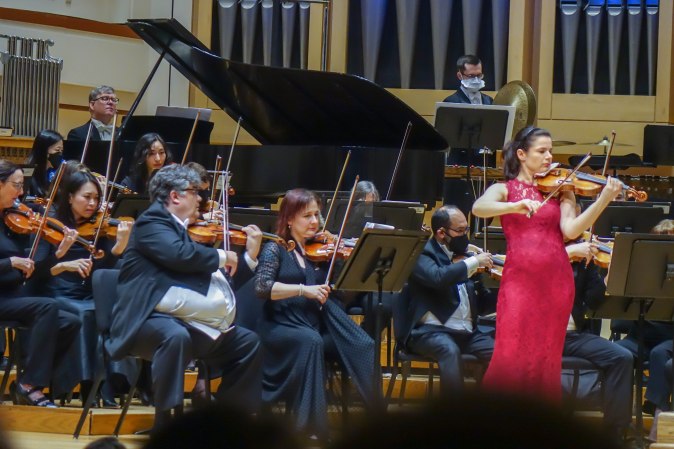
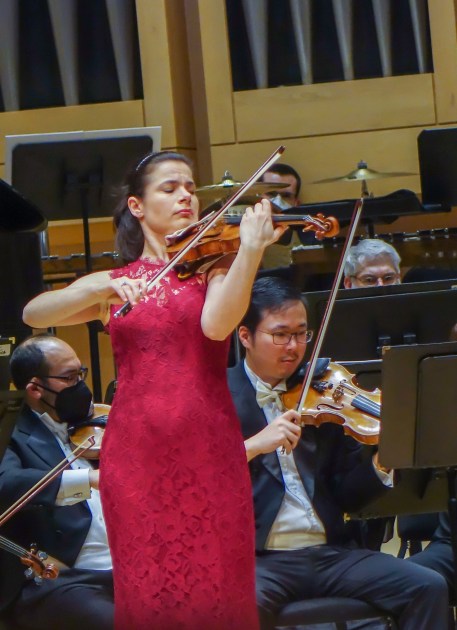
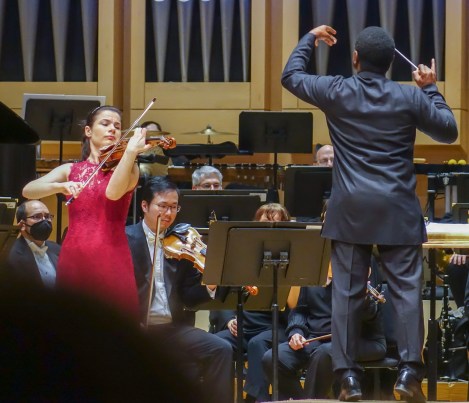
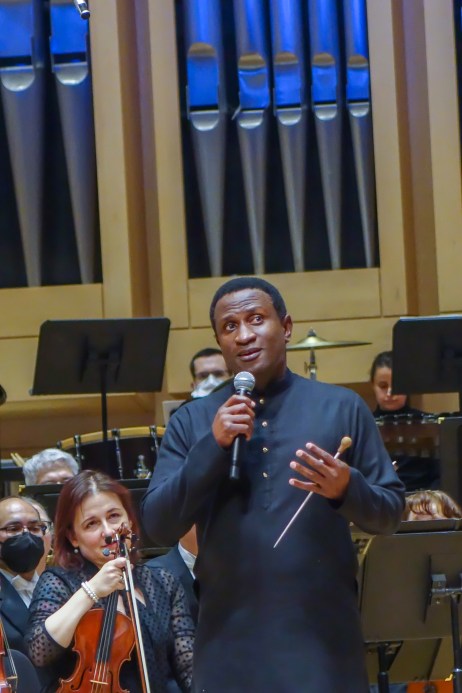

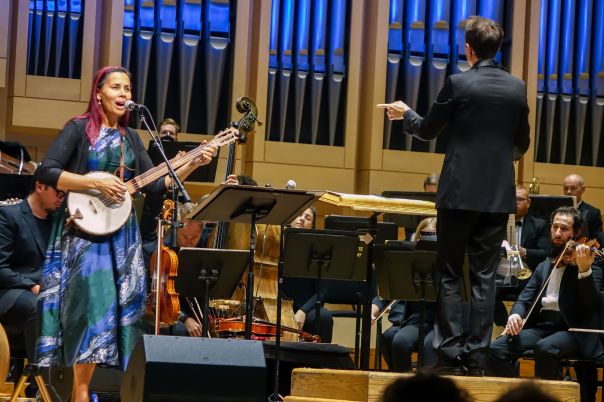
 Yet the Greensboro native co-founded the Carolina Chocolate Drops, her first Grammy Award exploit, and now has an opera firmly rooted in the Carolinas to her credit, so an audience studded with black ties and tuxes had no difficulty embracing the polyglot Giddens as their own – even as she navigated a songlist that included Parisian and Celtic selections. They may not have realized that Giddens had played Charlotte before, as far back as 2008 when I caught her with the Chocolate Drops at Northwest School of the Arts. Turrisi and bassist Jason Sypher, who shared the Cistern Yards stage with Giddens at the College of Charleston in May, accompanied her once again, though Lees and Symphony lightened their load. Nor was it obvious that Turrisi would be playing piano until late in the concert when he insinuated himself upstage.
 “Mouth Music” was all we needed to hear if we needed assurance that Giddens could make a credible showing at a jazz festival, and there would be more to follow. Lees ceded the stage to the guest trio, lightening the vibe, and Giddens picked up a viola and yielded some of the spotlight to her bandmates, especially Turrisi when he sizzled on his accordion during one of the fiddle tunes. The merriment faded when Lees returned to the podium, replaced by the romance of “Autumn Leaves” en français until Giddens favored us with the English lyric as well. If you hadn’t glimpsed the program, just the tropical sway of the violins was enough to announce our return to the Carolinas and “Summertime” from the Gershwins’ Porgy and Bess, sweetly sung. Plenty of space was afforded to both Giddens and Symphony in the arrangement of “La Vie en Rose,” and the singer did not seem to be straining to sound like Edith Piaf, which was more than OK with me.

 By Perry Tannenbaum


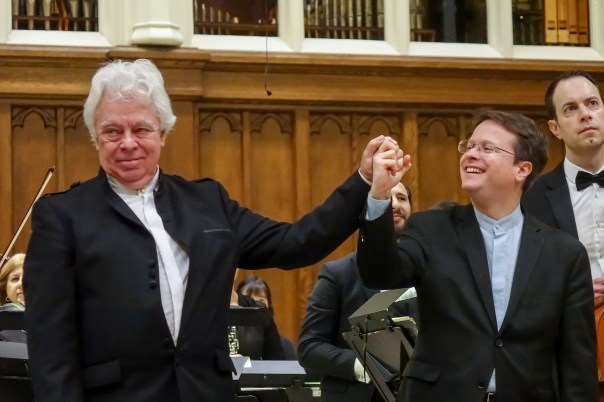
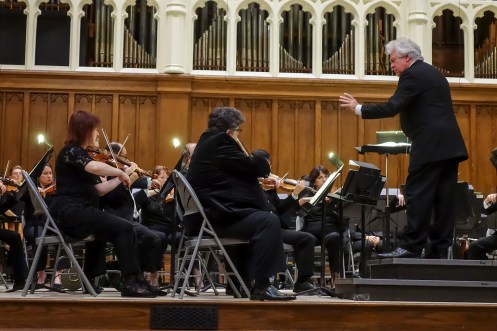






 Handel certainly packs plenty of into the brassy choral payload, less than five minutes long, that pounces upon us after the relatively quiet preamble that gurgles along for more than 25% of the composition. Bach might have dispatched a solo vocalist to narrate the prose of Zadok and Nathan anointing Solomon as King of Israel, saving the exclamations – “God save the King!” “Amen!” “Alleluia!” and “May the King live for ever!” – for the Choir. No such middle ground applied to this Handel masterwork, and Jarrett, the brass, and the Festival Choir all reveled in firing away at us in unrelenting fortissimo. Collectively, they were thrilling.
 Three of the four featured Ascension vocalists have been with Bach Akademie since the beginning, except for tenor Gene Stenger, the Evangelist, who signed up in 2019. The Evangelist role gave Stenger the lion’s share of the scriptural verses in this Oratorio’s libretto, stitched together from Luke, Mark, and Acts, with bass Edmund Milly, no less dignified, standing in for the Two Men in White Apparel who promise the Apostles that Jesus will return from Heaven “in like manner” as they have just seen him go. Besides that key passage, Milly drew a more poignant Recitative earlier in the narrative, “Ach, Jesu, ist dein Abschied schon so nah?” (Ah, Jesus, is Thy parting now so near?)
 Art on My Sleeve