Monthly Archives: February 2026

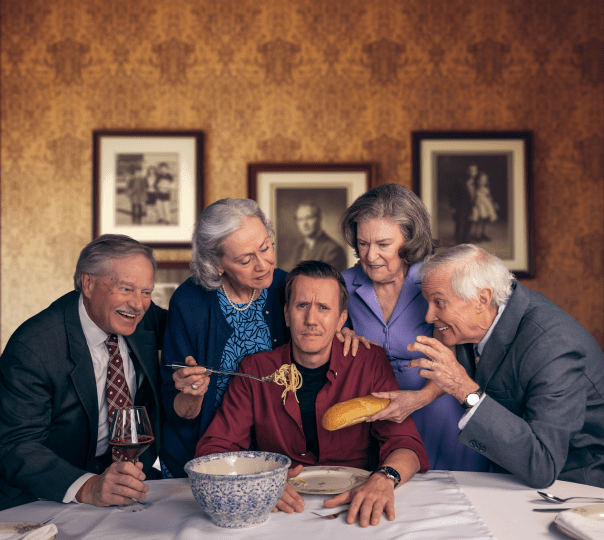
“Over the River” Has Fresh Relevance at the Old Barn

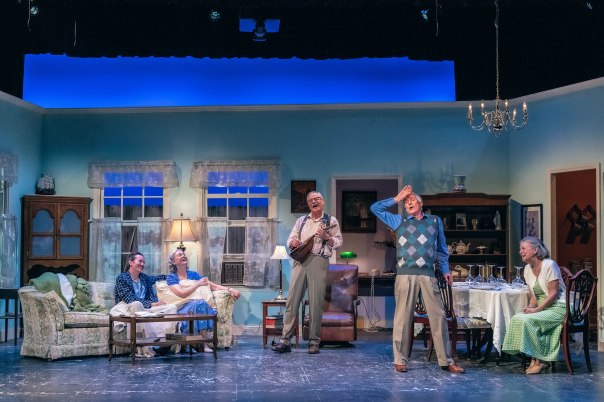
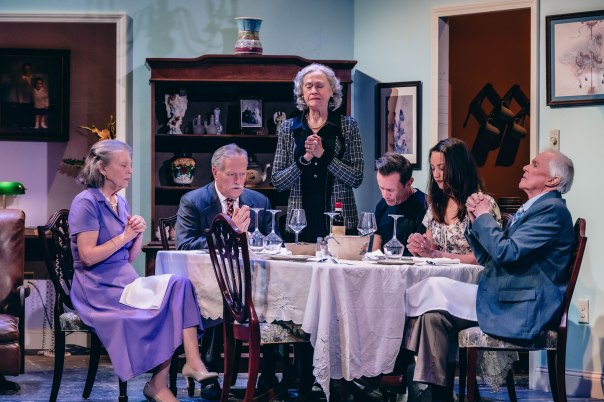
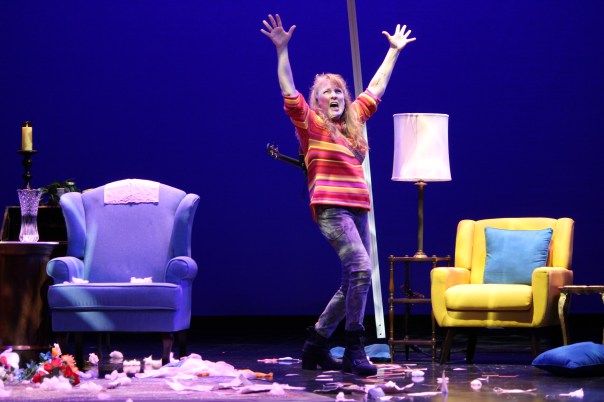
Review: Over the River and Through the Woods at Theatre Charlotte

By Perry Tannenbaum

Back in the days of Woodstock and hippies, my generation spoke solemnly, defiantly, or even sarcastically about the Generation Gap. For a long time, it was sincerely believed to be the most telling division in our country. With the return of Joe DiPietro’s Over the River and Through the Woods to Theatre Charlotte after previous runs in 2002 with Rock Hill Community Theatre, 2004 with Charlotte Rep, 2013 at Fort Mill Community, 2014 with CPCC Summer Theatre, and 2016 with Davidson Community, it’s rather shocking to realize how recently that belief has become so quaint and outdated.

Good thing, then, that Over the Woods is mostly a comedy that doesn’t take itself seriously – for the gap is huge. Our floundering Nick Cristano, career success and social schlub, is two generations younger than his Hoboken elders. The gap is further multiplied by the aggregation of both sets of grandparents, Nunzio and Emma Cristano coming over for Sunday dinner every week chez Frank and Aida Gianelli.

For added zest, the gulf between the grands and the hopelessly outnumbered Nick is more than a little exaggerated. A game of Trivial Pursuit plays a little like an Abbott & Costello shtick, capped by an epic global route to Nunzio’s single correct answer.

In fact, the two scenes we see before intermission at the Queens Road Barn would not feel out-of-place if we encountered them as sketches on classic TV variety shows, ranging from Sid Caesar’s Show of Shows to Saturday Night Live. The first is Nick’s hilariously arduous attempt to break some big news to the grandfolk.

Whether it’s a glib interruption, a conversational detour, a remembered anecdote, a temporary defection to another room, or Aida’s never-ending blandishments of irresistible Italian home cooking, one obstacle after another keeps Nick’s news on perpetual back order until we’ve had to question if it will ever make it off the runway.

Hitting Broadway a year before The Sopranos cemented the connection between Italians and New Jersey, Over the River overflows with ethnicity, thanks to director Elizabeth Sickerman and dialect coach Marilyn Carter. Nor is this pure and delicate spring water. It’s an aromatic sludge with the consistency of Grandma’s legendary marinara. Two dominant flavors: Italiano and Joisey.

More cringeworthy is the folk medicine cure that the elders concoct in the wake of Nicky’s stunning disclosures. Enter Caitlin O’Hare, a nice local Irish girl unafflicted by any ethnic accent and hopefully alluring enough to keep Nick from straying too far from Hoboken. It’s a brash set-up that catches poor Nick unawares, an impromptu first date with unabashed interruptions, interrogations, and interferences from the well-intentioned seniors.

So here is where everything becomes so quaint, halcyon, and naïve. Both of the Gianellis that Caitlin finds so adorable are Italian immigrants. We find ourselves reacting in the same way to both of the elder couples, no matter how far Emma overreaches with her matchmaking and her prying or how much excessive food Aida lavishes upon her young guests, including veal for a vegetarian.

They are truly personable. Speaking directly to the audience before anybody picks up a dinner napkin, Frank genially tells us that he arrived in America with just 200 lira in his pocket (about $10.50 US back in 1930), along with the Hoboken address of a cousin who had already moved to “a faraway land called Brooklyn.” And 65 years or so after reaching our shores, reminiscing about living under a Hudson River pier for six weeks, he’s still speaking with an accent!

“Tengo famiglia!” he and his grandson declaim, the taste of their Italian roots still sweet to their lips.

Before even saying grace, Frank has already checked three of the immigrant boxes that 47 would label as garbage. Yet there’s more ICE bait: Emma remains as proud of her husband as she is of the family she raised here, proud to describe him as a laborer. After all, he built this house with his bare hands!

Ironically, when DePietro was prefacing his 1998 comedy with Frank’s migrant memories, he probably wasn’t trying to score a political point. “What point?” he might have asked. On the day after our Republic’s 288th birthday, when I last saw Over the River at Pease Auditorium, my reaction was likely aligned with the playwright’s.

My 2014 review, “Matchmaking With Veal and Provolone”? Not a single mention of politics or immigration.

That was the first time we encountered Gerald Colbert’s portrayal of Nunzio, the weightiest counterbalance to DiPietro’s comedy. As a second-generation American, Colbert’s Nunzio, with his gray hair slicked down traditionally, tracked extremely close to my dad, who had passed away less than two years earlier, and my Uncle Abe – often mistaken for Dad’s identical twin – who had died just five days earlier.

Looking so much like them that day added to the weight of the mortality that Nunzio was staring in the face, in the grips of terminal cancer and grappling with the question of whether he should weaponize his condition to keep Nicky in Hoboken. Both of my elder Tannenbaums reached their nineties, so there’s plenty of gap left for Colbert to navigate, but his affinity with and empathy toward Nunzio have noticeably deepened.

Nunzio’s climactic valedictory dialogue with Nicky was especially heartbreaking for me, but it also offers new dimensions of topicality for all.

As the lovingly coddled and embattled Nicky, Timothy Hager is almost too perfectly cast. A walking bundle of ambivalence and insecurity, Hager is also sufficiently tall, stooped, and slender to be viewed as crying out to Aida to feed and overfeed him again and again so dear Nicky can finally take shape. He does make an awful impression on Caitlin with his defensiveness, but his awkwardness – and gawkiness – keep him a bit lovable in his discomfiture.

He’s aware that he’s a mess: a work-in-progress.

Quaint and manipulative as these harpies are in their quest to tie Nicky down in Hoboken, they need to be ambivalent because they honestly love him – and because they have previously allowed their sons and daughters to fly the coop. Paula Baldwin isn’t taking on the toughest challenge of her career with Aida, the Einstein of pasta, but she handles the matriarch’s ignorance with a zest that brings fresh life to the g-mama stereotype.

If we hadn’t seen the like with so many stage husbands before, we could say that Baldwin pairs amazingly well with Henk Bouhuys as Frank Gianelli. Can we agree, though, that he delivers the tangiest Italian accent? He must also navigate a preternatural ignorance that matches the blank that Aida draws on vegetarians, for Frank doesn’t know where Seattle is. Notwithstanding Frank’s humble beginnings – and the accent – Bouhuys consistently radiates the well-to-do dignity of an octogenarian enjoying his golden years.

DiPetro’s subtlest move is making sure that Nunzio and Emma Cristano are second-generation Americans with urban accents. This isn’t as crucial for Colbert as Nunzio as it is for Kasey Lathem as Emma. Hers will be the only familiar face that Caitlin expects to see when, politely bearing a bottle of wine, she knocks on the Gianellis’ door.

Lathem must be glib and modernized enough to be a supermarket buddy of Karisa Maxwell McKee as Caitlin O’Hare. Offsetting her laudable sociableness, Emma must also be tactless and tone-deaf enough to introduce this chum to everyone as “the unmarried niece of my canasta partner.” Nunzio and Frank can be counted on to immediately join in with the same high level of unsubtlety.

Sensing the gauntlet that she will have to run, McKee gets to show considerable backbone as Caitlin, though DiPietro would have been more imaginative if he had made her something other than a nurse. Her ultimate effect on Nick, dispensing her objective opinion on his behavior vis-à-vis his grandparents’, is not at all medicinal. She becomes a timely barometer in gauging how much growing Nick still needs to do in his thirties – and paradoxically, how urgent it is for him to strike out on his own.

We’re sort of circling back to Frank getting on that boat with 200 lira, aren’t we? In her digital program intro, Sickerman rightly targets the immigration themes lurking in this script, linking us to a Library of Congress page on “Immigration and Relocation in U.S. History.”

Feeling Like an Outsider at “The Outsiders”… and I Like It

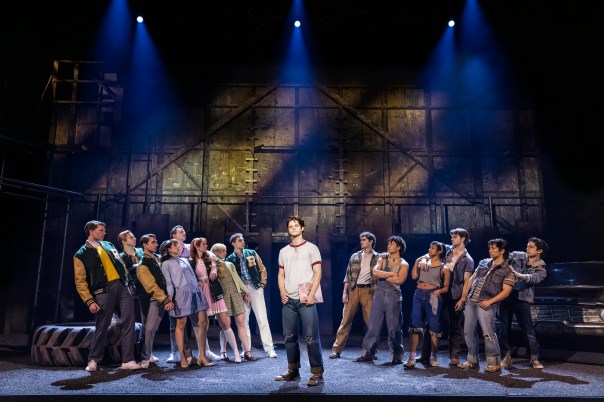
Review: The Outsiders at Blumenthal PAC

By Perry Tannenbaum

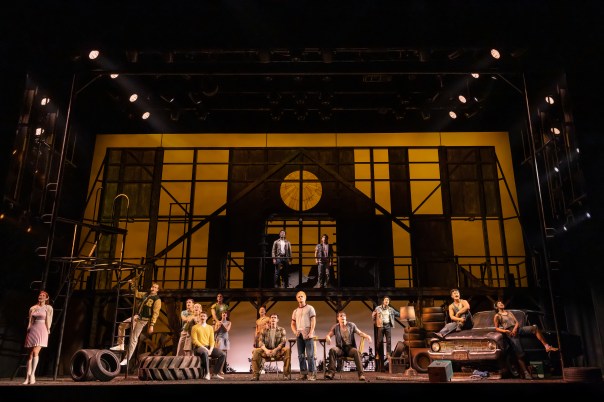
Belk Theater will likely still be rockin’ for days after the national tour of THE OUTSIDERS strikes its deceptively simple set and rolls on up to Chicago for a two-week run. If it weren’t Charlotte Symphony already booking the space next weekend, this gritty, steady rocker could have easily played a second week here without losing momentum. And possibly more.

Opening night was an eye-opener for anyone who had never been swept up in the rite-of-passage tidal wave generated by S.E. Hinton’s 1967 novel and Francis Ford Coppola’s 1983 film adaptation. Traffic to the College Street parking garage was so intense that, when we finally found a place on Level 8 to park, we needed to take a down elevator to exit at the bridge across to the Bank of America tower, where Blumenthal PAC has its performing spaces.

Usually, we hit the up button to go two or three floors up to Level 6.

After pausing to validate my parking stub in the lobby, we found that we were just in time as we saw the usher close the theater door behind us. It was only when we took our seats that we realized that the place wasn’t just packed… it was a sell-out. So an usher confirmed when I ambled up to the front of the house, turned around, and beheld eager theatergoers all the way up to the uppermost rows of the top balcony.

This was near-Hamilton fervor, eclipsing the receptions we’ve recently seen for such recent Tony Award-winners as Kimberly Akimbo, The Band’s Visit, Moulin Rouge, and even Hadestown. While we can all quibble and passionately argue which of these distinguished visitors should win a tournament of champions playoff, the production quality of The Outsiders was definitely top-tier, from Cody Spencer’s tight sound design to Jeremy Chernick and Lillis Meeh’s splashy special effects.

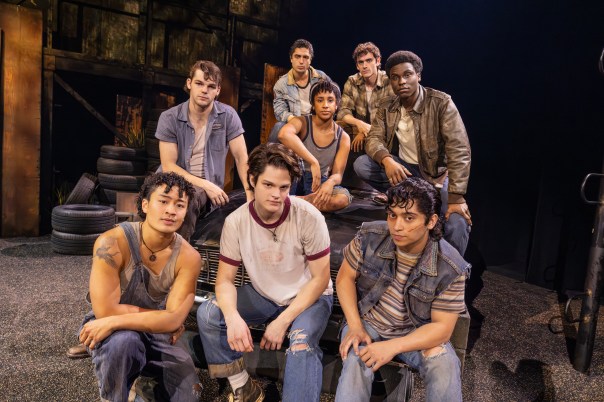
While some of the buzz that I was hearing about this Tulsa tale likened the animosities between the Greasers and the Socialites, or Socs, to the Jets and the Sharks of West Side Story, Ponyboy Curtis and his fellow Greasers are far more déclassé than their Hispanic counterparts, let alone the Montagues of Shakespeare’s Romeo and Juliet. There are no Greaser girlfriends in this grim picture, an apt barometer of these dudes’ hopelessness.

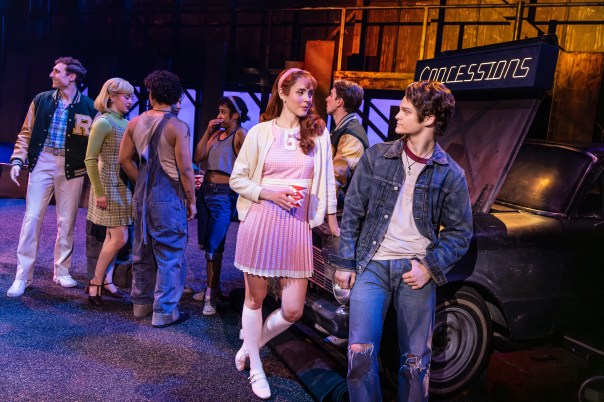
Nor is Ponyboy actually poaching on one of the Soc girls. After taking a beating for watching a movie on Soc turf, he escorts the Alpha Soc girl, Cherry, to a concession stand at a drive-in movie on neutral ground. They strike up a long conversation, enjoy each other’s company, but there’s no petting or romance.

Even so, this crosses the line for Cherry’s ultra-possessive boyfriend, Bob, and his chums. They gang up on Ponyboy and his bestie, Johnny Cade, not realizing that Dallas Winston – the Greasers’ spiritual leader and an ex-con – had recently gifted Johnny with a switchblade and taught him how to use it. Like Romeo before him, Ponyboy and Johnny Cade must flee town to avoid the law, Dallas acting as their Friar Lawrence.

The score by Jamestown Revival and Justin Levine is as consistently intense and authentic as Leonard Bernstein’s, but not nearly as varied. Nor with Levine’s arrangement for guitars, keyboard, cello, bass, violin, reeds, and drums, does it aspire to the same amplitude and agony as West Side Story. That’s about right: Amid the gloom and despair of Greaserdom, there’s a glimmer of hope emanating from Ponyboy, who has read Robert Frost and Great Expectations.

After Johnny Cade’s exhortation to “Stay Gold” in the face of Frost’s “Nothing Gold Can Stay,” Ponyboy’s favorite poem, that glimmer is not extinguished.

Unlike the Coppola movie, Nolan White as Ponyboy doesn’t sport the has-it-made Hollywood looks of C. Thomas Howell or the future superstar hunks – Matt Dillon, Patrick Swayze, Rob Lowe, and Emilio Estevez, for starters – surrounding him. More like Micky Dolenz of Monkees fame. That gives this stage version, directed by Dayna Taymor, about a million-mile head start on the film.

The other homies are no less homely (except the stunning Corbin Drew Ross as Sodapop Curtis), which is a good thing. Bonale Fambrini as Johnny Cade and Tyler Jordan Wesley as Dallas never look like they’re slumming. They sing and act as if they’re to-the-gutter-born, dressed accordingly by costume designer Sarafina Bush.

We can also gush over the glamor and drama that Emma Hearn and Mark Doyle bring to Cherry and preppy Bob. Or the family struggles, sacrifices, frustrations, and domesticity that Travis Roy Rogers brings to the action as one-time pro football hopeful Darrel, Ponyboy’s eldest brother.

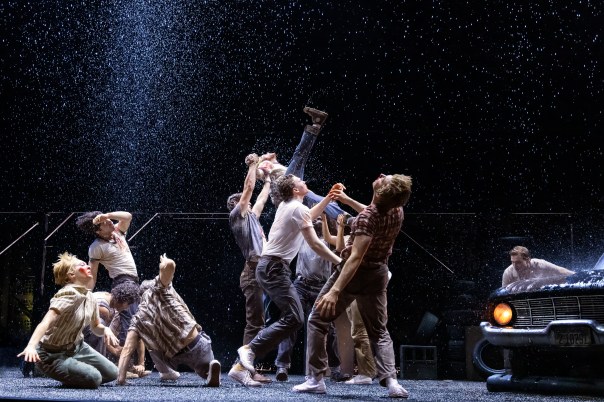
But as good as Adam Rapp’s book is at capturing the striated inertia of Hinton’s Tulsa, the propulsive electricity of The Outsiders comes from its score and the flair of Rick & Jeff Kuperman’s jagged choreography. Even this isn’t enough for Taymor. The hoofers send up bursts of plastic pellets from the floor, and the climactic rumble between the gangs brings down storm showers from above. Once all of these elements began cranking up, the fanaticism of the pre-sold audience was irresistibly contagious. I listened to the acclaimed original cast album when I returned home, but it wasn’t nearly as exciting as the live

“Wink” Dares Us to Jump out of Our Skins

Review: Wink at Booth Playhouse and Warehouse PAC

By Perry Tannenbaum

If you love cats, you already know the open secret of their appeal: they are all wild thangs. Yes, we can declaw them or inflict various mutilations on their genitalia to superficially tame them. But they will still swat at things floating in the air, still hiss when cornered, still religiously stalk, crouch, bide their time, creep stealthily closer to their prey, and pounce.

And they purr.

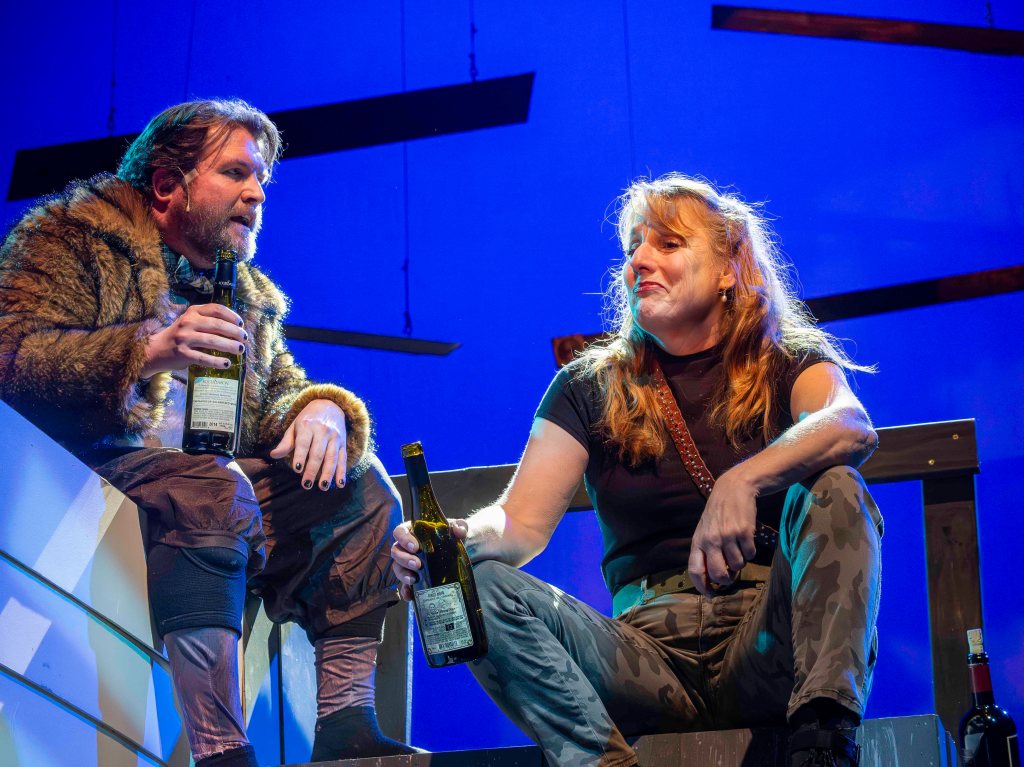
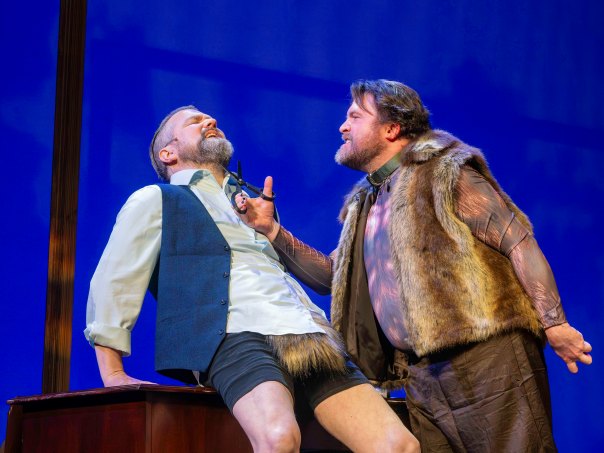
In Jen Silverman’s Wink, there is no purring. Now in transit from its opening weekend at Booth Playhouse to the comparably compact Warehouse PAC in Cornelius, Wink may be tough to catch in the wake of its positive word-of-mouth. Reactions at the Booth to the sight gags rank with the loudest, most vociferous, and gob-smacked I’ve heard in the QC.

Spearheading this flawless Charlotte Conservatory Theatre production – at an admirably brisk pace – director Marla Brown has cast real-life husband and wife Steven Levine and Shawnna Pledger as Sofie and Gregor, the caretakers of the title feline. The couple has radically opposing views on Wink. Sofie adores her AWOL pet, while Gregor strives to veil his murderous antagonism.

The unscientific ploy that Sofie uses to partially pierce Gregor’s defenses in this staid opening scene is unmistakably feminine and devastatingly clever. Such fancifulness, heterodoxy, and cleverness suffuse this 75-minute gem.

It’s not glaringly obvious in the sedate, passive-aggressive early moments, but Gregor and Sofie could likely benefit from some top-notch marriage counseling. It’s already too late. Separately, with complete confidentiality, they are seeing the same psychologist, the profoundly lonely and disciplined Dr. Frans, beautifully calibrated by Dan Grogan.

He’s a perfect fit for both Sofie and George. Perhaps too perfect, since the remedy he insists upon for both their ills is the same: tamp down and conquer your outré impulses. Oh, and go on vacation with your spouse as a healthier release of your tensions. It’s a prescription for George and Sofie to go on doing what they’ve done for their entire adult lives.

Played with an edgy insouciance by Nathaniel Gillespie, Wink also goes to see Doc Frans, but not as a patient. Every word from Wink, and every move, indicates that he is – or was – purr-fectly comfortable in his own skin. Out of his skin, Wink remains a hunter, but now, like a snake, he’s a coil of vengeance, poised to lash out.

But what is Wink at this point? Answers at this point will vary among audience members, who may see him as a projection of Gregor’s guilt, a Doc Frans nightmare, a monstrous cat succubus, or a surreal Saturday morning cartoon. Maybe a Saturday night cartoon, since Silverman is delivering a dark comedy and Gillespie can never be mistaken for a comedian.

If I haven’t pussyfooted sufficiently around Silverman’s plot, my apologies for the spoilers. At about this point, I looked at reviews of previous productions and discovered they disclose less, zeroing in on each of the humans’ problems, and not always troubling to include Wink as a character or how he’s portrayed. That’s pretty much how Charlotte Conservatory’s press release handled it, so I was expecting a breezy little comedy, maybe a Sylvia Redux with breeds and genders switched on the title pets.

It would be interesting to hear Silverman’s advice on how much to divulge. In her playscript, she lets the cat out of the bag in her character descriptions, before the action even begins. There’s plenty more electricity to come.

The script is not bossy, very spare in its stage directions, so the shtick we encounter in the opening scene is Brown’s. One thing you’d only detect in the script is its layout, occasionally abandoning its prosaic paragraphs and laying out like poetry – but only after Wink makes his first sinewy and sensational entrance.

How much of the Booth Playhouse audience expected to see Wink? If you caught Gillespie’s photo on Facebook, on a lobby poster, or downloaded the playbill from the posted QR code soon enough, you would know. For those savvy few, the costume design by Allison Collins (and “Group Effort”) provides the needed extra jolt when the spotlight hits him.

The hits keep coming as Sofia and Gregor transform in sudden lurches, arriving at a kind of Peanuts absurdity. With wine. Set design by Chris Tyer, with the unblissful couple’s house at stage left and the doc’s office at stage right, should compress neatly enough at the renovated Warehouse PAC, but somebody will need to confirm for me whether the gratuitous use of the Booth flyloft will be replicated up in Lake Norman. Modifications could also dawn on David M Fillmore, Jr.’s shrewd lighting design.

At its essence, Wink explores what can happen when we rashly, spontaneously, and completely yield to our impulses. It wouldn’t be so frightening – or so much hilarious fun – if we didn’t have a conscience about it all, if we didn’t recoil from our own audacity. On balance, Gregor’s and Sofie’s cover-ups are funnier than their crimes, and both Levine and Pledger play it that way. Silverman layers on additional new obsessions for Gregor and new deceits for Sofia that ironically show us how similar they are as they drift apart.

Are they losing their minds or becoming more self-aware? Silverman has provided a double edge here.

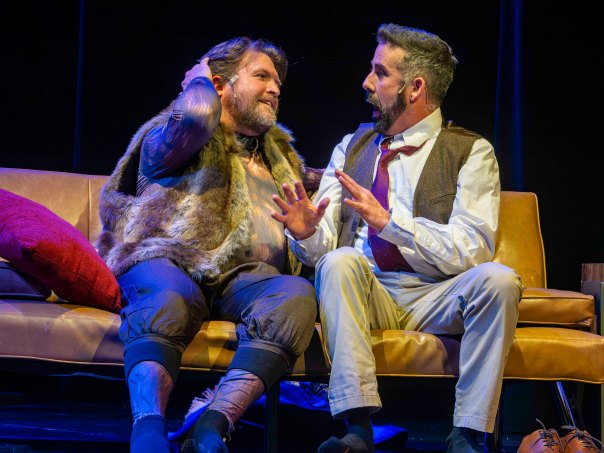
The evolution between Wink and Doc Frans is vastly quieter and quirkier, though there are playful moments. Gillespie and Grogan can play at teaching and learning from each other. Since there’s always a couch to our right, Brown yields briefly, unbidden by the script, to the temptation of redefining their doctor-patient relationship – with Frans reclining on the sofa.

With all the hairpin twists, sudden surprises, and belly laughs, you can reach the end of this whirlwind evening asking yourself, “What did I just see?”: a rare and thrilling experience at the theater. There’s so much wrong with Doc Frans’ preachings of discipline and such excesses in Sofia’s and Gregor’s escalating impulses that we can easily imagine that Silverman wants us to be dizzily ambivalent.

She probably does. It’s the kind of “You just gotta see this” reaction a playwright lives for.

Take a few extra moments, then, to consider Wink as a role model. His hunting routine, repeated more than once, is a blend of discipline and savagery, keen calculation and patience before taking your shot.

Expect that of a dog? Their lack of self-control and stealth is why they hunt in packs. You can train a dog to stop on a dime when it gets a first sniff of its prey, but then it just dopily points its nose in the air towards your quarry. Still imprecisely.

There may be nothing happier than a contented dog; that’s true. Give the enlightened Wink a bottle of wine, and he’s still cool. Cheers!

Photo by Perry Tannenbaum

Shepherd Shakespeare Stays Up Late With “The Winter’s Tale”

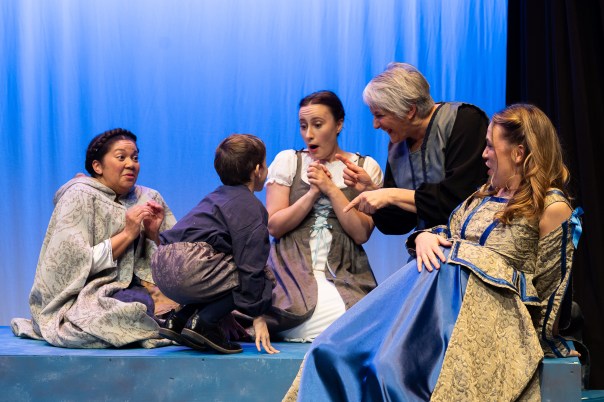
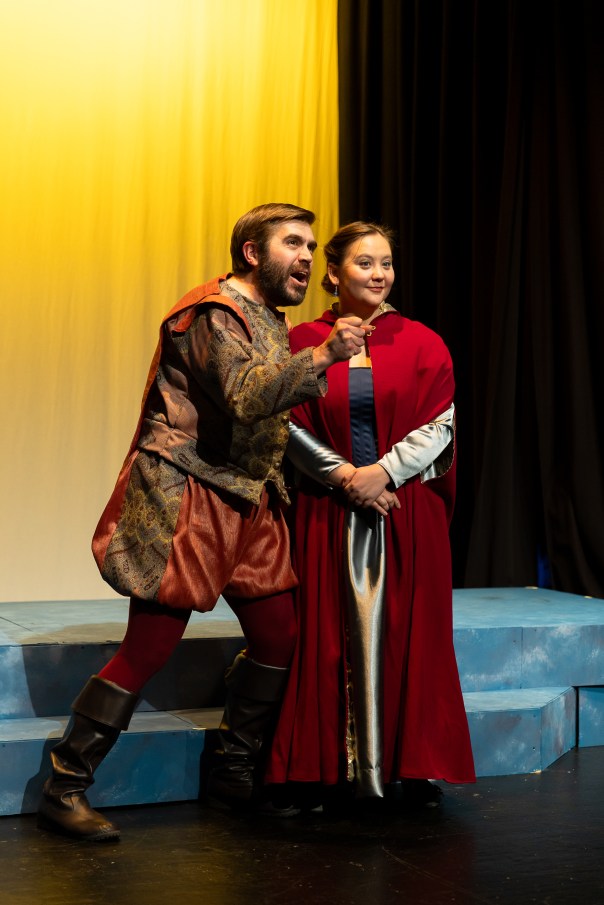
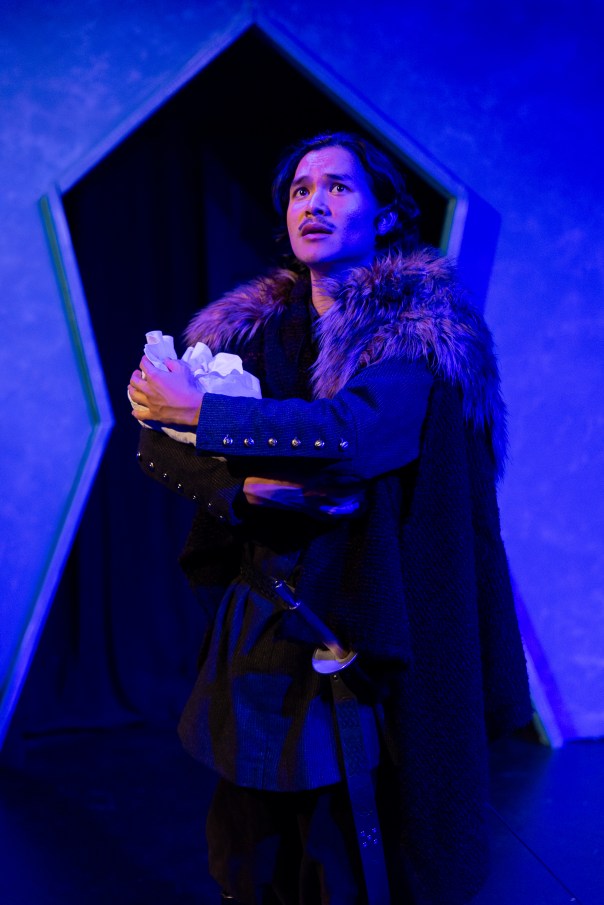
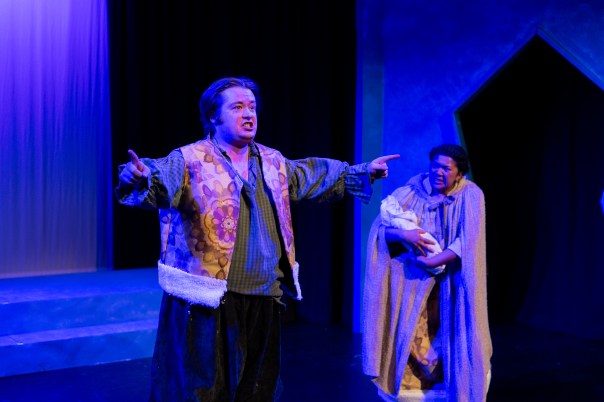
Review: The Winter’s Tale at Armour Street Theatre

By Perry Tannenbaum

Yes, Davidson Community Players’ executive director Steve Kaliski certainly had a point this past weekend when he declared, “My kingdom for The Autumn’s Tale!” DCP had invited Shepherd Shakespeare Company, which normally performs outdoors at The Barn on Monroe Road, to perform THE WINTER’S TALE indoors at the Armour Street Theatre, out of the cold winter.

Unfortunately, winter weather pursued the troubadours, who also bring a variety of repertoire to local elementary and high schools, up the highway to Davidson, forcing the postponement of performances scheduled for the second weekend of Winter’s Tale at Armour. Ill-starred as the engagement may have proven, it enabled me to see SSCO in action for the first time, outside of their customary morning-and-afternoon cocoon in prime evening hours.

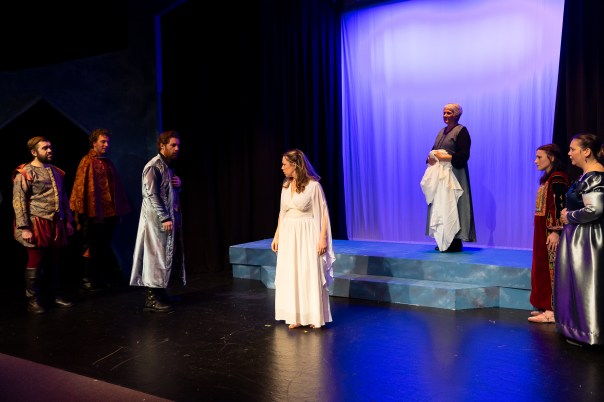
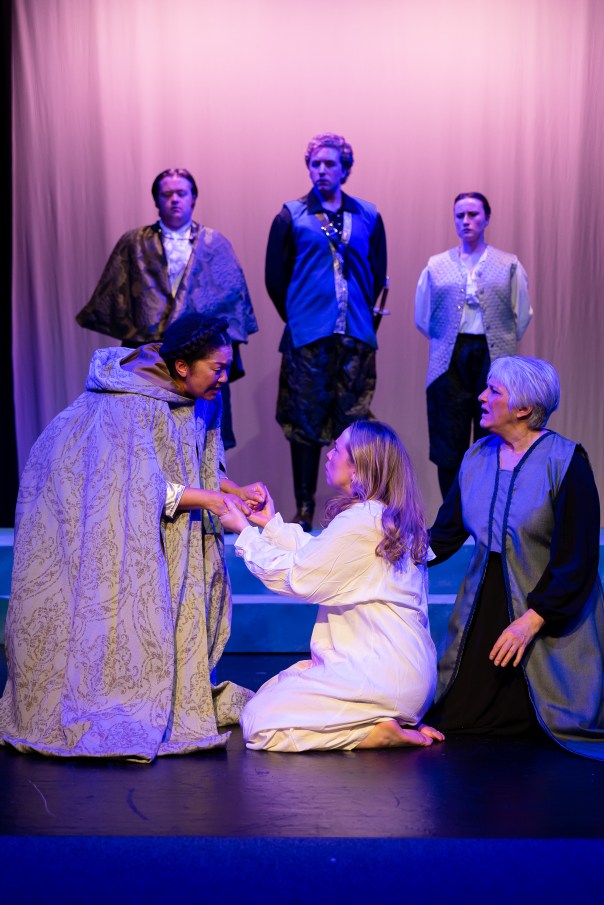
Katy and Chester Shepherd, co-founders of the touring company, are often at the forefront of their productions. But here, they are behind-the-scenes – and they have, artistically, split up. Chester is handling the stage direction and scenic design, while Katy has designed and constructed the costumes. Another blissfully theatrical couple, Brandon and Rachel Dawson, portray the jealousy-crossed leads, Leontes and Hermione, the King and Queen of Sicilia.

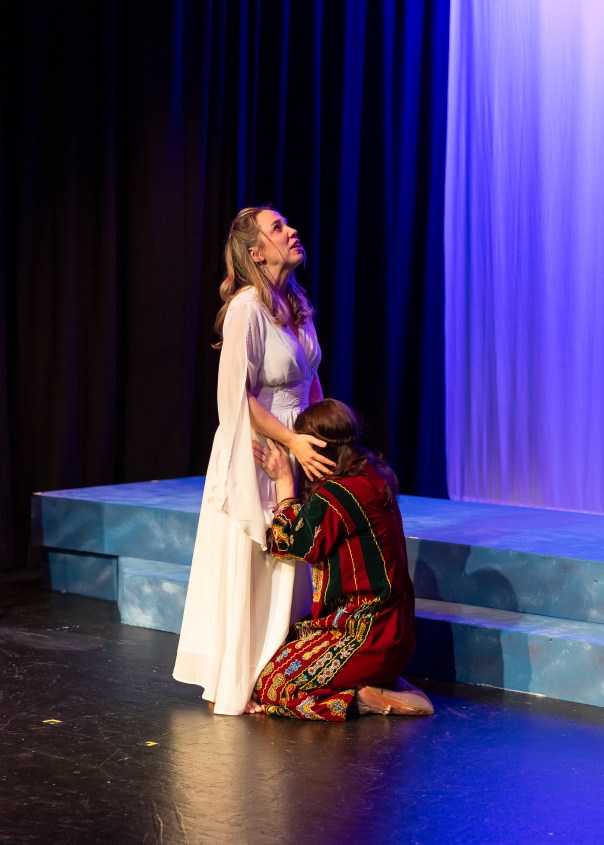
Brandon, as Leontes, falls prey like Othello to the green-toothed monster, but he’s also haunted by his own inner Iago, needing no outside help to compromise and convict his innocent Queen of shameful adultery. What happens in the tragic first scene is nearly as simple and grand as Lear. The visiting King Polixenes of Bohemia, after sojourning in Sicilia for nine months, announces that he will leave on the morrow.

The Sicilia monarch tries to persuade Polixenes to lengthen his visit but cannot shake his boyhood friend’s resolve. Rachel, as Hermione remains silent – until Brandon, as her King, asks her to assist. Hermione’s attempts are wittier, more lighthearted, more charming, more insistent, and more sustained. There are no stage directions in the text during Hermione’s pleadings that indicate any physical contact with the esteemed visitor, but in Shepherd’s direction, that is not a prohibition.

Chester and Rachel have reached a key accord, without Shakespeare’s expressed consent, when Hermione playfully suggests taking the Bohemian monarch as her prisoner. Yet when Polixenes is won over, fulfilling Leontes’ wishes, and Hermione has gained her husband’s admiration, Shakespeare does add a stage direction that decrees physical contact right after she declares Bohemia to be her newly-earned friend: “Gives her hand to Polixenes.”

This is enough to spark Leontes’ jealousy and fan it into flames. Everything dearest to Leontes must be destroyed: wife, son, newborn daughter, and Polixenes, who learns the perils of a nine-month visit through grim experience. The damage that Leontes capriciously wreaks on his kingdom will take 20 years to repair, and the repair will not be complete.

Hermione’s imagined betrayal in the presence of the king’s son, Mamillius, his most trusted confidante, Lord Camillo, and numerous attendants at his Sicilia palace, so an eerie formality hovers over the DCP production’s opening scene (an introductory scene elsewhere in the palace is cut) until the king explodes. First to be targeted by Leontes’ wrath is Polixenes, genially portrayed by Jeremy Cartee, with a touch of mischief that he keeps on back order until he returns home.

Torn between loyalty and common humanity, Savannah Deal as Camillo decides not to slay Polixenes but to advise him to flee. Understanding that disloyalty to the deranged Leontes could spell death for Camillo, Polixenes rewards his honesty by bringing Camillo into his service before they depart.

We won’t hear any more of them for 20 years. Meanwhile, Act 2 applies a fairytale patina to the action as Leontes, dissuaded from burning his newborn daughter by Lord Antigonus, dispatches milord to abandon the babe in a faraway place to the mercy of the elements. We last see Andre Braza as Antigonus at the end of Act 3, sent offstage with Shakespeare’s most famous stage direction, “Exit, pursued by a bear.”

Not to worry, Braza resurfaces in Scene 3 of Act 4 as the roguish Autolycus. The remaining members of the core troupe, mostly with prior SSCO experience, also shuffle multiple roles and costumes backstage – with a couple of players besides Deal flipping genders. Most prominently, these include Iesha Nyree morphing from one of Hermione’s ladies to the Old Shepherd who parents Perdita, the sequestered newborn, and Emma Brand, becoming the grown-up foundling after a stint as Lord Cleomenes.

Really, the only faux pas in this production is the casting of Mamillius, the king’s blameless heir. No matter how cute, we need to hear the lad. Best of the rest is Joanna Gerdy, who likely knows Shakespeare’s plays nearly as well as the Bard himself, having acted in and directed so many. Here, as Paulina, Gerdy gets to fearlessly scold Leontes, engineer Hermione’s escape, and emcee the queen’s long-deserved restoration. It’s a powerful, authoritative performance that almost rivals the Dawsons’ majesties. Note: In lieu of the cancelled performances on 1/31 and 2/1, a make-up show has been added for Wednesday, 2/4, at 7:30pm. Stay tuned for other possible added s