Preview: QC Concerts’ Side Show at Booth Playhouse
By Perry Tannenbaum
When Louella Parsons, the undisputed queen of Hollywood gossip, saw the Hilton Sisters’ first movie in 1932, she proclaimed: “For pure sensationalism, Freaks tops any picture yet produced. It’s more fantastic and grotesque than any shocker ever written.” At the height of their fame, Daisy and Violet Hilton could fill a large stadium.
Or at least, they tried. On July 18, 1936, billboards all around Dallas – some as large as 60 feet tall – invited the public to the Centennial Exposition at the Texas State Fairgrounds. For just 25 cents, you could enter the Fair Park Stadium, newly rebranded as the Cotton Bowl, and attend Violet’s wedding, with twin sister Daisy as her maid of honor. Afterwards, the sibs would perform with their dance band.
How could it be otherwise? For Violet and Daisy were Siamese twins, joined at the hip. Superstars. During their careers, they performed with Bob Hope, Jack Benny, and Burns & Allen. Hope and Burns were the sisters’ most illustrious dance partners! But the Hiltons died in relative obscurity. When they hadn’t shown up for work at the Park-N-Shop on Wilkinson Boulevard for a few days, Charlotte Police found them dead in their nearby apartment on January 4, 1969 at the age 0f 60.
The Siamese twins – actually born in Brighton, England – had succumbed to the Hong Kong flu. Blame it all on the Asians, right?
There should be a soft spot in Charlotteans’ hearts for two of our own and for Bill Russell’s Side Show, the 1997 Broadway musical about the Hilton Twins’ rise to fame. But no matter how thoughtful and intriguing the original version and the revised 2014 revival were to reviewers, neither production gained box office traction in New York and neither toured here.

Until now, the only adult company to present Side Show in the Queen City was the Queen City Theatre Company at McLohon Theater in 2008. The McLohon was an ideal locale for the seedy, carnival ambiance of Side Show. Russell’s cast includes not just the Twins, after all, but also a Cannibal King, a Snake Woman, a Reptile Man, three Harem Girls, and – perhaps most monstrous of all – The Boss who employs, exploits, and abuses them.
Though pennies won’t get you into this show unless you have a huge jarful, the freaks return to Charlotte this week – with their startling welcome.
Come look at the freaks
come gape at the geeks
come examine these aberrations
their malformations
grotesque physiques
only pennies for peeks
Once again, The Boss will invite you into his “odditorium.” While the McGlohon and its Spirit Square cohort, Duke Energy Theater, remain in hibernation until 2027, undergoing their makeovers, Queen City Concerts is reviving Side Show at Booth Playhouse. It’s a more intimate Blumenthal Arts venue than the McGlohon, true enough, but not quite as creepy.
Chief chef directing this colorful cast – and leading a full orchestra playing Henry Krieger’s music in Harold Wheeler’s original orchestral arrangements – is QC founder Zachary Tarlton. Adoration of the original score is Tarlton’s specialty, but here he had the luxury of cherry-picking from two Broadway versions, maybe shuffling the songlist a little and restoring some of the 1997 tunes that had been dropped in crafting the more historically accurate 2014 revision.
“We chose to do the original 1997 Broadway version of Side Show,” says Tarlton, “because it is Side Show in its purest form. While the show closed quickly, it garnered several Tony nominations and launched the careers of its leading ladies: Alice Ripley and Emily Skinner. For those unfamiliar with the original show, the 2014 production seemed polished and pristine. For fans of the original, it was met with harsh criticism.”
Fans of the original, Tarlton will tell you, are a cult following. Whether the stars of the new QC Concerts production, Ava Smith as Daisy and Sierra Key as Violet, are members of that cult is an open question. But they are both fervid admirers of the show.
Before Tarlton saw her as his Daisy, Smith had portrayed Violet in a Teen City Stage presentation at CPCC’s Pease Auditorium in 2016 – while she was still a high schooler in Gastonia. Key was also in high school when she first met Smith in 2013, and they’ve been besties ever since their first show together.
Naturally, Key saw the 2016 show that starred her bestie. In a freakish reenactment of Side Show scheduled for later this year, Smith will be one of Key’s bridesmaids at her wedding.
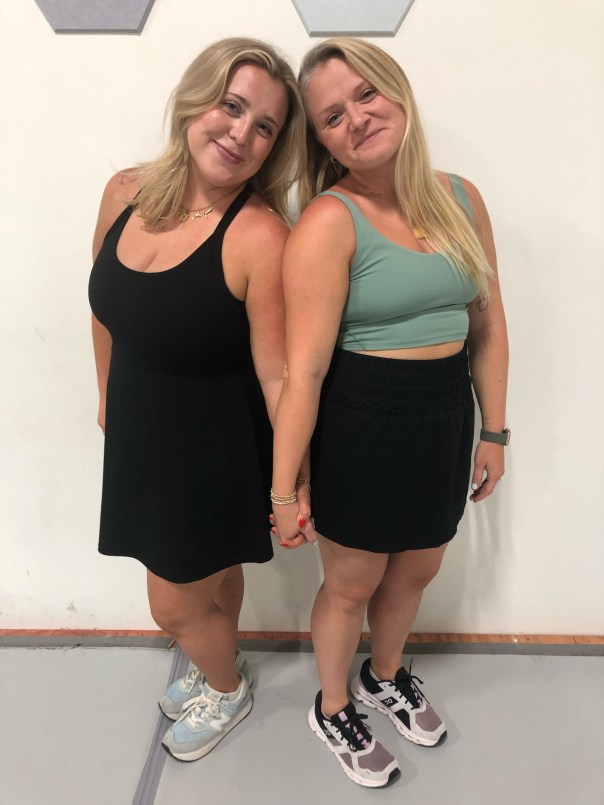
“A little fun fact,” Smith adds, “people often mistake us for sisters! Just like Daisy and Violet, we have stood by each other through the good and bad times. Our connection in real life makes the necessary onstage connection come naturally.”
Russell sharply differentiates Daisy from Violet early on in his script, while they’re still slaving on the midway. Two young men, Terry Connor and Buddy Foster, secure a private audience with the sibs after their freakshow. Buddy’s idea is that he could teach the Hilton Twins how to sing and dance while Terry can get them a shot in vaudeville as their booking agent.
Both of the women would jump at the chance to escape the side show, but until now, they haven’t been offered a feasible alternative. The Boss keeps them under lock-and-key as part of his freak collection.
It’s Terry, not quite on board with the vaudeville scheme, who asks what the sisters yearn for.
“Daisy is bold, outgoing, stubborn, and determined to be famous,” Smith says. “She loves performing and knows exactly what she wants. Violet is shy, sensitive, and just wants a simpler, quieter life. But even with those differences, they share such a deep love for each other and a longing to just be ‘Like Everyone Else.’ I believe Daisy and Violet really are two halves of a whole.”

As halves or opposites, they are both keenly and perpetually aware of how laughable their aspirations are to their captors and the people who pay to peep at them. Even if they are at odds, every choice they’ve made individually has been with the tacit agreement of their twin. Yes, the fiery Daisy can aspire to vengeance against the mockers and the detractors while Violet merely hopes to prove them wrong and be rid of them.
But they must move together, whatever they do, and cannot pretend they’re the same as everyone else. Daisy aims higher, fired by the full breadth of the American dream, but it’s Violet, no less American, who is more poignant and relatable.
“What’s so powerful about Side Show,” Key declares, “is that it tells the story of people who are seen as ‘different’ simply for existing in the world as they are. As someone who is part of the LGBTQ+ community, that resonates with me deeply – especially right now, in a time where identity and visibility are still so politicized and debated. Violet’s longing for love, acceptance, and belonging is incredibly human, and that’s what I focus on.
“The physical connection with another actor may be unusual, but it’s all in service of telling a story that challenges perceptions and invites empathy.”
Going back eight or nine decades, Russell can take us beyond empathy and show us quite bluntly how the Hiltons themselves had yet to evolve. Their strongest champion before Buddy and Terry arrive as deliverers is Jake. He’s not really a Cannibal King “from the inky jungles of the darkest continent,” as The Boss would have us think, nor a poster boy for his collection of “god’s mistakes.”
He’s simply a rather strong African-American man. With a very soft spot for Violet. His inability to say no to her becomes the ticket to the Hilton Twins’ freedom.
So yes, they are also capable of prejudice and exploitation.
“One of the darkest moments in the show comes late in Act Two,” Tarlton observes, “when Jake asks Violet why she will not accept his deformities when he accepts hers, acknowledging the color of his skin while he accepts her as a conjoined twin. While that was during the Great Depression, we realize this same conversation could just as easily have been today. It is a show that is challenging at the core.”
Amen. Two of my most unforgettable moments in a Broadway theater happened on the evening when I first laid eyes on Ripley and Skinner. They didn’t instantly appear as the two Hilton sisters. They converged from opposite sides of the Richard Rodgers Theatre, facing each other as they sang and, just seconds afterwards, facing us. Then they conjoined right there, magically becoming one and moving as one – as naturally as Daisy and Violet had presumably done all their lives – for the remainder of the evening until taking their bows.
This must have been exactly as Russell envisioned it. “In the Broadway production,” he wrote in his Production Note. “Daisy and Violet’s connection was created by the two actors standing side by side. They were never literally connected by corsets, Velcro or any other costume piece. This allowed the audience to participate in creating the twins’ connection with their collective imagination and made the actors’ achievement of appearing to be joined all the more impressive.”
Even more primal and gripping was The Boss’s follow-up introduction as we were led inside his side show tent alongside the other freak seekers who had paid their dimes. “Please remain in your seats,” he told us commandingly, “to experience our premiere attraction in its most revealing display.”
A dazzling blast of backlight assaulted us as the conjoined twins, standing together with their limbs splayed out, appeared in dark silhouette. The sight was shocking, like a gigantic black spider writhing before us, twice the size of a normal person.
Fascinating. Fearsome. And yet… hauntingly beautiful.

 Art on My Sleeve