Monthly Archives: August 2024

Free Reign Presents a Trim and Syndicated “Tempest”

Review: The Tempest at The Gettys Center

By Perry Tannenbaum
 

Rarely mentioned among Shakespeare’s best comedies, let alone among his best works, The Tempest maintains an enviable popularity within the Bard’s celebrated canon. The current Free Reign Theatre presentation at the The Gettys Center in Rock Hill marks the seventh local production to appear in the Charlotte metro within the past two decades – Actors from the London Stage visited with an eighth in 2011 at UNC Charlotte.

Upstairs in the Getty courtroom turns out to be a perfect backdrop for this masterwork of measured retribution. In the misty annals of Shakespearean scholarship and criticism, The Tempest has often been singled out as the Bard’s final and most perfect work. More important to most theatergoers are the notions that Shakespeare places himself in the role of Prospero and that Prospero’s renunciation of the magic arts is the playwright’s farewell to theatre at the same time.

Under the direction of David Hensley, with costumes by Gina Brafford, it often looks like the retiring Bard had a notion to syndicate his valedictory work as an ancestor of Gilligan’s Island. Though Prospero was presumably shipwrecked in the Aegean or the Mediterranean, his most distinguished guest, King Alonso of Naples, seems to be outfitted with hand-me-downs that Gilligan or The Captain will don centuries later.

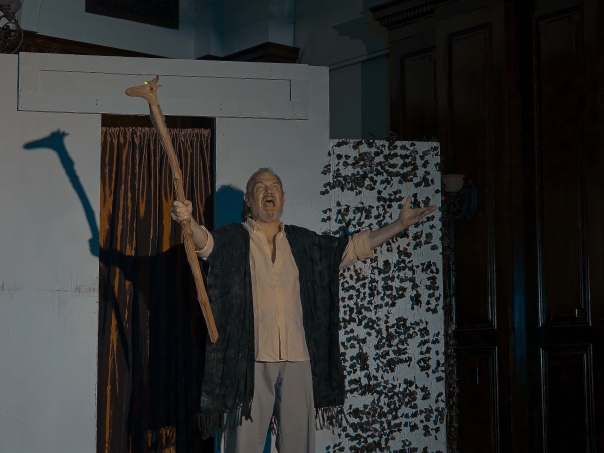
Not the first to impress upon his audience that Prospero is the main architect of the action that ensues on his tropic isle, Hensley has his protagonist, played by Russell Rowe, waving a magical illuminated staff to summon up the mighty winds, rains, and seas. Now we can adjourn to Shakespeare’s opening scene as a panicking Master and Boatswain stand on a ship’s deck trying to right their way in this tempest with a ridiculously puny captain’s wheel.

Prospero’s power on his island is vast, for he holds the fairy Ariel and the deformed monster Caliban as his slaves. Since all the action we see follows Prospero’s basic design, it’s not too outlandish for Victor Hugo to have claimed that through Caliban, Prospero rules over matter, and through Ariel, over the spirit. His sovereignty certainly extends beyond his island to the seas he sets in turmoil.

With Ariel’s help, Prospero can separate the arrivals of the servants from the shipwrecked seamen and the corrupt nobility of Naples and Milan from Prospero’s chosen heir, the virtuous Prince Ferdinand of Naples. He plans to match Ferdinand with his daughter, Miranda. On hand to help Ariel keep Prospero’s fugal design flowing smoothly are Juno, Ceres, Iris, and numerous other nymphs and spirits.

But omniscience is far from Prospero’s grasp, so Shakespeare can artfully engage us with wisps of drama and suspense. Prospero cannot be sure that Miranda and Prince Ferdinand will take to one another. Furthermore, Prospero must be on guard against Ariel and Caliban, both of whom chafe under his dominion – respectively capable of escape and rebellion.

Watch carefully, and you’ll notice how Shakespeare flips these prospects for suspense and drama into comedy.

Armed with Prospero’s vatic powers and steeled with the usurped Duke’s determination to restore rightful rule in distant Milan and Naples, Russell Rowe is slightly above the action, never clownish or fully mundane. He participates in the romantic comedy by scheming to inflame Miranda’s ardor for Ferdinand by subjecting the Prince to the humiliations of enchantment and daylong labor.

Smitten by each other almost as soon they meet, Hannah Atkinson as Miranda and KJ Adams as Ferdinand convincingly demonstrate the needlessness of Prospero’s stratagems – Ferdinand is promising to make Miranda the Queen of Naples less than 75 lines after he first appears. To be frank, the old magician, for all his learning and wisdom, has nearly forgotten his own youth. So the joke in also on him! Of course, it does take a little imagination to conjure up a virginal 15-year-old who has never seen any other man than her aging father and the “mooncalf” Caliban. As a result, Atkinson gets more unique traits to distinguish herself with.
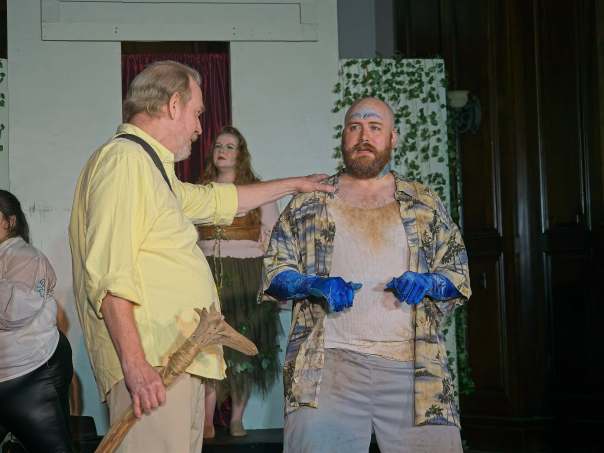
With Caliban, played by the versatile Robert Brafford, Prospero can take a more laid-back and confident attitude, relying on the weird mutant to make a fool of himself in his rebellion. Latching on with his blue paws to Bronte Anelli as the drunken jester Trinculo and Spirit Craig as the marginally more sober butler Stephano – and mooching an occasional gulp from their ample bottle of booze – Brafford wastes no opportunity to subtly reassure us that, despite his mighty grievances, Caliban is foredoomed to failure.

Ariel, the vivacious Rebecca Viscioni, does confound the help, pulling out an invisible voice imitation shtick that, to my mind, James Barrie poaches in Peter Pan. Regardless, it is curious to note that both Ariel and Peter were written for men and usually played by women.

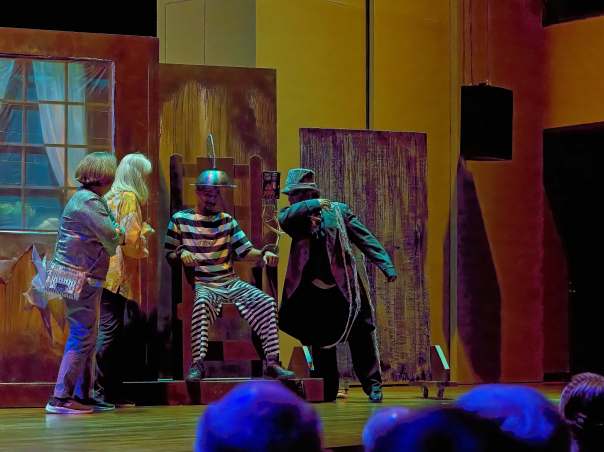
The “airy spirit” has more urgent places to intervene after wrecking the ship and sorting its survivors. Chiefly, she is needed – seemingly more than Prospero knows – to keep things flowing properly among the shipwrecked royals. Complacent on his throne, which is now reduced to a collapsing chair with cupholders, Nathan Stowe as King Alonso seems blissfully unaware of the treachery up in Milan. Stowe’s discomfort and disorientation in Shakespearean pentameters adds a light patina of comedy to Alonso and helps us to believe that he’s oblivious to the lurking threat in his own family.
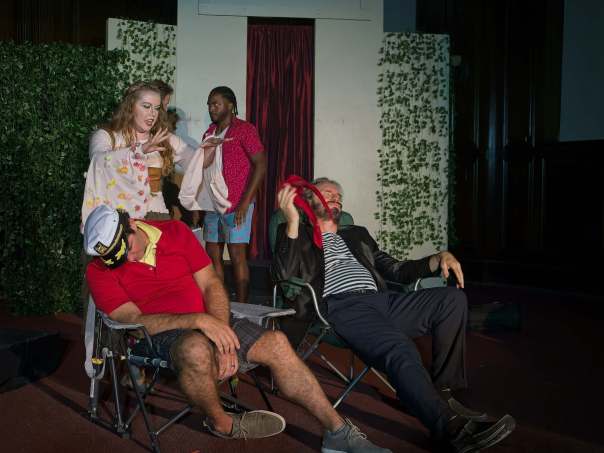
Adding very little to the comical aura of Alonso’s complacency, Ross Chandler as the King’s brother needs a bit of cajoling from Antonio, the usurping Duke of Milan, to act on his designs on the Neapolitan throne. Fortunately, David Eil has a superabundance of shiftiness and malignity, enough malignity to be noticed not only by Alonso but by every citizen from Naples to Milan. Or by satellite.

Also on board the foundering ship, fortunately enough, is Emmanuel Barbe as a rather slick Gonzalo – former councilor in service of Prospero, who supplied the usurped Duke with necessary provisions, plus the cream of his precious library, when Antonio cast him off to sea 12 years earlier. Rejoining him onshore, we see that Gonzalo now serves King Alonso, so Gonzalo is now ironically saving his own life as well as his monarch’s with those mystic books.

For Sebastian and the never-sated Antonio mean to slay them both, not with ancient sword blades drawn from waterlogged hilts but with a 9-iron and a wedge extracted from a golf bag, a bit more slapstick. Bludgeoning rather than stabbing or beheading seems to be the plan and we are in some suspense – less with golf clubs than with drawn swords – as to whether Prospero has foreseen this impromptu assassination plot.
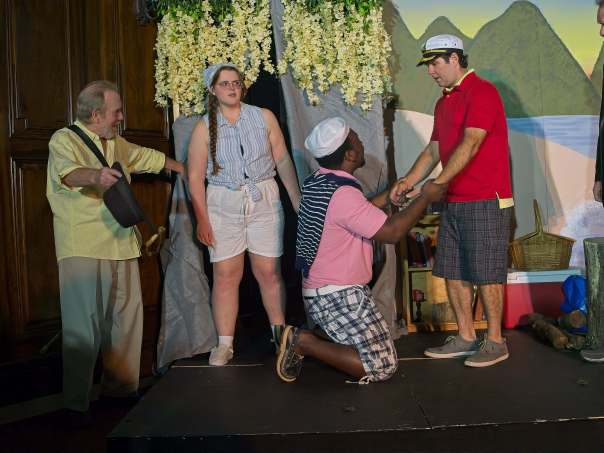
There is one whispering considerably earlier between the rightful Duke and Ariel in the unusually detailed stage directions, so if we’ve remembered that brief moment, there’s hope that help is on the way for the feckless King and Prospero’s loyal benefactor. But as those swords/clubs are held high over the sleeping heads of Alonso and Gonzalo, suspense mounts, thanks chiefly to Eil. So if Prospero doesn’t have the smarts to anticipate what’s happening, we must trust his Ariel to save the day.

The oft-hailed perfection of The Tempest is two-fold: aside from artistic perfection acclaimed by critics, it is also Shakespeare’s most perfectly preserved script, the lead-off play in the famed 1623 First Folio collection of 36 plays, meticulously edited by the Bard’s fellow actors, Philip Heminges and Henry Condell. Hence the unusual profusion of stage directions when you encounter the text.

Hensley and his cast do a fine job in making those generous stage directions disposable, and his careful cuts in the script, though occasionally robbing us of its full lyric pleasures, are laudably protective toward the multiple storylines. Having seen The Tempest five times before and having read/studied it more than once, I’m not bowled over by the blizzard. My worries are for those plunging into The Tempest for the first time. That little prelude with Prospero is helpful, but quite a deluge of entrances ensues.

So it was disappointing not to find any roles named in the printed program on opening night, only the alphabetized names of the actors. Clicking on the QR code is helpful, pairing faces with their roles, but again in alphabetical order – without the helpful capsule descriptions Shakespeare provided. Those would be valuable at intermission for newcomers who might still be struggling to sort out Alonso, Antonio, Sebastian, Gonzalo, and their positions at court.

Fortunately, the residents of this prehistoric Neverland or Gilligan’s Island are instantly differentiated, thanks to Gina Brafford’s florid costume designs – beginning with Atkinson wholesome Oklahoma farmgirl look as Miranda. Hard to say which is more outré, the winged Viscioni evoking the gladrags of the ‘60s or Robert Brafford as Caliban, looking like he’d been freshly belched from the belly of a whale.

Maybe the flowery Ariel outfit should get the nod because she’s so sassy and blithe all evening long. So: Calling on Hensley to give Viscioni a sassier final exit. She deserves it no less than Rowe, who asks for it in the touching Epilogue.

“Mojada” Gives the QC a Flaming Taste of Euripides

Review: Mojada: A Medea in Los Angeles at The Arts Factory

By Perry Tannenbaum

When Euripides took first place for the first time at the Dionysia Festival, Athens’ five-day playwrights showdown celebrating Dionysius, it was so long ago that theatre scholars aren’t sure whether he won an ivy wreath or a goat. Ten years later, when his Medea took third place, we can’t say what the Greek master took home as a reward. It wasn’t gold or bronze, but Olympic champions and runners-up back then didn’t win medals, either. Nor can anyone remember the titles of the tragedies that finished ahead of Euripides’ masterwork.

Now that Luis Alfaro’s Mojada: A Medea in Los Angeles has premiered in an excellent Three Bone Theatre production at the Arts Factory, we can say – 2455 years and five months later – that we are a giant step closer to seeing a premiere of Euripides’ white-hot spectacle in Charlotte. Until now, the closest approach of the charismatic adventurer Jason and his sorceress consort Medea to the Queen City was a 2004 Gardner-Webb U production in Boiling Springs.

That production, one might presume, came in the wake of the sensational 2003 Broadway revival of Medea starring Fiona Shaw. But was there also a connection between that Media and Alfaro’s?

Could be! For the Broadway sizzler also transported Euripides’ hellcat to Los Angeles. But there’s also a huge difference: Shaw’s Medea was a Hollywood superstar who capriciously craved a Garbo-like solitude. Alfaro’s is a mojada, or wetback, who needs to lay low because she’s an illegal – and mostly because, during their treacherous migration from Mexico, she suffered far more severe trauma than the rest of her family and their longtime viejita, Tita, who is always seething over the indignity of being considered a “housekeeper” in America.

She considers herself a curandera, a healer, so she tracks with the Nurse in Euripides’ tragedy. After winning the 1948 Tony Award for Medea – and recreating the role for a 1959 TV movie – Judith Anderson was content in 1982 to take on the role of the Nurse in another Broadway revival, earning a second Tony Award nomination with the same Robinson Jeffers adaptation.

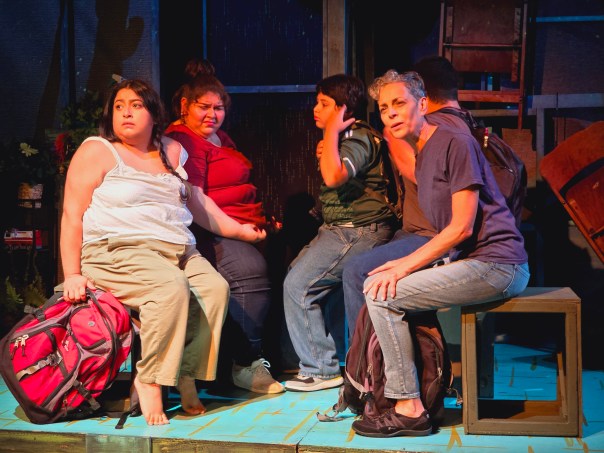
So you can expect Banu Valladares as Tita, Christian Serna as Hason, and Sonia Rosales McLoed as Medea all to have potent roles to play in Alfaro’s explosive retelling. Unlike Euripides, Alfaro flashes back to the treacherous journey that brought Hason and Medea to the Rio Grande, with enough hardships, suffering, and trauma to suggest a parallel to the Middle Passage from Africa. And of course, Medea’s barrio lifestyle also tracks with Langston Hughes’ “dream deferred” in Harlem – both of them pulsating toward an explosion.

Alfaro shakes up Euripides’ cast as well, replacing both kings, Creon and Aegeus – and the unnamed, offstage daughter Creon expects Jason to marry – with the sassy, bossy Armida, Hason’s employer and benefactor. We might also say that Alfaro has replaced the Euripides’ Chorus of Corinthian Women with Josefina, a bread-peddling gossip making her daily rounds.

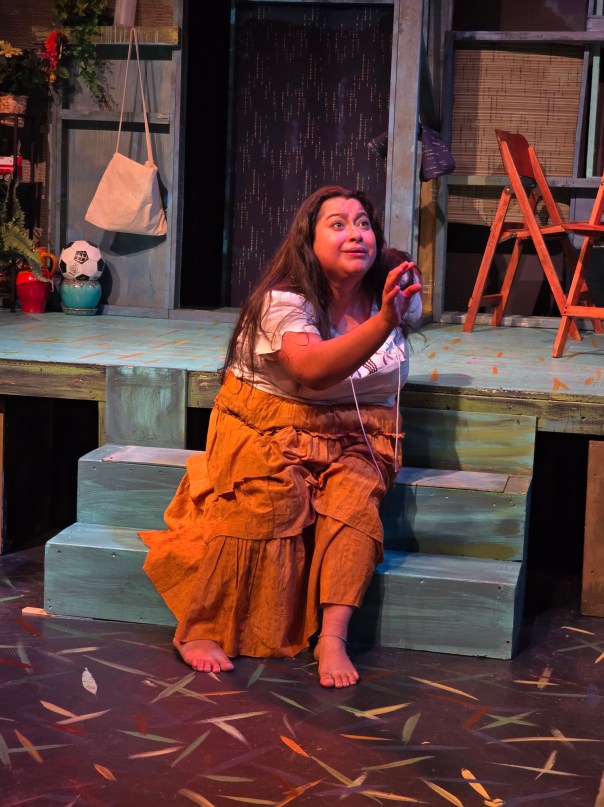
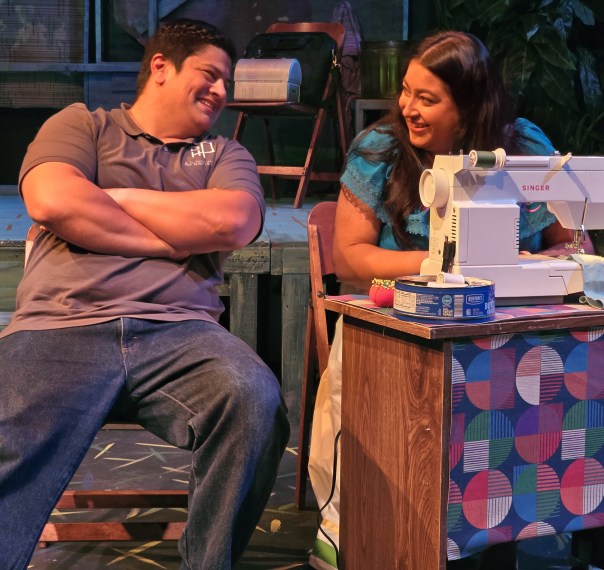
Confronted with a rich mixture of Spanish and English, spoken with authentic Hispanic accents by an all-Latine cast, we may feel as disoriented in this Chicano world as Hason’s family are in LA. Seeing a quiet Medea, burdened by an oppressive workload and timidly tethering herself to her sewing machine, we further struggle to connect Alfaro’s protagonist with Euripides’. Back in Corinth, the royal Medea was outraged, suicidal, and wildly vengeful from the moment she first appeared, a volatile dynamo of shifting, fiery emotions.

Since we come into Alfaro’s story a little earlier, it will take a little while for his tragedy to overlap the Greek’s, even if you read it the night before. And if, like me, it’s been over 20 years since you’ve seen the work live or read a translation, you may miss some of what Alfaro has preserved from Euripides’ telling. For Euripides, it wasn’t such a big deal that Jason and Medea were immigrants, but they were. For me, I hardly noticed that Jason and Medea weren’t legally married, but they weren’t.

For Alfaro, these are central plot points. Just don’t think he’s changing those parts of the story. It’s really brilliant how they’re elevated to top-of-mind when we watch Mojada at the Arts Factory. Complementing their all-Latine cast, most of whom are making their first appearances with Three Bone, are directors Carlosalexis Cruz and Michelle Medina Villalon, also in their Three Bone debuts. They don’t always listen to their players with helpful Yankee or Dixie ears, but they deftly quicken the heartbeat of this drama as it climaxes.

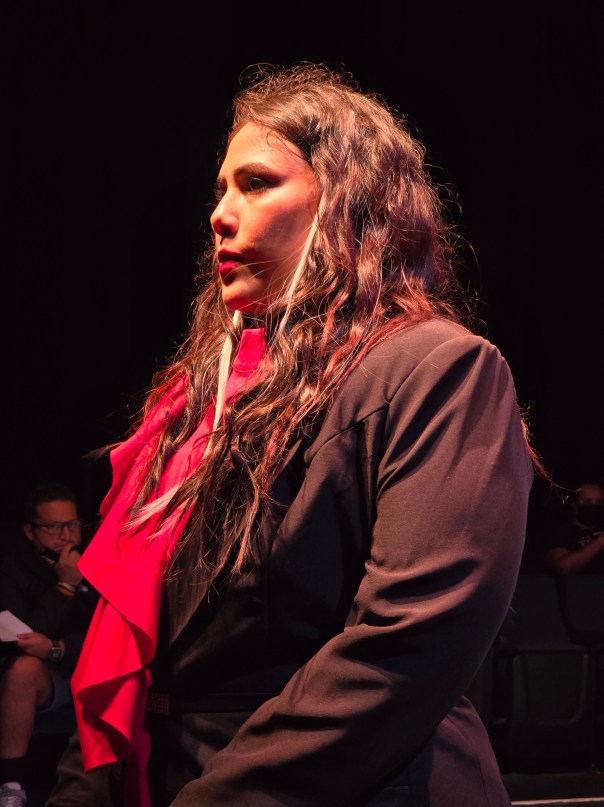
More importantly, when they reach the spectacular ending, what they concoct – with Jennifer Obando Carter’s most unforgettable costume design – hits the spot. We could feel that viscerally on opening night.

Obviously, Latine theatre wants to happen in the Queen City. With Three Bone committed to producing Alfaro’s complete Greek Trilogy, Electricidad next August and Oedipus El Rey slated for 2026, it’shappening.

Because Alfaro is messing with both the story and Euripides’ character, those who know the Medea myth can experience the suspense at nearly the same high intensity as audience members who have never come across this Mom-of-the-century before, in Greece or in this LA rewrite. Over and over, as memories of the Euripides’ came flooding on me from past encounters with the live Shaw, the TV Anderson, and the text, I found myself wondering, Is he really going all the way?

After all, part of the reason Euripides’ Medea hasn’t played in Charlotte for at least the 37 years that I’ve been on the beat could be that Queen City theatre companies were protecting us from its full barbaric force. Could be some blowback in Bank Town.

Thanks in large measure to the harrowing flashback sequence, McLoed is able to traverse the wide gulf between the semi-catatonic Medea we confronted at the beginning of the evening and the flaming red raptor we see at the end. That’s Medea!? I found myself wondering during Scene 1, so the development arc from there is nothing less than astonishing. There’s a haunting connection between the catatonia we see at the beginning and the vengeful glare that comes some 90 minutes later. She’s actually relatable most of the time!

Precisely because this LA Medea lacks the fire and wicked glamour of her Corinthian counterpart in the early scenes, we can effortlessly empathize with Serna’s ambitious Hason as he pursues the American Dream. She won’t leave the house! Family outings with their son cannot happen, she’s too traumatized for sex even when she’s in the mood, and. He wants to get ahead while his Medea is a poster girl for inertia.

And considering the huge difference between an immigrant’s status in modern-day America and his relative safety in ancient Corinth, Hason has many pragmatic reasons to accept the predatory Armida’s business and marriage proposals, no matter how much he may still love Medea. Giving us earlier access to the story – before the breakup – not only allows Alfaro to add fuel to the drama, it allows him to show us that there is fault on both sides.

Serna’s performance isn’t quite as wide-ranging as McLoed’s, but it is no less nuanced, for he is navigating this new American world and trying to provide for his family’s future. We see that he’s a far better parent to his son, Acan, than Medea, and it’s not just because he kicks a soccer ball around with him in the front yard. Citizenship for him, no matter how heartlessly he betrays Medea, will mean citizenship for the boy.

In her venomous cameo, delivered with a wondrous mix of elegance and malignity, Marianna Corrales is magnificently resistible as Armida, Hasan’s childless employer and Medea’s implacable landlord. Hard to say whether Armida wants Acan as a son more than she wants Hasan as a husband, but with knowledge of Medea’s immigrant and marital status, she knows she is invincible and will have her way. Corrales is cool. Ice.

Alfaro not only gives Leo Torres more to say and do in his story as Acan than any of Jason’s children have ever had before, he makes him a key part of the tale. Torres will not only tell his mom about visiting Armida’s swank house with Dad, he will also – huge new dramatic irony – suggest that she make the rich lady a dress.

Further igniting Medea’s suspicions and jealousy is Isabella Gonzalez as Josefina, bringing her signature vitality along with her cartful of bread as she shares gossip with Tita. Yet she is also eager to make friends with Medea, especially if a certain amount of freebie loaves will convince the artful seamstress to make her a smashing new outfit. So it makes sense, out of friendship, that she tells Medea what the buzz is around town about Hason and Armida.

We never learn how long Hason has actually been married – or how far custody proceedings have gone – when Medea gets the newsflash. This point in Alfaro’s LA comes late in the drama, but in Corinth all this has happened before we first see the sorceress. No wonder the rest of the evening was such a feverish whirl.

In hindsight, after dipping back into the original 431 B.C. playscript, methinks it was far crueller that Alfaro’s Medea sends Tita – instead of Jason and the child – to deliver her bridal gift. Cruel as it is to make the viejita a witness, it gives Valladares a monologue that even Judith Anderson would have loved to sink her teeth into. As the eternally griping Tita, Valladares seems to hate everybody, beginning with us, whom she addresses directly after Alfaro’s incantatory opening.

But she has crossed rivers, faced outlaws and starvation, because of her loyalty to Medea, the one person she adores. And now Medea sends her off with a giftbox to Armida and tells her that she herself is a second gift for Hason’s benefactor. Discarded like an old rag!

Plenty of steam to work with. Valladares does not misfire. Nor does McLoed, though we hear an ominous helicopter overhead.

EMF’s Symphonic Triptych Overflows With Virtuosity and Enthusiasm

Review: Symphonic Triptych at Eastern Music Festival

By Perry Tannenbaum

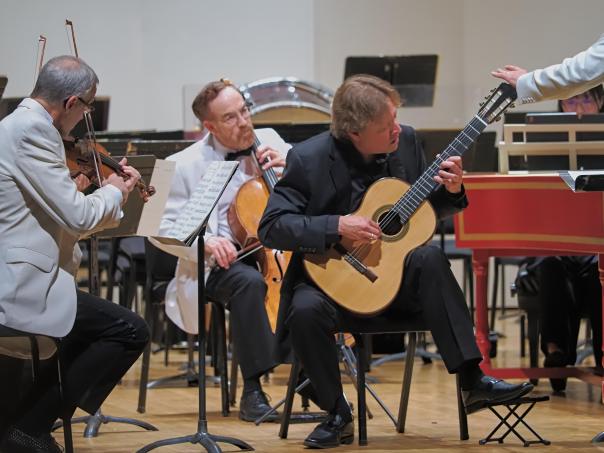
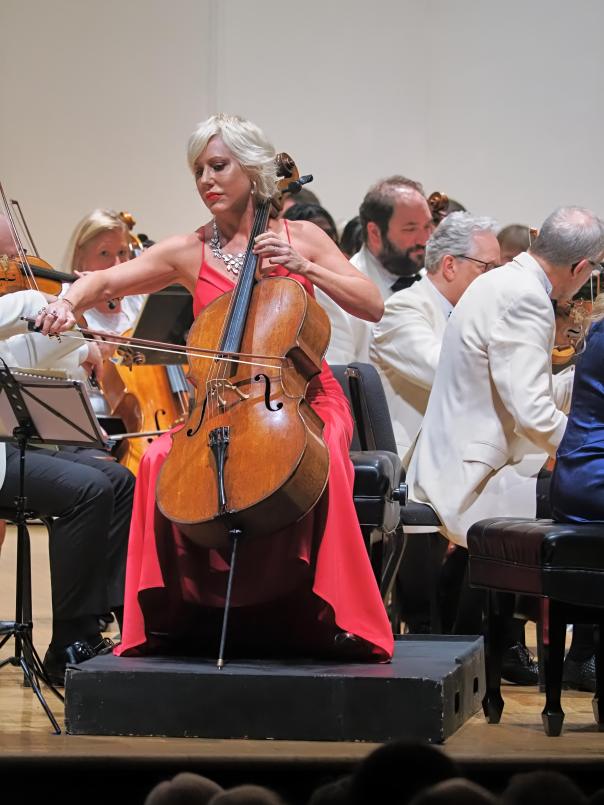
July 20, 2024, Greensboro, NC – You could almost hear the consternation behind the scenes as Gerard Schwarz and the Eastern Music Festival deliberated over what to call their most recent Saturday evening concert, the penultimate fourth of five offerings in this season’s Joseph M. Bryan Jr. concert series. All four of the pieces on the program could have been a headliner, beginning with Antonio Vivaldi’s Concerto for Lute and Strings, played on guitar by the estimable Jason Vieaux. At this banquet, Vieaux’s virtuosity and soul would merely be an appetizer, whetting our palates for Richard Strauss’s Don Juan, Paul Hindemith’s Mathis der Maler symphony, and Ludvig van Beethoven’s Triple Concerto for violin, cello, and piano – with three more virtuosic guests, violinist Chee-Yun, cellist Amanda Forsyth, and pianist Marika Bournaki.

With all the many opportunities for headshot placement in print and in an epic digital program booklet, the spotlight was more than ample enough for all four artists to get at least one four-color nod in a key location. In what might be taken as a tiebreaker, Schwarz listed Forsyth along with Béla Fleck as the most stellar EMF guests for 2024 in his seasonal welcome inside the printed festival program. So after what must have been extensive brainstorming, the cryptic “Symphonic Triptych” emerged in all caps as our concert title.

At first blush, the reference seems to be an oblique nod to Beethoven’s Triple, but it more solidly evokes Hindemith’s symphonic distillation of his opera. Mathis der Maler, for which Hindemith also penned the libretto, chronicled the struggles of painter Matthias Grünewald for artistic freedom during the German Peasants’ War, more than four centuries before its 1938 premiere. By that time, Hindemith had escaped Nazi Germany with his partly Jewish wife and was living in Switzerland, so the Zurich premiere was actually played three years after the composition was complete.

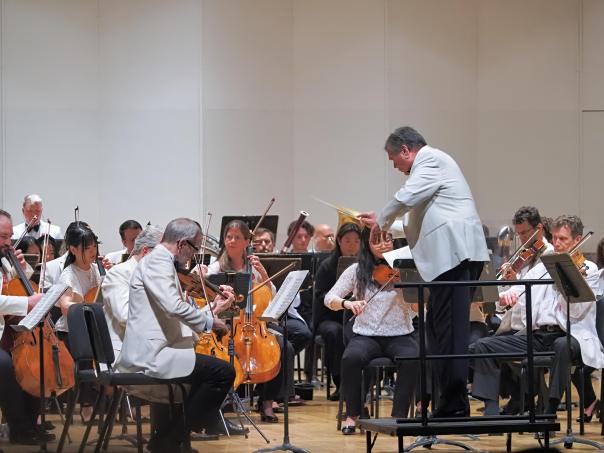
From a symphonic standpoint, the Mathis symphony was the highlight of the evening, providing the most sensational musical moment. Schwarz seemed to have rehearsed the piece even more meticulously than the Don Juan, for the mammoth student/faculty EMF orchestra at Guilford College occasionally overwhelmed Dana Auditorium with its ebullient volume. When the third and final movement of the Mathis exploded, where Hindemith evokes the hellish onslaught depicted by Grünewald in his Saint Anthony Tormented by Demons, the detonation could hardly have been more impactful and delightful – powerful yet deftly controlled.

The éclat of this final movement, which shuttles to Grünewald’s Visit of Saint Anthony to Saint Paul the Hermit before returning to turbulence, may have been too much for the Greensboro audience. The number of satisfied – or dissatisfied? – ticketholders who did not return after intermission was shocking.

Did they not know that that Beethoven’s Triple – with a visual triptych of Chee-Yun, Forsyth, and Bournaki – was still to come? Were they so delighted that they feared the Beethoven would mar the perfection? Or was the worry that Beethoven’s mighty Triple, which is actually shorter than most of his piano concertos, might keep them up past their bedtimes? The other explanation that occurs to me is the most unfortunate: audience members presumed that the Symphonic Triptych was complete after three works had been performed.

Whatever explained the exodus, it wasn’t a good look when the three ladies made their regal entrances.

All three were rather entrancing afterwards. One of the challenges Beethoven posed to himself when he started on this behemoth was allotting all three soloists with ample parts – and letting all three achieve parity in how they measured against the orchestra. This goal obliged Beethoven to make adjustments and accommodations for the cellist and his or her background accompaniment.

The most noteworthy adjustment, playing the instrument in a higher register than usual, is a laudable last step that works beautifully in live performance as the cellist frequently introduces new melodies and themes that will be repeated by the pianist and the violinist. But this last graceful touch tends to disappear on recordings, where we often get the illusory impression that it’s the violin that’s leading the way.

All of the volleying back and forth gets its beautiful balance restored when we enjoy the Beethoven Triple live. Alternately facing each other and the audience, Forsyth and Chee-Yun delivered the chief revelation of live performance with the chemistry between them. Facing away from the string soloists, Bournaki divided her attention between the keyboard and Schwarz’s baton.

There were moments, especially during the epic outer movements of the Triple, when Bournaki and the orchestra were answering proclamations by both string players playing simultaneously, and there were moments when the whole trio was pitted against the full ensemble. These were most electric in the opening Allegro and in the closing Rondo alla Polacca, a finale that was absolute magic at the Dana. In between these two tidal waves was a pleasant paradise of a Largo, where the Forsyth/Chee-Yun chemistry took root almost immediately, preceding a gorgeous blossoming from Bournaki.

When you saw Forsyth leading the charge so frequently, that was only half of the revelation, for the agility of her cello became the equal of the violin while the sound invaded its range. Chee-Yun met these repeated challenges ruthlessly, passionately, emerging particularly triumphant in the whirlwinds of the Rondo, where her violin reached the highest peaks at the end of the thrilling, accelerating ascents.

Vieaux could never reach the decibel levels of the soloists who followed him, but he didn’t vie with nearly the same amount of heavy artillery behind him in the Vivaldi. Nor was there any type of boost in front of him like the mini-amp Sharon Isbin brought to her 2005 Zurich Chamber Orchestra concert in Charlotte. Here the outer Allegro movements, summoning scintillating technique from Vieaux, were not as memorable as the middle Largo, maybe the most beautiful flowering of melody that Vivaldi ever wrote. The mellow sounds Vieaux coaxed from his guitar were infused with glimmering sublimity.

While the Don Juan that ensued didn’t match Vieaux’s finesse, we weren’t looking for subtlety in Strauss’s heroic tone poem. Yet it was in the quiet, intimate passages where the faculty-student orchestra was most controlled. Even if it occasionally overflowed, the enthusiasm of this mammoth band was contagious, overpowering any quibbles one might have about discipline. This youthful enthusiasm and élan may be a prime reason why Schwarz might look forward to returning each summer to Greensboro, why the faculty revels in playing the old warhorses along with challenging outré pieces, smiling onstage with pride after long days of rehearsals and private lessons.

Playing with the new generation is likely exhilarating and rejuvenating for the guest artists as well. Every one of them at this concert also hosted a masterclass in addition to their valuable rehearsal time.

“Ripcord” Brings Mortal Combat to Senior Living

Review: Ripcord at Davidson College

By Perry Tannenbaum

We’ve had more than a couple of engaging David Lindsay-Abaire moments in the Charlotte metro over the years, beginning with the Actor’s Theatre production of Fuddy Meers in 2002. Wonder of the World continued the company’s love affair with Lindsay-Abaire in 2004, and when the playwright’s Rabbit Hole took the 2006 Tony Award and the 2007 Pulitzer, Actor’s Theatre took full custody for the 2008 Charlotte premiere.

Since then, the edgy Lindsay-Abaire has largely disappeared, along with – not coincidentally, I’d contend – Actor’s Theatre of Charlotte. The exception proved the rule when Carolina Actor’s Studio Theatre mounted a fine production of L-A’s Good People in 2013, for CAST made its exit years before ATC’s demise.

Tiding us over until the current run of Ripcord in a Davidson Community Players productionat Duke Family Performance Hall, Lindsay-Abaire has graced us with numerous softer, cuddlier visitations. For he wrote the book for the musicals that brought the animated Shrek to life in a trinity of darling fluff, beginning with Shrek the Musical before hatching its twin afterbirths, Shrek Jr. and Shrek TYA. A full-length revival was staged at ImaginOn by Children’s Theatre as recently as 2022.

With the touring edition of Lindsay-Abaire’s newest Tony Award winner, Kimberly Akimbo,due for a Knight Theater rendezvous next April, many Charlotte theatergoers may rightly feel that the time is ripe for catching up with this notably successful writer. They will find a very fine production at the Duke, nestled inside the Davidson College student center, although Ripcord isn’t Lindsay-Abaire at his edgiest.

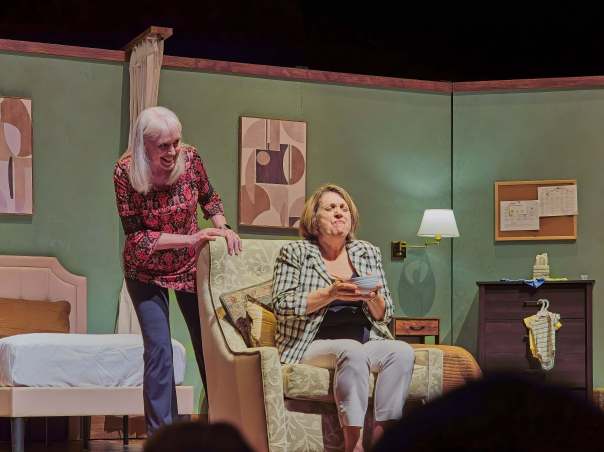
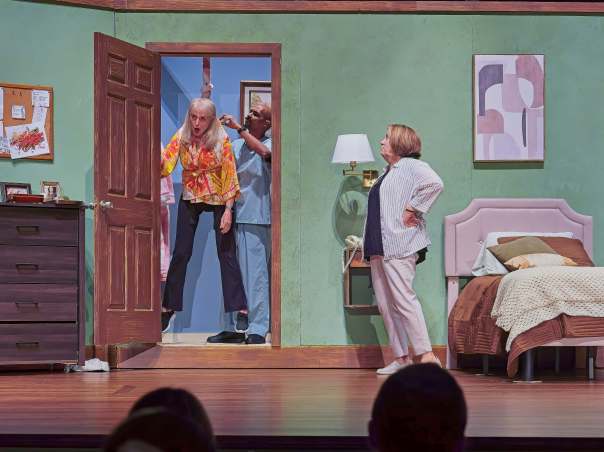
On the other hand, Ripcord isn’t nearly as humdrum as its main locale, Bristol Place Senior Living in New Jersey, would lead you to presume. That’s because roommates Abby and Marilyn have radically clashing temperaments, turning the apartment into a tinderbox. Fundamentally, Abby is misanthropic grouch who treasures her privacy – but instead of forking out the extra cash that would put her in a private apartment, she has pragmatically made herself impossible to live with.

Sunny, cheerful, and chatty, Marilyn is totally averse to the quiet and solitude Abby thrives on, breezing into the suite in a jogging outfit while her sedentary counterpart vegetates on an easy chair. She doesn’t see Abby as a mortal enemy. She’s oblivious to most of the insults that Abby hurls at her and impervious to the rest. Marilyn needs to play with others and blithely treats Abby’s hostility as playful banter.

Such insouciance totally flabbergasts and infuriates Abby, opening avenues to comedy and drama. Lindsay-Abaire slyly chooses both. So do director Matt Webster and his cast, decidedly tipping the scales toward comedy. You can easily despise both Pat Langille as the Pollyanna senior Marilyn and Karen Lico as her adversary.

Abby’s inability to dim Marilyn’s sunniness is frustrating enough for her to enlist the assistance of eager-to-please Scotty, the resident aide who cares most about the women. You can definitely empathize with Scotty when Abby confides in him and keeps pestering him to get Marilyn transferred to a single apartment that has become vacant downstairs.

Strangely enough, Scotty’s patience isn’t as boundless as the saintly Marilyn’s, which gives Lowell Lark some leverage to work with in the role. As a peacemaker, he gently informs Abby that she likes it upstairs, where it’s sunnier and there’s a nice view of the nearby park. As a dealmaker, he won’t commit to speaking to management on Abby’s behalf about moving out her roomie, but he could get in a word for her about serving up some chicken and dumplings – instead of the usual tasteless gruel – if she’ll buy a ticket and come to a show he’s acting in.

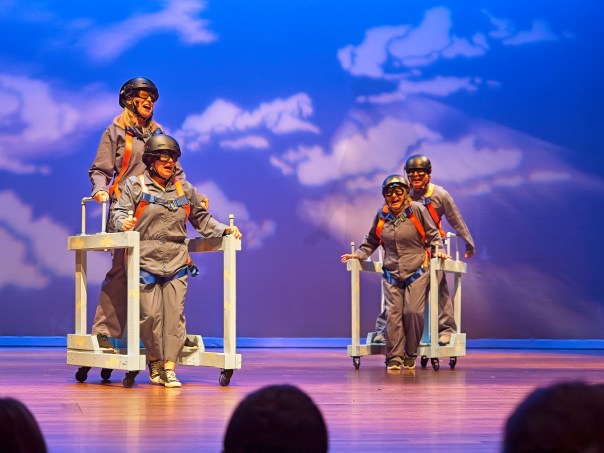
Actually, “Beelzebub’s Den” is a haunted house, liberating us from the ladies’ institutional humdrum bedroom and bath on an excursion to the first of three breakaway scenes, two of them obliging set designer Kaylin Gess to create living quarters that quickly stow away in the Duke’s commodious wings. Lots of work for the seven-person set crew. Doubling as DCP’s lighting designer, Gess gets to supply the phantasmagoria at Beelzebub’s while Beth Killion provides the outré costume designs. Technical director Shawn Halliday also gets in on the fun, here and in the signature skydiving scene.

There’s fun for us watching the haunted house antics, but Abby is neither impressed with Scotty’s acting nor scared by any of the spookiness. Abby matter-of-factly tells that she doesn’t scare. Period.

Enjoy the fun, then, but the prime takeaway from Beelzebub’s is Abby’s pride in her fearlessness. In the very next scene back at assisted living, Marilyn will insist with equal certitude that nothing Abby can do will make her angry. Resistant to all the previous bets her quirky roomie has proposed, including whether she can balance a slipper on her head, Abby sees a betting opportunity here. If Abby can make Marilyn angry, she wins. If Marilyn can scare Abby, victory!

The high stakes are predictable: if Abby wins, Marilyn leaves; if Abby loses, Marilyn gets to take over the coveted bed near the window. Game on!

And no holds barred. Lico and Langille aren’t at the high end of Lindsay-Abaire’s specified age range for their roles, so the patina of seeing ancient biddies acting like kiddies isn’t happening in Davidson. But it is definitely the playwright’s intent for Langille to exceed expectations with her imaginativeness and for Lico to shock us with her meanness and cruelty.

With stakes set this high, this is war, and the warfare escalates each time an attack fails. Bombarding your roomie with phone calls and fake messages or drugging your roomie are not out of bounds as the battles begin. Enlisting your relatives and pranking your opponents’ kin are also legit strategies as the Abby-Marilyn War escalates. The avenues of comedy and drama widen along the way.

Langille and Lico obviously revel in hatching their devilish schemes and flouting our presumptions of senior citizens’ dignity and decorum. So the Odd Couple comedy, seasoned with a half century of aging, works well. But there’s also a theme of bonding that Lindsay-Abaire plants deeply in his script from the moment his antagonists strike their bet. Reviews of the 2015 Manhattan Theatre Club premiere indicate that director David Hyde Pearce missed it with his sitcom reading, and Webster also misses some of the early hints.

Yeah, Scotty the peacemaker and dealmaker subtly evolves into the common enemy – inevitably, the uniter, if both women survive! – when Abby and Marilyn solemnly agree to keep their bet a secret from him. Lark has his best moments when he suddenly appears at an inopportune time, threatening to blow the renegade gamblers’ cover.

The deeper mojo is in the bond formed between the two combatants, a literary staple stretching past Robin Hood and Little John all the way back to the Homeric epics. We’ve all seen two boxers sincerely hugging one another after pummeling each other for 12 or even 15 rounds. That’s genuine emotion, the rawest kind, not ritual or fakery. It comes from a gradually growing appreciation of your opponents’ gifts and grit as the battle grinds on. At its keenest, the upswell of emotion also comes from the realization that your mortal enemy has pushed you to a level that you never believed possible – and that part of extra specialness of your opponents’ performance comes partly from you.

So there are many fine moments that Lico and Langille have once the game is on, though digging into them would disclose too many comical and dramatic spoilers. Equal to any one of them is the spot where, the bet having been won, the combatants begin praising each other for their devilish deeds. At that point, Webster, Lico, and Langille are all catching Lindsay-Abaire’s drift.

Supporting actors are also a treat, starting with Rigo Nova as the Zombie Butler, our host at Beelzebub’s. Transforming into Derek, Marilyn’s son-in-law, Nova is almost as surreal in his geniality and self-doubt. Victimized by one of Marilyn’s pranks, John Pace wears his victimhood well as Abby’s drifter son after donning a clown suit back at the haunted house.

Kimberly Saunders is also spectacularly silent at Beelzebub’s as the Woman in White, but her surprise appearance as Colleen, Marilyn’s daughter, is an immediate joy – for she is foiling Abby’s first wicked prank just by walking through the doorway. Soon she’ll be rubbing her hands with glee at the prospect of joining her Mom in some awesome payback. Mischief is more fun when the whole family is in on the plot.