Tag Archives: Orion Weiss

Bach and Mozart Strive With Stravinsky at Knight Theater

Review: Orion Weiss with Charlotte Symphony

By Perry Tannenbaum

January 11, 2025, Charlotte, NC – Although we still get steady rations of Mozart from Charlotte Symphony since the days when Christof Perick passed the baton to Christopher Warren-Green, we havn’t heard much Bach from the orchestra since the autumnal Bachtoberfest faded from Symphony’s portfolio nearly a decade ago. This is understandable, if lamentable: after bringing us a double dose of the Baroque titan in 2018 – plus a shot of Vivaldi’s Four Seasons – violinist/conductor Aisslinn Nosky became a mainstay at Bach Akademie Charlotte (and one of the annual Charlotte Bach Festival’s primary claims to national prominence). A return to the Classics Series, set for 2020 via the Leipzig master’s Brandenburg Concerto #2, was quashed by the onset of COVID.

You could say that the suspense has been building. For a while, it seemed like CSO was tacitly conceding the high ground to the Akademie and its festival, presented by musicians from across the country who perform on authentic Baroque instruments. Playing the music of Bach on modern instruments, you could argue, has become paradoxically retro.

Yet the more deeply you explore musical history and authenticity, the more obvious it becomes that ancient (looking at you, Vivaldi-Schubert-Tchaikovsky) composers eagerly embraced new instruments, recycled their compositions for different instruments and different-sized ensembles, and encouraged musicians to copy, interpret, modify, and spread their music as they pleased. Reverence for absolute fidelity to original compositions is as absurd as assuming that top recording artists, whether it were Bob Dylan or Taylor Swift, would never allow covers of their greatest hits. If it sounds good – and magahits often do – go for it!

So it was heartening to find that CSO was intrepid enough to present a Bach Orchestral Suite in a modern-instrument performance and, perhaps to underscore the point, Johann Sebastian’s Keyboard Concerto No. 6, adapted by the composer himself from the Brandenburg No. 4. A certain amount of ambiguity pervaded Knight Theater as guest conductor Jeri Lynne Johnson made her debut. The house that greeted her was packed to the topmost row of the balcony. Yet the cause for the crush may have been the cancellation of the previous evening’s performance due to a “snowstorm” that had generated more bloated hype than solid news.

The only sparsity was on the Knight Theater stage. Johnson and the CSO would not be discarding all of the orthodoxies of the authenticists: the size of the orchestra had been scaled back to those employed in Bach’s days and those that would have played Mozart’s Symphony No. 25. The interloper on the program, Stravinsky’s Concerto for Piano & Wind Instruments, was also conspicuously downsized.

Viewed in profile, Johnson’s black suit – and her decisiveness – enhanced her resemblance to Kamala Harris. Symphony responded energetically to her baton all evening long, yet there was no lack of lyricism or finesse when Bach’s Orchestral Suite No. 3 transitioned from its brassy opening Overture to the famed Air (on a G string). Concertmaster Calin Lupanu, accorded considerable space in the opening movement, spearheaded the ethereal violin section to the requisite sublimity as the big tune gracefully swelled. Their intimacy quickly pointed up the advantage of a trimmed ensemble.

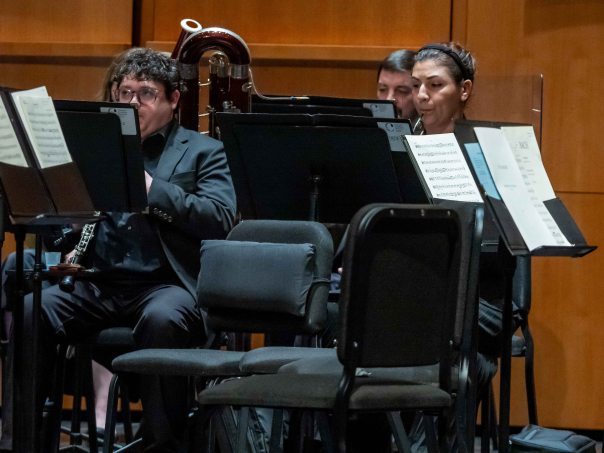
Subscribers who hadn’t scrutinized their program leaflets, let alone scanned its QR code for the full booklet, were likely shocked by the mass departure of the string sections, the arrival of the Steinway, and the empty chairs that remained as pianist Orion Weiss made his genial entrance. Deceptive! After a rather solemn Largo opening from the winds, with a somewhat promising crescendo at its center, Weiss’s first notes from the keyboard in the Allegro section were savage knuckle-busting clusters, met by a lusty clamor from the previously wan winds, crowned by a thumping of timpani.

Amid the cascade of chords that Weiss inflicted on the keyboard, a jazzy percussive rhythm infectiously emerged – even if it was impossible to determine whether the blizzard of notes Weiss was playing were the right notes. Suddenly, Weiss had taken on the appearance of a febrile Russian madman! The ensuing Largo provided lyrical reassurance, with some primeval passages set aside for oboists Erica Cice and principal Timothy Swanson. The pacing of the closing Allegro was almost as frenetic as the opening: if there were wrong notes here, Stravinsky had put them there with wicked glee.
This image has an empty alt attribute; its file name is 2025bach-mozart-7.jpg

Unless you were expecting an enormous horde of string players to flood the stage for the Mozart symphony, the biggest surprise after intermission was at the beginning, when Weiss returned for the Bach Keyboard Concerto. When Johnson stood by, she applauded not only Weiss but also flutists Amy Orsinger Whitehead and principal Victor Wang. Jackson’s outfit hadn’t been the only one I’d noticed until then. As she took her place with the winds for the Orchestral Suite, Whitehead’s black attire seemed to be strikingly ornate and elegant. So this featured slot explained the seeming breach of decorum.

Nor do you need to go more than a couple of bars into the Brandenburg Concerto No. 4 or its Keyboard Concerto offspring to savor the impact of its paired flutes delivering the catchy theme of its opening Allegro. Baroque aficionados, on the other hand, might have needed a minute or so to acclimate themselves to hearing the more rounded and gilded timbres of modern metal flutes. Their record shelves are likely clogged with trendier authentic recordings, marked by the presence of ancient wooden flutes and their hollower sound. Frankly, it was refreshing – and fun – for me, and Weiss bore a distinctly merrier look as well, though his cadenzas remained challenging.

Let’s not waste any more time in declaring that Charlotte Symphony retains its zest for Mozart. With this trim ensemble and Jackson’s accenting, what we heard at the Knight ranked among the most exemplary performances CSO has lavished on a Mozart symphony, even if the youthful No. 25 doesn’t rank among his very best. The opening 25-note sequence from the legendary 17-year-old prodigy, a 16-note vamp followed by a nine-note melody, hasn’t worn out its winsomeness in over 250 years.

Standing out almost as much as the crispness of the orchestra were the lovely solo spots from Swanson, capping what was perhaps his finest evening since assuming the first oboe chair this season. Jackson was gratifyingly bold in differentiating Mozart’s dynamics, finishing out the penultimate Menuetto with a satisfying crescendo. The closing Allegro featured more assertive playing from the winds pitted against the ferocity of the strings. Every now and then, we could discern Swanson’s oboe hovering above the fray.

Ehnes and Weiss Deliver a Full-Length, High-Energy Concert – and a Memorable World Premiere

Review: Duke Performances’ The Show Must Go Online series

By Perry Tannenbaum

Screen Shot 2021-03-13 at 8.07.12 PM

Broadway has been closed down for nearly a year, opera remains in hibernation, while symphony and chamber concerts have slimmed down and gone virtual. Local theatre works, when they aren’t masked or outdoors, have diminished to Zoom or Skype proportions, modest in length and ambition. The preeminent pre-pandemic buzzwords, premiere and debut, when they’re used at all, are now applied by publicists to hurriedly-produced series of webcasts rather to performers or works.

Screen Shot 2021-03-13 at 8.00.13 PM

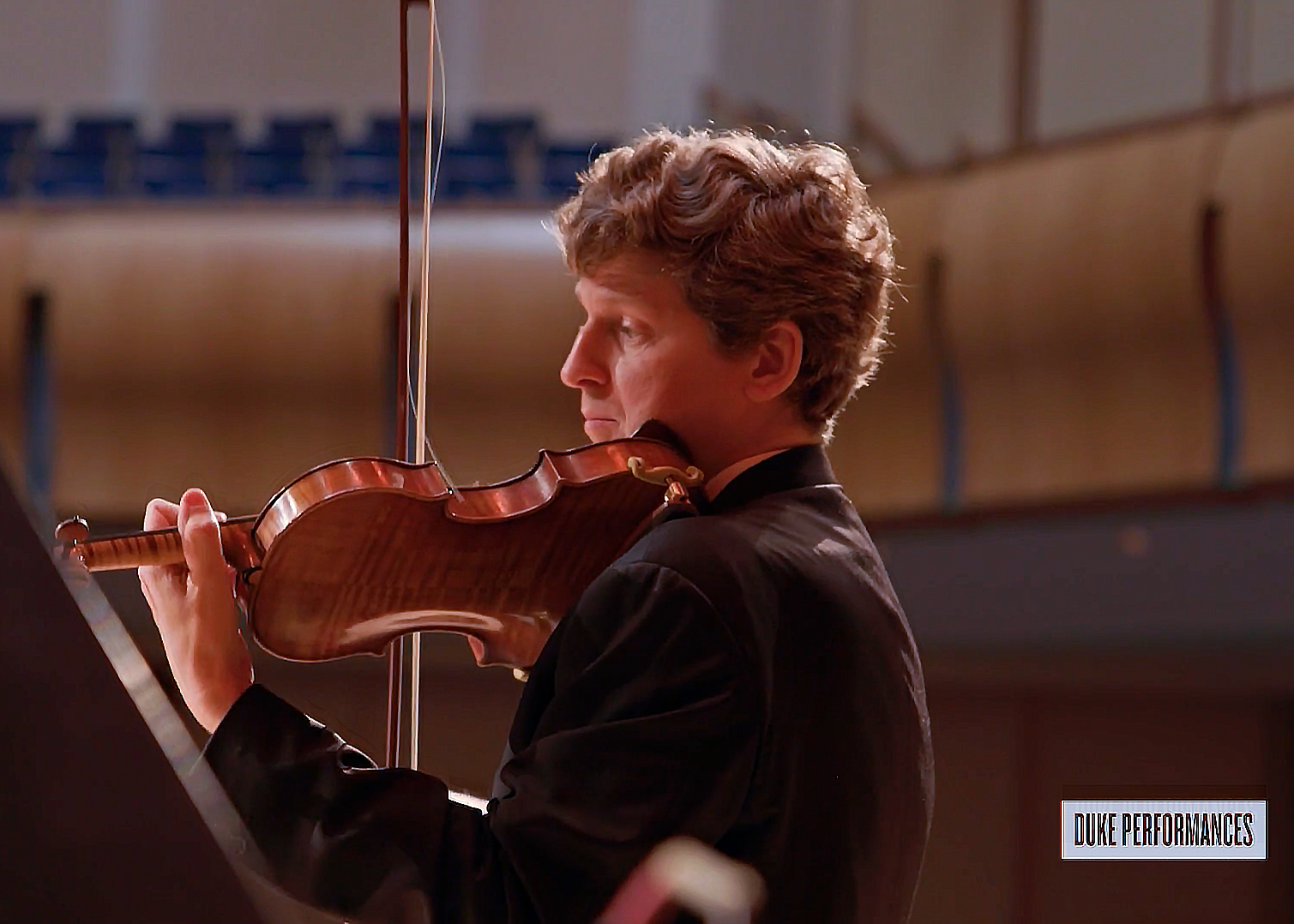
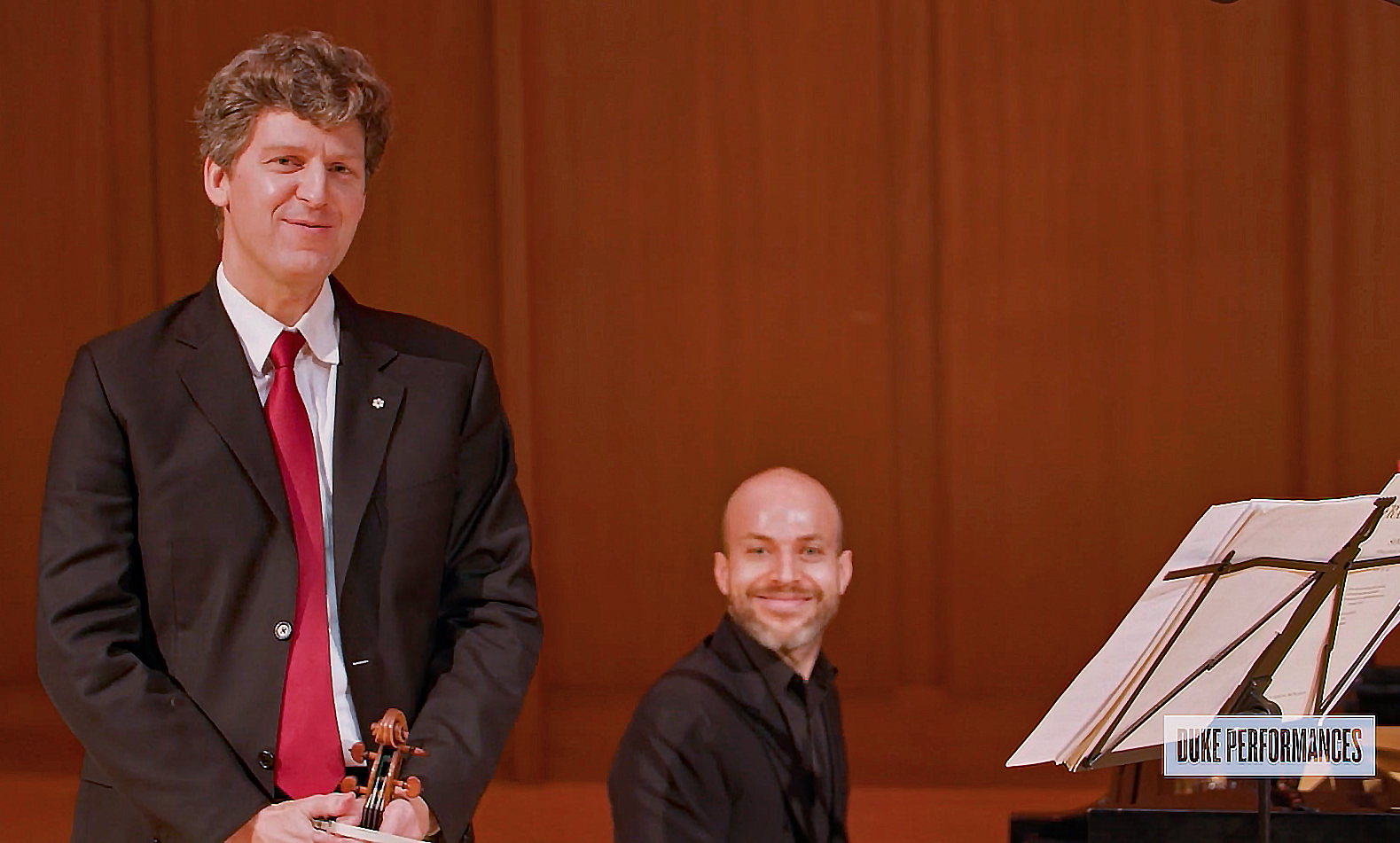
How refreshing, then, to come upon the latest installment in Duke Performances’ The Show Must Go Online series, which sported the Duke debut of two-time Grammy Award-winning violinist James Ehnes and the world premiere of Aaron Jay Kernis’s Sonatine for Violin and Piano. After acknowledging in his opening remarks that Duke Performances was “trying to celebrate its 75th anniversary,” Chamber Arts Society of Durham director George Copen proclaimed that the Kernis piece would formally premiere “this very hour.” That’s about as precise as you can be on a webcast that remains continuously accessible to ticket holders for three days.

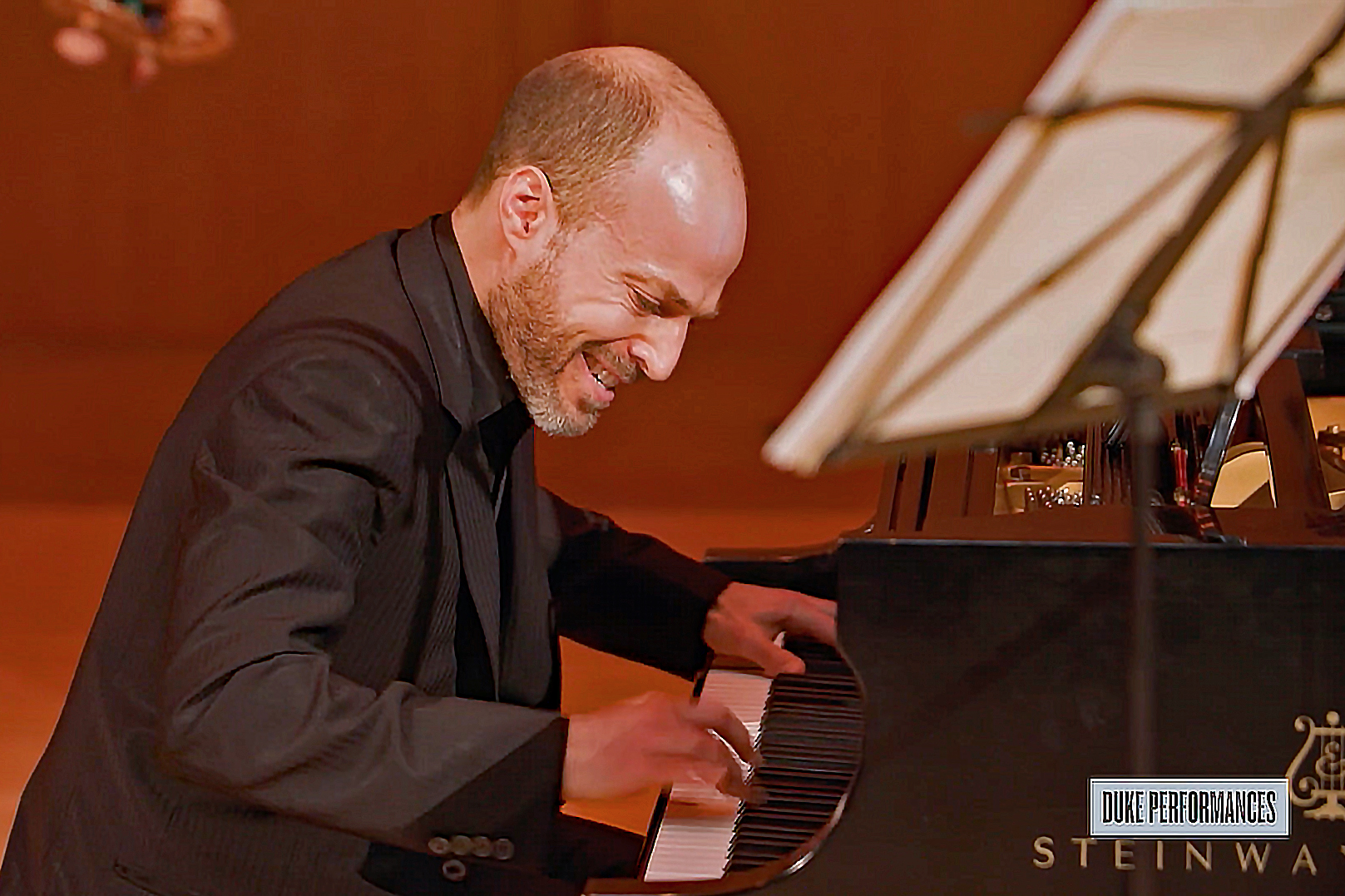
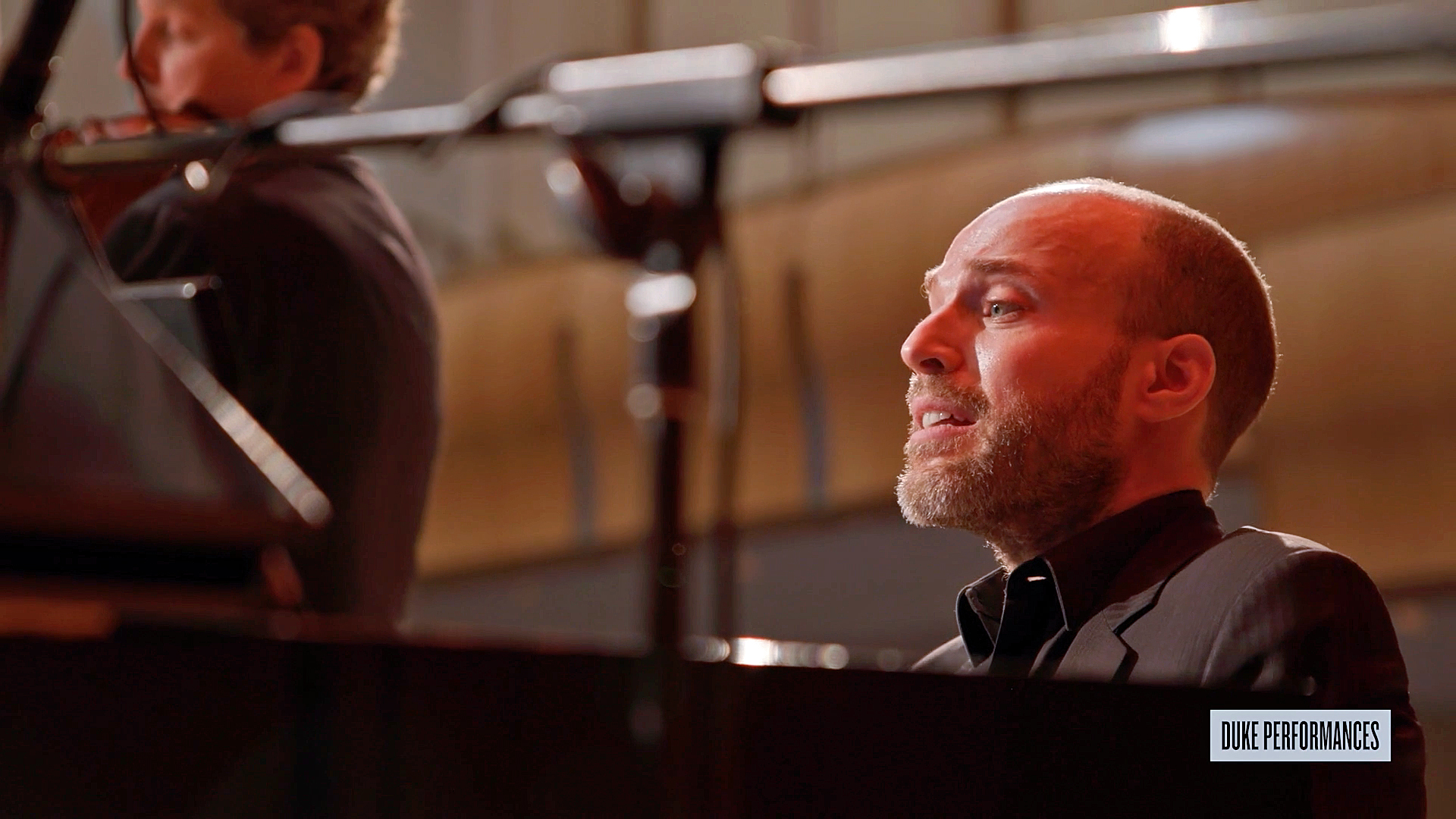
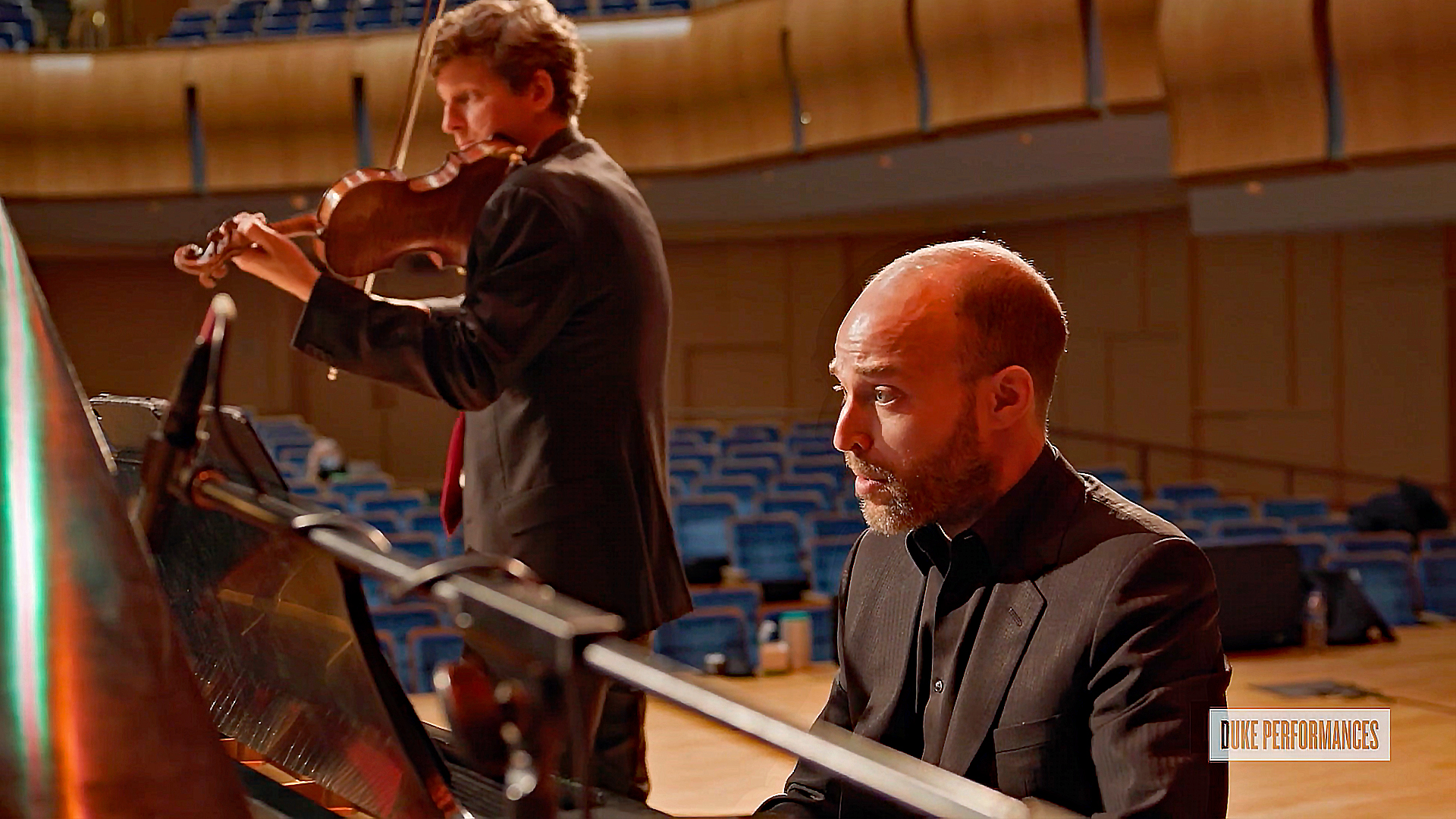
Fleshed out with additional sonatas by Schubert, Prokofiev, and Saint-Saëns, the video stretched out for over 90 minutes, almost epic for a webcast. There was no intermission, of course, and the estimable Orion Weiss, no stranger to Duke University’s Baldwin Auditorium, was at the keyboard. Weiss remained in the background during Ehnes’s intros, but as soon as the duo launched into Schubert’s Sonata in G Minor, it was clear that he was a full partner in the musical collaboration. There were extended passages in the opening Allegro giusto when Ehnes was quietly sawing away while Weiss merrily carried the main load. Conversely, when Ehnes had the lead, Weiss was churning away behind him, probably more challenged in his backup chores. A syncopated three-note phrase that the men played together at the outset was the only turbulence on the otherwise placid flow of the movement, recurring intermittently along the way and reprised emphatically to crisply close out.

An early work written at the age of 19 but only published after Schubert’s death, when the composer had left us far mightier works, this sonata and two others written even earlier were called Sonatinas when they were originally published – and Jascha Heifetz hasn’t been alone in retaining that title in recordings. But Schubert comes through in the Andante as the imaginative melodicist we associate with his maturity, and it was pleasurable watching Ehnes and Weiss as they took turns embracing the enchanting lyricism. The ensuing Menuetto: Allegro vivace proved to be the shortest and swiftest movement. Yet this little movement, despite its sonatina scale, developed a pair of themes and delivered some of the most rugged moments overall. Three thumping chords introduced the final Allegro moderato, like an invitation to dance, and the celebration slowed down for romantic episodes a couple of times, swept aside by the prevailing party spirit.

Screen Shot 2021-03-13 at 8.55.51 PM

Prokofiev’s Sonata No. 2 in D was originally written for flute and piano in 1943, but violinist David Oistrakh was so enamored with the piece that he had the composer adapt it for violin, with extra trimmings (double bowing and harmonics), by the following year when he premiered it. Having already recorded the piece twice with different pianists, Ehnes probably didn’t need to say that he preferred the violin version, but the declaration certainly raised my expectations, since I’ve loved the piece ever since the vinyl recording by Jean-Pierre Rampal with Alfred Holeček became one of that great flutist’s first albums to grace my collection. In recent years, I’ve acquired two Oistrakh recordings of the piece as well. Ehnes didn’t fall short of any of those recordings, so I can only envy those who might hear this piece for the first time in his performance. On violin, the opening Moderato is more tender with more pent-up passion in the agitated passages; on flute, the music is more soaring, soulful, and serene.

Thrilling, exuberant, and frantic as it was, Ehnes’s bravura on the ensuing Presto did not bear out the violinist’s claim that Oistrakh had called for a brisker tempo than you would hear on flute. Some of the recordings I’ve tracked down on Spotify present this Scherzo as an Allegretto, to be sure, but the label on Rampal’s vinyl has said Presto for upwards of a half century. It wasn’t just a madcap romp in Ehnes’s hands, for there are tender moments amid the frenzy with wicked interjections, and Weiss was also very impressive here, responding assertively right up to the movement’s abrupt conclusion. Ehnes showcased the extra tenderness of this violin version most emphatically in the lovely Andante, dramatically tamping down the pulse of the piece and finding sensuous allure in the sinuous melody. The concluding Allegro con brio was brimful of triumphal zest, bursting with energy and virtuosity. Even the contemplative second theme built to a proud passion.

The diminutive suffix for Kernis’s Sonatine, Ehnes revealed, came from the composer’s mischievous determination to rhyme his title with his daughter’s name, Delphine. As the kaleidoscopic markings of the opening movement prove – including Oracle, Larkspur, and Delphinium – the composer was keenly aware of the geographic, mythic, and botanical associations with that name. Additional markings in that movement, Cetacea and Dolphinic Syncopation, hint at the probability that the girl has acquired an aquatic nickname at home or in the schoolyard. Although there is a Delicato embedded among the tempo markings, “Oracle” is anything but delicate – or feminine – at the outset, moving from fury to foreboding with enough energy to fray the horsehair on Ehnes’s bow. An ominous, somewhat uncomfortable lullaby followed a complete stop. Eventually, we circled back to tempestuous drama, capped with a vicious pizzicato.

Screen Shot 2021-03-13 at 9.17.50 PM

The middle movement, “Shaded Blue,” was intimate, personal, and once again allusive. Taking his cue from Delphine’s tendency to dye her hair blue, Kernis gave this slow movement a sad opening, lightly textured with the blues. Some of the slower, quieter passages were downright eerie and despondent, building to anguished shrieks before descending to another depression that distilled into a long, sustained harmonic note – almost as memorable an ending as the pizzicato had been. Once again, the concluding movement’s title had personal and musical connotations. “Catch That Train!” recalls the composer’s anxiety the first time he and his wife allowed Delphine and her twin brother to ride the New York subway by themselves – using the kind of train rhythms common to bluegrass and boogie-woogie. Of course, it was Weiss at the keyboard who was most propulsive in taking the musical train from a standstill to full steam. But if Weiss was the rhythm of the rails, then Ehnes was surely the train whistle, with wailing double bowing and fadeaway glissandos. Ehnes also drew a hefty share of the rhythm, fiddling furiously at times in bluegrass mode and even strumming for a while and producing a hollow banjo sound. No, Kernis’s “Train” wasn’t the most New York in spirit, but it was definitely rousing and entertaining.

Screen Shot 2021-03-13 at 8.31.26 PM

For their closer, Ehnes and Weiss presented the most often recorded piece on their program, Saint-Saëns’ Violin Sonata No. 1 in D Minor, ruefully nicknamed “The Hippogriff Sonata” by the composer when a mere human violinist couldn’t cope with its technical challenges at the 1885 premiere. A special alertness is necessary to review the piece, for two of the three divisions between movements occur without a pause. Ehnes and Heifetz are among the heavyweights who have tackled the “Hippogriff” in the recording studio, a roster that also includes Sarah Chang, Gil Shaham, Pinchas Zukerman, and Salvatore Accardo. Listening to the Ehnes recording with Wendy Chen in the wake of this explosive performance, I found that Weiss was an edgier partner, drawing more snap and ferocity from Ehnes, making for more excitement in the majestic Allegro agitato. After that opening, Weiss subordinated himself more than Chen did in the Adagio, mixing more of an accompanist’s role into his reading, where Chen maintained more autonomy.

Chen’s approach yielded sweeter, happier results in the pivotal Allegretto moderato, whereas Weiss was more impish, moody, and modern. Rounding into the beehive buzz of the Allegro molto finale, Weiss offered more puckish punctuation amid Ehnes’s awesome cascade, working into a more feverish mode when the violin began floating above in more of a legato. There was more intricacy to the interplay in the middle of this movement as Weiss and Ehnes handed over dominance to each other. Then the ending built and built and built, each flurry from Ehnes delivered with more fire and fury than the last, Weiss prodding him on with more intensity, quicker pace, to a final explosion.

Screen Shot 2021-03-13 at 9.11.47 PM copy

To be sure, the audio engineering by Christopher Scully-Thurston captured the sound of this concert with studio-level clarity; and filming by John Laww and Saleem Rehsamwala, edited by Rehsamwala, was beautifully conceived, varied but never gimmicky. What was perhaps most memorable and encouraging, however, was that Kernis proved he belonged in this company of titans as much as Ehnes and Weiss. Another Grammy nomination likely awaits the Kernis-Ehnes team when a recording is released.