Tag Archives: Miles Thompson

Hohenstein Gets Greedier in His Second Go-Round With “Peter and the Starcatcher”

Review: Peter and the Starcatcher at Matthews Playhouse

By Perry Tannenbaum

July 12, 2025, Matthews, NC – Though their names are similar and they’ve both written about Peter Pan, the temperamental gap between James M. Barrie and Dave Barry would seem to be as wide as oceans. Barrie created Peter in 1904 as an embodiment of eternal youth and the spirit of noble adventure. A century after Peter made his stage debut (played by a woman, of course), Barry teamed up with Ridley Pearson to write a novel-length prequel, Peter and the Starcatchers, keeping the non-fantasy base of the story in Victorian England while snatching Neverland from up among the stars and plopping it down on an earthly ocean.

What Rick Elice seems to have done, in returning the Barry-Pearson preteen page-turner to its stage origins, is to worshipfully replicate all the seagoing pirate action of Starcatchers along with Barry’s choicest quips. Then to supercharge the effect, Elice seems to concentrate it all so that it flies by in a blizzardy blur, all the more frenetic because scenery is stripped so bare – people become doors, ropes become ocean waves, and flag streamers are crocodile teeth – that we’re exercising sizable hunks of imagination to fill out what’s actually happening before our eyes.

Barrie fairies were jubilantly diced and desecrated by Barry’s mischief and mirth: or so it seemed the first three times I saw Elice’s Peter and the Starcatcher – on Broadway, on tour, and at Theatre Charlotte, directed by Jill Bloede. Having read Barry’s Pulitzer Prize-winning humor pieces for decades, I was so sure of my familiarity with America’s beloved joke-and-quip machine that I never bothered to read a single page of his Starcatchers. My naïve conclusion was that Elice had simply let the Barrie-Barry mashup work its magic with as little intervention – and budget – as possible.

My fourth encounter with Starcatcher at Matthews Playhouse, once again directed by Bloede, helped to enlighten me. In her previous work with the script, the evanescence of the budding relationship between Peter and Molly Aster – and the poignancy of their parting – felt more touching to me than previously. That’s significant compensation for anyone who adores Barrie’s original story, whose magic can seem drowned in humor, wit, and shtick when first encountering Starcatcher.

This time around at Matthews Playhouse, another thematic thread struck me for the first time: Elice’s orphaned Peter reaches puberty without ever having a first or last name. By now, it will only come with his consent. At the other end of the moral spectrum, Black Stache has been searching throughout his pirate career for a hero antagonist who will perpetuate his fame.
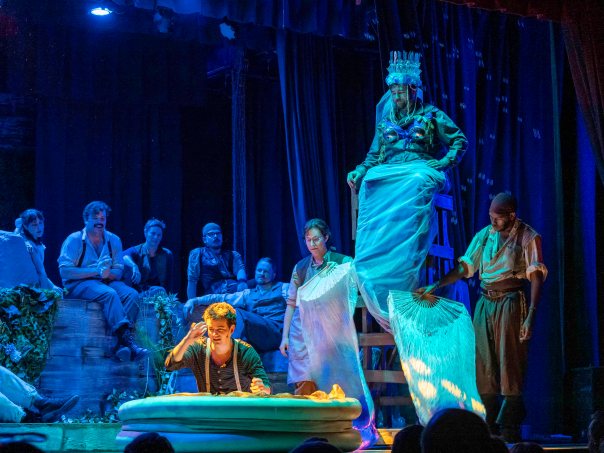
So their first grand meeting and tussle have biblical Israel-Angel proportions and consequences, or Robin Hood-Little John echoes if you prefer a secular, literary parallel. Two combatants become permanently linked and one of them emerges with a new name. Bloede’s staging here, when Peter gets his name from Stache – and later when Pan is added on – brought a new aura to those moments.

That’s what sent me to the web in search of Barry-Pearson’s actual text. Elice’s wit and humor seemed to chime with the belly laughs Barry’s newspaper columns repeatedly deliver. But is the class clown who grew up no less jokey truly capable of such yiddishe flavor and mythic depth? My suspicions were confirmed in the very first sentence of Barry’s saga: it already includes Peter’s name! An even more amazing revelation awaits if we read on. The jokey Barry tone we know and love is nowhere to be found in the opening chapters we can sample at Amazon. Instead, Barry and Pearson were following along on the dark gallows humor path that Lemony Snicket had pioneered with his Series of Unfortunate Events books for kids.

Deep breath. In my previous reviews of Starcatcher, I repeatedly gave Barry too much credit and blame for what I had seen and much too little to Elice. Both the jokiness and the mythic dimensions of Starcatcher can be credited to Elice – with additional bravos for how thoroughly he convinces us that this is how Barry would tell the origin story of Peter Pan.

Meanwhile, community theatre in Davidson, Charlotte, and Matthews continue to reap the dubious benefit of having so little professional-grade theatre in the Queen City. What a cast Bloede has assembled! Before the show began, representatives from the North Carolina Theatre Conference presented artistic director Sarah Bumgardner with their Theatre of the Year Award for 2024. So the folks backstage with their costumes on, waiting overtime for the ceremonies to conclude, were obviously under extra pressure to deliver. Even Bloede was nervous!

No matter how good your cast is, there’s plenty of stage business to be nervous about in running Starcatcher.Actors must move all the props and furniture around and keep track of all the many Yvette Moten costumes they must find and change in and out of as we move from a London dock to two sailing ships to a faraway island with a beach, a mountain, and a jungle. Stage manager Jessie Hull had to be preternaturally adept. Molly must float in the air. Peter and some nameless alley cat must fly. A lot going on while the quips shoot out at us, many of them newly minted to mock Myers Park and nearby country clubs.

Nearly all of these players were newcomers to Starcatcher, beginning with Joshua Brand as Peter and Emma Brand as Molly, presumably arriving on the Fullwood Theater stage with ready-made chemistry. Their boy-girl antipathy is no less charming than their tentative stabs at intimacy, and both can seem fueled by the promise of adventure and ignited by its thrill. The only holdover from Bloede’s 2018 cast is Johnny Hohenstein, who in bygone days crossdressed to portray Mrs. Bumbrake, Molly’s flirtatious nanny.

With even more liberties, including more than a slight leftover effeminacy from Bumbrake, Hohenstein burst into full flower as the carnivorous Black Stache, heartily devouring the scenery in Stache’s emblematic amputation scene. His eyes shone greedily as he attacked the hambone bits, and yet a queer kind of avuncular calmness came over him as he finally met his predestined antagonist and named him. For some reason, Hohenstein drew the only problematic microphone on opening night but remained unflustered by its fussiness.

Of course, one of the glories of Peter Pan is its superabundance of meanies and piratical buffoons, and we do not lack them here. In her latest crossdressing exploit, Andrea King was the perfectly servile and supercilious Smee, with glints of valor and wickedness. Chip Bradley was the wily Slank, Captain of the Neverland,who steals the precious trunk full of starstuff from under the nose of Lord Aster, the Queen’s devoted ambassador and most eminent Starcatcher. Andrew Pippin portrayed the austere Aster with sufficient British crust, entrusted with the mission of transporting the precious starstuff cargo to Rundoon, where the trunk can be dumped into a nearby volcano and kept out of evil hands.

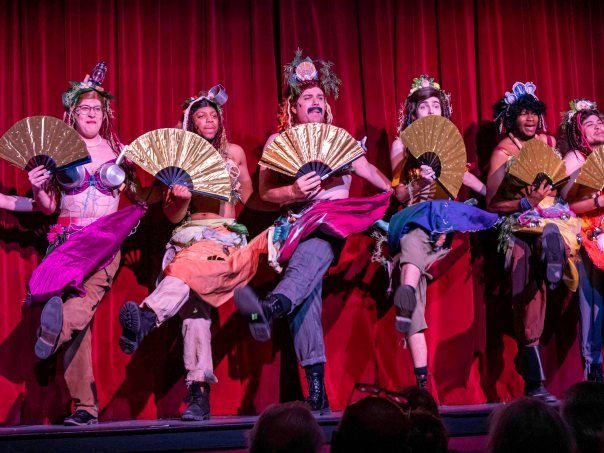
When we reach the faraway island where Peter and the trunk of starstuff serendipitously wash ashore, we will find that Neifert Enrique is the outré and eccentric King Fighting Prawn, monarch of the Mollusk natives. Was this the wildest of Moten’s costumes, or was it Hohenstein’s at the start of Act 2 during his brief song-and-dance as one of the Mermaids? Maybe Ryan Caulley snatches the prize toward the very end as Teacher, a salmon magically transformed into a Mermaid sage atop a lifeguard’s chair. It was a fitting reward for Caulley after a full evening gagged as Captain Scott from the first moment we saw him aboard his ship, the Wasp.
Ben Allen as Prentiss and Alijah Wilson as Ted were more individualized than Peter’s fellow orphans had been in previous productions I’d seen, and Miles Thompson was more rounded and nuanced as Alf, the smelly sailor who woos and distracts Molly’s nanny. Davis Hickson wasn’t as giddy and over-the-top as Hohenstein had been as Bumbrake at Theatre Charlotte in days of yore, so the Alf-Bumbrake thing (with Alf breaking most of the wind) was less orgiastic now and more genuinely warm.

Toni Stone’s Path to Glory Goes Beyond Winning and Losing

Review: Three Bone Theatre’ Toni Stone at The Arts Factory

By Perry Tannenbaum

202208173480315507725654890

Trivia questions: who replaced Hank Aaron when the future home run king moved up from the Indianapolis Clowns of the Negro American League to the majors? And who was the first woman to sign a professional baseball contract and play with a men’s team? The answer to both questions is Toni Stone, nee Marcenia Lyle Stone (1921-1996) – unless you’re a stickler for fact-checking and historical accuracy.

Then we need to face the truth that Hammerin’ Hank was already playing for the Braves’ farm club, the Eau Claire Bears, a season before Stone made her Negro League debut at second base with the Clowns. And before team owner Syd Pollock signed her to a Clowns contract, Stone had played in professional men’s leagues – if not the topmost major league – for 16 or 17 years, depending on which capsule biography you read.

Hearing all this for perhaps the first time, you’ll probably ask a truly important question, one that playwright Lydia R. Diamond surely asked after reading Martha Ackmann’s 2010 biography, Curveball: The Remarkable Story of Toni Stone the First Woman to Play Professional Baseball in the Negro League. Why haven’t we all heard about Toni Stone before, and why isn’t she more celebrated?

202208031526236485966839727

Amazingly enough, when Diamond’s Toni Stone premiered Off-Broadway in June 2019, the playwright didn’t blare out the answers that would become so glaringly obvious to everyone the following summer in the midst of #MeToo, #BlackLivesMatter, and our communal COVID hibernation. Diamond’s portrait of the pioneer nicknamed Tomboy during her childhood in St. Paul is more nuanced, diffuse, and detailed than it might be if she had begun sketching it after the cataclysms, polarization, and pandemic chaos of 2020. Or the nationwide schism of January 6.

Lucky us? In some ways, Three Bone Theatre’s production at The Arts Factory, meticulously directed by Dr. Corlis Hayes, reminds us how relatively dispassionate we were less than three years ago when we looked at neglected pathfinders and feminist icons. There’s a certain amount of useful calibration when Diamond seemingly steps aside and lets Toni tell us her story – and what she thinks of herself.

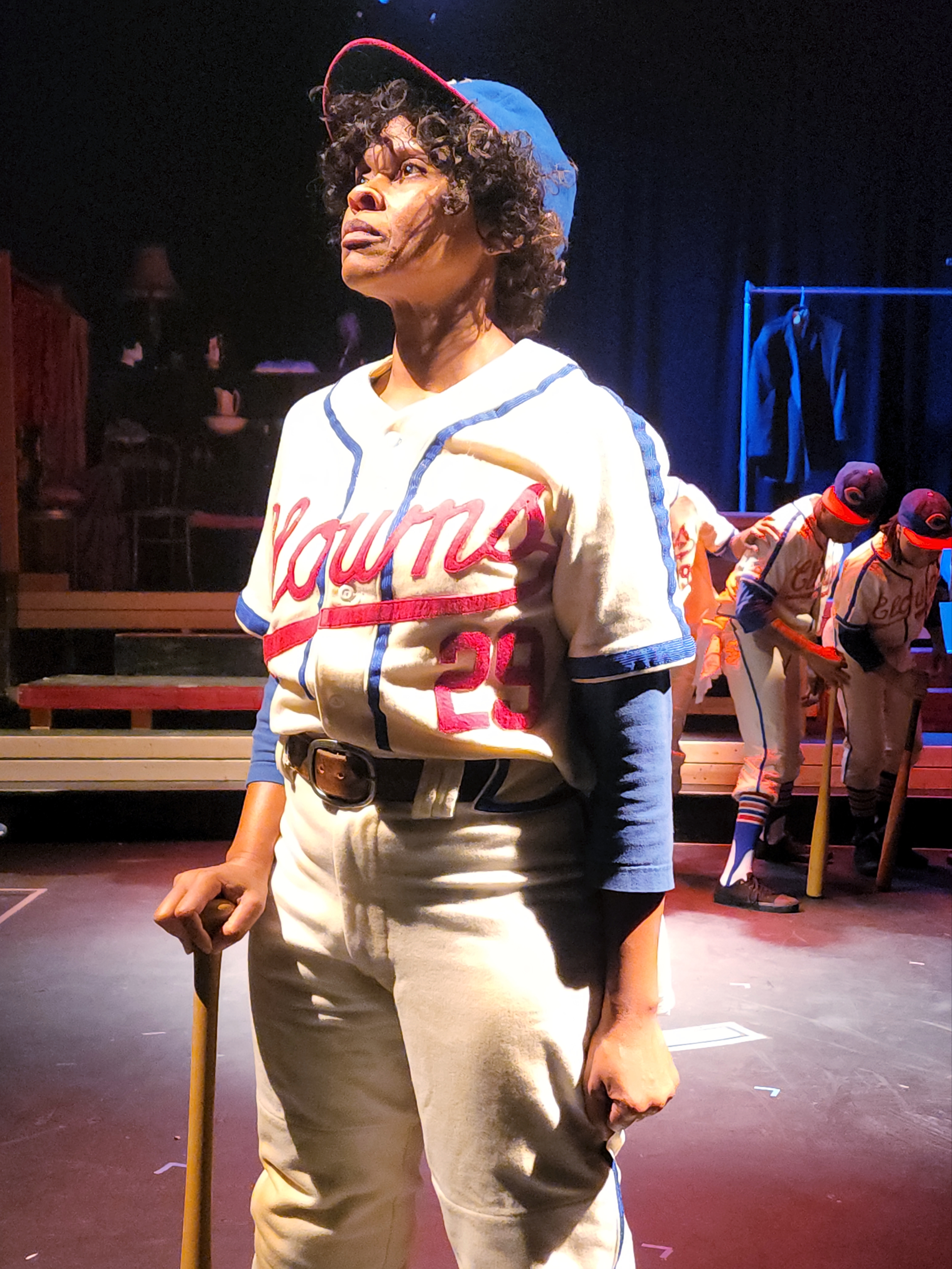
In her third standout outing of the year, Nasha Shandri immerses herself engagingly in all of Toni’s quirks, vulnerabilities, and strengths; candid rather than arrogant, sassy rather than seductive. Above all else, Toni loves baseball – the ball, the glove, the game. Both Diamond and Shandri make us believe it.

When she runs out of things to say, to us or her teammates, Toni will recite major league player stats, as if she’s collected and memorized every baseball card out there – as if the numbers have magic healing powers when she’s distressed. Diamond makes her so obsessed with baseball that romance and sexuality make her uncomfortable. Shandri has a mumbling recitation of stats at her disposal, or a Peter Pan aversion to being touched, whenever hormones begin flowing around her. She’s a natural, either way she goes.

202208174341351609522811290

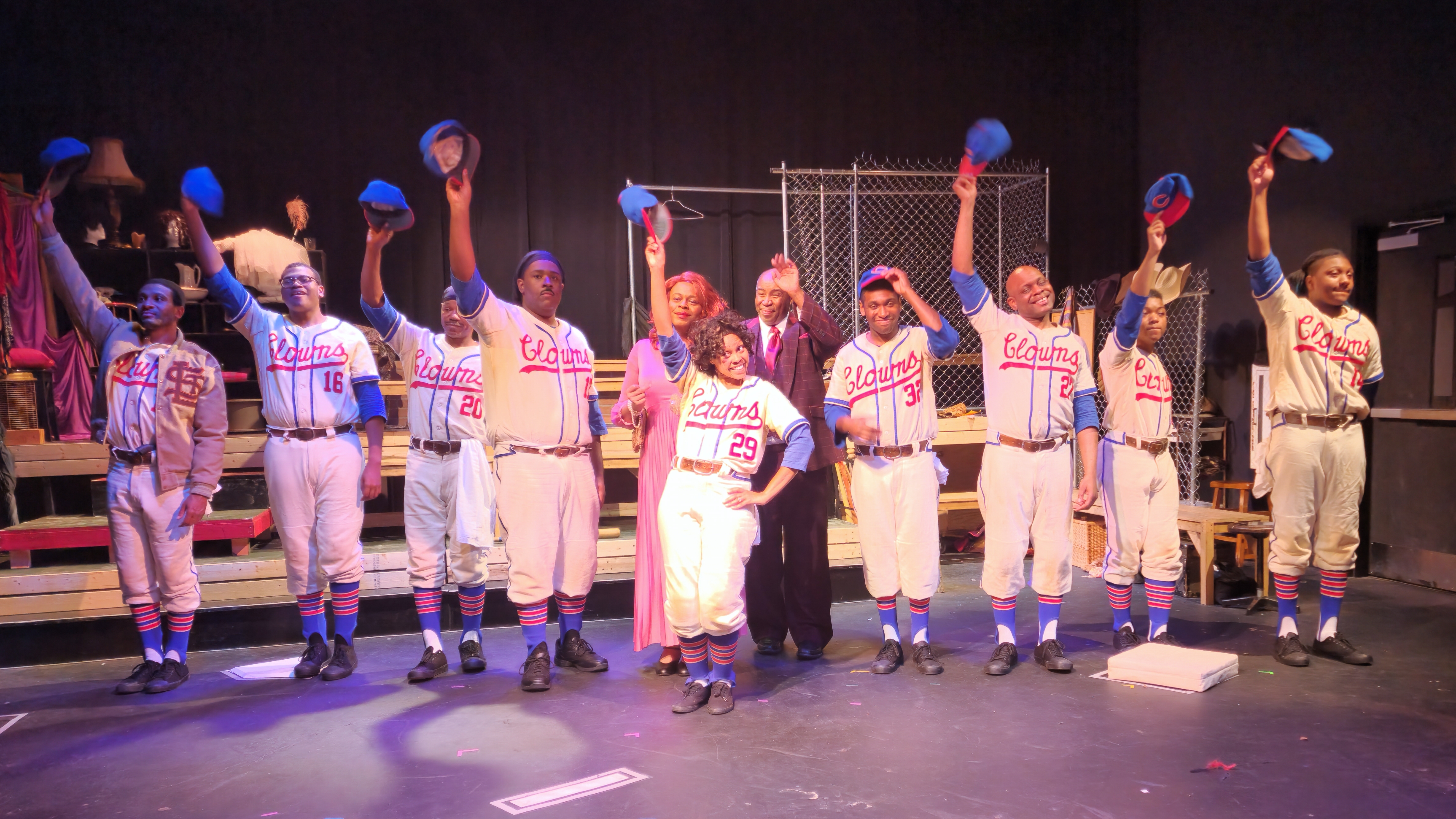
An all-Black ensemble of eight men hustles around Jennifer O’Kelly’s appropriately seedy set, which packages a movable tavern, a ramshackle players’ dugout, and a dimly lit brothel, leaving most of the Arts Factory playing space free to fancifully, maybe laughably, serve as a baseball diamond. Eight men aren’t going to be enough to bring us all the mentors, parents, teammates, and romantic interests of multiple races and genders that Toni will deal with from her childhood through her baseball career (1936-1954). Props and costumes are stowed in the dugout as well as offstage to keep things flowing.

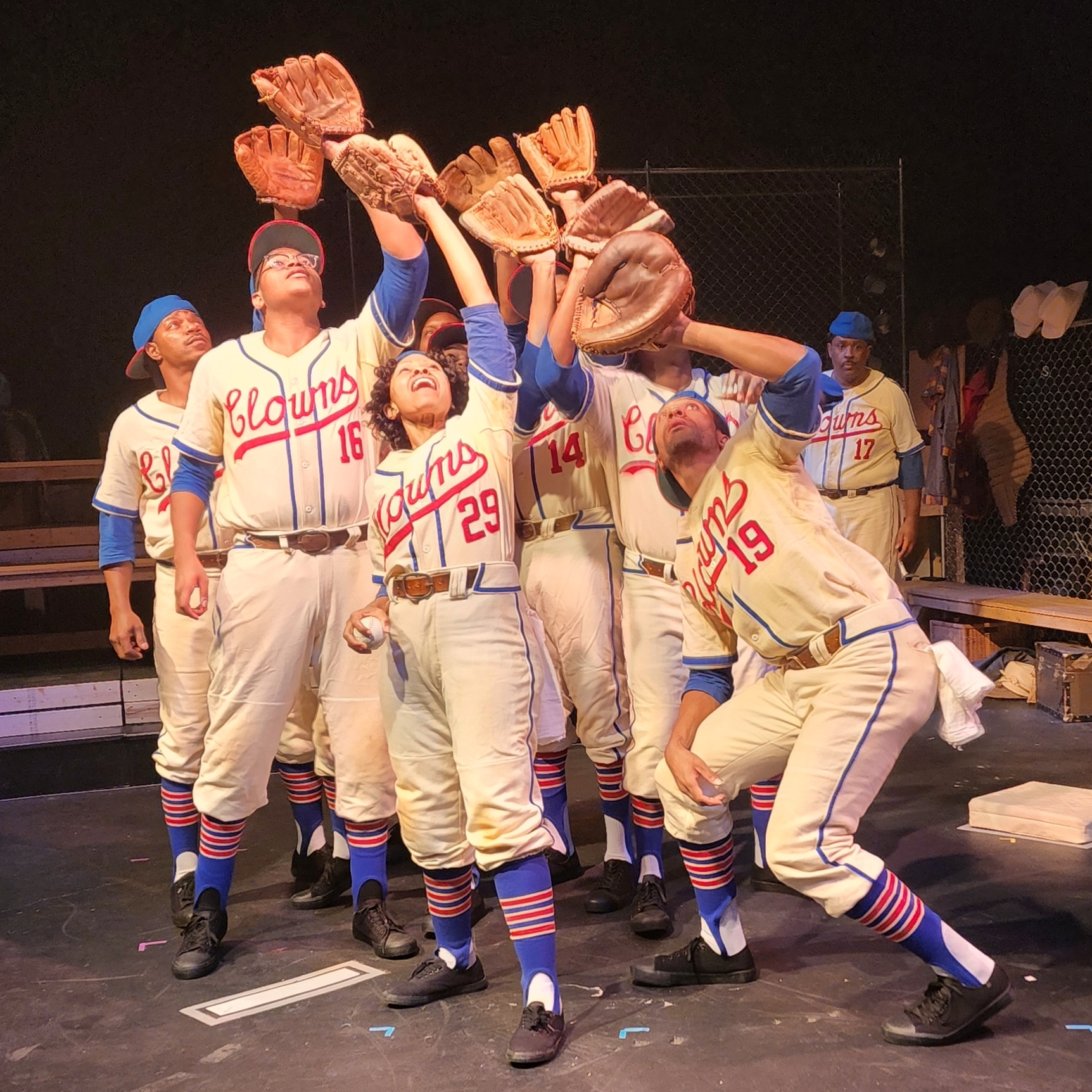
Cutting through much of the confusion, Diamond keeps the names, personalities, and fielding positions of Toni’s teammates as constant as the parks she plays in. All evening long, Shandri and her team wear the same Clowns uniforms, authentically rendered by costume designer Kara Harman. That way, Toni’s path comes across as less solitary while she moves from her early ballplaying days in a local church league to a series of American Legion and minor league teams in Minnesota, San Francisco, and New Orleans before her major-league apotheosis: a full year with the Indy Clowns in 1953, before she joined the famed Kansas City Monarchs for her final season.

Diamond and Hayes are both aware of the perils of allowing Toni and the shorthand differentiation of her crew to devolve into a wholesome replay of Snow White and the Seven Dwarfs. The playwright not only gives us frequent glimpses of the racism that dogs Toni’s progress, she also shows us the sexism and piggishness behind the scenes in the clubhouse, occasionally checked but never eradicated.

We also see that there are good reasons for the men’s resentments when Stone signs on with the Clowns. When Jackie Robinson broke the color barrier in 1947 and Larry Doby integrated the American League during the following season, the Negro Leagues began to crumble. By the time Aaron is signing with the Braves in 1952, the talent drain is on the verge of killing Negro League baseball, reducing its remaining teams to barnstorming roadshows.

Clowns owner Syd Pollock – nearly overacted here by James Lee Walker II – didn’t sign Stone to make his team better. Unlike previous owners, who signed Toni on her merit, Pollock signed her as a novelty to improve the marketability and entertainment value of the team, already baseball’s equivalent of the Harlem Globetrotters. In a notable confrontation between Shandri and Walker, Diamond shows us that Pollock isn’t interested in showcasing his new acquisition on a level playing field. To ensure his investment – not very much, if we’re talking about Toni’s salary – Pollock colludes with other owners to ease up on her in the middle innings, when their pitchers will throw her more hittable pitches.

Toni grudgingly keeps the secret, but her teammates aren’t as oblivious or dimwitted as Pollock presumes.  202208175826162527256458676

Hayes does her part, casting the other Clowns, so that Shandri doesn’t stick out uncomfortably as the smallest on the team. In particular, the other middle infielder is diminutive, in the vein of Phil Rizzuto, Jose Altuve, or Joe Morgan. On the other hand, Miles Thompson as Spec, the team intellectual, is not at all the dwarf that he was reputed to be. Along with Justin Jordan as Woody, the embittered teammate who is by far the most trouble for Toni, Thompson is quite an imposing figure.

More than one of the Clowns points up Toni’s sexual inexperience in their dugout and locker room banter. One whole scene, a rather bawdy little prank played on her with a baseball bat, more than emphasizes her naivete. It also heightens uncertainty among the men about Toni’s sexual orientation.

Clearly, Diamond wants to keep us guessing, too. The juiciest roles outside the clubhouse go to Robert Rankin as Millie, the madam of that brothel, and Keith Logan as Captain Aurelious Alberga, an elderly admirer who persistently pursues her at Jack’s Tavern, a San Francisco joint. Skittishly resisting Alberga’s initial advances, Shandri seems more attracted to Millie, whose sexual appeal is aimed at her teammates. Both Rankin and Logan give charismatic performances, worldly and mature, charismatic and confident.

Doubling as Drunk Willie when he dons his Clown uniform, Walker as Pollock is probably the best at marking those moments when white men enter the story. Hayes could have sharpened the portraiture a bit more when we meet the other white folk: Father Charles Keefe, the neighborhood parish priest who paves the way for Toni to play organized ball; and Gabby Street, nicely handled by Thompson, the former manager of the world champion St. Louis Cardinals, who yields to Toni’s repeated entreaties, making it possible for her to aim higher.

Melissa McDaniel Grisham’s choreography seems a bit toothless and pointless when the Clowns team goes into their pre-game shtick. From reviews I’ve read on the Off-Broadway production, the aim there was not just to show how athletic and entertaining the players were but also to show the degradation and of being clowns as well as ballplayers. There’s not even a hint of cringeworthiness here at The Arts Factory that critics had perceived in New York.

202206295146239102907529957

Yet the chemistry among the players has exactly the tang we want when they’re playing the game they love – under shabby, hateful conditions. Johnathan McKnight as the catcher Stretch exudes the authority of the team’s quarterback, and Devin Clark has the aloof dignity of Elzie, the Clowns’ pitching ace. Tito Holder energetically grins and pouts as Jimmy, the team dumbass, and Frank FaCheaux makes the most of the glimpse Diamond gives us of team comedian King Tut, whom Pollock dubbed “The Clown Prince of Negro Baseball.”

Toni Stone has a hazy mythic aura to it unlike most biographical baseball sagas. Intense nail-biting games down to the last pitch or the cumulative drama of a torrid pennant race are nowhere to be found. They are as irretrievable as the barnstorming Clowns’ won-lost records, batting averages, ERAs, and boxscores. What binds the roaming Clowns together like family, in spite of their frustrations and resentments, is the love they share with Toni – for the game.