Tag Archives: Kwamé Ryan

Listen! Charlotte Symphony Has Launched Its 94th Season With a Truly Musical Logo

Review: Charlotte Symphony Plays Shostakovich Symphony No. 5

By Perry Tannenbaum
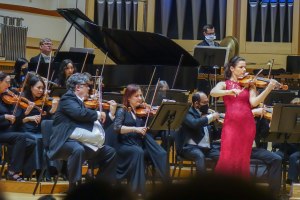
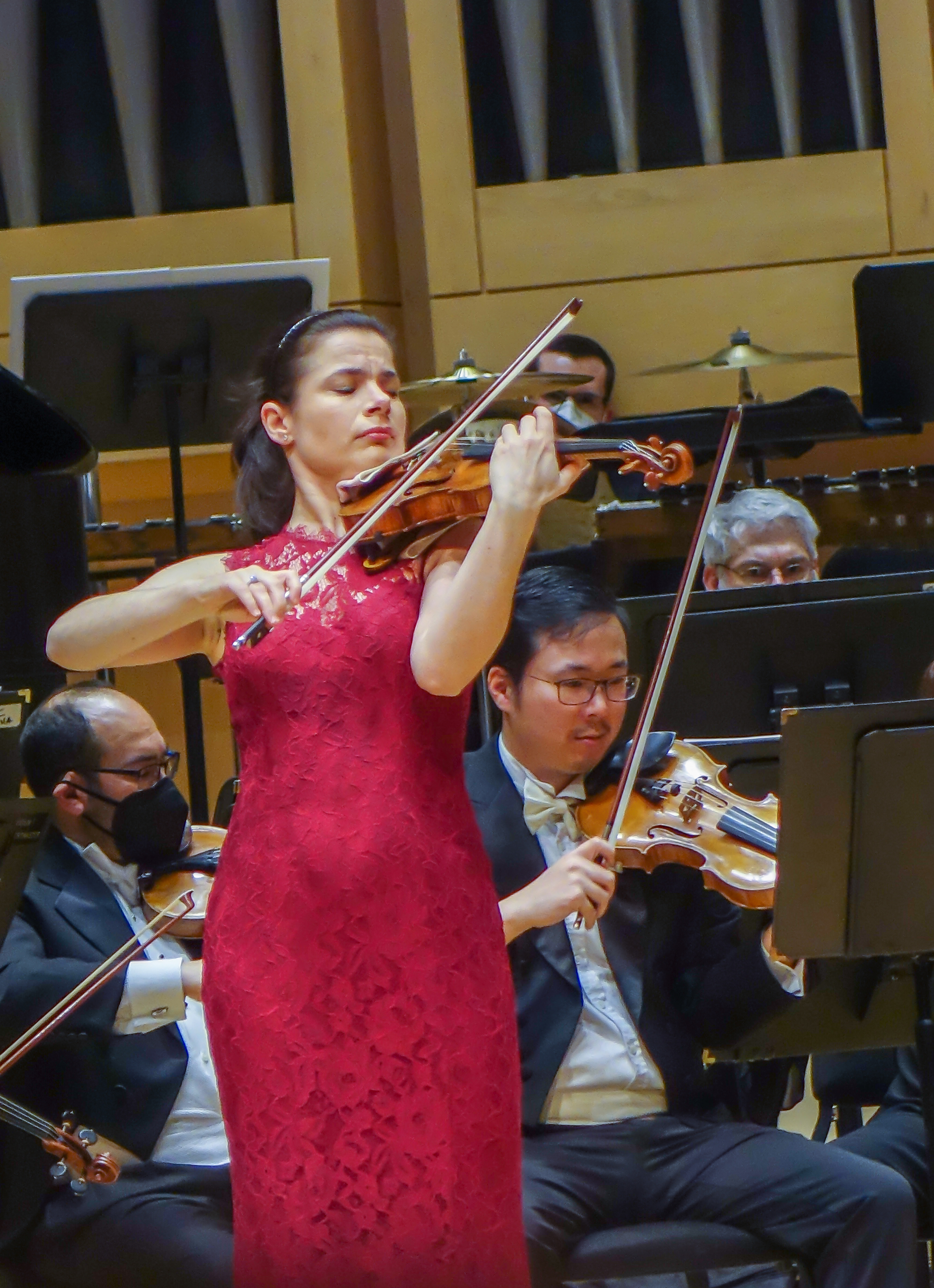
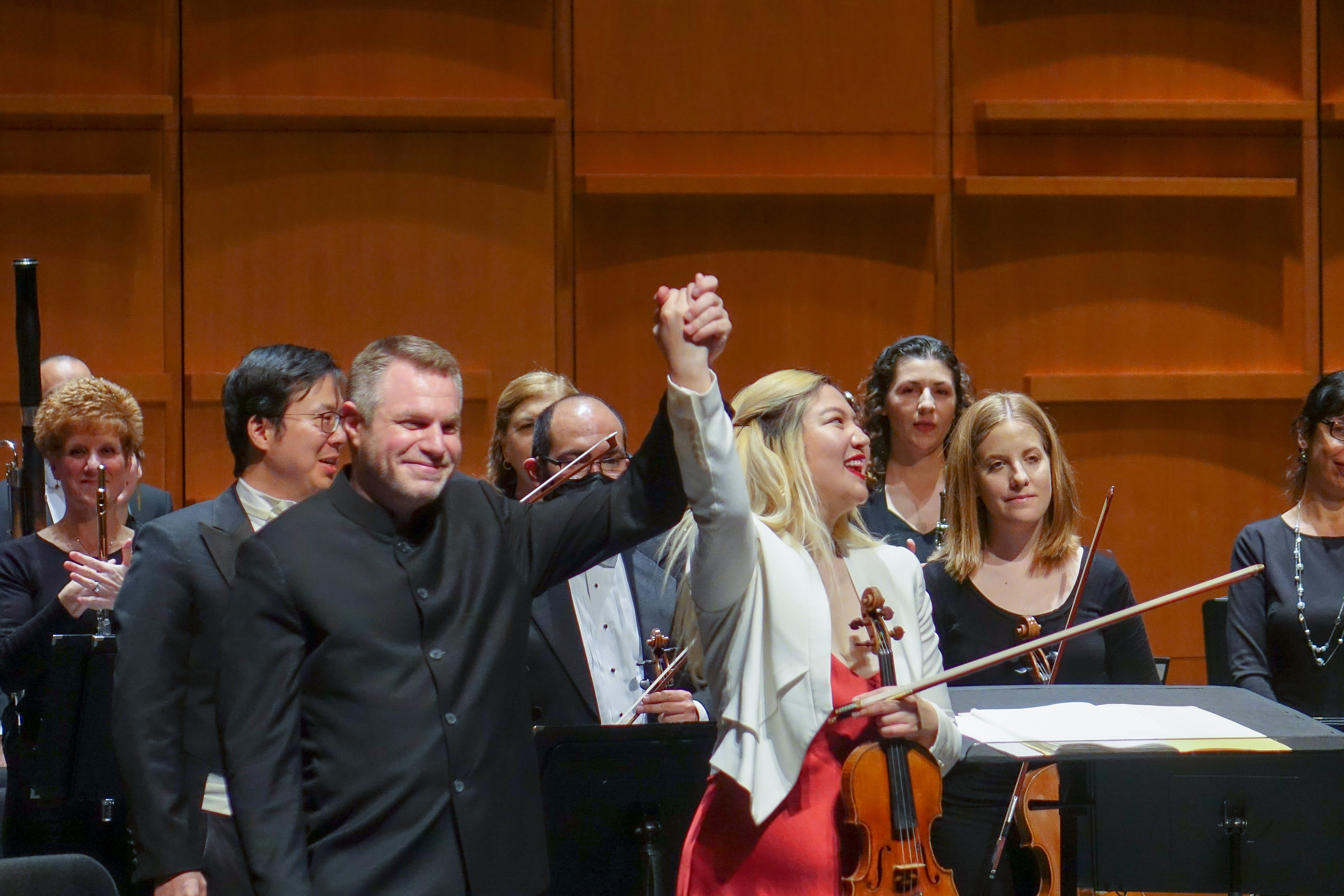
October 10, 2025, Charlotte, NC – It’s a bit of a mind-bending concept, so after launching Charlotte Symphony’s 94th season by leading his orchestra and audience in the National Anthem, music director Kwamé Ryan needed to take a couple of minutes to explain what exactly a musical logo is. Symphony also has a new conventional logo, a graphic see-through C with a top seraph that reminds one of a bass clef. But Symphony’s musical or sonic logo, Ryan explained, is akin to the six notes you hear on your iPad when you get a fresh sports bulletin from ESPN or the sonic boom that blasts you off your couch when you sign in to Netflix.

Ryan joked that Symphony had gone to John Williams to write the new theme but he wasn’t available. So he settled for Mason Bates, the second most-performed living composer (by American orchestras), who accepted the commission. The timing was auspicious, for Bates’s acclaimed new opera, The Adventures of Kavalier & Clay, opened at the Met less than a month ago.

Ryan proceeded to lead his orchestra in two versions of the new logo, the world premiere of an extended concert version followed by the abbreviated five-second version concertgoers could expect to hear in the Knight Theater lobby, summoning us back from intermission. Tell me I’m wrong, but Bates also seemed to have Williams in mind, in a heraldic vein, when he fulfilled his commission. And if musical or sonic logos become a thing among orchestras, Bates, Ryan, Symphony, and its subscribers can all claim to have been on the ground floor at the Knight.

Bates also took honors for composing the first piece to appear on our printed programs for the new season, Attack Decay Sustain Release. Premiered 12 years ago on the Left Coast, this lively five-minute appetizer was written, Ryan revealed, in 7/4-time. Bates’s title was likely onomatopoetic, describing the flow of his primary melody, for the seven beats often ended with a sustained crescendo. In its multiple episodes, the five-minute piece also boasted plenty of space for highlighting Symphony’s strings and brass section, sprinkled with an assortment of woody and frond-y percussion.

The remainder of the evening would be devoted to Dmitri Shostakovich, if our printed programs were to be trusted. In greeting us, however, Symphony president David Fisk told us to expect an extra musical moment after intermission. Surprises galore! Maybe the biggest went unmentioned by Fisk and Ryan: the turnout at the Knight. Compared with the “disappointing” turnout I reported last November for Shostakovich’s Ninth, the first and only previous occasion that Shostakovich topped the bill of a Symphony program, our 2025 crowd for the composer’s Fifth was robust, few empty seats across the orchestra section and seats sold in the balcony to the uppermost row.

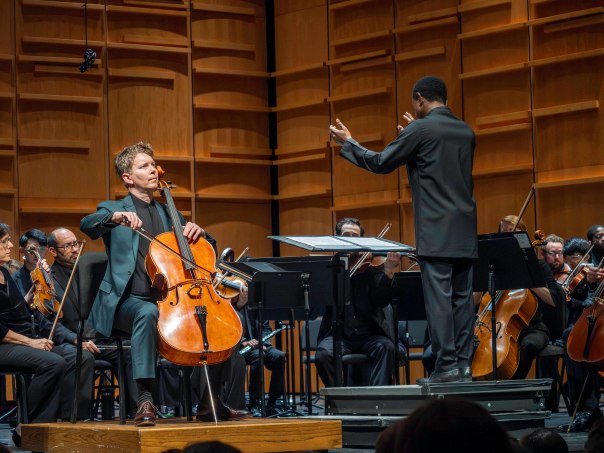
Guest soloist Joshua Roman may not have been apprised of the surprisingly enthusiastic crowd awaiting him, appearing slightly wary as he seated himself for Shosty’s Cello Concerto No. 1. With good reason. The piece, written for Mstislav Rostropovich in 1959 is bold and daring from the brash onset of its opening Allegretto movement, not at all a timid or apprentice composition. Roman’s part in the Allegretto was precociously modern; so driving, repetitive, and mechanical that it seems to antedate the minimalism of Philip Glass and John Adams. The comical interjections from brass and clarinet upstaged the soloist somewhat in my first live audition of this piece.

Roman could have told himself to be patient about winning us over, for his role became more complex and impressive after the only pause in the piece, when he tackled the cluster of three final movements, delivered without further pause. At the heart of this cluster, between a soulful Moderato and a joyous Allegro con moto, Ryan and his orchestra observed a reverential silence as Roman played the Rostropovich-worthy third movement cadenza. There were bowed sections featuring a melody and a bassline simultaneously and, deeper into the virtuosic display, interludes of counterpoint where he bowed with his right arm on open strings while plucking a second melody line with his left hand. You couldn’t miss the difficulties here even if you closed your eyes. Nor was the final movement anticlimactic, featuring the return of the orchestra and a more decorative and colorful return of the march motif from the opening movement.

Undoubtedly, the audience perceived the military triumph they had witnessed, rising for a lusty standing ovation. This triggered a final pre-intermission surprise, for after being cheered back onstage a couple of times, Roman sat himself down for an encore and, before the tumult died down, launched into the Prelude to J.S. Bach’s Cello Suite No. 1, maybe the most familiar solo he could possibly offer.

Pure negligence prevented me from sampling the sounding of the musical logo prompting our return after intermission for our most touching surprise, played in tribute to three dearly departed members of the Charlotte Symphony family. Thankfully, it wasn’t Samuel Barber’s Adagio but rather a piece that necessitated some fresh sculpting and rehearsal, Arvo Pärt’s Cantus in memoriam Benjamin Britten. Beautiful!

We’ve heard a lot from Ryan in recent years, though many Symphony subscribers might say we should have heard much more. In preparing what Shostakovich subtitled “A Soviet Artist’s Practical Creative Reply to Just Criticism” – from renowned music critic Josef Stalin – Ryan trampled on the notion that Symphony No. 5 was in any way servile, apologetic, or conciliatory. All the true moods of Shosty’s 1937 portrait of Soviet Russia were vividly rendered, beginning with the bleak, haunting, and ultimately aching qualities of the epic opening Moderato. This battlefield desolation was not altogether relieved by the comical marching of the ensuing Allegretto, which combined sourness with merriment, along with a delicious dancing interlude from concertmaster Calin Ovidiu Lupanu. The Largo reverted to the weepy and misty grumblings and dyspepsia of the opening movement. Then we transitioned wonderfully – especially in ghoulish October – to the surreal, manic phantasmagoria of the concluding Allegro non troppo. My happy memories of Christopher Warren-Green conducting this work have faded since 2013, so I offer no comparisons. But this was no doubt the finest performance I

Ryan Clicks with the Master Chorale in a Walloping CSO Debut

Review: A German Requiem at Belk Theater

By Perry Tannenbaum

November 22, 2024, Charlotte, NC – In Kwamé Ryan’s first full season as the new music director of Charlotte Symphony, we aren’t getting to see him perform as much as we would hope, but when we do see him onstage at Knight Theater or Belk Theater, he always appears to be overjoyed to be here. Ryan was absolutely beaming as he took the Belk’s centerstage for the first time as CSO’s leader – and he certainly didn’t wear out his warm welcome, delivering a walloping performance of Johannes Brahms’ Ein deutches Requiem. Even before Ryan’s arrival, the new season has proven to be adventurous and diverse in its programming, showcasing fresh repertoire and youthful guest soloists.

Subscribers can judge for themselves whether Ryan’s outré intro to his debut program, coupling the Brahms with Latvian composer Pēteris Vasks’ Musica Dolorosa, was a sign of confidence or a symptom of nervousness. Whether or not my recollection can be trusted, Ryan’s scripted intro was unprecedented. Some intros we may have seen in the past could be dismissed as gratuitous – or countenanced as witty fluff. Here, Ryan’s intro was necessary, for we needed to be prepped for how the program would be delivered: without a pause between the music of the two composers. That would also be fairly unique. Our new maestro was crafting an experience.

Indeed, Ryan’s preface was necessary for another reason. Vasks’ piece flowed into the Brahms so smoothly it was as if they were written in collaboration and in the same key. Outside that merging point, the two pieces were quite different in the ways that they dealt with death. Responding to his sister’s untimely death, Vasks voiced his personal despair and compounded his feelings with grieving for his nation, still subject to Soviet rule when the Dolorosa premiered in 1984. Written for string orchestra, the mood of the opening section of Dolorosa may put you in mind of Barber’s Adagio. But the Vasks elegy eventually transcends the sameness and the hypnotic monotony of Barber’s dolor with louder and more piercing pain.

As the lower strings tap and strum percussively, Vasks gradually quickens the pace and turns up the volume as the beat becomes more insistent and dramatic. Once the dynamics peak, the strings, now smoothed out with a cessation of the percussion, become even more disturbing, tossing away pleasant tonality in a disciplined cacophony of fearsome chaos. The slashing lower strings, however, hadn’t been vanquished. They punctuated this harshness and dissonance at its height, seemingly puncturing it, for the noise homogenized into the sound of a diminishing wind or a siren receding into the distance – clearing the way for the quietest and most memorable episode in the Dolorosa. Principal cellist Jonathan Lewis, echoing the opening bars, played an eloquent lament from his downstage seat, accompanied only by the low mysterious hum – like a bass clarinet or a contrabassoon – emanating from upstage, hidden from my sight. The higher strings now took up the cello’s increasingly bold cry and built it to raw anguish.

The slightly hushed and abrupt ending of the Dolorosa nicely conformed with Ryan’s concept, and it dispensed with the shuffling of chairs usually necessary for the transition to full orchestra with winds, brass, and drums. Nor were the troops of the Charlotte Master Chorale obliged to parade in from the wings and settle into their perches above the Symphony. That honor was reserved for the guest vocalists, soprano Janai Brugger and baritone Alexander Birch Elliott, gracefully delayed until well after the transition between the Dolorosa and A German Requiem. The Brahms is not new to the CSO, last given by Christopher Warren-Green almost exactly 10 years ago – after his predecessor, Christof Perick, had presented it (already for the second time this century) in 2005.

With its consoling attitude, the Requiem is not at all a bad fit for the holiday season. You’re likely to recognize more than a couple of verses from the Brahms, conveniently projected in supertitles, as German translations of verses from Handel’s Messiah, the most beloved musical birthday celebration that we have. Most notably, you’ll get an Oktoberfest taste of “The trumpet shall sound.” Maybe sitting down in the orchestra, as opposed to the Grand Tier Circle, accounted for the heightened thunder of Ryan’s rendition, but Symphony somehow sounded crisper. The sudden sforzandos struck like a punch to the jaw, yet Ryan kept the ensemble under strict control, never threatening to overwhelm the hall with volume, emphatically relishing the work’s percussive moments.

Both Brugger and Elliott shone in their debuts. There was a noticeable Renee Fleming-like milkiness and sheen to Brugger’s voice, most appropriate for the motherly comfort she delivered in “Ihr habt nun Traurigkeit (You now have sorrow).” Elliott was even more impressive in his larger workload, a more pleading “Herr, lehre doch mich (Lord, teach me),” bolstered by a lusty Chorale response, before he delved into the “trumpet shall sound” mystery and affirmation of “Denn wir haben hie keine bleibende Statt (For here we have no everlasting city).” Belatedly, Music Chorale artistic director Kenney Potter was summoned onstage to share the credit for his singers’ brilliance and verve. He was absolutely beaming with delight.

Photos by Perry Tannenbaum

Charlotte Symphony’s New Maestro, Kwamé Ryan, Thrills a Packed House

Review: Tchaikovsky & Brahms at Belk Theater

By Perry Tannenbaum

April 5, 2024, Charlotte, NC – The audience at Belk Theater didn’t rise and sing the National Anthem as we do at the start of every new Charlotte Symphony season, but the occasion – Tchaikovsky & Brahms – was auspicious enough for Symphony president David Fisk to take the stage, notes in hand, and introduce the Orchestra’s newly designated music director, Kwamé Ryan. On the heels of CSO’s announcement that they were already at over 80% in reaching its $50 million fundraising campaign goal, ensuring Symphony’s financial stability, Classics subscribers had multiple reasons to express their enthusiasm – as Fisk spoke and when Ryan made his entrance. Both events had been sufficiently ballyhooed in the press. Fisk could wait a leisurely eight minutes after the normal starting time to make his appearance, so the usual curtain-up helter-skelter of late arrivals had subsided. Unless Ryan raised his eyes to the uppermost balcony, he saw a packed house ready to erupt.

Ryan’s greeting was even more personable than Fisk’s intro, so audience adoration actually rose a couple of notches before quiet prevailed and he could put his baton to use. This really was the beginning of a new Kwamé Ryan era, and the director designate did not fail to take advantage of that vibe. Instead of the “Star-Spangled Banner,” Ryan began his reign with what felt like the next best thing. With the composer seated in the orchestra, poised to receive more audience adulation, Ryan and Symphony performed Wang Jie’s Symphonic Overture “America, the Beautiful.” A self-professed “lover of adventure on mountains and cliffs,” Wie was thrilled when the Colorado Springs Philharmonic asked her to create a work inspired by nearby landmark Pikes Peak and the song written by Katherine Lee Bates in 1895 to a melody composed more than a decade earlier by Samuel A. Ward.

The commission was not at all outré, since Bates’s original poem was inspired by her first trip to the summit of Pikes Peak. You might say, however, that Jie’s music was inspired by America in 2016, since her description of this work stresses the unifying effect of the song amid political turbulence. She aimed for a piece that acknowledges how “fractured” we are while expressing the hope that a “re-harmonized” take on the anthemic song could still have healing and unifying powers. Fractured episodes alternate with Jie’s re-orchestrated presentations of Ward’s melody, presented in chunks of eight bars each until all of “America, the Beautiful” is reprised with brassy grandeur, followed by a frantically accelerated coda. Curiously, the piece probably does sound a lot more hopeful today, eight years after it was premiered barely two weeks before Election Day. A revision today might not contain the same wan, ruminating passage from the French horns or the silvery wistfulness from concertmaster Calin Ovidiu Lupanu. Wie’s energetic balancing act was almost nostalgic.

Although cellist Joshua Roman performed Tchaikovsky’s Variations on a Rococo Theme in Charlotte as recently as 2012 during an All-Tchaikovsky concert led by Christopher Warren-Green, the piece didn’t skyrocket to mountaintop status for me until Gautier Capuçon played it at the glorious Dvořák Hall during the Prague International Festival of 2019. Reaching that stratosphere would be difficult for both guest soloist Sterling Elliott and Ryan, navigating Pyotr’s score before the vivid memory of Semyon Bychkov’s exploits with the Czech Philharmonic had fully faded. Indeed, the delight and perfection of the Prague experience drifted beyond reach by the time Elliott and the CSO had traversed the mid-tempo prelude, the rococo theme modeled on Mozart, and the first two variations at a friskier pace. Ominously, it dawned on me that this was the first piece I was hearing Ryan conduct with Symphony that wasn’t composed by an American citizen.

With the onset of the dreamy Variation III, Elliott and Ryan found their footing, bringing forth the full sublimity of the Andante sostenuto. At that point, knowing that some bodacious virtuosity lay ahead in the final four Variations and the crowdpleasing coda, I resolved to try and watch Elliott from the perspective of those in the audience who were experiencing the Rococo for the first time. Wiping the slate clean not only enhanced my own experience, it plugged me into the excitement and wonder of the Belk Theater crowd as the buoyed Elliott slashed through the pyrotechnics in the latter half of Tchaikovsky’s concerto and shredded his bowstrings. If you factor in opening night jitters, Elliott’s encore figures to be even more awesome.

The Brahms Symphony No. 1 built to a similarly walloping climax after intermission. Limited rehearsal time – or simply the limited time Ryan and the Orchestra have had to become acquainted with each other – may have accounted for the somewhat listless and shapeless reading of the opening Un poco sostenuto and its subsequent transitions back and forth from Allegro. It was in the ensuing Andante sostenuto, where acting principal oboist Erica Cice had multiple chances to shine bookending principal clarinetist Taylor Marino’s eloquence, that the ensemble seemed to discover its voice, capped by some subtle soloing from Lupanu.

Marino spun a little more magic, in league with principal flutist Victor Wang, at the start of the third movement Allegretto as the ensemble ramped up for the grand finale, where Brahms First echoes Beethoven’s last. Here was where we could find the most encouraging examples of the pacing, sculpting, and exhilaration we can expect as Ryan settles in with Symphony for seasons to come. Repeatedly, principal French hornist Byron Johns was impressive, first as he hovered above the brass and later in concert with the other horns. There was admirable warmth from the strings in the big tune, with effective spotlights from Wang, Cice, and the four trombones. Everything was clicking during this finale, which crested with thunder, and the audience called Ryan back from the wings again and again with a standing ovation.

Ryan and CSO Launch 2023 in American Style, with a Wisp of Freedom-Fighting Ukraine

Review: Charlotte Symphony Plays Copland’s “Great American” Symphony No. 3

 By Perry Tannenbaum

January 13, 2023, Charlotte, NC – Kwamé Ryan was slated to make his Charlotte Symphony debut at Knight Theater last March in a program that included Errollyn Wallen’s Mighty River, César Franck’s Symphony in D minor, and Samuel Barber’s Violin Concerto with soloist Jinjoo Cho. Cho showed, but Joshua Gersen from the New York Phil and the New World Symphony filled in for Ryan. We could have speculated that Ryan had withdrawn his name from consideration as Symphony’s next music director, giving way to Gerson as a hot new prospect for our upcoming vacancy. Earlier that same week, however, the native Canadian was announced as one of 10 guest conductors for the current season, so it was clear that Ryan’s hat remained in the ring – but he and Symphony would need to fashion an entirely new program.

2023~Copland + Korngold-12

This time at Belk Theater, the program would be all-20th century – John Adams’ Short Ride in a Fast Machine (1986), Erich Wolfgang Korngold’s Violin Concerto in D (1945), and Aaron Copland’s “Great American” Symphony No. 3 (1946) – and even more American, since Korngold, revered for his many Hollywood film scores, became a US citizen four years before his concerto premiered, with Jascha Heifetz wielding the fiddle. Bella Hristova, making her local debut in the Korngold, was apparently booked after Ryan and the concerto piece had been placed in the 2022-23 lineup.

If you haven’t Adams’ brisk orchestral bagatelle, the title describes it well. Marin Alsop, recording the piece with the Bournemouth Symphony, appears to hold the land speed record for her Fast Machine among the seven samples I’ve tracked down, clocking in at 3:58. At the other end of the spectrum, Michael Tilson Thomas with the San Fran Symphony and Kurt Masur with the New York Phil are the sluggards among the conductors on record, leaning more toward Adams’ subtitle, Fanfare for Orchestra, than to the work’s speed. Tilson Thomas made the best-sounding recording, though Stephen Mosko’s performance with the Netherlands Wind Ensemble is definitely worth a listen, even if the woodblock opening the piece – and its insistent marking of time afterward – is tuned higher in the treble. Here the crisp woodblock over the pulsing brass may not have worn out its welcome before giving way to a richer timekeeping shaker when the brass began to soar.

We’ve heard Charlotte Symphony in this music at least a couple of times before, with Alan Yamamoto at the Belk podium in 2006 and Jacomo Rafael Bairos in an all-American KnightSounds concert in 2013. My review of the Yamamoto performance cruelly credited him with thinning the crowd during intermission, but with Bairos, I could happily note how far our subscribers had progressed in accepting Adams. There was a little helter-skelter in Ryan’s reading, maybe a good thing in warding off minimalist monotony, but the audience was downright enthusiastic when the rollercoaster abruptly shut down. Latecomers who were ushered to their seats in the wake of this tasty appetizer could be legitimately pitied for missing out.

Between the evening’s two fanfares – for the Copland Symphony famously repackages his well-known Fanfare for the Common Man – Korngold’s Concerto made for a lyrically lush contrast. Hristova was more precise than Vadim Gluzman, who introduced the piece to Charlotte with Christof Perick at the Belk in 2005, five years before his fine recording on the BIS label. But Gluzman was more ardent, personable, and charismatic in his playing. You can tell a lot in the opening bars of the Moderato nobile about which direction the soloist intends to take. There’s the richer, lusher approach taken by Gil Shaham and James Ehnes that opts for the alluring path I prefer, and then there is the thinner, more gilded approach favored by Sophie Mutter and Itzhak Perlman that aims toward the exquisite and ethereal.

2023~Copland + Korngold-01

Hristova most resembled Mutter among these four, but I felt that Ryan and the CSO outshone her in the opening movement. She wasn’t playing enough with the orchestra’s swells, so their oceanic responses to her episodes weren’t like majestically crashing waves, and her climactic cadenza lacked fire and confidence. Reaching the middle Romance-Andante movement, Hristova achieved parity with the orchestra, growing tenderer and richer in tone with heightened expressiveness. Better still, she was outstanding in the rousing Allegro assai vivace that climaxes the concerto, fairly dazzling with her ricochet bowing and pizzicatos. Here she was meshing well with the folksy ensemble as they reached the spirited series of cymbal smashes that signal the onset of the finale.

Although Copland’s most familiar fanfare doesn’t get its Symphony 3 rebirth until the concluding Molto deliberato movement, Ryan certainly understood the fanfare kinship of the opening Molto moderato with the more familiar Common Man proclamation that awaited us three movements later. More in keeping with Leonard Bernstein’s CD version than with the initially mopey takes by the San Francisco and Minnesota Symphonies, Ryan threw the themes into an echo chamber spin cycle before emerging at the conductors’ common summit: a cathedral of sound that fell away into quiet, mellow sublimity. With a bass drum alarm blast and fresh brass annunciations that dribbled away into comical clockwork pulses of woodwind and percussion, the Allegro molto sounded like a scherzo at first. But when Ryan brought back the heraldry from the brass and drums, the orchestral response was pointedly mellower and mature, cuing us to expect steady grandeur when the artillery returned once more.

2023~Copland + Korngold-16

Where Bernstein was weepy and wistful, Ryan and CSO applied a gloomy, brooding patina to the other inner movement, an Andantino quasi allegretto. He didn’t find the same range of grandeur and folksiness that Lenny unveiled in 1986, but as the piece transitioned without pause into the stately Molto deliberato, there was a wonderful mix of forlorn wilderness and divinity as the quiet woodwinds introduced the familiar Common Man phrase. The brassy orchestral repetition came with all the éclat and majesty you’ll ever hear in the similarly crowning moment of Copland’s Appalachian Spring, gloriously tattooed with timpani, cymbals, and drums. There was plenty left to do before the second and third series of heraldic salvos, beginning with Hollis Ulaky’s magical oboe, escalating to some pre-dawn tweedling from the higher winds, and some shiny “Frère Jacques” tolling from the brass and strings. CSO continued to excel as new variants of the “Common Man” theme mixed with the recurring tolling, simulating an awesome and propitious post-war sunrise. In his apt introductory remarks, Ryan turned our attention – and the ultimate optimism of Copland’s symphony – to the current battle for freedom in Ukraine. We could hear and understand the relevance.

Jinjoo Cho and Joshua Gerson Make Impressive Belk Debuts

Review: Charlotte Symphony Plays Barber’s Violin Concerto

 By Perry Tannenbaum

2022~Barber Violin-20

March 25, 2022, Charlotte, NC – While Christopher Warren-Green’s tenure as music director at Charlotte Symphony winds down, as he transitions to the roles of conductor laureate and artistic adviser in seasons to come, the appearances of guest conductors at Belk Theater and Knight Theater are gaining an extra aura, an extra sparkle of excitement. For this stately parade of baton-wielders can now be construed as a prolonged set of auditions as audiences, Symphony execs, and orchestra musicians make up their minds on who should follow in maestro Warren-Green’s footsteps. Suddenly, everything going on behind the scenes at Symphony is freshly cloaked in intrigue.

Was the absence of Kwamé Ryan, listed on our own calendar as guest conductor, a last-minute indication that he is fielding offers elsewhere and withdrawing from candidacy? Was his replacement, Joshua Gersen from the New York Phil and the New World Symphony, a hot new prospect for our upcoming vacancy, or was Symphony’s substitution based on Gerson’s availability and preparedness for the planned program? With Jinjoo Cho slated to play Samuel Barber’s Violin Concerto as the headline piece, Gerson’s readiness needed to be on par with the musicians’ for that work, since they had presumably mastered their parts sufficiently to greet Cho and Gerson at rehearsals when they arrived.

No notice of the substitution came our way via email, but changes weren’t so last-minute that Symphony’s program booklet couldn’t be changed in time for Cho’s Charlotte debut with Gerson. Digital brochures, thankfully, can be altered more nimbly than printed editions, the pre-pandemic norm. Impressively enough, Gerson was able to conduct the preamble to Cho’s appearance, Errollyn Wallen’s Mighty River, a 2007 British piece that certainly isn’t standard rep. César Franck’s Symphony in D minor, however, had to be jettisoned, replaced after intermission by Robert Schumann’s “Rhenish” Symphony No. 3. Some of the answers about what was going on behind the scenes were answered – you have to pay attention, folks! – by the announcement of Symphony’s 2022-23 season earlier in the week. Ryan resurfaces as one of the 10 guest conductors who will continue the pageant of candidates, and Franck’s Symphony also resurfaces as part of next season’s classics playlist, but they are no longer linked on the same program.2022~Barber Violin-02

Subscribers who were not attuned to these program and performer shuffles probably didn’t notice any significant glitches. I’d have to say that Symphony’s musicians not only rose to the occasion but were energized by its challenges. If that didn’t happen before they assembled on the Knight Theater stage, then Gerson’s extended and enthusiastic introduction to the music could have provided the spark. As relaxed and genial as he was speaking to the audience, Gerson was as instantly intense when he faced away from us to his musicians.

Born in Belize in 1958, Wallen was commissioned to write a piece celebrating the bicentennial of the repeal of the Slave Trade Act. Since the British Parliament passed that landmark legislation on March 25, 1807, Charlotte Symphony’s first performance of the piece was a celebration in itself, staged exactly 215 years later. Principal French hornist Byron Johns, played no small part in assuring that the debut was a success, playing the affecting “Amazing Grace” melody that frames Wallen’s composition and often infuses it throughout. The title was Wallen’s affirmation of the flow of history toward freedom, driven by the yearning and pursuit of all who respond to their human instincts and nature’s law. Horns and strings wasted no time in percolating their evocations of that flow. Principal timpanist Jacob Lipham furnished the most distinctive landmarks along the way, with principal harpist Andrea Mumm Trammell adding vivid detail, supplemented by Erinn Frechette tweedling her piccolo. Wallen handed off solo honors to the oboe, flute, and other winds before handing it back to Johns, with principals Hollis Ulaky on the oboe and flutist Victor Wang making their colors count the most.2022~Barber Violin-19

We’ve seen both Joshua Bell and Elmar Oliveira playing the Barber concerto here in Charlotte over the past 25 years, so to say that Cho’s performance with Gerson eclipsed them both is no small claim. Head-to-head, Cho generated more electricity than Oliveira, and behind the glamorous violinist, Gerson and the Charlotte Symphony got out of her way more deftly than the Houston Symphony and Christoph Eschenbach were able to manage in 1998. Cho was sublime in the opening Allegro and seemed to summon a special ardor from Gerson and the orchestra in their response – I don’t think we ever did get enough of the catchy main theme.

In the hushed Andante that followed, Cho may have been even more magical, more transported by the score. The concluding Presto in moto perpetuo, rewritten according to Gerson to provide a greater challenge to the soloist, seemed to become a new and spontaneous challenge that Cho and the orchestra hurled back at each other. There actually was a pause for the native Korean to gather herself as the ensemble rushed on. After a visible deep breath, Cho’s fresh onslaught was even more fiery and swift.2022~Barber Violin-24

The power of the Barber drove a fellow critic and his spouse to the back of the hall after intermission, but the Schumann proved worthy of staying for, not at all an anticlimax. The zest and drive of the opening Lebhaft of the “Rhenish” were unlike anything I’d heard in live performances before – certainly better than anything on the complete set of Schumann symphonies by Roy Goodman and the Hanover Band, ballyhooed as the first complete recording on period instruments (and a complete RCA dud). No, you have to listen to the John Eliot Gardiner set on DGG, also on period instruments, to find an equal to the glories unfolded at Knight Theater by our Symphony.

Gerson didn’t quite achieve the lightning bolts you’ll hear from Gardiner in the opening movement, though he sustained a wondrous sense of expectancy in the relatively quieter section between the great pinnacles. The middle movements, culminating in the rich heraldry and solemnity of the penultimate Feirlich fourth movement, achieved parity with Gardiner’s benchmark recording for me. But it was the grand military Lebhaft finale where Gerson and Symphony surpassed what was previously on record, establishing a new highwater mark for the “Rhenish.”

Originally published on 3/27 at CVNC.org