By Perry Tannenbaum

October 20, 2023, Charlotte, NC – Face it: in the wake of #MeToo, #BlackLivesMatter, and COVID-19, we’ve entered a complex cultural transition. Charlotte Symphony, never the most daring nor the most timid of orchestras in their programming, serves as a useful barometer. Their current program, with works by Emilie Mayer and William Grant Still, is even more impressively diverse – judging strictly by the playing times of these pieces – than their season opener, spotlighting the music of Valerie Coleman and The Butterfly Lovers Violin Concerto by two modern Chinese composers, Chen Gang and He Zhanhao.
But in 2023, these are not yet household names, or even widely known among Symphony subscribers. Accordingly, the season opening concert was titled “Beethoven’s Eroica Symphony No. 3” and the current offering is billed as “Chopin’s Piano Concerto No. 2,” pragmatically restoring balance and marketability. We haven’t reached the Promised Land in claiming our full musical heritage, but we’re definitely beginning to cross the Jordan.
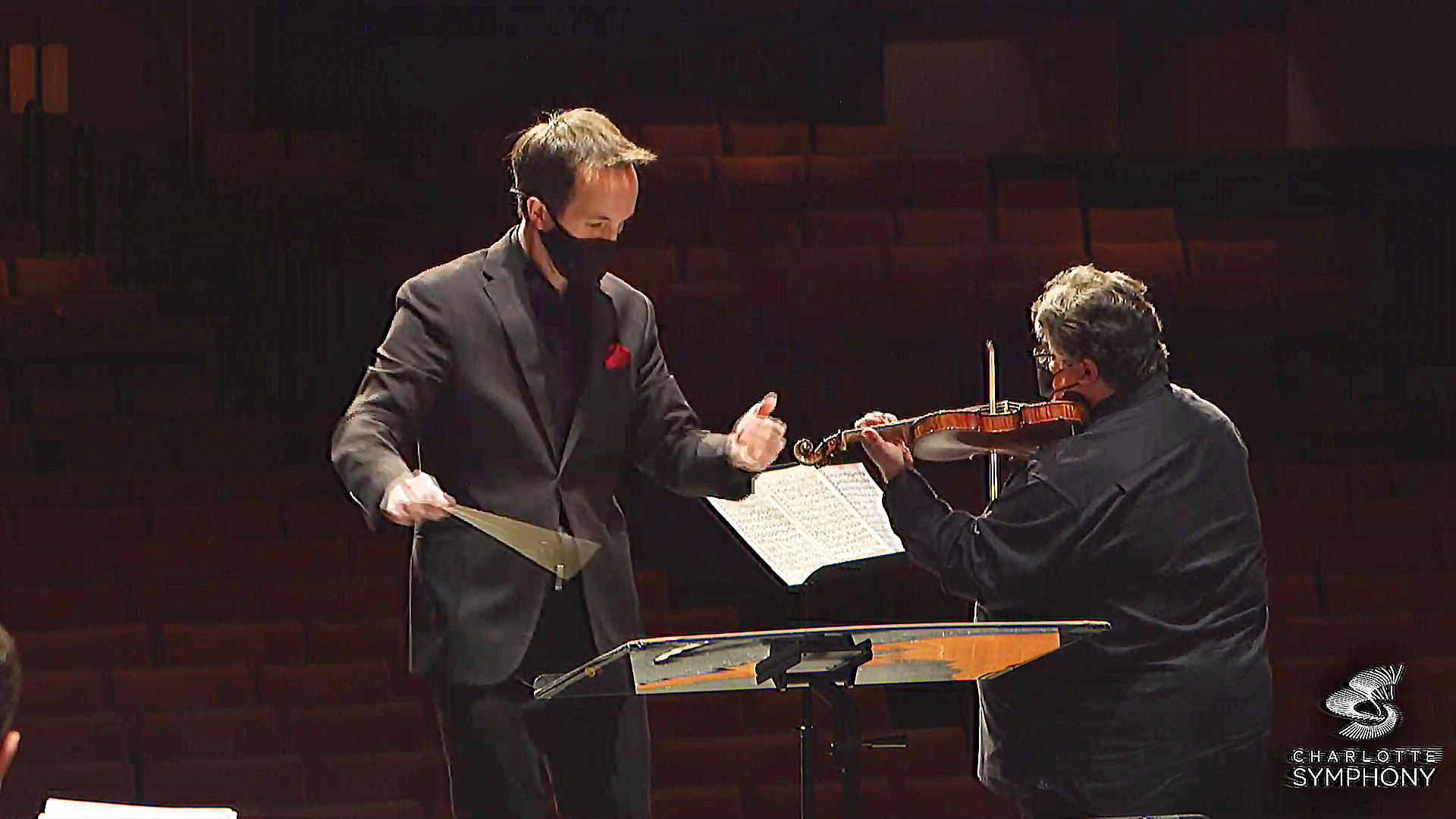
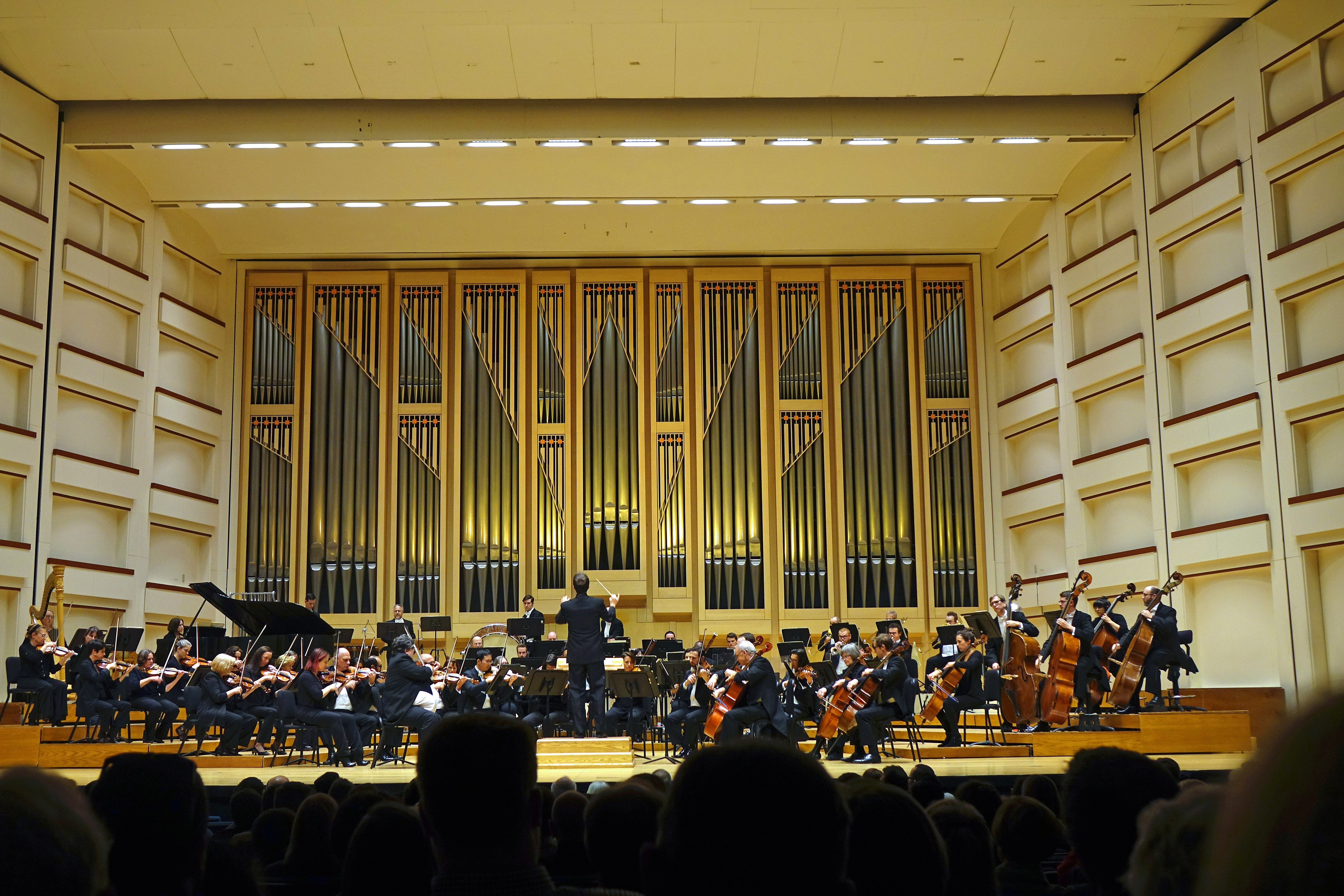
As recently as 12 years ago, when I purchased The Gramophone Classical Music Guide for the last time, there was no mention of Mayer (1812-1883) in that doorstop nor in the Penguin Guide, The Oxford Dictionary of Music, or The NPR Listener’s Encyclopedia of Classical Music – all upstanding residents on my bookshelves. Indeed, the earliest recording of Mayer’s work that can found on Spotify, Apple, or Amazon was released in 2000, and the earliest that can be streamed came out in 2010, seven years before the first recording completely devoted to her compositions – pretty remarkable for a 19th century German composer who wrote eight symphonies, six of which have now been recorded. We had a nice taste of Mayer’s handiwork in her Faust Overture with resident conductor Christopher James Lees on the Knight Theater podium.
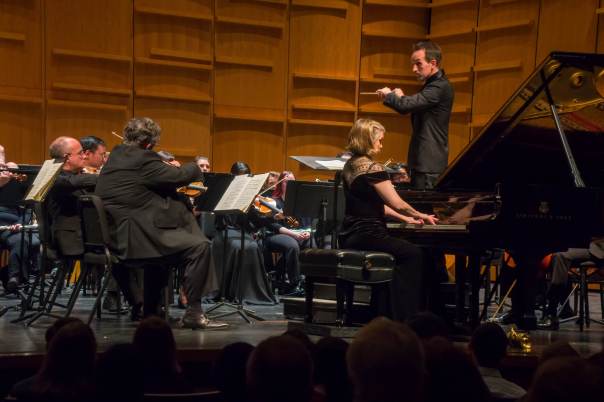
Recorded twice in the past two years and topmost among suggestions when I type the composer’s name in a Google search, the work has unmistakable gravitas, build, and power, welling up in the strings and releasing from its somber Adagio opening with a tattoo from the timpani that shifts us more lightheartedly into an Allegro colored by the wind section and easing into waltz tempo. Of the two name-brand pieces lurking in the program, Chopin’s Concerto and Antonín Dvořák’s The Noonday Witch, the Faust pairs best with Dvořák and his storytelling. Mayer’s work became more volatile and episodic past the halfway mark, a palpable struggle between good and evil as sturm and drang sections alternated with milder retorts from the winds, which gradually more assertive, with more sinew, before the antagonists merged majestically in the climax. Lees’ tempos and dynamics could have been more restless and spasmodic, but none of the walloping power was lost.
My last sightings of pianist Orli Shaham were at Spirit Square in 2002 at the Brightstar Music Festival, so I had no live experience of her full voltage beyond her exploits in a Brahms Piano Quintet, a Prokofiev flute sonata, and a Poulenc trio. Any doubts that Shaham and Symphony had the muscle and finesse needed for an optimum Chopin 2 vanished by the time the pianist finished her first kaleidoscopic turn in the opening Maestoso, after a spirited orchestral intro. Shaham’s delicacy, already convincingly established in this epic opening, became even more ethereal – and personal – in the sublime larghetto that followed. Neither Shaham nor Symphony was as captivating as the winsome 1999 recording by Christian Zacharias, where both the pianist and the Lausanne Chamber Orchestra honed in on the lilt of the waltzing rhythms that are so emblematic in Chopin’s work. But there are plenty of other flavors to Chopin, as the many master recordings of this concerto readily attest, and Shaham merely chose a different journey, rousing enough to trigger an ovation that demanded an encore.
When Lees picked up a microphone after intermission, it was to summarize the story of Polednice, the Czech poem by Karel Jaromír Erben, for the maestro maintained that Dvořák’s The Noonday Witch – one of four tone poems set to Erben’s ballads – followed the story bar-by-bar. Whether or not Lees’ claim can be verified, the piece offered Erica Cice, in her first outing as Symphony’s acting principal oboist, a swift opportunity to shine just 13 days after her predecessor, Hollis Ulaky, made her farewell appearance in the Eroica.

Here the oboe represented the misbehaving boy who was threatened with a visit from the fearsome by his frustrated mom in repeated attempts to quiet him – until she loses it and issues her fatal summons. Enter Allen Rosenfeld with his bass clarinet as the wicked visitor, who surprises and alarms both mother and son with her arrival. Much orchestral tumult ensues as the witch implacably chases her prey – until the tubular bells chime 12 times and the witch disappears at noon. Ah, but the story isn’t quite finished, with more orchestral turbulence on the horizon.
With a brief paragraph in the Oxford Dictionary and a more respectful entry in the NPR Encyclopedia, we can’t tout Still (1895-1978) as newly-discovered. As Lees hinted in his intro, however, the “Dean of African-American Composers” has been unconscionably neglected. The appearance of work in the clean-up spot on Symphony’s program, mighty orchestral works by brand-name Europeans usually dwell, may be unprecedented. With all of Symphony’s artistry and enthusiasm behind it, Still’s “Afro-American” Symphony No. 1 proved worthy of its esteemed position on the bill, even after Shaham dazzled us. In the bluesy opening movement of this 1930 work, “Longing,” you may actually catch a violinist or two smiling as she plays. You might have the same reaction. The middle movements, “Sorrow” and “Humor” retain a residue of ethnic flavoring, but here it’s less a part of the mix with traditional orchestral writing all-American strike-up-the-band jubilation. The sheer majesty of the closing “Aspiration” movement took me by surprise, for I’d never heard it before in live performance. America is very much carved into this closing, encompassing the swagger of our cities, the grandeur of our mountains, the serenity of our prairies, and maybe a few echoes of Native Americans we took it all from.


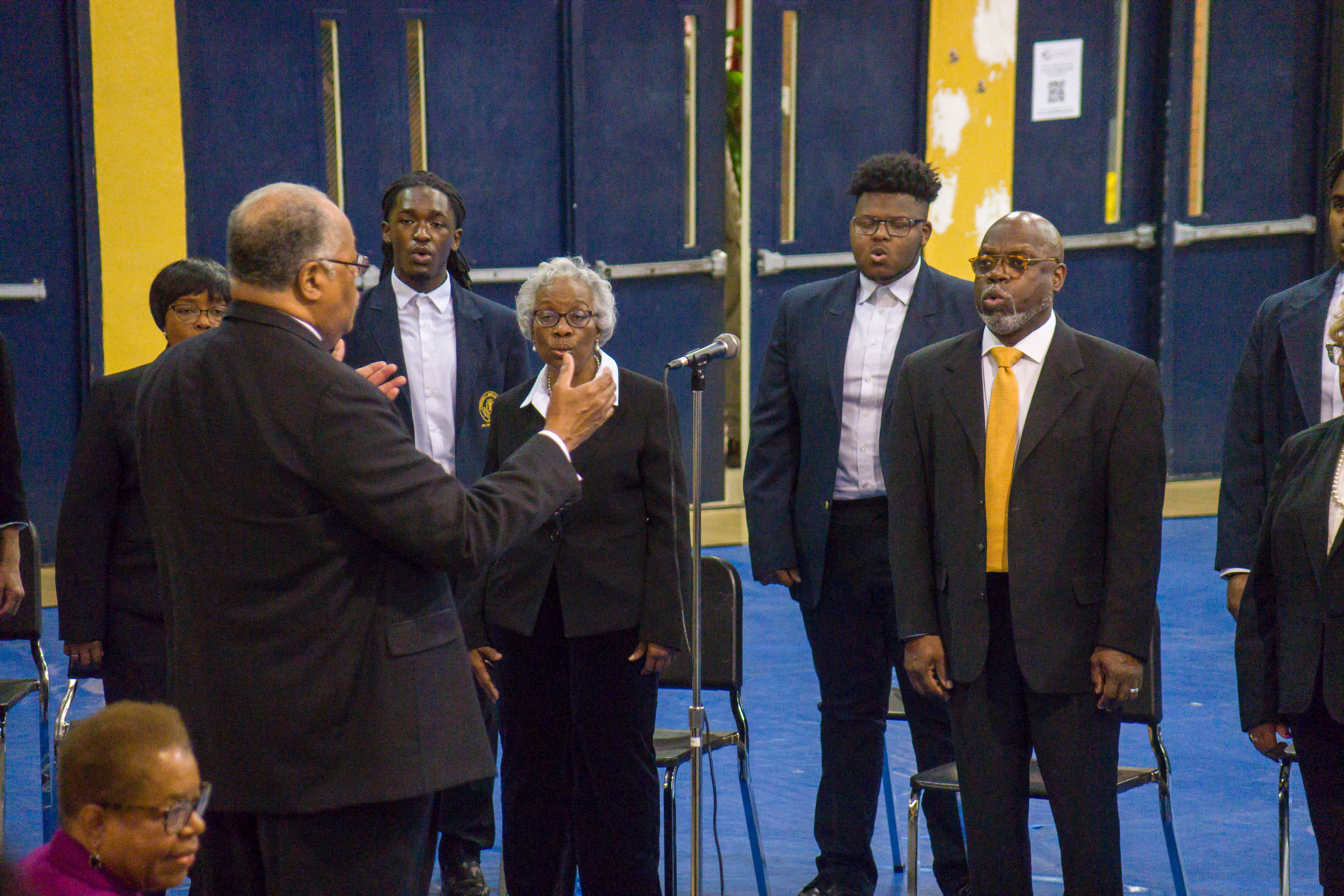
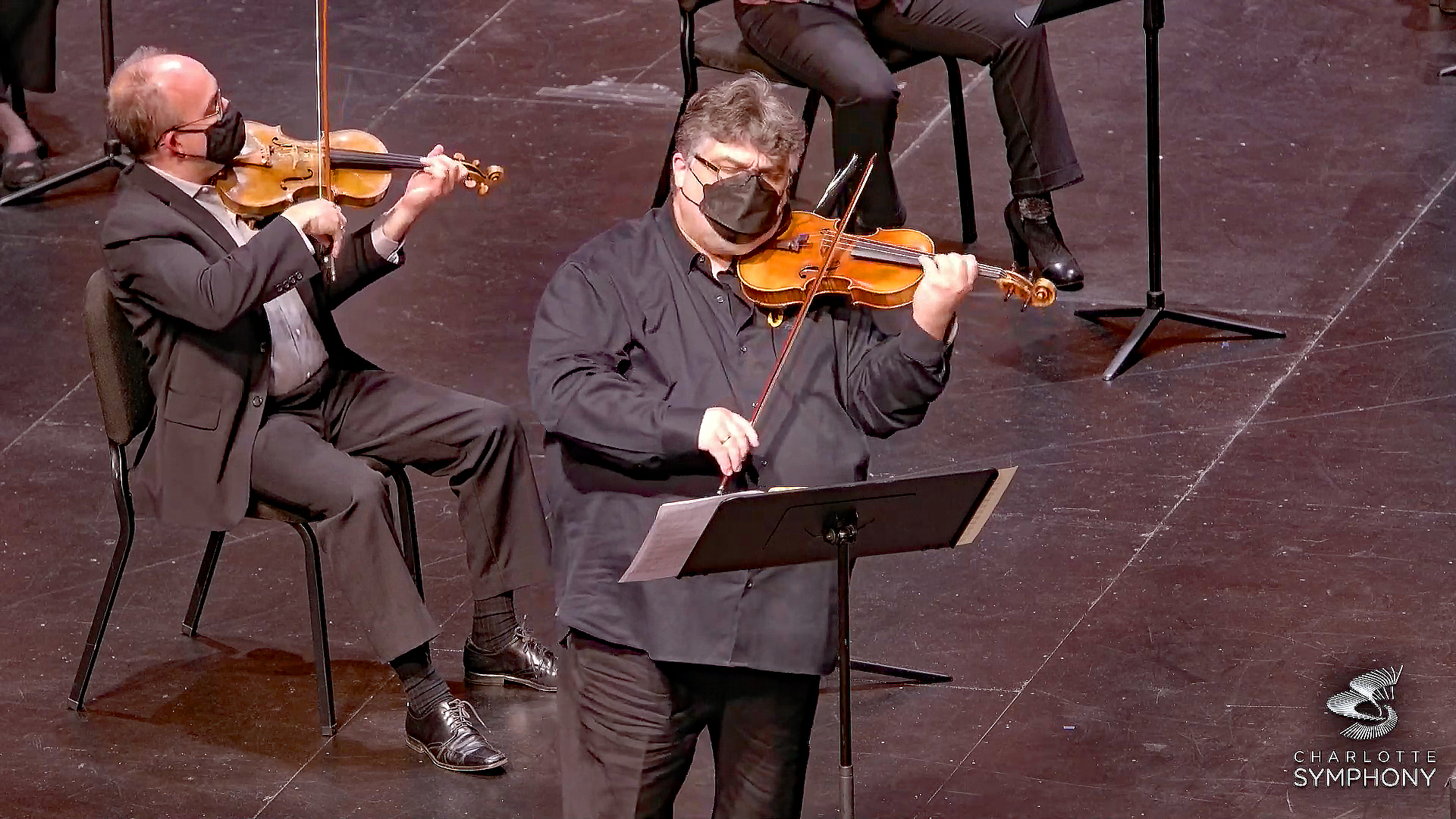
 in Geller’s pivotal solo – but somehow neglecting to mention that the 2018 composition was written for a burlesque dancer. The piece was wonderfully apt when Symphony first performed it in early 2021, when wind players weren’t yet allowed back in concert halls due to pandemic restrictions, and the worldliness of this all-strings piece was a fine fit at the Brayboy. Bluesy strings did all of the sensual slitherings, while a pair of double basses provided percussion via pizzicatos, hand slaps, and vigorous thwacks of the bow on the necks of the instruments, accentuating Meyer’s jazzier passages. Most alluring was Geller’s suggestive glissando triggering the key swell of the strings that most vividly evoked Meyer’s title. Nor did Geller’s subsequent solo disappoint.
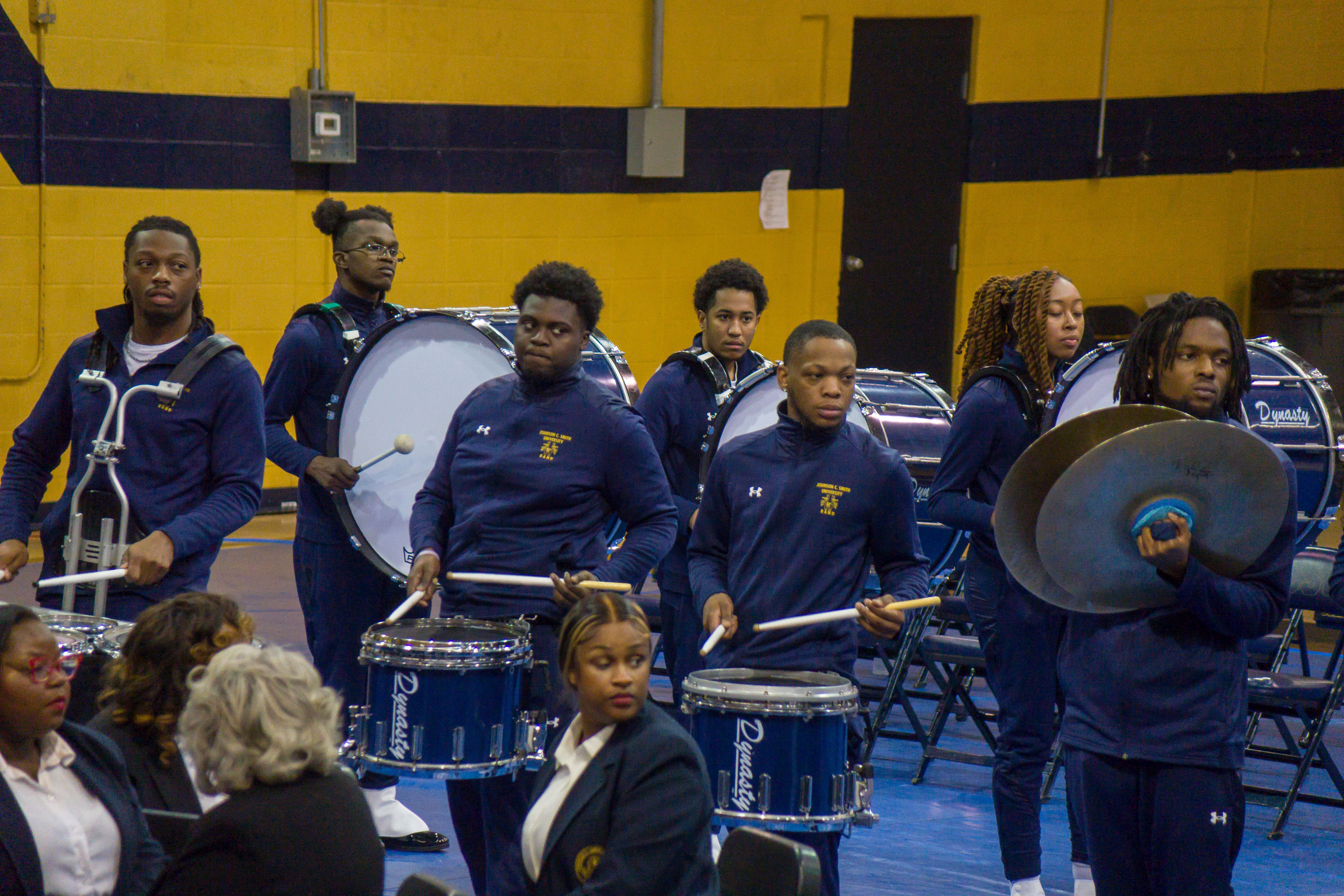
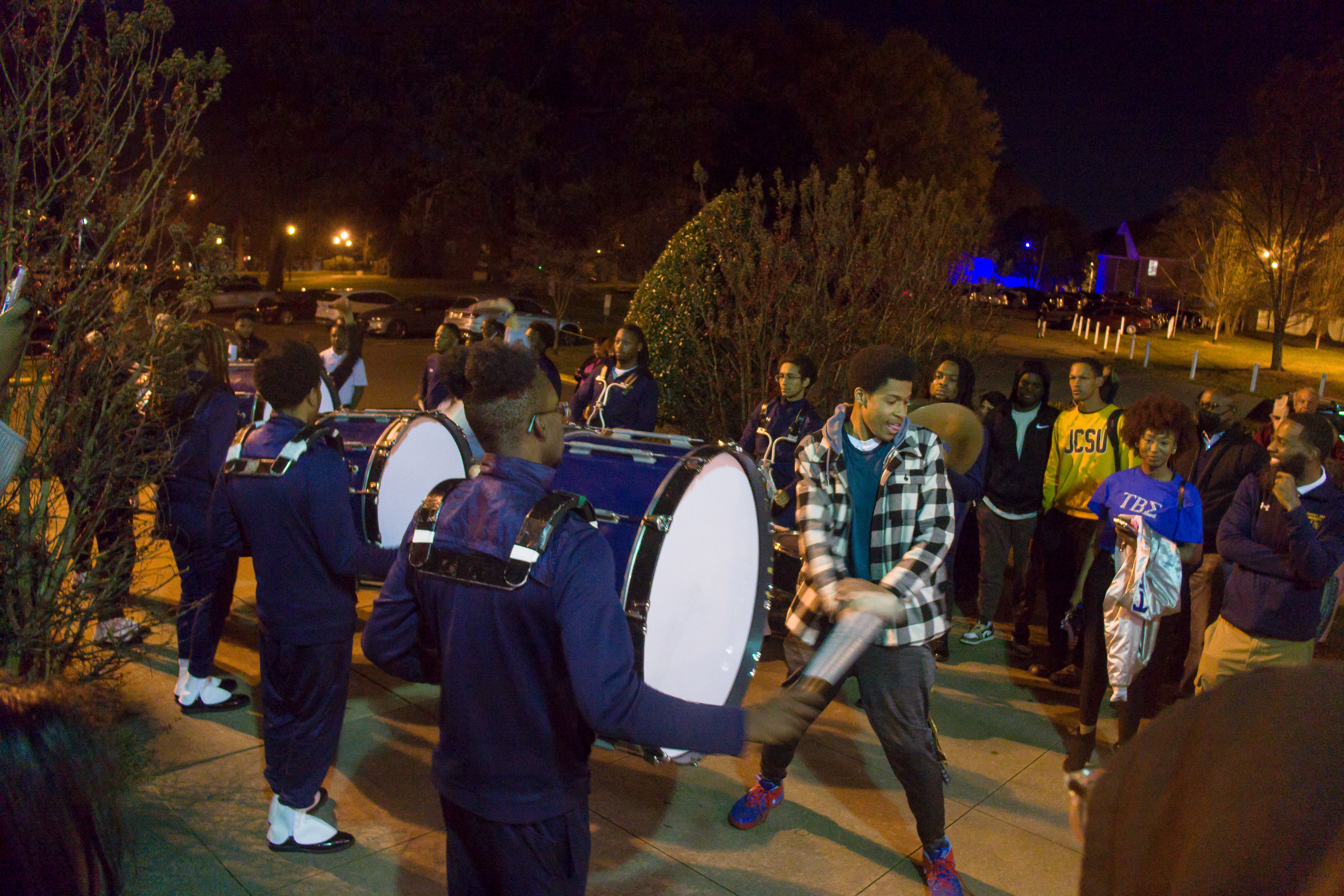 mayhem, a drum major arrived with all his spirited, ceremonial, and high-stepping antics. Thanks for being here had been expressed long before this all-American climax, so without further adieus, the drum major could end the concert by leading the Drumline, Dr. White, and Lees out of the hall. When my wife Sue and I managed to navigate from our seats through the exiting audience and folks still milling on the court – conversing, posing for photos, and taking selfies – we emerged from the Brayboy Gymnasium and found that a drum party was still going on outside the entrance. Fortunately, I had brought my camera. Sue wouldn’t let me proceed to the parking lot until I took a few shots.

 Yet the Greensboro native co-founded the Carolina Chocolate Drops, her first Grammy Award exploit, and now has an opera firmly rooted in the Carolinas to her credit, so an audience studded with black ties and tuxes had no difficulty embracing the polyglot Giddens as their own – even as she navigated a songlist that included Parisian and Celtic selections. They may not have realized that Giddens had played Charlotte before, as far back as 2008 when I caught her with the Chocolate Drops at Northwest School of the Arts. Turrisi and bassist Jason Sypher, who shared the Cistern Yards stage with Giddens at the College of Charleston in May, accompanied her once again, though Lees and Symphony lightened their load. Nor was it obvious that Turrisi would be playing piano until late in the concert when he insinuated himself upstage.
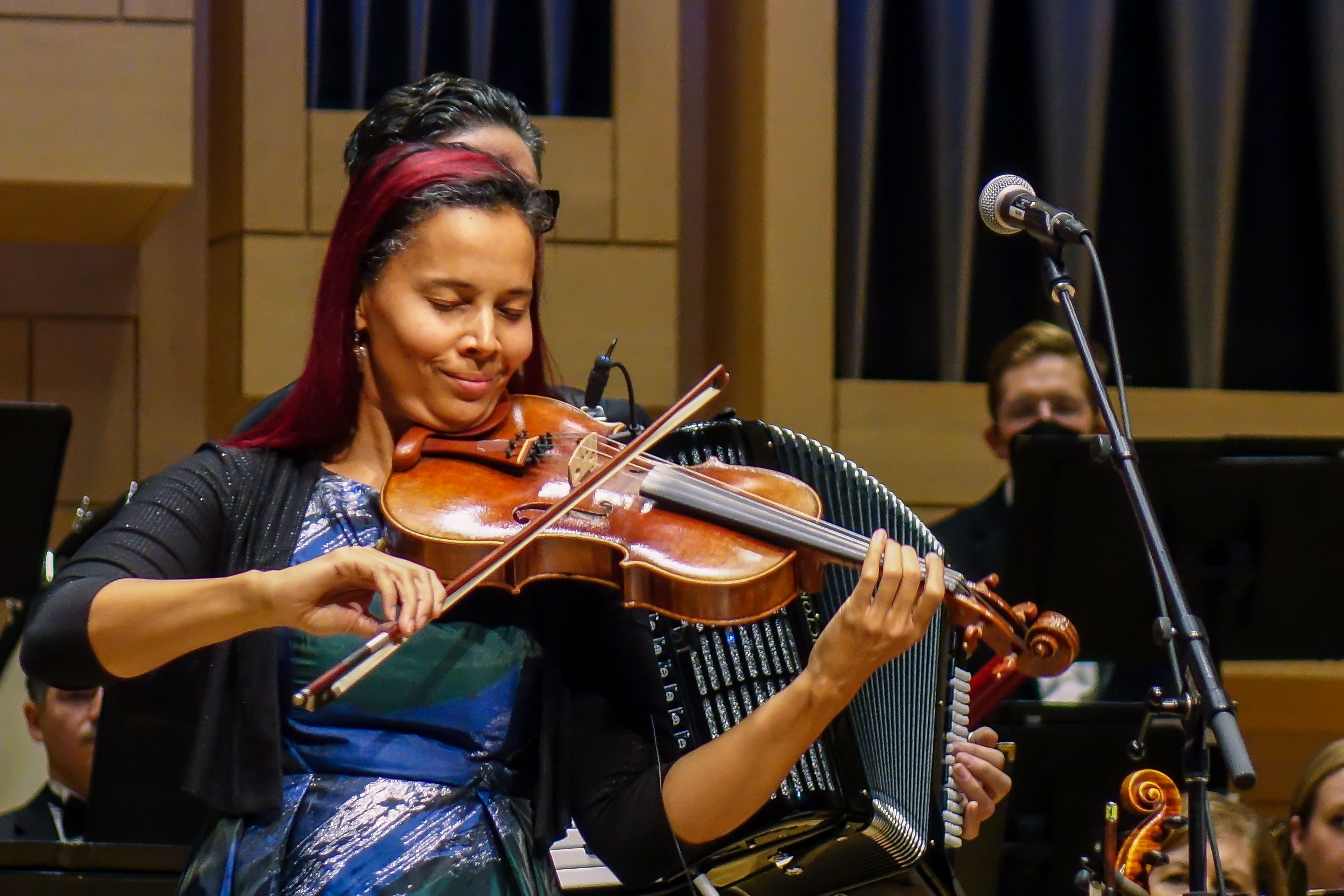 “Mouth Music” was all we needed to hear if we needed assurance that Giddens could make a credible showing at a jazz festival, and there would be more to follow. Lees ceded the stage to the guest trio, lightening the vibe, and Giddens picked up a viola and yielded some of the spotlight to her bandmates, especially Turrisi when he sizzled on his accordion during one of the fiddle tunes. The merriment faded when Lees returned to the podium, replaced by the romance of “Autumn Leaves” en français until Giddens favored us with the English lyric as well. If you hadn’t glimpsed the program, just the tropical sway of the violins was enough to announce our return to the Carolinas and “Summertime” from the Gershwins’ Porgy and Bess, sweetly sung. Plenty of space was afforded to both Giddens and Symphony in the arrangement of “La Vie en Rose,” and the singer did not seem to be straining to sound like Edith Piaf, which was more than OK with me.


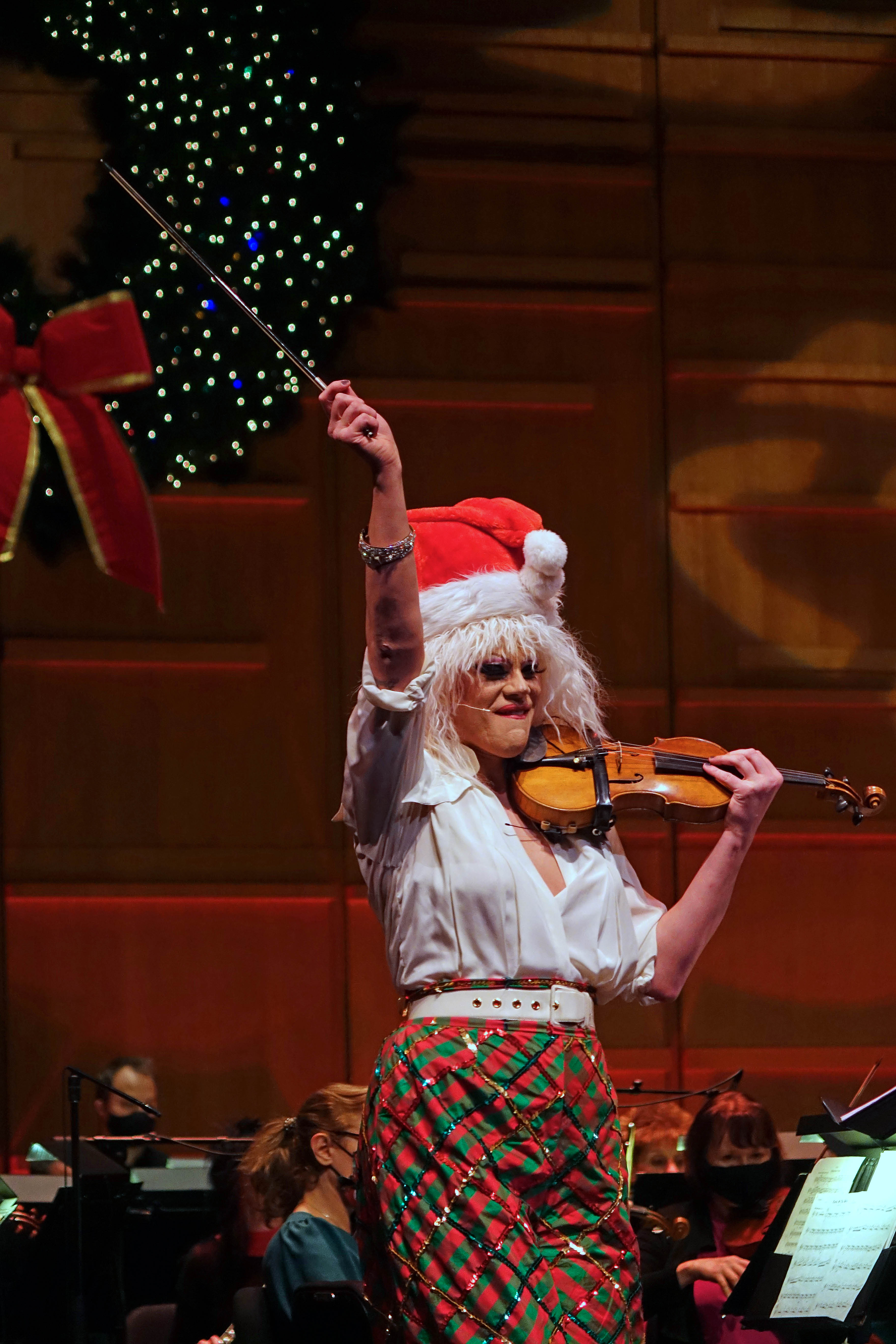
 More signals came after intermission that a 2022 edition of Thorgy Christmas would undergo drastic changes, for it was obvious that Thor revels in surprises. Dispensing with the customary concert preludes served up by her symphonic hosts, Thorgy burst onto the stage and kicked things off with a brash “Jingle Bells” spot. Of course, she had changed her outfit during intermission – from an ensemble highlighted by garish red-and-green-striped slacks to a fiery, glittery, fuchsia spectacular. She almost visually jingled in this one-piece caprice, and she discarded her dazzling Dolly Parton white wig in favor of a towering brunette bouffant. Thorgy is rather tall already.











 Art on My Sleeve