Tag Archives: Charlotte Master Chorale

Duruflé and Respighi Are an Unexpectedly Dynamic Duo at Belk Theater

Review: Charlotte Symphony Plays Respighi’s Pines of Rome

By Perry Tannenbaum

November 14, 2025, Charlotte, NC – Neither Maurice Duruflé nor Ottorino Respighi would rank high among composers that Charlotte Symphony subscribers most wish to hear. The orchestra’s previous two music directors, Christopher Warren-Green and Christof Perick, never performed Respighi as part of the orchestra’s classics series – he remained the province of guest conductors – and the Duruflé Requiem, after concerts by the old Oratorio Singers and Carolina Voices early in the century, hadn’t surfaced at all locally since 2007.

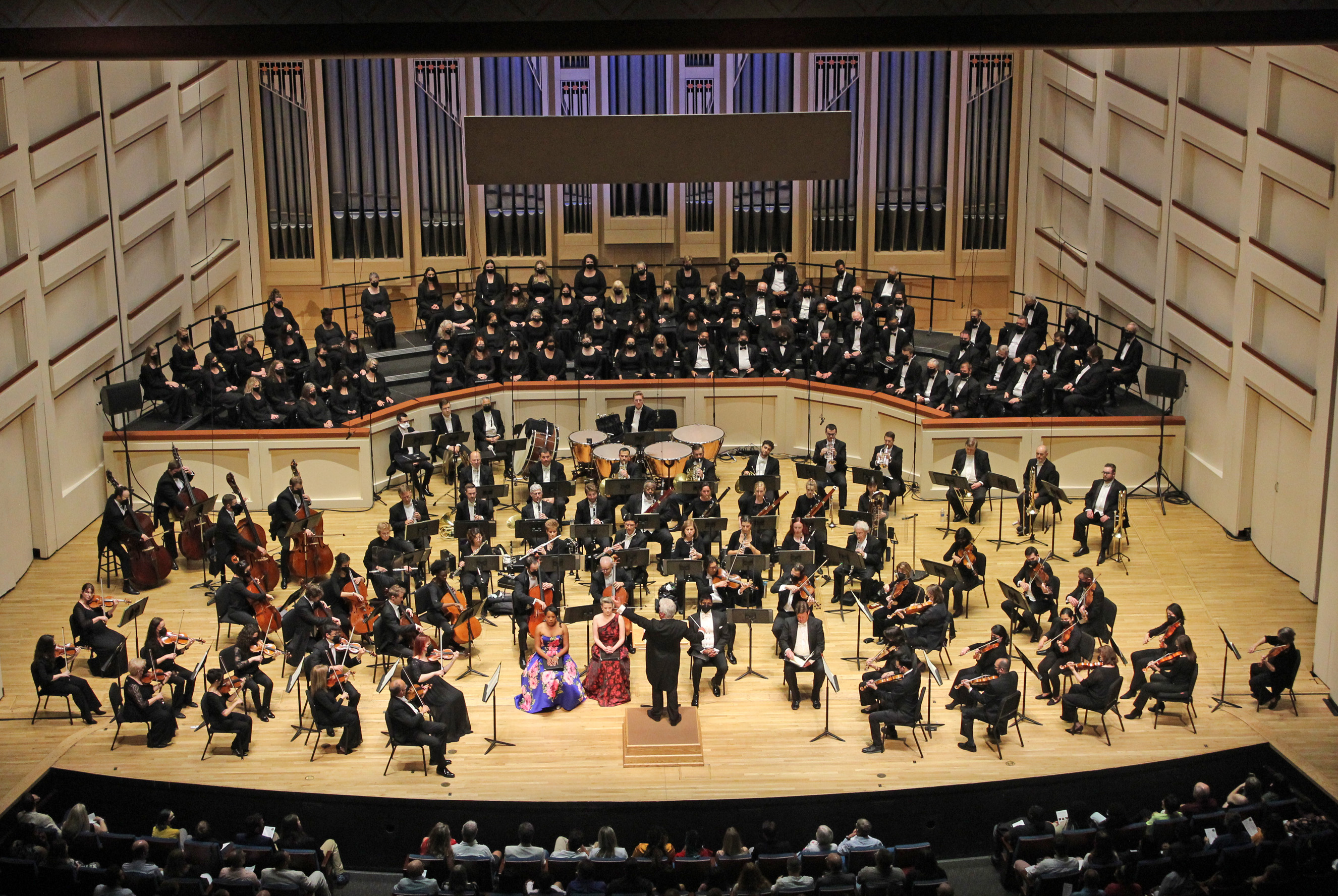
So a pairing of Duruflé’s most highly regarded work with two Respighi favorites, The Pines of Rome and The Fountains of Rome, didn’t figure to fill Belk Theater with rabid enthusiasts. Yet the sheer scale of the Requiem, calling forth the Charlotte Master Chorale under Kenney Potter’s leadership, made the Belk an obvious choice over the snugger Knight Theater.

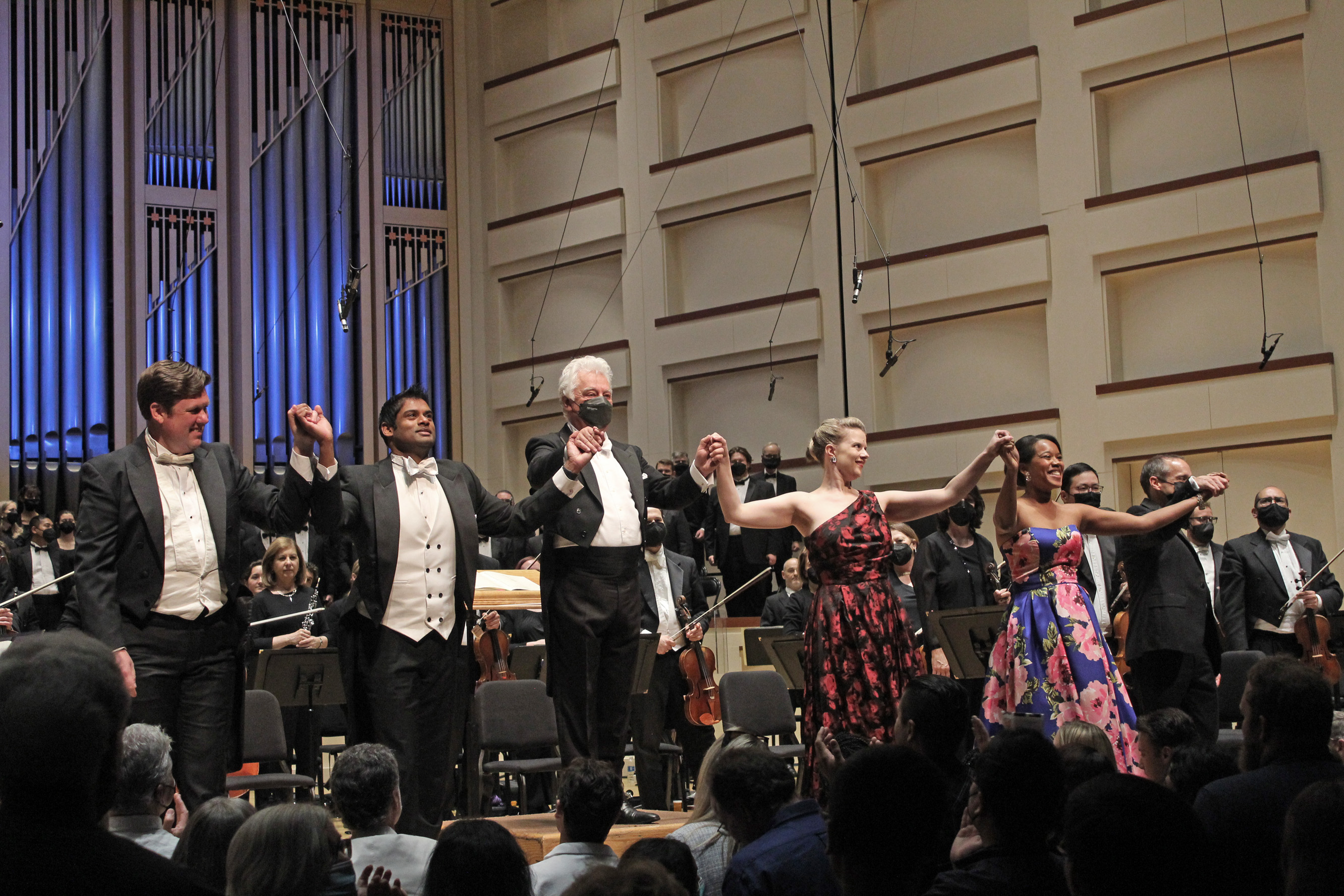
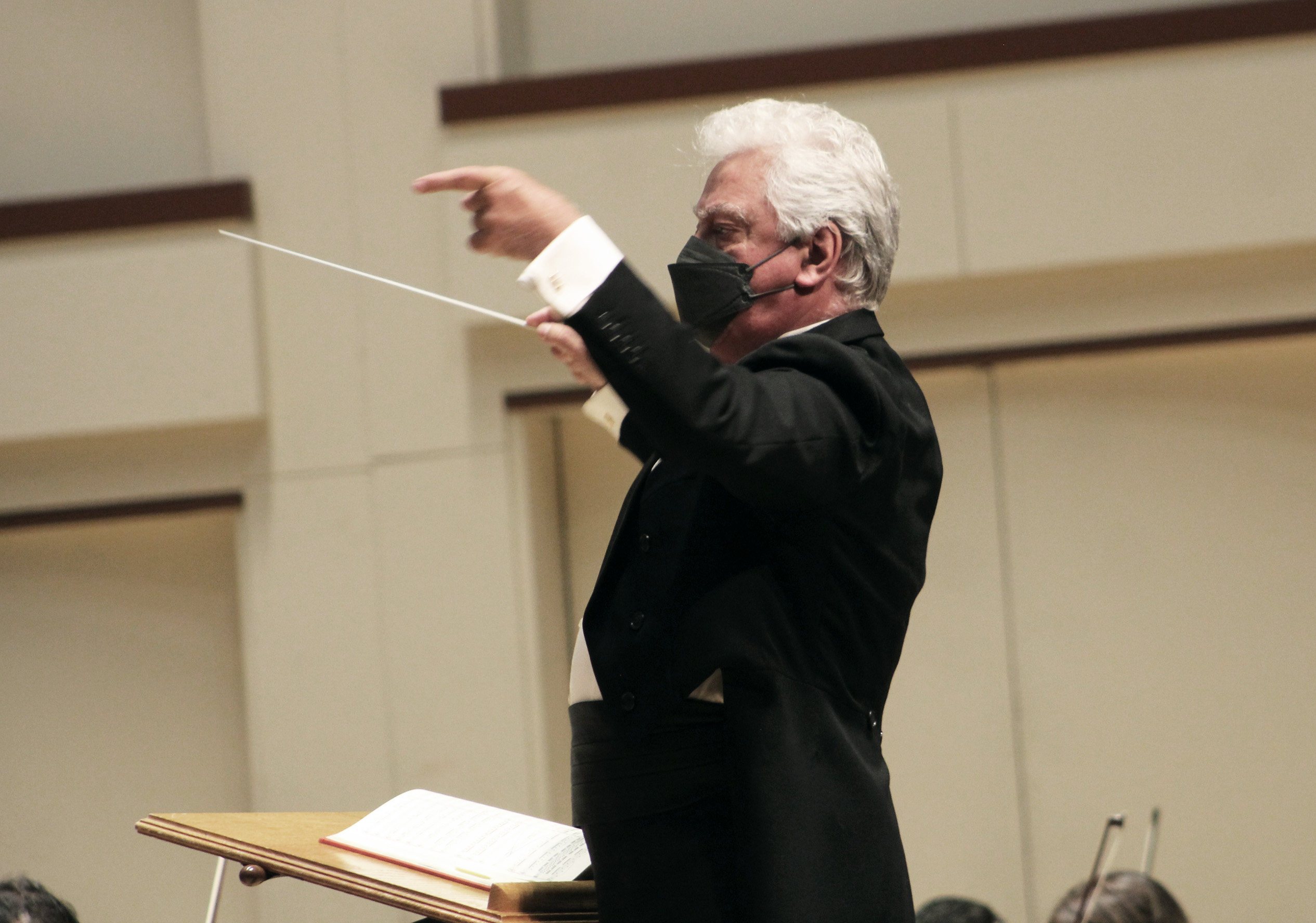
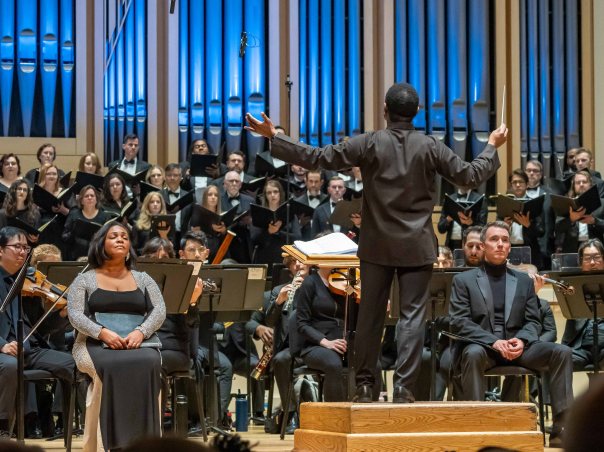
Although our current music director, Kwamé Ryan, brought us Respighi’s Roman Festivals last spring, a guest conductor was once again on the podium for these more beloved Roman delights by the Italian icon. While a Duruflé-Respighi pairing will never be boffo box office, starting with the Requiem – which likely drew hundreds of the choristers’ family members to these performances – made the host of Master Chorale choristers onstage before intermission available to swell the audience for the Fountains and Pines afterwards. Adding to the electricity in the house, guest maestro Francesco Lecce-Chong deployed two groups of brass players upstairs to opposite sides of the grand tier for the final “Appian Way” section of The Pines.

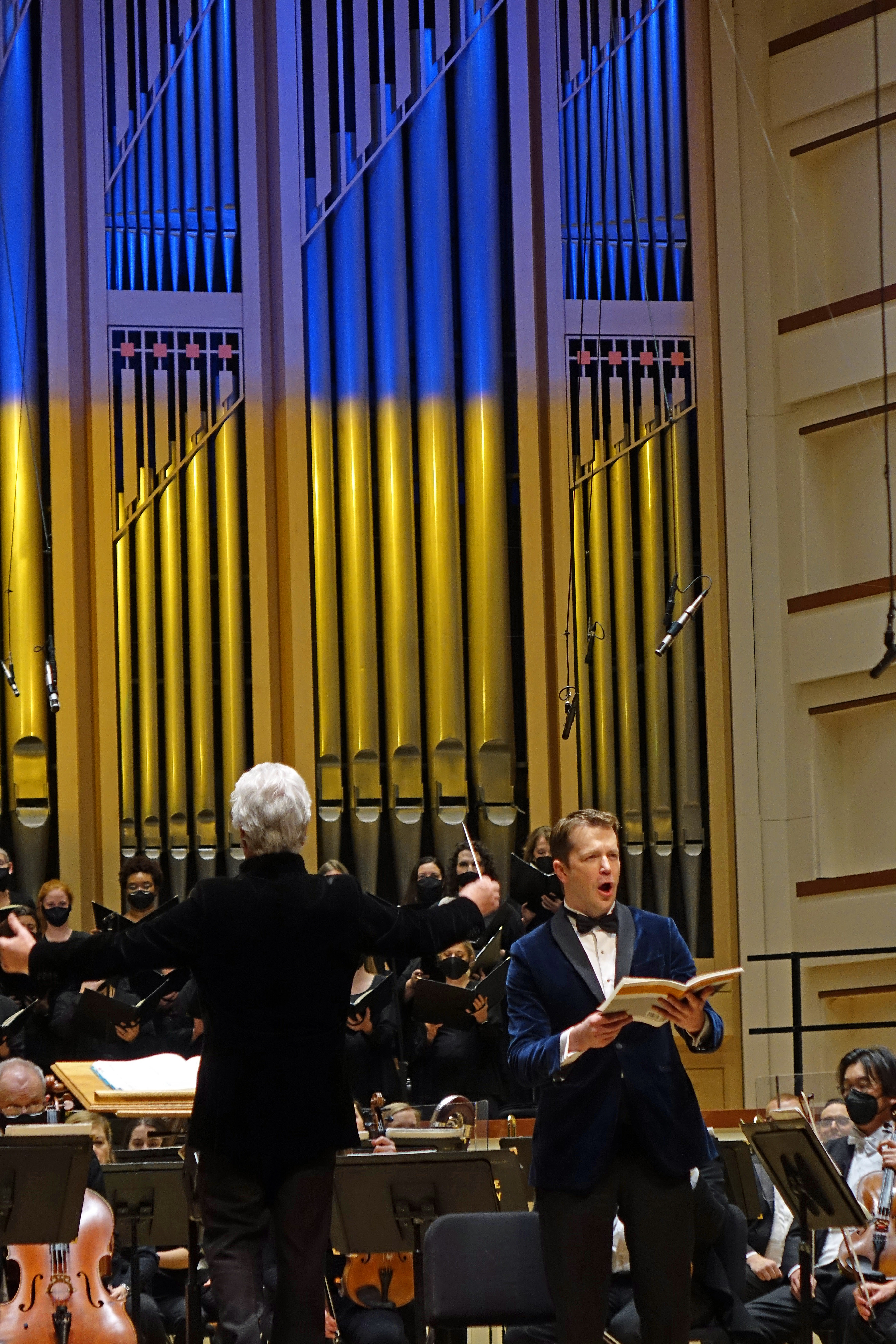
Based on Gregorian themes from the Mass of the Dead, the Requiem sounded like the oldest piece on the program, though it was the newest. Fortifying that impression was the dominant role of the Chorale compared to the two soloists, mezzo-soprano Megan Samarin and baritone Eleomar Cuello. Most of us likely felt that Cuello’s noble bearing and vocals in the “Domine Jesu Christe” section were all too brief: even there, the choir had the larger share of the singing.

Samarin’s conquest in the middle “Pie Jesu” section, an ethereal solo, also seemed too fleeting, though here the Chorale was silent. Sampling recorded versions of the Requiem on Spotify and Apple, you’ll probably conclude that the orchestral version performed at the Belk packs more wallop than the organ scoring, which was probably the version that Carolina Voices chose 18 years ago at the Friendship Missionary Baptist Church. Another reason for the guest vocalists to make a more muted impression this time.

The fourth section, the “Sanctus,” decisively upstaged Cuello as Lecce-Chong rallied the forces of the orchestra and the Chorale together, but the baritone returned for a second cameo during the first half of climactic “Libera Me,” fueling the fires of the choral “dies irae” that followed. Somehow, the sublimity of the concluding “In Paradism” doused those fires. The beatific loveliness of the women’s voices certainly made for a heavenly arrival, yet the men miraculously eclipsed them in their visionary entrance, truly a mystic chorus of angels.

Instrumental excellence peeped in occasionally during the Requiem, chiefly in Timothy Swanson’s oboe obbligato for the “Kyrie” section, in bassoonist AJ Neubert’s “Lux Aeterna” intro, and in the exquisite welcome to “In Paradisium” from yet another principal, harpist Andrea Mumm Trammell. Even more play was afforded to the players in the Respighi pieces with all their resplendent colors and shadings.

Memories of hearing Respighi are invariably more sugary to me than the actual music, which under Lecce-Chong’s baton, especially in The Fountains of Rome, was refreshing and exhilarating – and, of course, effervescent. Neubert probably made an even stronger impression on oboe in his lovely, languid sketching for “The Fountain of Valle Giulia at Dawn,” with principals Taylor Marino on clarinet, Jon Lewis on cello, and Victor Wang on flute following eloquently in the same opening section.

The sunnier middle sections, depicting “Triton Fountain” and “The Fountain of Trevi,” were more impressively orchestral and brassy, Triton’s horn issuing an early proclamation at the beginning of his section and a rampage of brass, chiefly trombones, heralding midday at Trevi, Rome’s most majestic fountain. No doubt the audience was a bit surprised by the delicacy of the Fountains finale, “The Villa Medici Fountain,” and its sprinkling of percussion, celesta, and soft chimes, simulating a distant church at twilight.

My mind had first been changed on Respighi way back in 1997 when Daniele Gatti had led the London Royal Philharmonic into town with diva pianist Alicia de Larrocha. His rendition of The Fountains with the Londoners was sufficiently revelatory for me to place a rush order for Gatti’s recording of Respighi’s complete Roman trilogy, where additional revelations awaited: Roman Festivals and Pines of Rome were both more powerful, varied, and grand. Though The Pines had popped up on my calendar at the dearly departed Eastern Music Festival in 2011, this was my first opportunity to hear – and compare – Fontane di Roma and Pini di Roma in the same live concert.

With a feel as sure for Respighi as Gatti’s, Lecce-Chong’s performance was worth the long wait. “The Pines of the Villa Borghese” had a marvelous orchestral bustle before principal trumpeter Alex Wilborn was dispatched to the wings for the signature eerie effect in the solemn “Pines Near a Catacomb.” Even more quietude came with “The Pines of the Janiculum” as piano, clarinet, cellos, and a soft oboe anthem enhanced the magic. But the epic build and variety of “The Pines of the Appian Way,” seasoned with prerecorded nightingale chirruping and crowned, at the end of a satisfyingly long and majestic crescendo, with the outbreak of brass from the balcony, surpassed the grandeur of the Respighi we had heard before and joined the peaks of the Master Chorale as the pinnacles of the evening.

Ryan Clicks with the Master Chorale in a Walloping CSO Debut

Review: A German Requiem at Belk Theater

By Perry Tannenbaum

November 22, 2024, Charlotte, NC – In Kwamé Ryan’s first full season as the new music director of Charlotte Symphony, we aren’t getting to see him perform as much as we would hope, but when we do see him onstage at Knight Theater or Belk Theater, he always appears to be overjoyed to be here. Ryan was absolutely beaming as he took the Belk’s centerstage for the first time as CSO’s leader – and he certainly didn’t wear out his warm welcome, delivering a walloping performance of Johannes Brahms’ Ein deutches Requiem. Even before Ryan’s arrival, the new season has proven to be adventurous and diverse in its programming, showcasing fresh repertoire and youthful guest soloists.

Subscribers can judge for themselves whether Ryan’s outré intro to his debut program, coupling the Brahms with Latvian composer Pēteris Vasks’ Musica Dolorosa, was a sign of confidence or a symptom of nervousness. Whether or not my recollection can be trusted, Ryan’s scripted intro was unprecedented. Some intros we may have seen in the past could be dismissed as gratuitous – or countenanced as witty fluff. Here, Ryan’s intro was necessary, for we needed to be prepped for how the program would be delivered: without a pause between the music of the two composers. That would also be fairly unique. Our new maestro was crafting an experience.

Indeed, Ryan’s preface was necessary for another reason. Vasks’ piece flowed into the Brahms so smoothly it was as if they were written in collaboration and in the same key. Outside that merging point, the two pieces were quite different in the ways that they dealt with death. Responding to his sister’s untimely death, Vasks voiced his personal despair and compounded his feelings with grieving for his nation, still subject to Soviet rule when the Dolorosa premiered in 1984. Written for string orchestra, the mood of the opening section of Dolorosa may put you in mind of Barber’s Adagio. But the Vasks elegy eventually transcends the sameness and the hypnotic monotony of Barber’s dolor with louder and more piercing pain.

As the lower strings tap and strum percussively, Vasks gradually quickens the pace and turns up the volume as the beat becomes more insistent and dramatic. Once the dynamics peak, the strings, now smoothed out with a cessation of the percussion, become even more disturbing, tossing away pleasant tonality in a disciplined cacophony of fearsome chaos. The slashing lower strings, however, hadn’t been vanquished. They punctuated this harshness and dissonance at its height, seemingly puncturing it, for the noise homogenized into the sound of a diminishing wind or a siren receding into the distance – clearing the way for the quietest and most memorable episode in the Dolorosa. Principal cellist Jonathan Lewis, echoing the opening bars, played an eloquent lament from his downstage seat, accompanied only by the low mysterious hum – like a bass clarinet or a contrabassoon – emanating from upstage, hidden from my sight. The higher strings now took up the cello’s increasingly bold cry and built it to raw anguish.

The slightly hushed and abrupt ending of the Dolorosa nicely conformed with Ryan’s concept, and it dispensed with the shuffling of chairs usually necessary for the transition to full orchestra with winds, brass, and drums. Nor were the troops of the Charlotte Master Chorale obliged to parade in from the wings and settle into their perches above the Symphony. That honor was reserved for the guest vocalists, soprano Janai Brugger and baritone Alexander Birch Elliott, gracefully delayed until well after the transition between the Dolorosa and A German Requiem. The Brahms is not new to the CSO, last given by Christopher Warren-Green almost exactly 10 years ago – after his predecessor, Christof Perick, had presented it (already for the second time this century) in 2005.

With its consoling attitude, the Requiem is not at all a bad fit for the holiday season. You’re likely to recognize more than a couple of verses from the Brahms, conveniently projected in supertitles, as German translations of verses from Handel’s Messiah, the most beloved musical birthday celebration that we have. Most notably, you’ll get an Oktoberfest taste of “The trumpet shall sound.” Maybe sitting down in the orchestra, as opposed to the Grand Tier Circle, accounted for the heightened thunder of Ryan’s rendition, but Symphony somehow sounded crisper. The sudden sforzandos struck like a punch to the jaw, yet Ryan kept the ensemble under strict control, never threatening to overwhelm the hall with volume, emphatically relishing the work’s percussive moments.

Both Brugger and Elliott shone in their debuts. There was a noticeable Renee Fleming-like milkiness and sheen to Brugger’s voice, most appropriate for the motherly comfort she delivered in “Ihr habt nun Traurigkeit (You now have sorrow).” Elliott was even more impressive in his larger workload, a more pleading “Herr, lehre doch mich (Lord, teach me),” bolstered by a lusty Chorale response, before he delved into the “trumpet shall sound” mystery and affirmation of “Denn wir haben hie keine bleibende Statt (For here we have no everlasting city).” Belatedly, Music Chorale artistic director Kenney Potter was summoned onstage to share the credit for his singers’ brilliance and verve. He was absolutely beaming with delight.

Photos by Perry Tannenbaum

Warren-Green Bids Farewell With a Rousing Beethoven “Ode to Joy”

Review: Charlotte Symphony Plays Beethoven’s Ninth

 By Perry Tannenbaum

IMG_6604_dcoston

May 20, 2022, Charlotte, NC – Even back in the early ‘90s, when Charlotte Symphony struggled to sustain respectable mediocrity, the valedictory concert led by Leo Driehuys in 1993 proved that the orchestra could always rise to the occasion when called upon to perform Beethoven’s thrilling Ninth Symphony. Having heard the same ensemble bludgeon Beethoven’s “Eroica” to blandness just months earlier, it was hard for me to believe that the inspiration came solely from the composer. I struggled with the answer to this anomaly until I interviewed Driehuys’s successor, Peter McCoppin, shortly before his final season at the end of the millennium.

Not referencing Beethoven at all, but explaining why he enjoyed his years in Charlotte so thoroughly, McCoppin observed that the Queen City is incredibly fertile ground for choristers and choruses. You just had to count the churches around town to see his point. Not only had the Oratorio Singers of Charlotte brought extra spark to Beethoven’s “Choral Symphony,” they had also arguably sparked the Charlotte Symphony musicians they were partnering with.

The Oratorios have undergone numerous metamorphoses during the past three decades, at discreet intervals absorbed into Symphony, renamed the Charlotte Symphony Chorus, and eventually set free to seek their own gigs, rebranded once again as the Charlotte Master Chorale. Yet each time it was necessary to muster the instrumental and vocal artillery needed for Beethoven’s masterwork – indeed, classical music’s masterwork – the Chorale has admirably answered the call.

In a recent interview prefacing his valedictory concert as Symphony’s music director after 12 fruitful seasons, Christopher Warren-Green revealed that the chorus had been “one of the big incentives for me to come to Charlotte because of the great repertoire that was written for orchestra and chorus.” Little wonder, then, that Maestro Warren-Green has chosen to conclude his tenure by including the Master Chorale in his final “Ode to Joy” concert – or that he has already announced that, when he returns this coming December as Symphony’s music adviser and conductor laureate, the choir will be in the mix once more as he conducts Handel’s Messiah at Knight Theater.

There always seem to be extra layers of drama and excitement when the “Choral Symphony” returns to Belk Theater, never more than when Christof Perick made his 2001 debut as music director just 10 days after 9/11. Fast forward to the fourth Ninth that Symphony has programmed since then, and there was still a palpable sense of a special occasion in the hall. Symphony president and CEO David Fisk saluted Warren-Green before he made his grand entrance, greeted with a lusty standing ovation. Maestro then pooh-poohed all of Fisk’s accolades, paid tribute to four newly retired Symphony musicians, and – prior to a nifty and brief exit – exhorted the audience to keep supporting the CSO “or I’ll never forgive you.”

That was the last laugh of the evening as Warren-Green returned to the podium, signaled the Chorale to be seated, and presided over the Symphony as Beethoven brought them to a boil, quicker than a microwave oven, in his opening Allegro ma non troppo. Warren-Green’s Ninth would by a turbulent one, far more timely than timeless, discarding many chances for liquid lyricism in favor of alert and spirited rigor – almost militant but never quite lapsing into rigidity with the onset of its rousing quicker tempos. The incisiveness of Jacob Lipham’s timpani came upon us quickly, never allowing us to rest for long, while the affecting woodwinds and the lively strings offered eloquent counterweights.

When we reached the Molto vivace second movement, with its industrious bustle and perpetual overlapping, Warren-Green enabled us to hear early foreshadowings of the teeming humanity we’ll find in the epic fourth movement, struggling toward togetherness and brotherhood. Excitement in the overlaps between various sections of the orchestra was increased dramatically by spasmodic boosts in dynamics and the sharp whacks of the timpani. Also pushing against the flow of the violins and the warmth of the cellos were the percolating winds and the moaning French horns.

IMG_6891_dcoston

Between the second and third movements, the last true pause in this symphony, the guest soloists entered and took their seats at center stage: bass baritone Jordan Bisch, tenor Sean Panikkar, soprano Alicia Russell Tagert, and (substituting for Briana Hunter) mezzo-soprano Sarah Larson. The two little girls seated in front of my mom and me perked up expectantly at this point, only to be let down by the relatively tranquil Adagio molto e cantabile. The little girls weren’t as restless or fidgety during this lovely movement as you might expect little boys to be, but their attentiveness waned noticeably – despite the sweetness of the first violins, the affecting violas and second violins, and the mellifluous woodwinds and horns. Their adorable decorum was threatened most by the beautiful confluence between clarinet, horn, and flute as the penultimate movement faded into the concluding Presto.

IMG_6511_dcoston

Having this glorious score in front of you, with its magnificent build-up to the signature fireworks waiting to explode, must be so gratifying and fulfilling as a musical conductor stands on the podium, heading into the homestretch of his 12-year tenure. Surely, the musicians and choristers sensed the excitement and shared an eagerness to deliver. The first violins were certainly ardent and rich over the churning violas and second violins as the build-up began, yet as the gradual gravitation toward the brotherhood theme was beginning, I noticed that Warren-Green was doing something different and new. Instead of seating his cellos and double basses to our right, they were now spread in a long row, starting in front of the podium and reaching to the left edge of the stage in nearly a straight line.

So there was a little more than the usual edge as the journey to the brotherhood theme launched, continuing with dogged inevitability after the woodwinds mischievously flashed back to the agitations of the second movement. Violas layered onto the cellos and basses, adding to the smoldering sensation, and the violins accelerated the familiar strains until the brass made them soar. The little girls in front of us were completely re-engaged ahead of the next magnificent build. Bisch sounded stronger and more robust in his opening declaration, “O Freunde, nicht diese Töne! (Oh friends, not these sounds!),” culminating in the announcement of his Joy agenda (“Freude!”), than he did reprising the brotherhood refrain as he plunged into Friedrich Schiller’s “An die Freude (Ode to Joy).” More than a couple of bass baritones who have recorded these passages have fared the same. Perhaps that was Beethoven’s design, for ample reinforcements will emphatically arrive on the scene, first the soloists and then the phalanxes of choristers who were elevated over everyone upstage, ably representing Schiller’s millions.

At least a couple of regatherings follow, as all of us who love the Ninth well know. There’s a grand, brassy military march while the vocalists inhale for awhile and hold their fire, and then there are those sublime audible inhalations as Schiller’s lyrics, helpfully translated in supertitles above the Belk stage, took us “above the canopy of stars” in an ethereally protracted chord. When the Master Chorale reached peak tempo in the concluding Allegro assai vivace, like a herd of horses urged by Warren-Green to full gallop, one of the little girls turned to the other with an OMG expression on her face that her mom would have treasured until her dying day if she had seen it. At this moment, the greatest pleasure in watching kids experience this magnificent storm of sound for the first time is being able to say to yourself. “You ain’t heard nuthin’ yet!”

Originally published on 5/22 at CVNC.org

Ukraine’s Colors Shine Through Charlotte Symphony Celebration

Review: Dona Nobis Pacem at Belk Theater

 By Perry Tannenbaum

2022~Dona Nobis Pacem-31

March 12, 2022, Charlotte, NC – When 57 musicians gathered at the Carolina Theatre on Tryon Street to present the inaugural Charlotte Symphony concert on March 20, 1932, none of them could have possibly predicted how the orchestra’s 90th anniversary would be celebrated in 2022. Three of the five pieces that Christopher Warren-Green conducted, nearing the end of his distinguished tenure as Symphony’s music director, hadn’t been written yet, and one of the composers hadn’t been born. Even last May, when CSO’s 2021-22 season was announced, Warren-Green himself couldn’t have predicted how grimly appropriate Ralph Vaughan Williams’ Dona Nobis Pacem would be for the occasion. As originally conceived, the program was an olive branch from England to America, three British composers conducted by one of the Crown’s finest, two of the pieces paying homage to Walt Whitman, our greatest poet.

A small dent in the all-English lineup turned up when Symphony’s Australian second trombone, Thomas Burge, finished enough of his to-be-continued “Charlotte Symphony Fanfare” for it to serve as a preamble to the orchestra’s celebration. What truly turned the tone of the anniversary festivities upside-down was Vladimir Putin’s horrific invasion of Ukraine, lending Dona Nobis Pacem – “Grant us peace” – unforeseen pertinence and meaning. With St. Patrick’s Day weekend revelers teeming along the sidewalks and spilling over onto Tryon and Fifth Streets, there was a dramatic contrast for concertgoers who became pedestrians shortly after hearing Williams’ Fantasia on a Theme by Thomas Tallis and the Dona Nobis at Belk Theater on Saturday night. The most festive of the night’s festivities were outside the hall.

Burge’s new composition will no doubt impress more when it takes its intended place at the launch of a future Symphony’s classics season and the composer’s showy post-pandemic staging can be realized: three brass choirs spread out across the Belk balcony. For the 90th, the brass battalion was confined behind the masked string sections, but the peep we had into the work-in-progress was sunny and glorious. Gustav Holst’s Walt Whitman Overture, a youthful piece completed in 1899 when the composer would turn 25, was arguably the most sustained celebration of the evening, though it might be somewhat deflating to learn that Holst had been dead for over 48 years when the piece was first performed in 1982. The transparent violins at the beginning, hovering over churning basses and cellos before flutes and brass peeped in, struck me more like Schubert than any American or British music. When the brass first broke through, however, there may have been a glint of Sousa, and the final swell of the piece was in a grand Victorian vein.

The Four Scottish Dances by Malcolm Arnold (1921-2006), premiered in 1957, were clearly the most winsome offering of the evening, shuttling between slow and fast tempos – not only between dances but sometimes within them. Inspired by Louis Armstrong more strongly than by Whitman, Arnold’s music displayed a more American élan, geniality, and broad humor than the other Brits’. If your head wasn’t spinning from the abrupt acceleration that Warren-Green called forth in the opening “Strathspey Pesante,” which ended with a pedestrian “shave and a haircut” phrase, then the slowdown in the ensuing Vivace (Reel), initiated by Joshua Hood galumphing on his bassoon, would certainly have caught your ear. And if that weren’t sufficient mischief, Warren-Green’s hambone slacking and slouching at the podium added a visual cue. Perish the thought that Maestro Warren-Green’s predecessor, Christof Perick, would ever have tainted himself with such levity.

After these pranks, which reminded me of the Western merriment in Copland’s folksier pieces, the work of principal harpist Andrea Mumm Trammell, principal flutist Victor Wang, and oboist Erica Cice was sublime in the penultimate “Hebridean Song,” shining through the shimmer of the strings. The concluding “Highland Fling” had as much Scottish flavor as the “Pesante,” rushing at us unabated with sudden shifts in volume, the tweedling of the high woodwinds answered by onrushes of orchestra colored with fiery alarms from the trombones.

If the customary programming conventions for galas were being observed, I’d strongly question the wisdom of delaying the comparatively solemn and serene Tallis Fantasia until after Arnold’s suite, which would have sent us off to intermission in a lighter mood. But Symphony president David Fisk had already solemnized the occasion by dedicating the concert “to Ukraine and the courage, strength, and resilience of its people,” a theme that would subsequently be echoed in the digital program and by Warren-Green, when he prefaced his performance of the Dona Nobis. By coincidence surely, Vaughan-Williams composed his 1910 Fantasia very similarly to Burge’s spanking new “Fanfare,” dividing his aggregation of strings into three parts, two string orchestras with a string quartet within the larger orchestra. Concertmaster Calin Ovidiu Lupanu had the last and most eloquent solo among those doled out to the four principal string players, but kudos should also go to principal violist Benjamin Geller, whose solo launched the memorable quartet episode.

What will stand out for me, however, was the extraordinary alchemy of this performance. Whether it has always been baked into Vaughan-Williams’ orchestration, maybe something special that Warren-Green was able to elicit from his musicians, or whether it was the unprecedented high placement of the small string orchestra on the platform where the Charlotte Master Chorale would soon sing, flush against the upstage vestigial pipes at the Belk… I could have sworn that there was a softly playing organ in the orchestral mix. Needless to say: amazing.2022~Dona Nobis Pacem-27

Those organ pipes were more verifiably involved in the culminating performance of the Dona Nobis Pacem, after more than 40 Master choristers filed in, followed by our two guest soloists: soprano Christina Pier and, in his Charlotte debut, bass-baritone Daniel Okulitch. It was then that Warren-Green dedicated this piece to the valiant, freedom-loving people of Ukraine. Between the moment that the maestro turned away from us and Symphony began to play, those silvery pipes, illuminated until then entirely in blue light, suddenly became halved into stripes of gleaming blue and yellow gold, the colors of the Ukrainian flag. A proud moment for us all.

Whether prescribed by COVID protocols, Warren-Green’s decree, or the unmasked singers’ personal preferences, Pier and Okulitch sat further apart than the vocal soloists we usually encounter at Symphony concerts. With Pier mostly singing the “Agnus Dei” refrain that contains the Latin title, and Okulitch confining himself in the middle movements in Walt Whitman’s English – and Old Testament translations in the Finale – the separation between the singers wasn’t awkward at all.

2022~Dona Nobis Pacem-24

Pier tended to sing with the orchestra and the choir, but there was an extended stretch where Okulitch, standing to Warren-Green’s right, was accompanied solely by Lupanu, seated to his left. So the tableau enhanced the intimacy of their duet. What was really unfortunate and compromising for us were the vast stretches of incomprehensible text from the chorus that Vaughan-Williams had scored so splendidly. If there had been supertitles above the stage or printed programs in our hands, the experience would have been even more powerful. Those of us who were able to download the digital program were adequately equipped, but the Blumenthal Performing Arts Center has had repeated problems with transmitting these copious, colorful, and informative materials.

In future performances where we’re expecting to follow along at the Belk, I will try to download the digital materials before I leave home. Clearest of all was the chorus’s mighty “Beat! Beat! Drums!” refrain from one of Whitman’s most metrical Civil War compositions. Even when we might be lost in the less familiar words of other war poems by the Good Gray Poet (“Reconciliation” and “Dirge for Two Veterans”), the music, the voices, and the colors of the fighting Ukrainians’ flag landed on us forcefully. It was thrilling.

Originally published on 3/14 at CVNC.org

Newly-Minted Charlotte Master Chorale Couples with NC Baroque for Wonderful “Messiah”

Review: Handel’s Messiah

By Perry Tannenbaum

Backed by the Charlotte Symphony Chorus, formerly the Oratorio Singers of Charlotte, performances of Handel’s Messiah by the Symphony have been a fairly consistent holiday staple over the years. Since 2002, the only gaps on my calendar have occurred in 2009, 2011, 2012, and 2016. Until this year, when Symphony passed on performing the Handel masterwork, Symphony Chorus would also sit out. But with the new Charlotte Bach Festival spreading its wings here, in Gastonia, and in Winston-Salem over a full week in June, piloted by former Oratorio Singers music director Scott Allen Jarrett, there’s a new Baroque fervor in the air – and evidently new connections for the Charlotte Symphony Chorus and current Symphony director of choruses Kenney Potter to explore. As a result, Symphony Chorus, newly rebranded for the holidays as the Charlotte Master Chorale (with a PO box in Matthews, so stay tuned), is giving three Messiah performances under Potter’s direction. Joining them for two of the performances at First United Methodist Church – and the third in Gastonia – is the North Carolina Baroque Orchestra, which certainly enhanced its stature at the June festival.

The concerts mark the return of the Chorale to First United, performing Messiah there for the first time since they were still the Oratorio Singers in 2004, but it obviously represents a departure as well, for the 24-member NC Baroque performs on authentic period instruments, including two valveless trumpets and a double-necked theorbo, and its musicians adhere to Baroque performance practices. Though originally presented in a concert hall, I couldn’t help feeling that the church, the authentic instruments, and the reduced orchestra brought us closer to the Messiah that Handel originally imagined – and what amazed Dubliners actually heard in 1742. Compared to Belk Theater, which flings the sound of the Chorus at us, First United seemed to cuddle, warm, and slightly mute Master Chorale’s sound before it wafted over the musicians’ heads. From beginning to end, they were ideal, exactly what you would hope for in a city known for its churches.

Perhaps the best example of the Baroque Orchestra’s mettle was in its effortlessly fleet introduction to Master Chorale’s “For Unto Us a Child Is Born” and in the gritty churning of the strings that underpinned the climaxes at “Wonderful! Counselor!” The ensemble’s jubilation was thrilling and infectious, but they also showed their affinity for sacred music when they dug into the intro and accompaniment for “I Know That My Redeemer Liveth.” Individually, I would single out the work of first trumpeter Doug Wilson in the triumphant “The Trumpet Shall Sound.”

Of course, the biggest variables at annual iterations of Messiah are the solo vocalists. How would Potter fare on recruitment? Here we had the best news of all, for all four of the guest performers were eager, strong, confident, and at ease. Soprano Awet Andemichael and countertenor Timothy Parsons were seated on the audience left side of the stage, with tenor David Vanderwal and bass baritone Jesse Blumberg at our right. Evaluating their performances is largely a matter of cataloguing what each of them sang and lauding the pure tone, genuine feeling, and impeccable breath control they brought to each piece, with the possible exception of Vanderwal, who only had one extended chance to shine and hit his home run on “Thou Shalt Break Them” late in the evening, making his mark with the rigor of his attack on the verbs, break and dash.

Andemichael was the most facially expressive and theatrical of the soloists, showcasing her soothing declamatory capabilities in the “I bring you good tidings” recitative and the suppleness of her coloratura in “Rejoice, Greatly.” Listening to Parsons on “Thou That Tellest Good Tidings,” I admired his ability to reach the low note of “Judah” without scooping, as many contraltos do, but I worried whether he would be able to attack the “He Was Despised and Rejected” air with the necessary forcefulness. Not only did he render “He gave His back to the smiters” with true grit, he also managed to negotiate “spitting” without sounding pompous or silly.

Here it should probably be mentioned that the vocalists were refreshingly uncommitted to authenticity, adding the extra syllable at the end of past-tense verbs only when the melody compelled it. Blumberg especially gratified me when he didn’t add the extra syllable to “The People That Walked in Darkness” every time he repeated the verb. A relaxed, America manner is not amiss here. From the moment we began to hear Blumberg’s well-rounded low notes, I knew that he could rank among the best basses I’ve heard live in Messiah since I first became enamored of it in the late ‘60s up in New York at Queens College. While I might have liked to hear the conspiratorial decrescendos some more theatrical singers employ to add a little twinkle to “all nations” – after a mighty “shake the heavens” – the range, authority, and sheer beauty of Blumberg’s singing were nonpareil. Coupled with Wilson’s virtuosity, Blumberg’s was the best “Trumpet Shall Sound” I’ve heard anytime, anywhere.