Tag Archives: Benjamin Geller

With a Riddling Program, Sphinx Virtuosi Youthfully Inspire Symphony’s Gala

Review: Sphinx Virtuosi @ Charlotte Symphony’s Annual Gala

By Perry Tannenbaum
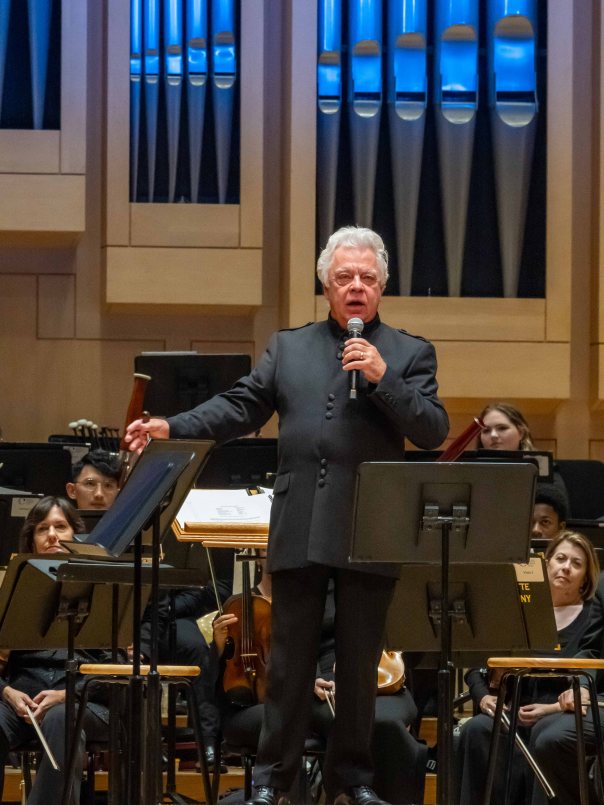
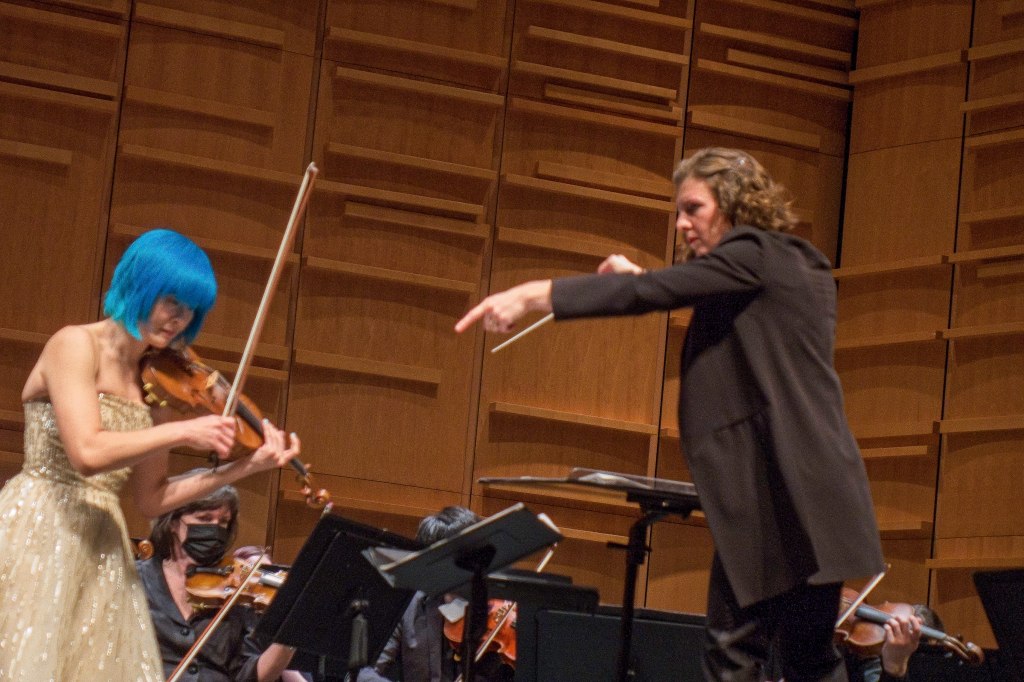
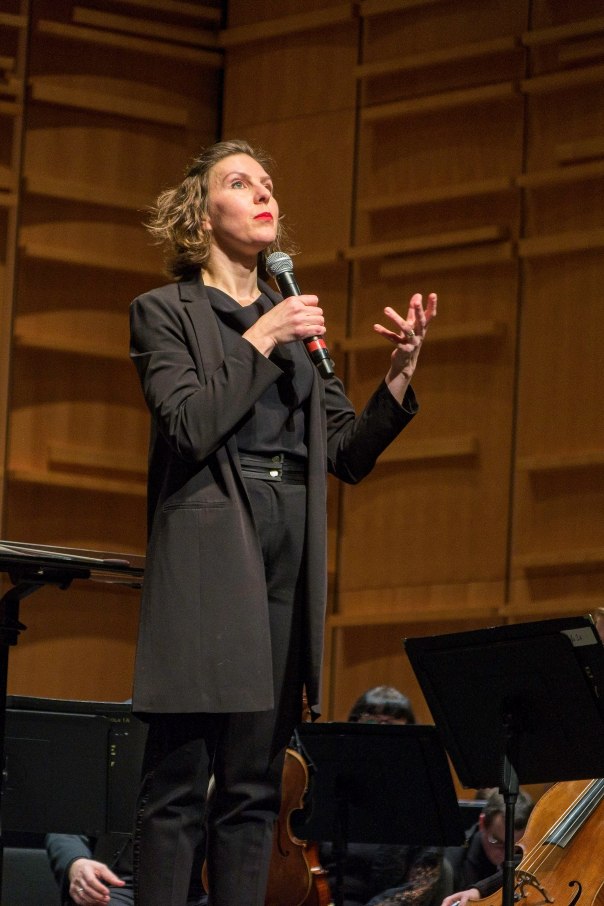
October 9, 2024, Charlotte, NC – It’s always encouraging when an annual gala at least partially sheds its patrician aura of black ties, ball gowns, and champagne toasts. So I heartily applauded Charlotte Symphony’s musical director emeritus Christopher Warren-Green when, instead of mentioning crass sums of moneys raised or needed, he notified us that a part of tonight’s proceeds would be sent to those in dire straits in Western North Carolina in the wake of Hurricane Helene. In an even more unexpected gesture, the evening’s guests, Sphinx Virtuosi, announced that they would linger in Charlotte to play an additional concert on Friday at Charlotte Preparatory School – free if you bring a Hurricane Helene contribution.

They all worked well, together and apart, in gifting the gala audience at Belk Theater with a fine show, though not exactly what was initially planned. Or even what was listed in the printed program. Instead, a series of changes to the program were announced by email before and after the program went to press. Even then, a couple of new wrinkles emerged after the lineup seemed to be settled in the last inbox update on September 19. Maybe the plutocrats who dined and toasted earlier at the pre-concert cocktail and dinner sessions got a heads-up.

As a result of the first alteration, changing the title of LA-based composer Levi Taylor’s from American Forms to Daydreaming (A Fantasy on Scott Joplin), the opening segment of the concert became an explicitly extended tribute to Joplin. Actually, the Overture from Joplin’s only surviving opera, Treemonisha (1911), was nearly as new as Taylor’s offering and similar in length. The orchestration chosen by Warren-Green, arranged by Jannina Norpoth with Jessie Montgomery (a Sphinx Medal of Excellence winner in 2020), was premiered last year in Toronto as part of a “reimagining” of Joplin’s opera, so it didn’t quite sound like any of the handful of versions that Spotify can offer. Principal clarinetist Taylor Marino was brilliant playing the catchy recurring theme, an instrumental assignment that Norpoth reaffirms, but principal trumpeter Alex Wilborn’s spot struck me as a lively improvement upon Norpoth’s predecessors.

In a shorter, no-intermission program, it was nice to have a proper mood-setter leading into Taylor’s premiere – and Sphinx Virtuosi’s entrance – rather than a genial throwaway aperitif. Paradoxically, the Joplin overture, aimed for an opera house, was not as raggy as Taylor’s new work, an homage to the Joplin music we’re most familiar with. Personably introduced by cellist Lindsey Sharpe, the piece had an engaging solo spot for principal cellist Tommy Mesa and a refreshing jauntiness. Amazing how much more highbrow and classical the Joplin idiom sounds when you ditch the piano so justifiably associated with the “King of Ragtime.” Taylor took a well-deserved, enthusiastically applauded bow when concertmaster Alex Gonzalez pointed him out in the audience.

Sphinx’s outreach to Helene victims is quite natural when you consider its DNA. Conceived in Ann Arbor at the University of Michigan in 1997, Sphinx quickly became an important of young Black and Latino talent with its annual junior and senior competitions, open to musicians up to age 26, and its Performance Academy, a competitive boot camp, where faculty members include Norpoth, Gonzalez, and second violinist Rainel Joubert – who would play in the Delights and Dances string quartet when the Michael Abels composition, commissioned by Sphinx, had its Charlotte premiere.

The full ensemble departed – all too briefly – as Warren-Green and CSO delivered a more familiar Leonard Bernstein overture to his opera, Candide. If Sphinx had lingered offstage longer, the CSO performance might have been more prudently paced. Dynamics were OK, but when piece started off too swiftly, there was little room for Symphony to speed up when the piece thundered and thrust to its climax. The whole acceleration plus crescendo effect, so exciting in multiple Rossini overtures, was never even a possibility, surely the nadir of Warren-Green’s work with CSO as far back as I can remember.

Then the listed world premiere of Curtis Stewart’s Drill went AWOL, along with guest percussionist Britton-René Collins. This surprise was less of a disaster than the lackluster Bernstein, for the Sphinx Virtuosi returned instead with Samuel Coleridge-Taylor’s Allegro Moderato, the opening movement from his Four Novelleten (1903) for string orchestra. So many of Coleridge-Taylor’s principal works have yet to be recorded that it’s probable that this excavation, listed as Op. 59 in Wikipedia, has yet to get a hearing outside of Sphinx’s orbit – another gladdening example of the ensemble’s vital and generous outreach.

All the remaining works were glorious, throwing the Bernstein blooper far into our rearview mirrors. It helped a little to know your Vivaldi when Sphinx moved upstage to merge with the CSO as tango king Astor Piazzola’s “Verano Porteño (Buenos Aires Summer)” movement from his Four Seasons of Buenos Aires filled the stage with violinist Adé Williams as guest soloist. For those who saw Aisslinn Nosky playing the complete Vivaldi at the Charlotte Bach Festival, the Piazzola Four Seasons evoked some pleasant nostalgia, especially since the Festival Orchestra, like the Virtuosi, often performs without a conductor.
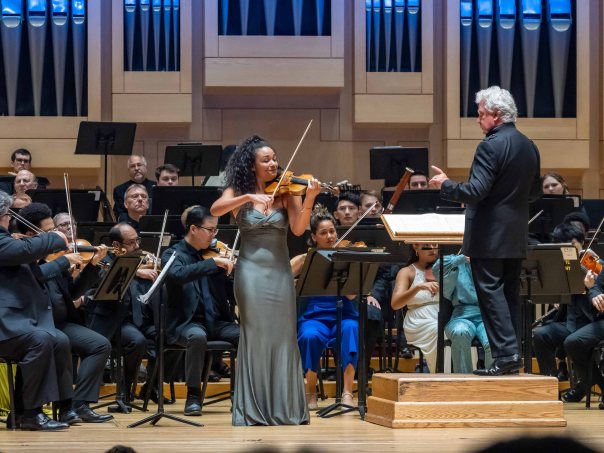
Williams, a winner of the Sphinx Junior Division back in 2012, still played with youthful vitality and joy. Both Symphony and Warren-Green were obviously fond of her playing, her swooping glisses, and the tango twists Piazzola brought to his baroque inspiration. Controversial in Argentina for his modifications of the trad tango – cab drivers often turned him away! – this summer piece was popular enough for Piazzola to draw encouragement for him to complete his seasonal cycle. The Belk audience responded favorably as well, with their first standing O of the evening.

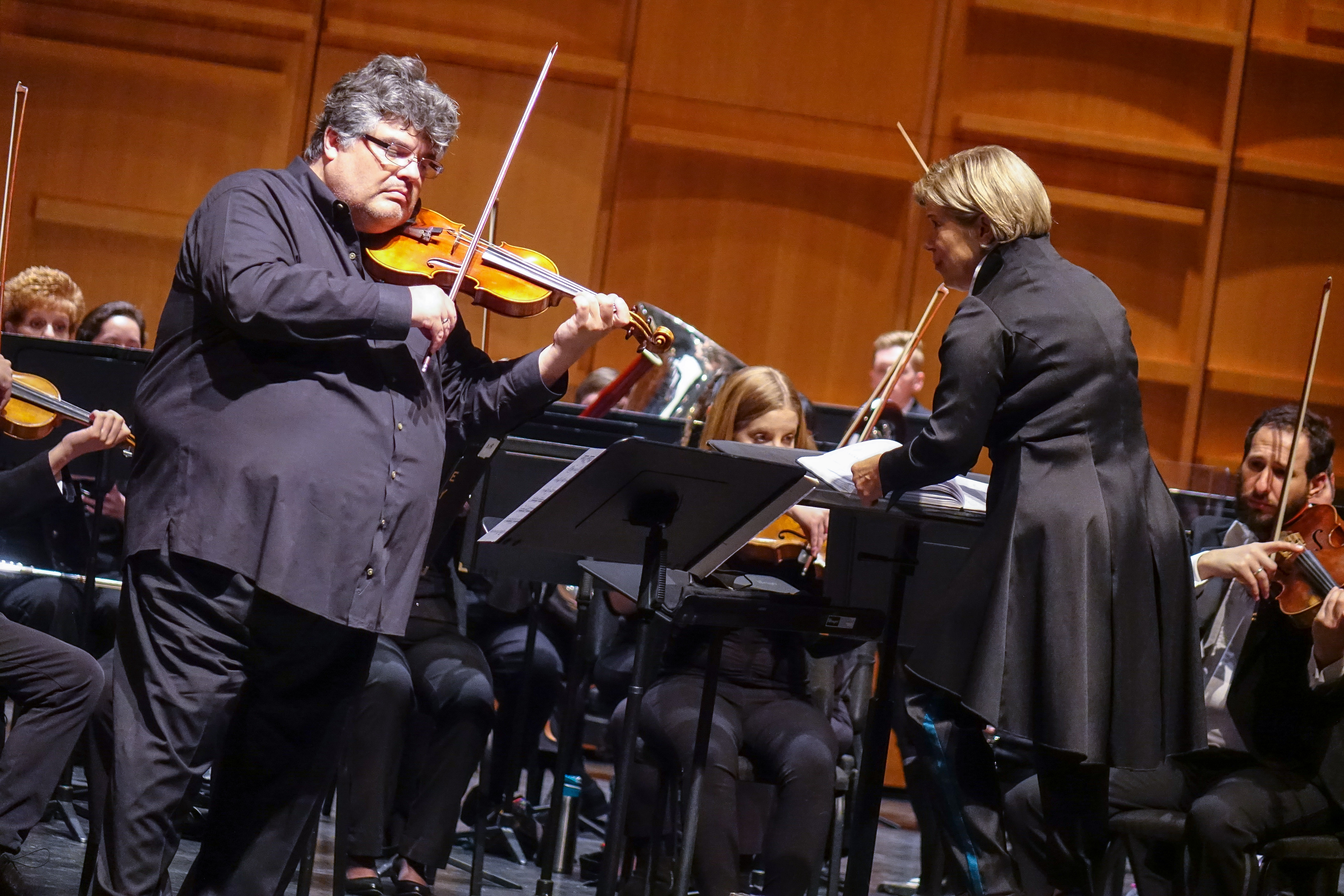
The Abels piece was an even longer, grander gatherum, with the string quartet arriving upstage where Williams had just stood. Joubert and CSO principal second violin were to Warren-Green’s left opposite CSO principal viola Benjamin Geller and cellist Gabriel Cabezas, the Sphinx Medal of Excellence winner in 2016. The Delights were rather delicate before the composer, who famously co-wrote the acclaimed Omar with Rhiannon Giddens, gradually ramped up to the Dances.Cabezas was more than able to eloquently launch Abel’s slow-building piece, which tacked leftward after his engaging solo with additional solo spots for the rest of the quartet members.
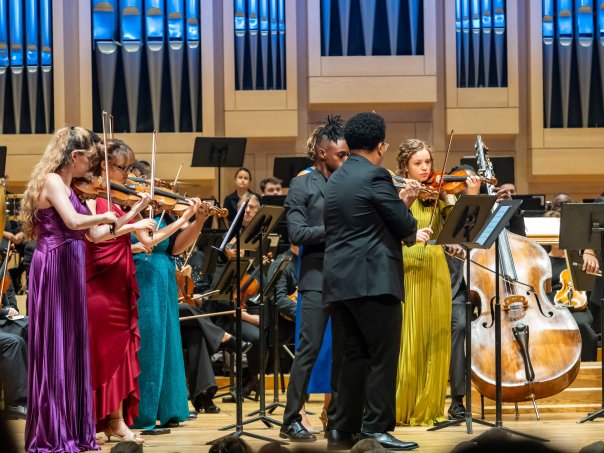
Nor was Abels in any hurry to layer on the orchestra, for their first contributions were background pizzicatos behind the full quartet before they picked up their bows. The piece is no less than the title work on a 2013 album recorded by the Harlem Quartet and the Chicago Sinfonietta conducted by Mei-Ann Chen. Definitely worth a listen if you missed the gala – and Abels’ Global Warming leads off the Sphinx Virtuosi’s recent Songs of Our Times release, their first album. Some rousing fiddling embroidered the loud and lively climax of Delights & Dances, easily the most epic piece of the night, programmed in exactly the right spot.

Mexican composer Arturo Márquez’s Conga del Fuego Nuevo (1996) was no less appropriately placed in the encore slot, starting up white-hot and danceable without lowering its flame. Fully recovered from his Bernstein misadventure, Warren-Green not only led the combined ensembles zestfully, he exhibited some winsome showmanship of his own, not only bidding Wilborn to stand up for his solos on muted and unmuted trumpet, but also commanding the winds and the brass to rise when moments came. How can a piece we’ve never heard before sound so familiar? Maybe via discreet borrowing and insistent repetition. No matter, CSO’s jolly encore became a curtain call at the same time – and a wonderful welcome to the 2024-25 season. Hopefully, the Coleridge-Taylor and the Abels were previews of the next Sphinx recording.

Photos by Perry Tannenbaum

Charlotte Symphony Heralds the New Year in All-American Style

Review: Koh Plays Mazzoli at Knight Theater

By Perry Tannenbaum

January 19, 2024, Charlotte, NC – Just a little more than a year after Kwamé Ryan guest directed an all-American program at Belk Theater featuring violinist Bella Hristova, Charlotte Symphony (after naming Ryan as the music director designate for 2024-25) greeted guest conductor Lidiya Yankovskaya to the Knight Theater podium, with violinist Jennifer Koh making her debut in another all-American program. This year’s explosion of Americana came four days after MLK’s birthday instead of two days before. The Adams-Korngold-Copland program of 20th century pieces could be counted as a bold advance in 2023, but the current offerings, with two 21st century compositions by American women, Jennifer Higdon and Missy Mazzoli, getting equal playing time with the 20th century composers, Samuel Barber and Aaron Copland, is arguably even more diverse and inclusive.

Distilled from Higdon’s opera, Cold Mountain, of 2015, and co-commissioned by Charlotte Symphony, the new Cold Mountain Suite could credibly be categorized as a concerto for orchestra by virtue of its length, variety, and profusion of solo instrumental passages. Like many opera suites you may have heard, Cold Mountain takes a serpentine route through the score rather than a sequential path, using the opening of Act 2 and the close of Act 1 as its bookends in repackaging eight snippets from the score.

On my first hearing, I could distinguish seven distinct sections and some fine soloing not only from string principals – cellist Jonathan Lewis, violist Benjamin Geller, second violinist Oliver Kot, and associate concertmaster Joseph Meyer – but especially from acting principal oboist Erica Cice and principal trombonist John Bartlett. The most memorable section of the piece was the “Storm Music” with its swirling strings and the atonal whistling of the high winds, but the ending, launched by the reunion scene between Ada and Inman was authentically stirring, with soaring work by principal trumpeter Alex Wilborn heralding the closing crescendos.

Since Mazzoli’s Procession Violin Concerto was commissioned by Koh, the music remained in-house until intermission. Notwithstanding her outré blue hair, Koh is actually a few years older than the composer, with a recording career extends more than 25 years. The former Chicago prodigy still plays with a youthful zest and a frenetic edginess – but not immediately in “Procession in a Spiral,” the opening section that unfolds slowly in a keening treble and increases its tension about 3/4 of the way into the section. The thinnest ethereal note from Koh’s violin bridges the gap into the unexpectedly calm beginning of “St. Vitus,” but the onset of intensity comes sooner here, still without the manic speed we might have expected from this title. The weepiest of the sections, “O My Soul,” has the most sustained of Koh’s thin harmonics and she hangs out with the flute and piccolo before breaking into more neurotic bowing.

A nice orchestral swell transitioned us to “Bone to Bone, Blood to Blood,” the most dramatic section, spiced with a series of whipcracks and a sprinkle of percussion. Jollity never prevailed in this rather somber concerto, nor was there an Allegro. “Procession Ascending” began rather unexpectedly for a finale with some lovely solo work from principal bassoonist Joseph Merchant, dramatizing how high Koh would need to ascend on her violin. If I were Koh, I’d pay Mazzoli a few more bucks to extend her struggles to take flight, blocked by the cellos and the double basses. She seems to clear this viny undergrowth too soon and too easily for the music to reach its full dramatic intensity, but I loved how briefly her freedom lasts and how cruelly it ends.

While there is a fine Baltimore Symphony account of Barber’s Second Essay for Orchestra in my collection, I cannot confirm ever hearing the piece performed live, though it was scheduled for a Symphony concert in April 2008. Hard to imagine that I snubbed it in my review, though Dvorak’s New World, ballet excerpts from Mozart’s Idomeneo, and Barber’s Violin Concerto were also on the bill. The music really is sumptuous, with oboe and clarinet illuminating the opening, viola mixing into additional oboe action later on, and some tasty propulsive percussion triggering its climax. It came across as a fresh and welcome discovery for me.

Of course, Copland’s Billy the Kid Ballet Music was the most familiar nugget on the program, revived at the Knight after an absence of less than four years. We’ve all been through a lot since February 2019, so I suspect more of the mournfulness of Copland’s “Introduction: The Open Prairie” and more of the fleeting, elegiac pathos of the penultimate “Billy’s Death” will land on listeners. Merriment is similarly magnified, with the clopping woodblocks of “Street in a Frontier Town” and even more heartily in the marching band energy, fueled by the woodwinds, of the gala “Celebration (after Billy’s Capture).” For the youngest buckaroos, the warring timpani and snare drum tattoos of “Gun Battle” will likely be the hugest delight.

CSO and the JCSU Concert Choir Lift Every Spirit at Brayboy

Review: Johnson C. Smith University and Charlotte Symphony

By Perry Tannenbaum

2023~CSO at JCSU-35

March 21, 2023, Charlotte, NC – You might have thought that a symphony orchestra performing in a college gymnasium would prove to be an odd coupling. Sure, there can be satisfying concerts staged at coliseums where a city’s basketball team plays, but those are usually performed by rockstars, pop icons, and the occasional Cirque du Soleil troupe when every note is processed electronically. My curiosity was certainly piqued when Charlotte Symphony Orchestra announced that its “In Concert with Johnson C. Smith University” program would be happening on campus at the Brayboy Gymnasium. Led by resident conductor Christopher James Lees, Symphony would be joined on the court – the hardwood covered with bright blue tarpaulin – by the JCSU Concert Choir, led by soprano Shawn-Allyce White and accompanied by pianist Frank Williams.2023~CSO at JCSU-13

A hookup between Symphony and JCSU at a more established concert venue should have seemed inevitable as long ago as 2015, when the leadership of Spoleto Festival USA visited the campus to announce that the Concert Choir would be participating in the high-profile production of Porgy and Bess the following year, celebrating the festival’s 40th anniversary. Yet when Lees picked up a microphone to greet the crowd, he reminded us that Symphony hadn’t been on campus for 13 years – indicating that this was his first time on campus and implying that CSO’s last musical director, Christopher Warren-Green, had never gotten around to the inevitable before his tenure ended. Were the optics or the acoustics the obstacles that had forestalled a return visit? Or was the idea simply slept on after Opera Carolina enlisted the men of the Concert Choir for their production of Cyrano in 2017, followed by the full choir’s appearance in I Dream in 2018?

Any questions about the Brayboy’s acoustics were swiftly dispelled. The sound from Lees’ microphone was crisp and present, nothing like the muffled sound from a faraway galaxy that emanates from PA systems at some basketball arenas or outdoor stadiums. As the brass heralded the assault of Franz von Suppé’s “Overture from Light Cavalry,” the sound remained bright and forward for all sections of the orchestra, not at all like an echoey gymnasium. French hornist Robert Rydel and principal flutist Victor Wang stood out sharply from the ensemble in their little cameos.

Rather than the controlled gallop and fury of Karajan’s recording with the Berlin Philharmonic, Lees seemed to favor the frantic onrush of Paul Paray’s recording with the Detroit Symphony, which shaves more than a minute off the Berliners’ 7:38 timing. The strings could show off their fast fingering as well as their lush tone, and when the familiar big tune surfaced, four percussionists sprang into action to make the cavalry charge more thrilling. Maybe more impressive – and surely boding well for the 14-member Concert Choir standing by for their pieces – was the syrupy sweetness of principal clarinetist Taylor Marino’s eloquence during a lull between two of the Cavalry dust storms.2023~CSO at JCSU-23

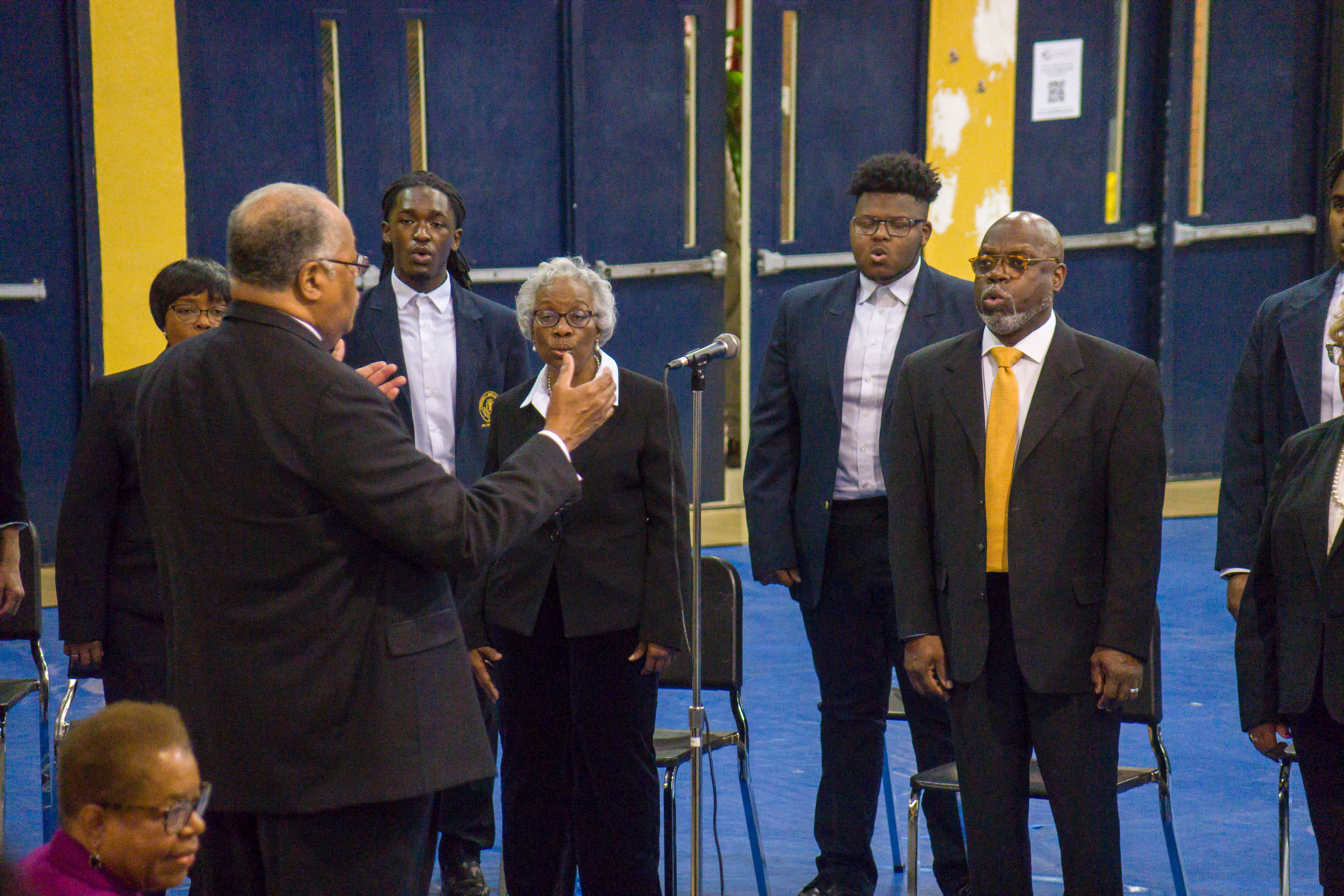
Fortified by two floor-standing mikes, the Concert Choir, eight women and six men on this occasion, were as stirring and powerful as ever at Brayboy, opening with William Henry Smith’s acapella arrangement of the traditional “Walk Together, Children.” Mostly tinted with treble and infused with jubilation, the main takeaway from the Choir’s performance wasn’t the urging of walking together but the excitement of “a great camp meeting in the Promised Land.” Richard Smallwood’s “Trust Me” was statelier, more equally weighted between the men and the women, never deteriorating into the sluggishness or singsong repetitiveness of other performances I’ve heard. The pause midway was particularly dramatic, daring to linger in silence long enough for the first smatterings of applause to break out before returning with thunder.

In between these two righteous chorales, Lees slipped in Jessica Meyer’s Slow Burn, reminding us in his intro that the composer was a violist and to be on the lookout for principal CSO violist Benjam2023~CSO at JCSU-07in Geller’s pivotal solo – but somehow neglecting to mention that the 2018 composition was written for a burlesque dancer. The piece was wonderfully apt when Symphony first performed it in early 2021, when wind players weren’t yet allowed back in concert halls due to pandemic restrictions, and the worldliness of this all-strings piece was a fine fit at the Brayboy. Bluesy strings did all of the sensual slitherings, while a pair of double basses provided percussion via pizzicatos, hand slaps, and vigorous thwacks of the bow on the necks of the instruments, accentuating Meyer’s jazzier passages. Most alluring was Geller’s suggestive glissando triggering the key swell of the strings that most vividly evoked Meyer’s title. Nor did Geller’s subsequent solo disappoint.
The two orchestral pieces that followed were more like what we expect from a city’s Symphony, but a pleasant surprise lurked in the first of these, a work dating back to the days of Haydn and Mozart, the Symphony No. 2 by Joseph Bologne, Chevalier de Saint-Georges. A champion swordsman, military leader, and political revolutionary, Saint-Georges was the son of a French planter and an African slave who would be called “The Black Mozart” because of his varied musical output, including orchestral works and operas. Saint-Georges played a key role in commissioning Haydn’s Paris Symphonies and may have mentored the younger Mozart. The outer movements, Allegro and then Presto, reminded me instantly of Mozart’s symphonic pieces, while the inner Andante brought Papa Haydn to mind. Violins dominated throughout, subtly backed by French horn and oboe in the opening movement, then by pizzicatos from the lower strings in the finale.

Some Slavic coloring had peeped into the Cavalry overture, but the performance of Antonín Dvořák’s Slavonic Dance No. 8 was the pure essence, a percussion orgy driving the main theme and the high woodwinds taking the spotlight. Anything less would have been anticlimactic in the wake of Dr. White’s stirring vocal on the Hall Johnson arrangement of “Ride on, King Jesus,” accompanied by Williams at the keyboard and crowned with a flurry of vocal fireworks. White was only slightly less impressive after the Dvořák, taking the lead vocal on the Moses Hogan arrangement of “Ev’ry Time I Feel the Spirit,” backed by the full choir with Williams conducting.

Lees stated the obvious when he declared that we were all waiting to see Charlotte Symphony and JCSU Concert Choir perform together. Would we get the Gershwin brothers or the Johnson brothers? Nothing less than the “National Black Anthem” would do at this point of the evening. While there are many YouTube examples of Dr. Roland Carter’s arrangement of “Lift Every Voice and Sing,” none on my radar sport more than a piano and an organ for their instrumentation. So Charlotte Symphony may have broken some new ground here with its uncredited orchestration.

The effect was electrifying as the entire audience rose to their feet to honor the anthem. In Carter’s arrangement, there are instrumental sections before each of the three stanzas where James Weldon Johnson’s lyrics are set to J. Rosamond Johnson’s music. Each of these interludes affording sufficient space where an orchestra can shine while providing an orchestrator with engaging new melodic material. Of course, you also want the orchestra to actively support the choir each time it enters, so the new CSO orchestration added a dimension that has always been missing in the YouTube versions. Together, Charlotte Symphony and the Johnson C. Smith Concert lifted the impact of “Lift Every Voice.”2023~CSO at JCSU-29

We weren’t quite done even now. Lees had hedged a bit in announcing that a surprise awaited us, probably remembering as he spoke that the JCSU Drumline, alias the Funk Phi MOB, was already mentioned in the digital program. But before they brought on the rhythm and the funk, we were all invited to participate in a lighter CSO-JCSU hookup. After a brief rehearsal of the seven-note melody, we all joined in on cue for vocal sections of Daniel Bernard Roumain’s La, La, La, La. Needless to say, the lyrics were not a challenge.

2023~CSO at JCSU-32

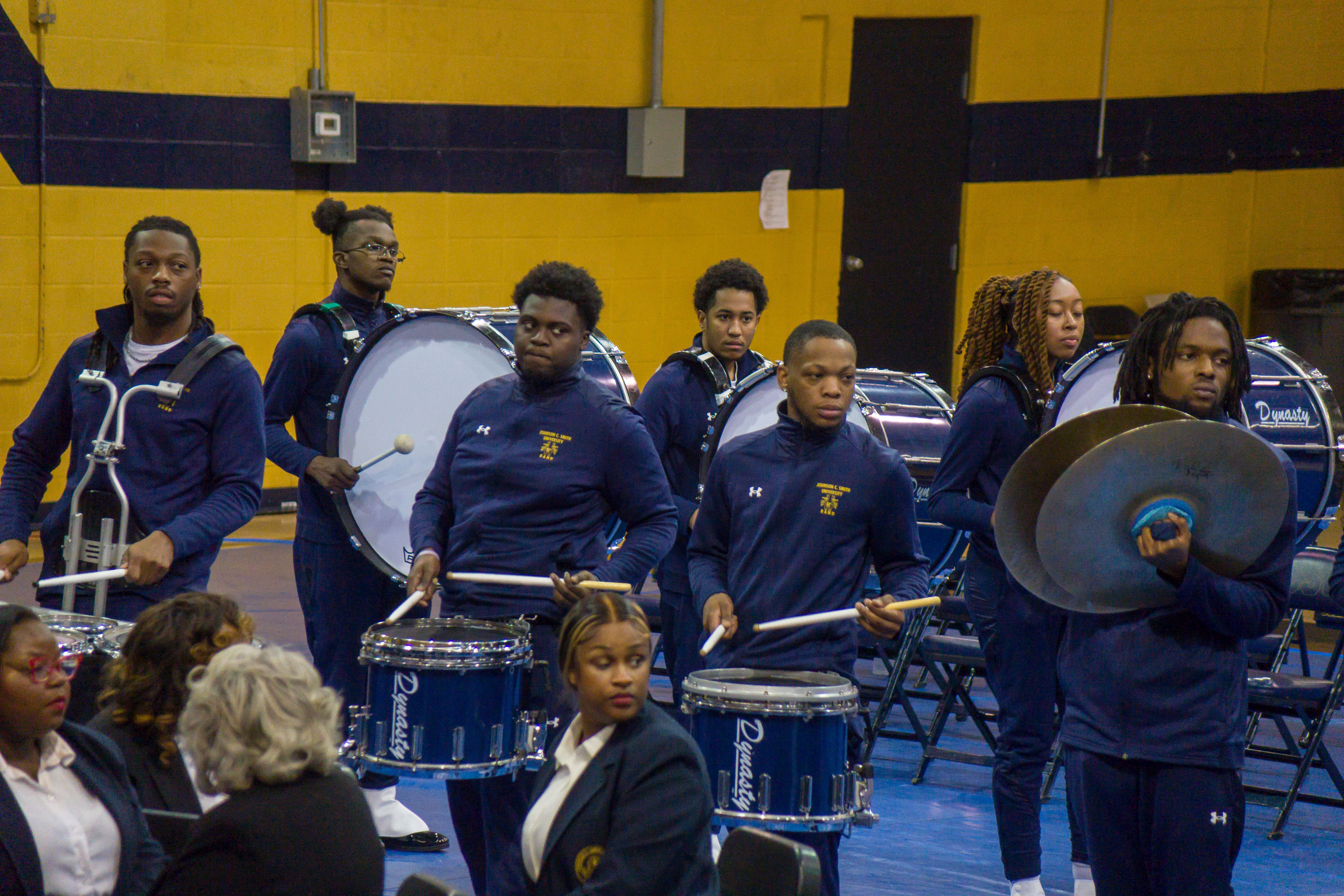
Amid this glee, Funk Phi MOB came marching in with their purely collegiate pandemonium, carrying me back to long-ago Saturday afternoons at the University of Iowa, the University of Oregon, and Williams-Brice Stadium where my shivers were alleviated or intensified by the fortunes of my hometown college football teams. This drumline was a bit more up-to-date than the drum corps I remember stationing themselves at midfield. Beside the customary bass drums and snare drums, a couple of these percussionists were outfitted with some sort of Yamaha hybrid, five or six flat shiny surfaces arrayed like a cross between timpani and a xylophone. If you’ve experienced how a stadium rocks during halftime, you can imagine the gymnasium version, peaking at a sensible 94dB according to my Apple Watch.

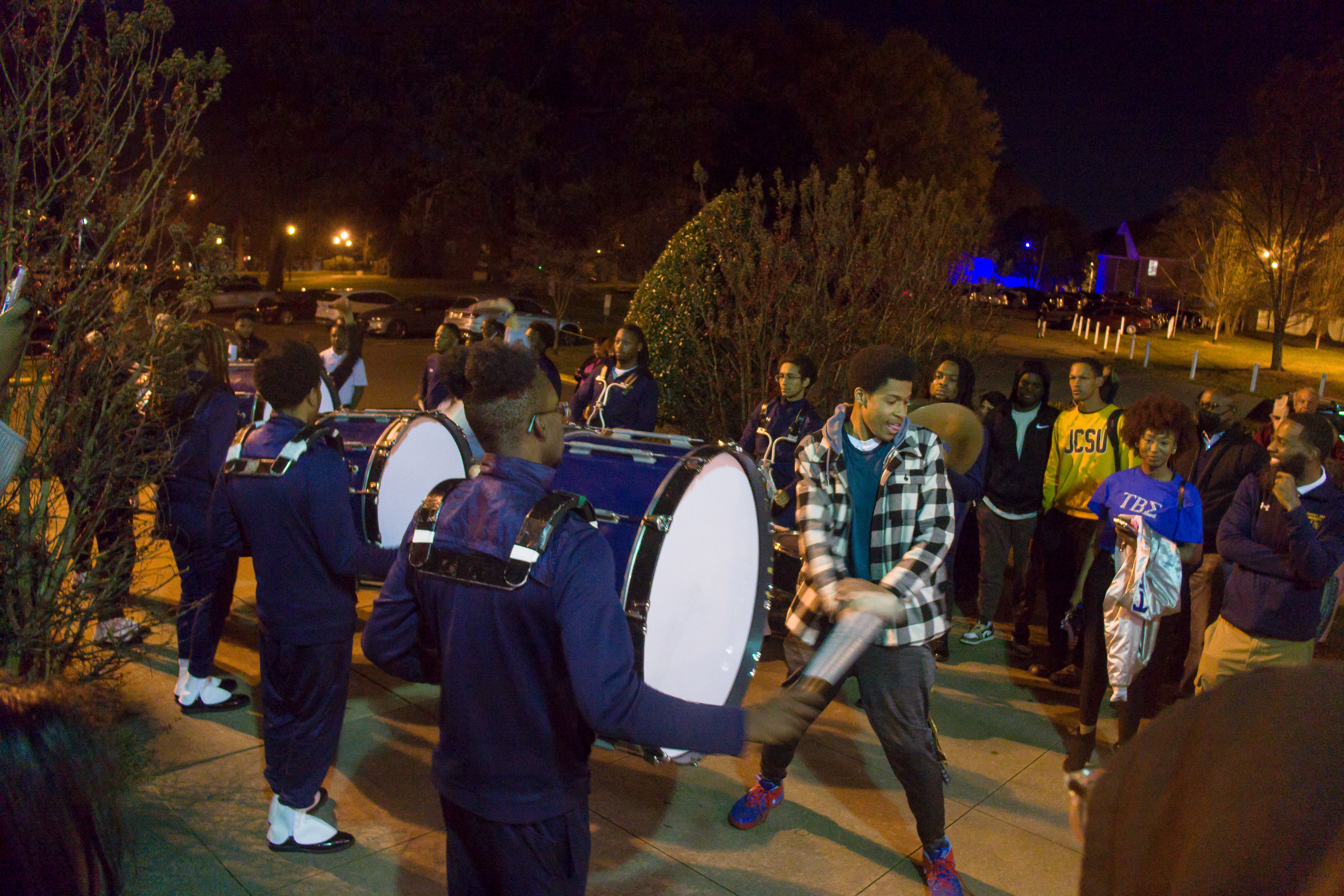
Topping off this mighty2023~CSO at JCSU-38mayhem, a drum major arrived with all his spirited, ceremonial, and high-stepping antics. Thanks for being here had been expressed long before this all-American climax, so without further adieus, the drum major could end the concert by leading the Drumline, Dr. White, and Lees out of the hall. When my wife Sue and I managed to navigate from our seats through the exiting audience and folks still milling on the court – conversing, posing for photos, and taking selfies – we emerged from the Brayboy Gymnasium and found that a drum party was still going on outside the entrance. Fortunately, I had brought my camera. Sue wouldn’t let me proceed to the parking lot until I took a few shots.
US Premiere Keynotes Symphony Concert, with Multiple Thrills and Triumphs to Follow

Review: Charlotte Symphony Plays Sibelius Symphony No. 2

 By Perry Tannenbaum

2022~Sibelius 2-21

April 22, 2022, Charlotte, NC – There had been no foretelling that five weeks ago, the Belk Theater stage would be splashed with the colors of Ukraine’s flag for a Charlotte Symphony concert. Nor could guest conductor Karen Kamensek, making her Charlotte debut, have predicted that the music she was bringing to Knight Theater would be so pertinent to this moment: a symphony by a Finnish composer written in response to Russian oppression in 1902, and two pieces written by Russian-born composers, one of them publicly condemned by the Stalinist regime in 1948. Sadly, these works by Jean Sibelius, Victoria Borisova-Ollas, and Dmitri Shostakovich have new life and fresh significance today as the world trembles, anticipating the full consequences of the horrific Russian aggression unleashed by its unhinged leader.2022~Sibelius 2-06

Written by Vladivostok native Borisova-Ollis, a longtime Swedish citizen, in 2008 for the 850th anniversary of Munich, Germany, Angelus had its long-overdue United States premiere. Nor was the Chicago-born Kamensek unworthy of the honor, having conducted the 2022 Grammy-Award winning recording of Philip Glass’s Akhnaten with the Metropolitan Opera. Although the upstage at Knight Theater wasn’t lit up with Ukraine’s colors, there certainly was an auspicious tableau – and a sense of occasion – as a phalanx of percussionists were spread across the rear of the orchestra, bells and drums and cymbals further brightened by the sounds of piano, celesta, and a pair of harps. The composer’s account of how she fulfilled the Munich Philharmonic Orchestra’s commission, reprinted in the digital program, lays heavy stress on the stroll she took through the city and the recordings she made of its church bells, so that aspect of the piece, underscored by Kamensek’s spoken intro was eagerly anticipated – a pacific, spiritual answer to Putin’s insane “de-Nazification” rallying cries.2022~Sibelius 2-25

What was surprising for me, especially in light of Borisova-Ollis’s description of the opening of her Angelus as “a hint of a Celtic chant,” was hearing principal violist Benjamin Geller playing a melody, over soft tremolos from the string section, that unmistakably resembled a traditional Passover song, one that I had heard in synagogue as recently as that morning. The predicted bells would eventually arrive in three or four waves, but not before we heard from the trumpet, the horns, the timpani, and the clarinet. Extending beyond 20 minutes, not at all a bonbon typically programmed at the beginning of concerts, the piece was studded with unusual instrumental effects – like a brief organ-tuba duet – and swirling, cresting climaxes. Even as she built to the first tolling of the tubular bells, Kamensek’s interpretation was more bustling and boisterous than Skari Oramo’s relatively quiescent recording for BIS with the Royal Stockholm Philharmonic. Since Kamensek lists one Borisova-Ollis’s operas, Dracula, among her credits, expect to hear more from this composer-conductor pairing in the future.

Shostakovich completed his first Violin Concerto just one month after his denunciation, but he and violinist David Oistrakh, for whom the work was dedicated, had to wait over two years after Stalin’s death – more than seven years in all – to respectively hear and perform the premiere. Although I own two of the Oistrakh recordings you can access on Spotify, I can only trace two prior occasions when I heard this epic piece performed live, once by the Charlotte Symphony in 2001, when young Caitlin Tully was hampered by the acoustics of the First United Methodist Church, and once at the Verbier Festival in 2006, when violinist Vadim Rapin conductor Yuri Temirkanov fired off all its burners with a student orchestra that was on a par with the Spoleto Festival’s.2022~Sibelius 2-11

Charlotte Symphony subscribers greeted concertmaster Calin Ovidiu Lupanu with an ovation that probably would have startled Repin himself, and the violinist seemed buoyed by the occasion. While Lupanu didn’t quite replicate the sublimity of the opening Nocturne in the 1956 recording by the Leningrad Philharmonic with Oistrakh and maestro Yevgeny Mravinsky, he came breathtakingly close, enough to earn another ovation between movements, and the slashing energy and brightness he brought to the ensuing Scherzo – coupled with the brio Kamensek drew from Symphony in this catchiest movement – earned an even more-deserved ovation afterwards.

Kamensek and the CSO met the grand challenge of the Passacaglia, infusing it with martial gravity, and Lupanu played with more eloquence and fire than I’ve ever heard from him, carrying forward a thrilling momentum into the Andante – Cadenza portion of that movement and, without an interval for the audience to express its enthusiasm, into the final Burlesque, the shortest section of the work. Cheated of the chance to explode after the Cadenza by the onset of timpani for the Burlesque, the audience redoubled its fervor at the rousing conclusion. Fortunately, Lupanu had an encore at-the-ready, a lovely Sarabande from Bach’s Partita No. 2, the first encore performed at a CSO concert since before the pandemic.

Of course, if you were among the legions who can’t get enough Sibelius, the Symphony No. 2 after intermission, while significantly statelier and more reposeful than the concerto, was anything but an anticlimax. However neatly the oppressed narrative might fit current anti-Russian sentiments, Kamensek seemed to take the quieter episodes of the opening Allegro as subdued rather than oppressed, with an incipient optimism ready to burst forth with ebullience or blossom into grandeur. The opening of the ensuing Andante, ma rubato can sound morose and grim on recordings, but at the Knight, where the pizzicatos of the basses and cellos could sound lighter and livelier, buoyancy lurked within the quietude, so transitions to anger and reflection sounded more natural. Once again, the two final movements were linked without an interval, punctuated by another brief timpani tattoo, but this time followed with trumpet heraldry and a grand orchestral flowering. Repeated lulls and swellings reaffirmed the triumph, beautifully calibrated and fervently delivered.

Originally published on 4/24 at CVNC.org

Ukraine’s Colors Shine Through Charlotte Symphony Celebration

Review: Dona Nobis Pacem at Belk Theater

 By Perry Tannenbaum

2022~Dona Nobis Pacem-31

March 12, 2022, Charlotte, NC – When 57 musicians gathered at the Carolina Theatre on Tryon Street to present the inaugural Charlotte Symphony concert on March 20, 1932, none of them could have possibly predicted how the orchestra’s 90th anniversary would be celebrated in 2022. Three of the five pieces that Christopher Warren-Green conducted, nearing the end of his distinguished tenure as Symphony’s music director, hadn’t been written yet, and one of the composers hadn’t been born. Even last May, when CSO’s 2021-22 season was announced, Warren-Green himself couldn’t have predicted how grimly appropriate Ralph Vaughan Williams’ Dona Nobis Pacem would be for the occasion. As originally conceived, the program was an olive branch from England to America, three British composers conducted by one of the Crown’s finest, two of the pieces paying homage to Walt Whitman, our greatest poet.

A small dent in the all-English lineup turned up when Symphony’s Australian second trombone, Thomas Burge, finished enough of his to-be-continued “Charlotte Symphony Fanfare” for it to serve as a preamble to the orchestra’s celebration. What truly turned the tone of the anniversary festivities upside-down was Vladimir Putin’s horrific invasion of Ukraine, lending Dona Nobis Pacem – “Grant us peace” – unforeseen pertinence and meaning. With St. Patrick’s Day weekend revelers teeming along the sidewalks and spilling over onto Tryon and Fifth Streets, there was a dramatic contrast for concertgoers who became pedestrians shortly after hearing Williams’ Fantasia on a Theme by Thomas Tallis and the Dona Nobis at Belk Theater on Saturday night. The most festive of the night’s festivities were outside the hall.

Burge’s new composition will no doubt impress more when it takes its intended place at the launch of a future Symphony’s classics season and the composer’s showy post-pandemic staging can be realized: three brass choirs spread out across the Belk balcony. For the 90th, the brass battalion was confined behind the masked string sections, but the peep we had into the work-in-progress was sunny and glorious. Gustav Holst’s Walt Whitman Overture, a youthful piece completed in 1899 when the composer would turn 25, was arguably the most sustained celebration of the evening, though it might be somewhat deflating to learn that Holst had been dead for over 48 years when the piece was first performed in 1982. The transparent violins at the beginning, hovering over churning basses and cellos before flutes and brass peeped in, struck me more like Schubert than any American or British music. When the brass first broke through, however, there may have been a glint of Sousa, and the final swell of the piece was in a grand Victorian vein.

The Four Scottish Dances by Malcolm Arnold (1921-2006), premiered in 1957, were clearly the most winsome offering of the evening, shuttling between slow and fast tempos – not only between dances but sometimes within them. Inspired by Louis Armstrong more strongly than by Whitman, Arnold’s music displayed a more American élan, geniality, and broad humor than the other Brits’. If your head wasn’t spinning from the abrupt acceleration that Warren-Green called forth in the opening “Strathspey Pesante,” which ended with a pedestrian “shave and a haircut” phrase, then the slowdown in the ensuing Vivace (Reel), initiated by Joshua Hood galumphing on his bassoon, would certainly have caught your ear. And if that weren’t sufficient mischief, Warren-Green’s hambone slacking and slouching at the podium added a visual cue. Perish the thought that Maestro Warren-Green’s predecessor, Christof Perick, would ever have tainted himself with such levity.

After these pranks, which reminded me of the Western merriment in Copland’s folksier pieces, the work of principal harpist Andrea Mumm Trammell, principal flutist Victor Wang, and oboist Erica Cice was sublime in the penultimate “Hebridean Song,” shining through the shimmer of the strings. The concluding “Highland Fling” had as much Scottish flavor as the “Pesante,” rushing at us unabated with sudden shifts in volume, the tweedling of the high woodwinds answered by onrushes of orchestra colored with fiery alarms from the trombones.

If the customary programming conventions for galas were being observed, I’d strongly question the wisdom of delaying the comparatively solemn and serene Tallis Fantasia until after Arnold’s suite, which would have sent us off to intermission in a lighter mood. But Symphony president David Fisk had already solemnized the occasion by dedicating the concert “to Ukraine and the courage, strength, and resilience of its people,” a theme that would subsequently be echoed in the digital program and by Warren-Green, when he prefaced his performance of the Dona Nobis. By coincidence surely, Vaughan-Williams composed his 1910 Fantasia very similarly to Burge’s spanking new “Fanfare,” dividing his aggregation of strings into three parts, two string orchestras with a string quartet within the larger orchestra. Concertmaster Calin Ovidiu Lupanu had the last and most eloquent solo among those doled out to the four principal string players, but kudos should also go to principal violist Benjamin Geller, whose solo launched the memorable quartet episode.

What will stand out for me, however, was the extraordinary alchemy of this performance. Whether it has always been baked into Vaughan-Williams’ orchestration, maybe something special that Warren-Green was able to elicit from his musicians, or whether it was the unprecedented high placement of the small string orchestra on the platform where the Charlotte Master Chorale would soon sing, flush against the upstage vestigial pipes at the Belk… I could have sworn that there was a softly playing organ in the orchestral mix. Needless to say: amazing.2022~Dona Nobis Pacem-27

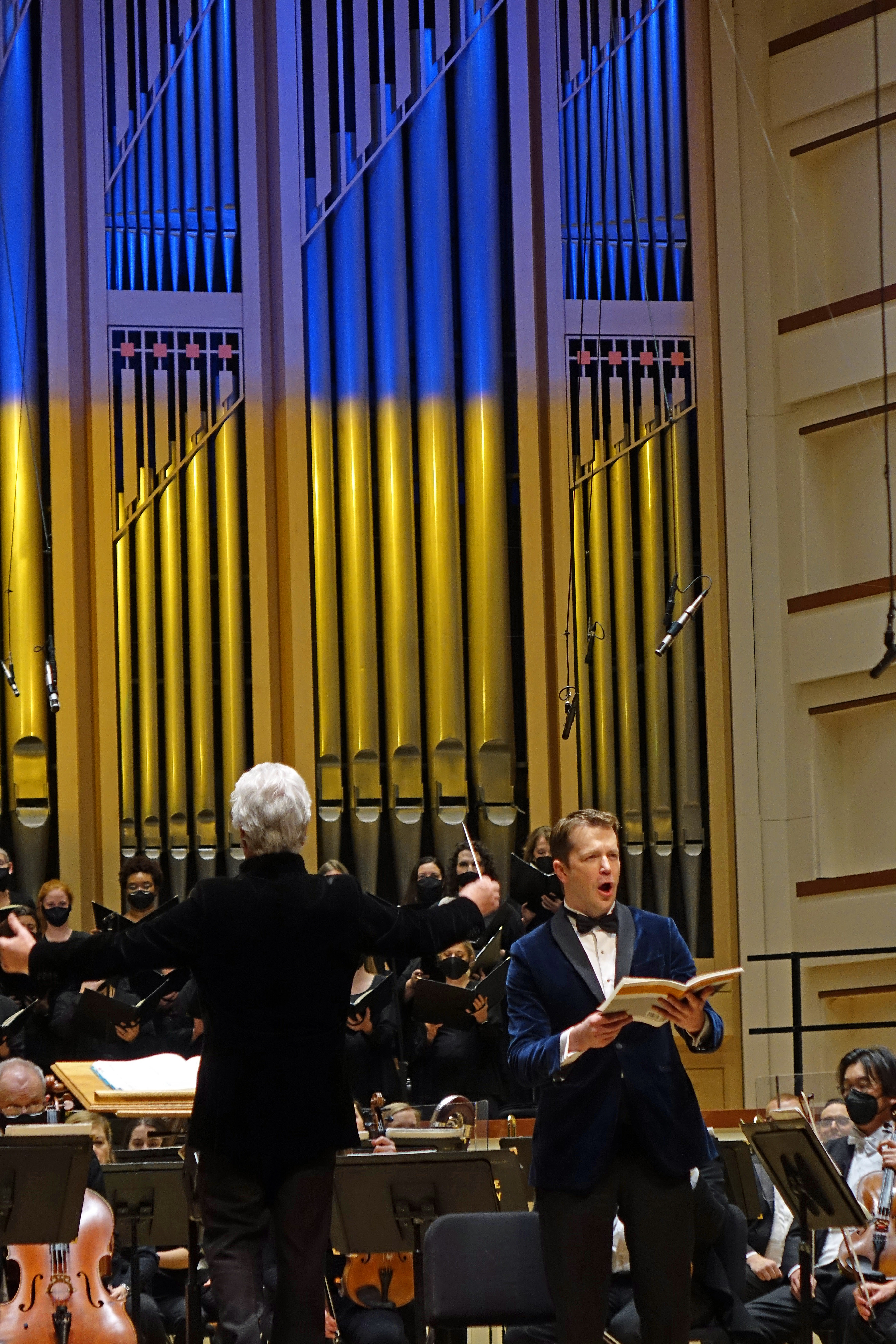
Those organ pipes were more verifiably involved in the culminating performance of the Dona Nobis Pacem, after more than 40 Master choristers filed in, followed by our two guest soloists: soprano Christina Pier and, in his Charlotte debut, bass-baritone Daniel Okulitch. It was then that Warren-Green dedicated this piece to the valiant, freedom-loving people of Ukraine. Between the moment that the maestro turned away from us and Symphony began to play, those silvery pipes, illuminated until then entirely in blue light, suddenly became halved into stripes of gleaming blue and yellow gold, the colors of the Ukrainian flag. A proud moment for us all.

Whether prescribed by COVID protocols, Warren-Green’s decree, or the unmasked singers’ personal preferences, Pier and Okulitch sat further apart than the vocal soloists we usually encounter at Symphony concerts. With Pier mostly singing the “Agnus Dei” refrain that contains the Latin title, and Okulitch confining himself in the middle movements in Walt Whitman’s English – and Old Testament translations in the Finale – the separation between the singers wasn’t awkward at all.

2022~Dona Nobis Pacem-24

Pier tended to sing with the orchestra and the choir, but there was an extended stretch where Okulitch, standing to Warren-Green’s right, was accompanied solely by Lupanu, seated to his left. So the tableau enhanced the intimacy of their duet. What was really unfortunate and compromising for us were the vast stretches of incomprehensible text from the chorus that Vaughan-Williams had scored so splendidly. If there had been supertitles above the stage or printed programs in our hands, the experience would have been even more powerful. Those of us who were able to download the digital program were adequately equipped, but the Blumenthal Performing Arts Center has had repeated problems with transmitting these copious, colorful, and informative materials.

In future performances where we’re expecting to follow along at the Belk, I will try to download the digital materials before I leave home. Clearest of all was the chorus’s mighty “Beat! Beat! Drums!” refrain from one of Whitman’s most metrical Civil War compositions. Even when we might be lost in the less familiar words of other war poems by the Good Gray Poet (“Reconciliation” and “Dirge for Two Veterans”), the music, the voices, and the colors of the fighting Ukrainians’ flag landed on us forcefully. It was thrilling.

Originally published on 3/14 at CVNC.org

“Deadly Sins” Upstage Jazzy Ravel in Fun-Filled CSO Concert

Review: Charlotte Symphony Plays Ravel’s Piano Concerto

By Perry Tannenbaum

2022~Ravel Piano Concerto-07

January 28, 2022, Charlotte, NC – You could arguably call it a facelift. After Charlotte Symphony’s powerful performance of Mahler’s somber, morbid, mercurial, epic, and sometimes phantasmagorical Ninth Symphony, almost everything seemed changed two weeks later. A new conductor was onstage, Australia-born maestra Jessica Cottis, making her Queen City debut. All six guest artists were making their debuts in Symphony’s Classics Series, and even the site of their musicmaking was different, moving southward from Belk Theater at the Blumenthal PAC to Knight Theater at Levine Avenue of the Arts. Most transformative was the music, a kaleidoscopic multinational program connected by a distinct American thread.

The headliner on the program was Maurice Ravel’s Piano Concerto, last performed by Symphony in 2013 when the wondrous Pascal Rogé made his Belk Theater debut at the keyboard. Jesse Montgomery’s folksy, bluegrass-flavored Strum preceded the main event, when Canadian pianist Stewart Goodyear seated himself at the Steinway. Cottis had plenty more excitement in store for us after intermission, plunging into Igor Stravinsky’s Circus Polka, for a Young Elephant – actually written at choreographer George Balanchine’s request in 1942 for Ringling Brothers Barnum & Bailey’s massive troupe of not-yet-controversial young elephants. Uncannily, another Balanchine commission rounded out the program, Kurt Weill’s The Seven Deadly Sins (1932) with lyrics by Bertold Brecht – obviously written for people rather than pachyderms.2022~Ravel Piano Concerto-36

Nearly a year ago, Montgomery’s Starburst aptly keynoted a program that showcased Mozart’s Eine Kleine Nachtmusik (“A Little Night Music”). Longer and decidedly sunnier, Strum set the tone for CSO’s American evening as perfectly as the title readied us for a work written exclusively for strings. Reading Montgomery’s program notes, chronicling the various incarnations of the piece, we get the sense of experiencing its evolution as it unfolds, for it bounces around among three principal string players before beginning its breathtaking ascent to full power and beauty. Laying out the first pizzicatos, violist Benjamin Geller was soon joined by cellist Alan Black, strumming and then bowing. But it was concertmaster Calin Ovidiu Lupanu’s treacherous entrance that truly ignited the fray, triggering Montgomery’s ricochet effects and banjo-like strumming.

Honestly, the performance by CSO became a more massive, lovelier, and less ferocious thing than the studio version by the Catalyst Quartet on Montgomery’s 2015 Strum CD. With a full string orchestra came more majesty when the main melodies were revealed – and extra bite when the piece ended with a collective pizzicato. Nor are “folksy” and “bluegrass” any less flattering in describing Montgomery’s music here than they are in describing many of Aaron Copland’s signature works.2022~Ravel Piano Concerto-01

From the first time I saw him in 2017, playing all of Beethoven’s piano sonatas in a single day at Savannah Music Festival, Goodyear stamped himself in my mind as a prodigious talent. Prior to those three three-hour immersions, Goodyear’s distillation of Tchaikovsky’s The Nutcracker, on his 2015 solo CD, had clued me in. The soloist starts at a disadvantage in the Ravel Piano Concerto, having to follow the famed whipcrack that launches the opening Allegramente. Not to worry, Goodyear showed his mastery of the bluesy and jazzy licks of the movement soon afterwards, and harpist Andrea Mumm Trammell had a lovely interlude.

Inspired by Mozart’s Clarinet Quintet, Ravel’s middle movement drew absolutely mesmerizing lyricism from Goodyear, with English hornist Terry Maskin as stellar behind him as he was for Rogé. Yet everyone on the Knight stage seemed most inspired by the concluding Presto. Goodyear unleashed dazzling intensity and bravura, never easing up on the tempo, and the ensemble didn’t merely keep up: they seemed to be prodding their guest to play faster. Turbulence from the winds, brass, and percussion made the climax even more exhilarating.

Apparently, music for dancing elephant isn’t classified as ballet, since it doesn’t appear on The Robert Craft Edition of The Ballets on the notoriously completist Naxos label. Yet Stravinsky never disavowed his Balanchine bagatelle, conducting “Circus Polka” among his voluminous recordings of his own works, where it clocked in at a modest 3:27 on Columbia. Why this rambunctious crowdpleaser isn’t played more often as a concert appetizer is beyond me. While Cottis and the Symphony may have been a tad helter-skelter where Ravel called for more élan, they were marvelously attuned to Igor’s riotous absurdities, his brassy bombast, and the celebratory glee of his wild, galumphing jamboree. It seemed to start in mid-parade before the dainty spots hilariously evoked the pachyderm pixies.2022~Ravel Piano Concerto-31

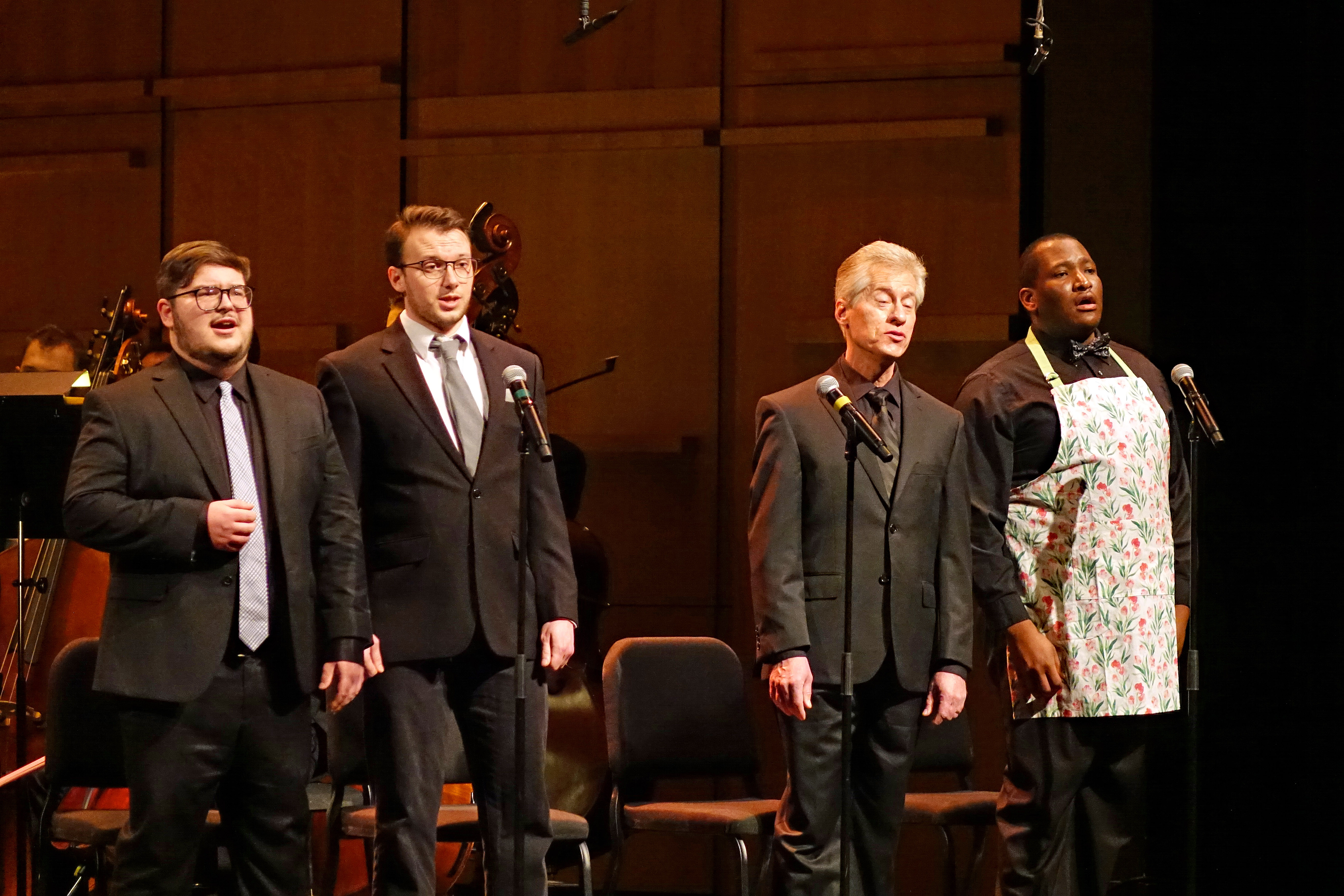
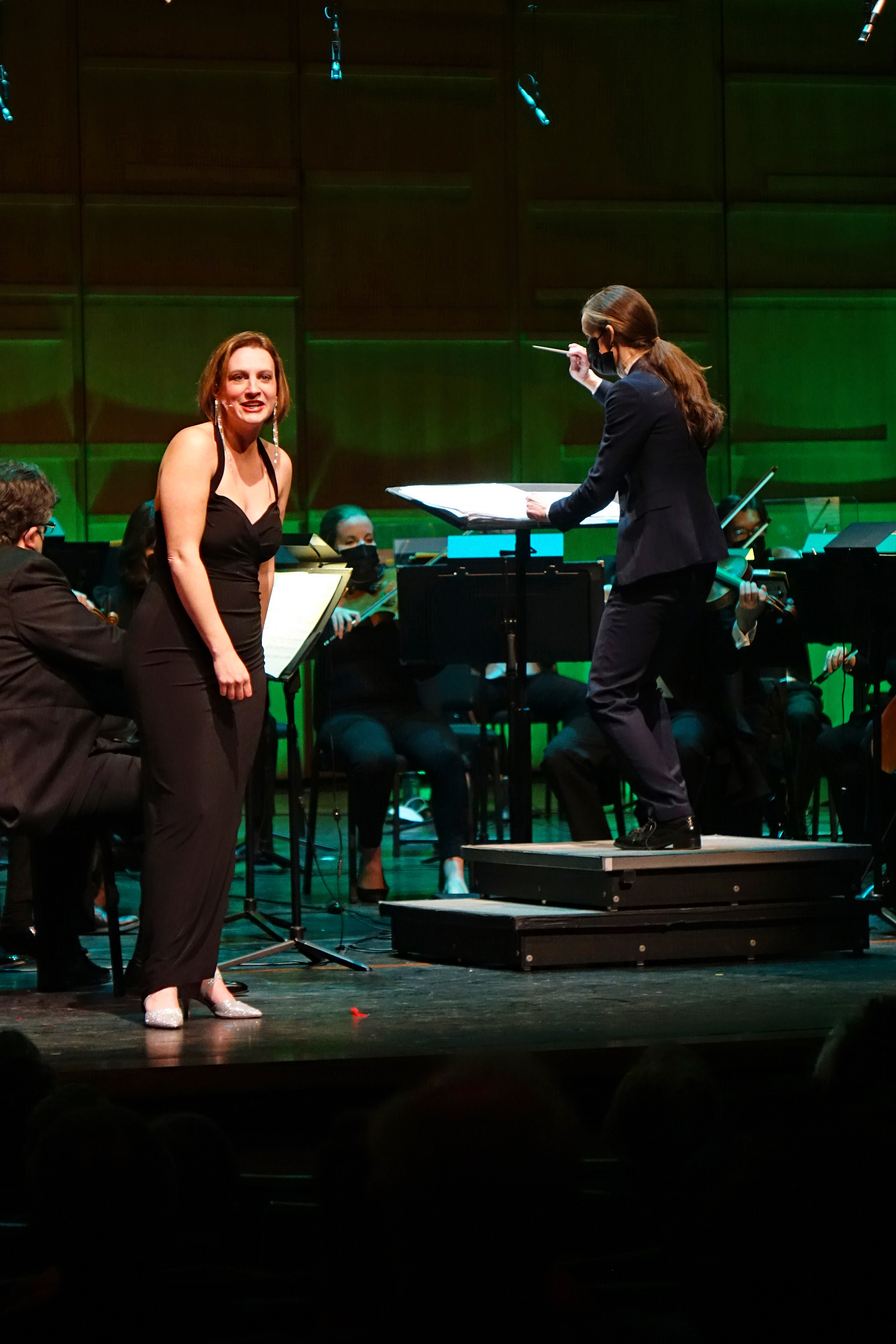
The zaniness had hardly begun. Bass-baritone Reginald Powell, dressed in a flowery kitchen apron in order to portray the mother of our tempted/temptress heroine, led a barbershop quartet across the stage, sitting down at the end of their march behind a bank of microphones. Strange accessories for a classical concert. So Seven Deadly Sins was classical with a three-penny Kurt Weill twist. Nor was this an opera, though a cabaret table and some props were set in place before our chanteuse, soprano Lindsay Kesselman as Anna I + II, made her/their noire-ish entrance in a spymaster trench coat.2022~Ravel Piano Concerto-37

More than a hint of decadent vaudeville came with her, since each of the nine sections of Weill’s confection was heralded by an old-timey placard placed onto an easel. Prologue, Epilogue, Greed, and the gang were all embroidered with an apt skull-and-crossbones motif. Sad to say, much of this flavorful creativity was outweighed by Charlotte Symphony’s failure to provide supertitle projections once Anna I + II began vocalizing with her/their Family. A few audience members down with us in the orchestra section had the temerity to fire up their cellphones, where they had previously downloaded Symphony’s digital program, so they could follow along.

Not the best experience when you’re trying to keep up with columns of German and English on your iPhone while there is also action onstage to follow. The magnitude of this blunder would only be compounded if you returned home, flipped through the digital program, and discovered that the translation was written by life partners W.H. Auden & Chester Kallman, esteemed poets and librettists in their own rights – they worked on Stravinsky operas! Not only does their Deadly Sins translation rhyme, the syllable counts of every line meticulously match Brecht’s text. Learning that all five vocalists had North Carolina roots – and afterwards listening on Spotify to a recording with the Auden-Kallman lyrics – only deepened my incredulity.

Everyone at Knight Theater, singers and audience alike, could have been so comfortable, and all Brecht’s wit, irony, and satire could have been so clear!

Stepping up to one of mics, Cottis was helpful in her introductory remarks in laying out Brecht’s storyline, which is basically Anna’s odyssey across seven American cities on a mission to sustain her family back home in Louisiana, encountering one of the deadlies in each locale. Ideally, the Balanchine concept is fulfilled when Anna I is the soprano and Anna II is a sublime dancer. Part of the comedy that got lost when Kesselman was both Annas was in the lopsidedness of the dialogue between them. Anna II has very little to say.2022~Ravel Piano Concerto-28

The staging helped this decadent Weill bauble to upstage Ravel’s merriment – or at least prevented it from being an anticlimax. Kesselman soon peeled off her trench coat, revealing an evening dress as the Family’s Sloth along the Mississippi River transitioned to Pride as Anna II took a job in Memphis as a cabaret dancer. Anna added a flaming red boa encountering Wrath in LA, and an uncredited lighting designer made a similarly lurid choice illuminating the Knight’s acoustic shell. Purple became apropos for Gluttony in Philly, a lighter pinkish red presided over Lust in Boston, and a dark golden hue settled in over Baltimore when she battled Greed. So I had to think that nobody wanted to offend New York during the Great Depression.

Need we say that when Anna’s journeying ended with Envy in San Fran, where Kesselman made her final grand entrance as a rich celeb, totally soused and brandishing a nearly empty bottle of vodka, that the stage was flooded in a deep dark green? Didn’t think so.

A wonderful ending to a melodious, fun-filled, and dance-filled evening. Even without dancers. Facelift and uplift.

Originally published on 1/30 at CVNC.org

On Your Toes for a Lively Mix of Mozart, Meyer, and Wirén

Review: Burgeoning optimism could be found in Symphony’s most recent Mozart + Wirén concert

By Perry Tannenbaum

2021~Mozart + Wirén-01

Unless a fourth wave of COVID-19 takes us by surprise and the 2020-21 season has to be “reimagined” yet again, Charlotte Symphony seems to be moving slowly, cautiously back towards full-sized concerts with their entire orchestra. Later this month, principal harpist Andrea Mumm will be reunited with the string players, taking a lead role in Debussy’s Danses sacrée et profane, and next month, we can look forward to Mozart’s beloved Symphony No. 40, presumably with a full complement of woodwinds. As I sit down to write, Haydn’s Symphony No. 64 has been announced for May, bringing us oboes and horns. Meanwhile a fresh series of five outdoor concerts has been scheduled this spring at the NoDa Brewing Company, all on Tuesdays, with a discreet 7:00pm starting time, improving our chances of keeping warm.

2021~Mozart + Wirén-14 copy

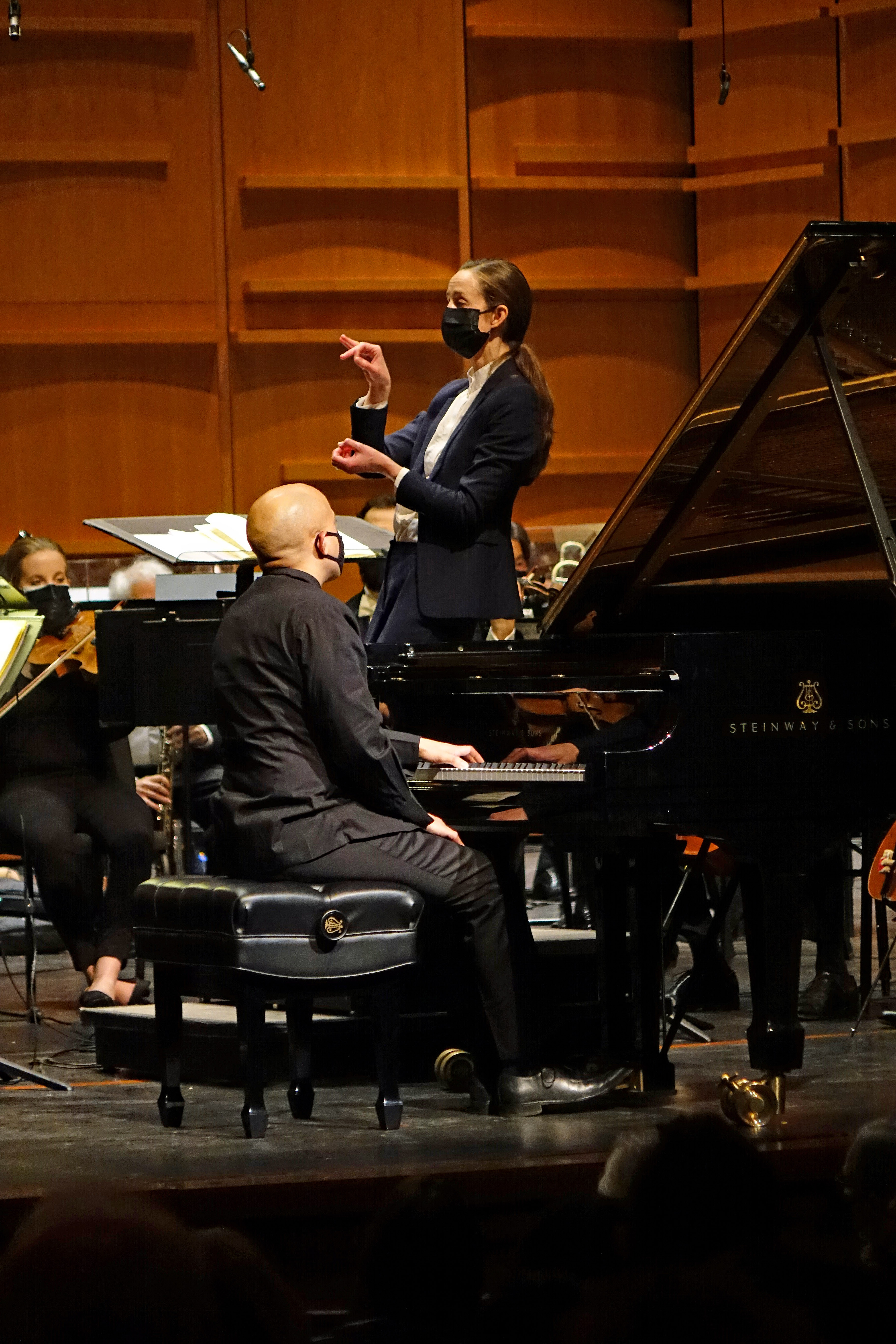
Another harbinger of spring and burgeoning optimism could be found in Symphony’s most recent Mozart + Wirén concert. Back in February at the Holst + Elgar concert, only Holst’s St. Paul Suite was lively and sunny enough to get musical director Christopher Warren-Green jumping up and down on the podium. Check out the webcast of the Mozart + Wirén program, still replaying online, and you’ll find that both of these composers had the same effect, Mozart with his Divertimento for Strings in D major and Swedish composer Dag Wirén with his Serenade for Strings. In between these two, Warren-Green offered the Charlotte premiere of Jessica Meyer’s Slow Burn, a piece originally devised two years ago to accompany a burlesque dancer in Saratoga. Jumping was probably not the proper response.

Mozart wrote no fewer than five Divertmenti in D Major, so it’s necessary to add that this was the earliest, K. 136, written at the age of 16 – or that it’s the one Divertimento that Yehudi Menuhin recorded in his Mozart collection for Virgin Classics, leading the Orchestre de Chambre de Lausanne. The youthful energy of the piece burst immediately upon us in the opening Allegro, with churning propulsion from the lower strings and lithe buoyancy from the violins and violas. Dynamics undulated with the floating grace of a glider as the steady churning continued below in rhythmic waves. The sound of the Knight Theater space added the faintest echo, and the airiness of the sound recording was close to the standard set for this piece by the Seiji Ozawa recording of 1994.

2021~Mozart + Wirén-15

Coming after this sunny effervescence, the middle Andante was so sweet and nostalgic, reminding me of one of the first Mozart pieces I was able to master on the piano more than 60 years ago. Lovely as it is, it was the only one of the three movements that could be imagined as royal background music, which is how a divertimento is normally regarded – and what resident conductor Christopher James Lees warned us against expecting in his introductory remarks. Attcked by the strings with at least as much zest as the Allegro, the closing Presto commanded attention, six staccato notes followed by the kind of explosive ignition we associate with Mozart’s Eine Kleine Nachtmusik, which Symphony performed just a month ago. Along with the exciting flux of dynamics, there were also zigs and zags of tempo navigated by Warren-Green, layers of repetition from the three main string sections overlapping one another. The ensemble surpassed themselves with their legerity and clarity in long, swift sweeps of melody.

2021~Mozart + Wirén-05

Slow or not, Meyer’s dancer evidently preferred to ply her trade in a steady 4/4 time as the piece began, with suggestive gestures from principal violist Benjamin Geller, principal second violin Oliver Kot, and concertmaster Calin Lupanu. Action halted before these solo voices – and after slaps on the double basses that sounded like whip cracks. Resuming the Burn, the music slid into swooning glissandos that allowed the dancer to surrender as much as her audience. Urgency and fury crept in as the tempo accelerated with frequent slaps on the basses, alternating with jazzy pizzicatos. The next halt gave way to a longer statement from Geller on viola that triggered a more frantic acceleration from the orchestra than before, this final gallop prodded by a constant cracking on the necks and sides of the two basses. What a dancer would do at this climax was enticing to imagine. Certainly it would be more like a flamenco flowering than a bump and grind.

Wirén had never crossed my radar before this Charlotte Symphony debut. He merits only a brief paragraph in my two music cyclopedias and only three entries in my last copy of the Penguin Guide, which did declare Wirén’s Serenade of 1937 to have been his greatest international hit. Apple Music is a better place than Spotify to hunt for it, but Symphony’s account was as exemplary as its previous two performances. Lees peeped in for another intro, describing the piece as a blend Mozart lightness and 1930s Paris, where Wirén studied composition. With long sweeping melodic phrases from the violins conveying Mozartian lightness, the opening Preludium had the urban bustle of Gershwin’s Paris – or the Londons evoked by Eric Coates and Noël Coward – and Symphony was not at all tentative about zooming into the cityscape. The cellos and double basses actually injected a heavy, foreboding undertow at times, as if a spot of rain were on the way or the specter of a traffic jam.

The rustic quality presaged by Lees in his intro was further delayed by the Andante espressivo, which began softly with pizzicatos spanning the Knight stage followed by an outbreak of melancholy from the second violins. First violins only intensified the poignancy when they layered on with their bowing, taking us further into solemnity and coloring it faintly with regret. A second round of pizzicatos from the lower strings led into deeper keening from the violas, intensified by another onset of the violins. Cellos blended with violins before a concluding pizzicato hush. The ensuing Scherzo was where Wirén finally fulfilled Lees’ rustic description, though I’d have to guess that the composer had Beethoven’s Pastoral Symphony closer to heart than anything Mozart wrote, and a few notes struck up by the second violins had a kinship with “Willow Weep for Me,” written five years earlier by Ann Ronell and dedicated to Gershwin. Amid the hairpin turns of this impetuous movement, interspersed with the laughter of the violins, the cellos took over briefly with their sobriety.

2021~Mozart + Wirén-12

With violas, cellos, and basses beating their bows on their strings, the beat of the final grand march began, reminding me most vividly of Coates’s British pomp. But here we swerved dramatically, slowing down for our first genuine B section of the evening before circling back to the forceful main theme. This Marcía is the movement that is most excerpted from this most popular Wirén work, and there’s nothing subtle about its appeal. Little strums from the basses thicken its pulse and there are moments when the beat is so strong that you could suspect a drum or two lurking somewhere offstage. Its giddy spirit had Warren-Green on his toes, waving his arms with the sweep of it all, and ultimately jumping. For joy, no doubt.

All-English Symphony Program Moves from Wintry Dreariness to Triumphant Jollity

Review: Charlotte Symphony Plays Holst + Elgar

By Perry Tannenbaum

2021~Holst+Elgar-04

Assailed by the ongoing pandemic, the postponement of vaccinations, and a midwinter cold snap, we must be contented when we receive short rations of Edward Elgar without pomp or percussion and William Walton’s Henry V without winds or brass. In fact, since Charlotte Symphony music director Christopher Warren-Green often shuttles back and forth across the Atlantic to lead our Queen City orchestra and the London Chamber Orchestra, we’re rather fortunate just to have him on the podium at Knight Theater conducting an all-English program. Traveling by air between the UK and the US has become uncertain in recent months, due to the mutating coronavirus, and restrictions pushed Symphony’s Holst + Elgar offering from January 23 into February. Electricity can also be capricious when the Arctic is riled: Texas is merely the most notorious state plagued by power outages this month, not the only one.

We’ve heard more than a couple of Serenades since Symphony returned, string players only, reconfiguring its 2020-21 season and fine tuning on-the-fly. Elgar’s Serenade for Strings in E minor was certainly not the peppiest or the most sweeping of the breed, but Warren-Green, stressing the harmonic blend of the piece instead of its rhythmic flow, gave us a drearier reading than I would have hoped for, particularly in the first two movements, a tranquil and dreamy Allegro piacevole followed by a sleepier Larghetto. Only in the concluding Allegretto did Warren-Green abandon extreme delicacy and pick up his baton. Only now did the orchestra’s energy compare with the more light-hearted Sir Roger Norrington recording of the piece. Here there was more melodic dialogue between the upper and lower strings, more satisfying swells in the sway of the dynamics.

2021~Holst+Elgar-09

Although Walton’s Two Pieces for Strings from Henry V have been paired on commercial recordings, they are hardly a representative foretaste of the full musical score written for the 1945 film starring – and directed by – Laurence Olivier. Elsewhere in the score, in places such as the “Charge and Battle” and the “Agincourt Song” collected in more extensive suites, Warren-Green could parade Symphony’s winds, brass, and percussion. Mightily. “Death of Falstaff” and “Touch Her Soft Lips and Part” are soft, brief, and fragile flowers compared to those sturdy oaks, yet they were more affecting than the Elgar pieces. The Passacaglia for Sir John was quiet and grave, almost but not quite a dirge, and the “Soft Lips” was tenderly suffused with pure and chaste ardor, tinged with the sorrow of soldiers’ farewells. Count me as enthusiastically supportive if Warren-Green opts to program a fuller representation of this Henry V score when he can bring the full Symphony to the task.

If we longed for music that quietly reflected our mood during these cold, gray, homebound winter days and nights, then these Elgar and Walton works more than fulfilled their mission, but if it was uplift that we sought, then Gustav Holst’s St Paul’s Suite in C Major was a perfect tonic. Warren-Green’s anecdote about meeting Olivier and Walton after a performance of the Henry pieces was by far the most appealing of his intros. Warren-Green had been onstage as the concertmaster that night, and the actor and the composer had vied ridiculously with each other at the post-performance reception to be more modest about his contribution to that celebrated film. Yet the insight into Holst, when Warren-Green visited the St. Paul’s Girls School in London, was also fascinating. Holst taught at the school, eventually becoming its music director, and a soundproof room was built specially for him at the school where he composed his most famous work, The Planets, as well as this more modest suite.

2021~Holst+Elgar-16

To be honest, St. Paul’s sounds more like it was written in the middle of the girls’ playground on a bright sunny spring morning with the children running and squealing in all directions around the composer, especially in the effervescent outer movements. Amid the lively opening Vivace, ebulliently labeled as a Jig, it was inspiring to see Warren-Green jumping up and down on the podium again, excitedly gesticulating after maintaining his British dignity for these many months. The liveliness spread across the Knight stage, and I strongly suspect that the masked faces of the Symphony musicians were smiling. Even the middle movements had a youthful élan. The second movement was a quiet Ostinato at a Presto pace, with concertmaster Calin Lupanu floating a melody over the subdued churning of the upper strings and pizzicatos from the cellos. Lupanu’s soloing resumed in the Intermezzo, where we slowed to Andante con moto and principal violist Benjamin Geller took a couple of turns in the solo spotlight. Here again, a Vivace interlude abruptly shed its orchestral sunlight before we reverted to a slower tempo, ending with a sedate string quartet led by Lupanu.

Jollity reigned when we arrived at Holst’s Finale, an Allegro that riffs on an English folk tune, “The Dargason,” sounding even merrier than the opening Jig, and certainly more familiar. Holst further enhanced the merriment and complexity of his composition by giving the cellos the undercover assignment of introducing the ancient melody of “Greensleeves” under the main theme. No problem if you missed “Greensleeves” while it was part of the cellos’ stealth operation, because it became gloriously dominant when it was reprised. The infectious “Dargason” was not to be suppressed for long, interweaving so well with “Greensleeves,” and Lupanu had one more tasty little cadenza before the full string orchestra pounced on the final fortissimo chords.