Review: Charlotte Symphony Plays Respighi’s Pines of Rome
By Perry Tannenbaum

November 14, 2025, Charlotte, NC – Neither Maurice Duruflé nor Ottorino Respighi would rank high among composers that Charlotte Symphony subscribers most wish to hear. The orchestra’s previous two music directors, Christopher Warren-Green and Christof Perick, never performed Respighi as part of the orchestra’s classics series – he remained the province of guest conductors – and the Duruflé Requiem, after concerts by the old Oratorio Singers and Carolina Voices early in the century, hadn’t surfaced at all locally since 2007.
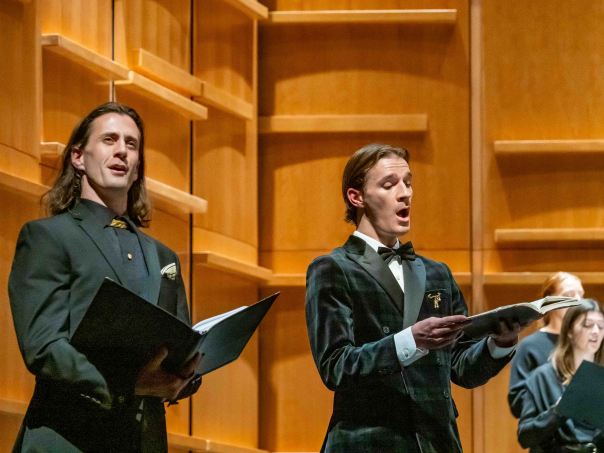
So a pairing of Duruflé’s most highly regarded work with two Respighi favorites, The Pines of Rome and The Fountains of Rome, didn’t figure to fill Belk Theater with rabid enthusiasts. Yet the sheer scale of the Requiem, calling forth the Charlotte Master Chorale under Kenney Potter’s leadership, made the Belk an obvious choice over the snugger Knight Theater.

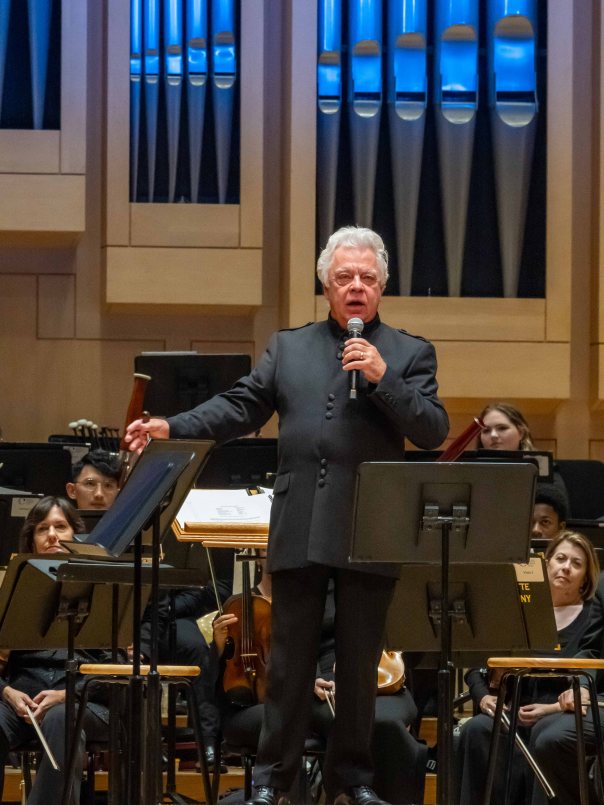
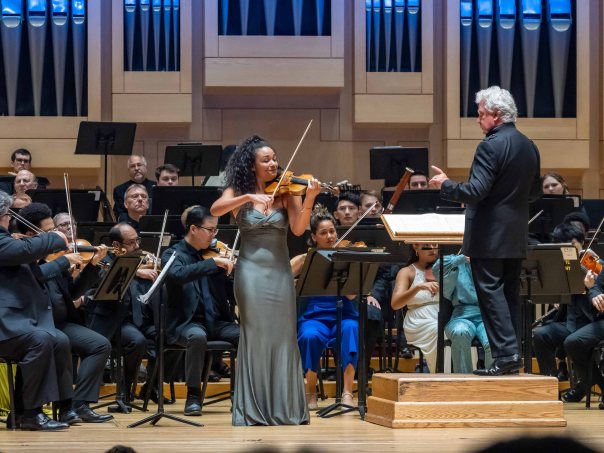
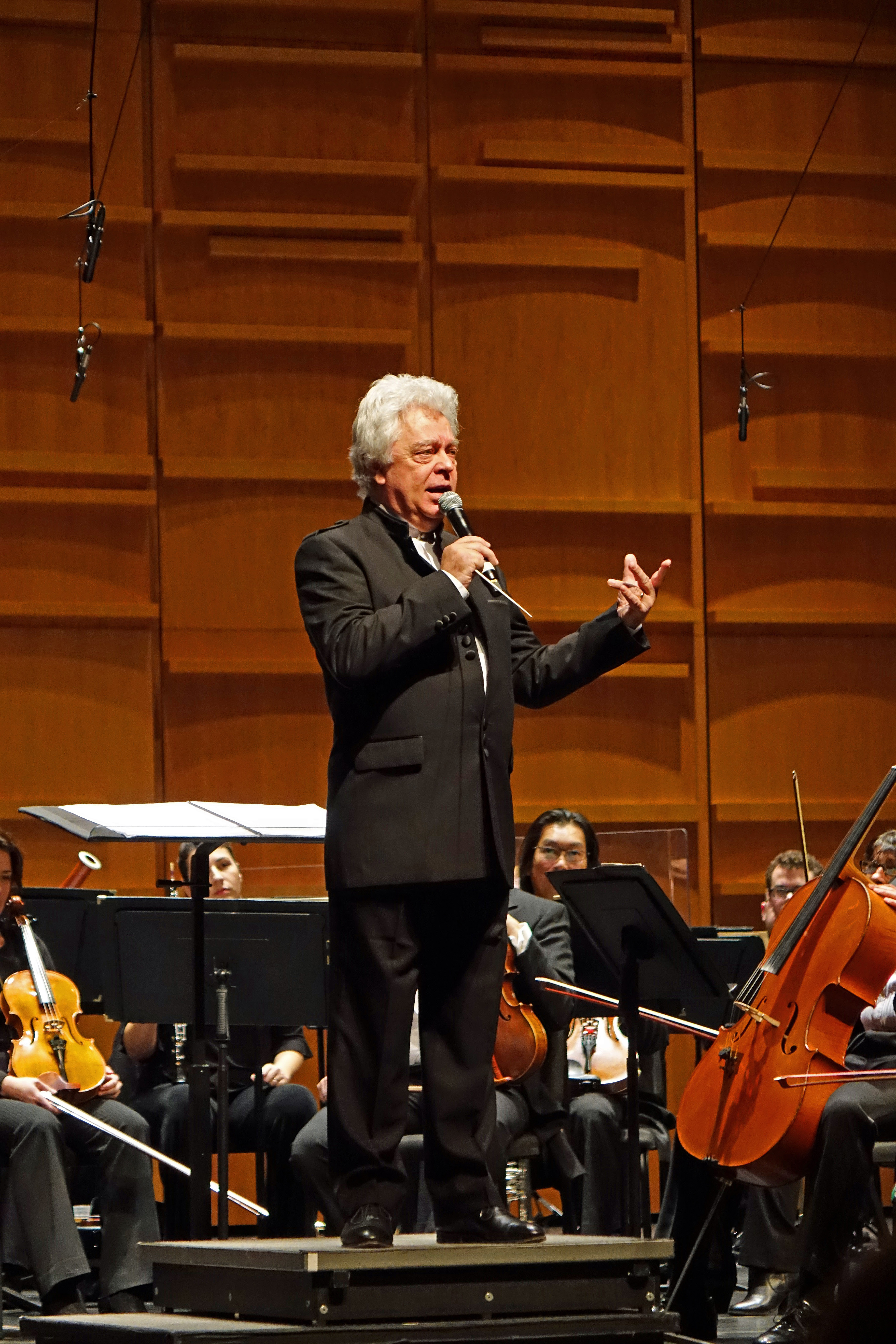
Although our current music director, Kwamé Ryan, brought us Respighi’s Roman Festivals last spring, a guest conductor was once again on the podium for these more beloved Roman delights by the Italian icon. While a Duruflé-Respighi pairing will never be boffo box office, starting with the Requiem – which likely drew hundreds of the choristers’ family members to these performances – made the host of Master Chorale choristers onstage before intermission available to swell the audience for the Fountains and Pines afterwards. Adding to the electricity in the house, guest maestro Francesco Lecce-Chong deployed two groups of brass players upstairs to opposite sides of the grand tier for the final “Appian Way” section of The Pines.

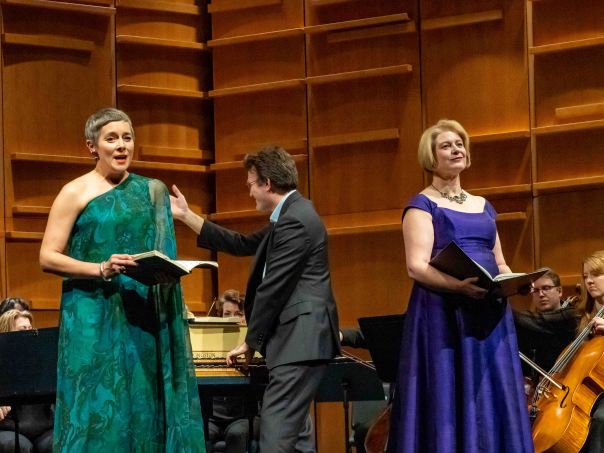
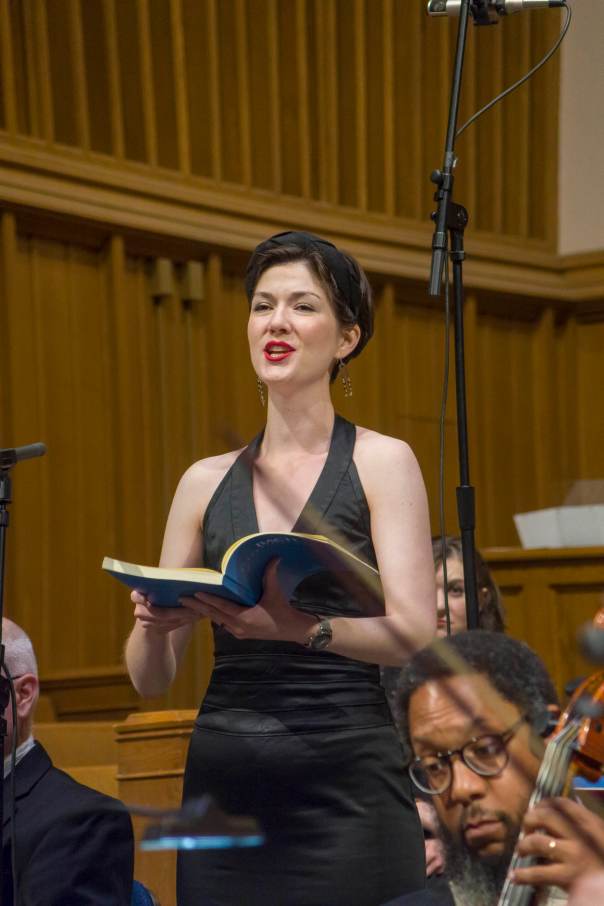
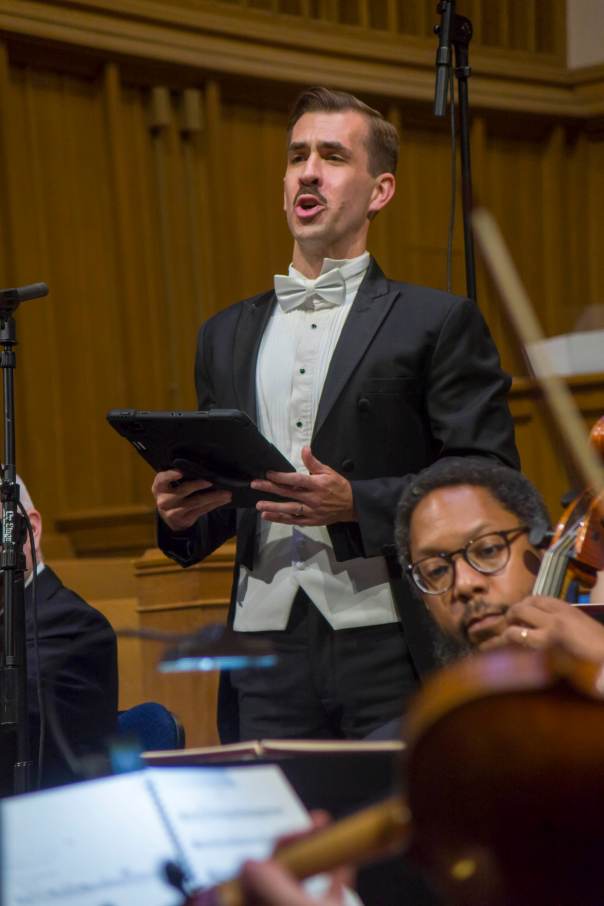
Based on Gregorian themes from the Mass of the Dead, the Requiem sounded like the oldest piece on the program, though it was the newest. Fortifying that impression was the dominant role of the Chorale compared to the two soloists, mezzo-soprano Megan Samarin and baritone Eleomar Cuello. Most of us likely felt that Cuello’s noble bearing and vocals in the “Domine Jesu Christe” section were all too brief: even there, the choir had the larger share of the singing.
Samarin’s conquest in the middle “Pie Jesu” section, an ethereal solo, also seemed too fleeting, though here the Chorale was silent. Sampling recorded versions of the Requiem on Spotify and Apple, you’ll probably conclude that the orchestral version performed at the Belk packs more wallop than the organ scoring, which was probably the version that Carolina Voices chose 18 years ago at the Friendship Missionary Baptist Church. Another reason for the guest vocalists to make a more muted impression this time.

The fourth section, the “Sanctus,” decisively upstaged Cuello as Lecce-Chong rallied the forces of the orchestra and the Chorale together, but the baritone returned for a second cameo during the first half of climactic “Libera Me,” fueling the fires of the choral “dies irae” that followed. Somehow, the sublimity of the concluding “In Paradism” doused those fires. The beatific loveliness of the women’s voices certainly made for a heavenly arrival, yet the men miraculously eclipsed them in their visionary entrance, truly a mystic chorus of angels.
Instrumental excellence peeped in occasionally during the Requiem, chiefly in Timothy Swanson’s oboe obbligato for the “Kyrie” section, in bassoonist AJ Neubert’s “Lux Aeterna” intro, and in the exquisite welcome to “In Paradisium” from yet another principal, harpist Andrea Mumm Trammell. Even more play was afforded to the players in the Respighi pieces with all their resplendent colors and shadings.
Memories of hearing Respighi are invariably more sugary to me than the actual music, which under Lecce-Chong’s baton, especially in The Fountains of Rome, was refreshing and exhilarating – and, of course, effervescent. Neubert probably made an even stronger impression on oboe in his lovely, languid sketching for “The Fountain of Valle Giulia at Dawn,” with principals Taylor Marino on clarinet, Jon Lewis on cello, and Victor Wang on flute following eloquently in the same opening section.
The sunnier middle sections, depicting “Triton Fountain” and “The Fountain of Trevi,” were more impressively orchestral and brassy, Triton’s horn issuing an early proclamation at the beginning of his section and a rampage of brass, chiefly trombones, heralding midday at Trevi, Rome’s most majestic fountain. No doubt the audience was a bit surprised by the delicacy of the Fountains finale, “The Villa Medici Fountain,” and its sprinkling of percussion, celesta, and soft chimes, simulating a distant church at twilight.
My mind had first been changed on Respighi way back in 1997 when Daniele Gatti had led the London Royal Philharmonic into town with diva pianist Alicia de Larrocha. His rendition of The Fountains with the Londoners was sufficiently revelatory for me to place a rush order for Gatti’s recording of Respighi’s complete Roman trilogy, where additional revelations awaited: Roman Festivals and Pines of Rome were both more powerful, varied, and grand. Though The Pines had popped up on my calendar at the dearly departed Eastern Music Festival in 2011, this was my first opportunity to hear – and compare – Fontane di Roma and Pini di Roma in the same live concert.

With a feel as sure for Respighi as Gatti’s, Lecce-Chong’s performance was worth the long wait. “The Pines of the Villa Borghese” had a marvelous orchestral bustle before principal trumpeter Alex Wilborn was dispatched to the wings for the signature eerie effect in the solemn “Pines Near a Catacomb.” Even more quietude came with “The Pines of the Janiculum” as piano, clarinet, cellos, and a soft oboe anthem enhanced the magic. But the epic build and variety of “The Pines of the Appian Way,” seasoned with prerecorded nightingale chirruping and crowned, at the end of a satisfyingly long and majestic crescendo, with the outbreak of brass from the balcony, surpassed the grandeur of the Respighi we had heard before and joined the peaks of the Master Chorale as the pinnacles of the evening.












 Art on My Sleeve