Tag Archives: Aaron Muhl

Boundless Celebrates Connection After Fretting Over It

Review: Boundless at the McBride-Bonnefoux Center for Dance

By Perry Tannenbaum
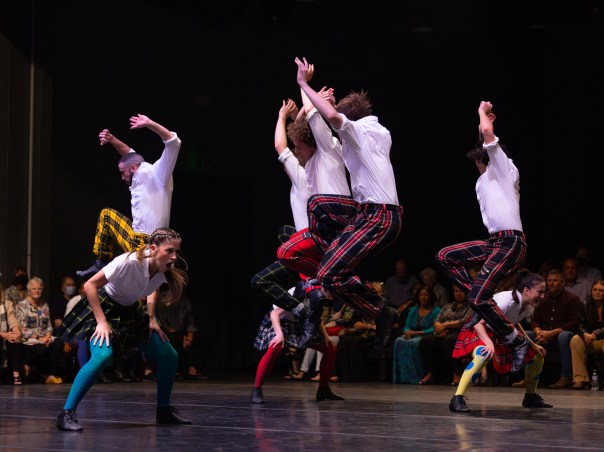
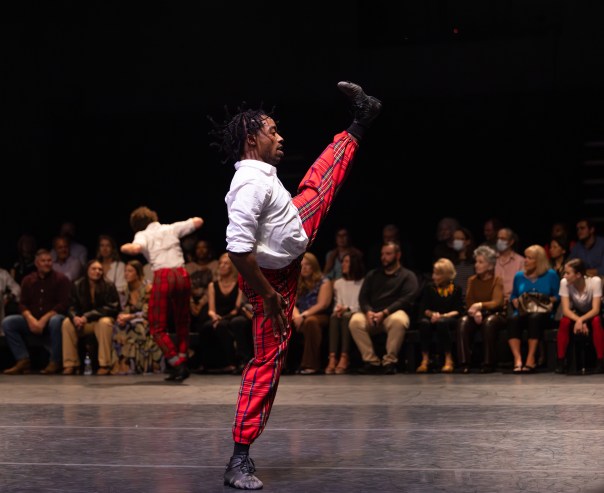
Loud woolen plaids are back in action – on the loose with louder goofball leggings. And the eternal question, pointedly asked, rings out again at The Patricia McBride & Jean-Pierre Bonnefoux Center for Dance: “Do you, do you, do you, do you wanna dance?”

Like Breaking Boundaries two seasons ago, Charlotte Ballet’s Boundless is a non-stop evening in three parts, showcasing three artforms. If you missed Boundaries in fall 2023, you should definitely repent by picking up tickets, heading out to 701 North Tryon, and checking out what all the shouting was about (through March 21).

On the other hand, if you’ve already tasted that Breaking Boundaries brew, you’ll find that most of the barrels have been refilled. The world premiere choreography this time around is Nicole Vaughan-Diaz’s On Three, after which you’ll leave the Center for Dance at intermission and decamp in the lobby, where four different instrumental duos will be entertaining during the 14 non-educational performances.
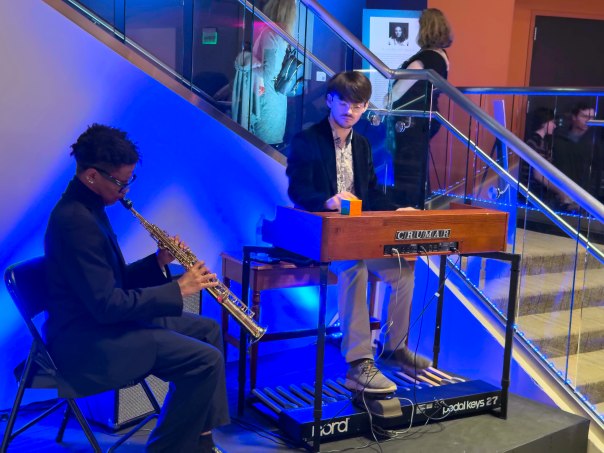
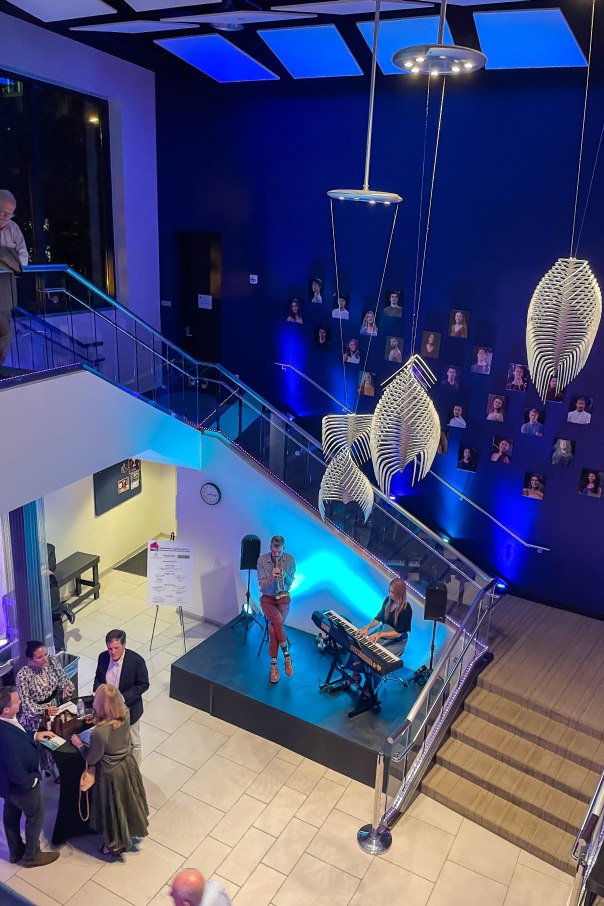
A staircase dramatizes the musicians, enclosing them as it winds upwards to an urbane, dimly lit balcony above. Scaling the wall with the stairs is a fine exhibit of action photos by Quinn Wharton, showcasing current members of the Charlotte Ballet troupe. Across from that display, a horizontal display of more Wharton photos on the eastern wall faces that diagonal rise. And there’s also a video installation by Tobin Del Cuore.

Completing the clubby feel of intermission, festive audience members line up for food and drink, so they can be toting a soda or a highball while viewing the exhibits or claiming one of the precious few cocktail tables downstairs as they nibble to the music and schmooze. On the night we went, it was Jonah Bechtler on keys and Noah Kibonge on soprano sax, pumping out jazz standards such as Bobby Timmons’ “Moanin’.”

As in 2023, the transition inside the studio for Ohad Naharin’s garishly colorful Kamuyot made all the charming diversions of the intermission pragmatic. The grandstand of seats facing the permanent studio space was folded back and collapsed into the wall behind where we had sat. Unassigned general-admission style seating was set up on each of the four sides of the performance space, two rows deep.

There’s only one hard-and-fast rule to the seating. Don’t sit in the seats reserved for the dancers.

If your first impulse is to sit in one of the four front rows, be aware that one or more of the 15 dancers will be asking you to join them on the floor. Cool with that? Great. You can even multiply your interactions with the dancers by sitting next to one of their reserved seats, for over the course of Kamuyot, multiple dancers settle into each of these spots.

Not so eager, shy, or on the fence? Row 2 figures to be your best bet. If your defenses are defeated, you can still catch a dancer’s attention and snag an invite. Or just hold hands for a moment of connection as I did.

Over the space of 28 months, my memories of Kamuyot had faded somewhat, so there were pleasurable reminders of buried treasure in my memory bank: the loud plaids, the Israeli choreographer’s affection for “The Theme from Hawaii Five-O,” his signature “gaga” dance moves, and my own experience of getting out there on the floor with the dancers. What couldn’t be forgotten were those broken boundaries.

So in a curious way, a divide reared up between those of us who vaguely or precisely knew what was coming and those who were seeing it for the first time. Simultaneously, I felt as if a barrier had fallen between me and those who had seen Kamuyot before. We found ourselves discussing that experience more readily.
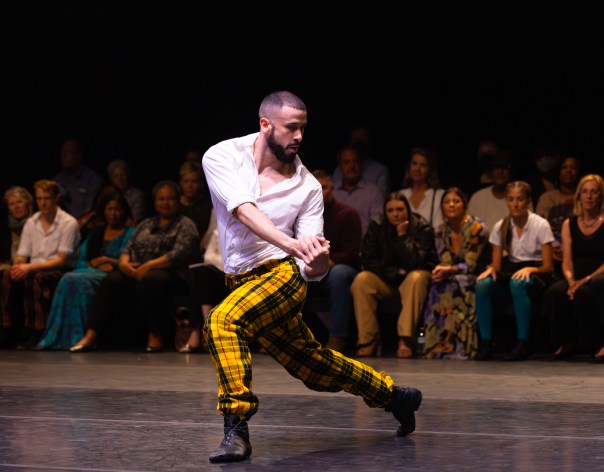
Resolved to be less of a participant this time, I found through this less visceral approach that Naharin’s structure emerged more boldly. The scheme is an evolution from solos and pairs to ensemble sections, from solitude and loneliness and antagonism to community. One female dancer writhes laboriously across the performing floor early in the piece, eventually drawing the attention of two men who soon engage in a one-sided shadowboxing bout.

Even at the apex of this progression, when a single dancer would initiate a sequence, and he or she drew a crowd of imitators forming a fresh ensemble, you could count on a single outlier to carve her or his way through the heart of the group – usually exiting the hall without taking a seat. The hyperactive mass and the contemplative individual are repeatedly juxtaposed. Feel free to identify with either the celebratory or meditative aspect of Naharin’s spectacle – by diving in, holding back, or simply weighing these options.

Kudos to anyone who instantly grasps the meaning of Vaughan-Diaz’s deceptively simple title. On Three signifies the pact that two or more people make to synchronize their actions and begin at the same time. Bandleaders and chorus masters know the drill. Rock-scissors-paper-match competitors instinctively adopt it. Synchronicity, trust, and fair play are wrapped up in the ritual.

Yet that connection between intent and Vaughan-Diaz’s choreography remained opaque for me as her piece began. Entrances by the 10 dancers, circling a perpendicular setup of chairs, were markedly dilatory and unsynchronized, though there was some similarity in their pacing and dolefulness in designer Aaron Muhl’s dim lighting.

Flickers of intent began to spark once all the dancers were seated. One of the women, in a Kerri Martinsen costume a bit less drab than the others, sauntered over toward another chair where a guy sat. No hello, no eye contact, she just lay down in front of the guy, knees up. A triggering soon occurred after what my count of three would have been, and there was extended interaction and even some contact between the woman and the man.
None of it was particularly human, let alone intimate. When the man escorted the woman back to her seat and placed her in it, he seemed to have been humoring her. So the bigger surprise for me was when, moments later, the guy sidled over to the woman’s chair and assumed the same recumbent position she had modeled before. Something had happened between them, for they now reprised their relationship with a new dance episode in the same rudimentary and mechanical style as before.

Afterwards, the piece was largely pairs and chairs, different dancers coupling once the ensemble had removed, returned, or rearranged the chairs. The shape of the piece seemed to evolve from primal separateness toward ritual and trust as more of the dancing was done by more of the ensemble, but I’d doubt many in my audience perceived an arrival at the satisfying destination Vaughan-Diaz describes in her video:

“It’s the eye contact you make before being caught in a fall. It’s this agreement before you do something that cannot be done alone.”

Pretty disturbing, then, that Vaughan-Diaz imagines the “one, two, shoot” ritual of children playing odds-and-evens needs to be rediscovered by adults. Or that it’s in danger of being forgotten. Deliciously timely and dystopian for anyone seriously alarmed by our divisions.

Cerrudo Is Boldly Breaking Boundaries – at the CharBallet Studio and in the Lobby

Review: Breaking Boundaries at McBride-Bonnefoux Center for Dance

By Perry Tannenbaum

With a lineup that has repeatedly included Fall Works, Spring Works, Innovative Works, and Nutcracker over recent seasons, it isn’t too harsh to say that Charlotte Ballet’s programming could stand a refresh – or at the very least, a more dynamic approach to its marketing. They’ve been pouring mostly new wine into those old bottles in recent years, bit an aroma of predictability was beginning to seep in.

Now in his second year as artistic director – and fielding the first full season he has chosen himself – Alejandro Cerrudo is starting to shake things up. “Works” must not have been working, for Cerrudo has banished all three from CharBallet’s 2023-24 lineup.

Starting out the season at the McBride-Bonnefoux Center for Dance instead of waiting until winter, Cerrudo is setting the tone with Breaking Boundaries, running through October 28. It’s more than a name change: Cerrudo is innovating how the Center’s studio and lobby spaces are used. Partnering with Middle C Jazz and the Charlotte Art League, he’s also extending intermission and making it a more integral part of the experience. Afterwards, assigned seating goes away.

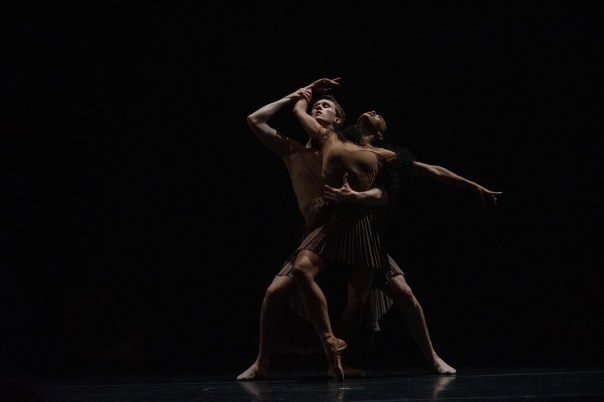
For that reason and others, the world premiere of Mthuthuthzeli November’s From Africa With Love is actually the more conventional choreography now on display at the McBride-Bonnefoux. That is not at all to discount or belittle the beauty, deep emotional resonance, and cohesiveness of November’s artistry, including his costume design and musical composition.

Nor should you think that less of an assault on boundaries implies none. What we might expect From Africa are eye-popping colors, primitive revelry, jungle cats, or savannah beasts, syncopated with intensive drumming. What inspires the South African-born choreographer and costume designer instead are mauve-colored ostriches from his native land that CharBallet’s dancers’ grace will have you associating with flamingoes. First the women dance quietly into the intimately-lit studio space with their matching mauve skirts and leotards, almost floating across the floor.

Mildly surprising, the men join in shortly afterwards wearing similar outfits, their skirts destined to serve as their plumage in the final tableau. Initially, they are different from the women but the same, whether we view them as human or animal. November pointedly freezes the ensemble for a moment or two in a formation without symmetry or geometry, so we behold their randomness, diversity, and harmony like a vast meadow teeming with life, peacefully grazing, somehow safe from predators. Lighting design by Aaron Muhl adds mystery and magic.

A couple of tracks, “Ibuyile l’Africa (Africa Is Back)” and “Qhawe (Hero),” from South African cellist Abel Selaocoe’s debut Where Is Home album, animate most of the movement and define its range once the full ensemble gathers. There is ethereal solemnity when the tempos are halting; while singing, exultation, and defiant guttural exhortation drive the quickened choreography over a pulsating drumbeat and handclaps. Seamlessly, our attention narrows to a single couple, Evelyn Robinson, more consistently at the center, and Luke Csordas, who will lift his partner several times but remain the only dancer who briefly leaps into the air. Three other duos rotate during the 15-performance run.

Earthbound, with a seething impulse to soar, From Africa With Love is haunting. It’s impossible for me to be sure whether November views its lively yet fragile beauty as emerging or fading.

You will need to abandon your seat – and the McBride-Bonnefoux studio – during intermission. You will also be asked to change your seat when you return and give some thought to the question of whether you wish to sit in the front row. My wife Sue, the tender-hearted Tannenbaum, was concerned that the elderly and disabled who normally populate the front row would be displaced, forced to climb stairs to reach the rows behind them.

My faith in Charlotte Ballet was not shaken. Or to put it another way, I was not at all worried. After intermission, my faith was vindicated. Not only were there greatly expanded opportunities to grab a front-row seat, the other natural option, to return to our original seats, was eliminated. They were gone.

While this exciting transformation was happening behind closed doors, Patt and Sara, alias trumpeter Matt Postle and keyboardist Jess Borgnis, nestled into the Center for Dance lobby in front of the stylish staircase, framed by rows of purple lights as they played. Past the headshots of the CharBallet dancers, at the top of the staircase, we could look down at the cool jazz duo from the balcony or appreciate the artworks mounted on the walls behind us.

Sadly, my heartlessness extends beyond the elderly and physically challenged to the artists representing the Art League and the jazz duo. Other than enjoying the art and the music or noting that all was quite good, I observed an intermission of my own from reviewing and whipped out an iPhone to help me document the stylish ambiance. No other local company even strives to match the hospitality at the McBride-Bonnefoux, and only the Music @ St. Alban’s series up in Davidson seems to have stumbled upon similar possibilities of desserts and extra entertainment for all their patrons.

Yet the fullest impact of Breaking Boundaries was undoubtedly reserved for after intermission. The grandstand where our seats had been was now collapsed into the rear wall. Instead of one front row facing the studio performing space, there were now four rows of benches boxing it in. We made a beeline for a bench with a back rest, noticing along the way that there were spaces marked “Reserved”: our first hint.

It wasn’t long before the 15 dancers performing Ohad Naharin’s Kamuyot, dressed in loud woolen plaid skirts and slacks, settled into those designated spaces. By this time, the reason for the front-row caution was clear enough. If you don’t mind being invited to join the dancers on the floor – or you don’t mind turning down such an invitation – you’re OK. Otherwise, second row. Those who experienced second-row remorse could remedy their plight with a little extra exertion when the time came, capturing a dancer’s attention and an invite.

Even translated from the Hebrew as “Quantities,” Naharin’s title didn’t offer much of a clue to what might follow. There were no song titles in the program, but the list of 22 composers and artists, ranging from John Tavener and L. V. Beethoven to Lou Reed and The Ventures, broadly hinted at a bumpy ride. Indeed, the delight of unpredictability was sustained throughout the piece as single dancers or couples from all four sides of the stage took their turns on the floor and returned to their places. From the randomness of the order of dancers seizing the spotlight and yielding it, a certain inevitability set in if we were noticing who hadn’t yet risen and performed.

From then on Kamuyot was more of an ensemble piece. Distilled from previous works, Naharin aimed this work specifically at young audiences and, logically enough, created it for The Young Ensemble of the company he founded in Tel Aviv, Batsheva. The work has been staged across Israel in school gymnasiums, so the work aligns more closely with the studio space than most of the choreography we have previously seen staged at the McBride-Bonnefoux. On the other hand, staging the work at night in front of an adult audience alters Naharin’s calculus and the whole atmosphere of the dance.

Instead of encouraging kids to get involved with dance and experience its joys, Kamuyot now stretches out its hands to adults and old-timers to bridge the gap between themselves and their youth. With a soundtrack that ranges from the opening bars of Beethoven’s Kreutzer Sonata to The Ventures’ “Theme Song from Hawaii Five-O,” Naharin’s lively, kaleidoscopic work encourages traffic in both directions, for nothing is dumbed-down for his intended family audiences, ages 6 and up.

When dancers stand silently in front of you, or when they beckon you to join them on the floor, you know exactly what Cerrudo meant when he named this rousing season-opening program Breaking Boundaries. I would rate my own performance, when I answered the dancers’ calls, as rather wretched – but I surrendered my objectivity and the ability to even view the entire spectacle as soon as I entered it. What I gained in exchange for those losses was the full flavor of the experience.

I invite you to try it, and to bring a child along with you.