Review: Charlotte Symphony Plays Shostakovich Symphony No. 5
By Perry Tannenbaum
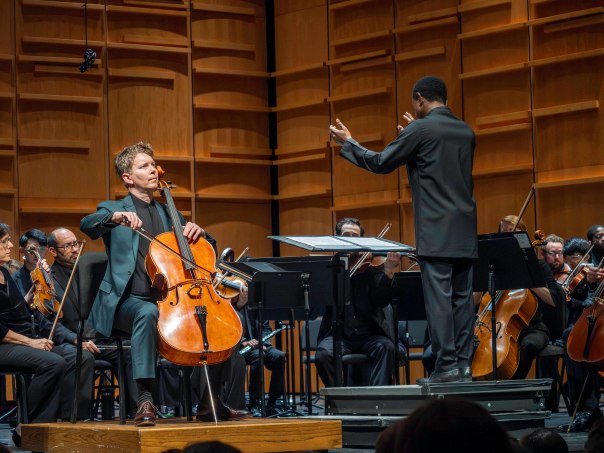
October 10, 2025, Charlotte, NC – It’s a bit of a mind-bending concept, so after launching Charlotte Symphony’s 94th season by leading his orchestra and audience in the National Anthem, music director Kwamé Ryan needed to take a couple of minutes to explain what exactly a musical logo is. Symphony also has a new conventional logo, a graphic see-through C with a top seraph that reminds one of a bass clef. But Symphony’s musical or sonic logo, Ryan explained, is akin to the six notes you hear on your iPad when you get a fresh sports bulletin from ESPN or the sonic boom that blasts you off your couch when you sign in to Netflix.
Ryan joked that Symphony had gone to John Williams to write the new theme but he wasn’t available. So he settled for Mason Bates, the second most-performed living composer (by American orchestras), who accepted the commission. The timing was auspicious, for Bates’s acclaimed new opera, The Adventures of Kavalier & Clay, opened at the Met less than a month ago.
Ryan proceeded to lead his orchestra in two versions of the new logo, the world premiere of an extended concert version followed by the abbreviated five-second version concertgoers could expect to hear in the Knight Theater lobby, summoning us back from intermission. Tell me I’m wrong, but Bates also seemed to have Williams in mind, in a heraldic vein, when he fulfilled his commission. And if musical or sonic logos become a thing among orchestras, Bates, Ryan, Symphony, and its subscribers can all claim to have been on the ground floor at the Knight.
Bates also took honors for composing the first piece to appear on our printed programs for the new season, Attack Decay Sustain Release. Premiered 12 years ago on the Left Coast, this lively five-minute appetizer was written, Ryan revealed, in 7/4-time. Bates’s title was likely onomatopoetic, describing the flow of his primary melody, for the seven beats often ended with a sustained crescendo. In its multiple episodes, the five-minute piece also boasted plenty of space for highlighting Symphony’s strings and brass section, sprinkled with an assortment of woody and frond-y percussion.
The remainder of the evening would be devoted to Dmitri Shostakovich, if our printed programs were to be trusted. In greeting us, however, Symphony president David Fisk told us to expect an extra musical moment after intermission. Surprises galore! Maybe the biggest went unmentioned by Fisk and Ryan: the turnout at the Knight. Compared with the “disappointing” turnout I reported last November for Shostakovich’s Ninth, the first and only previous occasion that Shostakovich topped the bill of a Symphony program, our 2025 crowd for the composer’s Fifth was robust, few empty seats across the orchestra section and seats sold in the balcony to the uppermost row.
Guest soloist Joshua Roman may not have been apprised of the surprisingly enthusiastic crowd awaiting him, appearing slightly wary as he seated himself for Shosty’s Cello Concerto No. 1. With good reason. The piece, written for Mstislav Rostropovich in 1959 is bold and daring from the brash onset of its opening Allegretto movement, not at all a timid or apprentice composition. Roman’s part in the Allegretto was precociously modern; so driving, repetitive, and mechanical that it seems to antedate the minimalism of Philip Glass and John Adams. The comical interjections from brass and clarinet upstaged the soloist somewhat in my first live audition of this piece.
Roman could have told himself to be patient about winning us over, for his role became more complex and impressive after the only pause in the piece, when he tackled the cluster of three final movements, delivered without further pause. At the heart of this cluster, between a soulful Moderato and a joyous Allegro con moto, Ryan and his orchestra observed a reverential silence as Roman played the Rostropovich-worthy third movement cadenza. There were bowed sections featuring a melody and a bassline simultaneously and, deeper into the virtuosic display, interludes of counterpoint where he bowed with his right arm on open strings while plucking a second melody line with his left hand. You couldn’t miss the difficulties here even if you closed your eyes. Nor was the final movement anticlimactic, featuring the return of the orchestra and a more decorative and colorful return of the march motif from the opening movement.
Undoubtedly, the audience perceived the military triumph they had witnessed, rising for a lusty standing ovation. This triggered a final pre-intermission surprise, for after being cheered back onstage a couple of times, Roman sat himself down for an encore and, before the tumult died down, launched into the Prelude to J.S. Bach’s Cello Suite No. 1, maybe the most familiar solo he could possibly offer.
Pure negligence prevented me from sampling the sounding of the musical logo prompting our return after intermission for our most touching surprise, played in tribute to three dearly departed members of the Charlotte Symphony family. Thankfully, it wasn’t Samuel Barber’s Adagio but rather a piece that necessitated some fresh sculpting and rehearsal, Arvo Pärt’s Cantus in memoriam Benjamin Britten. Beautiful!

We’ve heard a lot from Ryan in recent years, though many Symphony subscribers might say we should have heard much more. In preparing what Shostakovich subtitled “A Soviet Artist’s Practical Creative Reply to Just Criticism” – from renowned music critic Josef Stalin – Ryan trampled on the notion that Symphony No. 5 was in any way servile, apologetic, or conciliatory. All the true moods of Shosty’s 1937 portrait of Soviet Russia were vividly rendered, beginning with the bleak, haunting, and ultimately aching qualities of the epic opening Moderato. This battlefield desolation was not altogether relieved by the comical marching of the ensuing Allegretto, which combined sourness with merriment, along with a delicious dancing interlude from concertmaster Calin Ovidiu Lupanu. The Largo reverted to the weepy and misty grumblings and dyspepsia of the opening movement. Then we transitioned wonderfully – especially in ghoulish October – to the surreal, manic phantasmagoria of the concluding Allegro non troppo. My happy memories of Christopher Warren-Green conducting this work have faded since 2013, so I offer no comparisons. But this was no doubt the finest performance I

 Art on My Sleeve