Daily Archives: May 21, 2017

Bravura Aplenty in Theatre Charlotte’s “Memphis”

Review:  Memphis

By Perry Tannenbaum

As you may have found out, ignorant buffoons can make it big in America. So why not ignorant eccentrics? If Huey Calhoun didn’t make it big as a ‘50s deejay in Memphis, the musical by Joe DiPietro and David Bryan, then his fall from celebrity wouldn’t be nearly as reckless or spectacular. When he has lost his local TV show, tossed away his shot at national fame, and blown his romantic chances with the R&B queen he has catapulted to stardom, Huey defiantly delivers the anthem he has earned, “Memphis Lives in Me.”

“One more drink and you’ll see God everywhere,” sings Huey in tribute to his chief consolation: a bluesy Beale Street honky-tonk bar. It’s the culmination of a Broadway- caliber performance that Joe McCourt is currently giving at Theatre Charlotte in the lead role that DiPietro patterned after legendary rock pioneer Dewey Phillips.

Contrary to the preproduction signals that McCourt and director Corey Mitchell were sending, McCourt hasn’t muted Huey’s nasal drawl or portrayed him as much less of a rube than Chad Kimball did on Broadway. That’s a good thing. “Sounds just like him!” my wife Sue concurred at intermission.

Whether it’s the pork-pie hat and costume by designer Rachel Engstrom, or Huey’s sidling walk – seemingly unable to unbend his knees, straighten his back, or take two consecutive steps in the same direction – McCourt also looks a lot like Kimball’s Tony-nominated portrait. Perhaps rehearsals with Dani Burke as hot young singer Felicia Farrell revealed that, if McCourt were to tone down Huey’s goofball attributes, he would come off as more of a creepy stalker.

Ultimately, McCourt has arrived at a very likable blend of naïveté, chutzpah, neediness, awkwardness, and hipness – not the easiest elements to combine – and as usual, he torches every song he touches. For her part, Burke hasn’t lost any of the voltage she first brought to the Queens Road barn when she electrified audiences with “Aquarius” in the 2014 production of Hair.


Felicia isn’t nearly the plum role Huey is, but Burke proves to be fairly formidable in her first full-fledged lead. A few of Engstrom’s creations glam her up, and I liked Burke’s regality at the “WRNB” studio, where Huey has the nerve to ask Felicia to perform live. We’ve only seen Felicia in a seedy honky-tonk before, and the top radio station in Memphis also looks pretty shabby, but Burke demands, “Where are my backup singers?” as if she’s already a star.

What’s happening here in Memphis doubly crosses racial lines as Huey brings black music to the middle of the AM radio dial and presumes to romance Felicia while promoting her talent. Both of these audacities bring powerful characters into the flow of the action. Station owner Mr. Simmons is easily the most comical of these, and Mike Carroll beautifully brings out the businessman’s starchy pomposity – and astonishment – each time a new Huey atrocity increases his listening audience, his sponsor’s satisfaction, and finally his own teenage son’s admiration.

I hardly even remembered the role of Huey’s mom from the original Broadway production, so I was fairly blown away by the heart – and the pipes – that Allison Snow Rhinehart brings to Mama. Of course, she’s as déclassé as Huey, so his outsized dreams and successes are a total shock to her, not to mention coming home one day to find his black girlfriend in her kitchen. But Mama’s prejudices occupy the same space as her love and loyalty, so Rhinehart has a couple of gratifying surprises in store for us after intermission.

Least surprising, after his triumph as Coalhouse Walker in last winter’s CPCC production of Ragtime, is Tyler Smith’s powerful portrayal of Delray, Felicia’s fiercely protective brother and owner of the dive where Huey discovers her. It doesn’t take long to catch on to Smith’s power, since he’s toe-to-toe with Burke in the opening “Underground” ensemble, and he’ll prove equally capable of facing off with McCourt on “She’s My Sister” when Delray flares up about Felicia’s interracial affair. In fact, when the catastrophe strikes that ends Act 1, I suspect that Mitchell may have imposed some unnecessary restraint on Delray’s ferocity.

But there was more than enough power from all the frontliners to justify the “Why didn’t you tell me about this place?” comments I was overhearing during the break. Apparently these newbies were undeterred by the lackluster scenic design by Chris Timmons or the generic choreography by Ashlyn Summer, which never reminded me of what my teen elders were dancing on Dick Clark’s American Bandstand or Alan Freed’s The Big Beat. Victoria Fisher’s lighting design goes a long way to redeeming the drab sets, and music director Zachary Tarlton makes sure there is always a lively jump to Bryan’s score when needed.

Maybe the best reason to be wowed by Theatre Charlotte’s Memphis is how deep the excellence goes in this cast. After AJ White literally glows in a lemon yellow outfit as Wailin’ Joe on the first R&B track that Huey spins, there are two marvelous rebirths among the black folk that Huey’s musical mission reaches. First there’s Traven Harrington as Bobby, the radio station janitor, who will pile one shocker upon another before he’s done. Then there’s Clayton Stephenson, whose transformation as Gator may leave you weeping as Act 1 climaxes.

It ain’t perfect, but Mitchell has directed one of the best efforts I’ve ever seen on Queens Road in 30+ years of covering Theatre Charlotte. Chances are better than even that Memphis will live in you if you’re in the house when this company comes out for their final bows.

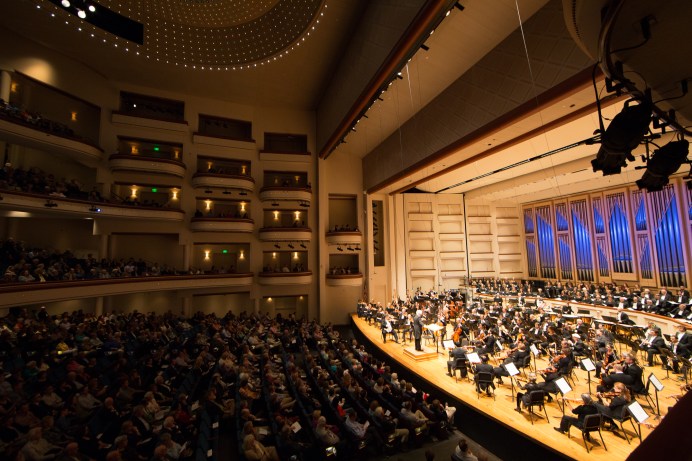
Warren-Green’s Reading of Mahler’s “Resurrection” Stamps It as an Instant Favorite

Review:  Mahler’s “Resurrection” Symphony No. 2

By Perry Tannenbaum

We’ve had quite a week in and around Charlotte for jubilant choral symphonies, first with A Sea Symphony up in Davidson and now with Mahler’s stirring “Resurrection” capping Charlotte Symphony’s 85th season. Turnout at Belk Theater for the grand work was robust, especially when the many latecomers were seated after the opening Allegro maestoso. Of course, the stage was heavily populated as well, the presence of the Charlotte Symphony Chorus pushing the musicians downstage and a sizeable contingent of freelance musicians further cramping their space – extra percussion, extra woodwinds, extra brass, second harp, second timpani, and lurking somewhere offstage, four more French horns. Mezzo-soprano Maya Lahyani made her entrance halfway into the third movement for the fourth movement “Urlicht (Primal Light)” alto solo, and soprano Kathleen Kim entered during the final Scherzo to join in singing Mahler’s setting of Friedrich Klopstock’s “Auferstehungslied (Resurrection Song).”

Beyond the executive decisions to beef up the orchestra and enable the horn players to follow his baton (presumably with a video installation), music director Christopher Warren-Green was artistically faultless in managing the pacing, the dynamics, and the overarching structure of Mahler’s music. There was plenty of muscle from the double basses in the opening bars, burrowing their way toward the dazzling entrance of the brass, who were as powerful and incisive as I’ve ever heard them. The winds worked well with the brass once the basses faded, and there was lovely work from the oboes, the upper strings, and – with the only imperfections of the night – the onstage horns. Percussion during the climactic explosion was thrilling, yet the strings retained a soft, kinetic excitement in the sudden hush afterwards.

Maybe the only questionable call Warren-Green made all evening was heeding Mahler’s call for a five-minute pause between the first two movements. The break was a welcome spot after more than 20 minutes of music to finally seat those patient latecomers (watching a performance on the big screens in the lobbies is far from ideal). But the audience treated the interval like an intermission, applauding what they had already heard and, in some instances, rushing for the exits for assorted urgencies. Mahler and Warren-Green undoubtedly thought the pause was a time for reflection, a grace period to accommodate the changing mood of the second Andante moderato movement, rather than an applause cue. If Warren-Green is rethinking the pause idea after its first trial, he certainly didn’t need to question whether his orchestra communicated the contrast that followed. The opening episode was suave and urbane, radically different from the thunderous and heart-rending Allegro that had preceded, until we reached a percolating section that could remind listeners of the vivace second movement of Beethoven’s “Choral” Symphony No. 9 – not andante at all. Principal flutist Victor Wang sounded ebullient over pizzicato strings, and principal harpist Andrea Mumm provided a nice sheen over another delicate ending.

The whirling motion of the third movement could lull listeners into thinking that Mahler was revisiting the waltzing “Un Bal” movement of Berlioz’ Symphonie fantastique, but there are sudden outbreaks of brass that give this “In calm, flowing motion” movement more jagged edges. Charlotte Symphony’s brasses were undeniably forceful but never overdone, and the brassy blends in the tranquil section of this movement were outstanding. Distant horns camping out backstage until their moment were as fine as the visible players, coming into view after the last big explosion of the movement – and a pair of beautifully articulated solo spots from principal trombonist John Bartlett and principal trumpeter Richard Harris.

I could assemble a fairly lengthy list of so-so mezzos who have sung with the Charlotte Symphony over the past 25 years, but I wouldn’t include the Israeli-born Lahyani on that list. From her first sweet exclamations, “O red rose!” and “Man lies in greatest need,” there was no doubting the purity and control of this voice, perfectly pointed in a hopeful, yearning direction. Beautiful fills by principal oboist Hollis Ulaky, concertmaster Calin Lupanu, and – in the faceoff between the singer and a heavenly angel – principal flutist Wang added to the delight.

Before we reach the dazzling resurrection light of the final Scherzo, there is a tumultuous instrumental drama that is longer than the previous two movements combined. A long crescendo of portentous percussion flowed naturally into the first volley of brass. Amid the general turmoil that followed, the French horn quartet departed once more with a percussionist. Sadly, these offstage voices would be more audible than a tubular bell that was misstruck by an errant mallet about three feet above all the other instruments. But the other onstage percussion during the hushed middle of the movement, a soft bass drum tattoo under the hidden horns, was absolutely spellbinding, and the piccolo filigree from Erinn Frechette was beguiling.

Entrances by the Symphony Chorus and soprano Kim were nothing short of magical, swelling up out of thin air with their wakening affirmation: “Rise again, yes, you will rise again, My dust after a short rest!” For the last sublime six minutes or so, the voices and instruments grew in strength, conviction, and triumph until all were jubilant together, cresting with a burst of brass, cymbals, a gong, and – no misfiring this time – repeated poundings of the tubular bell. It isn’t easy to shoulder aside the various Beethoven masterworks that comprise the core of Charlotte subscribers’ favorite symphonies, but with this milestone performance from Warren-Green and his musicians, Mahler’s “Resurrection” has clearly broken through to claim its place alongside the Beethoven hegemony. The spontaneity and fervor of the standing, cheering ovation that showered down on the singers, the musicians, and the directors – including Chorus director Kenney Potter – stamped this concert as one that will be talked about and remembered for a long time.

Davidson Armada Captures the Grandeur and the American Voice of Vaughn Williams’ Sea Symphony

Review: A Sea Symphony

By Perry Tannenbaum

Unlike the beauteous and quiescent beginning of Ralph Vaughn Williams’ “The Lark Ascending” that we hear more often in live performance, A Sea Symphony is rousing, massive, commanding, and majestic soon after its opening measures, with the pomp and arrogance of empire pulsing through its exclamatory choral armada. The audience at the Duke Family Performance Hall may have been startled by the onslaught of this opening movement, but with three Davidson College choruses, two vocal soloists, and the Davidson College Pro Arte Orchestra arrayed before them, they couldn’t have been completely surprised. A glance at the first line, “Behold, the sea itself,” of the Walt Whitman text tipped us off to the imperative tone that was coming, and the three teeming pages of text that followed in the program booklet were a clear indication that it would not be long delayed.

The juxtaposition of America’s signature poet with this British composer’s first symphony becomes more natural when you realize that the lives of Whitman (1819-92) and Vaughan Williams (1872-1958) overlapped a full 20 years and that the composer began the piece just eleven years after the Good Gray Poet’s death. Two of the five poems that form the text were actually published during the composer’s lifetime and two others were first unveiled just a year before he was born. The exuberance of a composer reaching his prime blends powerfully with the confidence of a poet who had already become his nation’s voice. Similarly, the commercial aspects of Whitman’s “Song of the Exposition,” written and read at the invitation of the American Institute at the opening of 40th Annual Exhibition in New York (1871), blend perfectly with the sea-spectacle of ocean vessels that Vaughan Williams paints with his chorale.

While this concert was staged at the Knobloch Campus Center at Davidson College, it quickly became apparent that I might construe the “Pro” component of Davidson Pro Arte in a couple of ways. Most of the musicians, 68 percent of the 40-piece ensemble, were indeed professionals, recognizable as members of the Charlotte Symphony, including four of its principals. Nor did I need to worry about the maturity of the solo vocalists. Bass-baritone Dan Boye and soprano Jacquelyn Culpepper have sung with the Charlotte and North Carolina Symphonies as well as appearing in numerous Opera Carolina productions. With all that local professionalism on hand, it might be useful to step back and appreciate how special this event was. Vaughan Williams’ Sea Symphony isn’t merely outside the core repertoire that most American orchestras perform; the only American recording I can find of this grand work came from the Atlanta Symphony on the Telarc label in 2006.

No, American singers do not often take on this quintessentially American text, and everybody on hand seemed buoyed by the occasion, including Pro Arte director Christopher Gilliam. And why not? The brass section, the three choruses, and timpanist Justin Bunting were all called into action before the strings. Once this éclat is exuberantly played out, the piece becomes more interesting as the text shifts from its brief “Exposition” excerpt to a judiciously trimmed version of “Song for All Seas, All Ships.” In a piece headed toward the mystic universality of Whitman’s visionary “Passage to India,” these invocations of all nations’ flags, all captains, all sailors on all seas serve as a bustling, worldly foreshadowing. To give us this bustling sensation, Vaughan Williams stirred in all his forces.

Boye took up most of the opening stanza alone, beginning with “Today a rude recitative,” but after the baritone invoked the sea’s “dashing spray,” the choruses – with another thump of timpani – whooshed in with the sudden onset of “the winds piping and blowing.” We stayed on a fairly even keel when the focus shifted from the elements to the captains and sailors. It was only when Culpepper launched the final stanza, “Flaunt out O sea your separate flags,” with a flourish of the brass behind her, that the full grandeur and variety of the opening Moderato maestoso movement was reached, fueled by the soprano’s most forceful and memorable work. Like Boye, she interacted with the chorus, but before fading into sublimity, Culpepper gave way to mighty entrances from Boye and the chorus in the penultimate line, “A pennant universal,” as her entrance – and her high notes – sealed the kinship between this first movement of Vaughan Williams’ symphonic output and Beethoven’s last.

To contrast with this sunny, majestic opening, Vaughan Williams chose “On the Beach at Night, Alone” for his Largo sostenuto. Boye was sterner than necessary, sterner than the gentle women’s voices behind him, in the meditative opening lines before the music and the text rose up to the cosmic “All souls, all living bodies.” Like the opening “Song for all Seas,” the second movement circled back to its opening line, but here the cellos and Erica Cice’s oboe increased the darkling solemnity. For his other middle movement, a Scherzo, the composer chose even more brilliantly, since “After the Sea-Ship” gave him a chance for a stylistic excursion into overtly programmatic music, most of it feasted upon by the choruses, though it was Bunting’s timpani that cued up the oceanic turbulence. The singing grew almost anthemic in the penultimate line that began with “A motley procession,” and the four-time repetition of the final word, “following,” sounded like a volley of amens in sacred music, except that the crashing of cymbals by Tara Villa Keith convinced me that it was a joyous plunge, over and over, into the waves.

A triumphal ending like this in a section Vaughan Williams titled “The Waves” might have seemed excessive if his outer movements hadn’t ended in sublimity. The beginning of the final “Explorers” movement, with text culled from three of the nine sections of “Passage to India,” offered a different kind of contrast. Orchestra and chorus grew so soft, delicate, and slow that we seemed to be floating in a mist, perfectly complementing the first line of Whitman’s section 5, “O vast Rondure, swimming in space.” The chorus built to an affirmation nearly as mighty as the waves’ when we reached the description of a poet, “The true son of God,” who shall come after scientists and engineers have done their work. But this concluding movement was not yet half done. Vaughan Williams re-launched his finale from total silence, setting the last two sections of Whitman’s “Passage” and bringing the solo voices back into his grand scheme.

After the largely devotional section 8, we set sail jubilantly as Culpepper, Boye, and the chorus took turns proclaiming “Away O soul!” Timpani and cymbals piled on shortly afterwards in the “Sail forth” stanza of section 9, punctuating a piercing high note from Culpepper. Softer at the end and fading away, Culpepper and Boye were at their sweetest, truly sailing away into the horizon – and because it was to India, eastward into a gleaming sunrise. Only the strings remained with the basses in the wake of the departed voices, reminding me of the primal quality that underpins creation in the opening bars of Wagner’s Ring cycle. It’s so soft and low that neither of the recordings I have – or a couple more I referenced on Spotify – comes close to replicating the special benediction the contrabasses bestowed on the ending. That’s another reason why this live Sea Symphony was so rare and treasurable.